
It is a question many clock owners face when confronted with a nonfunctional antique or vintage clock. Whether it’s a handed-down family heirloom, a vintage find from a flea market, or a sentimental gift, deciding whether to invest in repairs can feel daunting. Beyond its monetary value, a clock’s worth often lies in its history, craftsmanship, or the memories it holds. In this article, we’ll explore key factors to consider—such as the clock’s condition, sentimental significance, and potential repair costs—to help you determine whether restoring your clock is the right choice for you.
1) Sentimental value:
An antique clock passed down through generations often carries more than just the weight of its years; it holds the stories, traditions, and memories of a family or a special person. Such a clock may be destined to continue its legacy with future generations.
Similarly, a clock might hold personal significance as a cherished anniversary present, a thoughtful retirement gift, or a token of friendship. In these cases, the emotional value far outweighs its replacement value, making the clock truly “one of a kind” and irreplaceable. Repairing a clock with this kind of sentimental importance is unquestionably worthwhile. When entrusted to a trusted, professionally certified repair person (horologist), the restoration ensures its continued presence in your life, regardless of its resale value.
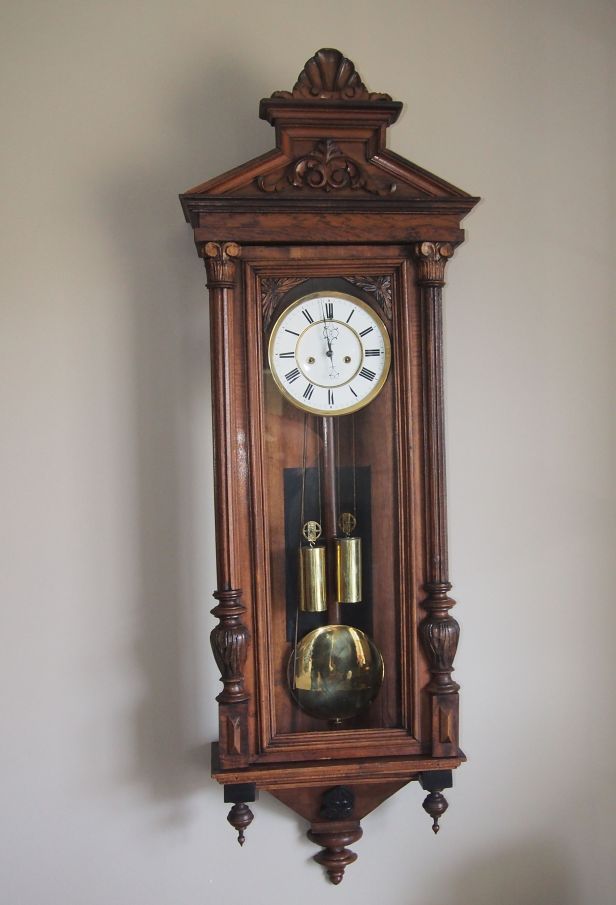
For instance, my 114-year-old Gustav Becker two-weight Vienna Regulator, a retirement gift from my wife, holds immense sentimental value. Initially purchased as a project clock on eBay, it required substantial investment to function correctly. Today, it looks stunning and runs beautifully, but repairing it wasn’t about the cost; it was about preserving something irreplaceable. In such cases, the expense of repair becomes less of an investment and more of a necessary operating cost to keep a beloved treasure alive.
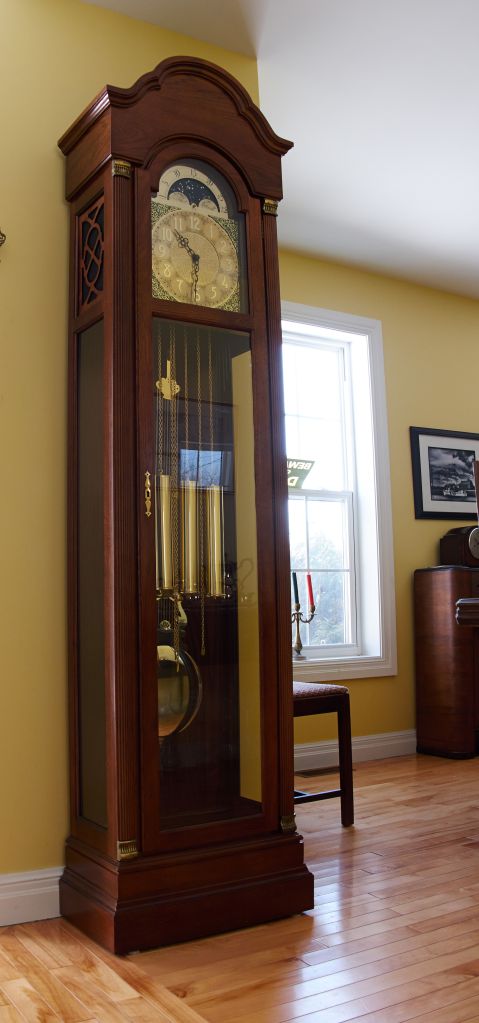
I own a Ridgeway grandfather clock that I plan to pass down to my children. It holds deep sentimental value, reminding me of a clock my wife and I nearly purchased over 30 years ago. At the time, we decided not to proceed with the deal but made a promise that we would one day own a grandfather clock like it. That promise was fulfilled in 2012 when we found a Ridgeway Hamilton Country grandfather clock, made in 1996 and in pristine condition. If and when it eventually requires repair, the cost may equal its market value, but to me, the repair would be well worth it. Its sentimental significance far outweighs any monetary considerations.
2) A decorative item: The second type of clock is one with no emotional value—purely a decorative piece that no longer works. Perhaps it was a flea market find you got running for a time, but now it has stopped. In this case, you have two options: let it sit as a decorative item or repair it. When considering repairs, the replacement value of the clock should play a key role in your decision. If the repair costs exceed the cost of replacing the clock, it may make more sense to simply replace it.
However, if you have the tools and skills to repair it yourself, weigh the cost of new parts against your time and effort. For quality clocks, even a full overhaul of the movement may cost less than the clock’s actual value. With common antique clocks, such as American mantel or wall clocks, repair costs often approach or even exceed their market value. For rare or unusual clocks, however, repairs are typically more economical relative to their value, making the investment worthwhile.
3) Collector value: The third category includes clocks with collector value.
If a clock has been purchased as an “investment,” for resale, or simply as part of a collection, the repair costs should not exceed its overall value. For high-grade clocks requiring repair, especially if parts are unavailable, it’s important to carefully consider whether repairing it is worthwhile. When selling a clock, remember that buyers almost always prefer one in working condition, and as original as possible, so minimal repairs may enhance its appeal and value.
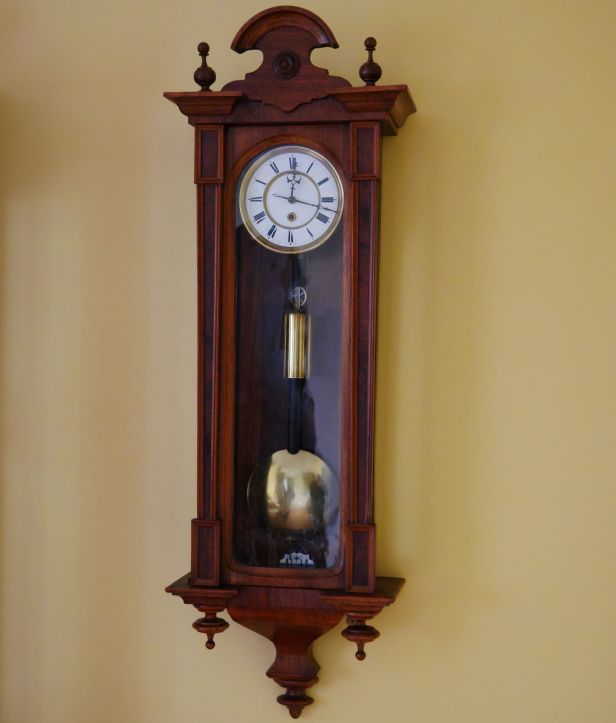
For example, I recently acquired a miniature Vienna Regulator. Not only is it in good working order, but it is also in exceptional condition—an impressive feat for a clock that is 145 years old.
For collectors, determining a clock’s value can be challenging, especially with the significant fluctuations in clock prices in recent years. However, certain types of clocks, such as high-quality French bracket clocks, English lantern clocks, carriage clocks, and jeweler’s regulators, have managed to retain their value. Clocks that are unique, exquisitely crafted, low-production, or one-of-a-kind are typically far more valuable than common, mass-produced examples.
4) Quick re-sale: The final category includes clocks purchased for quick resale.
Many individuals buy and sell antique and vintage clocks purely for profit, often through online marketplaces or specialized sales. When acquiring a clock with the intent to resell, it’s important to factor in both the time and cost of repairs or parts needed to make it marketable. Since buyers almost always prefer a functioning clock, a fully serviced clock is not only more desirable but can also command a higher price than one left unserviced.
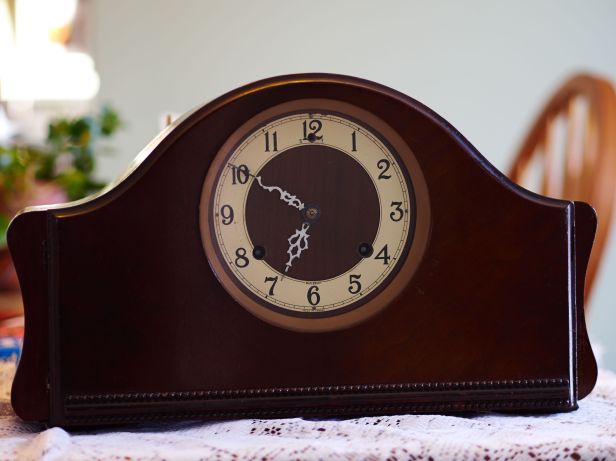
This Ingersoll-Waterbury mantel clock (photo above) was purchased at a flea market for a very reasonable price and has since been fully serviced. If I were to sell it, I would need to recover the initial purchase price along with the cost of my time and supplies.
It’s worth noting that many clocks sold on online marketplaces are marketed to unsuspecting buyers. Sellers often claim the clock is in “excellent running condition” while adding a caveat that it “may require adjustment after shipping.” If you’re involved in buying and selling, keep in mind that buyers are often looking for a bargain. Additionally, you may not always achieve the price you believe your clock is worth, so pricing realistically is essential.
Final thoughts
There are many reasons why people acquire antique and vintage clocks. Deciding whether they are worth keeping or repairing ultimately depends on your purpose—whether it’s for profit, sentimental value, or a passion for collecting, as it is for me. Each clock has its own story and value, and understanding your connection to it will guide your decision.
Discover more from Antique and Vintage Mechanical Clocks
Subscribe to get the latest posts sent to your email.
 Antique and Vintage Mechanical Clocks
Thank you for helping me to understand that buyers always want to get a clock that is working. My wife and I recently inherited an old grandfather clock from her parents, and we were thinking it would be a good idea to have it restored and then sold. We’re going to need to find someone experienced that can handle the restoration for us.
LikeLike
It all depends upon the maker of the clock and whether or not it is desired by collectors. For many common grandfather clocks made within the last 30 years or so, any money you put into the clock will greatly exceed its value.
Ron
LikeLike