
I have dis-assembled this clock twice. After the first dis-assembly I cleaned and oiled it, found everything to be in order but once I assembled it, bench-tested it to find everything seemingly correct and set the beat it would not run more that 5 to 10 minutes at a time. When it stopped it seemed to catch on the escape wheel.
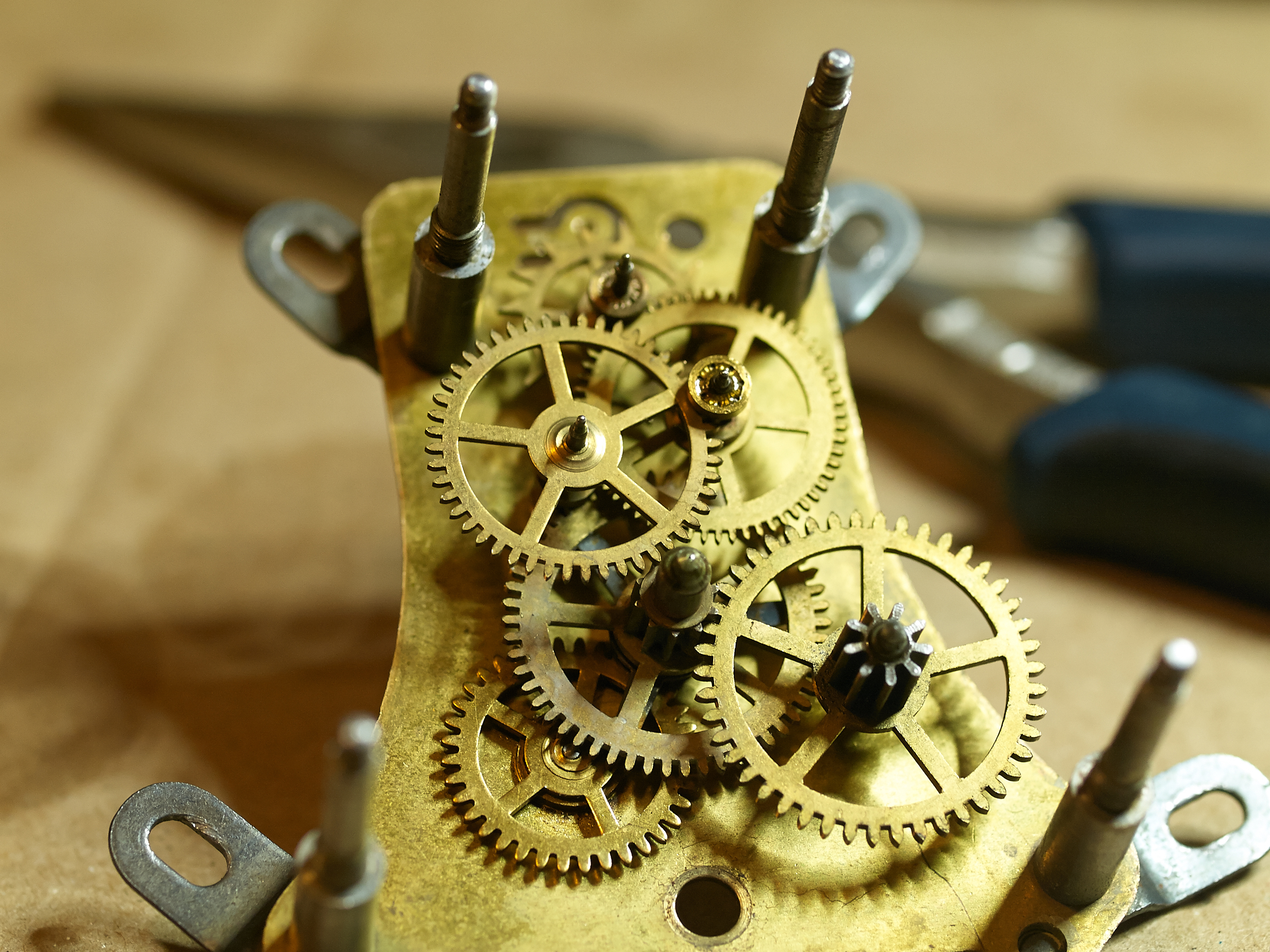
It is now stripped down again. No need to have as through a cleaning as the first go-around but now is the time to investigate other factors. It is a pretty simple clock as the photo shows.
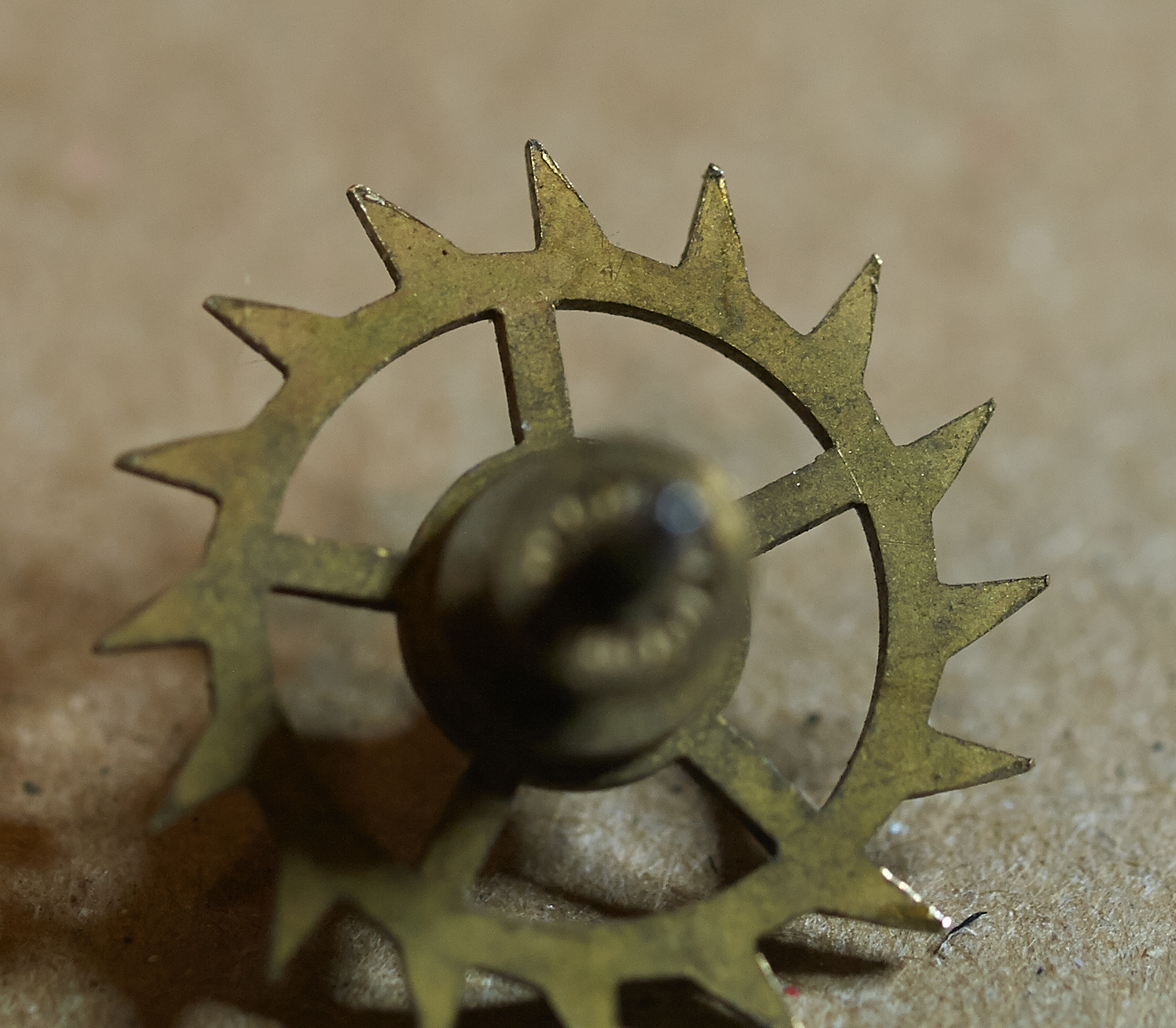
What I see right away is the escape wheel teeth and how some are hooked or misshapened. My temptation is to file it down but others are suggesting that I use pliers to press the hooks back into shape. I have’t decided what to do just yet.
Others have suggested that I put more weight on the pendulum which I am reluctant to do since this clock was likely designed to run on a light bob.

Now back to further investigation.
Late note: I finally got this clock to work after taking it apart twice. The second time I concentrated on the pivots discovering the at least 2 had enough rust that them that they may have slowed the clock down. I also took a burr off the escape wheel but in the process damaged the escape wheel a little, so that while the clock runs there is a little clunking sound once with each rotation, but it works and keeps time! Live and learn.
Discover more from Antique and Vintage Mechanical Clocks
Subscribe to get the latest posts sent to your email.
 Antique and Vintage Mechanical Clocks
You must be logged in to post a comment.