
Restoring and repairing antique clocks is a rewarding and sometimes challenging journey, and my latest project has been no exception. I recently acquired a time-and-strike mantel clock from the Enfield Clock Company, a British manufacturer known for its utilitarian designs, especially post-war.
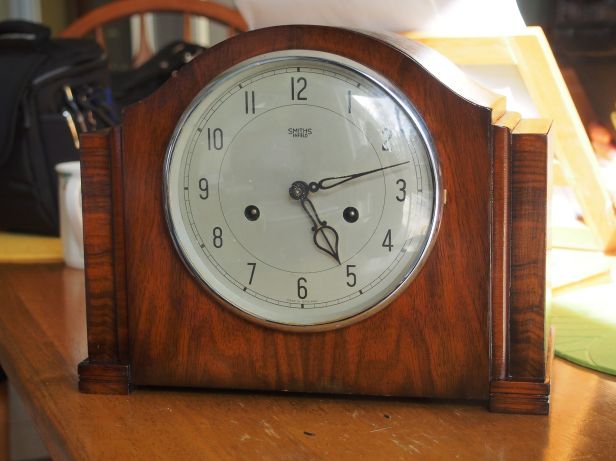
In this article, I will share my experiences as I continue to restore this time-and-strike mantel clock, detailing the steps I’ve taken so far, the challenges I’ve faced, and what I’ve learned along the way.
The Enfield Clock Co. & Association with Smiths
The Enfield Clock Company’s history is as intriguing as the clocks they produced. Established in 1929, Enfield became known for its mass-produced timepieces, manufactured using modern assembly line techniques inspired by American factory systems.
By the early 1930s, Enfield was manufacturing clock movements that were sold wholesale, eventually leading to the formation of the Smiths Enfield brand after the company was sold to Smiths Industries in 1933. The clocks, particularly those produced in the 1950s, reflected the utilitarian, post-war aesthetic of the time.
Initial Observations
When I first examined the clock, I could tell that it had been worked on by someone with a tinkerer’s touch, rather than a skilled clockmaker. Although its striking mechanism sounded great and the clock was visually appealing, I knew it required a thorough service to restore its functionality.
This clock occasionally stopped for no apparent reason and was difficult to keep in beat, prompting me to learn more about clock repair. The movement was relatively simple, with two trains, so I set out to clean and service it. As I worked through the process, I encountered some challenges, including an unhooked mainspring and worn pivot holes, but I made progress nonetheless. Though I had to delay some repairs due to my limited experience, I gained valuable insights into the inner workings of this timepiece and look forward to continuing the restoration.
Two pivot holes on the back plate were a little worn but not enough to cause any issues at this time. However, since I know very little about bushing work at this point I think it wise to put off repairs until I know how to do the work. A bushing machine is on the horizon but limited funds do not permit me to tackle those more in-depth repairs just yet. Anyway, back to the movement.

While reassembling the strike side the mainspring unhooked. I am not sure why. I was prepared to disassemble the movement to reattach the mainspring but a little wiggling corrected the problem. Once the parts were cleaned in an ultrasonic cleaner and the parts were dried, the movement was assembled and oiled. There are two adjusting two screws on either side of the verge that determine the correct height between the pallets and the escape wheel. Through trial and error, I was able to get a good pendulum swing and a steady beat.
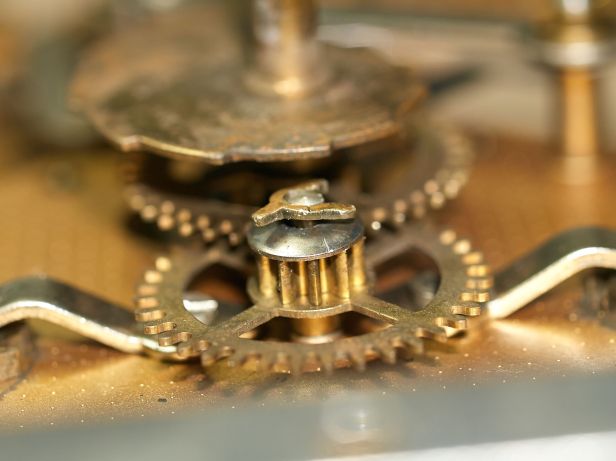
I decided not to re-attach the 2 clips just yet since it would not take much to break them. Only after the clock has been running reliably and striking correctly will I reattach the clips.

Not a good design in my view and I wonder if these clocks were ever meant to be worked on after they left the factory.
In the next article, I will share my experiences as I continue to restore this time-and-strike mantel clock, detailing additional steps I’ve taken so, the challenges I’ve faced with this project, and what I’ve learned along the way.
Discover more from Antique and Vintage Mechanical Clocks
Subscribe to get the latest posts sent to your email.
 Antique and Vintage Mechanical Clocks
Really informative and good structure of subject matter, now that’s user pleasant (:.
LikeLike