Top Reasons Your Mechanical Antique Clock Runs Slow: Tips & Fixes (2025 Ed.)

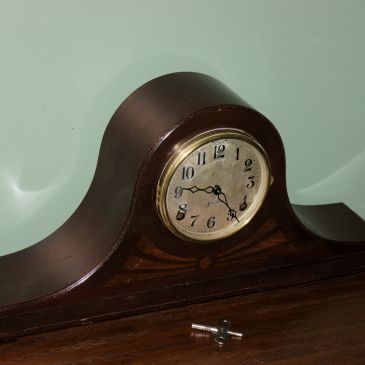
We are quite accustomed to the accuracy of quartz clocks which lose or gain mere milli-seconds per week. Contrast that with an era when folks were content to accept that their mechanical clock would be a minute fast or slow through the week, and it was a common practice to make small adjustments over the … More Top Reasons Your Mechanical Antique Clock Runs Slow: Tips & Fixes (2025 Ed.)
Rate this:

Prolonging the Life of your antique or vintage clock

New owners of an antique or vintage clock might find it surprising that their recent purchase requires periodic maintenance. This realization often dawns upon them only when the clock stops, and they struggle to get it running again. In this discussion, we explore regular clock maintenance, underscoring the importance of continuous inspection to ensure your … More Prolonging the Life of your antique or vintage clock

Rate this:

Finding a Reliable Clock Repair Professional

If you’ve acquired a clock as a gift, through inheritance, from antique shopping, online purchases, or any other means, and it’s not functioning correctly, you have several choices in having it repaired. You might decide to try fixing the clock yourself, especially if it’s a simple or inexpensive clock. Basic tools and some luck might … More Finding a Reliable Clock Repair Professional

Rate this:

Should mainsprings be routinely replaced on an antique clock when servicing?

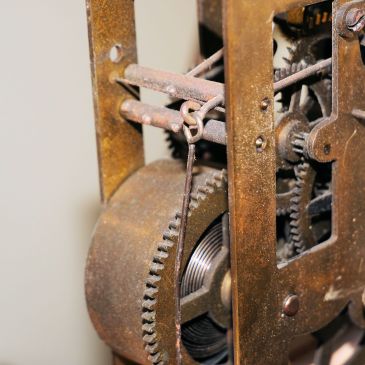
A mainspring’s purpose is to provide motive power for the wheels to move in a clock train. All mechanical clocks require a power source and the power source may be by weight or spring. Mechanical clocks that have mainsprings will have one, two, or three winding points which, once wound provide power for a clock’s … More Should mainsprings be routinely replaced on an antique clock when servicing?

Rate this: