
There’s something deeply satisfying about winding a mechanical clock—feeling the tension build in the spring or watching the weights slowly rise as you turn the key. That simple ritual connects you to generations past, when timekeeping was both a science and a daily habit. Among the many types of mechanical clocks, the 8-day clock holds a special place. Wound just once a week, it blends convenience with craftsmanship, offering the perfect balance of tradition and practicality.
An 8-day clock is a mechanical clock that requires winding only once every seven days. While that may sound simple, there’s more to it than just the winding schedule.
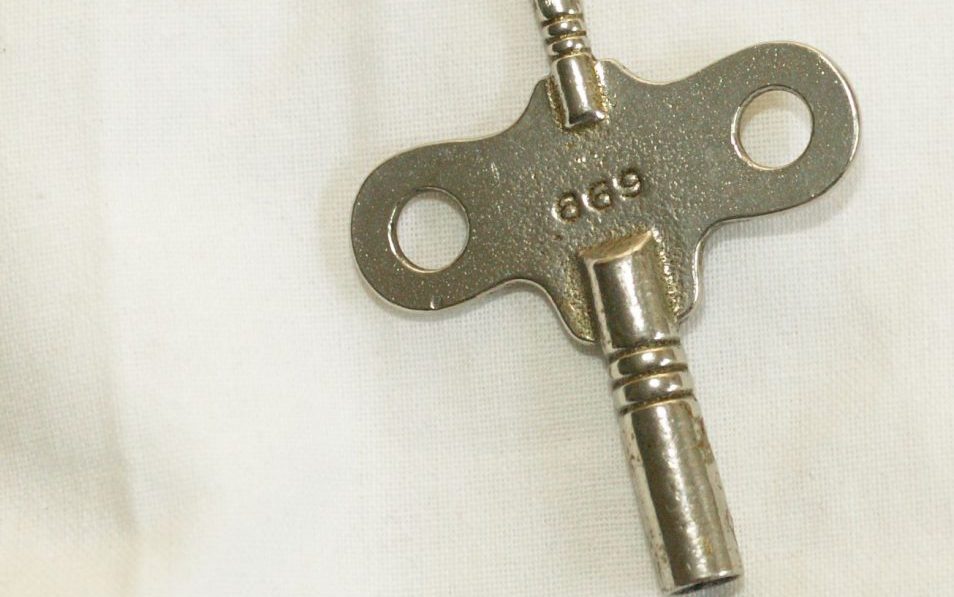
Types of Mechanical Clocks
Mechanical clocks vary in their run times. A 30-hour clock—often called a 1-day clock—needs daily winding. Many ogee weight-driven and alarm clocks fall into this category. Others, especially those with Chinese or Korean movements, can run up to 31 days. You’ll also find clocks rated for 14, 15, or even 60 days, and anniversary clocks, known as 400-day clocks, which run for more than a year on a single wind. The number of days simply refers to how long the clock will run before needing to be rewound.

Why Regular Winding Matters
If you don’t wind a clock near the end of its run time, it will stop when the mainspring or weight no longer provides power. A serviced 8-day spring-driven clock might run a day or two beyond its rated cycle, but eventually, it will stop once the power is depleted.

When an 8-day clock consistently fails to run its full cycle, it’s a clear sign that servicing is needed. Dirt, worn bushings, or tired pivots can all cause power loss. Fresh oil alone won’t solve the issue—mixing new oil with old, dirty oil can actually worsen wear.
Professional clock servicing involves fully disassembling and cleaning the movement, repairing worn areas, reassembling and lubricating it, and testing for accuracy. Though servicing can be costly—and sometimes exceed the clock’s market value—it’s well worth it for pieces with sentimental or historical importance.
It’s normal for an 8-day spring-driven clock to lose a bit of time toward the end of the week. As the mainspring unwinds, the stored energy gradually decreases, slightly slowing the movement.
Speed Variations and Clock Design

Some clocks include a device called a stopwork or Geneva stop, which limits the spring’s range to its most consistent section of power. This improves timekeeping but is relatively uncommon today—many clocks that once had stopworks have had them removed by repairers over the years.
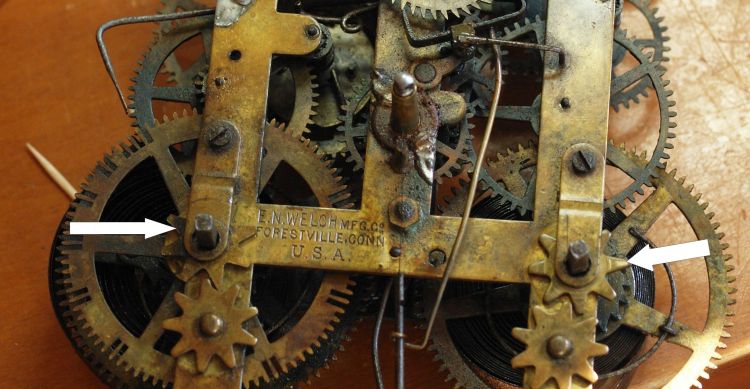
My Personnel Collection and the Variety of Run Times
Of the more than 80 clocks in my collection, about 30 are running at any given time. Five are 1-day ogee clocks, three have 14-day run times, and the remainder are 8-day models. Most antique and vintage clocks you find in shops or online are also 8-day clocks—the classic “once-a-week winders.”
Keeping a Regular Winding Schedule
Weight-driven 8-day clocks tend to be more accurate than spring-driven ones because their power source—a descending weight—delivers a constant force. They typically need only minor time corrections.
Final Thoughts
Winding your clock at the same time each week ensures steady performance. I make it a Sunday morning ritual to wind my clocks and make any necessary time adjustments.
Like any precision instrument, a clock rewards consistent care. With proper handling, regular maintenance, and timely servicing, an 8-day clock will live up to its name—keeping time faithfully, week after week.
Feel free to share your comments or questions below!
Related Articles
Discover more from Antique and Vintage Mechanical Clocks
Subscribe to get the latest posts sent to your email.
 Antique and Vintage Mechanical Clocks
Thanks Ron, In this day of micro-second accuracy of satellite GPS controlled digital time, its a great homage to the minds who strove for accuracy with mechanical movements. There’s charm and respect for a mechanical clock that a quartz, or cyber space derived time check cannot live up to.
LikeLiked by 2 people
I am not that fastidious when it comes to my clocks. If they are accurate to within a minute or so a week, that’s fine by me.
LikeLiked by 2 people
Just a reminder to wind your clock SLOWLEY . I made the mistake when I wound my clock fast “my fault” and the ratchet that clicks past the gear slipped and spring unwound and broke. Fortunately i have located a clock craftsman to repair my mantle clock ! He explained what i did wrong and agreed totally !
LikeLiked by 2 people
Did that once, the rachet slipped and I ended up with a bruised thumb. Now I wear cotton gloves and as you say, wind slowly.
LikeLiked by 2 people