Buying your first clock is an exciting journey, but it can also feel a bit daunting. In this article, I’ll share some practical tips and advice to help you choose your first clock and discuss the various types of clocks to consider.
One of the goals of this blog is to introduce antique and vintage clocks to younger generations and inspire an appreciation for these remarkable mechanical devices from the past. In today’s modern age of a throw-away culture, how many items can you think of that still function flawlessly after more than a century? It is a short list indeed!
Before we get started, let me clarify two key assumptions. First, I’m assuming you’re not purchasing your first clock with the goal of turning a profit. If profit is your motive I won’t be much help to you. Having collected clocks for many years, I can tell you that buying and selling clocks rarely yields significant financial returns. Of course, there are always exceptions.
Second, this guide focuses on mechanical clocks rather than electric, quartz, or electro-mechanical models. While some of the latter are certainly attractive, there are other resources available for learning more about these types of clocks.
An antique mechanical clock operates through a system of metal gears and levers, powered by weights or springs, wound manually, and displays the time. These clocks were essential for daily life in the past, providing reliable timekeeping that helped people manage their routines, coordinate activities, and regulate work, particularly before the advent of modern electrical or digital timekeeping devices.
Let’s explore why you would want an antique or vintage clock.
Choosing an Antique or Vintage Clock
Is the clock for decoration, an expression of your new interest in horology, or are you starting a collection? Your motivation for acquiring your first clock is important, as it involves an investment of your money.
Establishing a budget is essential to guide your decision. If your primary goal is to use the clock as a decorative piece, the condition of the case may take priority, and whether the movement works might not be a concern. However, if you want a functional clock and the one you choose is not in working condition, you’ll need to account for potential repair or restoration costs in your budget.
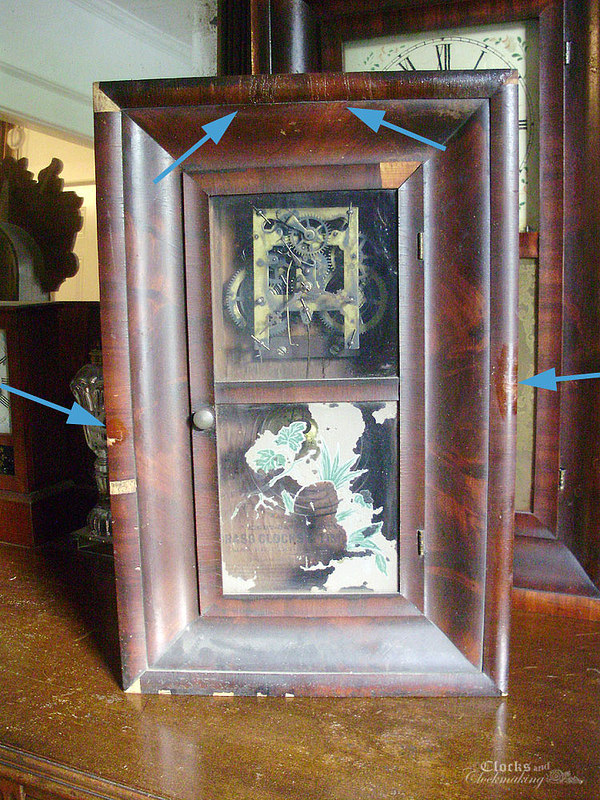
When considering the clock’s condition, it’s important to assess whether it’s running or in need of repair. A case that shows significant wear often indicates that the movement may also be in poor condition. Some damage can be repaired, but other types of damage may be expensive to fix, and if the clock was inexpensive to begin with, the cost of repairs may outweigh the value. An example of this is pieces of veneer missing on a clock. While small imperfections may be acceptable, large areas of missing veneer can significantly affect the clock’s appearance. Replacing large sections of veneer should be left to a professional restorer.
Clocks with an interesting provenance may not only be more desirable to collectors but can also serve as fascinating conversation starters. Understanding who made the clock and where it was produced is crucial. A clock from a renowned manufacturer or region known for quality craftsmanship can be more valuable.
A clock with a well-documented ownership history, especially if it has been in the hands of notable individuals or has an intriguing backstory, can make it more desirable. If it was owned by a historical figure or used in a significant event, this can greatly enhance its appeal.
Look for original labels, receipts, or certificates of authenticity that confirm the clock’s origin, age, and maker.
If the clock has thorough documentation, be prepared to pay a premium price. Look for a clock with a known history of quality repairs or restorations, especially if these were done by reputable professionals.
The location and placement of the clock can influence your choice of type and size. For example, in a 600-square-foot apartment, a grandfather clock might not be the best option. A small mantel or novelty clock can be placed almost anywhere, while wall clocks don’t take up valuable floor or shelf space.
Antique and vintage mechanical clocks require periodic care and upkeep because their components are subject to wear and aging over time. The materials used in older clocks, such as metal gears, springs, and wood, can degrade or become less effective without regular maintenance. This should be taken into account when making your decision.
An emotional connection is important. You should select a clock that you genuinely connect with, as it will become a lasting part of your environment. Purchasing a clock simply because it’s inexpensive, but not to your taste, may lead to regret.
And finally, consider starting with a straightforward, reliable clock before diving into more complex or high-maintenance pieces.
Here are the Types of Clocks to Consider and Why
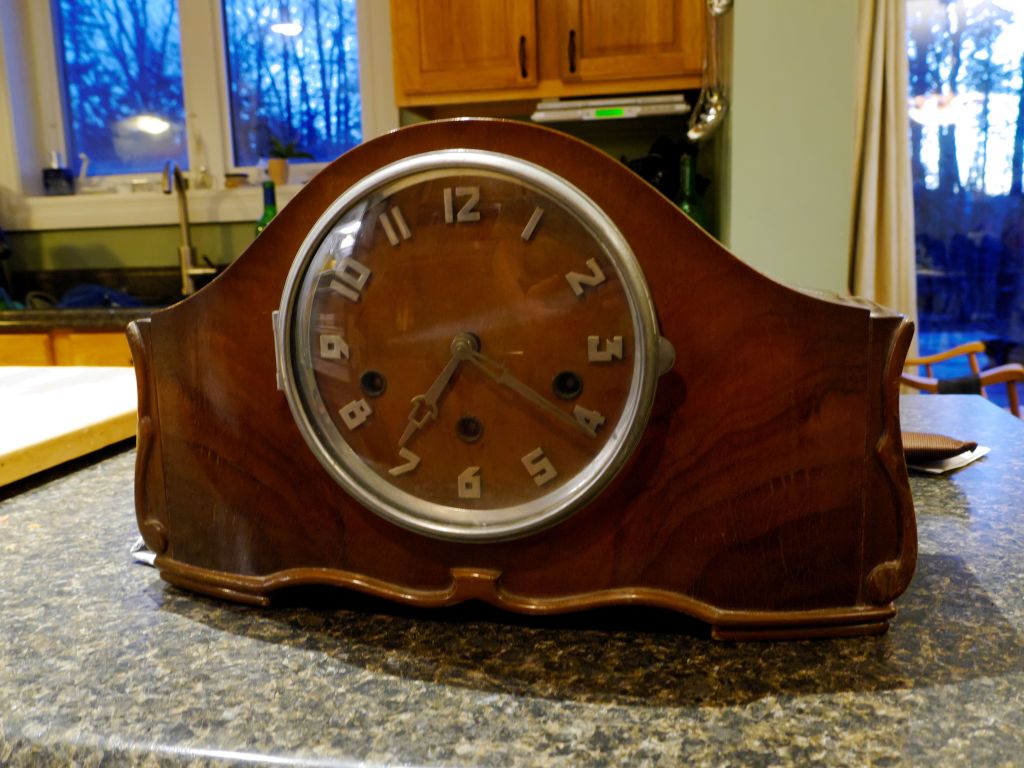
Mantel Clocks are compact clocks designed to sit on a mantelpiece or shelf. They often feature a strike while some might also feature a chiming mechanism such as Westminster chimes.
A mantel clock is a good entry point for beginners due to its manageable size and the many different styles and designs. In North America, popular examples come from manufacturers such as Seth Thomas, Ingraham, New Haven, Gilbert, and Pequegnat.
Wall Clocks are designed to hang on walls, ranging from simple schoolhouse styles to ornate regulator clocks. These clocks are ideal for those with limited floor space and looking for a functional piece. Look for clocks that are complete, with no missing parts, and inspect hands, glass, and the movement for any problems.

Grandfather Clocks otherwise known as Longcase Clocks, Tall Case Clocks, or Hall Clocks are tall, freestanding clocks often over six feet tall, with pendulums, often featuring intricate mechanisms and chimes. These clocks are statement pieces suitable for those with ample space.
Maintenance can be more demanding, and many of these clocks especially from the 1980s and 1990s have movements that are near the end of or at the end of their service life. A gently used tall case clock can provide many more years of service. While these clocks are undeniably charming, their sound might be a bit too loud for some individuals.

Cuckoo Clocks are typically from Germany, these whimsical clocks are known for their animated cuckoo bird and decorative carvings. These clocks are great for a touch of old country charm and fun, often appealing to families. All inexpensive ones require winding once per day and the cuckoo sound can be annoying for some. Look for an eight-day model instead.

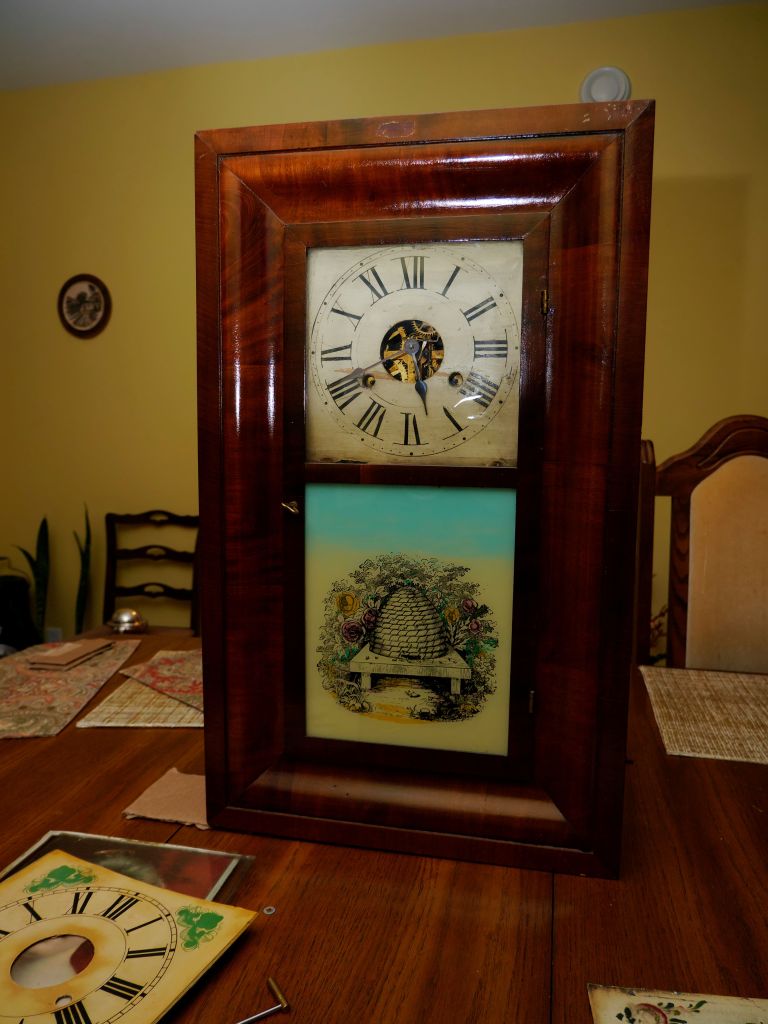
Ogee Clocks are classic 19th-century weight-driven clocks with a simple yet elegant design. They are an affordable entry into antique clocks and often come with a rich history. Ensure the glass and reverse-painted artwork are intact, as these are defining features. Shelf space is required as these clocks are not meant to be hung.
Most are 30-hour clocks that require winding once per day which some might regard as an annoyance if the intent is to have them running daily. Eight-day clocks are preferable since they require winding once per week. For a shelf clock, they are quite large and space could be a factor to consider.
Shelf Clocks are a broader category encompassing small to medium-sized clocks that fit on shelves or desks. They are practical and versatile, with a range of styles to suit different tastes.
Fancy clocks with intricate visible designs display beautifully and can serve purely decorative purposes.

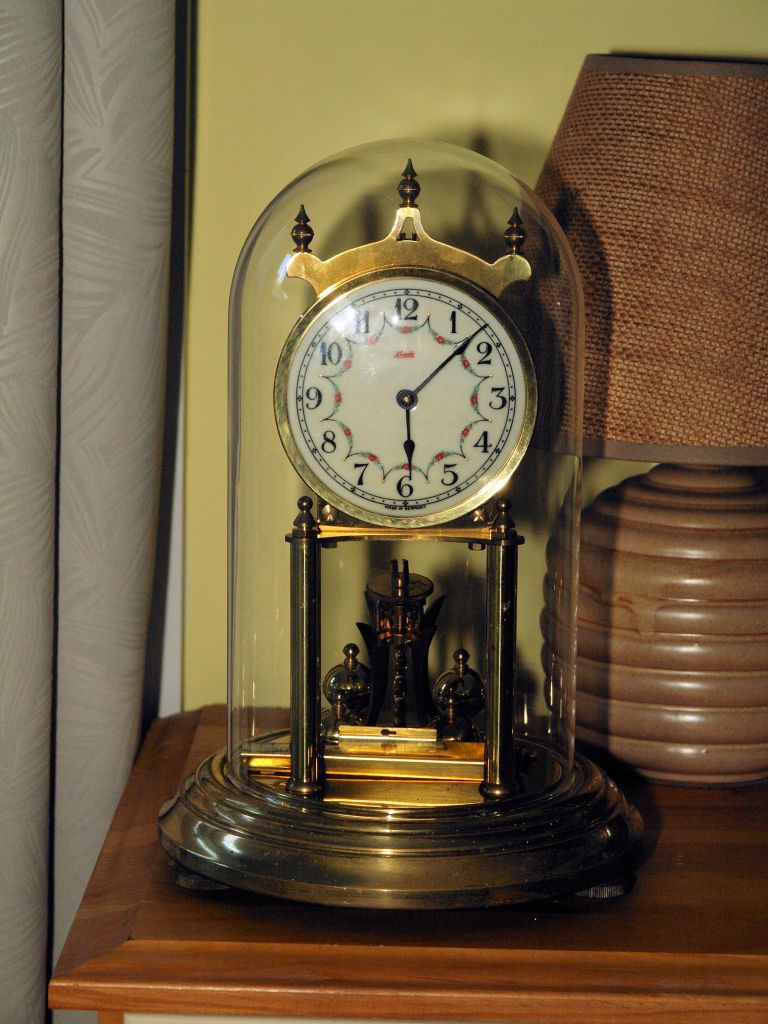
Anniversary Clocks feature mechanisms that can run a year or more, have glass domes, and feature a rotating pendulum. They make a striking display and serve as fascinating conversation pieces. Historically, they were often presented as wedding gifts.
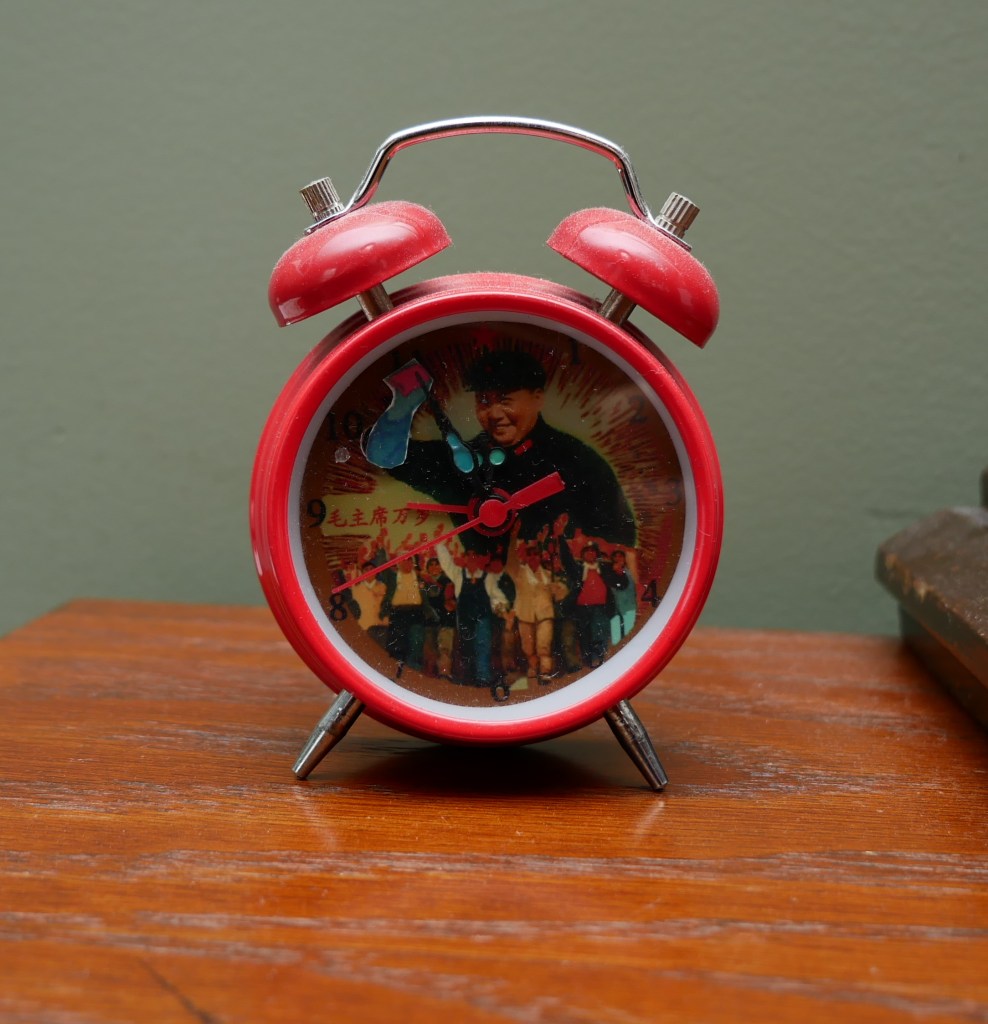
Novelty Clocks are clocks with unique designs, animations, or themes. They add personality and character to any room often sparking conversations. They can be as small as an alarm clock and can be placed just about anywhere in a room.
Buying your first clock is a rewarding experience that combines history, craftsmanship, and personal taste. By considering factors such as your budget, the clock’s condition, provenance, and placement, you can make an informed decision and choose a piece that brings lasting enjoyment.
Remember to select a clock that resonates with you personally, as it will become a cherished part of your space. With thoughtful planning and care, your first clock can be the start of a lifelong appreciation for the art and beauty of horology.
Discover more from Antique and Vintage Mechanical Clocks
Subscribe to get the latest posts sent to your email.
 Antique and Vintage Mechanical Clocks
As always very comprehensive. I second your remarks on daily wounding any clock, unless you have just one…Ogee woodwork clocks are very picturesque…particularly if the original art is intact, but not only do they need attention daily, but the wounding needs to be sensitive to the age of the clock….not for everyone
Peter
LikeLike
Thanks. I have two column and splat woodworks shelf clocks (about the size of an ogee) that I’d like to see running but both need a lot of work.
LikeLike