
The tall clock that may be gracing your hallway or living room belongs to a bygone era. That sense of history and tradition seems to be missing in our modern world. In an era defined by fast-paced technological advancements and fleeting trends, the tall clock stands as a reminder of an earlier era when craftsmanship and longevity were paramount.

The Grandfather Clock
A tall case clock is commonly referred to as a “grandfather clock” due to a story that dates back to the 19th century. The term “grandfather clock” is said to have originated from the song “My Grandfather’s Clock,” written by Henry Clay Work in 1876. This song tells the tale of a clock owned by the songwriter’s friend, and it played a significant role in popularizing the term.
Henry Clay Work was an American songwriter and composer known for capturing the spirit and emotions of the time. His greatest hit was “Marching Through Georgia” in 1865, a cheerful marching song.
The lyrics of My Grandfather’s Clock narrate the story of a long-case clock, or a tall case clock, that belonged to the songwriter’s friend’s grandfather. The clock worked perfectly throughout the grandfather’s lifetime but stopped working when he passed away. The song’s lyrics reflect the sentiment that the clock’s ticking was synonymous with the grandfather’s life, and the clock’s stillness upon his death was seen as a representation of his passing.
Over time, this sentimental and catchy song contributed to the popularization of the term “grandfather clock” as a synonym for a tall case clock. The term stuck, and now, tall case clocks are commonly referred to as grandfather clocks in many parts of the world.
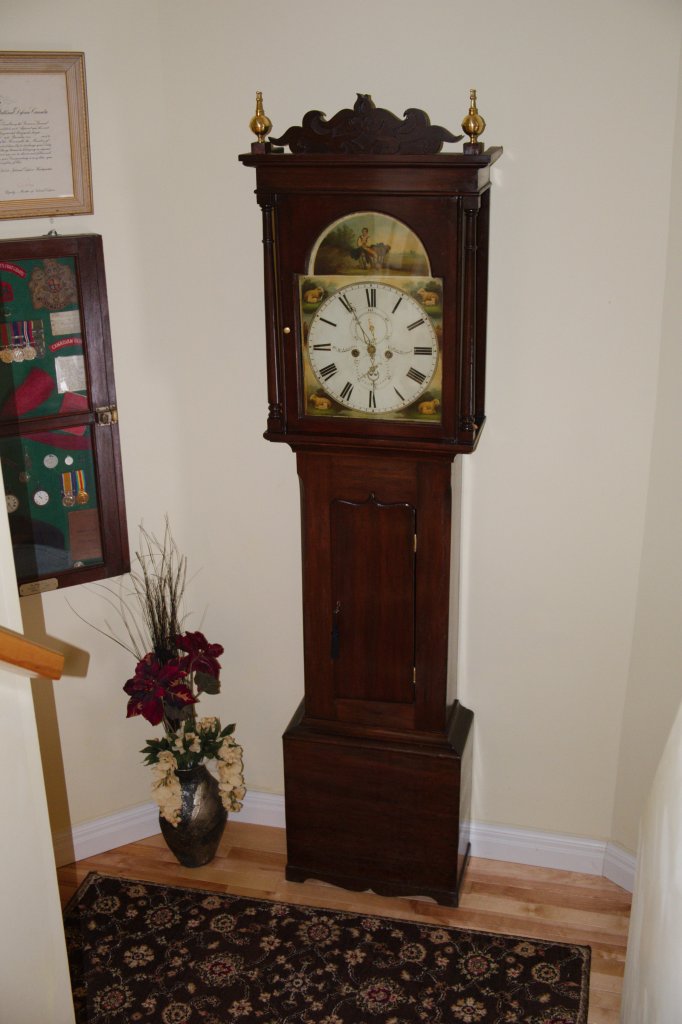
Tall Case and Long Case Clocks
However, horologists generally prefer using the terms “tall case clock”, “long case clock” or hall clock instead of “grandfather clock”. The difference in terminology between “tall case clock” in America and “long case clock” in England primarily arises from regional linguistic variations and historical usage.
- Tall Case Clock (America): The term “tall case clock” is commonly used in the United States to describe this type of clock. This name emphasizes the clock’s design, which features a tall, vertical case that houses the clock’s movement and the pendulum. The term “tall case” is descriptive of the clock’s physical appearance, highlighting its height and elegant proportions.
- Long Case Clock (England): In England, the term “long case clock” is more commonly used. This name also relates to the clock’s appearance, particularly its elongated and vertical shape. The term “long case” emphasizes the clock’s form, again highlighting its height and the distinctive design of the case. On the other hand, a Long case Regulator (Chronometer) is a precision clock known for its accuracy. It often features a simpler, more functional design with a focus on precision rather than ornate decoration.
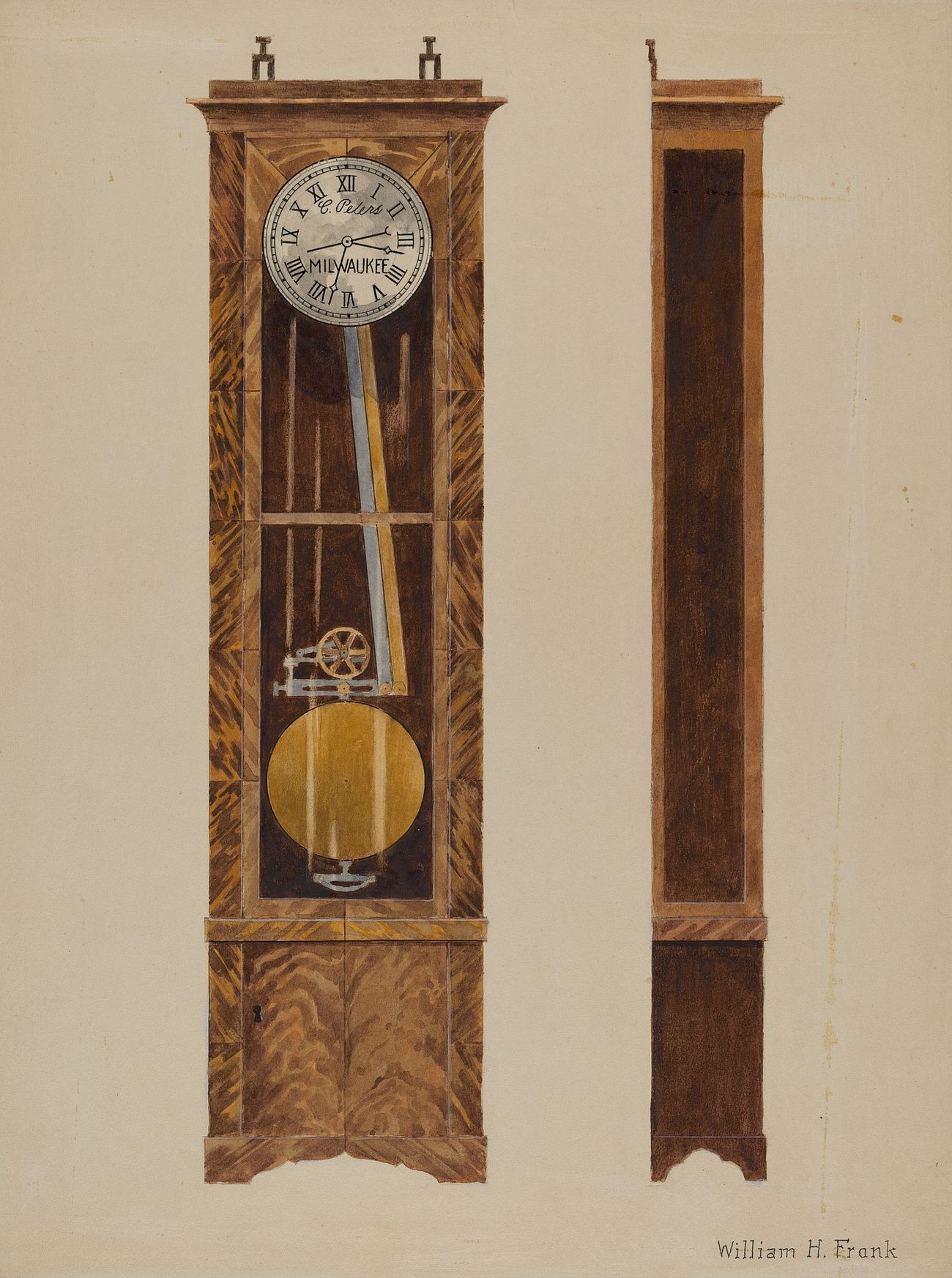
The names simply reflect different ways of describing the same type of clock. Over time, these regional differences have become firmly established.

The Hall Clock
The term “hall clock” is also used in some parts of the world as an alternative to “grandfather clock,” “tall case clock,” or “long case clock.” This term, “hall clock,” emphasizes the placement of the clock in a hallway or entrance hall, which is a common location for these impressive and stately clocks.
While the “hall clock” might not be as widely recognized or used as the “grandfather clock” or “tall case clock,” its origin and usage can be traced to the same concept of describing these tall, freestanding clocks with long cases.
The term “hall clock” is descriptive and straightforward. The term continues to be used in some contexts, particularly in regions where the emphasis is on the clock’s placement and role within the home.

The Grandmother Clock
And lastly, a “grandmother clock” is a type of clock that is smaller than a “grandfather clock”.
Similar in design and functionality to its larger counterpart, the grandfather clock, a grandmother clock typically features a pendulum-driven movement enclosed within a vertical wooden case. The main distinction between a grandmother clock and a grandfather clock lies in their size. Grandmother clocks are generally shorter than grandfather clocks, standing around 5 to 6 feet tall, making them more suitable for spaces with limited room.
Despite their smaller size, they often retain the same elegant appearance and decorative features as their larger counterparts.
The term “grandmother clock” is less commonly used than “grandfather clock,” but it serves to describe this intermediate-sized clock that is more compact than the towering grandfather clock.
Different Phrases Express the Same Concept
The various terms used to describe this type of clock—such as “grandfather clock,” “grandmother clock”, “tall case clock,” “long case clock,” and even “hall clock”—all refer to the same basic type of clock: a freestanding weight-driven device with a tall vertical case housing the clock movement and pendulum.
Discover more from Antique and Vintage Mechanical Clocks
Subscribe to get the latest posts sent to your email.
 Antique and Vintage Mechanical Clocks
Morning Ron,
Another great column. Thanks. My two bits:
Anyone else feel these grand old clocks where in their day, leading edge connectivity? A smart home. To be able to know the same time as the outside world. This too why old world craftmanship went into making many of these clocks a thing of beauty. To be proudly displayed in a place of honour ones home. For a working man/woman he or she too could own a clock. Modest, but likely still prized.
Sent from Mailhttps://go.microsoft.com/fwlink/?LinkId=550986 for Windows
LikeLike