
We have been facing a challenging spring here in Nova Scotia, as the threat of wildfires has been looming over us.
In May 2023, our community in Nova Scotia has been devastated by the occurrence of two uncontrolled wildfires. The dire consequences of these fires include the evacuation of thousands of individuals and the tragic loss of hundreds of homes.
Residing in a rural area with our house nestled amidst beautiful trees, we can’t help but have a constant awareness of the potential for fire.
While it’s crucial to prioritize safety and well-being in emergency situations, it’s understandable that certain personal belongings/items hold significant value to us. They include ID, cell phones, credit cards, vehicle titles, keys, flashlights, passports, a portable hard drive containing all personal photos, and essential clothing but if I find myself with a moment to select just one antique clock during a speedy evacuation what would it be?
My wife prompted this discussion when she asked, “What clock would you take?
Selecting a specific antique clock to save from a “burning house” is a subjective decision based on personal preferences, sentimental value, and the uniqueness of each clock. However, here are a few factors I might consider when making my decision:
- I might choose a clock that holds special meaning to me or my family. It could be a clock that has been passed down through generations or one that has sentimental value attached to it.
- I would consider the rarity and historical significance of the clock in question. If a clock’s origins is significant or it is known for its craftsmanship or historical importance, I might prioritize saving such a clock.
- If one clock is in better condition or has the potential for easier restoration, it might be a good choice to save.
Here are 5 clocks that would be high on my list and the reasons why. But in the end, I could only take one!
Pequegnat Canadian Time
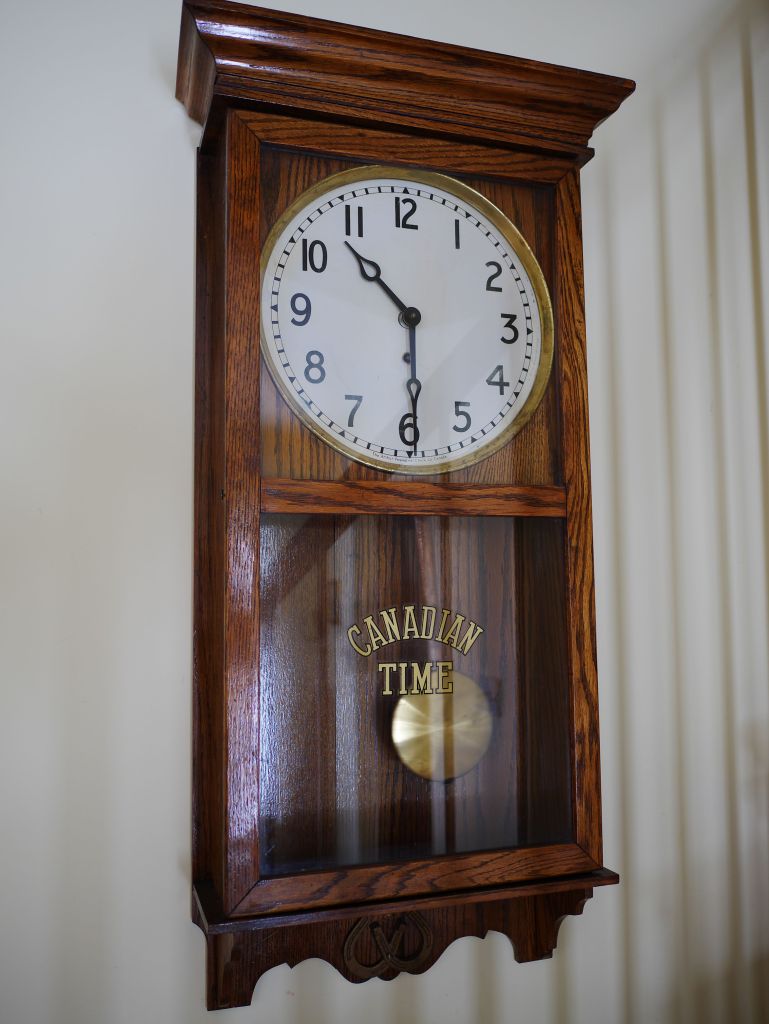
I have had this clock for a number of years, and have serviced it twice. The clock’s case, on the other hand, has remained untouched and remains in exceptional condition. This particular clock holds a special place in my collection as one of the earliest examples of the eight Pequegnat clocks I own. It spent its life in the waiting area of a train station located 1/2 drive from my home.
Sawin Banjo Clock

Dating back to the 1840s, this exceptional timepiece exemplifies the pinnacle of meticulous movement craftsmanship. While the case and movement do not bear any explicit “Sawin” markings, various indicators strongly suggest that it was crafted by John Sawin himself or one of his associates or apprentices. Notably, this clock stands out for its straightforward construction, lacking side rails or ornate embellishments such as painted tablets or gilt decorations. It is precisely this simplicity in design that captivates me, as it allows the clock’s elegance and craftsmanship to take center stage.
Junghans Crispis time and strike wall clock

This clock underwent a comprehensive restoration process involving countless hours of work, including disassembling, creating new components, servicing the movement, and refinishing the case. The restoration required a significant amount of labor and attention to detail. The clock holds a captivating story as it was rescued from a house that endured severe destruction during the Halifax Explosion in 1917.
Single-weight Vienna Regulator

The sheer beauty of this clock makes it incredibly challenging to part with. Its design epitomizes the finest qualities of the 1880s Vienna style. Unlike the later Viennese clocks, which often leaned towards ornate and ostentatious features, the clocks from this particular period maintain their elegance and embrace a more refined and understated aesthetic. The clock’s classic, simple lines are a testament to the enduring allure of the Vienna style during that era.
Arthur Pequegnat Canadian Time
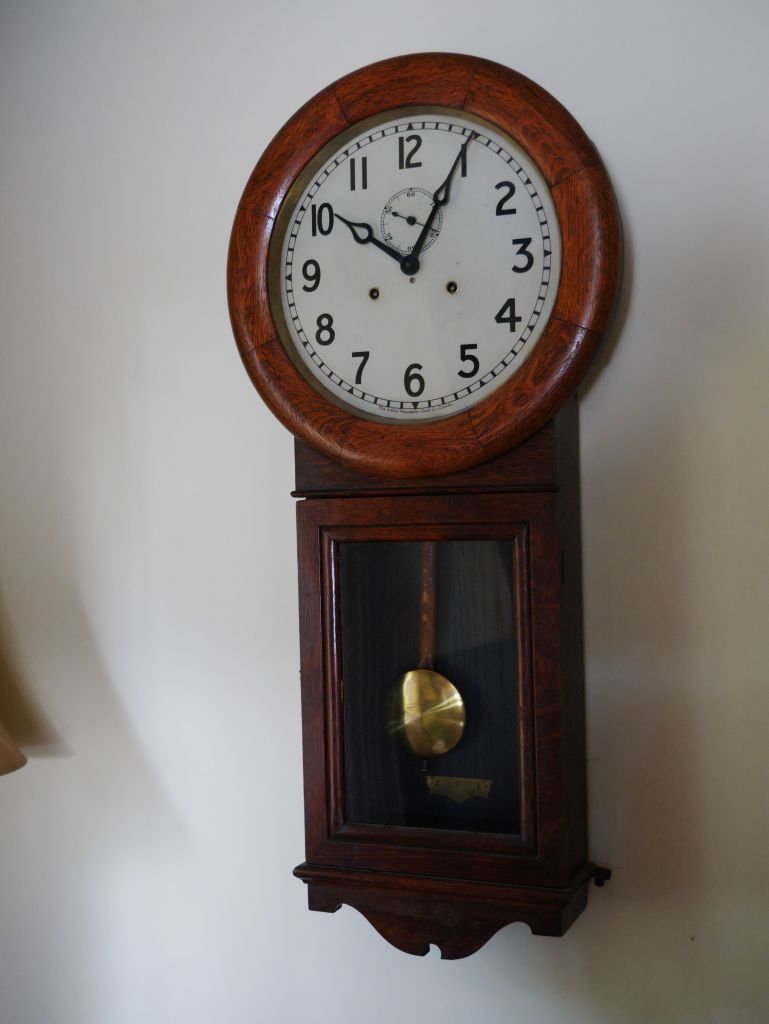
It is quite possible that this clock was located in a train station or some other commercial setting, given its robust construction and durability designed to withstand potential mistreatment. Additionally, its timeless design features are reminiscent of the classic lines commonly associated with the 1920s era. The clock’s sturdy build and elegant aesthetics perfectly capture the spirit of that period, adding to its overall charm and appeal.
E. Ingraham Huron

This clock resided in the charming vicinity of Bridgewater, Nova Scotia. It came into our possession during a challenging period for a couple undergoing a difficult separation, as sentimental items often find their way to new homes in such circumstances. Among the clocks in my collection, this one stands out as one of the few that underwent professional servicing, ensuring its optimal functionality. Notably, this clock holds a relatively rare status, being produced by the E. Ingraham Clock Co. during the brief span of two years, between 1878 and 1880.
And now it boils down to the one to choose?
Although I hold great admiration for all of these clocks, if I were constrained by space and could only choose a single one to take with me, it would have to be the Junghans Crispi. As mentioned earlier, this clock embodies the qualities that I value, such as its exceptional craftsmanship and timeless appeal. Its unique design, combined with the renowned Junghans brand, makes it a standout choice in the collection. Given the limited space, the Junghans Crispi would be the clock I couldn’t bear to leave behind, as it represents the epitome of my preferences and holds a special place in my heart.
Discover more from Antique and Vintage Mechanical Clocks
Subscribe to get the latest posts sent to your email.
 Antique and Vintage Mechanical Clocks
Ron, a blessing. May that “decision” forever remain theorical. Anyone else sometimes ponder the beautiful European clocks destroyed during WWI & WWII? Far from theoretical.
LikeLike
Thanks Marty.
LikeLike
Afternoon, Ron –
You have a marvelous collection.
Enjoy seeing these, and your Pequegnat Canadian Time is spectacular!
Thanks….
~Dave Stelling
LikeLike
Thank you, Dave.
LikeLike