
A century ago, clock manufacturers understood the power of marketing, and the word “Regulator” became a key tool in their strategy to boost sales. By simply labeling a clock with “Regulator,” they could make it appear more precise and desirable, even if it wasn’t a true regulator. But is this a hard-and-fast rule? Let’s take a closer look.
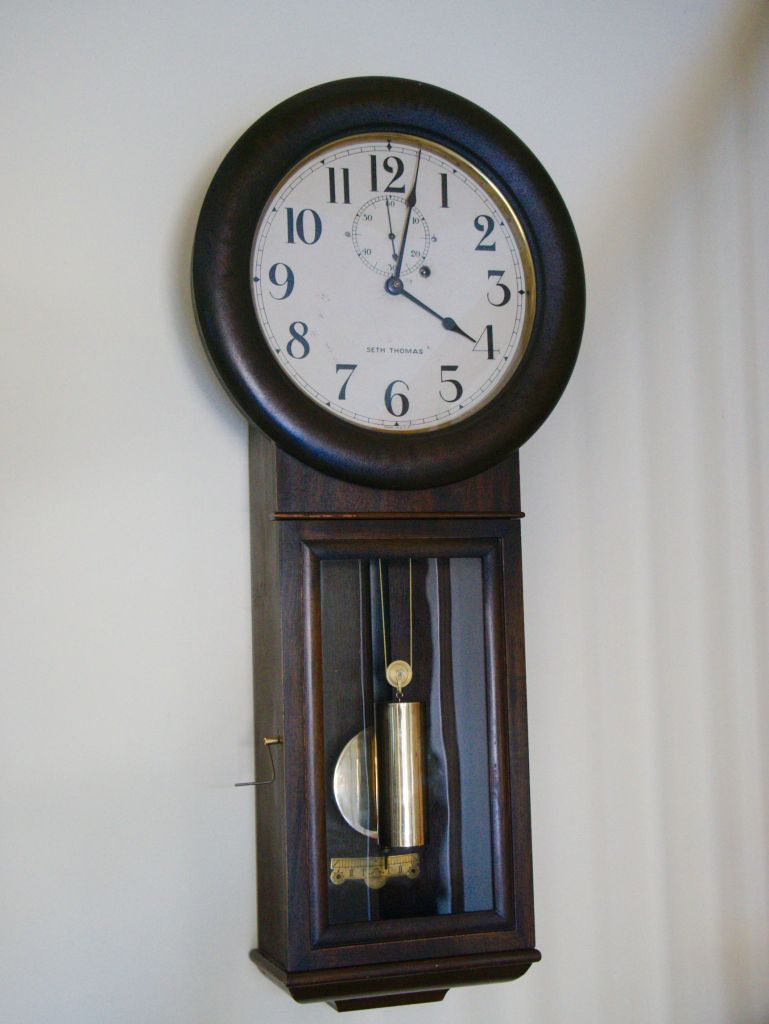
By definition, a regulator clock was, and still is, a clock used as a standard for setting other clocks. These clocks were commonly found in businesses, railroad stations, public buildings, and even churches and tower clocks, where townsfolk would adjust their personal timepieces based on the regulator. Early regulator clocks played an essential role in keeping communities synchronized in their daily routines.
For 270 years, pendulum clocks were the world standard for precise timekeeping, until the invention of quartz clocks.
Take, for example, the Gilbert calendar clock shown below. Advertised as a “Regulator,” it does not fit the true definition. With a spring-driven, time-only movement, it is accurate to within a minute or two per week, which is typical for spring-powered clocks. While the calendar feature is useful and the clock is attractive, it lacks the precision of a true regulator and would not be relied upon for setting other clocks.

Are there exceptions to this rule? As always, there are exceptions. The Welch Spring and Company produced a clock from 1874 to the mid-1880s certified for use in train stations. This double-weight, time-only clock, reminiscent of the well-regarded Seth Thomas Regulator #2, was stenciled with “Regulator” on its access door. Given its constant weight-driven power and deadbeat escapement, it was likely a very accurate timekeeper.
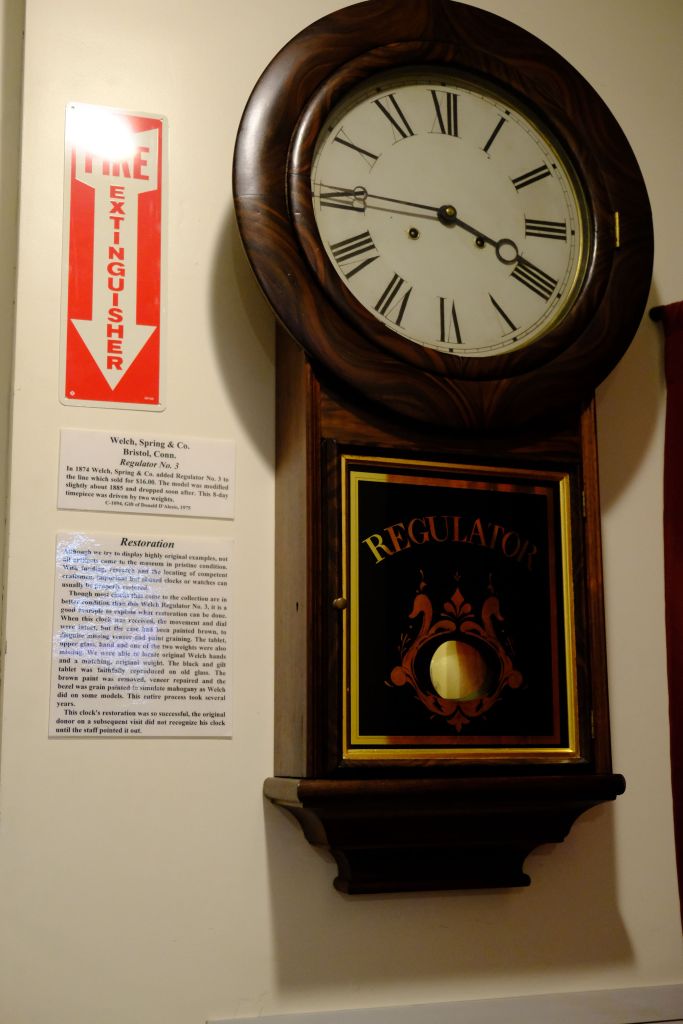
This particular Welch clock, now a museum piece at the American Watch and Clock Museum in Bristol, Connecticut, has been meticulously restored. When it was received, the lower tablet was missing, leading to questions about whether it originally came with the word “Regulator” on the access door. The answer is yes, some did, and some didn’t—there was a tick box on the order form for this feature.
So, while the use of “Regulator” on a clock often served as a marketing tactic to imply precision, there are instances where it genuinely signified accuracy. As a general rule, though, it’s safe to assume that many clocks labeled “Regulator” were more about selling an image than offering precise timekeeping.
In the world of clocks, the term “Regulator” was often used as a clever marketing strategy to sell more timepieces by suggesting greater accuracy. While some clocks with this label were indeed precise, many were simply designed to look the part. As a buyer, it’s important to look beyond the label and evaluate the clock’s true functionality and history before assuming it lives up to its name.
Discover more from Antique and Vintage Mechanical Clocks
Subscribe to get the latest posts sent to your email.
 Antique and Vintage Mechanical Clocks
You must be logged in to post a comment.