
Every old clock has a story to tell — where it came from, who owned it, and the moments in time it quietly witnessed. Unfortunately, as clocks are sold, traded, or passed down, those stories often get lost along the way. The clock may keep ticking, but the people and places behind it fade into mystery. Every so often, though, one comes along with its story still intact, and that’s always special — it connects you not just to the clock, but to the lives that once revolved around it.
The clock I’m about to write about came with a story; in fact, it came in pieces, and that’s where the adventure begins. Piecing it back together wasn’t just a repair job; it was a bit of detective work, trying to uncover what happened to it and how repairs were addressed along the way. Every screw, every bit of wear, had something to say — and that’s what makes this hobby so fascinating.
One of the most remarkable clocks in my collection is a Junghans Crispi wall clock that survived the 1917 Halifax Explosion. I know this because the previous owner told me their family had kept it for more than a century, passing it down from one generation to the next. When it finally came to me, it wasn’t much to look at — just a box of parts and fragments of what once had been. After all those years, I suspect the family decided it was time to let it go, perhaps hoping someone would bring it back to life.
And that’s exactly what I set out to do. Piece by piece, gear by gear, I restored the Crispi to its former dignity. During the restoration process, I discovered that not everything about the clock was original. Most of the case components had survived — including the top crown, crown base, and bottom section, finials, beat plate, many case decorations, the movement, dial and hands, and pendulum — but the frame had been rebuilt. I knew it immediately when I observed Robertson screws on the backboard.

The frame was skillfully and carefully crafted from solid oak, suggesting that when the clock fell from the wall during the Halifax Explosion, the original frame must have shattered beyond repair. Despite the excellent woodworking skills, the previous owner knew very little about clock repair, so it was left as an incomplete project and sat in a box for decades, gathering a thick blanket of dust and grime.

Restoration included new glass panels, re-staining the case, sourcing a few case parts, and servicing the movement.
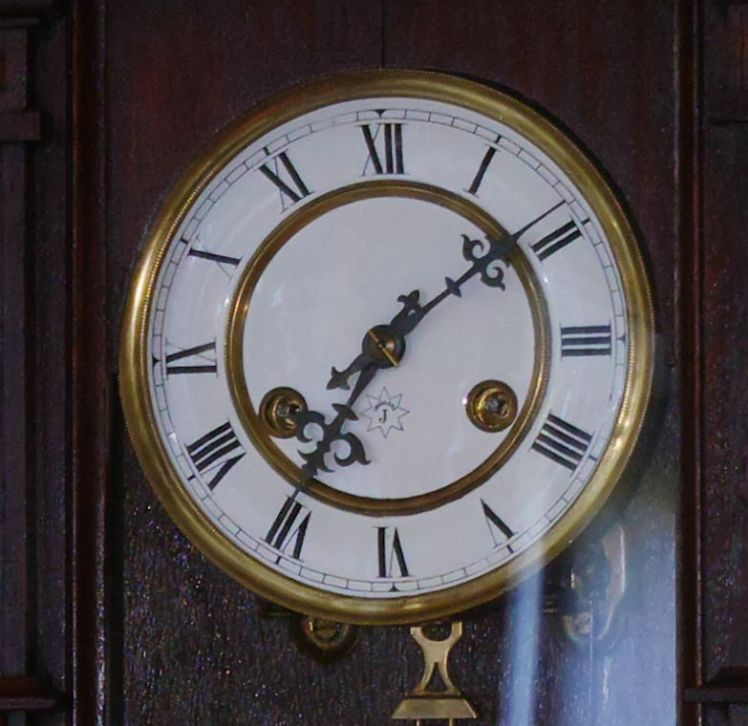
When the case was restored and the movement was finally ticking again, I sent a photo of the finished clock to the family who had sold it. They never replied, and I can only imagine they felt a pang of seller’s remorse seeing it whole and beautiful once more.
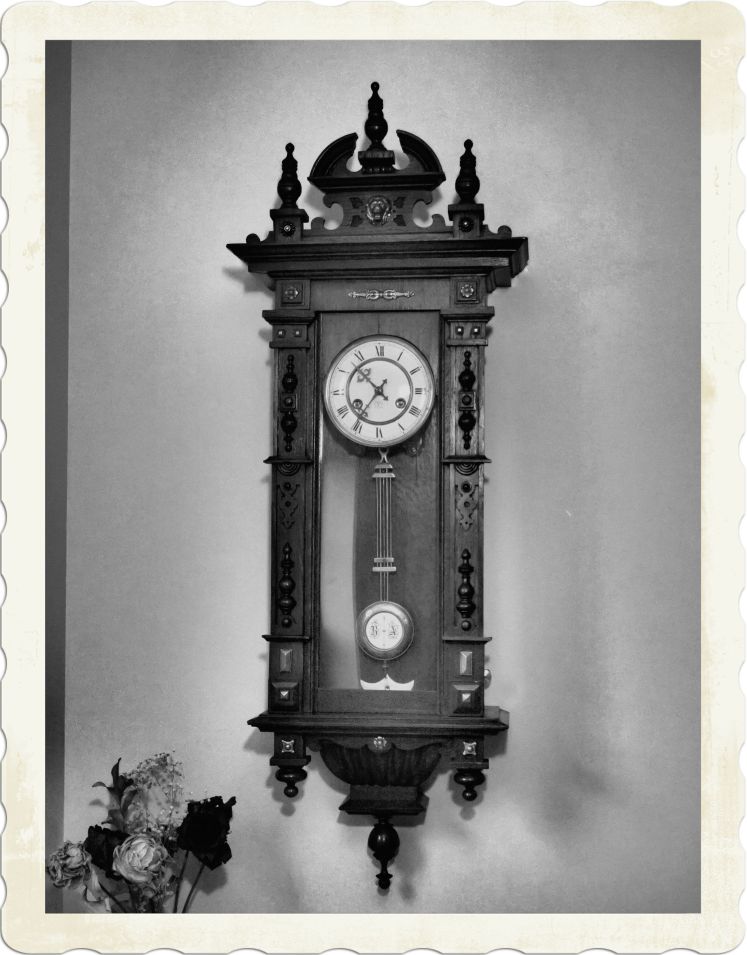
Even now, every time I walk past it, I can’t help but picture that December morning in 1917 — the moment when the blast shook the city and sent the clock crashing from its wall in a small North Halifax home. It must have lain broken for decades, silent witness to one of the darkest days in Canadian history. Today, it keeps perfect time once again, a survivor with a story that still speaks through its steady, patient tick.
Discover more from Antique and Vintage Mechanical Clocks
Subscribe to get the latest posts sent to your email.
 Antique and Vintage Mechanical Clocks
Wh
LikeLiked by 1 person
Wonderful story I enjoy your story-telling. Recently I was in an antique store in Madrid, Spain I saw a wall clock that resembles the one in your story, it had original glass and porcelain dial, I played with the idea of shipping it to the States, I leave in California, but it would have been to costly. Cheers A. Olmo
Sent from the all new AOL app for iOS
LikeLike
Thank you.
LikeLiked by 1 person