
There are few things more frustrating for an antique or vintage clock owner than when a favorite clock suddenly stops. Mechanical clocks are intricate machines, but that doesn’t always mean the problem is complicated. In fact, many stoppages are caused by small, simple issues that can be corrected at home without tools or technical expertise.
Before you assume the worst or take your clock to a repair shop, here are 5 things you can do yourself to have your clock ticking again.
1. Is the Clock Wound?
It may sound obvious, but the most common reason a clock stops is simply that it has run down. Spring-driven clocks need their mainsprings wound fully with a key, while weight-driven clocks require the weights to be raised. All mechanical clocks require power to operate. Simply put, if the clock is not wound, it cannot run — so always begin here before moving on to more complex possibilities.

2. Is the Clock Level and in Beat?
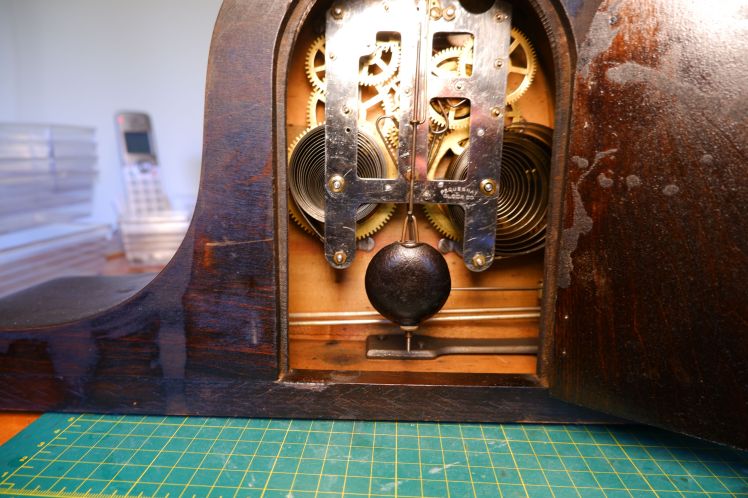
Pendulum clocks must be in beat to function properly. Being “in beat” means that the tick and tock are evenly spaced in time. If the case is leaning or the crutch (the arm that drives the pendulum) is out of position, the pendulum will quickly stall. Place the clock on a level surface and listen carefully: if the tick and tock sound uneven, adjust the clock slightly to the left or right until the beat evens out. Sometimes, fine adjustments to the crutch are necessary, but often leveling the case is all it takes.
Unless your wall clock is anchored, simply moving the case very slightly left or right and listening for an even beat is all that’s required.

3. Is the Pendulum Free to Swing?
The pendulum is the heart of your clock, and it must swing freely without interference. Check that the suspension spring is straight and properly seated, not twisted or bent. Make sure the pendulum bob is not rubbing against the backboard, striking the chime rods, or touching the bottom of the case. Any sort of rubbing will affect the swing of the pendulum, thereby robbing the clock of power. The smallest obstruction can rob the pendulum of momentum and bring the clock to a halt.
Clocks with a floating balance or a hairspring escapement are popular with some collectors since they continue running even when the surface isn’t perfectly level.
4. Are the Hands Binding?
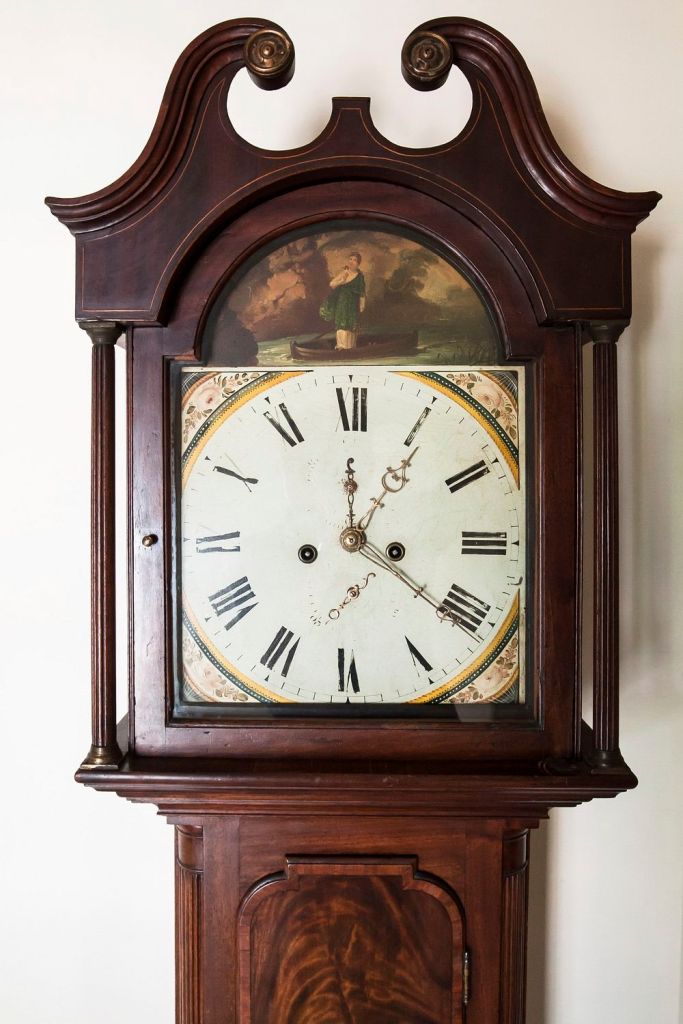
Sometimes the problem lies not with the movement but with the clock hands. If the hour and minute hands are rubbing against each other, or if the minute hand is scraping against the dial or the glass, the train can be stopped entirely. If the clock stops at a specific time every 12 hours, hands that are interfering with each other are likely the culprit. Inspect the hands carefully and make sure there is a little clearance between them. A gentle outward bend is usually all that’s needed to free them.
5. Is the Movement Dirty or Dry?
Mechanical clocks rely on clean pivots and fresh oil. Over time, old oil becomes gummy and collects dust, creating friction that will eventually stop the clock. If you notice dry or blackened pivot holes, sticky residue, or an overall grimy look to the movement, then lack of servicing is likely the culprit. Gummed-up oil in the mainspring coils can also cause the springs to appear as if they are glued together. Some people incorrectly refer to this condition as a clock that is “over-wound”.
When I first examine a newly purchased clock that does not run, I carefully release the mainspring’s power and then attempt to run the movement. If it runs, that tells me the mainsprings require servicing. At this point, the clock will need a complete cleaning and oiling by a qualified repairer.

Conclusion: When Simple Fixes Aren’t Enough
If you have checked these five areas and your clock still refuses to run, the cause is almost certainly deeper and more complex. Worn pivot holes, tired mainsprings, bent teeth, or other mechanical issues may be at fault — problems that cannot be corrected with quick at-home adjustments. A clock movement may appear clean, yet still be quite worn — something you can’t always detect without disassembly.
The good news is that your clock is very likely repairable, but it will require the attention of an experienced clockmaker. By ruling out these simple issues first, you’ll know with confidence when it’s time to seek professional help, and you may just save yourself a service call.
Discover more from Antique and Vintage Mechanical Clocks
Subscribe to get the latest posts sent to your email.
 Antique and Vintage Mechanical Clocks
Hello, Ron.Love your blog. Hoping you can tell me something about this Pequagnat mantle clock. My only other Pequagnat is a wall clock. A retired clock repairer I knew once told me, âif you can ever get a Pequagnat at a decent price, buy itâ and this one was only $30 in an online auction. Seems to run well and chimes on the hour with a smaller ding on the half hour.
Steve
Sent from Yahoo Mail for iPad
LikeLike
Send me a photo or two to ronjoiner@antiquevintageclock.com
LikeLiked by 1 person