
Perhaps you already have a good sense of what you consider “antique” versus “vintage.” But after years of poking around the internet looking for interesting old clocks, I keep seeing confusion over these terms. So, maybe it’s not as clear-cut as we think.
Let’s start with the word “antique.” According to the United States Government (and no, I’m not sure why they felt the need to define it either), an antique is anything over 100 years old. Webster’s Dictionary backs this up, defining an antique as a work of art, piece of furniture, or decorative object from an earlier period, usually over a century old. Even Wikipedia throws its weight behind that definition. So, we can put a pin in that one: antique = 100+ years old.

Now, “vintage” — that’s where things get messy. According to eBay (and you’d think they’d know), vintage refers to items made between 1930 and 1969. But let’s be realistic: on eBay, “vintage” often means anything older than yesterday, dirty, worn, or vaguely old-looking — especially if the seller isn’t quite sure what it is. The word has been stretched and bent so far out of shape, it’s basically the new “rare.”
And then there’s “collectible,” a word the marketing world loves a little too much. Slap it on a box of cereal or a mass-produced novelty clock and suddenly it’s collectible! Or so they hope. Like “vintage,” the term is often used to create urgency, even when the item in question is neither rare nor particularly special.
In the world of clocks, though, collectors tend to agree on one rule of thumb: if it’s over 50 but under 100 years old, we say it is vintage. That said, there’s no universal consensus. In some circles — jewelry, for example — anything older than 20 years is called vintage. Some even split hairs further with terms like “near vintage” and “true vintage.” What does that mean? If a clock is 48 years old, is it near vintage? And at 50, does it cross the magical threshold into “true vintage”? Apparently, some people think anything made before they were born is vintage.
Personally, I find the 50-to-100-year range for “vintage” a reasonable definition.
But, as with all things, there are exceptions.
Take the 1970 Junghans Astor-Quartz wristwatch. Junghans (still in business today), a company with over 150 years of history, introduced this quartz marvel in 1970. Today, collectors drool over it. Is it vintage? Technically yes — even if it’s quartz. So while many collectors would scoff at calling anything battery-powered “vintage,” the Junghans is a reminder that there are always exceptions worth making.
For me, the mark of a true antique or vintage clock lies not just in its age, but in its craftsmanship. Examine the detail, the precision, the pride of work that went into clocks made decades or even centuries ago. I am thinking of the ornate clocks of the Black Forest Region in the 19th century, and French-made ornamental clocks of the 18th century. That kind of workmanship is rare today. Mass production, like common clocks of the 1930s and 1940s, can’t quite capture the same spirit.

For example, I have an Arthur Pequegnat Canadian Time clock. It’s certainly old — but how old? The company produced this model from 1916 to 1941 without changing the design or movement, making it nearly impossible to pinpoint its exact production year. Is it antique? Vintage? Somewhere in between?
Old Is Not Gold
In the clock business, “old is not gold” is a cautionary phrase used by experienced collectors and repairers to remind others that age alone doesn’t make a clock valuable, desirable, or worth restoring.
Why? Many old clocks were mass-produced, especially in the late 19th and early 20th centuries. Companies like Ingraham, Sessions, and Ansonia manufactured millions of clocks to meet demand. Just because a clock is over 100 years old doesn’t mean it’s rare or of high quality. Many people are surprised to learn that a clock passed down through their family may be worth very little.
An old clock in poor condition — worn-out movement, missing parts, heavily modified, or water-damaged case — may have little to no value, even if it’s technically an antique. Restoring it would cost more than it’s worth.
Collectors are selective. Certain styles, makers, or features (e.g., unusual complications, artistic dials, elaborate carvings) increase demand and value. A plain, utilitarian 100-year-old wall clock? Not so much.
Some clocks were made using leftover parts, kits, or have been assembled or altered over time. Others are reproductions made to look old. Being fooled by age can lead to disappointment, especially when paying more than it’s worth. For example, when North Americans had an insatiable appetite for antiques, many Vienna Regulators that were sent after the Second War were parted out and reassembled into “Frankenclocks”, a movement from one clock, a case from another, a pendulum from a third.

Final Thoughts
Better still, enjoying your clock is what really counts.
You don’t have to spend a fortune to own a meaningful piece of horological history. Ogee (OG) clocks, for instance, are true antiques — many 150+ years old — and still reasonably priced because of their large production numbers.
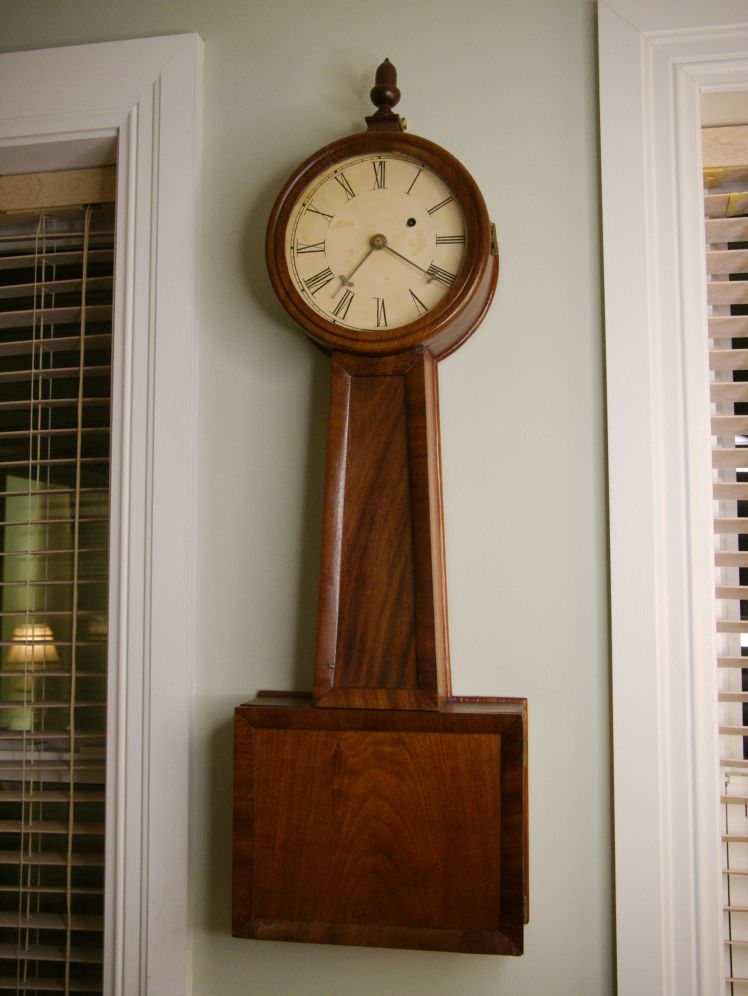
Antique banjo clocks are also within reach for many collectors, unless you’re chasing a rare Simon Willard original, in which case your wallet may start to sweat. And even if you snag a “Simon Willard original”, how can you guarantee that it is, indeed, original?
The takeaway? Whether antique, vintage, or collectible, it pays to do your homework. Researching a clock’s origin, model, and movement details can save you from disappointment — and occasionally lead to a delightful surprise.
At the end of the day, labels matter less than love. If you enjoy the look, sound, and story of your clock — whether it’s vintage, antique, or collectible — then it’s exactly the right clock for you.
Discover more from Antique and Vintage Mechanical Clocks
Subscribe to get the latest posts sent to your email.
 Antique and Vintage Mechanical Clocks
I look forward to these posts. Many thanks 🙏
LikeLike
Thank you.
LikeLiked by 1 person
Antique, collectable, vintage, nearly antique, very old, very new, or just blooming ancient. Does it matter? Do you care about the label. If you like it and can afford it buy it and enjoy it.
I do not think I have ever seen an unambiguous definition of a “Collector” and actually I do not care. If a person worries about a clock’s value they are not, in my view, a collector. They are an investor.
There is the turret clock by William Clement and dated 1672. Apparently it has been much altered over the years; some of the alterations possibly by the maker himself. (See the article in the BHI journal June 1956). By any phraseology it is undoubtedly an antique. It is also collectable. It is also unique. The grey area, to me is whether an item should be in public or private ownership. The Clement clock clearly should be in public ownership. My Smiths mantle clock of circa 1963 is clearly private. What about the mass between?
LikeLike
The Clement clock should be on public display though his name lives on with the invention of the anchor escapement. I often wonder why rare or historically significant clocks are kept in private collections. These clocks were meant for the whole world to see.
LikeLike
Enjoyed your article. Reminds me of a sign on a local store that states, “Antiques made daily.”
Another word way overused these days is “awesome.”
LikeLiked by 1 person
Thank you.
LikeLiked by 1 person