
Determining the age of a clock can be challenging, especially since listings often don’t specify the exact year the clock was made. However, you might come across phrases like “mid-century”, antique, collectible, or vintage which can give you a general sense of its age. If the description is accurate, it provides a good starting point for determining the age of the clock.
As a rule of thumb, an antique is something that is over 100 years old, while a vintage item is between 30 and 100 years old. Anything less than 30 years old may sometimes be considered vintage, but it’s often labeled as collectible instead.
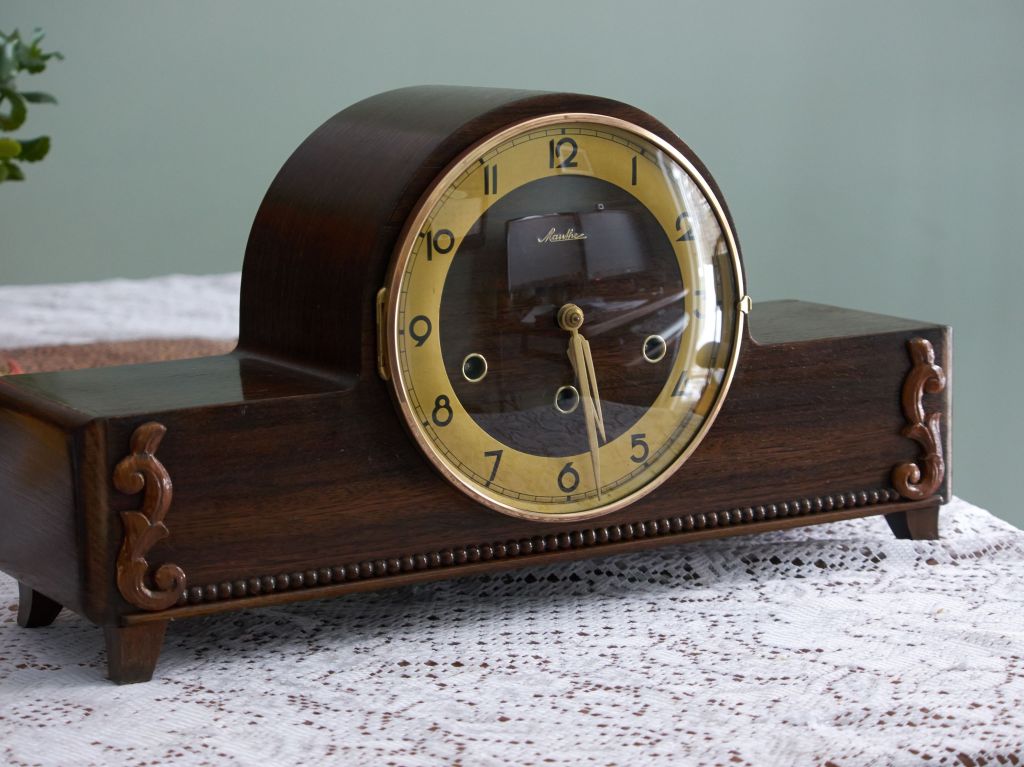
Dating a clock can indeed be challenging, but it’s an essential part of understanding its history, value, and significance. Here are some thoughts and strategies to help narrow down the age of a clock:
Identifying Maker’s Marks and Signatures
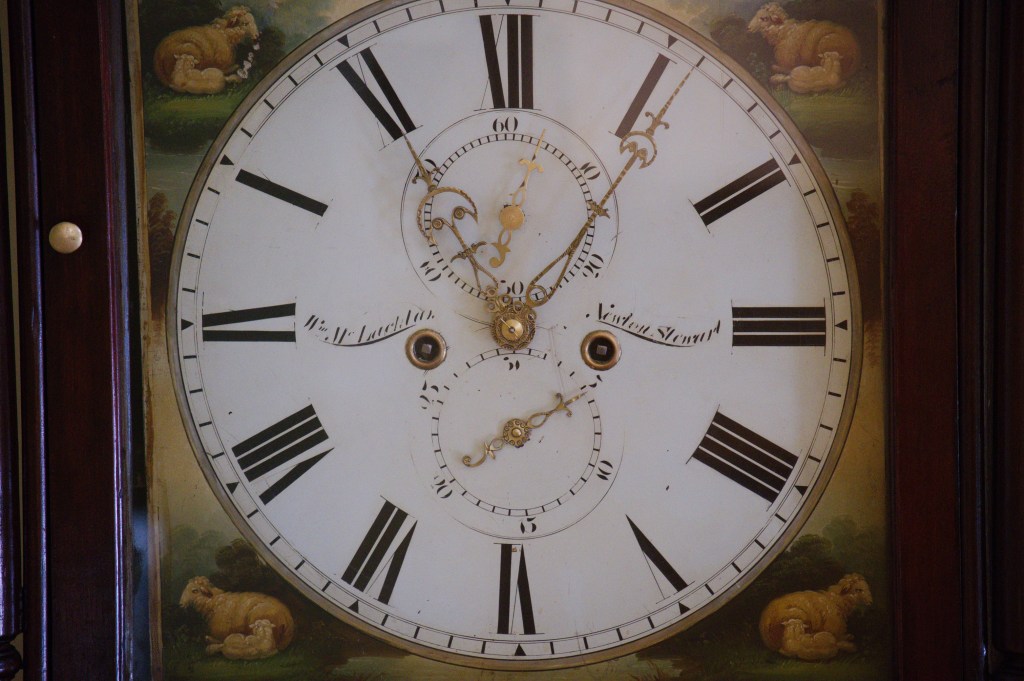
One of the most reliable ways to date a clock is by identifying the maker’s mark or signature. Some clockmakers stamped or engraved their name, logo, or serial number on the movement, dial, or case. Researching the history of the maker may not offer an exact date but will often provide a time frame for when the clock was produced.
Some manufacturers used serial numbers that can be cross-referenced with production records or databases maintained by collectors or horological societies. Having a serial number doesn’t always guarantee that it can be cross-referenced with a database, as clock databases are often not accessible online.
Analyzing the Style and Design
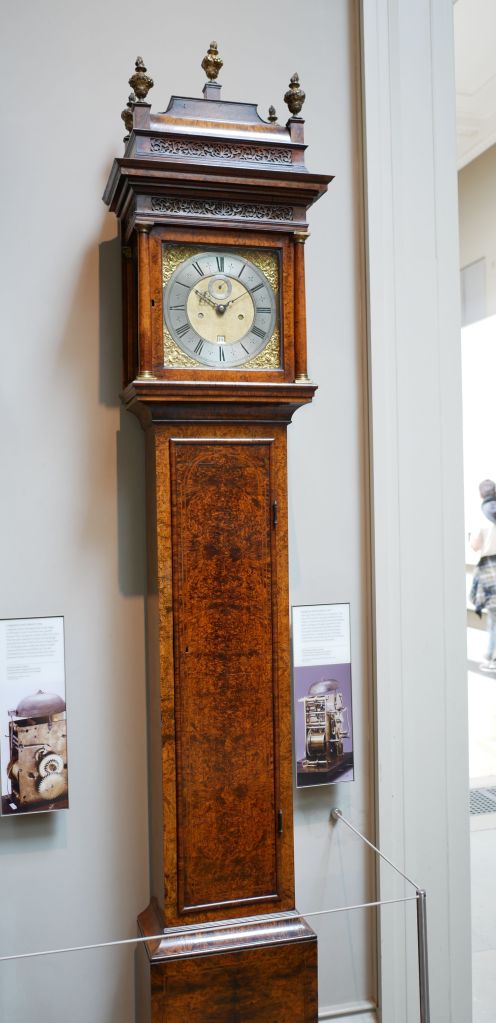
The design of the clock case can provide clues to its age. For example, Gothic Revival designs were popular in the mid-19th century, while Art Deco styles were prevalent in the 1920s and 1930s. Recognizing these stylistic trends can help you estimate the clock’s production period.
Another example is the German box clock, which gained popularity after Vienna-style clocks fell out of fashion in the early 20th century, remaining in vogue until around 1935.
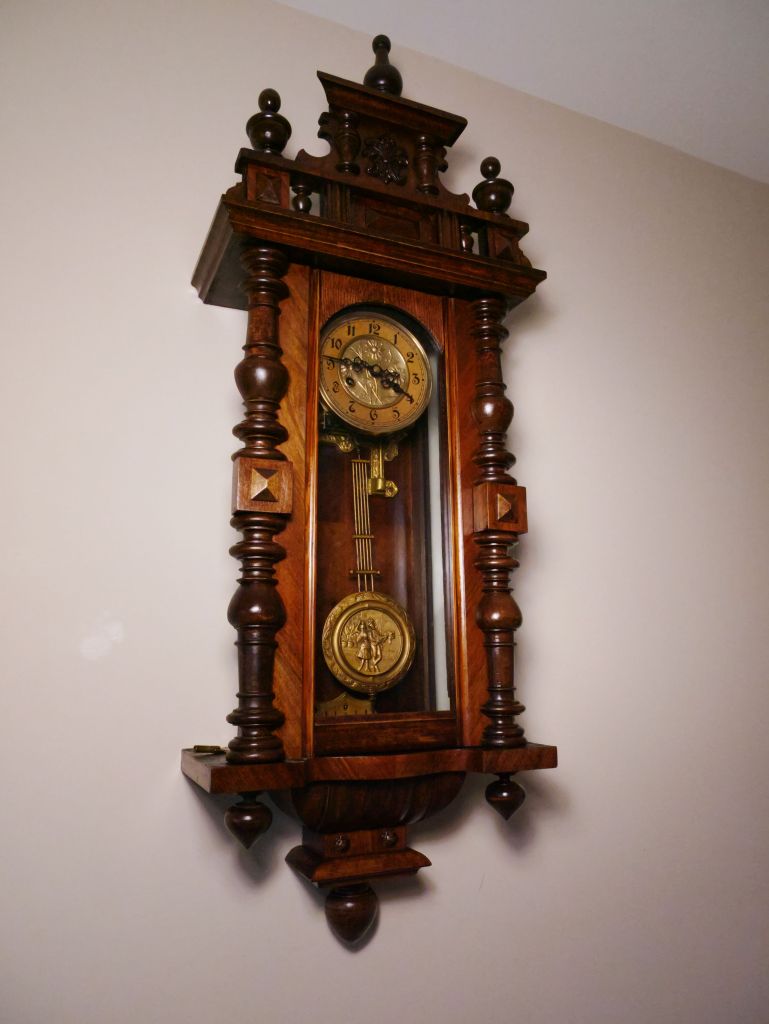
The style of the clock’s dial can also be indicative of its age. Painted dials were common in the early 19th century, while enamel and porcelain dials became more popular later on. The use of Roman versus Arabic numerals can also offer hints, with Arabic numerals becoming more common in the 20th century.
Logos can be used to date a clock. Trademark logos are typically stamped on the clock movement. Manufacturers modified their trademark design from time to time. As companies grew and evolved, their branding shifted to reflect new values, target markets, or aesthetic trends.

Movement Type
The type of movement inside the clock can also be a good indicator of its age. For example, early mechanical movements with verge escapements date back to the 17th and 18th centuries, while spring-driven movements became common from 1840 onward.
The introduction of electric movements in the early 20th century marked a significant shift in clockmaking.
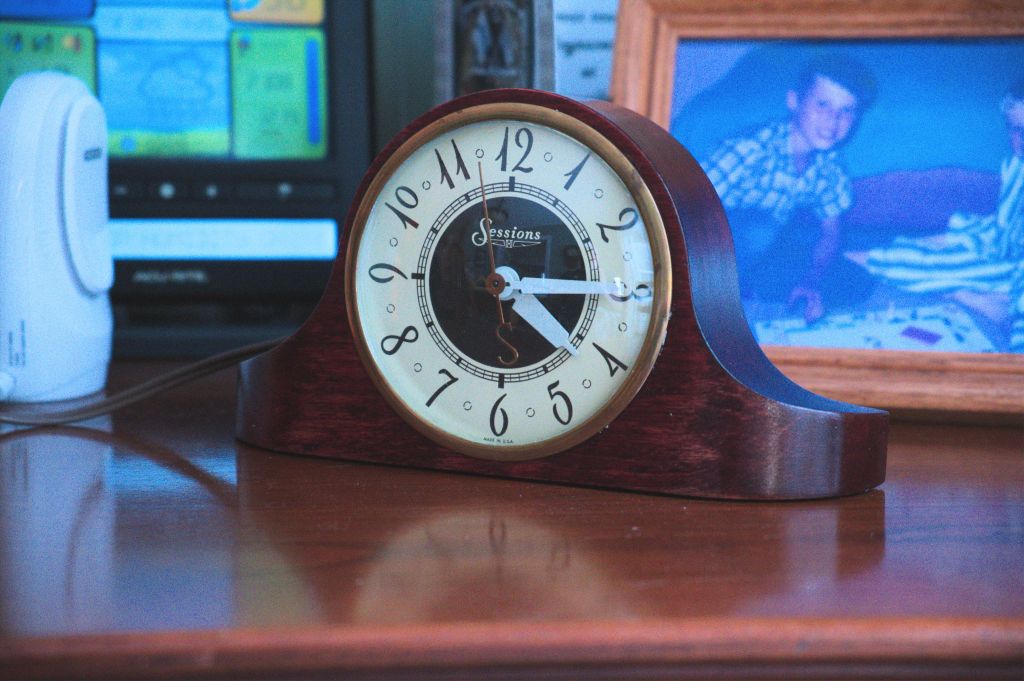
If the clock has a pendulum, its design can also be telling. Early pendulums were often long and ornate, while later ones might be shorter and simpler.
The introduction of the torsion pendulum, used in anniversary clocks, dates to the late 19th century.
Many clocks made after 1950 used an adjustable floating balance escapement that was less sensitive to variations in temperature and external influences. This stability results in more accurate timekeeping compared to traditional escapements.
Materials Used
The type of wood or veneer used in the clock’s case can help date it. Certain woods were more popular in specific eras, such as oak in the late 19th century or walnut in the early 20th century. Rosewood veneer was particularly popular in the mid-19th century, often used to create an elegant and luxurious finish on clock cases.
The materials used in the clock’s movement and case can also provide clues. For example, brass was widely used in clock movements from the 18th century onwards, while cheaper metal alloys became common in the 20th century.
Patent Dates
Some clocks, especially those from the late 19th and early 20th centuries, include patent dates on the movement or case. While the patent date itself doesn’t indicate when the clock was made, it provides a “no-earlier-than” date. For example, if a patent date of 1915 is stamped on the movement, the clock was made after that year.
Labels and Documentation
Many clocks, especially those from the 19th and early 20th centuries, came with paper labels on the back or inside the case. These labels often include the maker’s name, the place of manufacture, and sometimes even the model or patent date. For American-made clocks, the address of the label printer often provides a clue to the clock’s manufacturing date as shops often relocated.
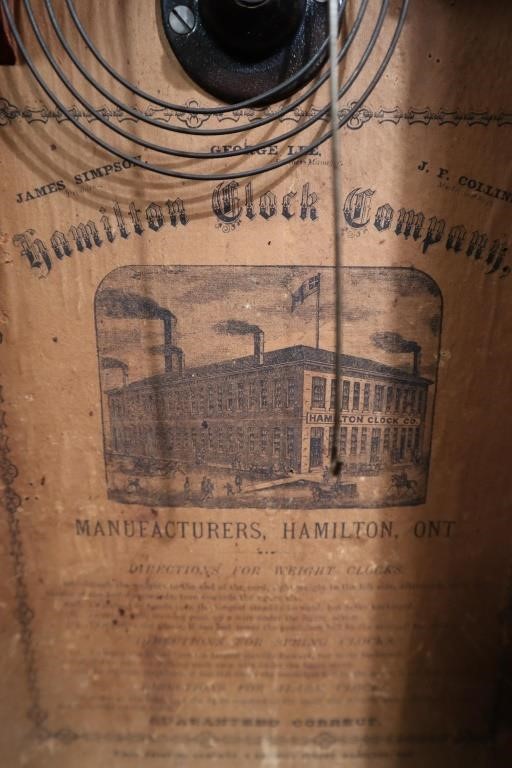
The country of origin can also influence the style and dating of a clock. For instance, certain types of clocks were more prevalent in specific regions, like the tall-case (grandfather) clocks in England during the 18th century, or the ornate mantel clocks popular in France in the 19th century.
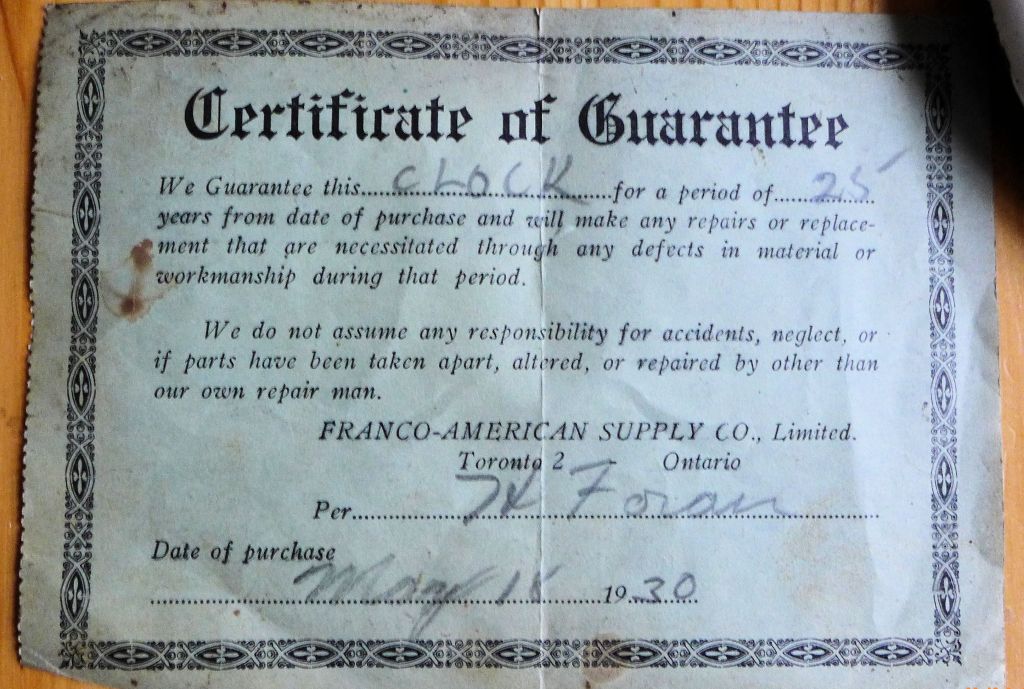
If the clock has been in the same family for generations, old sales receipts, repair records, or original packaging can provide valuable information about its age.
Any accompanying documentation with the clock could offer some valuable clues. The certificate of guarantee from the retailer [see below] indicates a sale date of May 18, 1930, meaning the clock was manufactured before this date. It could have been made several months or even a year or two prior, though the exact date of manufacture remains unknown.
Research and Expert Consultation
There are many reference books and catalogs dedicated to specific types of clocks, makers, and periods. These resources can be invaluable in identifying and dating a clock.

Tran Duy Ly is a well-known author and expert in the field of antique clocks and horology. He is particularly renowned for his extensive series of reference books on antique clocks, which are highly regarded by collectors, dealers, and enthusiasts. His books typically feature detailed information, photographs, and pricing guides for various types of clocks, including those by specific manufacturers like Seth Thomas, Ansonia, and Gilbert.
Ly’s works have become essential resources for those looking to identify, appraise, and learn more about antique clocks, and his name is synonymous with authoritative clock references in the horological community.
If you’re uncertain about the age of a clock, consulting with a professional appraiser or horologist can provide you with a more accurate assessment. Experts can often recognize subtle details and variations that indicate the clock’s age.
Conclusion
Dating a clock requires a combination of research, observation, and sometimes expert consultation. By examining the maker’s marks, design, movement type, materials, and other characteristics, you can often narrow down the clock’s age to a specific period or even a precise year. Understanding these details not only enhances the clock’s historical significance but also helps in determining its value and collectibility.
Discover more from Antique and Vintage Mechanical Clocks
Subscribe to get the latest posts sent to your email.
 Antique and Vintage Mechanical Clocks
love your blog Ron.
I find that the NAWCC forum is an amazing reference tool to identify clocks, clock parts and how to advice. My latest post there is what is turning out to be a Hamilton Frankenstein. It’s a modified time and strike Hamilton movement to make it time only, encased in an octagon drop box. Finding out it was a bit of a Frankenstein took a bit of the wind out of my sails but it’ll soon take a place on my wall.
If you have them, can you send me a photo of the subscription card from that clock magazine ?
LikeLike
Yes, NAWCC is a wealth of useful information. Here is the link to Clocks.
Ron
LikeLike