
A museum is an institution dedicated to the display of objects of lasting interest and historical value. While museums can showcase a wide variety of items, The Canadian Clock Museum, located in Deep River, Ontario, (Canada) focuses specifically on Canadian clocks and clocks with a Canadian connection.
I first visited the museum in 2013, and this year marked my eighth visit. Each visit has offered a new learning experience, and this one was no different.
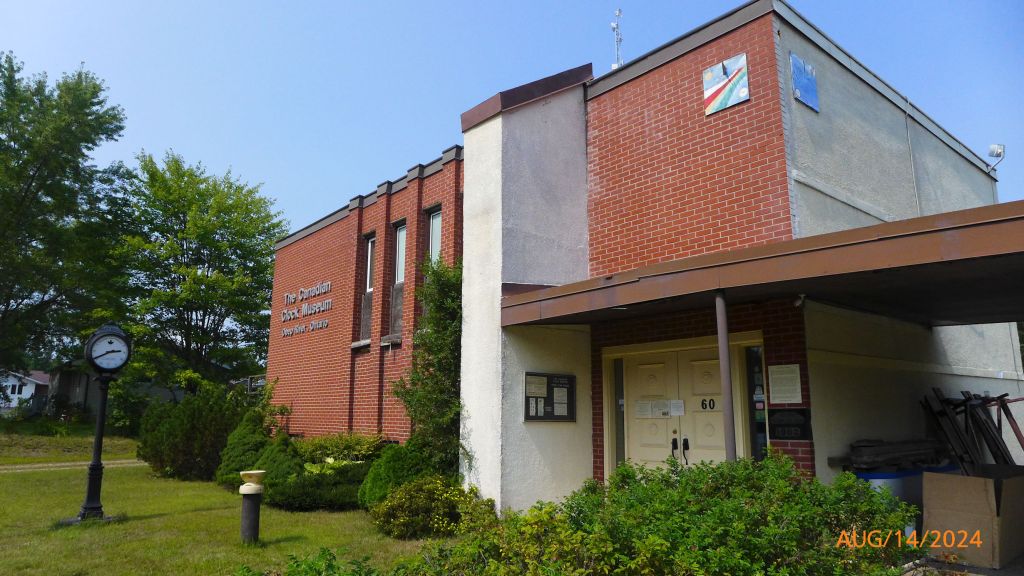
Despite its modest size, the museum offers a relaxing experience, with a well-organized flow that guides visitors through displays of various manufacturers and themes.
The informational cards beside each clock provide just enough detail to captivate visitors without overwhelming them. Many of the clocks have fascinating stories, which Curator Allan Symons is more than happy to share, although, sadly, some histories have been lost over time as clocks change hands.

A charming feature is the check-in and check-out punch clock cards, done on a Blick Time Recorder clock, that every guest gets to experience to record their visit. Blick Time Recorders was a London, England-based company but they had a Canadian branch that sold them for factories in Ontario, and elsewhere. The reproduction card was created by a summer student about fifteen years ago from card design options in the Blick Canadian catalog.

The collection primarily features mechanical clocks, but the museum also boasts the most extensive collection of Snider electric and battery-operated wall and shelf clocks (in the world?), manufactured in Toronto. Harry Snider’s two business names in Toronto covered the periods 1950-1957 and 1957-1976. His pink and turquoise wall and TV lamp clock designs date to the 1950s (when those colours were popular for fridges, stoves, and bathtubs in homes).
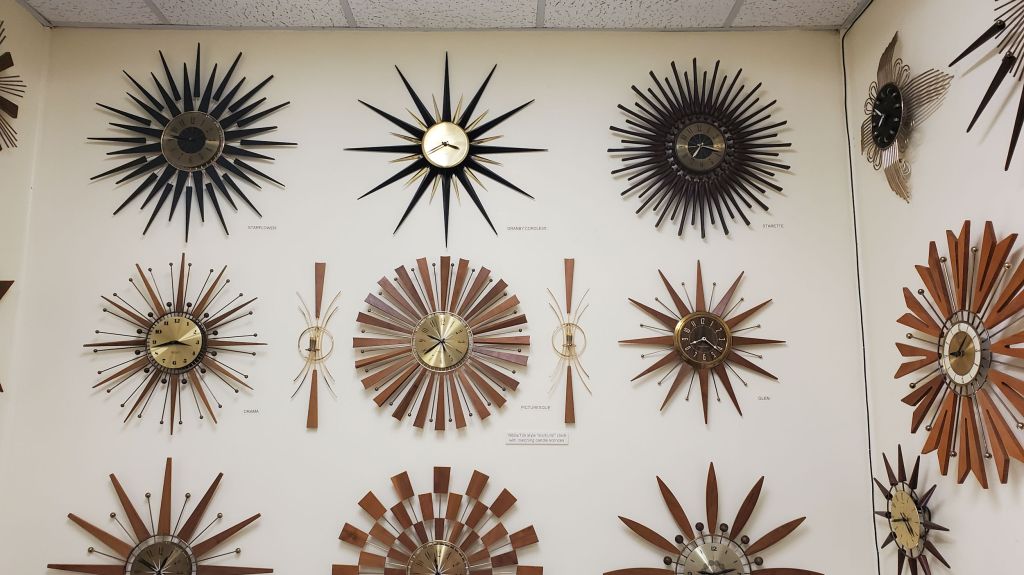
During my visit, a couple arrived at the museum to donate a Snider starburst wall clock with a brass and walnut finish. Curator Symons was grateful for the donation and gave them a personal tour of the museum as a gesture of appreciation.
Although many items are acquired through auction sites and online sales, the museum also receives some pieces as gifts. For items that align with the museum’s theme, shipping costs are covered.
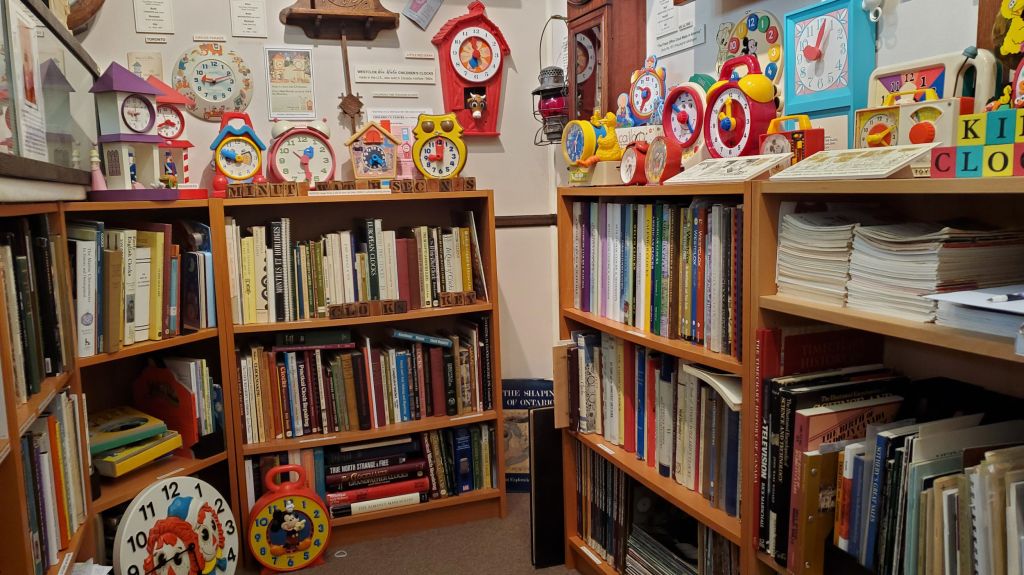
Though some exhibits remain unchanged over the years, Curator Allan Symons continues to expand and refresh the collection with new and intriguing clocks of all kinds.
So, what’s new this year?
Notably, in the past two years, the museum has acquired a large tall case clock, a wall clock with special historical significance, and IBM time recorder punch clock in addition to other interesting pieces.
Martin Cheney, Montreal Clockmaker
The clock that captured my attention most was a time-only, weight-driven tavern-style wall clock made by Martin Cheney in the 1820s.

In 1809, Martin Cheney relocated to Montreal from Vermont, where he lived for about twenty-one years. In 1817, he partnered with J. A. Dwight, and together they operated under the name Cheney & Dwight at 104 St. Paul Street, Montreal. The business produced movements, cases, wall and tall case clocks, and banjo clocks. Their partnership lasted until 1830.
This remarkable piece was donated to the museum and stands as a testament to early Canadian craftsmanship. In my view, no serious Canadian clock collection would be complete without a Cheney clock.
IBM Time Recorder
Another notable and unusual piece is the IBM time recorder, which was commonly used in factories and workplaces from the 1920s onward. The employees’ time recorder was made by IBM around 1930 in their Toronto factory. According to the donor, his late father acquired it when he retired from the General Electric factory in Peterborough, Ontario.
This departmental clock was designed to handle up to 100 employees, so large factories would typically have several of these clocks. It is a large and imposing piece, with a robust design that reflects its practical role and the industrial era in which it was used.

It immediately brought to mind my days as a part-time clerk in an Ottawa department store, where starting the workday was marked by the ritual of clocking in. In my case, it was an electric punch clock, unlike the mechanical one now on display at the museum.

Pequegnat Hall clock
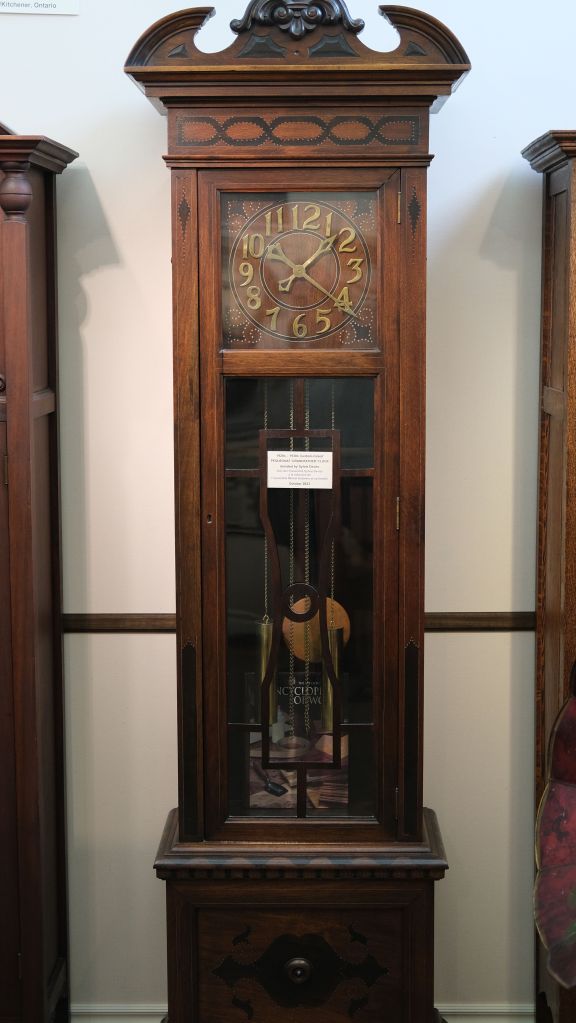
Most Pequegnat clock enthusiasts do not realize that the Arthur Pequegnat Clock Company of Kitchener, Ontario, sold kits containing the movement, hands, dial numerals, weights, chains, and pendulums, allowing customers to build custom-sized cases to fit them. And so it is, with a special Pequegnat tall case (hall) clock.
This tall and imposing hall clock case stands out as far more ornate than what you’d typically see on a Pequegnat clock. Its design evokes a strong love-it-or-hate-it reaction, but there’s no denying the intricate craftsmanship of the case.
The clock was donated in October 2023 by a woman in the Montreal area when she was preparing to relocate.
There is more to offer at the museum
For those with a casual interest in clocks, the museum offers a variety of intriguing displays, including an antique phonograph from the Victor Talking Machine Company of Camden, New Jersey, a clockmakers/watchmakers workbenchs, alarm clocks, several fascinating Tramp clocks, a choice of “fun in time” teaching clocks for children, clock radios, and a small collection of Girotti wall clocks (St. Catharines, Ontario) that were popular in the 1960s and ’70s.
The Girotti clocks are not my cup of tea, but they are an interesting interpretation of the 1970s modernistic sculptured style and provide a glimpse into the culture of the late 20th century.

Whether you are a clock enthusiast or just curious about the allure of any museum this one is well worth a visit. Returning visitors will always find something new and fascinating to enjoy. And if you can’t make it in person, Allan offers a virtual tour that will inspire a future visit.
Discover more from Antique and Vintage Mechanical Clocks
Subscribe to get the latest posts sent to your email.
 Antique and Vintage Mechanical Clocks
Hello again Ron.
I was in to visit Allan a couple weeks before your arrival. Too bad we couldn’t connect. As with any clock collector I meet I always ask what the long term plan is to preserve such collections. He assured me that a board of directors will keep the museum vibrant in his absence.
I say again I would love it if Peterborough, the home of Westclox was the future home of the Canadian clock museum. Perhaps the NAWCC could take on such an enormous task, but I doubt it.
LikeLike
Thank you for your email. It’s unfortunate that we missed each other by just a couple of weeks—would have been great to connect in person. Perhaps next year!
I appreciate your thoughts on the long-term preservation of clock collections. Allan’s assurance about the board of directors keeping the museum vibrant in his absence is encouraging. It’s so important that these collections, which represent such a rich part of our heritage, are safeguarded for future generations.
Ron
LikeLike