
Restoring Antique Clocks according to Customer wishes


While I do not operate a clock business I have, in the past, worked on other people’s clocks.

The customer’s perspective and preferences are always paramount when it comes to repairing and restoring antique clocks. As an antique clock blogger and clock repairer, I believe it is crucial to respect and understand the wishes of the clock’s owner. Each customer may have their own unique vision for their clock, and it is important to provide them with options while also offering expert advice.

When working on a customer’s clock, it is customary to present various options for repairing the movement and addressing any case issues. While some clocks may have significant provenance or historical value, necessitating minimal intervention, others may benefit from repairs and cleaning to bring out their full potential. However, it is ultimately the customer’s decision on how they want their clock to be treated.

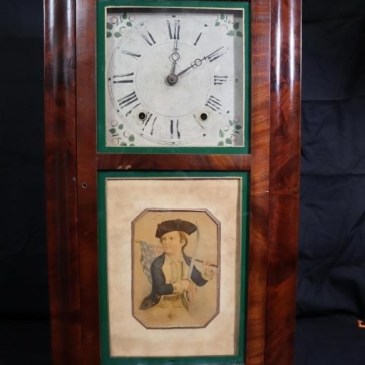
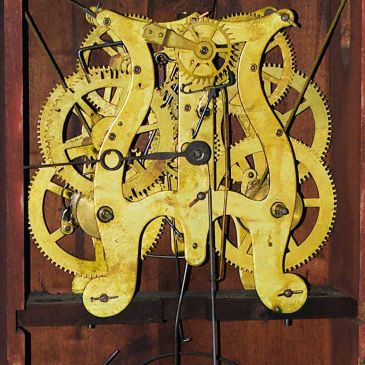
In a recent experience, I had the opportunity to work on a clock with a non-functioning movement and a beautifully designed case. When discussing the options with the customer, they expressed a desire to prioritize making the clock run and replacing the broken hands, while leaving the case untouched. Although I believed that cleaning the case and applying a fresh coat of shellac would enhance its appearance, I respected the customer’s wishes and proceeded accordingly.

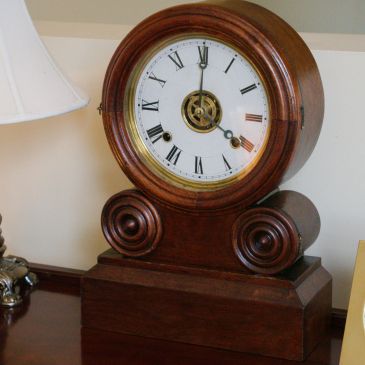
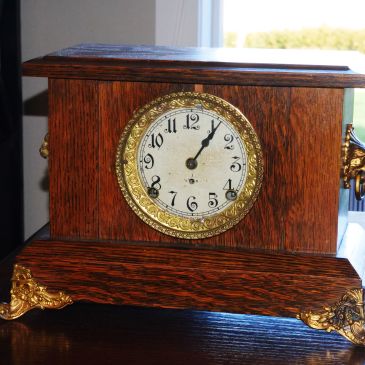
1-day Ogee from the 1860s

In the realm of antique clocks, the customer’s satisfaction is of utmost importance. While as a clock restorer and enthusiast, I may have my professional opinions and recommendations, it is essential to remember that the customer’s vision and preferences take precedence. By offering different choices and providing expert guidance, we can ensure that the customer’s clock not only functions well but also aligns with their aesthetic sensibilities and personal attachment to its history.

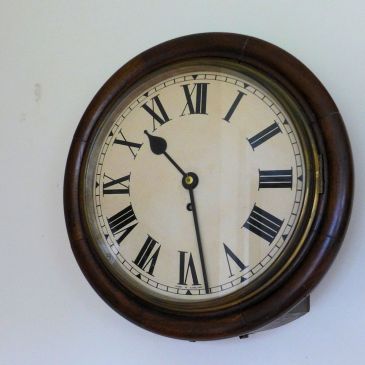
Customer clock

The customer’s desires should be respected when working on antique clocks. While expert advice can be offered regarding repairs and restoration, the final decision lies with the customer.

By presenting various options and considering their input, a functional clock that meets their expectations and preserves the integrity of the clock’s history and design while preserving the relationship between the repairer and the customer is the ultimate goal.

A time of celebration for American readers

As a Canadian clock blogger, it’s essential for me to recognize and appreciate readers in the United States who are celebrating Independence Day, July 4th. In the spirit of unity and shared appreciation for history and tradition, this article aims to acknowledge and honour my American readers as they commemorate their significant day.

Photo by Brett Sayles on Pexels.com

A Common Thread of Independence

Just as Canada Day symbolizes the birth of a nation, Independence Day serves as a reminder of the extraordinary courage and resilience displayed by the American people throughout their history. Antique clocks, with their enduring craftsmanship, mirror the tenacity and independence that have shaped the United States. By acknowledging this common thread, we can celebrate the shared appreciation for freedom and self-determination that unites us all.

American Heritage

Independence Day is an occasion for Americans to honor their country’s rich heritage and the values upon which it was founded. As an antique clock blogger, I acknowledge the significance of American clockmaking traditions and the contributions made by skilled artisans throughout their nation’s history. By recognizing and showcasing the unique heritage of American clockmaking as much of my collection consists of American-made clocks, we can celebrate the ingenuity and craftsmanship that have made a lasting impact on the world of horology.

Connecting Through Time

Antique clocks have a remarkable ability to transcend borders and connect individuals across time and space. Those connections consist of many letters received from my American friends.

On American Independence Day, we can reflect on the profound impact that historical events have had on shaping both nations. By acknowledging our American readers and their celebration of independence, we foster a sense of unity and understanding, forging a connection that transcends geographical boundaries and embraces the collective appreciation for history and heritage.

Celebrating Freedom and Progress Together

Independence Day is a time for Americans to celebrate the hard-fought freedoms they enjoy today. It is also an opportunity to acknowledge the progress made over the years and to envision a future that upholds the values of independence, equality, and unity, values that are cherished in my country, Canada. By celebrating both the freedoms gained and the advancements achieved, we pay homage to the spirit of independence and progress that define our shared human experience.

As our neighbour observes Independence Day, I extend my appreciation to our American readers and acknowledge the significance of their celebration.

Celebrating Canada Day with family and friends

Finding a way to tie in antique clock collecting and repair to Canada Day celebrations on July 1st is an interesting challenge so I came up with some oddball thoughts the reader might find amusing. So here goes.

Canada Day, at one time known as Dominion Day, marks the anniversary of the Confederation of Canada on July 1, 1867. It’s a day when Canadians honor their country’s rich history and express their patriotism.

As the nation of Canada prepares to celebrate its special day on July 1st, it’s a time for Canadians to come together, reflect on their history, and embrace their shared heritage. And what better way to commemorate this occasion than by exploring the fascinating connection between Canada Day and the timeless beauty of antique clocks?

What is the connection you say!

Antique clocks possess an inherent ability to transport us back in time, evoking a sense of nostalgia and reminiscence. Just like a vintage clock reminds us of eras long gone, Canada Day encourages Canadians to reflect on their roots and appreciate the sacrifices made by those who came before. The celebration of Canada’s multicultural heritage and diverse traditions aligns beautifully with the stories antique clocks hold within their aging wooden cases.

Cherishing our past

Antique clocks remind us that time is a valuable resource, urging us to cherish our past, live in the present, and build a brighter future. Canada Day serves as a reminder to honor the progress made as a nation and strive for continuous growth, just as the gears of an antique clock works in harmony to mark the passing of time.

A clock that is older than our Confederation

To restore and preserve

Antique clock enthusiasts understand the importance of restoration and preservation. Similarly, Canada Day encourages Canadians to safeguard their cultural heritage, preserve historic landmarks, and protect the stories that shaped their nation. Both antique clocks and Canada Day represent the value of cherishing the past and ensuring its vitality for future generations.

The symbolism of time and a promising future

Whether it’s the meticulous craftsmanship, the nostalgic charm, or the symbolism of time, antique clocks and Canada Day share a deep connection that honors the past, celebrates the present, and looks towards a promising future.

So, as you commemorate Canada Day, take a moment to reflect on the timeless beauty of antique clocks and the remarkable story they tell.

And, there you have it.

As for me relaxing with friends and family is the only way to celebrate our most important day of the year.

Tick Talk Tuesday #49 – a well-preserved column and cornice clock

Tick-Talk Tuesday is dedicated to addressing readers’ letters and comments related to clock issues, challenges, and recommendations for specific clocks. In cases where the comments and questions are particularly challenging, I seek advice from my fellow clock enthusiasts to provide the most accurate and helpful response.

DS writes

Morning, Ron –

I’ve wanted to let you know how much I’ve enjoyed these blog posts.

What a nice work area you have there, too.

I’ve had my eyes on a marvelous Wm. Van Tassel sleigh-front, or “Triple Decker” Seth Thomas manufactured for the Canadian market for some time. I’ve been fascinated with these old clocks for many years, and in particular the triple-deckers.
I’ll attach an image or two of the Van Tassel I’m interested in.
It is perhaps the finest sleigh-front I’ve ever seen, in terms of condition & originality.

I only have a modest collection of some cottage clocks of the various Connecticut makers, and several “Ogees.” My only real “Problem” is finding time enough to spend with them!

Thanks again for these interesting, well-written articles.

Take care…

Image preview
Wm. Van Tassel sleigh-front

I write

Thanks for your email, DS

That is a very nice clock. Some would call it a column and cornice but as you said often referred to as a triple-decker. I like the two-door feature. I have a similar Seth Thomas. My only thought is whether or not the tablets (or at least one of them ) are original. The cornice and the base are often beat up with wear and tear and it is nice to see one so unmolested. It is a clock I would take a serious look at.

I appreciate your comments on my blog.

Ron

Seth Thomas column and cornice shelf clock
Seth Thomas column and cornice clock

My very similar Seth Thomas clock

Taking a break

It’s time for us to unwind, slow down, and embrace a change of scenery. My wife and I are heading to our cottage in central Canada for the summer season, where we plan to relax, read good books, indulge in fishing, swimming, and hiking, and share stories with friends and neighbors while savoring a glass (or two) of wine.

The lake

Even though many of my blog articles have been written well ahead of the summer months, there will be no interruption in posts throughout this period. I will continue to maintain a consistent output of two articles a week.

Just as Dean Martin used to say at the end of his TV variety show, “Keep those cards and letters coming!” While there might be a slight delay in responding to your email inquiries or blog post comments, please rest assured that your questions about your clock or comments on any of my posts are significant to me and will be addressed.

Mission style clock found in a thrift shop in the Quebec area

This blog primarily showcases my own clock collection, delves into the challenges of clock maintenance and repair, shares the joys of discovering new and intriguing vintage and antique clocks, and covers various horological topics of interest.

A Gilbert clock found on Facebook marketplace and a summer project

As we explore central Canada, I anticipate stumbling upon fascinating clocks in antique stores, flea markets, and other unique shops. Alongside documenting new clock stories, I’ll also face fresh repair challenges and perhaps undertake the next major restoration project during my summer journey.

Canadian Clock museum
The Canadian Clock Museum

Additionally, I’m excited to revisit The Canadian Clock Museum in Deep River, Ontario, where I’ll discover new and captivating clocks added to their collection and engage in conversations with curator Allan Symons.

Feel free to use the search box to explore past articles or click “follow” to receive clock-related articles directly in your mailbox. I sincerely hope you enjoy reading them as much as I relish researching each and every article.

Pendulum clocks and Temperature compensation

In this post I will acquaint the reader with temperature compensation and what it means for maintaining the accuracy of a mechanical clock.

Almost all materials expand noticeably with heat and contract when cooled.

Temperature compensation is a critical factor to consider when it comes to the maintenance and repair of antique mechanical clocks. Clocks are precision instruments that rely on a delicate balance of mechanical components to keep accurate time. Any changes in temperature can cause the metal components of the clock to expand or contract, leading to inaccuracies in timekeeping.

Pendulum with dissimilar metal rods

To combat these fluctuations, many antique clocks were designed with temperature compensation mechanisms. These mechanisms are intended to counteract the effects of temperature changes on the clock’s accuracy. One common method of temperature compensation is the use of a bi-metallic strip, which is a strip of two different metals that are bonded together. As the temperature changes, the metals expand and contract at different rates, causing the strip to bend and adjust the balance of the clock.

Wood was a commonly used material for antique clock pendulum rods because it has a low coefficient of thermal expansion, meaning it is less likely to expand or contract with changes in temperature, which is crucial for maintaining the accuracy of timekeeping in clocks. Wood is relatively lightweight and easy to work with, making it a practical choice for clockmakers.

Seth Thomas Regulator #2
Seth Thomas Regulator #2 with wood pendulum rod

However, not all antique clocks were designed with temperature compensation mechanisms.

Clocks that have no temperature compensation may need seasonal adjustments

For those that lack these features, it’s important to keep the clock in a stable environment with minimal temperature fluctuations. However seasonal changes in heat and humidity may require periodic adjustments. Exposure to extreme temperatures or rapid changes in temperature can cause damage to the clock’s components and negatively impact its accuracy.

Gustav Becker Vienna Regulator with wood pendulum

Temperature compensation is a critical factor to consider when it comes to antique mechanical clocks. While some clocks were designed with built-in temperature compensation mechanisms, others may require more careful maintenance and storage to ensure accurate timekeeping over time.

Having said the above not every pendulum design that appears to provide temperature compensation actually serves that purpose. In certain instances, pendulum rod designs may be purely decorative (such as the Mauthe wall clock below) and lack temperature compensation functionality altogether.

Mauthe wall clock circa 1895


If your clock is experiencing inaccuracies in timekeeping, there are various adjustments that can be made. However, if you lack the necessary expertise, it is advisable to consult a professional clock repairer. They can thoroughly examine the clock’s mechanisms, identify any problems, and make the necessary adjustments to ensure precise and accurate timekeeping.

If I had to take one antique clock from a “burning house” which one would it be

We have been facing a challenging spring here in Nova Scotia, as the threat of wildfires has been looming over us.

In May 2023, our community in Nova Scotia has been devastated by the occurrence of two uncontrolled wildfires. The dire consequences of these fires include the evacuation of thousands of individuals and the tragic loss of hundreds of homes.

Residing in a rural area with our house nestled amidst beautiful trees, we can’t help but have a constant awareness of the potential for fire.

While it’s crucial to prioritize safety and well-being in emergency situations, it’s understandable that certain personal belongings/items hold significant value to us. They include ID, cell phones, credit cards, vehicle titles, keys, flashlights, passports, a portable hard drive containing all personal photos, and essential clothing but if I find myself with a moment to select just one antique clock during a speedy evacuation what would it be?

My wife prompted this discussion when she asked, “What clock would you take?

Selecting a specific antique clock to save from a “burning house” is a subjective decision based on personal preferences, sentimental value, and the uniqueness of each clock. However, here are a few factors I might consider when making my decision:

  1. I might choose a clock that holds special meaning to me or my family. It could be a clock that has been passed down through generations or one that has sentimental value attached to it.
  2. I would consider the rarity and historical significance of the clock in question. If a clock’s origins is significant or it is known for its craftsmanship or historical importance, I might prioritize saving such a clock.
  3. If one clock is in better condition or has the potential for easier restoration, it might be a good choice to save.

Here are 5 clocks that would be high on my list and the reasons why. But in the end, I could only take one!

Pequegnat Canadian Time

Pequegnat Canadian Time

I have had this clock for a number of years, and have serviced it twice. The clock’s case, on the other hand, has remained untouched and remains in exceptional condition. This particular clock holds a special place in my collection as one of the earliest examples of the eight Pequegnat clocks I own. It spent its life in the waiting area of a train station located 1/2 drive from my home.

Sawin Banjo Clock

Sawin banjo clock

Dating back to the 1840s, this exceptional timepiece exemplifies the pinnacle of meticulous movement craftsmanship. While the case and movement do not bear any explicit “Sawin” markings, various indicators strongly suggest that it was crafted by John Sawin himself or one of his associates or apprentices. Notably, this clock stands out for its straightforward construction, lacking side rails or ornate embellishments such as painted tablets or gilt decorations. It is precisely this simplicity in design that captivates me, as it allows the clock’s elegance and craftsmanship to take center stage.

Junghans Crispis time and strike wall clock

Junghans Crispi

This clock underwent a comprehensive restoration process involving countless hours of work, including disassembling, creating new components, servicing the movement, and refinishing the case. The restoration required a significant amount of labor and attention to detail. The clock holds a captivating story as it was rescued from a house that endured severe destruction during the Halifax Explosion in 1917.

Single-weight Vienna Regulator

Single-weight Vienna Regulator

The sheer beauty of this clock makes it incredibly challenging to part with. Its design epitomizes the finest qualities of the 1880s Vienna style. Unlike the later Viennese clocks, which often leaned towards ornate and ostentatious features, the clocks from this particular period maintain their elegance and embrace a more refined and understated aesthetic. The clock’s classic, simple lines are a testament to the enduring allure of the Vienna style during that era.

Arthur Pequegnat Canadian Time

Arthur Pequegnat Moncton

It is quite possible that this clock was located in a train station or some other commercial setting, given its robust construction and durability designed to withstand potential mistreatment. Additionally, its timeless design features are reminiscent of the classic lines commonly associated with the 1920s era. The clock’s sturdy build and elegant aesthetics perfectly capture the spirit of that period, adding to its overall charm and appeal.

E. Ingraham Huron

Rare Ingraham Huron found on a local online for-sale site
E Ingraham Huron

This clock resided in the charming vicinity of Bridgewater, Nova Scotia. It came into our possession during a challenging period for a couple undergoing a difficult separation, as sentimental items often find their way to new homes in such circumstances. Among the clocks in my collection, this one stands out as one of the few that underwent professional servicing, ensuring its optimal functionality. Notably, this clock holds a relatively rare status, being produced by the E. Ingraham Clock Co. during the brief span of two years, between 1878 and 1880.

And now it boils down to the one to choose?

Although I hold great admiration for all of these clocks, if I were constrained by space and could only choose a single one to take with me, it would have to be the Junghans Crispi. As mentioned earlier, this clock embodies the qualities that I value, such as its exceptional craftsmanship and timeless appeal. Its unique design, combined with the renowned Junghans brand, makes it a standout choice in the collection. Given the limited space, the Junghans Crispi would be the clock I couldn’t bear to leave behind, as it represents the epitome of my preferences and holds a special place in my heart.

An unusual issue with a Vienna Regulator time-only clock

In this post, I describe an unusual issue when relocating my mini Vienna Regulator clock. But first some background information on Vienna Regulators.

The Vienna Regulator clock, also known as the Vienna wall clock, is a type of precision pendulum clock that originated in Vienna, Austria, in the late 18th century.

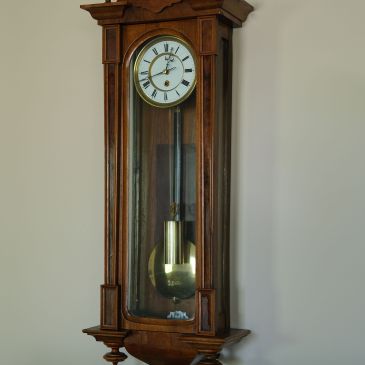
One-weight Vienna Regulator, unknown maker, C.1875

The development of the Vienna Regulator clock was influenced by several factors. One of the key factors was the rising demand for accurate timekeeping during the Industrial Revolution. Vienna, as a center of craftsmanship and technological innovation, played a vital role in meeting this demand.

They typically had a slender wooden case, which housed the pendulum and the clock mechanism. This design allowed for a longer pendulum, resulting in greater accuracy. The pendulum was often enclosed in a glass door or window, allowing the movement to be admired from the side panels while protecting it from dust.

The cases, made of various types of wood such as walnut, oak, or mahogany, were often finely crafted with decorative inlays, carvings, or veneers. The clocks featured a white enamel or porcelain dial, usually adorned with Roman numerals and ornate hands.

Vienna regulator movement

The movement of the Vienna Regulator clock was powered by weights suspended on cables or cords. The weights (up to three) were typically wound up once a week, providing the necessary power for the clock to run accurately.

During the 19th century, the Vienna Regulator clock underwent several design changes. The earlier models, known as “Vienna Regulators of the Biedermeier period,” were characterized by a simpler and more classical style. Later models, influenced by the emerging Victorian and Rococo revival styles, featured more elaborate ornamentation and decorative elements.

Vienna Regulator dial
A well-preserved Vienna Regulator dial

The style and craftsmanship of Vienna Regulator clocks are often associated with exceptional quality and precision.

While the popularity of the Vienna Regulator clock declined in the early 20th century with the advent of more modern timekeeping devices, it remains highly valued by collectors and enthusiasts today.

The issue

During an unseasonably warm winter, we unexpectedly experienced a sudden drop in temperature, causing a significant plumbing issue that led to a major leak of the pipes in the ceiling of our family room on the first floor of our two-story home. The extent of the damage necessitated replacing the pipes and removing and replacing the gyprock ceiling. While the repairs were underway, we took the opportunity to revamp the room’s decor and make a few changes, including relocating some clocks to that area.

Some clocks can be temperamental and a clock that works fine in one location may not work at all in another. Such was the case of a miniature Vienna Regulator that once moved from an upstairs bedroom refused to run in the family room.

Suspecting a tangled cable issue the result of which would rob power to the movement, I took the movement out of its case and carefully rewound the cable onto its take-up reel. No change.

Could it be a wear issue? I proceeded to carefully remove the movement from its case and meticulously disassembled it, thoroughly inspecting for any signs of bent arbors, or damaged or worn teeth. However, to my surprise, I found no such issues. In fact, the movement was remarkably well-preserved, and the oil in the pivots appeared to be in excellent condition.

After carefully reinstalling the movement into its case and reattaching the weight and pendulum, I observed an interesting issue. I noticed that the bottom of the case protruded farther out than the top, indicating that the wall was not perfectly vertical. Suspecting a connection between this misalignment and the movement’s inability to run, I decided to investigate further.

Left Stabilizer

I adjusted the stabilizers, one on each side, stepping them back slightly, and to my surprise, I discovered the root cause. The escapement pallets, responsible for regulating the movement, were not engaging with the escape wheel correctly. This misalignment was likely the reason for the movement’s previous failure to function properly. It also made me realize that the wall where the clock was previously located was not vertically level.

While achieving horizontal leveling is undoubtedly crucial, it is important that vertical leveling can make a significant difference when it comes to the functionality of a clock. In fact, proper vertical alignment can be the determining factor between a clock that runs smoothly and one that fails to operate at all.

At the end of the day the exercise was worthwhile as it allowed me the clean the movement, reoil the pivots, and polish the brass pendulum and weight.

The State of the Antique and Vintage Clock Market: Buy or Sell in 2023?

will antique and vintage clock prices go up or down in 2023? Is this the time to buy or sell? Allow me to share my insights and observations.

According to the United States Government, the term “antique” is reserved for items that are over a century old. Webster’s dictionary defines an antique as a work of art, piece of furniture, or decorative object made at an earlier period and according to various customs laws at least 100 years ago. Wikipedia defines antiques as applying to objects at least 100 years old.

Vienna Regulator C. 1870

On the other hand “vintage”, according to most sources, is a period that is less than 100 years but more than 30 years. Definitions of vintage may vary. In the jewelry business, for instance, vintage may be considered as anything 10 to 20 or more years.

There is no true “standard” pricing for any vintage or antique clock. As with most objects, there is a price range that most would consider reasonable. Similar to many other items, vintage or antique clocks do not have a set standard price. Instead, there exists a range of prices that most people would view as reasonable. Having said that, prices for common antique clocks have largely stagnated over the past several years while rare and highly prized clocks appear to have retained their value.

People who frequently purchase antique or vintage clocks are likely aware that the clock market has been experiencing a decline in prices for some time. Is 2023 a good time to sell or buy? Of course!

McLauchlin tall case clock, Scotland, C. 1848

How are clock prices set?

Setting the price for an antique or vintage clock is not a straightforward process. It involves various factors, such as the condition of the clock, its history, and the seller’s personal experience in the market.

Some sellers may price their clocks higher than their actual value to leave room for negotiation, while others may count on buyers’ lack of knowledge about the true value of the clock. However, a well-informed buyer can use their knowledge to find a great deal, by looking for prices consistent with reputable auction houses and online marketplaces.

Junghans Corner feet finished
Junghans Sydney C. 1913

Factors affecting the sale of clocks

As said, high-end and truly rare clocks, such as those with historical significance or exceptional craftsmanship, have managed to retain their value in the market. However, even for these clocks, sales are still largely based on market conditions and demand. For example, if there is a sudden influx of similar clocks on the market, it could drive down the demand and price for those clocks. Therefore, while rare clocks may be more likely to hold their value, they are not completely immune to market fluctuations.

But what conditions influence the sale of run-of-the-mill antique and vintage mechanical clocks and those of slightly better quality?

Two factors have influenced the decline in prices. Common antique and vintage clocks have flooded the market in the past several years driving prices steadily downwards. Secondly, the new generation of millennials has little interest in antiques and finds it pointless to collect antique and vintage clocks. Sentimental reasons aside, the cost of servicing an antique or vintage clock far exceeds its value.

U M Muller box clock C. 1930

Moreover, modern homes do not have room for clocks as floor and wall space is limited. In an age when families are living in 800-square-foot apartments space is at a premium. That could change as people migrate from dense cities to smaller communities.

And when space is at a premium grandfather clocks and jeweler’s regulator clocks though finely crafted and cost thousands when new are not items many would consider appropriate for the modern family home.

While I cannot predict the future with certainty, based on the prices observed over the past few years, I anticipate that the antique clock market will remain largely unchanged in 2023 and beyond. Currently, it appears to be a buyer’s market, and there may be excellent deals available for those who are knowledgeable and take the time to shop carefully and do their research.

It’s important to remember that knowledge is power when it comes to purchasing antique clocks. Doing your homework can help you identify the most valuable and unique pieces, and can also help you avoid overpaying for items that may not hold as much value. While there may be some great clocks out there, it’s crucial to approach the market with a discerning eye to ensure that you get the most value for your money.

My most recent Hunsruck Clock evokes memories of my first Junghans clock

While working on one of my latest acquisitions, a Junghans Hunsruck mantel clock, memories flooded back to the first Junghans clock I ever owned, a Junghans Crispi wall clock, that I still have to this day.

Junghans Hunsruck C. 1913

It was a humble box of parts when it first came to me, but I was determined to bring it back to life.

Junghans clock in pieces
Junghans clock in pieces, not unlike a jigsaw puzzle

The restoration process was a hands-on experience where I had to fashion new parts, source missing pieces, and master the art of staining and gluing. Through this ground-up restoration process, I developed a deeper understanding of the craftsmanship and artistry that went into creating these old clocks.

Piece by piece, I painstakingly assembled the clock, learning about the inner workings and mechanics along the way. It required both patience and dedication, but in the end, it was worth it. The clock not only became a functional piece, but a treasured symbol of my passion for antique wall clocks.

A first examination of the movement

As I worked on my latest Junghans mantel clock refreshing the case and servicing the movement, I couldn’t help but reflect on the journey that led me to this point. Each clock I restore holds a special place in my heart, but that first Junghans clock will always hold a particularly special place. It was an affirmation of a lifelong passion for the timeless elegance of antique clocks.

The fascinating story behind the Crispi wall clock

The story behind the Junghans Crispi clock is the enduring power of objects that connect us to the past.

Junghans Crispi time and strike wall clock

In the midst of tragedy, there can be glimmers of hope and resilience. Such was the case with a Junghans Crispi wall clock that fell off a wall on Princess Court in North End Halifax on the fateful day of December 6, 1917. Despite the chaos and destruction caused by the Halifax Explosion, this clock managed to survive, albeit in a state of disrepair.

Following its century-long journey, the clock that had been treasured by the Halifax family for generations finally found its way into the hands of an avid antique clock collector.

Over the course of two months, I worked tirelessly to piece together the various components and restore the clock to working condition. It was no easy feat, but the end result was a stunning tribute to both the clock’s history and the resilience of the people of Halifax.

In a series of articles documenting the restoration process, I shared not only the technical details of the restoration but also the personal connection to this piece of history.

The Future of Antique Clocks and Relevance in a Digital Age?

Antique clocks have been an integral part of human history, and they continue to be cherished by collectors and enthusiasts alike. However, in a world where digital timekeeping is more prevalent, what does the future hold for antique clocks?

Sawin banjo clock C. 1840

While it’s true that the digital age has brought about significant changes in the way we keep time, it’s important to note that antique clocks still hold a unique place in our culture. These clocks not only tell time but also serve as pieces of art, heirlooms, and historical artifacts. They offer us a glimpse into the past and provide a tangible connection to our ancestors.

Despite the rise of digital timekeeping, antique clocks are still with us, and their popularity continues to grow. The beauty and craftsmanship of these clocks are unmatched, and many people appreciate the time and effort that went into creating them. While there is a growing market for antique clocks, and collectors are willing to pay top dollar for the most unique pieces, prices for common antique clocks have stagnated over the past several years as many clocks have flooded the market.

Fusee gallery clock

However, a factor contributing to the future of antique clocks is the growing interest in vintage and retro styles. More and more people are seeking vintage and antique items to decorate their homes, and antique clocks fit perfectly into this trend. Antique clocks are not only functional but also add a touch of class and sophistication to any room.

In addition to their aesthetic appeal, antique clocks also offer a sense of nostalgia and tradition. They remind us of a time when life moved at a slower pace and things were simpler. For many people, owning an antique clock is a way to connect with the past and honour their family’s heritage.

Hamburg American Clock Co. C. 1910

So, what does the future hold for antique clocks? While it’s true that digital timekeeping will continue to be the norm, there will always be a place for antique clocks in our culture. These clocks offer something that digital clocks can’t: a physical connection to the past and they serve as a reminder of the rich history and traditions that have shaped our world.

With the constant advancement of technology, it is very likely that antique clocks will progressively increase in value and become even more highly desired by collectors and enthusiasts alike. As people feel more disconnected from the physical world, the value of tangible objects like antique clocks will only increase.

Photo by Isabella Ibraim on Pexels.com

I believe the future of antique clocks is bright. Antique clocks offer us a tangible connection to the past and provide a way to honour our heritage. They are not just the marriage of brass and wood but also works of art, heirlooms, and historical artifacts. As long as people continue to appreciate the beauty and craftsmanship of antique clocks, their future is secure.

Updated description for “Why Come Here”

The following is revised and updated text for “Why Come Here” located on the right side top banner of the main page and repeated below for the benefit of new readers

Welcome to my blog, where we dive deep into the fascinating field of horology, the world of antique and vintage mechanical clocks. If you’re passionate about uncovering the intricate workings of these timeless treasures while reveling in their rich historical significance, then you’ve come to the right place.

My blog is an important hub for anyone seeking to learn more about these wonderful mechanical devices. With a treasure trove of information and insights on everything related to antique and vintage clocks, I guarantee that you’ll be hooked from the very first post.

Whether you have recently inherited your grandmother’s mantel clock or have acquired a captivating vintage or antique clock and want to learn more about it, you might find the articles on this blog to be of interest.

Clock movement with plate removed

Over the past decade, I have taught myself the art of horology and gained extensive knowledge and experience working on a diverse range of old clocks. In addition, I have a keen interest in cabinet and case restoration. While I do not operate a clockmaking business and am not involved in the commerce of clocks, I occasionally sell clocks locally to manage my personal collection.

What is horology?

Horology is a field of study that approaches the concept of time scientifically, much like geology studies the earth or biology studies life. It involves the design and construction of clocks, watches, and other time-measuring devices, making it a highly practical discipline. Those who specialize in horology are known as horologists. Through the study of horology, we gain a deeper understanding of the intricacies and history of timekeeping, as well as the skills and techniques required to create and maintain these fascinating devices.

1840s Scottish clock capturing the morning light

My mission

As a blog author, I publish an average of 7-9 articles per month, with new content released every 4 days. My articles cover a wide range of topics related to clocks, including specific repairs, my experiences shopping for clocks, my perspectives on the history of antique clocks, and interesting finds on the internet. I also profile my growing collection of clocks.

Since I live in Canada, there is a focus on clocks made or sold in North America. However, if you browse my collection, you’ll see that I have included clocks from other parts of the world as well.

A message to professionals

If you are a professional horologist who regularly uses a lathe to cut gear teeth, re-pivot arbors, bush mainspring barrels on a weekly basis, fashion new wheels from raw stock, or make advanced repairs on complicated movements and cases, then this blog may not be the most suitable for your needs. However, you are welcome to browse my articles and share any comments or suggestions you may have.

Project area
Elements of a clock dial

And finally

If you have a specific question about a clock, please feel free to write to me, as I may have the answer you are seeking. Whether you are a novice clock collector or have a deeper understanding of horology, I welcome all emails and will do my best to provide a helpful response.

In cases where your question may require additional expertise, I will consult with my clock circle to ensure that you receive the best possible answer. So don’t hesitate to reach out to me with any inquiries you may have.

Please note that there may be times throughout the year when I am traveling, which results in a slight delay in my response to your inquiries. However, I will do my best to get back to you as soon as possible and appreciate your patience during any such periods of travel.

Contact me at ronjoiner@antiquevintageclock.com

The Value of Saving Old Clock Parts: You never know when you may need that difficult to source part

Repurposing old antique clock parts can offer numerous benefits. For clock repair persons, these parts can serve as a convenient source for replacement components.

All clock repair persons consider this to be a best practice because it is sustainable, reduces waste, and conserves valuable resources.

Repurposing also provides an affordable means of obtaining rare and elusive parts for clock repair or restoration projects.

A case in point

Some years ago, I stumbled upon a seller who had four clocks for sale for just $20. It was a barn find in the true sense of the word.

I talked to the seller by phone and purchased them without knowing their condition. Upon inspection, I found that three of them had cases in poor condition but intact mechanical movements, making them well worth the purchase alone.

Although none of the clocks were particularly valuable, they were found in the same barn, all dusty and rusty, cast aside many years ago. In the eyes of the seller, the clocks were one step closer to the trash bin.

I considered resurrecting an Ansonia wall clock, which would have been a project for another day but there was a spring-driven time and strike steeple clock that was essentially intact so I decided to service it instead. The steeple clock movement was serviced and the case was refreshed. The results were quite satisfying.

It was a lucky find because the two mainsprings happened to be crafted from brass, which was utilized as a power source for clocks from roughly 1836 to 1840. Though rare the clock is not particularly valuable.

Elisha Manross steeple clock

While the Waterbury mantel clock was beyond repair and had to be discarded, there were still many parts from the Welch ogee clock that had the potential for future use. I removed the movement, pulleys, glass, hinges, iron nails, and door catch. The rosewood veneer was stripped from the case and set aside for a future project.

$20 for what some would consider trash

The salvaged veneer was used to create a new finial base for the Elisha Manross steeple clock pictured above and to cover the finial bases on the top crown of an 1850s Scottish tall case clock. In time the salvaged veneer was used for a number of other projects.

Scottish tall case clock
Scottish tall-case clock

Some clock parts are not difficult to source

There is actually a considerable assortment of new components available for antique and vintage clocks, which can be procured through numerous suppliers.

Examples are clock hands, pendulum bobs and leaders, feet, hinges, finials, bezels, hand nuts, case parts, and so on but by keeping old clock parts, clockmakers have access to replacement components that are no longer produced or readily available.

Ansonia Extra short drop wall clock
Trash or treasure?

As time passed, I revisited the Ansonia wall clock. The Ansonia Drop Extra wall clock shown above was in a disassembled state and the heavily corroded movement might have been deemed irreparable by some.

Ansonia time-only movement as found

I could have salvaged the veneer and wooden components and saved the movement for potential future use, but I chose to rise to the challenge and reassemble the clock instead.

The crucial brass dial bezel was absent from the clock, and while I initially believed I could find a replacement at a later time (I never could), I opted to reinsert the movement into the refurbished case.

Though clearly missing a few cosmetic parts the clock has proven to be a reliable runner to this day.

Ansonia Drop Extra wall clock

There is value in saving old parts

Retaining old clocks for spare parts not only helps to maintain the legacy of clockmaking but also serves as a dependable resource for those elusive components that can be challenging to come by.

Beyond everything else, the parts tell a story about the manufacturing process, the materials used, and the craftsmanship involved in creating a clock. By saving and reusing these parts, clockmakers help to ensure that the knowledge and skills of traditional clockmaking are not lost.

Saving old clock parts is not only practical but also beneficial for preserving history, maintaining authenticity, and ensuring the longevity of antique timepieces.

Unboxing the Junghans Mantel Clock: An anticipated Arrival

Junghans, a name that is well-known to clock collectors and repairers, is not the company it once was. In recent years, the company has established itself as a prominent manufacturer of high-quality wristwatches.

However, During the early to mid-20th century the German company had established itself as a prolific producer of wall, mantel, and tall case clocks. Collectors and enthusiasts highly value the company’s clocks for their superior quality, solid construction, and classic designs that have withstood the test of time.

Although I wasn’t actively seeking out a new Junghans clock to add to my collection, I couldn’t pass up the opportunity to acquire this one at an attractive price. It now joins my collection of clocks, which includes two other Junghans clocks.

Junghans Corner feet finished
Junghans Sydney time and strike bracket clock C. 1911

One is a bracket clock from 1911 (code stamped B11), and the other is an older wall clock from the turn of the 20th century. Both of these clocks are among the 21 clocks in my home that are run and maintained on a daily basis.

Junghans Crispi time and strike wall clock C. 1899

As expected, the clock arrived safely after I chose to have it shipped to me instead of personally picking it up from the auction house, which is located two hours away from my home. I had confidence in the auction house’s ability to package the clock securely for safe shipping, as I have dealt with them in the past and they have always been careful with packaging.

Auction house photo

Having received the clock, I can confirm that it is exactly what I expected it to be, with no surprises or unexpected issues. Checking its functionality, I wound both sides and it runs and strikes as it should.

Backplate and coil gong

A similar movement in my Sydney bracket clock is stamped with a code (B11) indicating its production year, which is two years before this one. The gong block in both clocks is also identical in appearance.

However, I will only be able to confirm if there are any other internal differences between the two clocks when I dismantle the movement for cleaning.

Dial

Is the blemish just above the number five a scuff mark or a permanent abrasion, or is it merely a buildup of dirt that can be cleaned off?

Crackling or alligoration of the finish

The case of the clock appears dull and neglected, and I am uncertain as to the appropriate method for refinishing at this point, nevertheless, it is evident that the case’s appearance would be significantly improved with some care and attention.

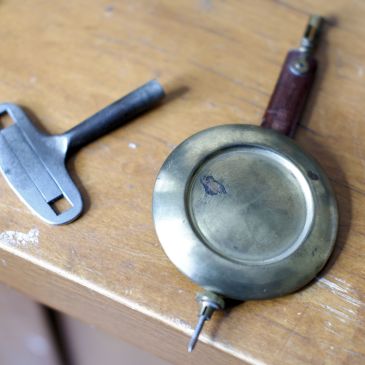
Pendulum bob and key

A correction from a previous article

After believing that the pendulum attached to the clock was not appropriate for the movement, I replaced it with what I believed was the correct one. However, I discovered that the replacement pendulum did not reach down to the beveled glass port and the rod hook was opposite in orientation to the one that came with the clock.

Despite functioning well and keeping accurate time, it did not look suitable. After I posted an article on first impressions, sight unseen, A reader pointed out that they have the exact pendulum bob for their Junghans roundtop clock, which has now led me to reconsider my previous assumption that the original pendulum was not the correct one. Thank you, dear reader!

Now that I have confirmed that the clock is functioning correctly, it is time to proceed with the disassembly and cleaning process, which is evidently long overdue.

The Inner Workings of Mechanical Clocks: How They Keep Time

Every time I glance at one of the vintage clocks in my collection, I am struck by the exceptional level of craftsmanship and marvel at how a mechanical device crafted over a century ago can still maintain precise timekeeping.

Mechanical clocks are machines designed to measure, keep, and indicate time. Mechanical clocks rely on a combination of essential components to operate accurately, including a power source, gear train, escapement mechanism, regulating device, and display indicator. Each component plays a critical role in maintaining the clock’s accuracy and precision in timekeeping.

For simplicity, our discussion will be limited to mechanical clocks driven by a pendulum.

Let’s examine each function in detail.

Power:

The power source of a mechanical clock comes from winding the spring or lifting the weight.

Clock weights

Energy is transferred from the winder’s hand to the mainspring or weight, which stores the energy. When the clock is running, the energy is gradually released through the gears through the escapement, causing them to turn and power the clock’s movement. This movement, in turn, powers the clock’s hands and other features, such as the striking gears. Essentially, the mechanical energy from the winding mechanism is converted and transferred through various parts of the clock to keep time.

Clean and restrained mainspring
Mainspring for an American time and strike clock

Gears:

Gears, which are circular components with teeth, facilitate the transfer of energy through the gear train and turn each succeeding gear. In the case of the time-side gear train, it connects to the escape wheel, which rotates at a faster speed than the main wheel because of the interplay between the gears.

Reduction gears are commonly used in the striking or chiming mechanism of the clock, which sounds the hour or quarter-hour. The striking mechanism requires a slower and more prolonged release of energy, and reduction gears help to achieve this by slowing down the rate of rotation of the striking hammers.

Fusee

In some clock designs, the gear train may also incorporate a fusee, a cone-shaped pulley with a spiral groove, which compensates for the decreasing tension of the mainspring as it unwinds. The fusee acts as a mechanical amplifier, multiplying the force of the mainspring as it unwinds and compensating for the reduction in power over time. This allows the clock to maintain accurate timekeeping even as the mainspring unwinds.

Overall, the gear train and reduction gears are essential components of a clock’s mechanism, enabling the precise transfer and conversion of energy to power its movement and features.

Escapement:

The escapement allows the power to “escape” at a controlled rate. The tick-tock sound heard from a mechanical clock is caused by the verge catching and releasing the teeth of the escape wheel, transmitting an impulse to the pendulum to keep it swinging.

Bushing installed on escape wheel arbour
Escape wheel and pallets

Regulator:

The regulator controls the speed of the clock. Pendulums with longer rods oscillate more slowly, while those with shorter rods oscillate faster.

The rate of the escapement, which controls the release of energy from the gear train, can be adjusted by altering the effective length of the pendulum, which is the oscillating component of the clock’s regulating system. This can be done by adjusting the position of the pendulum weight or changing the length of the pendulum rod. By altering the length of the pendulum, the clock can be regulated and keep more accurate time.

Indicator:

The clock hands provide a visual reference of the current time, while the chimes or alarms provide an audible signal at specific intervals, such as the top of the hour or the quarter hour.

Synergy

Thus, the concept of synergy is essential in understanding how all the individual parts of a clock work together as a cohesive system to achieve the singular purpose of timekeeping. Each component has its specific function, but they all work together in harmony to create an accurate and reliable timekeeping tool.

The large hands of a gallery or dial clock

Mechanical clocks are a testament to the brilliance of their inventors, as many of these machines still run as well today as they did over a hundred years ago. The interaction of these five elements results in a synergy that allows these machines to do one thing: tell time.

Tips for Antique Shop Proprietors when selling antique clocks (and other items)

As an avid antique shopper, I understand the thrill of finding a unique and valuable item, especially at a reasonable price. However, on my recent visit to a local antique shop, I found items priced far above their actual value, which was a disappointment.

I expect antique store prices to be slightly higher to cover overhead costs and ensure a decent profit margin, but in some cases, the prices can be unreasonably high. When I frequent an antique store and see the same items over and over should that not be a clear message to the seller that their prices are higher than they should be?

In this article, I would like to offer some tips for antique shop proprietors to help create a positive and profitable experience for all.

Tip 1 – do price aggressively

Antique shop proprietors face the challenge of balancing profitability with the need to maintain a diverse and appealing inventory. While it is tempting to hold on to high-value items and wait for the right buyer to come along, this approach can lead to stagnation in inventory and reduced sales volume.

To succeed in the antique business, proprietors should price their items aggressively to move inventory quickly. This approach ensures that the shop always has fresh, appealing items for customers to browse and purchase. A high volume of sales generates positive word-of-mouth advertising and repeat business.

Being knowledgeable about the values of items is crucial to pricing them accordingly. Proprietors should stay up-to-date on the latest trends in the antique market and be able to accurately assess the value of their inventory. This knowledge enables them to price items competitively while still making a reasonable profit.

Proprietors must strike a balance between pricing items aggressively and ensuring that they are not undervaluing their inventory.

Antique store find – Seth Thomas Adamantine C.1900

Tip 2 – price appropriately

Antique shop proprietors are not experts in every facet of the antique world but they should have a good understanding of the value and condition of the items they are selling in order to price them appropriately and provide accurate information to potential buyers.

In some cases, I have found that antique shop owners are not up-to-date with the current market prices of antique and vintage clocks which can lead to them overpricing their inventory and potentially losing out on sales.

Regularly educating themselves on the values of items they are selling ensures they are pricing their inventory competitively and staying relevant in the antique market.

Tip 3 – Is the customer always right?

Is the customer always right? Not always but listening to customers’ explanations for why they believe the price should be lower can lead to a successful negotiation and potentially repeat business. If customers appear knowledgeable about the item, proprietors should be prepared to give a little on the price. Proprietors that are steadfast on pricing may risk losing potential customers who are looking for a good deal or feel that they are being overcharged.

Inflexibility in pricing can also create a negative perception of the business and its customer service, leading to reduced customer loyalty and potentially negative reviews.

If I encounter pricing resistance while shopping, I may choose to discontinue my shopping.

Tip 4 – staging is key to the presentation

Presentation of merchandise is everything. Thoughtful placement and a well-curated display can make all the difference in attracting potential buyers.

Thoughtful placement can involve creating an attractive and visually pleasing display that highlights the unique features of each item by grouping similar items together making it easier for customers to find what they are looking for and can also help create a cohesive display.

Antique store find – Gilbert Admiral calendar clock C. 1900

Good lighting can make a big difference in how items are perceived by customers. Good lighting highlights the unique features of each item and creates an inviting atmosphere.

Creating a specific theme or style can help customers envision how items might look in their own homes.

Using height to advantage by placing items on shelves or pedestals at different heights. This can create visual interest and make it easier for customers to see everything that is available.

Lexington banjo clock CA. 1927
Antique store find – Lexington banjo clock C. 1927

While it can be tempting to try to cram as many items as possible into a small space, this can actually be overwhelming for customers. Make sure there is enough space between items so that customers can see everything clearly.

Keep things fresh by rotating your inventory regularly. This can help regular customers see new items and also create a sense of urgency for customers to purchase items they might not see again. Rotation will also encourage customers to return to your store.

Overall, thoughtful placement is about creating an environment that is visually appealing and easy for customers to navigate.

Tip 5 – stay up to date

Antique shop proprietors should not only keep themselves updated on the current market value of items but also be aware of any trends or changes in demand. This will help them adjust their pricing strategy accordingly to attract more customers and increase sales. It is also essential to have a good understanding of the condition of the items they sell, as this can significantly impact the value. For instance, a clock that is in pristine condition will be worth more than one that is damaged or has missing parts.

Antique store find – Seth Thomas column and cornice clock C.1875

Proprietors can also consider offering special deals or deep discounts to customers to attract more sales. This can include bundle deals, clearance sales, or discounts for frequent customers.

They can leverage the power of social media and online marketplaces to reach a broader audience and increase sales. By having a strong online presence, they can showcase their unique inventory and reach customers who may not have otherwise found their store.

Customers will ultimately vote with their feet

Customers know they can walk away from a price that is too high. There are many antique stores to choose from, and finding one that values its customers and its inventory is worth the search. Providing fair and reasonable prices can not only attract customers but also build a loyal customer base for an antique store.

Finally

By using these tips, antique store owners can create a shopping experience that is both enjoyable and profitable. With knowledge, negotiation skills, and thoughtful presentation, the world of antiques can be an exciting and rewarding one for proprietors and customers alike.

Understanding the Function and Importance of Beat Scales in Clocks

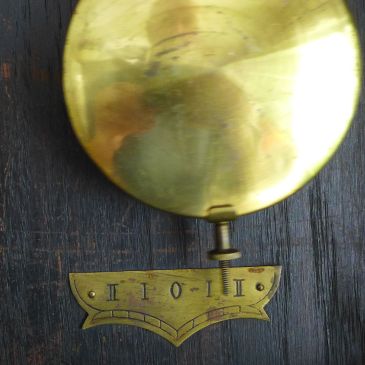
If you’ve ever examined a pendulum-driven wall clock, you might have noticed a small plaque affixed to the back panel just below the pendulum. This plaque is commonly known as a beat plaque or beat scale indicator. Although the presence of a beat scale on a clock does not always indicate its value, it does perform a significant role.

Seth Thomas #2
Seth Thomas #2 beat scale below pendulum bob

Most beat scales have I and II markers on either side and when the pendulum swings, it should swing beyond the indicator I marker and close to the II.

The amplitude of the pendulum swing can reveal the health of the clock’s movement.

If there is very little amplitude in the pendulum’s swing, it could indicate wear or issues with the movement. In such cases, it may be necessary to investigate the movement, make pallet adjustments, or mitigate any wear issues.

Mauthe wall clock

When the pendulum swing is too large or excessive, it may indicate an issue with the clock’s movement. Swinging too far beyond the II marker on the beat scale could suggest that the clock’s mechanism has a problem, which could include a loose pallet or an escapement that has worn out. In this case, it may be necessary to make adjustments or repairs to the clock’s mechanism to address this issue.

Mauthe wall clock circa 1895

Ideally, the pendulum of the clock should align with the center of the beat scale when the pendulum is stopped. It may not align correctly because of several reasons, such as wear and tear in the clock’s movement, changes in the environment that affect the clock’s components, improper installation, or adjustments made to the clock’s pendulum or beat scale.

If the beat scale appears off-center when the clock is stopped, it may also indicate that the clock is not squared correctly on the wall.

Arthur Pequegnat Moncton 15 day wall clock

The presence of a beat scale does not necessarily imply that a clock is of high quality. Certain high-quality clocks were produced without a beat scale, while others were designed with a beat scale as a guide or an ornamental feature. In some cases, beat scales may have been added to clocks after their manufacture for decorative purposes.

If a clock has a beat scale, it assumes several conditions.

These include;

  • the assumption that the beat scale is original to the clock and was applied dead center,
  • that the scale has never been removed,
  • that the clock’s case has not undergone any environmental changes such as warping or high humidity,
  • that the pendulum rod and bob have not experienced similar environmental changes.
  • and that the clock’s movement, pendulum, and bob have not required any repairs or maintenance that could adversely affect the dead center between the beat scale and the pendulum.
Vienna regulator beat scale

The beat scale was originally designed and manufactured as a high-tech object and while they do serve a practical purpose in some clocks in many cases beat scales are purely decorative.

However, as noted above, the presence of a beat scale alone is not necessarily indicative of a clock’s value or quality.

Timeless Treasure: My First Arthur Pequegnat Clock Discovery

During my article review this week, I stumbled upon my first-ever blog post from 2015 about my fortunate discovery of an Arthur Pequegnat clock in a nearby antique shop. It was an exciting experience for me, and I was thrilled to share it with my readers.

Arthur Pequegant Brandon II

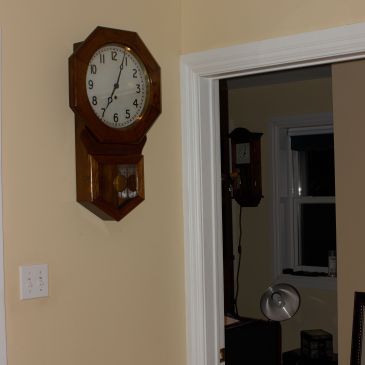
This was my first Arthur Pequegnat clock whihc was the second edtiiion of the Brandon model. The second edition was made from 1917 to 1941. The first edition of the clock, which was produced until 1916, had similar dimensions but a more ornate frame around the dial bezel.

The Arthur Pequegnat Clock Company’s Brandon II model is a simple clock and was one of their most sought-after designs. It was primarily used in Canadian schoolrooms and office settings during the 1930s and 1940s.

The clock’s octagonal shape and short drop make it a recognizable design, and it is often referred to as a schoolhouse clock. Schoolhouse clocks were a popular type of clock used in schools during the late 19th and early 20th centuries, characterized by their simple yet sturdy design and often featuring a visible pendulum.

Schoolhouse clocks were usually time-only, as there would be other methods such as bells or alarms to mark key points in a typical school day. If placed in an office environment, a strike train would be too distracting for employees. Brandon models also came with calendars, a useful feature for both school or office.

Time-only Brandon with Calendar and “Regulator” decal

Both the case, made of quarter-sawn oak, and the brass movement were produced by the Arthur Pequegnat Clock Company in their small Kitchener factory until 1941. The company stopped production abruptly due to brass shortages during the Second World War.

The time-only movement is relatively simple with few gears and little that can go wrong. It was designed to be reliable, dependable, and able to withstand the abuse of a school or office environment.

Arthur Pequegnat Brandon time-only movement

I purchased this clock from an antique collector who had owned it for a number of years. He decided to sell it in his antique shop in Great Village, Nova Scotia, and I found the price to be reasonable. The case, face, and bezel are all in excellent condition. However, the clock had an annoying squeak that suggested something was wrong. After investigating, I discovered that the first wheel had considerable pivot hole wear.

Regrettably, due to my lack of expertise and tools at the time, I couldn’t repair the clock on my own. I had to take it to a horologist in Halifax, Nova Scotia, who performed the required repairs. The clock needed five bushings, a thorough cleaning of the mainspring, and oiling of the movement. Following the necessary repairs, the clock has been consistently dependable and has required only an inspection and re-oiling two years ago.

Since then, I have acquired eight more Arthur Pequegnat clocks and have since gained the skills to service each of them myself.

Why should I repair an antique clock if the repair exceeds its value?

An often-asked question is why should I repair an antique clock if the repair exceeds its value.

The decision to repair an antique clock if the repair exceeds its value ultimately depends on your personal attachment to the clock and its historical significance.

Let’s talk about sentimental value

If the clock has been in your family for generations or has sentimental value to you, repairing it may be worth the cost, even if it exceeds the clock’s current market value. Repairs might include restoration or significant repairs to the case but a working clock that presents well is the main objective. Having a ticking clock can add a touch of elegance and charm to a room, as well as provide a sense of history and provide an important connection to the past.

A clock with a homemade plywood case was worth the repair because of its family heritage

A clock that is rare is worth the repair if…

If the clock is rare or has historical significance, it may be worth repairing regardless of the cost. Some antique clocks may have been made by renowned clockmakers or may be associated with important historical events or figures, making them highly valuable.

Valuable antique clocks must be carefully repaired because they often have unique and irreplaceable pieces that require specialized knowledge and expertise to repair. Any repairs must be done in a way that preserves their originality and authenticity.

To repair certain clocks, it may be necessary to use rare and difficult-to-find components or even handmade parts. This highlights the importance of collaborating with a skilled and knowledgeable clock repair specialist who has access to these parts or can create them. Even a small error in repair can result in significant damage to the clock’s mechanism and timing, leading to a reduction in value.

Improper repairs can significantly reduce the clock’s value and historical significance. Valuable antique clocks can be fragile and delicate, with intricate mechanisms and delicate parts that require careful handling during the repair. Any damage to these parts can irreversibly damage the clock, leading to a loss in value.

Working with a qualified and experienced clock repair professional is essential to ensure that the clock is repaired correctly and maintains its value.

Kienzle World Time clock
This Kienzle World Time clock has maintained its value

A clock as an investment

If you believe that the clock’s value may appreciate over time, repairing it may be a wise investment.

Clock collecting for investment purposes is a complex and potentially risky endeavor that requires a significant amount of knowledge, research, and expertise. While some antique clocks may appreciate in value over time, the market for antique clocks can be unpredictable, and there is no guarantee that a clock will increase in value.

Additionally, the cost of purchasing and maintaining a collection of antique clocks can be significant, and the potential return on investment may not justify the expense. Clock collecting for investment purposes should be approached with caution and with a thorough understanding of the market and the value of individual pieces.

Appreciate an antique clock for what it is

Antique clocks are often rare and unique, making them a great conversation starter. Guests may be intrigued by the clock’s history and design, leading to interesting conversations and the opportunity to share knowledge and stories.

On the other hand, if the clock has little sentimental or historical value and is unlikely to appreciate in value, it may not be worth repairing if the cost exceeds its current value. Ultimately, the decision to repair an antique clock should be based on a careful evaluation of its worth and your personal attachment to it.

Junghans Corner feet finished
A common bracket clock made by Junghans

Antique clocks have a sense of history and nostalgia that can be comforting and grounding. They remind us of the past and the craftsmanship that went into making these timepieces before the era of digital clocks and watches.

While antique clocks may not be as accurate as modern timepieces, they can still keep time and serve a practical purpose in a room.

The Pequegnat story & the Maple Leaf series of kitchen clocks

The Pequegnat name may not be familiar to international readers but it was a significant Canadian clock company that manufactured both movements and cases beginning in the early 20th century.

The Pequegnat Clock Company was a Canadian clock manufacturer that operated from 1904 to 1941. The company was founded by Arthur Pequegnat a Canadian immigrant who brought his family from Switzerland to begin a new life in Canada.

Pequegnat was a skilled clockmaker and entrepreneur, and he saw an opportunity to start his own clock company in Kitchener (then Berlin), Ontario. But the story actually begins prior to 1904.

In 1897 Arthur expanded his Berlin Jewelry shop to include the manufacture of bicycles. However, by 1904, with the decrease in the demand for bicycles, Arthur began to re-focus on the clock industry by manufacturing his own clock movements at his Berlin Bicycle Manufacturing plant and the motto, “Buy Canadian – Pequegnat clocks are better than foreign-made ones”” struck a chord with Canadian buyers.

At first, the wooden clock cases were made by local furniture makers, however, in time, he manufactured his own clock cases.

Pequegnat Clock Company produced high-quality clocks, and its products quickly gained a reputation for their accuracy and reliability. The company produced a wide variety of clocks, including wall clocks, mantle clocks, and grandfather clocks.

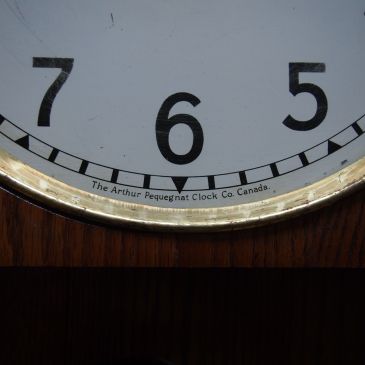
Clock face Arthur Pequegnat Canadian Time clock
Clock face with maker’s name

During the early years, the company faced a lot of competition from American clock companies, but Pequegnat was able to differentiate his products by designing and manufacturing unique clock cases that appealed to Canadian tastes.

The company continued to grow, and by the 1920s, it had become one of the largest clock manufacturers in Canada.

The Great Depression hit the Pequegnat Clock Company hard, and the company struggled to stay afloat during the 1930s. In 1941, with brass in short supply as a result of the war effort the company was forced to close due to financial difficulties, and its assets were liquidated.

Despite its relatively short lifespan, the Pequegnat Clock Company played an important role in the history of Canadian clock manufacturing. The company’s clocks are still highly sought after by collectors, and its products are considered some of the finest examples of Canadian clockmaking.

The Maple Leaf – a symbol of pride

The maple leaf slowly caught on as a national symbol in 1868 (the year after Canada’s Confederation) as it was included in the coat of arms of Ontario and the coat of arms of Quebec and added to the Canadian coat of arms in 1921. The maple leaf is a symbol of our national identity.

Arthur Pequegnat Maple Leaf kitchen clock
Arthur Pequegnat Maple Leaf kitchen clock; the “fan top”

Canadian readers and perhaps those abroad with a connection to Canada would instantly recognize the maple leaf as distinctly Canadian.

Cashing in on Canada’s identity as a nation, Pequegnat saw the value in naming clocks after Canadian cities, cities such as Stratford, London, Toronto, Moncton, Montreal, and so on. Indeed, most homes and businesses in Canada had a Pequegnat clock.

Arthur Pequegnat Maple Leaf kitchen clock; the “round top”

Berlin, Ontario was re-named Kitchener Ontario in 1916, due to anti-German backlash during WW I. This becomes a useful tool when dating Pequegnat clocks as labels, movements, or dials marked “Berlin” date the clock to 1916 or earlier, and those marked “Kitchener” are 1916 or later. However, many clocks had a long production life and it is difficult to date any Arthur Pequegnat clock precisely as there were no production numbers on the movements.

Pequegnat’s interpretation of the kitchen clock

The Maple Leaf series was Pequegnat’s interpretation of the popular American kitchen clock.

Arthur Pequegnat Maple Leaf kitchen clock; the “curly top”

The Maple Leaf Series was a line of clocks produced by the Pequegnat Clock Company of Canada in the early 20th century. The series was named after the maple leaf, a powerful symbol of Canada.

The Maple Leaf Series was first introduced in 1911, and it quickly became one of the company’s most popular product lines. The series included several different models. The clocks were made with high-quality materials and brass movements.

The door of a Maple Leaf clock

There are 2 notable features of the Maple Leaf Series. One was the clock tablet, which featured a stylized array of 36 maple leaves framed by half moons and with an opening to display the pendulum bob. Why the number 36? In some cultures, it is considered a lucky number.

The second feature was a brass maple leaf pendulum bob.

The clocks in the Maple Leaf series did not have specific names and are referred to by collectors as the pointed top, the round top, the fan top, the curly top, and so on.

The Maple Leaf series of Pequegnat kitchen clocks (photo courtesy of The Canadian Clock Museum)

The clock depicted above may or may not belong to the Maple Leaf series but the maple leaves within the tablet design are considerably more stylized, and the edging is understated. Like the Canuck pictured below, this design could be a variant.

Arthur Pequegnat Maple Leaf Pointed Top
Arthur Pequegnat Maple Leaf kitchen clock; the “pointed top”

The dials were typically paper on tin and some had a gold center accent.

Many would not consider the Canuck to be a “Maple Leaf” kitchen clock though some variants had a maple leaf tablet. The Canuck also stood out from other kitchen clocks due to its use of steamed pressed oak in its construction.

The Canuck kitchen clock

The Maple Leaf Series was a significant part of the Pequegnat Clock Company’s success, and the clocks from this series are still highly prized by collectors today.

Overall, the Maple Leaf Series represented a major contribution to the Pequegnat Clock Company’s prosperity, and its models remain a sought-after collectible for clock enthusiasts.

Navigating the Perils of Antique Clock Repair on YouTube: Why Caution is Key

Antique clocks are a fascinating and cherished part of our cultural heritage, valued both for their historical significance and their intricate mechanical workings.

However, the maintenance and repair of these clocks can be a daunting task, requiring a great deal of knowledge and expertise to ensure their preservation.

YouTube has become a popular platform for sharing information on antique clock repair, but this can often be a perilous journey, fraught with misinformation and potential hazards.

Read on and discover why the journey can be fraught with perils.

A time-only clock movement

A wealth of content and not all of it is good

One of the main challenges of researching antique clock repair on YouTube is the sheer volume of content available. While there are certainly many skilled and knowledgeable individuals sharing their expertise on the platform, there are also countless amateurs and hobbyists who may not have the necessary qualifications or experience to provide accurate or reliable advice.

This can make it difficult for novice clock enthusiasts to distinguish between reliable sources and those that may be less trustworthy.

Lack of oversight

Unlike traditional academic or professional settings, YouTube does not have any formal accreditation or certification processes to ensure the qualifications and expertise of those providing advice.

This can lead to a situation where individuals with limited knowledge or experience are able to present themselves as experts, potentially leading to poor repair outcomes or even irreversible damage to valuable antique clocks.

American time and strike movement

The quick fix

Many YouTube videos on antique clock repair focus on quick fixes and shortcuts rather than proper, long-term maintenance and repair. While these videos may be popular and offer a quick and easy solution to a problem, they can often do more harm than good in the long run.

An example is immersing an entire movement in a solution, a process often called “Duncan Swish” within clock repair circles. Although immersing an unassembled movement in a cleaning solution may provide prompt results and is a quick and easy solution, it is not a substitute for meticulous disassembly and repair. Quick-fix solutions like this can actually worsen the wear on a clock movement, rather than resolving the underlying issues.

Improper repairs or maintenance can cause irreversible damage to delicate clock mechanisms, potentially decreasing the value of the clock or even rendering it unusable.

An unusual click spring repair was done by a past repairer

Lack of background information or context

Another challenge with researching antique clock repair on YouTube is the lack of context or background information provided in many videos. Without a comprehensive understanding of the history and mechanics of a particular clock, it can be difficult to diagnose and address issues properly.

Some videos may not provide adequate instructions or guidance, leading to confusion or even dangerous situations if attempted by an untrained individual.

important steps are missing

Steps are missing because the person making the video may not have the necessary knowledge or expertise to perform a complete repair. They may be an amateur or hobbyist who is sharing their experience and techniques, but they may not have the same level of training and experience as a professional clockmaker.

Steps are missing because the video is intended to be a quick tutorial or overview, rather than a comprehensive guide to clock repair. In order to keep the video short and engaging, the person making the video may choose to skip over certain steps or focus only on the most critical parts of the repair.

An English Fusee movement

The person making the video assumes that the viewer already has a certain level of knowledge or expertise. They may assume that the viewer has a basic understanding of clock mechanics or has performed similar repairs in the past.

The video author also intentionally withholds certain steps or information in order to encourage viewers to seek out their professional services. They may provide a basic overview of the repair process but withhold more detailed or advanced information, in order to entice viewers to pay for their expertise.

Regardless of the reasons, it is important for viewers to approach these tutorials with caution and skepticism. Expanding one’s knowledge is crucial for making informed decisions when consulting multiple sources and determining the accuracy of clock repairs and this can only be accomplished through continuous learning and growth.

A worn regulating leaf gear

Youtube can have value to an enthusiast

Antique clock repair is a highly specialized field that requires a great deal of knowledge, skill, and experience. While YouTube can certainly be a valuable resource for those seeking to learn more about clock repair, it is important to recognize its limitations and potential hazards.

As your knowledge of clock repair expands, you will develop the ability to distinguish between those who provide constructive guidance and those who do not.

There are several youtube sources that I consider to be of value but I will not reveal them here because it is important for each clock repairer to assess and determine their own go-to sources for information and guidance. It’s important to critically evaluate and verify the information presented in any online source before applying it to your own clock repair work.

Finally

While YouTube can be a useful tool for those interested in antique clock repair, it is important to approach this journey with caution and skepticism.

With so much content available and a lack of oversight and regulation on the platform, it can be difficult to distinguish between reliable and unreliable sources of information. Many videos may focus on quick fixes or shortcuts rather than proper maintenance and repair, potentially leading to irreversible damage to valuable antique clocks.

When watching clock repair videos on YouTube, it is important to approach them with a critical eye and evaluate whether the procedures being shown are safe, and performed correctly and whether the repair will ultimately increase or decrease the value of your antique or vintage clock.

In my view, it is not a useful exercise to comment on a clock repair video that shows incorrect methods or practices as there are plenty of others who will take great joy in criticizing. Rather, it is more advantageous and less frustrating to find alternative sources that can provide valuable suggestions and guidance for clock repair.

Keep searching, those sites are out there, and once found you will be rewarded.

Photography and Clock Repair: Choosing the Right Camera and Lens

Photography can be a useful tool in almost any hobby, including clock repair. While written instructions can be helpful, a well-crafted video or series of detailed still images can be even more effective. As the saying goes, “A picture is worth a thousand words.”

Homemade click spring repair

In this article, we will explore the benefits of using any type of camera to record the process of repairing a clock. However, we will also discover that there is a specific type of camera and lens that offers the best results for this purpose.

Not all cameras are created equal. While cell phones can take decent pictures, they have limitations when it comes to isolating foreground from background and producing high-quality macro images. Nevertheless, if a dedicated camera is unavailable, using a cell phone camera is still better than having no documentation at all when it comes to clock repairs.

Working on an escape wheel bridge

My preferred setup

The author has used several cameras for clock repair photography but their go-to camera is a digital interchangeable single-lens reflex camera, the Olympus E-330, which was made in 2006. Despite its age, the camera has more than enough megapixels (7.5mp) and is fully capable of producing superior results. The photos can be resized to a smaller dimension for publication on a blog, without a significant loss of quality.

To avoid any shaky images while capturing photos with a low shutter speed, I utilize a sturdy and high-quality Manfrotto tripod with a ball head. Using a tripod is crucial when taking photos with a low shutter speed because it helps to stabilize the camera and prevent any unwanted camera shake or blur, resulting in sharper and more professional-looking images.

E330 with Olympus flash
Olympus E330 with 50mm macro lens

Paired with an Olympus 50mm F2 macro lens, the Olympus SLR is excellent for taking close-up shots and producing a pleasing soft out-of-focus background blur or bokeh.

All closeup photographs on this page were taken with the Olympus 50mm f2 macro lens.

Inspecting a pivot for wear

A dedicated macro lens is important for close-up photography because it allows for a high degree of magnification with minimal distortion and high image quality but most importantly it isolates the subject.

Macro lenses are specifically designed to produce sharp images at close range, with a flat field of focus and minimal aberrations. They also typically have a wider maximum aperture, which allows for better control over the depth of field.

A very worn pivot

Using a non-macro lens for close-up photography can result in image distortion, reduced sharpness, and difficulty in achieving accurate focus.

Balance wheel hairspring showing a slight kink

A capable and versatile camera is also essential for macro photography. One of the E-330’s best features is its ability to switch from automatic to manual focus mode and lock onto an extremely close subject through a 10X magnification box, making it ideal for clock repair photography.

The author takes dozens of photos from every conceivable angle during a repair job and catalogs them for future reference.

New main wheel bushing for a banjo clock

Can I use my cell phone?

Yes, it is possible but with an understanding of its limitations!

Many modern cell phones have a built-in macro feature that allows you to take close-up photos of small objects. However, the quality of the macro feature can vary greatly between different phones and models. In general, the camera features of a cell phone improve with a higher price point.

Some phones have dedicated macro lenses or sensors that allow for better magnification and clarity, while others may rely on software, often called digital zoom, to enhance close-up shots. Phones with higher-end cameras and more advanced features tend to have better macro capabilities.

That being said, even with a macro feature, even the best cell phones can still have limitations when it comes to close-up photography. They may struggle with focusing on small subjects, produce lower-quality images with more noise or distortion, or have a limited depth of field.

A dedicated camera with a good macro lens that can be focused manually is still the preferred choice for serious close-up photography.

Finally

Based on my personal experience, I would recommend using a dedicated camera with a high-quality macro lens for achieving the best possible results when documenting clock repairs.

Having a good camera with a dedicated macro lens can greatly enhance the clock repair process. It doesn’t have to be the latest and greatest or the most expensive, but it should be decent enough to produce high-quality results.

I believe that a camera is one of the most indispensable tools for repairing clocks. There have been several instances where I had to consult a photograph to ensure the precise placement of a clock component on a movement being repaired, which has saved me hours of frustration and prevented any potential mistakes.

Overall, the utilization of photography as a tool in clock repair enables repairers to document their work and have a visual reference to ensure accuracy and consistency in their repairs, ultimately resulting in successful and lasting repairs.

Junghans Mantel Clock: Initial Impressions Sight unseen

As a manufacturer today Junghans is not the same company that made mechanical clocks many years ago. In response to the demands and advancements in technology in today’s world, the company has undergone a transformation in its products. In recent years, the company has established itself as a prominent manufacturer of high-quality wristwatches.

B13 stamped on the movement plate indicates that it was made in the last half of 1913

With a rich heritage in mechanical clockmaking, the company had established itself as a prolific producer of wall, mantel, and tall case clocks. Collectors and enthusiasts highly value the company’s clocks for their superior quality, craftsmanship, and classic designs that have withstood the test of time.

While I am not specifically searching for Junghans clocks, I have two other Junghans clocks in my collection. One is a bracket clock from 1911, and the other is an older wall clock from the turn of the 20th century.

As of this writing, my most recent acquisition is not yet part of my Junghans clock collection but here is what I know so far.

Based on the pictures obtained from the recent online auction where it was purchased, this unremarkable roundtop time and strike clock from 1913 seems to be in fair condition.

The 1915 Junghans catalog identifies the clock as the Hunsruck, named after a mountain range in Germany, and provides its specifications as 28.5 cm in height with a mahogany or oak case construction, a 14-day run time, and a silvered dial.

Cambered faceted front

It is unclear from the auction photos whether the clock is made of mahogany or not, but judging from the photos its reddish tone suggests it is mahogany. Occasionally, the feet may be replaced with a different type but it is highly probable that they are the original brass ball feet.

One notable feature is the faceted glass port below the clock face, which allows the pendulum bob to be seen in motion.

The photo above shows an example of what would have been the original pendulum with a weight of 150g or 5.2 oz.

The current pendulum is a replacement for the original unit, which was likely lost or misplaced. However, it is not a suitable match as it lacks the necessary weight and aesthetic appeal of the original brass pendulum.

The clock’s movement, which rests on a movement support piece, is a timeless time-and-strike design that was a hallmark feature of numerous Junghans mantel clocks during that era. The Junghans trademark is boldly showcased on the gong block.

The pendulum bob is not correct

When the clock was won at auction the delivery was arranged and I should have it in the next few days. The price? 55CDN plus buyers’ premium, taxes, and shipping.

It is assumed that the clock is operational, but its actual condition cannot be determined until it arrives.

Can I repair my antique clock with common household tools?

While it is possible to repair an antique clock with common tools, there are limitations to what can be achieved. That’s the short answer. Let’s explore this a little further.

Repairing an antique clock with common household tools is possible, but it can be challenging, and it depends on the extent of the repairs needed and your knowledge of the internal mechanisms and workings of the clock.

Screw drivers, clock tools
Screwdrivers

If the repair needed is simple, such as adjusting the time or fixing a loose screw, household tools may be sufficient. However, more complex repairs such as replacing broken parts or restoring the clock’s intricate mechanisms may require specialized tools and expertise that may not be readily available in a typical household toolbox.

The simple task of cleaning a movement can be accomplished with tools such as a screwdriver and wrench in addition to other common household items. The springs on an open mainspring movement, for example, can be contained with heavy household wire or a worm gear hose clamp.

Cleaning brass movement plates can be achieved using common household soap, while toothpicks are a useful tool for cleaning out bushing holes. Fine steel wool is also appropriate for cleaning steel arbors and brass wheels.

A collection of clock movements in need of repair
clock movements in need of repair

Antique clocks are often delicate and require careful handling, so it’s important to exercise caution and work slowly and methodically when attempting any repairs.

The wheels of a typical American time and strike movement

If you’re unsure about your ability to repair the clock yourself, it may be best to seek the help of a professional clock repair person who has experience with antique clocks.

When financial resources are scarce and it is challenging to find an expert in clock repair, one must embark on a journey of self-discovery which includes learning and mastering the skills necessary to repair clocks oneself, thereby gaining valuable knowledge and self-reliance.

The mission of this antique and vintage clock blog is to help people feel confident in making basic repairs to their antique clocks when they stop functioning by identifying the problem, learning about the different types of clock movements, understanding the workings of the movement type, gathering the right tools, taking your time and exercising patience while attending to detail, practicing basic repairs through repetition and knowing when to seek expert help.

Tick Talk Tuesday #46 – I’m looking at a grandfather clock

Tick-Talk Tuesday is dedicated to addressing readers’ letters and comments related to clock issues, challenges, and recommendations for specific clocks. In cases where the comments and questions are particularly challenging, I seek advice from my fellow clock enthusiasts to provide the most accurate and helpful response.

It is important to respond to emails from interested visitors, as it not only cultivates a sense of community and engagement with my audience but also facilitates the establishment of relationships with individuals who share similar interests.

JB did not provide a photo but here is a Ridgeway clock from the 1990s

JB writes:

Just wanted to contact you for your professional opinion on a Grandfather clock I’ve been lucky enough to find for sale for $1500.00, it’s in near mint condition and works, it’s my understanding that the first 2 digits of the serial number is the year made if that’s true then it was made in 1986 listed is the information I have on the clock:

Ridgeway A.L. Latham Grandfather Clock

Dial Pg

Finish OKM3 U5

Setups 080586

Model 273

Registered Serial # 86036698

I have always want one and love to listen to them tic and chimes so based on what I’ve mention can you please tell me anything about this clock and if that is a good purchase value?

Thanks very much for any information you can share on this!

My response:

Hi and thanks for your email. The 1980s is correct judging from the last two digits. I would exercise a little caution on the price. If it was a particularly high end clock at the time it might be well worth the asking price but grandfather clocks of that period, the 1980s, have trouble fetching $500 to $1000 in today’s market.

The movements in these clocks do not last forever and if it has never been serviced it may already be very worn. Servicing, which involves taking the movement apart, addressing wear issues, reassembling and testing might be in the region of $400 or much more. If the clock has been serviced in the last year or two and the seller can provide receipts you can be assured that it will run reliably for a number of years. If the movement has been replaced recently with a brand new one (and that is not a bad thing) you can also expect years of reliable service.

For an unserviced clock of this vintage I would definitely haggle but even if serviced I would still haggle.

JB replied

I really appreciate your advice on the clock I mentioned in the email. Not knowing anything about something so tedious can be concerning especially when it is an item you’ve wanted to purchase. I did past the information on to the seller so she knows what she has because she too knows nothing about the clock only that it belonged to her late husband.

Your advice is greatly appreciated!

Website Powered by WordPress.com.

Up ↑