
Among Canadian clocks, some names are immediately recognizable — Pequegnat, Canada Clock Company, Hamilton Clock Company, Wesclox from Peterbourough or Seth Thomas and New Haven imports sold through Canadian retailers. Others, however, tell a quieter story. Walter Clocks of Toronto belongs firmly in that second group, yet its history represents one of the last meaningful chapters of traditional clock manufacturing in Canada.
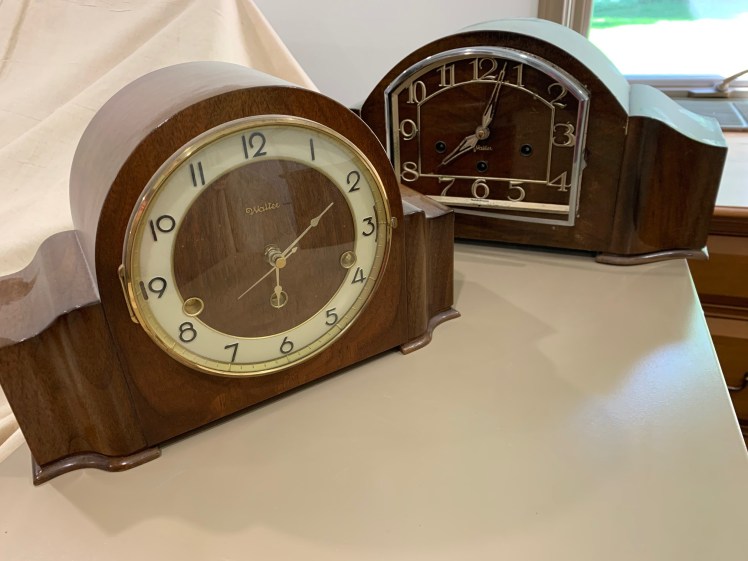
About two years ago, I made an effort to connect with surviving members of the Stonkus family and was able to reach one of Walter Stonkus’s granddaughters, as I recall. I proposed a question-and-answer format, with the intention of later shaping the material into a blog article. Unfortunately, despite a follow-up, I did not receive any further correspondence.
Since then, I have pieced together what information I could from a variety of online sources including The Canadian Clock Museum, located in Deep River, Ontario (Canada). While there are still some obvious gaps in the story, my goal here is simply to provide a general sense of Walter Clocks and their contribution to clockmaking in Canada.
So, let’s begin.
The company was founded by Walter Stonkus, who immigrated to Canada from Lithuania in 1927. Trained originally as a watchmaker, Walter brought with him both mechanical knowledge and European craftsmanship at a time when Canada was still developing its own manufacturing identity. By the early 1930s, the Toronto-based firm operated under the name Walter Stonkus and Sons Clocks.
From the beginning, the company followed a model common among Canadian makers: build the cases locally while sourcing precision movements from Europe.
Walter’s real strength appears to have been in design and cabinetmaking. Clock cases were produced in Toronto, often using walnut veneer before the Second World War, and stained birch in later years. The quality of the clock cases seems almost at odds with the small size of the company. Despite being a modest operation, Walter produced cases of remarkably high quality.
These early clocks typically featured spiral gongs and reflected the popular mantel styles of the era — practical, handsome, and intended for everyday homes rather than grand showpieces. It is also possible, though unconfirmed, that Walter clocks supplied finished cases to the Forestville Clock Co., operating in Toronto, Ontario (Canada) at the same time.
Like many small manufacturers, the company’s progress was interrupted by the Second World War. Production was suspended, largely due to the difficulty of obtaining imported movements and the broader shift of industry toward wartime needs.
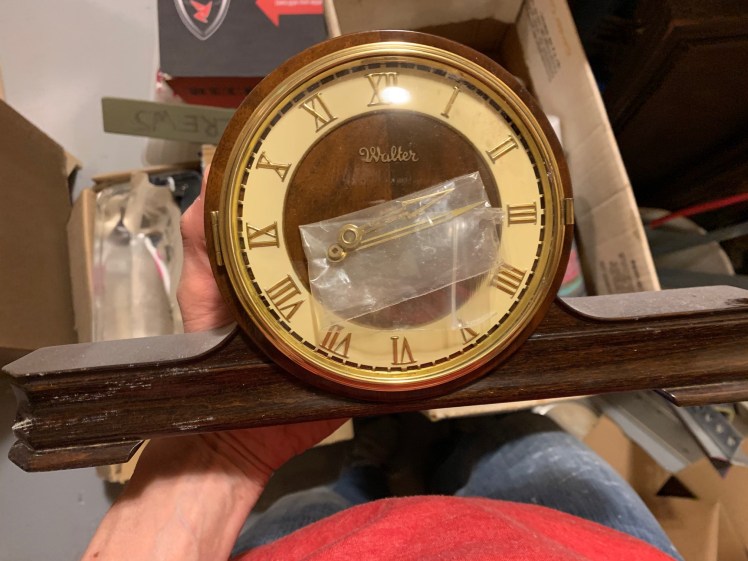
When production resumed after the war, the business entered a new phase. Walter’s son Bill joined the company, and several recognizable design features emerged. Postwar clock cases were often made from stained birch, and many models incorporated what became something of a Walter trademark — a round removable back door that allowed easy access to the movement. German-made Urgos movements, both two-train and three train, powered many of these clocks, combining reliable European mechanics with distinctly Canadian cabinetry.
In many ways, Walter Clocks filled an important gap in Canadian horology. After the closure of the Arthur Pequegnat Clock Company in 1941, very few domestic manufacturers remained. Walter Clocks, along with the Forestville Clock Co. of Toronto, helped carry Canadian clockmaking into the mid-20th century, even as the industry itself was beginning to change.
By the 1950s tastes were shifting. Mantel clocks were no longer the focal point of the living room. Television sets were taking their place, and inexpensive electric clocks were rapidly gaining popularity. Like many traditional makers, Walter Clocks adapted by moving into cuckoo clocks, 400-day clocks, and alarm clocks — products that reflected changing consumer demand. Increasing competition from imported clocks further reduced the viability of local production.
The company ultimately ceased operations sometime in the late 1950s. The exact year — and the precise reasons for closure — remain uncertain, but Walter Clocks had operated in Toronto for more than thirty years, a respectable lifespan for a small Canadian manufacturer navigating enormous technological and cultural change.
Today, Walter clocks occupy an interesting place for collectors. They are not rare in the sense of limited experimental pieces, nor were they mass-produced in American quantities. They were never a large industrial producer, which explains why surviving examples feel scarce today.
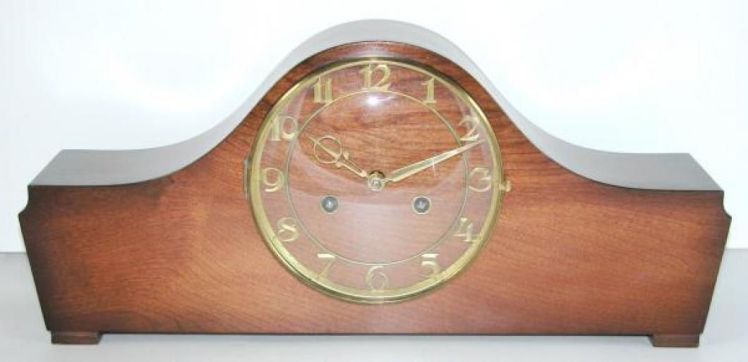
Sadly, relatively few of these clocks survive today, and they seldom appear for sale online. While browsing Facebook Marketplace the other day, I came across one very much like the example pictured below, though fitted with a Westminster chimes movement. It was in poor condition and listed as a non-working, parts clock. Otherwise, it was the first example I have seen come up for sale in quite some time.
The Walter Clock Co. represents something uniquely Canadian: practical craftsmanship, locally built cases, and dependable European movements assembled for everyday households.
For collectors like myself, these clocks serve as reminders that horological history is not only written through grand innovations or famous names. Sometimes it is found in the steady work of immigrant craftsmen who built honest, functional objects meant to live quietly on mantels across the country — marking time for generations of Canadian families.
Related Link
- Ten active clock companies in Canada in the 1950s; Canadian clock collectors are most familiar with the Arthur Pequegnat Clock Company, which closed its doors in 1941 but 7 years later a number of clock companies were alive and flourishing in Canada, predominantly in areas in and around Toronto.
Discover more from Antique and Vintage Mechanical Clocks
Subscribe to get the latest posts sent to your email.
 Antique and Vintage Mechanical Clocks
Hi
Very interesting research …
I’m a clock fan…
May I ask you who I is your supplier when you need to replace some parts missing
I really will appreciate if you will take time to get back to me
Ray
LikeLike
Check out Tools I use . Since I am in Canada, my go-to supplier is Perrin from Vancouver.
LikeLike