
After retiring from active duty, my father continued to serve in a reserve unit for several years. As a child, I still remember the formal occasions that called for his ceremonial uniform, when every detail had to be perfect. Before heading out, he would sit down with a tin of Brasso and a soft cotton cloth, patiently polishing each brass button and his service medals until they gleamed. The smell of the polish and the steady rhythm of his work became part of the ritual, a quiet reminder of the pride he carried in his service to Canada.

My father trusted Brasso, and so did many who regarded it as a reliable metal polish, valued for its ability to restore the shine to brass and copper.
Yet, as effective as it is, using Brasso without care can do more harm than good. Antique clock collectors, in particular, should be cautious since many valuable parts can lose their patina or protective finish if polished too aggressively.
Read The Instructions
When using Brasso, it is important to start with restraint. Less is more! Always read the instructions on the label and, if possible, test it on a small hidden section before committing to polishing the entire surface. Apply it sparingly with a soft cloth, working in gentle circular motions. Ensure you are in a well-ventilated space, as the fumes can be strong for some. Once the polish has done its job, buff thoroughly with a clean cloth to remove any residue and bring up the shine.
For detailed work, I use cotton swabs, which are excellent for accessing tight spaces.
A Word Of Warning
What you should not do is just as important. Brasso should never be applied to lacquered, painted, or plated surfaces, as it will strip away the finish and expose the bare metal. Special caution is needed with brass bezels around painted dials—Brasso will eat through the paint very quickly (yes, I know from experience). It should also be avoided on plastics, wood, and gemstones, as it can permanently scratch or stain them.
Some time ago, I purchased an U. M. Muller box clock. Everything about it was perfect except for the dial. A small section of paint was missing, likely the result of someone attempting to clean it with an abrasive cleaner (photo below). This is exactly the kind of damage Brasso can cause on a dial.
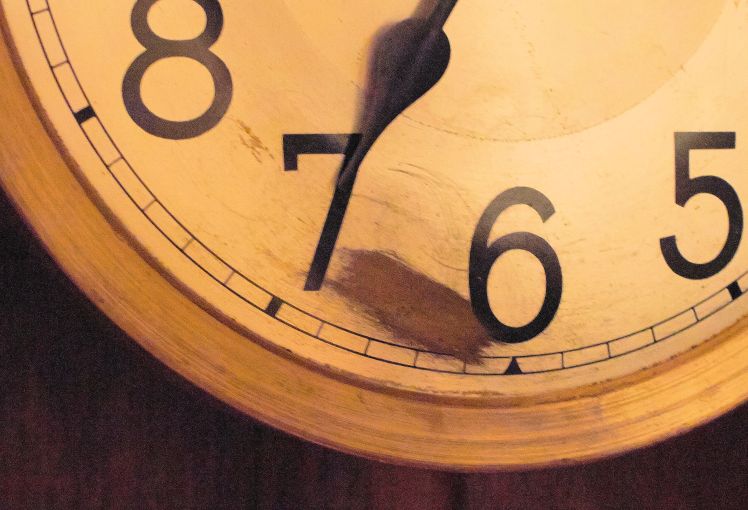
Immersing objects in Brasso is also not recommended—the product is made for surface polishing, not soaking. If you are working with thin layers of gold or silver plating, Brasso is too aggressive and will wear them away over time. Finally, don’t leave residue behind; always wipe the parts clean to prevent streaks or uneven tarnish from developing later.
Clock cases, dials, and movement parts often have lacquer, plating, or original patinas that Brasso can irreversibly damage. The very character of an old clock—its aged glow or mellow surface tone—can be lost with a single overzealous polishing. In horology, a gentle hand is usually best. Cleaning and preservation are preferable to aggressive polishing, especially if the clock has historic or sentimental value.

Using Brasso brings back the shine, but it’s only temporary. No matter how well it’s polished, brass will eventually react with its surroundings and tarnish again.

Since Brasso contains ammonia, avoid skin contact, and rinse thoroughly with water if it gets into your eyes.
Safer Alternatives
If you are hesitant about using Brasso, there are safer alternatives. Mild soap and warm water can often remove surface grime without damaging the finish. I often used diluted Murphy’s Soap as an effective general cleaner. A simple mixture of vinegar, salt, and flour is a time-honored homemade polish that is less abrasive. For light cleaning, microfiber cloths can work wonders, often restoring a soft luster without the need for any chemicals at all.
A Wide Variety Of Cleaners
Commercial products such as Maas, Wright’s Brass Polish, Flitz, Twinkle, or Simichrome are also designed to clean metals while being gentler on delicate surfaces. I have not used these products myself, but I know several clock repairers who vouch for them. Personally, Brasso has always worked as expected.
The Science Of Brasso
When you apply Brasso, you’re essentially removing oxidation, dirt, and surface tarnish with abrasives and solvents. The surface looks bright afterward, but it isn’t “sealed.” Over time, the copper in the brass reacts with oxygen, moisture, and even substances in the air like sulfur compounds. This leads to the gradual formation of oxides and sulfides — the brownish tarnish we recognize.
Unless you coat the polished brass with a protective barrier such as lacquer, wax, or a clear sealant, this reaction is inevitable. Most brass weights in vintage tall-case clocks are coated with lacquer, but handling them over time allows sweat to eat through the lacquer, causing the weights to tarnish. Use cotton gloves when handling lacquered weights.
Within my circle of clock enthusiasts, there is plenty of debate about the use of Brasso, with both positive and negative claims. For me, however, Brasso remains the preferred product for cleaning brass. Although Brasso remains a useful product, it is not the only choice and not always the best one. The key is to use restraint, and when in doubt, take the gentlest approach possible.
There are times when the best polish for a cherished object is simply to leave its history, patina, and character intact.
Discover more from Antique and Vintage Mechanical Clocks
Subscribe to get the latest posts sent to your email.
 Antique and Vintage Mechanical Clocks
Very very informative……for my personal brass pieces…..love the clock…..have a gre
LikeLike
Thanks Ila.
LikeLike
Thanks, Ron, Have wondered how “Brasso” works. After polishing, my wax of choice is a 100% pure, ie., non “cleaning” carnuba car wax. It slows down the inevitable tarnishing.
LikeLike
Hi and thanks for you comment. I always use a good quality paste wax for final finishing.
LikeLike