
If you spend any amount of time browsing online marketplaces for antique or vintage clocks, you’ll quickly become familiar with a common phrase: “Fully serviced and tested to ensure reliable running.”
It sounds reassuring. But what does fully serviced really mean? As it turns out, the answer can vary greatly depending on who’s doing the servicing, and just how seriously they take that term.
The Wide Spectrum of “Servicing”
To some sellers, servicing a clock means removing the movement from the case, giving it a quick inspection, oiling a few pivots, and popping it back in. This might help the clock run for a short while, but it’s a far cry from what most professionals or serious hobbyists would consider a proper service.

To others, a full service is a detailed, time-intensive process, one that includes disassembly, deep cleaning, inspection for wear, and repairing or replacing worn components before careful reassembly and thorough testing.
As someone who has serviced clocks for years, I fall squarely in the latter camp. And I know many experienced clockmakers who would agree with this standard.
What a Full Clock Service Should Include
Here’s what I consider a full service for a mechanical clock movement:
- Complete disassembly of the movement.
- Ultrasonic cleaning of all parts to remove old oil and grime. There are always exceptions. Some movements should not be cleaned in this way
- Inspection and polishing of all pivots.
- Replacement or installation of bushings where necessary.
- Cleaning of mainsprings (or replacement, if broken or weak).
- Repair or remediation of any issues found during inspection—worn teeth, bent levers, etc.
- Reassembly and correct oiling using proper clock lubricants.
- Bench testing of the movement outside of the case.
- Reinstallation into the case, followed by additional testing and regulation.
- Running the clock through a full wind cycle to ensure consistent performance.
When I describe a clock I’m selling as “fully serviced,” that’s the process I’m referring to. Just to be clear, I’m not a clock seller, but I do sell the occasional one to manage my collection.

The Problem with Vague Listings
Unfortunately, many sellers—especially on general online marketplaces—use the term “fully serviced” very loosely. Often, no further detail is provided. Did a trained professional work on it? Was the movement actually disassembled? Were any worn components addressed? You won’t know unless the seller tells you.
Sometimes, the work might have been done by an “amateur tinkerer” with limited tools and questionable cleaning techniques. Was this one of those “Duncan Swish” specials? (Clock repairers will know what I mean.) Other times, the clock may have simply been made to run, but not properly cleaned or tested, meaning any apparent reliability may be short-lived.
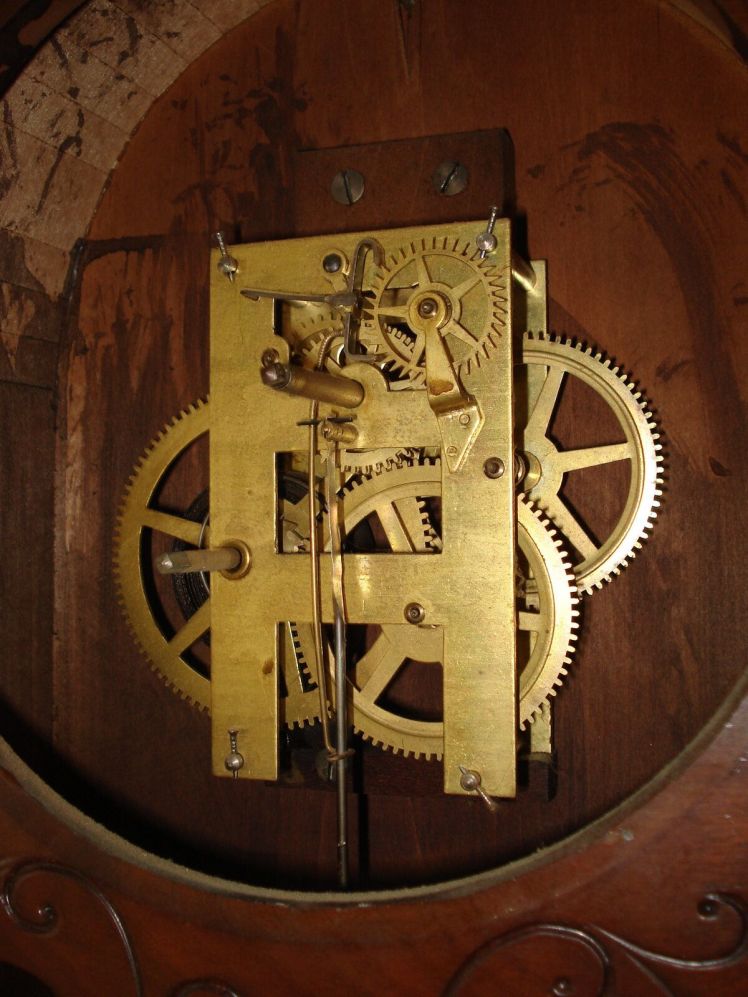
Red Flags to Watch For
- No servicing details provided. A vague “fully serviced” label with no breakdown of what was done should be treated with caution.
- Low price with big promises. If the clock is underpriced but claimed to be fully restored, ask yourself how many hours of professional work could reasonably be covered.
- Fresh oil but dirty movement. Visible oil combined with dirty plates is a telltale sign that no real cleaning has occurred.
- Photos showing missing or incorrect parts: missing finials, a mismatched pendulum, missing decorative case parts, etc..
- Lack of timekeeping data. A reputable seller will often state something like “keeping time to within ±2 minutes per week.”
- “I’m not a clock person, so may just need adjusting the pendulum“: a vague statement that may mean the clock is not functioning for a variety of reasons.
- “May need adjustment after shipping”: another watchful sign that something is amiss
- “Sold as a decorative or restoration piece”: serious mechanical issues, critical parts missing, mismatched parts, possibly quartz movement replaces mechanical movement.
- Has been meticulously maintained to preserve its original beauty and functionality: without an explanation
- The clock has been professionally serviced and is in good working order; without an explanation
What a Good Listing Should Say
A reputable seller, or a professional restorer, will usually provide a description similar to this:
“The clock has been fully serviced, which included complete disassembly of the movement, ultrasonic cleaning of all parts, polishing of pivots, bushing replacement where needed, mainspring inspection and cleaning, and reassembly with proper oiling. It has been tested over a full wind cycle and is keeping time within ±2 minutes per 7 days.”
Even better if the seller adds specifics, such as which bushings were replaced, whether the mainspring was replaced and why, or if a particular part was repaired or fabricated.
Advice for Buyers
- Ask for specifics. If a listing says the clock is fully serviced, don’t hesitate to message the seller and ask for details about what that means.
- Request more photos. A clean movement is often a good sign. If photos enable you to see inside the case, look for signs of dust, excess oil, or grime.
- Get a feel for the seller. Are they a clock enthusiast? A professional repairer? Or simply a reseller with little horological knowledge?
- Consider professional inspection. If you’re buying a high-value clock, consider budgeting for a post-purchase inspection by a reputable local repairer.
In Summary
“Fully serviced” can mean very different things depending on who’s doing the talking. For casual sellers, it might be little more than an oil-and-go job. For professionals and serious hobbyists, it’s a meticulous process grounded in best practices and respect for the movement’s longevity.
If you’re shopping for a vintage or antique clock, don’t be shy about asking what work has actually been done. Clocks are mechanical devices that do wear over time, and like any machine, they need proper care to keep ticking for years to come.
The difference between a clock that runs reliably and one that stops after two weeks may be just a matter of how honest the seller was about what “fully serviced” really meant.
Discover more from Antique and Vintage Mechanical Clocks
Subscribe to get the latest posts sent to your email.
 Antique and Vintage Mechanical Clocks
All very true on mechanical clock repair, thank you….problem exacerbated by fewer craft people. If it helps, anyone in the Midwest U.S. can rely in Chicago Clock Company, with offices in Palatine and Clarendon Hills illinois. It recently took them nearly 5 months to basically rebuild a British Post Office clock we acquired fifty years ago…. Probably about a hundred twenty five year old clock… and it keeps time to the minute.
Since I plan to leave this clock to my grandson.I’m going to have to establish a trust fund for maintenance!
Peter Grant
LikeLike
That’s a thoughtful sentiment—and a very real concern for those of us who appreciate our old antique and vintage clocks. You’re absolutely right: the dwindling number of skilled horologists makes long-term care for heirloom clocks more challenging, and more expensive. The fact that the Chicago Clock Company was able to restore your British Post Office clock to near-perfect accuracy, even if it took five months, speaks to both the complexity of the work and the craftsmanship involved.
LikeLiked by 1 person
Clock repair is time consuming and at least you found someone who could repair your clock even if it took a long time .
LikeLike