
The other day, while teaching my criminal justice law class, I couldn’t help but notice how distracted the students were. Instead of participating in the discussion, they were glued to their phones.
Admittedly, the material was a bit dry that day, but it got me thinking about a book I’ve been reading recently, Stolen Focus by Johann Hari. In it, Hari argues that people of all ages are losing their ability to focus—and it’s not by chance; it’s being taken away from us – by design. Looking at the world around me, it’s hard not to see how reliant we’ve become on our cell phones and how social media is eroding our attention.

Year after year, our screen time continues to rise, says Hari, and while I don’t have specific figures on hand, it’s evident that we’re spending hours daily on our phones and tablets. The real question is—what are we doing with that time? Is it being used constructively? For the most part, no! Much of it is spent consuming mind-numbing content on social media, all designed to feed the attention economy. Sites such as Facebook, Instagram, Tictok, and others may be free to use, but giving up personal data to enrich the companies hardly feels like a fair trade.
One story from Hari’s book really stuck with me. I won’t mention the social media site, but one day, a software engineer presented a proposal to the head of the organization. The company is a social media platform designed to connect people, allowing them to share content, stay updated with friends and family, and engage in online communities. Users can post photos, videos, and status updates, while also interacting with others through likes, comments, and shares. The platform’s algorithms prioritize content that captures users’ attention, often promoting posts that generate the most engagement.
The engineer proposed a novel program to let someone visiting a city connect with friends by pinpointing their exact location. The idea was to reach out to a nearby friend and invite them for coffee. The head of the company, however, questioned why anyone would want to meet in person, face to face—wouldn’t that take them away from their phones? His response was clear: “Don’t ever show me anything like that again.” I’m sure the platform that first comes to mind is the very one referenced in this example.
Only the naive would argue that organizations don’t make enormous profits by seizing and redirecting our attention. It doesn’t have to be that way, though, because we can choose how to engage with the world and reclaim control over where we direct our focus.
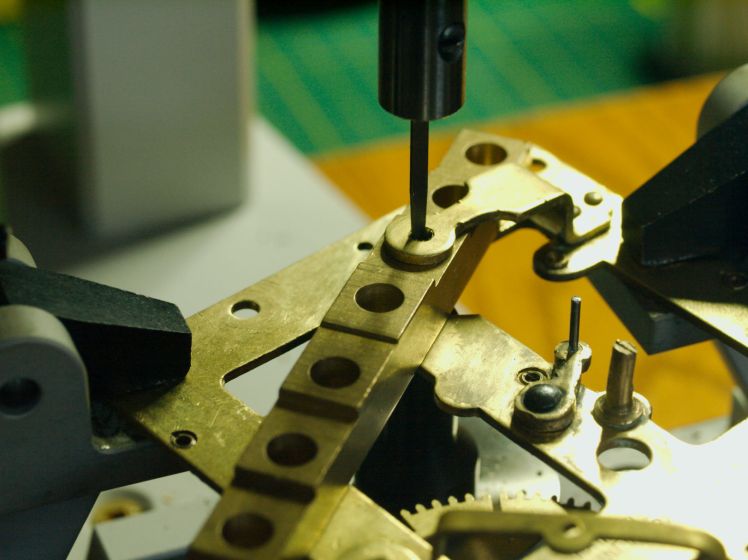
Hari’s book and my thoughts on other matters have made me reflect on how I use my time and the value of having a hobby, which for me is collecting, repairing, and restoring antique and vintage clocks. When I’m working on a clock, my attention is fully engaged, and often, I don’t even realize how much time has passed. I believe that hobbies are important teachers in channeling our energy and focus.
A hobby offers a break from the constant distractions of daily life, providing a space where the mind can fully immerse itself in the task at hand. Engaging in activities that demand attention to detail, like finding a solution to a clock repair challenge, helps the brain shift from the overwhelming stream of information to a more focused, intentional state. Hari refers to this focused state as “flow.” Flow, he says, is a deeply satisfying and harmonious experience. However, if “flow” is interrupted by distraction, it takes significant energy to regain focus, and returning to any task can be challenging.

This immersion in a hobby allows individuals to develop discipline, as it requires time and effort to master a craft or technique. Hobbies provide a sense of accomplishment that can be more fulfilling than the instant gratification often sought through social media. They promote a deeper, more meaningful connection to the present moment, encouraging individuals to be more mindful and intentional in their actions. Over time, practicing a hobby can enhance one’s ability to focus not just within that activity but by extension other areas of life as well, as it builds the mental stamina to concentrate and persist.
Beyond clock collecting and repair, my other hobbies complement each other and help me maintain focus. The clocks I collect and photograph, combined with the articles I write for my blog and the replies to enthusiasts who write to me about their clock issues, contribute to the harmonious cycle of personal engagement.
Photography sharpens my attention to detail as I capture the intricate features of each clock. Writing blog articles further refines my focus, encouraging me to research, reflect, and organize my thoughts in a way that promotes clarity and structure.
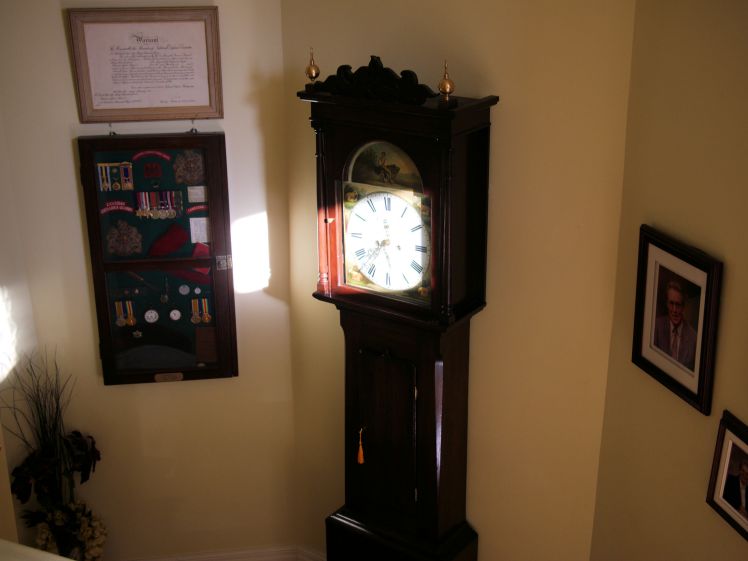
Together, these hobbies create a rewarding routine that keeps me focused, grounded, and engaged while fostering a sense of purpose and accomplishment.
Finally, I apologize if this article comes across as a review, but I’m sure you’ve had the experience where, every once in a while, a book like Hari’s Stolen Focus comes along that challenges your perspective and makes you deeply reconsider how you direct your time and attention.
Discover more from Antique and Vintage Mechanical Clocks
Subscribe to get the latest posts sent to your email.
 Antique and Vintage Mechanical Clocks
Ron – hi
Fascinating post. Thanks. Interesting that on the very day you were posting your views on focus and concentration, I was getting back into blogging on my clock website after a long spell of inaction. And the topic that got me going was exactly the one you raise, although you, as always, manage to give the topic a more wholesome and positive spin.
My rather more tongue-in-cheek post – ‘Mindfulness? I forget to do it and fix clocks instead’ – echoes yours quite neatly, ending with the paragraph:
“And, on mindfulness, isn’t getting lost for hours in the intricacy of reassembling a clock movement the epitome of what mindfulness is all about? And haven’t we actually been doing it for generations – cross-stitching, model-making, knitting, basket weaving, sketching? Who needs a life-coaching guru to teach you that?”
In solidarity with Canada – we’re all Canadians now.
Best wishes.
Hugh
LikeLiked by 1 person
We have a capable Prime Minister piloting the ship, but there are heavy seas ahead. Mindfulness is excellent for brain health and also enhances overall well-being. While on vacation recently, I tried yoga. Yoga not only improves balance and strength, but it also helps manage stress and fosters greater awareness of self-care.
LikeLike