
I receive a number of letters each day from clock enthusiasts, first-time buyers, and people who have inherited family clocks, among others. Typically, I share these letters—while keeping the writer’s identity and location confidential. However, in this case, I’ve chosen not to publish the letter, as doing so would reveal both the sender’s identity and the name of a specific clock repair shop.
Recently, I corresponded with a couple living in the northwestern United States. They inquired about the value of a 120-year-old German-made clock. A repairer had quoted them $2,500 for servicing and repairs, claiming the clock would then be guaranteed for 30 years and valued at $10,000. I asked them to send a photo for reference. While I won’t be posting their photo to protect their privacy, I will share an image of a very similar clock from my own collection.

Once I was sent the photo of the clock I was able to comment.
I replied,
Thank you for sharing the photo of your clock. Based on what I see, I wouldn’t date your clock as early as 1900. This type of clock is commonly referred to as “box clock” by collectors and enthusiasts. These time and strike wall clocks were produced in large quantities after the First World War and remained popular well into the late 1940s.
I’ve worked on many clocks of this type. The movements are generally well-engineered, and it’s rare to encounter serious mechanical issues. In my experience, the most significant problem you might run into is a broken mainspring. Even then, collateral damage to the time or strike train is uncommon.
If I may be candid, the repair cost you mentioned strikes me as quite high even if it included refurbishing the case. Also, it’s worth noting that no repair shop can realistically guarantee a clock movement for 30 years. Mechanical clocks typically need to be inspected and oiled every 3–5 years. Assuming the clock is running daily, a service interval of around five years is standard.
Regarding value: I’ve purchased several clocks of this type, and the most I’ve ever paid is $300.
If the clock has special provenance, that could certainly influence its assessed value.
And finally, my comments are based solely on the photo you provided. If the photo was sent in error and you’re referring to a different clock, please let me know.
Hope this helps.”
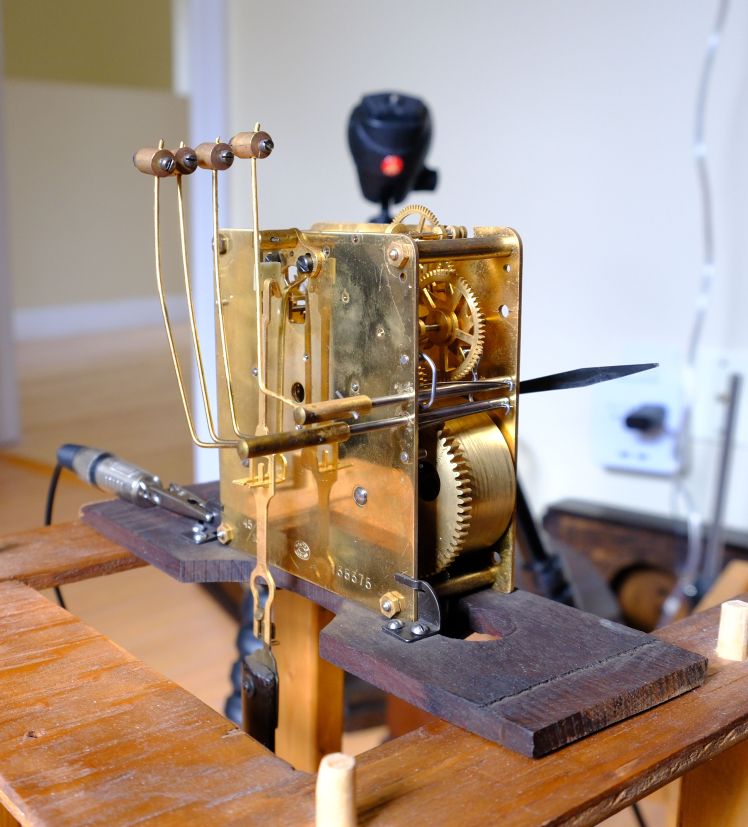
Let me say at this point that what I might be willing to pay for a clock may not reflect the values typically seen on online auction sites. I’ve become quite skilled at spotting good value when it comes to clocks.
In any event, I received a reply—once again, I won’t share it verbatim—but it partly supported what I had said while also questioning my estimate of the clock’s value and its age. I will add the clock in question had an unmarked movement and no maker’s name on the dial.
I replied,
“Thanks again for sharing more about your clock and the estimate you received. It’s clear you’ve put a lot of thought into preserving it, which is always wonderful to see. As I mentioned, these German wall clocks were especially popular from just after the First World War through to the 1940s. They were well-made and produced in large numbers by respected manufacturers in the Black Forest region.
As I also noted, I’ve purchased several clocks of this type, and the most I’ve ever paid is $300. While they may command higher prices in some cases, it’s uncommon to see them valued in the range your clock repairer suggests. There are always exceptions—particularly if a clock has an unusual history or distinctive design—but most tend to fall within the hundreds of dollars rather than the thousands.
Additionally, makers such as Junghans, Gustav Becker, Kienzle, and HAC almost always stamped their movements with trademarks as a point of pride. It’s true that I’ve seen and worked on some unmarked German movements, but they’re the exception rather than the rule.
At the end of the day, it really comes down to which perspective you find more convincing—whether it’s the valuation provided by the repair shop or the experience of collectors who regularly see these clocks. I simply offer my observations based on years of hands-on experience with similar clocks. Whatever you decide, I sincerely hope the clock brings you lasting enjoyment.”
I received a polite “thank you”
Key Takeaway
The key takeaway for readers is that opinions on a clock’s value can vary widely. In fact, two experts may arrive at very different conclusions. Yet, when it comes to estimating the worth of an antique clock, those same experts might not be as far apart as it first seems.
I believe the person who wrote to me had some reservations about the information they received from the clock repair shop—likely the reason they sought a second opinion. This case is also a rather extreme example, and it is my hope the inquirer will ask serious questions of the individual/shop working on their clock.
If you have a clock in need of repair, and the cost of repair seems steep, it is always prudent to ask for a second opinion from a collector or another clock repair shop.
Discover more from Antique and Vintage Mechanical Clocks
Subscribe to get the latest posts sent to your email.
 Antique and Vintage Mechanical Clocks
Good morning Ron,
as you’re aware these box clocks are my favorite and my go to. I have dozens of them in my collection including one that was a wedding gift to my grand parents in 1925. The most I’ve paid is $150. And recently bought two for $25 and one for $20. This story reinforces why I don’t work on other people’s clocks.
Thanks for sharing the story.
LikeLike
I am quite fond of them although I don’t have as many as you do. I never found for $20 but they are out there.
LikeLike
Every field has those in it whose first priority is out for a buck. Sure you have your own examples. A second opinion is worth its weight in gold. It may taker a bit of doing as clock repair a niche service nowadays. Ask questions. Lots. One repairer in my area, will never use again. Another one has an excellent reputation.
LikeLike
Yes, it is always a good practice to seek out a second opinion.
LikeLike