
After working on the dial of a Pequegnat Jewel mantel clock, I was very pleased with the results of the repaint. While the detailing may not withstand close scrutiny, the clock looks excellent from a comfortable distance.
When I brought the clock home, it appeared that a previous owner, frustrated by the loss of some or most of the paint on the dial, chose not to source a replacement but instead stripped the paint entirely, leaving only the numerals.
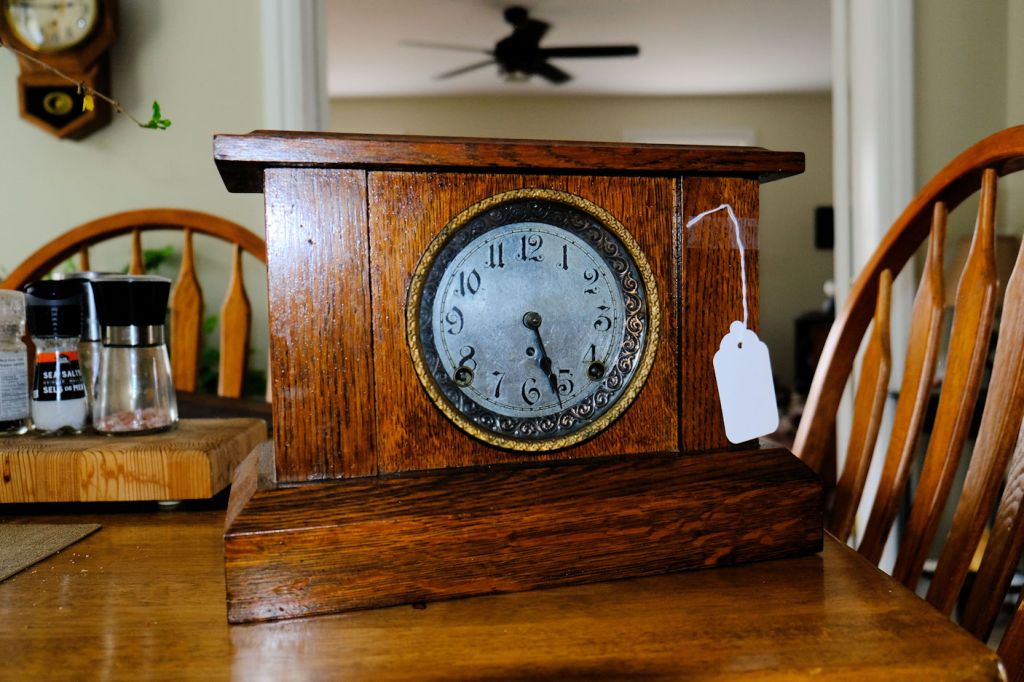
Someone had gone to great lengths to meticulously scrape away all the paint, but the result is far from appealing.

Something Still Troubled Me
I decided to address the missing paint on the dial by repainting it and touching up the numerals, and the results met my expectations.

It continued to bother me that the glass surround had a brassy gold appearance, while the dial bezel exhibited a bronze-like tone.
Although brass is an alloy of copper and zinc, with variations in composition potentially explaining this difference, I suspect that’s not the case here.
Instead, I believe the glass surround was originally painted gold, as small flakes of paint came off while I was cleaning it with a toothpick and cloth. Should I leave it as-is or match the outer bezel to the inner one? I’d have to think about it—a two-toned dial looked odd.
A Decision Was Made
Since the dial and surround had already been altered, I decided to take it a step further and repaint the inner bezel as well. With the right shade of acrylic paint on hand, I went ahead and tackled the task.

Some might argue that I went too far with the repainted dial and bezel, believing that any changes made to the clock over time are part of its history. However, I don’t share that perspective. To me, a poor repair from the past justifies taking steps to set things right. Leaving a damaged dial on a clock case that is otherwise in near-perfect condition would be a shame.
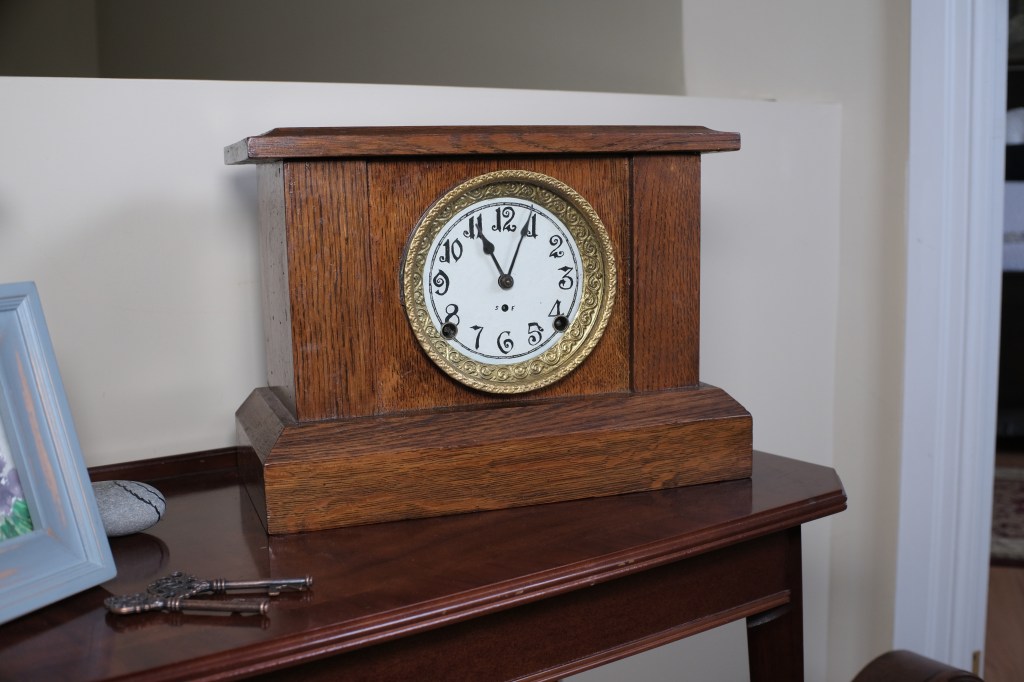
I have no regrets about my decision—if anything, I’ve now contributed to its history.
By correcting such mistakes, I believe I honour the intent and skill of the original maker. Restoring a clock to a condition closer to its authentic appearance helps preserve its aesthetic value for future generations.
What do you think?
Discover more from Antique and Vintage Mechanical Clocks
Subscribe to get the latest posts sent to your email.
 Antique and Vintage Mechanical Clocks
I think you made the right decision. It looks substantially better than the damaged area…..if this was a collectable item with people putting extreme value on original condition It might be different but I don’t think that applies here. all the best, Peter Grant
LikeLike
I agree. Thanks.
LikeLike
Beautiful…good decision
LikeLike
Thank you.
LikeLike
I am totally behind you with your comments. I don’t like looking at the outside of damaged or dirty clock cases and dials, if I can find a way to improve them. Some times wrong parts surround the dial, or the dial itself receives modifications that are very questionable in quality. I am working on a “Chatham” Pequegnat clock where I’ve had a new replica made of the dial, and I’ve found an acceptable bezel and glass that are in balance with the clock’s appearance. Authentic? No! Pleasing to look at? Yes! Its oak case was starved of oil and lacked lustre. I sanded it down, and added a warmer stain colour and finished it with a “space age” polyurethayne/wax combination. Authentic? No! Eye-catching to look at? Yes!
LikeLike
I would love to see the results of your work. If possible please send me a photo at ronjoiner@antiquevintageclock.com
LikeLike
I agree with what you did for the painting. I myself am working on a grandfather clock rescue project and it was missing it’s entire movement, plus various other missing or damaged sections. So I took it upon myself to customize it and tastefully restore its original glory – even if it means making some necessary enhancements.
LikeLike
I agree. Without intervention, the clock might eventually be discarded as garbage. Taking action helps extend its life.
LikeLike