
Over the past 12 years, time has flown by, and just recently, while cleaning a clock I serviced over five and a half years ago, I realized that I have been immersed in this hobby for a long time—and loving every moment of it.
Three years into my journey, I started blogging, a passion that’s been going strong for almost 9 years. Writing not only allows me to track my progress as I delve deeper into the world of clock collecting, repair, and restoration, but it also provides an opportunity to blend my photography hobby with my love for storytelling.
It has been a fascinating journey, one filled with countless lessons. Here are some of my thoughts and reflections on what I have learned along the way.
From Quantity to Quality
In my early days of clock collecting, I acquired nearly any clock I could find—some for as little as $5—mainly to practice repairing cases and movements. However, the collection quickly grew, and I soon found myself running out of space—a common challenge for many collectors.
I eventually settled on a comfortable number of around 80 clocks. I aim to follow a “one in, one out” rule to keep the collection manageable. It’s not always easy, though, as there’s always something tempting that catches my eye.
Over time, I have become more selective, focusing on specific types such as wall clocks and weight-driven models or clocks that are unique and interesting. At present, my primary focus is Canadian-made clocks and those with a strong Canadian connection.
Patience Yields Rewards
Restoration projects take time, and I have learned to embrace a slow, methodical process. My last major project, an antique 1840s banjo clock, took almost a year to complete after I acquired it in 2021. I worked on it in stages, researching new techniques and patiently waiting for the right tools to make the job easier. For example, a band clamp turned out to be indispensable for the wood bezel repair.

A movement will often sit on my bench for weeks as I work through the various stages of servicing. This gives me time to carefully consider any problem areas, mitigate them, and document my progress on my blog.
Tools: Invest Wisely and Gradually
As with any hobby that involves mechanical work, tools can be expensive. In the beginning, I used whatever I had on hand, which consisted mainly of household tools, but as my commitment grew, I began investing in specialized equipment.
In my view, a bushing machine, a lathe, and an ultrasonic cleaner are essential tools I acquired over time—spreading out these costs to make them more manageable.
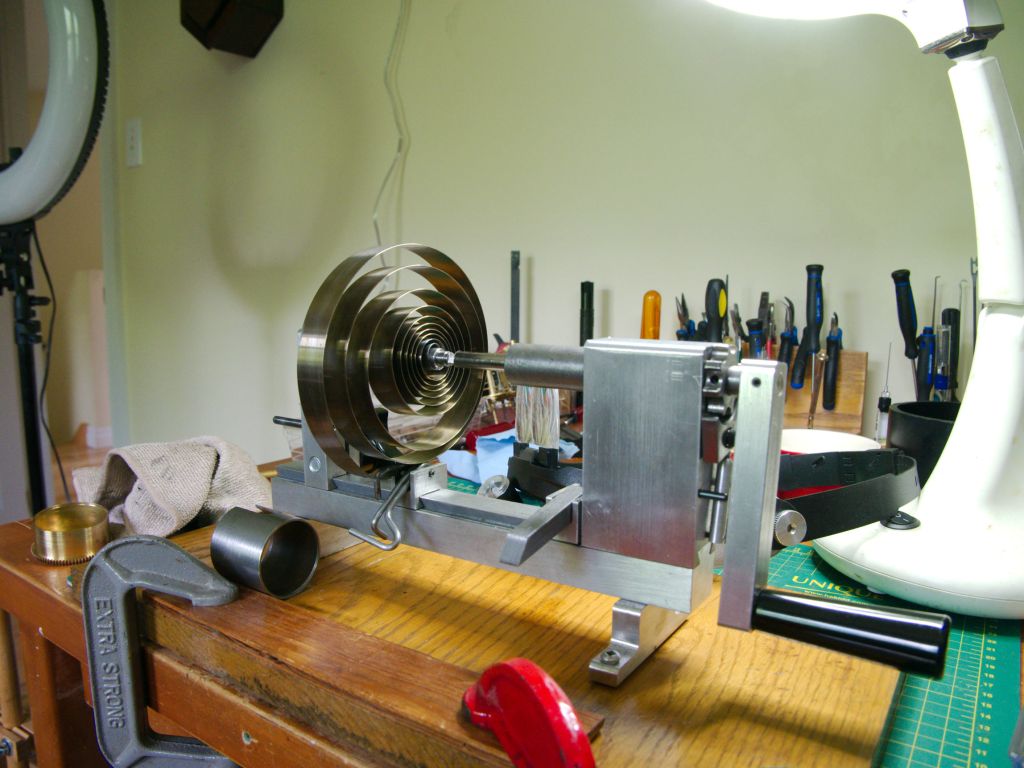
Although buying used equipment is always an option for some, living in a less populated area of Canada, the East Coast, means fewer opportunities to find pre-owned tools.
I always consider pre-owned tools first but used tools are not always in the best condition because they are heavily used, improperly maintained, or simply worn out over time. Tools can suffer from wear and tear, rust, dull blades, or misaligned parts, all of which can impact their effectiveness. This can make it difficult to rely on used tools for precise work, especially in a hobby like clock repair where accuracy is crucial.
For instance, a used Bergeon Bushing Machine might seem like a great deal at 950 CAD on eBay, but if the cutters are dull or damaged, replacing them can cost 300 CAD or more.
The Changing Values of Antique & Vintage Clocks
Not all old clocks are valuable, despite their age. Old is not gold as one of my readers has said. In fact, a glut of antique clocks on the internet has driven prices down and that trend is unlikely to change in the next several years.
For example, Ogee clocks that once sold for $200–$300 are now worth a fraction of that. 30-hour Ogee clocks also are not wanted by most collectors resulting in a significant decline in their value. Mantel, wall, and tall-case clocks have also seen a similar price drop.

I have bought $40 clocks that are still worth… well, $40. With the advent of the Internet, a vast majority of antique and vintage clocks flooded the market, leading to reduced demand and lower prices. Inexpensive clocks are generally in poor condition, require significant repairs, or are lower in quality or craftsmanship, making them less desirable. Shifts in collector interest have also influenced prices, with clocks that were once popular losing their appeal over time, which has affected their value.

On the other hand, prestigious clocks, especially those that are highly intricate or come with documented provenance, tend to have higher values, and their prices continue to remain elevated.
Balancing Passion, Skills & Knowledge
It’s important to avoid diving too deeply into a hobby beyond your current skills and knowledge. Stick to what you know and what you’re capable of handling, and remain conscious of your level of expertise.
By focusing on your strengths, you can enjoy the process and make steady progress without becoming overwhelmed. Trying to tackle projects or techniques that are beyond your abilities can diminish your enthusiasm for the hobby.
Setting realistic goals and gradually expanding your skills can enhance your experience. As you become more comfortable and knowledgeable, you can take on more challenging projects at your own pace. Continuous learning while respecting your limits allows you to grow in this hobby without losing your passion.
There’s strength in recognizing what I can’t do and in acknowledging when something is beyond my expertise. For example, deciding not to offer clock repair as a service shows that I know what brings me joy without overcommitting.
By knowing my limits, I avoid turning enjoyable activities, like collecting or maintaining clocks, into a source of stress. Setting limits allows me to concentrate on what truly matters—like focusing on Canadian-made clocks or curating a meaningful collection.
We all make mistakes but it is not a time to give up after one mistake. Pushing on despite setbacks is equally important. It helps build resilience and determination, essential qualities for any hobbyist. Challenges should reinforce your commitment to the craft. When faced with a challenge, my strategy is to step back temporarily and focus on something else until a solution presents itself.
Having said that, It is also beneficial to recognize when it is time to seek help or advice from more experienced collectors or professional repair persons.
Navigating Repair Advice
When it comes to clock repair, not all advice is good advice. I have learned to be selective about where I seek guidance. As a member of the NAWCC (National Association of Watch and Clock Collectors) and the Ottawa Valley Watch and Clock Collectors Club, I have access to a wealth of reliable resources. I also follow a few respected clock repair experts on YouTube.
On the flip side, Facebook clock groups are often a mix of tinkerers and experts, which can lead to misinformation. Well-meaning hobbyists frequently provide misguided advice to novice clock repairers.
I maintain a library of clock repair books and prefer consulting them over seeking solutions on social media.
Profit Should not be the Motivation
For some, clock collecting might be about turning a profit, but that is not my motivation. I do occasionally sell a clock to offset the cost of tools, but for me, the real joy lies in the nostalgia, the design, and the marvel of a 150-year-old machine that still works perfectly today.
Each clock tells a story, connecting me to the craftsmanship and history of its time. It is incredibly rewarding to restore old clocks and witness them spring back to life, just as they were intended over a century ago without seeing profit along the way.
Sometimes Walking Away is the Best Strategy
Over the years, I have walked away from many clocks. Whether it’s an auction price that’s gone beyond my budget or a clock with too many issues, I have learned to let go. Some clocks would have been great additions to my collection, but I’m not willing to compromise when something feels off—whether it’s the price or the condition.

Trusted Auction sites are easily accessible today, and many clocks are available on their platforms. I make it a habit to establish my maximum bid at the start of the auction and stick to my plan. While I have missed out on a few clocks, I deemed them overpriced.
Connecting with Fellow Horological Travelers
One of the highlights of this journey has been connecting with other collectors, especially through my blog. As clock enthusiasts, we form a unique community—many of us are introverts, yet we thrive when discussing our shared passion. The friendships I’ have built and the knowledge I have gained from these connections have been invaluable.
Looking back, it’s been an incredible period of learning, collecting, and connecting with others. I have acquired some fascinating clocks and met wonderful people, and I look forward to the next chapter in this ongoing adventure.

If you found this article helpful or have any follow-up questions, feel free to share your thoughts in the comment section below.
Discover more from Antique and Vintage Mechanical Clocks
Subscribe to get the latest posts sent to your email.
 Antique and Vintage Mechanical Clocks
I was slow to learn, that it’s a necessity for me to using mainly weight driven clocks. Yet so many others sit and just look great. Most have memories of the adventures and the recalling of obscure towns and places I travelled to, to pick them up.
Mind you I collect everything…typewriters, sewing machines..pocket watches..oh and don’t get me started on Royal Doulton figurines Ahah ha. I’ve run out of tube radios to have rebuilt. Got enough spinning wheels. I find it important to have one for each of the floor cabinet radios. Just a quirk of mine.
Back to the weight driven clocks got too many cuckoo clocks..I hate them but love them too. Love my wall grand father clocks.
Yes, I’m , an old hermit now a days. Ahah ha
Sent from my iPhone
>
LikeLike
Although I’ve collected antique floor radios and fountain pens in the past, I now focus solely on clocks. In my experience, collectors rarely limit themselves to just one type of collection.
LikeLike
Guilty !
good morning Ron, I’m guilty of many of the experiences you point out. I have an addiction to Mauthe style box wall clocks with a ‘bim bam’ chime and I said to myself and the seller just the other day as I picked up 2 more that I’m done. I have now graduated to the stage of being more selective rather than buy every clock I see. On the topic of patience when dealing with a clock I find it important to distinguish between a full restoration and a servicing. I tend to avoid full restoration projects and prefer to fix what needs to be fixed, service the movement to get it functional then add it to its place on my wall (which is becoming scarce, due in part to a guitar collection). On the topic of being methodical I have shared my position with my fellow horology hobbyists at NAWCC -chapter 119 that not every operation needs to be space walk accuracy and the introverts you speak of cannot grasp this concept.
LikeLike
Thanks. If I set a rule for my collecting habits, I can still occasionally break it without feeling guilty.
LikeLike
So few peop
LikeLike
Thanks Ron for sharing these words of wisdom on collecting. That field chock full of rabbit holes to fall into. Glad I don’t collect pianos.
LikeLike
I started to collect pianos but me and one piano had a breakup!
LikeLike