
Like a car engine, oil is the lifeblood of a clock, and correct lubrication is essential for ensuring a long life for the timepiece. Lubrication is crucial for the efficient operation of any mechanical clock movement.
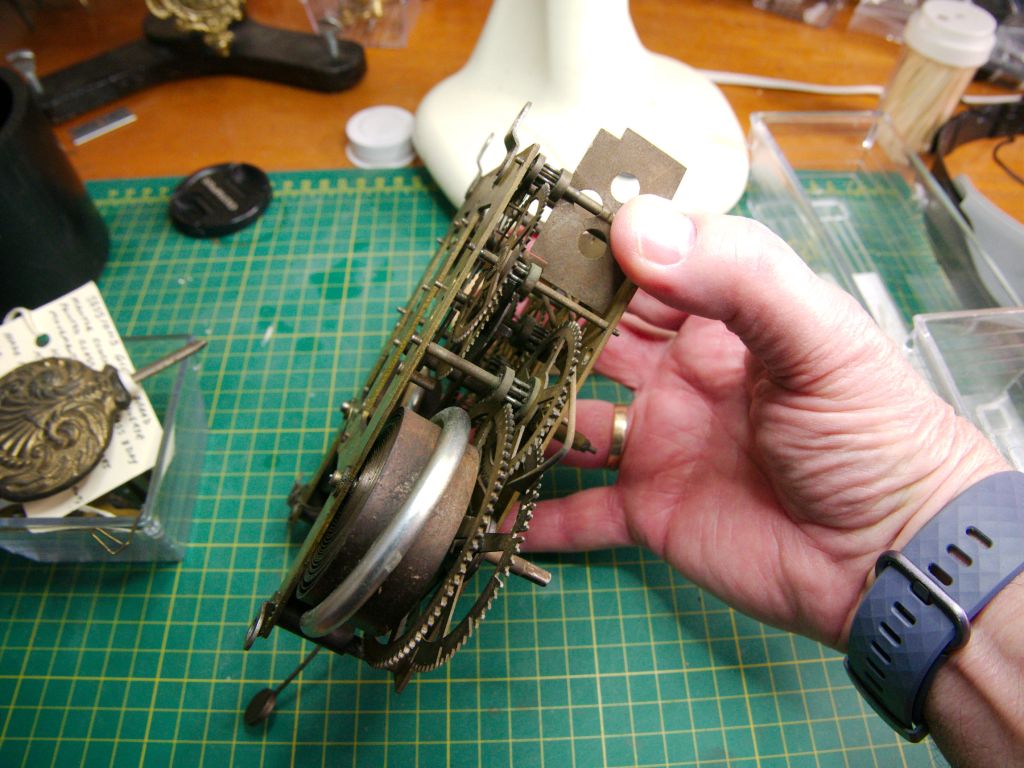
However, it’s important to note that oiling a movement without first disassembling and cleaning it is not usually recommended.
If the movement has been serviced within the past two years, there is no black oil present around the pivots and the pivot holes are merely dry, oiling without disassembly is acceptable. Otherwise, if the clock has not been serviced in several years, adding new lubricant to old oil can mix with dirt and grime, forming a grinding paste that acts as an abrasive, and will accelerate wear on the pivots and pivot holes.
Using a spray lubricant is a no-no
Never use a lubricant spray like WD-40 on a mechanical clock. WD-40 is a water dispersant and displacement agent, not a suitable lubricant for clocks. In fact, you should avoid spraying any type of lubricant on your mechanical clock, as some parts, such as wheel teeth and levers/springs, must remain dry. Instead, use a lubricant specifically designed for clocks, such as Keystone clock oil.

As an alternative to clock-designed lubricant, some clockmakers have had good success with synthetic oil similar to the type used in car engines.
The application of clock oil
When applying oil, use a small amount—about the size of a pinhead—for each lubrication point. You can apply the oil with a toothpick, a small wire, a needle dipper designed for clock oiling, or a clock oiler. Avoid over-oiling, as excess oil can attract dust and dirt which will bind with the oil to create a paste, and increase wear.
I have never had much success with a hypodermic-style oiler but your mileage may vary.

While they are handy at first, the plastic vial or chamber eventually cracks with repeated use and renders the oiler useless.

Instead, I use a simple cup-type oiler and dipper.
What to lubricate
Be sure to oil the pivots of all wheels, the crutch loop where it touches the pendulum rod, the escapement pallets, the clicks, and the mainspring arbours. For weight-driven clocks, remember to oil the pulley axles as well. While servicing a spring-driven clock, also oil the mainsprings with a special mainspring oil. keystone makes an oil specifically designed for all mainsprings.
Drizzle the oil along the side of the coiled spring, allowing it to wick between the coils, and wipe away any excess.
Avoid dipping an applicator directly from the oil bottle to avoid contamination; instead, pour a small amount into an oil cup for application.
In sum
By following these guidelines, you can ensure that your mechanical clock remains in excellent condition and continues to run smoothly for years to come.
Proper lubrication not only enhances the performance of your clock but also extends its lifespan by preventing unnecessary wear and tear. Use the right type of oil and applicator, avoid over-oiling, and never use inappropriate lubricants. With regular maintenance and careful attention to lubrication, your clock will keep perfect time and remain a cherished piece for generations.
Discover more from Antique and Vintage Mechanical Clocks
Subscribe to get the latest posts sent to your email.
 Antique and Vintage Mechanical Clocks
You must be logged in to post a comment.