
I stumbled upon this Arthur Pequegnat Moncton in an antique store located in Bloomfield, Ontario, Canada during a visit in 2018. Certain wall clocks from the Arthur Pequegnat Clock Co., which operated in Kitchener, Ontario, Canada, between 1904 and 1941, are rare finds, making this particular piece appealing. The company, initially founded as Saas & Ford in 1903, was later acquired by Arthur Pequegnat in the following year.
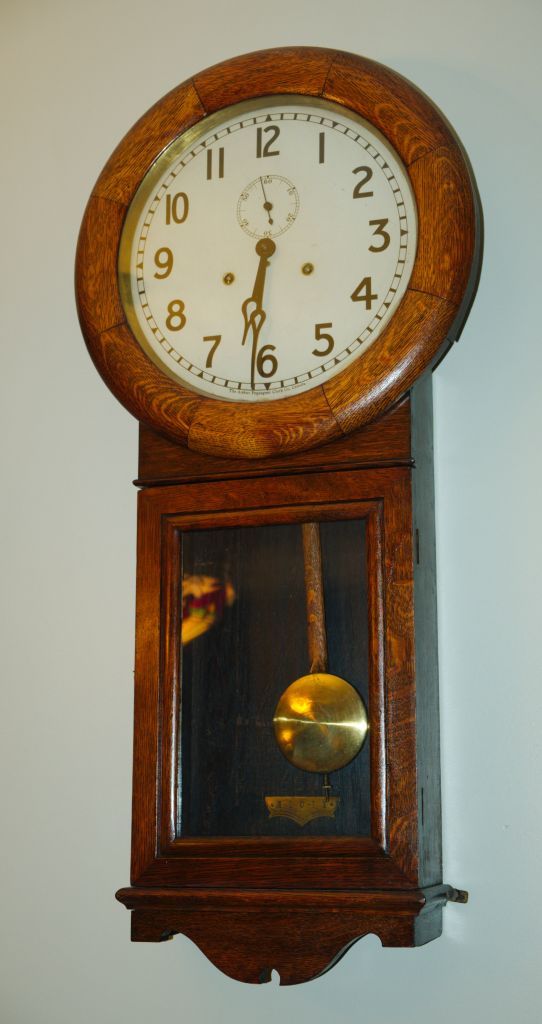
Arthur Pequegnat clocks are renowned among Canadian collectors for their sturdy construction, robust movements, conservative designs, and patriotic nomenclature, often named after towns and cities in Canada. The Moncton, named after a city in New Brunswick, Canada is a testament to this tradition. Pequegnat produced a variety of clocks, ranging from mantel and parlour clocks to Mission, kitchen, gingerbread, tambour, wall, and floor models. The wall and hall clocks are the most desirable.

This Moncton clock, the seventh in my collection, is in fine condition. It features a 12-inch Arabic dial with bold numbers, attractive pierced spade hands, and a fumed quarter-sawn oak case. The clock stands at 35 inches high, with a hinged 16-inch oak bezel door revealing the dial and a 14 ½-inch glazed drop door. The clock’s patriotic ties are evident in its association with the Canadian National Railway hub in Moncton and so, some of the specially designed Monctons found their way into rail stations across Canada.
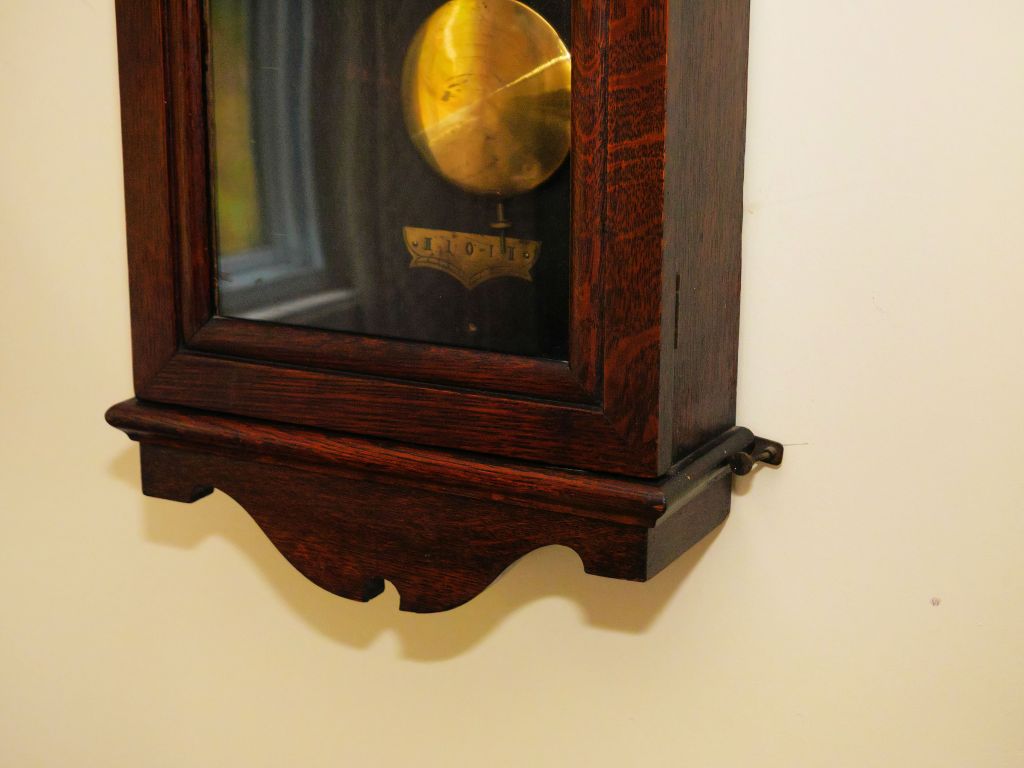
Based on the design of the lower valance this clock is a series II Monction which was produced from 1917 to 1941.
Despite its age, the clock maintains its charm, with the original dial glass displaying the expected “waviness.” However, some elements, such as the lower glass and retaining rails, appear to have to have been replaced early in the clock’s life. Unfortunately, the original label is missing. Minor imperfections include a scratch on the dial face (not visible from a distance) and a screw hole on the back panel. Screw holes are fairly common, as many of these clocks were firmly affixed to walls to ensure they remained in beat and functioned accurately.

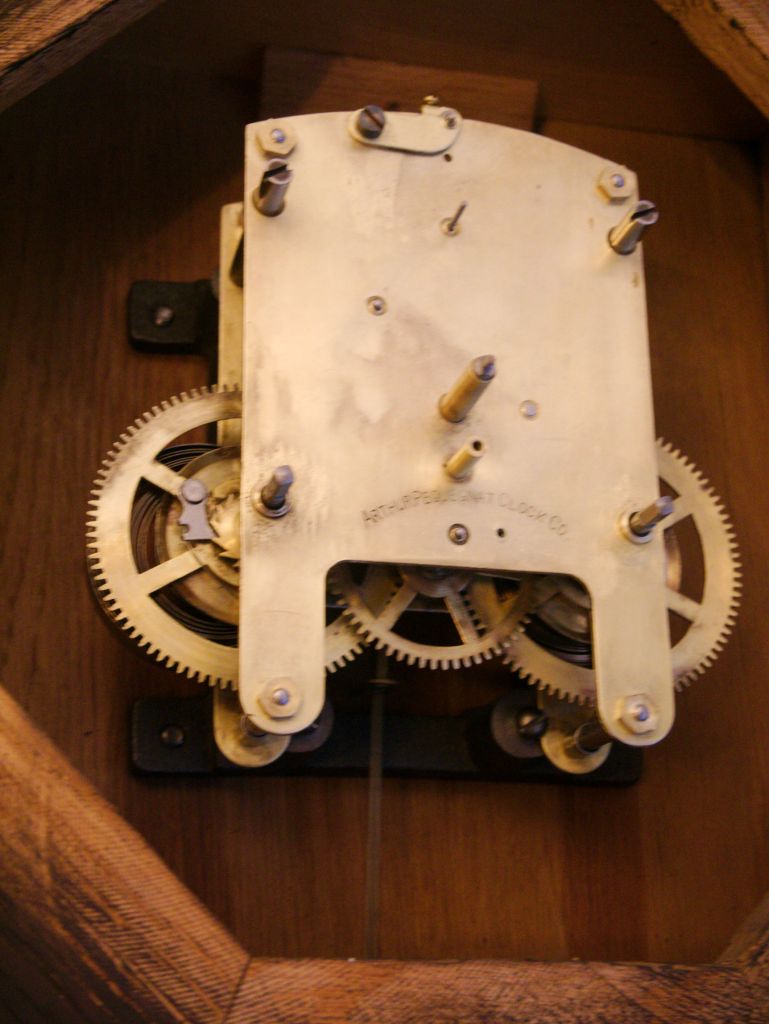
The Moncton is a 15-day time-only clock with a unique double spring time-only movement and a Graham deadbeat escapement, highlighting its accuracy. The second hand is a particularly attractive feature. The clock runs at 84 beats per minute or 5040 beats per hour.
The clock closely resembles the Seth Thomas #2 in size and shape, offering an alternative with a spring-driven mechanism and a longer running cycle.
Obtaining this Moncton clock marked the culmination of an extensive search, as these timepieces are progressively harder to come by. The seller, having possessed it for around 1 ½ years, had no insights into its history, yet my speculation is that it might have served as an office clock for a good portion of its life.
Although the clock ran well when I received it I serviced it as a precautionary measure.
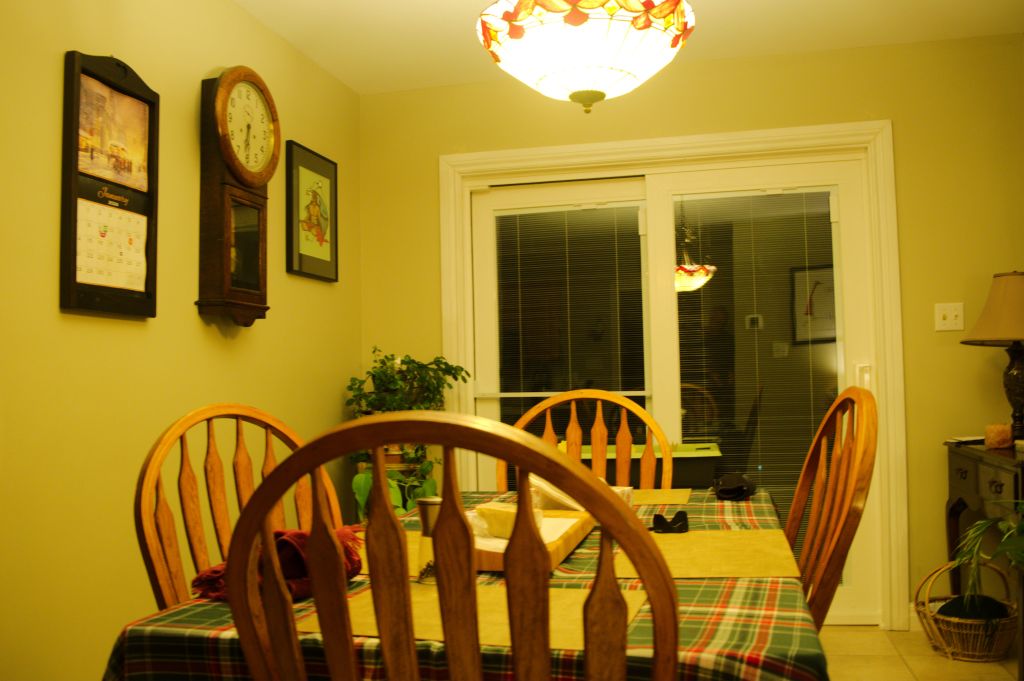
This clock occupies a prominent spot in the kitchen area of our home, serving as a daily reminder of the grandeur of wall clocks of the 1920s era.
For visual learners, this YouTube video provides a helpful summary of this post.
Discover more from Antique and Vintage Mechanical Clocks
Subscribe to get the latest posts sent to your email.
 Antique and Vintage Mechanical Clocks
<
div dir=”ltr”>Another gre
LikeLike
Thanks Ron. Great example of Canadiana.
I believe a earlier blog of yours profiled the Arthur Peguegnat Company, in Kitchener. Some readers may already know because of anti-German feeling during WW1, it was re-named from it’s original “New Berlin”. My Peguegnat “Brandon”, was found at a nearby town in Woodstock, Ontario. It may not have travelled far? Least up to then.
LikeLike
Yes, the name change was interesting but there was a lot of anti-German sentiment so the good people at the time thought it was the right thing to do.
LikeLike