
Life is not perfect. Why should our antique clocks be any different? As we grow older, our possessions undergo a similar transformation. Just as aging imparts a unique character to metal through oxidation and rust, the term “patina” extends beyond its common association with metallic items to antique objects generally. It encapsulates the idea that our belongings, over time, develop distinctive qualities that result from reactions to various elements and the passage of time.

Although the hands of a clock move forward no one has figured out how to freeze time or better yet, turn it backward.
During my initial foray into clock collecting and clock repair, my goal was to resurrect non-functional vintage or antique clocks, restoring both their cases and movements to their original state.
While I was tempted to make changes to the case to improve its presentation my priority has now shifted somewhat and lies in ensuring that the fundamental purpose of the clock—accurately telling the time—is fully realized. While addressing structural concerns like a broken backboard hindering the hanging of a wall clock is essential and demands attention, the case, imperfections and all, can be left in its original state.

The purpose of a clock was to serve the original owner in any manner they deemed suitable, primarily by functioning and accurately displaying the time. Any scratches or blemishes on the case were secondary considerations compared to the clock’s primary function of timekeeping. 100 years ago a clock for the family home served as a common reference point for coordinating daily activities. It helped family members synchronize their schedules for meals, work, and social events. Daily household routines, such as waking up, going to bed, and managing chores, were often organized around specific times. A functioning clock (and oftentimes the only clock) was fundamental for maintaining order and structure within the home.
It can also be said that certain clocks were regarded as furniture pieces, receiving the same attention in terms of dusting, waxing, and overall care as any other furnishings of that era. Clocks such as these have survived quite well in their original state and its history has not been washed away with alterations.
The real attraction to unrestored original items is a relatively new phenomenon, perhaps stemming from a response to our modern throwaway society where nothing seems to last. We can point to an old clock and say, that object has lasted all these years despite its age-related scars.

But does something that takes on a surface appearance that has grown old become a thing of beauty? The answer is, yes. Every bit of patina on a clock speaks to something from its past, things that have happened to a clock through the ages whether you can see the cause or not and that makes the clock more interesting.
A clock that attempts to go back in time through restoration, no matter how good the job is, for all intents and purposes is a facsimile, a replica, or a reproduction. Many might consider all restoration as fiction. However, some folks will take fictitious or like-new any day because new-looking and shiny is somehow “better” and it is their belief that condition always equates to increased desirability.
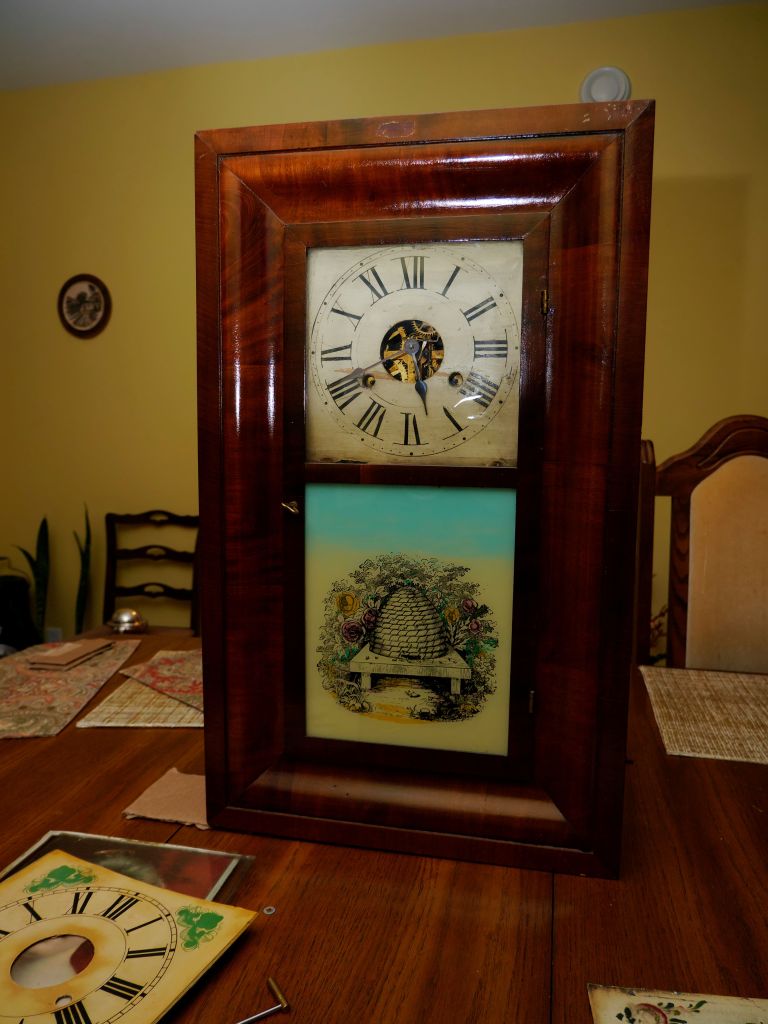
The concept of patina extends beyond its traditional association with oxidized metal, offering a broader perspective on the aging and transformation of old clocks. Patina embodies a unique character that evolves over time. It reflects a growing interest in preserving the enduring quality of items, a sentiment that contrasts with the disposable nature of our modern society.
Patina is the thing that humanizes an old clock.
Discover more from Antique and Vintage Mechanical Clocks
Subscribe to get the latest posts sent to your email.
 Antique and Vintage Mechanical Clocks
<
div dir=”ltr”>This is my favorite artic
LikeLike
Thank you.
Ron
LikeLike
Made the mistake of wiping the dial of my clock with the cloth that I had been cleaning the glass with. Numbers gone!
LikeLike
I would suggest inpainting if you have a steady hand.
Dial inpainting
Ron
LikeLike