
In 2020, my wife and I purchased a Scottish tall case clock at a live auction. It had been on our wish list for years, and it checked all the right boxes—tall, stately, attractive, with an easy-to-repair movement and very little missing. However, we later realized that not everything was as perfect as it seemed, and the clock required a bit of tender loving care.
Not a single person in the auction hall showed interest in the clock, and we managed to acquire it for $270 plus fees and taxes. While it’s unfortunate that it went for such a low price, tall-case clocks aren’t in particularly high demand at the moment, and with space constraints in smaller homes today, it’s understandable why they might not appeal to everyone.
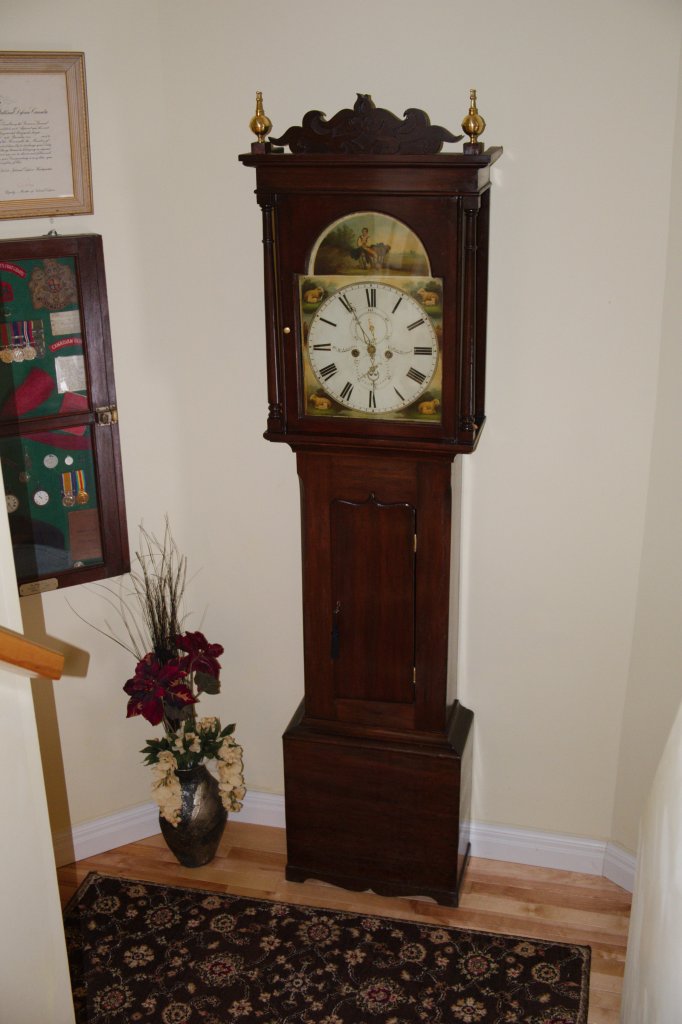
It may not be apparent from the photo below, taken that day in the auction hall, but the clock had been neglected for a long time and required a significant amount of work.

The work included repairing the movement and refinishing and repairing a very tired case. However, it was a great learning experience and a true labour of love.
After the movement was repaired, testing continued for weeks, involving small adjustments and waiting for a new suspension spring, pendulum rod, and stake.
Sympathetic Vibration Definition
During testing, I encountered a consistent problem. On day six of the weekly cycle, the clock would stop. As the weights descended to the level of the pendulum a harmonic phenomenon occurred that is defined as “a formerly passive string or vibratory body responding to external vibrations to which it has a harmonic likeness”.
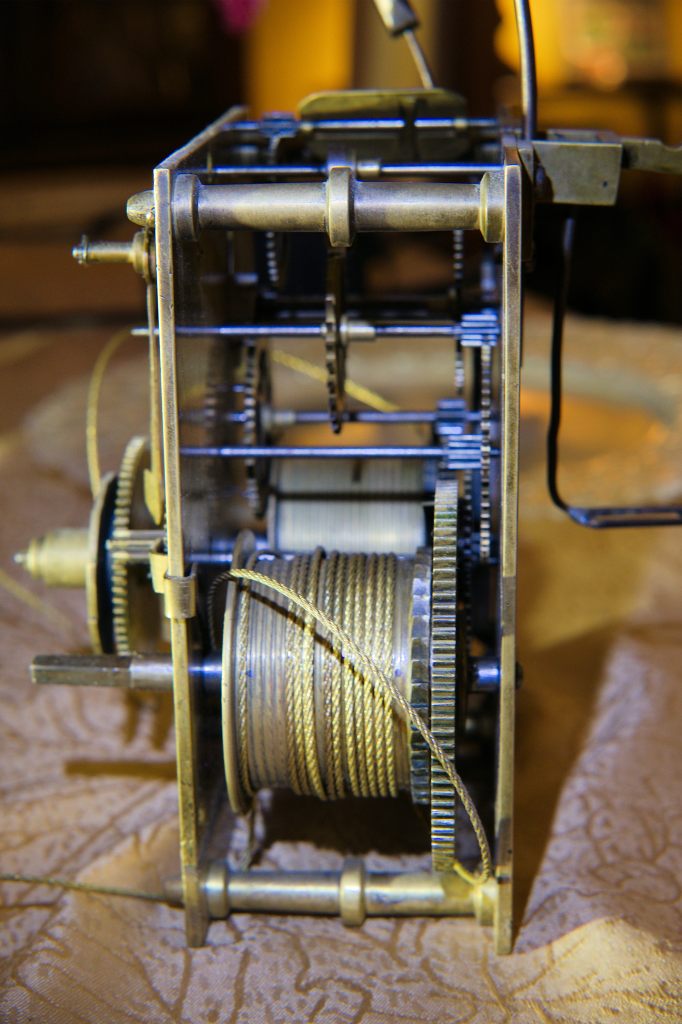
When the weights on a tall clock descend to the point where it’s at about the same height as the pendulum, the weights swing slightly. Since the power that drives the pendulum is now swinging the weights as well, the pendulum does not get its share of power and eventually stops.
I addressed the sympathetic vibration by anchoring the clock stand to a wall. What that enough?
Just after the movement was repaired and in its case, the pendulum had just enough over-swing to compensate for the moving weights and the clock would soldier on. But after two years and a little bit of wear, the clock stops at the point where the pendulum is at the same level as the weights.
Sympathetic vibration can often be addressed in a tall case clock by fastening the upper part of the case to the wall, or by mounting the case on a solid foundation avoiding anything soft such as a carpet.
But other measures can be taken if the problem persists.
The Solution to the Stoppage
I had attached an anti-tipping wire between the wall and the clock case, thinking it would prevent sympathetic vibration. For a time, it worked, but eventually, the issue resurfaced.
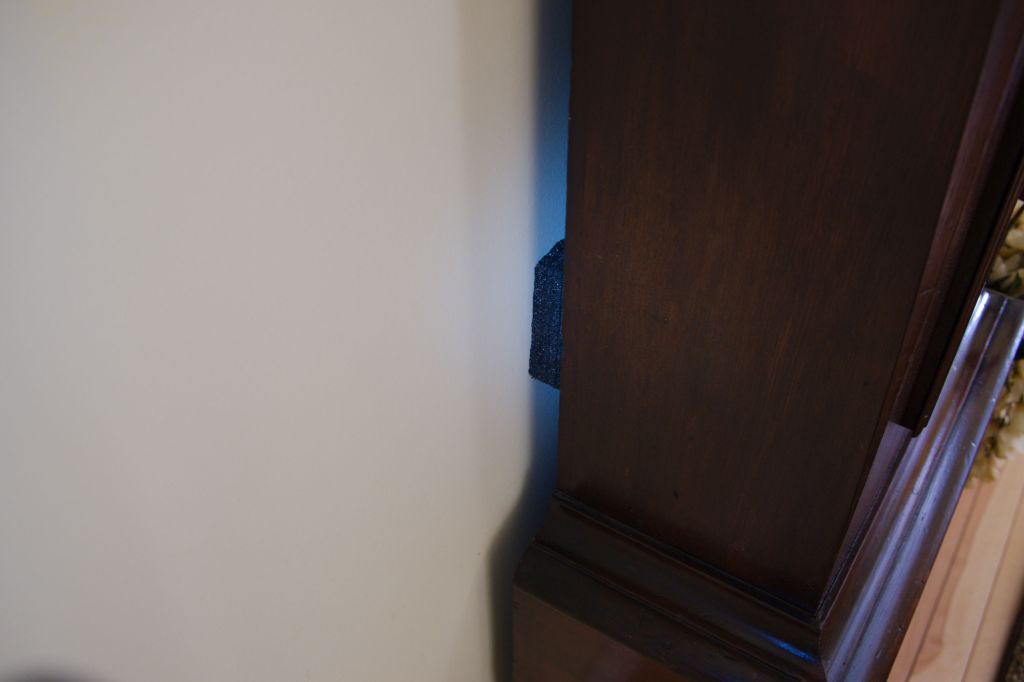
The solution came in the form of protective packaging from an Amazon delivery—dense black foam blocks placed behind each side of the clock case, at the same height as the pendulum. Occasionally, I have to reposition the blocks, as the vibrating action of the strike causes them to slowly fall over time.
Everything is now put right and this beautiful tall-case clock assembled by William McLachlan from Newton Stewart, Scotland now runs its full cycle without that annoying stop at the six-day point.
Discover more from Antique and Vintage Mechanical Clocks
Subscribe to get the latest posts sent to your email.
 Antique and Vintage Mechanical Clocks
I’d never thought of that. Amazon to the rescue.
LikeLike
We also keep some of the empty boxes.
LikeLiked by 1 person
I do also for selling on marketplace. I kept trying to clear out things but I’m not seeing progress. I guess if I stopped buying!
LikeLike
There is always the impulse to buy things while trying to sell other things. Must be some kind of disease!
LikeLiked by 1 person
Disease… yes and illness for sure. I’m already itching to go to the big flea market in new Milford ct. do check out The Elephant Trunk if ever back in Ct. quite large
LikeLike