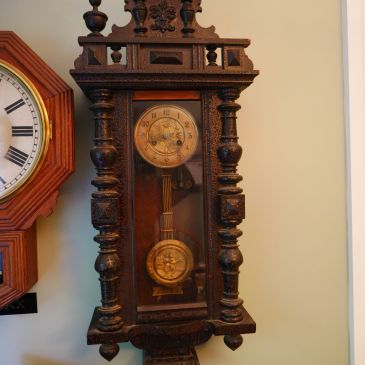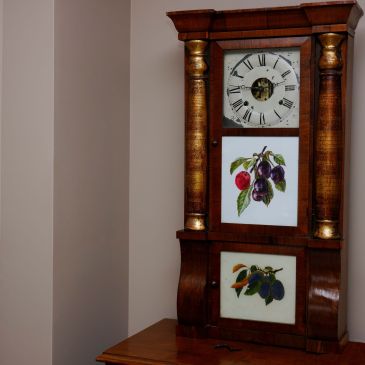
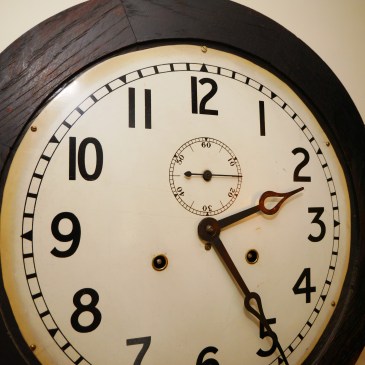
Top Reasons Your Mechanical Antique Clock Runs Slow: Tips & Fixes (2025 Ed.)

We are quite accustomed to the accuracy of quartz clocks which lose or gain mere milli-seconds per week. Contrast that with an era when folks were content to accept that their mechanical clock would be a minute fast or slow through the week, and it was a common practice to make small adjustments over the … More Top Reasons Your Mechanical Antique Clock Runs Slow: Tips & Fixes (2025 Ed.)
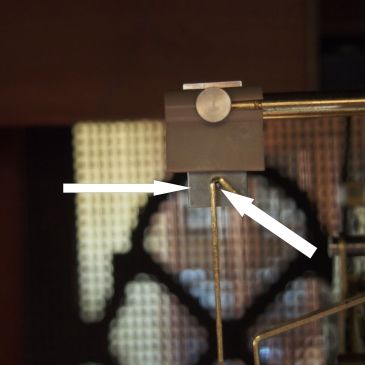
Rate this:

Common Reasons Your Clock Is Running Slow

There are four general categories of clocks: quartz, electro-mechanical, electric, and mechanical. Mechanical clocks—whether antique or vintage—are the focus of this discussion on why a clock might run slowly. We’ve become accustomed to the accuracy of quartz clocks, which lose or gain only milliseconds per week. Contrast that with an era when people were content … More Common Reasons Your Clock Is Running Slow

Rate this:

Pendulum Length Vs. Pendulum Weight in Clocks: What Matters More?

A clock’s pendulum is a swinging component made up of a rod or wire with a weighted bob attached at the end. It is a key part of pendulum clocks, responsible for regulating the movement and ensuring accurate timekeeping. The pendulum swings back and forth in a precise, periodic motion, controlling the clock’s escapement mechanism … More Pendulum Length Vs. Pendulum Weight in Clocks: What Matters More?

Rate this:

Anniversary clock repair – a replacement suspension spring

Let me start by saying that opinions on torsion clocks are divided—some people have great success with them, while others absolutely loathe them. Despite their seemingly simple design, they can cause endless frustration, which is why many clock repairers tend to avoid them. Fortunately, I seem to be one of the lucky ones. I gifted … More Anniversary clock repair – a replacement suspension spring

Rate this:

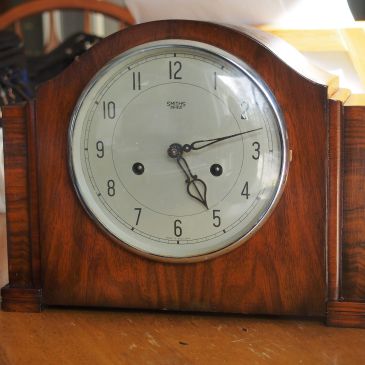
A Smiths Enfield mantel clock comes back to life

Smiths Enfield mantel clocks are highly regarded by beginning clock collectors due to their popularity, abundance, and durable movements. For amateur clock repairers, they offer relatively few challenges. I acquired my Smiths Enfield time-and-strike clock in 2013 from a young clock tinkerer in Dartmouth, Nova Scotia, but it was never a reliable runner. It would … More A Smiths Enfield mantel clock comes back to life

Rate this:

Mauthe (FMS) wall clock restoration – Part II – servicing the movement

This is Part II of a three part series on restoring this beautiful German FMS Mauthe (Friedrich Mauthe Schwenningen) wall clock. Part I can be found here. Part III, in a week or so, will cover case repairs and refinishing. This attractive antique Victorian style German FMS Mauthe wall clock was purchased locally from a … More Mauthe (FMS) wall clock restoration – Part II – servicing the movement

Rate this:

My antique clock runs slow – why?

There are four general categories of clocks; quartz, electro-mechanical, electric, and mechanical. Mechanical clocks, whether they are antique or vintage are the focus of our discussion on why a clock runs slow. We are quite accustomed to the accuracy of quartz clocks which lose or gain mere milli-seconds per week. Contrast that with an era … More My antique clock runs slow – why?

Rate this: