Essential Clock Movement Servicing Steps

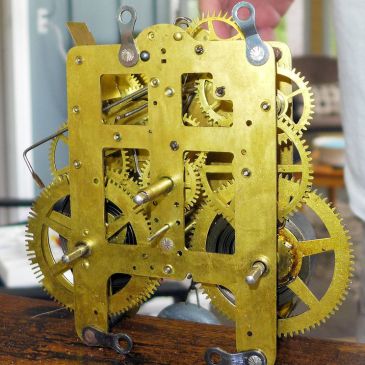
Why does a mechanical clock movement require servicing? The answer is quite straightforward. Maintaining your clock’s movement is essential to ensure it continues to function properly and extends its lifespan. Regular servicing reduces wear and tear, ultimately preserving the clock’s functionality. Ideally, most clocks should undergo servicing every three to five years to maximize longevity. … More Essential Clock Movement Servicing Steps

Rate this:

Gilbert tambour clock with Normandy Chime – movement servicing

This Gilbert tambour style mantel clock is model 2038 with a bim-bam strike or what Gilbert called a Normandy chime. The model number along with the words “Normandy Chime” are stamped on the bottom of the case. Gilbert called this the “Normandy Chime” as it was reminiscent of the old bells of Normandy (Corneville) in … More Gilbert tambour clock with Normandy Chime – movement servicing

Rate this:

More fascinating terms – the language of clocks

Regular reader and contributor JC suggested a few more clock terms I thought readers and fellow horologists might find interesting. My source for this article is the Watch and Clock Encyclopedia by Donald de Clarke, published by Bonanza Books (1984) which is still available on Amazon. Gridiron pendulum: A pendulum consisting of alternating steels and … More More fascinating terms – the language of clocks

Rate this: