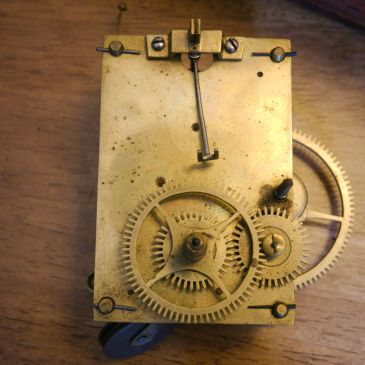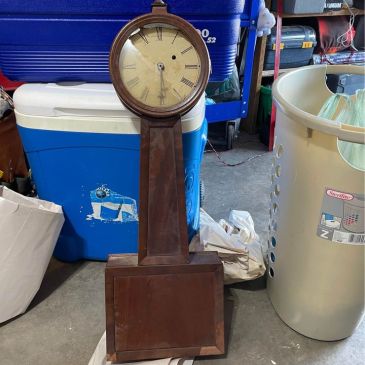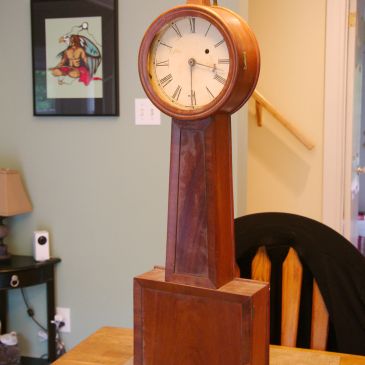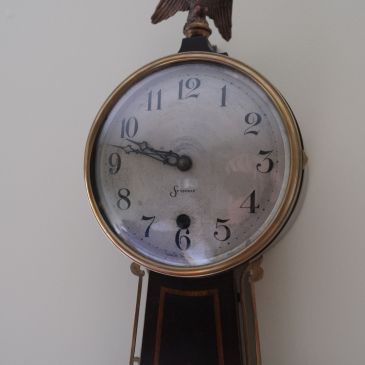
Echoes of an Unknown Maker: A Banjo Clock’s Journey Through Time

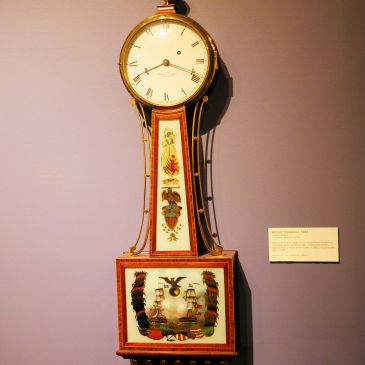
The American Banjo clock — often just called a banjo clock — got its name from the shape of its case, which resembles a banjo musical instrument. Although the design was patented in 1802 by Simon Willard, a renowned clockmaker from Roxbury, Massachusetts, Willard referred to his invention as the “Improved Timepiece,” not a banjo … More Echoes of an Unknown Maker: A Banjo Clock’s Journey Through Time
Rate this:

What Makes a Clock Antique or Vintage?

Perhaps you already have a good sense of what you consider “antique” versus “vintage.” But after years of poking around the internet looking for interesting old clocks, I keep seeing confusion over these terms. So, maybe it’s not as clear-cut as we think. Let’s start with the word “antique.” According to the United States Government … More What Makes a Clock Antique or Vintage?

Rate this:

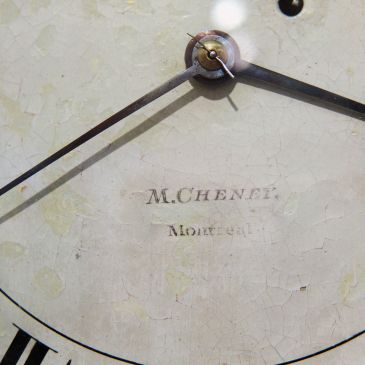
The Legacy of Martin Cheney: Clock-Making in Early Canada

Martin Cheney is not typically the first name that comes to mind when considering the impact of clockmakers on Canadian horology. Martin Cheney, born in 1778, was part of a prominent American clock-making family. He was one of four sons of Benjamin Cheney (1725-1815) and Elizabeth Long Cheney, who hailed from East Hartford, Connecticut. Benjamin … More The Legacy of Martin Cheney: Clock-Making in Early Canada

Rate this:

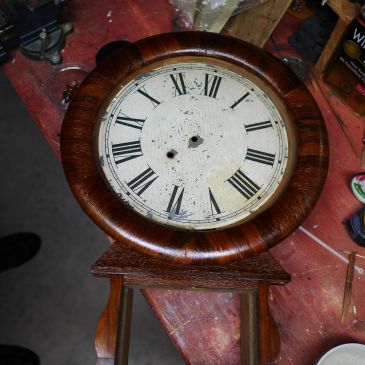
Securing Clock Glass to a wood Bezel with Plaster of Paris: An easy Step-by-Step Guide

Antique wall clocks hold sentimental and aesthetic value, and preserving them often requires delicate restoration work. Purchasing replacement glass and securing it to a frame is one such restoration project. Securing glass to the bezel of an antique clock can be achieved in several ways. It can be secured with tacks or clips or in … More Securing Clock Glass to a wood Bezel with Plaster of Paris: An easy Step-by-Step Guide

Rate this:

Tick Talk Tuesday #43 – Is this a Simon Willard banjo clock?

Tick-Talk Tuesday is about the letters and comments I have received from readers concerning clock issues, challenges faced, a clock you would profiled or advice on your particular clock concern. For those comments and questions that stump even me, I consult within my clock circles for the best possible answer TM writes, “We have had … More Tick Talk Tuesday #43 – Is this a Simon Willard banjo clock?

Rate this:

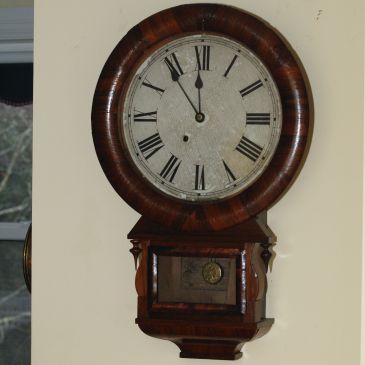
Maintaining your mechanical clock – it’s simpler than you think

Maintaining your antique clock – a discussion How do I know if my antique mechanical clock is keeping good time? While it may be important today, years ago people had a different concept of time. Back in the 18th and 19th centuries common folk had little need to know the time of day precisely. There … More Maintaining your mechanical clock – it’s simpler than you think

Rate this:

Restoration work on a 181 year old weight driven banjo clock

There are basically three types of banjo clocks with mechanical movements. Those with lever escapements which are usually in the $75 to $100 range, spring-driven ones that are generally $100 to around $300 and up but weight-driven banjo clocks occupy the upper end of the range and are normally between $300-$500 in fair condition and … More Restoration work on a 181 year old weight driven banjo clock

Rate this:

Buying an antique clock – how to

This post explores buying tips for novice antique clock buyers. Those looking for an antique clock in general rather than a specific type or model of an antique mechanical clock will find the following tips very useful. Vintage versus antique According to the United States Government publications, the term “antique” is reserved for valuables that … More Buying an antique clock – how to

Rate this: