
Twice each year, most people casually change the time on a microwave or stove clock and carry on with life. Those of us who collect mechanical clocks, however, prepare for what can only be described as a seasonal endurance event.
Yes — Daylight Saving Time has arrived again.
For the general public, DST is a minor inconvenience. For a clock enthusiast, it is an expedition. Every mantel clock, wall clock, regulator, and stubborn little alarm clock must be persuaded — politely — to agree with the new official time. Some cooperate willingly. Others protest by striking eleven when it is clearly ten, or by refusing to strike at all until properly consulted.

The original idea behind Daylight Saving Time was admirable enough: shift the clocks to make better use of daylight and enjoy longer evenings outdoors. In practice, it often means losing an hour of sleep in March and spending the next week wondering why everything feels slightly out of rhythm.
Interestingly, a Canadian helped set this whole process in motion. Sir Sandford Fleming, engineer and champion of standardized time zones, gave the world a sensible system for telling time. One doubts he imagined future generations standing on step stools twice a year, carefully advancing minute hands while negotiating with century-old movements.
Today, about 70 countries still observe DST, while others — including Japan, India, and China — have wisely decided that time works perfectly well without seasonal tinkering. Here in Canada, in most parts, we continue the tradition, guided by the familiar phrase: “Spring ahead, fall behind.”
For mechanical clocks, the rule is simple: move the minute hand forward one hour and allow the clock to do the rest. Let the chimes play out naturally. Patience is essential. Mechanical clocks have survived world wars, house moves, and generations of owners — they will not be rushed simply because politicians have decided it is suddenly an hour later.
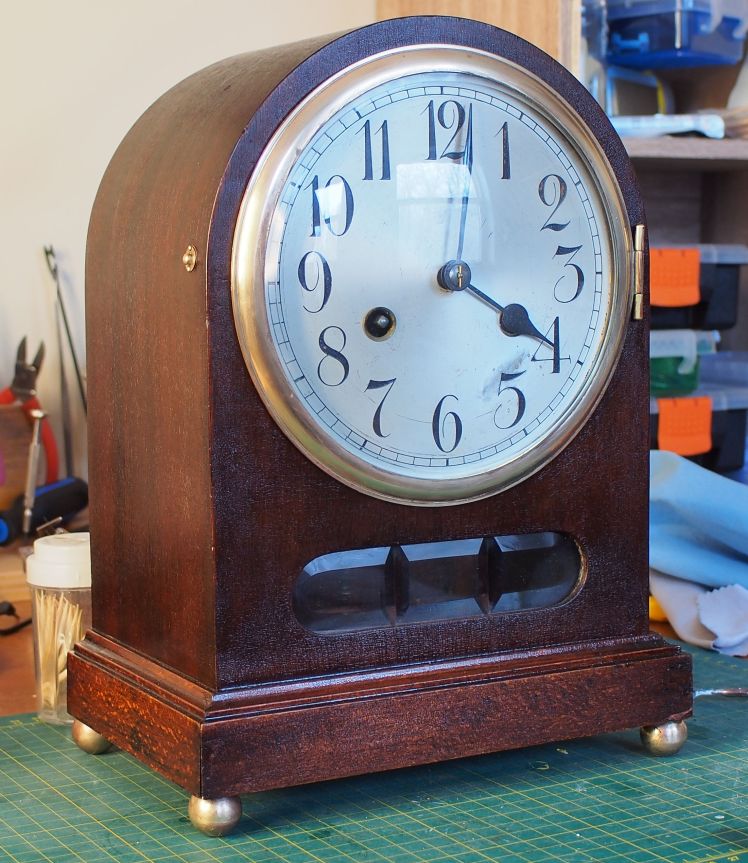
In my home, adjusting the clocks takes long enough that by the time I finish, at least one seems ready to be wound again. And without fail, a week later I will discover a lone clock quietly living in the previous time zone, proving once again that clocks, like people, resist change.
There is growing talk of abandoning Daylight Saving Time altogether. Many argue it is unnecessary in our modern world of automatic devices and artificial lighting. It is about as useful as a chocolate teapot! I suspect few would celebrate its disappearance more enthusiastically than those of us surrounded by ticking reminders of the past.
The push to abolish seasonal clock changes in Canada is slowly gaining momentum. Quebec, Nova Scotia, and New Brunswick have all considered the issue, although none have yet passed binding legislation.
Recently (March 1, 2026), the province of British Columbia announced that it would change its clocks for the final time on March 8 and remain on daylight saving time year-round.
Ontario has already passed legislation making daylight saving time permanent, but the change will only take effect if neighbouring Quebec adopts the same approach.
At present, Saskatchewan (one of Canada’s western provinces) and Yukon (one of the northern territories) remain on standard time year-round and do not adjust their clocks twice a year.
Until that day arrives in Nova Scotia and those “affected” parts of the world, we will continue the ritual — key in hand, listening to the familiar chorus of strikes and chimes — adjusting not just our clocks, but ourselves, twice a year.
Discover more from Antique and Vintage Mechanical Clocks
Subscribe to get the latest posts sent to your email.
 Antique and Vintage Mechanical Clocks
Gre
LikeLike
Thank you.
LikeLike
When the clocks FALL BEHIND or Fall Back, which way do you rotate the minute hand?
LikeLike
AS a general rule I do not suggest moving the minute hand backwards. Instead stop the clock for one hour.
LikeLike
Geeze, why didn’t I think of that?
I never move the minute hand counterclockwise.
Have quite a collection including three Morbiers, one a tall case. Always enjoy your posts.
LikeLike
Ron, Nominating you as the the Don Quixote of time keeping. The windmills keep turning. You regular as clock work. Courageously go up against them. Futilely triumphs. Once again, for 2026, our (ahem) trusted Public Servants continue to trundle out this fossil of an anachronism. Another year of bullshitery. The utterly useless ordeal lives on.
LikeLike
Do I get a Nobel prize for that?
LikeLike