Are you searching for a unique gift for a friend or family member? Have you ever considered giving an antique or vintage clock? It is the perfect, memorable gift.
Whether you’re familiar with antique and vintage clocks or completely new to the world of horology, you will need guidance in finding the right clock for that special someone. Here are a few pointers, along with explanations of some common terms you face.
Why Choose an Antique or Vintage Clock?
Last year, I sold a clock to a young woman looking for a unique gift for her father. She told me it was exactly what she wanted because it reminded her of a clock they had when she was a child. Sentimental value, a love for antiques, a return to our simpler past, or the unique charm of an old mechanical clock are reasons why people are drawn to these timeless clocks.
Antique, Vintage or Collectible
Determining the age of a clock can be challenging, especially since listings often don’t specify the exact year the clock was made. However, you might come across phrases like “mid-century”, antique, collectible, or vintage which can give you a general sense of its age. A quick search online can also help you narrow it down.
As a rule of thumb, an antique is something that is over 100 years old, while a vintage item is between 30 and 100 years old. Anything less than 30 years old may sometimes be considered vintage, but it’s often labeled as collectible instead.
Choosing the Right Type of Clock
Space is a key consideration.
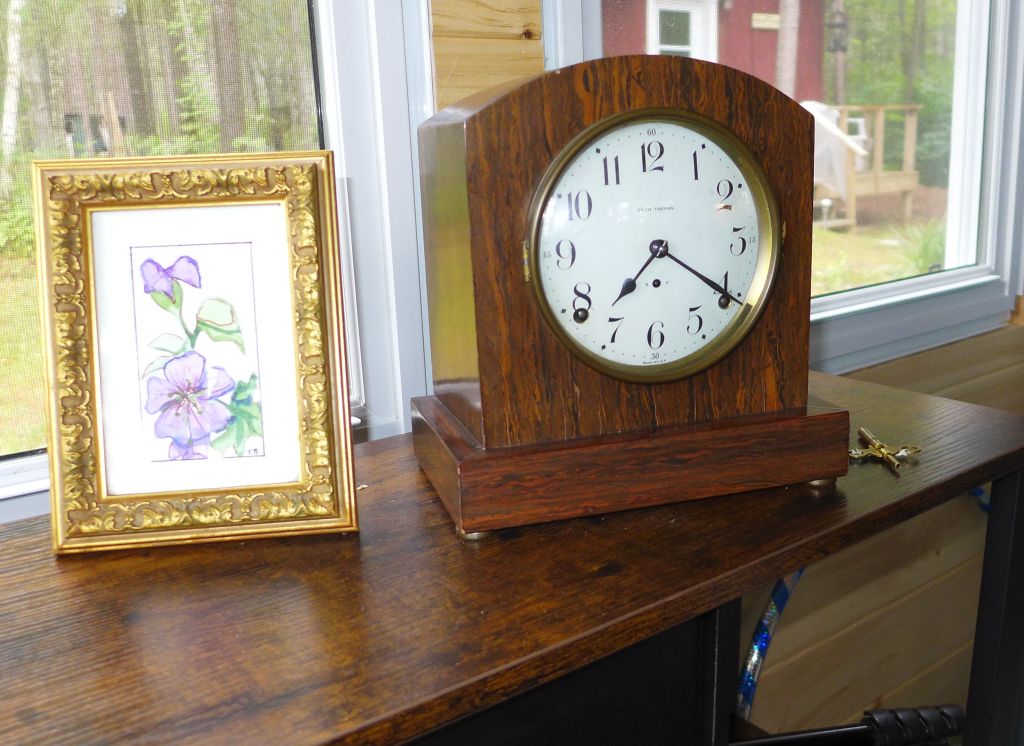
With the trend toward smaller homes, not everyone has room for a large clock. Mantel clocks, for instance, require a shelf or table. Some are small, time-only pieces, while others have more complex movements like Westminster chimes and are housed in larger cases. Alarm and desk clocks are the most compact.

Wall clocks are easier to place and come in a wide range of sizes, from small cuckoo clocks to large box clocks and Vienna regulators.

Floor clocks, also known as grandfather or grandmother clocks, tall-case, long-case, or hall clocks, are the hardest to accommodate. Unless the recipient has sufficient floor space and an appreciation for such a clock, it will not be the best choice.
What About a Non-Working Clock?
A working clock that has been recently serviced by a skilled clock repairer is ideal. However, if the clock is intended more as a decorative piece, a non-working clock may be less expensive. Just be cautious if it has a replacement quartz movement and know what you’re buying.
Tips for Buying a Clock
Here are a few tips to keep in mind:
- Look for a working clock; it’s more likely to have been well cared for.
- Consider sources like Facebook Marketplace, eBay, local online for-sale sites (in Nova Scotia, we have Kijiji), reputable estate auctions, antique stores, and word of mouth.
- Most common clocks are reasonably priced because they are plentiful though rare or historically significant ones can be more expensive.
- Meet the seller in person if you can. You can check the condition of the item firsthand, which might reveal issues not visible in photos or descriptions. You can ask the seller questions directly about the item’s history, usage, and any other details that might be important. You can verify the authenticity of the item, which is particularly important for valuable or collectible items and you can often negotiate the price more effectively in person.
- Avoid clocks made in China or Korea, especially those with directional arrows around the winding points. They look inexpensive and are made with cost-saving in mind. The powerful mainsprings of a 31-day movement can be dangerous if they break.
- The brand of the clock isn’t necessarily important. Many American clockmakers produced both high-end and budget-friendly models.
- Consider whether it matters to you if the clock has been altered. For example, many old ogee clocks have had their movements replaced when the original failed. In the clock world, these are called marriages, and they may or may not be important to you.
- Whenever possible, carefully inspect the clock in person before purchasing. Surprises are rarely pleasant when your online purchase doesn’t meet expectations.
A little research goes a long way, but knowing nothing is worse than knowing just a little.

I hope these tips give you something to consider as you search for that perfect clock. While I’m not in the business of selling clocks, I do occasionally sell one locally to keep my collection manageable.
Discover more from Antique and Vintage Mechanical Clocks
Subscribe to get the latest posts sent to your email.
 Antique and Vintage Mechanical Clocks
Another gre
LikeLike
Thank you.
LikeLike
Good morning Ron it certainly is a buyer’s market right now. Sadly many people are getting rid of their heirloom clocks mostly because they’ve stopped working and they don’t want to spend the money to have them repaired.
I recently acquired an octagon short drop wall clock for an extremely reasonable rate due to its poor condition. However as I dove into it and researched it further it turns out that it is an extremely rare Hamilton clock works clock made in the 1800’s. It may well be one of only 3 in existence.
LikeLike
Interesting, the only one I have ever seen has been at The Canadian Clock Museum in Deep River, Ont.
LikeLike
Thanks Ron, These words of wisdom a solid introduction to clock shopping. I had to learn “old” is not a synonym for valuable.
LikeLike
Indeed, Marty
LikeLike
wow!! 42Safely Transport and Pack Antique Clocks: Expert Guide
LikeLike