
Martin Cheney is not typically the first name that comes to mind when considering the impact of clockmakers on Canadian horology.
Martin Cheney, born in 1778, was part of a prominent American clock-making family. He was one of four sons of Benjamin Cheney (1725-1815) and Elizabeth Long Cheney, who hailed from East Hartford, Connecticut. Benjamin likely trained all his sons in clock-making. The oldest, Asahel, born in 1759, later moved to Vermont. Elisha, born in 1770 and passing in 1847, settled in Berlin, Connecticut.

The youngest, Russell, eventually relocated to Putney, Vermont. Martin’s uncle, Timothy Cheney (1731-1795), was also a notable clock-maker in East Hartford, working closely with Benjamin.
By 1803, Martin had moved up the Connecticut River to Windsor, Vermont, where he advertised fine English watches, watch keys, chains, and seals for sale. The majority of the tall case clocks I’ve found online come from his shop in Windsor, Vermont. Based on my research, most of his clocks show a Boston influence.
In the early 1800s, political events in the United States prompted several families to migrate to the British colony of Lower Canada, now known as Canada. In 1809, Martin relocated to Montreal, where he lived for about twenty years. In 1817, he partnered with J. A. Dwight, and together they operated under the name Cheney & Dwight at 104 St. Paul Street, Montreal. The business produced movements, cases, wall and tall case clocks, and banjo clocks. Their partnership lasted until 1830.
In 1827, Martin advertised in a Burlington, Vermont newspaper seeking a journeyman clock-maker to join him in Montreal. Although Cheney continued to craft clocks into the 1830s, little is known about his life beyond that decade. He spent his remaining years in Montreal till his death in 1855 (unconfirmed).

Cheney clocks are highly sought after and command high prices at auction. Their exceptional craftsmanship and meticulous attention to detail are evident in every piece.
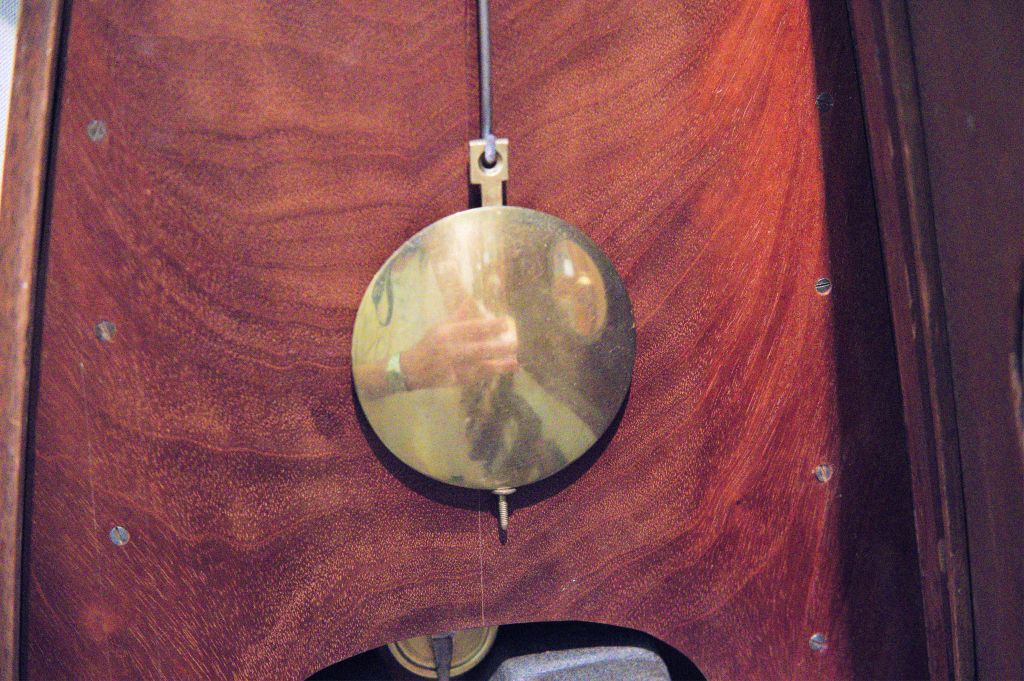
Until August 2024, I had never seen a Cheney clock in person but, during a recent visit to The Canadian Clock Museum, curator Allan Symons proudly introduced me to one of his most prized acquisitions: a Martin Cheney time-only weight-driven wall clock, crafted in Montreal, Canada in the 1820s.
I didn’t get a chance to examine the movement, but I’m assuming it’s a banjo-style similar to the one in the photo below.
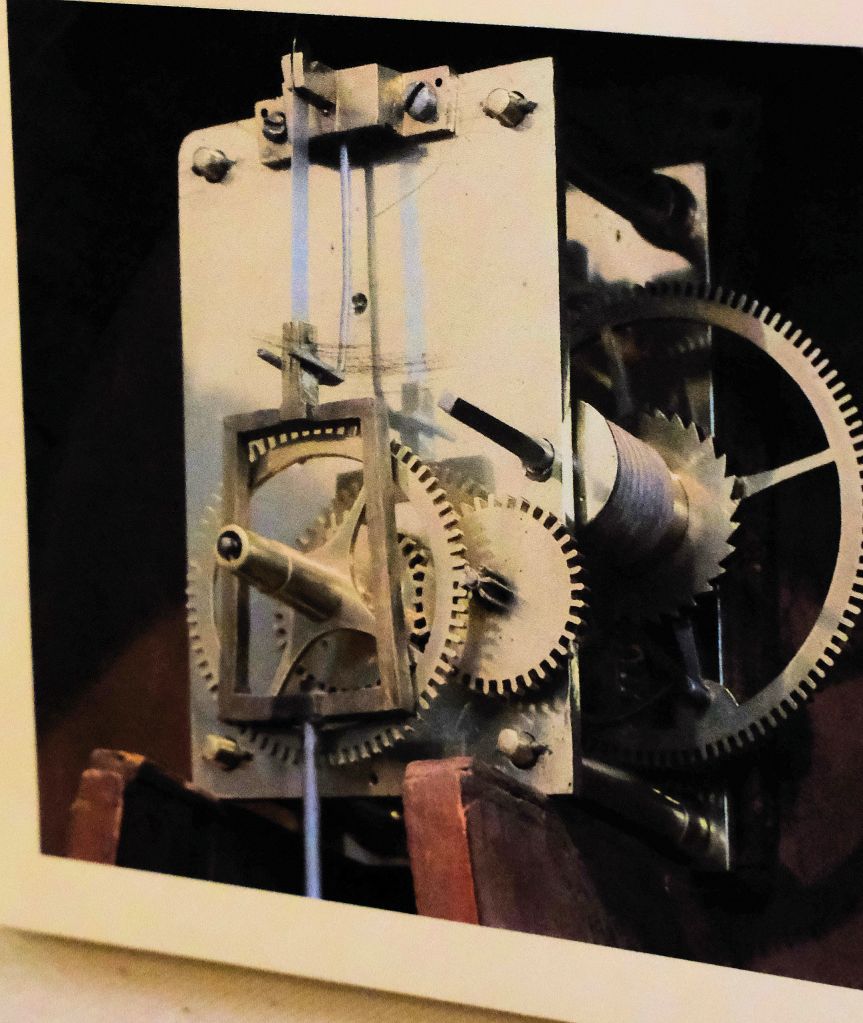
Encountering a Martin Cheney clock in person was an experience that deepened my appreciation for the craftsmanship and historical significance of his work particularly during the time he spent in Canada.
The rarity and value of Cheney clocks, combined with their intricate details and the story they tell of early North American clock-making, make them treasures for any horology enthusiast.
While owning such a piece may be well out of reach, the opportunity to see one firsthand was an unforgettable reminder of the skill and character of early Canadian clockmaking.
Discover more from Antique and Vintage Mechanical Clocks
Subscribe to get the latest posts sent to your email.
 Antique and Vintage Mechanical Clocks
I visited with Allan a few weeks ago as well, and because I hail from Peterborough we had a lengthy discussion about his Westclox collection. It saddens me that the walls of Time Square in Peterborough aren’t lined with clocks. On another note are manual movement clocks still in production any where today Ron ?
LikeLike
As far as I know Keininger and Hermle, both German companies still make clock movements to this day.
LikeLiked by 1 person