
While explaining any process on paper serves its purpose, nothing quite replaces the effectiveness of a sequence of detailed still images that, in essence, tell a story. As the saying goes, “A picture is worth a thousand words.”

First, what is macro photography?
Macro photography is a specialized form of photography that focuses on capturing extreme close-up images of small subjects, revealing intricate details that might not be visible to the naked eye. It typically involves using specific macro lenses to achieve high levels of magnification, allowing photographers to capture subjects at a 1:1 ratio or greater. Careful attention to lighting, focus, and depth of field will achieve the best results.
For best results, I recommend a dedicated camera paired with a quality macro lens. While cell phones can capture impressive images, they are a compromise since they often struggle with foreground-background isolation and fail to deliver clear macro shots. For shots that necessitate a low shutter speed, maintaining absolute stillness is crucial, making a tripod an essential accessory.
For me, photography seamlessly integrates into my various hobbies, so, taking pictures of clocks, movements, parts, and so on is a natural extension of my photography hobby. It goes without saying that having a reliable camera is indispensable for clock repair.
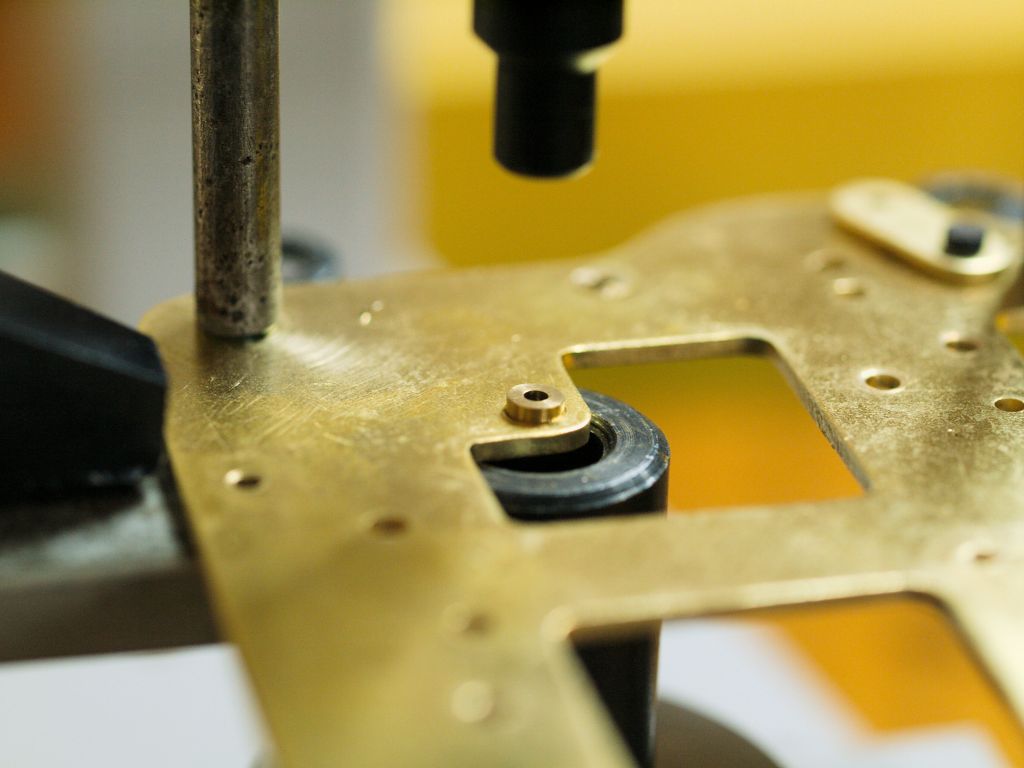
My preferred camera/lens/tripod combination
I own several cameras by Panasonic, Fuji, and Olympus. Although the former two are great cameras and have their uses, an Olympus E-330 camera manufactured in 2006 remains my preferred choice for macro photography.
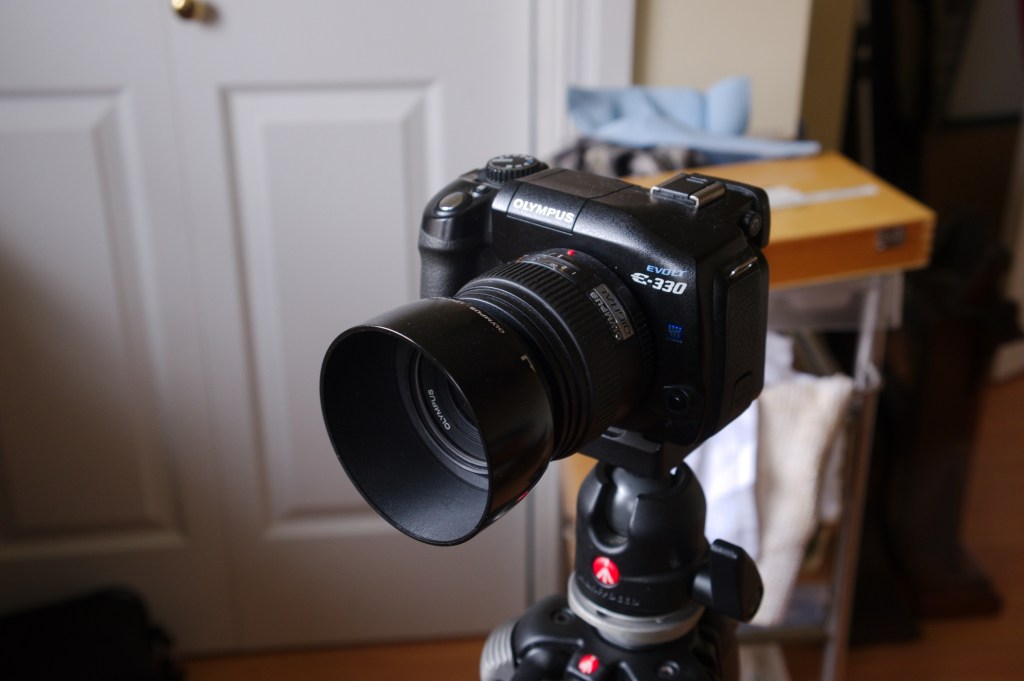
With its 7.5 megapixels, the Olympus E-330 interchangeable lens camera boasts ample resolution for my needs, especially when downsizing files for blog posts, ensuring detailed yet compact images—ideal for conserving server space on a blog platform.

No camera will perform well without a good lens. Paired with an Olympus 50mm F2 macro lens, it excels in capturing those extremely close clock shots and enables me to isolate my subject while maintaining a pleasing background blur.

While artificial lighting is occasionally necessary, I predominantly rely on the natural light streaming in from a west-facing window in my workspace. When artificial illumination is necessary, I turn to a continuous studio light (with colour temperature adjustment), using the on-camera flash for rare occasions.
While the camera uses an older CF memory card, I can still procure these cards and even aftermarket BLM-1 replacement batteries. The camera will run until it fails and that day looks far off though perhaps it’s already telling me something. The memory card door clasp broke recently, so I must now keep the door closed with velcro tape otherwise I get an on-screen error message.
A distinctive feature of the E330 is its live view switch allowing the transition from automatic to manual focus mode through this switch, securely locking focus on extremely close subjects.

A tripod such as the Manfrotto 785B Compact is necessary for macro photography because it helps to stabilize the camera, ensuring sharp and clear images, especially when using slow shutter speeds or working with extremely close subjects where even the slightest movement can result in blur.
With any repair task, I meticulously capture dozens of photos from various angles. These images serve as invaluable references, particularly when encountering challenges during reassembly or when puzzled about the positioning of specific components like wheels, levers, washers, or springs. Furthermore, I diligently organize and catalog these photos for easy retrieval, years later, if necessary.

My advice is straightforward: Invest in a quality new or used camera equipped with a dedicated macro lens for clock repair. You don’t have to spend thousands; any older camera of good quality will suffice, although finding a compatible macro lens may be the biggest challenge. It should be capable enough to deliver satisfactory results. I was searching eBay today and found an E330 with 50 mm macro lens well under $450. Add about $100 or so for a decent tripod, $30 for a CF card and a CF card reader and you have everything you need for macro photography.
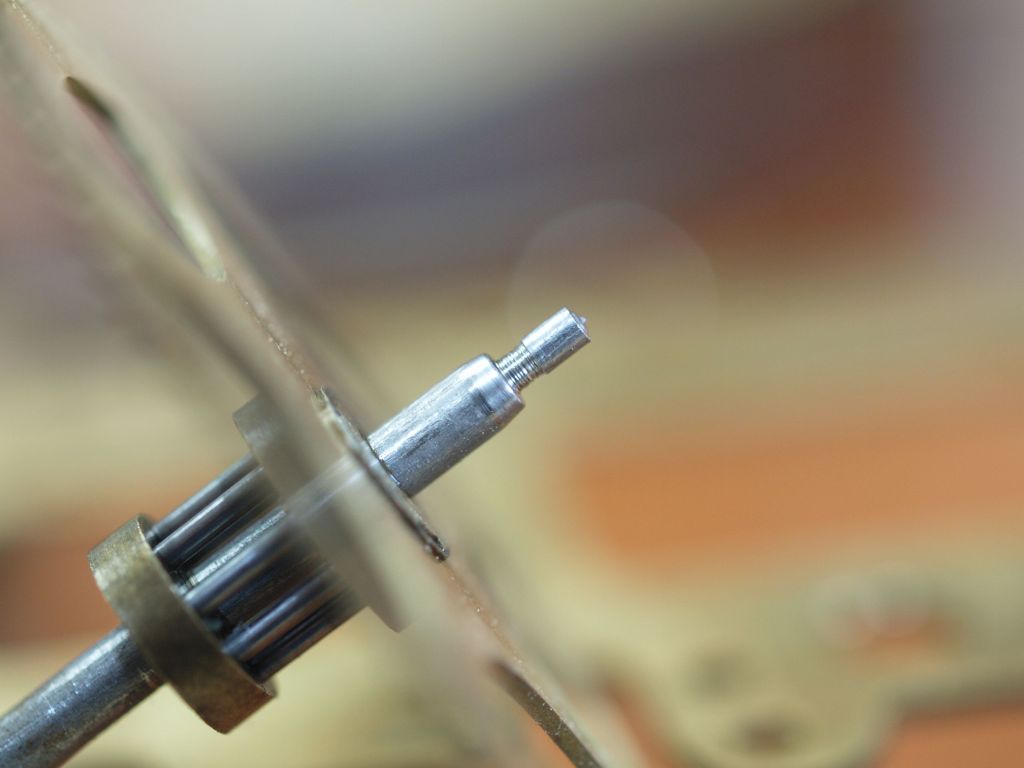
Trust me, you’ll appreciate the benefits it brings to your craft.
Discover more from Antique and Vintage Mechanical Clocks
Subscribe to get the latest posts sent to your email.
 Antique and Vintage Mechanical Clocks
The image of the “Improvised Click Spring” may well have been on a Sessions tambour? lol…
(I’m still a bit paranoid whenever I wind my families Sessions “Berkeley” model 8-day tambour clock.)
While it’s been a reliable time-keeper for the better part of fifty years, that weak spring on the ratchet pawl letting go very nearly took my thumbnail off, and numbed my fingers for several hours afterwards. Not to mention my nerves!
Great photographs Ron, enjoyed seeing them.
Take care…
LikeLike
Thank you
LikeLike