
This article traces the historical journey of a significant German clock manufacturer, ultimately absorbed by the Junghans Clock and Watch Company in the late 1920s. After providing a brief overview of its history, the article will delve into the specifics of the clock movement that is next on my workbench.
Among clock collectors and admirers, the Hamburg American Clock Company is a well-known German company. It is otherwise known as Hamburg Amerikanische Uhrenfabrik or HAU and in many parts of the world, it is simply known as HAC or HAU.
The company was formed in Germany in 1873 by Paul Landenberger and Phillipp Lang. Originally called Landenberger and Lang, it became the Hamburg Amerikanische Uhrenfabrik in 1891. The company was very active from 1885 onward, became a cooperative in the mid-1920s, and eventually merged with Junghans, one of the world’s largest clock companies, in 1930.
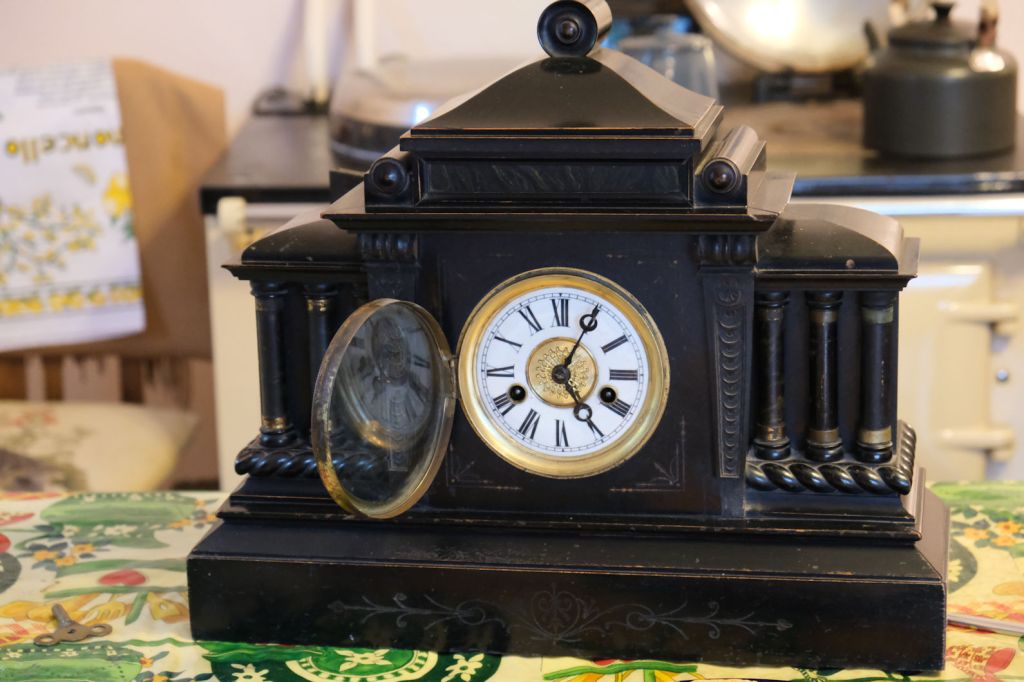
Original investors insisted that “American” be in the company name but “American” also refers to the manufacturing system adopted from America. The name of the company adds confusion to the novice repair person who might assume that what they are working on is an American-made clock.
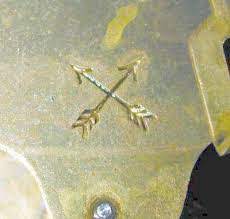
HAU adopted the cross arrows as their trademark in 1892, and it became synonymous with the brand.
In 1925, a few years before its merger with Junghans, the company had a workforce of 2,200 individuals. Junghans remains a successful and thriving company today, specializing in the production of high-end wristwatches.
Before I embark on servicing a clock from my collection, I make an effort to gather information about the clock’s history. If details about the clock prove elusive, my fallback is to delve into the broader history of the company behind it.
Two Hamburg Amerikanische Uhrenfabrik clocks
The two HAC clocks in my collection are mantel or shelf clocks.

The clock pictured above was acquired several years ago.
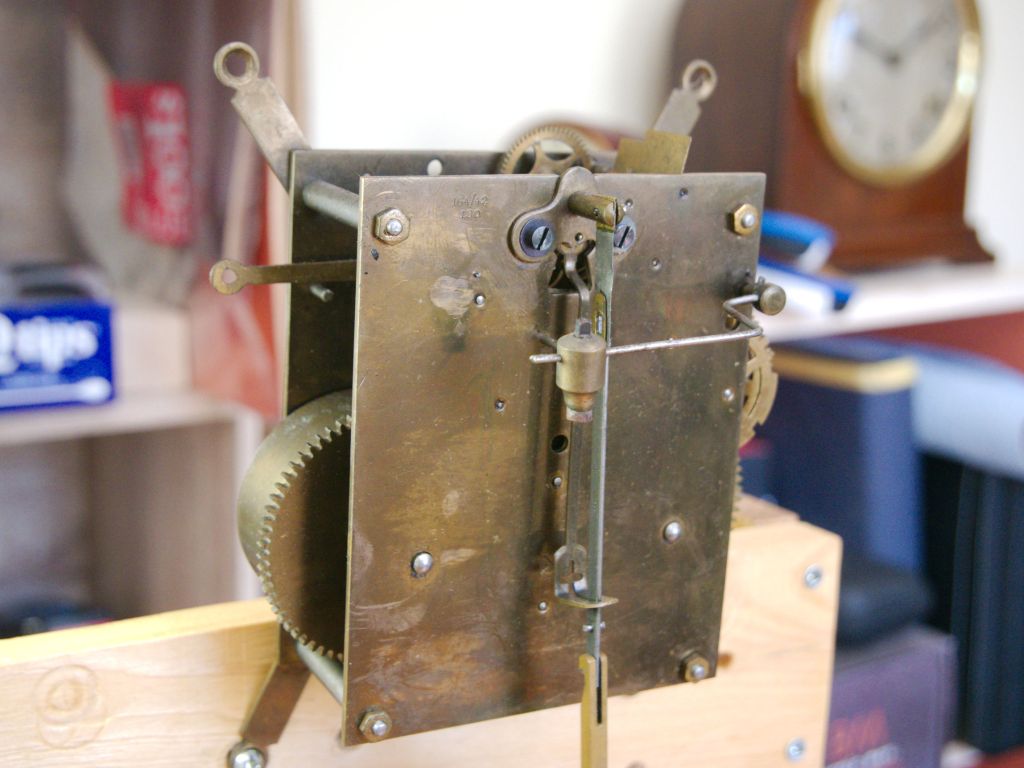
It has an earlier version of a HAC production movement because of the solid front and backplates. It is quite possible that this clock was made in or around 1900 or a little later.

Now, turning our attention to the second HAC clock in my collection, the one I will be working on next. The clock was acquired about two years ago from a clock collector in Ottawa, Ontario. The previous owner knew nothing about the clock but a plaque on the clock case gives a glimpse into the clock’s history.
This clock is a later production model because of the construction of the plates which I will explain further.

While the wheel positions, levers, and movement size remain identical, there exists a noticeable difference between the two clock movements as can be seen by the solid front and back plates on the first clock movement and the various cutouts in the front and the back of the second movement.

The use of open plates typically indicates a cost-saving decision made by the company. This choice is often driven by the aim to reduce manufacturing expenses by minimizing the amount of brass used in a movement.

Aside from the four brass mounting straps and the slight difference in the positioning of one “V” shaped lever springs, HAC movement #2 has all the characteristics of the #36 movement pictured below.
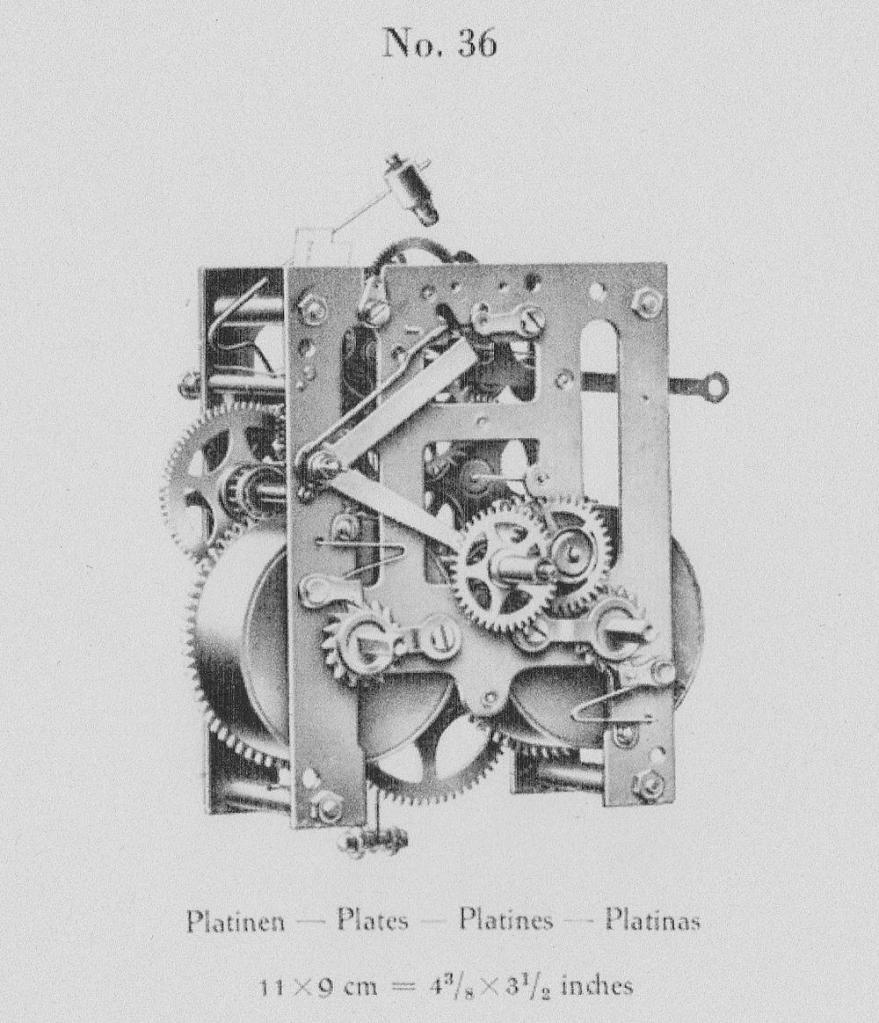
The story of two clocks made at different times in the company’s history is both captivating and compelling.
And finally, who is The Rev. J.H. Cox? A search online reveals nothing at this point.

Before concluding that the clock was manufactured in 1926, it’s important to note that relying solely on plaques for dating may not always be accurate. The clock might have spent time on a retailer’s shelf, or it could have been acquired second-hand, introducing questions as to its actual production date. However, there is a 5,25 number on the upper left of the back plate which might be a date code. HAC was known to have begun dating their movements in the 1920s.
Now, on to servicing the clock movement the details of which will be covered in a forthcoming post.
Discover more from Antique and Vintage Mechanical Clocks
Subscribe to get the latest posts sent to your email.
 Antique and Vintage Mechanical Clocks
You must be logged in to post a comment.