
Elisha Manross, though less commonly known compared to American clockmakers such as Seth Thomas, New Haven, or Waterbury, played a significant role in the development of Connecticut clocks. In his book American Shelf and Wall Clocks Robert Ball listed Elisha Manross as being in business from 1827 -1849.
He was a prolific clockmaker and produced a variety of clocks but one of his more desirable clocks is a “double steeple” shelf clock with an 8-day time and strike spring strap brass fusee movement with a 12″ pendulum.
Manross was known as the clockmaker’s clockmaker because his products were used by many clock-manufacturing firms such as Boardman and Wells, Sperry and Shaw, and other well-known makers. Although my clock is a 30-hour version, Manross made 8-day weight-driven movements as well.
However, the focus of this article is a 30-hour gothic steeple made in the early 1840s that came to me as part of a collection of old clocks found in a barn 20 minutes drive from my home.

There were thousands of steeple clocks made by many American manufacturers at that time but it is unusual to find one with its original brass mainsprings intact as many have undergone replacements with steel mainsprings. The brass mainsprings in this clock have not only remained but also seem to be in excellent condition.
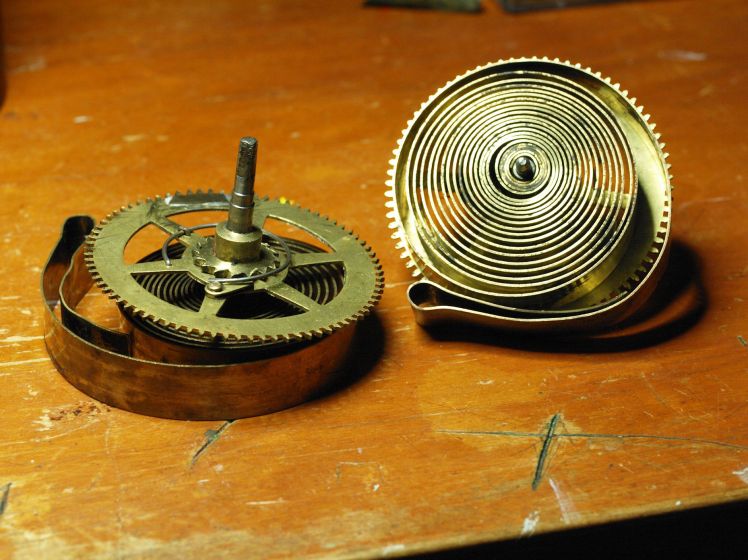
Brass springs were developed in the E.C. Brewster shop in Bristol sometime around 1833-35 and patented in 1836. They were used by Seth Thomas, Brewster & Ingraham, and others.
Brass mainsprings were uncommon in American clocks, having a brief period of use from 1836 to about 1850. Domestically manufactured mainsprings were not available in the US until 1847. In 1847, the widespread adoption of tempered steel mainsprings began and soon replaced the use of brass mainsprings in clockmaking so ending the era of brass springs. Brass springs were used in Manross miniature Ogees, and shelf clocks.
The goal of servicing
Preserving the movement with the least intervention possible is the primary goal. There is a temptation to replace them with steel counterparts and put the brass springs aside. However, to maintain the historical authenticity of this clock, they will remain in the movement.
Working with brass mainsprings and addressing wear
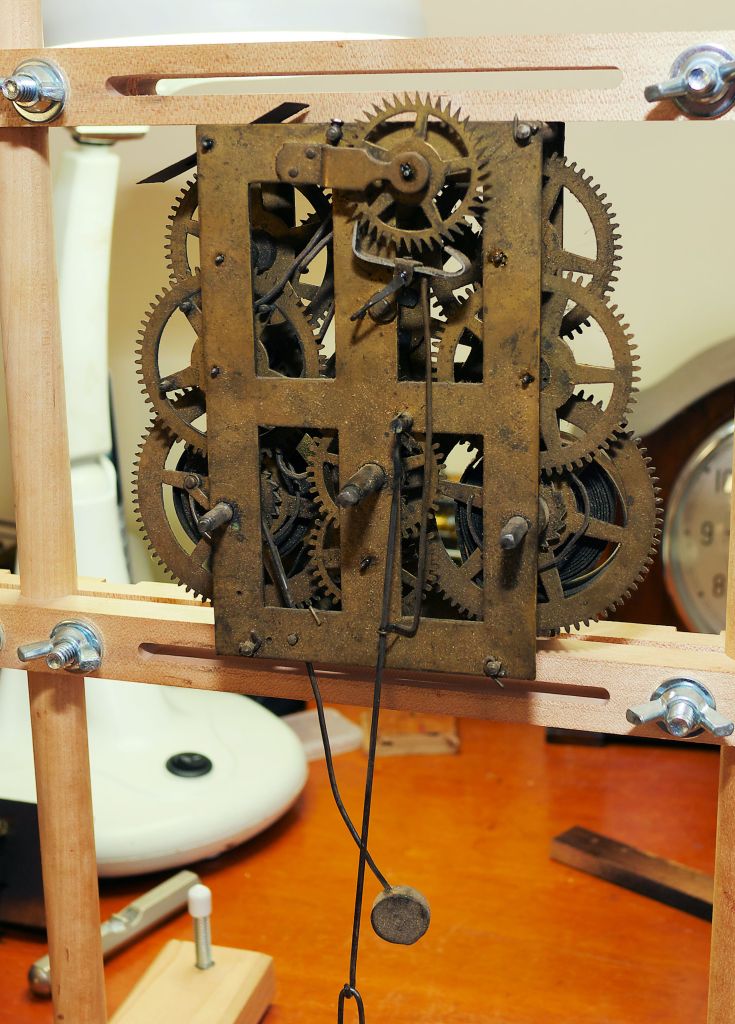
Working with brass mainsprings requires careful handling; unlike steel, they cannot be stretched out for cleaning. After cleaning in an ultrasonic cleaner, and meticulous drying using strips of terry cloth worked into the coil, the results are impressive.
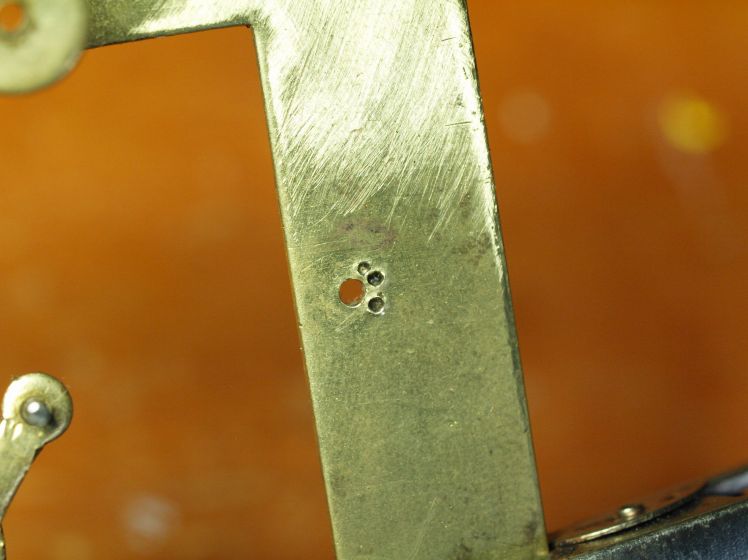
Upon inspecting the movement as a whole, I noticed certain pivot holes with punch marks around them. Punching was commonly used to close pivot holes then but is not considered an acceptable practice today. Despite being punched, they continued to function effectively.
To address the most significant wear, only the problematic pivot holes underwent bushing. Four bushings were added on the strike side, where wear tends to be more pronounced—a commonly encountered issue in clock restoration. There were no new bushings required on the time side.
A past tooth repair resulted in a sturdy albeit somewhat rough appearance. It could have been filed down and polished but I left it as-is because it is part of the clock’s history.

The final step involved returning the clock to its case, preserving not just its functionality but also its historical integrity.

While this clock may not hold much monetary value its historic significance makes it very interesting and despite being a lowly steeple clock it is one of the most important clocks in my collection.
Discover more from Antique and Vintage Mechanical Clocks
Subscribe to get the latest posts sent to your email.
 Antique and Vintage Mechanical Clocks
You must be logged in to post a comment.