
Approximately two years ago, I stumbled upon a weight-driven banjo clock listed on Facebook Marketplace. Before finalizing the purchase, I engaged in a conversation with the seller, who appeared to have limited knowledge about the clock’s value. The clock was among several items that the seller’s family was parting with, and it was evident that they didn’t have any sentimental attachment to it, despite it being in their possession for several decades.
To my surprise, the clock was remarkably intact, with only minor veneer issues. Apart from routine servicing of the movement, the clock required repairing the small sections of veneer and mounting it securely on the wall.

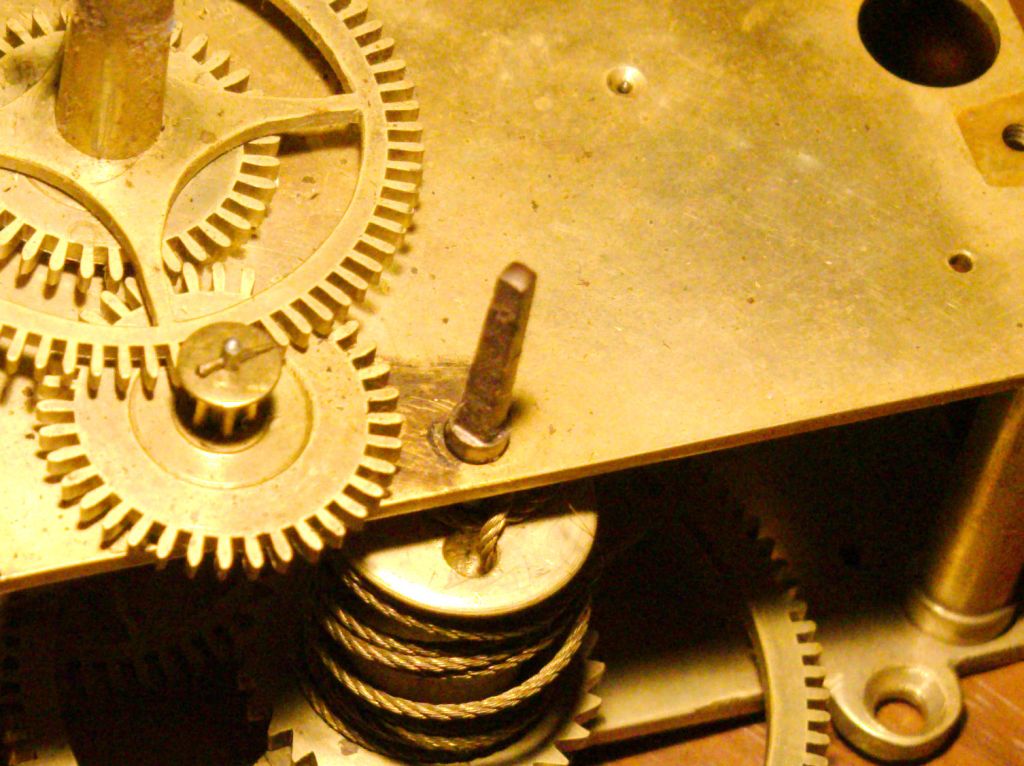
I only needed to replace one bushing in the movement, and that resolved the only wear issue.
However, the hands of the clock posed some challenges on a couple of occasions. Firstly, the minute hand became loose and wouldn’t advance properly. Upon investigation, I discovered that the hand was not securely attached to the minute wheel. I resolved this by using a slightly larger taper pin to tighten it.

Later on, the hour hand started causing problems as well. It became loose and wouldn’t advance correctly. The minute hand, the hour hand doesn’t have a collar as you would find on a conventional mass-produced American clock and relies on friction to fit onto the top section of the hour pipe. There isn’t much room to work within this area, and it’s either too tight or too loose. Tightening the hour hand requires carefully punching the inside of the hole to make it smaller. Once again, due to the limited space available, this was a challenging task.
The hands stayed in place and now to test the movement for any issues.
Discover more from Antique and Vintage Mechanical Clocks
Subscribe to get the latest posts sent to your email.
 Antique and Vintage Mechanical Clocks
You must be logged in to post a comment.