Mainsprings dilemma | To Replace or Not To Replace

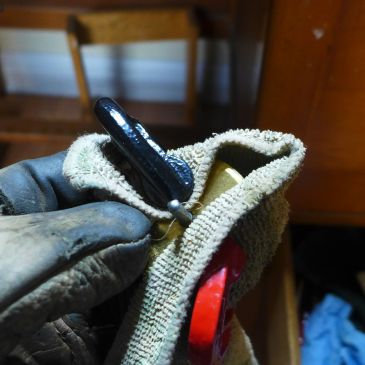
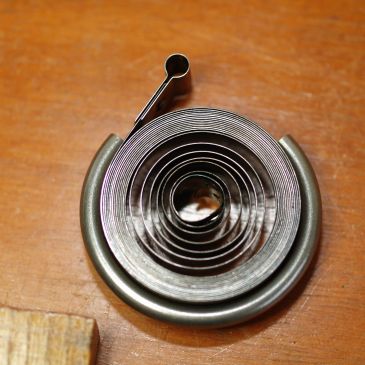
As a clock repairer, there are several compelling reasons to keep the original mainsprings if they are still in good condition. Keeping the original mainsprings ensures that the clock remains as close to its original condition as possible. Collectors and enthusiasts often value clocks with original parts, as they maintain the authenticity and historical significance … More Mainsprings dilemma | To Replace or Not To Replace
Rate this:

Proper Clock Lubrication: Essential Tips and Techniques

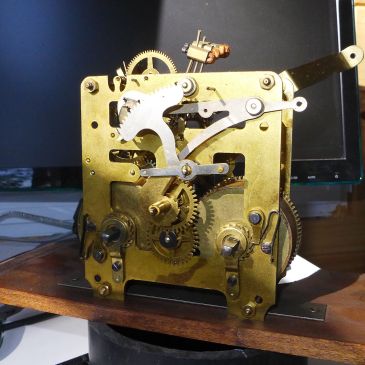
Like a car engine, oil is the lifeblood of a clock, and correct lubrication is essential for ensuring a long life for the timepiece. Lubrication is crucial for the efficient operation of any mechanical clock movement. However, it’s important to note that oiling a movement without first disassembling and cleaning it is not usually recommended. … More Proper Clock Lubrication: Essential Tips and Techniques

Rate this:

How to Safely Operate and Maintain Mechanical Clocks: Tips and Hazards

Mechanical clocks, especially older or larger ones, can pose various dangers during operation and maintenance. In this post, we will cover some of the risks and hazards. Mainsprings Do not underestimate the power of a clock with mainsprings. Mechanical clocks often use powerful mainsprings to drive their mechanisms. If these components are mishandled, they can … More How to Safely Operate and Maintain Mechanical Clocks: Tips and Hazards

Rate this:

Clock Parts Supplier Perrin Supply Ltd Resumes Operations in Vancouver

This is very good news for clock lovers in Canada. I have not ordered clock supplies in some months and reported in an earlier post that W. H. Perrin and company had ceased operations as a clock parts supplier to Canadians. The company has been reborn as Perrin Supply Ltd (new owners). Instead of Toronto … More Clock Parts Supplier Perrin Supply Ltd Resumes Operations in Vancouver

Rate this:

AI-generated clock repair manuals and other clock repair book discoveries

Exploring Amazon’s selection of clock repair manuals presents several appealing options. However, purchasing these manuals can be intriguing, as it’s often challenging to know exactly what you’re getting until they arrive at your door. I bought three such clock repair manuals this spring. The “Antique Clocks Repair Manual” by Phoenix Publishing, “Clock Repairing for Beginners … More AI-generated clock repair manuals and other clock repair book discoveries

Rate this:

A smoothing broach completes the bushing process

Clock movements often require bushing for several reasons. Over time, the original brass bushings can wear out due to friction and other factors. When this occurs, the holes in the clock plates become enlarged and misshapen, resulting in a poor fit between the components that interact with each other. This wear and tear can lead … More A smoothing broach completes the bushing process

Rate this:

Junghans round-top mantel clock – servicing the mainsprings

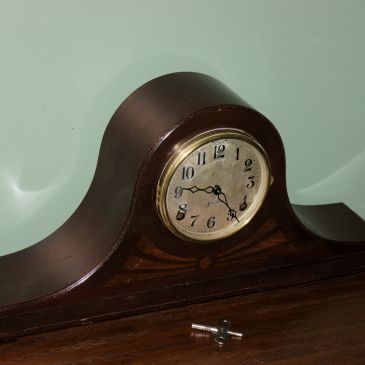
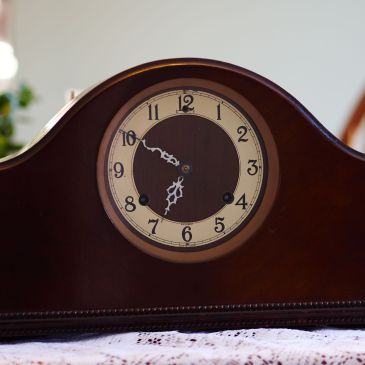
Last week I began working on a Junghans round top mantel clock. For first impressions and background information about the clock itself, you can find the article here. During this segment of the maintenance process, my attention will be focused on the mainsprings. Upon my initial assessment, it appeared that the movement was found to … More Junghans round-top mantel clock – servicing the mainsprings

Rate this:

Prolonging the Life of your antique or vintage clock

New owners of an antique or vintage clock might find it surprising that their recent purchase requires periodic maintenance. This realization often dawns upon them only when the clock stops, and they struggle to get it running again. In this discussion, we explore regular clock maintenance, underscoring the importance of continuous inspection to ensure your … More Prolonging the Life of your antique or vintage clock

Rate this:

Essential Clock Movement Servicing Steps

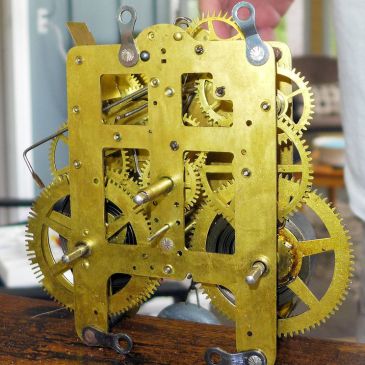
Why does a mechanical clock movement require servicing? The answer is quite straightforward. Maintaining your clock’s movement is essential to ensure it continues to function properly and extends its lifespan. Regular servicing reduces wear and tear, ultimately preserving the clock’s functionality. Ideally, most clocks should undergo servicing every three to five years to maximize longevity. … More Essential Clock Movement Servicing Steps

Rate this:

Assessing the level of wear on your antique clock

You might be wondering whether or not your newly acquired 100-year-old clock requires maintenance even if it seems to be running well. The traditional saying “don’t fix what isn’t broken” may not be suitable for antique clocks because even a seemingly well-functioning clock may not disclose the full extent of its wear. Many years ago … More Assessing the level of wear on your antique clock

Rate this:

Sessions time and strike movement with a stiff minute hand

Most mechanical clocks have an hour hand concentric with the minute hand with the hour hand making one full turn every twelve hours. The special set of wheels off the centre arbour is called the motion works. Attached to the centre arbour is the minute hand. The hour pipe fits over the centre arbour and … More Sessions time and strike movement with a stiff minute hand

Rate this:

Cleaning an antique/vintage clock movement – Ron’s method

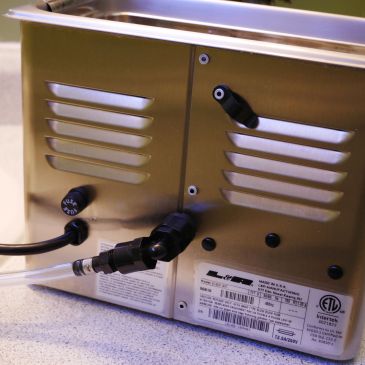
Let’s clear something up right away: I am not a “Dunkin Swish” enthusiast. If you’ve been researching the clock-collecting world for a while, you might have come across this term. If you haven’t, consider yourself lucky—it’s something best avoided at all costs. “Dunkin Swish” (apologies to those named Duncan) refers to the practice of placing … More Cleaning an antique/vintage clock movement – Ron’s method

Rate this: