As a clock collector I have quite a few clocks in my home. Most are running daily. There are 34 clocks ticking away in my home as I write this blog article.
I have accepted them as normal sounds in my home
Some collectors have a dedicated clock room in their home but mine are scattered throughout the house. I try to arrange each one so that it fits more or less into the decor of the room. It is a big house and thankfully we have quite a few rooms in which I can display my clocks. I have all manner and styles of clocks including mantel, wall clocks, shelf clocks, carriage clocks, desk clocks, anniversary clocks but just one floor clock. My particular preference is wall clocks; I have 13 of them.
Kienzle clock on display with Ingraham Huron balloon style shelf clockGustav Becker Vienna Regulator and Seth Thomas round topArthur Pequegnat Brandon in an upper hallwayMauthe Westminster chime mantel clock atop a Stromberg Carlson radio
So how do I put up with the cacophony of clock noises in the house? One, I thoroughly enjoy the sound of a mechanical clock and two, I have accepted them as normal sounds in my house.
However, there are rules in our house.
No striking or chiming clocks in or near the master bedroom.
No clocks in the bathrooms.
Clocks are stopped in those areas where guests are sleeping unless they do not object.
Are there clocks in the bedroom? Of course, three to be exact. Two are 400 day clocks like the one in the next photo and the third is a banjo clock.
9 inch miniature 400 day Kundo clock
The Ingraham Nordic banjo clock has a front-wind lever escapement and I would challenge anyone to hear this clock across a room. Is is no louder than an old alarm clock. The 400 day clocks are, of course, virtually silent.
We have a Mauthe box clock in our family room that makes such a wonderful sound that I actually pause the TV to listen to it
Ingraham Nordic Banjo Clock
This is my advice to those of you who love mechanical clocks but are bothered by the “noise”:
Some clocks are loud tickers and some are not. As a general rule American clocks tend to be much louder tickers than German or French clocks. Loud clocks should be placed in noisy areas
Avoid clocks that have a striking or a chiming train. If you are not fond of the sound of an hourly or quarter hour strike clock, simply search for a time-only clock.
Most chiming clocks (Westminster chimes are the most common) have a shut-off feature located on the dial face.
For time and strike clocks simply wind the time side only. However, purists would say that this is not good for the clock.
Carriage clocks, clocks with lever escapements (like the Nordic above) and 400 day clocks are exceptionally quiet and do not normally strike or chime (however, some carriage clocks do strike).
Locate your clocks in an area where you will not be bothered by them, a dedicated room, for instance.
Stop your clock or never wind it. Perhaps you can appreciate your clock as a piece of art or furniture rather than as a timepiece.
For the nostalgic, run your clocks only at certain special times of the year.
Mauthe Box clock
I rarely hear my clocks. Yes, I am aware of the ticking if I stop and listen. By and large I am not at all bothered by the sounds of my clocks. In fact, we have a Mauthe box clock in our family room that makes such a wonderful bim-bam sound that I actually pause the TV to listen to it.
This post describes the final detail work on my Junghans clock.
My winter (2017) project was an antique German Junghans Crispi time and strike spring driven wall clock made in the style of a Vienna Regulator. It was manufactured in Schwenningen, Germany in 1899. It came to me as a box of parts. To some a box of clock parts and pieces is discouraging but to me it was the challenge I was waiting for.
A clock in a box, how it came
I wrote a multi-part series on the restoration of this clock. Use the search feature on this site to find past articles. I discovered this antique clock from a seller on an online for-sale site in January (2017) and was intrigued with its incredible history as a survivor of the Halifax Explosion on Dec 6, 1917.
On the morning of 6 December 1917 the SS Mont Blanc a French cargo ship laden with high explosives and Benzol collided with the Norwegian vessel SS Imo in the Narrows, a strait connecting the upper Halifax harbour to Bedford Basin. A fire on board the French ship ignited her cargo, causing a large explosion that devastated the Richmond District of Halifax. Approximately 2,000 people were killed by blast, debris, fires and collapsed buildings, and an estimated 9,000 others were injured……and a Junghans clock fell off the wall in a house on Princess court, North End Halifax
At first I was not sure how far I would go with this project but I decided I must go all the way towards restoring this clock to its former 19th century glory.
Most of the clock is original; the movement, the pendulum, coil gong and movement bracket as are the bottom base and top part of the case plus the crown, the backboard, the vertical columns and most of the decorative trim. What has been replaced is the box frame, the front piece that supports the right and left columns. I can only assume that parts of the clock were destroyed beyond repair on that fateful day.
Thirty years ago the previous owner used contemporary materials and techniques to reconstruct the frame and front piece. Although not authentic, I have no objection for two reasons; much of what he has done is unseen and care was taken to replicate period woodworking techniques to reconstruct the case except for the Robertson screws. During the restoration process I have added or in some cases made:
Front glass and 2 side glass panels,
3 glass support rails,
3 top replacement finals,
2 newly constructed top finial bases,
2 brass door hinges,
2 brass door catches,
2 brass case stabilizers,
2 hardwood trim pieces and
6 decorative buttons.
Original 1899 catalog image
I disassembled the movement and in the process made two errors. In my attempt to re-position the star wheel paddle by bending it just a little bit, I managed to snap it off. Although I might have been able to fix it I do not have the tools, yet! I also managed to snap off the paddle wheel arbor spring which is essentially a thin steel rod. Again, I could have fixed it if I had the tools. As a result the strike side did not function. I cleaned and re-assembled the movement, got the movement running and thought, what is my next move?
Very dirty movement; after all it had not been running in years
I might have been content with a time-only clock but I decided that my mission was to have it fully restored. I decided to bring the clock to a horologist that I have used in the past. While it was in the shop, why not have it serviced completely. The horologist did a great job and when I picked it up she remarked that it was the first style of clock she had ever worked on.
What remains? There are two trim item on the left side just below one of the buttons as you can see in the photo below and a corner piece on the right side of the case in the same area.
Let’s see if my skill with router can address these issues.
Missing trim piece, not quite finished!
I took out my vintage Black & Decker router and managed to find the correct bit. Since it is a very small trim piece birch rather than oak would do. I made the measurements using my micrometer. The dimensions had to be precise in order to duplicate the trim piece exactly. I am very pleased with the result. Now for the right side.
Last trim piece, left bottom sidematching trim pieces
I made a corner piece out of birch and glued it in place. In the next two photos you can see the very small piece that fits into the corner trim.
Corner piece is missingHardwood replacement pieceCorner piece is glued into place
I am very pleased with the repair.
I posted a reference to this clock in one of my blogs and received a curious letter from someone who thought it was a Chinese clock. I fully understand the comment because the clock is so “blingy”. The many brass buttons and trim items might make one think that it was made in China. It simply reflects the Victorian era, a grand excess of ornament and an eclectic revival of historic styles mixed with middle east and Asian influences in furniture design. A Chinese clock? No, but an understandable error.
Garish Victorian excess but I like it!
It is a clock that will be in our family for years to come
Was it worth the hours of toil and the money to bring this Victorian style clock back to its former glory? Absolutely, without question! The clock works perfectly. The coil gong on the hour and half hour sounds terrific and resonates throughout the house. Visitors to my home are immediately drawn to the clock because of its unique Victorian style. Indeed, it is a clock that will be in our family for years to come.
Tick-Talk Tuesday is about the letters and comments I have received from you, the reader, concerning your clocks, issues you might have had and challenges you face and my responses to your questions with advice on your particular clock concern(s). For those comments and questions that stump even me, I consult within my clock circles for the best possible answer.
DP writes, “Hello Ron: I have a clock I bought recently at an auction.The clock is from Pictou County Nova Scotia. It has Canadian Time On the glass. I live about 50 kms from Truro. I would like to take the clock over to you and find out if it is a Pequegnat clock. The clock keeps good time. It is made out of birds eye maple. It measures 29 inches high, 15.5 inches wide and 5 inches deep. My technology skills are not very good and I am not able to send you a picture. My name is DP and I would be pleased to hear from you.”
Arthur Pequegnat Canadian Time clock
My response to DP
“Yes you are pretty close to where I am. We can meet but you can also save yourself some trouble by doing a little investigating yourself. Regarding the dimensions, are you measuring the whole clock from top to bottom. The Canadian Time is 36 inches high by 15.5 by 5 inches deep. If the entire height of yours is 29 inches you are likely missing the top piece (crown) and the bottom section or both. Most were made of quarter sawn oak. I have never seen one in Bird’s Eye maple. And the words “Canadian Time are stenciled in gold on the glass door.
Next, on the bottom part of the dial face you should find the inscription, “Arthur Pequegnat Clock Company”. If not, it is a replacement dial.
Company name under the chapter ring
If you are adventurous enough, you can unscrew the minute hand nut, take off the minute hand and pull off the hour hand underneath which is a friction fit. Next, you can unscrew the square wood panel the dial pan is mounted on. There should be 3 screws, one on top and one on either side. Once you unscrew those you can take the piece that holds the dial pan out. You can then check to see if the company name is stamped on the lower right hand side of the movement. Obviously if it says Arthur Pequegnat, that is what you have. I have included photos showing what you should see when you open it up.
Movement after taking off the dial pan.Company name stamped on the movement
Let me know how you make out.”
DP writes back.
“Hello Ron, I am not really comfortable taking the clock apart. I did take it over to DG in BH about a week or two ago. He repairs watches and clocks. He did a repair to a thin strip or band of metal (punched a new hole through it) and then reconnected it to the movement. DP is referring to the suspension spring. When it was apart the only thing I could see written on the movement was (no jewel and I think not adjustable or unadjustable). It looks like the movement might have been replaced because there are two extra holes on the back. The dial face has been put back in place incorrectly and has nothing printed on the face. I would like to take the clock to you and just get your views and opinions on where or who might have it or any other information you can give me. I would be pleased to hear from you.”
DP, “An Arthur Pequegnat movement would never have “no jewels” or “non-adjustable”on the movement. The company name would clearly be there. What you have is what some collectors would term to be a “marriage”, that is a case with another, more modern movement. If your case is 29 inches high then something is clearly missing. If you still want me to look at it, I will. Give me a call at (phone) and we’ll meet.
Folk art version of Canadian Time
DP arrived with the clock that he won at a local auction for CDN$25. Underneath the folk art and all the modifications is, indeed, a Canadian Time Clock. What appears to be maple finish is painted Birds Eye maple; underneath is oak. The base and crown are missing; the dial is a replacement and whoever replaced it mounted the dial in the wrong position. The decals are on the outside of the glass and were added later probably the same time as the Birds eye maple finish. The pendulum bob, painted some sort of brass or gold colour, is original but the pendulum rod is a replacement with a home-made leader hook. The only thing in good shape and original is the Canadian Time reverse decal.
DP attaches the pendulum
The movement is a replacement, an Indian made reproduction time-only movement exactly like this one at Timesavers.
Found on the back of the dial pan is this inscription.
Inscription on folk art clock
REPAIRED SEPT 18, 2013
REPAIRS BY JAMES xxxxxx
12C PLEASANT ST STELLERTON NS
CLOCK AND xxxxxx CLOCKMAKER SINCE 1956
In short, it is a very modern interpretation of a classic clock. If it were my clock I would not do a thing to return it to its original condition; there are just too much things that would need to be addressed. However, it might be appealing to some people as a piece of folk art. As a piece of folk art DP should be pleased that he got a good deal.
We have a seasonal cottage that is used primarily in the summer and at times during Thanksgiving in October. While I have a number of clocks at my residence in Nova Scotia the cottage is a great place for displaying a small selection of my clocks.
Our first clock at the cottage was a Danial Dakota time and strike that we had converted to a quartz movement. The clock is from the 1960s and reflected Chinese design elements copied from American clocks at the time. It requires very little maintenance and is as accurate as one would expect. It requires a “C” cell battery to operate. It is a chiming clock with Westminster and Whittington chimes and my wife and I much prefer the Whittington chime. I still have the original mechanical movement and may someday use it in another case.
Converted from a mechanical clock
The clocks do not run during the winter but oiling once per year addresses the issue of dried pivot holes
Last summer (2016) we were travelling through an Ontario town of Halliburton and stopped by an antique shop. The owner brought in a number of clocks from Ireland, all British made. They were in very good condition though some were a bit on the pricey side. My eye was drawn to this simple but attractive Smiths Enfield time and strike Art Deco style clock. It has a chromed square bezel and Roman Numerals on a slivered background. The ornate brass coloured hands compliment the square dial face. The squared off dark oak case with half height side shoulders is in excellent condition. I placed this clock on a shelf between our kitchen and family room.
Smiths Enfield time and strike, circa, 1950
Our kitchen has a Delft style, triangle shaped front-wind 8-day time-only porcelain clock with a lever escapement similar to those found in marine movements. It is an estate auction purchase. On the dial is the name Forestville. The Forestville Clock Company of Toronto operated from 1928 to the late 1970s. Though wholly Canadian owned the company had cases made in its early days (from Kitchener, Ontario) but later imported cases and movements from Germany then France and England during the War years and Germany again, after the Second World War. The clock has a Dutch motif which reflected a popular trend in the 1950s and 1960s but also recognized Canada’s close relationship with the Dutch people since the war years.
Delft Clock from Forestville
The clocks do not run during the winter but oiling once per year addresses the issue of dried pivot holes. We also take the battery out of the quartz clock.
There is nothing like the sound of mechanical clocks at the cottage particularly on a cold, quiet night when the only other sound is the melancholic cry of the whippoorwill.
Tick-Talk Tuesday is about the letters and comments I have received from you, the reader, concerning your clocks, issues you might have had and challenges you face and my responses to your questions with advice on your particular clock concern(s) and of course, general comments. For those comments and questions that stump even me, I consult within my clock circles for the best possible answer.
On my trip to Cuba in March of 2016 I happen to capture a number of interesting clocks. The two pictured below prompted a comment from JC.
Wm Gilbert clock found in a restarantMalaprade Floor clock
The first two clocks are the most interesting to me. The Gilbert looks fairly standard (often called a “Store Regulator”) but I think it’s been painted black. Normally these are in oak cases, occasionally (but rarely) in walnut. The colour would have matched the interior back.
The second clock looks like a fine and expensive Jeweler’s Pinwheel Regulator. I’m wondering if you’re wrong about it being spring driven. These are normally always weight driven. The weight normally hangs behind the pendulum. Is it possible you didn’t see the weight? The movements from these are almost always Swiss made (near the Jura region of France), with pinwheel escapements. They are VERY EXPENSIVE clocks. The movement alone would fetch around 1000$. I have no idea what that circle is on the dial. I’ve seen some with inlaid marble dials, but most have enameled dials like this one. Cases can range from plain to extremely elaborate, and from 5 feet to 9-10 feet.
The name and place on the dial is the retailer where the clock was sold. It is never the manufacturer (this is typical on all French and some Swiss clocks of this type/vintage – the same is true of Comtoise clocks and French mantle clocks).
The rest of the clocks (with the exception of the 2 figure 8 wall clocks) seem to be imported German clocks from 1930 and later. These include both tall clocks and all the 400 day clocks shown. The figure 8 clocks are either American or Asian made copies (likely from Japan) from the early 1900s.
We often cruise the HiBid sites. While they may be wholly Canadian I am sure there are similar sites in the US. HiBid are a hosting service for antique online auction companies and from time to time clocks come up on estate sales.
One day in early February 2017 we were on a Nova Scotia HiBid auction site and noticed a Jauch drop octagon with a PL42 movement. I made what I thought was a reasonably good bid. We had errands to run that day so I just left the bid, got home later and realized and surprised that I had won. It was a good purchase. After running for several weeks I opened the case up and discovered its hidden secret.
Time-only Jauch movement
The clock easily runs a full 8-day cycle but it gains about 5-7 minutes at the beginning of the cycle and loses the same at the end of the cycle. A dramatic difference! A properly functioning clock is designed to run at an acceptable rate of + or- 1 minute per week but this depends on adequate power to the escapement with very little fluctuation in that power.
Scored pivots and worn barrel arbor holes are real issues for this movement. The pivots are small, a light touch with a buff stick and a minimal polish along with pegging and round broaching the holes should be the first steps in reviving this clock. Bushing work is also quite possible. The barrels are another matter. If worn, they require bushing. The cap is too thin to bush without making a thin flange or leaving the bush a bit proud and peening both sides. The barrel is narrow and it is said that they really get the wobbles when worn.
This is an inexpensive German movement but finely made and well engineered. An overhaul should result in a good long run.
I took the movement apart and discovered two things. One, it needs at least 3, perhaps 4 bushings and secondly, there is a significant gap in the barrel cap as seen in the photo below.
Barrel cap showing a wide gap caused by wear around the arbour, weak point of this movementFront plate is removed showing going train
The real issue for me is the barrel cap. I can attempt to bush the cap but the bushing would likely not hold unless it is peened. The gap is causing an unbalance in power transmitted through the gears as a result of the wear. The soft brass barrel cap is definitely a weakness of this movement. The result is the erratic running described above and a wobble in the pendulum. I contacted a gentleman in Arizona who would be prepared to correct the wear by installing two new bushings on the gear side and cap of the barrel. The cost is 1 1/2 times the value of the clock so I have decided against that option. It is just not worth it!
1 Day Later
I installed 3 bushings. The front side of the escape wheel arbour, the front side of the second wheel and the minute shaft. I re-assembled the movement, oiled it, adjusted the pallets, reinstalled the worn barrel and have put the movement back into its case. It is now running and in the next week or two I will see what effect new bushings will have on the running of the clock. My hope is a marginal improvement given the worn barrel.
A barrel repair will have to wait until I have the proper tools.
Would you like to tell the world about your special clock?
Would you like to tell the world about your special clock? Is it a clock you have had for years or was it handed down to you or you did you win it an an auction or find it in a dark corner of an antique store?
Is it a favorite clock you would like to see profiled on this blog? It could be one of the clocks in my collection or it could be one of your own (or several that you own). If you would like to profile your own clock(s) send me as many photos as you can (1 meg each is fine) but include shots of the movement as well. If I use your photos I have your permission to post them. If you are using photos that someone else took (Google or eBay for example) it becomes more problematic from a copyright perspective.
Circa 1890 French Black Marble time and strike desk clock
I will keep your name and location private
Provide me with a history of the clock and/or some interesting details that I could include in the blog article and let me know if you want your name included. If not I can assign an identifier, the first and last letters of your name and of course I will keep your location private.
Tick-Talk Tuesday is about the letters and comments I have received from you, the reader, concerning your clocks, issues you might have had and challenges you face and my responses to your questions with advice on your particular clock concern(s). For those comments and questions that stump even me, I consult within my clock circles for the best possible answer.
This an antique (circa 1895) Mauthe Horse Crown Clock. Some would say it is ugly but I disagree – it is a beautiful clock. Some would even say it is a Vienna Regulator style of clock. PS has a different opinion.
PS says. “Happy to see this – my parents in law had exactly the same clock ! The wood was brighter and the horse stood (a bit loose) on the roof directly, so most likely a part was missing. We have destroyed (yes! yes!) the wooden case – quite a tough job, German quality. We found it sooo ugly, sooo old-fashioned! We left the the metal parts alive, though. The clock needs maintenance, because it does not continue to tick. I could send it for free to a clock-lover for a build-in somewhere. Any hints? Greetings from Brussels, Belgium”.
This why it is called Horse Crown clock
My reply. “Beauty is in the eye of the beholder. I think it is a good looking clock but it is only my opinion. If it has the same movement as my Mauthe you could send it to me for use as parts should my Mauthe decide to stop.”
German box clocks are quite common. Prices for these clocks are all over the map, some ask hundreds of dollars but they can be had for very little money like this Mauthe box clock I picked up in a flea market outside Peterborough Ontario. The hands were faded and the case was in rough shape but I knew it was a good deal.
Mauthe box clock, as found
Thousands of German “box clocks” were made in the first third of the 20th century and even to the middle of the century. The box clock replaced the classic “Vienna Regulator” after the First World War and reflected a minimalist approach to clock design. Most, if not all, were made in Germany. Despite the absence of markings, I have no doubt that this clock was made in Germany by Mauthe.
This vintage clock is 29 inches long by 13 inches wide and 7 inches deep. It has a 7-inch silvered Arabic dial with a spade hour hand and speared minute hand. The lower section of the case door has 5 beveled glass panels (middle one is arched) with brass connecting strips. There are two fluted columns that frame either side of the door and circular glazed viewing panels on each side. The movement is mounted and secured by thumbscrews on a seat board. The clock case is in fair to good condition with no gouges, deep scratches or missing pieces. Refinishing at some point in its life combined with environment factors has resulted in a darker walnut shade. The case is made of cheaper pine rather than the more expensive oak found in higher end box clocks.
The door has its original glass, catches, hinges and swings very easily. There are no case stabilizers (stand-offs) which I found curious given the height and weight of the clock. It has a rod gong twist locking feature about one third up from the longest rod to secure the rods during transport. Rods are brittle and can easily snap off if unsecured when moving the clock.
Rod twist lock to secure the rods during transport
I would comfortably date the clock to the 1930s
The dial face has been “messed with” in some fashion. I suspect someone tried to clean the face with an abrasive cleaner as there are scratches on the numerals. The numbers were touched up with flat black acrylic metal paint. Evidence that it was distributed by a Canadian clock company is a maple leaf applique on the crown.
Maple leaf applique and Divina gong
The five-point maple leaf is a common symbol for Canada. There are two possibilities. It might have been sold by the Forestville Clock Company of Toronto or Eaton’s department store under the Solar (Soler?) brand name. I would date the clock to the 1930s.
The price was right so I bought it
The rack and snail, time and strike, spring powered movement with recoil escapement has no markings but for the numbers 42 (pendulum length in cm) and 105 (beats per minute), the letters C,A, with numbers, 79/9 engraved in the lower right of the front plate, presumably a clock-makers mark for servicing in September of 1979 and a serial number, 25226. The back plate is solid brass while the front plate is open. It also has a repeater function on the strike side.
Mauthe movement front plate
This is an antique mall find and the seller left a note saying that the clock required servicing (code for not running). While on the wall in the store the clock ran for a few seconds and then stopped. So, yes, it needs servicing. The price was right so I bought it.
Mauthe movement back plate
I took the movement out of its case, inspected it and found it very clean. I looked for any obvious signs of wear or damage such as bent arbors or broken teeth and found nothing. The pivots holes were dry though absent of the tale-tell signs of thick black or green oil indicating wear. The mainsprings were wound tight as I would have expected. I oiled the movement, ran it outside the case for a few hours, returned it to its case, re-positioned the 3 strike hammers for the rod gongs and it ran strong, striking as it should on the hour and half hour.
The 3-rod “Divina gong” was, according to the standard German reference, Hans-Heinrich Schmid’s (2005) Lexikon der Deutschen Uhrenindustrie 1850-1980, a Mauthe trade-name registered in 1912. I compared the movement to similar Mauthe movements online and but for minor details it is the same. The case design is plain and free of decoration and is quite unremarkable save for the aforementioned beveled glass panels.
Divina rod gong, patented by Mauthe in 1912
I refreshed the case by first giving it a good cleaning with Murphy’s Soap. The cleaning revealed some light and dark patches so I opted to give the case a light coat of walnut stain followed by Poly Wipe Satin clear coat.
Box clock after case cleaning and refresh
There is not much I could do with the unsightly black smudges on the dial without lifting the silvering so I left that untouched but it still retains that vintage look.
Repainted numerals and hands
There were a number of unsightly black marks on the pendulum bob that I cleaned up using Brasso. Brasso was also used to clean up the brass bezel. The beveled glass and the brass strips were cleaned as well.
The Divina rod gong bim-bam strike has an especially pleasing resonance that echos through the house.
For a 50CDN investment the result after a refresh, is remarkable. It shows very well and it is a welcome addition to my growing clock collection.
Hobbies are a great way of finding comfort through stepping off the roller coaster of life
In this increasingly complex and chaotic world where many of us seek ways of exploring constructive activities & pastimes a hobby is one such escape. Hobbies are a great way of finding comfort, stepping off the roller coaster of life and rising to the surface after seeming to drown in life’s problems. A hobby allows one to disconnect briefly or longer from the social media universe that seems to consume us every day. Pursuing and maintaining a hobby, whether it is for casual leisure or serious pursuit, is a regular activity that should be done for pure enjoyment. It is healthy for mind, body and soul!
The more you know, the more you grow
There are 9 Reasons why clock collecting/repair hobby works for me and might even work for you.
I meet people. This hobby requires that I come into contact with other people when I purchase clocks, have clocks repaired or ask for advice.
A clock repair shop in Nova Scotia
Builds my self-esteem. Developing and maintaining a clock hobby is important because the small successes I have from day to day or week to week are enough to sustain me while other pressures are occurring in my life and it is the one solid thing to feel good about. It gives me renewed energy to tackle other challenges in life.
Avoid boredom. I have zero scientific evidence of this but I really believe that boredom is responsible for a lot of society’s ills and destructive behaviours. How many people come home after a challenging work day to watch TV for hours on end when they could be doing something constructive and rewarding?
My Hobby is a point of connection with other people. It gives me common ground with a small, select portion of the population, the people who collect, repair antique and vintage clocks, the people who share my passion. They are from all over the world. Every week I get inquiries from clock enthusiasts from all corners of the earth asking for advice on their particular clock.
Clock collecting enriches my perspective. I remember an old adage: “The more you know, the more you grow”. Any opportunity to learn something new, to be challenged anew, is great for character-building by seeing the world through refreshed eyes. Clock collecting and repair helps me differentiate myself from others and provides me with key examples of where I have overcome adversity or tackled a difficult situation and emerged on the other side.
It keeps me stay youthful. Establishing and maintaining a hobby is a very healthy habit to form for later years. Hobbies are excellent for brain health especially if you are looking for something to stave off cognitive decline. The older you get the more trouble you will have struggling to fill your time with meaningful activities. Starting a hobby early in life pays dividends in the long run, much like an interest bearing investment.
Clock collecting combines with other interests. Photography and traveling are two other interests in my life. Blog writing is another, of course. This hobby allows me to combine all of those interests and as a side benefit my wife, who is also my travel partner and clock locator, encourages me every day.
My hobby makes me interesting. At a party, you can only talk about your occupation or your grandchild for so long before people’s eyes begin to glaze. But if I mention that I have a clock that fell off a wall during the Halifax Explosion, a clock that hung in a railway station near where I live, a rare clock I bought for almost nothing, their ears perk up.
Halifax Explosion clock, Junghans Crispi wall clock
Pictou rail station clock, Arthur Pequegnat, Canadian Time circa 1930
A way to relieve stress. My hobby provides stress relief simply because it is an oasis from the rest of my life. You can immerse yourself in a totally different world when you are focused on getting that darned strike side to work correctly on a troublesome clock movement.
Okay maybe clock collecting and repair is not a hobby for you but you can insert whatever hobby you wish to have or already have and I'll bet the 9 reasons above are pretty much on your list.
I did not have a banjo clock in my collection and my latest acquisition is certainly a banjo styled clock but not in the tradition of a true weight-driven American banjo clock which continues to allude me.
There is no scarcity of spring driven recoil escapement (lever escapement) banjo clocks. This particular clock has a balance wheel/hairspring escapement which Ingraham calls a “marine” movement.
Balance wheel/hairspring movement
This is the Nordic, one of a series of small, hairspring banjos that Ingraham produced in the late 1920s and 1930s. The Nordic is one of three that Ingraham introduced during the aforementioned period, the others being the Norfolk and The Norway. In the mid 1920s it would have cost about $11.00.
Nordics come up occasionally on EBay and seem to be very desirable if in very good condition. Often the throat or bottom tablet is cracked or missing and the clock face is distressed in some fashion. This particular clock is in exceptional condition for its age and shows very well. It is both diminutive and attractive.
Marine movements were (and are) very accurate eight day lever movements which are key wound and key regulated. It is wound from the front unlike Gilberts and others that must be taken down from the wall to be wound. The movements are constructed with extra heavy brass plates, steel cut pinions, a double roller escapement and are made to last.
Reverse glass nautical scene
The case is described by Ingraham as having a “fine rubbed mahogany finish”. Fake done nicely!
These movements are not commonly found outside the confines of a case. They were also used in other Ingraham wall clocks. Tran Duy Ly’s book on Ingraham Banjo marine movement clocks shows them from the 1927 catalog.
Clock face showing silvered dial and press-fit handsA Handsome Ingraham Banjo Clock
Both the hour and the minute hand are “pressed-on” friction fit. It has solid brass side arms, brassed eagle and a circular finish silver-plated dial with a non-tarnish-able gilt sash. Framed glass panels with coloured ship scene and floral throat complete the look. It is 26 inches in length. It lacks a label which would normally be affixed to the back of the clock.
As the most inexpensive of banjo clocks many homes could have one to avoid the higher cost (though higher quality) of a weight driven banjo clock.
Tick-Talk Tuesday is all about the letters and comments I have received from you, the reader, concerning your clocks, issues you might have had and challenges you face and my responses to your questions with advice on your particular clock concern(s). If I am stumped, I consult within my clock circles for the best possible answer.
I wrote a blog article offering advice for online purchases which you can see here.
Summarizing my advice for online shoppers;
Check the dates on the listings. The longer they are listed the more the seller is inclined to sell for a better price.
Meeting the same day is crucial; you do not want the seller to get cold feet and you do not want someone coming before you to buy the clock.
Cash is the rule. No cheques!
If you cannot negotiate a final price by email suggest talking it over on the phone
Be courteous and polite at all stages of the deal
Unmarked French clock, Kijiji purchase
JC writes, “Very good advice overall. I have only one small issue: I think asking about dates (how old is it?) is kind of pointless. I’ve seen clock-makers who have been in business for decades (30+ years) who can’t even correctly date a clock to within 100 years. I’m thinking of a specific example of a well known clock-maker who was explaining a repair on a comtoise clock “from the early 1700s”. The clock was actually from around 1840. I find that this sort of mis-dating happens often, and even with so called experts. Another example I can give you is a Black Forest clock specialist who had a particular clock he was demonstrating in a video, also apparently also “early 1700s” with wooden wheels, but it had an original coiled gong strike inside. The earliest evidence of coiled spiral gongs only date back to as early as maybe 1820-1830. Before this they simply just didn’t exist yet. This was from an EXPERT collector. Someone who specializes in Black Forest clocks. Some of his clocks are worth 5 figures.
That said, I would not trust the word of any eBay, Craigslist, Kijiji, or even auction house seller.
As far as your little clock goes, I think it was an absolute STEAL! True, the strike side could potentially have major problems, but even as a timepiece, the marble is gorgeous. With the price of shipping these days, it was an especially nice find. I haven’t been too lucky finding clocks locally. I think I’ve only bought a small handful, and they tend to be anniversary clocks, and mass produced American clocks (gingerbreads and mantle clocks) with a few German Art Deco style clocks.
I’ve bought a *LOT* of my clocks online (eBay) and for 95% of them, I just went with photos. If the photos were not good enough, I’d pass. It has largely worked out for me, but I ALWAYS assume they will not work. There is only ONE clock that arrived in pristine working condition.
Rare Ingraham Huron found on a local online for-sale siteAnsonia drop octagon, Kijiji purchase
My response to JC . “A good point JC and one that I will consider. The answer I usually get when I ask about the age of the clock is how long the seller has had it. If they say they’ve had it for years or it was their mothers, uncles etc. I am naturally much more interested than someone who is just selling the clock for quick cash. I have acquired some great clocks that have been passed down through family (see photos on this blog). They are not without issues but sometimes the story is just as exciting as the clock itself.
I get most of my clocks from online local for-sale sites that I can pick up within an hour or two from where I live. I scour the sites everyday and will sometimes send out emails to sellers without seriously considering a purchase but occasionally their reply piques my interest. I have had one very bad experience with an EBay clock purchase so I try to stay away from them (not saying I wouldn’t in the future).
The clock is a “Canadian made” New Haven Octagonal short drop wall clock. It was assembled at The New Haven Clock Co. of Canada plant established at Brantford, Ontario (Canada) in 1906.
New Haven schoolhouse clock
The New Haven Clock Company of Canada was a subsidiary of the New Haven Clock Company of America. Both mantel and wall clocks were made in the Brantford plant with Canadian wood cases, but the spring-driven pendulum movements were brought in from the U.S. The Canadian arm of the New Haven Clock Company closed in 1956. More information about The New Haven Clock Company can be found here. This clock was probably made in the 1940s.
The clock was removed from a schoolhouse in Saskatchewan, Alberta (Canada) in the 1960s. The previous owner said that he ran the clock for a couple of years, got tired of it and put it in storage. I hung it up on my kitchen wall for a couple of months and while it ran immediately and kept good time I considered putting off servicing with other projects on the go. However, if I ran it long enough without proper attention any wear would be exacerbated. Now is the time to service this clock.
Day One
The movement was mounted with what looked like the 4 original screws. I wondered if this movement had ever been serviced. Clues began to reveal themselves as I took the movement out for a closer inspection.
New Haven movement #304
The centre cannon arbour was very loose which is not uncommon. A bushing might be required. The pivots were in good shape and had minimal wear but most bushing holes on both the time and the strike side, front and back plates were so enlarged that there was considerable lateral movement of the wheels in both trains but not enough to stop the clock. Not the worst I have seen but clearly a clock that is in dire need of servicing. The clock ran for many years and appeared to have received not much more than basic servicing during that time.
Day Two
The movement was very dirty. The cleaning solution in the ultrasonic cleaner was dark brown in colour and large pieces of crud floated on top, a build up of dried oil and dust over the years.
An obvious example of a previous repair was the drop lever that had been soldered in two places as you can see in the photo below.
Top view of movement indicating solder points
The lever looks strong and should hold for years to come.
Strike side maintenance / drop lever
I took special care to resist bending any parts of the lever to adjust it for fear of breaking it. The helper wire/spring on the drop lever also seemed to have been replaced at some point because it looked crudely made, not something you would see in a factory installed movement. A piece of the helper wire broke off during dis-assembly which meant that I had to make a new wire/spring.
I polished the pivots and then proceeded with the bushing work prior to cleaning the movement.
Bergeon Bushing Machine
15 bushings were installed, 7 on the front plate and 8 on the rear plate. The centre cannon arbour required one bushing, a much larger one, on the rear plate.
To completely eliminate any issues with the time side I took all the strike train wheels out
Movement on test stand without strike side wheelsWithout strike side wheels
Day Three to day Five
All went well while test fitting the wheels on both trains; they moved as smoothly as they should. I re-assembled the movement and attempted to align the levers on the strike side as best as I could with little success. I ran the movement on the test stand even though the drop lever was not positioned correctly. Unfortunately, the clock stopped every few hours. My suspicion was an incorrectly aligned lever somehow stopping the strike side.
To completely eliminate any issues with the time side I took all the strike train wheels out and ran the time side for 3 trouble-free days eliminating any issues with the motion works.
I consulted Steven Conover’s excellent book on strike clock movements (Striking Clock Repair Guide) to work through a solution. He devotes one chapter to the New Haven movement and clear instructions for setting up the strike side.
Day 6
After studying Steven’s manual, I reinstalled the strike side and proceeded with the necessary adjustments as follows.
The positioning of the levers are critical.
The 3 levers of the New Haven movement
There are 3 levers in this clock. Knowing how the levers function is key to getting this clock to run. The hammer strike lever (Lever number 1) performs a very simple task and installs on the bottom of the clock and is activated by the hammer lifting pins on the cam wheel. The drop and paddle lever (Lever number 2) does several jobs in unison. It pushes the unlocking lever or the lift lever (Lever number 3) down to release the warning pin to prepare the strike. The top arm of the lever number 2 rotates through the 2 – 180 degree slots of the cam while the bottom arm forms the paddle that enters the deep slots of the count wheel to indicate the strike on both the hour and half hour. The upper arm of this lever must be on the upper rear part of the slot on the cam to work correctly. I found this through trial and error. Needless to say, the positioning of the levers are critical. Once the levers were positioned correctly, the clock ran beautifully.
Post assembly testing
The clock went through it’s full 8-day cycle without any issues striking as it should. The movement was mounted back into it’s case, is being regulated and is now on display in our living room.
This very ordinary clock reflects its utilitarian role as a schoolhouse clock; it is not the best looking or the best sounding clock in the world but like a faithful servant it should run without issues for years to come.
You bought a clock. It ran when you first saw it but you bring it home, display it in that very spot you imagined and now it won’t run. 99% of the time this is caused by a clock not being in beat. All mechanical clocks must be set in beat before they will run properly.
Sessions time and strike
I make no attempt to explore the idiosyncrasies of various designs of clock movements. Much of the following information can be found at the forum site of the National Association of Watch and Clock Collectors, NAWCC . At this site there are additional tips on adjusting the beat of 400 day clocks, weight driven Vienna style clocks and so on.
When a clock is out of beat, it will either not run at all, or it will run for a short time and then stop
What does the term “beat” mean?
Make sure your clock is on a level surface. Listen to the tick and the tock of your clock. Try to minimize the sounds in the room you are in so that you can listen closely to it’s rhythm. It is in beat when its ticks and tocks are even….tick…tock…tick…tock…, and is out of beat when they are uneven, either, ticktock…. or tocktick…… Put another way, there will be an equal amount of time between the ticks and the tocks. When a clock is out of beat, it will either not run at all, or it will run for a short time and then stop. It is worth repeating that a clock’s beat must be regular to work properly.
Gilbert calendar clock, the Admiral
There are two ways to put a clock in beat. The first is to tilt the clock sideways, one way or the other, and listen for the beat to even out. When the beat is even, prop the clock to stay tilted that way. Now it will run in beat but it will obviously not look good.
The second way is to adjust the crutch to one side or the other, until the beat is even. The crutch is the rod that extends down from the pallets which rock back and forth on the escape wheel. The pendulum rod passes through either a loop (called a crutch loop) or a forked foot at the end of the crutch as indicated in the photo below. Incidentally, that rod needs to be in the middle of the crutch loop and can’t be tight inside the loop nor too loose. The crutch is attached to the pendulum leader which is then attached to a post with a suspension spring.
Mantel clocks have rear access doors that allow you to adjust the crutch, however for wall clocks you will have to remove the hands (the minute hand is released by a screw or a pin, the hour hand simply pulls off) and the dial face, also attached by screws that come off to reveal the movement. However,minor adjustments to the beat of a wall clock can be preformed by simply moving the clock off-level. It may not be noticeable if the clock is not quite level.
There is no need to take the movement out of its case to perform this procedure.
American New Haven time and strike movement taken out of its case
If the crutch is a simple rod or wire as in the photo, it is adjusted by bending it to one side or the other (left or right). The brass rod is quite pliable allowing you to re-adjust if necessary. Listen to the beat as you make the adjustments and when you have a steady tick-tock the clock is in beat.
There us nothing as pleasant or soothing as the sound of a ticking mechanical clock in a room.
If it attaches to the pallets with a friction joint, it is adjusted by holding the pallets still with one hand, and shifting (pushing) the crutch right or left on the friction joint. The adjustment may be very slight in either direction.
Time only German movement for a Blackforest shelf clock
You need only to do this once. Whether your clock is a wall clock, a mantel clock, time and strike, time-only or time, strike and chime, the principles are exactly the same. There is no need to take your clock to a professional to have it “fixed”. This is definitely a do-it-yourself procedure. It’s that simple!
There is nothing as pleasant or soothing as the sound of the rhythmic ticking of a mechanical clock in a room especially if it is in beat.
The Ansonia octagonal short drop wall clock was (is) commonly known as a schoolhouse clock. This clock was manufactured in 1912. The number “12” , the year stamp, is found on the lower front plate of the movement. The letter “N” is also stamped on the movement.
In this post, Part II, I will proceed with cleaning the movement and performing required bushing work in addition to assembling and final testing.
12 and N on the plate
This is my one and only Ansonia clock. Since it is a fairly conventional time-only movement with an outboard escape wheel, it is fairly simple to work on and for those of you starting out, this is the first movement you should attempt.
Movement in the case prior to disassembly
After applying a C-clamp to the mainspring to contain the spring’s power, I disassembled the movement, placed the parts in the ultrasonic cleaner, then cleaned and polished the pivots prior to the bushing work. The clock required six bushings, three on the front plate and three on the back. The worst was the third wheel, as you can see in this photo. This is not unexpected because of the constant power and stress produced by the mainspring, but it definitely indicates a very worn pivot hole.
Close-up of bushing wear, the circle indicates where the pivot residesThe mainspring was inspected and cleanedUsing a micrometer to check pivot diameterBergeon Bushing Machine, an indispensable tool for bushing work
The only challenge I had was dealing with the brass arm that supports the front plate pivot on the escape wheel (arrow). To install the bushing I had to stabilize the arm on the bushing machine without bending or breaking it, and using very light hammer strikes to seat the bushing.
Arrow indicating tricky bushing install
The bushing went in nicely, as you can see in the next photo. Otherwise, the remaining bushing work went as expected.
Bushing installed on escape wheel arbourTesting in the case
Although I have an excellent clock stand, I decided to test the movement in the case due to the acute mounting angle of the movement. I tossed out the old screw,s which did not appear to be original, and used new slotted brass screws to attach the dial pan and the hinge for the brass bezel. In the process of fumbling with the glazed bezel, I knocked off the brass catch that fits into a slot on the case front. An angled wood block fits into the notch on the catch when the bezel is closed. I got out my torch and, with some sanding, an application of flux, and sufficient solder, the catch operates as it should.
Brass catch repair
Since I serviced the movement, why not go one step further and refresh the brass? I gave all the brass a good cleaning with Brasso, bringing back its original luster. Someone messed with the clock face some time ago, which is unfortunate, but I have decided to leave it as-is. A new paper dial face would not look right.
Ansonia clock project is complete
A simple project that can be done in half a day, enough to extend the life of this handsome antique schoolhouse wall clock that will tick along for years to come.
Tick-Talk Tuesday is about the letters and comments I have received from you, the reader, concerning your clocks, issues you might have had and challenges you face and my responses to your questions with advice on your particular clock concern(s). For those comments and questions that stump even me, I consult within my clock circles for the best possible answer.
Arthur Pequegnat clocks were made between 1908 and 1941 in Berlin (now Kitchener), Ontario. Those produced before 1917 had “Berlin” inscribed on the dial face. The town of Berlinfrom 1854 until 1912 became the City of Berlin from 1912 until 1916. The name Berlin was associated with the war against Germany consequently the decision was made by city officials to change the name to Kitchener midway through the First World War. Kitchener is the present seat of the Regional Municipality of Waterloo, Ontario (Canada). Arthur Pequegnat clocks were the only wholly made Canadian clocks (aside from a short run of clocks made by the Canada Clock Company and later the Hamilton Clock Company in the 1870s) and are particularly sought after by Canadian collectors.
AO from Ontario writes, “Good Morning Ron, I live in Ontario (Canada) and have two Pequegnat clocks I am thinking of selling. Could you give me an idea of how much they are worth? The mantel clock is an Oxford. Thank you.
The clocks she mentions in her email are the Arthur Pequegnat Oxford mantel clock (time and strike) and the King Edward time-only wall clock missing the King Edward lower drop decal.
Pequegnat Oxford mantel clock from the Canadian Clock Museum in Deep River, Ontario
King Edward with 15 day Moncton movement showing decal from the Canadian Clock Museum in Deep River, Ontario
I replied. “I looked at your photos and have some comments. The time-only wall clock is known as the King Edward. From the photo yours seems to look intact save for the missing decal in the lower drop. A King Edward decal should be in the middle of the glass panel. It appears to be replacement glass which will certainly affect the value. However you should be able to get in the $600 to $1000 range for your King Edward clock. If you are selling in Canada where collectors are attracted to Pequegnat clocks because they are wholly Canadian made you should do reasonably well. If the clock has been recently serviced you can expect to price it a little higher.
Mantel clocks always command lower prices but your Oxford should easily sell in the $400 range. I would price both slightly higher and see what responses you get.”
AOs reply, ” Hi again Ron, A dealer has offered me $750.00 for both clocks. Is that reasonable knowing that he has to resell them?”
I advised AO that they should dicker a bit and that the dealer certainly knows the value. I suggested that she could also try to sell it on an online for-sale site.
AO replied later and said they posted the clock on a for-sale site and the same dealer offered $650 for the King Edward.
I emailed her again asking how they made out with the sale. AO replied and said the dealer backed out and the clocks are still for sale.
UPDATE: AO wrote 1 week later and said she has sold them both for $350 more that the first offer. She is very pleased.
Gustav Becker Vienna Regulator Braunau factory circa 1902
It has been one year since my wife presented me with a Vienna Regulator wall clock as a retirement gift. I was in heaven! I always wanted a Gustav Becker clock. I thought it was the holy grail of clocks. As I delve more deeply into this hobby and have the benefit of a greater knowledge of the world of clocks this past year I am learning that there were other more desirable makers of that period (1850s to 1900) but I have my Gustav Becker and I have no regrets.
It has been an interesting time and one of the most significant horological experiences for me in the past year. This clock has taught me a lot.
The hands may look nice but they are incorrect for the period
This was a project clock and my first experience with a non-working clock that bought with it a number of not insurmountable issues. The side and front glass panels may look original but they are replacements after the glass broke during shipping. I brought it to a local glass shop and they installed the glass. I should have bought a old window with the wavy glass to use as a replacement as one reader suggested. I just did not think of it at the time.
The original movement was missing vital strike side parts
The original movement was missing vital strike side parts. Fighting with the seller who misrepresented the condition of the movement got me nowhere. I had to find a replacement movement and it had to be from Gustav Becker’s Braunau factory. Finally, I located a donor movement from Poland. The serial number on the Poland movement told me that it was 16 years newer. Some minor details differentiated the older and newer movement but it was exactly what I was looking for. It was a perfect fit for the case and correct for the pendulum length.
To the casual observer it is a beautiful wall clock befitting the grand period of German clock-making a century ago
What have I learned this past year? I put more than three hundred dollars of repairs into this clock above and beyond the original cost, much more money than the clock is worth. Don’t even get me started on import duties and shipping from the US. I am still riled about that. I am extremely reluctant to make any future clock purchases that require shipping by mail/courier. Others have had positive experiences with shipped clocks – I did not. I find it too much of a gamble. I prefer to buy my clocks in person! Though I won’t go into further detail, this was not a positive buying experience and after a year I am still fighting for compensation from the seller.
Original GB movement with parts missing
How does it look on the wall? A trained eye will see the minor incongruities. To the casual observer it is a beautiful wall clock befitting the grand period of German clock-making a century ago.
I acquired my Ansonia drop octagon clock in April of last year (2016) and put off servicing this clock because it was in good running order, kept good time and I had a number of other clocks that needed more attention. Now it’s on the bench.
Tick-Talk Tuesday is about the letters and comments I have received from you, the reader, concerning your clocks, issues you might have had and challenges you face and my responses to your questions with advice on your particular clock concern(s). For those comments and questions that stump even me, I consult within my clock circles for the best possible answer.
Stromberg Carlson master clock
DP writes to me and asks what the lever does on the anchor (left arrow) and what happens if you move it one way or the other. He also asked about the purpose of the slot as indicated by the right arrow. The right part of the photo refers to a lower part of the clock.
Well, first of all what is DP referring to. This is a Stromberg Carlson master clock manufactured in 1947. Stromberg Carlson was a telecommunications equipment and electronics manufacturing company in the United States, formed in 1894. It was one of five companies that controlled the national supply of telephone equipment until after World War II.
A master clock is a precision clock that provides timing signals to synchronize slave clocks as part of a network of clocks. Networks of electric clocks connected by wires to a precision master pendulum clock began to be used in institutions like factories, offices, and schools around 1900. Many of you might recall the Simplex clock in your classroom which was but one slave clock among dozens in your school all physically connected to one clock, the master clock.
I do not have a particular expertise in Electric horology and asked him if I could consult within my clock circles.
Later on that day I responded. “Regarding your question (s), I gather you know that you have a master clock from which any number of slaves are run. The arrow on the left appears to be a contact activator similar to what one one might find on an IBM master clock, for 2 second contacts to advance slave clocks at a fast rate of impulse every two seconds. The slot on the right looks like it would be for an anchoring screw.”
Stromberg Carlson movement
DPs response. “As you can see in this other clock mechanism that it doesn’t have that lever so yours is a good explanation. There is 6351-M stamped on my clock mechanism. However, the clock itself is not in its original configuration. I was told that originally it was used as a master clock in a school to control all the other clocks. I was told that an electrical engineer reworked it so that it would run off of house current. Too bad that he didn’t leave it the way it was originally. You can tell from the holes in the back wooden panel and now an occupied ceramic insulator that the was much more to it.”
As DP states, his clock was converted. In fact many were converted from 20VDC to 110 volts AC. Presumably a safer way to run the clock but unfortunate because it takes away some authenticity.
In answering DPs question I have now expanded my knowledge of electro-mechanical clocks.
This article will explore the notion that a Vienna Regulator clock is not a true regulator. I realize that any discussion of regulator clocks produces a wide variety of conflicting opinions, nevertheless, here is my take subject of the Vienna Regulator and why it is not a true regulator.
The word “regulator” is loosely defined but according to this definition it is a master clock, usually of great accuracy, against which other clocks are checked. Respected collectors like Derek Roberts tend to stay away from defining a regulator clock and instead refer to them as precision pendulum clocks. In this article I will present three examples for the reader to consider.
Every clock that has the word regulator on it is not a regulator
Every clock that has the word regulator on it is not a regulator. Think about it. Why would a clock manufacturer put the word “regulator ” on a clock? It is simply a marketing ploy. The term “regulator” is one that connotes accuracy but in the frantic world of clock marketing it is a word that sells plenty of clocks.
If it was expressly designed as a precision pendulum clock it can be called a regulator
Definition of a regulator
It is not difficult to define a “regulator” by its mechanical characteristics. Regulator clocks were invented in the late 18th century as a quest for greater timekeeping accuracy. If the clock was designed as a precision pendulum clock it can be called a regulator. The principle features of a regulator clock are:
Quality weight driven device,
With maintaining power,
A heavy pendulum (not necessarily mercury),
Generally eight-day movement, though some are more than 8 days,
Has some form of temperature control compensation,
Has a seconds dial,
Is 60 beats per minute,
Has one gear train
Features a deadbeat or pinwheel escapement and
Is expressly engineered to keep accurate time.
Complicated features like calendars and strike trains are omitted in the quest for accuracy. Regulators were (are) capable of extreme accuracy for a mechanical clock.
Does the addition of a strike train take a clock out of the regulator category? In theory, yes. The strike train takes some of the accuracy out of the clock, as the time train produces more friction when lifting the strike levers. If we accept the definition of a regulator as an extremely accurate clock to be used as a time standard, you will not find a strike train on these clocks.
Here are three examples
Example number 1. Arthur Pequegnat Regulator #1, A Handsome Clock, fitted with a Movement which is un-excelled”, Beautiful Finish on both Movement and Case, (Arthur Pequegnat advertisement)
The Arthur Pequegnat Regulator #1 clock is often compared to the Seth Thomas Regulator #2 as a precision regulator. Many Regulator #1 clocks found their way into offices and rail stations all across Canada. The Regulator #1 is the best timekeeper made by The Pequegnat Clock Company of Kitchener Ontario (Canada). The company states this in it’s advertising: “A Handsome Clock, fitted with a Movement which is un-excelled“, Beautiful Finish on both Movement and Case” and “The Finest Office Clock Made”! They are weight driven, time-only, at 80 beats per minute, had a deadbeat escapement, with heavy pendulum, eight day movement with a brass weight hung on an iron bracket, maintaining power, a seconds dial and were designed to keep accurate time. It was a reasonably accurate clock used as a time standard.
However, some would argue that at 80 beats per minute it would not be considered a true regulator.
Is this Arthur Pequegnat Regulator #1 a regulator?
Example number 2. Mauthe “Horse Crown” time and strike spring driven wall clock.
The clock you see in the photo below is typically advertised on online for-sale sites as a “Vienna Regulator”. It is an attractively designed 1890s spring driven, time and strike clock made by Frederick Mauthe. Those individuals who sell these clocks have no hesitation in calling them Regulators. Let’s apply the definition above.
Is this a precision regulator?
A spring driven movement disqualifies it immediately.
Is it not capable of extreme accuracy.
It is 116 beats per minute
Was it conceived and designed as a precision clock? No!
Is this Mauthe horse crown wall clock a Vienna Regulator?
Example number 3. Miniature one-weight Vienna Regulator
This is an Austro-Hungarian era time-only weight driven clock made in the early 1870s. Many would accept this as a Vienna Regulator and would have no hesitation advertising it as such. It has a deadbeat escapement, it has one weight, is a time-only movement, has a heavy pendulum, with an eight day running time and has maintaining power.
Is this one-weight miniature Vienna wall clock a regulator?
Let’s apply the definition above.
Is this a regulator? No!
There is no seconds dial, and, is
80 beats per minute
Is it capable of extreme accuracy. No!
Was it specifically designed as a precision clock? No!
Granted, it is capable of some accuracy but it is not a reference timepiece. However, there is little doubt that some post office and rail clocks in the Vienna style such as this Wilhelm Bauer post office wall clock (below) were considered “regulators” in their day when common folk set their watches and clocks by them.
Is this Wilhelm Bauer post office clock a regulator?
The Vienna Regulator clock and its characteristics
The Vienna Regulator is a particular style of clock made in Germania or the Austrian empire. They are characterized by finely crafted (ornate at times) cases with accurate movements. While they were capable of keeping good time, they were not designed as a precision instrument and were not capable of extreme accuracy. They have some but not all the characteristics of a regulator but they are not a true regulator. While the Vienna Regulator may not be true regulator it reflected not only the style and craftsmanship of the period they were made but the quest for accuracy. No one can argue that the best workmanship and attention to detail were put into the many clocks that were produced during what some might call the pinnacle of clock design and engineering.
As much as they are called regulators the three examples presented above are not true regulators. Regulators were (are) capable of extreme accuracy for a mechanical clock and nothing I have in my collection remotely qualifies as a regulator.
However, in the world of clock collecting and repair it is perfectly acceptable to continue referring to them as regulators since they are generally accepted as such. The word regulator has become part of the lexicon of collectors even if they do not strictly fall within the definition of a true regulator clock.
I recently purchased a vintage Canadian made New Haven 8-day short drop octagon time and strike clock. It is in the familiar style of a schoolhouse clock.
The New Haven Clock Company lasted just over 100 years.
Sadly, The New Haven Clock Company lasted just over 100 years. Much of the history of the New Haven Clock Company comes from this informative site.
In 1853 the Haven Clock Company was founded in New Haven, Connecticut by Hiram Camp (1811‑1892) and other clock-makers. The company’s mission was to mass produce inexpensive brass clock movements for use in clocks. In April, 1856 The New Haven Clock Company buys out a competitor’s company, the Jerome Clock Company. They move their production to the former Jerome factory and New Haven begins making clocks under their own trademark. In 1870 some of New Haven’s clocks are marketed under the Jerome & Co. brand.
In 1885 the company stopped selling clocks other than their own New Haven brand. In 1890 the company developed serious financial problems and efforts were made to keep it solvent until 1897 at which time the company emerges from reorganization. In 1902 Walter Chauncey Camp (1859-1925) began to turn the company around. In 1923 Walter Camp steps down as head of the company and is succeeded by Edwin P. Root.
In 1929 Richard H. Whitehead replaces Root as president of the company but by this time New Haven is again facing financial difficulties which is compounded when the Great Depression hits in November, 1929. Whitehead is able to keep the company afloat during these troubled times and the firm becomes profitable once again. From 1943 to 1945 the company uses its manufacturing plant to aid in the war effort, producing products almost exclusively for military use. In March of 1946 The New Haven Clock and Watch Company becomes the new name of the firm after it reorganizes once again. It returns to what it did best before the War, once again making clocks and watches.
The 1946 reorganization eventually leaves the company vulnerable to foreign investors and it loses control to a consortium of Swiss watchmakers. The man who had successfully shepherded the company through the hard times of the Depression years, resigns as president. In 1956 the New Haven Clock and Watch Company files Chapter 10 bankruptcy in a U.S. court. Its fortunes have declined precipitously since Whitehead’s departure and it never recovers. In 1960 the company goes out of business and the production lines are closed. The facilities are sold through a combination of public auction and private negotiation in March of 1960.
The New Haven Clock Co. of Canada was established at Brantford, Ontario (Canada) in 1906. The New Haven Clock Company of Canada was a subsidiary of the New Haven Clock Company of America. Both mantel and wall clocks were made in the Brantford plant with Canadian wood cases, but the spring-driven pendulum movements were brought in from the U.S. The Canadian arm of the New Haven Clock Company closed in 1956.
This clock was made in the 1930s and taken out of a decommissioned one-room schoolhouse in 1963.
New Haven schoolhouse clock
I am always fascinated by a clock’s history and I always ask a seller how much they know about it
I am always fascinated by a clock’s history and I always ask a seller how much they know about it. I believe a clock’s provenance is almost as important as the clock itself. The seller, a man in this seventies, related in great detail how he acquired the clock from the Lone Spruce School in Invermay Saskatchewan in 1963 when the municipality was selling off school assets. Saskatchewan is a western province of Canada. Invermay Sask is a village in the east-central region of Saskatchewan, Canada with a population of 247 in 2011. Invermay is about 75 km west of Canora or about 50 km east of Wadena on Highway 5.
New Haven clock instructions
Lone Spruce school was built between 1913 to 1915 on the west side of section 1 township 34 range 8 west of the second meridian, and it is noted by local historian Caroline McDonald, that the school was 1/2 mile north from each of the north and south corners of the section of land. Classes opened under Mr. Oliver, during World War 1. A new school was needed around 1950-1951, and the new school yard chosen was section 8 township 34 range 7 west of the second meridian, the old school yard having been two miles to the west of the new school. The old school house sat empty for 10 years and was removed in 1959-60. When the new school closed for classes, the Lone Spruce school house was re-located into Hazel Dell around 1959-1960 and decommissioned in 1963 at which time its assets were sold.
Why a school board would order time and strike clocks is an interesting question.
#331 appears on the inside access door. The number 331 was likely an inventory number that referred to one of a lot purchased by the municipality in the 1930s. Why a school board would order time and strike clocks is an interesting question. My other schoolhouse clocks are time-only. Why the access door is a solid sash rather than glazed is another curious question. The combination of the solid sash and time & strike movement must have hit a particular price point for the school board at that time. The teachers were likely instructed not to wind the strike side.
Time zone clocks
The New Haven clock is now one of three “time zone” clocks on our kitchen wall. I have a daughter in Victoria BC, and a daughter in Calgary, Alberta and at a glance I can see the time in those two regions of Canada. The New Haven clock is our local time; the Victoria clock is a Waterbury and the Calgary clock is a Sessions.
This clock is on my calendar for servicing which I will cover in an upcoming article.
The Germans would not have called them schoolhouse clocks, rather, short drop octagon wall clocks. The term “schoolhouse clock” is typically an American description.
The stylistic features of the Jauch reminds me of my Canadian made Arthur Pequegnat Brandon II wall clock
Jauch wall clock
We often cruise the HiBid sites. I am not sure if they are wholly Canadian but may be in the US as well. HiBid are a hosting service for antique online auction companies and from time to time clocks come up on estate sales on various sites. One day in the past week (early February 2017) we were on a Nova Scotia HiBid auction site and noticed a Jauch drop octagon with a PL42 movement and I made what I thought was a reasonably small bid. We had errands to run that day so I just left the bid, got home later and realized that I had won. It was a good purchase.
The stylistic elements of the Jauch reminds me of my Canadian made Arthur Pequegnat Brandon II wall clock pictured here.
Brandon II by the Arthur Pequegnat Company of Kitchener Ontario, Canada
I picked the clock up yesterday (mid February 2017). There is very little wrong with it. I took the movement out of it’s case, inspected it, noticed that it was not very dirty, gave it some oil, and put it on the wall and it ran like a charm. Since it is not in dire need of disassembly and cleaning I decided to leave that for another day.
It has some unusual features. The case is solid oak, no veneers and surprisingly heavy for a clock made in 1976. The finish is light oak. The case measures 15 inches wide by 23 inches long, 5 1/4 inches deep. The movement is a time only, typical spring driven recoil escapement stamped PL42, is heavy and is well constructed with quality gearing. The date of manufacture for the movement is September, 1976. The dial bezel is hinged at the top and the spade hands are what you would typically find on this style of clock. The dial is paper on tin. The pendulum has a large and heavy nut on the back of the bob that may not be original to the clock and I am inclined to think it is a replacement. The bob can be seen through a glazed lower access panel. The previous owner made a crude “adjustment” to the case to accommodate the pendulum swing (last photo). One of two wall stabilizer screws can be seen in the fourth photo below. There is a missing top section access panel on the back of the clock that I may or may not replace.
Well made solid oak construction
Movement showing escapement
Pendulum and adjustment nut
Jauch pendulum adjustment
The clock is a Gebruder Jauch wall clock. Gebruder Jauch was a clock company from Schwenningen, Deisslingen, Germany. The Gebruder Jauch company manufactured hall, wall, and mantel clocks. They made movements for the trade, both spring and weight driven. In the late 1970’s the company fell victim to curtailed exports and the last recorded year of operation was 1978. The year they began is unclear but 1912 seems to be the consensus. Otherwise, I could find very little on this clock company. Perhaps someone can enlighten me.
This is what happens when you get a clock in a box. Call it a collection of parts, pieces and dust. This is an antique German Junghans time and strike spring driven clock made in the style of a Vienna Regulator. There is no serial number on the movement, dating the clock to 1899 or earlier (in 1900 Junghans began to number their movements). To some a box of clock pieces is discouraging but to me it is a challenge.
Where to start?
It was advertised on a local online for-sale site as a clock that fell off a wall during the Halifax Explosion and I thought, well, that’s an intriguing story! As most Canadians know, the Halifax Explosion was a significant event in Canada 100 years ago.
On the morning of 6 December 1917 the SS Mont Blanc a French cargo ship laden with high explosives and Benzol collided with the Norwegian vessel SS Imo in the Narrows, a strait connecting the upper Halifax harbour to Bedford Basin. A fire on board the French ship ignited her cargo, causing a large explosion that devastated the Richmond District of Halifax. Approximately 2,000 people were killed by blast, debris, fires and collapsed buildings, and an estimated 9,000 others were injured.
The result was the largest human-made explosion prior to the detonation of the first atomic bombs in 1945. Nearly all structures within an 800-metre (2,600 ft) radius, including the entire community of Richmond, were obliterated. This clock is a witness to that day. In 1918, Halifax sent a Christmas tree to the City of Boston in thanks and remembrance for the help that the Boston Red Cross and the Massachusetts Public Safety Committee provided immediately after the disaster. That tradition carries through to this day.
The case is cleaned up and we are visualizing where the parts go
It appears that the parts have literally sat in a box for the past 100 years.
The blast not only shattered the glass panels but heavily damaged the box frame. It appears that most of the parts have literally sat in a box for the past 100 years. I cannot imagine when the movement last worked, probably ticking its last on that fateful morning in December. Since the box frame was damaged beyond repair following the explosion, the seller, an amateur woodworker, built a new frame made of softwood and oak veneers some 30 years ago. You can see the lighter coloured pieces in the photo below that were never stained and finished. He admits that he knows nothing about clocks and eventually lost interest in the project. I am impressed with his skills since the work on the frame looks solid and well constructed.
Top centre final is missing as well as two other finials
The top centre final is missing, two other finials and some small trim pieces
Why was he letting it go? He said there had been a change in his life and it was time to move on. When I asked him about the history of the clock he said that his wife’s grandparents lived on Princess Place in North End Halifax. Princess Place is further south of the main area of devastation so houses in that area would have sustained heavy structural damage. The clock was blown off the wall by the blast wave. The clock remained in the family all these years, the seller having received it from his wife’s aunt.
I took it home stared at the box for a while trying to decided whether or not I made the right decision. I then set to determine what steps I should take to restore this fine clock. I poked through the box to see what was there and began to itemize the parts, arranging them on the case as best I could and proceeded to clean the case and determine the next steps. I was fortunate to have had someone send me the actual catalog image of the clock which you can see below.
The clock is called the Crispi by Yunghans. Yunghans is a reputable German clock-maker and continues in the watch business to this day. This is what the clock should look like and it will be a excellent guide for restoration. There will be obviously be some subtle differences between my clock and the clock in the catalog when the project is completed but to the casual eye it will look exactly the same.
The Crispi model in the 1902 Junghans catalog
Junghans trademark
Time and count-wheel strike movement
I have ordered the following parts from Timesavers; 3 new finials in the style that best fits the clock, 2 door hinges, 2 door latches and some trim pieces. I will have to build the bases for the finials from scratch. The lower section of an oak spindle will do just fine. There are other trim items that are missing but I will strategically arrange the remaining trim pieces as best I can.
Oak stairway spindle
The best news is that the movement is complete and in working order. The movement ran for a day on a test stand before I stopped it. It needs a very thorough cleaning which will be the next step in this project.
In Part II I will describe cleaning the movement and any issues that may arise as a result of disassembly.
In Part III I will explain the procedures involved in the case restoration once the remaining parts arrive.
The world is changing and sadly, we are living in an increasingly throw-away society. We are taught at an early age that not many things are meant to last and using a throw-away product “guarantees” that the new product will function much better, but does it? I read a news article recently that Norway plans to introduce lower taxes on items that have been renewed or refurbished encouraging its citizens to reuse rather than dispose. Many would consider it a small but important step. It prompted me to write this article.
Here are 9 reasons why you should buy a mechanical clock.
1) Great for the environment. Clocks do not depend on electricity. We all agree that cutting your carbon footprint is always a good thing. Yes, you might think that a quartz clock is great for the environment since it lasts a long time and is both dependable and reliable when the power goes out but what happens when that battery fails. Where does that battery go? The landfill site, of course! Think about it, every part of mechanical clock is fully recyclable, the wood, the metal and the glass.
2) Prompts you to reconsider our disposable society: We are living in an increasingly disposable society. Collecting antique clocks may cause you to think about how you view other things in life, your place as a consumer in our society and how you can do your little bit to further the cause of preserving our environment. In this age of excessive over consumption it is refreshing that some things like a clock can be re-used, repaired and renewed.
One-weight Vienna miniature wall clock, unmarked, circa 1870
3) Great in a power outage; During power outages your mechanical clock will keep on ticking. And tick it will as long as you wind it regularly. And during that power failure you will also notice that the only thing you will hear will be the sound of your ticking clock above the eerie silence of the house.
4) Exercises the brain; Your curiosity about a particular clock might prompt you to research it’s history, or the era that the clock was made. Or, curiosity has led you to maintaining your own clocks. No one can argue that expanding your knowledge of mechanical things, learning new skill-sets, exploring new areas of interest, and learning something from the past is great for healthy brain development.
Learning to bush a clock plate
5) When it breaks it is something you can actually fix: When it breaks you fix it rather than throwing it out which you would likely do for most other items around your home. That means learning new skills when fixing it yourself or helping the local economy by buying repair tools/equipment or searching out a clock repair person (horologist) in your community.
6) An heirloom; pass it on to your children. Clocks are memories by association. Children love receiving clocks from their parents not only because of their collectible and intrinsic value but as a keepsake, a reminder of good times and happy memories. Yes, they are timeless gifts!
Gustav Becker, a retirement gift that I will pass on to my children
7) A soothing sound in a room. Intoxicating to some, annoying to others. Some clocks have beautiful tones and melodies. I always ask guests who stay over whether they mind a clock ticking in their bedroom. A striking or chiming clock might be considered an annoyance when one is not accustomed to the sound. If they suggest stopping the clock I always comply without question. The exception, of course, is the anniversary clock which emits no sound whatsoever. My sister has a number of vintage and antique clocks, she has very little idea how they work but loves the look and the sounds they make.
You would have to have exceptional powers to hear this 400 day clock in any room
8) Gets you out of the house; My wife and I are into antiquing and that means getting in the car and driving around our beautiful province. We get some exercise, discover new places, meet new people, exchange stories and bring back memorable articles including our cherished clocks.
9) A conversation starter; It is a conversation starter; I have two clocks that are over 140 years old and many that are at least 100 years old. Can’t think of a thing to say when company is over? Well, I can tell you fascinating stories about many of my clocks. I often tell stories of our clock hunting adventures throughout Nova Scotia and other parts of Canada and some of the characters we meet along the way.
Go out and buy a mechanical clock! Clocks are not only good for the environment but they are good for the soul.
When I first started clock collecting and repair many people said to me, stay as far away as you can from those darned Chinese wall clocks. They are garbage! They have thin plates, are cheaply made with many stamped parts and they explode without warning. Not true! Oh, yes, they have thin plates and many stamped parts but they are actually quite reliable and don’t normally explode.
When I first heard the name Daniel Dakota many years ago I thought it must be some long established American company with a proud First Nations heritage. Whoa, was I wrong! It is a Chinese company and Daniel Dakota is a actually a registered trademark. This wonderful sounding American name no doubt eased this Chinese company’s penetration into the American market with tens of thousands of inexpensively made clocks that anyone could afford. Thousands of them are still working to this day despite the fact that many have never been serviced, a testament to just how tough they are.
The best thing about a Daniel Dakota clock is that you can pick one up for almost nothing. A barely running 1930s German box clock might set you back two or three hundred dollars but a perfectly preserved 1960s Chinese wall clock with “real wood” can be had for less than $50. I have two. I paid less than $40 for one and had the second one was given to me.
Of course, some folks think they are worth as much as a quality German antique clock. They often advertise them as antiques. Take these two ads on a online for-sale site?
“Original Daniel Dakota 1960-70 antique 31-day winding clock perfect condition. Elegant design with brass hands and pendulum. Comes with original key. Selling to people with taste $300”.
Well, people with taste and any knowledge of vintage/antique clocks would certainly pass on this one. This next ad is for a clock that is exactly like the one in the following photo.
“Beautifully Crafted Wood Pendulum Clock. Chimes on Hour & Once on the Half-Hour. Includes Winding Key.31 Day.Keeps perfect time, nice sounding chimes. Asking $250.00”
Daniel Dakota time and strike, sticker on bottom left says, “real wood”
I could go on and on. I see these ads almost every day. Yes, they are pretty and very plentiful but they are certainly not quality clocks. Do they last? If you take the time to service a 1960s or 1970s vintage mechanical one, thoroughly clean it and oil it, the clock will give you years of faithful service. It might not be the prettiest or the most accurate clock in your home but it is both reliable and dependable. The workmanship is, well, Chinese, which means that it is reasonably well put together (with real wood!) but there is zero evidence that a skilled craftsman spent hours toiling over your clock.
Daniel Dakota 31 day time and strike, my office clock
One feature I really like is winding the clock. Which way do I turn the key? Well, if you have a Daniel Dakota clock you can find little arrows which indicate the direction to turn the key above the winding arbours. What could go wrong!
Unless you know how to service your Daniel Dakota clock you might be deeply disappointed if you bring it in to a clock repair person (horologist). Many will refuse to touch it. I think it’s a snob thing. They will take one look at your prized clock, look at you sympathetically and say,
“it will cost far more than it’s worth to repair”
“I can’t get the parts”, or
“Would you like me to put a quartz movement in it?”
I have taken apart my two Daniel Dakota clocks many times. They have provided me with an excellent learning experience and they are a great entry point into the world of mechanical clocks because, well, if you make a mistake you can always salvage the parts for another or toss it out without feeling you’ve lost much on your investment. However, I doubt that I will acquire more Daniel Dakota clocks despite the fact that I like them. I will keep the two I have knowing that if I had to sell them I would get absolutely nothing for them and that’s perfectly fine with me.

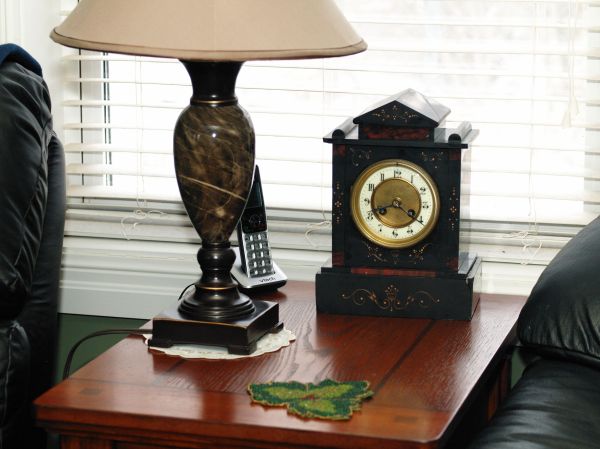
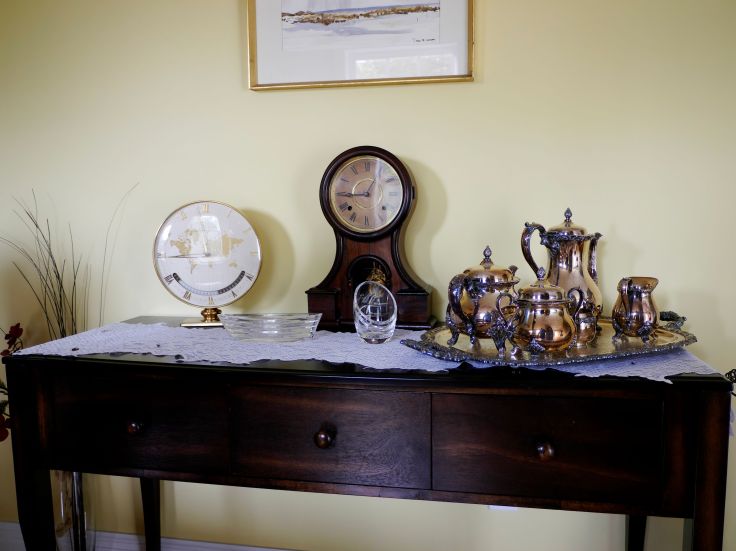
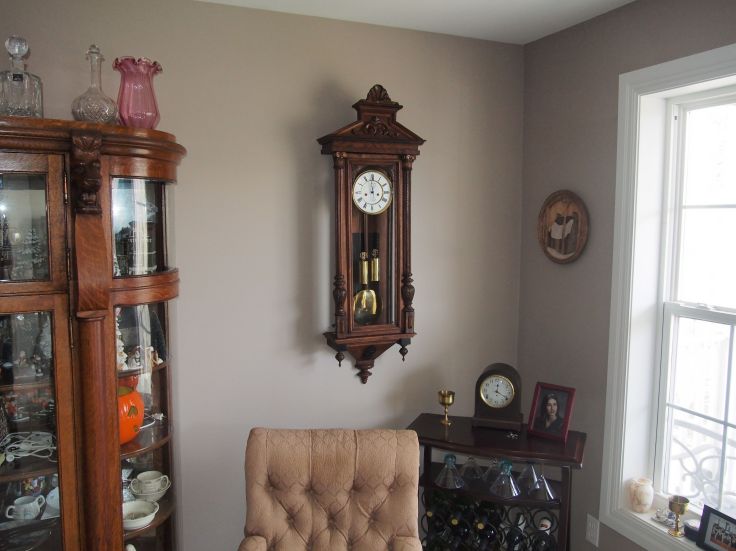
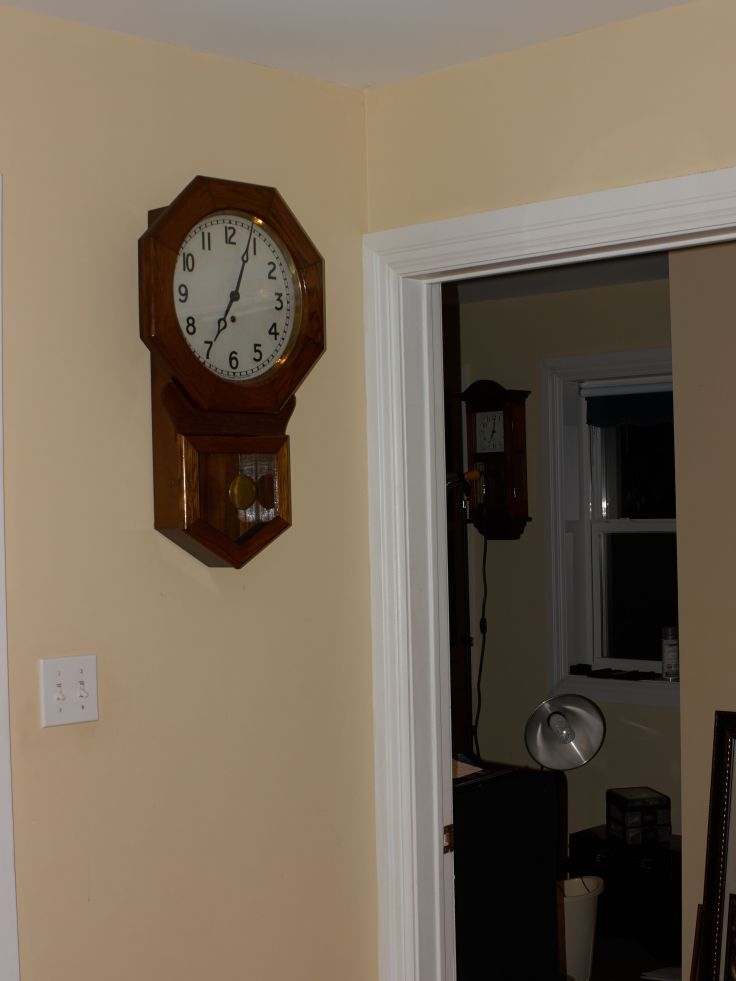
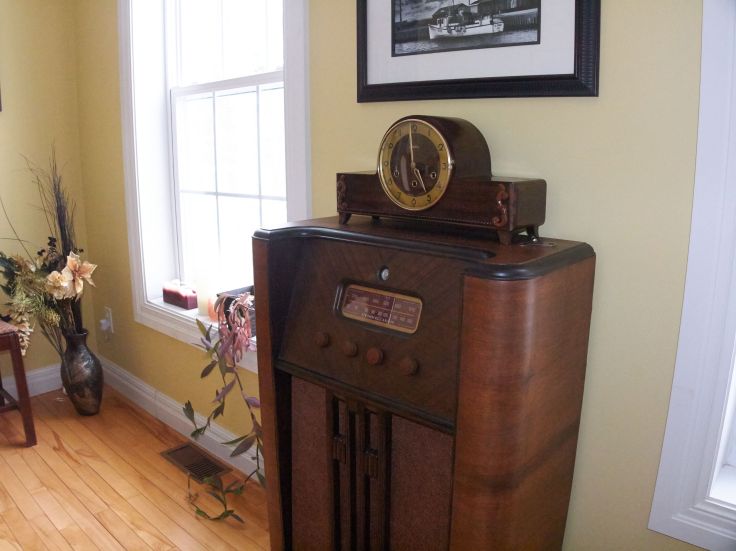
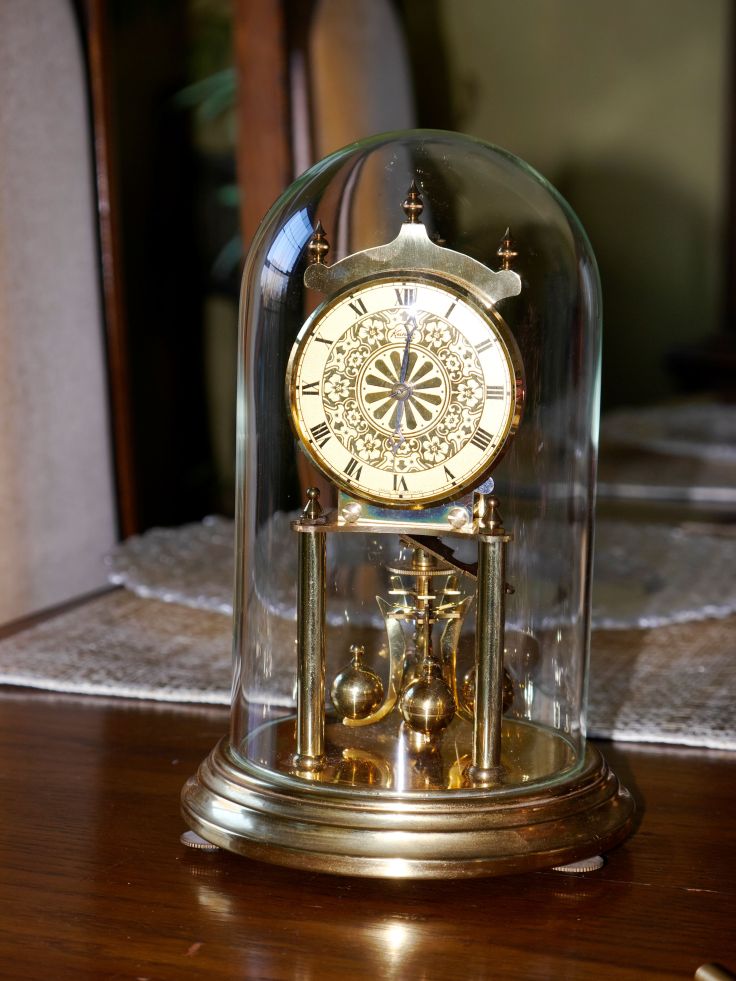
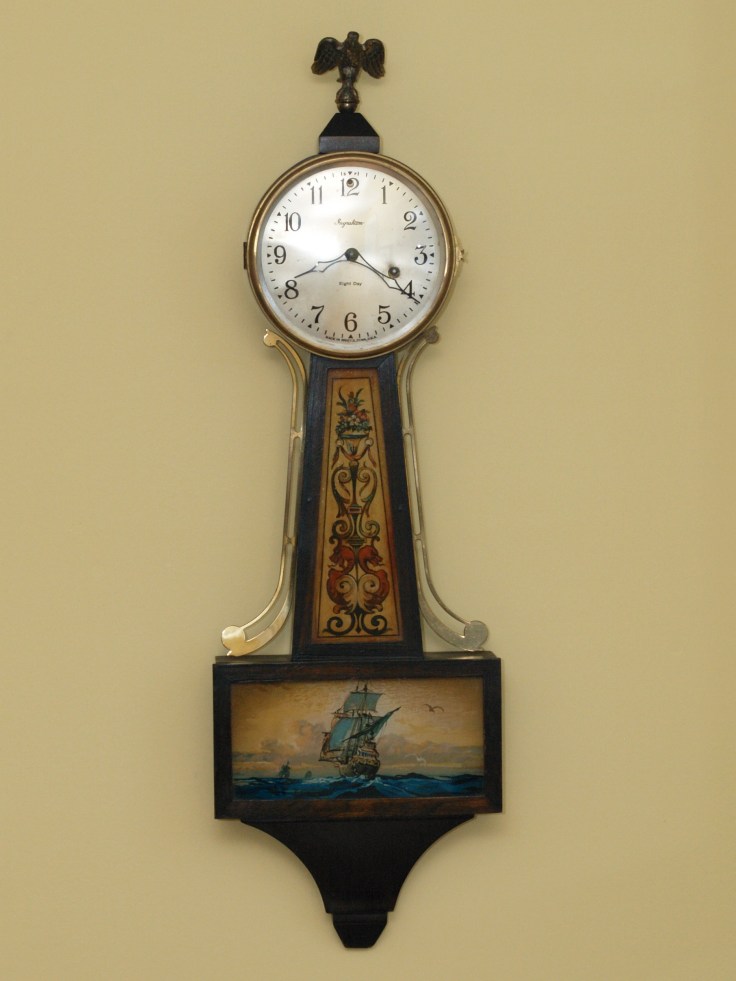

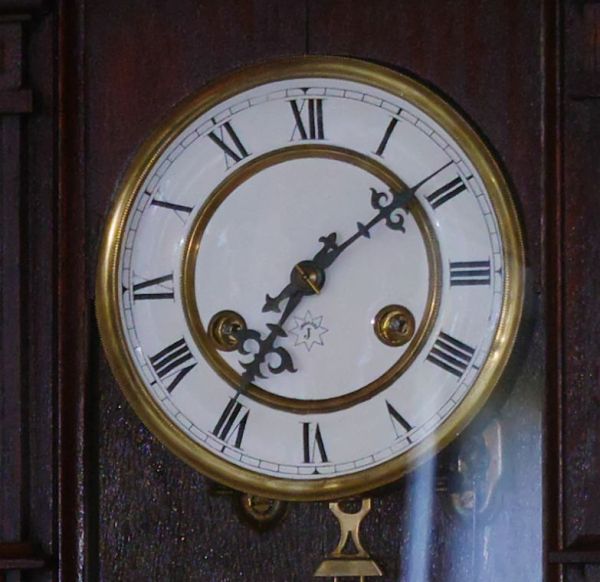
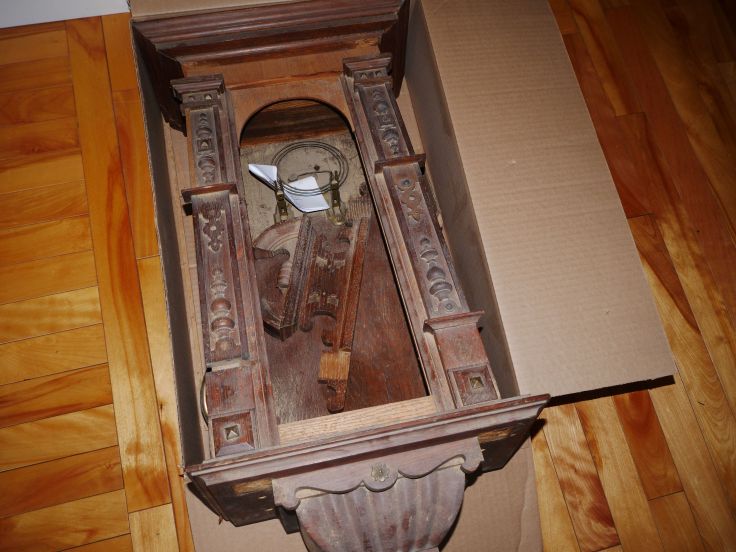
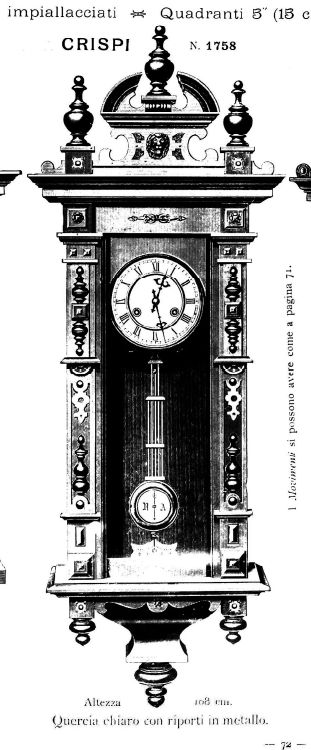
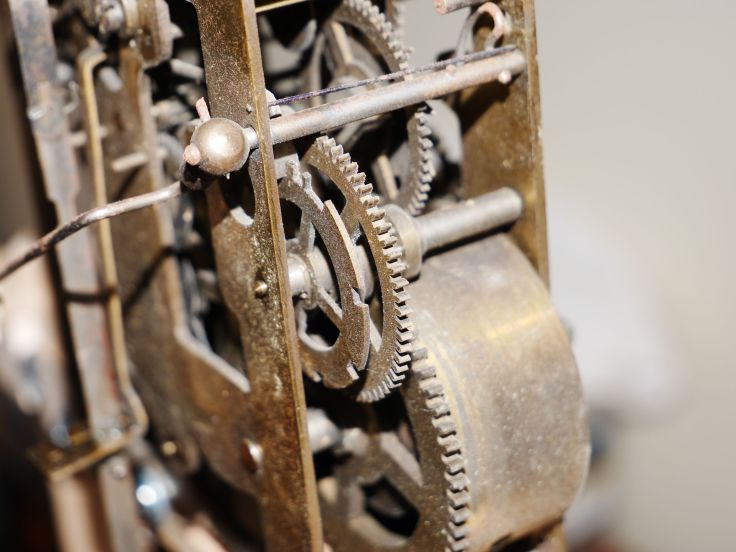
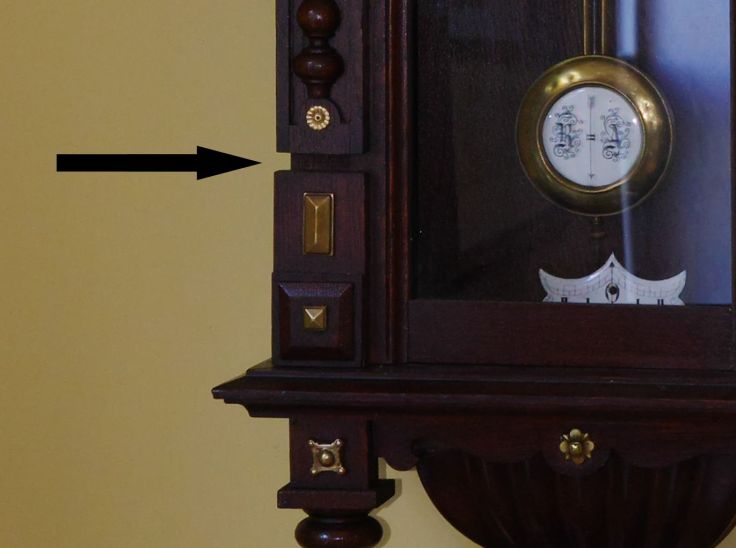
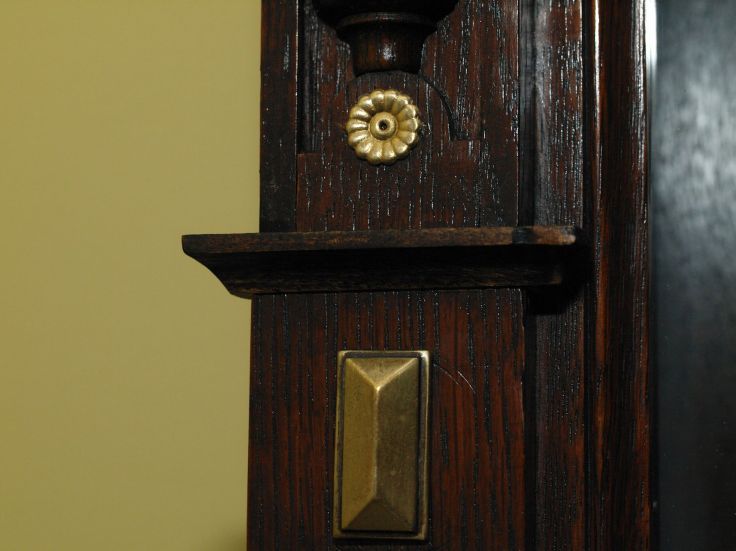
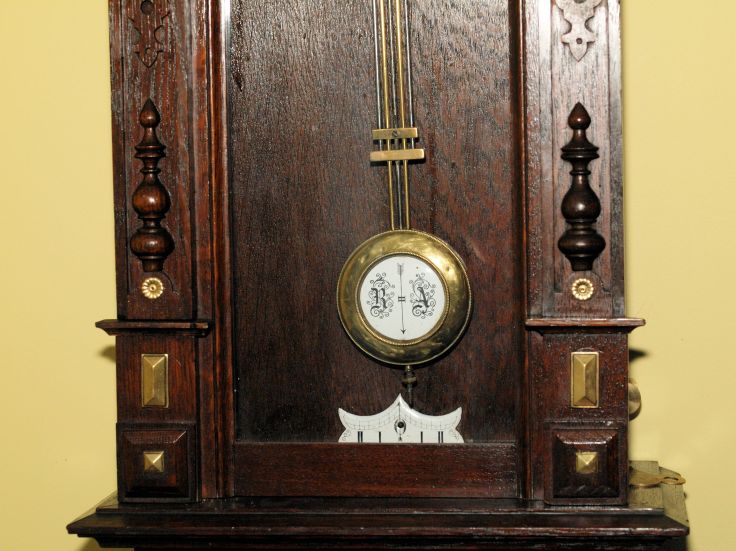
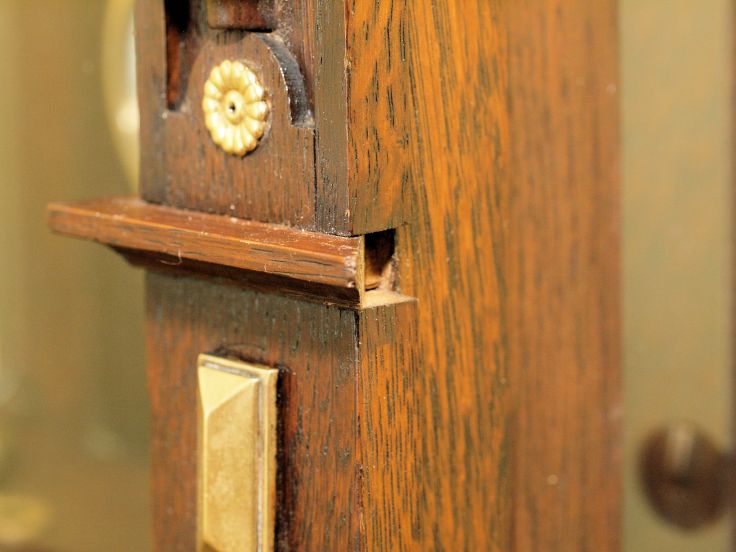
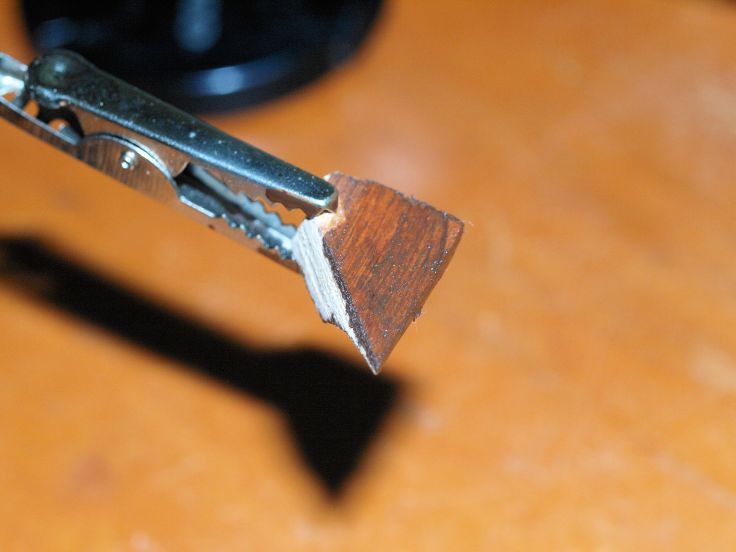
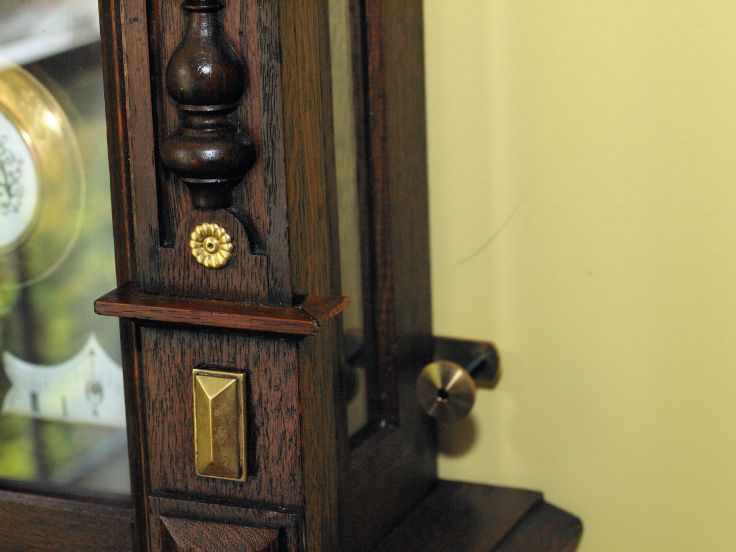
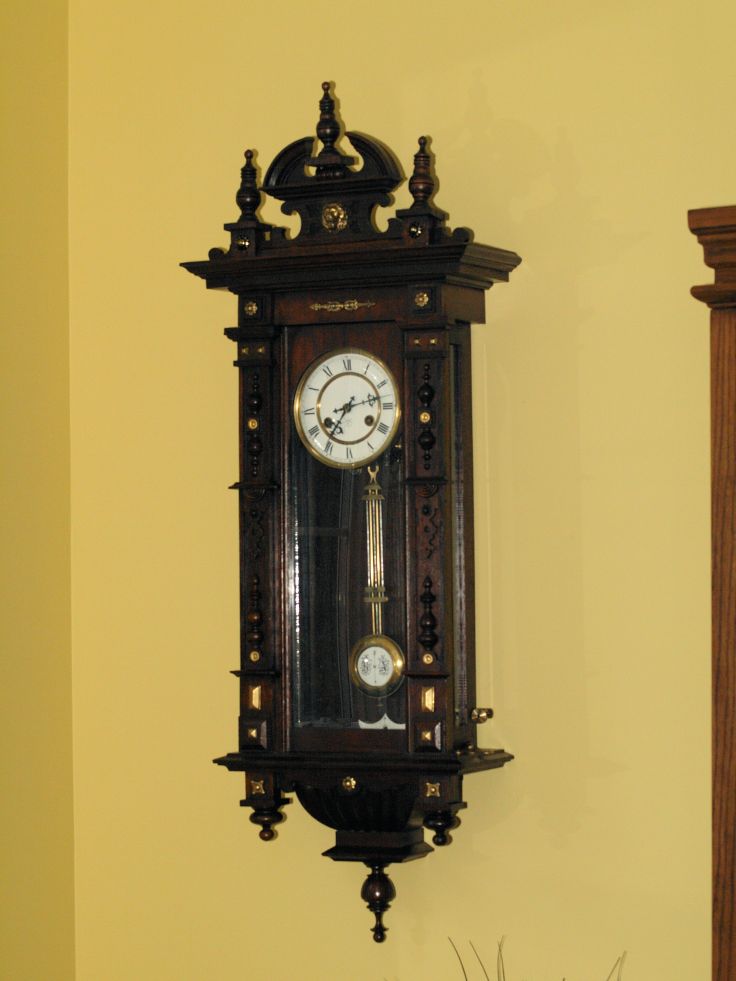

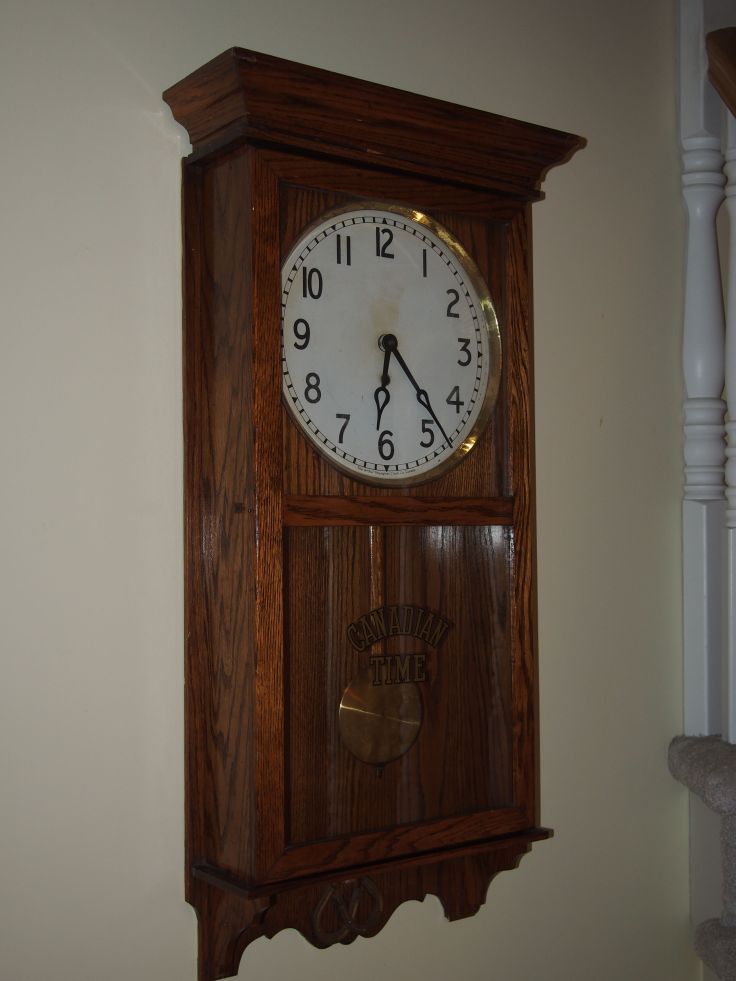
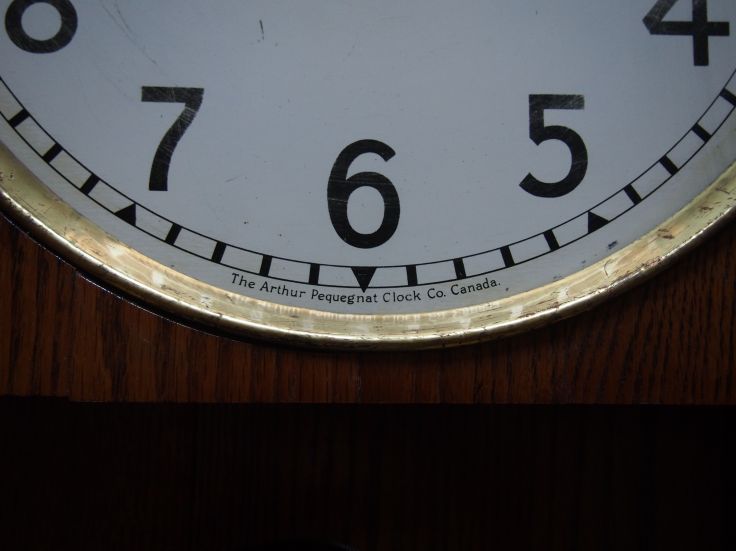
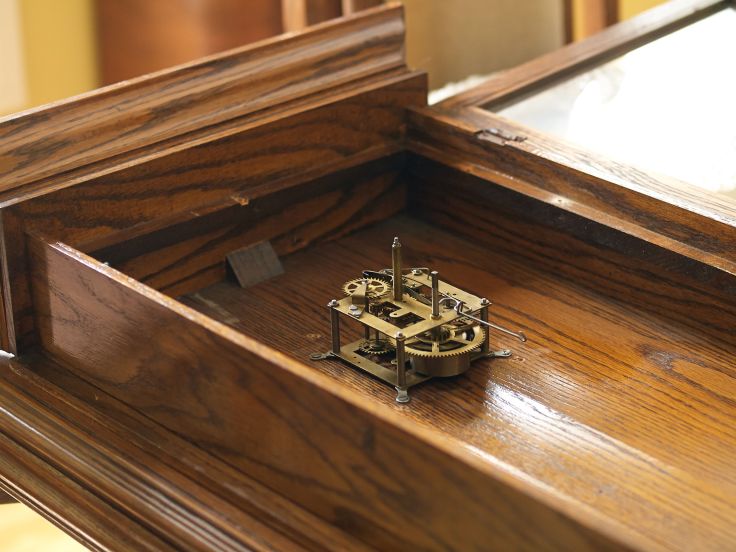
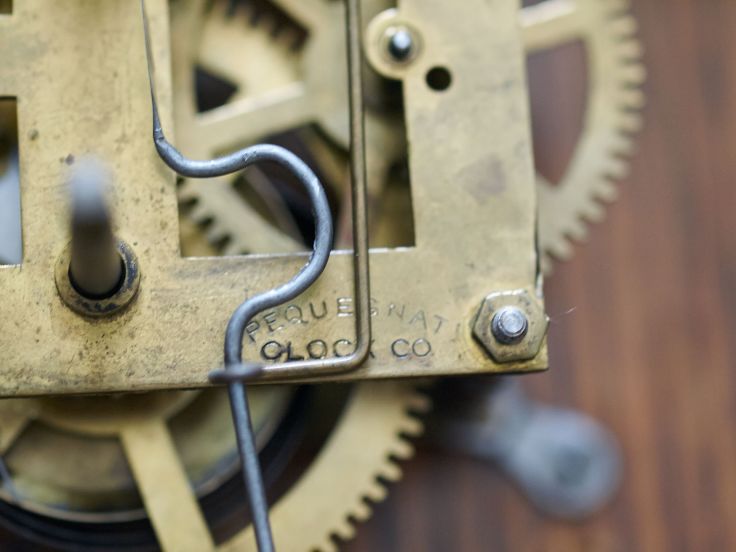
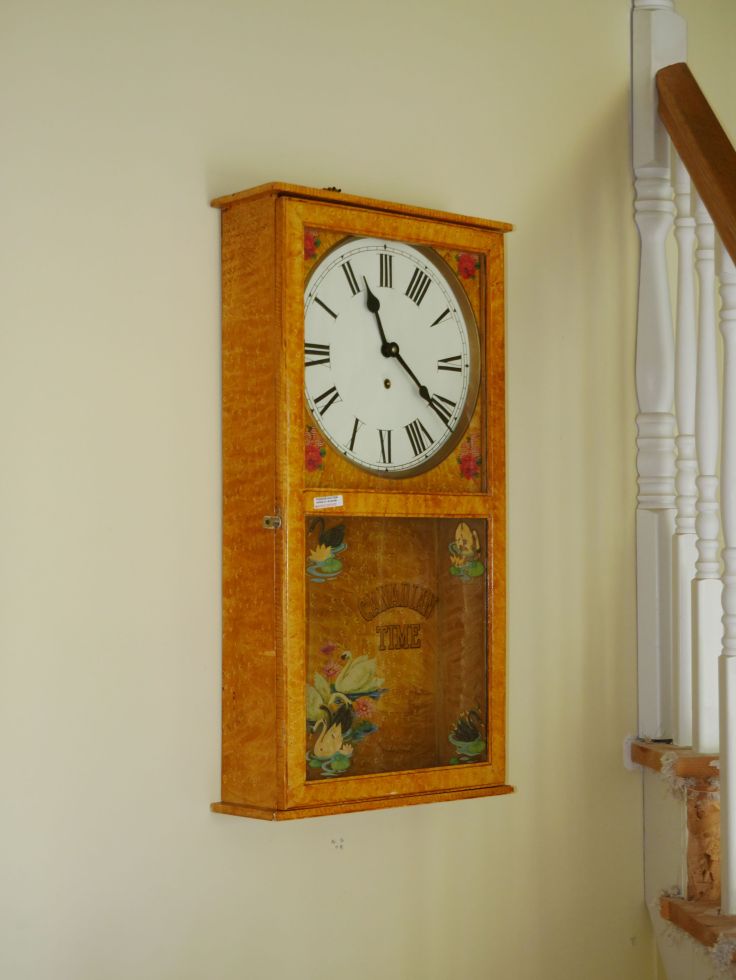
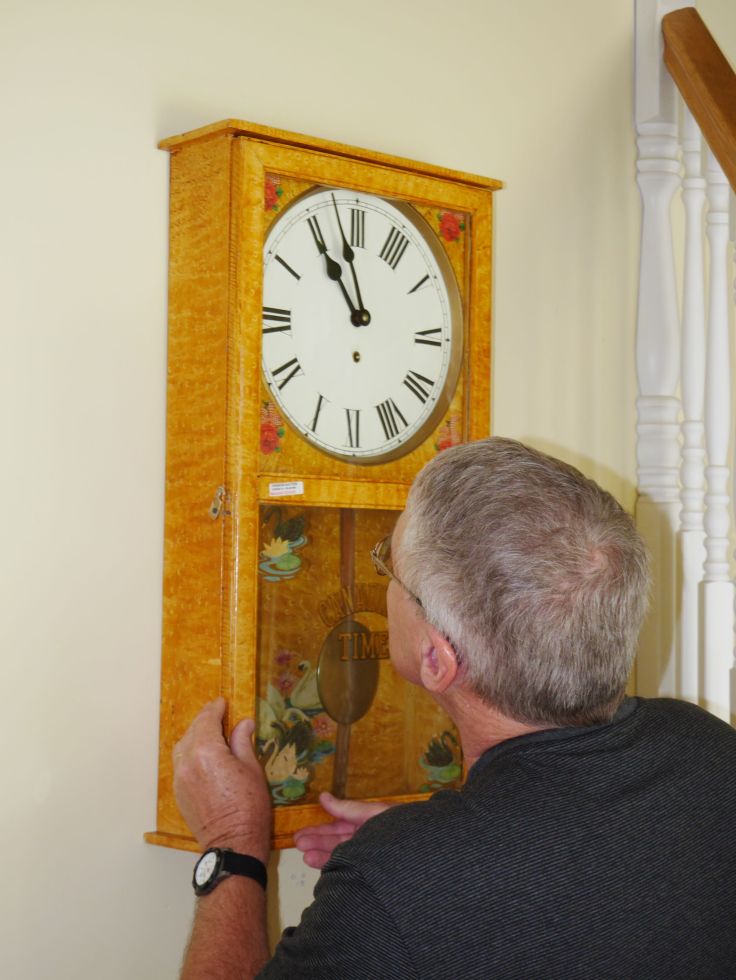
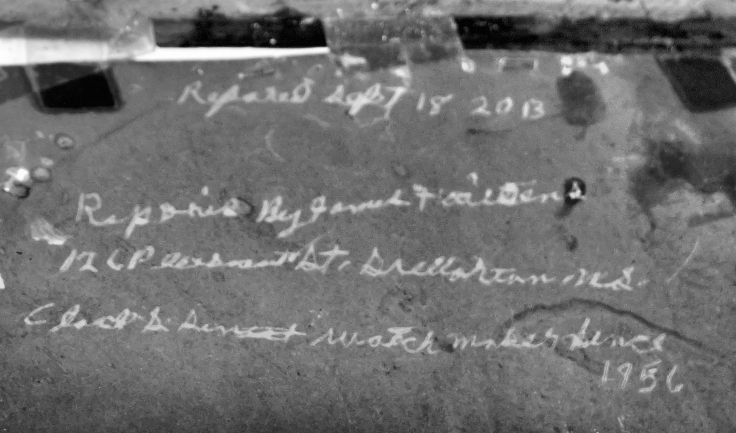
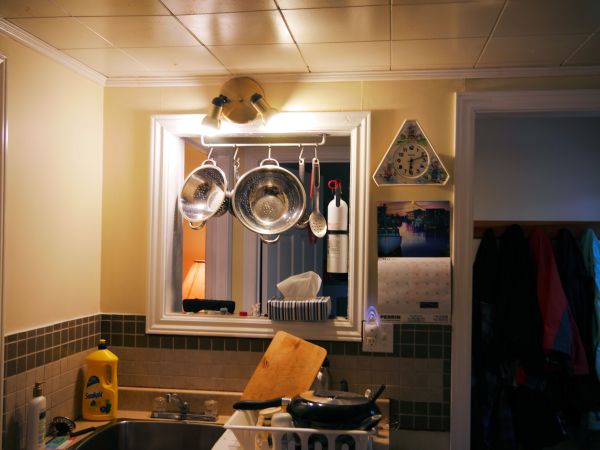
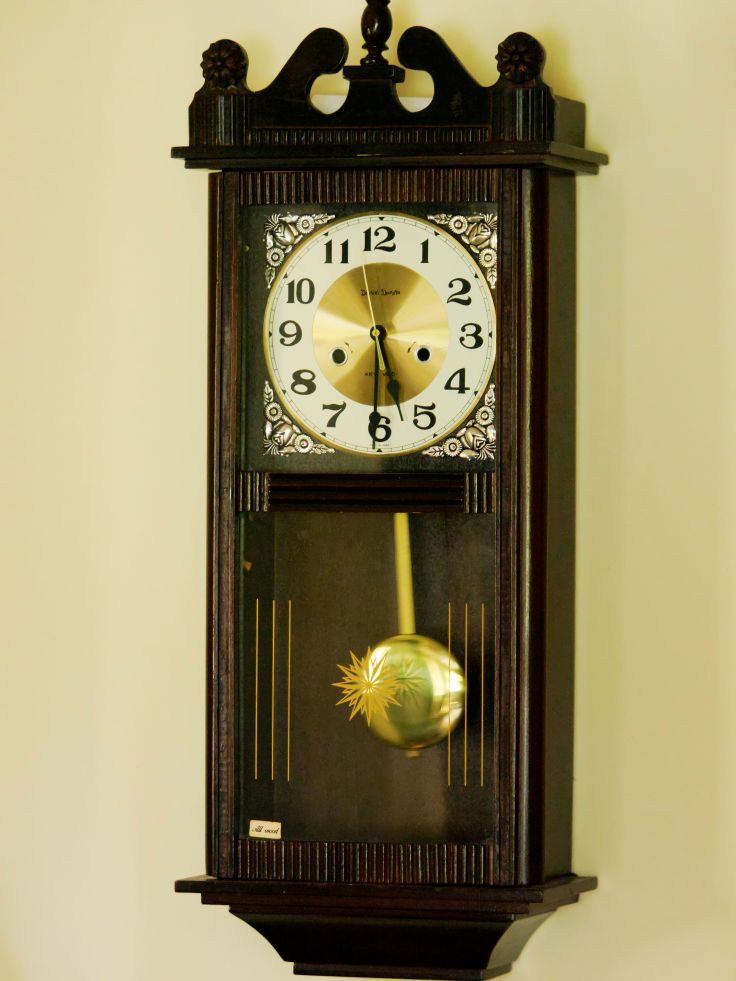
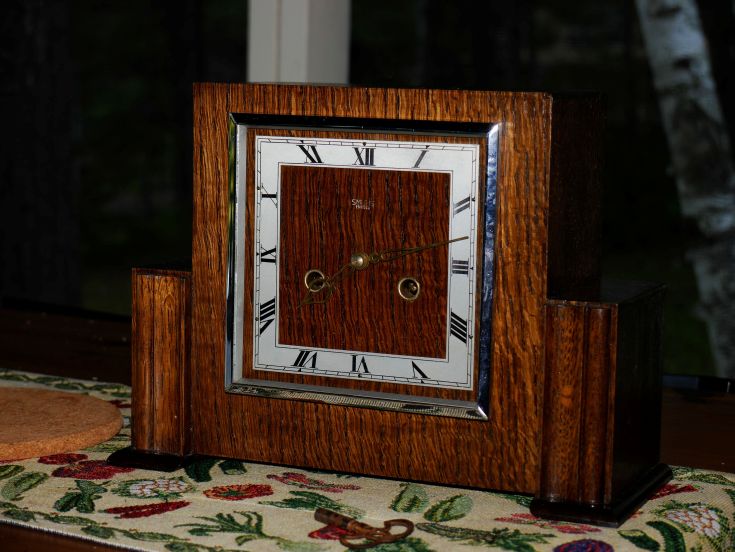
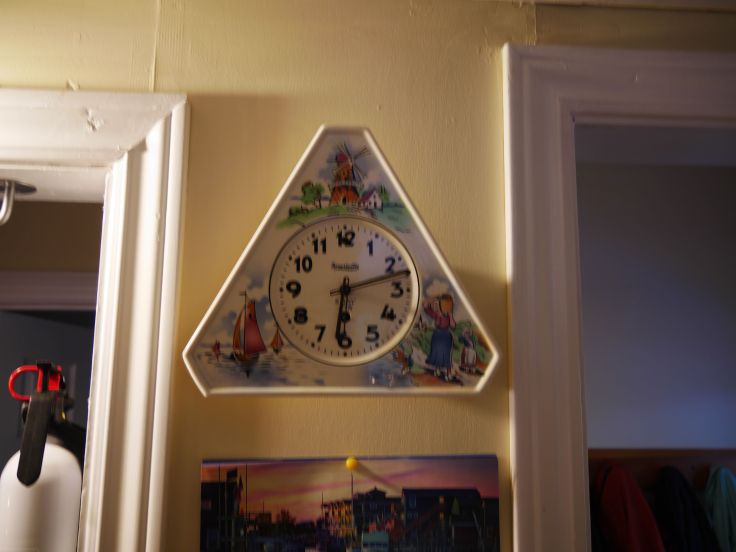
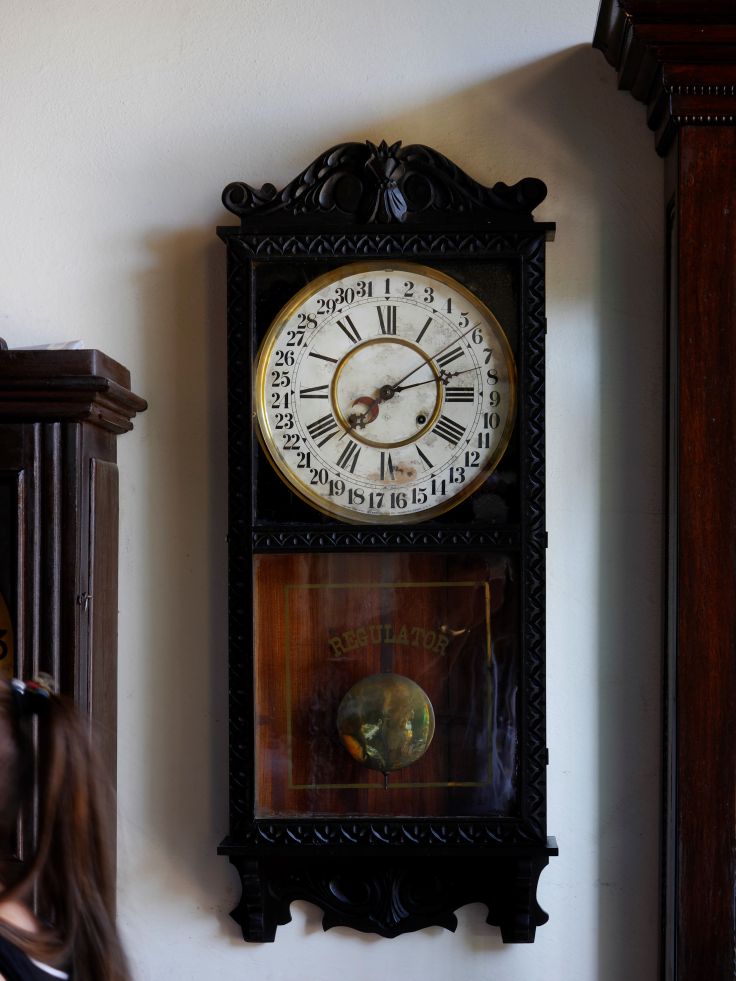
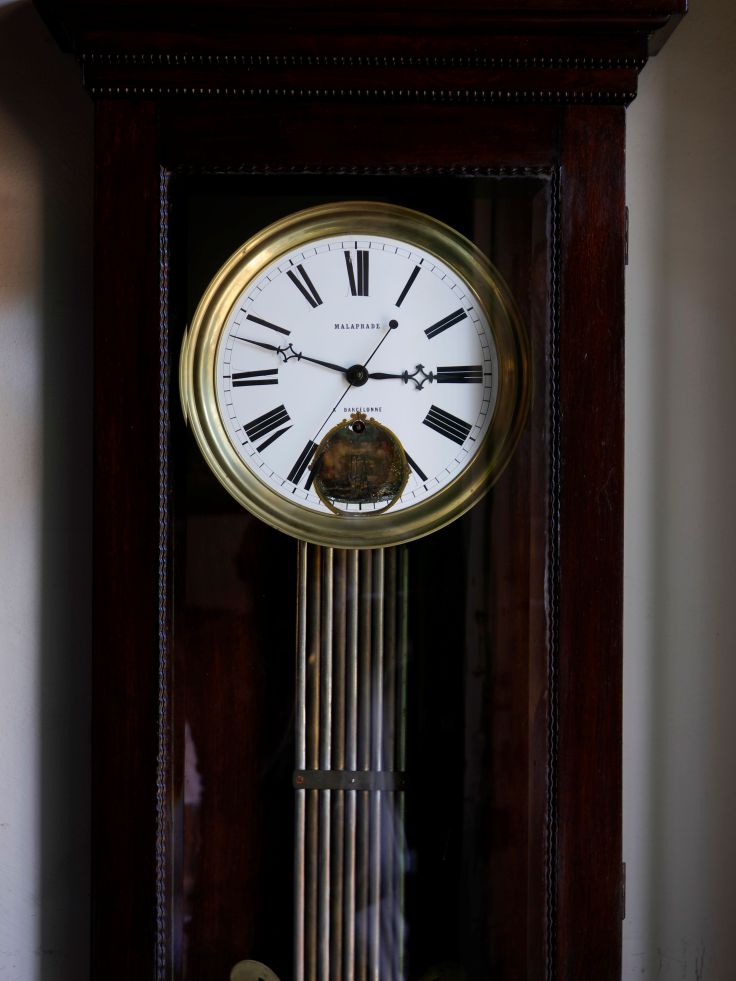
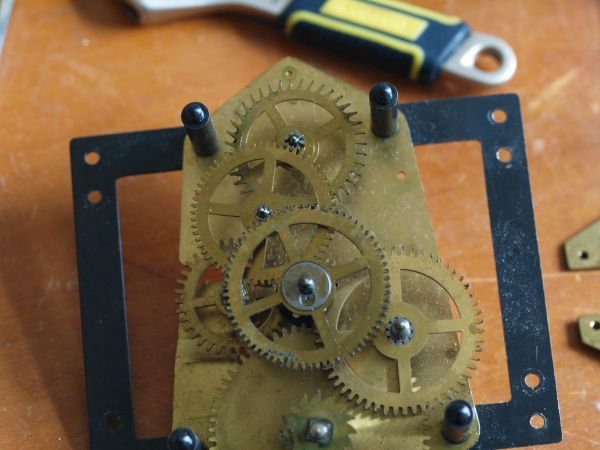
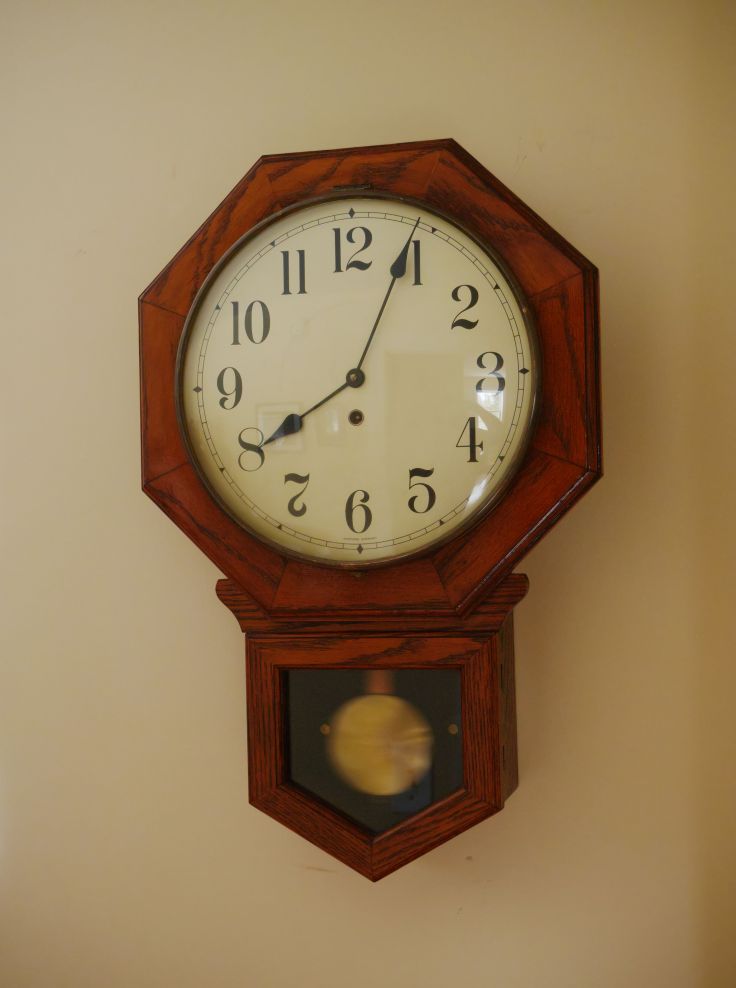
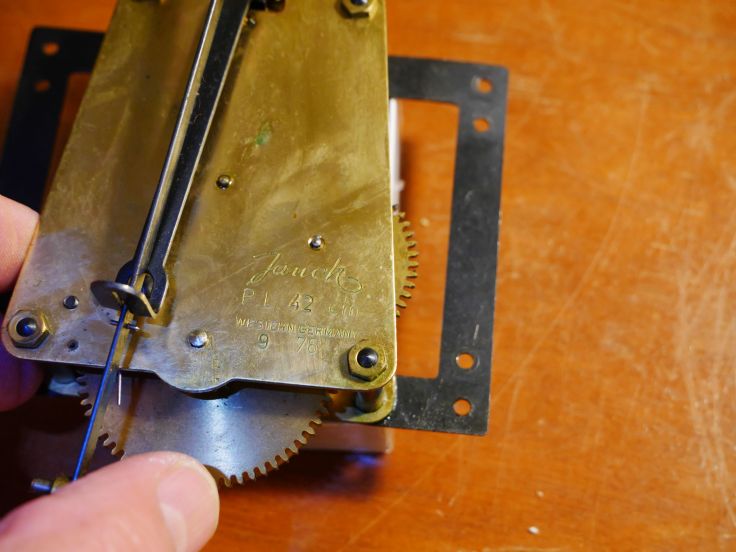
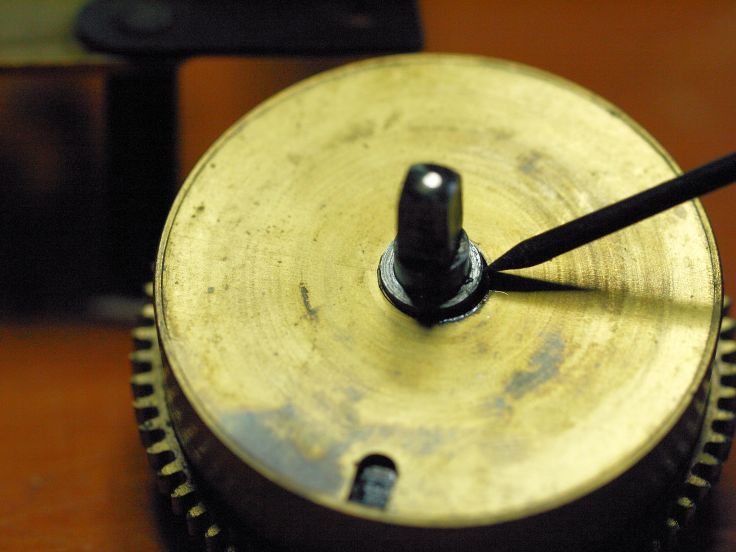
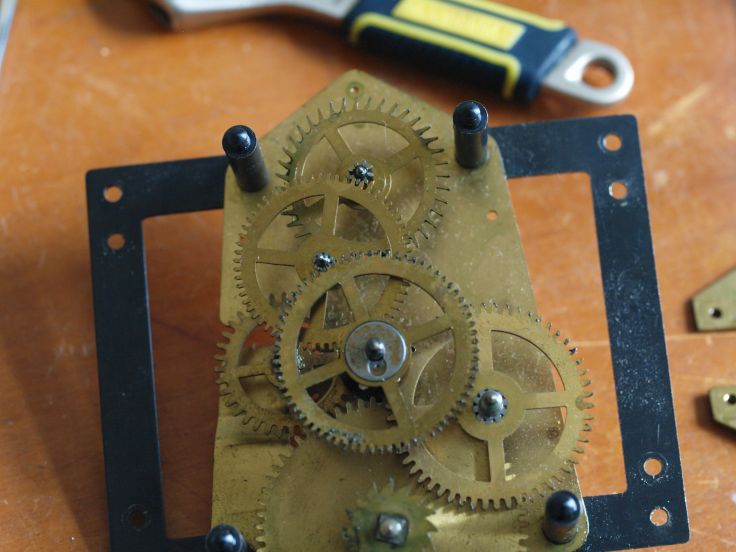
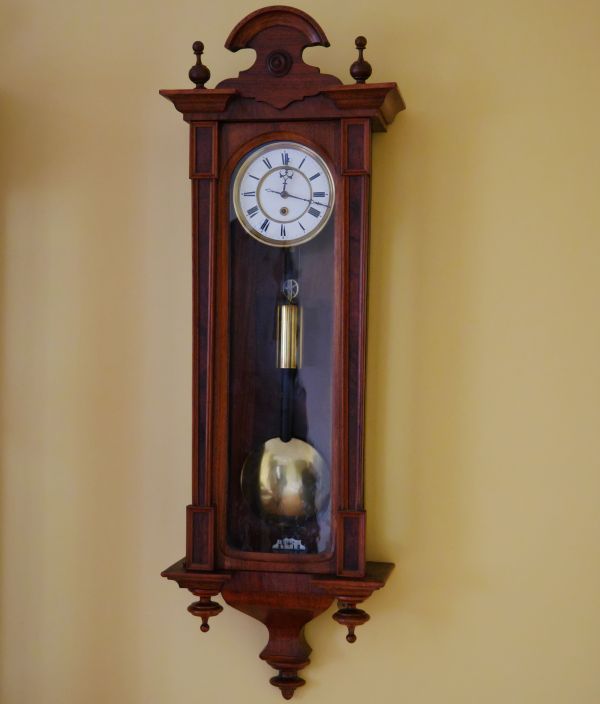
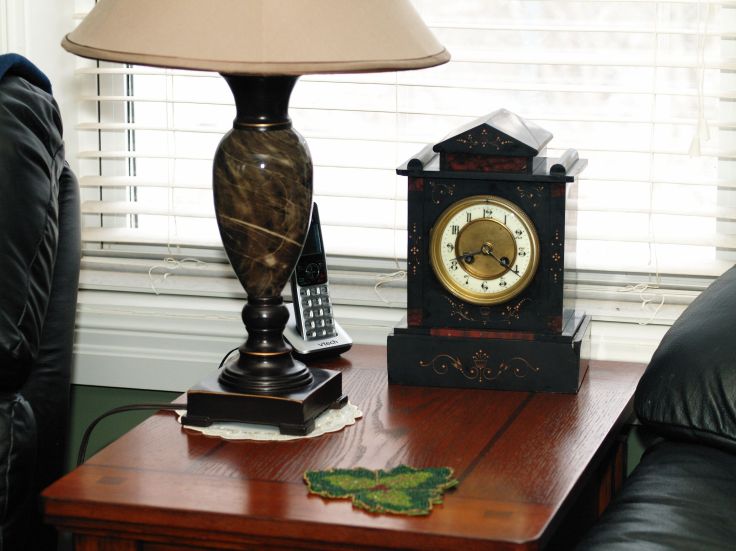
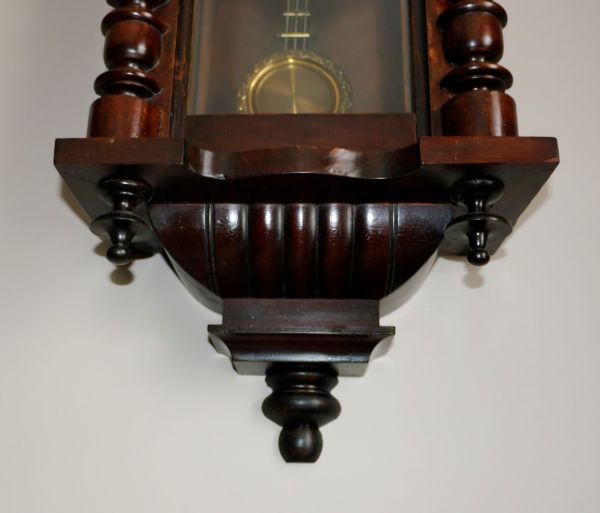
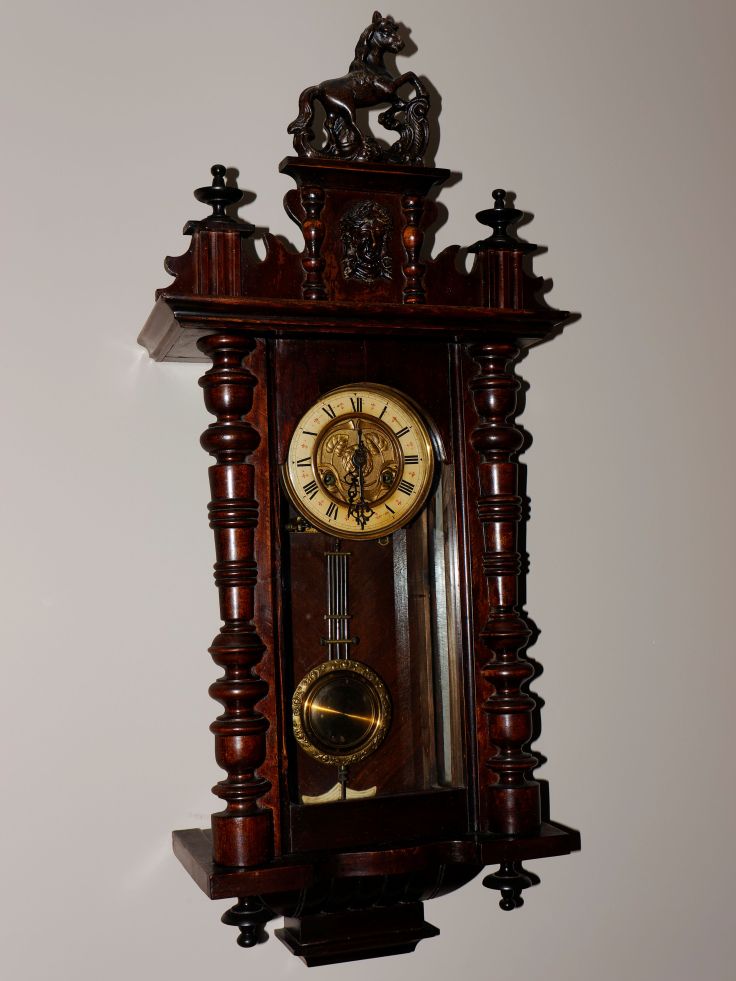
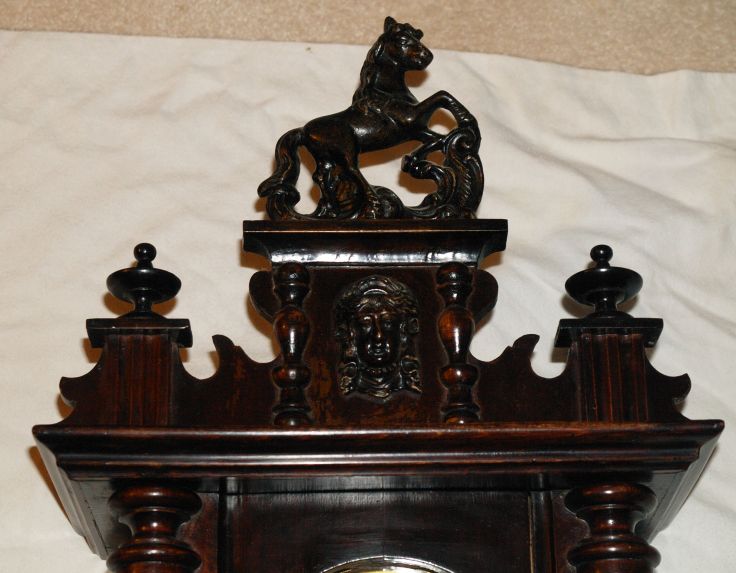
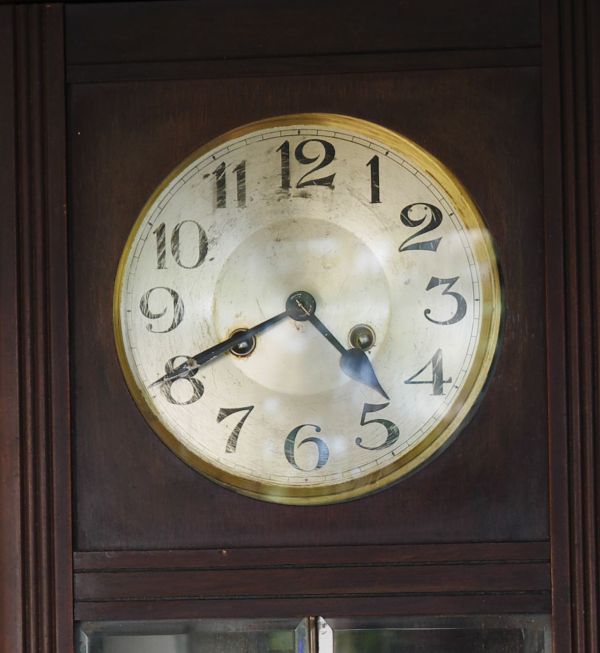
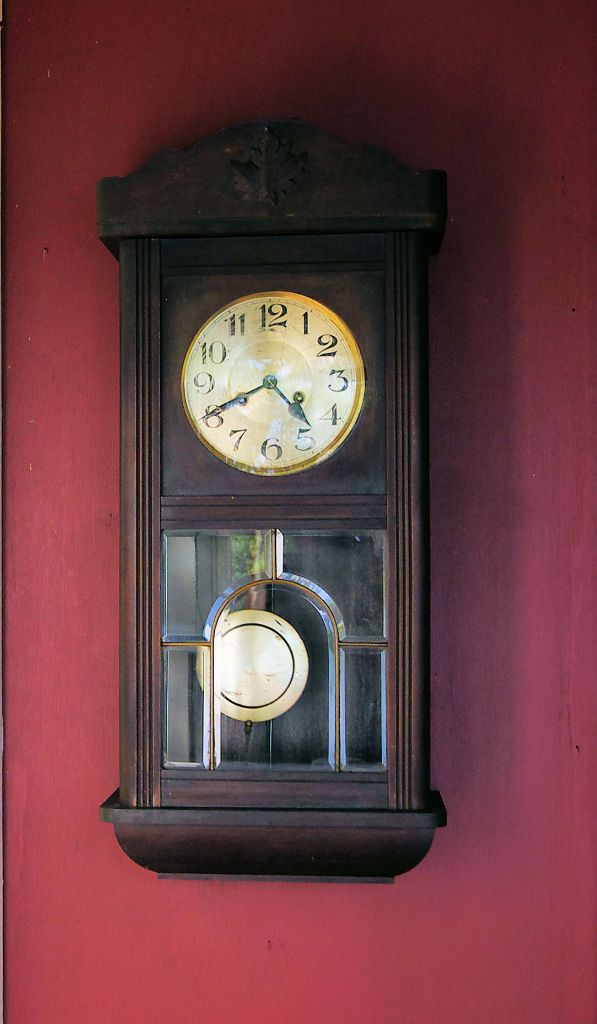
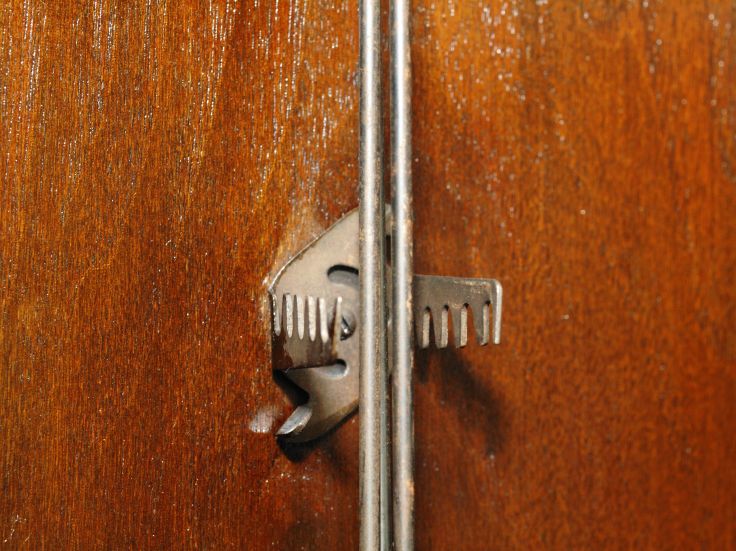
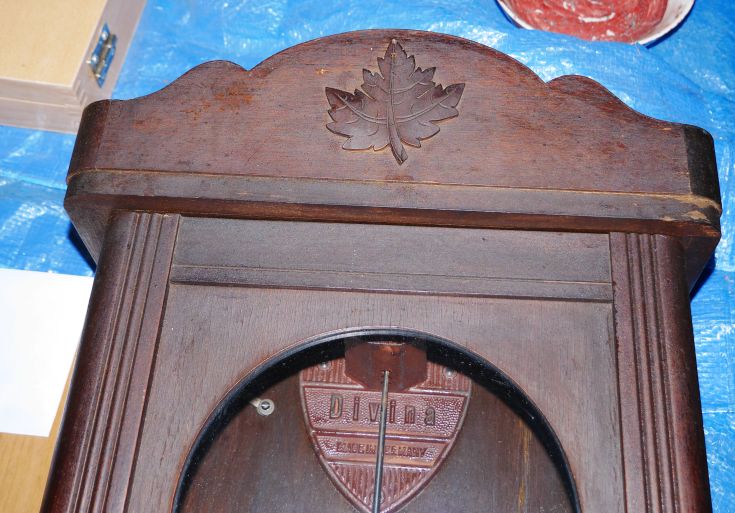
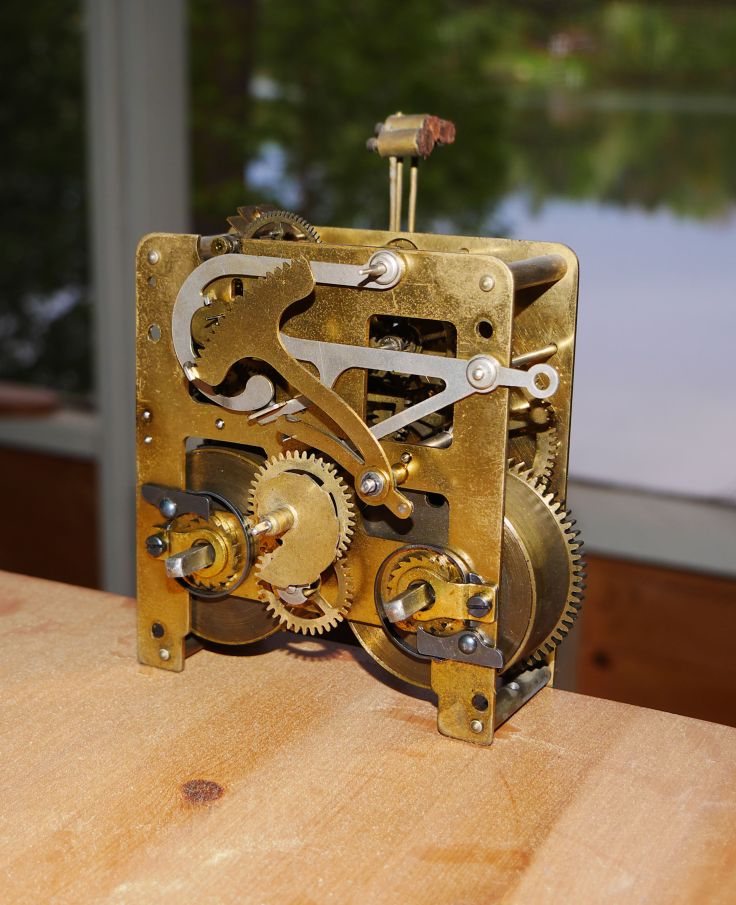
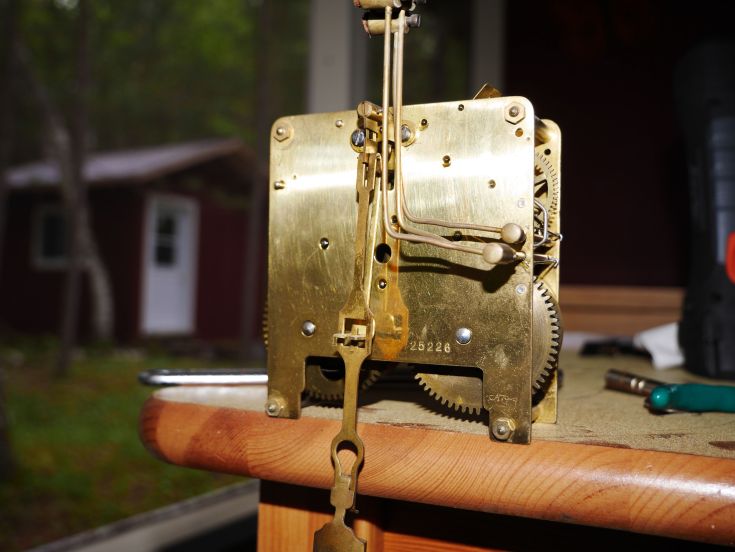
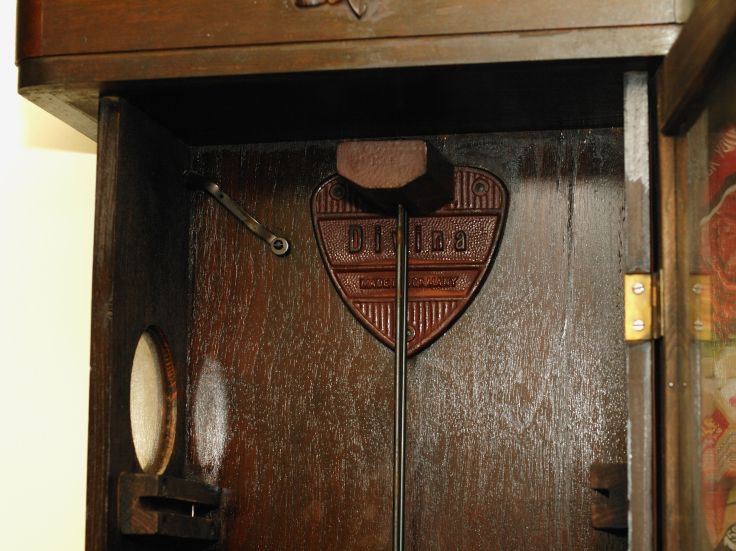
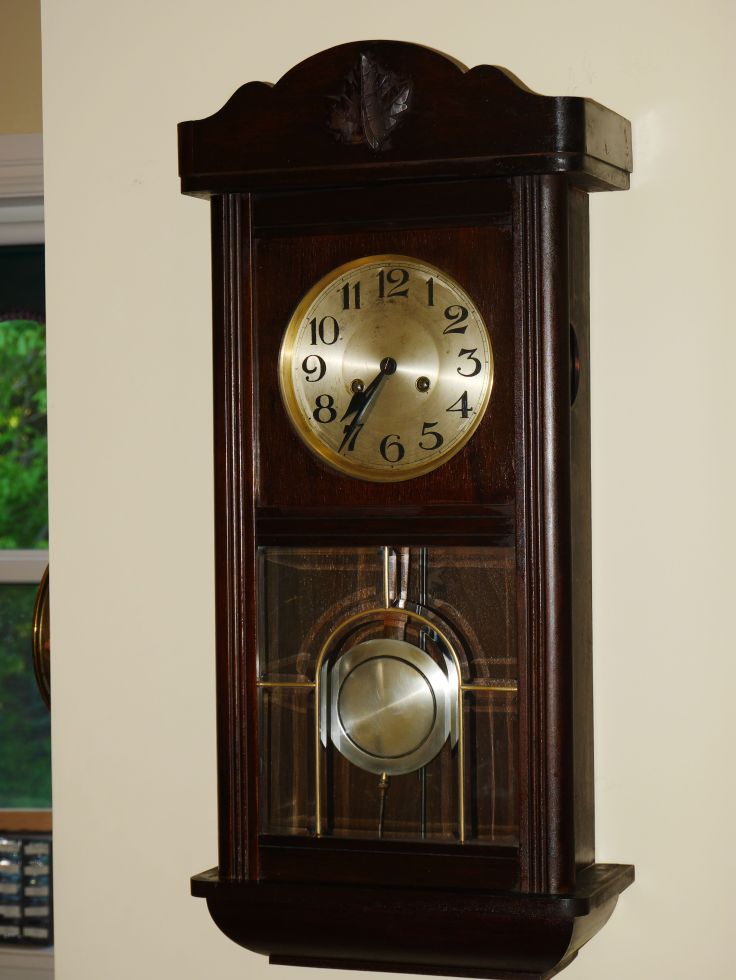
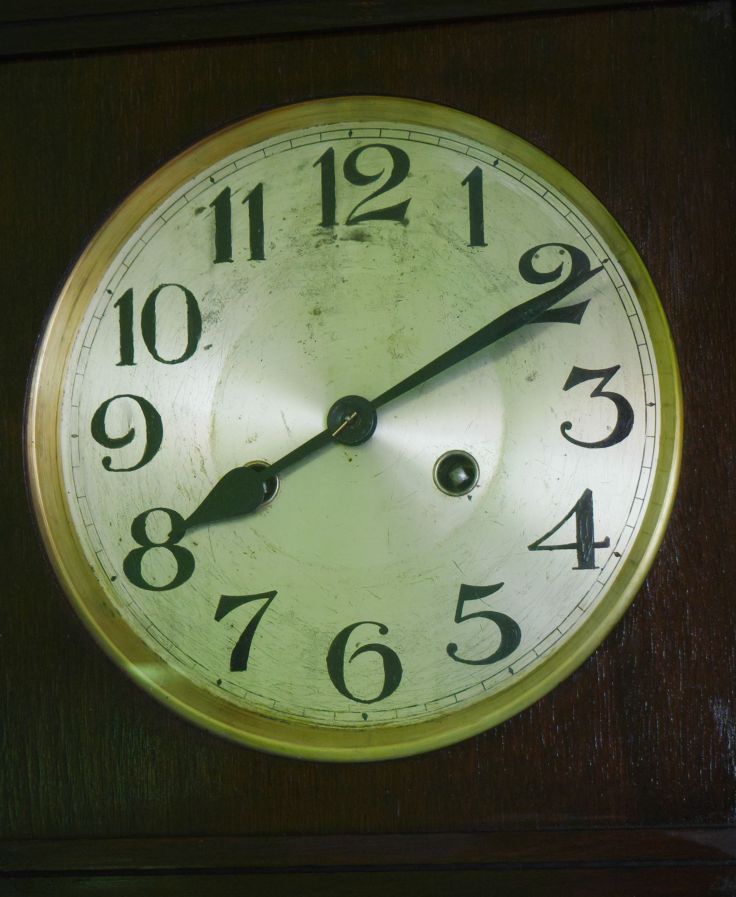



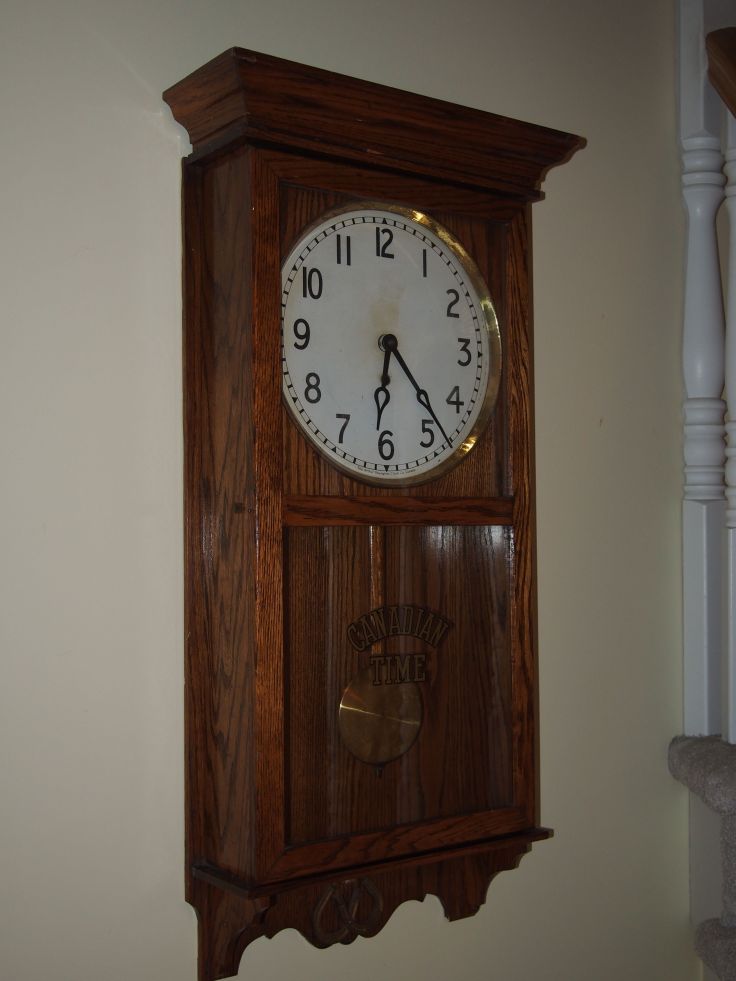

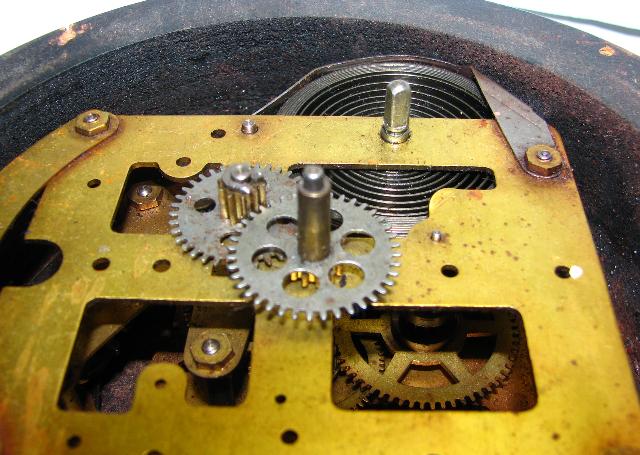
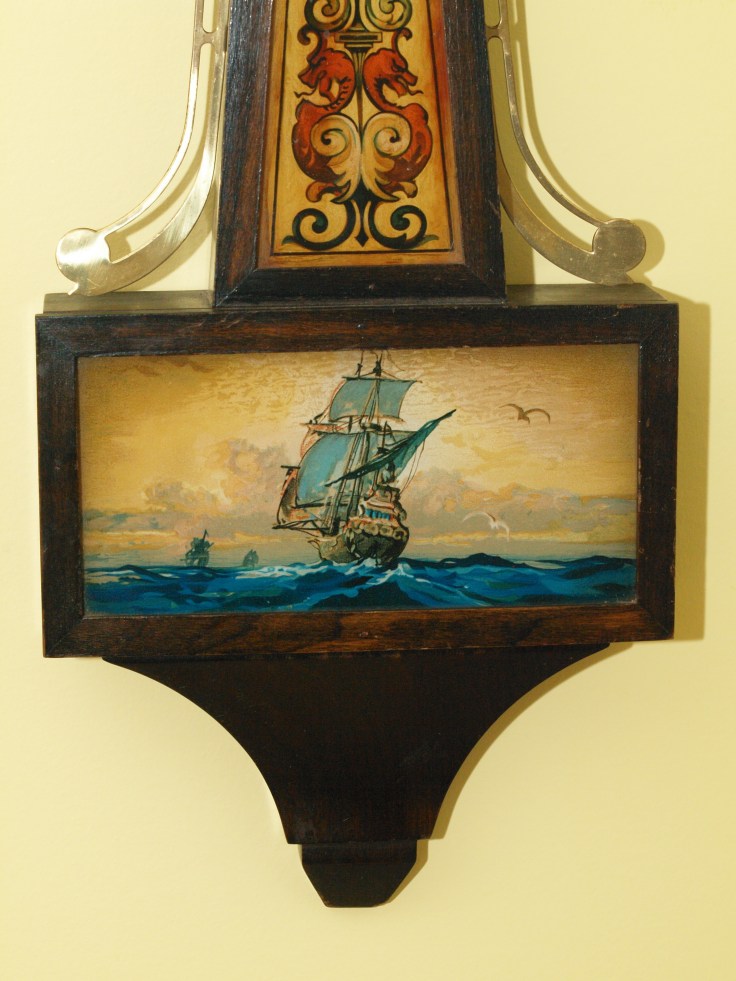
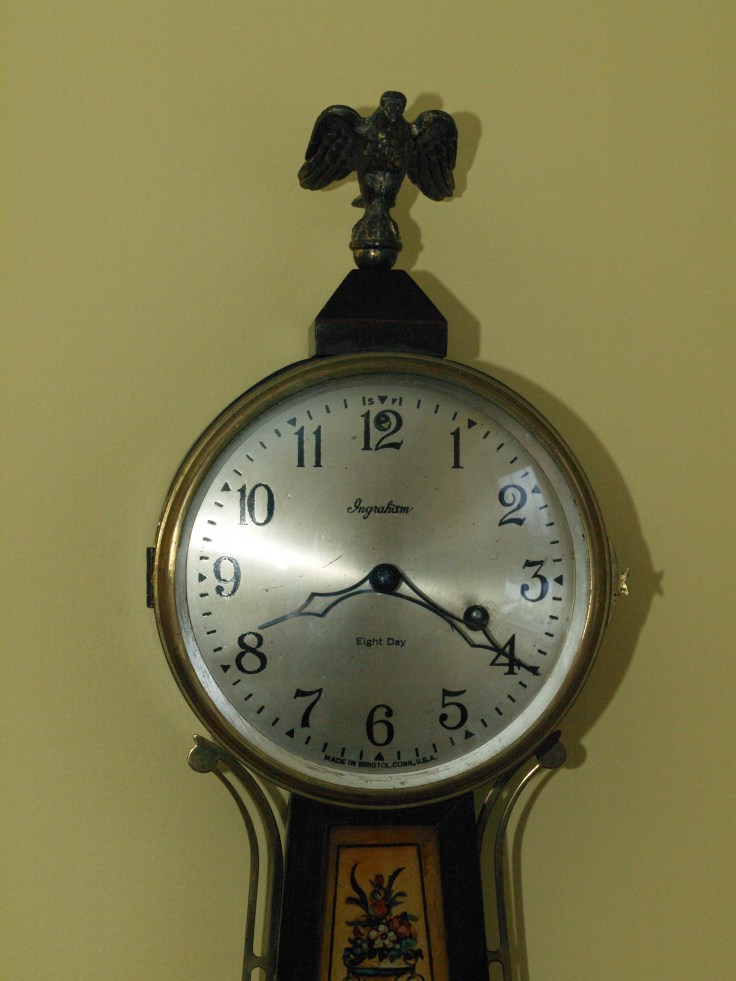
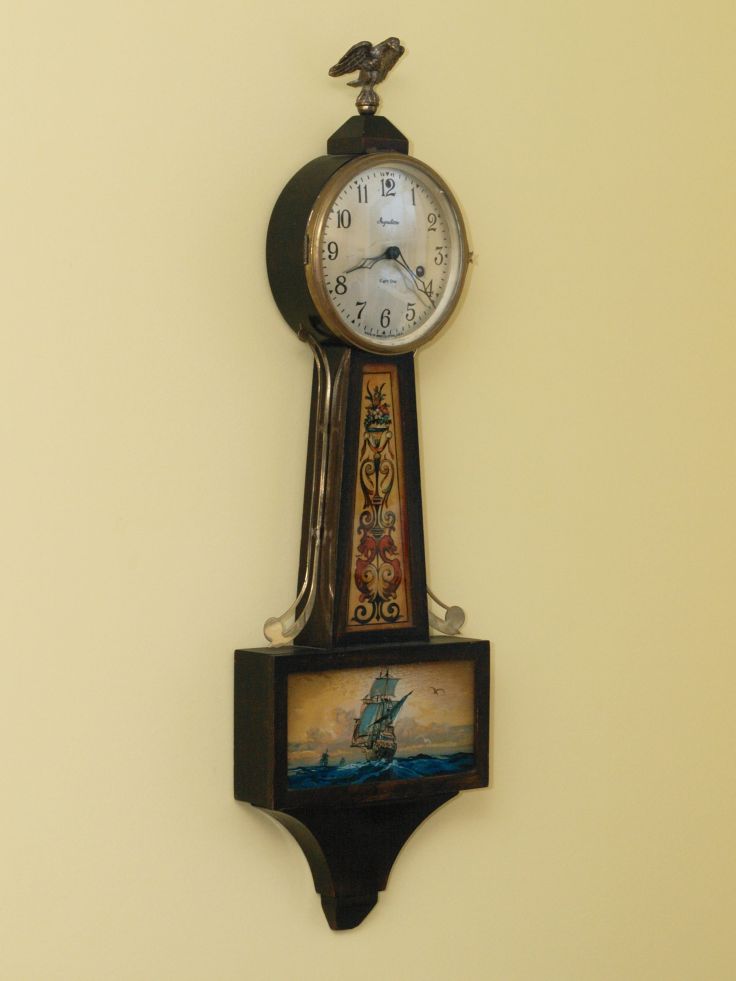
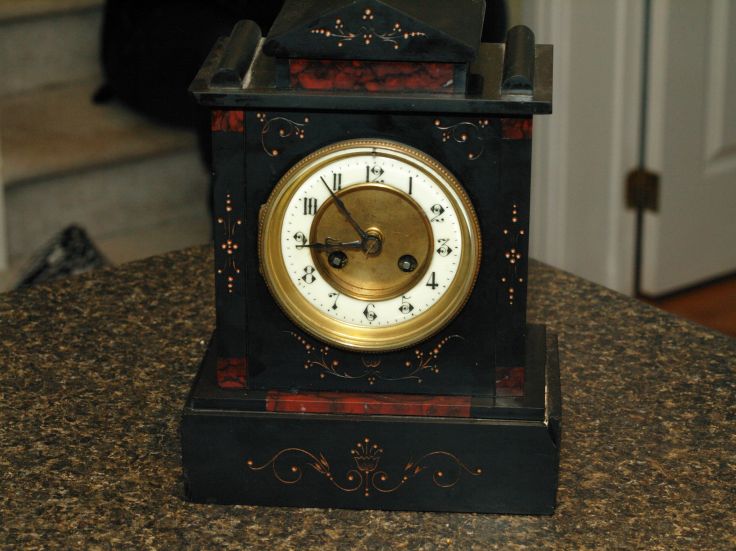
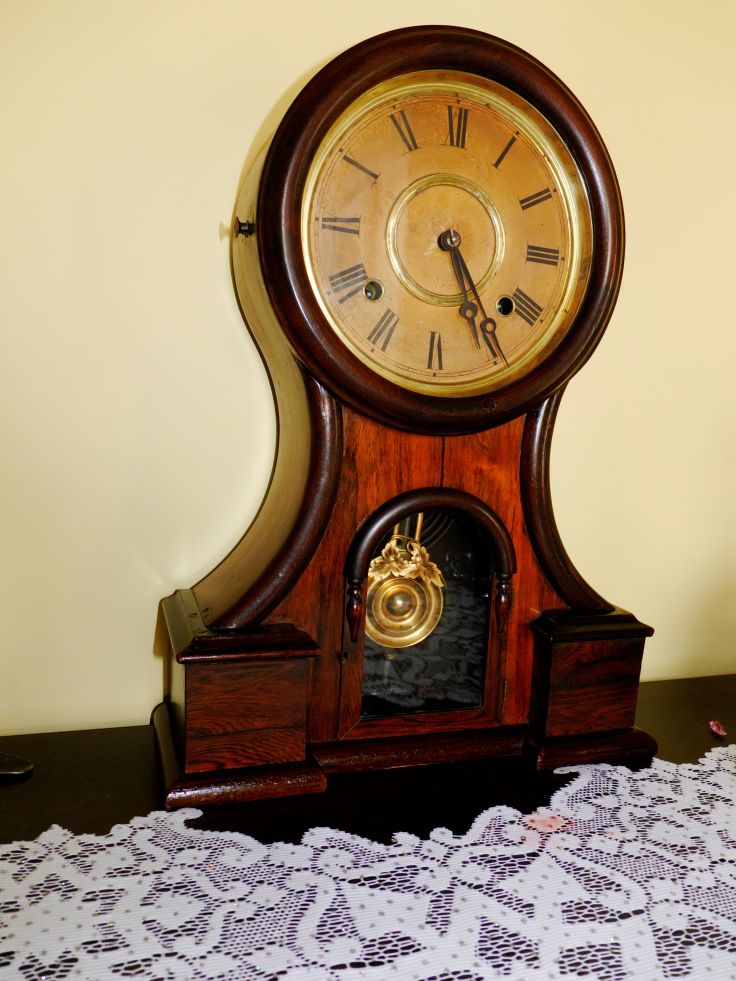
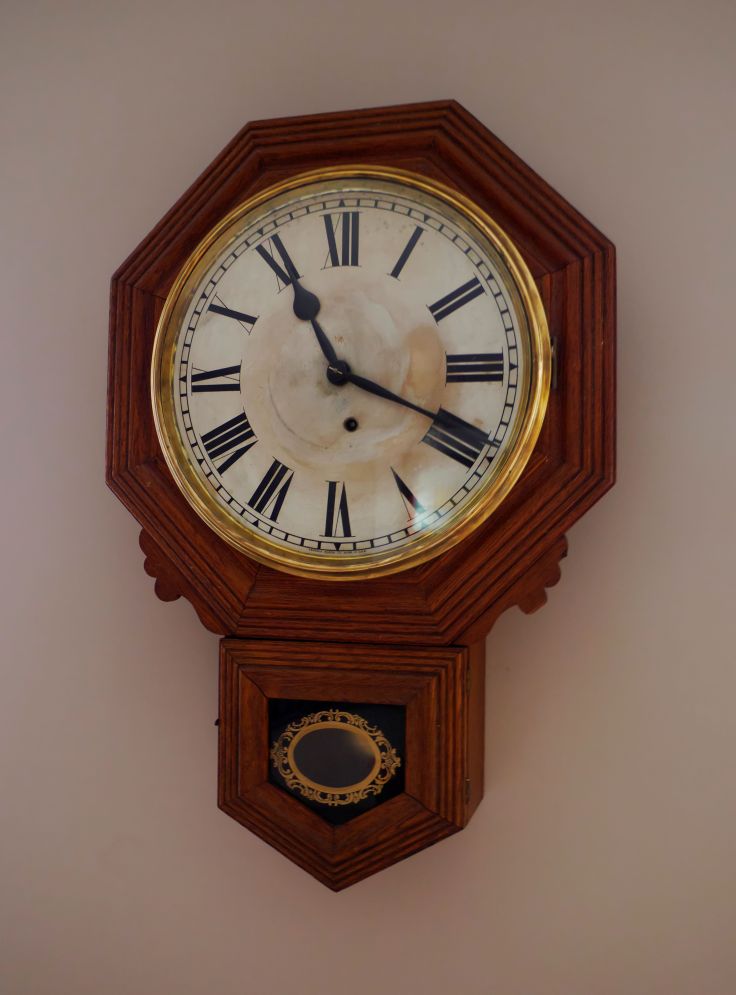
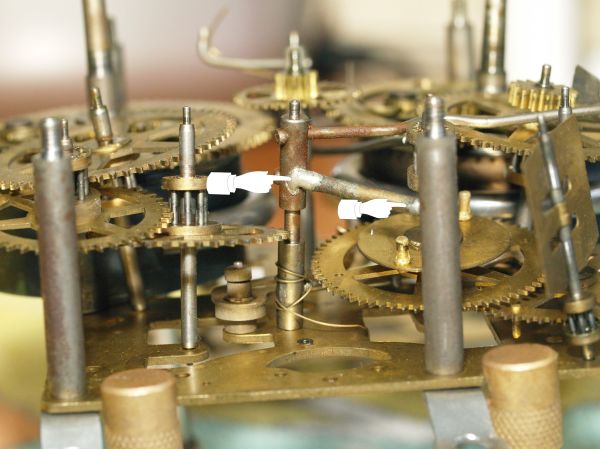
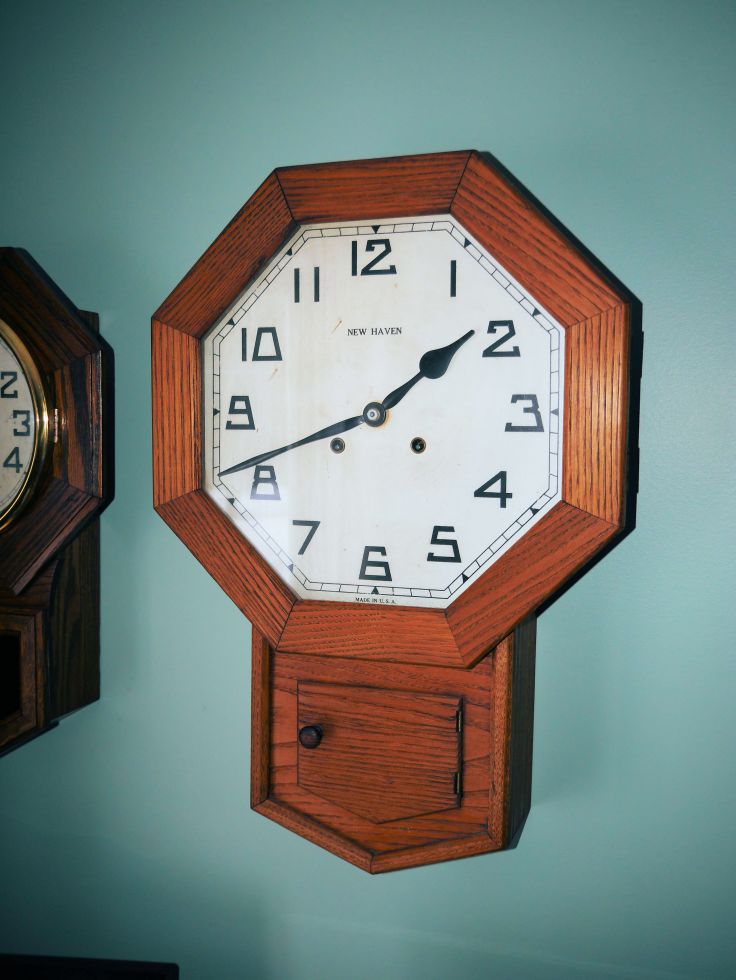
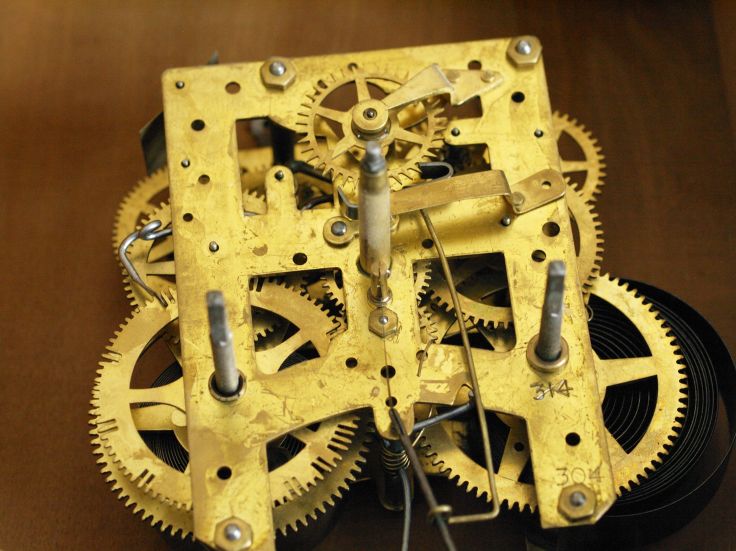
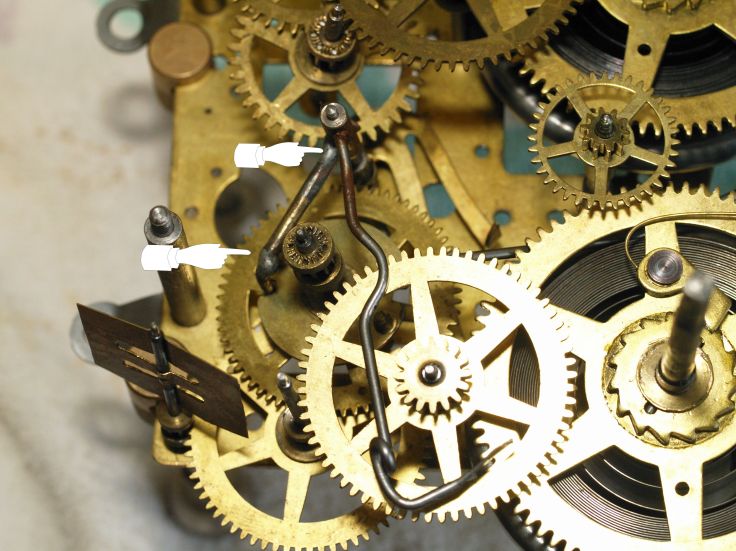
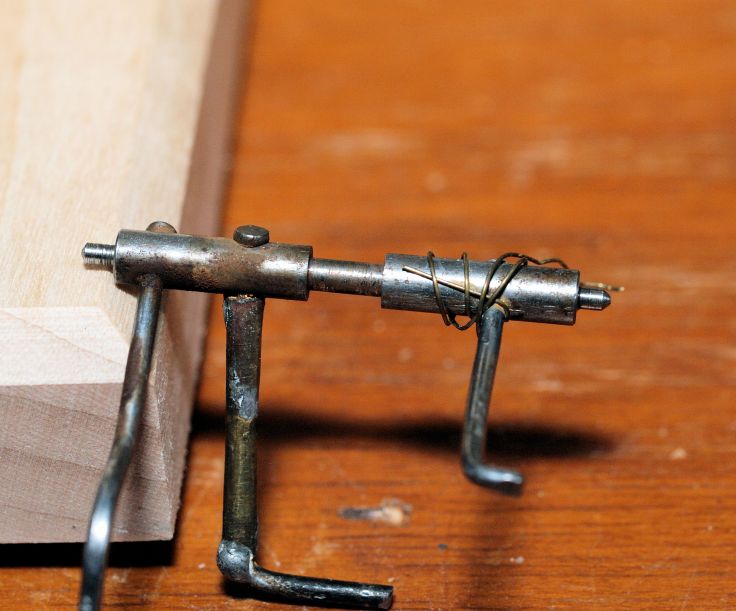
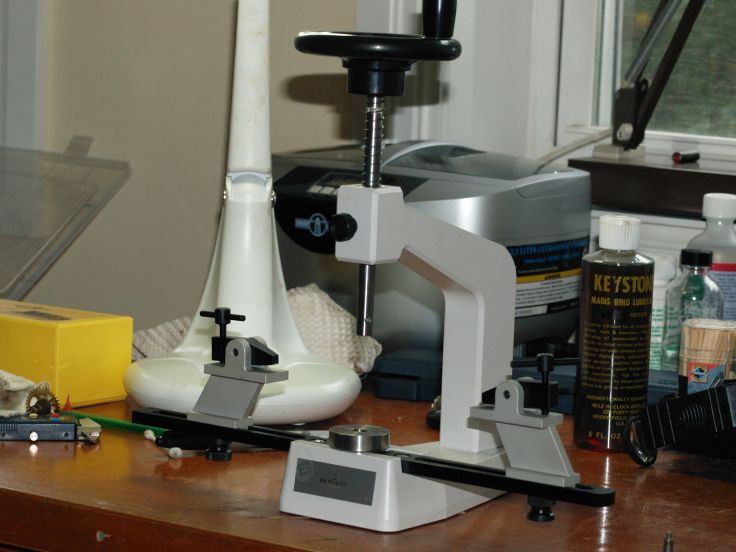
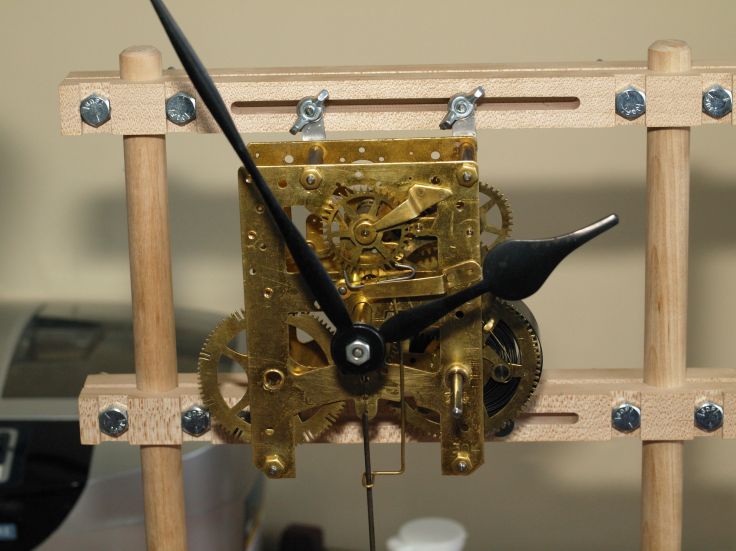
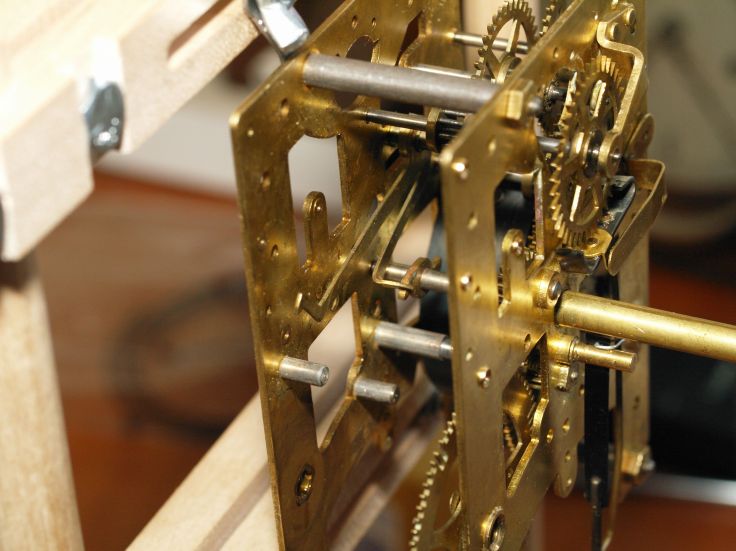
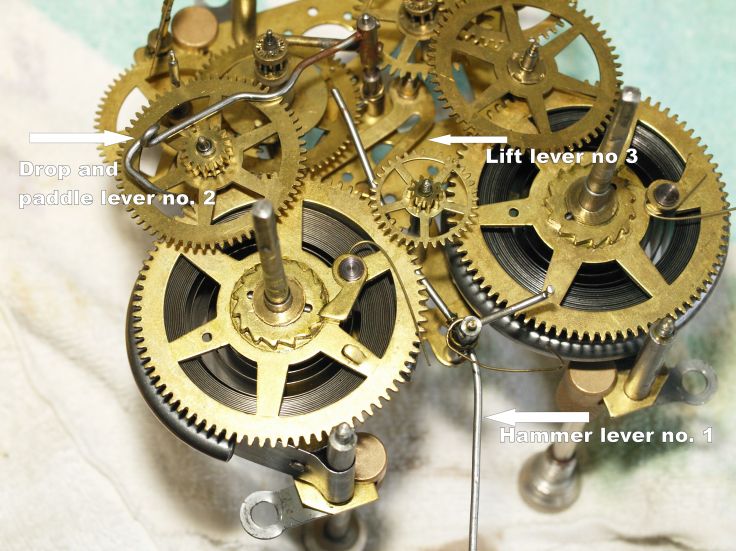
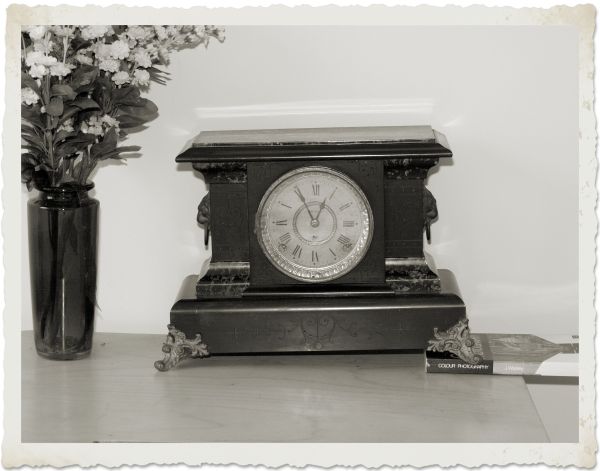
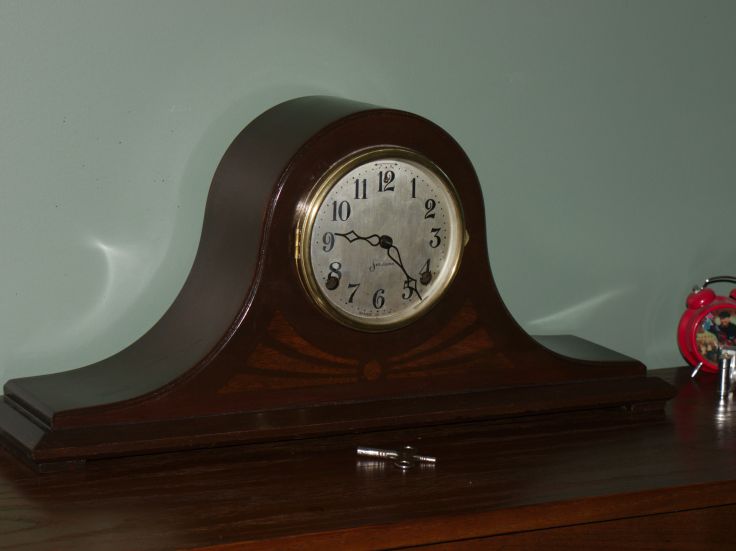
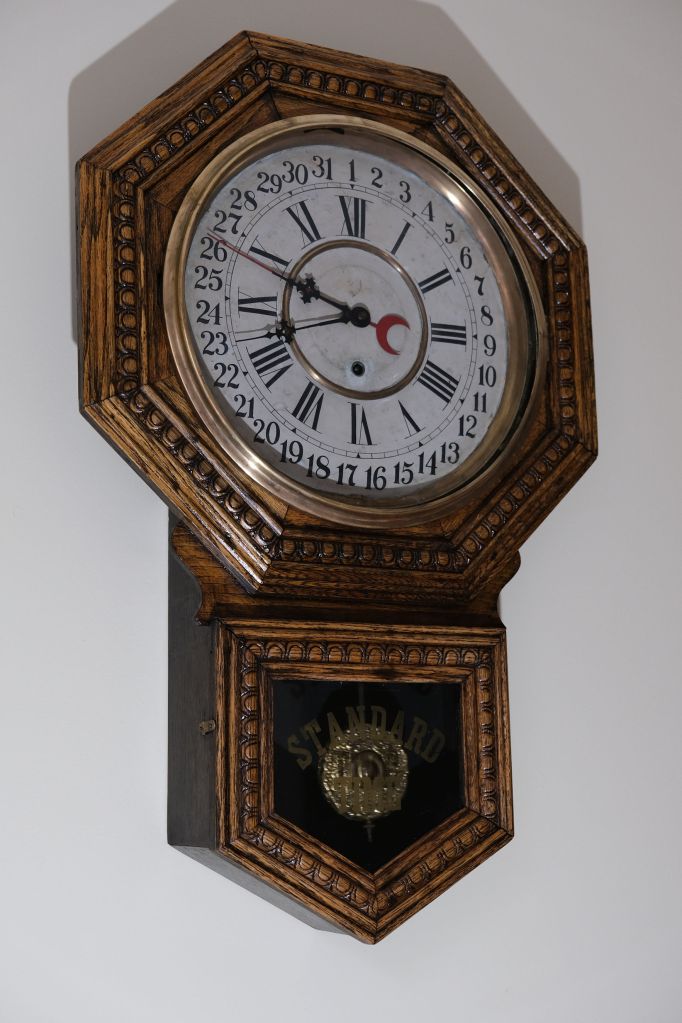
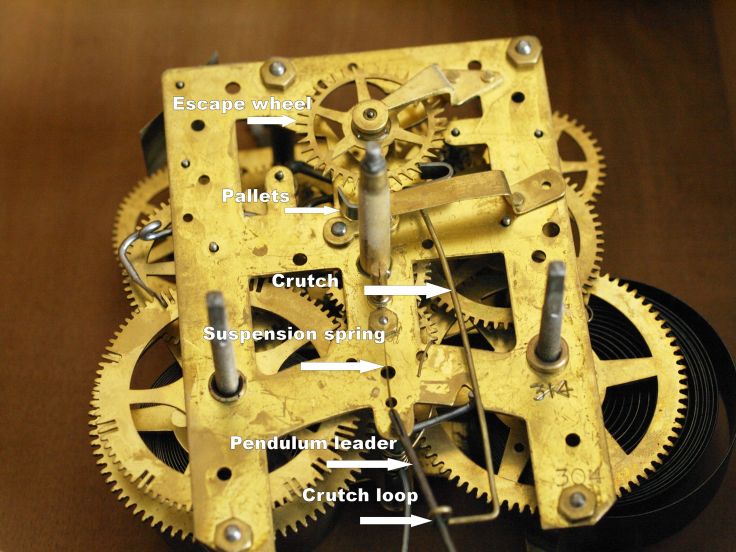
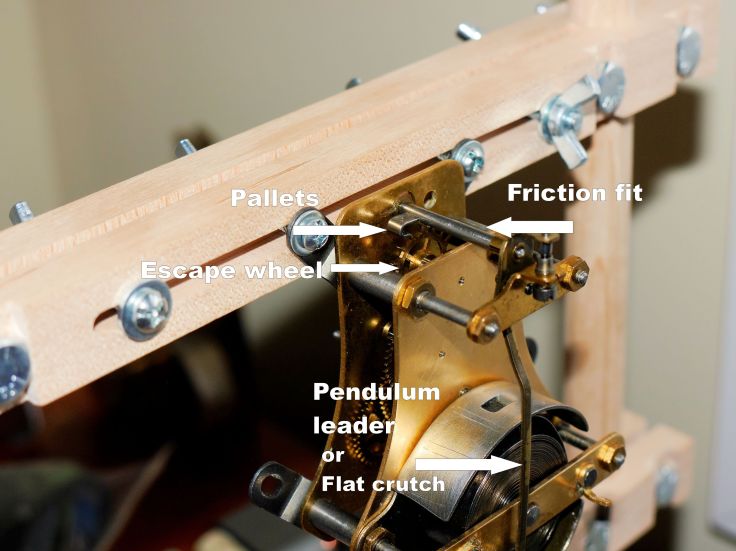
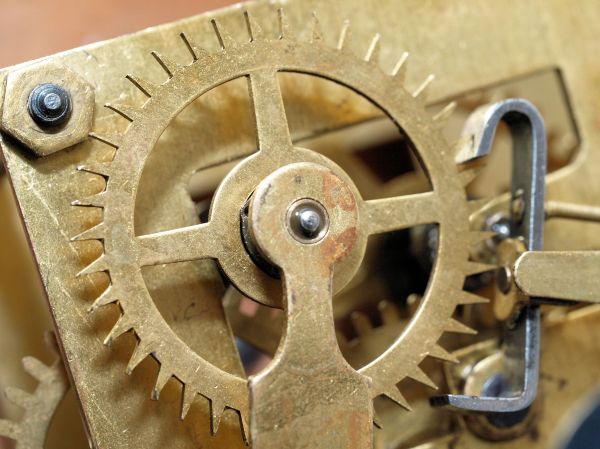
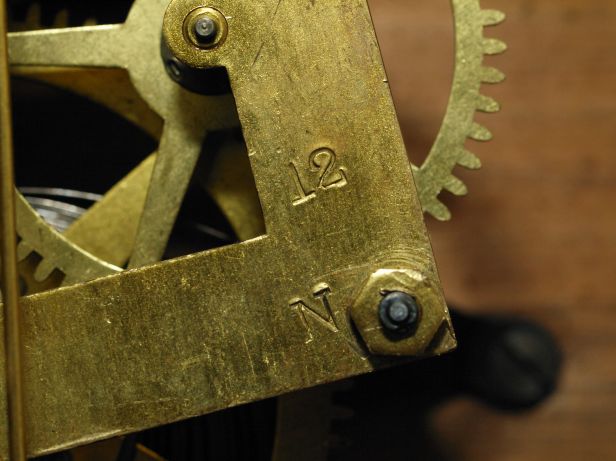

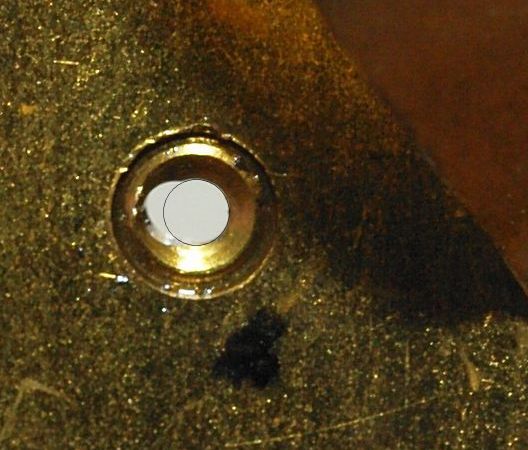


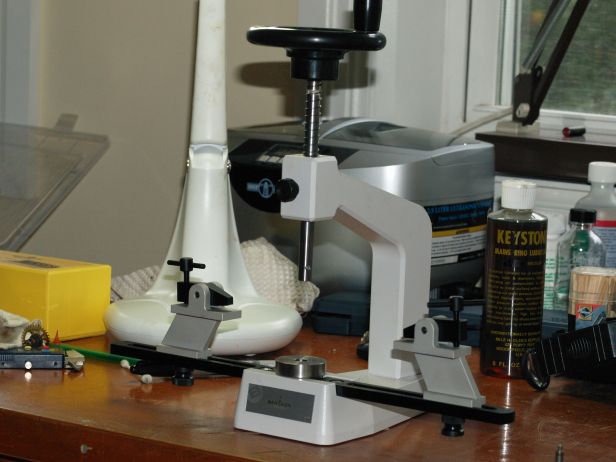


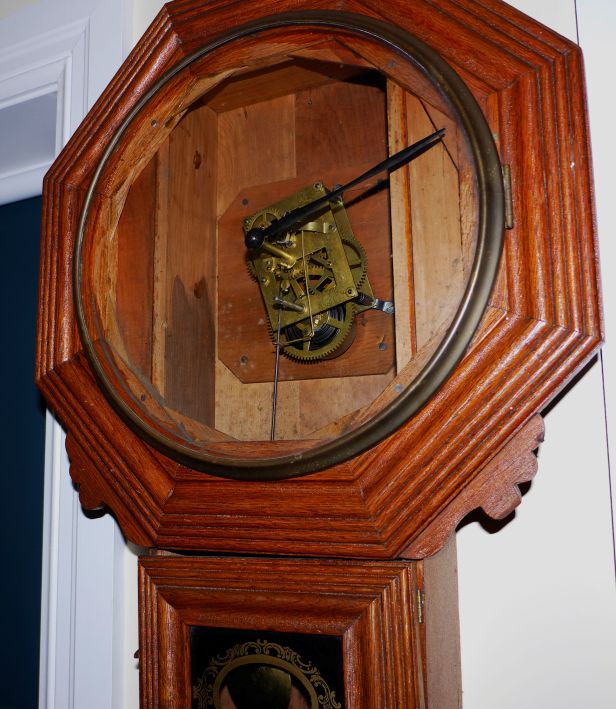


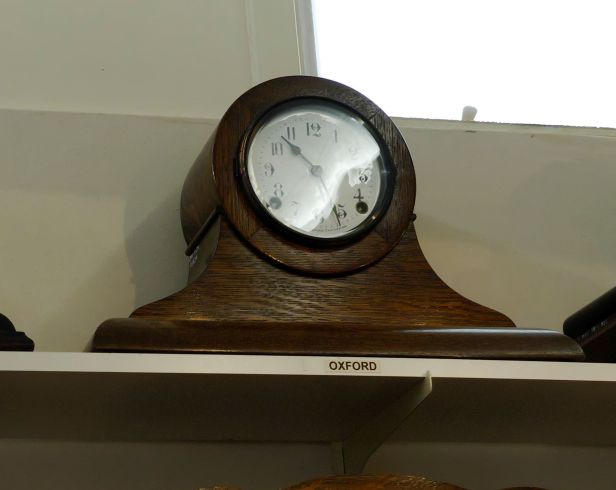
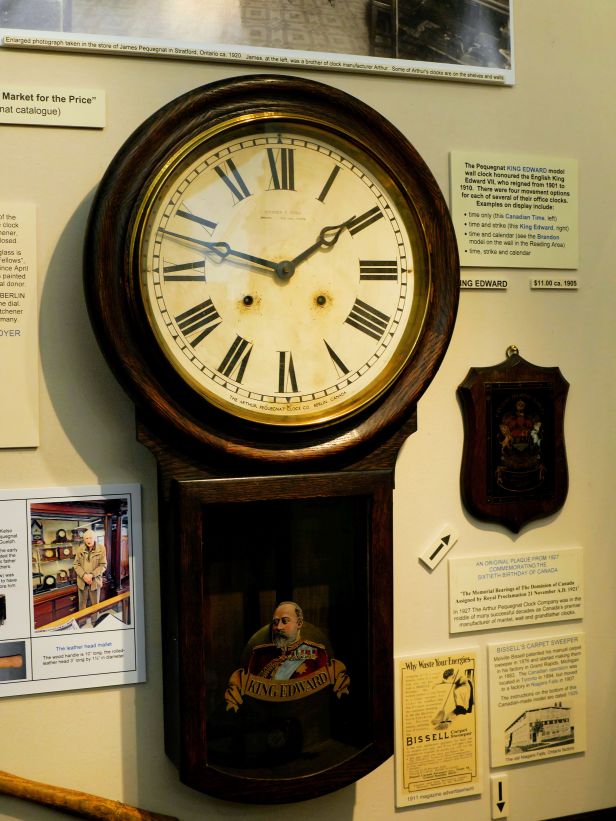
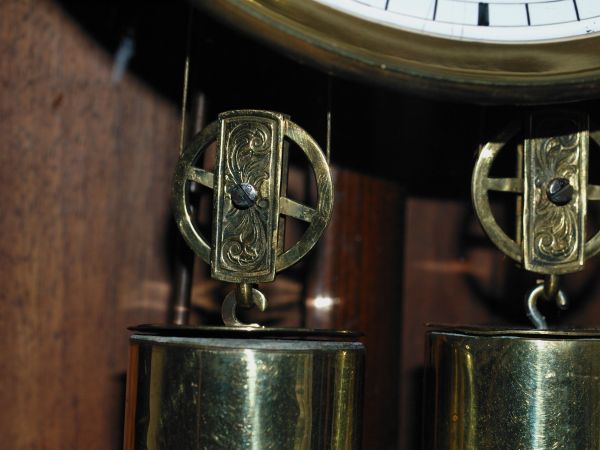
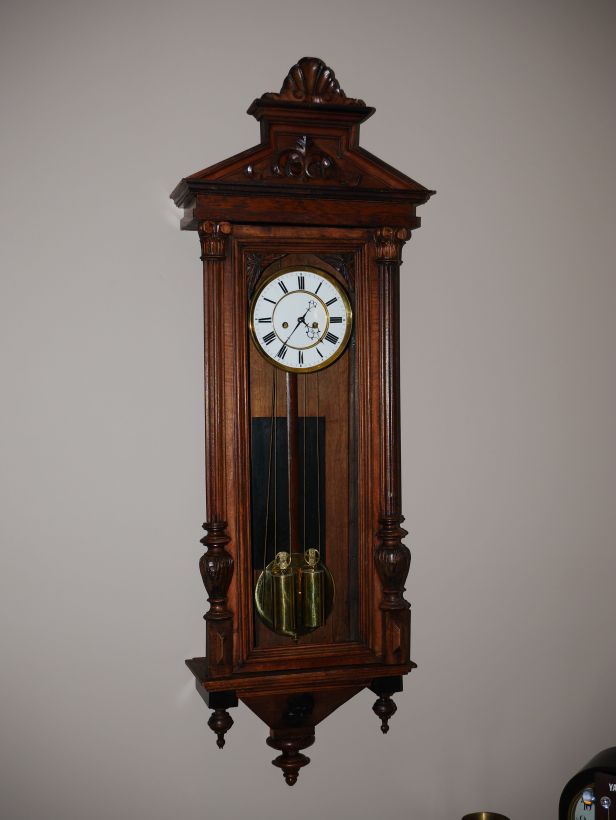
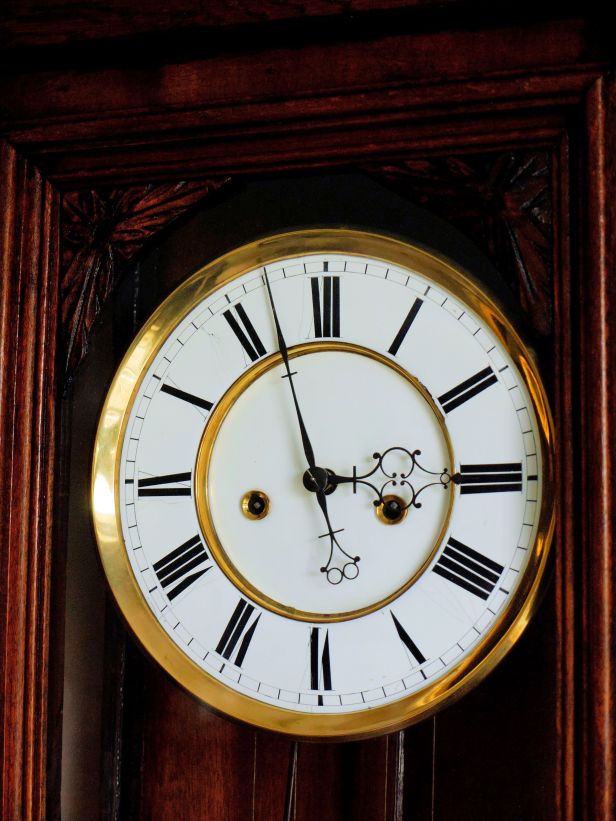
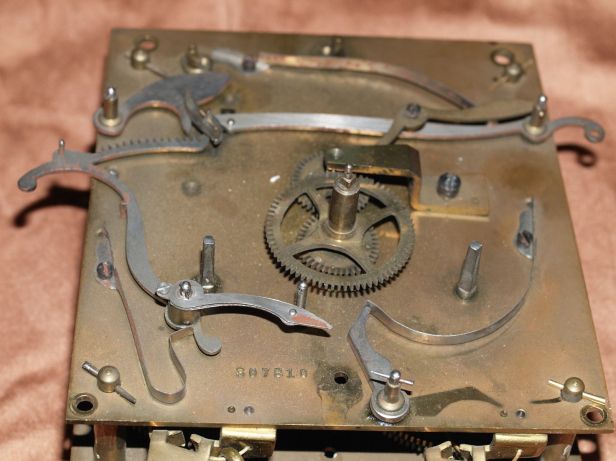
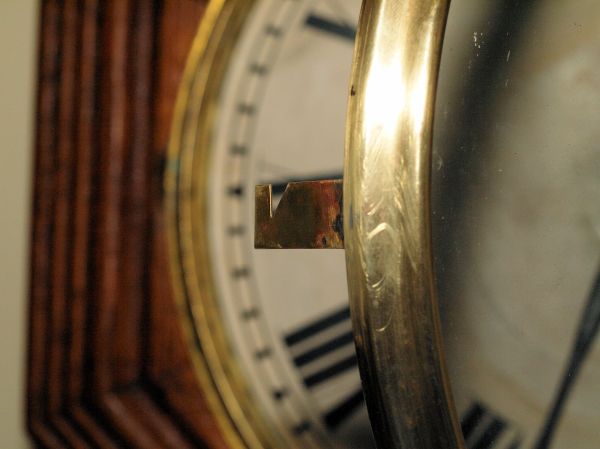
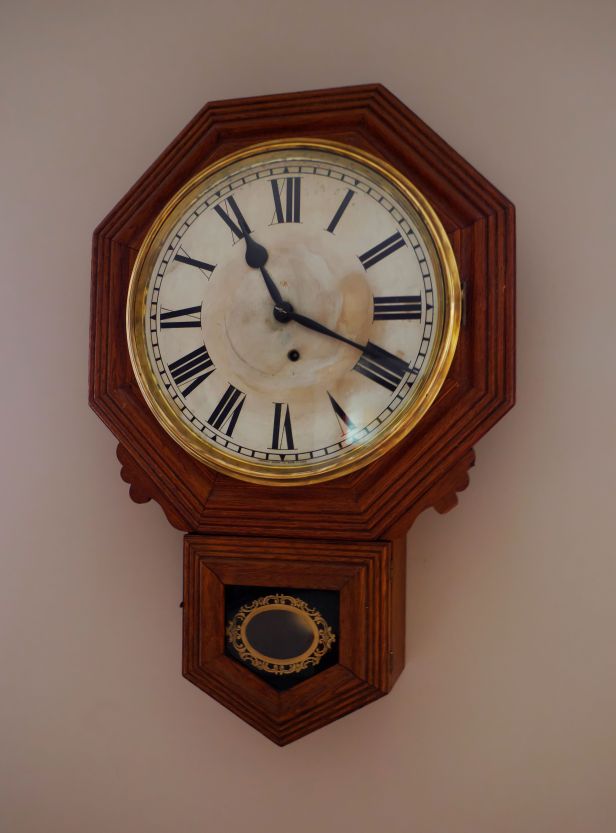
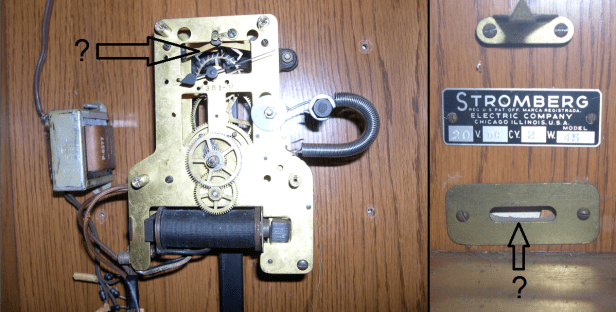
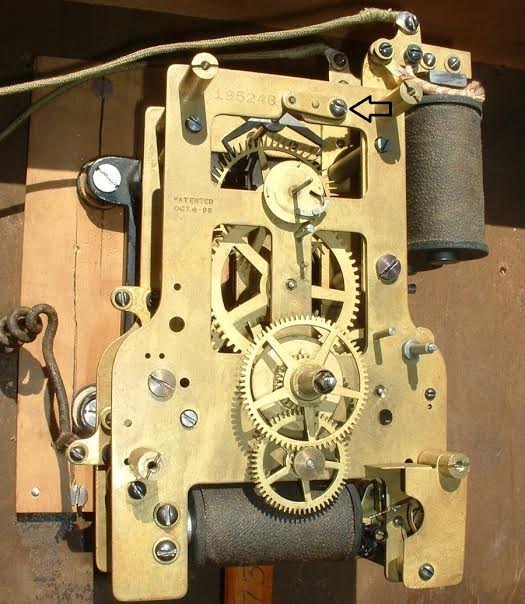

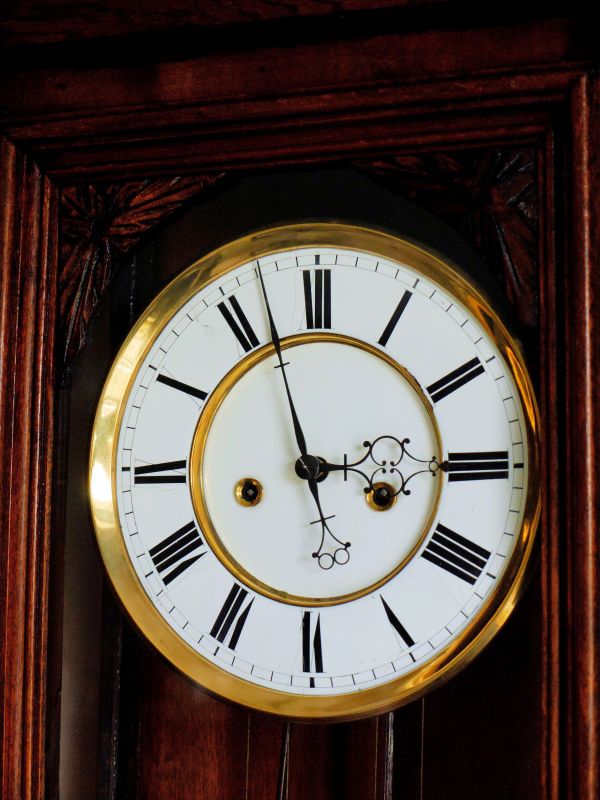
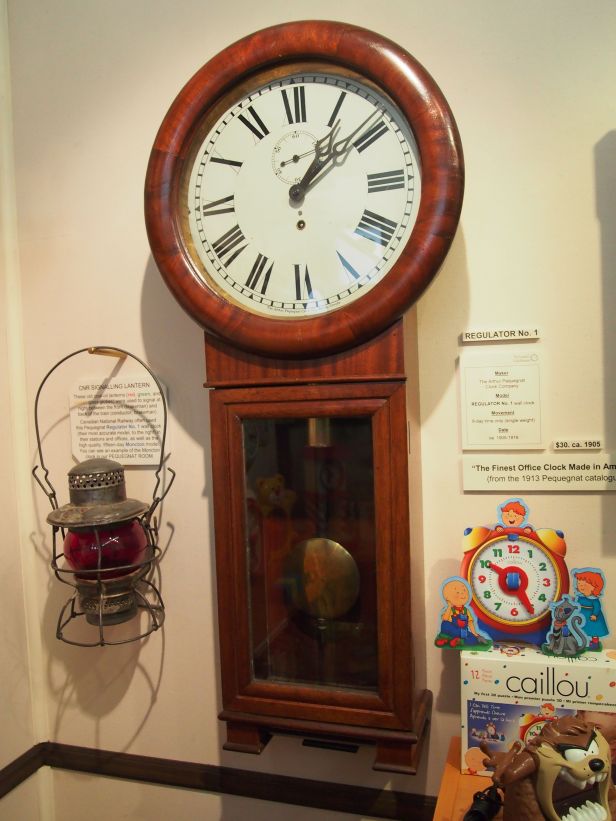
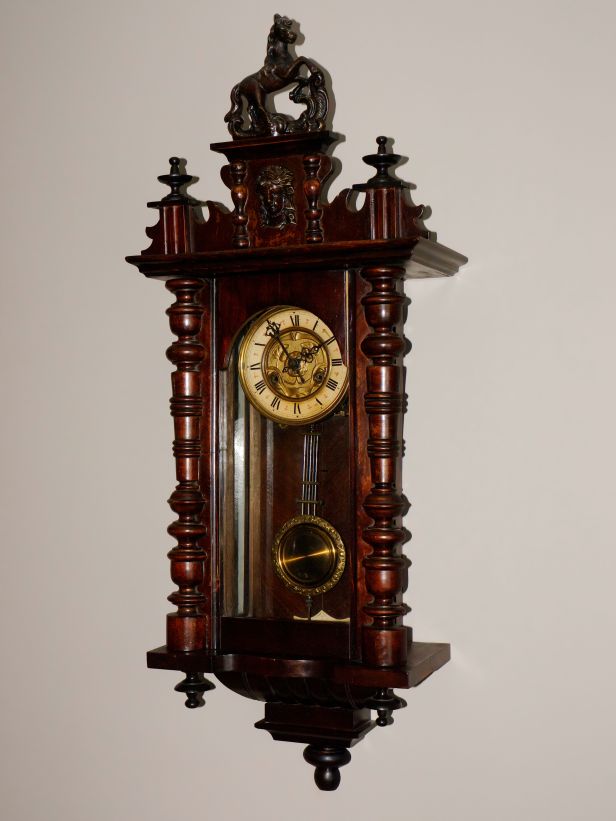
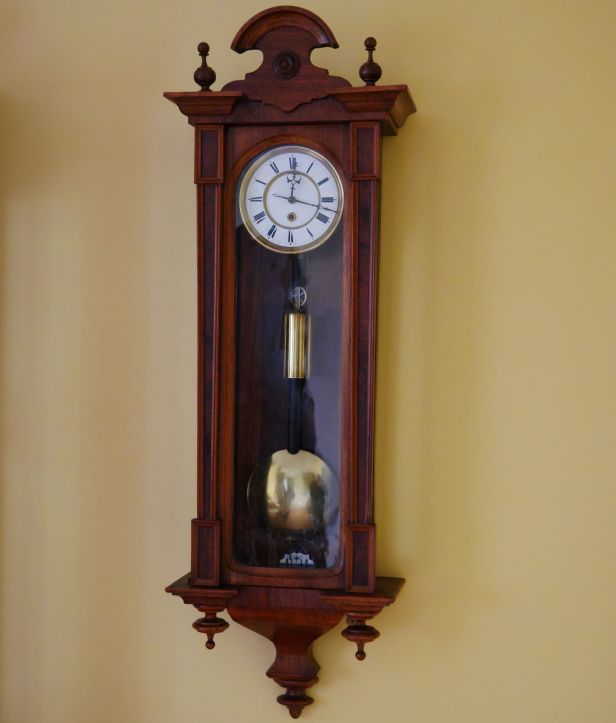
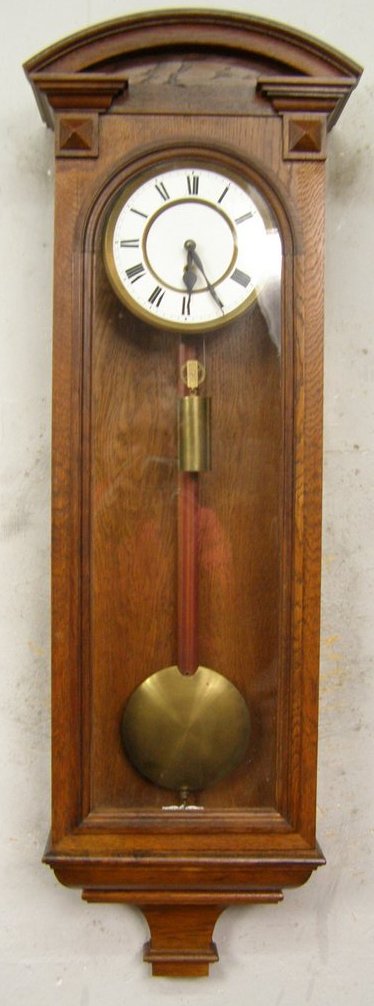
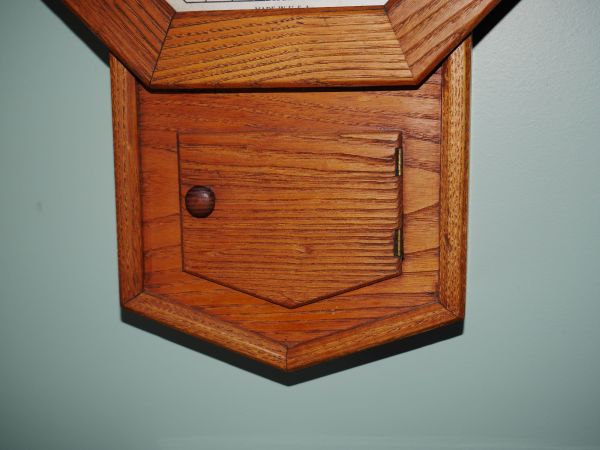
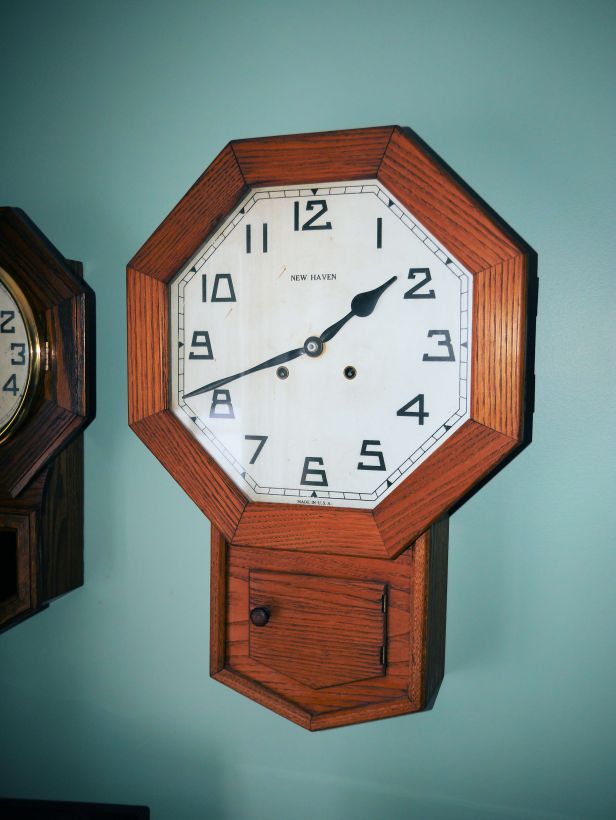
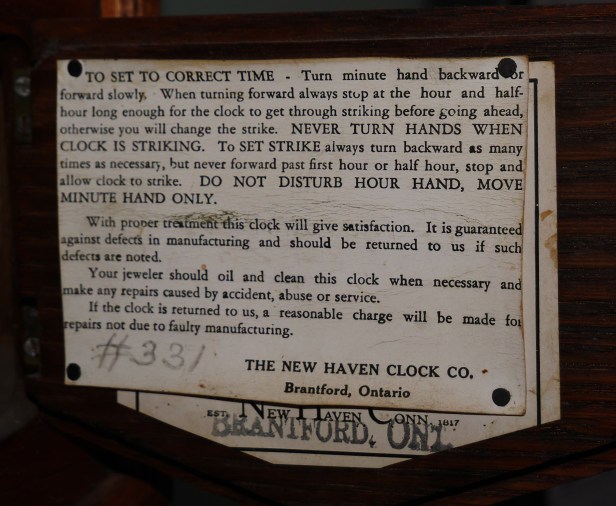
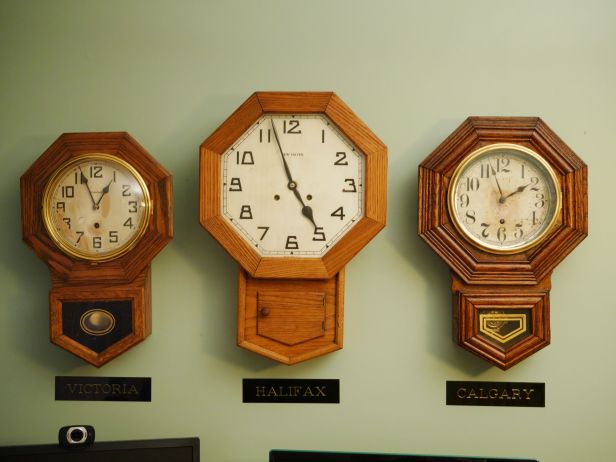
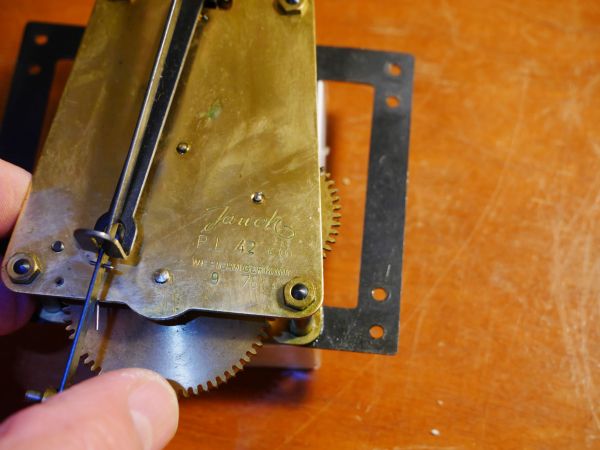
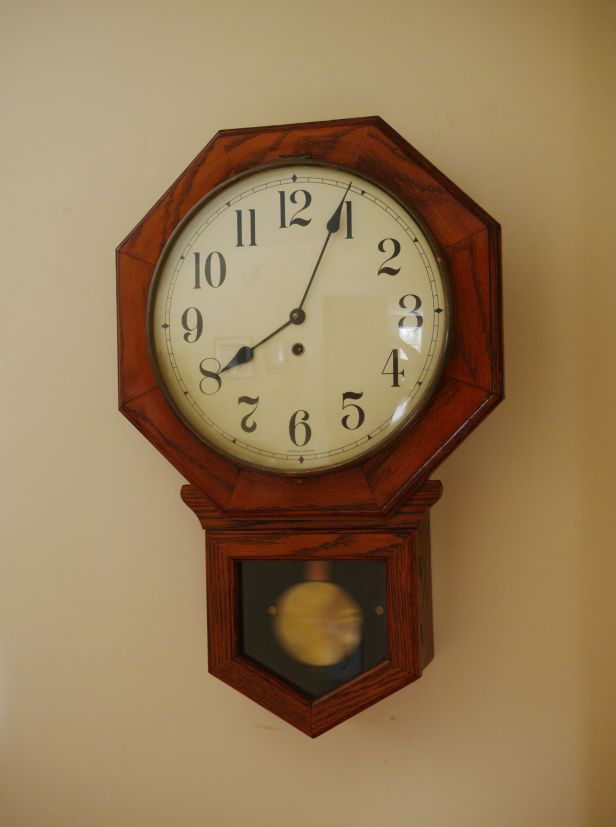
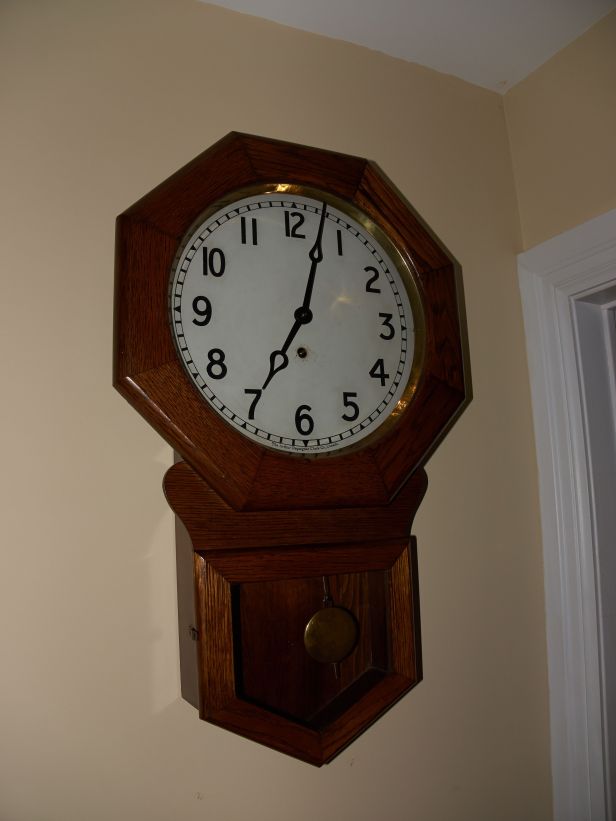
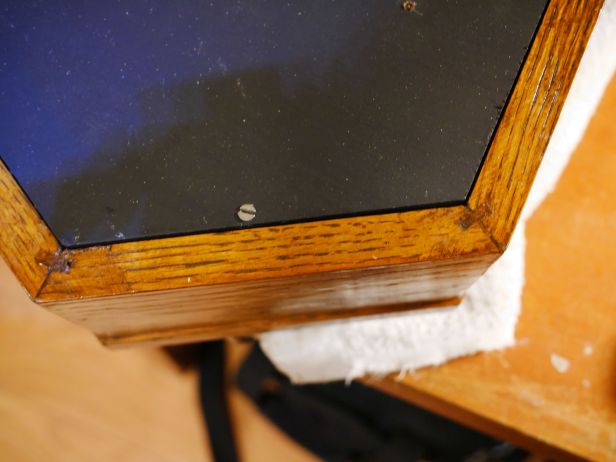
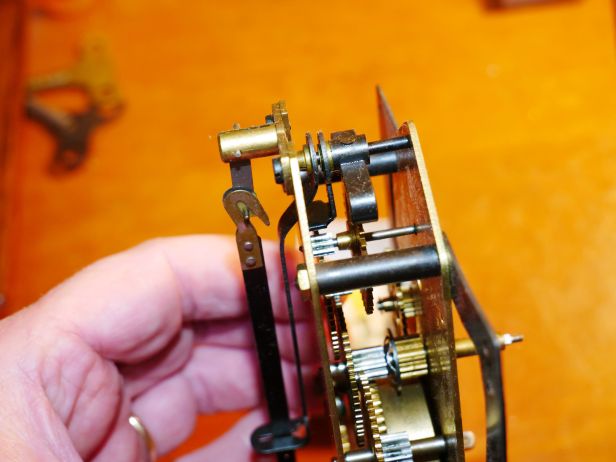
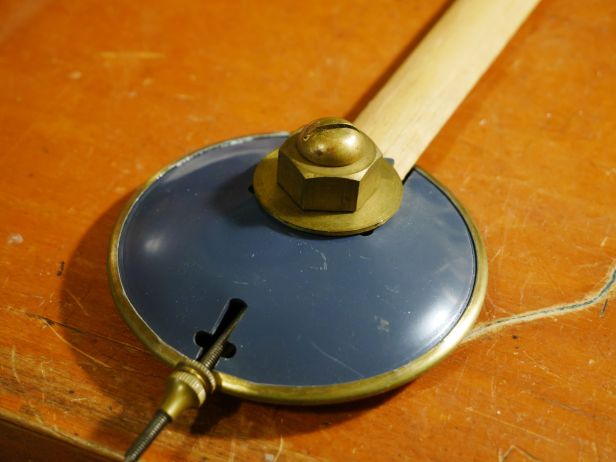
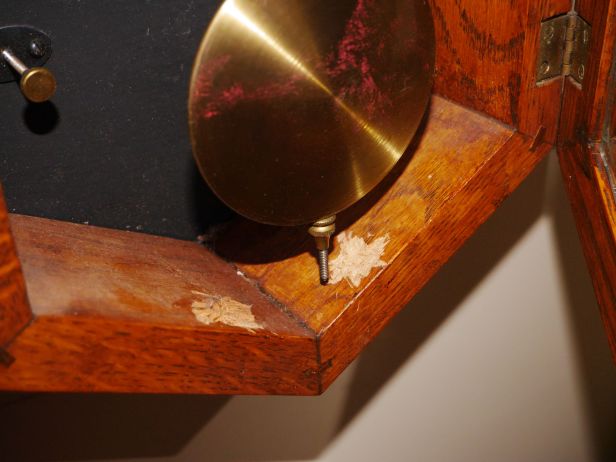
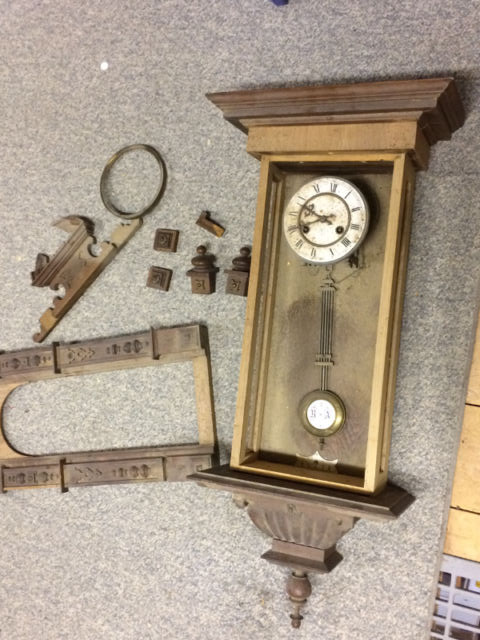
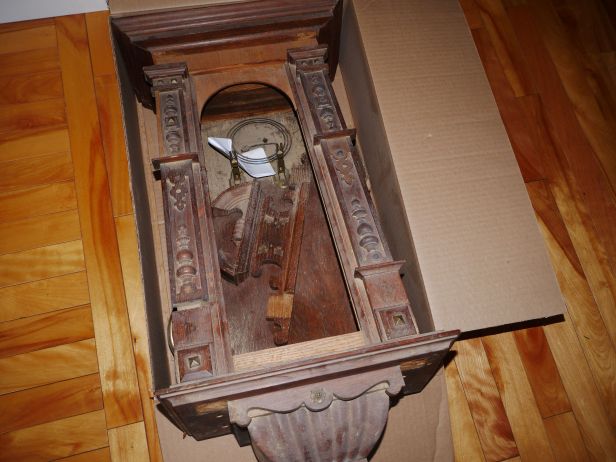
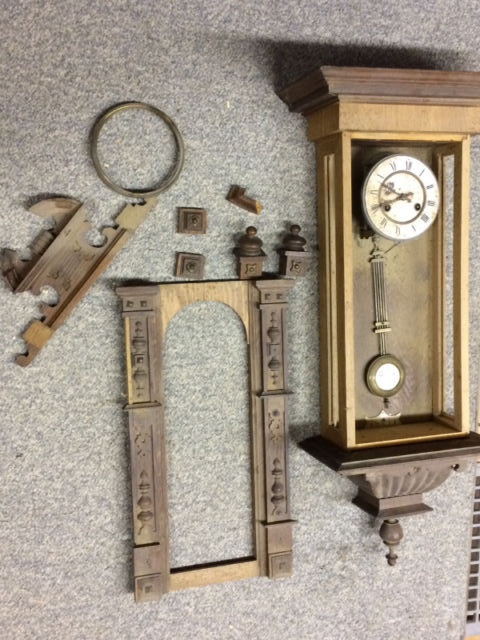
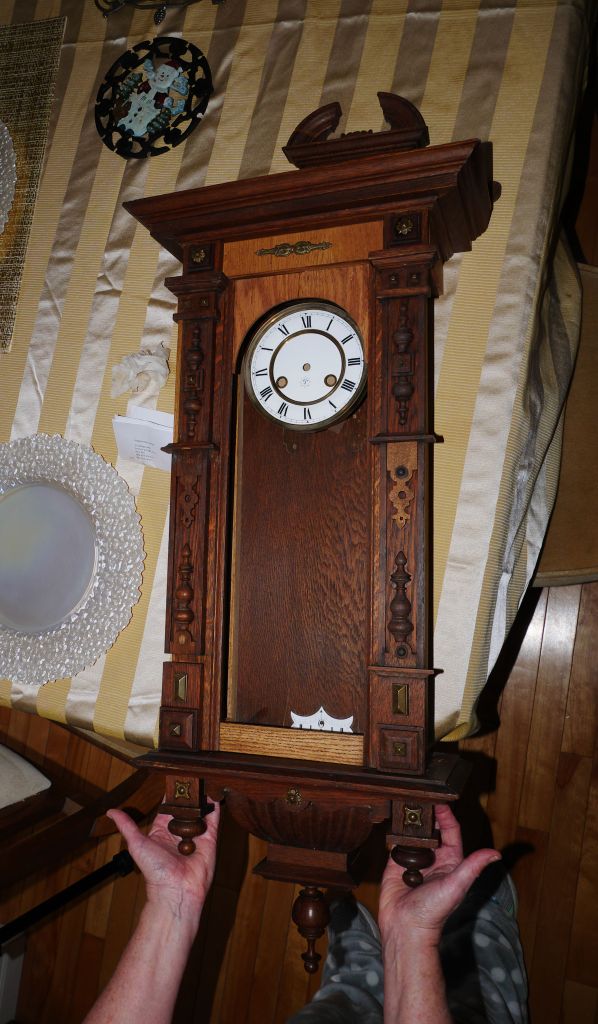
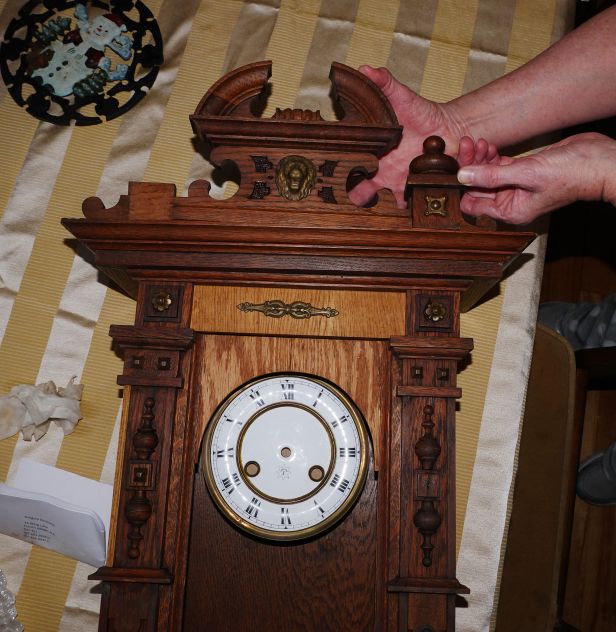

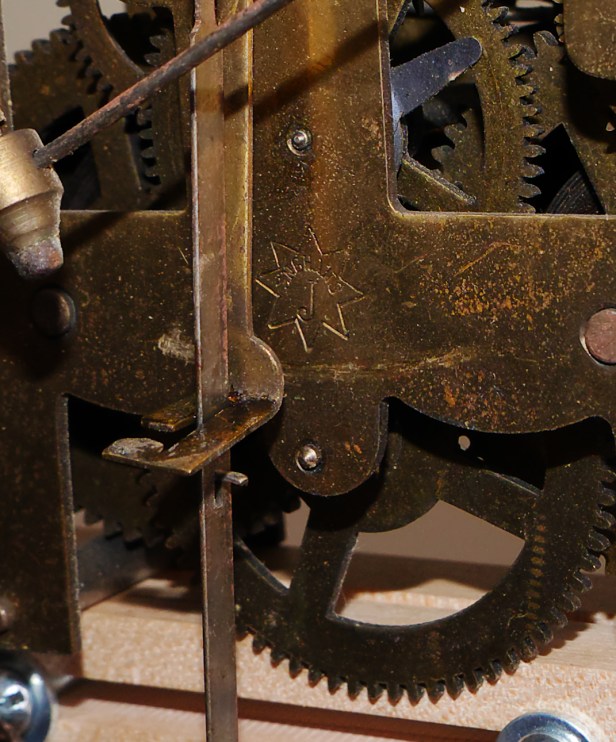
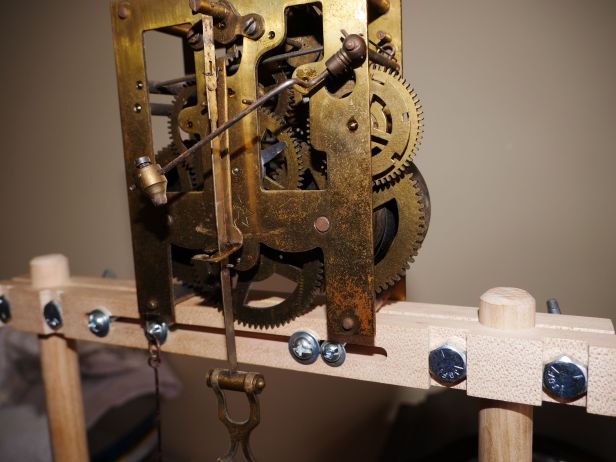
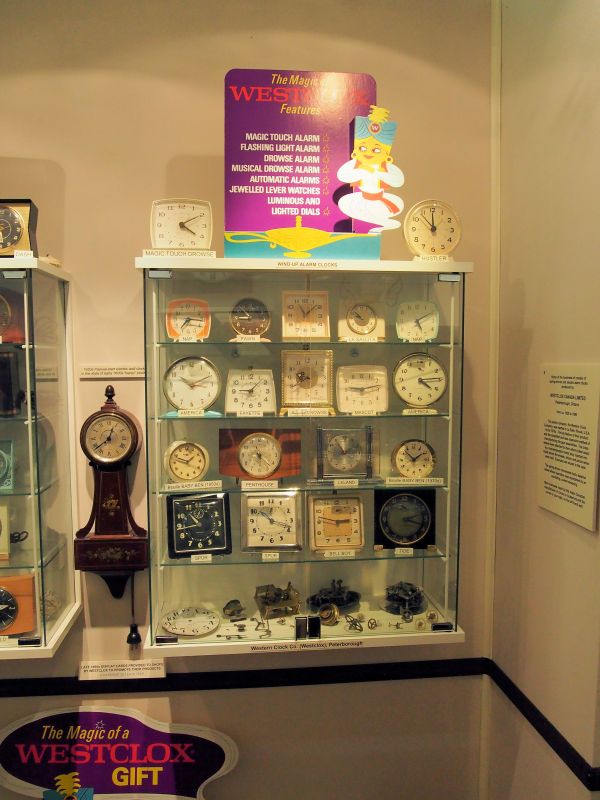
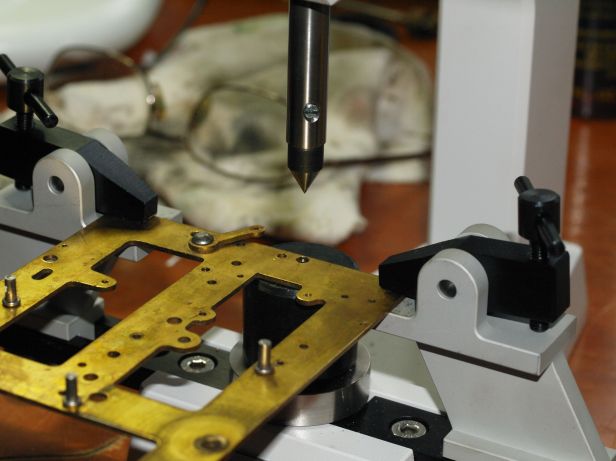
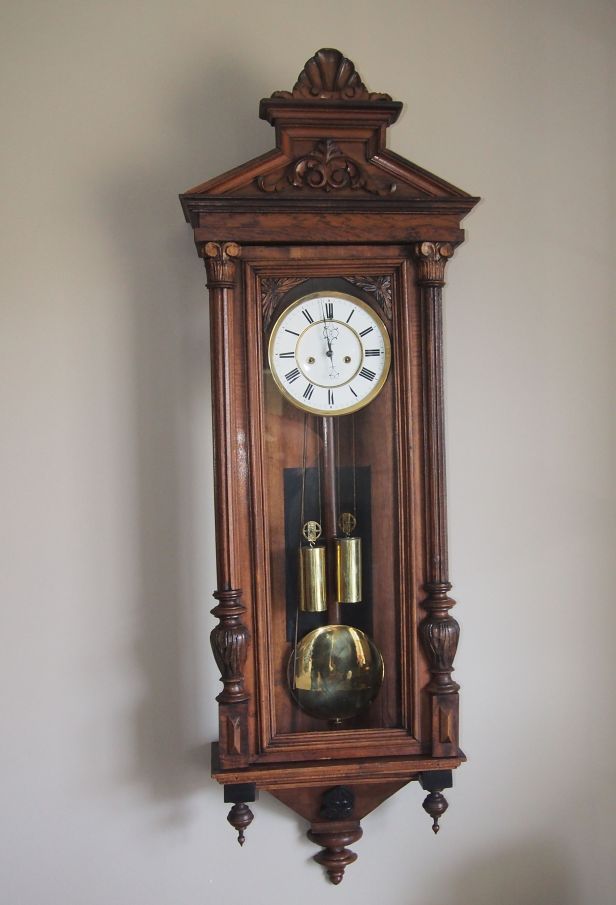
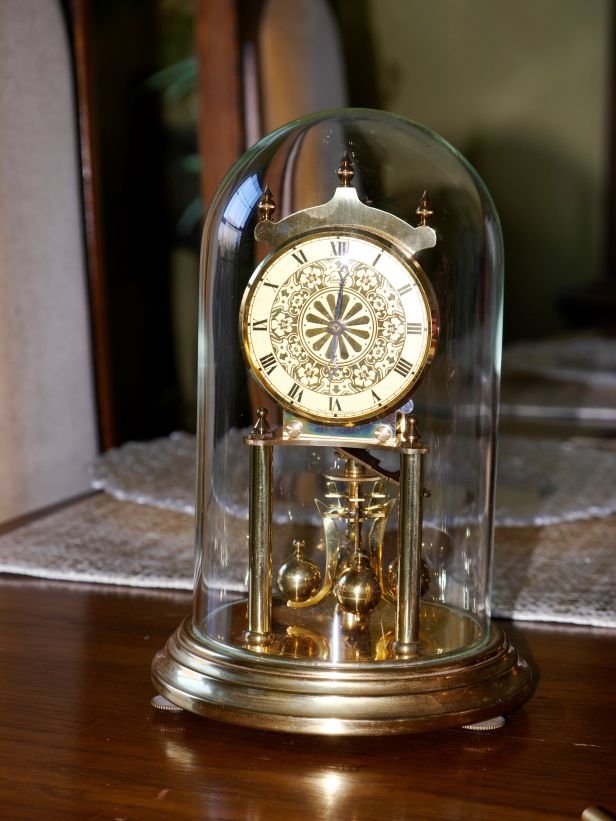
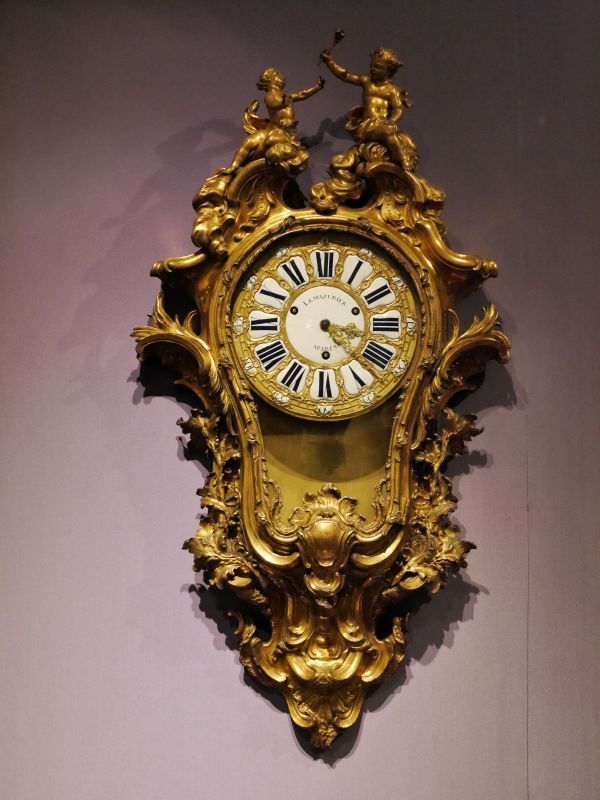
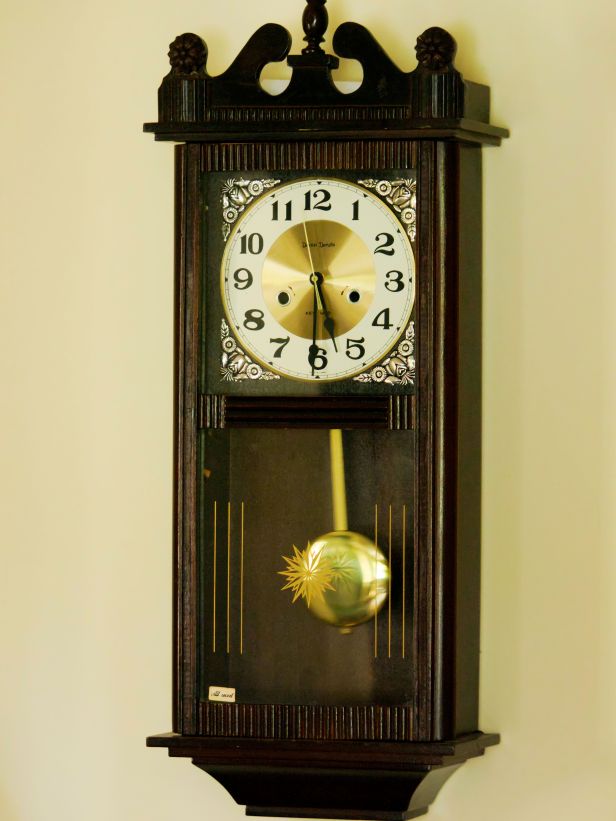
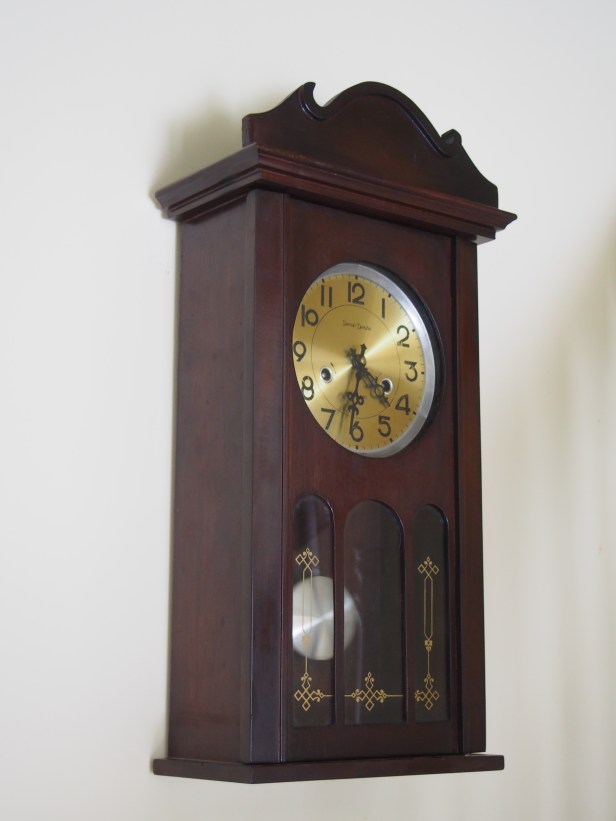
 Antique and Vintage Mechanical Clocks
You must be logged in to post a comment.