Tick-Talk Tuesday #4 – question about Sessions Westminster A clock

Tick-Talk Tuesday is about the letters and comments I have received from you, the reader, concerning your clocks, issues you might have had and challenges you face and my responses to your questions with advice on your  particular clock concern(s). For those comments and questions that stump even me, I consult within my clock circles for the best possible answer.

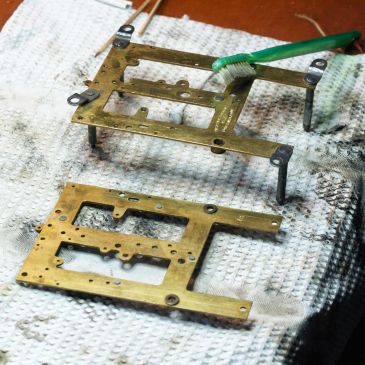
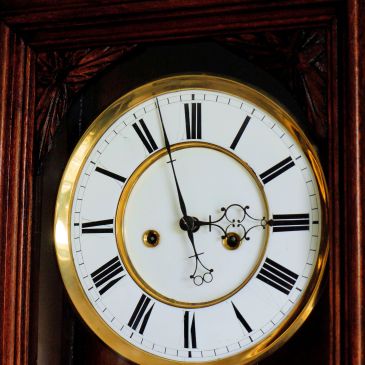
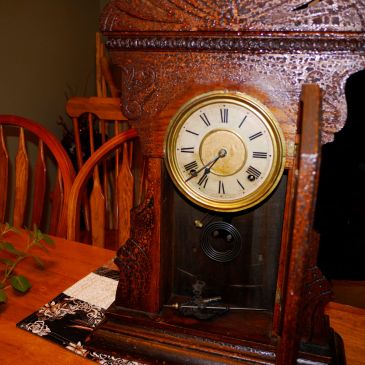
This is a Sessions Westminster A mantel clock made in Forestville Conn. The first year of production for this model was 1927. This particular clock was made in October of 1930 and features minor improvements to parts of the chime / strike train. Between 1903 and 1933 Sessions produced this and 51 other models of mechanical clocks, ranging from Advertisers, large and small clocks with logos of various businesses, to wall, or regulator clocks, and shelf or mantel clocks, designed for the home. Many of the Sessions clocks from this period are prized by collectors.

Everything seems to working very well with my clock except for the chimes which seem to have a rather peculiar problem

JD writes. “I stumbled across your WordPress blog about your Sessions Westminster clock and thought I’d reach out as I’m in the process of finally getting mine running.  Everything seems to working very well with my clock except for the chimes which seem to have a rather peculiar problem.  The hourly chimes work great. Full Westminster, then the correct number of hour strikes.  The half hour chimes are also correct.  The problem is that the quarter hour & three-quarter chimes are reversed.  The quarter hour has 12 notes and the three-quarter hour has only 4. I haven’t even taken the movement out of it’s case yet, and at this point I’m just trying to figure out what the problem might be, and how complicated it may be to resolve it. This is one of about a dozen old clocks that my father had in his collection when he passed away, all of which I had been led to believe were non-functional.  I’ve got ten of them running and would like to get an idea what I’m up against with this peculiar problem. Thanks in advance for any insight you may be able to offer.”

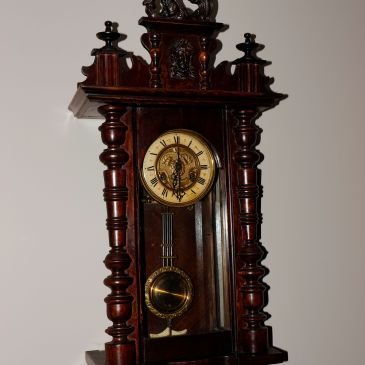
Sessions Westminster chime circa 1931

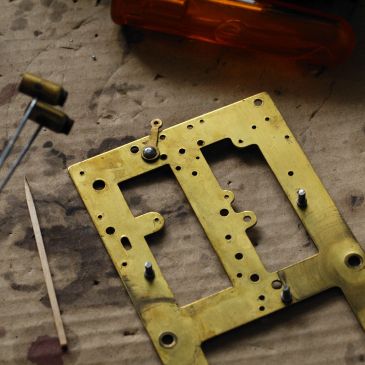
Co-incidentally I have been working on the same clock. Mine also had issues with the strike and chime sequence. I received JDs letter prior to working on my Westminster A mantel clock so I could not advise him on his specific issue but hope to share my experience with him once I have completed work on it.

The Sessions Westminster A mantel clock was made in Forestville Connecticut, USA. The first year of production for this model was 1927. Between 1903 and 1933 Sessions produced 52 models of mechanical clocks, ranging from advertisers, large and small clocks with logos of various businesses, to wall, or “Regulator” clocks, and shelf or mantel clocks, designed for the home. Many of the Sessions clocks from this period are prized by collectors. Having a unique and innovative design, the Westminster A is particularly sought after.

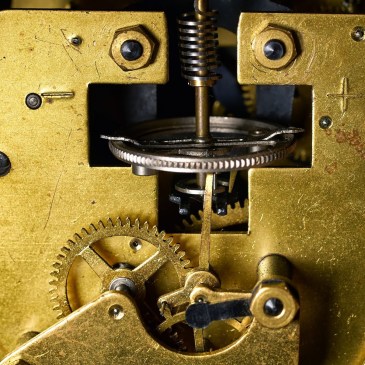
Westminster mainspring

My reply was. ” Thanks for your letter JD. I have yet to tackle this clock and know that it is not a good clock for the novice clock repair person to work on. If you have the skill-sets to have worked on other clocks then you are prepared for this one. I have attached a detailed guide which will help you through the servicing of this clock. It was prepared by Robert Croswell a member of NAWCC. One thing I should mention. The clicks are very weak on this clock and click failures are common. I need not remind you that when clicks fail they may also take parts of a clock with them. If you decide to tear it apart, do yourself a favour and replace the clicks. I have a number of clocks that I have to service before I get to the Westminster A. Let me know how you are progressing with the clock and any insights you can pass along to me.”

Drum and hammers
Drum and hammers on a unique two train chiming clock

I attached Robert Croswell’s excellent manual called Taming the Sessions 2-Train clock.

JD wrote back, “Thank you very much for the reply, and especially for the very helpful guide.  I also asked the question on JustAnswer.com and received a helpful response from a clock repairer who said that the chime correction cam that is behind the locking plate needs to be rotated 180 degrees after it chimes the 12 notes, to the 3/4 hour position.  As I said, I haven’t even removed it from the case yet so I just wanted to get an idea how involved the repair might be before I take any action. Now I have an idea where to focus my attention, and I can at least remove it from the case and examine it to fully understand the working of the chiming mechanism. Not sure if I’m up to tearing it apart quite yet, especially since it is running well for the most part.  The resource you provided will no doubt prove very helpful to my learning process.  I’ll let you know if I manage to resolve the issue and of course, anything I learn along the way. Thanks again.”

I will be sharing my experience with JD once I have the clcok running as it should. I have assembled the clock and in the process of testing the time side. Although the racks and snails (there are 2) are reinstalled I have not yet managed to have the time properly aligned. Once I have determined that the going train will run it’s full cycle I will focus on adjustments to the strike and chime side racks and snails.

A great learning experience.

Tick-Talk Tuesday #2 -question about Chelsea ships clock issue

Tick-Talk Tuesday is about the letters and comments I have received from you, the reader, concerning your clocks, issues you might have had and challenges you face and my responses to your questions with advice on your particular clock concern(s). For those comments and questions that stump even me, I consult within my clock circles for the best possible answer.

WC writes. “Hello Ron. I enjoy your blog. I came across it by investigating a repair for my Chelsea Vanderbilt ships bell mantel clock, passed along from my Grandfather’s estate. I was hoping you could give me some advice on a repair issue. 2 1/2 years ago I shipped the clock to Chelsea in Massachusetts for factory overhaul. Six or seven weeks later the clock was returned, and has functioned beautifully, after 15 or 20 years of dormancy.

Yesterday I went to wind the clock side on the usual schedule of once a week, and the key spun violently backwards in my hand.There is now no tension in the winding port, I suspect the spring has snapped. The basic overhaul charge was nearly $500, and the warranty was 2 years parts/ maintenance. Since there is no consultation available with Chelsea, I am reluctant to ship the clock back for additional repair, not knowing what on earth they would charge me again, as another $500 would rock the boat on this end. I could investigate names of clock-maker/ clock repair sites in the greater Bay Area, where I live.  Is this Chelsea that challenging of a repair?

The clock holds some sentimental value, but surely not enough to lose sleep over. Thank you, your thoughts are greatly appreciated.”

Similar to clock in this article

I wrote to WC and explained to him that I have not worked on one but I do know that this is not a clock that a novice or intermediate repair person would tackle. One of the issues is that only those who are authorized to repair them have access to the parts since Chelsea places limits on parts distribution so that they can perform repairs in-house. I explained that he may be experiencing a failed click. These movements are more prone to click return spring failure than main spring failure. Oftentimes when a click fails it takes other parts with it, i.e. secondary damage. However, the design of this clock makes it easy to take out either spring without disturbing anything else. If the click has let go and nothing else is damaged I advised him that he can fix the mainspring and click on his own or take it to a competent repair person in the area where he lives to effect the repair as long as it does not require additional parts. If the issue is limited to a failed click the repair cost would be far less than a more extensive repair.

The issue is whether or not Chelsea will stand by their warranty. WC has since corresponded with Chelsea and has sent the clock in for repair. They will assess what needs to be done and will consider the fact that it is just off warranty.

Let’s hope there is a happy ending to WCs plight and that Chelsea takes a reasonable approach in dealing with WC.


Jaeger LeCoultre Musical Alarm Clock – an update!

Jaeger LeCoultre clock

Last week I wrote that I was in the process of deciding whether or not to purchase this Swiss made Jaeger LeCoultre musical alarm clock. I saw it in an antique store in Langford, BC (Canada) and went away thinking about it. I had several questions in my mind as I walked away.

  • The seller was asking CDN199; a fair price?
  • Is it collectible?
  • I would like to narrow the vintage, the year it was made, thoughts?

I ended up not buying this clock for three reasons

  1. 3 days later the same seller decided that he wanted CDN299 and would not negotiate a lower price.
  2. An extensive search on all auction sites plus clock related sites revealed no references to this clock although I have no doubt that it is a Jaeger LeCoultre. That leads me to believe that it is not as desirable as other LeCoultre alarm clocks.
  3. I question the ethics of an antique dealer where half or more of the items on the floor have no price tag.

How do I feel about passing up this clock? The seller did not get my money! It would have nice to have, but more opportunities to find a similar clock will come along and likely from an ethical seller.

Grandfather clock – why not call it a tall clock, long-case or floor clock?

Ridgeway Hamilton Country, Westminster Chime clock
Ridgeway Hamilton Country, Westminster Chime, 1996

How did we get the name grandfather clock?

Most serious clock collectors and enthusiasts do not use the term grandfather clock when conversing with each other.

Firstly, most clock collectors and enthusiasts do not use the term grandfather clock when interacting with each other. I tend to use the word when conversing with family and friends because they  know exactly what I am talking about. The name first appeared in a song. In 1876, a song called My Grandfather’s Clock by Henry C. Work popularized the term grandfather clock and the name has stuck to this day. You can listen to Work’s famous song here.

Twiss Canadian tall clock circa 1890

Secondly, depending on where you are in the world this style of clock may have a different name. In England it would be referred to as a “long-case clock” while Americans prefer the term “tall clocks.” During the 20th and 21st centuries, some writers, including those writing for museum-sponsored publications, have combined regional names into one term,“tall case clock.” It is also referred to as a “floor clock”. These clocks have the following features in common. They are a tall, freestanding, made from a variety of wood, are time and strike though all modern clocks include a chime, weight-driven pendulum with the pendulum held inside the waist or throat of the case. The case often features elaborately carved ornamentation on the hood (or bonnet), which surrounds and frames the dial, or clock face.

RS pequegnat tall case clocks
A trio of Arthur Pequegnat tall clocks, circa 1912

Let’s go further back in history

Let’s go back in history. In the 16th and 17 century English lantern or chamber clocks were popular but they had serious limitations. Lantern clocks used a verge and foliot escapement and were notoriously inaccurate and unreliable, in fact, some had to be wound two and three time a day and were limited to a 12-15 hour run time. Many of the verge escapement with pendulums had a very wide pendulum swing.

It is widely accepted that the anchor escapement was invented by Robert Hook around 1657. An escapement is basically a speed regulator on a clock. At about the same time the pendulum was invented. The anchor escapement made for shorter pendulum swings, and heavier and longer pendulums. Since the pendulum had a lower beat a clock with an anchor escapement required less power and could run longer, up to 8 days. Only then did cabinetmakers get involved in building a case around the weights and pendulum. For an excellent article on the origin and evolution of the anchor escapement go here.

Hugh Gordon throat
Hugh Gordon long-case clock circa 1740

As long-case clocks became popular regional styles began to emerge.


Halifax Explosion and the Junghans Crispi clock – Part I – the plan

rs-junghans_1

This is what happens when you get a clock in a box. Call it a collection of parts, pieces and dust. This is an antique German Junghans time and strike spring driven clock made in the style of a Vienna Regulator. There is no serial number on the movement, dating the clock to 1899 or earlier (in 1900 Junghans began to number their movements). To some a box of clock pieces is discouraging but to me it is a challenge.

Where to start?
Where to start?

It was advertised on a local online for-sale site as a clock that fell off a wall during the Halifax Explosion and I thought, well, that’s an intriguing story! As most Canadians know, the Halifax Explosion was a significant event in Canada 100 years ago.

On the morning of 6 December 1917 the SS Mont Blanc a French cargo ship laden with high explosives and Benzol collided with the Norwegian vessel SS Imo in the Narrows, a strait connecting the upper Halifax harbour to Bedford Basin. A fire on board the French ship ignited her cargo, causing a large explosion that devastated the Richmond District of Halifax. Approximately 2,000 people were killed by blast, debris, fires and collapsed buildings, and an estimated 9,000 others were injured.

The result was the largest human-made explosion prior to the detonation of the first atomic bombs in 1945. Nearly all structures within an 800-metre (2,600 ft) radius, including the entire community of Richmond, were obliterated. This clock is a witness to that day. In 1918, Halifax sent a Christmas tree to the City of Boston in thanks and remembrance for the help that the Boston Red Cross and the Massachusetts Public Safety Committee provided immediately after the disaster. That tradition carries through to this day.

The case is cleaned up
The case is cleaned up and we are visualizing where the parts go

It appears that the parts have literally sat in a box for the past 100 years.

The blast not only shattered the glass panels but heavily damaged the box frame. It appears that most of the parts have literally sat in a box for the past 100 years. I cannot imagine when the movement last worked, probably ticking its last on that fateful morning in December. Since the box frame was damaged beyond repair following the explosion, the seller, an amateur woodworker, built a new frame made of softwood and oak veneers some 30 years ago. You can see the lighter coloured pieces in the photo below that were never stained and finished. He admits that he knows nothing about clocks and eventually lost interest in the project. I am impressed with his skills since the work on the frame looks solid and well constructed.

Top centre final is missing as well as two other finials

The top centre final is missing, two other finials and some small trim pieces

Why was he letting it go? He said there had been a change in his life and it was time to move on. When I asked him about the history of the clock he said that his wife’s grandparents lived on Princess Place in North End Halifax. Princess Place is further south of the main area of devastation so houses in that area would have sustained heavy structural damage. The clock was blown off the wall by the blast wave. The clock remained in the family all these years, the seller having received it from his wife’s aunt.

I took it home stared at the box for a while trying to decided whether or not I made the right decision. I then set to determine what steps I should take to restore this fine clock. I poked through the box to see what was there and began to itemize the parts, arranging them on the case as best I could and proceeded to clean the case and determine the next steps. I was fortunate to have had someone send me the actual catalog image of the clock which you can see below.

The clock is called the Crispi by Yunghans. Yunghans is a reputable German clock-maker and continues in the watch business to this day. This is what the clock should look like and it will be a excellent guide for restoration. There will be obviously be some subtle differences between my clock and the clock in the catalog when the project is completed but to the casual eye it will look exactly the same.

The Crispi in the 1902 Yunghans catalog
The Crispi model in the 1902 Junghans catalog
Junghans trademark
Junghans trademark
Time and strike movement
Time and count-wheel strike movement

I have ordered the following parts from Timesavers; 3 new finials in the style that best fits the clock, 2 door hinges, 2 door latches and some trim pieces. I will have to build the bases for the finials from scratch. The lower section of an oak spindle will do just fine. There are other trim items that are missing but I will strategically arrange the remaining trim pieces as best I can.

Oak stairway spindle

The best news is that the movement is complete and in working order. The movement ran for a day on a test stand before I stopped it. It needs a very thorough cleaning which will be the next step in this project.

In Part II I will describe cleaning the movement and any issues that may arise as a result of disassembly.

In Part III I will explain the procedures involved in the case restoration once the remaining parts arrive.

An exciting little project indeed!

Ship of Theseus and antique clock restoration

Last month I posted a article on Minimal Invasive Intervention in which I posed the question, how far do you go to repair, restore or conserve a clock without changing it in a significant way? I was having a discussion with my daughter who is a civil engineer and she raised the philosophical argument that questions whether an object like a clock that has had all of its components replaced remains fundamentally the same object. This paradoxical thought experiment exercise is called the Ship of Theseus. Plutarch, a Greek philosopher, asked whether a ship that had been restored by replacing every single wooden part remained the same ship.

The ship wherein Theseus and the youth of Athens returned from Crete had thirty oars, and was preserved by the Athenians down even to the time of Demetrius Phalereus, for they took away the old planks as they decayed, putting in new and stronger timber in their places, in so much that this ship became a standing example among the philosophers, for the logical question of things that grow; one side holding that the ship remained the same, and the other contending that it was not the same.

— Plutarch, Theseus[2]

In Nova Scotia we have a sailing ship called the Bluenose II. It is the pride on our province, an important tourist attraction and our provincial ambassador. The original Bluenose was a fishing and racing schooner that ran aground and sank some 90 years ago. To honour the original Bluenose, the Bluenose II was built in the 1960s and she sailed for over 50 years before it was determined that she was in need of significant restoration. In the last 4 years the hull of the Bluenose II has been completely rebuilt. Some of the original vessel is being reused including: rigging, masts, sails, ironwork, deck structures, safety equipment and electronics. In time the masts, sails, rigging and deck structures and other components will be replaced. Will the ship be fundamentally the same? Will it retain it’s identity?

french-fusee1
Early English lantern clock
frecnh-fusee-3
English lantern clock converted to fusee movement

Let’s look at another example, the lantern clock. The lantern clock, a weight driven wall clock shaped like a lantern were the first type of clock widely used in English private homes in the 17th century. With the arrival of long-case clocks with 8-day movements the lantern clock became obsolete. Lantern clocks are very collectible today and those that are in “original” condition are the most desirable. The problem with lantern clocks is that almost all of them have been altered, even those regarded as totally genuine. In this example I will cite a quote from a seller of lantern clocks, D. and J. Benson, specialists in early English clocks.

We are strong believers that if a clock was converted to a different escapement many years ago, this should be retained, being part of the history of the clock, rather than reconverting clocks back to former guises. Only under compelling circumstances would a clock be returned to a former state. Only absolutely necessary restoration work is carried out in order that the original clock survives for future generations. We conserve rather than replace.

Some of the more expensive lantern clocks they offer for sale have early conversions from verge to anchor escapement. Later ones had the original movements removed and a fusee movement (single or double) installed. When converted original movements including alarm mechanisms were taken out, a single-hand was replaced with two hands (or the minute hand added), broken finals and door handles might have replaced, chapter rings re-silvered, doors are often lost due to their nature of lifting out easily. Therefore, what is the nature of the clock after it has been changed, how original is it and does it retain its identity?

One clock collector might have the opinion that if too much is done to restore a clock it is not fundamentally the same and cannot be considered original even though the new parts were made from the same materials and using the same methods when the clock was first made. Another might have the opinion that changes or alterations to the clock that bring it back to its original look and function including the making of new parts make it more “original” and therefore more desirable. Moreover, if the changes are not recognized by the observer, is the clock original?

Furthermore, if one replaces one part at a time on a clock so that at some point all parts are replaced, at what point does a clock no longer become the same clock? It follows that if you take all of those parts and make a “new” clock which of the two clocks is original? What is the nature of the clock’s identity since no two objects can occupy the same identity.

Gustav Becker two weight regulator

I am sure that those of you who are collectors have experienced the dilemma of identity. I know that when I bought my first Vienna Regulator I began to realize that many parts were replaced over the years and it made me wonder to what extent the clock is original. It is an unwinnable argument and I began to accept the notion that it may not matter to me or to a casual observer who may view the clock as completely original.

2016 – Time to reflect, a year in summary

I am a retired college professor based in Nova Scotia Canada, live in a little village just outside Truro and collect vintage and antique clocks that I repair and maintain. I also write about horological areas of interest and of interesting clocks and clock stories that I encounter on my travels.

In the spring of 2015 I decided to write a blog about clocks. The first few months were a struggle to decide what material would be of interest to those who not only collect antique and vintage clocks but those few with just a passing interest. As the months went by I began to realize that the world of clock collecting and repair is incredibly vast and I discovered that there is a lot for me to learn. As I expand my knowledge of clock and collecting and repair I am also realizing that there is a lot I do not know.

This blog has given me an opportunity to profile my own clock collection, walk the reader through the challenges of restoring and repairing my clocks and the learning I have gained from the experience as well as talking about horological areas of interest.

My office showing clock repair tools
My office showing tools and my work area

Let’s review 2016.

Some statistics. As I write this article my blog has exceeded 17,000 views, 33% of which are from United States, 17% are from Canada and the remainder are from around the world including the United Kingdom, Australia, Romania, Germany, India, The Netherlands, South Africa, Malaysia and 80 other countries, even 5 visitors from Cuba (and I thought they did not have access to the internet). I receive between 40-50 comments per month on average. The top 5 articles this year were:

  1. Mauthe Mantel Clock
  2. Daniel Dakota Wall Clock
  3. Sessions Westminster A Mantel Clock
  4. Forestville Mantel Clock
  5. U.M. Muller Box Clock

As most bloggers know the key to building a successful blog is not only attracting new visitors but keeping existing ones interested enough to come back.

As most bloggers know the key to building a successful blog is not only attracting new visitors but keeping existing ones interested enough to come back. My visitors view an average of 1.8 articles per visit and I have 50-60 views on a typical day. I am now receiving as many views per month as I did in the first 8 months of the blog. My goal is to to provide enough stimulating content so that visitors want to return. I post 8 articles a month, usually spaced 4-5 days apart, on various topics of interest. I also attempt to appeal to all facets of clock collecting and repair from profiling my own acquisitions and experiences restoring and repairing my clocks to articles of general interest usually with some historical horological context.

Time side spring is removed
Servicing an American clock, removing the time mainspring
Centering prior to drilling
Bushing a movement using a centering tool

I have welcomed all comments and inquiries. I have received a number of fascinating comments from people who typically ask me how much their clock is worth, particular problems they have with their clock, information about the history of their clock and suggestions for improving my workflow. I answer all questions to the best of my ability but I make no pretense that I am a trained professional though my general knowledge of clock collecting and repair is growing exponentially. I have also received comments from those who more knowledgeable than I am and I welcome their expertise and perspective. I especially welcome the wisdom and insights from popular commenters such as JC and Catalin at Blog Timbrofil.

$_57e
Regulator weights

If you are a regular reader you will continue to see a number of what I hope are interesting clock articles in the months to come

Now it is time to look to 2017. My intent is to write interesting articles about clocks in general as well as continuing to profile my modest but expanding collection of antique and vintage clocks. I also intend to explore special areas of interest particularly my growing fascination with lantern clocks and crystal regulators. If you are a regular reader you will continue to see a number of what I hope are interesting clock articles in the months to come.

Stay tuned and if there is an area of interest you would like to see me to explore, drop me a quick note.

Thanks for your support.

9 reasons why you should buy a mechanical clock

The world is changing and sadly, we are living in an increasingly throw-away society. We are taught at an early age that not many things are meant to last and using a throw-away product “guarantees” that the new product will function much better, but does it? I read a news article recently that Norway plans to introduce lower taxes on items that have been renewed or refurbished encouraging its citizens to reuse rather than dispose. Many would consider it a small but important step. It prompted me to write this article.

Here are 9 reasons why you should buy a mechanical clock.

1) Great for the environment. Clocks do not depend on electricity. We all agree that cutting your carbon footprint is always a good thing. Yes, you might think that a quartz clock is great for the environment since it lasts a long time and is both dependable and reliable when the power goes out but what happens when that battery fails. Where does that battery go? The landfill site, of course! Think about it, every part of mechanical clock is fully recyclable, the wood, the metal and the glass.

2) Prompts you to reconsider our disposable society: We are living in an increasingly disposable society. Collecting antique clocks may cause you to think about how you view other things in life, your place as a consumer in our society and how you can do your little bit to further the cause of preserving our environment. In this age of excessive over consumption it is refreshing that some things like a clock can be re-used, repaired and renewed.

one-weight Vienna wall clock
One-weight Vienna miniature wall clock, unmarked, circa 1870

3) Great in a power outage; During power outages your mechanical clock will keep on ticking. And tick it will as long as you wind it regularly. And during that power failure you will also notice that the only thing you will hear will be the sound of your ticking clock above the eerie silence of the house.

4) Exercises the brain; Your curiosity about a particular clock might prompt you to research it’s history, or the era that the clock was made. Or, curiosity has led you to maintaining your own clocks. No one can argue that expanding your knowledge of mechanical things, learning new skill-sets, exploring new areas of interest, and learning something from the past is great for healthy brain development.

Centering prior to drilling
Learning to bush a clock plate

5) When it breaks it is something you can actually fix: When it breaks you fix it rather than throwing it out which you would likely do for most other items around your home. That means learning new skills when fixing it yourself or helping the local economy by buying repair tools/equipment or searching out a clock repair person (horologist) in your community.

6) An heirloom; pass it on to your children. Clocks are memories by association. Children love receiving clocks from their parents not only because of their collectible and intrinsic value but as a keepsake, a reminder of good times and happy memories. Yes, they are timeless gifts!

Gustav Becker two weight regulator
Gustav Becker, a retirement gift that I will pass on to my children

7) A soothing sound in a room. Intoxicating to some, annoying to others. Some clocks have beautiful tones and melodies. I always ask guests who stay over whether they mind a clock ticking in their bedroom. A striking or chiming clock might be considered an annoyance when one is not accustomed to the sound. If they suggest stopping the clock I always comply without question. The exception, of course, is the anniversary clock which emits no sound whatsoever. My sister has a number of vintage and antique clocks, she has very little idea how they work but loves the look and the sounds they make.

rs-kundo
You would have to have exceptional powers to hear this 400 day clock in any room

8) Gets you out of the house; My wife and I are into antiquing and that means getting in the car and driving around our beautiful province. We get some exercise, discover new places, meet new people, exchange stories and bring back memorable articles including our cherished clocks.

9) A conversation starter; It is a conversation starter; I have two clocks that are over 140 years old and many that are at least 100 years old. Can’t think of a thing to say when company is over? Well, I can tell you fascinating stories about many of my clocks. I often tell stories of our clock hunting adventures throughout Nova Scotia and other parts of Canada and some of the characters we meet along the way.

Go out and buy a mechanical clock! Clocks are not only good for the environment but they are good for the soul.

Minimal Invasive intervention – repair, restore or conserve? The Ingraham Huron | A Case in Point

How Far Do You Go to Repair or Restore a Clock?

How far should one go to repair, restore, or conserve a clock without changing it in a significant way? Minimal invasive intervention is a term I “borrowed” from a clock forum I frequent. Some collectors argue that any work done on an antique clock detracts from its value—much like replacing the motor on an antique car. It may look nice, but it’s ultimately less desirable.

At the end of this article, I’ve included several questions that collectors might consider when faced with this dilemma.

When does performing too much work on a clock affect its collector value? If you go too far, does it lose its attraction as a collectible item? A true collector is often more interested in a movement that has never been touched than one that has been repaired or restored. But just how far should one go with a non-working vintage or antique clock? While it’s always desirable to have a running clock, most understand that getting a movement to actually function requires at least some invasive intervention—such as bushing or pivot reconstruction.

Repair implies correcting faults or poor servicing that may alter a clock from its original form.
Restoration involves rebuilding parts of the movement or case to return it to an “as-new” condition.
Conservation focuses on protecting and preserving a clock using effective methods to maintain its originality for as long as possible.

Some degree of intervention is not only necessary but, for some collectors, even desirable.


The Case of the Ingraham Huron Shelf Clock

To illustrate, let’s look at my 1878 Ingraham Huron time-and-strike shelf clock, an American-made piece with a uniquely designed rosewood case. For a 147-year-old clock, the case is in remarkable condition and always draws attention. The hands, pendulum, sash, and bezel hardware are all original. There are no cracks, breaks, or missing pieces. The case was cleaned with Murphy’s Oil Soap and water, followed by a light coat of shellac. The dial shows a natural buildup of grime that, while some may see it as unsightly, contributes to its authentic character—and that, I will not touch.

RS April 12th
Ingraham Huron shelf clock circa 1878

The movement is original but bears evidence of poor past repairs. In small-town Nova Scotia, access to professional clockmakers was limited, so people often relied on local tinkerers to get their clocks running again. In those days, a clock was an appliance—something that needed to work, not a collector’s treasure. Quick and inexpensive fixes were the goal, and as a result, questionable methods were sometimes used. This movement shows plenty of solder, with misaligned gears and new pivot holes drilled into the plates. The soldering was likely done in the 1940s, when soldering guns became common.

RS Ingraham movement (2)
This lantern pinion has plenty of solder

When I got it, the clock ran for two or three days on a full wind before stopping. A gentle nudge of the pendulum gets it going again, but it soon stops once more. From the front, little seems wrong, but once the movement is removed from the case, the problems become clear—particularly the invasive solder repairs.


Repair, Restore, or Conserve?

I brought the clock to a certified horologist, and we discussed which approach to take: repair, restore, or conserve? He shared a story about a customer who brought in a kitchen clock (also known as a “gingerbread” clock)—a family heirloom they wanted running again. These clocks are common today; thousands were made, and few have significant market value. Yet sentimental value often outweighs monetary worth. In such cases, he repairs the clock to the customer’s satisfaction but if the movement is beyond repair, he recommends replacing it with a period-correct one. Most customers accept this solution, but collectors recognize that a clock with a replacement movement holds little or no collector value.

RS Ingraham movement (4)
Piece added to the plate, second arrow shows new pivot hole

In my case, the horologist advised that my Ingraham Huron’s movement should not be replaced. Instead, it should be carefully restored to its original condition.

Collectors are always on the hunt for untouched examples, but finding an antique clock that has never been altered is rare. Using this clock as an example, a repair might reduce its originality—and thus its value—while a proper restoration could increase both its appeal and desirability.


Questions for the Collector

When deciding how to approach an antique or vintage clock that needs work, I ask myself the following:

  • Is undoing the “damage” caused by an earlier poor repair considered an overly invasive procedure?
  • If the repair was done shortly after the clock was made and clearly documented, should it be left untouched?
  • Is a poor repair part of the clock’s historical provenance, and should it remain as-is?
  • Would bringing the movement back to its original state be considered a restoration or a repair?
  • In the case of the Ingraham Huron, does removing all the solder qualify as minimal invasive intervention?
  • Will the repair enhance or diminish the clock’s value?
  • Would choosing not to repair or restore it be considered conservation?

In my view, conservation represents the least invasive form of intervention, while repair and restoration involve progressively greater degrees of change.

So, how far would you go?

In the end, the question of how far to go in repairing or restoring a clock echoes the ancient Ship of Theseus paradox. When every part of a clock has been repaired, replaced, or renewed, does it remain the same clock? Perhaps the answer lies not in its parts but in its essence—the story it tells, the hands that have wound it, and the generations who have listened to it mark the passing of time. Whether we choose to repair, restore, or conserve, each decision reflects our own philosophy of preservation: what we value more—the clock’s originality, or its ability to keep time once again.


Idioms and expressions with the word “clock” in them

In Maritime Canada, this weekend marks the time to turn the clocks back. We have a saying, “Spring forward, fall behind,” which refers to the switch from Atlantic Daylight Savings Time (DST) to Standard Time on November 6th, moving the clocks back by one hour. As a result, we gain “an extra hour of daylight” in the morning, which is beneficial for farmers, I suppose. In the spring, the clocks are moved ahead again. However, not all regions in Canada observe DST.

Kienzle World Time clock

Not many people realize that Sir Sandford Fleming, a Canadian engineer and inventor, proposed Standard time and world wide time zones. Although he was born in Scotland he immigrated to Canada at the age of 14. In his later years he was employed by the Grand Trunk Railway which led him on the path to standardized time zones for the railway.

I decided to dedicate this blog to Standard Time and the many idioms and expressions with the word “clock” in them.

  • The clock is ticking
  • Beat the clock
  • Turn the clock back
  • Wind back the clock
  • Run out (or down) the clock
  • A stopped clock is correct twice a day
  • Clean (someone’s) clock
  • On the clock
  • Biological clock is ticking
  • Watch the clock
  • He’s (she’s) a clock watcher
  • Punch the clock
  • Around the clock
  • Stop the clock!
  • Race against the clock
  • As regular as clockwork (or, running like clockwork)
  • Face that could stop a clock
  • Five o’clock shadow
  • Hickory dickory dock the mouse went up the clock
  • One, two, three o’clock four o’clock rock
  • Rock around the clock

Let me know if I missed anything, and I’ll be happy to make adjustments.

For an updated list, please visit here.


How many marriages have you performed?

I do not mean marriage in the traditional sense. In the clock world a marriage is defined as a bringing together of parts to make a complete functioning clock. Among clock circles it is generally accepted that if a clock has significant parts from another source, such as a movement, pendulum, weights, put into a different though correct case it is considered a marriage.

GB 2 weight
Gustav Becker 2-weight regulator

If it has a large number of parts from a variety of sources, even parts not original to the period or correct to the clock it might be considered something else. See my previous post for a discussion on Frankenclocks.

I am in a bit of a quandary.

I have written a number of blog posts concerning a Gustav Becker two-weight regulator clock that I bought in February. I am fascinated by what I have learned about this clock but the journey has been both enlightening and frustrating as I attempt to get it to run reliably.

I purchased it as a project clock and knew that I would have to source parts that were missing from the movement which the seller disclosed at the time of sale. I decided to buy another GB movement. About a month after I bought the clock my search on EBay bore fruit. The movement I found (from Poland!) was a Braunau movement which is the same factory but newer by 16 years (1902 versus 1918). It was an excellent fit for my clock project since up to 90% of the parts are interchangeable and the price was very reasonable.

RS Hands from Poland (3)
Clock face with replacement VR hands

My intent was to part out the 1918 movement to supply the 1902 movement with the parts I needed such as two springs, a snail / star wheel, hammer assembly and gathering pallet. While I took what I could from the 1918 movement to get the original movement running I had mixed success. It ran well for a while and then it would stop and lock up for no apparent reason. It stopped several times. Each time I took it apart, inspected the parts I thought might be problematic but found nothing amiss. After I dis-assembled, cleaned and oiled the movement each time I had it out, I returned the movement to it’s case and the clock would run for a while, a couple of weeks, a couple of days, hours perhaps before it would just stop abruptly. I am sure that if I investigated further I would find a slightly bent pivot, worn pinion or problematic gear tooth somewhere. Now for plan B.

Weights for clock
Weights for Regulator clock

I thought, well I do have the 1918 movement, why not switch them and see what happens. I returned all the parts such as star wheel / snail, springs, hammer assembly etc. from the 1902 movement to the 1918 movement and hoped that the 1918 movement once installed in the case would run and run well. I was initially concerned that the newer movement, a P27 requiring what I thought was a longer pendulum would not fit the case case but it seems to be sized perfectly. It is a mystery to me how pendulums are measured. The movement has now been in the case for the last fourteen days and it is not only running well but keeping excellent time.

The question remains, should I leave the 1918 movement in the case since it is now running well? Although it is the “correct” movement though not the original one, could the clock now be considered a “marriage”? The answer is, yes!

If I were to sell the clock I would disclose that the movement is not original to the case which would certainly affect its overall value. I could make the deal more attractive by providing the original movement as part of the sale considering that it is repairable, if I sold it!  These situations occur quite often in the world of EBay et al when the clock seller chooses not to give too much detail in their description of the item when they know some parts are not original. Furthermore, from a buyers perspective there is no guarantee that the clock they are looking at is 100% original.

GB clock
Gustav Becker clock occupying a prominent location in the living room

This is my first marriage. Would I do it again? If faced with similar circumstances in the future I would probably do the same thing but it has also taught me to be cautious with any potential clock purchase by asking key questions prior to any decision.

Of  course this clock is not for sale. I think the clock looks outstanding on my living room wall.

Let me know if you have you performed any marriages or if you think it is an ethical practice?

A curious little Blackforest shelf clock

RS shelf clock number 2 (6)
Black Forest Clock Company of Toronto, clock in as found condition

Shelf clocks such as the one pictured have always been hard to find though I did stumble upon this one very recently (April 2016) at an antique store in Great Village, Nova Scotia. Why, because of their cheap construction and inexpensive movements, not many of these clocks have survived over the years.

This one might have had a special meaning to someone at one time because it is a memento of the King George VI coronation of 1937 which nicely dates the clock. He became King George VI of England in December 1936 following the death of his father George V and the abdication of his brother. He had been a heavy smoker and in 1951 had his left lung removed then died suddenly in the winter of 1952. Elizabeth became queen later that year.

RS Refinished case (6)
Black Forest shelf clock after case restoration

RS Refinished case (7)
Another view of refinished case

This Blackforest shelf clock is only slightly larger than the first Blackforest clock I picked up last summer (2015) and like the other, is time-only.

RS shelf clock number 2 (4)
Company plate on rear of clock

The time-only movement is very simple in design. The pendulum rod, bob and pallets are one piece.

Pendulum
One piece pendulum assembly

To adjust the beat rate you either rotate the bob left for slower rate or right to make the clock run faster or slower. Outside the back plate sits the mainspring which is housed in an open barrel and there are 5 gear wheels plus the escape wheel between two solid plates. This is an identical movement as found in my other Blackforest shelf clock  but unlike this clock it was in very poor condition. The movement is German and could have been made by a number of companies at the time; Keinzle, Mauthe, Hermle or Junghans. There are no stamps or markings on this so-called “plate” movement to give any indication of the maker. Typically many Canadian companies such as the Blackforest Clock Company of Toronto (the Forestville Clock Company after the war) imported German movements before the Second World War and installed them in Canadian made cases.

RS shelf clock number 2 (2)
Plate clock movement

RS shelf clock number 2 (12)
Commemorative Edition – 1937 Coronation of King George VI

To refinish the case I cleaned it thoroughly using Murphy’s Soap, applied three coats of dark walnut stain taking care to wipe the stain with a cotton cloth 5-10 minutes after each application. My intent was to fill in the scratches and abrasions rather than radically alter the colour. I then rubbed the cabinet with 0000 steel wool between coats and applied two top coats of clear polyurethane satin finish. I cleaned the numerals but decided against repainting rather preserving the original patina, though I applied Brasso to bring back the finish on the key wind bushing. In the end the case is a little darker but likely closer to its original finish.

shelf clock number 2 (10)
Original winding key

I haven’t quite figured this out yet but I think the winding key has a “bottle opener” design to allow the pendulum to be locked during travel. Ideas?

This clock would make a great addition to a any bedroom. It is small enough for a dresser or even a side table, quiet enough (for a mechanical clock) and is still attractive in design after all these years. Heck, you can even wind the clock in the 6 o’clock position.

The ethics of buying used clocks – one that got away

wall clock
Waterbury Halifax – One that got away

I am writing about an experience I had on a local for-sale site today and wonder if others have had the same happen to them. I found this Waterbury Halifax time-only wall clock for sale at a reasonable price.

It had issues. It was not running and the top centre finial was missing. I was assured by the prospective seller that they had the  finial but that the spring was “broken”. The seller was not clear whether they meant the suspension spring or the main spring. A suspension spring replacement is an easy fix, the mainspring is a little more difficult. Since it only has one spring it was obvious that if either spring were “broken” the clock was not running. I was prepared to accept that since I can make the necessary repairs. Still, the price was reasonable.

We exchanged emails for a day or so. I asked questions about it’s condition and if there were any other issues and they responded appropriately all the while courting me as the buyer. Finally, I agreed to look at the clock with the intention of buying it and we arranged a time and a place for the exchange. It was a cash deal so a trip to the bank was necessary beforehand.

We set the time between 2 and 4 pm. At around 11:20 am I received an email which stated.

“Morning . The clock has been sold as of a few minutes ago. Thank you for your interest, have a great day.”

I replied, “Not very ethical”, and left it at that.

I believe I am correct. It is clear that the seller received a better offer though I have no way of knowing.

What would you have done if you were the seller?


Clock Repair Tools

RS Brandon
Arthur Pequegnat Brandon time only wall clock

It is time to buy the tools I need for clock repair. I already have a number of basic tools to get me started; pliers, letdown chucks, screwdrivers, etc.

However, my first significant tool is an Ollie Baker Mainspring Winder which arrived from the USA today. It is pictured below. The Ollie Baker comes with an assortment of collars for every size of mainspring.

Olie Baker spring winder

The spring winder will enable me to inspect, clean, and re-install barreled or open springs on all the clocks I will be servicing. My first impression is that it is a robust and well-machined tool that will give years of service. Indeed, one of the most important tools for clock repair enthusiasts is the spring-winder.

I also ordered bushing kit #5488 from Perrins today which will enable me to have the bushings I need in order to use the Bergeon Bushing Machine that I will purchase later on this year.

The Bergeon Bushing tool is “Swiss made” and exudes quality. In every clock, due to considerable wear, the plates have to be bushed from time to time. This tool allows the bushing of plates of various sizes. The kit includes driving punches, centering bit, stakes, and reamers.  I can bush by hand which some folks do by using appropriate reamers and files but I know that a bushing machine is a must-have. The first photo shows a clock movement that I had professionally bushed. It required 5 bushings in all in addition to cleaning and oiling and it runs very well.

With these tools, I can progress more seriously into this most interesting hobby.

Mauthe Horse Crown Century-old Wall Clock

Another wall clock has joined my collection, so let’s take a closer look at what I’ve acquired and whether it was worth the price I paid.

Time and strike movement, 116 BPM

The clock was advertised locally in the Truro, Nova Scotia area. The seller knew little about it beyond its provenance, but what he did share was an interesting, albeit brief, story.

In the early 1980s, his wife brought the clock over from Holland, where it had been in her family for several generations. Sadly, his wife passed away three years ago. Had she been alive, I’m sure I would have learned much more about the clock’s history. The seller was understandably hesitant to part with it, as it served as a happy reminder of his past life. However, he was entering a new phase of his life with a new partner, which meant letting go of furniture and other possessions. Like him, I also view life as a series of phases. The clock was priced at $100, firm and non-negotiable.

This two-train (time and strike) spring-wound clock could be described as being in the style of a Vienna Regulator. As expected, the movement is quite dirty—a common issue for clocks like this that have often never been serviced. However, there are signs that adjustments were made at some point, evidenced by marks on several screws in the movement.

The clock is largely intact, except for a missing finial at the center of the bottom base. Why this particular part? According to the seller, the clock was brought over in a suitcase, and to make it fit, the bottom finial was snapped off and lost forever.

OLYMPUS DIGITAL CAMERA
Movement showing FMS Mauthe trademark

The clock is over 100 years old, with my research indicating it was made between 1895 and 1914, though the exact year of manufacture remains uncertain. The trademark—a Friedrich Mauthe of Schwenningen (FMS) emblem featuring three spokes with an eagle on top—is distinctive, as Mauthe trademarks are known to reflect the specific period during which the clock was produced.

Despite some benign neglect, the case is in good condition, and everything appears to be original, including the winding key.

OLYMPUS DIGITAL CAMERA
The crown

The crown fits into a slot at the top of the clock and can be easily removed if the clock needs to be relocated. The crown is made of wood, while the horse appears to be crafted from a casting material of some kind.

OLYMPUS DIGITAL CAMERA
The face

The dial is made of celluloid and has darkened with age. Inside the dial surround, there is a leaf-like emblem, a common design feature from this period.

OLYMPUS DIGITAL CAMERA
The base and bottom finials

The base is fairly plain, though the bottom center finial is missing. I plan to replace it.

OLYMPUS DIGITAL CAMERA
The coil gong

The coil gong and block with attached movement rails are characteristic of the period.

History of FMS Mauthe

Mauthe clocks have a long and distinguished history in Germany. In 1844, Friedrich Mauthe and his wife Marie founded the company in Schwenningen to produce watch parts. By the late 1860s, Mauthe began manufacturing its own wall clocks and movements. In 1876, Friedrich’s sons Christian (1845-1909) and James (1847-1915) took over the company. In 1886, Mauthe began producing its own springs. Around 1900, the company expanded its offerings to include alarm clocks, pendulum wall clocks, grandfather clocks, office clocks, and the so-called “Buffet Uhren” or “Buffet clocks.” In 1904, the third generation took charge: Eugene Schreiber (1877-1939), son of Christian Mauthe; Dr. Fritz Mauthe (1875-1951), son of Jacob Mauthe; and Alfred Mauthe (1879-1911), son of Jacob Mauthe, helped build upon the foundation of the company.

In 1925, Mauthe introduced a new trademark featuring a right-facing eagle with outstretched wings, clutching a three-part round plate inscribed with the letters F, M, and S. By the 1930s, the company was producing around 45,000 clocks per week, with approximately 60% destined for export markets like England. In the mid-1930s, Mauthe began manufacturing its first wristwatches, some of which were supplied to the German Army (“Wehrmacht”). After 1946, Mauthe resumed wristwatch production, but the company eventually entered a period of decline.

Was it worth $100? I would say yes, but it’s on the higher end of what I would typically pay for a clock like this.

Now, it’s time to clean the clock, install a new bottom middle finial, and add it to the queue for servicing.

Arthur Pequegnat Maple Leaf Kitchen Clock

In November 2015, I added an Arthur Pequegnat Maple Leaf “fan top” to my collection. The clock was advertised as non-running, and the seller’s description was accurate—it had its share of challenges. While gingerbread-style kitchen clocks don’t typically appeal to me, I felt that, as a Canadian, if I were to own one, it should be a Pequegnat.

This clock dates back to the Berlin era (before 1917, when Berlin was renamed Kitchener, Ontario) and features the signature nickel-plated steel plates with brass bushings, characteristic of most time-and-strike Pequegnat clocks.

RS Pequegnat fan top (3)
Arthur Pequegnat Maple Leaf Kitchen Clock

The clock is complete with its Maple Leaf bob, an original untouched dial, most of its label, and a remarkably well-preserved maple leaf decal on the front glass.

RS Pequegnat fan top (8)
Berlin Ontario label, mostly intact
RS Pequegnat fan top (18)
Maple Leaf bob
RS Pequegnat fan top (15)
Maple Leaf decal

I managed to get the clock in beat by adjusting the verge, but the minute arbor is quite loose, causing the minute and hour hands to stay stationary. Instead of attempting a full repair on my own, I’m considering having the clock professionally serviced. In the meantime, I plan to remove the movement from the case to examine the issue further. It could be a simple fix—or something more complex.

RS Pequegnat fan top (5)
The mottled finish on the entire case

The case poses another challenge. While it has no chips, cracks, or missing pieces, the seller believed the mottled finish added character. I strongly disagree—it’s far from appealing.

To gather restoration ideas, I shared this clock on the NAWCC forum site. Although the finish might be original, it appears the clock was stored in a hot environment, causing the finish to degrade. As one forum member explained, “The case was likely subjected to heat (stored in the attic), and the shellac finish has melted into the alligatored appearance you see now.” When shellac softens, it attracts airborne dirt, further compromising the surface.

Although I’m capable of refinishing the case, the movement also requires repair. After inspecting it, I’ve realized the cost of professional repairs is currently beyond my budget. However, I plan to educate myself on servicing antique clocks and intend to handle the repairs myself.

Update on Smiths Enfield clock

Servicing this Smiths Enfield clock went without a hitch, well almost.

All parts underwent Ultrasonic cleaning, the pivot holes were pegged and oiled and once re-assembled the clock was oiled, then bench-tested out of it’s case to check for beat and proper strike.

On Sept 30th – back in the case without destroying 2 U-shaped retaining clips. Took it back out as the strike train was not engaging. Oiled one component on the strike train and put back in the case. Tested the strike. Seems to be okay but the minute hand was not preset so it strikes 10 minutes before the hour. Some re-adjusting

OLYMPUS DIGITAL CAMERA
Back in it’s case

is required. However the clock is running well so far. Although not in bad shape, there are two pivot holes that are suspect. In two years time I will take a look and see if there is any further wear.

Sessions Raven clock

I acquired my Sessions Raven clock about a year ago. It had been serviced by someone knowledgeable about clocks and arrived in excellent condition. The movement had clearly been disassembled, oiled, tested, and the case carefully reconditioned. Interestingly, it also came with a set of instructions from the person who had worked on it.

Sessions clock
Ebony in colour and very attractive
Sessions mantle clock (12)
Detailed operating instructions

I imagine he wanted to ensure the clock found a good home—and it certainly did! The only drawback was the absence of a label, which is always a consideration when purchasing antique clocks. Otherwise, everything appeared to be in order. According to Tran’s book, the leading authority on American clocks, the Sessions Raven dates to the 1920s. It is a time-and-strike clock, featuring a bell for the half-hour and strike rods on the hour. I suspect it was named the Raven because of its deep ebony color—quite striking, in fact.

Sessions mantle clock (17)
Time and strike movement showing the bell

The Sessions Clock Company emerged from the E.N. Welch Clock Company in the early 1900s and was once one of the most recognized American clock manufacturers. However, like many others, it struggled to compete with the rise of electric clocks. Despite its efforts to adapt, the company persisted until the late 1960s before ultimately being forced into liquidation in 1969—a bittersweet end to a once-prominent name in horology.

Sessions mantle clock (11)

My clock holds a prominent place in my family room. Its simple design reflects the style of its era and blends seamlessly into any space.

Dugena Mantel Clock Dis-assembly, Cleaning and Adjustment

Dugena was a German retail clock company. The name Dugena still exists today but whether or not it is related to the Dugena company of the 1950s is anyone’s guess. This particular clock has a Hermle floating balance movement which is both reliable and dependable. Dugena, like many other clock companies at the time contracted out to a number of movement manufacturers during it’s heyday.

I bought this Dugena mantle clock for very little money. The previous owner assured me that it was an old clock and not to expect it to be perfect. He was right, it is not perfect. It is a 2-train time and strike Bim-Bam clock. When I got it it had no trouble starting. However, I could not get the clock to keep time (ran too slow) despite numerous adjustments to the balance wheel which was a little frustrating. I had to remind myself that the previous owner did say it was not perfect. There is also something amiss about the strike train side because it  strikes incessantly till the clock winds down. No doubt something is either worn, broken or misaligned. Misaligned rack and snail, I hope!


Dugena clock movement showing floating balance escapement
Hermle movement showing balance wheel escarpment

My first attempt at cleaning the clock involved taking out the movement and placing it in an ammonia bath with some Murphy’s soap, the so-called Dunk and Swish method. The net result is that once I dried it completely it functioned no differently than before, maybe even worse.

As mentioned it has a balance wheel escarpment and I am assuming the spring might be weak because the wheel does not spin more than 180 degrees. Either that or the darn thing is losing power from somewhere else. The bottom line is that it needed to be taken apart and cleaned properly. That is exactly what I am in the process of doing. My first assessment is that the clock is pretty tight and the pivots, pivots holes, pinions and arbors are in pretty good shape with a minimum of oily gunk. The springs are in barrels and at this point I am not going to service them. Reason, I don’t have the tools.

I have taken clock movements apart in the recent past and I have a pretty good understanding of what goes where and why as well as a basic set of tools to get me through. I can clean and oil but I don’t (can’t) do bushings. My hope is that once I have finished cleaning, assembling and oiling the clock it should work correctly though if it doesn’t it is no great loss. Good learning though.

So, I have a couple of choices. I can get the clock to function or I can investigate a replacement movement if it doesn’t.  The replacement movement (last photo) is $128CDN for a pendulum movement or $198CDN for a balance wheel escarpment. I will go for the pendulum movement since it is easier to work on, has fewer parts and makes that distinctive tick-tock sound. There is a third option, throw the movement into the parts pile and junk the case. We’ll see.

Balance wheel escarpment


possible replacement movement from Hermle

If I bought a new movement the clock would likely run trouble-free for years. Is it worth it? I am not sure. The case is in pretty good condition for it’s age and it would not take much to make a few cosmetic improvements to make it presentable but obviously not brand new looking.

Leave a comment for me if you have any advice.

All photos (except the last on) were taken with an Olympus E330, Zuiko 50mm F2 macro lens


Website Powered by WordPress.com.

Up ↑