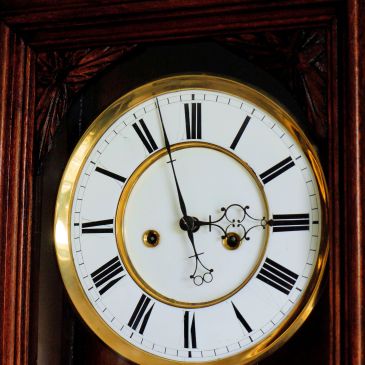
Idioms and expressions with the word “clock” in them

In Maritime Canada, this weekend marks the time to turn the clocks back. We have a saying, “Spring forward, fall behind,” which refers to the switch from Atlantic Daylight Savings Time (DST) to Standard Time on November 6th, moving the clocks back by one hour. As a result, we gain “an extra hour of daylight” in the morning, which is beneficial for farmers, I suppose. In the spring, the clocks are moved ahead again. However, not all regions in Canada observe DST.

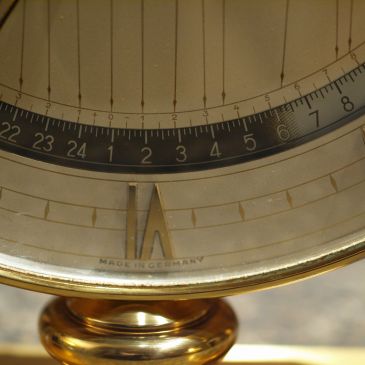
Kienzle World Time clock

Not many people realize that Sir Sandford Fleming, a Canadian engineer and inventor, proposed Standard time and world wide time zones. Although he was born in Scotland he immigrated to Canada at the age of 14. In his later years he was employed by the Grand Trunk Railway which led him on the path to standardized time zones for the railway.

I decided to dedicate this blog to Standard Time and the many idioms and expressions with the word “clock” in them.

  • The clock is ticking
  • Beat the clock
  • Turn the clock back
  • Wind back the clock
  • Run out (or down) the clock
  • A stopped clock is correct twice a day
  • Clean (someone’s) clock
  • On the clock
  • Biological clock is ticking
  • Watch the clock
  • He’s (she’s) a clock watcher
  • Punch the clock
  • Around the clock
  • Stop the clock!
  • Race against the clock
  • As regular as clockwork (or, running like clockwork)
  • Face that could stop a clock
  • Five o’clock shadow
  • Hickory dickory dock the mouse went up the clock
  • One, two, three o’clock four o’clock rock
  • Rock around the clock

Let me know if I missed anything, and I’ll be happy to make adjustments.

For an updated list, please visit here.


Juba Schatz bim-bam mantel clock

In the clock world Germany is well known for well engineered, precision clocks. Juba Schatz is not a name one comes across often but it has solid roots in the German clock making industry.

Juba bim-bam mantel clock

This a an antique shop find of a clock that dates from the mid to late 1940s. Its design is understated, and reflects the minimalist lines of style common during the post war period.

This clock is in excellent condition and has some intriguing features; first, a circular disk that one rotates on the crutch to put the clock in beat to compensate for a surface that is not level; second, 4 strike rods, 1 for the first strike of the bim-bam and 3 for the second; third, a storage cradle on the back door for the pendulum bob just below the key holder and fourth, a very effective and robust two-piece steel strike lock, a aid in transporting the clock. The original operating instructions in English and German were included.

Juba instructions
Juba clock  instructions

Bim-bam clocks are not unique. Many companies made bim-bam clocks. They appealed to the masses due to the distinctive strike. The mechanical strike mechanism is made up of two and sometimes up to four finely tuned copper rods (as in this clock) mounted to a cast iron block.

At one time clocks with unique tonal sounds were called Normandy chimes. Instead of one strike on the hour and half hour, there were two.  It was a musical dual tone, instead of a single, (often harsh sounding) single hourly or half hour strike. The  American Gilbert Clock Company made several mantel clocks in the 1920s that had what Gilbert termed a “Normandy Chime”. Gilbert explicitly called this the “Normandy Chime”, which was supposed to have been patterned off the old bells of Normandy, The Normandy chime is the precursor to the bim-bam.

Information on this clock company is scarce. Several YouTube videos demonstrate a chiming or a striking Juba clock but contain no description or history of the company.

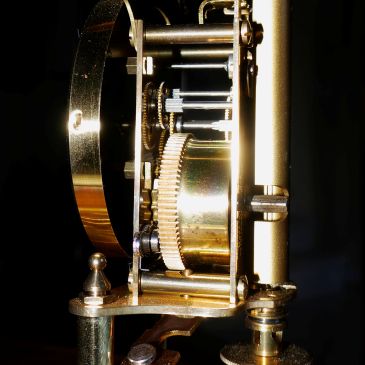
Juba movement showing pendulum and strike hammers
Juba movement showing pendulum, strike hammers and circular level compensation disk

Pendulum cradle and key holder

The formal company name is  Jahresuhren-Fabrik August Schatz und Söhne gmbh. I discovered that the company was formed in 1881 and ceased production in 1981. It was started by August Schatz who was born in 1854 and died in 1927. Family members took over the company after his death.

Schatz are best known for anniversary and mariner clocks but made cottage clocks, bracket clocks, mantel clocks, kitchen clocks and watches as well.

I will continue my search for more information about this important German maker.

Mystery clock – if you know the maker, let me know

If you know the maker, let me know or direct me to where I can find out.

I was in an antique shop in a small village in the Annapolis Valley, Nova Scotia lately and came across this unusual box-type wall clock. I glanced at the back of the clock and noticed that the wall anchor hook had been detached suggesting that a past owner determined that it was to be a shelf clock. What else did the previous owner(s) do to alter this clock, I wondered?

The clock measures about 24 inches tall (60 cm), about 14-15 inches wide (40 cm) and about 6 inches (15 cm) deep. The dial is about 10 inches (25 cm) in diameter. The tag on the top of the clock says, “$145 – probably English, 1920s to 1940s, needs some adjustments”. The shop owner could not say whether it would run or not.

At first glance it appears to be a conventional clock but there are a few features which I find very intriguing. I discussed the clock with the owner of the antique shop and she said that it is a railway clock which I doubt for two reasons, one, the clock dial face is too small to be seen at a distance and two, it appears to be a time and strike clock given the two winding arbors. Railway clocks usually have dials that are 12 inches (30 cm) in diameter or more and normally do not strike. Striking clocks would not be heard amid the cacophony of a typical train station.

Now, it is quite conceivable that it is not a strike clock at all but a time-only clock that has two winding arbors. Double spring clocks were not uncommon during that period and if so, it would probably make this a 15 day (or more) clock similar to this double-spring Seth Thomas railway clock pictured here. That could be the case in this instance.

Double sporing 15 day Seth Thomas
Double spring 15 day American Seth Thomas

The spade hands look original as does the clock dial pan, oak case and oak rod with what appears to be a spun brass pendulum. What appears to be missing is an oak piece (or other wood I assume) that surrounds the dial pan and hides the four dial pan mounting screws. The dial face might be a little newer. The hands are attached by a nut which would put it in the period the tag suggests.

Mystery clock
Mystery clock

rs-annapolis-royal-oct-16-2nd-set_12_1-3

The winding arbors are exceptionally large and would require an unconventional key. I should have put something beside the arbors to show just how large they actually are. While the owner of the shop had a number of clock keys she did not have one to fit this particular clock.

Very large winding arbors
The clock has very large winding arbors

The bezel should have a cover for the screws
The bezel should have a surround to hide the screws

The next feature I noticed is that the clock appears to have a Graham dead-beat escapement or something very similar though I could only see the top part of the escapement. The Graham deadbeat escapement has been the escapement of choice in almost all finer pendulum clocks.  It might also be another type of escapement but it is impossible to say without a closer examination. Normally one would associate a recoil escapement with a cheaper spring driven clock but accuracy must have been a priority in this case.

rs-annapolis-royal-oct-16-2nd-set_12_1-1
Beat scale

It is indeed a mystery. I would love to see what the original clock looks like. The price is not unreasonable but I wonder what else is missing besides the bezel surround and the wall anchor hook.

If you can point me in a direction, leave a reply.

Servicing a Sessions American No. 2 mantel clock Part IV

In this fourth and final entry of the series I will discuss bushing work, re-assembly and finally, testing and mounting the movement back into it’s case. Part I of this series can be found here, Part II here and Part III here,

Once the pivots are inspected, cleaned and polished it is now time to install any bushings required as result of careful inspection.

Bergeon Bushing Machine

I acquired a Bergeon Bushing Machine in the spring of this year (2016). As I mentioned in Part III, some may prefer to bush by hand which I think is commendable but I have decided to go the bushing machine route. In the last few months I have been using and learning its many tools. It comes with a set of chucks and reamers some of which (right side rear) are a bit of a mystery to me. I cannot see using any of the large reamers any time soon though I assume that if I am working on tall-case clocks which have larger movements they would come in handy.

Chucks and reamers
Chucks and reamers

First is selecting the correct bushing using a micrometer to measure the diameter of the pivot. Then, I select the proper bushing from my Bergeon assortment kit.

Using a micrometer to check pivot
Using a micrometer to check pivot diameter on the escape wheel

The bushing I have selected for the escape wheel pivot (measured at 1.46 mm) has a depth of 2 mm, an outside diameter of 3.5 mm and a pivot hole of 1.5 mm.  In the next photo I am positioning it on top of the 3.47 mm. hole that I have just just “drilled” using one of the reamers. The outside diameter of the bushing is slightly larger allowing for a tight friction fit.

Punching the bushing home
Positioning the bushing on the Bergeon Bushing Machine

OLYMPUS DIGITAL CAMERA
Bushing installed

Once I have selected the correct bushing I test it on the pivot for fit and then I position it over the pivot hole and use a small hammer with it’s nylon end to tap the top of the bushing machine centre shaft lightly until the bushing is properly seated and level with the plate ensuring that the oil sink faces the outside of the plate.

New bushing installed
New bushing installed with oil sink on the outside of the plate

To check proper fitment of the motion works bushings/pivots, I assemble all the wheels on that side (both plates), check for a smooth action and determine if any additional reaming/smoothing is required. I do the same for the strike side.

Once all the bushing work is completed and I am satisfied that each bushing fits correctly and operates smoothly, I re-assemble the mainsprings, wheels and levers and then re-attach the back plate using the five plate screws. We each have our own method of re-attaching the back plate but I work from the bottom up, that is, from the mainsprings. Once I have the mainsprings in place I immediately install the bottom 2 plate screws (loosely) and then work from the motion works side to the strike side using a pivot locator tool, if necessary, to coax the pivots into their respective holes.

Trains and levers ready for the front plate

Positioning the various levers can be a bit frustrating because those that have helper springs seem to slip out of their pivot holes easily as you are putting the plates together. Perseverance is certainly the key.

The one difficulty I had was adjusting the synchronization of the count and drop levers, that is, getting the drop lever to sit in the cam while I adjusted the locking lever position. The clock must be completely assembled at this point and once together loosen or take off the nearest pillar nut and pry the plates apart to take out both the flywheel and the locking wheel. Once out, the locking wheel can be re-positioned by moving the pin on the wheel so it rests on the locking lever. Once this is completed, re-install the flywheel. This is basically a trial and error process and I never seem to get it right the first time.

My only error in the first go-around was not restraining the strike mainspring during this procedure. While spinning wildly the strike mainspring flattened the protrusions off the cam that allows the hammer strike. Momentary panic! Once bent back into shape everything was fine. Naturally, I secured the mainspring for my second successful attempt.

My reference for these adjustments is Steven Conover’s Striking Clock Repair Guide which is an invaluable guide to striking American clocks.

Once the parts are re-assembled it is on to the final testing phase which takes days (and weeks, perhaps) as the clock is being carefully regulated. The following video shows the movement on a test stand (in this case, Gene’s Test Movement Stand). The sound of the pallet on the escape wheel is very quiet; you are hearing other clocks in this room. The clock is in beat and in the video you can see the movement of the escape wheel from various perspectives.

Sessions American No. 2
The movement is returned to it’s case

Once testing and regulating is completed and I am satisfied the clock will run reliably for 8 days I return it to it’s case. There are only 4 mounting screws. You may have to re-position the coil gong by loosening the adjustment nut on bottom of case to get that satisfying strike sound.

This attractive little Sessions American No. 2 time and strike mantel clock has now been serviced. It required 5 bushings and should run reliably for the next 3-5 years.

Servicing a Sessions American No. 2 mantel clock Part III

Sessions American No. 2

The movement is disassembled and now it is time for further inspection, cleaning, servicing the mainsprings, pegging the pivot holes, polishing the pivots and installing bushings where needed. In this, Part III we will cover cleaning and mainspring servicing.

Ultrasonic cleaner
Ultrasonic cleaner

I have a small ultrasonic cleaner so I tend to clean parts in batches since this one does not have a large capacity. An ultrasonic cleaner is not an absolute must as you can easily clean by hand but having one certainly helps.

Front and back plates

Old toothbrushes are great for getting into the crevices and I use one especially for the lantern pinions as a lot of dirt and old oil tend to accumulate in those particular areas.

indicating wjehere bushings will be installed
indicating where bushings will be installed

This photo shows a couple of bushings that I will install. I realize that some prefer to install bushings by hand and I applaud them as it does take considerable skill but I use a Bergeon Bushing Machine which I believe simplifies the task (for me, at least). More on bushing in the next part of this series.

Olie Baker spring winder

An Olie Baker spring winder is an indispensable tool. You can easily make one of your own to save a little money if you are handy with building things. A spring winder permits you to inspect for cracks or breaks, clean and oil the springs before reinstalling them. The photo shows a C-clamp securing the mainspring prior to cleaning.

OLYMPUS DIGITAL CAMERA
leather gloves are used to secure the spring on the winder

I have never lost an eye or a finger but I believe in safety first especially when working with mainsprings. Always wear leather gloves and eye protection. You never know when a 100 year old spring will break and fly across the room.

Click replaced
Click replaced

I discovered that one click had to be replaced as it was almost slipping off the ratchet. As some clock repair folks know, Sessions clocks have a reputation for bad clicks. I had a Sessions click in my supply box, fortunately. It is an easy job; just take the old one out with pliers, secure the new click and bang the rivet (supplied) into the existing hole with a ball peen hammer.

Serviced springs
Serviced springs

The springs have been cleaned and oiled with Keystone Mainspring Oil and are completely serviced including the installation of one new click. Now comes the bushing work, re-assembly and testing. Stay tuned to Part IV of this series.

Kienzle World Time clock – a second look

Kienzle World Time clock

I put a quick article together on my newly acquired modern Art Deco brass Kienzle World desk clock in August and with only one photo in my post I really did not do this fine looking timepiece any justice. I hope the following  photos will show that this clock really impresses. As I mentioned in my last post regarding this clock, this is one of many clocks conceived by renounced German designer Heinrich Moeller. Moeller, who was trained as a cabinet maker, began working with Kienzle as chief designer in 1931 and through to about 1970.

On display
On display with Ingraham Huron

This vintage clock is from the period 1950 to 1960 judging from the many offerings on EBay. I noticed that this style is occasionally advertised as a 1960s clock but judging from others I have seen I am fairly confident that this is from 1950 give or take a year. This style seems to be the most desirable of the series. Later ones had quartz movements and were in less demand, judging from the lower prices. The weight is very substantial and it measures 13 and 3/4″H X 10″W X,  2 and 1/2″D.

Back of Kienzle clock
Back showing winding key, speed adjustment access port and time adjustment knob
OLYMPUS DIGITAL CAMERA
Brass bezel

This clock is in excellent condition with minimal wear and tarnish. In fact, observe the front and side views for an appreciation of the pristine condition of this clock.  The case was grimy as one might expect and a little polish brought up the finish very nicely.

Quite often small parts are missing in clocks such as this, for example, the time adjustment knob or the cover for the speed control needle. In this case  everything is completely intact. It is in very good working order and will run for a full 8 days.

Brass base
Decorative brass base

Will I service it? I am not sure. According to comments on the NAWCC message board some members have not had much luck working with this clock. Given that it seems to have had minimal wear and tear it may not have had a lot of use over the years so it might be wise to leave well enough alone, for now. I would like to oil it, however!

Winding crank
Winding crank
Time sequencer
Aperture for the 24-hour day and night indication

I am very pleased with this acquisition. The clock is certainly a singular work of elegance, magnificence, style and a stand-out in any room.

Servicing a Sessions American No. 2 mantel clock Part II

Sessions American No. 2
Sessions American No. 2 time and strike

Top plate is off
Top plate is off

This is  Part II of the Sessions American No. 2 servicing. As I mentioned in my last blog entry (Part I) this clock was running but is in need of a little attention. This is a fairly simple clock to work on for an American time and strike movement. I cannot stress enough that photos are so important when working on clocks! They are a valuable reference which take a lot of the guessing out of re-assembly.

The clock is now ready for the parts to be taken off, organized in a parts container, inspected, cleaned and serviced.

Time side spring is removed
Motion works mainspring is removed

X marks pivot holes that need to be bushed

This the back plate. No bushings have been installed but following my inspection a number of bushings are required, three in this particular corner. The topmost “X” is the location of the escape wheel. I always mark the suspect pivot holes with a marker so that I know what work needs to be performed on those specific pivot holes.

Dis-assembly is rarely an issue when working on these clocks. However, the helper springs (see arrow below) can be damaged and although they look like they might have been added by later clock repair they are indeed part of the original design and assembly of the movement and perform a vital function.  Be very careful with them though if broken they can be replaced. The helper springs and levers can be frustrating to work with particularly when lining up the levers correctly and re-positioning the helper springs upon re-assembly.

Removing lever with helper spring
Removing count wheel lever/helper spring

Removing the count wheel

The count wheel is secured by this washer. make sure it goes back in the same way it came out.

Marking the count wheel

Putting the count wheel in backwards will not stop the clock but it will count down the hours, not good! Not making the same mistake again I mark the count wheel so that I know that it goes in right the first time.

Time and strike parts
Motion works and strike parts separated

We each have our own way of doing things but I find it very helpful to separate the time and strike sides prior to re-assembly. It avoids confusion and makes for a more simplified process when working on your clock.

Now that the clock is disassembled it now time for further inspection, cleaning, installing bushings, and polishing the pivots which you will find in Part III.

So, my sister also loves clocks

After not having visited my sister in some time I was surprised to find that she is an avid clock collector. I must stress the word collector because although she appreciates the beauty of each clock she has acquired over the years how they run is somewhat of a mystery to her and that is just fine. While visiting her this summer three of her clocks were out of adjustment and it took no time (no pun intended) at all to get them running again. No sense paying someone to do it, that`s what brothers are for.

In my opinion the most interesting clock she has is a French time and strike bracket clock that has no visible markings yet appears to be over 100 years old. It is in beautiful condition with only a slight patina on the finish. I would love to have found out more about this clock but my stay was brief. Perhaps next time.

French bracket clock

The next clock is one my sister absolutely loves and it is a great sounding Westminster chime grandmother clock she bought some 20+ years ago. This quarter chime clock made by Craftline Industries in the early 1990s has a Canadian made case with a German movement, likely by Hermle.

Craftline grandmother clock

Next is a curiosity. When I saw the Sessions name on the dial I wondered why I had not seen this particular style of Sessions clock. Further investigation revealed it to be a six pillar Adamantine Seth Thomas case. The movement was clearly marked ST and as I said the case is certainly a Seth Thomas. So, why the Sessions clock face? Likely the original dial face was so badly marred as to be unreadable that the owner many years ago simply told the clock repair person to find another face, which he did. Since the replacement was a Sessions electric clock face he had to drills the holes to accommodate the winding arbors. Who would know! To those less knowledgeable it looks great.

Session Seth Thomas mantel clock
Sessions / Seth Thomas mantel clock

I found this little antique time-only Hamilton and Co. French-style carriage clock made in India (Calcutta) to be very interesting and so diminutive. Hamilton and Co. is probably the best known and most celebrated British clock maker in India. I would put this clock at around the 1890s. It probably needs a good cleaning since it is not in working order.

Hamilton and Co Calcutta
Hamilton and Co. Calcutta

I am not a huge fan of steeple clocks but this Waterbury clock is in very good condition save for a damaged right steeple tip. The Waterbury Clock Company is one of many 19th century Connecticut-based clock firms with a history going back to the 1850s though it closed is doors for good in 1944. More memorable are Waterbury wall and mantel clocks but like many makers of the day they had a successful line of steeple clocks.

Waterbury steeple clock

Next is a New Haven time and strike tambour style mantel clock from about the late 1920s or early 1930s. Aside from the grandmother clock which my sister bought new the New Haven mantel clock was a wedding gift of her late husband’s parents and has been in the family ever since.

New Haven Mantel clock

Lastly, this Chelsea ship’s bell clock is a polished beauty. A ship’s bell is used to indicate the time aboard a ship and hence to regulate the sailors’ duty watches. Unlike normal clock bells, the strikes of the bell do not correspond to the number of the hour. Instead, there are eight bells, one for each half-hour of a four-hour watch. Three bells, for example, would mean that a sailor would be 1 1/2 hours into a 4 hour watch. Each watch would take its turn with the essential activities of manning the ship’s helm, navigating and keeping a lookout.

Chelsea ship's bell cloc
Chelsea ship’s bell clock

I was quite impressed with my sister`s collection and each clock occupies a special place in her home. I find it facinating going into peoples homes and discovering the joy they experience in collecting, be it clocks in this case or anything for that matter. Collectors are truly unique people!


How to oil your mechanical clock

Oiling your mechanical clock is an essential part of its maintenance, ensuring smooth operation and longevity. Proper lubrication reduces friction between moving parts, preventing wear and tear while keeping the movement running smoothly over time.

During the summer of 2016, my wife and I were traveling through the Muskoka area of the province of Ontario and stopped at a quaint village called Halliburton where we happened upon the only antique shop in town. There were a large number of clocks in the store that the proprietor had brought over from Ireland and each one was interesting.

Though there were plenty to choose from we settled on a Smiths Enfield Art Deco style oak cased mantel clock pictured below.

Smiths Enfield
Smiths Enfield time and strike

It was sold as-is and non-working, with the clerk noting that the pendulum bob was missing, which explained a lower price. However, when I got the clock home, I discovered the bob wrapped in brown paper along with the key, tucked inside the clock. After attaching the pendulum bob to the rod and a bit of adjustment, I found the correct beat, and the clock started running.

At my summer place, I do not have the necessary tools to service clocks but decided to take the movement out to oil it.

Once out of the case, I discovered that someone had oiled the movement by spraying it with an unknown lubricant. Spraying a clock with any lubricant is a bad practice. Indiscriminate oiling attracts dust and grime that will accelerate wear and eventually lead to stoppage.

Given the indiscriminate use of oil, there was no sense in operating the clock so I decided to put it aside until I got home where I could disassemble, clean, and properly service the movement.

Oiling Your Mechanical Clock

Lubrication is essential to the good running of any clock movement. Oiling a movement without first dissembling and cleaning it is normally a bad practice. The addition of new lubricant to old will mix with the dirt and grime to form a paste which acts as an abrasive that will hasten pivot and pivot hole wear.

The purpose of lubrication is to reduce wear, and applying the correct amount of oil is crucial. The only exception to this is when the oil sinks are dry— in such cases, oiling the movement without disassembling it is acceptable.

Apply only as much oil as required, a tiny drop goes a long way. Clock oil should occupy about one-half the capacity of the oil reservoir. Use an approved clock oil and a pin-type oiler to apply the oil.

Clock pivot oil
Clock pivot oil

Key Points Regarding Oiling

Lubricant: clock oil has the correct viscosity and has a low tendency to evaporate, spread or react adversely to various metals. Pivot oil is for pivots and spring oil is for springs; there is a difference! Clock suppliers such as Timesavers or Perrin will shave the correct oil for your clock. Do not uses household lubricants and especially WD 40 which is not a lubricant but a water dispersing agent. Synthetic oil is preferred since it retains its properties for a longer period but I work with mineral oil which is cheaper and just as effective.

When to oil: Some say that one should apply oil only after disassembling and cleaning. Others say that a clock’s service cycle might be an average of 5 years or more and oiling every two or three years without a thorough cleaning is acceptable. If there is a visible build-up of black, contaminated oily sludge in the pivot holes, a disassembly and thorough cleaning is necessary prior to oiling. A clock’s the environment will play a significant role since dusty, smoky environments contribute to accelerated wear. A sealed case will also keep out dust and lengthen the cycles between oiling.

How much oil: After oiling there should be a visible presence of oil in the oil sinks around the pivot holes. Oil running down the plates is to be avoided and is a indication that too much oil has been applied. I use a clock oiler with dispenser. Oil cup reservoirs are also very helpful as they prevent any foreign material from getting into the oil bottle when dipping with a pin type applicator. Long case clocks with larger pivot holes will require more oil than a small carriage clock.

clock oiler with dispenser

What to oil: While looking at a clock plate (front or back) work from the top to the bottom. First and foremost are the pivot holes in the plate, then the points of contact between the pendulum and the crutch, escapement pallets faces and centre and motion works arbours. I generally do not apply lubricant to the mainsprings unless I have unwound them. Once out of the clock and assessed as to their condition and cleaned, I apply Keystone mainspring oil prior to re-installation. Do not oil the gear teeth.

Mainspring winder

This short primer on oiling your clock is not meant to be a definitive guide but will give you enough information to get you started if you have just found that mechanical clock you have always wanted.

In conclusion, a properly oiled clock, combined with regular servicing, is key to maintaining its functionality and extending its lifespan. Regular lubrication helps reduce friction between the moving parts, ensuring smooth operation and minimizing wear and tear. By performing periodic maintenance, such as cleaning and oiling, you can keep the clock running efficiently for many years, preserving both its accuracy and its value.

For more information on clock lubrication, I suggest the forum site at the National Association of Watch and Clock Collectors where you can find many expert opinions.

8500 views and climbing

Clock hands Vienna Regulator
Clock hands for a Gustav Becker wall clock

In the year or so I have been running this blog I never imagined that it would have achieved so much. It is at 8500 and climbing page-views.

In the late spring of 2015 I attended a workshop on WordPress blogging. I was impressed how a powerful blog tool it is. I had already had some experience blogging and still maintain my Blogspot site though it was always intended to be a general interest blog only. However, I had been collecting antique and vintage clocks for about 4 years and I wanted to narrow the focus to clock collecting / repair so this was a good time to start a brand new blog and explore something more in line with my current interests.

Like any blog the first 2-3 months was a little discouraging. I was getting very few page-views, struggled with the content and tried to improve my writing style. I am sure that many out there become frustrated to the point of quitting but I was determined to press on.

Things began to pick up in the fall of 2015 with a steady increase in daily page-views. Obviously someone out there in cyberspace was interested in what I had to say. It is a lot of work and I also discovered that to improve traction to the site I had to reach a wider audience and use social media more effectively. I slowly learned that I had to not only appeal to those with a modest interest in antique clocks but those with a deeper knowledge thereby striking what I think is a comfortable balance.

Because my own knowledge about clocks was expanding I was more at ease with the content and I was developing a writing style that felt more like me. I also learned that in writing one has to edit often to ensure that the message is exactly what you intend it to be. I often save up to 20+ drafts before I publish (yes, WordPress has a really nice “save draft” feature.

I have received many comments in the last few months. Some offer suggestions and advice on projects I am working on while others are looking for direction on their particular clock problem. As for for advice given to me, I do what I can within the limits of my knowledge. Even those readers with more extensive knowledge graciously comment which I appreciate. Suggestions and the critiquing my work is all part of my learning.

As for some of my stats. My best day was in February of this year when I hit 109 page-views. On a good day I receive 45 or more page-views while the average is 32 per day with roughly 257 per week. Monday is my most active day. I have 259 followers and a few who comment regularly. I have been viewed in 88 countries.  The top 6 are; USA, Canada, United Kingdom, Australia, Romania and South Africa. I am sure that there are a great many sites which do far better but I am encouraged by the steady rise in interest from those from around the world from month to month as I make continued improvements.

Since I am an amateur photographer, clocks and photography have become a happy marriage, especially the area of macro photography. Below is an example of a floating balance from a Dugena mantel clock taken with a 50mm Olympus Zuiko lens. I am using a 10 year old (old by digital standards) Olympus E330 as my go-to clock camera.

Dugena floating balance
Floating balance from a Dugena mantel clock

I am also producing short YouTube videos with a Panasonic G6 which you can see on this blog from time to time.

G6
Panasonic G6 interchangeable lens camera

Is blogging fun? Of course it is, but it is also a lot of hard work.

Let me know what blog experiences you have had that have been positive or negative


Sessions Beveled Number 2


mantel clock
Sessions tambour style mantel clock

Regular readers might have followed my progress on this 1927 Sessions tambour style clock.

After installing 10 bushings, replacing the pendulum bob and suspension spring and reassembling and oiling the clock and the springs I am now in the process of regulating this old clock. I am finding that despite all the work I have put into this clock,  it will run for only 6 days and it does not seem to want to run the full eight day cycle. Perhaps there is other wear that I am not detecting or the springs are weak.

I wound the clock again this morning and we will see how long this cycle will go before stopping. Everything is synchronized thanks to Steven Conover’s helpful book on striking clocks. Is it a success since it was a non-running clock when I acquired it last fall.

The Bracket Clock

Let me take you on a brief journey as we explore the history of the bracket clock. If you’re already familiar with them, perhaps I can offer some additional insights into what exactly defines a bracket clock.

RS Hermle bracket clock (4)
Hermle Bracket clock, circa 1990

So, what exactly is a bracket clock? A bracket clock is a type of shelf or mantel clock.

Bracket clocks date back to the 1600s, with the earliest examples being weight-driven clocks crafted by skilled artisans. These clocks were designed to hang on wall brackets, allowing the weights to descend freely. The movement was typically plated, meaning it consisted of plates with bearing or pivot holes, connected by horizontal pillars. Early bracket clocks used verge escapements, a mechanism dating back to the 13th century, which remained in use until the late 17th century, when the recoil anchor escapement was introduced.

As time progressed, bracket clocks transitioned to spring-driven movements, making them portable and easier for homeowners to move from room to room. Given their high cost, their portability was highly valued, as most owners could not afford to have multiple clocks in their homes.

These clocks were often striking clocks, with many featuring silencers that allowed the owner to turn off the striking mechanism at night, especially in the bedroom. Additionally, bracket clocks were commonly repeaters, meaning they could repeat the last hour with the pull of a chord or lever. As spring-driven movements became more common in the 1700s, the term “bracket” continued to be associated with this style of clock.

RS Hermle bracket clock (9)
Bracket clock with ornate dial face, cast feet, and carrying handle

Bracket clocks were a reflection of the design trends of their time, often featuring intricate and ornate details. These clocks typically had wood cases, with finishes like oak or mahogany burl and walnut, adorned with floral decorations. The dials were often engraved, cast, or silvered, and many featured subsidiary dials, spandrels around the main dial, molded bases, and sculpted brass feet, adding to their visual appeal.

Antique bracket clocks are among the most elegant timepieces you can find for a home. The first two photographs showcase a modern Hermle bracket clock with Westminster chimes and a moon phase feature. Although this clock is 20 years old, a similar model from Hermle, called the Debden, is still available for purchase. The Debden includes side windows (which mine does not) and offers additional details, all for under $800.00.

Bracket clocks are timeless pieces that blend functionality with exquisite craftsmanship, reflecting the design styles of their eras. Whether antique or modern, these clocks remain a beautiful and elegant addition to any home, offering both aesthetic appeal and the charm of fine clockmaking.

Taking a little time off

RS Peggy doing some research (2)
Researching clocks at the Canadian Clock Museum in Deep River, Ontario, Canada.

Taking a little time off seems like an amusing title for a clock blog. It just struck me (there I go again).

In the next few weeks you will see fewer posts as I am spending some quality time with friends and family at our summer get-away in central Canada. While in that area I intend to make my third visit to the Canadian Clock Museum in Deep River, Ontario. It is always exciting to see the newly added pieces to the museum collection and to chat with it’s knowledgeable curator.

Regular readers have no doubt observed that my usual practice in the past year is to post at least one article per week in an effort to keep readers interested and of course help me, the writer, offer the kind of content that appeals to a broad spectrum of clock enthusiasts. I typically profile my own clock collection and the trials and tribulations of maintaining and repairing my clocks plus some articles of interest based on observations in my travels and general interest clock subjects as I navigate through the fascinating world of horology.

From time to time (pun unintended) you will also find special interest articles that I write to give a broader perspective of the world of horology and I hope you enjoy reading them as much as I enjoy the research side of the equation. Even though I will be away I will try to maintain a presence on my blog by posting every two weeks or so which means you can still come back regularly. I also invite you to browse through my archive, there’s bound to something that will interest you if you are clock lover like myself.

In the weeks to come I am planning articles on Bracket clocks, how to oil and maintain your clock between servicings, a historical piece on a most interesting 17th century French cabinet maker and his contribution to horology and thoughts on the pros and cons of converting a clock from a mechanical movement to quartz.

Converted from a mechanical clock

If you have a comment on any of my posts please feel free to leave one though it may take some additional time for me to respond, so, a little patience would be appreciated.

In September I will resume my weekly posting schedule. As they say in the show business world – stay tuned!

Clocks in their natural surroundings

I noticed this topic in a well frequented clock forum site and it prompted me to write this article.

Many clock collectors realize that presentation is everything. I have about 25 clocks on display in my home and in each case I try as much as possible to situate the clock so that it catches the eye, enhances the room and stimulates conversation from friends and family.

I try not to place more than one clock in one particular location. However, I also recognize that some collectors wish to display their entire collection by having multiple clocks in one particular spot. If this is your choice, it makes perfect sense to group your clocks into types. They may be according to maker, style, type, vintage / age, or country of origin. For example, a collection might have wall clocks in one area or room, shelf clocks in another area or room, European clocks in one area, North American clocks in another and so on. I have observed that some presentations are very well thought out with a distinct theme running through while I have seen other collections that are haphazard and confusing. It takes a little care and attention when arranging your collection.

Some collectors place limits on how many clocks are displayed at one time and how many are actually running at one time. Most of the clocks I have on display are running continually but I tend to allow some clocks to stop for a “break”. Occasionally I will change the location of some clocks for a little variety keeping in mind that some are quite sensitive to being moved.

Let me show you some examples of my arrangements. You can see just three clocks in the following photo. There are in fact 7 clocks in this room but since it is a fairly large room the clocks can be nicely spread out. The most prominent is a 2-weight Gustav Becker circa 1902 which I have written about in several posts. It is 51 inches in height and certainly commands the room. At the bottom centre is a Seth Thomas time and strike round-top cottage clock made in the 1930`s and to the right is an Ansonia time-only short drop octagon, circa 1895.

clocks in a living room
Clocks in a front room

If you prefer your collection confined to one room rather than spreading the clocks throughout the house, that is certainly another option. While some prefer to consolidate their collection in one area of the house others, like myself, prefer to have clocks in almost every room. It is a matter of choice and of course, what your partner can tolerate.

RS Ridgeway clock_2
Ridgeway tall case clock

In another example my Ridgeway tall case (or grandfather clock) is one of two clocks in an entrance hallway. Unfortunately, this tall case clock is the only one I have room for. If I find another, this one would have to go. The other clock in the entrance hallway is an Arthur Pequegnat Canadian Time wall clock seen here.

RS Pequegnat
Arthur Pequegnat Canadian Time clock

RS AP repaired_5
Arthur Pequegnat Brandon schoolhouse clock

This schoolhouse clock is on the second floor of my home. We have a very simple rule; no striking clocks on the second floor for obvious reasons. The sound of a striking clock tends to keep some folks awake.

This U.M. Muller time and strike wall clock is our go-to kitchen clock.

RS Kitchen clock
U M Muller wall clock

And finally here is a Mauthe Westminster chime mantel clock appropriately placed on top of a 1947 Stromberg Carlson console radio in our dining room.

RS Mauthe mantle clock (28)
Mauthe mantel clock

It does not take much to carefully place clocks in the home but it does require some amount of thoughtfulness, care and attention. Let me know what you think about arranging your collection.

Clock collectors understand the importance of presentation when displaying their collection. While it’s generally recommended to avoid placing multiple clocks in one location, some collectors choose to showcase their entire collection together. In such cases, grouping the clocks based on maker, style, type, vintage/age, or country of origin can create a cohesive and visually appealing arrangement. Thoughtful and well-planned presentations with a distinct theme running through them tend to be more successful than haphazard and confusing displays.

It’s common for collectors to set limits on the number of clocks displayed and running at any given time. Some clocks may be allowed to stop for a “break” while others continue to run continuously. Occasionally changing the location of clocks can add variety, but it’s important to consider the sensitivity of certain clocks to being moved.

For example, in one photo, there are three prominently displayed clocks in a large room, including a 2-weight Gustav Becker clock from 1902, a Seth Thomas round-top cottage clock, and an Ansonia short drop octagon clock. The arrangement allows the clocks to command attention without overcrowding the space.

Another option is to confine the collection to one room, while others prefer to have clocks distributed throughout the house. The choice depends on personal preference and the tolerance of one’s partner.

In an entrance hallway, the Ridgeway tall case clock shares space with an Arthur Pequegnat Canadian Time wall clock. The limitations of the hallway restrict the number of clocks displayed.

A schoolhouse clock is placed on the second floor, following the rule of avoiding striking clocks in upper-level rooms to prevent disturbing sleep.

The kitchen features a U.M. Muller time and strike wall clock, which serves as a reliable timepiece for the household.

Lastly, a Mauthe Westminster chime mantel clock sits atop a 1947 Stromberg Carlson console radio in the dining room, adding a touch of elegance to the space.

Arranging a clock collection requires thoughtful consideration, care, and attention. It’s essential to find a balance between showcasing the clocks and maintaining a visually pleasing and harmonious environment. Each placement decision contributes to the overall aesthetic and impact of the collection within the home.

Searching for a donor movement pays off

Last summer (2015) I bought a Blackforest time-only shelf clock for $10 at a small antique store in Kazabazua, Quebec which you see pictured below. To be fair it did not look like this when I bought it. It was quite beaten up and a case refresh was sorely needed which included stripping and re-staining.

RS together but not working (2)
Blackforest shelf clock #1

It’s a relatively simple 8-day time-only movement commonly known as a “plate clock” movement. To avoid any confusion let me say this shelf clock is Canadian made by the Blackforest Clock Company of Toronto (known as the Forestville Clock Company after the second war). The movement is likely German; the clock was made in the mid 1930’s when Canadian companies imported German movements for a variety of mantel and long case clocks.

Despite my best efforts I could not get Blackforest shelf clock #1 to run reliably. It would typically run 5-10 minutes and stop. The movement had a couple of bad teeth on the escape wheel; not an easy fix and I assume the source of the stoppage. I decided that I would wait until I found a donor movement to scavenge any parts I needed so I put #1 aside.

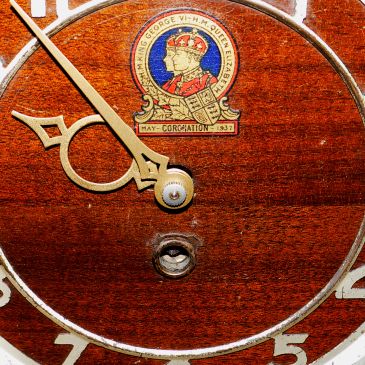
I scoured the net looking for an identical movement. I found one from a clock parts company in Ontario but sadly the company, despite having an online presence, was no longer in business. My numerous emails were not answered. I was getting a little discouraged until February 2016 when my wife and I were making our regular pilgrimage to a popular antique store in Great Village, Nova Scotia. I came upon Blackforest shelf clock #2, a clock not much different from the one I found in 2015 but more importantly it had an identical movement. I particularly like this one because it commemorates King George VI and Queen Elizabeth’s Royal Visit in 1939 (the coronation was in May 1937) making this vintage clock almost 78 years old.

RS shelf clock number 2 (12)
Royal Visit to Canada1937

RS Refinished case (7)
Blackforest shelf clock #2 circa 1938-39

No problem I thought. Between the two of them I should get one clock running reliably. I paid $20.00 for the newer one with a total of $30.00 for two clocks; a minimal outlay for the total project.

Blackforest shelf clock #2 ran for a while but I could not get it to run much past two days without it stopping. The sudden stop seemed like a power issue or perhaps it was just plain gummed up and dirty. A thorough cleaning was one solution to the stoppage. This was also a good opportunity to decide which clock was worth salvaging. In the end the newer one won out. However, two parts had to come from the older movement, the pendulum bob (the newer one had a cracked bob) and the spring / click / ratchet assembly which I will now discuss further.

Blackforest shelf clock #2 had a partially stripped ratchet (see photo with white arrow) which I thought was rather unusual; not very surprising since brass is a very soft metal and does not stand up to much abuse, a product of rough treatment in the past I suspect. While winding it I could feel the click slipping on the ratchet and feared that it would let go if I was not careful enough. This critical issue could have led to a unpleasant outcome at some point in the future so I determined that it was only prudent to replace the spring / click / ratchet assembly.

RS Blackforest mantel clock (63)
White arrow is pointing to a stripped ratchet

Pendulum
Pendulum assembly with rotating bob adjustment

Spring barrel
Open spring barrel, ratchet and click assembly

clock gears
Gears assembled on the front plate

The two replacement parts fit perfectly. Now for a thorough cleaning. All the parts were put into an ultrasonic cleaner, dried, inspected and polished. The pivots were inspected and polished. The pivot holes which were in very good condition were pegged out and once re-assembled the movement was oiled and briefly tested. As any clock enthusiast who has had experience with time-only movements, they are certainly the easiest to work on.

The final step is the long-term testing phase to see how it runs on a full wind.

Postscript: five days later there is no stoppage. It will take a little longer to regulate the clock but so far so good.

Blackforest shelf clock #2 now has a replacement spring, click and ratchet as well as a new pendulum bob. Does it make it original? Considering that it has parts from a clock that was likely made at the same time it is original enough as far as I am concerned.

The 400 day anniversary clock

My wife and I were at a little antique shop just outside Truro, Nova Scotia on a typical Sunday drive. I found a lovely Black Forest time-only shelf clock that was reasonably priced and bought it because it had a simple plate movement I was looking for. My wife on the other hand wandered through the same antique store and noticed a Kundo anniversary clock. Kundo was a well known German clock make and is otherwise known as Kieninger & Obergfell. Although we were not really in the market for an anniversary clock the price was right.

I noted at the time that it was not functioning but all it took when I got it home was a winding to get it running again and two weeks to regulate the time. Compared to those I have seen on EBay this one is in excellent condition and cleaned up well. The photos were taken prior to cleaning.

RS Kundo
Kundo anniversary clock

A 400 day anniversary clock is otherwise known as a torsion pendulum clock. The torsion clock is a mechanical clock which keeps time with a mechanism called a torsion pendulum. This is a weighted disk or wheel, often a decorative wheel with 3 or 4 chrome balls on ornate spokes, suspended by a thin wire or ribbon called a torsion spring (also known as suspension spring).

RS Kundo detail (2)
Without glass dome

The torsion pendulum rotates about the vertical axis of the wire, twisting it, instead of swinging like an ordinary pendulum. The force of the twisting torsion spring reverses the direction of rotation, so the torsion pendulum oscillates slowly, clockwise and counterclockwise. The rotation is generally 270 to 360 degrees and takes about 7-9 seconds. Mine has a little bit of over-swing which is not problematic.

The clock’s gears apply a pulse of torque (provided by a winding spring) to the top of the torsion spring with each rotation to keep the wheel going. Because they are running so slowly and require little energy, they are capable of running for long periods but are not as accurate as weight driven or other spring driven clocks due to the fact that they are subject to temperature and humidity changes and the long run periods between windings augment any inaccuracy. Mine runs within 2-3 minutes a month and most would consider that to be acceptable.

RS Kundo detail (3)
Movement and pendulum with speed adjustment dial on top of 4 spokes

An adjustment allows the balls to move in and out of its axis thereby controlling the rate of the clock. The closer the balls are to the centre of the axis the faster they will spin and further from the axis results in a slower rotation. Torsion clocks were popular gifts because they would run a year between windings thus marking an important occasion or anniversary.

Torsion clocks are usually delicate, ornamental, spring wound shelf clocks which typically stand between 9 and 12 inches in height. The polished clock mechanism is usually exposed under a plastic or glass case or dome (need not be, however), to allow one to watch the torsion pendulum turn.

RS Kundo detail (1)
Movement showing spring barrel

This particular torsion clock was made in the 1970s. Shortly thereafter production of torsion clocks began to decline. There was a minor resurgence of electronically switched electro-mechanical (battery) torsion clocks but otherwise the age of the torsion clock was coming to an end.

Torsion clocks have a long history which I will explore in a future article.

How many marriages have you performed?

I do not mean marriage in the traditional sense. In the clock world a marriage is defined as a bringing together of parts to make a complete functioning clock. Among clock circles it is generally accepted that if a clock has significant parts from another source, such as a movement, pendulum, weights, put into a different though correct case it is considered a marriage.

GB 2 weight
Gustav Becker 2-weight regulator

If it has a large number of parts from a variety of sources, even parts not original to the period or correct to the clock it might be considered something else. See my previous post for a discussion on Frankenclocks.

I am in a bit of a quandary.

I have written a number of blog posts concerning a Gustav Becker two-weight regulator clock that I bought in February. I am fascinated by what I have learned about this clock but the journey has been both enlightening and frustrating as I attempt to get it to run reliably.

I purchased it as a project clock and knew that I would have to source parts that were missing from the movement which the seller disclosed at the time of sale. I decided to buy another GB movement. About a month after I bought the clock my search on EBay bore fruit. The movement I found (from Poland!) was a Braunau movement which is the same factory but newer by 16 years (1902 versus 1918). It was an excellent fit for my clock project since up to 90% of the parts are interchangeable and the price was very reasonable.

RS Hands from Poland (3)
Clock face with replacement VR hands

My intent was to part out the 1918 movement to supply the 1902 movement with the parts I needed such as two springs, a snail / star wheel, hammer assembly and gathering pallet. While I took what I could from the 1918 movement to get the original movement running I had mixed success. It ran well for a while and then it would stop and lock up for no apparent reason. It stopped several times. Each time I took it apart, inspected the parts I thought might be problematic but found nothing amiss. After I dis-assembled, cleaned and oiled the movement each time I had it out, I returned the movement to it’s case and the clock would run for a while, a couple of weeks, a couple of days, hours perhaps before it would just stop abruptly. I am sure that if I investigated further I would find a slightly bent pivot, worn pinion or problematic gear tooth somewhere. Now for plan B.

Weights for clock
Weights for Regulator clock

I thought, well I do have the 1918 movement, why not switch them and see what happens. I returned all the parts such as star wheel / snail, springs, hammer assembly etc. from the 1902 movement to the 1918 movement and hoped that the 1918 movement once installed in the case would run and run well. I was initially concerned that the newer movement, a P27 requiring what I thought was a longer pendulum would not fit the case case but it seems to be sized perfectly. It is a mystery to me how pendulums are measured. The movement has now been in the case for the last fourteen days and it is not only running well but keeping excellent time.

The question remains, should I leave the 1918 movement in the case since it is now running well? Although it is the “correct” movement though not the original one, could the clock now be considered a “marriage”? The answer is, yes!

If I were to sell the clock I would disclose that the movement is not original to the case which would certainly affect its overall value. I could make the deal more attractive by providing the original movement as part of the sale considering that it is repairable, if I sold it!  These situations occur quite often in the world of EBay et al when the clock seller chooses not to give too much detail in their description of the item when they know some parts are not original. Furthermore, from a buyers perspective there is no guarantee that the clock they are looking at is 100% original.

GB clock
Gustav Becker clock occupying a prominent location in the living room

This is my first marriage. Would I do it again? If faced with similar circumstances in the future I would probably do the same thing but it has also taught me to be cautious with any potential clock purchase by asking key questions prior to any decision.

Of  course this clock is not for sale. I think the clock looks outstanding on my living room wall.

Let me know if you have you performed any marriages or if you think it is an ethical practice?

The art of photography – how to photograph your clock

OLYMPUS DIGITAL CAMERA
Clock mainspring

There are literally thousands of clock photos posted on the internet. Being an amateur photographer myself I marvel at the care and attention that some put into the actual capture of an image for all the world to see yet others feel that their cell phone is, well, good enough. It is frustrating to see blurry and out of focus pictures taken in poor light when you really want to see the detail they are attempting to describe. Specialized cameras do have distinct advantages when it comes to capturing the fine detail of a clock, watch etc. and I will explain why this is important.

OLYMPUS DIGITAL CAMERA
Macro shot of  a lantern pinion

For example I saw a bracket clock advertised in a local online for-sale site. The photos were terrible but I knew details about the clock the seller was advertising. Too bad most of the people viewing the ad saw a blurry photo lacking detail. I pounced on it. As it turned out I was the only one who inquired. The clock was in excellent condition and the movement looked like it “came off the showroom floor” and on top of that I managed to save quite a bit of money. Had the seller taken the time to photograph the item with care and attention they would have realized much more money for the clock.

I offer you tips on how to photograph your clock whether you are showing it off,  selling it or if your interest is clock repair and maintenance.

My 7 tips for effective image capture.

1) Camera: Get a decent camera that will shoot macro. No matter what you might think of cell phones as cameras its not the resolution…its the lens. Some people swear by their cell phone – for decent photography I would be swearing at it!

I use a 9 year old Olympus E330 DSLR with an equally old 50mm macro lens. Another option is to uses a set of magnifier lenses that will screw onto standard lenses which will take macro to the extreme. Some bridge cameras will do just fine and they are not all that expensive.

How about the other end of the spectrum when it would be good to have everything in focus using  F22, long exposure on a tripod with indirect natural lighting. Taking pictures of a clock movement before dis-assembly is a real challenge. Pointing the camera into the chasm between the plates with all the parts and hoping to get something usable upon re-assembly sometimes works and sometimes doesn’t but it helps if everything is in focus. Using a telephoto or zoom lens as a macro also helps if a macro is unavailable. Just step back far enough to take the shot.

The newest Panasonic ILC (interchangeable Lens Camera) cameras have an interesting feature in their latest firmware update which allows post capture re-focusing that I think would be a boon to horologists. What happens essentially is that it is a focus bracketing function that stacks a burst of images together into a single file and you touch the focus point that you prefer. Great for that side shot of the internal workings of a movement. You can then shoot 30 frames per second with 30 different focus points. I might be looking for this feature in my next camera purchase.

RS 45-175
Seth Thomas cottage clock

2) Stability: Find a tripod at a garage sale or get your old one out of the closet or at the very least put the camera on a pile of steady books. I have a sturdy Manfrotto tripod that is probably 12 years old but works very well. A tripod is a must particularly when low shutter speeds are used and it is even more important when shooting video.

3) Light: Be conscious of the light on your subject. Turning your clock around to a window in the daytime with the sun shining in will mean nice natural colors. In a dark room a flash on your camera is helpful but flashes tend to bounce light off shiny surfaces resulting in harsh images, so, indirect light is better. I use a CFL continuous lighting kit and if I need less harsh light I use a soft-box. For proper colour tones, shoot your photos in RAW and post-process for colour temperature correction.

4) Distractions: Be mindful of what else in in the shot. Your favorite clock with your equally favorite brew may not leave the best impression for some. Clear the area around the object prior to shooting or use a back-drop. A white bed-sheet will do in a pinch. In the shot below I eliminated any distractions by using a macro lens to blur the background.

OLYMPUS DIGITAL CAMERA
Floating balance for a clock movement

5) Cropping: This related to # 4). Crop out any distractions or crop for more impact. Sometimes we don’t need to see everything, crop out what is not needed.

6) Composition; the ability to make things stand out in your photo in a particular way. Using a large aperture on your lens can result in a particular part of a clock stand out in focus while everything else is blurred. The camera sees everything which means your photo can be cluttered. Take some objects out of the photo and consider a focal point, something that naturally draws the eye.

7) Re-size: Re-size for the web. Re-sized photos retain much of the same quality as the original but are easy to upload and serve to protect your copyright.

Got any tips you can share? Leave your comments

Who the heck is Martin Cheney?

A Martin Cheney clock is on my wish list though I doubt I will ever see one let alone buy one, they are that rare. So who is this clock-maker from Montreal, Quebec?

RS weekend at the Haliburton (17)
Could this be a Martin Cheney tall-case clock?

My wife and I were staying at an historic Inn in downtown Halifax (Nova Scotia, Canada) in the spring of 2016.  We discovered a fully restored long-case clock in the front room of the inn. The inscription “Canterbury” on the dial face suggested that is was an English clock or would it be a Canadian clock made by Montreal clock-maker Martin Cheney almost 200 years ago? I should have asked.

Upon returning home I did some research. I posed the question on a clock forum site and the response was “who is Martin Cheney?” In clock collecting circles the name is not exactly commonplace. Not a lot is written about this man despite many of his clocks surviving to this day.

Barely readable numerals

Martin Cheney – an American born clock-maker

In 1778, Martin Cheney was born into a well-known and established American clock-making family. He was one of four clock-makers born to Benjamin Cheney 1725-1815 and Elizabeth Long Cheney in East Hartford, Connecticut. Benjamin most likely trained all four of his boys in the art of clock-making. Asahel was the oldest and was born in 1759. He then moved to Vermont. Elisha was born in 1770 and died in 1847. He settled in Berlin, Connecticut. Russell was the youngest. It appears he moved north to Putney, Vermont. Martin also had an uncle, Timothy 1731-1795. He became a well-known clock-maker in East Hartford and worked closely with Benjamin. By 1803, Martin Cheney moved up the Connecticut River to Windsor, Vermont. While in Vermont he advertised that he has fine English Watches, watch keys, chains and seals for sale.

Political events in the United States sent a group of families to the British territory (as Canada was known prior to 1867) in the early 1800s. Martin moved to Montreal in 1809. He remained in Montreal for some twenty years.  In 1817 he formed a partnership with J. A. Dwight and advertised this business as Cheney & Dwight at 104 St Paul Street, Montreal (now a show-bar!). He made both movements and cases, wall and tall case clocks and banjo clocks. The partnership with Dwight lasted until 1830. In 1827, Martin placed an advertisement in Burlington, Vermont newspaper for a journeyman clock-maker to work with him in Montreal. Although Cheney continued to make clocks into the 1830s there is no information on Cheney beyond 1830, however, it appears that he spent the remainder of his days in Montreal.

What is a Cheney clock?

What is intriguing about a Martin Cheney clock? His clocks featured outstanding inlaid mahogany reflecting both high style and workmanship. The cases were well proportioned; this long-case clock has a long and narrow waist and a large rectangular waist door that is fitted with an applied molding. The center of this door also features a selection of mahogany veneer. Open this door and one can access the inside of the case. The sides of the waist are fitted with quarter round columns. These terminate in brass quarter capitals. The bonnet features a New England style raised centre brass inlay top piece. It is surmounted by three brass balls and spiked finials. The molded arch is supported by fully turned and fluted bonnet columns. They are mounted in brass capitals. These columns flank the sides of the arched bonnet door. This door is line inlaid and it opens to access the dial of the clock. Had I  looked at the movement it would have confirmed the fine craftsmanship of this 19th century timepiece.

This clock at the historic inn I described above certainly fits the style and detail of a Martin Cheney clock, so is it a Cheney clock? Some day I will have to find that out!

The shelf clock – what is it, exactly?

What is a shelf clock? If you have a number of clocks as I do it can be quite confusing to describe each specific type to the average person but it is really quite simple. Let me explain how you can identify the clock you might be looking at. The term shelf clock is a broad category but I believe it can be classified in the following ways.

Some 180 years ago the first shelf clocks were OG (Ogee) clocks. These were the first mass-produced American clocks, were inexpensive, and were made up to about the late 1870s. They represented the early years of American clock-making and the transition from more expensively produced wood movements to cheaper brass movement clocks. OG clocks are so named because of the double-curved molding on the front of the clock. The curved molding was designed to hide the weights. Many of these clocks were weight driven with 30-hour or 8-day movements and had mirrored or painted tablets. OG clocks were usually 25 inches in height and 15 inches wide and had hardwood veneers covering a softwood frame. They were surprisingly accurate and reliable.

Clocks
Spring-driven and weight driven 30 hour OG (Ogee) clocks, made by the Canada Clock Company, circa 1872-76 (Canadian Clock Museum)

Later, more stylish clocks could be found. These are called Column clocks because they would either have a half-column or full column on the left and right or even stacked half or full columns such as the one pictured below. Moldings on the top and bottom would be brought together by columns on each side of the clock with mirrored or painted tablets. Column clocks were almost exclusively weight driven with 30-hour or 8-day movements.

Column clock
Stacked Column clock, circa 1870 (Canadian Clock Museum)

At around 1840 Steeple clocks were introduced. They had a peaked centre section bordered by columns topped with finials and a peaked sash with a decorated (often hand-painted) lower tablet. They were spring driven with 8-day movements. Steeple clocks are very distinctive, stood about 15 inches high with veneered hardwood over softwood, often with reverse-painted scenes and are made by a number of well-known companies.

RS on display
Arthur Pequegnat Maple Leaf “fan top” Kitchen clock, circa 1905

Kitchen clocks (Gingerbread) were simple or ornate with carved or steam-pressed patterns made by quick-saws and heavy steel presses, stood 22-24 inches in height and about 15 inches wide, and had a decorated sash which could be a very simple design as you see here or a much fancier reverse-painted glass scene. These inexpensive, visually pleasing timepieces sat in the kitchens of lower and middle-class homes and were produced by the thousands. They were so named because of their likeness to the design of gingerbread houses at the time (early 1900s). They are usually made of oak, walnut or even walnut trimmings on oak with a metal clock face and many had a simple alarm mechanism. The Gingerbread clock you see here is the Maple Leaf “fan top” by Arthur Pequegnat. The Maple Leaf came in 4 unique styles all characterized by the maple leaf decal on the glass door.

Some kitchen clocks had beautifully carved features and figurines such as this stunning clock made by the Hamilton Clock Company (Canada), though a clock such as this might be found elsewhere in the home and considered a parlor clock.

RS City of Hamilton Canada Clock Co
City of Hamilton, made by the Hamilton Clock Company, circa 1880 (Canadian Clock Museum)

When spring-driven clocks were introduced the Parlor clocks like this Hamilton Clock Company model became popular. They tended to be narrower than column clocks because they had spring-driven movements. These clocks mirrored the furniture styles of the time. This one reflected the Victorian era with its bold figurines, carved finials, elaborate patterns etched into its wooden frame, and the hand-painted floral design of the sash.

RS 45-175
Seth Thomas round top cottage clock, circa 1930

Cottage clocks are less than 15 inches high and typically 8 inches wide are small, simple in design, and take up very little space. Many have basic alarm mechanisms but have one feature that distinguishes them from other pendulum clocks. They have a clip or a clasp that secures the pendulum rod for travel. The “round top” you see here was sold by Henry Birks and Sons an upscale Canadian jeweler. Others had “beehive” tops, flat tops, or octagon tops.

Pendulum rod clip
Pendulum rod clip for Seth Thomas round top

Smaller clocks are often referred to as desk clocks. They are usually mainspring driven with a flat dial. This Kundo 400-day anniversary German clock is an example of a desk clock but it might also be described more specifically as a torsion clock. This one stands less than ten inches tall and has a glass dome, a weighted wheel with 4 balls suspended by a ribbon called a torsion spring, and an exposed movement. It was typically given as a wedding gift.

RS Kundo
Kundo 400 day anniversary clock, circa 1970

Finally, the mantel clock.

Mantel clocks can be ornate, larger, and the centerpiece in a room. This particular clock, a Mauthe pendulum mantel clock offers a precision-built sophisticated German Westminster chime movement in a relatively non-descript but attractive and well-built cabinet that is simple yet elegant.

RS Mauthe mantle clock (30)
Mauthe time. strike and chime, circa 1970

ASIDE: Is it mantel or mantle? I have always considered a mantle as something you wear, a garment or a part of the earth’s crust. A mantel on the other hand is a shelf above, say, a fireplace. I see this word interchanged so often when clocks are advertised or described that either word is universally accepted. I prefer the word “mantel”.

RS April 12th
Ingraham Huron shelf clock, circa 1878

Mantel clocks were inexpensive to make, occupied very little space, and were part decoration and part practical timepieces. Mantel clocks were made with brass, wood, porcelain, slate, Bakelite, and metal though for the most part they were designed to be lightweight (slate clocks and cast iron clocks would be the exception), simple in basic design, and very practical. Mantel clocks have lasted so long, over two centuries, because they are dependable, versatile, and work so well in many domestic situations.

The categories of shelf clocks also include carriage clocks and lantern clocks. One of the first clocks whose movement and external structure was made predominantly from brass instead of iron or wood was the lantern clock. Although the shape of the clock looks somewhat like a lantern, the derivation of the name probably stems from the French word “laiton”, meaning brass. The earliest lantern clocks had striking mechanisms; later in the 17th-century alarms were sometimes added. Some lantern clocks had pendulums and could be hung on the wall.

Carriage clocks were spring-driven clocks developed in 19th century France and are made of plain or gilt brass. They are often no more than 8 inches tall, designed to be portable, and are characterized by a rectangular shape, glass or porcelain panels, and a carrying handle on the top. If you have a Breguet carriage clock as part of your collection you are very lucky indeed!

This is by no means an exhaustive description of the types of shelf clocks. There are others such as swinging clocks, tambour clocks, pillar and scroll, and so on. Whether you are shopping for a clock as a gift or adding one to your collection or even describing what you have seen to a friend, it is important to understand the distinctions between one type and another.

A curious little Blackforest shelf clock

RS shelf clock number 2 (6)
Black Forest Clock Company of Toronto, clock in as found condition

Shelf clocks such as the one pictured have always been hard to find though I did stumble upon this one very recently (April 2016) at an antique store in Great Village, Nova Scotia. Why, because of their cheap construction and inexpensive movements, not many of these clocks have survived over the years.

This one might have had a special meaning to someone at one time because it is a memento of the King George VI coronation of 1937 which nicely dates the clock. He became King George VI of England in December 1936 following the death of his father George V and the abdication of his brother. He had been a heavy smoker and in 1951 had his left lung removed then died suddenly in the winter of 1952. Elizabeth became queen later that year.

RS Refinished case (6)
Black Forest shelf clock after case restoration

RS Refinished case (7)
Another view of refinished case

This Blackforest shelf clock is only slightly larger than the first Blackforest clock I picked up last summer (2015) and like the other, is time-only.

RS shelf clock number 2 (4)
Company plate on rear of clock

The time-only movement is very simple in design. The pendulum rod, bob and pallets are one piece.

Pendulum
One piece pendulum assembly

To adjust the beat rate you either rotate the bob left for slower rate or right to make the clock run faster or slower. Outside the back plate sits the mainspring which is housed in an open barrel and there are 5 gear wheels plus the escape wheel between two solid plates. This is an identical movement as found in my other Blackforest shelf clock  but unlike this clock it was in very poor condition. The movement is German and could have been made by a number of companies at the time; Keinzle, Mauthe, Hermle or Junghans. There are no stamps or markings on this so-called “plate” movement to give any indication of the maker. Typically many Canadian companies such as the Blackforest Clock Company of Toronto (the Forestville Clock Company after the war) imported German movements before the Second World War and installed them in Canadian made cases.

RS shelf clock number 2 (2)
Plate clock movement

RS shelf clock number 2 (12)
Commemorative Edition – 1937 Coronation of King George VI

To refinish the case I cleaned it thoroughly using Murphy’s Soap, applied three coats of dark walnut stain taking care to wipe the stain with a cotton cloth 5-10 minutes after each application. My intent was to fill in the scratches and abrasions rather than radically alter the colour. I then rubbed the cabinet with 0000 steel wool between coats and applied two top coats of clear polyurethane satin finish. I cleaned the numerals but decided against repainting rather preserving the original patina, though I applied Brasso to bring back the finish on the key wind bushing. In the end the case is a little darker but likely closer to its original finish.

shelf clock number 2 (10)
Original winding key

I haven’t quite figured this out yet but I think the winding key has a “bottle opener” design to allow the pendulum to be locked during travel. Ideas?

This clock would make a great addition to a any bedroom. It is small enough for a dresser or even a side table, quiet enough (for a mechanical clock) and is still attractive in design after all these years. Heck, you can even wind the clock in the 6 o’clock position.

It was my mother’s clock

I hear this so often when I am purchasing clocks for my collection. Time and time again (pun not intended) I walk into someone’s home with the intent to purchase an antique clock and I am greeted by the same words more often than not, “It was my mother’s clock” or a variation, “My grandmother had this clock” or “My wife loved this clock”.

Some time ago (April 2016) my wife and I took a trip to the Bridgewater which is located about two hours from our home in Nova Scotia, Canada. I knocked on the door walked into a modest home and spoke with the seller who explained that the clock he was about to say goodbye to had been in his family for over 70 years, perhaps longer. When I was “so high”, he motioned with his hand, “I remember this clock in my grandmother’s home”. Although I did not ask him why he was selling it I could not understand his motivation for parting with this “family” clock.

Mothers and grandmothers seem to be the keepers of the the flame, the maternal spirit of sentimentality. No doubt the clocks were originally purchased by the “man of the house” because it was the man’s station to life to make important decisions for the home though the person who invested emotionally in the acquisition was the wife. Has this changed?

RS Ingraham Huron1
Ingraham Huron

Another example. We traveled to Halifax, Nova Scotia to see a grandfather clock. Now, I have always wanted a grandfather clock. Twenty five years ago my wife and I put a deposit on a beautiful grandfather clock with the hope that it would one day be proudly displayed in our home and our homes to come. Life got in the way, the money was required for a deposit on a new home so we canceled the order. That has always been a deep regret. Fast forward to three years ago. That grandfather clock that I always wanted was staring me in the face when I saw it on a for-sale site. The price was very reasonable. On the phone I asked the seller. “What condition is in in?” and he replied, “You have to see it to believe it”. We visited the seller who explained that the clock was his mothers. He was sorry to see it go but it and several other beautiful clocks just had to go to make room for the “next phase of my life”, whatever he intended that to be. It was in truly exceptional condition so we bought it. I often wonder what he must have told his mother or if he had any regrets when we walked out the door.

RS Ridgeway clock_2
Ridgeway tall case clock circa 1996

We were in the Annapolis valley (about 3 hours from our home) checking out an Ansonia Short drop schoolhouse wall clock in the fall of 2015 and settled on a price with the seller on the phone. When we arrived the seller explained that the clock had been in the family for a number of years. His mother had passed on and they were in the process of managing her estate. I asked him if he knew anything about the clock. The seller was in his late fifties and said,”I remember it hanging on the wall of my mother’s home when I was a kid, but I never actually saw it running”. “She loved it and she brought it especially to Nova Scotia from a school in Ontario”. We bought it.

RS April 16
Ansonia Short drop schoolhouse clock

We saw an ad on a local for sale site. It was for a spring driven Mauthe wall clock with a horse crown (top piece) made in about 1895. An elderly couple was in the process of down-sizing and made the decision to divest themselves of some of their keepsakes, his mostly it seemed. He was obviously in a new relationship and explained that his wife had passed away some three years ago and she always loved the Mauthe clock which she considered a family heirloom but it as well as other keepsakes had to go.

RS Mauthe
Mauthe clock with middle finial missing

He told the story about how she had brought it and a number of other items in a suitcase from the Netherlands in the 1980s. The bottom middle final was missing because I suspect that it simply did not fit in the suitcase and somehow got lost over the years. It was the only thing amiss with the clock. It must have been hard for him to see the clock go but he seemed heartened to see that it was going to a good home.

We were on our way to Tantallon (near Halifax, Nova Scotia) to look at a small wall clock, a Waterbury Arion short drop schoolhouse / office clock. The gentleman we spoke to on the phone said that he wanted to reduce his collection of clocks. We arrived and I was quite surprised at the size of this particular clock. It is really quite diminutive with a dial of less than 8 inches and 19 inches from top to bottom. It was missing the glass and bezel but the oak case was in excellent condition. The dial face was in poor condition with barely readable numerals from 6 to 10, however, the price was right. I then asked, “Where did you get this clock”. He replied,”I didn’t; my wife bought it from a fellow in Debert”. “She buys them and I fix them”, he said. I looked around the house and there were some truly beautiful clocks of all types and they were all well cared for and each one was purchased by his wife and cared for by him. A truly symbiotic relationship!

RS_1080437
Waterbury Arion short drop wall clock

In my journeys throughout Nova Scotia and elsewhere in Canada I have been amazed at how many clocks were collected and cherished by women. In many cases the clocks are in excellent condition, a tribute to those who cared for them, the Mothers.


Ingraham Huron – the secret within – Part III

RS April 12th
Minor case restoration completed

Restoring the case was relatively simple. After a thorough cleaning to lift the accumulated grime, a wax overcoat, touch-ups in discrete areas with yellow shellac, the case is very presentable for a 138 year old clock. I cleaned up the brass bezel but left the paper dial untouched. The hands are original and left those alone. The lacquer on the pendulum is still intact; no work needed on it.

And now to a further investigation of the movement.

After taking the dial pan off a couple of days ago my first impression was that the movement appeared to be in good condition. There are a number of newer bushings on the front which would have been expected for a clock of this vintage.  The servicing of the front plate looked like a capable repair. I oiled the front pivots and gave the pendulum a push, adjusted the verge and found a good beat. It ran continuously through the night. The next day I decided that if I were to keep this clock running until I can do some work on it, the movement should come out to oil the back pivots. It must have been years since this movement last saw pivot oil.

No problem. Four screws and out it came.

The secrets of this clock were now being revealed. Here you can see the back plate. I immediately observed several distressing issues with the movement. The first two problem areas are indicated by the white arrows. The left one shows a piece soldered onto the plate to address a pivot issue. The second shows a new bushing where one should not ordinarily be.

RS Ingraham movement (4)
Back plate showing two problem areas

The addition of a new bushing in that location must have been done for a reason. At this point I cannot speculate why it had to be done this way but it looks like shoddy workmanship. Otherwise, I do not see any other conventional bushing work.

You can see that the escape wheel arbor is clearly misaligned in the following photo. It works though theoretically it should not. Despite the fact that the clock is happily ticking away it is a poor fix for an unknown (to me) problem.

RS Ingraham movement (5)
Arrow showing a misaligned escape wheel arbor

The next issue is a soldered lantern pinion seen here just off the main gear (see arrow).

RS Ingraham movement (2)
Soldered lantern pinion

It is not a problem now unless one had to work on the pinions on that gear at some later date.

The fan was also repaired with solder. It looks ugly but it does not effect the running of the clock.

RS Ingraham movement (1)

So what to do? A simple bushing job I can do but serious bushing work is obviously required from someone with the experience and knowledge of Ingraham movements and I don’t have that level of expertise – yet. I may put this aside until  I gain more experience or have it professionally repaired.

I did discover one unusual feature. Although it has a wonderful gong tone on the hour it does not strike on the half hour.

For the moment is is ticking away and keeping good time.

Ingraham Huron shelf clock- Part II

clock movement
Ingraham Movement with two patent dates, Oct 6, 1878 and Nov 6, 1879

In my last post I profiled my latest acquisition (April 2016), a Ingraham Huron shelf clock, and now we will look at the movement, the case in more detail and other aspects of this fine clock.


RS Ingraham Huron (1)
Rosewood veneers with striking grain effect

RS Ingraham Huron (23)
Ingraham Huron shelf clock

What makes this clock special is the case. The movement, a time and strike, was found in thousands of Ingraham clocks. There is nothing unique about it.

I had an opportunity to take a closer look at the clock movement today (April 12, 2016) and here are my impressions. When I took off the dial pan I immediately observed how much cleaner and brighter the movement was than I expected. A pleasant surprise.
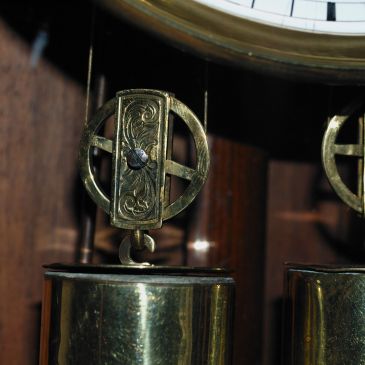
It was clearly evident that the clock had been worked on at least once in its life. A number of bushings had been installed, 8 in the front alone (and perhaps a number on the back plate), however, there was no evidence of poor repair. The clock was serviced by a clock repair shop owned by a gentleman named Hebb in 1944, Bridgewater, Nova Scotia as he left his pencil notation to that effect inside the case. There is no label on the inside of the clock; it would have been nice to see one. However, I do not see any evidence that one was ever there.

Ingraham time and strike

clock pendulum
Pendulum with patent from Dec 11. 1877

I discovered the suspension spring was bent so much so that the pendulum bob was striking one side of the case. It was likely transported with the pendulum attached. That could have been years ago and perhaps the seller thought it was not repairable.

A quick fix. Take the rod and suspension spring (one piece) off the post and unbend it, reinstall it and give the pendulum a push and adjust the verge to find the beat. I applied a little pivot oil to the bushings in the front of the clock and observed the action. I was initially getting 3-5 minutes before the clock simply stopped. Okay, let’s try this again, I said. In time up to 10-15 minutes and now as I sit here it is running 2-3 hours before stopping. The escape wheel is wobbly (bad bushing) and a few other bushings are suspect but if I can get to to run reliably for several hours I will pull the movement out and lubricate the bushings on the other side. Granted, this is no substitute for a proper servicing but it allows me to determine how much of a repair it requires. On the other hand, the strike side seems to be functioning normally.

On the upper right side of the movement there is a long rod that is looped at both ends. One end is attached to the count wheel lever. I am thinking two things, first, a way of determining the time in a darkened room or or secondly, a method of syncing the strike with the time. It is in a very awkward location and I wonder, why not just turn the hour hand, which is a friction fit, to the corresponding strike if it is for syncing the time.

Otherwise the case hardware, hinges and clasps are in excellent condition. The glass is perfect. The hands look a little unusual though I believe they are the original.

clock hands
clock hands

I let the clock sit for a couple of days to give me an opportunity to work on the case. Such a beautifully designed case with rich rosewood veneers. It was very grimy with years of oils and dirt. I used my go-to cleaning solution, Murphy’s Soap which quite literally took off all that dirt and grime. The soap leaves a little residue which can be polished out much like wax. The gleam of the rosewood veneer suddenly came to life.

My first inclination when I first looked at the clock was that some minor case restoration was needed but after cleaning the case I was really impressed with the results. Not much else has to be done but the only area that concerned me was the base trim which I thought could use a little attention. You can see here where the finish has been abraded due to years of cleaning around the clock.

Here are some before and after shots of my work on the case. The rosewood veneers are in fine shape but you can see the base pieces had been scuffed and marred over time. The first is the before photo showing marred corners and areas where finish has lifted off the trim.

RS Ingraham Huron (21)
Before cleaning the case and it’s trim piece

The second and third photos show the results of a very through cleaning of the case and base trim pieces which included taking off what I believe was a whitish patch of lifted finish with a sharp razor followed by a light application of yellow shellac.

RS case (1)
After a thorough cleaning and a  light application of shellac

RS case (3)
Second photo taken with a camera flash showing the base pieces

Shellac, a protective wood covering would have been used at the time the clock was made. I am pleased with the results and now on to the movement itself.

So far so good. This clock will certainly occupy a prominent location in our home.

Website Powered by WordPress.com.

Up ↑