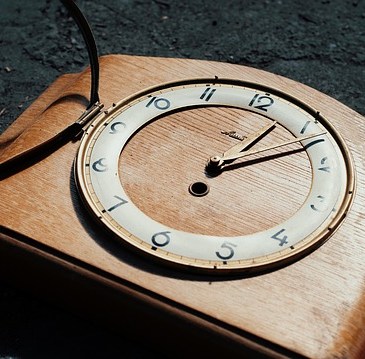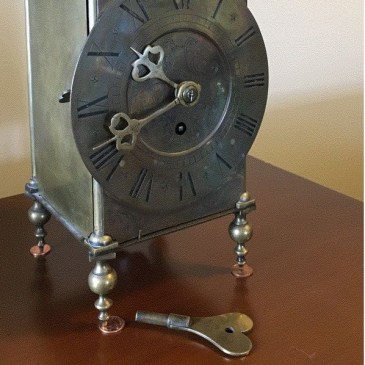
Last week I wrote that I was in the process of deciding whether or not to purchase this Swiss made Jaeger LeCoultre musical alarm clock. I saw it in an antique store in Langford, BC (Canada) and went away thinking about it. I had several questions in my mind as I walked away.
The seller was asking CDN199; a fair price?
Is it collectible?
I would like to narrow the vintage, the year it was made, thoughts?
I ended up not buying this clock for three reasons
3 days later the same seller decided that he wanted CDN299 and would not negotiate a lower price.
An extensive search on all auction sites plus clock related sites revealed no references to this clock although I have no doubt that it is a Jaeger LeCoultre. That leads me to believe that it is not as desirable as other LeCoultre alarm clocks.
I question the ethics of an antique dealer where half or more of the items on the floor have no price tag.
How do I feel about passing up this clock? The seller did not get my money! It would have nice to have, but more opportunities to find a similar clock will come along and likely from an ethical seller.
Tick-Talk Tuesday is about the letters and comments I have received from you, the reader, concerning your clocks, issues you might have had and challenges you face and my responses to your questions with advice on your particular clock concern(s). For those comments and questions that stump even me, I consult within my clock circles for the best possible answer.
Stromberg Carlson master clock
DP writes to me and asks what the lever does on the anchor (left arrow) and what happens if you move it one way or the other. He also asked about the purpose of the slot as indicated by the right arrow. The right part of the photo refers to a lower part of the clock.
Well, first of all what is DP referring to. This is a Stromberg Carlson master clock manufactured in 1947. Stromberg Carlson was a telecommunications equipment and electronics manufacturing company in the United States, formed in 1894. It was one of five companies that controlled the national supply of telephone equipment until after World War II.
A master clock is a precision clock that provides timing signals to synchronize slave clocks as part of a network of clocks. Networks of electric clocks connected by wires to a precision master pendulum clock began to be used in institutions like factories, offices, and schools around 1900. Many of you might recall the Simplex clock in your classroom which was but one slave clock among dozens in your school all physically connected to one clock, the master clock.
I do not have a particular expertise in Electric horology and asked him if I could consult within my clock circles.
Later on that day I responded. “Regarding your question (s), I gather you know that you have a master clock from which any number of slaves are run. The arrow on the left appears to be a contact activator similar to what one one might find on an IBM master clock, for 2 second contacts to advance slave clocks at a fast rate of impulse every two seconds. The slot on the right looks like it would be for an anchoring screw.”
Stromberg Carlson movement
DPs response. “As you can see in this other clock mechanism that it doesn’t have that lever so yours is a good explanation. There is 6351-M stamped on my clock mechanism. However, the clock itself is not in its original configuration. I was told that originally it was used as a master clock in a school to control all the other clocks. I was told that an electrical engineer reworked it so that it would run off of house current. Too bad that he didn’t leave it the way it was originally. You can tell from the holes in the back wooden panel and now an occupied ceramic insulator that the was much more to it.”
As DP states, his clock was converted. In fact many were converted from 20VDC to 110 volts AC. Presumably a safer way to run the clock but unfortunate because it takes away some authenticity.
In answering DPs question I have now expanded my knowledge of electro-mechanical clocks.
Saint Patrick’s Day – it is only fitting to feature a Smiths Enfield mantel clock that came all the way from Ireland
Starting Tuesday, March 21st I will feature a regular blog called Tick-Talk Tuesday.
The purpose of the blog is twofold, the first, to talk about letters and comments I have received from you, the reader, concerning your clocks, issues you might have had and challenges you face as well as my responses to your questions and my advice on your clock issues and concerns. The second purpose is a place for you, the reader, to profile your favorite clock or a clock that has presented a particular challenge for you.
The focus will be on you, the reader
So, the focus will be on you, the reader and contributor. Most of the comments and questions are ones that I have received privately but to preserve anonymity I will not mention names. To profile your clock, simply send me photos and a description (my contact email is ronjoiner@gmail.com) and I would be more than happy to present your prized clock to the many readers of this blog. Although privacy is important, let me know if you do not mind having your name published.
I am looking forward to this feature and between us it should be very informative.
Jaeger LeCoultre clocks are a favorite among collectors
Jaeger LeCoultre alarm clock
Jaeger LeCoultre clocks are a favorite among collectors of high-end luxury timepieces, often bringing in hundreds of thousands of dollars at auction. Jaeger LeCoultre to this day produces high quality desk clocks and watches in addition to their famous line of Atmos clocks.
I was in an antique shop in Victoria, BC recently and I must confess that I have never seen so many antique and vintage clocks in one place outside a museum. (I’ll cover those in a future blog article)
There were so many French and American mantel and wall clocks that I went by this diminutive clock twice before stopping to take a more careful look. On the clock face it says LeCoultre and underneath the base there is a label that says Faust Waltz, the musical tone of this alarm clock.
It is small but substantial in weight. It is an authentic 8-day gilt or lacquered bronze Swiss made clock from about the 1960s to 1970s though it may be earlier. There are no obvious dents or scratches on the case and no marks on the glazing although I did not have enough time to examine it more closely. I have no idea whether or not it is in complete working order but the fact that music box functions is encouraging.
Rear of clock showing winding key for the music box on the lower left
Unfortunately I was taking shots with low light and using a flash would have attracted too much attention from the owner. The quality is not up to my usual standards.
I am in the process of deciding whether or not to make the decision to buy this clock. In the meantime I have several questions:
The seller is asking CDN199; a fair price?
Is it collectible?
I would like to narrow the vintage, the year it was made, thoughts?
There are plenty of different styles of LeCoultre alarm clocks on the net but I could only find one photo of this particular clock. Either it is rare and desirable or uncommon and not worth considering. I hope it is the former.
It is a French mantel or shelf clock. I have no idea of the maker but it is an antique (over 100 years old), possibly 1890 to 1900. It has “Marque Deposse” stamped on the back plate but that simply means “trademark” in French. It is not a maker’s name. The clock is 11 inches high by 8 inches wide by 5 inches deep.
Rear access door
It is a time and strike movement on a coil gong. Unfortunately, the strike side does not work though the seller disclosed that to me before I bought the clock. I can feel the tension of the spring when I turn the key in the arbor but the spring does not engage the click, so, a broken or disconnected click I presume. The previous owner described it as having a melodious sounding gong. I would love to hear it. I wondered if the spring barrels could be taken out without separating the plates but further research has revealed that the movement must be dis-assembled.
Clock face
The clock dial face is in two sections. The brass inner pan is surrounded by a porcelain dial with painted numbers. The dial door is flat glazing in a brass bezel with a high quality “hidden” hinge. A taper pin holds the delicately crafted hands. There is a smaller arbor, a speed regulator above the 12, which allows more precise tuning in concert with a speed adjustment on the pendulum.
Pendulum back showing stamped numbers
Aside from numbers on the back plate, an identical batch number on the pendulum and the Marque Deposee stamping, there is no makers mark. There may be a mark on the gong block but I won’t know until I release the nut on the base panel to take it out from underneath the clock. The numbers on the back plate are 3851-55. The number 5 5 is the pendulum length as in 5 and 5/12 French inches.
Front side of pendulumTime and Strike movement
The movement appears to be of superior quality though common in a number of higher end French clocks. From what I can determine, the movement can be taken out of the case by undoing the two screws that go through the back bezel into the brass straps that protrude through the case from the front bezel. The movement should come out through the front once the two screws are released. The movement looks clean and there is sufficient oil in the pivots (no black or green gunk). I have other projects on the go so it might take me some time to take the movement out for inspection but for the time being I will let it run to regulate it.
The Corinthian style case is very heavy and is quite possibly Dinant Belgian Black Marble. Aside from the non-functioning strike side there are other issues. One is a very noticeable chip on the bottom right corner of the base which you can see in the photo below and the other is a small chip in the top left corner which is less visible. Close-up that larger chunk out of the corner looks ugly; from a distance it is hardly visible.
The worst of two chips, bottom right corner
Despite the slight damage the overall look is impressive. Most of what I see is well preserved. Indeed, it is a very attractive and stately antique French mantel clock that now occupies a prominent place in our family room.
Who made it? Unless there is a maker’s mark on the gong block or somewhere else on the movement, I may never know.
“Life is a box of chocolates….you never know what you are going to get”, Forest Gump
Buying a clock without actually touching and inspecting it is always a gamble and making a judgement based on images, many of which are poor quality, complicates the decision-making even further. There are stories of people buying clocks online only to find that the clock they thought had a antique mechanical movement arrived with a quartz one.
There are many challenges facing the clock shopper in today’s online world. Once your interest is piqued you may ask yourself these questions:
Did I get my money’s worth? Will I be “ripped off”?
Will it work when I get it home?
What do I have to do to fix whatever might be wrong?
What did the seller not disclose?
There are accepted rules about buying clocks on online for-sale sites. Online for-sale sites are ubiquitous and in many countries in the world. Here is an example of rules that are found on a particular site that I frequent.
All transactions should take place in person with cash. Do not ship items and do not accept other payment methods.
Never click links in an email that ask you to sign in to xxxx. All “Your xxxx account has expired” emails are fakes.
xxxx, eBay and PayPal do not offer buyer or seller protection for xxxx items. Such emails are fakes.
But for more specific rules on how to buy that special clock you were always looking for, see Ron’s Rules at the end of this post.
Follow this exchange between myself and the seller and consider my thoughts on this and other online clock purchases later in the article.
The clock
Unknown mantel or shelf clock.
Actual Ad photo
The exact words of the ad
Wind up alabaster clock. Very heavy. $80.00
The email exchange between myself and the seller
NOTE: This particular online for-sale site has an encrypted email service, therefore in my exchange I do not know the seller’s actual email address. This is a necessary protection for both parties.
Me
Do you know the company that made the clock and how old it is? Thanks
From the wording of the ad I am assuming at this point that the seller knows very little about the clock
Seller
Sorry I don’t know who made or how old it is. I bought it in an auction a few years back. Thanks xxxx
Me
Since you do not know the maker and I would have to drive from xxxxx, would you accept $60 for the clock.
Seller
Before you decide to drive from xxxxxx I would like you to know that the chimes do not work. I know that the clock would be worth more but 60.00 is fine if you would like to have it. Thanks xxxx. Let me know .
Me
If the chimes don’t work it is not a huge problem. Does it look like all the parts are there or is anything missing? I am still interested if the parts are there.
Seller
Everything is in tact. It was last serviced a few years back and worked great, but went to wind the chimes and they seemed to slip on the spring… However the clock still works just had it put away for a couple of years.
Me
For $60 I will buy it. How does 2pm today sound?
Seller
Yes we will make sure we are at home. Will you find the place OK? If not we could meet you part ways.
Later
I provided the seller with my telephone number. He subsequently calls to give me his address. The call is important because I suspect he wants to get a feel for who he is dealing with and that is the correct way to approach sales such as this.
Thoughts
It is important to be ready to pick the item up ASAP. You do not want to allow too much time for the seller to have second thoughts or to have someone else move in ahead of you. I often suggest meeting that same day, in a neutral place or at their home but most suggest meeting at their home. A neutral place is an option and I had to do this only once in over 2 dozen purchases.
My preliminary analysis based on the limited information that I have is that it is an French or English made time and strike shelf clock and judging from the problem on the “chime” side it might just be a bad click although it is possible that parts of the movement have been damaged. It is impossible to know until I see it and bring it home.
You might suggest I ask more questions about the clock or have the seller send additional photos of the movement or even a closeup of the clock face. It is only a $60.00 clock! In my experience once you attempt to have the seller take extra steps to sell their clock especially a clock at this price, the chances of a loss of sale increases. Were I to shell out hundreds of dollars I would definitely ask for more information and detailed, higher resolution photos.
Ron’s Rules
Locate the clock you are looking for online and try to avoid Chinese or Korean clocks often advertised as “31 day” clocks. (For some reason people think they are worth a lot of money and they are garbage – usually!)
Communicate by email and ask questions but not too many as to scare the seller off. Suggested questions might be:
Does the clock run?
Who is the maker (manufacturer)?
If it does not run, are all the pieces intact?
How old is it?
How long have you had it?
Would you accept a lower price because…….(justify reason(s))?
Arrange final meeting details by phone.
Meet the same day if possible.
Meet the seller in person.
Meeting at their home is preferred but a neutral location such as in front of a public building or in a mall is an option
Pay in cash.
Thank him/her for the sale.
Final thoughts
Check the dates on the listings. The longer they are listed the more the seller is inclined to sell for a better price.
Once, I gave the seller a day or two to think about my offer. I took a chance but got the clock for a decent price. (see first image)
Meeting the same day is crucial; you don’t want the seller to get cold feet and you don’t want someone coming behind you to buy the clock.
Only once did the seller accept a cheque from me because of past dealings with him. Cash is the rule.
If you cannot negotiate a final price by email suggest talking it over on the phone
Be courteous and polite at all stages of the deal
My wife and I are in the mood for a road trip. Now, with cash in hand, let’s get into the car and go for a drive.
This is Part II of a multi part series on the Sessions Westminster A chiming mantel clock.
Side view of Sessions Westminster A
Inside the plates they are a conventional Sessions clock. Outside the plates is an entirely different story
Sessions Westminster A clocks are true chiming clocks that play the Westminster chime sequences on the quarter hours and strike the hour count on the hour. The unique design combines the chiming and striking functions in one train powered by a single main spring. Between the movement plates these movements are very similar to other Sessions non-chime (strike only) movements. The going (time) train is controlled by a basic recoil escapement with the strip pallets or verge located between the plates. Inside the plates they are a conventional Sessions clock.
Outside the plates is an entirely different story. At the front of the movement one will notice that this is a rack and snail strike train but it has TWO racks and TWO snails. A look at the back of the movement reveals a small cam in the middle of the plate and a large “player drum” or pin drum. The two racks working together with the little cam and the player drum, which can shift outward to play chimes or inward to strike the hour, is what makes it all work. The chime sequence is self‐synchronizing and with so few working parts, once setup correctly this can be a relatively trouble free movement. (Source R. Croswell’sTaming the Sessions Two Train Clock)
This clock requires servicing for two reasons;
It runs for several minutes or an hour or so and then stops
The striking and chiming is very erratic. It might strike 4 o’clock one hour and 9 o’clock the next and the hammers “hang up” during the quarter hour chime.
There are a number of “exterior” parts that must be removed before separating the plates
Dis-assembly of the Westminster A is conventional however there are a number of “exterior” parts that must be removed before separating the plates. The regulator gearing, verge, drum assembly, hammers and racks as well as other parts are removed one after another. The additional parts add considerable complication to the movement and can lead to issues when servicing. I will describe two particular issues I have encountered in the process of working with this movement. I believe these issues, which I will describe later, are likely what frustrate most clock repair persons when working on the Westminster A.
Rear plate showing regulator, verge and chime drum. Clamp on mainspring
I chose to leave the mainsprings in while taking the movement apart though I contained the power using C-clamps. On this clock the mainsprings can be removed without dis-assembly. This allows the repair person to easily service the mainsprings or the clicks (which are notoriously bad on Sessions clocks generally).
Unfastening the drum and hammer assembly went without issue since there are only two bolts securing it to the plate.
The 2 racks, a unique feature, work together to produce the strike. They are located one on top of the other and are secured to a post.
Two racks stacked on top of each other. The post on the right accommodates two springs
Taking them off requires releasing a pressure washer on the top of the post. They came out easily. However, one rack is missing a return spring which might partly explain the erratic striking of the clock. Such a simple thing that may make a big difference. I may have to buy or fashion a spring.
Rack with spring
Rack without spring. The spring clips into the hole on the rack arm
Specialized tools are needed to remove some parts. Those I don’t have
Two issues.
One, I could not remove the hub supporting the gathering pallet pins seen here. It’s unfortunate because there is more lateral movement of the arbour that I am comfortable with which tells me that a bushing is required. I did not want to risk damaging the arbour and I don’t have specialized tools to do the job. I may have to live with it. However, it may not be so bad once the other bushing work is completed.
Gathering pallet pins
Two, I could not remove the centre cam despite pulling and gently prying.
Centre shaft cam
Again, I did not want to risk damaging the arbour. Specialized tools, such as a puller in this case, are required to remove it. That, I don’t have.
This clock has a unfortunate reputation for soft pivots
I will have to work around these two issues. Pressure fitted parts on any movement are very frustrating when said parts cannot be removed without special tools and this one is a challenge indeed. Re–assembly might be a little frustrating particularly with the centre arbour still attached to the rear plate which may effectively be “in the way” of positioning other wheels in place.
I inspected the pivots on the wheels and they all look good (no tapering) with expected wear for a clock of this period. I was worried because this clock has a reputation for soft pivots and perhaps because this is a later model, Sessions might have been introduced harder steel for the pivots. There is plenty of bushing work that needs to be done, however.
On to cleaning, bushing work, re-assembly and testing in Part III.
This is Part I of a multi-part blog wherein I explore the challenges of repairing a Sessions Westminster A tambour style time, strike and chime mantel clock. This part is the introduction.
Th Vintage Sessions Westminster A mantel clock
In August 2015 I wrote, “This a good project clock that is not for the inexperienced. As I gain more knowledge I will tackle this most interesting clock.” Well the time is now.
Well, it’s been two years and I have looked at this clock often enough and wondered what it would be like to finally get it running. Time to take the plunge.
The Sessions Westminster A mantel clock was made in Forestville Connecticut, USA. The first year of production for this model was 1927. Between 1903 and 1933 Sessions produced 52 models of mechanical clocks, ranging from advertisers, large and small clocks with logos of various businesses, to wall, or “Regulator” clocks, and shelf or mantel clocks, designed for the home.
Some Sessions clocks from this period are prized by collectors. The Westminster A is particularly sought after though collectors prefer it to be serviced and in running condition.
Raised Roman numerals and faux inlay
The case is in exceptional condition
The clock is tricky to repair and most horologists prefer to stay clear of it
This clock is 21 inches long and 10 inches high, has a mahogany finish with faux wood inlay and raised metal gold-coloured numerals on the dial face. It is a quarter-hour 8-day Westminster chime clock operating on two trains, the going train (time) with the strike and chime train combined. It also has small arbour just below the hour cannon to turn off the chimes/strike and is called “Silent Chime”. Sessions was not alone in producing two-train clocks and other makers incorporated this design later in the 1930’s and 1940’s. However, Sessions was probably the best known for this feature. This clock was sold in 1931 (inscription on label, back of access door). The sale price was $29.95 which would have been substantial considering a working man’s salary in those days.
Sessions Westminster chime drum
The clock is tricky to repair and horologists will generally try to stay away from it. I will be going through a step-by-step process and relying heavily on Robert Croswell’s excellent instructional manual called Taming the Sessions Two Train MovementFebruary 2016 edition.
In August 2015 I wrote, “This a good project clock that is not for the inexperienced. As I gain more knowledge I will tackle this most interesting clock.”
I have done some bushing work and from what I can see there is certainly bushing work to be done. I have removed the movement once before to replace a bad click which as easy fix since the mainsprings can be removed without dis-assembly. The click holds the tension or power of the mainspring and is identified by a clicking sound when the key is turned. But the real challenge will begin as I attempt to understand how the chime mechanism works and if I can re-assemble it successfully.
Follow me as I dis-assemble, clean and repair the movement in Part II.
Occasionally, I receive private email from readers.
One reader asked why I dated the clock to 1950
I received a couple such emails regarding my Kienzle World Time clock and it prompted me to dig a little deeper into the origin of this unique clock.
The clock is substantial, measuring 13 and 3/4″ high, 10″ wide 2 and 1/2″ deep. It is certainly a singular work of elegance, style and a genuine stand-out in any room.
Vintage single train Kienzle World Time desk clock
One reader asked why I dated the clock to 1950.
I referred the reader to this article. The article suggested that the mechanical version of the World Time was introduced the late thirties. It had a healthy production run and there were several variations. Mine was “Made in Germany” (West Germany was created in 1949) and might have been manufactured on or before 1949 which would not have prevented it from selling in the 50s. For most of the ones advertised on Ebay, 1950 appears to be the most commonly cited year of manufacture though there are no specific markings regarding date of manufacture on my clock.
It was designed in 1939 and at least one clock was made that year
However, here is some additional information which suggests that although it was designed in 1939 at least one clock was made that year though it did not go into full production until much later.
A birthday present for an infamous leader of Germany
The first Kienzle World Time clock was presented to Adolf Hitler on his 50th birthday in 1939 by the government of Würthemberg. The classical design with the world map in the “Mercator” (cylindrical map projection) style and the moving narrow scale with the time in the denoted cities came from the, at that time, Heinrich Johannes Möller, a famous designer who was working for Kienzle from 1931 onward til 1970. Möller was hired at age 27 and became Kienzle’s principle designer. The original clock had a bulky “foot” or base and was decorated with swastika patterns on the edge. After the war, the decoration was altered, the base became smaller but the general layout of the dial was preserved through all permutations of the clock, from the early mechanical versions to the electro-mechanical version and finally the quartz movements in the 80s. A curious feature of the clock is that it shows Germany to be the centre of the world.
Kienzle 24 hour time sequencer
Back of Kienzle clock showing winder and speed adjustment
The World Time clock turned out to be a long standing model and was available to purchase up until the 1996 Kienzle bankruptcy. During the period that the World Time Clock was introduced (1939) Kienzle had more than 6500 employees and a production rate of 5 million clocks.
Through the later 50s and 60s Kienzle clocks lost their stylistic prominence and followed then current (international) stylistic influences but Heinrich Johannes Möller was a significant influence not only on the design of Kienzle clocks but in the clock world in general.
Ridgeway Hamilton Country, Westminster Chime, 1996
How did we get the name grandfather clock?
Most serious clock collectors and enthusiasts do not use the term grandfather clock when conversing with each other.
Firstly, most clock collectors and enthusiasts do not use the term grandfather clock when interacting with each other. I tend to use the word when conversing with family and friends because they know exactly what I am talking about. The name first appeared in a song. In 1876, a song called My Grandfather’s Clock by Henry C. Work popularized the term grandfather clock and the name has stuck to this day. You can listen to Work’s famous song here.
Twiss Canadian tall clock circa 1890
Secondly, depending on where you are in the world this style of clock may have a different name. In England it would be referred to as a “long-case clock” while Americans prefer the term “tall clocks.” During the 20th and 21st centuries, some writers, including those writing for museum-sponsored publications, have combined regional names into one term,“tall case clock.” It is also referred to as a “floor clock”. These clocks have the following features in common. They are a tall, freestanding, made from a variety of wood, are time and strike though all modern clocks include a chime, weight-driven pendulum with the pendulum held inside the waist or throat of the case. The case often features elaborately carved ornamentation on the hood (or bonnet), which surrounds and frames the dial, or clock face.
A trio of Arthur Pequegnat tall clocks, circa 1912
Let’s go further back in history
Let’s go back in history. In the 16th and 17 century English lantern or chamber clocks were popular but they had serious limitations. Lantern clocks used a verge and foliot escapement and were notoriously inaccurate and unreliable, in fact, some had to be wound two and three time a day and were limited to a 12-15 hour run time. Many of the verge escapement with pendulums had a very wide pendulum swing.
It is widely accepted that the anchor escapement was invented by Robert Hook around 1657. An escapement is basically a speed regulator on a clock. At about the same time the pendulum was invented. The anchor escapement made for shorter pendulum swings, and heavier and longer pendulums. Since the pendulum had a lower beat a clock with an anchor escapement required less power and could run longer, up to 8 days. Only then did cabinetmakers get involved in building a case around the weights and pendulum. For an excellent article on the origin and evolution of the anchor escapement go here.
Hugh Gordon long-case clock circa 1740
As long-case clocks became popular regional styles began to emerge.
This article will explore the notion that a Vienna Regulator clock is not a true regulator. I realize that any discussion of regulator clocks produces a wide variety of conflicting opinions, nevertheless, here is my take subject of the Vienna Regulator and why it is not a true regulator.
The word “regulator” is loosely defined but according to this definition it is a master clock, usually of great accuracy, against which other clocks are checked. Respected collectors like Derek Roberts tend to stay away from defining a regulator clock and instead refer to them as precision pendulum clocks. In this article I will present three examples for the reader to consider.
Every clock that has the word regulator on it is not a regulator
Every clock that has the word regulator on it is not a regulator. Think about it. Why would a clock manufacturer put the word “regulator ” on a clock? It is simply a marketing ploy. The term “regulator” is one that connotes accuracy but in the frantic world of clock marketing it is a word that sells plenty of clocks.
If it was expressly designed as a precision pendulum clock it can be called a regulator
Definition of a regulator
It is not difficult to define a “regulator” by its mechanical characteristics. Regulator clocks were invented in the late 18th century as a quest for greater timekeeping accuracy. If the clock was designed as a precision pendulum clock it can be called a regulator. The principle features of a regulator clock are:
Quality weight driven device,
With maintaining power,
A heavy pendulum (not necessarily mercury),
Generally eight-day movement, though some are more than 8 days,
Has some form of temperature control compensation,
Has a seconds dial,
Is 60 beats per minute,
Has one gear train
Features a deadbeat or pinwheel escapement and
Is expressly engineered to keep accurate time.
Complicated features like calendars and strike trains are omitted in the quest for accuracy. Regulators were (are) capable of extreme accuracy for a mechanical clock.
Does the addition of a strike train take a clock out of the regulator category? In theory, yes. The strike train takes some of the accuracy out of the clock, as the time train produces more friction when lifting the strike levers. If we accept the definition of a regulator as an extremely accurate clock to be used as a time standard, you will not find a strike train on these clocks.
Here are three examples
Example number 1. Arthur Pequegnat Regulator #1, A Handsome Clock, fitted with a Movement which is un-excelled”, Beautiful Finish on both Movement and Case, (Arthur Pequegnat advertisement)
The Arthur Pequegnat Regulator #1 clock is often compared to the Seth Thomas Regulator #2 as a precision regulator. Many Regulator #1 clocks found their way into offices and rail stations all across Canada. The Regulator #1 is the best timekeeper made by The Pequegnat Clock Company of Kitchener Ontario (Canada). The company states this in it’s advertising: “A Handsome Clock, fitted with a Movement which is un-excelled“, Beautiful Finish on both Movement and Case” and “The Finest Office Clock Made”! They are weight driven, time-only, at 80 beats per minute, had a deadbeat escapement, with heavy pendulum, eight day movement with a brass weight hung on an iron bracket, maintaining power, a seconds dial and were designed to keep accurate time. It was a reasonably accurate clock used as a time standard.
However, some would argue that at 80 beats per minute it would not be considered a true regulator.
Is this Arthur Pequegnat Regulator #1 a regulator?
Example number 2. Mauthe “Horse Crown” time and strike spring driven wall clock.
The clock you see in the photo below is typically advertised on online for-sale sites as a “Vienna Regulator”. It is an attractively designed 1890s spring driven, time and strike clock made by Frederick Mauthe. Those individuals who sell these clocks have no hesitation in calling them Regulators. Let’s apply the definition above.
Is this a precision regulator?
A spring driven movement disqualifies it immediately.
Is it not capable of extreme accuracy.
It is 116 beats per minute
Was it conceived and designed as a precision clock? No!
Is this Mauthe horse crown wall clock a Vienna Regulator?
Example number 3. Miniature one-weight Vienna Regulator
This is an Austro-Hungarian era time-only weight driven clock made in the early 1870s. Many would accept this as a Vienna Regulator and would have no hesitation advertising it as such. It has a deadbeat escapement, it has one weight, is a time-only movement, has a heavy pendulum, with an eight day running time and has maintaining power.
Is this one-weight miniature Vienna wall clock a regulator?
Let’s apply the definition above.
Is this a regulator? No!
There is no seconds dial, and, is
80 beats per minute
Is it capable of extreme accuracy. No!
Was it specifically designed as a precision clock? No!
Granted, it is capable of some accuracy but it is not a reference timepiece. However, there is little doubt that some post office and rail clocks in the Vienna style such as this Wilhelm Bauer post office wall clock (below) were considered “regulators” in their day when common folk set their watches and clocks by them.
Is this Wilhelm Bauer post office clock a regulator?
The Vienna Regulator clock and its characteristics
The Vienna Regulator is a particular style of clock made in Germania or the Austrian empire. They are characterized by finely crafted (ornate at times) cases with accurate movements. While they were capable of keeping good time, they were not designed as a precision instrument and were not capable of extreme accuracy. They have some but not all the characteristics of a regulator but they are not a true regulator. While the Vienna Regulator may not be true regulator it reflected not only the style and craftsmanship of the period they were made but the quest for accuracy. No one can argue that the best workmanship and attention to detail were put into the many clocks that were produced during what some might call the pinnacle of clock design and engineering.
As much as they are called regulators the three examples presented above are not true regulators. Regulators were (are) capable of extreme accuracy for a mechanical clock and nothing I have in my collection remotely qualifies as a regulator.
However, in the world of clock collecting and repair it is perfectly acceptable to continue referring to them as regulators since they are generally accepted as such. The word regulator has become part of the lexicon of collectors even if they do not strictly fall within the definition of a true regulator clock.
The Germans would not have called them schoolhouse clocks, rather, short drop octagon wall clocks. The term “schoolhouse clock” is typically an American description.
The stylistic features of the Jauch reminds me of my Canadian made Arthur Pequegnat Brandon II wall clock
Jauch wall clock
We often cruise the HiBid sites. I am not sure if they are wholly Canadian but may be in the US as well. HiBid are a hosting service for antique online auction companies and from time to time clocks come up on estate sales on various sites. One day in the past week (early February 2017) we were on a Nova Scotia HiBid auction site and noticed a Jauch drop octagon with a PL42 movement and I made what I thought was a reasonably small bid. We had errands to run that day so I just left the bid, got home later and realized that I had won. It was a good purchase.
The stylistic elements of the Jauch reminds me of my Canadian made Arthur Pequegnat Brandon II wall clock pictured here.
Brandon II by the Arthur Pequegnat Company of Kitchener Ontario, Canada
I picked the clock up yesterday (mid February 2017). There is very little wrong with it. I took the movement out of it’s case, inspected it, noticed that it was not very dirty, gave it some oil, and put it on the wall and it ran like a charm. Since it is not in dire need of disassembly and cleaning I decided to leave that for another day.
It has some unusual features. The case is solid oak, no veneers and surprisingly heavy for a clock made in 1976. The finish is light oak. The case measures 15 inches wide by 23 inches long, 5 1/4 inches deep. The movement is a time only, typical spring driven recoil escapement stamped PL42, is heavy and is well constructed with quality gearing. The date of manufacture for the movement is September, 1976. The dial bezel is hinged at the top and the spade hands are what you would typically find on this style of clock. The dial is paper on tin. The pendulum has a large and heavy nut on the back of the bob that may not be original to the clock and I am inclined to think it is a replacement. The bob can be seen through a glazed lower access panel. The previous owner made a crude “adjustment” to the case to accommodate the pendulum swing (last photo). One of two wall stabilizer screws can be seen in the fourth photo below. There is a missing top section access panel on the back of the clock that I may or may not replace.
Well made solid oak construction
Movement showing escapement
Pendulum and adjustment nut
Jauch pendulum adjustment
The clock is a Gebruder Jauch wall clock. Gebruder Jauch was a clock company from Schwenningen, Deisslingen, Germany. The Gebruder Jauch company manufactured hall, wall, and mantel clocks. They made movements for the trade, both spring and weight driven. In the late 1970’s the company fell victim to curtailed exports and the last recorded year of operation was 1978. The year they began is unclear but 1912 seems to be the consensus. Otherwise, I could find very little on this clock company. Perhaps someone can enlighten me.
This year I decided to part with three of my vintage clocks. Rather than sell them which would have offset tool purchases, I decided that there is no better way than gifting them. I have three adult children (is that an oxymoron?) and it was a matter of allowing them to choose what clock they wanted out of several choices.
My oldest chose a vintage Sessions American No 2 shelf clock seen here.
Sessions American No 2 time and strike shelf (or mantel) clock
She loved the natural mission oak style and the simple lines. This clock required a little work before it was handed over to my daughter. A thorough cleaning of the movement as well as 5 new bushings and a new click on the strike side were required. There is similar American model made by Sessions, the No 1, which did not have the fluted columns. This one was made was around 1922 and was a very popular model for Sessions.
My second daughter chose a Sessions Raven time and strike mantel clock pictured here. It is also from the early 1920s.
Sessions Raven time and strike shelf clock
She liked the ebony finish, the sound of the strike, the simplicity of the lines as well as the 4 delicate columns and added that it would go great with her furniture as you can see in the photo below. I agree. This clock was serviced just before I received it about a year ago but I took the movement out, inspected it, oiled it and returned it to its case.
On display in my daughter’s living room
My son chose one of my earlier clocks, a Daniel Dakota time and strike wall clock circa 1960s. It was in very good condition for a Chinese clock though I took it apart, cleaned it and oiled it. Made in China clocks are practically bullet proof though due to their cheap construction they are prone to explode. Not the prettiest clock around but these things last a long time if you given them just a little care and attention.
Daniel Dakota time and strike wall clock (bottom ornamental piece missing)
If you are a collector, why not gift your clocks to friends and family? Clocks are endearing memories by association. Children love receiving clocks from their parents not only because of their collectible value (perhaps) but as a keepsake, a reminder of good times and happy family memories. I am sure that every time they wind the clock they will think about that one or more happy occasions and if something goes wrong with their clock it provides an excellent excuse for dad and mum to visit! And we certainly will with tools in hand!
My current project is an antique German Junghans time and strike spring driven wall clock made in the style of a Vienna Regulator. It was made in Schwenningen, Germany. It came to me as a box of parts. To some a box of clock parts and pieces is discouraging but to me it is a challenge.
This is Part 3.5 of a now three point five part series on my newly acquired Junghans Crispi wall clock.
This is Part III and a half of a series on my newly acquired Junghans Crispi wall clock. In Part I described the circumstances by which I came across this clock and it’s incredible story as a survivor of the Halifax Explosion on Dec 6, 1917. In Part II I walk the reader through the servicing of the time and strike movement. In Part III I talk about the challenges of restoring the case.
I felt compelled to write Part 3.5 of the series showing the work I completed on the crown and the additional case work. I wasn’t sure how far I would go in restoring the case but the top finials are so essential to the final look of the clock that I decided to add these important elements.
The original finials might have been a little taller and wider much like the bottom centre finial
I bought three 3 and 3/4 inch finials from Timesavers. A wood lathe would have been ideal if I had one. I tried to imagine how the original finials looked and took a chance on what I felt were the most ornate without being too ostentatious. I believe they do it justice and complete the clock. The original finials might have been a little taller and wider much like the bottom centre finial but Timesavers has a rather limited selection. If I come across something closer in design in the future I can simply pull these out since they are not glued in place.
Support post for middle finial
As you can see above, I have clamped the final bases to the crown and test fit the three top finials which had just been given their first coat of stain. The support post is made of oak and anchors the crown to the case. It will eventually be screwed in place. The post not only attaches the crown to the top of the case but also supports the middle finial base (next photo).
Test fitting the top finial
The lion’s head on the crown has also been nailed in place using its existing holes.
Buttons and decorative nails
The case has an unusual number of decorative nails and buttons. Fortunately most of these decorative trim items came with the clock. Everything you see in the photo above is original save for the upper two floral brass buttons. Years of grime and dirt has been removed from the original decorative buttons, nails and pins.
Crown in place with all three new finials
The clock reflected the Victorian era (1837 to 1901) of showy complicated designs with an emphasis placed on bright and brassy surface decoration
The crown is in position although for the moment it is merely sitting in place. I have added two new decorative nails to the finial bases. Although they are not exactly in the style of the other decorative nails, they are in keeping with the period look of the clock. The two brass buttons on either side of the movement support bracket (above photo) are replacements. The buttons, nails and trim pieces on the top part of the case, are original and cleaned up nicely.
Full view of case
This is a full view of the case with all decorative nails, buttons and trim pieces attached. Below the movement support bracket and on the side columns are two half moon wood pieces (one round decorative pressed wood applique cut in half) that replicate the original detail.
The clock is very garish; some might even call it gaudy. Other clocks I have from this period (1899) are not as pretentious as this one. This look may not be everyone’s cup of tea, but it appeals to me. I am sure that it will always be an interesting conversation given its fascinating history. Overall, I would say that the clock accurately reflects the Victorian era (1837 to 1901) with showy complicated designs and an emphasis placed on bright and brassy surface decoration.
Final look with crown attached and movement installed
The above photo shows the case with movement, pendulum, face, brass bezel and hands attached. At this point the clock is about 90% complete. The final steps in this project are securing the door to the frame with hinges purchased from a supplier, attaching the door catches, installing “new” glass, applying a protective top coat finish using Minwax semi gloss wipe-on poly and finding a way to replicate a wood trim insert piece on the left column just above the rectangular brass decorative piece.
Arrow indicating missing trim piece
The clock came without the glass and it obviously must be replaced. I managed to find an old glass window in my area with sufficient “waviness” to replicate the glass at the time. I will have the glass cut and installed by a repair shop locally.
In the final analysis is this a restoration, repair or a replication?
Much of the clock is original; the movement, the pendulum, coil gong and movement bracket as are the bottom base and top part of the case and the crown, the back board, the vertical columns and most of the decorative trim. What has been replaced is the box frame and the front piece that supports the right and left columns. The previous owner used contemporary materials and techniques to reconstruct the frame and front piece. Although not authentic, I have no real objection because much of what he has done is unseen. I have added or will have added some decorative trim pieces, new glass, 3 new finials, hinges and catches, finial bases, used yellow carpenter’s glue where absolutely necessary, stained the case and will remove the rust on the coil gong.
In the final analysis is this a restoration, repair or a replication? Perhaps all three. However, to the casual observer it is an attractive albeit brash, lovingly restored antique Junghans Crispi wall clock that fell off a wall, in Halifax, Nova Scotia on that fateful day, December 6, 1917.
I hope you enjoyed the series and if you have any comments, ideas or suggestions do not hesitate to leave me a message.
I scour the online for-sale sites frequently and I am always amused by some of the clock ads that folks write. I wish I could post some pictures, some of the clocks are truly pathetic but copyright law prevents me from doing so but at least present the unique descriptions. None of the spelling errors are mine by the way.
Here we go:
“I have an old antique wined up clock works great runs real waits”
An ad for a Chinese wall clock similar to this Daniel Dakota
Converted quartz Daniel Dakota
“Original Carillon 1960-70 antique 31-day winding clock perfect condition. Elegant design with brass hands and pendulum. Comes with original key. Selling to people with taste $300”
No this clock does not look good!
“I made this clock myself, looks pretty good I think. $10.00”
An ad for what looks like a bracket clock:
“red color wood, in nice shape, not working, needs guts”
Not sure I’d take a chance on this one.
“Great look needs clock looked at and bulb. If I get to fixing it it will be more”
This ebony Adamantine Seth Thomas similar to this Sessions better be made of gold.
$1750.00 Good Investment, Great Gift, Excellent Condition, 8 Day, Chimes on the hour, bell on half hour, very accurate. I have owned this clock for 9 years with no problems. Circa 1890. This range of Adamantine Clocks, are known to collectors as “Black Mantel Clocks”
Session Raven time and strike mantel clock
Ad from Value-Village. I thought one could always get great deals there but not any more. And for $600 wouldn’t you want to know the maker of the clock?
“Foreign Granddaughter’s clock, Art Deco – Solid Oak -8 day, quarterly chime , Slight damage to dial and hinge, Dimensions: 55″H x 9,5″@ x 9.5″ D , Price: was $899.00 Now: $599.00!”
And another stellar Value Village ad. Are they serious at Value Village? It looks exactly like this Forestville time and strike that I own:
“Forestville German Art Deco Clock , Wood, Westminster Chimes (quarterly), Key wind in good working condition. Ca 1920. Has some damage at top of Dial. Key, Dimensions: 22″W X 5″H Price: was $499.00 NOW $349.00!”
Forestville time and strike mantel clock
More ads
“royal adult on carriage clock; never used by bulova”
“Coo Coo Clock in excellant condition!”
“Beautiful antique crank clock. Still works great”
“Clock antique, brand new. Made out of wood, heavy and durable. Japan movement powered by one AA battery. Beautiful, antique, decorative. High 9 inch, wide 7 inch.
I live Dufferin x Finch $60”
“Antique Citizen wall clock in working condition. Comes with key. Made in Korea. Asking $125 or make my an offer!”
Chinese or Koren clock perhaps. These quite often sell for less that $50. I might consider a Korean or Japanese clock but I would never pay $150 for a Chinese one. I wonder what might happen if I offered less, would they threaten me!
“Vintage Beacon regulator 31 day keywind wall clock. They don’t make em like this anymore! Solid wood (not veneers) The movements keep excellent time. This clock is over 50 years old and works like new! We do not know the exact age as father in law brought it to Canada from Germany in the early 50s. Its in mint condition and works like new. Seriously nice sounding chimes Dimensions: 28in h x 16in w (at round face) x 6in deep Key included Serious enquiries only please. Price is NOT NEGOTIABLE! This means asking price of $150.00 is my final price.”
And others.
I have this clock but don’t have time to use it. Works fine.
Misfits clock works great from smoke free home
Jack Daniel’s promotional advertising wooden wall clock, would look great session room, rex room. Clock works $75 obo
This is what happens when you get a clock in a box. Call it a collection of parts, pieces and dust. This is an antique German Junghans time and strike spring driven clock made in the style of a Vienna Regulator. There is no serial number on the movement, dating the clock to 1899 or earlier (in 1900 Junghans began to number their movements). To some a box of clock pieces is discouraging but to me it is a challenge.
Where to start?
It was advertised on a local online for-sale site as a clock that fell off a wall during the Halifax Explosion and I thought, well, that’s an intriguing story! As most Canadians know, the Halifax Explosion was a significant event in Canada 100 years ago.
On the morning of 6 December 1917 the SS Mont Blanc a French cargo ship laden with high explosives and Benzol collided with the Norwegian vessel SS Imo in the Narrows, a strait connecting the upper Halifax harbour to Bedford Basin. A fire on board the French ship ignited her cargo, causing a large explosion that devastated the Richmond District of Halifax. Approximately 2,000 people were killed by blast, debris, fires and collapsed buildings, and an estimated 9,000 others were injured.
The result was the largest human-made explosion prior to the detonation of the first atomic bombs in 1945. Nearly all structures within an 800-metre (2,600 ft) radius, including the entire community of Richmond, were obliterated. This clock is a witness to that day. In 1918, Halifax sent a Christmas tree to the City of Boston in thanks and remembrance for the help that the Boston Red Cross and the Massachusetts Public Safety Committee provided immediately after the disaster. That tradition carries through to this day.
The case is cleaned up and we are visualizing where the parts go
It appears that the parts have literally sat in a box for the past 100 years.
The blast not only shattered the glass panels but heavily damaged the box frame. It appears that most of the parts have literally sat in a box for the past 100 years. I cannot imagine when the movement last worked, probably ticking its last on that fateful morning in December. Since the box frame was damaged beyond repair following the explosion, the seller, an amateur woodworker, built a new frame made of softwood and oak veneers some 30 years ago. You can see the lighter coloured pieces in the photo below that were never stained and finished. He admits that he knows nothing about clocks and eventually lost interest in the project. I am impressed with his skills since the work on the frame looks solid and well constructed.
Top centre final is missing as well as two other finials
The top centre final is missing, two other finials and some small trim pieces
Why was he letting it go? He said there had been a change in his life and it was time to move on. When I asked him about the history of the clock he said that his wife’s grandparents lived on Princess Place in North End Halifax. Princess Place is further south of the main area of devastation so houses in that area would have sustained heavy structural damage. The clock was blown off the wall by the blast wave. The clock remained in the family all these years, the seller having received it from his wife’s aunt.
I took it home stared at the box for a while trying to decided whether or not I made the right decision. I then set to determine what steps I should take to restore this fine clock. I poked through the box to see what was there and began to itemize the parts, arranging them on the case as best I could and proceeded to clean the case and determine the next steps. I was fortunate to have had someone send me the actual catalog image of the clock which you can see below.
The clock is called the Crispi by Yunghans. Yunghans is a reputable German clock-maker and continues in the watch business to this day. This is what the clock should look like and it will be a excellent guide for restoration. There will be obviously be some subtle differences between my clock and the clock in the catalog when the project is completed but to the casual eye it will look exactly the same.
The Crispi model in the 1902 Junghans catalog
Junghans trademark
Time and count-wheel strike movement
I have ordered the following parts from Timesavers; 3 new finials in the style that best fits the clock, 2 door hinges, 2 door latches and some trim pieces. I will have to build the bases for the finials from scratch. The lower section of an oak spindle will do just fine. There are other trim items that are missing but I will strategically arrange the remaining trim pieces as best I can.
Oak stairway spindle
The best news is that the movement is complete and in working order. The movement ran for a day on a test stand before I stopped it. It needs a very thorough cleaning which will be the next step in this project.
In Part II I will describe cleaning the movement and any issues that may arise as a result of disassembly.
In Part III I will explain the procedures involved in the case restoration once the remaining parts arrive.
Last month I posted a article on Minimal Invasive Intervention in which I posed the question, how far do you go to repair, restore or conserve a clock without changing it in a significant way? I was having a discussion with my daughter who is a civil engineer and she raised the philosophical argument that questions whether an object like a clock that has had all of its components replaced remains fundamentally the same object. This paradoxical thought experiment exercise is called the Ship of Theseus. Plutarch, a Greek philosopher, asked whether a ship that had been restored by replacing every single wooden part remained the same ship.
The ship wherein Theseus and the youth of Athens returned from Crete had thirty oars, and was preserved by the Athenians down even to the time of Demetrius Phalereus, for they took away the old planks as they decayed, putting in new and stronger timber in their places, in so much that this ship became a standing example among the philosophers, for the logical question of things that grow; one side holding that the ship remained the same, and the other contending that it was not the same.
In Nova Scotia we have a sailing ship called the Bluenose II. It is the pride on our province, an important tourist attraction and our provincial ambassador. The original Bluenose was a fishing and racing schooner that ran aground and sank some 90 years ago. To honour the original Bluenose, the Bluenose II was built in the 1960s and she sailed for over 50 years before it was determined that she was in need of significant restoration. In the last 4 years the hull of the Bluenose II has been completely rebuilt. Some of the original vessel is being reused including: rigging, masts, sails, ironwork, deck structures, safety equipment and electronics. In time the masts, sails, rigging and deck structures and other components will be replaced. Will the ship be fundamentally the same? Will it retain it’s identity?
Early English lantern clock
English lantern clock converted to fusee movement
Let’s look at another example, the lantern clock. The lantern clock, a weight driven wall clock shaped like a lantern were the first type of clock widely used in English private homes in the 17th century. With the arrival of long-case clocks with 8-day movements the lantern clock became obsolete. Lantern clocks are very collectible today and those that are in “original” condition are the most desirable. The problem with lantern clocks is that almost all of them have been altered, even those regarded as totally genuine. In this example I will cite a quote from a seller of lantern clocks, D. and J. Benson, specialists in early English clocks.
We are strong believers that if a clock was converted to a different escapement many years ago, this should be retained, being part of the history of the clock, rather than reconverting clocks back to former guises. Only under compelling circumstances would a clock be returned to a former state. Only absolutely necessary restoration work is carried out in order that the original clock survives for future generations. We conserve rather than replace.
Some of the more expensive lantern clocks they offer for sale have early conversions from verge to anchor escapement. Later ones had the original movements removed and a fusee movement (single or double) installed. When converted original movements including alarm mechanisms were taken out, a single-hand was replaced with two hands (or the minute hand added), broken finals and door handles might have replaced, chapter rings re-silvered, doors are often lost due to their nature of lifting out easily. Therefore, what is the nature of the clock after it has been changed, how original is it and does it retain its identity?
One clock collector might have the opinion that if too much is done to restore a clock it is not fundamentally the same and cannot be considered original even though the new parts were made from the same materials and using the same methods when the clock was first made. Another might have the opinion that changes or alterations to the clock that bring it back to its original look and function including the making of new parts make it more “original” and therefore more desirable. Moreover, if the changes are not recognized by the observer, is the clock original?
Furthermore, if one replaces one part at a time on a clock so that at some point all parts are replaced, at what point does a clock no longer become the same clock? It follows that if you take all of those parts and make a “new” clock which of the two clocks is original? What is the nature of the clock’s identity since no two objects can occupy the same identity.
Gustav Becker two weight regulator
I am sure that those of you who are collectors have experienced the dilemma of identity. I know that when I bought my first Vienna Regulator I began to realize that many parts were replaced over the years and it made me wonder to what extent the clock is original. It is an unwinnable argument and I began to accept the notion that it may not matter to me or to a casual observer who may view the clock as completely original.
What most people visualize as the Schoolhouse clock
My recent acquisition of another schoolhouse clock stimulated my curiosity and prompted me to do some research on the origin of the name. In this article I will describe my thoughts on how the schoolhouse clock came to be and my most recent Sessions wall clock purchase.
During my research I found it very interesting that little can be found regarding the history of the schoolhouse clock. I realize that many older readers growing up in the rural areas of Canada and elsewhere in North American have fond memories of the one-room schoolhouse with a large clock in either the front or the back of a classroom. I did not live that experience rather, when I was young and attending a large urban school the Simplex master / slave clock is the one I remember best.
The schoolhouse clock that I bought recently adds to my modest collection of three schoolhouse clocks. Given that I spent many years as an educator, it seems only fitting that I would have an interest in schoolhouse clocks. My schoolhouse clocks are all a similar style; short drop octagon, constructed of oak, brass dial bezel, bottom glazed access sash, 12 inch dial or 9 inches as in this case of this clock and the Waterbury pictured below. Although 9 inch clocks were used in schoolhouses they were also found in office or workplace settings.
They were not called a schoolhouse clock when they were made
Schoolhouse clocks were the standard design for early North American school houses because of their larger, easy to read dials. These distinctive clocks were hung in many schools rooms across Canada. The majority had simple but tough time-only movements and some even came with a calendar function. Occasionally they were ordered with time and strike movements but the cheapest and most popular versions were time-only. This type of clock had a very utilitarian look and function.
They were not always called schoolhouse clocks. None of the labels on my clocks have the word “schoolhouse” written on them and are either described as a”drop Octagon” in the case of this Sessions or have a specific model name. The term schoolhouse clock was not applied to them when they were made but came to be known as a particular style of clock found in school settings by later collectors. If a particular style was ordered by a school authority makers might have informally described them as clocks for schools or “school clocks”. In any event, the term has become a permanent part of the clock collector language.
Label on back of Sessions clock
With a swinging pendulum visible from a distance the clock can easily be seen running and the open-door bottom access sash allowed for restarting and adjusting the rate. In some clock collecting circles it is said that schoolhouse clocks are a derivative of the English drop dial fusee clock, an example of which can be seen here. Drop dials were produced in the late 18th through to the 19th century and closely resembled the schoolhouse clock. Unlike spring-driven schoolhouse clocks, fusee clocks have conical construction from which a chain or gut-line is pulled by the mainspring barrel allowing the power of the mainspring to be released evenly thus assuring better accuracy.
When I am in the process of buying a clock I always ask the seller this question. “How much do you know about this clock?”
When I am in the process of buying a clock I always ask the question. “How much do you know about this clock?”. I always ask this question because I am interested in a clock’s provenance and some of the stories are quite intriguing. The seller, a man in his late fifties, thought about it for a moment and said, “Well, I’ve had it since I was 14”. The clock came out of a decommissioned one-room schoolhouse in a small town called Springhill, Nova Scotia (Canada). However, when I first saw the clock I said to him, “It looks like a nice office clock”. The seller quickly corrected me and said, “It’s a schoolhouse clock”. “It runs for a little bit and then stops, maybe you can do something with it”, he added.
It is a 1920’s vintage Sessions Drop Octagon wall clock. It has a solid medium dark oak case with original hands, ornate pressed brass pendulum bob, solid brass bezel, 80% of an intact label on backboard, tin dial pan and stenciled lower glazing on the sash. The paper dial is original but it is heavily “foxed”. The movement is 8-day time only. The dimensions of the clock are a 9″ diameter dial, 19″ high, 13 1/2″ wide by 4″ deep. It is in reasonably good condition given it’s age and for $20 it was quite a bargain. It is also intact; there are no missing or broken pieces.
Sessions time-only movement
I don’t think this clock has been run in quite some time.
I took it home, hung it on the wall and true to what the seller said it would run less than a minute and stop. I noticed a rubbing sound around the pendulum area as it was running. The pendulum bob was hitting against the inside front of the case. I took the movement out and observed a bent crutch rod, corrected it, put it on a test stand and it ran immediately. As expected the movement had quite a bit of grime and required attention but it ran for a day before I took it apart for a thorough servicing. I don’t think this clock has been run in quite some time.
I found it curious that the suspension spring was soldered where the spring hooks into the top block. It likely kept slipping off and solder was used to keep it in place. In any event, the spring cannot be taken out without first removing the solder! The clock is in very good overall condition for it’s age and the movement was not as dirty as I first thought. The pivots are in decent condition for the most part and there is minimal wear overall. The movement was disassembled, cleaned and in the process I decided to install two bushings for added insurance, one on the escape wheel (front plate) and the other on an intermediate wheel (front plate). The movement was tested, put in beat and reinstalled back into it’s case.
I may replace the paper dial but I am going to see if I can live with it for the time being.
The dial has many brownish spots as you can see in the next photo. The clock had to have been in a moist environment for a long period for the paper to discolour. My two options are, one, leave as is or, two, replace with a paper dial. I may replace the paper dial but I am going to see if I can live with it for the time being. The brass bezel cleaned up well but the exposed tin surrounding the paper dial has blackish areas which I managed to reduce with CLR but could not totally eliminate. Of course, I later learned that CLR is really not appropriate for this purpose as it is an acid.
Dial showing rust staining
The case has years of grime which was easily remedied with Murphy’s soap and water. It cleaned up very nicely. Following the cleaning I gave the case a light coat of shellac to restore the luster of the oak. It looks good and it runs well.
My other drop octagon clocks are a Waterbury Arion, an unknown Ansonia and an Arthur Pequegnat Brandon II.
This Waterbury Arion is 19 inches long
Ansonia short drop octagon, model unknown, 12 inch dial
Arthur Pequegnat Brandon II, 12 inch dial
Time-only movements are the easiest to work on and a very good movement to learn on.
Repaired Sessions Drop Octagon clock
Time-only movements are the easiest to work on and a very good movement to learn on. If you are a beginner in clock collecting and repair clocks such as this are satisfying clocks to work on and presents few challenges. I am happy that I managed to bring this particular clock back to it’s former schoolhouse glory.
The term schoolhouse clock is a term that was not applied when they were made but came to be known as a particular style of clock found in school settings by later collectors. The schoolhouse clock is such an endearing name that when one thinks of a schoolhouse clock the memory of these specific styles of clock immediately comes to mind.
I am a retired college professor based in Nova Scotia Canada, live in a little village just outside Truro and collect vintage and antique clocks that I repair and maintain. I also write about horological areas of interest and of interesting clocks and clock stories that I encounter on my travels.
In the spring of 2015 I decided to write a blog about clocks. The first few months were a struggle to decide what material would be of interest to those who not only collect antique and vintage clocks but those few with just a passing interest. As the months went by I began to realize that the world of clock collecting and repair is incredibly vast and I discovered that there is a lot for me to learn. As I expand my knowledge of clock and collecting and repair I am also realizing that there is a lot I do not know.
This blog has given me an opportunity to profile my own clock collection, walk the reader through the challenges of restoring and repairing my clocks and the learning I have gained from the experience as well as talking about horological areas of interest.
My office showing tools and my work area
Let’s review 2016.
Some statistics. As I write this article my blog has exceeded 17,000 views, 33% of which are from United States, 17% are from Canada and the remainder are from around the world including the United Kingdom, Australia, Romania, Germany, India, The Netherlands, South Africa, Malaysia and 80 other countries, even 5 visitors from Cuba (and I thought they did not have access to the internet). I receive between 40-50 comments per month on average. The top 5 articles this year were:
Mauthe Mantel Clock
Daniel Dakota Wall Clock
Sessions Westminster A Mantel Clock
Forestville Mantel Clock
U.M. Muller Box Clock
As most bloggers know the key to building a successful blog is not only attracting new visitors but keeping existing ones interested enough to come back.
As most bloggers know the key to building a successful blog is not only attracting new visitors but keeping existing ones interested enough to come back. My visitors view an average of 1.8 articles per visit and I have 50-60 views on a typical day. I am now receiving as many views per month as I did in the first 8 months of the blog. My goal is to to provide enough stimulating content so that visitors want to return. I post 8 articles a month, usually spaced 4-5 days apart, on various topics of interest. I also attempt to appeal to all facets of clock collecting and repair from profiling my own acquisitions and experiences restoring and repairing my clocks to articles of general interest usually with some historical horological context.
Servicing an American clock, removing the time mainspring
Bushing a movement using a centering tool
I have welcomed all comments and inquiries. I have received a number of fascinating comments from people who typically ask me how much their clock is worth, particular problems they have with their clock, information about the history of their clock and suggestions for improving my workflow. I answer all questions to the best of my ability but I make no pretense that I am a trained professional though my general knowledge of clock collecting and repair is growing exponentially. I have also received comments from those who more knowledgeable than I am and I welcome their expertise and perspective. I especially welcome the wisdom and insights from popular commenters such as JC and Catalin at Blog Timbrofil.
Regulator weights
If you are a regular reader you will continue to see a number of what I hope are interesting clock articles in the months to come
Now it is time to look to 2017. My intent is to write interesting articles about clocks in general as well as continuing to profile my modest but expanding collection of antique and vintage clocks. I also intend to explore special areas of interest particularly my growing fascination with lantern clocks and crystal regulators. If you are a regular reader you will continue to see a number of what I hope are interesting clock articles in the months to come.
Stay tuned and if there is an area of interest you would like to see me to explore, drop me a quick note.
I prefer time-only clocks above anything else. They are simple to work on and because they are less complex they tend to be more accurate, relatively speaking. Most are easy to service but this little guy has me stumped.
Thousands of these relatively small German movements were made and some found their way into small shelf clocks like the ones I will be talking about in this article.
Time-only movement, German
Let’s not confuse these inexpensive clocks with better known and highly regarded Black Forest clocks of Germany
I acquired a couple of Blackforest shelf clocks about a year ago. Let’s not confuse these inexpensive clocks with better known and highly regarded Black Forest clocks of Germany. The clocks I will be discussing here were made by the Blackforest Clock Co. of Canada in the 1930s. Later on, during the war years (1941) the company felt compelled to change it’s name to the Forestville Clock Company of Canada. They sourced their movements from England during the war years and Germany prior to (and after) World War II. They are German time-only “plate-clock” movements. They are called plate clock movements because they were made to be placed behind decorative plates, commonly called delft porcelain wall clocks designed primarily for the kitchen. Many delft clocks had time-only movements just like the ones in these shelf clocks.
King George VI Commemorative visit 1937
Blackforest Shelf (mantel) clock circa 1935
They are easy to find. Antique stores, junk shops, and thrift stores all have them. They are very cheap, usually quite stressed having spent most of their lives in basements, attics and garages and probably the last clock to leave the store shelf. They are always passed over for the “better” clocks. I buy them because they are cheap and relatively easy to bring back to life. The pictures you see here are clock cases that have been significantly refreshed. Here’s a before shot.
This is one very homely clock
Those who are familiar with time-only movements know they are relatively simple to work on
Since the mainspring in one clock snapped in two places I have combined the best parts of each one in an attempt to have a working movement for the most attractive looking clock which for me is the 1937 commemorative edition King George VI clock. I might just throw in a quartz movement for the other clock unless I find another plate clock movement. For those who are familiar with time-only movements they are relatively simple to work on. You might call them fun and a good challenge for those new to clock repair. The gears are small and the pivots are tiny but they are easy to dissemble and put back together. No helper springs and levers to worry about. Here are some shots of the movement.
Movement inside the case
Parts of two movements are combined to make a working one, back plate is off
All shined up and on the test stand
Showing unique one piece pallet, verge and pendulum assembly
All in one pallets, verge and pendulum rod and bob.
I have been testing the movement with mixed results. I installed one bushing on T3 after which the movement ran better. It is in beat and will run but not for as long as I would like. Why can’t this little guy run a full eight days? The best it can do is 4 days. Perhaps a mainspring issue; too weak to give me a full eight day cycle? A pity because I truly wanted to have this thing running strong and reliably. Being a glutton for punishment I have another plate clock coming in the mail. I am not absolutely sure if it has the same movement but I am willing to bet that it does since it is another Forestville, this time a true delft clock.
These often neglected clocks are great fun to work on. Total outlay for all three clocks – $55. Not bad!
The world is changing and sadly, we are living in an increasingly throw-away society. We are taught at an early age that not many things are meant to last and using a throw-away product “guarantees” that the new product will function much better, but does it? I read a news article recently that Norway plans to introduce lower taxes on items that have been renewed or refurbished encouraging its citizens to reuse rather than dispose. Many would consider it a small but important step. It prompted me to write this article.
Here are 9 reasons why you should buy a mechanical clock.
1) Great for the environment. Clocks do not depend on electricity. We all agree that cutting your carbon footprint is always a good thing. Yes, you might think that a quartz clock is great for the environment since it lasts a long time and is both dependable and reliable when the power goes out but what happens when that battery fails. Where does that battery go? The landfill site, of course! Think about it, every part of mechanical clock is fully recyclable, the wood, the metal and the glass.
2) Prompts you to reconsider our disposable society: We are living in an increasingly disposable society. Collecting antique clocks may cause you to think about how you view other things in life, your place as a consumer in our society and how you can do your little bit to further the cause of preserving our environment. In this age of excessive over consumption it is refreshing that some things like a clock can be re-used, repaired and renewed.
One-weight Vienna miniature wall clock, unmarked, circa 1870
3) Great in a power outage; During power outages your mechanical clock will keep on ticking. And tick it will as long as you wind it regularly. And during that power failure you will also notice that the only thing you will hear will be the sound of your ticking clock above the eerie silence of the house.
4) Exercises the brain; Your curiosity about a particular clock might prompt you to research it’s history, or the era that the clock was made. Or, curiosity has led you to maintaining your own clocks. No one can argue that expanding your knowledge of mechanical things, learning new skill-sets, exploring new areas of interest, and learning something from the past is great for healthy brain development.
Learning to bush a clock plate
5) When it breaks it is something you can actually fix: When it breaks you fix it rather than throwing it out which you would likely do for most other items around your home. That means learning new skills when fixing it yourself or helping the local economy by buying repair tools/equipment or searching out a clock repair person (horologist) in your community.
6) An heirloom; pass it on to your children. Clocks are memories by association. Children love receiving clocks from their parents not only because of their collectible and intrinsic value but as a keepsake, a reminder of good times and happy memories. Yes, they are timeless gifts!
Gustav Becker, a retirement gift that I will pass on to my children
7) A soothing sound in a room. Intoxicating to some, annoying to others. Some clocks have beautiful tones and melodies. I always ask guests who stay over whether they mind a clock ticking in their bedroom. A striking or chiming clock might be considered an annoyance when one is not accustomed to the sound. If they suggest stopping the clock I always comply without question. The exception, of course, is the anniversary clock which emits no sound whatsoever. My sister has a number of vintage and antique clocks, she has very little idea how they work but loves the look and the sounds they make.
You would have to have exceptional powers to hear this 400 day clock in any room
8) Gets you out of the house; My wife and I are into antiquing and that means getting in the car and driving around our beautiful province. We get some exercise, discover new places, meet new people, exchange stories and bring back memorable articles including our cherished clocks.
9) A conversation starter; It is a conversation starter; I have two clocks that are over 140 years old and many that are at least 100 years old. Can’t think of a thing to say when company is over? Well, I can tell you fascinating stories about many of my clocks. I often tell stories of our clock hunting adventures throughout Nova Scotia and other parts of Canada and some of the characters we meet along the way.
Go out and buy a mechanical clock! Clocks are not only good for the environment but they are good for the soul.
When I first started clock collecting and repair many people said to me, stay as far away as you can from those darned Chinese wall clocks. They are garbage! They have thin plates, are cheaply made with many stamped parts and they explode without warning. Not true! Oh, yes, they have thin plates and many stamped parts but they are actually quite reliable and don’t normally explode.
When I first heard the name Daniel Dakota many years ago I thought it must be some long established American company with a proud First Nations heritage. Whoa, was I wrong! It is a Chinese company and Daniel Dakota is a actually a registered trademark. This wonderful sounding American name no doubt eased this Chinese company’s penetration into the American market with tens of thousands of inexpensively made clocks that anyone could afford. Thousands of them are still working to this day despite the fact that many have never been serviced, a testament to just how tough they are.
The best thing about a Daniel Dakota clock is that you can pick one up for almost nothing. A barely running 1930s German box clock might set you back two or three hundred dollars but a perfectly preserved 1960s Chinese wall clock with “real wood” can be had for less than $50. I have two. I paid less than $40 for one and had the second one was given to me.
Of course, some folks think they are worth as much as a quality German antique clock. They often advertise them as antiques. Take these two ads on a online for-sale site?
“Original Daniel Dakota 1960-70 antique 31-day winding clock perfect condition. Elegant design with brass hands and pendulum. Comes with original key. Selling to people with taste $300”.
Well, people with taste and any knowledge of vintage/antique clocks would certainly pass on this one. This next ad is for a clock that is exactly like the one in the following photo.
“Beautifully Crafted Wood Pendulum Clock. Chimes on Hour & Once on the Half-Hour. Includes Winding Key.31 Day.Keeps perfect time, nice sounding chimes. Asking $250.00”
Daniel Dakota time and strike, sticker on bottom left says, “real wood”
I could go on and on. I see these ads almost every day. Yes, they are pretty and very plentiful but they are certainly not quality clocks. Do they last? If you take the time to service a 1960s or 1970s vintage mechanical one, thoroughly clean it and oil it, the clock will give you years of faithful service. It might not be the prettiest or the most accurate clock in your home but it is both reliable and dependable. The workmanship is, well, Chinese, which means that it is reasonably well put together (with real wood!) but there is zero evidence that a skilled craftsman spent hours toiling over your clock.
Daniel Dakota 31 day time and strike, my office clock
One feature I really like is winding the clock. Which way do I turn the key? Well, if you have a Daniel Dakota clock you can find little arrows which indicate the direction to turn the key above the winding arbours. What could go wrong!
Unless you know how to service your Daniel Dakota clock you might be deeply disappointed if you bring it in to a clock repair person (horologist). Many will refuse to touch it. I think it’s a snob thing. They will take one look at your prized clock, look at you sympathetically and say,
“it will cost far more than it’s worth to repair”
“I can’t get the parts”, or
“Would you like me to put a quartz movement in it?”
I have taken apart my two Daniel Dakota clocks many times. They have provided me with an excellent learning experience and they are a great entry point into the world of mechanical clocks because, well, if you make a mistake you can always salvage the parts for another or toss it out without feeling you’ve lost much on your investment. However, I doubt that I will acquire more Daniel Dakota clocks despite the fact that I like them. I will keep the two I have knowing that if I had to sell them I would get absolutely nothing for them and that’s perfectly fine with me.
How far should one go to repair, restore, or conserve a clock without changing it in a significant way? Minimal invasive intervention is a term I “borrowed” from a clock forum I frequent. Some collectors argue that any work done on an antique clock detracts from its value—much like replacing the motor on an antique car. It may look nice, but it’s ultimately less desirable.
At the end of this article, I’ve included several questions that collectors might consider when faced with this dilemma.
When does performing too much work on a clock affect its collector value? If you go too far, does it lose its attraction as a collectible item? A true collector is often more interested in a movement that has never been touched than one that has been repaired or restored. But just how far should one go with a non-working vintage or antique clock? While it’s always desirable to have a running clock, most understand that getting a movement to actually function requires at least some invasive intervention—such as bushing or pivot reconstruction.
Repair implies correcting faults or poor servicing that may alter a clock from its original form. Restoration involves rebuilding parts of the movement or case to return it to an “as-new” condition. Conservation focuses on protecting and preserving a clock using effective methods to maintain its originality for as long as possible.
Some degree of intervention is not only necessary but, for some collectors, even desirable.
The Case of the Ingraham Huron Shelf Clock
To illustrate, let’s look at my 1878 Ingraham Huron time-and-strike shelf clock, an American-made piece with a uniquely designed rosewood case. For a 147-year-old clock, the case is in remarkable condition and always draws attention. The hands, pendulum, sash, and bezel hardware are all original. There are no cracks, breaks, or missing pieces. The case was cleaned with Murphy’s Oil Soap and water, followed by a light coat of shellac. The dial shows a natural buildup of grime that, while some may see it as unsightly, contributes to its authentic character—and that, I will not touch.
Ingraham Huron shelf clock circa 1878
The movement is original but bears evidence of poor past repairs. In small-town Nova Scotia, access to professional clockmakers was limited, so people often relied on local tinkerers to get their clocks running again. In those days, a clock was an appliance—something that needed to work, not a collector’s treasure. Quick and inexpensive fixes were the goal, and as a result, questionable methods were sometimes used. This movement shows plenty of solder, with misaligned gears and new pivot holes drilled into the plates. The soldering was likely done in the 1940s, when soldering guns became common.
This lantern pinion has plenty of solder
When I got it, the clock ran for two or three days on a full wind before stopping. A gentle nudge of the pendulum gets it going again, but it soon stops once more. From the front, little seems wrong, but once the movement is removed from the case, the problems become clear—particularly the invasive solder repairs.
Repair, Restore, or Conserve?
I brought the clock to a certified horologist, and we discussed which approach to take: repair, restore, or conserve? He shared a story about a customer who brought in a kitchen clock (also known as a “gingerbread” clock)—a family heirloom they wanted running again. These clocks are common today; thousands were made, and few have significant market value. Yet sentimental value often outweighs monetary worth. In such cases, he repairs the clock to the customer’s satisfaction but if the movement is beyond repair, he recommends replacing it with a period-correct one. Most customers accept this solution, but collectors recognize that a clock with a replacement movement holds little or no collector value.
Piece added to the plate, second arrow shows new pivot hole
In my case, the horologist advised that my Ingraham Huron’s movement should not be replaced. Instead, it should be carefully restored to its original condition.
Collectors are always on the hunt for untouched examples, but finding an antique clock that has never been altered is rare. Using this clock as an example, a repair might reduce its originality—and thus its value—while a proper restoration could increase both its appeal and desirability.
Questions for the Collector
When deciding how to approach an antique or vintage clock that needs work, I ask myself the following:
Is undoing the “damage” caused by an earlier poor repair considered an overly invasive procedure?
If the repair was done shortly after the clock was made and clearly documented, should it be left untouched?
Is a poor repair part of the clock’s historical provenance, and should it remain as-is?
Would bringing the movement back to its original state be considered a restoration or a repair?
In the case of the Ingraham Huron, does removing all the solder qualify as minimal invasive intervention?
Will the repair enhance or diminish the clock’s value?
Would choosing not to repair or restore it be considered conservation?
In my view, conservation represents the least invasive form of intervention, while repair and restoration involve progressively greater degrees of change.
So, how far would you go?
In the end, the question of how far to go in repairing or restoring a clock echoes the ancient Ship of Theseus paradox. When every part of a clock has been repaired, replaced, or renewed, does it remain the same clock? Perhaps the answer lies not in its parts but in its essence—the story it tells, the hands that have wound it, and the generations who have listened to it mark the passing of time. Whether we choose to repair, restore, or conserve, each decision reflects our own philosophy of preservation: what we value more—the clock’s originality, or its ability to keep time once again.
Sadly the number of antique shops in Nova Scotia is dwindling. We were antiquing in the city of Halifax (Nova Scotia, Canada) this past spring and one of the store owners remarked that there used to be dozens of antique shops in the city, now only a few remain. There are still a few antique shops left in the rural areas and one of our favorites is located in Great Village, Nova Scotia. We decided on a little drive to Great village on a sunny fall Sunday. We were not disappointed in the variety of clocks we discovered. Although I saw all the following clocks during our day of antiquing I bought only one, the Kern “diamond face” 400 day clock (see photo below).
Window display
Unknown French clock
I want to give readers a sense of what is out there if you are collector like myself or you are new to collecting. Now is an excellent time to buy. There are certainly deals to be found and plenty of clocks in the shops. My personal experience is that the antique stores are great places to buy clocks but it can be bit of a gamble. For example, the Kern 400 day clock was advertised for a very fair price complete with glass dome. I asked the store owner if they knew anything about clocks and they said “no, nothing at all”. Sometimes that is a very good answer! The tag on the clock said “as is”. The owner evidently thought the pendulum balls were seized. Prior to the purchase I discovered, that they were, in fact, in their locked position. I got the clock home, unlocked it, gave a little push and it has been running for the past week.
Stamps for sale
You can get a “steal” of a deal, a clunker or something in between in an antique shop. In this same shop two years ago I bought an Arthur Pequegnat Brandon wall clock for under $200. The case is in excellent shape as is the dial but the movement, though barely running, required servicing. Even though I had to put a little more money into the clock I still consider it a great deal!
Having some knowledge of clock models, styles and types in particular is an advantage. Or, perhaps you might have a good sense that what you are looking at is a good deal. In the case of the Kern 400 day clock I inspected it beforehand and found that it was not only complete but in excellent condition. The $58 Garrard time and strike (photo below) might be a good deal but if it is missing the pendulum you are going to have to search long and hard for a replacement or buy one which adds to the cost. You might ask yourself, what else is missing and how much more money would I have to put into it? The Garrard was missing the front glass and I could not figure out how it was attached so I passed on it. Those are some of the factors to consider when you see something at an attractive price.
A doomed Ogee
In the case of the carriage clock (first photo) the seller wants $120 but the day I was there they were offering a 20% discount which works out to $96. There is a jewelers inscription on the front which says Ryrie Bros. Toronto. Ryrie Bros was a jeweler in Toronto and was incorporated in 1905 with James Ryrie as president and W.M. Birks as vice president. In 1924 the firm changed it’s name to Ryrie Birks and finally in 1933 became Birks. As any Canadian knows Birks (Maison Birk) is one of the premier jewelers in this country. One could comfortably date this clock at between 1905 and 1924. Although the tag says that it is French it is likely American. It might be desirable however there are two bothersome issues that I could see right away with this carriage clock. One, the left side beveled glass panel has a chip in the lower back corner and two, there are noticeable hairline cracks in the upper two corners of the face. The tag said it was in working order. $96 may not be a bad price when you consider that comparable clocks fetch upwards of $130 or more + shipping on Ebay. If it is still there before Christmas I might take a second look.
Unknown “marble” desk clock
This unknown “marble” desk clock was very interesting and quite heavy. It had an alarm clock style movement with a key wind and an adjustment for the time, and what appears to be brass bird (duck?) on it’s right side.
Kern diamond face 400 day clock
As I mentioned I bought this Kern 400 day “diamond face” clock. It is in excellent condition; unlocked the pendulum, oiled the movement, gave it a gentle push of the pendulum and now running very well.
Could be Sessions, Ingraham, Ansonia
In decent shape, 1873 it said on the label, but the seller wanted too much, $450 if I recall. The seller claims it is running, according the tag. Is it a Sessions, Ingraham, Ansonia or …..?
Sessions shelf clock in oak case
This clock looked to be in decent shape, the strike side appeared to be working properly. The case is oak but when I picked it up to examine it more closely, the construction, fit and finish had a cheap feel. There was a card inside describing a servicing performed in 1994. $68 – a little high, I thought but there may not be a lot wrong with it.
I like this clock but know very little about crystal regulators. What I do know is that most American companies made them, from simple brass and glass cases to elaborate cases with cast and gilt ornaments. Equivalent French examples seem to be more valuable than American ones. They can be highly expensive. Generally, the more elaborate the case, the more expensive the clock, even though the simple cases could easily be considered more tasteful. I remember seeing a very ornate one on Antique Roadshow which was valued at $8000. Condition is very important with these clocks, including the condition of the beveled glass, dials, and original finish (generally gilt) on the case ornaments. Is the pendulum supposed to be filled with anything? Mercury? These cylinders looked empty. The seller claims the clock is running and wants $365. A fair price? I don’t know. It needs a thorough cleaning though.
Garrard mantel clock
This English Garrard clock had a well constructed case and appeared to have a well-made, robust movement but was missing its front glass. I have been to this particular shop several times and nobody seems to be interested in the clock though the price has not changed.
Seth Thomas made by Talley Industries
I noticed a Seth Thomas mantel clock in a dark corner. This particular example is one that I would not recommend to anyone unless you are a fan of Talley Industries. It is a Seth Thomas Westminster chime mantel clock made by Talley Industries, Peterborough, Ontario in the early seventies with what appears to be an imported West German Hermle movement. This clock was cheaply constructed (corners were chipped), likely has the dreaded plated pivot problem and has absolutely no collector value. Those in the clock collecting world familiar with Seth Thomas know that it was a reputable clock maker for many years and produced many fine clocks but the Talley Industries era must have been a very dark period for the company!
A unique clock design
I hope this blog article gives the reader some ideas when it comes to antique shop clock shopping. It certainly pays to do your research. Although I love browsing the shops I do not limit my shopping to them. I acquire many of my clocks from a variety of sources including Ebay, Kijiji, and word of mouth but I like browsing through antique shops because there are always other interesting items that catch the eye.
When I bought my Ingersoll-Waterbury clock a year ago I knew that it had not been serviced but the price was reasonable and it was running. I got a lot of other projects out of the way and have finally gotten around to giving this clock a little care and attention.
Ingersoll-Waterbury clocks were sold in Canada; had Canadian made cases using American made Waterbury movements and were sold in department stores across Canada. This clock was distributed by the G. R. L’Esperance Co. from Montreal, Quebec. The label on the inside of the back access door says “Ingersoll-Waterbury Co. a division of Waterbury Clock Co.”. Ingersoll-Waterbury was the Canadian arm of the Waterbury Clock Co. Year of manufacture, I am estimating was somewhere between 1940-1944 when brass was in short supply.
The case is in very good shape though it was likely inexpensive to make. Some cost savings are evident in the use of a paper dial, flimsy clock hands and a plastic bezel with flat glass. However, I was impressed with the well designed and sturdily built movement and surprised that it did not take much to service this clock.
The front of the case has a swinging door
One unique feature is a swinging door with plastic bezel and flat glazing attached to the case by two hinges that open up to reveal the clock face and hands.
Brass bushing punched into a steel plate
The clock has a steel frame with a brass electro-plating as a rust inhibitor and brass bushings punched into drilled holes in the steel. Steel plates are not unusual as there were a number of manufacturers which used steel as a cost savings measure, for additional strength or because brass was in short supply. The plates were often plated with nickle as in the case of Arthur Pequegnat clocks or brass as in the case of this clock. One of the first things I noticed when I dis-assembled the clock were the number of punch marks adjacent to the bushings an example of which can be seen in the next photo. It must have been difficult to achieve a tight fit for the brass bushings; factory punching ensured that the bushings remained in place.
punch mark next to a bushing
I have just completed the servicing. The clock required three new bushings. Punching new brass bushings into the factory bushings took a little more care and attention than usual as I did not want to loosen the existing bushings.
8-day time and strike movement
Dis-assembly, cleaning, servicing the mainsprings, installing new bushings are no different than any other American movement. Re-assembly of the strike side requires the synchronizing of the strike side by aligning the levers and wheels correctly which usually takes several attempts for me.
The one real challenge I had was aligning the strike hammer so that it would actually strike the gong. I must have bent it when I took the clock apart. What was I thinking? I could not see the solution so I put it aside until I came up with the fix. I ended up bending it back to its correct position.
While re-installing the movement into it’s case I noticed something strange on the bottom of the clock, a mysterious hatch. On the bottom right hand side of the clock (indicated by the arrow) there is a hatch that measures 2 3/8 inches by 2 3/8 inches. On it there is an inscription which reads
“FRONT, if you know what this hatch is for, you know more than I do” signed J.H.Ross May 24, 1967.
“Front” refers to the orientation of the hatch. What is it for? I posted this on the NAWCC discussion board site and so far no-one has come up with the answer.
Arrow showing where hatch is located
Why would anyone put a hatch on the bottom of this mantel clock?
Where hatch is located
Was the hatch added later on? There is a lighter colouring of the wood to the left of the green felt which seems to indicate that a hole was cut out later to accommodate the hatch.
The hatch is open
A clasp on the other side of the hatch secures it in place and allows it to be removed.
Bottom left side
Was the trap door a chamber to hide items? Why, when it simply opens up into the case interior.
View of bottom of case
And there’s more! Here is a view of the entire bottom showing a second cutout (see arrow) on the left side. Why go through all this trouble?
The clock is all back together and in the process of being regulated but I sure would like to solve this mystery. It has taught me one thing, always look at the bottom of a case.
You must be logged in to post a comment.