There is enough confusion among clock collectors and owners of antique and vintage items that it prompts a discussion.
The terms vintage and antique are often used interchangeably, and often incorrectly.
Vintage or antique, Seth Thomas adamantine mantel clock C.1911
According to the United States Government, the term “antique” is reserved for valuables that are over a century old. Webster’s dictionary defines an antique as a work of art, piece of furniture, or decorative object made at an earlier period and according to various customs laws at least 100 years ago. Wikipedia defines antique as applying to objects at least 100 years old. Therefore, most sources define the term “antique” as items that are 100 years or more.
The word “vintage”, according to eBay, is a defined period that is less than 100 years but more than 30 years. To many, vintage often means anything that is not new, is dirty, worn, or looks like it might be old if nothing is know about its provenance.
Vintage Fleet Time mantel clock C. 1936
The word vintage is as overused, and misused, as the word “antique”.
The use of the word vintage in auctions is becoming used more. Most often the seller who knows nothing about what they are offering for sale will use the term vintage or even “rare” and hope the buyer is convinced.
Some items that were considered rare many years ago are common today. Take the 30-hour ogee clock which was once considered rare but with the advent of the internet thousands were offered for sale and prices dropped accordingly. “Rare” then became “antique”. What is truly rare today are one-of clocks that have an significant provenance.
The word “collectible” is another clever marketing term, and like the word vintage, has been misused. It presumes that the item offered must be added to what you already have and because it is the one piece you need the most, it will cost you more.
Jewelry is an interesting example. Anything over twenty years old is considered vintage. Some terms like “near” vintage and “true” vintage are often used. I assume any number of years can be assigned to “near” or “true” although “near” seems to mean “almost new” and sounds better than the word “used”.
Antique George H Clark 30-hour ogee clock
In my view no quartz clock has any value. However, in 1970, Junghans invented the Astor-Quartz wristwatch which entered series production in 1972. Watch collectors everywhere would consider the Junghans quartz watch to be a highly collectible vintage timepiece even though it is quartz.
Take the time to research your prospective purchase by consulting various sources which will inform you of the age of the clock you are shopping for.
Some clocks can be dated precisely by serial number, patent date or date stamps on the movements. Many clocks can be dated with some accuracy but often it is a challenge at times to determine the age of a particular clock unless you compare the style and movement type with others of the same period.
Vintage or antique Canadian time wall clock
In my collection is an Arthur Pequegnat Canadian Time clock which is quite old but I do not know it’s exact year of manufacture but I can place it within a range of dates. It was made by the company between 1917 and 1941. There is nothing noteworthy about the movement or style of the case that determines the year it was made.
Whether antique, vintage or collectible, if you enjoy your clock nothing else truly matters.
But, if you are selling a clock it is important to inform your prospective buyer and give them the best information possible to help them make a decision.
This Fleet Time, time and strike mantel clock is essentially a plain, garden variety clock with a walnut finish, flat front, a slightly domed top, and step-side features on corner feet. The dial is heavily tarnished and the glass bezel that should be soldered to the chapter ring is detached. These bezels often go missing and at least this one came with the clock.
The clock has some issues, none of which are insurmountable. The plan is to refinish the case, attach the bezel, clean-up the dial or replace it, install new glass, and service the movement.
In this post servicing the movement is the focus.
The movement looked reasonably good when I received it and it may have had some bushing work done in the past but once apart it was clear to me that it might never have been worked on beyond a cleaning. It ran when I got it and one is tempted to leave it as is but it was dirty, had some wear and long overdue for a good cleaning.
Servicing the movement
Fleet time movement
Disassembly and testing for wear
I discovered two troubling issues when I had it apart. I put the wheels together to check for wear and I noticed the escape wheel was a fair distance along the arbour from its correct position adjacent to the leaf pinion (no photos, sorry). The pallets were contacting the very edge of the wheel. My staking set comes in handy from time to time and it was needed to close the gap between the wheel and the pinion.
staking set
Using light taps from a hammer and an appropriately sized punch I drove the wheel closer to the pinion. The pallets now contact the middle of the wheel as they should. Odd!
Fleet time movement, dirty and in need of a good cleaning
The second was an erratic beat during the testing phase of the time side. With a beat amplifier connected, I could hear the movement go ever so slightly in and out of beat, yet the movement continued to run. There are a number of possibilities but one is a bent escape wheel arbour which, in this case, was the culprit. Bent arbours are not difficult to straighten but care must be taken to bent them carefully so as to prevent a break. A broken arbour can be a very frustrating clock problem.
Once the 2 issues were out of the way it is on to cleaning the parts, inspecting and polishing the pivots, pegging the pivot holes, followed by bushing work. Most of the bushings that were installed were on the strike side. In fact, 4 of six, 3 on the backplate and one on the front plate, strike side, and the two on the time side were on the second wheel. Two were 2.5 OD bushings. I work on a lot of American and European clocks and cannot recall using bushings that small.
Testing
After cleaning and bushing work is completed the rack, snail, levers, and strike hammers/levers are attached.
Since the star wheel is on the outside of the plate I thought attaching the strike hammers would be simple. Not so much!
Fleet Time movement, star wheel paddles
Again as in all movements with star wheels, the strike paddles must sit between the star points. One was fine, the other hung on the tip of a point. Rather than attempt to force the star into position, the strike side was partially disassembled and the star wheel was re-positioned. Yes, it meant removing wheels on the strike side to change the orientation of the star wheel but it is best to do it correctly rather than risk damage to the gear.
On this movement, the mainsprings can be removed without disassembling the movement. Handy for such things as replacing a broken mainspring and making the above adjustment.
Fleet time movement
The movement was on the test stand for two eight-day cycles and now it is time to return it to its case.
Just when everything seemed to go well – disaster
I polished the 3-rod gong and mounted it and the movement within the case. I wound the strike side fully and then wound the time side. Just as I was feeling resistance, CLUNK, and then the arbour turned freely. Did the mainspring slip off the winding arbour or, did the mainspring break?
Sourcing a mainspring is not a problem but when I removed the barrel I discovered two broken and one bent tooth on the mainspring barrel plus a broken mainspring. Make that three broken teeth since a bent tooth cannot be straightened.
Broken and bent teeth
I do not have the specialized equipment to make and install new teeth and sourcing a 60 tooth barrel that is the exact height and depth would be a challenge. Worse, the catastrophic shock of the broken mainspring took out one leaf of the second wheel pinion.
When the mainspring breaks on the arbour end, which occurred in this case, the power is released uncontrolled, and causes damage to the barrel, the second wheel or both. When the mainspring breaks at the other end it tries to unwind and the loose end provides sufficient resistance, that is, a much slower release of the energy, and is less likely to cause major damage. In the latter case the mainspring is the only thing that is damaged and it can be easily replaced. In the former, both the barrel and second wheel need to be repaired or replaced.
This is an unusual situation, but it happens.
Fleet second time wheel with bent pinion leaf which cannot be straightened
The movement was aside to consider next steps. In the meantime, the plan is to locate a donor movement. The power was let down on the strike side, and everything was placed in a sealed plastic bag and marked for storage.
I’ll be honest, this situation bummed me out and it took a week to return to servicing another movement.
The clock case
The plan, after servicing the movement, was to devote a separate post on the case but since the movement is non-functional there is not much point. While the movement was on the test stand, I spent hours on the case, stripping, finishing, and polishing including swapping out the dial and broken glass with one from a Blackforest clock from the same period (both companies used the same suppliers). The case came out better than expected but now there is no movement to put in it.
Fleet Time refinished case and replacement bezel and dial
The most disappointing part? I was at the very end of the project. The movement and rod gong were installed in the beautifully reconditioned case and I was preparing it for its first run after having tested it for two weeks. I did not expect it to go out with such a destructive bang.
Broken time-side mainspring
I asked a clock friend for some advice. He says that although the barrel teeth and leaf pinion can be fixed it is usually not worth it because the process is so time consuming. “What do you do?”, I said. “I collect movements that are used as donors for times such as this”, he replied.
After having completed work on the case and dial pan of the Ingraham Grecian time and strike shelf clock it is now on to servicing the movement.
Ingraham Grecian refreshed case
Assessing the movement
The movement is in surprisingly good condition for its age. It has been serviced in the past, when, I don’t know. Here’s what I discovered during the inspection.
In an early servicing, 3 bushing holes were punched. Many years ago clock repairers used a punch to close pivot holes that had elongated after years of wear and it was considered an acceptable practice at that time. Not today!
The mainsprings and alarm spring appear to be original and the alarm mechanism showed no evidence of wear.
At a later point a clock repairer installed 3 brass bushings, 1 on the front plate and 2 on the backplate.
Pivots had been replaced on one end of the warning wheel and one end of the third wheel time-side.
The thin brass strap that trips the alarm has been re-riveted.
Ingraham Grecian, a replaced pivot, a very good job by a past repairer
The repairs were neat and professional.
But there were problems
While there were some decent repairs, someone attempted a homemade fix and it became a non-working clock. I suppose that is to be expected from a clock that is 149 years as it passes through several hands.
It appears that the clock was eventually passed on to someone who had little knowledge of things mechanical. It might have been simply out of beat and an attempt was made to adjust the crutch by twisting the crutch loop around the pendulum leader. I can only assume that in their attempt to access the mechanism to “fix” it, the dial and brass bezel were damaged in the process.
Without impulse the clock would run a minute and stop and would never run in that condition.
I reshaped the crutch loop and bent the crutch slightly to achieve a healthy beat and the clock began to run.
While the clock was running I discovered a bent escape wheel tooth. It was running despite this issue, but the verge would occasionally skip the bent tooth. A bent tooth is often the direct result of transporting a clock without removing the pendulum bob.
Servicing the alarm
There is not much to the alarm mechanism. Three pins hold the 2 small plates. I doubt this alarm was used much, It was taken apart, parts cleaned in the ultrasonic, reassembled and oiled.
Ingraham Grecian, the alarm mechanism
Servicing the movement
After letting down the mainsprings and disassembling the movement the first order of business is to straighten the bent escape wheel tooth. The trick is to “draw out” the tooth out with a pair of smooth flat jawed pliers. It is important not to stretch the tooth as this will introduce other escapement issues. Unbending the tooth is a simple procedure but a disaster if things go wrong.
Ingraham Grecian, a clean movement with a small amount of wear
Next is the inspection of pivots, lantern pinions, wheel teeth, arbours, cut pinions, of which there are two in the motion works. All looked good. The gears were meshing well on both time side and the strike side.
Ingraham Grecian, checking the strike side for wear
Following the inspection is parts cleaning in the ultrasonic machine. Once the parts are dry I inspected the movement more closely for any issues I might have missed. Next is polishing the pivots.
Once the pivots are polished it is time for bushing work if required. In the case of this movement 2 are required for the front plate and 3 for the back. On the backplate, one of the bushings is the escape wheel bridge.
Ingraham Grecian, bushing the escape wheel bridge
There were two other pivot holes that were iffy and okay for now but since I am keeping the clock it will be inspected in 3 or 4 years for wear.
Reassembly comments
The third wheel on the strike side is a combined locking and pin wheel with 2 locking pins and 2 hammer pins. There is no cam, unlike many other American movements. The spaces between the pins allow for the drop lever to descend.
The fourth wheel is the warning wheel only and it is not used for locking.
Unlike later Ingraham movements that have a passing strike on the half-hour, this is an hour strike only.
Ingraham Grecian, the inside pins are for the strike hammer
The count wheel is advanced by two protruding pins on the third wheel lantern shroud, another unusual feature. It is important to ensure that the count wheel is firmly in place, not loose but not too tight, so the third wheel pins can advance the count. The stiffness can be adjusted by bending the brass clip on the count wheel.
During reassembly, the warning wheel is set about half a revolution to prepare for the strike. Also during reassembly one of the two lock pins is placed on the locking lever, the end of which has a hook. This is to permit the count lever to go into one of the deep slots.
Ingraham Grecian movement on the test stand
Sometimes it takes a couple of tries to get it right. Usually, I must make an adjustment or two after the plates are together but I was lucky the first time.
Ingraham Grecian shelf clock C.1871
When I finished servicing the movement the new hands arrived from a supplier. So, here it is with new hands attached and the movement back in the case.
Perhaps recognizable as one of the most common regulator clocks in America, the Seth Thomas Regulator #2 was found in many railway stations, offices. libraries and other public places across America during the last century, a testament to its accuracy and dependability. It is a robust, accurate, well-engineered, and dependable timepiece that was made by Seth Thomas from 1860 to 1950, a run of 90 remarkable years. Few clocks can claim that kind of longevity.
It is an iconic American clock and every serious clock collector wants one.
Seth Thomas Regulator #2
This particular clock was made between 1922 and 1929 and has a base reminiscent of the earlier 1860 version of the #2. It has Arabic numbers with spade hands. The bow-tie between the wood dial bezel and the drop is one piece while earlier versions had a 3-piece “bow-tie”. It has a seconds hand 2 inches above the center cannon. However, it is not a true seconds hand and runs off the escapement taking 80 beats to complete the “minute”. All but the earliest #2s had the pendulum mounted in the rear.
It is 36 ½ inches tall and veneered in mahogany. It has 77A stamped on the bottom right of the movement with the letter “K” underneath and has a small ST stamp near the middle of the front plate. Some versions of the 77 have lantern pinions while this has cut or leaf pinions.
Seth Thomas Regulator #2
It has stopped – it needs a cleaning and perhaps a bushing or two
Lately, the clock has been stopping intermittently. I would nudge the clock along and it would run 5-10 minutes at a time and stop. I replaced the suspension spring and all seemed good as the clock ran for a couple of weeks. I thought I had addressed the issue but it began to stop again!
I bought the clock three years ago. It was oiled shortly after I received it but it has not been serviced and now it is telling me that servicing is long overdue.
Seth Thomas #2 suspension spring, old on left
The movement is relatively simple in that it has 4 wheels. I disassembled the movement, pegged the pivot holes, and re-assembled it. There is wear but I have seen far worse in clocks that continue to run well. However, It appears that this movement does not tolerate wear.
Very disturbing are the aggressive, deep punch marks around most of the pivot holes. Punching around pivot holes to close them might have been an acceptable practice many years ago, but not today. The repair is crude and unprofessional.
Seth Thomas #2, aggressive punch marks around all four wheels on the backplate
The leaf pinions are in very good condition, wheel teeth look good and the verge has minimal wear.
Servicing the movement
In total up to 6 bushings are required.
I also discovered a slightly bent third-wheel arbour that did not take much effort to straighten.
Seth Thomas #2, very simple with just 4 wheels
Despite its apparent simplicity the parts are made to close tolerances and any wear has the potential to stop the clock. I don’t think this is a good movement for the novice clock repairer.
I installed three bushings on the backplate; the second, third wheels, and the escape wheel, and two on the front; third wheel, the escape wheel, and the verge pivot hole front plate.
Seth Thomas #2, minus the motion works
The movement is clean, shiny, and mounted in the case for testing and minus the motion works gears.
Seth Thomas #2, test phase; the second hand is on to give me a quick visual as I pass by the clock
Despite the fact that I have 4 movement test stands, none are appropriate for this movement because of the iron bracket onto which the movement and pendulum are mounted. I suppose I could probably adapt something. For now, into the case it goes for testing.
After three weeks the clock is running very well.
Seth Thomas #2
While the movement was out of the case I replaced both the maintaining power spring and the old cable with 3/64 inch brass weight cable. The brass cable has one feature I really like, a nylon core that prevents it from coiling. I also gave the pendulum bob and weight a polishing.
Cleaning and bushing work put the clock right. After the wear issues were addressed the clock not only runs better but polishing the brass improves its appearance.
Ingraham Grecian Harris and Sons auction photo (with permission)
This attractive shelf clock was bought on an online auction in early January 2021. From the auction photos, I expected a clock that required attention and now, having received it, I am pleasantly surprised that it is in better condition than I thought.
Under the auction studio light (first photo), the case might appear to look reasonably good. Closeup, there is a lot of oily dirt and grime. Servicing the movement will wait for another day. Restoring the case and dial is first.
The vibrant grain of rosewood is there, underneath the grime
Restoration of the case and dial pan
The design of the E. Ingraham Grecian 8-day time and strike shelf clock is neoclassical. It is not only aesthetically pleasing to patrons of the nineteenth century but remains so today. it is timeless.
The age-old debate about what to do with a clock case often arises. Some say, “leave it”, the finish, however grimy is part of a clock’s history. I am not of that camp. If I found the perfect classic car in an old barn I would not leave the dirt and grime on the finish to preserve its patina? Rather, I would polish it to show it off to the world.
This clock is not a candidate for stripping the finish. Stripping is a last resort. Good old fashioned soap and water work is perfect for a project such as this.
Old clocks especially those that are over 100 years old are generally very dirty and the grime is layered. The home environment was a very different place a century ago. Smoking in the home was common, many homes had wood and coal fires for heat, humidity varied because of poor insulation and anything in suspension landed on the furniture. This Ingraham clock is no exception. The rosewood veneer deserves to be shown off and that can only be achieved by peeling off the dirt to reveal the texture of the grain underneath.
Ingraham Grecian Harris and Sons auction photo (with permission)
For cleaning, I prefer a light coloured microfiber cloth so that I can visualize how much dirt I am removing as I proceed with the cleaning. I use several during the course of the project. Diluted Murphy’s soap is used for the case and full strength for the stubborn areas.
Rubbing is required but I don’t want to get too carried away as the cloth might snag a piece of the veneer on a corner. I start with a discreet area first to see what effect the cleaning is having. Working one section at a time, I clean down to the veneer. Any shellac that remains will be removed during the cleaning.
The case looks bleached after the cleaning but a damp cloth will show the grain, the effect shellac will have once the cleaning stage is complete.
I let the case dry thoroughly before applying the first coat of shellac. Shellac is prepared in the traditional manner, flakes and lacquer thinner and mixed to a one pound cut allowing fast drying.
For this project, I applied 2 coats of shellac. Between coats, I used 4X0 steel wool to smooth out any imperfections. After the second coat, I use steel wool to take away the glossy look of the shellac.
Next is the dial.
Ingraham Grecian shelf clockIngraham Grecian clock, the dial is detached from the bezel
Above is a photo of the dial when I received the clock. It is off-center because nothing is securing the dial face to the brass bezel.
The rear of the dial, 2 new dial tabs
Two of the four tabs securing the dial face on the rear of the brass bezel were broken. The arrows show the two new tabs. I am not a whiz with a soldering iron and did the best I could but the results, to me, are acceptable. The thin brass tabs were sourced from a supplier. The tabs, once secured, are bent to secure the dial in place.
Ingraham Grecian
The numerals were in-painted. The dial was in generally good condition though there were losses outside the chapter ring. I mixed and matched paint to touch up the areas of paint loss, and installed a new grommet to replace the missing time-side one. The brass bezel, inner brass ring, and strike side grommet were polished with Brasso as the last step.
E. Ingraham Grecian shelf clock
The case and dial part of the project is complete and in a future post I will address servicing the movement.
There’s something deeply satisfying about winding a mechanical clock—feeling the tension build in the spring or watching the weights slowly rise as you turn the key. That simple ritual connects you to generations past, when timekeeping was both a science and a daily habit. Among the many types of mechanical clocks, the 8-day clock holds a special place. Wound just once a week, it blends convenience with craftsmanship, offering the perfect balance of tradition and practicality.
An 8-day clock is a mechanical clock that requires winding only once every seven days. While that may sound simple, there’s more to it than just the winding schedule.
Double-sided winding key
Types of Mechanical Clocks
Mechanical clocks vary in their run times. A 30-hour clock—often called a 1-day clock—needs daily winding. Many ogee weight-driven and alarm clocks fall into this category. Others, especially those with Chinese or Korean movements, can run up to 31 days. You’ll also find clocks rated for 14, 15, or even 60 days, and anniversary clocks, known as 400-day clocks, which run for more than a year on a single wind. The number of days simply refers to how long the clock will run before needing to be rewound.
Arthur Pequegnat Moncton 15-day clock
Why Regular Winding Matters
If you don’t wind a clock near the end of its run time, it will stop when the mainspring or weight no longer provides power. A serviced 8-day spring-driven clock might run a day or two beyond its rated cycle, but eventually, it will stop once the power is depleted.
Junghans 14-day time and strike mantel clock
When an 8-day clock consistently fails to run its full cycle, it’s a clear sign that servicing is needed. Dirt, worn bushings, or tired pivots can all cause power loss. Fresh oil alone won’t solve the issue—mixing new oil with old, dirty oil can actually worsen wear.
Professional clock servicing involves fully disassembling and cleaning the movement, repairing worn areas, reassembling and lubricating it, and testing for accuracy. Though servicing can be costly—and sometimes exceed the clock’s market value—it’s well worth it for pieces with sentimental or historical importance.
It’s normal for an 8-day spring-driven clock to lose a bit of time toward the end of the week. As the mainspring unwinds, the stored energy gradually decreases, slightly slowing the movement.
Speed Variations and Clock Design
Seth Thomas round top 8-day clock
Some clocks include a device called a stopwork or Geneva stop, which limits the spring’s range to its most consistent section of power. This improves timekeeping but is relatively uncommon today—many clocks that once had stopworks have had them removed by repairers over the years.
Arrows showing Geneva stops or stop works
My Personnel Collection and the Variety of Run Times
Of the more than 80 clocks in my collection, about 30 are running at any given time. Five are 1-day ogee clocks, three have 14-day run times, and the remainder are 8-day models. Most antique and vintage clocks you find in shops or online are also 8-day clocks—the classic “once-a-week winders.”
Keeping a Regular Winding Schedule
Weight-driven 8-day clocks tend to be more accurate than spring-driven ones because their power source—a descending weight—delivers a constant force. They typically need only minor time corrections.
Final Thoughts
Winding your clock at the same time each week ensures steady performance. I make it a Sunday morning ritual to wind my clocks and make any necessary time adjustments.
Like any precision instrument, a clock rewards consistent care. With proper handling, regular maintenance, and timely servicing, an 8-day clock will live up to its name—keeping time faithfully, week after week.
Feel free to share your comments or questions below!
I am sure some of you have noticed that I have been switching between theme templates for my blog. I recently upgraded to a better plan and with the plan comes more choices for themes. I had been using the Rosalie theme for the past few days and have discovered some things I like about it and some that I don’t.
I have therefore switched back to the Gateway theme.
This should not have affected readability and navigation as everything is where it is supposed to be and I apologize for the confusion.
I am still exploring the look of the blog and you may or may not see changes in the coming weeks.
Tick-Talk Tuesday is about the letters and comments I have received from you, the reader, concerning your clock, issues you might have had, challenges you face or a clock you would like me to profile or my responses to your questions with advice on your particular clock concern. For those comments and questions that stump even me, I consult within my clock circles for the best possible answer
MM writes, “Attached are photos of a clock my mom has. She is downsizing and does not have room for this clock. The key is there and the best I can tell the clock works and chimes. Nobody in the family has an interest. Can you suggest what she can do with this clock.
Jauch wall clock
Jauch, the maker of your clocks, was a German clock manufacturer that made fine German clocks for the masses. Other German makers made higher end clocks but many people bought Jauch clocks for their homes because the price fit within their budget. Jauch sold popular styles of clocks over a number of years but finally folded in the mid 1970s.
Westminster chime clocks can be easily sold online. I would suggest Facebook Marketplace where she could sell locally and would be able to get something in the $125 range.
She could also gift it to a friend or acquaintance.”
Dial showing three winding arbours, a chiming clock
MM evidently reconsidered and decided to keep the clock. MM replied “I’ve decided to keep the clock myself. Are there any precautions needed before movement. Do I have to secure or remove the pendulum, etc.?”
My reply, “Unhook the pendulum. You may want to wrap the pendulum in paper or tissue and place it back in the case unhooked for transport. Make sure the key is inside the case and ensure the door clasp is secure.”
“Thank you for all your help”, MM replied.
Authors’ note
It is a shame that many fine clocks are thrown away or discarded in some fashion. The generation of folks who cherished old clocks are dying off and the newer generation either sees them as irrelevant or they don’t fit the decor. People are now living longer and pass off their possessions to “children” who are already retired and have enough “stuff” of their own.
Family heirlooms are lost forever.
Clocks are the mechanical wonders of a lost era. How many machines do you know work perfectly after 100 years?
This clock was an estate auction buy in early 2021. Since my wife and I were unable to bid in person we placed an online bid. So many estate auction houses are taking this very route that the days of people packing an auction house and bidding feverishly may be behind us. It was described as an unknown clock but I’d seen enough photos online to know that I had likely won a Hamburg American Clock Co. shelf clock. And, for a small shipping fee the clock was delivered to us a few days later by courier.
HAC was a well-known German company that was founded in 1883 and made clocks for a number of years before they were acquired by Gebr Junghans Uhrenfabrik or Junghans for short, in the late 1920s. I have a number of German clocks but this is the first HAC clock in my collection.
Bracket clock, auction photo (with permission)
When I opened the box I inspected the clock for damage (there was none) and proceeded to look for the familiar cross arrows trademark on the backplate of the movement. I could see how it would have been easily missed by the auction house since the trademark was “hidden” behind the pendulum leader. Many HAC clocks have a trademark on the gong block, this one does not.
HAC trademark
The case is a little tired and worn, especially the dial, but there is nothing amiss, no parts missing. The movement works but I am not sure what to do with a very tired looking dial face.
I pulled the movement out of the case to examine it more closely, inspect for any immediate issues, and proceeded to photograph it from different angles.
HAC clock, tired but working
HAC clock movement, backplate
HAC clock movement, front plate
Like other German movements, it is robust, well-engineered and has a certain industrialized look, even crude in some respects. The front and backplates are solid indicating that it was probably an early version of this movement. There are no “extra” holes in the plates that are often found in many other German movements, holes that are made for various functions for other styles of cases. Compared this to the #36 movement (below right) from HAC. At 8.7 cms by 10.9 cms this one is almost the exact size.
HAC #36 clock movement
The plates are almost 2 mm thick, suggesting a well engineered movement.
Movements on German mantel and shelf clocks from other manufacturers are typically bolted to a seat-board. On this clock, brackets on all 4 corners attach the movement to the inside front panel which is very American!
Numbers in the top left corner of the backplate,164, 42, and 130 tell the beats per minute, the number of escape wheel teeth, and pendulum length.
I am anxious to take the movement apart and look at ways to revitalize the case and dial.
Although I have sold a few clocks locally in the past year to trim down my collection, I am always on the lookout for new acquisitions. One in, one out, has become the rule.
I am a frequent follower of online for-sale and estate auction sites and look for unique clocks like this E. Ingraham Grecian shelf clock (right) which I bought in early January 2021.
Ingraham Grecian shelf clock C.1871
There are two noteworthy estate auction houses in Nova Scotia, but only one offering premium items. As for what I term is “the better auction house”, art and Canadiana are their specialties but occasionally clocks are added to the auction offerings.
In February 2021 I took a chance on a second clock from the same auction house. Since one clock was offered I knew that the auction would not attract collectors. If there are several clocks offered for auction, I find that collectors are attracted and that tends to drive up the bidding.
The description of the clock according to the auction house is as follows:
Antique walnut bracket style mantel clock with polished brass outer dial. In running order but probably could use a clean, with mellow tone chime. Brass movement. No makers marks. Measures 14 inches tall by 10 1/4 wide and 5 3/4 inches deep.
So a “pig in a poke” as we would say locally. An unknown maker in a fairly attractive case. “Could use a clean” is a euphemism for “might have some issues”. From the auction photos, the case looks tired and the state of the movement is unknown, but, I am up for the challenge.
The dial looks intriguing. It could be one piece with a silvered chapter ring or spandrels added over the brass which is more likely. As of this writing, it remains at the auction house awaiting shipment.
The movement is certain to be German. However, it might have been made by any number of companies, Junghans, Mauthe, HAC but I am thinking it is HAC, the Hamburg American Clock Co. and made in the early part of the 20th century. I do not have any other HACs in my collection, so, this would be the first.
I suspect a well-built movement with solid plates front and back.
The reserve bid of $75 is what I paid. I am not a fan of reserve bids but at least I did not pay more than that. Of course, tax and the auction house buyer’s premium are always added to the final invoice.
It should have been an easy fix but often when working with clock movements unexpected issues occasionally crop up.
The clock was purchased in the fall of 2018. This Seth Thomas #2 Regulator has had little done to it except oiling the movement and cleaning up the case. It is one of the most accurate mechanical clocks in my collection which is no surprise since these clocks were originally designed for offices and railways.
According to an online database, the lower section of the case was redesigned in 1922. This allows me to date the clock somewhere between 1922 and 1929. 77 weight-driven movements are very common. They were made sometime after 1915 and well into the 1940s. Perhaps the letter “K” under the 77A stamp on the movement is a clue as to exactly when it was manufactured.
It has a very attractive mahogany finish and it is a real conversation piece. There are probably more oak regulators than any other type of wood, so, mahogany, although not rare, is uncommon.
Seth Thomas Regulator #2
The suspension spring
A suspension spring is a thin band of steel called a “spring” by horologists by which the pendulum of a clock is suspended. It separates the pendulum rod and bob from the mounting post. Its purpose is to assist in controlling the rate of the pendulum swing.
The suspension spring looked tired when I first inspected the clock in 2018 and it was time for a replacement, sourced from my go-to Canadian supplier, Perrins.
Seth Thomas Regulator #2 base design
What should have taken minutes stretched to an hour or more
Seth Thomas Regulator #2 (77A (K)), the iron bracket is just behind the movement
Removing the movement prior to replacing the spring
Removing the movement consists of first removing the hands. A screw secures the minute hand while the hour hand is a friction fit and pulls straight out. The second hand also pulls off. Eight screws hold the face in place; 6 outside the chapter ring and two on either side of the second hand. Once the face is removed there is a wood crossbar, held by two larger screws in front of and either side of the movement, that must be removed.
Then the weight, which is hooked onto the pulley, is removed. There are 4 posts on the front of the movement, inboard on the bottom and above the plate screws on the top. They do not come out entirely but once unscrewed, the movement is released from an iron mounting bracket.
Next, the pendulum/rod which is hooked onto the suspension spring on the bracket is lifted out and put aside.
The movement is mounted on a heavy cast iron bracket
Replacing the suspension spring
Once the bracket was exposed I thought it would be a simple matter of swapping out the old suspension spring for the new one. If it was not original, it is, nevertheless, quite old and likely weak with age. It probably can be done in place but it is much easier simply removing the cast iron mounting bracket which is held in place by 4 wood screws.
Seth Thomas #2 suspension spring, old on left, new on right
Laying the bracket out flat simplifies pushing out the pin holding the suspension spring.
Movement bracket for Seth Thomas #2
I have come to learn that replacement parts from a supplier often must be made to fit and the suspension spring I bought is no exception. Using a pair of pliers, the pin was pushed out of the block. Once out I reamed the hole so that I did not have to struggle to install it. Except that the new pin did not fit the smaller hole in the post. So, rather than use the old pin a tapered brass pin replaced it.
Re-installation and testing
The bracket is then screwed back into the case with the suspension spring in place. The pendulum attaches to the end of the horizontal pins of the suspension spring but it is important to ensure that the end of the crutch wire, which has a 90-degree bend and hangs down from the movement goes through the opening in the pendulum.
The movement, face, and hands go back onto the clock. Push the hour hand in far enough, otherwise, it will rub against the minute hand and stop the clock.
There is very little space between the hour hand and the second’s hand. This is by design, and if you do not push the second’s hand in far enough you will know soon enough when interference stops the clock.
Level the clock case on the wall and observe the action of the pendulum.
What should have taken minutes stretched to over an hour. Now that the new suspension spring is in place, I have had a chance to look over the movement and it will be scheduled for a full servicing in the next month or so.
In the meantime, the clock is running well; there is slightly more amplitude in the pendulum swing than previously and it is keeping excellent time.
Daylight Savings Time has no place in our modern world. Of 195 countries in the world, approximately 70 countries observe Daylight Saving Time in at least a portion of the country. Japan, India, and China are the only major industrialized countries that do not observe some form of daylight saving.
Face of a Vienna Regulator clock C.1870
70 countries must live with it.
Face of a Ridgeway grandfather clock C.1996
At 2:00am Sunday, set your clocks ahead one hour if you live in an area where the convention is still followed.
Typically, regions that use daylight saving time adjust clocks forward one hour close to the start of spring and adjust them backward in the autumn to standard time. In Canada, we have a little expression, “Spring ahead, Fall behind” to make it easy to remember what to do twice a year. In Canada, it is the second Sunday in March and the first Sunday in November.
Canada Clock Co. cottage clock C.1883
How to set your mechanical clock(s)
Move the minute hand slowly clockwise to the correct time, stopping briefly for the quarter-hour on chiming clocks and the half-hour for striking clocks.
Do not move the minute hand backward as it risks damage to the movement. This should be regarded as a general rule, exceptions are some clocks where it is safe to do so (read your owner’s manual).
There has been a push to scrap the time-switch in Canada.
This article is the first look at one of my latest online auction finds, an E. Ingraham & Company shelf clock known as the Grecian.
The Ingraham Clock Company operated under a number of minor name variations over the years, E. Ingraham, E & A Ingraham, the E. Ingraham Company, E. Ingraham and Company from 1844 to 1885. Later The Ingraham Company made electric clocks and wristwatches. McGraw-Edison now owns the company and quartz clocks bearing the Ingraham name are still manufactured.
Ingraham Grecian shelf clock, a day after the auction purchase
Although not rare the Grecian is quite collectible. Patent dates on the label date the clock to around 1871. The only other one I have seen is at the American Watch and Clock Museum in Bristol Connecticut, a mosaic maple and walnut version.
American Watch and Clock Museum in Bristol Connecticut
It is a handsome clock with clean lines. The E. Ingraham Grecian 8-day time and strike shelf clock is neoclassical in design. It is not only aesthetically pleasing to patrons of the nineteenth century but remains so today.
It is a distinctive clock. It has a moulded Rosewood bezel, carved volutes below the dial frame (or rosettes as Ingraham called them in his patent letters), and a Rosewood veneered case. The dial frame and bezel are one section that makes up the hinged front access door. There are walnut cased versions and mosaic as well but Rosewood has a certain exotic allure. Elias Ingraham was a case designer and no doubt had a hand not only in the design but the choice of woods used for case construction.
This clock was bought at an online auction in early January 2021. From the auction photos, I expected a clock that needed work and now, after having received it, I am pleasantly surprised that will not take much to service the movement and clean the case.
General condition
The case is Rosewood but because of the buildup of dirt and grime over the years, the grain and texture of the wood are hidden. Upon closer examination, there are some small chips of veneer missing from the corner edges of the base, not surprising given the age of the clock. The rounded top and volutes are perfect.
There is some wear on the top part of the base under the door and that is to be expected. The curved wood bezel is in very nice condition. The backboard has age-related cracks in two places but will not require a repair. There is a slight corner separation on the left side of the base but everything else is tight. The door clasp looks good.
Ingraham Grecian shelf clock
The dial screws came out too easily and the screw holes are well worn. The dial has been taken off more than a few times to make adjustments. The dial is also misaligned as a result of the new screw holes. Both the minute and hour hands are incorrect. The moon hour hand is too short and the minute hand is a slender spade. Both will be replaced.
Ingraham Grecian shelf clock
The painted zinc dial face, which for some reason is detached from the brass bezel, appears to be original with some flaking on the edges. There is a missing time side grommet. The alarm dial is loose, not seemingly attached to anything, and came off easily once the hands were detached. The brass bezel needs a good cleaning.
Ingraham Grecian shelf clock, fair label, cast brass bell
The unique green triangular label inside the case is in fair condition with pieces missing at the lower cracked section of the backboard. I found a loose 3cm piece at the bottom of the case which can easily be glued back in place. The alarm mechanism is in excellent condition. The spring on the alarm is typically broken on these old clocks; this one is fine. I doubt if it has seen much use. The bell is cast brass and there are two strike hammers; one on the inside, which is for the alarm, and one on the outside, the hour-strike hammer.
I was told by the seller that the clock would run for a few minutes, even strike but then it stops, which tells me that nothing is broken. The crutch loop is twisted around the pendulum rod and since there is no impulse it is not surprising the clock would stop. I doubt it ran more than a few seconds.
It is a pinned movement. Later movements have screws or bolts holding the plates together. The movement might have been worked on in the past although it is hard to tell. The two lower pins look original but the top pins look like replacements. If it was worked on it was done with care. There are no tell-tale signs such as marks, scratches, and punch marks that indicate past servicing. Since the mainsprings are wound tight I won’t know the extent of wear until I take the movement apart.
I can only guess that the butchered crutch and the detached dial are the results of someone who did not know what they were doing when making an attempt to get the clock to run.
The plan of action
The case:clean all wood surfaces thoroughly with Murphy’s Soap. Cleaning will no doubt remove remnants of the old shellac and new shellac prepared in the traditional manner (flakes and alcohol) will be applied to all the exterior surfaces. The finish will then be dulled with 4X0 steel wool.
The movement: The movement will be completely disassembled and inspected for wear, and cleaned. New bushings will be installed if needed. I made some adjustments to the crutch and ran the clock for two days and it was striking correctly during that period. The mainsprings look to be in good condition and provide plenty of power. The alarm mechanism which might never have been operational, will be taken apart and cleaned. The alarm dial is a friction fit and will be tightened up once the movement is reinstalled and should work as intended. The crutch loop will be repaired.
The dial: I will leave the dial as-is despite a little paint loss on the edges. Once the dial is aligned properly these should be hidden, for the most part. The dial pan has separated from the bezel. A past tinkerer used cellophane tape to secure the dial pan to the bezel and even attempted to solder two of the tabs, poorly I might add. These are fixable. More difficult is sourcing a 2 3/4 inch moon minute hand.
Well, that’s it for now. I plan to get started fairly soon. The only thing stopping me is a Seth Thomas #2 that has stopped and needs a look-see. There will be more on the Ingraham clock later.
The past year will be remembered for many years. It was a very trying time for many of us but in the midst of the pandemic, there are positives. It was a time of reflection and a time that reminded folks of a past when life was simpler. More and more people have become interested in hobbies and perhaps collecting antiques in general or antique clocks in particular.
Seth Thomas adamantine mantel clock, C.1909
Perhaps you received a clock as a gift, inherited one, picked one up at an antique store, found a clock online that needs work or discovered that very rare clock that requires a little TLC to run perfectly and you want to have it running just like the good old days.
Junghans Sydney bracket clock C.1911
Two options
Basically, you have two options.
Try to fix the clock yourself, or,
Find someone to put the clock in working order.
Even if you bought a working clock, eventually it will stop running and it will require cleaning at the very least or major repairs if it is very worn.
You might attempt to fix a non-working clock yourself. With basic tools, you might get lucky with the repair of simple, cheap movements but eventually, you will require a professional. Working on clocks requires a certain skill set and plenty of patience. It takes years to attain a level of expertise not to mention the specialized equipment required to work on the mechanisms. For any high-quality or rare clock, you may not trust yourself to work on it yourself and will need a reputable clock repair person to make it right.
McLachlan tall case clock, C.1848
It may come as no surprise that there are not as many people involved in the clock repair business today as there were years ago. Clockmakers are a dying occupation. Clock repair businesses are closing when owners retire as there are not enough young people to carry on the tradition. Plus, in the digital age do analogue clocks make sense!
Kienzle World Time clock, C.1951
With so few skilled professionals left, finding a person to repair your clock requires time, effort, and research. At one time in my home province of Nova Scotia, there were a dozen repair shops operating in or near every major town. Today there are two reputable repair shops left and both are hours away from where I live. They perform excellent work but they are expensive, and why not, they provide an exclusive service.
Reputable clock repair shops have repair persons who have the necessary credentials to work on a wide variety of clocks. However, some repair shops have questionable work practices. How would you know? The Better Business Bureau is a good source to determine whether or not a business is in good standing. If a business is in good standing and has no complaints it is considered reputable according to BBB standards.
Local jewellers might advertise mechanical clock repair but very few have a certified repair person on site.
The National Association of Watch and Clock Collectors, or NAWCC, has over 175 chapters, mostly in the United States, that are devoted to the repair and restoration of clocks. Members of this organization range from interested beginners to dedicated horologists. Consumers and interested collectors can receive answers to many clock questions with a free registration on the NAWCC Forum site. Guidance and direction can be provided to those seeking a repair person in their local area.
Ingraham Huron shelf clock, C.1879
Those looking for a clock specialist in the UK should look for those individuals who have a membership in the Antiquarian Horological Society or AHS.
Contacting either of the above organizations or reading their publications will narrow down your choice of a clock repair specialist.
And finally, word of mouth. Connect with someone you know who works on clocks and watches and they likely will tell you not only where you can have your clock repaired but who is reputable and if the repair cost is reasonable.
Once you find that special clock person to repair your clock you can rest assured that it will be given the love and attention it deserves and take comfort in the fact that someone is available to look after your mechanical antique or vintage clock needs.
A Chinese-made vintage Daniel Dakota time and strike 31-day wall clock purchase will not set you back a lot of money. These clocks are everywhere and they were made in the many thousands. I would bet that 99% of them have never seen the inside of a clock repair shop. They have cheap movements which seem to defy death, they last forever or end up unceremoniously thrown in the trash bin.
Daniel Dakota wall clock
The clock, which I bought in a junk shop some years ago, was gifted to a family member but it has been returned to me, not working; the boomerang effect. The family member has no desire to have it returned to them and I do not have a problem with that. Instead, I gifted them a much more refined German Schatz chiming bracket clock.
Chinese-made clocks have a design lifespan of about 20-25 years. They were never intended to be passed down as family heirlooms
Schatz W3
On online for-sale sites, these things are ubiquitous. Sellers believe these vintage clocks are worth something judging by the silly asking prices on online for-sale sites. On any given day, you will find dozens on eBay ranging in price from $30 to $160 and they will find new homes for the unsuspecting. Most are quartz but there is the odd mechanical one.
This is a Chinese-made clock. Most Chinese (or Korean) clocks of the 1960s have inexpensively manufactured movements with thin plates, thin stamped wheels, plenty of clips and washers, long dangerous mainsprings, and have every component made with cost-saving in mind. During the 1960s and 70s, there was a strong demand for mechanical clocks and Chinese manufacturers stepped in to fill it. These are clocks made for the masses and were good sellers in their day but have a design lifespan of about 20-25 years. They are tough but were never intended to be passed down as family heirlooms.
The 31-day run times mean that the mainsprings are very powerful and if they let go they are sure to do some damage not only to the moving parts inside but to anyone handling them. It is one reason why many in the clock repair business stay away from them.
However, they are surprisingly strong runners and will provide service for years while quite worn. If they stop, the cost of repair is far more than they are worth. When they stop, quartz movements often replace mechanical movements or the clock is simply thrown out.
Daniel Dakota time and strike movement
If you have worked on an English or German time and strike movement most everything will be familiar to you in terms of wheel placement since the Chinese copied existing designs. Some components like the fly and the star wheel are designed differently but their function is the same, of course.
Daniel Dakota mainspring barrel where the barrel has decoupled from the wheel
What is very different are the dangerous twist-on mainspring barrels housing long, powerful mainsprings which are not fun to work on.
Daniel Dakota movement; look familiar?
Why service the movement
Not surprisingly, these clocks can easily be brought back to life if there are no serious issues.
During the course of disassembling a typical Daniel Dakota movement, if I discovered something seriously amiss such as broken teeth, seriously bent arbours/broken pivots or broken mainsprings, I would stop immediately. There is no point in expending time, energy and expense on a throw-away movement. There is no source of parts for these things and if the type of repair offsets its value, there is no point. If everything looks relatively good, servicing makes sense and the only cost would be time and perhaps a bushing or two.
Let’s look at this movement
This came to me as a non-working movement. The movement is very dirty, the plates are tarnished, but the wheels run relatively free, the gear teeth have little wear, the pivot holes look good, the mainsprings are strong and none of the components appear to be damaged.
A deeper dive revealed some interesting issues. Once I took the movement apart I discovered two key trouble spots, a bent escape wheel pivot, and a bent flywheel pivot. It is a wonder that it even ran but no surprise that it finally stopped.
Bent pivots can be repaired. All the lantern pinions are in excellent condition, with no worn wheel teeth and the mainsprings are strong. There were punch marks around several pivot holes, likely done while the movement was assembled.
Repairing a bent pivot and cleaning the movement
Care must be taken when addressing bent pivots. If the pivots break while attempting to straighten them there is not much point in going any further on a cheap clock unless practice in repivoting is the goal.
A lathe comes in handy but a portable electric drill will do. Place the wheel into the jaws and hand spin it to check the direction to bend it. Using a staking tool rather than a hammer means you can apply very little pressure, checking progress with each gentle bit of persuasion. It is soft steel and will take a little bending but don’t get carried away.
Daniel Dakota movement
Both the escape wheel and the fly pivots were straightened. All other pivots were inspected and everything looked good. Now on to cleaning the movement in the ultrasonic machine.
The parts were dried and cleaned but the ultrasonic machine did little to reduce the tarnish on the plates. The movement will function quite well without shiny plates, purely a matter of aesthetics.
Once the plates were cleaned and pegged out I could see very little wear. The only enlarged pivot hole is the second wheel time-side, backplate which is not surprising since there is a heavy load on this wheel from the mainspring. This required a 1.50mm bushing with an OD of 3.50mm.
Reassembly
Seeing no other bushings holes requiring remediation, the movement is re-assembled.
Once the bottom nuts for the barrels and second wheel and cannon wheel are put on and tightened, the time side wheels are secured and the corner nut is next. Once that section of the movement is in place, the strike side wheels are coaxed into position. This is where a pivot locator is your best friend. The pivots are thicker than those found on a typical German movement but can still be bent through rough handling.
Pivot locator
Last, are the levers, snail, rack, and hour wheel on the outside of the front plate.
Final thoughts
Was the exercise worth it? Of course! I have worked on dozens of similar (English, German) types of time and strike movements I always find something that adds to my learning. These movements are easy to work on, are surprisingly strong runners when in good order and presented no issues during servicing.
In total, it cost me my time plus one bushing. Would I send this off to a shop for repair? Of course not! Why pay $250 or more to repair a clock that is worth almost nothing on a good day but for sentimental reasons it may be important for some.
Why fix it? To sell it, of course! I’ve had it a few years and enjoyed it, a family member has had it for a while and enjoyed it and now it is time to pass it on.
Canadian made Arthur Pequegnat Simcoe mantel clock, circa 1916, $300 (in Canada)
There are many types and styles of clocks and dozens of manufacturers. If you are a collector you know exactly what you are looking for and have a good idea of its approximate value. If you are not an “expert”, selecting an antique clock can be a daunting task. But this article is not about helping you find that special clock. It is about the variables that affect clock prices in 2021.
Mantel clocks on display in a museum
Over the years I have learned the value of many antique and vintage clocks. When I come across an interesting clock on an online for sale site or in an antique store I have several questions in mind. Is there anything special about it? When was it made? Is it rare? Is it historically significant? Is the price too high or too low and why? How much work must I put into it if it clearly needs TLC and will the seller accept a lower price? That said, I am prepared to walk away at any point.
For example, E. Ingraham clocks are common and can be had for very little money but the more desirable Ingrahams of the 1860s and 70s are those that Elias Ingraham had a hand in designing. The Ingraham Grecian is an attractive example of a clock that was designed in a period of American clock manufacturing where dappearance and uniqueness mattered.
E. Ingraham Grecian shelf clock C. 1870
Condition is important. One look at the case will tell me how well it was cared for. In my experience, it is pretty rare to find a clock that has been professionally serviced and many where a previous owner applied their limited skills to get it running. However, if you have the skills to service the movement and are handy at restoration, there are certainly bargains to be found.
If acquiring antique and vintage clocks is something you enjoy but have no knowledge of clock repair, the cost of servicing must be factored into the price particularly if you want it to run reliably.
Let’s assume that you are looking for an authentic antique or vintage clock that has not been altered in any way save for minor cosmetic touch-ups. What factors influence the price you pay for a clock today?
Miniature one-weight Vienna regulator wall clock, unsigned, circa 1870, in the $400 range
Here is a list of factors I would consider in making your next purchase and why you would pay more for some clocks and less for others.
Variables that affect clock prices today
Wall clocks generally command higher prices than mantel clocks, the exceptions are Asian wall clocks and the like that have little value.
Most mantel clocks less than 100 years old have little value.
Clocks that come from a prominent collection that are well cared for and in excellent condition are more desirable.
Demand in your local area affects price; Canadian-made clocks are sought after in Canada whereas the same clocks are almost worthless in the US.
Weight-driven clocks are more desirable than spring-driven clocks. The exception is the modern weight-driven grandfather clock whose value has plummeted in recent years.
Condition is key, a clock in excellent condition is worth more than one in poor condition or with parts missing.
Running clocks are worth (generally) more than non-running clocks.
A recently serviced clock is worth more than one that has either not been serviced in a long time or never serviced.
The same clock may be worth more than others that are the same or similar if it has special provenance i.e. a well-documented tall case clock that came from Grover Cleveland’s home.
A clock with a replacement movement is termed a marriage by collectors. Marriages are worth far less than an authentic clock but acceptable by some collectors.
Any clock that has had its mechanical movement replaced with a quartz one is worthless.
One of the largest factors in a clock’s value is the manufacturer. Many from Sessions Clock Co. are rather ordinary and relatively inexpensive but some Seth Thomas Sonora Chime clocks, for example, have good value.
Age does not always equate to a higher price. A clock that is 170 years old is not necessarily worth more than one that is 50 years old.
Mechanism type; double and triple fusee clocks and pinwheel regulators are worth more than open-spring-driven mantel clocks or modern tall-case weight-driven clocks.
Some clockmakers are more desirable than others; generally speaking a German-made Winterhalder and Hofmeier mantel clock is worth more than a similar American-made Gilbert mantel clock. Assuming both are in the same condition, an unsigned four-glass French clock has a greater value than a branded American crystal regulator.
Scottish tall case clock, circa 1848 for under $300
The Law of Supply and demand and the 30-hour ogee
The law of supply and demand is the theory that explains the interaction between the sellers of a resource and the buyers for that same resource. Generally, as price increases, people are willing to supply more and demand less and vice versa when the price falls. At the end of the day, the clock market is very unpredictable. Clocks on eBay that go for $400 one month are $100 the next.
An interesting example is a 30-hour ogee clock. Prior to the popularity of online auction sites 30-hour ogee clocks (below) were commanding prices in the hundreds of dollars. Antique stores had them in the $250-400 range and when the internet came along supply increased and prices dropped.
George H. Clark 30 hour Ogee, circa 1860
I have paid low prices for some of my clocks but higher for what I call special clocks that are not necessarily rare but are made with some level of precision or unique in design.
Seth Thomas Regulator #2, circa 1925, $800-1000 range
Closing thoughts
In commercial transactions, the principle that the buyer purchases at his own risk in the absence of an express warranty is termed Caveat Emptor, or let the buyer beware. In the clock world, buyers have little or no recourse if those goods turn out to be defective, misrepresented, or broken. The best of luck trying to get your money back if you are a successful bidder on an online auction site and your package arrives in pieces.
Selecting and purchasing an authentic antique mechanical clock can be a daunting task but it can also be a very rewarding experience.
During the winter of 2017, I restored an antique Junghans Crispi time and strike wall clock, circa 1898.
It came to me as a box of parts. I sensed the seller fully intended to complete the project but never got around to it but at least he reconstructed the case. I saw a challenge in that collection of dusty and dirty parts.
Much of the clock is original; the movement, the pendulum, dial, hands, coil gong, and movement bracket, the bottom base and top section of the case, crown, backboard, vertical columns, and most of the decorative trim. I added glass, smaller trim features, upper finials, and their bases.
Replaced some 40 years ago is the box frame and the front section that supports the right and left columns. Parts of the clock were evidently destroyed beyond repair and the remainder salvaged for later restoration which was never completed.
How the clock came to me
While much of the “newer pieces” are hidden, the previous owner took care to replicate woodworking techniques of the period aside from the use of Roberston screws on the back panel.
That aside, the movement was very dirty and had not been running for many years. Perhaps it last worked just before the Halifax Explosion of 1917. The previous owner informed me that the clock was in the family home in north-end Halifax (Nova Scotia, Canada) and the clock took a significant hit from that fateful blast on December 6th.
Very dirty movement, right out of the case
After completing work on the case, I set about working on the movement. During the course of disassembling/reassembling the movement, I not only broke the strike paddle but a retention spring as well. Back then (2017), my skills were not advanced enough to repair it so I had it professionally serviced.
Junghans movement, broken strike paddle
Three months later I picked up the clock and hung it on my dining room wall. It ran perfectly for over two and a half years. Some months ago the strike became erratic. It would strike incorrectly, not at all, or incessantly till the mainspring ran down.
I had a number of other clock projects on the go so I kept the time side going and left it on the wall until December 2020.
Disassembly and Inspection
Once I took the movement apart I found a slightly bent strike side cam wheel arbor. There were no other bent pivots or worn pivot holes and everything else looked good. Back in 2017 during its stay in a clock shop it had had extensive bushing work done, 6 on the front plate and 6 on the rear plate. There was a small amount of dirty oil around the pivots and after 2 plus years that is to be expected.
During the course of manipulating the plates, I snapped the paddle arbor retention spring, again! This time I was able to repair it.
Junghans movement spring repair upper center, Threadlocker Red at the base of the spring
There was enough of the spring to reuse. The wire is thin (0.5mm), very brittle and it does not take much pressure to break it. Using a micro drill with a 0.5mm HHS bit I drilled out the existing hole in the plate, reinstalled the spring, and applied Threadlocker Red to bond the spring to the plate.
Electric micro drill
Re-assembly
I cleaned the parts in the ultrasonic, pegged the pivot holes, polished the pivots, and re-assembled the movement.
Junghans movement work ready for the rear plate
I took a couple of attempts to line up everything on the strike side; paddle in the deep slot, cam lever in the low part of the cam, and strike paddle aligned between the points on the star wheel while ensuring that the stop wheel pin was in the 12 o’clock (approximately) position. If you have worked on German count-wheel strike movements, all this should sound familiar.
One is tempted to bend a lever or two to correct the strike side behave but in my experience, unless someone has messed with a lever in the past, it is best to leave them alone.
Junghans movement on the test stand
And now for testing. After several days the movement is running well and the strike side is finally behaving itself. Since there is nothing amiss I will chalk this up to a strike side design that causes it to “wander” over time or that slightly bent cam wheel arbor. One or two cycles on the test stand should be sufficient before returning it to its case.
While it was on the test stand I decided to research this clock. I visited the Junghans archive catalogue site and discovered a few new-to-me details. The clock was available in the 1898 catalog as I suspected.
Four Junghans wall clocks in 1898 catalog; the Cripi second from left
The clock case is described as “old oak” with burnished brass trimmings. The Crispi, as it was called, was designated #1758 and was available with a white or ivory-colored celluloid dial or a white or ivory-colored 5 3/4 inch enamel dial (this clock). The length is forty and a third inches (103 cm) and it is a 14-day strike. Given the description of the length, in inches, the clock was likely marketed for the United Kingdom and Italy as you can see by the above catalog entry.
Overall, a successful servicing and if it “wanders” again, a simple disassembly, reassembly, and re-adjustment at some point in the future should put it right. Let’s hope that is more than two years away this time.
Tick-Talk Tuesday is about the letters and comments I have received from you, the reader, concerning your clock, issues you might have had, challenges you face or a clock you would like me to profile or my responses to your questions with advice on your particular clock concern. For those comments and questions that stump even me, I consult within my clock circles for the best possible answer
JS writes;
“I found your blog online. I wasn’t sure if you were able to help. But I’m trying to find some information on a mantle clock I purchased.
Blackforest Clock Co.
It is made by Black Forest Clock Company, which I know is Canadian. Just curious if you recognized the clock and a possible year.
My reply;
“Hi and thanks for your email, Joe. The company was first called the Blackforest Clock Company when formed in 1928 and changed its name to the Forestville Clock Co. In 1941. The same company just a change in the name. It was based in Toronto through its life right up to the late 1970s. If it is a Blackforest clock it was made prior to 1941. Is it a pendulum clock or does it have a floating balance escapement? If you are not sure, send me a photo of the movement.”
Which JS promptly sent:
Blackforest Clock Co.
Just purchased it at an auction. I look forward to picking it up and putting it on the mantle. Be safe and well and thank you again.
I was the successful online bidder for an E. Ingraham Grecian time and strike shelf clock in early January 2021. My wife and I had to travel 3 hours, from one part of Nova Scotia to another, to pick the clock up but since we were taking a small staycation in the nearby area the antique shop was on our way.
It is a very interesting design and I researched not only this clock but the period that influenced its design.
Let’s travel back in time to Duncan Phyfe, a prominent American furniture designer (1768-1854). His interpretation of fashionable European trends made him a major influence in the Neoclassical movement in the United States impacting an entire generation of cabinet-makers. The era of Greek furniture design quickly came to the clock world in the form of “Grecian” clocks made by a number of clock manufacturers including Joseph Ives, E. N. Welch, Seth Thomas, and Ingraham.
This is the E. Ingraham & Co.’s interpretation of the Grecian clock, called appropriately enough, the “Grecian”.
The design is a classical influence and it is not only aesthetically pleasing to patrons of the nineteenth century but remains so today. It has a molded Rosewood bezel with carved volutes below the dial frame. The dial frame and bezel are one section that makes up the hinged front access door. I have seen walnut-cased versions and mosaic maple and walnut as well. The mosaic versions are probably the most desirable.
Elias Ingraham was a case designer and no doubt had a hand not only in the design but the choice of woods used for case construction.
It has a paint-on-zinc dial, moon-shaped hands, and Roman chapters. The Grecian model was available as a 30-hour spring-driven, time and strike, 30-hour time and strike with alarm, 8-day time and strike, and 8-day time and strike with alarm. This one is the 8-day time and hour-strike alarm version. All models strike on a cast bell made of iron, or in this case, brass. Features such as exotic/mixed woods, alarm, and 8-day function would have been an extra charge at the time. The clocks were made between the years 1868 and 1883 with an 1880 catalog price of $5.25 for the 30-hour clock with alarm.
It has a green triangular-shaped paper label inside the back panel of the case which is in fair condition. There are 3 patent dates on the label, September 30, 1862, March 31, 1868, and June 6th, 1871. The newest clocks of this model would have had October 8, 1878, and still newer, November 11, 1879 patent dates so, this clock was made after 1871 and before 1878. The fact that the clock can be dated within a 5 year period is a plus.
Once I receive the clock and look it over more carefully I will post my first impressions and the work that must be done to restore both the clock movement and the case to its former glory. Stay tuned.
This is a Smiths Enfield Art Deco-style clock that reflects the clean lines and geometric design of the 1930s. It needs a few adjustments to ensure smooth operation before being listed for sale. Perfect for collectors or anyone who appreciates vintage clocks of this era.
Smiths Enfield mantel clock
The Smiths Clock Co. became Smiths Enfield in 1949 and the Smiths Enfield name first appeared in catalogs from 1950 onward. This oak-cased time and strike shelf clock was made somewhere between 1949 and 1955, vintage, but not antique. More information on this company can be found here. The latter part of the 1970s saw the decline of this and many other companies who fought hard to compete with inexpensive clock offerings from the Far East.
The clock keeps good time, but there’s an issue with the strike side. While the strike has a pleasant sound, it operates erratically. This may be an adjustment issue that will require removing the movement from the case for further inspection.
Once out of its case, I ran the strike side going through each hour observing the action of the levers and the snail. The setup is conventional but there is no rat tail per se on this movement just a pin or striker point midway along the rack arm. The rack pin was hitting the sloping edge of the plateau part of the snail, and the pin was not connecting with the flat section of the snail.
Smiths Enfield movement
The Adjustment
To make the adjustment, I removed the clip and washer to release the snail. I advanced the snail to the one o’clock position and removed the snail and reinserted it so that it was placed approximately where the rack pin hits midway along the plateau of the snail. This will permit the snail to fall at the midpoint throughout the 12-hour cycle. On the test stand, I monitored the strike sequence.
Determining the sweet spot in similar movements that have a rack and snail arrangement will take some experimentation.
As expected, I found that when advancing the strike, the paddle was catching on one of the points of the star wheel. This could either stall the strike train or cause an extra strike on the hour.
Although it is a simple adjustment the mainsprings must be let down and the plates pulled apart enough to relocate the paddle arbour so that the paddle is positioned between two tips of the star wheel. In the process of manipulating the levers, one or two other wheels may pop out. After repositioning all the wheels, secure one corner of the plate with a screw and proceed with testing the strike-side action.
Smiths Enfield movement, testing
The clock had clearly been out of sorts for quite some time. Now that everything is properly adjusted and functioning as it should, it can be confidently sold without the dreaded disclaimer, “might need some adjustment.”
Canadian clock collectors are most familiar with the Arthur Pequegnat Clock Company that closed its doors in 1941 but 7 years later a number of clock companies were alive and flourishing in Canada, predominantly in areas in and around Toronto.
It is difficult to imagine that seventy years ago there were ten active clock companies in Canada. Unfortunately, none of these companies survived beyond the late 1970s.
Could any of these companies survive today?
Here are the ten Canadian clock manufacturers in no particular order:
BRESLIN INDUSTRIES: of Toronto: Clocks were a sideline for this company run by the Breslin family, whose products were focused on lamps, lampshades, and novelties. The only clocks in existence have horses as the typical 1950s theme. The wind-up movements are the same Ingraham type used by Snider, another company on this list.
INGRAHAM CANADIAN CLOCK COMPANY of Toronto. Ingraham clocks were being made by the original American company in Bristol, Connecticut from the mid-1800s. The Canadian factory was located in Toronto from the late 1940s until at least 1980. Wall and alarm models, the latter with wind-up or electric movements, were made for the Canadian market. Representative examples of typical alarm, kitchen, and starburst wall clocks with Ingraham Canadian, Ingraham Canadian Clock Co. Ltd, or Ingraham plus Made in Canada on the dial. The novelty windup alarm clocks, The Westerner and The Mountie are popular with collectors of animated models.
WESTCLOX CANADAof Peterborough, Ontario: The parent company started making alarm clocks in LaSalle, Illinois, near Chicago, before 1900. The Canadian factory operations began in Peterborough in 1920. The new building was ready in 1923. Business was so good that additions were put on several times up to the 1950s.
Westclox Peterborough plant
However, by the mid-1980s the North American Westclox factories were closing down in favour of lower labour costs from China. Westclox is best known for its millions of Big Ben and Baby Ben windup and electric alarm clocks made in various styles between 1920 and the early 1980s in Canada. The company also make wall clocks for kitchens, dining, and recreation rooms starting in the 1930s. If collecting, avoid Westclox alarm clocks made in China.
Westclox LaSalle alarm clock, assembled in Peterborough, Ontario
SETH THOMAS CLOCKSof Peterborough, Ontario: This old company was founded by Seth Thomas in the early 1800s in Plymouth, Connecticut (now Thomaston). In 1931 it became part of General Time Corporation, which owned Westclox. Seth Thomas brand mantel, alarm, and wall clocks were produced for the Canadian market in the Westclox factory from 1931 to the mid-1980s. However, inferior clocks produced under the Talley Industries brand are avoided by serious collectors.
NEW HAVEN CLOCK COMPANYof Brantford, Ontario: The parent company was based in New Haven, Connecticut originating in1900. Some mantel and wall clocks were made in Brantford with Canadian wood cases, but the spring-driven pendulum movements were brought in from the U.S. factory. Most clocks were made for schools and offices.
New Haven schoolhouse clock, made in the USA but assembled in Brantford, Ontario
FORESTVILLE CLOCK COMPANY of Toronto: Set up by Leopold and Sarah Stossel as the Blackforest Clock Company in Toronto in 1928 the name changed to the Forestville Clock Company in 1941 because of World War II, and continued in business until the late 1970s. Forestville sourced movements from England, France and Germany.
1970s Forestville Westminster chime, Canadian case(?) with German movement
Blackforest shelf clock circa 1939
CANADIAN NEON-RAY CLOCK COMPANY: The main product was “Bulb Illuminated” advertising clocks. this business was in operation from about 1942 to the mid-1960s In Montreal. Many companies purchased these clocks to advertise their products such as soft drinks, beer, service station items like motor oil and spark plugs, ice cream, paints, meats, and mattresses. French-language, as well as English advertising clocks, are commonly found in Canada.
CANADIAN GENERAL ELECTRIC of Barrie, Ontario. In addition to large industrial electrical components, CGE produced electric alarm, table, and kitchen wall clocks for the Canadian market from the 1930s into at least the 50s. CGE kitchen wall and alarm clocks were produced in large numbers.
SNIDER CLOCK MANUFACTURING COMPANY LIMITED of Toronto. The Snider Clock Corporation and its successor, the Snider Clock Mfg Company, flourished for over twenty-five years (1950 to 1976). Their success is a tribute to Harry Snider and his family for the many unique clock designs that were created, to the effective construction methods developed by Harry and then Michael Snider for them, and to their business skills in promoting and selling their clocks through hundreds of stores across Canada.
Former location of the Snider Clock Company
WALTER CLOCKS of Toronto. The main product was mantel clocks. All of the cases were made in Toronto. At least a dozen different models were produced in the mid to the late 1930s before WWII. During that time, both time & strike and Westminster chimes spring-driven movements were imported from Britain and Germany. The war meant that overseas movements were not available and clock production stopped. But many more models were made after WWII, from the late 1940s through to the late 1950s. The prewar models had walnut veneer cases and hinged back doors. The removable round door on the back of the postwar models mostly made with less expensive, stained birch wood, was unique. Production continued up to the late 1950s when the last of the Walter Clocks mantel clocks were made.
Gone forever. It is a shame. Gone is the knowledge, expertise, and entrepreneurship. Could any of these companies survive today? No, they were important in their day, thrived on innovation and some were ahead of their time but the world is a different place today.
DBs friend’s clock is similar to this one, an Arthur Pequegnat Brandon (2nd edition)
Tick-Talk Tuesday is about the letters and comments I have received from you, the reader, concerning your clock, issues you might have had, challenges you face or a clock you would like me to profile or my responses to your questions with advice on your particular clock concern. For those comments and questions that stump even me, I consult within my clock circles for the best possible answer
DB wrtes,
“Good morning, I stumbled across your site this morning while looking around for parts for what I think is a Pequegnat Brandon. It belongs to a friend and is missing the pendulum bob and key, but she thinks it works otherwise. I found parts that seem to be appropriate, but I’d like to find originals (or close to it) if I could.
Any advice?”
Pendulum bob
My reply,
Hi DB,
Thanks for your email. There is no known source for original Pequegnat parts although you might get lucky on eBay when clocks are parted out. It must be as close to 4.3 oz. or 125 grams, 62mm or 2.5 inches as possible, and it must be adjustable. I don’t see anything at Perrins, a Canadian supplier and the closest I could find is this one at Timesavers in the US. This one at Ronell looks to be the same but cheaper.
For today’s post, we are looking at a German time and strike mantel clock with a Hermle movement and sold in Canada under the Solar name. It has a 6″ dial and dark walnut case that would have been around $50 or $60 when new in the 1960s. At about 13” wide by 7” high by and 4” deep it is small by mantel clock standards and would fit just about anywhere in a home or office.
Solar clock, just a little taller than a beer can
It has a type 141 German movement from Hermle with a recoil escapement and 11cm pendulum (200.8 bpm). The half-hour strike on a bell is pretty sound for a mantel clock but is loud enough to be heard across the house. As a testament to its design and durability, this movement is still being produced by Hermle today.
Solar Hermle movement
This was not a running clock when I bought it but I thought a good cleaning was all it required. Judging from mars and scratches on the backplate of the movement it has been worked on in the past.
I took the movement out of its case to examine it more closely and I was relieved when I saw that the pivots were not plated, the bane of Hermle movements from the 1970s to the late 1980s. In those days Hermle used soft steel pivots for their movements and plated them for hardness. The plating has been known to peel off and this requires repivoting which is a time-consuming process. When there is too much pivot work to be done the movement is simply tossed out. This movement predates the plated pivot period.
I did not see any evidence of bushing work on the movement but one or both mainsprings were replaced as the barrels had numerous scratch marks on them. As is typical of clocks of this period the mainspring barrels can be removed without disassembling the movement. The winding arbours simply pull out once the rachet is removed. Mainsprings on some German clocks are a known weakness.
Hermle movement, you can see the S on the strike barrel
The movement was in very good condition with minimal wear.
Hermle movement, front plate removed
The movement was disassembled, parts cleaned in an ultrasonic cleaner, the pivot holes pegged, and the pivots polished. The warning wheel is plastic and did not go into the ultrasonic machine, a cost-savings measure by Hermle no doubt on a part that has almost no load.
Hermle plastic stop wheel
I assembled the parts to check for wear and found that the movement required two bushings, the star wheel, backplate, and the lower drive wheel rear plate, both quite worn. All other pivot holes were within acceptable tolerances.
Installing two bushings
The starwheel bushing installation was simple enough. The center cannon wheel had to be removed so that the backplate bushing hole could be accessed. Bushing work went without a hitch.
Now for putting that centre wheel back on. An oval tension spring just below it must be tight enough but allow the arbour to move. Attempting to reinstall the brass washer was frustrating and as you can see I made some nasty marks trying to get it back into place (below photo). After several tries, I just could not get it tight enough.
Hermle movement, washer, and tension spring
I attempted to stake the washer but that did not work. None of my stock of brass tubes had the correct inside diameter and I was reluctant to put a lot of work into making a friction washer with my mini-lathe.
Solar center wheel friction washer, not reusable
However, I discovered a simpler solution, a brass Bergeon bushing.
Hermle movement’s new friction washer is a brass bushing
The arbour is roughly 2.6mm and a bushing with an inside diameter of 2.5mm provided a good friction fit. The bushing is also large enough to cover the tension spring underneath. Perhaps not the intended purpose of a brass bushing but it works! In many other German clocks, there is a pin through the arbour and it can be easily taken off but not on this one.
Reassembly and testing
After test fitting all the parts it is off to the next stage, resembling the movement. When reassembling a rack and snail movement there a number of things to consider but in my view, the three most important steps are ensuring the warning wheel pin is in the roughly 12 o’clock position to permit a half-turn to set up the strike, that the strike paddle is between two star points and not resting on the point of star wheel (a strike train that starts up under load may stall) and that the gathering pallet pin is well clear of the rack teeth. On a typical rack and snail movement, all other adjustments are done outside the plates.
Then comes the testing phase which generally lasts a couple of weeks or more depending on what issues may arise.
In the meantime, I took the opportunity to clean the case and touch up some small chips on the decorator piece under the dial.
The ad: Herschede Sheffied Grandfather clock $2,500 Model #230, 9 tube, 3 different chimes, moondial, chime/silent, burlwood, original wind/door keys, has been recently serviced.
Photo in clock ad
Okay so, you want to sell your clock but for $2500 shouldn’t the photo be better than this? And Sheffield is spelt wrong!
In the 1960s, T. Eaton & Co., one of Canada’s most iconic department stores, offered a variety of home goods to suit the tastes of the era. Among their diverse range of products was a charming collection of clocks, including the small but striking mantel clock that continues to capture the attention of collectors today. Its distinctive style and craftsmanship represented a unique intersection of mass-market appeal and decorative elegance.
In this article, we take a closer look at this somewhat ordinary-looking clock, exploring its design, history, and place within the broader context of mid-century Canadian home décor.
Solar mantel clock
A changing economic and retail environment in the late 1990s, along with mismanagement, culminated in the chain’s dissolution in 1999. As a young child, I remember pouring through the Eatons “Christmas Wish Book” trying to decide on that perfect gift….for me!
1975 Eaton’s catalogue, page 184, clocks (Online image: Fair Use; for information purposes only)
Eaton’s catalogue, as well as department stores spread across Canada, sold a variety of clocks including this mantel clock with a German-made Hermle movement under their house brand, Solar. Many of the Solar clocks sold from the 1950s through to the 1980s survive in Canadian homes to this day more as decorations rather than functional pieces.
This particular example is a time and strike mantel clock featuring a 6″ dial and a dark walnut case. Priced at approximately $50 or $60 when it was first sold, it measures around 13″ wide, 7″ high, and 4″ deep. Its compact size makes it an ideal choice for homes where space is limited, fitting comfortably in nearly any room without overwhelming the space.
Equipped with a Type 141 German movement from Hermle, this clock features a recoil escapement, an 11cm pendulum, and operates at a rate of 200.8 beats per minute. It strikes on the half-hour with a bell, though its chime isn’t particularly melodious. As a testament to its design and durability, the type 141 is still being produced by Hermle GmbH & Co. KG today.
It also came with instructions and a product card from Eatons.
Solar with type 141 Hermle movement (trademark FHS)
When I purchased the clock, it wasn’t running, and I hoped that a thorough cleaning would restore its function. The scratches and gouges on the backplate of the movement suggest that it has been serviced before. However, I won’t know the full extent of any previous repairs until I remove the movement from its case for a closer inspection. My main concern is the possibility of plated pivots, which were a common issue with Hermle clocks from the late 1970s to the late 1980s. Fortunately, I have a strong feeling that this clock predates that troublesome period.
The case, on the other hand, is in near-perfect condition.
It will be serviced and put up for sale. I am not normally in the business of selling clocks but will sell the odd one locally to trim my collection and cover clock supplies.
Look for an upcoming blog article on the servicing of the Hermle movement.

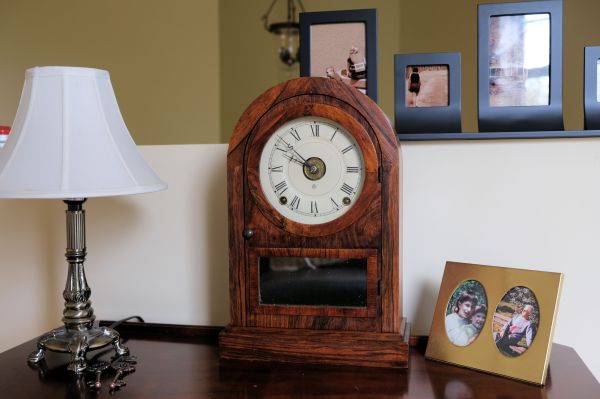


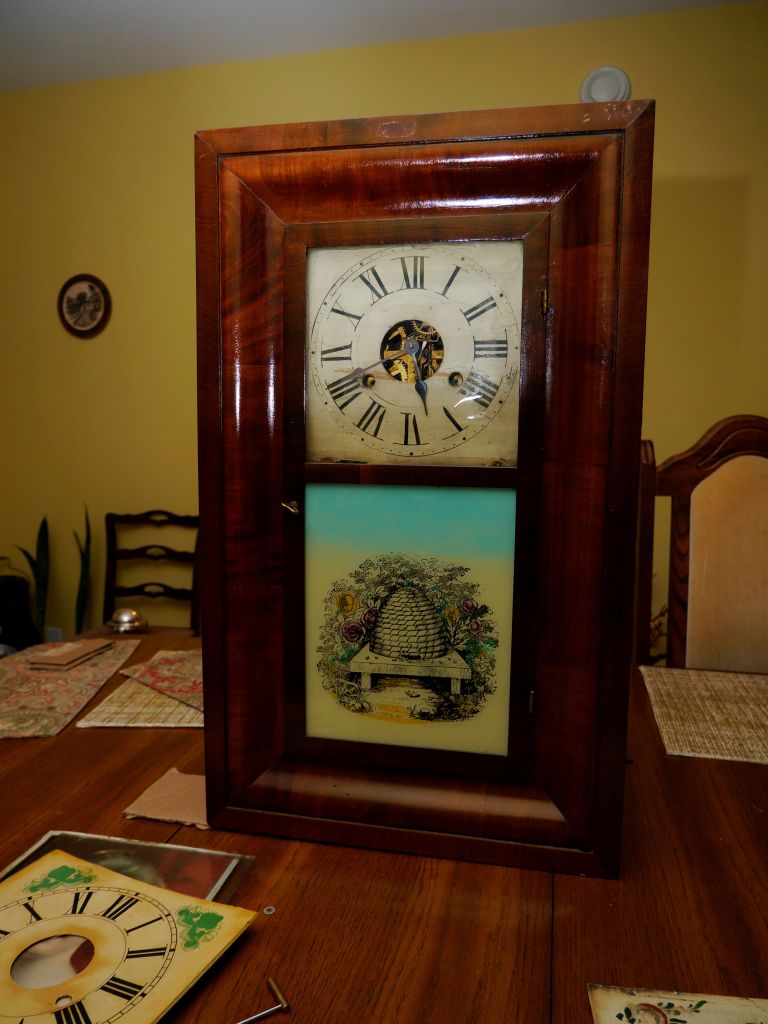
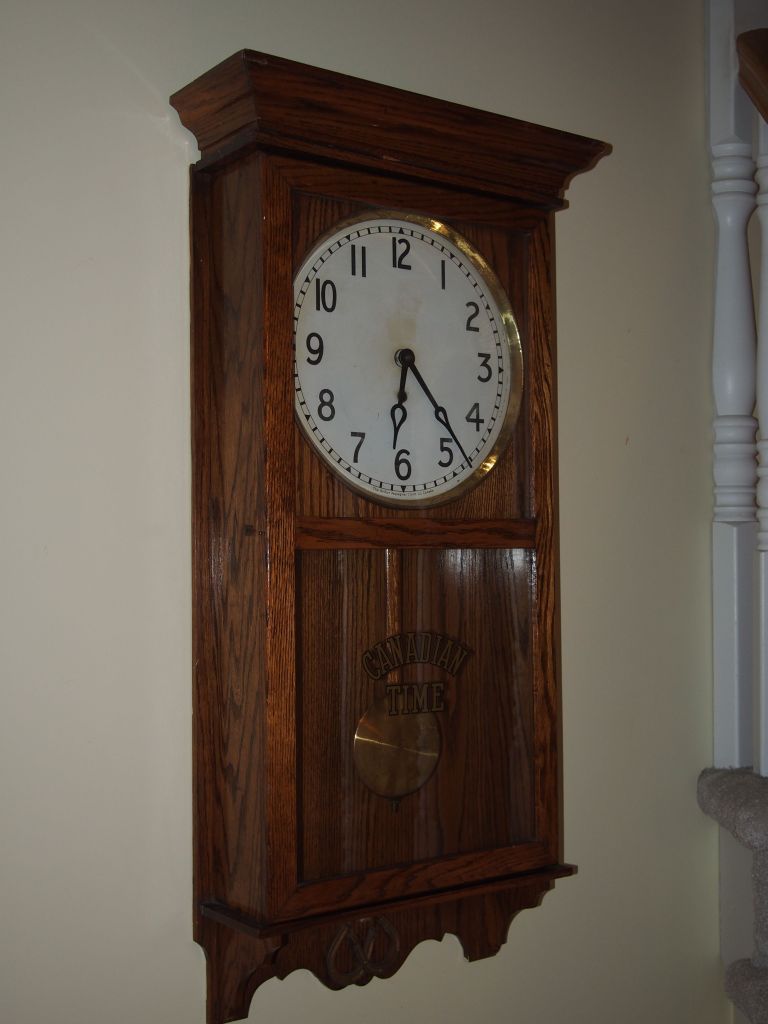
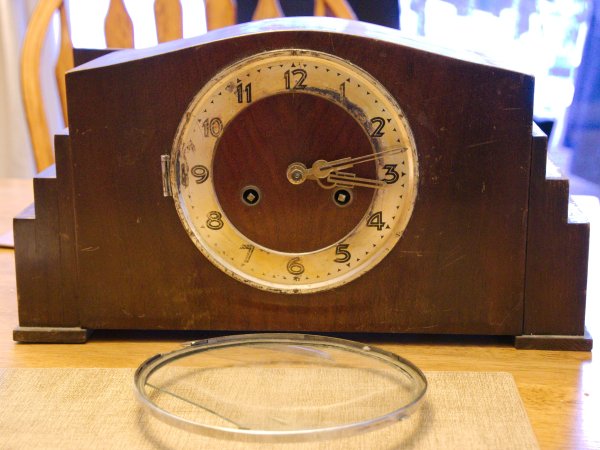


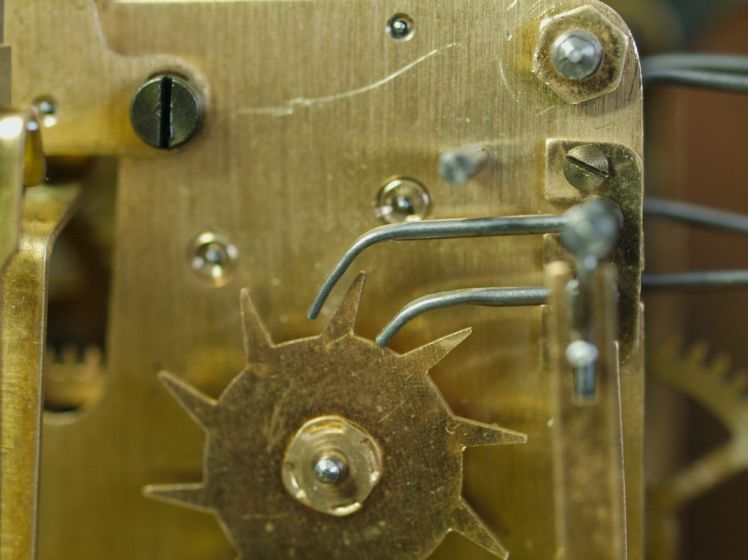


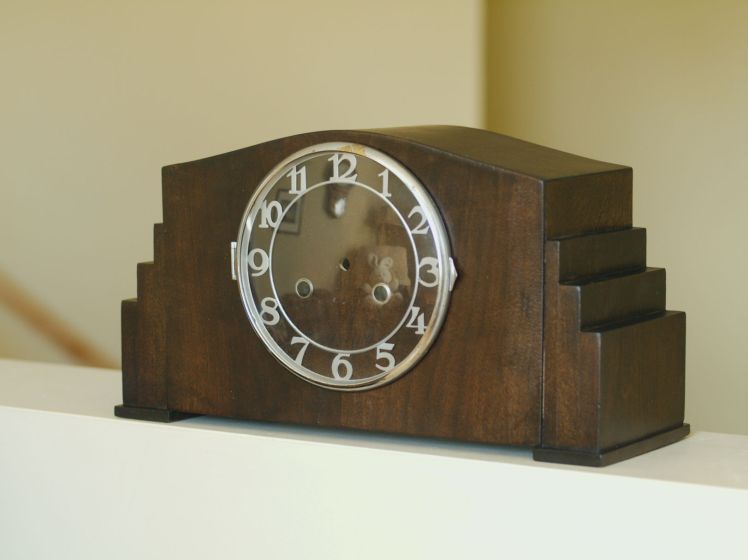

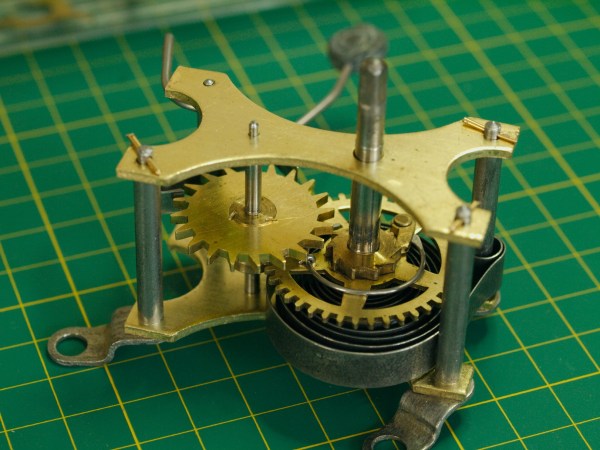
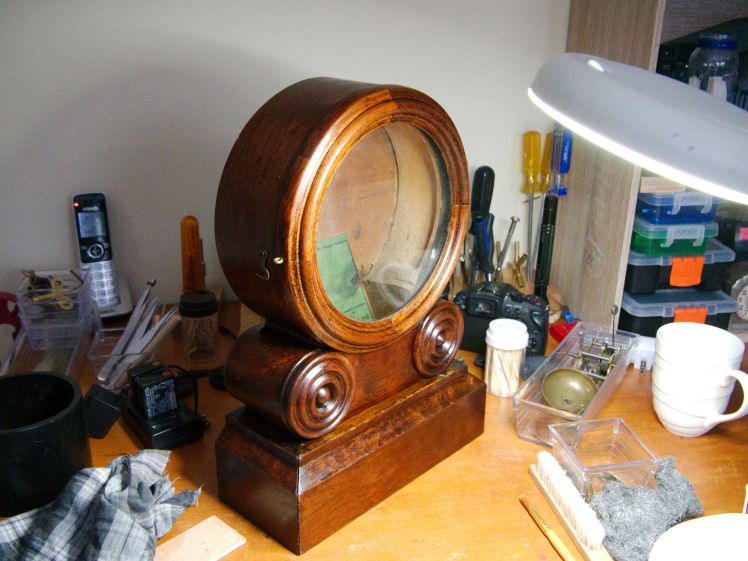
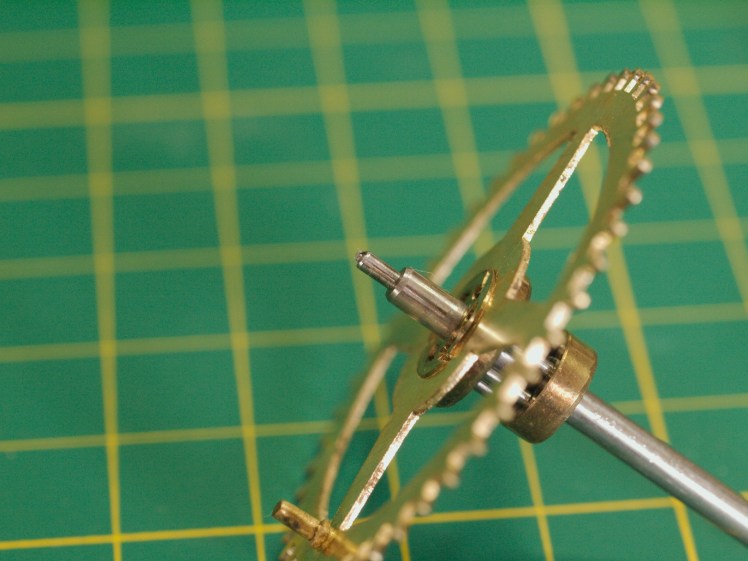
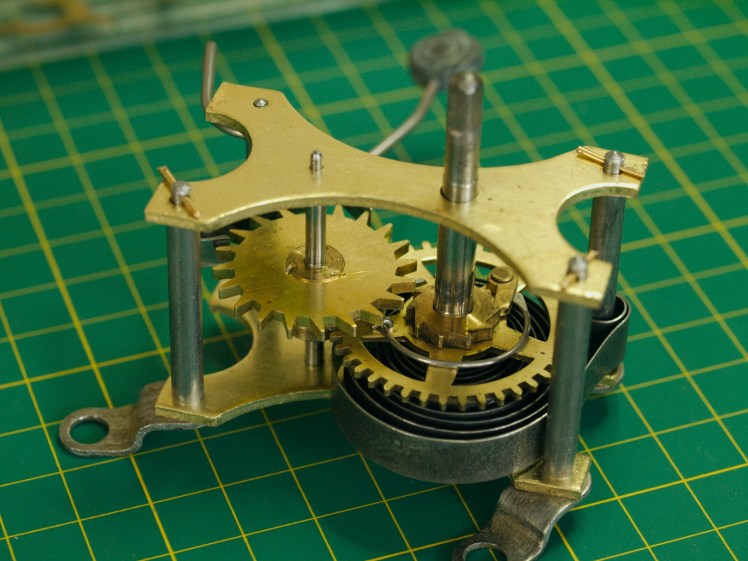
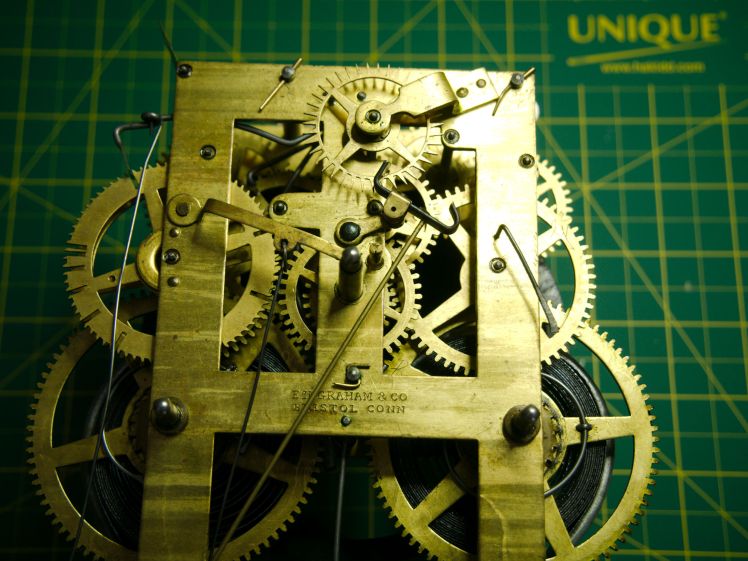
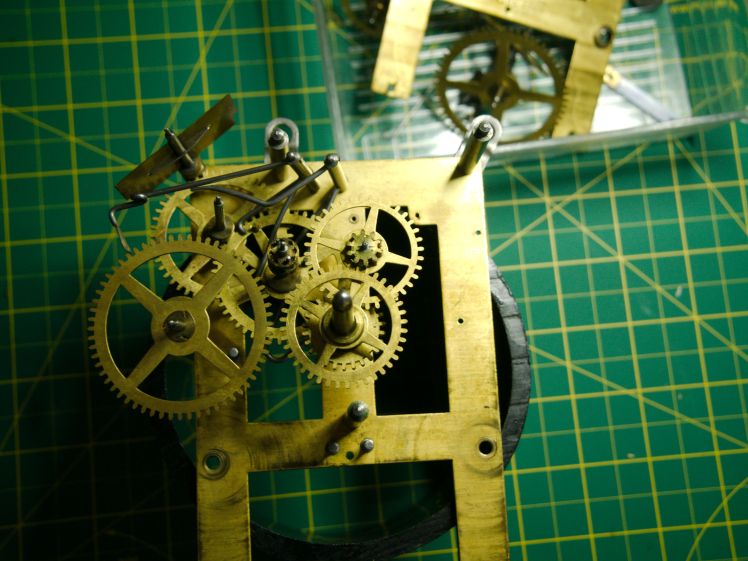


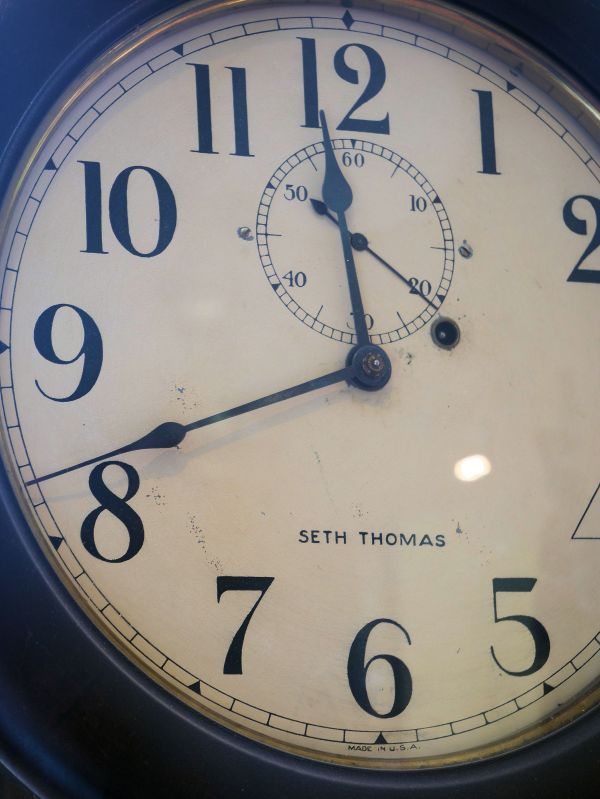


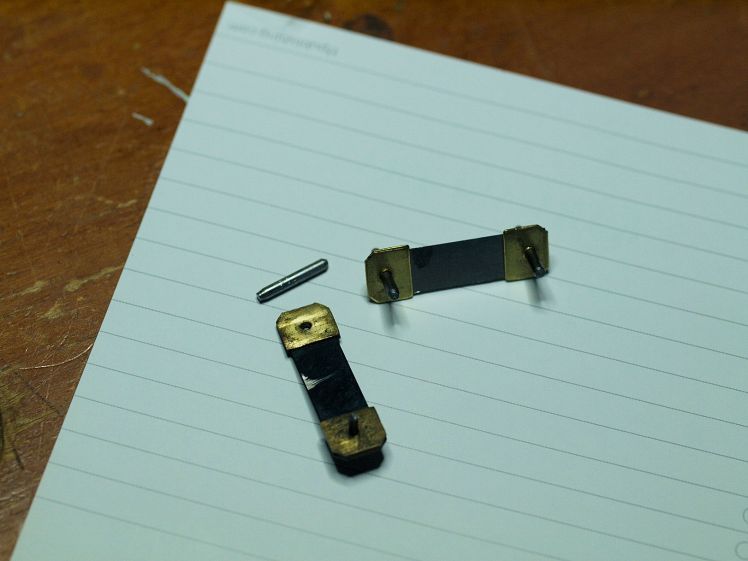
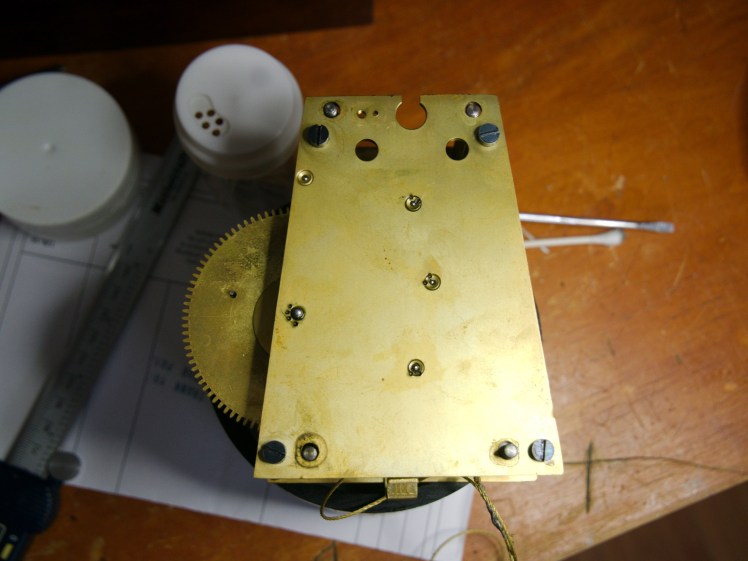
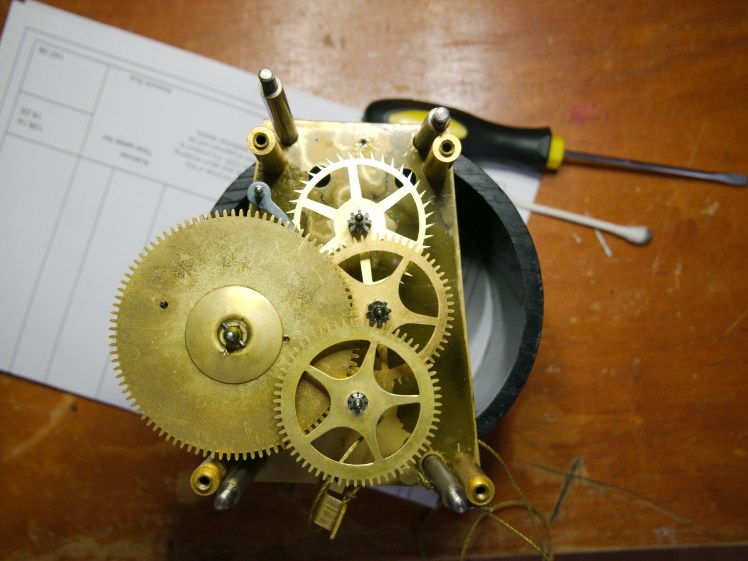
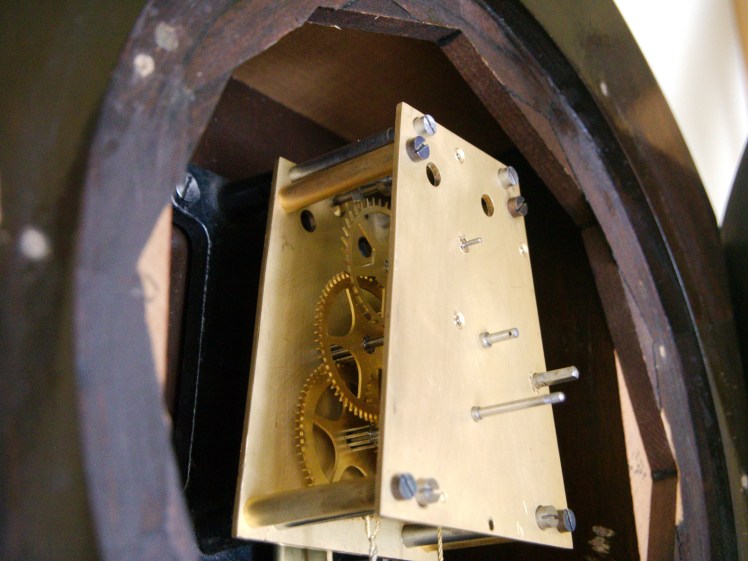
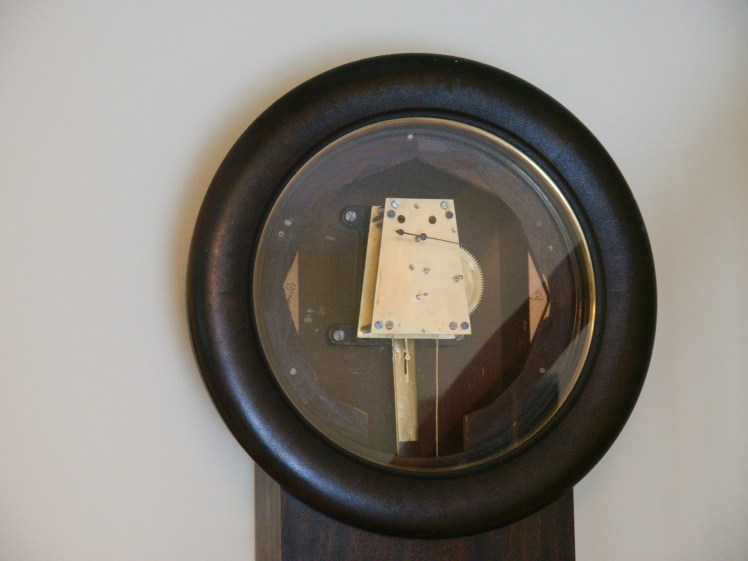


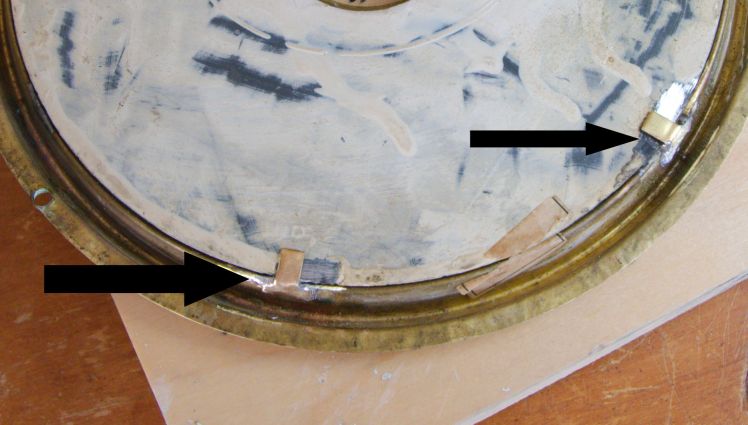

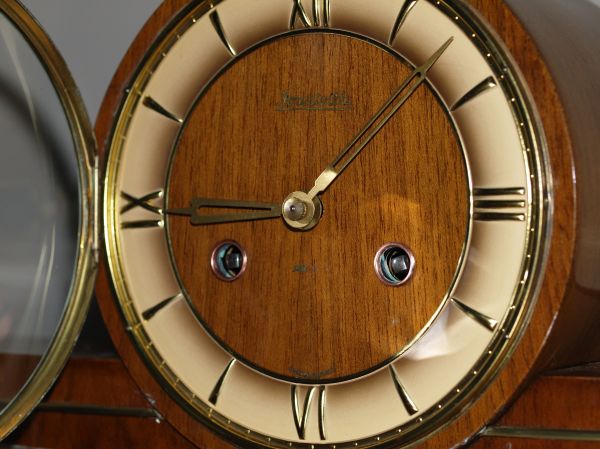
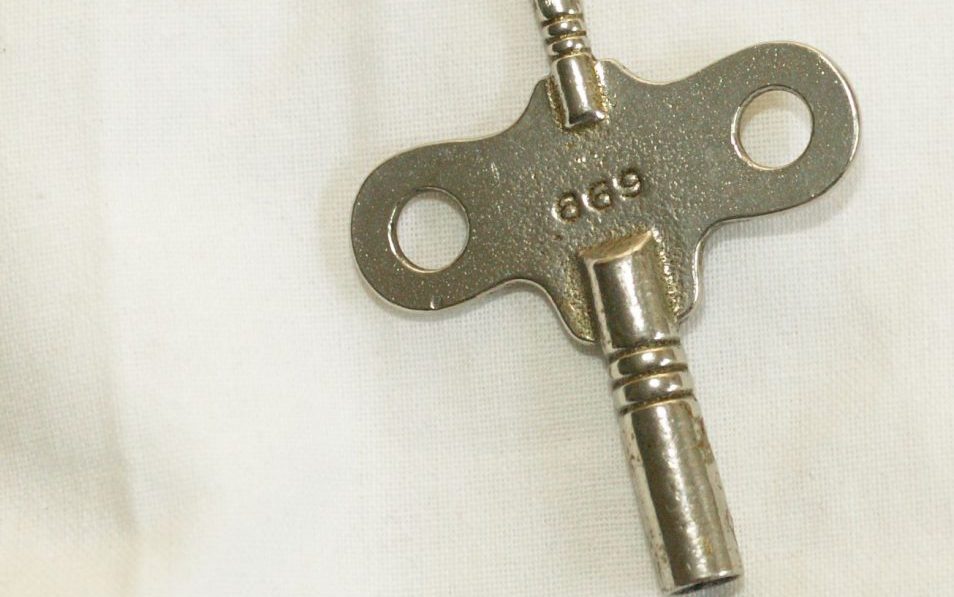


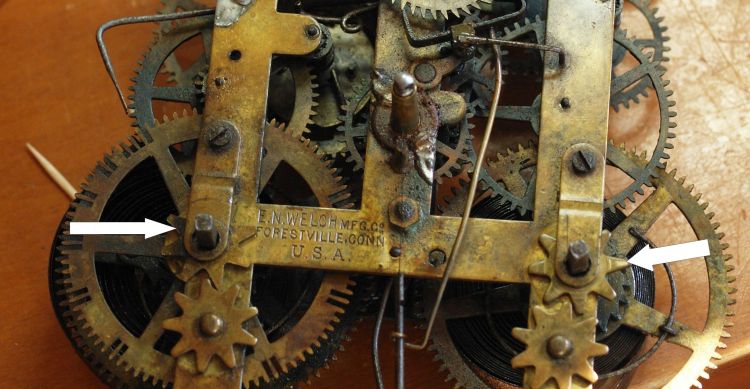
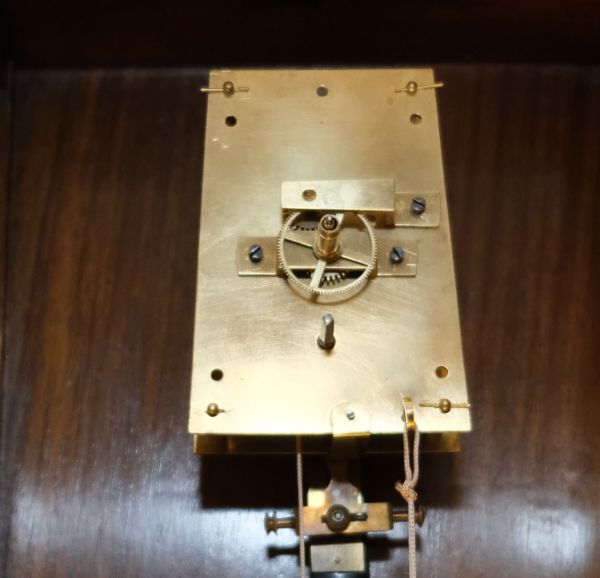



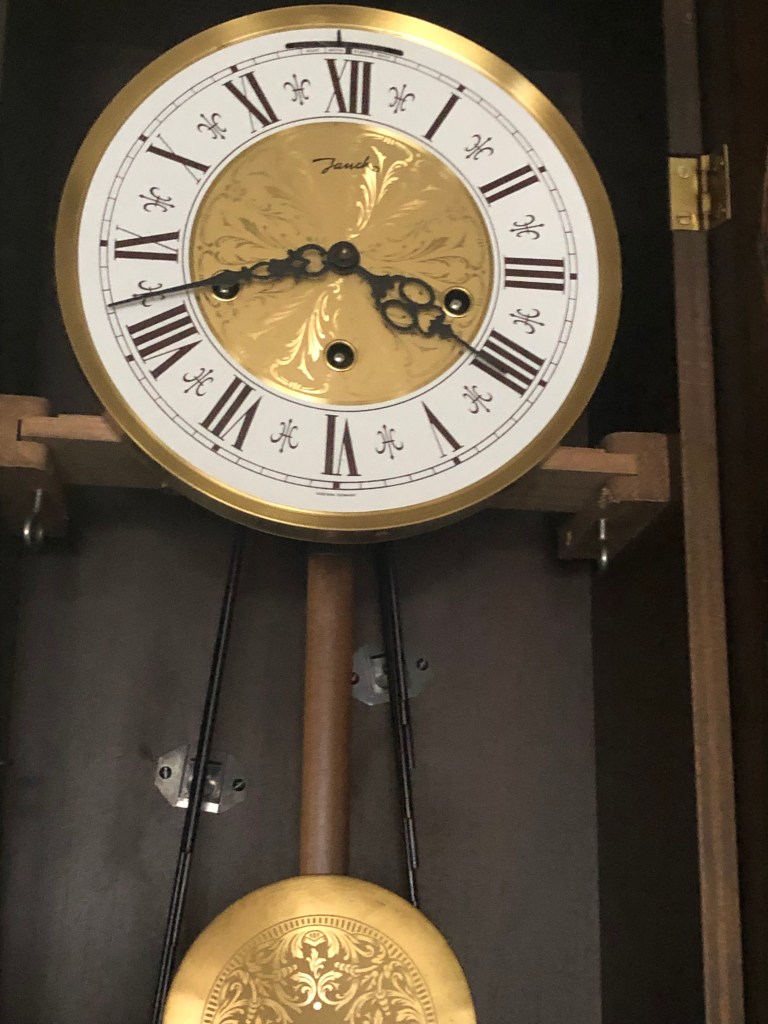
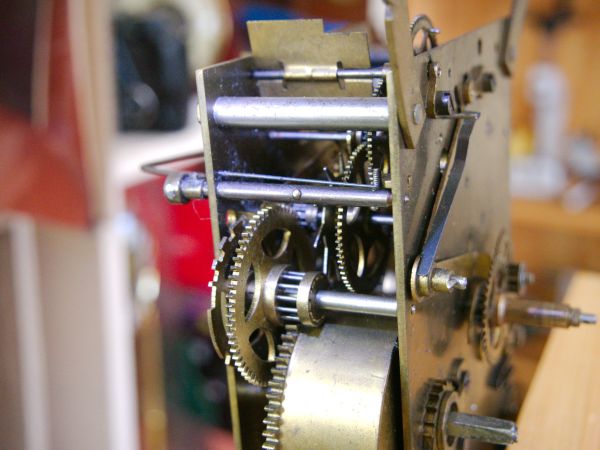

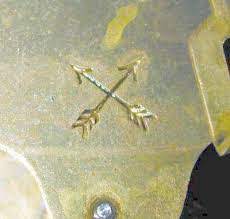
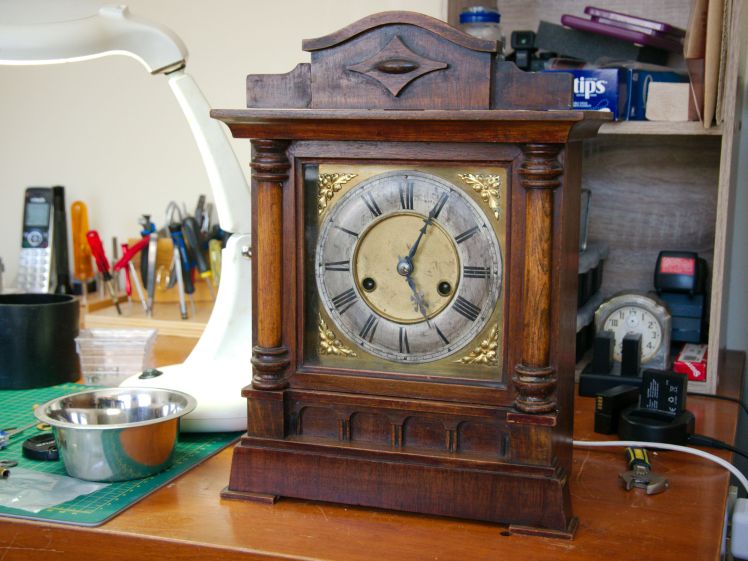
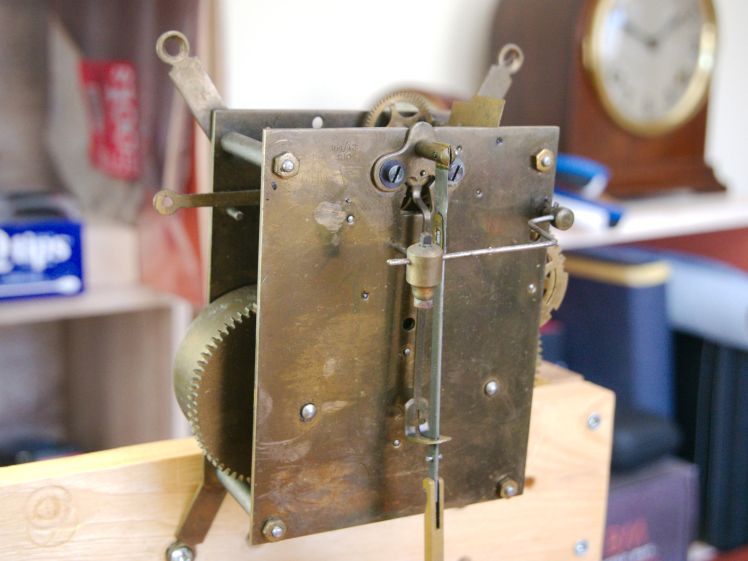
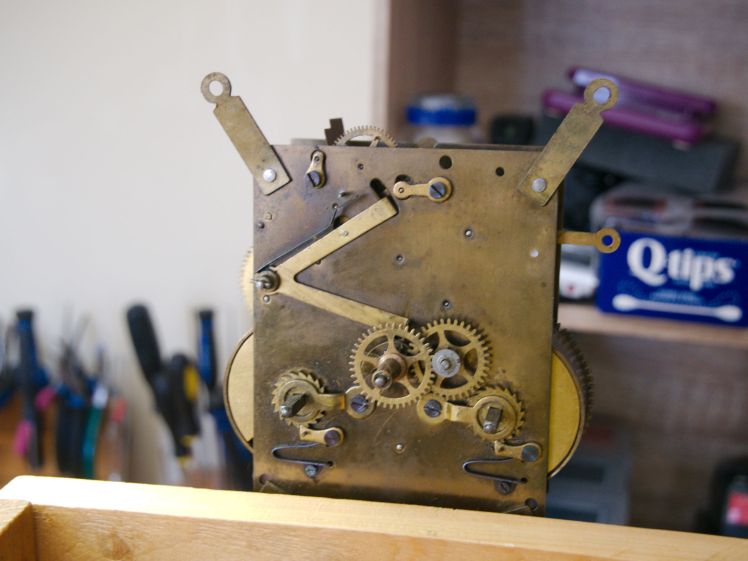
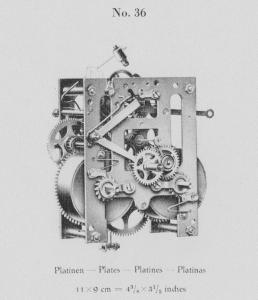
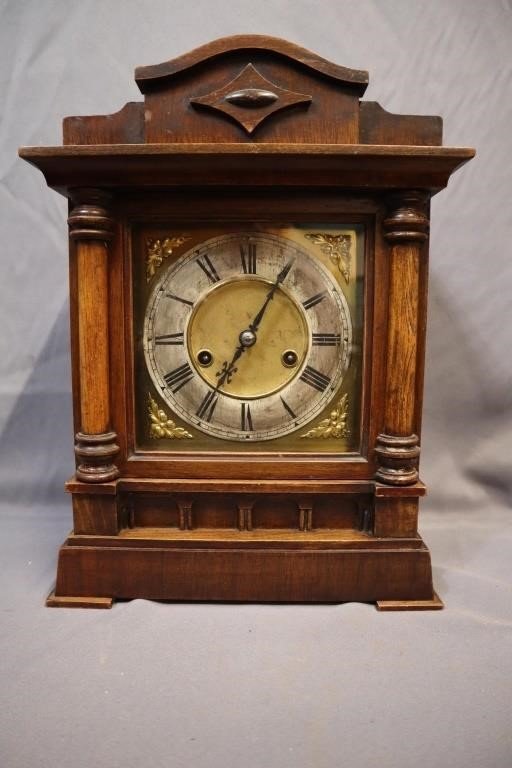
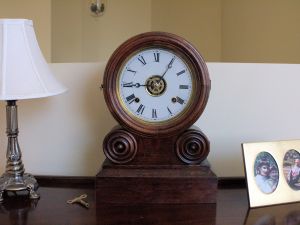
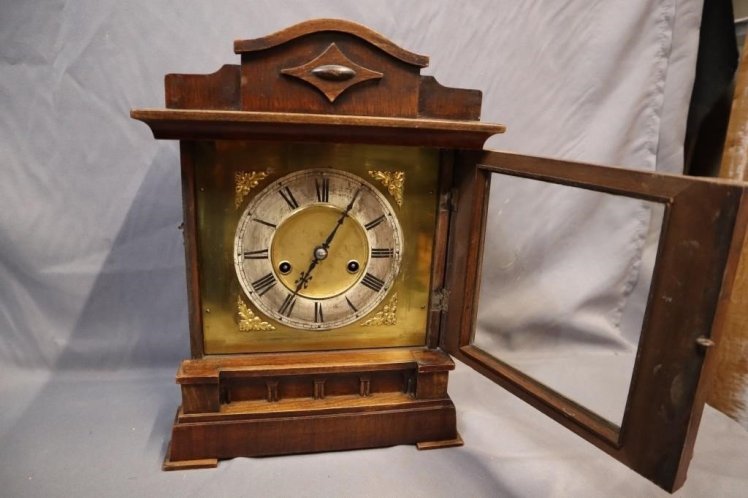
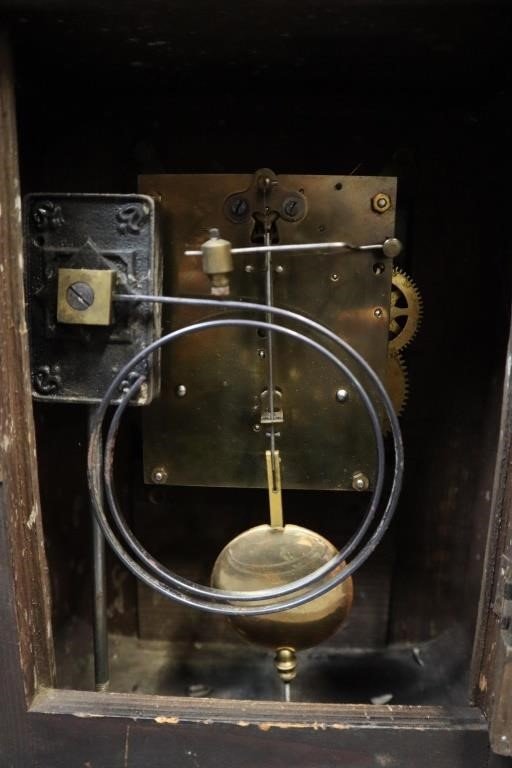
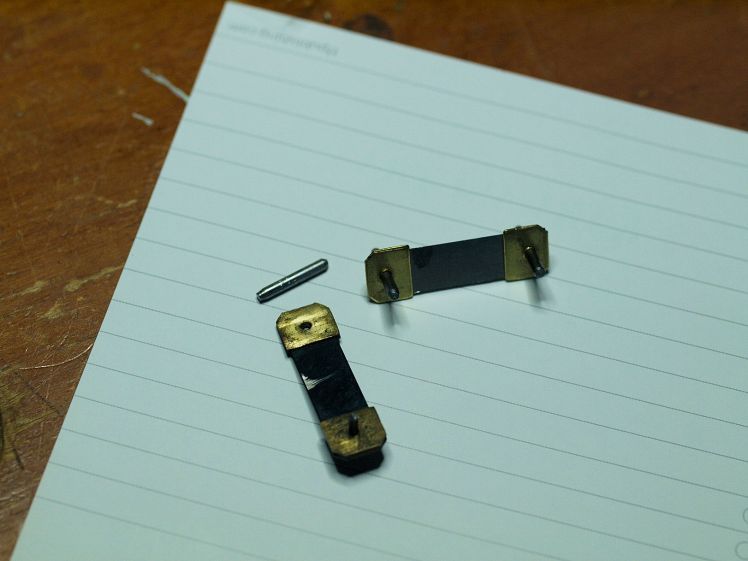
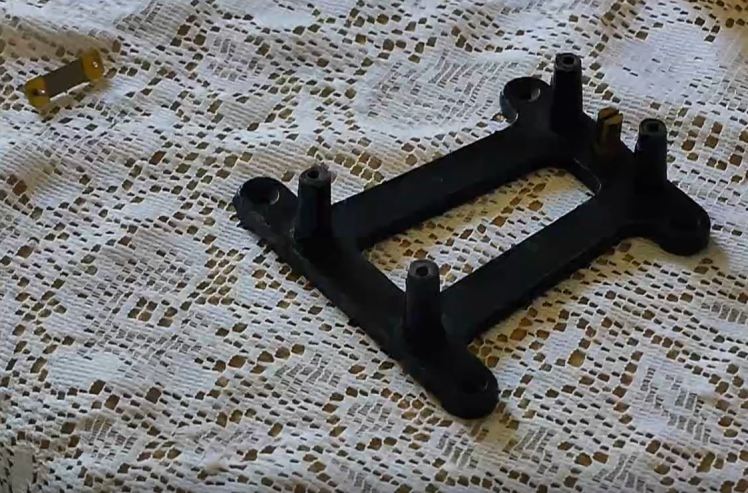





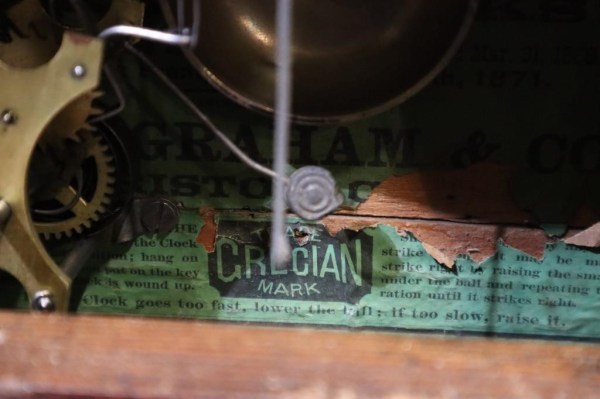
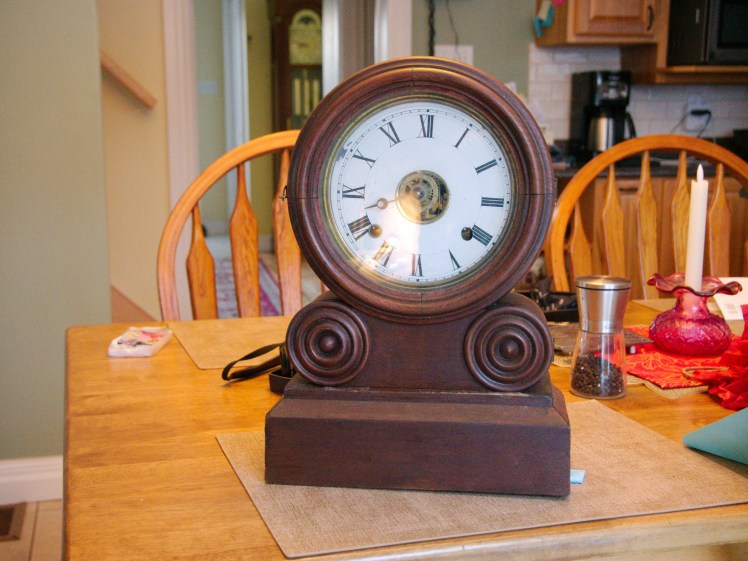
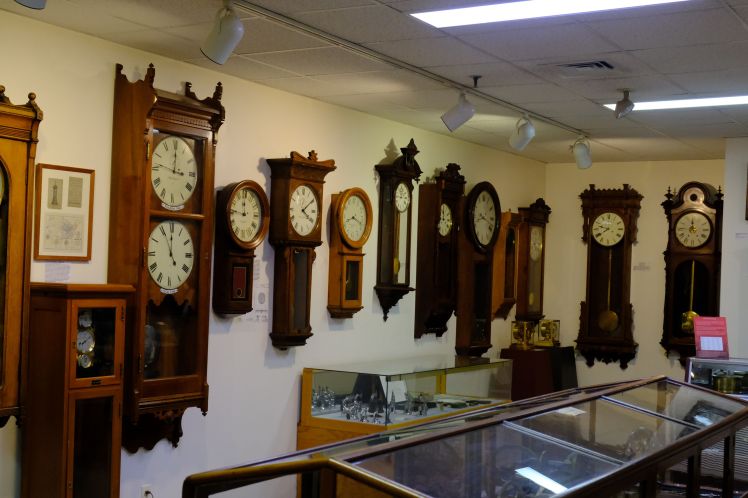
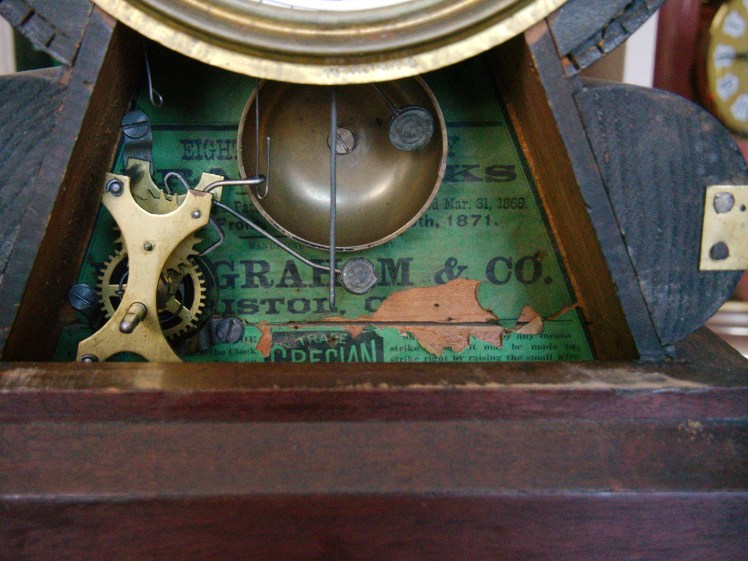
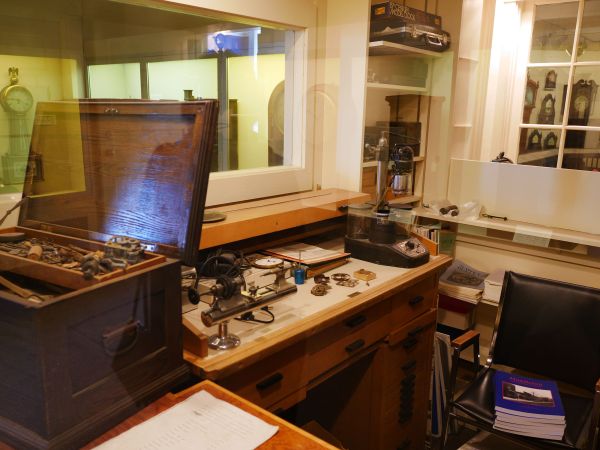
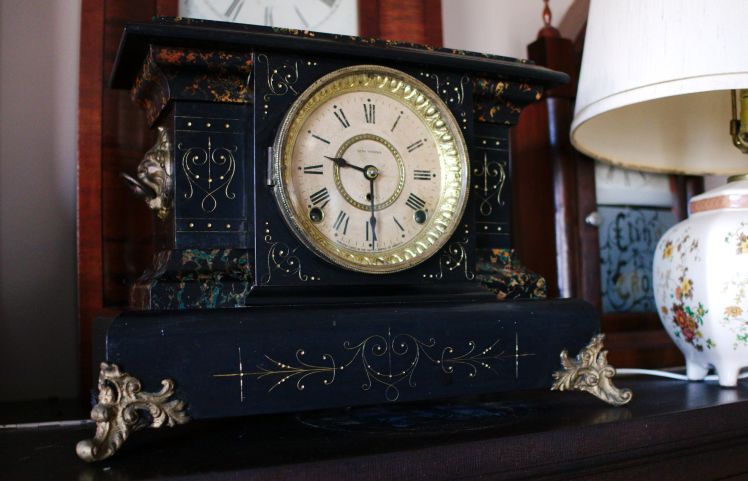

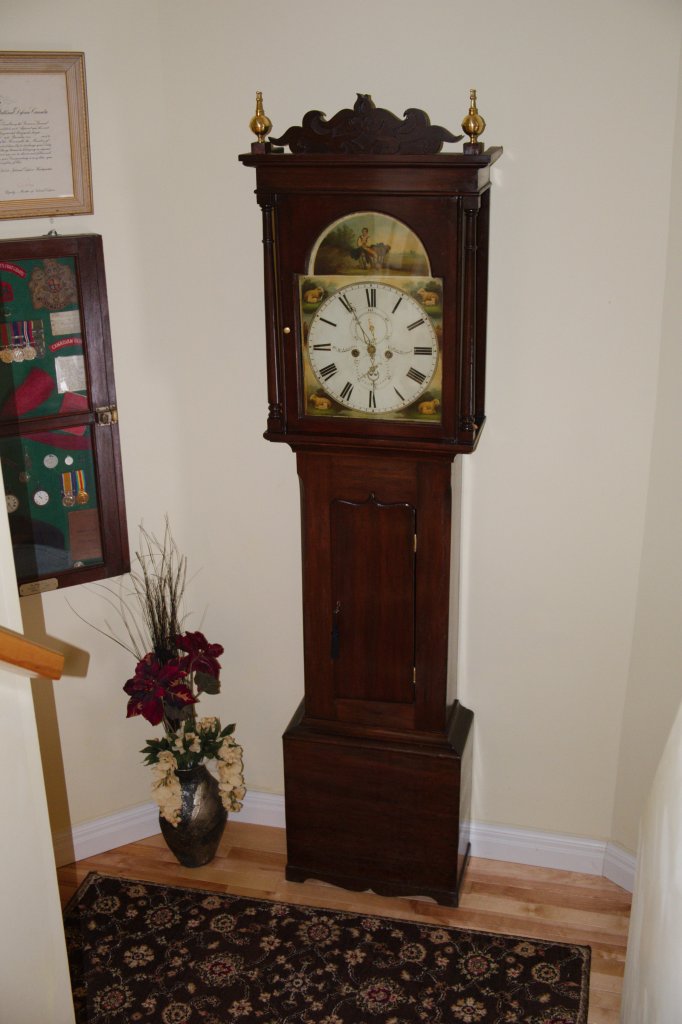

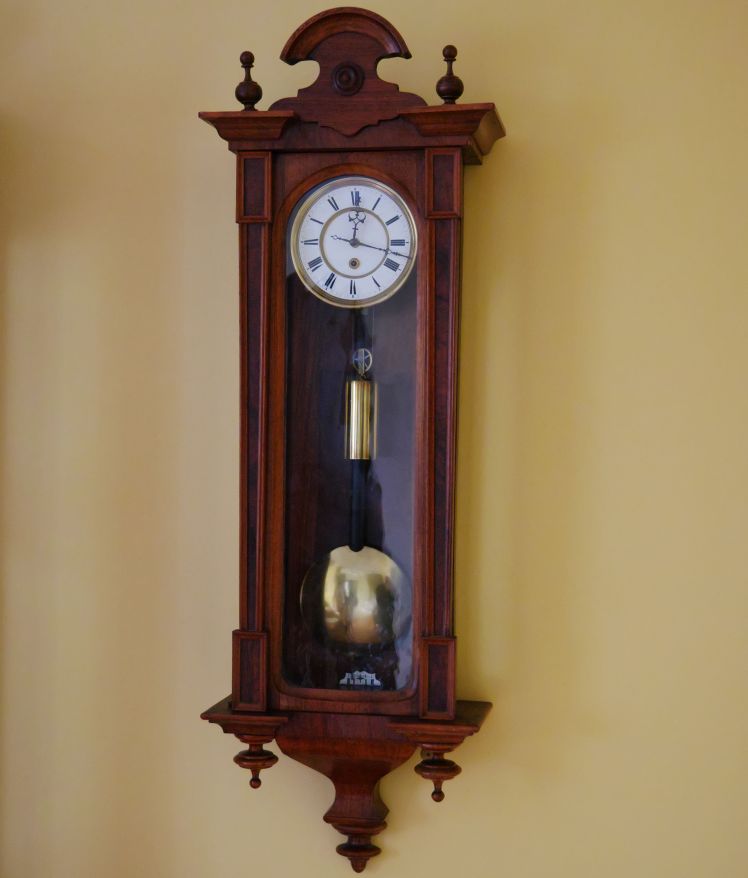


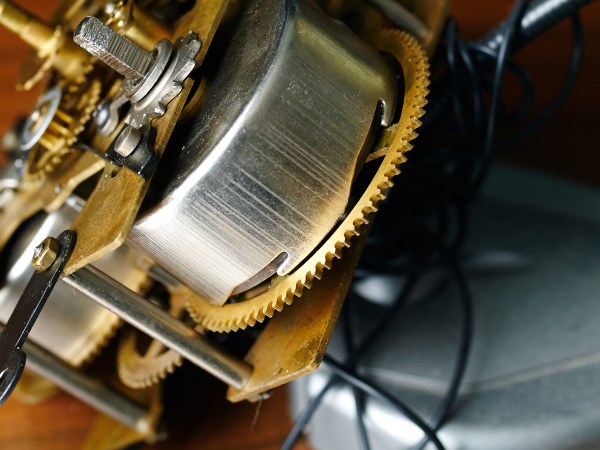
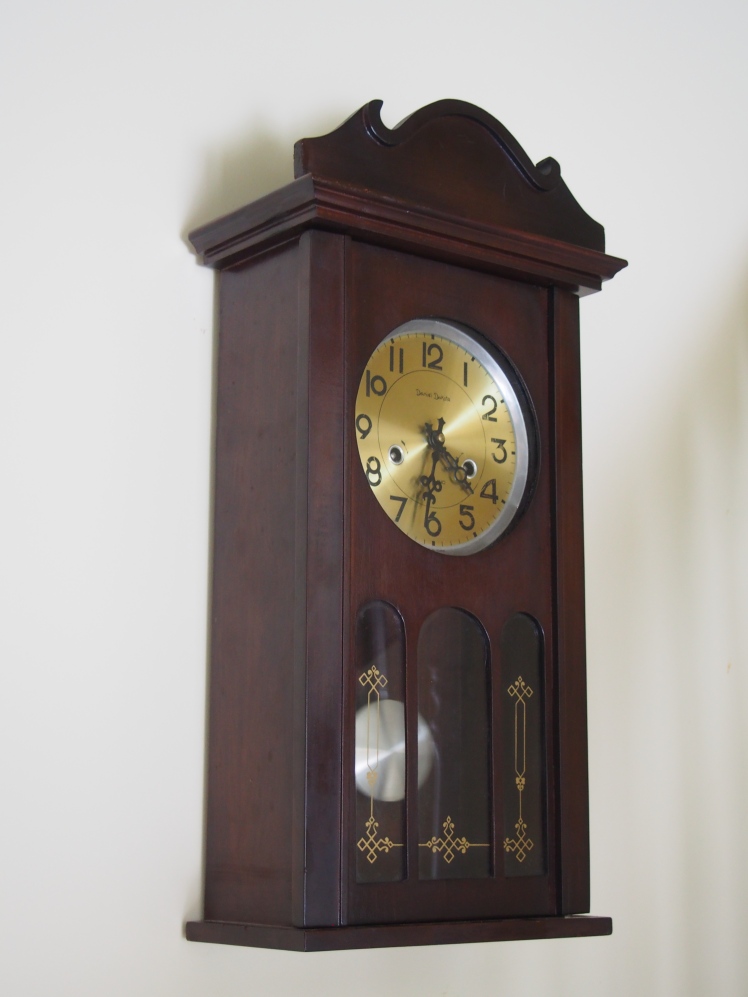
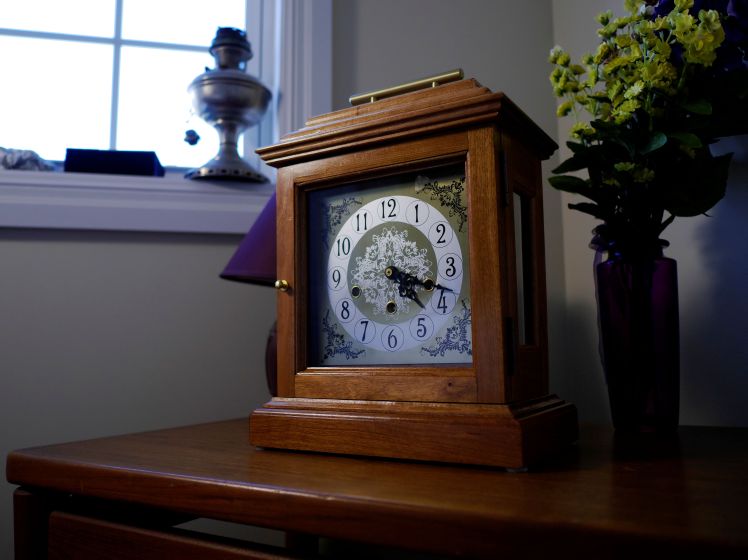
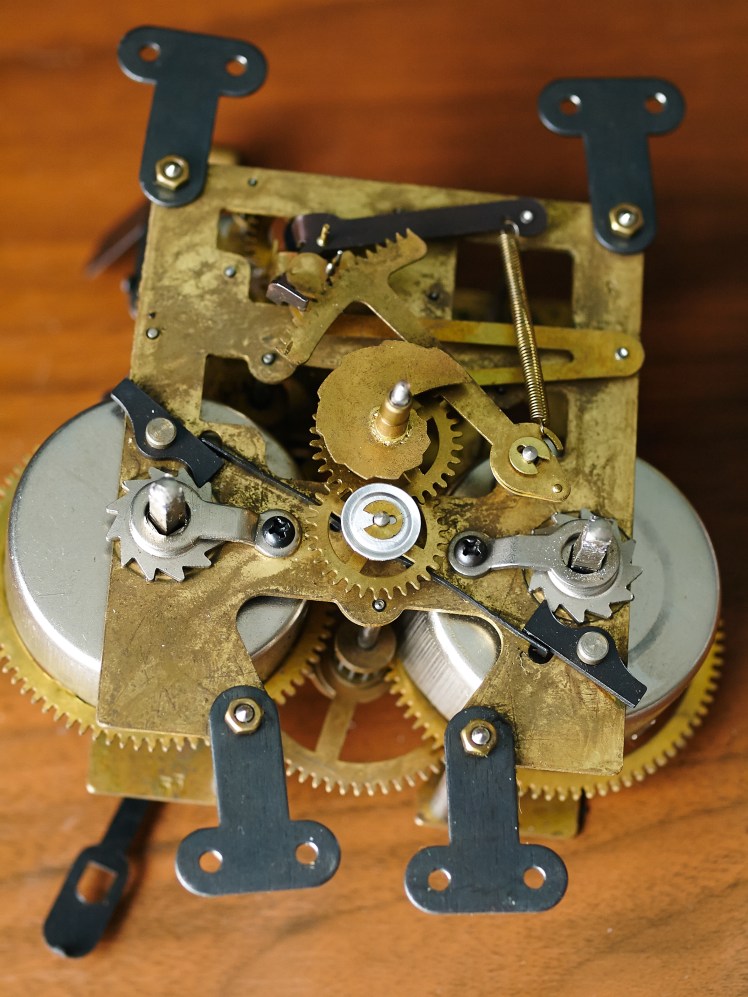
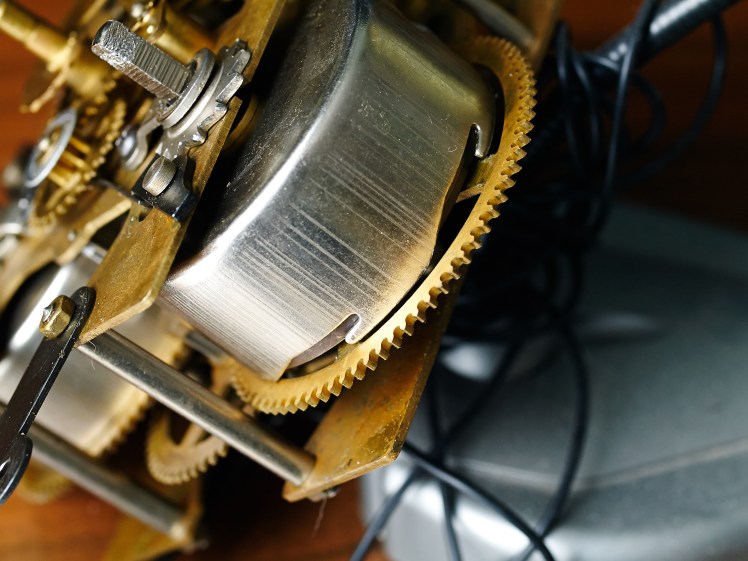
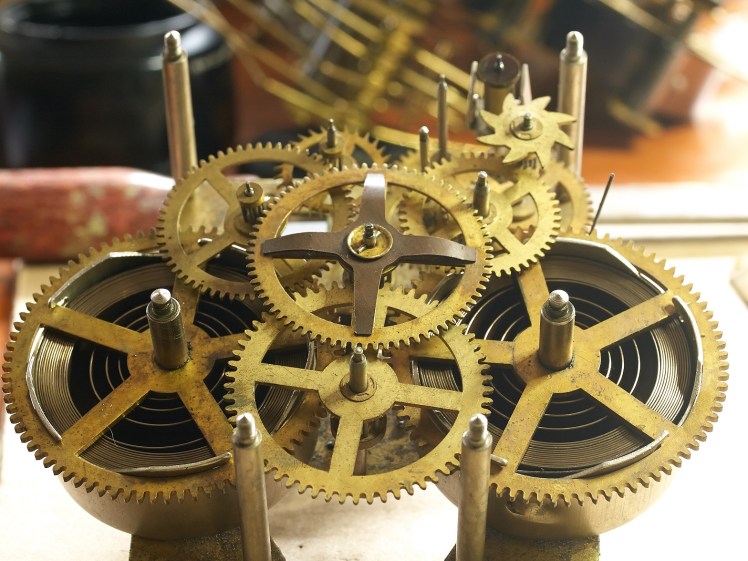
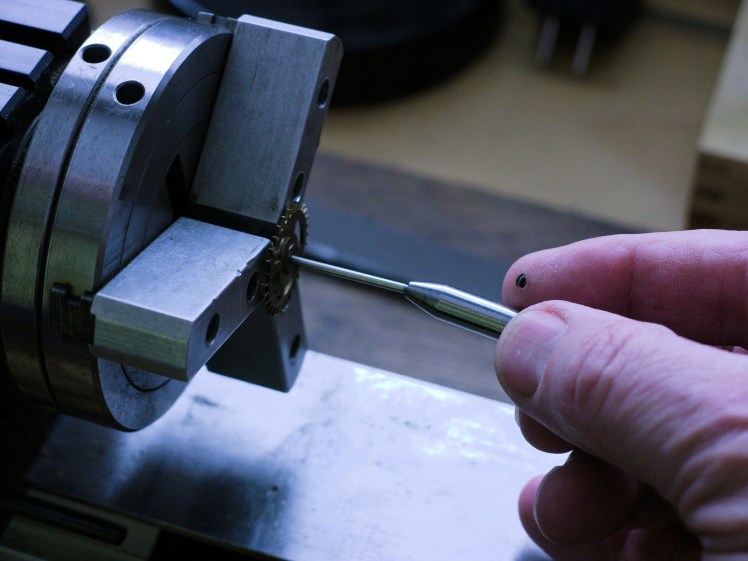
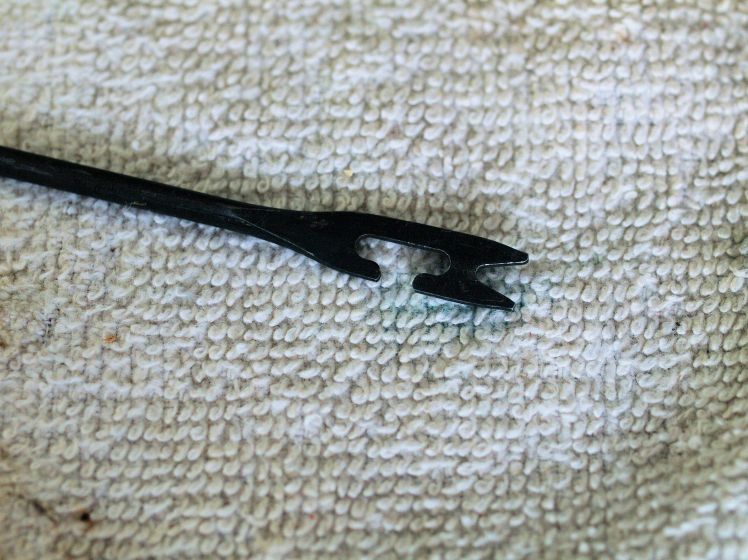
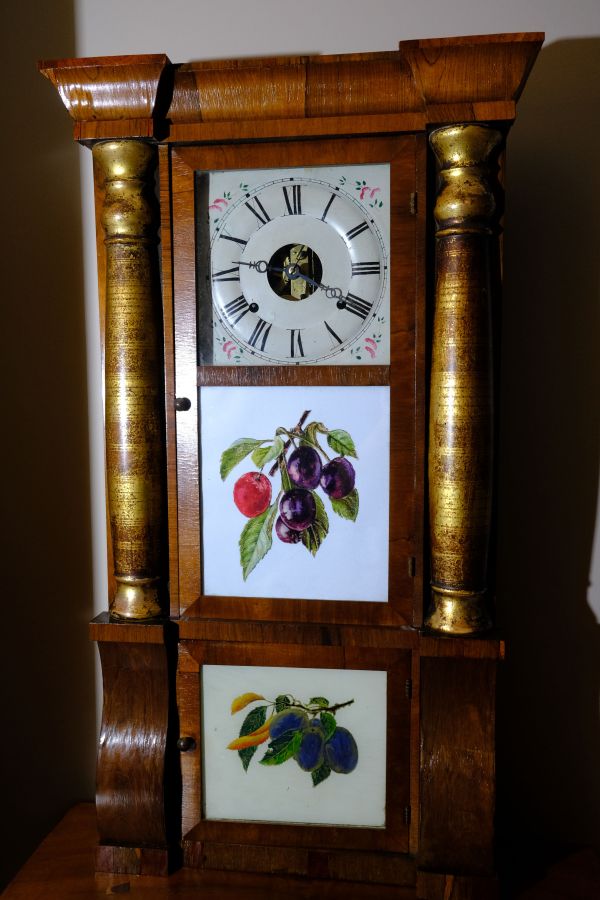
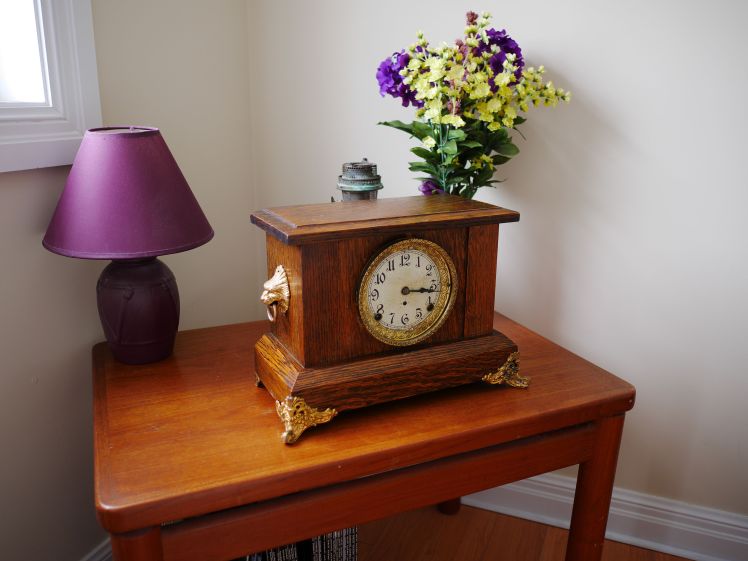
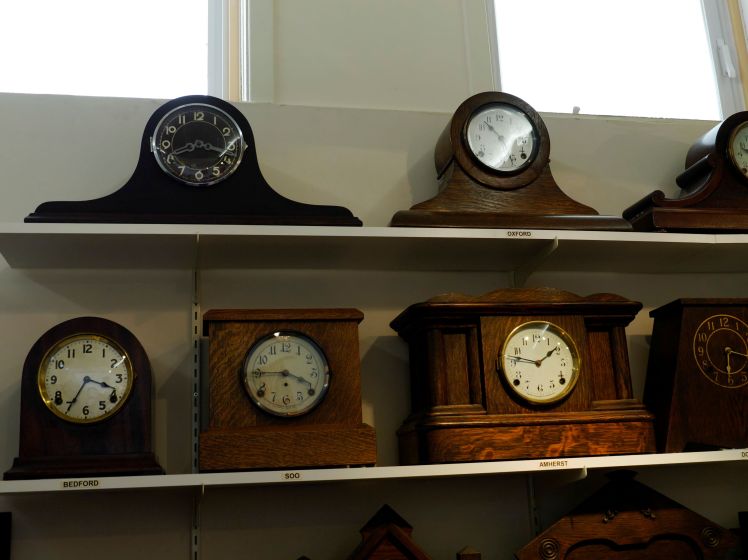

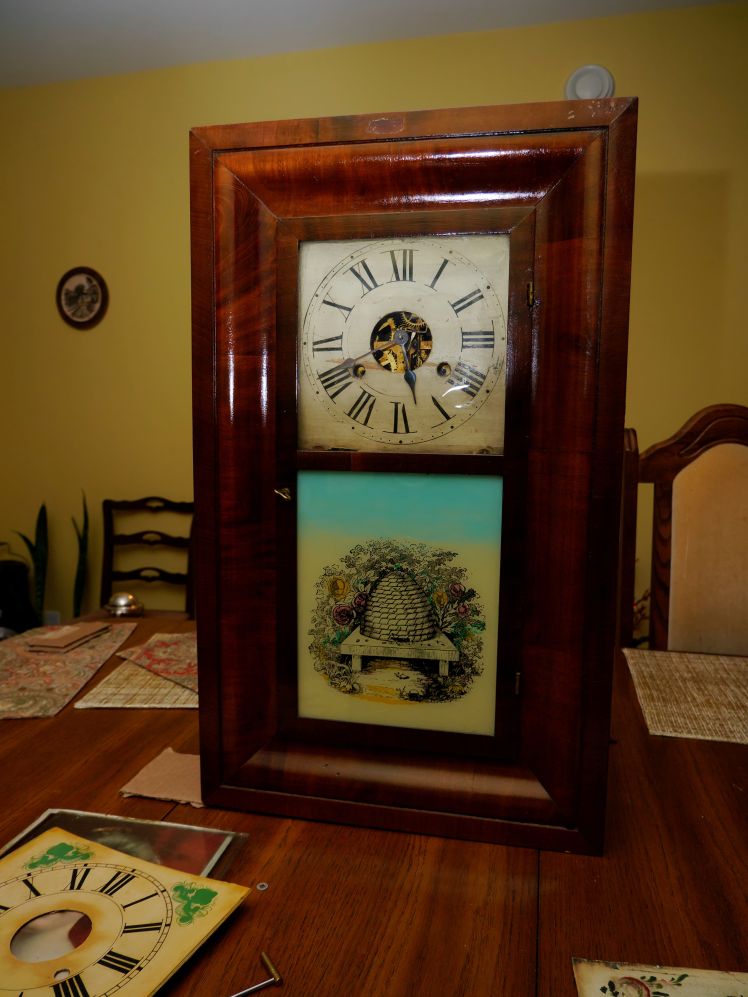


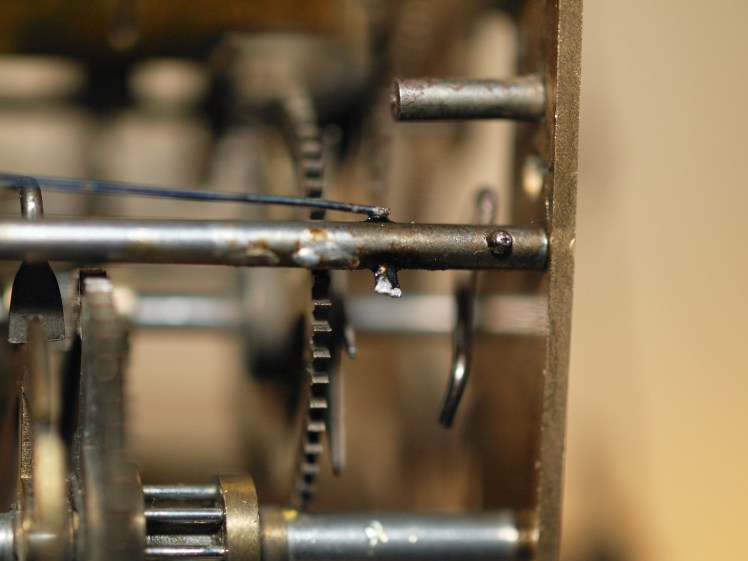


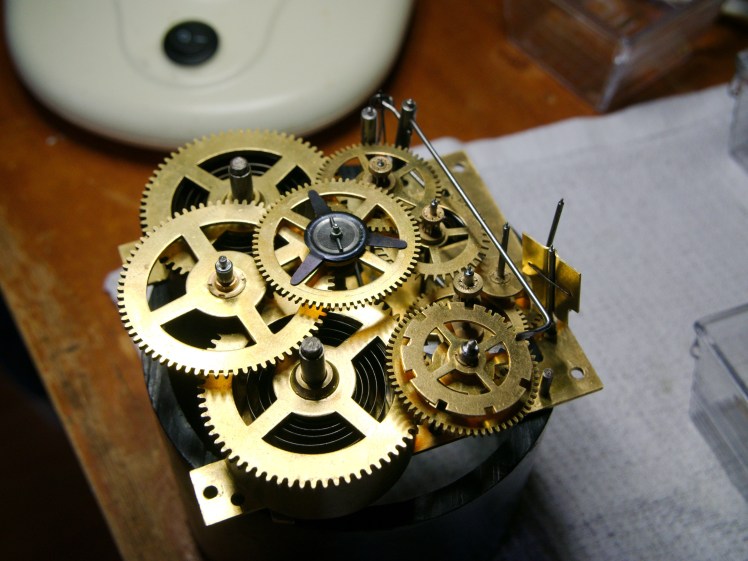

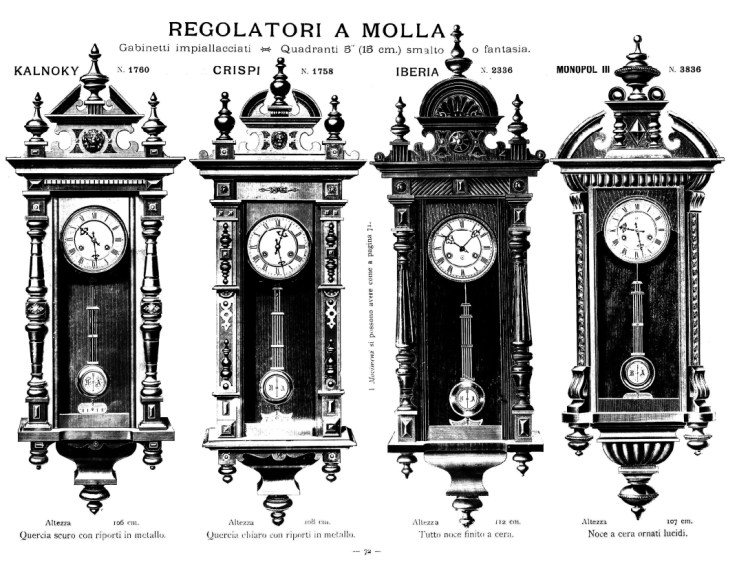
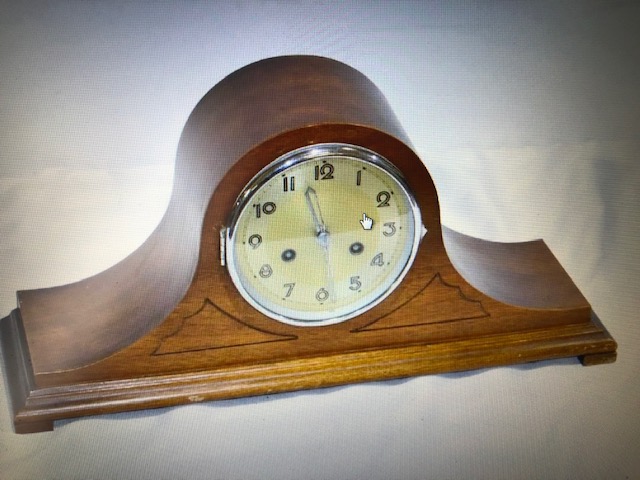
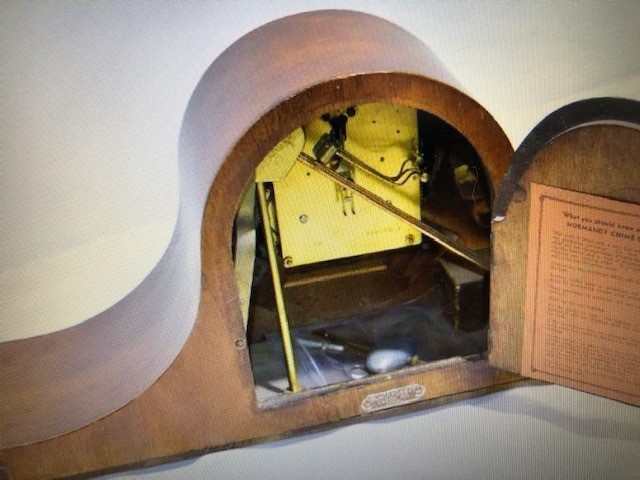
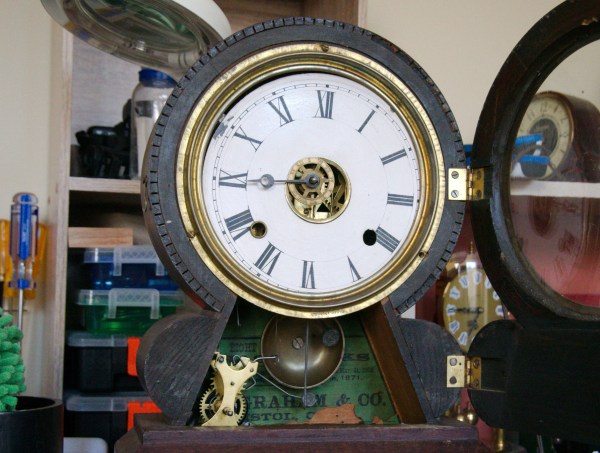
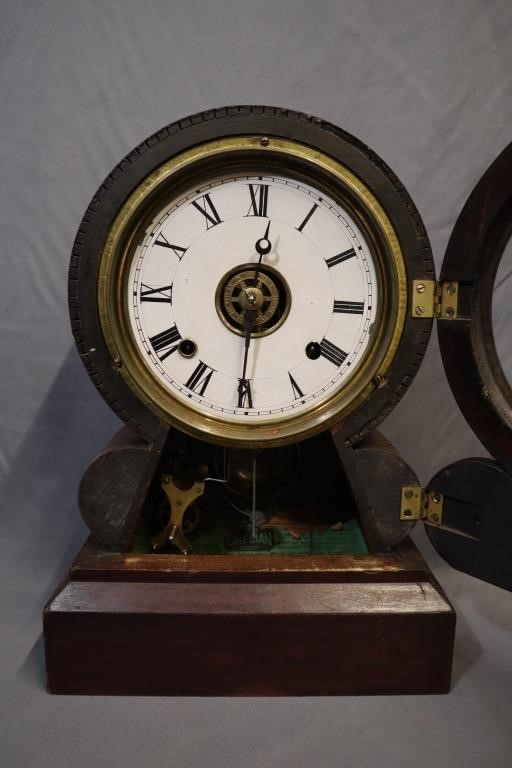
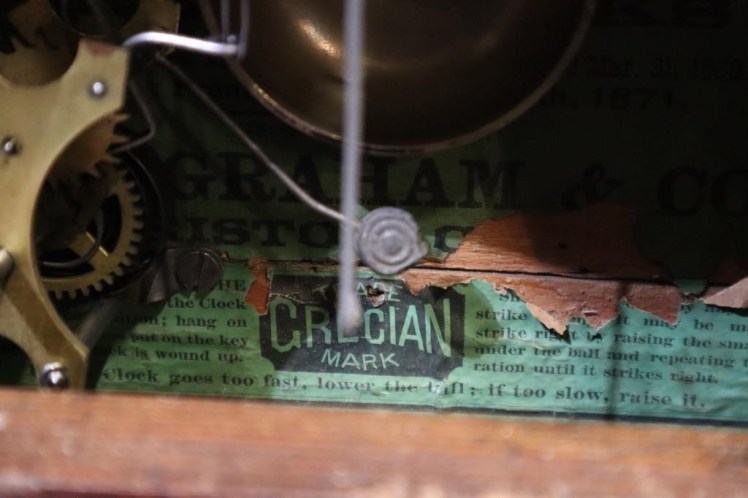
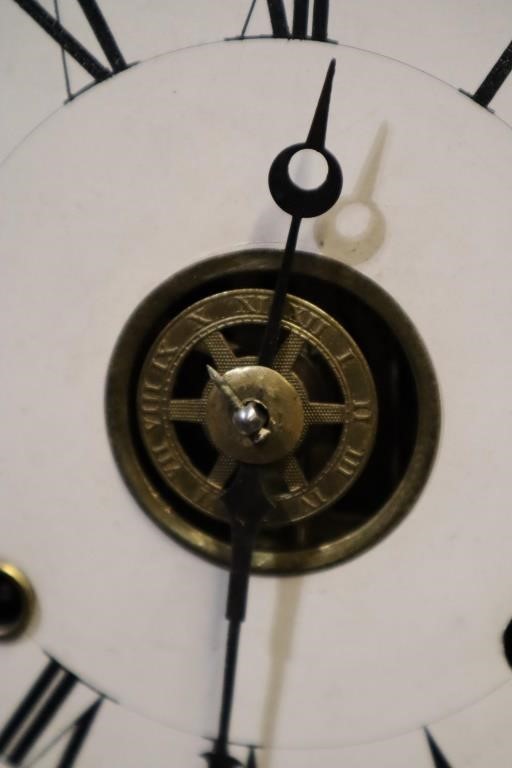
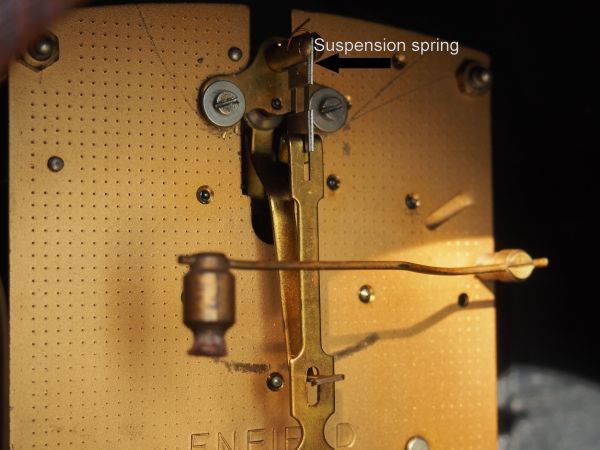

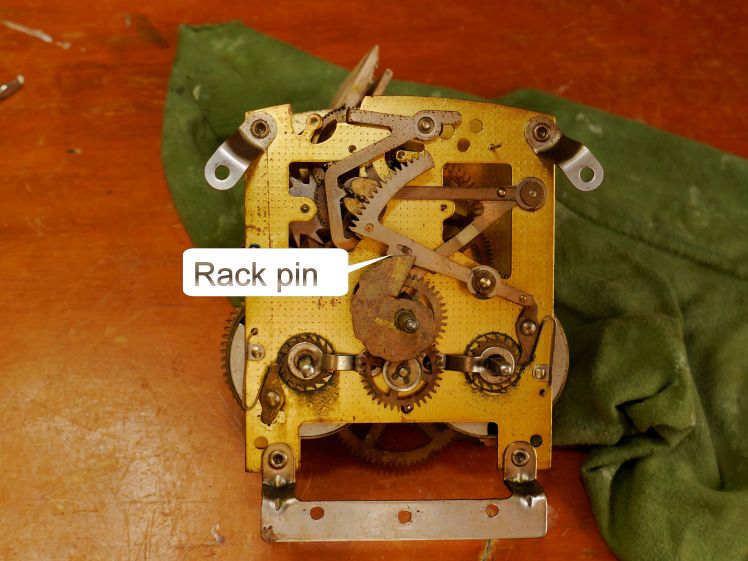
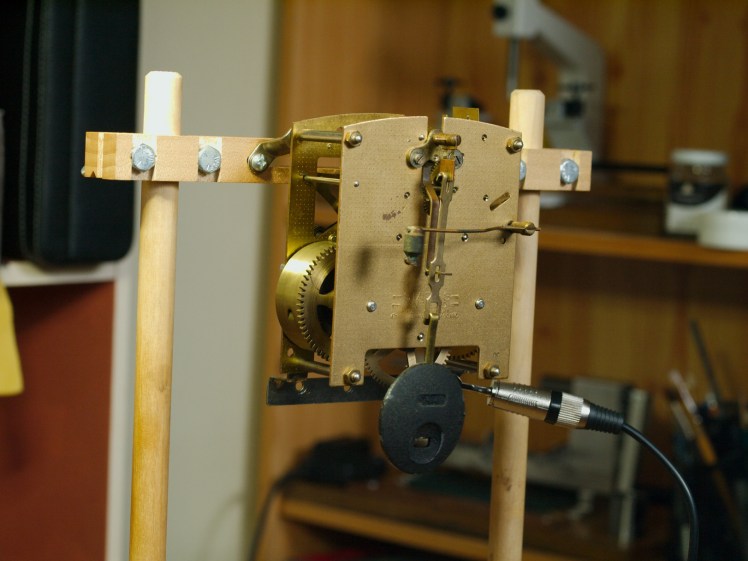
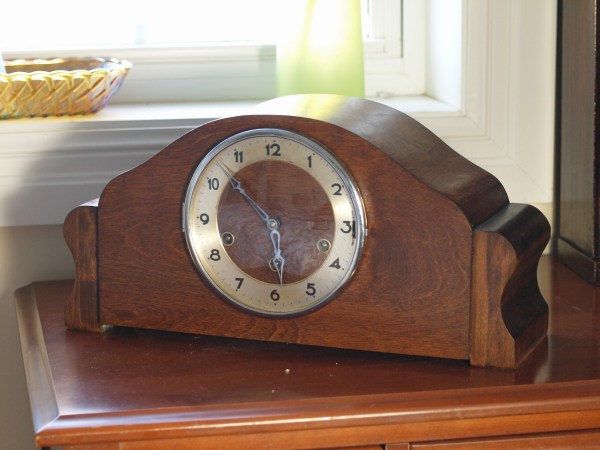



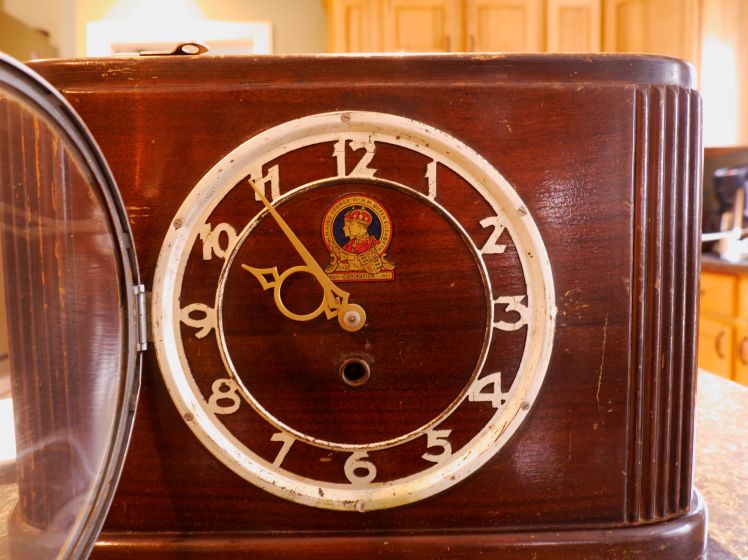

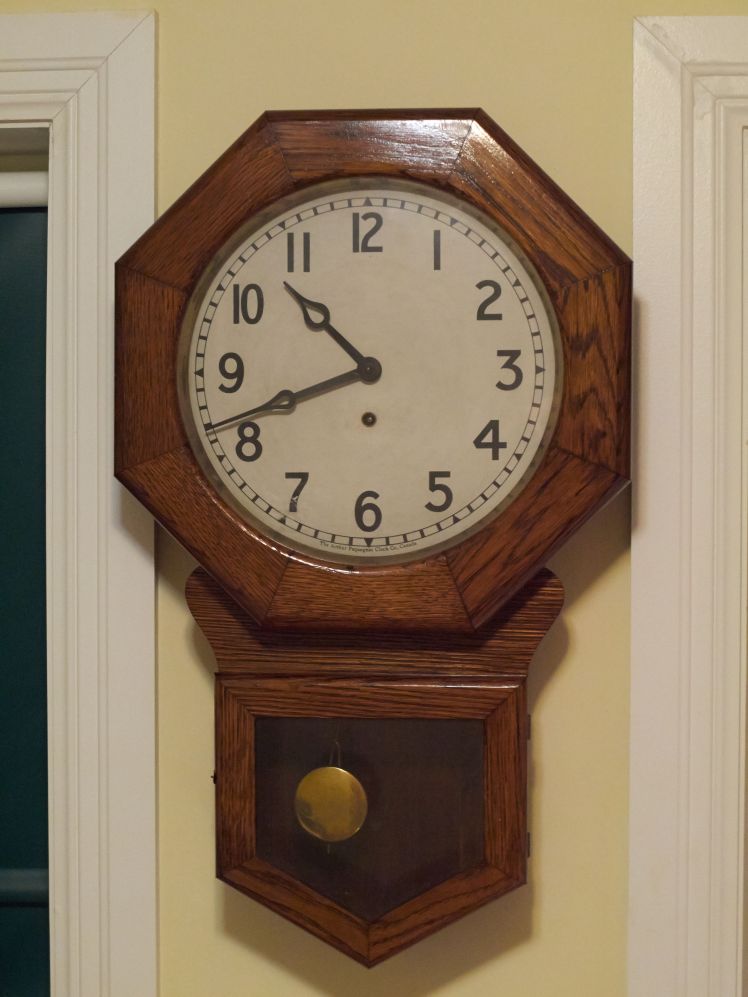
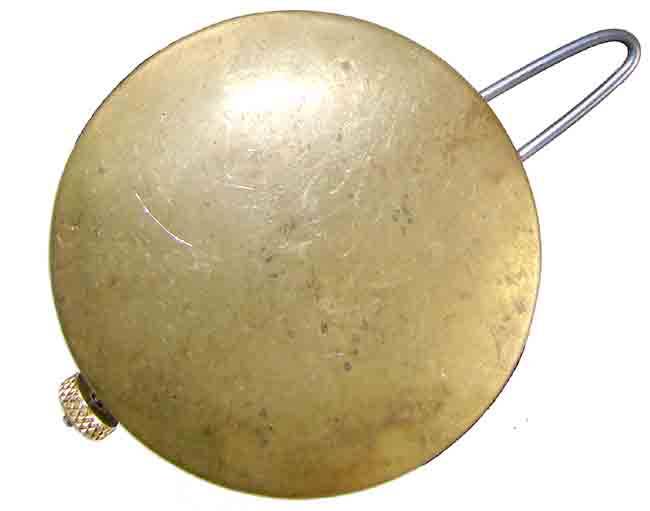
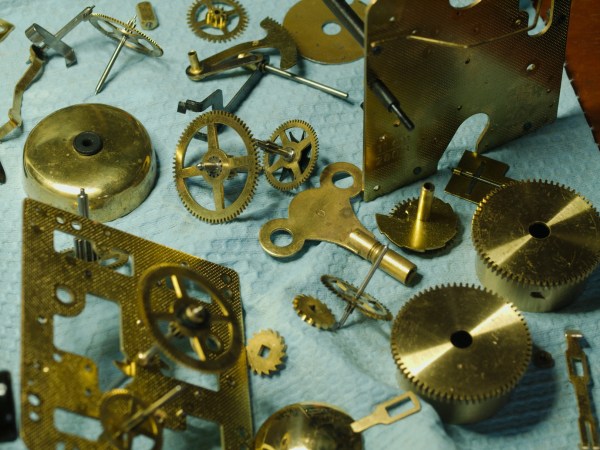
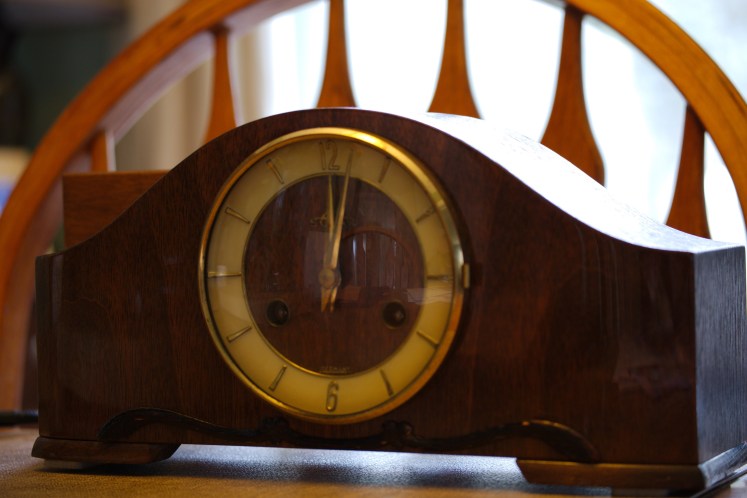
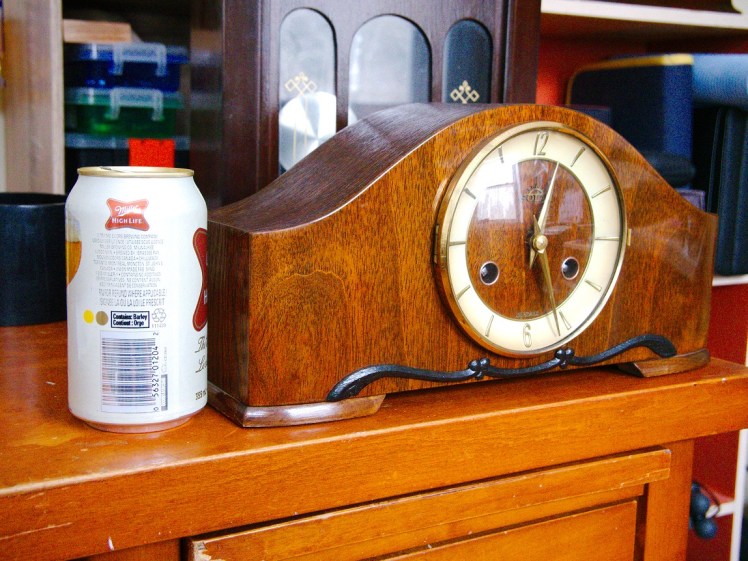
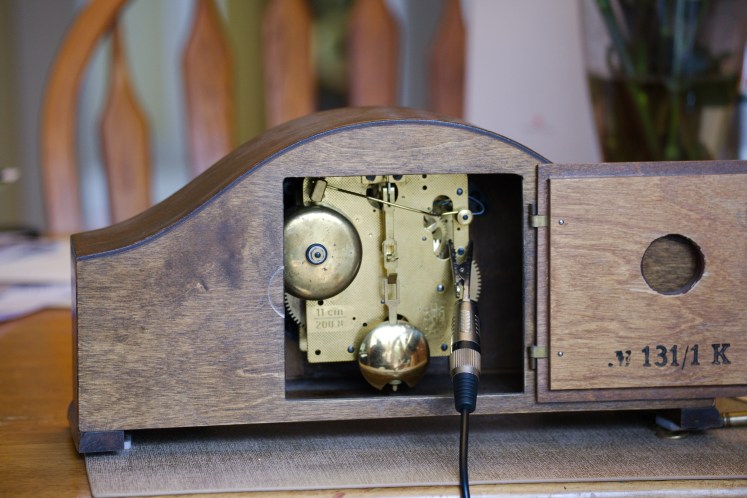
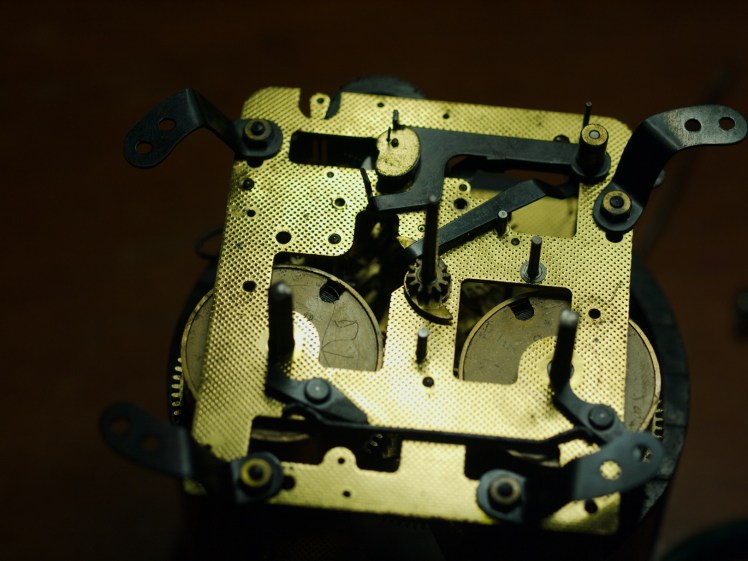
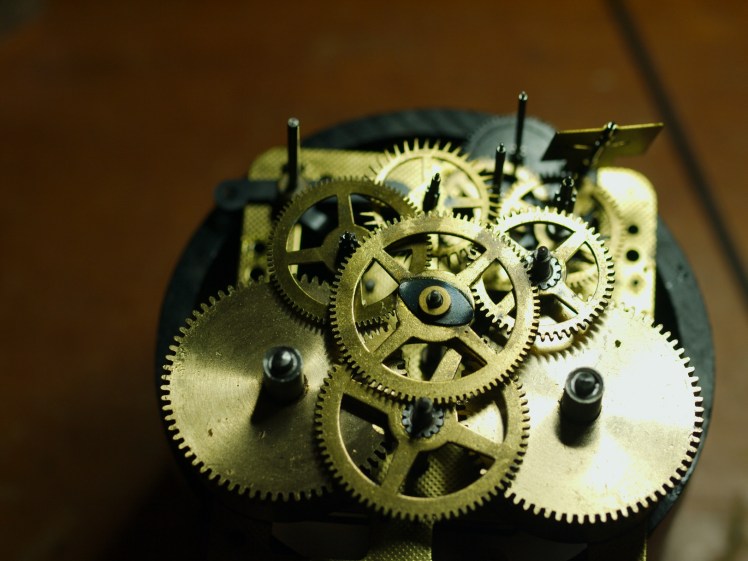
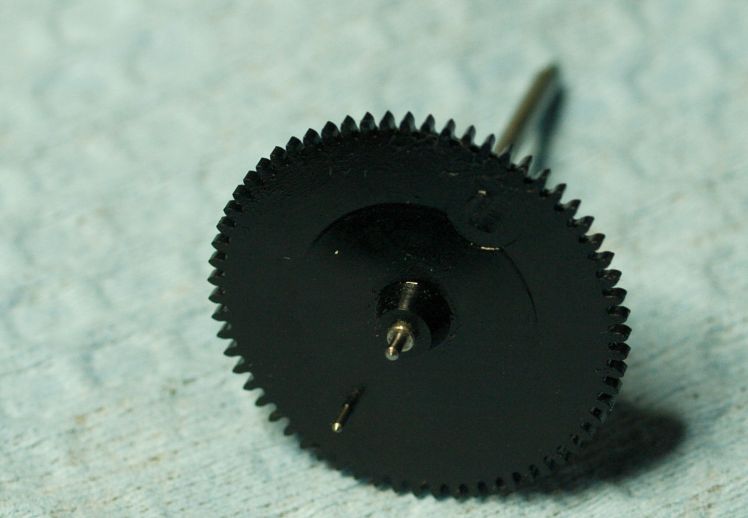
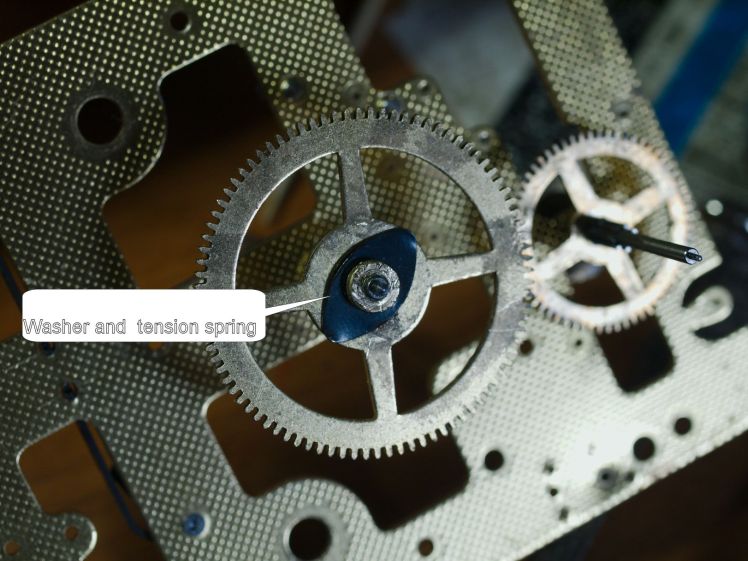
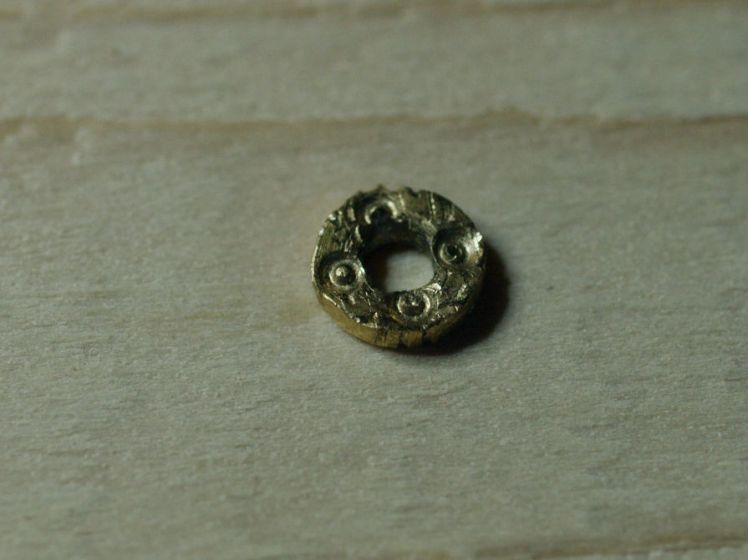
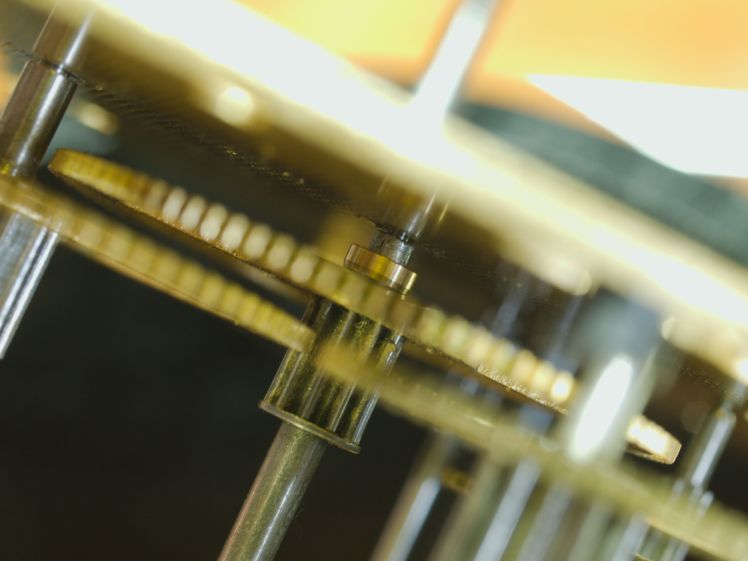


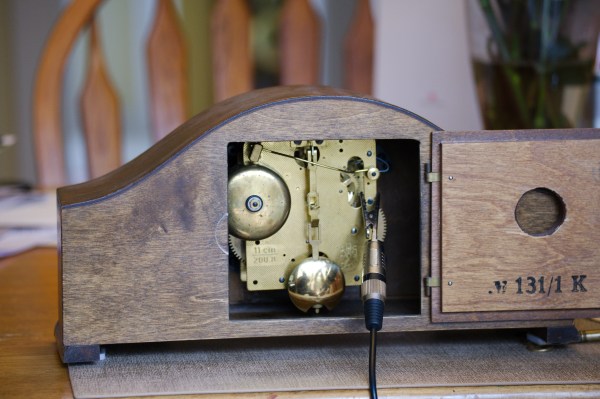
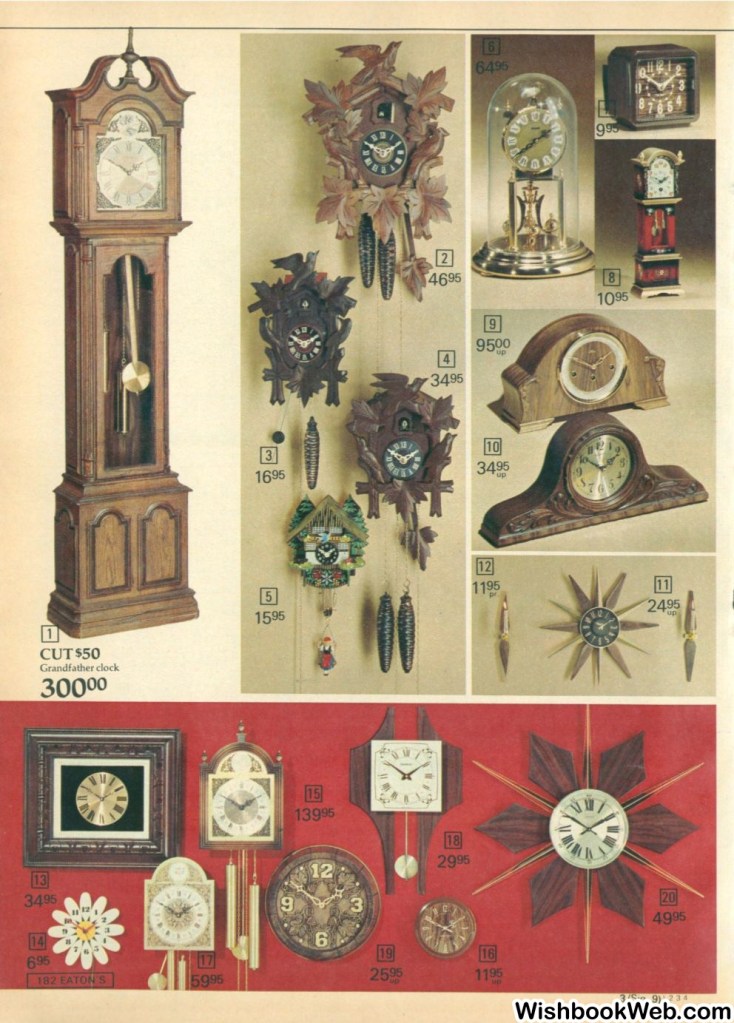
 Antique and Vintage Mechanical Clocks
You must be logged in to post a comment.