30-hour Waterbury Ogee with a beautiful veneered case
This 30 hour Ogee clock was purchased in the fall of 2017. I was eager to add this clock to my collection as it is the one particular style of clock that I do not have. From my research on Waterbury clocks I determined that it was made in or around 1870.
I decided to turn the worn trundles inward and seal them with Permatex (medium strength thread-locker) so they are fixed rather than rolling; not ideal but reversible
While the case is in remarkable condition for the age of the clock the movement has suffered the ravages of time.
Simple 30 hour movement, top plate removed
Testing over the course of a day or so revealed that clock would not run for more than a few minutes. The movement was taken out of its case and inspected to determine what needed to be done to get it to running condition.
I expected punch marks and there were a number. In the old days clock-makers would attempt to address pivot wear by closing the pivot holes with a stake or punch. Not ideal but a common practice. Bushing work was definitely required. The pivots, on the other hand, were in very good shape and polished up nicely.
Punching the bushing home
My first task was to address the bushings. Ten bushings were installed, 5 on each plate. The front bushing work included the escape wheel bridge, always a challenging spot to bush. Next I addressed the other serious wear issue – the trundles on all of the lantern pinions.
Lantern pinions on the escape wheel
The trundles on the lantern pinions were in bad shape as you can see in the photo above. The wear seen here was identical on all 4 lantern pinions. Notched trundles were not what I expected.
The trundle work was certainly the most interesting part of the repair. My experience with lantern pinion work is zero. After some research the method I selected was to hand drill through the top shroud to release the worn trundles.
Drilling through the shroud to release worn trundles; I used a smaller bit than the one pictured here
After releasing the worn trundles I used 1.10mm pivot wire which is ideal for this purpose and matched the worn trundles precisely.
Test fitting of pivot wire before the wire is cut to proper length
I began with the fly. I drilled into the top shroud. I then cut 1.10mm pivot wire into the required lengths then rounded the ends with a cut-off disc on a Dremel. After the fly was completed I addressed two more lantern pinions in the same way. I staked the shroud ends to seal the trundles inside.
With three done the escape wheel lantern pinion was next and that is when I ran into a snag. The escape wheel shroud is reversed (see photo below), so I cannot drill into the top shroud without a lot of guess work. Using needle nose pliers I decided to turn the worn trundles inward and seal them with Permatex (medium strength thread-locker) so they are fixed rather than rolling. This is not ideal but it is reversible.
There does not appear to be a definitive answer as to whether the trundles should be free-moving or fixed although I suppose they are designed to roll with the gear teeth. At some future point the trundles on this wheel will need to be replaced.
So, how do you get at those trundles?
The clock did not come with a pendulum bob so, a new one was attached. The suspension spring and leader was replaced to address a crimped spring that resulted in a wobbling pendulum bob. I used .09mm suspension spring in the correct length. The clock now runs well and it has completed a number of 30-hour cycles.
I suspect that this will be a clock that will not be run daily, the inevitable hassle of constantly winding a 30 hour clock but I am pleased that it is back in running order and I will ensure that is runs on special occasions.
Probably housed an English bracket clock at one time. Case measures 15″ wide 17″ high and 7″ deep, one tiny bit of trim is missing., wood has great aged patina. $275
My hope was that it would be a relatively straight forward exercise
This is Part 1 of servicing this 30 hour Waterbury time and strike movement. I honestly thought it would be relatively straight forward exercise. Dis-assemble, clean the parts, polish the pivots, do a little bushing work and voila! Not so.
I have worked on many clock movements but I have never seen quite the extent of wear that I found on this movement. 150 years certainly takes its toll.
Ogee clock showing replacement pendulum bob
Some time ago I profiled this Ogee clock. To reiterate, in 1839 the first prototype movement was produced for Chauncey Jerome by his brother Noble in Connecticut, USA. Jerome thought that a simple one-day clock could be produced far more cheaply than those with wooden movements at the time. Brass movements were more robust, could be transported easily and were unaffected by humidity. The simple case added to the movement was the Ogee named for its “S” shaped moldings. The success of the Ogee clock convinced other makers that there was money to be made in clock production.
This particular 30 hour time and strike Waterbury Ogee clock was produced at the height of Ogee clock production (1870s) and many thousands were sold. This is a very fine example. Absolutely nothing needs to be done to the case; it is in exceptional condition. The movement, well, that’s another story. This was not a working clock when I got it.
Waterbury clock movement
After disassembling the movement I discovered two things. One, there was evidence that it had been worked on before – as expected. There were punch and stake marks on the movement plates to close pivot holes and there was considerable wear in the lantern pinions.
Front plate has been removed
Four of the wheels have lantern pinions, with 5 trundles apiece. Trundles are the loose wires within the 2 shrouds. Dust and dirt as well as misalignment of wheel and pinion due to worn pivot holes can exacerbate the wear issue. The trundles on all 4 lantern pinions are very worn as you can see in the next two photos. I discovered why this clock does not run. When the gear teeth hits two worn trundles at precisely the right angle it locks the gear and stops the clock.
Worn trundles within lantern pinionAnother wheel with worn trundles within the lantern pinion
Professional clock-makers encounter these issues fairly regularly. Indeed, one of the most common operations in clock repair is replacing bent, broken or worn trundles. There are different methods of performing this service and the method I will employ is to drill into the shroud, extract the worn trundles, cut new ones out of pivot wire, insert them and re-knurl the shroud.
In the meantime bushing work was performed; 10 bushings were installed, 5 on the back plate and 5 on the front, including one on the escape wheel bridge. I re-assembled the movement knowing that the trundles had to be replaced, but despite new bushings the movement ran only marginally better.
Part II (Jan 2nd) details the procedure I followed to replace the trundles in the lantern pinions. Stay tuned.
Why are these clocks so cheap? Discounting the wild prices some seem to be asking on online for-sale sites, a good example can be had for almost nothing. Why? Allow me to explain.
This 30 hour time and strike Waterbury Ogee clock was discovered at an antique store an hour’s drive away. The store has a well-deserved reputation for pricing items for a quick sale and each time we visit there is always a new selection of interesting clocks as well as plenty of other fascinating antiques.
30-hour Ogee clock by Waterbury
Ogee clock, clock design that originated in the United States in the 1830s, distinguished by a case (usually pine) the front outer edges of which are curved into an S-shape (ogee). This shape is formed by the union of a convex and a concave line. A mass-produced variant of the shelf clock, the ogee clock stands about 30 inches (75 cm) high and is usually weight-driven. The movements were usually made of brass and were made to run for 30 hours or eight days. (Brittanica.com)
The Ogee clock – the beginning
In 1839 the first prototype movement was produced for Chauncey Jerome by his brother Noble in Connecticut, USA. Jerome thought that a simple one-day clock could be produced far more cheaply than those with wooden movements at the time. Brass movements were more robust, could be transported easily and were unaffected by humidity. The simple case added to the movement was the Ogee named for its “S” shaped moldings. The success of the Ogee clock convinced other makers that there was a lot of money to be made in clock production.
My new acquisition
The seller knew nothing about clocks and his only interest was to move the item. The proprietor said it was not working. Just as well, I bought the clock for almost nothing. In my opinion these clocks are terribly undervalued.
It came with a winding crank and both weights but no pendulum. A 2.2oz pendulum bob was later fitted to the movement.
The dimensions are 4 1/4 deep X 15 1/4 wide X 25 3/4 inches high. The clock strikes on the hour to conserve the weight drop. The coiled gong on the Waterbury stamped base is loud, and the striking is frantic.
The movement will run and stay in beat (relatively!) but stops after about 15 minutes. That is to be expected and a thorough servicing is in order. Stake and punch marks throughout the movement tell me that the movement has been worked on more than once.
Ogee clock label shown with a 2.7 oz pendulum, also testing with a 1.7 oz pendulum
The Rosewood veneer is in remarkably good condition though the outside four corners have been compromised. The label is in very good condition with two small pieces missing at the bottom edge and water staining on the right side. The painted zinc dial with Roman Numerals has some flaking and the numbers are somewhat faded but it otherwise looks very good for the age of the clock. Both spade hands and Ogee hands are on similar dials I have seen so I do not know if these are correct/original. The lower reverse painted tablet is silk screened, looks to be marred around the centre area and the entire scene has minor crackling but it is vivid and largely intact.
Veneer in excellent condition
This is a Type 2.411 movement introduced by the Waterbury Clock Co. when Chauncey Jerome worked for them briefly in 1856-1857 after he went bankrupt. Found in Chauncey Jerome-labeled clocks with movement stamped, “C JEROME.” and also stamped “Waterbury Clock Co. CT” in later (1870) Waterbury clocks. This movement has the Waterbury stamp.
Waterbury clock movement
There is a Canadian connection to this movement. The Canada Clock Co. of Whitby, Ontario 1872-76 made 30 hour weight driven, time and strike movements based on an American design. Research indicates that the Collins Brothers (there were three: William, John, and Edward Collins) made a close copy of the OG movement used by the Waterbury Clock Company in Connecticut, a testament to the excellent design of this movement.
Ogee clock top showing cable pulleys
Why are these clocks so undervalued?
The economic collapse of 2008-09 prompted many to sell their clocks and glut the market.
The generation of folks who cherished these clocks are dying off.
The newer generation consider them irrelevant and are not interested in them.
30 hour clocks are a tough sell because of the hassle of winding them daily.
Winding them daily means that most have considerable wear and the cost of repair exceeds the value of the clock
Lastly, many tens of thousands were made so they are not especially rare.
Ten years ago an Ogee in good condition would easily sell for $200 to $300. Today I see prices all over the map but none close to the prices they once commanded.
Expect a report on the servicing of this 30 hour Waterbury Ogee in the weeks to come.
tools are essential for clock repair because they enable precision and accuracy, which are critical when working with delicate mechanisms and intricate components. Let’s identify the key reasons.
Antique and vintage clocks can lose significant value if repaired improperly. Using the right tools minimizes the risk of damage, preserving their historical and monetary worth. The right allows you to handle small parts without causing damage. Specialized tools ensure components are handled carefully and correctly.
Proper tools make the repair process faster and more straightforward. Having the right tools helps build confidence and competence. They allow you to focus on understanding clock mechanisms without being hindered by improper equipment.
This article will describe some of the more advanced tools required to tackle the repair and/or cleaning of mechanical clocks.
Based on years of clock repair experience, I recommend the following tools for those ready to advance their skills in clock restoration and repair. Most specialty items will need to be ordered from clock supply companies such as Timesavers (USA), Perrin (Canada), or Meadows and Passmore (UK). Other items such as an ultrasonic cleaner can be ordered through online merchants.
Part I of this two-part series describes the basic tools for those just starting out. The tools/equipment described here are for the more advanced hobbyist/amateur horologist.
A Suggested List of Items
Ultrasonic Cleaner: This Harbor Freight special will do for now but it is so low-powered that a newer, more powerful machine is on the horizon. It does not perform as well as better quality machines and it has a limited load capacity. An eight-minute limit for each cycle means that several cycles are required to properly clean clock parts. It is a start.
Ultrasonic cleaner
Spring winder: An essential tool. Disassembling clock movement also includes servicing the mainsprings. Mainsprings must be inspected for breaks, cracks and splits, cleaned of old oil and rust (as long as there is not too much rust) and lubricated prior to re-installing them into the movement. Too much rust and they should be discarded. I generally do not replace springs in a movement unless they are quite set, or have breaks or cracks. I have found that the steel in the original movement is better quality than can be found today. Mounting the spring winder on a piece of hardwood provides a stable tool and allows it to be clamped to a work-desk.
Although there are other types of spring winders, the Olie Baker winder is one of the better choices in my view. It is well made and should last for years. If you can find a used one you will save a little.
Mainspring contained in a clampMainspring servicing; taking the clamp off to inspect and service the mainspringMainspring barrels require collars supplied with the Olie Baker spring winder
Bergeon 6200 Bushing Machine: Some bush by hand and they are to be applauded for their patience and skill. I chose a bushing machine for the delicate work of installing bushings. This is the Bergeon 6200 which is made in Switzerland. It is exceptionally well made and relatively simple to use.
Chucks and reamers
The machine can be bought separately or with a set of cutters and other hardware (above). The cutters can last 15 years or more. Of course, you must also have an assortment of correctly sized brass bushings that are purchased separately from any clock supply house.
To operate, a correct size cutter is placed in the bottom end of the steel shaft, holes are cut after which the new bushings are punched in place with a hammer head fitted to the shaft.
Bergeon Bushing MachinePressing a brass bushing into the drilled pivot holeSix new bushings on the back plate of a mantel clock
Lathe: Good quality mini lathe are available from Sherline, Taig and others. A cost effective option is the Taig Miniature Lathe for metal. The Taig lathe was originally designed for precision machining of watch and clock parts; ideal for clock repair applications. The small office space in my home means that its compactness, portability and relative simplicity are attractive features.
Taig lathe with 1/4 hp Marathon motor
Reference/Reading material: I recommend the Steven Conover series of repair manuals. The manuals are well-written, and detailed and are great resources for the beginner or the advanced amateur.
Steven G. Conover; Clock Repair Basics
Steven G. Conover; Striking Clock Repair Guide
Steven G. Conover; Chime Clock Repair
The acquisition of clock supplies and equipment has been a personal journey for me. I started with a few basic tools for disassembling movements, gradually learning what additional tools were necessary and steadily expanding my collection over time.
Several years ago, my first major purchase was the Olie Baker spring winder. A few months later, I added a Bergeon bushing machine, complete with cutters and a supply of bushings. Most recently, I acquired a Taig mini lathe with accessories. This mini lathe will enable me to advance my clock repair skills by allowing me to polish and burnish pivots properly, replace worn or damaged pivots, and perform other specialized repairs. As new challenges arise, I plan to seek out additional specialized tools and equipment to further enhance my capabilities.
And finally
Set a specific goal, research your requirements, and build your collection of tools and equipment gradually while sticking to a reasonable budget. Clock repair can be more affordable than you might expect, especially when costs are spread out over time and some tools can be sourced from the used market.
I hope you found this helpful! If there’s a tool or piece of equipment you consider absolutely indispensable, I’d love to hear about it.
EN Welch time and strike parlour clock displayed in an antique shop
In a previous article I described some of the challenges I had with this E.N. Welch clock movement.
The clock ran for about 48 hours and suddenly stopped. It seems that every time I think everything is going well, something else crops up. I dis-assembled the movement (again) and installed three more bushings, one of which is on the escape wheel bridge which I noticed had a fair amount of play. Perhaps the vertical motion of the EW was causing the clock to stop. The other two bushings were installed on the third wheel, back and front. I have decided to hold off addressing the EW teeth if the bushing work I have done has solved the stoppage issue.
I was hoping to wrap the servicing up fairly quickly but unanticipated problems continued to crop up. Having completed the work mentioned above I could see that things were beginning to change for the better.
Shortly after taken from the case. A very dirty movement with many issues
The time side ran strongly for eight days after which I reinstalled the strike train. Here is the movement running on a test stand.
Cleaned and free of rust, bushings installed and tested
Setting up the strike side required manipulating some of the lever wires which were moved out of position by the previous owner, for whatever reason. A previous repair/adjustment resulted in the lifting levers bent back into the case and the count lever pushed in an upwards orientation. As a result I had to bend the levers back into their original positions.
From left; hammer lever, count lever, lifting lever
Here is the movement installed back into its case.
E. N. Welsh Whittier model
It should now run reliably for years to come. A frustrating project with a satisfying ending.
Tools are essential for clock repair because they enable precision and accuracy, which are critical when working with delicate mechanisms and intricate components. Let’s identify the key reasons.
Antique and vintage clocks can lose significant value if repaired improperly. Using the right tools minimizes the risk of damage, preserving their historical and monetary worth. The right tools, such as screwdrivers, pliers, and tweezers, allow you to handle small parts without causing damage. Specialized tools ensure components are handled carefully and correctly.
Proper tools make the repair process faster and more straightforward. For beginners, having the right tools helps build confidence and competence. They allow you to focus on understanding clock mechanisms without being hindered by improper equipment.
This article will describe some of the tools required to tackle the repair and/or cleaning of mechanical clocks.
Based on years of clock repair experience, I recommend the following essential tools for any beginner’s toolkit. While some of these tools can be sourced from your local hardware store, specialty items will need to be ordered from clock supply companies such as Timesavers (USA), Perrin (Canada), or Meadows and Passmore (UK).
Whenever possible, avoid purchasing tools from craft shops, as their prices are often significantly higher. They are ideal for paint and quality paintbrushes but they tend to charge much higher prices for general-purpose tools. A ball peen hammer bought at a hardware store, for instance, costs half as much as one found in a craft shop.
A suggested list of items
Keys: clock keys come in many different sizes. You must use the correct key for the winding arbours of your clock. The pronged keys in the photo below will fit a multitude of arbours.
4 and 5 prong keys and singles
Magnifier: They are available in various strengths and allow a much closer view of your work.
Magnifier
Work light: Illuminates your work, this one articulates and has a magnifier. I have since replaced this light with an LED one. The lamp burnt out and the cost of the fluorescent lamp was more than the entire lamp. Plus the new LED lamp has light temperature and intensity controls.
Work-light
Pliers: A variety of pliers to hold onto your work, release taper pins, tighten nuts, and cut wires. The green handle pliers are non-serrated (flat-nose).
Assorted pliers
Hammers: A ball peen hammer is very useful (not pictured). The craft clip holder is useful for steadying items that are to be soldered.
Hammers and craft clip
Files: Variety of sizes to help shape or file down anything on a movement. Avoid inexpensive Chinses files and spend a little more on quality ones.
Files
Tweezers: Getting into tight situations, grabbing small parts, and positioning parts into place are typical uses for tweezers
Tweezers
Level: To find the correct beat the movement (clock) must be level.
Level
Spring clamps: To restrain the power of the mainspring. The flat clamp (upper right) is for those mainsprings which do not leave a lot of working room. Otherwise, the other round clamps are good for most applications. I prefer the flat clamps.
Assorted clamps
Screwdrivers: Always handy to remove movements from cases, loosen bolts, and pry parts.
Screwdrivers and box wrench
Letdown set: Before working on a movement the mainsprings must be let down or restrained in their clamps. The letdown key is the safest method of letting down the mainsprings. Inserts cover most arbour sizes.
4-piece letdown set, #5-6, #7-8, #10, #12
Hand reamers and broaches (cutting and smoothing): For bushing clocks when you cannot afford the luxury of a bushing machine. Cutting and smoothing broaches are useful for enlarging a new bushing when tight tolerances are required. They come in assorted sizes.
cutting and smoothing broaches
Cotton swabs: A variety of cleaning uses.
Cotton swabs
Clock oil: Once the movement is apart and cleaned it must be re-assembled and then oiled before use. The oil, whether it is conventional or synthetic, must be specifically designed for a clock movement.
Clock pivot oil
Toothpicks: For cleaning and “pegging out” bushings on a movement
Toothpicks
Clock stand: Once the movement has been re-assembled it is tested outside the case for a short period. Gene’s movement stand is a fully adjustable test stand.
Gene’s clock movement stand
For those handy with a hammer and saw a stand can be made at home with whatever lumber is at hand.
Testing a movement on a home-built test stand
Camera: At every part of the process a digital camera can record critical stages in assembling and disassembling a movement. I use a 50mm macro lens for close work. A cellphone is a perfectly acceptable alternative but one with good macro capabilities is preferred.
Digital Camera
Electronic Caliper: Indispensable for measuring the thickness of anything be it springs, pivots, plates, and so on. Available at a clock supply house or save a little money and buy the same tool from a retail outlet such as Canadian Tire in Canada.
Using a micrometer to check pivot diameter
Pivot locator: It is an excellent tool for aligning pivots with their holes during assembly.
Build your set of tools little by little to spread the cost. You may already have some of the items I’ve mentioned but buy what you need when you need it. As for those specialized tools, broaches for example, it pays to spend a little extra for better quality.
These are the tools you require to start your journey into clock repair. If you have a tool (or tools) you feel is indispensable for the beginning clock-maker please let me know.
In Part II I will describe tools for those who would wish to advance their skills in clock repair.
Case is in fair condition, dial face has some flaking, piece broken on left side of base
We have a couple of antique stores in our small town. Calling them antique stores is a bit of a stretch because there is usually more junk inside than actual antiques. We were shopping in the area of one of those “antique” stores and my wife turned to me and said, “Let’s go in”. I replied, “You know, all they have is junk”.
I thought, I might have found something important
I acquiesced. While she continued her shopping I went on ahead to look around the store and in the very back I saw a very sad looking clock that at I took for an old Sessions or a Waterbury. As I neared the clock it piqued my interest and I began to see that it was quite old. I picked it up, looked for any markings on the dial face, found none then checked the back of the clock and discovered most of an intact label revealing a what I consider to be a significant find.
Back label in good condition for the age of the clock
It is a clock from the Canada Clock Company. The Hamilton Cottage Extra was one of a range of clocks in their Metropolitan line.
This is an important discovery. The owner of the store knew nothing about clocks. He was asking $99 but after a bit of haggling, we settled on $40. I knew that it was worth much more.
Here is an excerpt on the Canada Clock Co. found at the Canadian Clock Museum in Deep River Ontario (Canada).
This company was the last of three sequential attempts to produce clocks by factory methods in Canada during the 1872 – 1884 period. The original effort by the Canada Clock Company in Whitby, Ontario was basically unsuccessful and only limited production was achieved.
In 1876, the equipment was relocated to Hamilton, Ontario to begin a second attempt as the Hamilton Clock Company, with new investors. This attempt was more successful and a fairly wide range of clocks was produced. However, sales were not very large and some of the investors left the company by 1879. At that point the president, James Simpson, ended production and proceeded with a major reorganization.
The company subsequently became the Canada Clock Company using the old Hamilton Clock Company factory and resumed production in 1880 but as a result of poor sales closed its doors in 1884.
Clocks from the Canada Clock Co.are sought after by collectors. For international readers this represents a rare find because the 1870s to the mid 1880s was a very important period for clock production in Canada. Apart from several independent clock-makers in Quebec and eastern Canada two notable companies made wholly Canadian clocks, The Arthur Pequegnat Clock Co. of Kitchener Ontario made clocks up to 1941 and Martin Cheney of Montreal made finely crafted clocks in the early 1820s. This clock was made at the Hamilton, Ontario factory which produced clocks from 1880 to 1884.
Original count wheel time and strike 30 hour movement
The 30-hour time and (bell) strike movement is in remarkably good condition and fairly clean. The back label in good condition for the age of the clock and there is a stamp on the top of the label which says, “…A Hill &Co.”. If any Hamiltonians are reading this I would be grateful if you could make inquires about this small retailer.
My preliminary examination reveals that this clock has had very few repairs over the years. I have not taken the movement out of its case to check bushing/gear wear and other issues but I am initially encouraged. The case reflects the age of the clock but I would judge the clock to be in just fair condition. There is a wooden piece that needs to be re-attached on the right side of the base. Fortunately that piece was tucked inside the clock case.
Right side needs work
Left side looks good
100+ years of grime came off easily; etched glass on the bottom part of the tablet is distinctive
The crudely made case is not overly decorative and reflects a muted Victorian style of the times. The lower part of the tablet has an etched glass floral design typically found in Canada Clock Company clocks. The door clasp is original. The dial face is flaked in places and not in the best of condition though the 2 floral designs on each bottom corner are nicely preserved. The hands are original. The case is not heavy and made of pine with a deep walnut stained finish. It was grimy and dirty as expected. It cleaned it up nicely with Murphy’s soap and a sharp hobby knife was used to remove the numerous paint drops on the clock. Why folks do not put something over the clock when painting a room amazes me.
I will put the clock aside until I can determine my next steps. Do I pursue a full restoration including renewing the dial face or leave the clock largely in as-found condition? In the meantime I will re-attach the wood piece on the left side of the base.
Tick-Talk Tuesday is about the letters and comments I have received from you, the reader, concerning your clock, issues you might have had and challenges you face and my responses to your questions with advice on your particular clock concern and of course, my general comments. For those comments and questions that stump even me, I consult within my clock circle for the best possible answer.
NV writes about her Arthur Pequegnat Nelson hall (tall-case) clock.
“I have an antique, oak ‘hall’ clock that’s been handed down in my family. I read in an article you wrote that you collect them.
This clock was in my home growing up and my grandmother, now 96, reminds me of its history and knows whose home it was originally from in our family.(my grandfather’s grandparents, I believe). I’ve started to look into the history of these clocks. I’m interested to know what your thoughts are if you are interested in sharing them.
I can tell you that it’s in beautiful condition, however although it had always worked and sounded well (still sounds beautiful) when it was shipped here to BC in the 90s, it was never restarted and the finial became dislodged, but it is not cracked or broken. So it’d since been stored at my grandmother’s but she never got it going after it arrived and needs to ‘be started’ as the weights are still off (or possibly a repair?) Also the key was lost.
I’ve just recently brought it to my apartment (Gramma wanted the space!) And she supports me in whether I decide to keep it or not.Please contact me if you are interested as I am considering selling but regardless I will need to determine value/appraisal if I do keep it, at least for insurance. ”
My reply.
“You have a real Canadian treasure. Though it is called a hall clock it’s actual name is the “Nelson”. There is one on display at the Canadian Clock Museum in Deep River Ontario. Unlike many tall case clocks that decline in value yours is actually increasing since it is continually sought after by collectors. If it says Berlin on the lower part of the dial it was made before 1917. Clocks made after that simply said, “The Arthur Pequegnat Clock Company of Canada”. The Arthur Pequegnat Clock Company closed its doors in 1941.
The Nelson is in the middle
You can easily find a replacement key. Perrins would have the key although off hand I do not know the correct size. The finial on top is a friction fit.
It would be in the neighbourhood of $2000. You should keep it not only because it has strong sentimental value but it is an important part of Canadian history. It would also be worth repairing.
NV cannot keep the clock and has plans to sell it.
Is clock collecting (and repair) part of the counter-technology revolution?
Many years ago, social scientists predicted with the onset of modern technology it would sap us of our knowledge. Our brains would simply melt away. Concentration and initiative would be sucked out of us. Why would you need to know anything if it is readily available at your fingertips? How often do you hear the phrase, “just google it”. Sadly, it has become an integral part of our lexicon.
People are embracing old technology and returning to the fulfillment of doing things for themselves
The term counter-technology is not a term I invented. I found it mentioned in a car magazine article some time ago. Many people are collecting and repairing antique cars more than ever. Why? Reliving past memories? Getting your hands dirty. Rejecting the modern world?
Has the analogue world returned? Yes and no. Wine and beer making has become a huge industry and there seem to be mom and pop microbreweries everywhere, antique furniture purchases have increased dramatically, backyard chicken coops are popping up everywhere, fountain pen collecting is a “new” thing, vinyl records are spinning back and stamp collecting is returning with renewed vigor.
Retro is in. But is is not just that! It is a statement. People are embracing old technology and returning to the fulfillment of doing things for themselves. We all know the value and satisfaction of pursuing a simpler way of life but at the same time we still want to feel connected to our busy modern world. We want both. This is our inevitable response to the new digital world. We are pushing back but just enough to satisfy our needs by remaining connected with the past but we still feel the need to be plugged in.
However, every now and then we feel the need to dis-engage. Digital detoxification. It’s a thing. Somehow we want to wash the digital world from our lives, however briefly. I spend summers at our family cottage in Quebec (Canada). There is no Internet and I am totally fine with that. But what’s the first thing I do when I return home? You got it!
You too can be saved
Simplicity breeds complexity
To truly embrace the analogue world the mechanical clock is my personal statement. Not only do I collect antique and vintage clocks I repair them as well. As readers know I am not a trained horologist but I love the challenge of repairing a clock and I love accumulating knowledge in the pursuit of my hobby. Needless to say I am not always successful and my office has a few notable failures. I am fine with that. Failure breeds learning. It is my response to the increasing pressures of the digital world. It is my response to our increasingly complicated world. Simplicity breeds complexity.
Like the juggler who can keep all the balls in the air at once
It took 2 years to learn the skills necessary to repair this Sessions Westminster A chime clock
Analogue verses digital. It is a question of balance, like the juggler who can keep all the balls in the air at once. I admire people who have “analogue” hobbies but I especially admire those who remain connected to our modern world by maintaining a delicate balance between both.
This is the Whittier model from Welch’s Authors series. Tran’s 2d ed. shows it from the 1893 catalogue. It is a half-hour strike clock. Though an alarm could be ordered this clock came without one.
It is solid walnut in construction, deep brown in colour and darkened by age. It stands 22 inches tall by 14 ½ inches wide and 5 inches deep. The crown is an ornate machine-cut design with a single bulls-eye. The Roman numeral dial face with inner brass ring is original but has been covered with a clear varnish.
Clock face in good condition
The spade hands with circular cut-outs also appear to be original. The tablet is in remarkable condition and features an embossed gold colored scene of two female child warriors on each side presumably guarding an older female warrior (laurel and spear), reminiscent of Greek or Roman mythology.
Barely readable label
Bottom label with running instructions
There are two labels on the back panel, the top designates the model name which is barely readable; the bottom label has generic operating instructions for several types of clock models. Both labels appear to have been varnished over at some point. The upper area of the back panel has a hook for hanging the clock, added by a previous owner. However, this is a shelf or mantel clock, not meant to be hung on a wall. I doubt that the pendulum bob was this colour originally.
Though incorrectly termed a kitchen or gingerbread clock it is commonly referred to as a parlor or hall clock. Since the company last produced clocks in 1902 I would comfortably date this clock at between 1893-96 or perhaps a little later, 1901-02. The E. N. Welch Clock Company has a fascinating history (detailed in Part I of this series) and unfortunately not many of these well-made American clocks are still around.
Time and strike movement
In Part III I will describe the challenges of servicing the clock movement.
Among the most common parlor clocks, E.N. Welch clocks are relatively scarce. A key reason is that the company was absorbed by Sessions in 1903. The history of Welch is intriguing, as Welch, Spring & Co. initially focused on producing high-end clocks but eventually shifted to manufacturing cheaper, heavily discounted mass-market clocks—a move that likely contributed to its decline.
E. N. Welsh Whittier model
This time-and-trike American clock with a count wheel strike is an antique store find. I found it at what I would call a higher-end antique store in a small village in Quebec during one of our day travels from our summer cottage. I liked it so much I bought it. Because the strike side did not function there was a slight reduction in price.
The clock ran for several days and kept good time, but it was in desperate need of a cleaning. I was unable to get the strike side to run, though I hoped to fix it eventually. All the strike-side parts appeared to be present, but someone had clearly tampered with the levers, bending them significantly. It’s impossible to fully assess the situation until I take the movement apart.
Barely readable label and someone determined that this clock should be hung on a wall
History of E N Welch
The E. N. Welch Mfg. Co. was formed on July 6, 1864 to succeed an older private firm making clocks under the name of E. N. Welch. Elisha N. Welch (1809 to 1887) had been making clocks at a factory site on East Main Street at Forestville, Conn. since taking over the bankrupt business of J. C. Brown in about 1856.
A movement shop was established in 1869, adding to the two factories already in use by the firm. Between 1868 and 1884, a subsidiary firm called Welch, Spring & Company was formed to produce a more expensive line of clocks. The company was formed by three clock enthusiasts; Welch, Solomon Crosby Spring and Benjamin Bennet Lewis. The Welch firm was well known for its handsome rosewood cases, though in 1885, with changing styles in furniture, the surviving firm began to introduce new models with solid walnut cases and discontinued some of the older rosewood veneered cases.
Elisha Welch was enamored of a lovely (but very liberal-thinking) diva of the day from Spain by the name of Adelina Patti. He named his best quality movement after her, called the “Patti” movement. Clocks with this movement are highly sought after by serious collectors. However, Examples of “Patti” clocks at any of the international auction sites are rare.
After the death of Elisha Welch in 1887, the firm steadily declined, selling off some of its assets and issuing new stock to raise much needed capital. A new line of clocks was introduced for 1893, which were cheaper in quality than their already discounted line. In May of that year the factory was closed down and a receiver was appointed The receiver spent nearly two years selling off stock and settling the debts of the firm. It was not until 1896 that the firm resumed production.
In 1899, two fires, one in March and a second in December reduced most of the Welch manufacturing complex to ashes. Despite the completion of a new brick factory in 1900, the company could not meet its liabilities. Meanwhile, members of the wealthy Sessions family were buying out former stockholders and eventually took control of the firm in 1902. They changed the name to the Sessions Clock Company on January 9, 1903.
E. N. Welch clocks made before 1880 are considerably more desirable as these represent the height of the company’s clock-making. Clocks made before 1880 generally command higher auction prices. Compared to companies like Seth Thomas and Waterbury instances of E. N. Welsh clocks coming up on auction sites are becoming quite uncommon.
Stay tuned for more! In Part II, I will describe the Whittier and highlight some of its interesting features. In Part III, I will share my progress and discuss any challenges I encounter while servicing the movement.
We were making our way to Missouri after beginning our journey in Maine in early May (2017). We only had one very important stop along the way because for the past 5 years I have always wanted to see the NAWCC clock museum in Columbia, Pennsylvania. Ever since I seriously wrapped my head around clock collecting and repair my dream was to visit this museum. Getting there was no problem but Interstate traffic is truly a disaster! Unfortunately, we budgeted too little time for a thorough tour in the hour and a half we had but we saw as much as we could in that short time.
Waiting in a hot parking lot for the museum to open was not much fun. Couldn’t you just open the front doors a little earlier than 10:00am? To kill time we walked around the town of Columbia. It might be neat and tidy place and one of the “top twenty small towns to visit in America”, so the sign says, but like all small towns in America the decline is evident in the number of vacant storefronts and absence of activity in the streets.
Sign in Columbia Penn.
We finally got into the museum. We (my wife and I) were the first in and being a NAWCC member my wife and I got in free. During our time there we saw only one other couple. So, not a terribly busy time but there are likely peak periods in the summer.
I was wondering how I would describe my visit to the National Association of Watch and Clock Collectors Museum in Columbia Pennsylvania on that day in May. It was wonderful and more than I had imagined. There is simply not enough time to see everything and take it all in. The museum is very well laid out and there are displays to please everyone.
Vienna Regulator with Grande Sonnerie movement
For me the highlight has to be Engels Monument Clock (see Youtube video below). There was only ourselves and one other couple at the time so we were happy that the staff were able to put on a real show for us. The staffer walked us through the history of the clock and followed with a fascinating demonstration. AS he did so I imagined what it must have like to attend a local fair and see this wonderful clock in action. The clock was exhibited around the country for 74 years and last displayed in 1951 at the Ohio State Fall.
There is an emphasis on American clocks as you would expect but there are excellent examples of French, German, English and Japanese clocks. There is a broad selection of tall case clocks all the way back to the 1700s The history of time was very interesting as are the interactive displays which I am sure would please any children visiting the museum.
In a later article I will post more photos.
Whether you are an avid collector or merely have a casual interest in clocks this is great place to visit.
While touring through the United States we had an opportunity to explore the “magic” of antique malls. Antique malls are typically located in former department stores such as Macys or JC Penny found in commercial areas of a town or city. Antique malls are an American cultural experience. They are not a unique experience for me as I have been in much smaller antique malls in Canada but this one was very BIG!
Dozens of vendor stalls
A particular example I will use is the Maumee Antique Mall located north of Toledo, Ohio. For the antique shopper the first impression is of a giant smorgasbord of antiques. Could I find a bargain given the huge selection of antique items? The Maumee Mall would have about 200 vendors or more. Each vendor would occupy a small 12X12 stall though some might have more than one stall.
It was a weekday and we did not expect to see a lot of shoppers; that was certainly the case on that particular Thursday. The mall is organized into aisles with plenty of antiques with no particular organization. If one were looking for crystal, for example, some stalls would have crystal and others a slightly better selection but there is no specific area of the mall that would have a concentration of any particular item. Front end staff in a check out area handle all the transactions. The mall is filled with security cameras so you are being watched at all times. There are also security staff disguised as shoppers who are present throughout the complex. A small snack bar invites the shopper to have a bite while finding that special item.
Always and I mean always ask for a discount
There are no discounts on items below a certain fixed value ($20 for instance). Some malls are authorized to offer a %10 discount without contacting the seller. Any further negotiation on price requires the mall staff to contact the vendor who may or may not be immediately available. If contacted, the sellers normally do not offer much more than the standard 10% discount. A bit of advice; in malls such as Maumee or any antique store for that matter, always and I mean always ask for a discount.
On this particular Thursday I was shopping for antique clocks. I found nothing that I would consider a “deal” that day. A typical gingerbread clock was in the US$175 to US$200 range, a mantel clock US$100 or more.
Appears to be a deal but this Gingerbread needs a lot of work
Interesting clocks but pricey
A Mauthe German box clock that was not in the best of shape was selling for US$299. In general, most clocks had serious issues such as missing hands, no pendulum, scuffed up or cracked cases and unreadable dials. Clock prices were 30% to 50% higher than you would find on eBay, any other auction site or your local mom and pop antique store. My wife was shopping for glassware & crystal and also found higher than average prices but managed to find a couple of nice items.
US$299 Mauthe time and strike wall clock
Why? High overhead is most certainly a factor. Staffing, security, and steep rental rates force the vendor to charge higher than normal prices. Malls such as this most certainly attract a customer base though I suspect not many are highly educated antique shoppers.
For the bargain shopper there are much better options in my opinion. The best bargains for clocks can be found on local community online for-sale sites where you can negotiate directly with the seller electronically or in person.
Call it a cultural experience but in my view you will not find great bargains at an antique mall. Your mileage may differ!
It would be wonderful to have this unique piece of horological history, an English lantern clock. I am trying to negotiate a price, the trouble is I do not want to pay much for it but I am afraid once the seller discovers that it is worth a lot of money it will be too rich for me.
Lantern clock converted to a fusee movement
Lantern clocks have a very interesting history going as far back as the 16th century. They are the first type of clock widely used in homes in England as the middle class began to prosper. There are many theories as to why it is called a lantern clock but because it was hung on a wall like a lantern usually on an ornate shelf the name stuck. Although some were made of steel almost all were made of brass. It is a wall clock with square bottom and top plates surmounted by a large bell, four corner pillars, a series of vertical plates positioned behind each other, an hour hand, and proportionately large clock dial, and a 30-hour movement with one or more weights.
Originally lantern clocks are weight driven and not barrel driven like this one. Seventeenth century and eighteenth century lantern clocks almost always have a single hand. This clock is a later date of manufacture or perhaps a conversion. Brian Loomes, a specialist clock dealer, in his book on lantern clocks traces their evolution from the early 1600 through the mid 1700 when they went out of style.
Early ones had a balance wheel escapement. Around 1660 the pendulum was created and these clocks used a verge escapement and then transitioned to a long pendulum around 1680. The dial plate engravings were particularity intriguing and often had the maker’s name.
Side view of fusee clock
The one you see here is either a fusee conversion made sometime in the 19th century or a 19th century copy of a lantern clock using a fusee movement. If it was a conversion additions such as the winding arbor hole and the minute hand were made when the “newer” movement was installed. There are two reasons why a clock would be converted, to stave off obsolescence (changing a clock from 30 hours to an 8-days) and to increase the accuracy of the clock. If converted the bell becomes ornamental. As the 8-day tall-case clock became popular in England the lantern clock began to disappear but continued to be made in the rural areas until the middle of the 18th century. Although many were discarded some, such as this one, were converted.
Usually there is a maker’s name on the clock face
POSTSCRIPT
Despite emails going back and forth, and active discussion on a fair price, the deal fell through. It is unfortunate since it would be been nice to have a interesting piece of horological history.
There is a peculiar phenomena happening in the clock world today and that is tumbling clock prices. French cartelle clocks, American jewelers regulators, original E. Howard and Willard banjo clocks to name a few have retained their value but clocks that would have sold for hundreds of dollars a few short years ago can be had for almost nothing today. It is not a great sellers market.
Rare Ingraham Huron shelf clock was once sought after by collectors
Prices will not rise any time soon as modern generations have been conditioned to discarding old for new irrespective of merit and in contradiction to the ideology that recycling saves the planet
Why are clock prices so low?
I have acquired some very nice clocks for ridiculously low prices. While it is part luck there is ample evidence that recent clock prices have never been lower.
There are so many clocks that no one seems to want. Gingerbreads, school house clocks, mantel clocks, Ogees (30 hour or one-day especially), calendar clocks and most garden variety clocks go for very low prices. Good for collectors, not so good for sellers. Prices will not rise any time soon as modern generations have been conditioned to discarding old for new irrespective of merit and in contradiction to the ideology that recycling saves the planet.
Millennials are also facing a very different world than I and my contemporaries faced. Factory work or clerical positions are now considered a good job and young people are staying with mom and dad living in their old rooms as they try to pay off mortgage size student loans. Under those circumstances you will not consider buying a tall case clock or an 18th century French clock.
Thanks but I have no place to put one
My generation (I am in my 60s) did not typically have mechanical clocks in their homes (aside from Grandfather and cuckoo clocks), so younger people today do not have those kind of memories to inspire nostalgia. In my day mechanical clocks were thrown in the trash when they wore out to make way for the electric clock. For young people today the old clocks we loved are not in their sights for purchase. An offer to gift a clock to a millennial is often met with the reply, “Thanks but I have no place to put one” and of course, winding it is always a hassle. A visit to any antique store or clock fair says it all when observations show the average age of visitors and traders are often in their “senior” years.
Junghans Crispi wall clock, not rare but a fascinating history
Prices of clocks really did not begin their rise in value (at least in North America) until the mid to late ’50’s. Since then and up until the late nineties many ordinary clocks commanded high prices. Since the year 2000, the economy has been spiraling downward. Paralleling the declining economy is the decline of prices for antiques of all types. The at-times spectacular and troubling declines in real estate values, increasing unemployment and fewer discretionary dollars have all had an deleterious effect on dropping clock values. With the up-tick in the economy perhaps things will change
I collect clocks and other antiques for interest and history alone
I collect clocks and other antiques for interest alone and only those I can afford which often means that I will try to buy a clock for as little as possible. Collecting in this way allows me the comfort in knowing that there is no worry about future rises or drops in value. I acquire clocks simply because I want them, and pay a price that is worth it to me. If I see something that I do not have, it is unique or has some historical value and it is a reasonable price (to me), I will buy it.
However, many of us collectors are aging and downsizing. Few are in buying mode and many want to sell. The result is a glut of often lesser quality clocks that were once bought at higher prices.
French mantel clock, a very nice clock at a ridiculously low price
Unless you are prepared to learn how to repair or somehow care for an old mechanical clock you are faced with the prospect that the cost of repair far exceeds the value of the clock. Sentimental reasons always trump repair costs but the message from the clock repair person with integrity is clear, “keep it, it is not worth the cost of repairing”.
Will prices get better? Prices for antiques and collectibles is cyclical and chances are that they will go up again.
As a clock collector I have quite a few clocks in my home. Most are running daily. There are 34 clocks ticking away in my home as I write this blog article.
I have accepted them as normal sounds in my home
Some collectors have a dedicated clock room in their home but mine are scattered throughout the house. I try to arrange each one so that it fits more or less into the decor of the room. It is a big house and thankfully we have quite a few rooms in which I can display my clocks. I have all manner and styles of clocks including mantel, wall clocks, shelf clocks, carriage clocks, desk clocks, anniversary clocks but just one floor clock. My particular preference is wall clocks; I have 13 of them.
Kienzle clock on display with Ingraham Huron balloon style shelf clock
Gustav Becker Vienna Regulator and Seth Thomas round top
Arthur Pequegnat Brandon in an upper hallway
Mauthe Westminster chime mantel clock atop a Stromberg Carlson radio
So how do I put up with the cacophony of clock noises in the house? One, I thoroughly enjoy the sound of a mechanical clock and two, I have accepted them as normal sounds in my house.
However, there are rules in our house.
No striking or chiming clocks in or near the master bedroom.
No clocks in the bathrooms.
Clocks are stopped in those areas where guests are sleeping unless they do not object.
Are there clocks in the bedroom? Of course, three to be exact. Two are 400 day clocks like the one in the next photo and the third is a banjo clock.
9 inch miniature 400 day Kundo clock
The Ingraham Nordic banjo clock has a front-wind lever escapement and I would challenge anyone to hear this clock across a room. Is is no louder than an old alarm clock. The 400 day clocks are, of course, virtually silent.
We have a Mauthe box clock in our family room that makes such a wonderful sound that I actually pause the TV to listen to it
Ingraham Nordic Banjo Clock
This is my advice to those of you who love mechanical clocks but are bothered by the “noise”:
Some clocks are loud tickers and some are not. As a general rule American clocks tend to be much louder tickers than German or French clocks. Loud clocks should be placed in noisy areas
Avoid clocks that have a striking or a chiming train. If you are not fond of the sound of an hourly or quarter hour strike clock, simply search for a time-only clock.
Most chiming clocks (Westminster chimes are the most common) have a shut-off feature located on the dial face.
For time and strike clocks simply wind the time side only. However, purists would say that this is not good for the clock.
Carriage clocks, clocks with lever escapements (like the Nordic above) and 400 day clocks are exceptionally quiet and do not normally strike or chime (however, some carriage clocks do strike).
Locate your clocks in an area where you will not be bothered by them, a dedicated room, for instance.
Stop your clock or never wind it. Perhaps you can appreciate your clock as a piece of art or furniture rather than as a timepiece.
For the nostalgic, run your clocks only at certain special times of the year.
Mauthe Box clock
I rarely hear my clocks. Yes, I am aware of the ticking if I stop and listen. By and large I am not at all bothered by the sounds of my clocks. In fact, we have a Mauthe box clock in our family room that makes such a wonderful bim-bam sound that I actually pause the TV to listen to it.
Regulating your clock is the process of making repeated, precise adjustments to its mechanism with the goal of enhancing its accuracy and ensuring it functions as a reliable timekeeper over an extended period.
The running of your mechanical clock is influenced by three key factors: neglect, friction, and the environment. These elements will determine whether your clock can maintain accurate timekeeping. The article ends with tips on regulating your clock and the effects of mainspring power on timekeeping.
Let’s look at each factor.
Neglect
Neglect is easy to understand: without proper care, a clock will lose its reliability as a timekeeper. Placing a clock in a sunny spot, especially in a hot window, can cause the case to age prematurely and dry out the movement. Setting a clock near a heat source, like a heating vent, can affect its performance. Transporting a weight-driven clock without securing the weights can result in broken case parts and shattered glass. Moving a pendulum clock without removing the pendulum can cause internal damage.
Additionally, turning the hands backward should be avoided unless the manufacturer specifically permits it in the clock’s instructions.
Using a winding crank
Friction
Each moving part of a clock must be in optimal condition. The gear train should move freely, but excess friction will negatively impact the clock’s performance. Regular lubrication is crucial to prevent this. Friction causes wear, and over time, wear can lead to costly and time-consuming repairs. As bushing wear accelerates, the clock’s functionality will deteriorate, eventually causing it to stop.
Close-up of bushing wear; the pivot hole is oval when it should be circular
It’s good practice to inspect your clock’s movement every year or two and add oil if the pivots are dry. If you notice a buildup of thick, dirty oil around the pivot holes during your inspection, it’s time to service the clock’s movement. This can be done either by you, if you have the necessary skills, or by a clock specialist.
Six bushings installed on the back plate of a Sessions Westminster A mantel clock movement
Once the lubricating oil is used up or dries out the clock continues to run but the wheels are running without lubrication in their pivots holes. Once the pivot holes are enlarged (see above) the gears begin to run too deep into each other and the clock eventually stops. In clock circles the proper function of one gear operating with another, smoothly is referred to as “meshing”. Once wear becomes a factor, winding the springs no longer helps, as the springs lack sufficient power, or the gears fail to mesh properly, preventing them from overcoming friction in the gear train.
This leads some owners to think the clock is stopping due to being “over-wound,” when in reality, it’s simply worn out, or there is so much debris and dried oil in the mainspring that it sticks and refuses to unwind.
Preventative maintenance can help avoid costly repairs.
Servicing a clock is a separate topic altogether but black or green oil around or in the pivot holes is an indication that re-oiling will be ineffective; dis-assembly and cleaning of the movement is necessary.
Mixing old, dirty clock oil with new oil will speed up wear, and adding more oil won’t improve its performance.
Environment
Changes in the ambient temperature of your environment will affect it’s timekeeping rate. It is quite common to make seasonal adjustments to your clock. If you are in a temperate climate such as my part of the world, humidity, and temperature changes have a noticeable effect on the rate-keeping of any clock. Increasing the ambient temperature will slow it down, from the expansion and lengthening of the pendulum rod (unless it has a compensating type pendulum).
Clocks perform better in the more controlled environment of a home, but damp basements, window sills, bathrooms, areas above heating elements or vents, garages, and other humid spaces are unsuitable for mechanical clocks. Harsh environments can damage both the movement and the case, leading to issues like cracks, fading, and detached veneer in addition to a myriad of problems with the movement.
Pendulum bob with regulating adjustment
Regulating your Mechanical Clock
Regulating a clock often means making incremental changes to the length of the pendulum by means of a rate adjustment screw located at the end of the pendulum, or as in the case of a French clock pendulum (above) a rating screw inside the bob. Turning the rating screw clockwise shortens the pendulum (faster) and counterclockwise lengthens (slower) it.
Usually, one full turn of the screw means adding or subtracting a minute per week. To simplify the process some clocks have a rate adjustment arbour on the dial, typically at the 12 o’clock position. That way you do not have to open the access door at the back of the clock to adjust the rating nut on the pendulum.
Rate adjustment arbor
If you have a double-ended key, the smaller end is used for the rate adjustment arbour. The “S” (slow) and “F” (fast) settings correspond to adjusting the clock’s speed—slowing it down or speeding it up. Clocks may have either one of these adjustments, but sometimes both (adjustable pendulum and rate adjustment arbor), as on this French shelf clock.
French mantel clock
Rate adjustment is a trial-and-error process and typically takes a week or longer. If you can adjust your mechanical clock within a minute or two per week you are doing well. You will gradually gain a feel for the kind of adjustment required to regulate your particular clock.
Clocks without pendulums are those that have lever escapements, floating balance escapements, or balance wheel escapements. Regulation is achieved by moving a lever from slow to fast (as indicated on a wheel for instance) or adjusting weights in one direction or another on the escape wheel. There are specific directions on how to this and it is best to consult the instruction manual on your clock or search for resources online.
Mainspring Power and Regulation
When winding a spring-driven clock you are winding a sturdy coiled metal spring. The mainspring is an energy storage system or a power source. When you turn the key the winding gets tighter until you cannot turn the key any further. This stored energy (or potential energy) is now ready to be released but because a clock has reduction gears and an escapement (method for energy to escape) the energy is designed to be released at a steady and controlled rate. The purpose of the gear train is to convert the slow rotation of the main wheel into the faster rotation needed to tell the time. Each wheel in the train turns faster than the previous one.
A spring-driven clock tends to release most of its energy at the beginning of a cycle and releases less energy towards the end of it’s winding cycle which is typically an 8-day period. Most clocks will run longer than eight days but will lose more time as the spring supplies less power.
Regulating some spring-driven clocks can be challenging due to the way they release their power, though this can vary depending on the clockmaker. If your vintage or antique spring-driven mantel or wall clock is accurate to within 1-2 minutes per week, it’s performing quite well.
Sessions Beveled No 2 tambour style clock and French carriage clock
My Sessions time and strike tambour-style clock typically runs about one minute fast at the start of the week and around one minute slow by the end of the week. This is normal.
This one-weight Vienna wall clock is accurate to within 30 seconds a week
On the other hand, weight-driven clocks are more accurate since they release power at a constant rate through the winding cycle. Weight-driven clocks are generally more reliable timekeepers and are easier to regulate.
Junghans Crispi wall clock with compensating pendulum
Neglect, friction, and environmental factors play a significant role in a clock’s ability to keep accurate time. By ensuring proper maintenance, placing your clock in a location free from heat and humidity, and regularly checking for adequate lubrication, you can extend its lifespan, maintain its value, and enjoy dependable performance for years to come.
Carole Ann Bennett of Ottawa, Canada asked me to profile her latest clock acquisition which was bought at auction and advertised as a triple-decker clock. It is, in fact, a column and cornice clock.
Seth Thomas column and cornice
This lovely Seth Thomas time and strike eight-day weight-driven column and cornice clock with hour strike features a mahogany veneer case with cove molded crest, ¾ columns in painted gold and two reverse painted doors opening to the interior clock works which reveals a tin painted dial and the original printed and illustrated Seth Thomas clock makers label. It is 32″ tall, 18″ wide and 5“ deep.
The painted tin Roman Numeral dial has hand-decorated flower spandrels in all four corners with the centre portion of the brass lyre movement visible though the dial.
Brass lyre movment
There is a small amount of chipping around the winding holes and face mounts. The hour and minute hands are in an Ogee style and original to the clock. The movement is clean and running well.
Painted tine dial face
The upper tablet has a hand-painted fruit bowl framed within a clear rectangular section with an onion top surround by a gold laurel design. The lower tablet shows a headless eagle framed in an clear oval centre with clustered gold berry spandrels in all 4 corners and encircling the oval section is a gold wreath made of berries and leaves. The headless eagle has clawed feet, one holding a sheaf of arrows while the other holds what appears to be a holly bush. There are 13 stars above the wings presumably representing the original 13 colonies. There is the expected amount of flaking consistent with the age of the clock which seems to disappear when the doors are closed. The missing paint areas blend into the remaining design and look good in spite of the minor issues. A red banner runs through the centre. It appears to be a very loose interpretation of the eagle on the presidential seal.
Upper tablet
Lower tablet
My first impression is that the top and bottom tablets are not a match because of the different themes on each panel however the blue paint is identical.
It has a very good interior label with the name J. M. Paterson, Hamilton, Canada West which appears to have been pasted over an original label.
Canada West, previously known as Upper Canada, formed one-half of the British colony of the Province of Canada. The region was governed jointly along with Canada East (formerly Lower Canada) from 1841 to 1867, when Canada West became the province of Ontario under Confederation. This would put the clock between 1841 and 1867.
More research is required. Below the added label are instructions for the operation of the clock. It has newer 6 ¾ lb cast iron replacement weights which are correct for an eight-day clock. The pendulum is a replacement as the original would have had a rate adjustment screw as per the last line of the instructions.
Clock instructions and label
Minor areas of paint around the main designs on the top and lower tablets are beginning to flake, however most of the original paintwork shows very well. The case has some scuffs and a little veneer chipping as one would expect. The deep grained mahogany veneer adds to the overall look of this big and beautiful shelf clock.
There are newer softwood strips attached by Robertson screws on the top and very bottom of the back of the case which appear to have been added either as a repair or to strengthen the case. There are 4 holes on the backboard just below the movement which may indicate the presence of an alarm mechanism at one time.
All in all it is a good looking clock that reflects the period and a fine acquisition.
It this day and age it is very common to have family scattered to the four winds. What time is it is such and such? Why not create timezone clocks? I live in Canada and I have one daughter in Calgary, Alberta, one of our mid-western provinces and one in Victoria, BC, on the west coast of Canada. We keep in touch with Skype and telephone and as I am working on my computer in the kitchen area of my home all it takes is one glance upwards to see what time it is in Calgary or Victoria.
This is my trio of clocks. The two on either side are eight inch while the centre clock has a 12 inch dial. The centre clock is a New Haven time and strike from the 1930s taken out of a decommissioned school house in Saskatchewan in the 1950s. My aim is to have three 8 inch dial clocks. Once I find another 8 inch time-only clock the New Haven will be replaced.
New Haven time and strike clock
Waterbury Arion drop octagon
I later painted three numerals
The clock on the left is a Waterbury Arion. It came to me without glazing and bezel but ordering a replacement was easy enough through a clock supplier, Perrin in Canada. While writing this blog I decided to touch-up the 7, 8, and 9 numerals. It is the quietest of the three clocks.
The one on the right is Sessions Drop Octagon. The dial face is in rough shape but I decided to leave it as-is. The clock came from a decommissioned schoolhouse in Springhill, Nova Scotia in the 1960s.
Sessions Drop Octagon
It is by far the noisiest of the three but you get used to the sound. All three will be time-only clocks, preferred if you are looking for the dedicated function of simply telling the time. Of the three my favorite is the Waterbury. Even with the “messed-up” dial face, it is the most accurate of the three and will run for 12-15 days on a single wind.
Keeping track of family all over the country is part of being a normal modern family and timezone clocks certainly help.
This post describes the final detail work on my Junghans clock.
My winter (2017) project was an antique German Junghans Crispi time and strike spring driven wall clock made in the style of a Vienna Regulator. It was manufactured in Schwenningen, Germany in 1899. It came to me as a box of parts. To some a box of clock parts and pieces is discouraging but to me it was the challenge I was waiting for.
A clock in a box, how it came
I wrote a multi-part series on the restoration of this clock. Use the search feature on this site to find past articles. I discovered this antique clock from a seller on an online for-sale site in January (2017) and was intrigued with its incredible history as a survivor of the Halifax Explosion on Dec 6, 1917.
On the morning of 6 December 1917 the SS Mont Blanc a French cargo ship laden with high explosives and Benzol collided with the Norwegian vessel SS Imo in the Narrows, a strait connecting the upper Halifax harbour to Bedford Basin. A fire on board the French ship ignited her cargo, causing a large explosion that devastated the Richmond District of Halifax. Approximately 2,000 people were killed by blast, debris, fires and collapsed buildings, and an estimated 9,000 others were injured……and a Junghans clock fell off the wall in a house on Princess court, North End Halifax
At first I was not sure how far I would go with this project but I decided I must go all the way towards restoring this clock to its former 19th century glory.
Most of the clock is original; the movement, the pendulum, coil gong and movement bracket as are the bottom base and top part of the case plus the crown, the backboard, the vertical columns and most of the decorative trim. What has been replaced is the box frame, the front piece that supports the right and left columns. I can only assume that parts of the clock were destroyed beyond repair on that fateful day.
Thirty years ago the previous owner used contemporary materials and techniques to reconstruct the frame and front piece. Although not authentic, I have no objection for two reasons; much of what he has done is unseen and care was taken to replicate period woodworking techniques to reconstruct the case except for the Robertson screws. During the restoration process I have added or in some cases made:
Front glass and 2 side glass panels,
3 glass support rails,
3 top replacement finals,
2 newly constructed top finial bases,
2 brass door hinges,
2 brass door catches,
2 brass case stabilizers,
2 hardwood trim pieces and
6 decorative buttons.
Original 1899 catalog image
I disassembled the movement and in the process made two errors. In my attempt to re-position the star wheel paddle by bending it just a little bit, I managed to snap it off. Although I might have been able to fix it I do not have the tools, yet! I also managed to snap off the paddle wheel arbor spring which is essentially a thin steel rod. Again, I could have fixed it if I had the tools. As a result the strike side did not function. I cleaned and re-assembled the movement, got the movement running and thought, what is my next move?
Very dirty movement; after all it had not been running in years
I might have been content with a time-only clock but I decided that my mission was to have it fully restored. I decided to bring the clock to a horologist that I have used in the past. While it was in the shop, why not have it serviced completely. The horologist did a great job and when I picked it up she remarked that it was the first style of clock she had ever worked on.
What remains? There are two trim item on the left side just below one of the buttons as you can see in the photo below and a corner piece on the right side of the case in the same area.
Let’s see if my skill with router can address these issues.
Missing trim piece, not quite finished!
I took out my vintage Black & Decker router and managed to find the correct bit. Since it is a very small trim piece birch rather than oak would do. I made the measurements using my micrometer. The dimensions had to be precise in order to duplicate the trim piece exactly. I am very pleased with the result. Now for the right side.
Last trim piece, left bottom side
matching trim pieces
I made a corner piece out of birch and glued it in place. In the next two photos you can see the very small piece that fits into the corner trim.
Corner piece is missing
Hardwood replacement piece
Corner piece is glued into place
I am very pleased with the repair.
I posted a reference to this clock in one of my blogs and received a curious letter from someone who thought it was a Chinese clock. I fully understand the comment because the clock is so “blingy”. The many brass buttons and trim items might make one think that it was made in China. It simply reflects the Victorian era, a grand excess of ornament and an eclectic revival of historic styles mixed with middle east and Asian influences in furniture design. A Chinese clock? No, but an understandable error.
Garish Victorian excess but I like it!
It is a clock that will be in our family for years to come
Was it worth the hours of toil and the money to bring this Victorian style clock back to its former glory? Absolutely, without question! The clock works perfectly. The coil gong on the hour and half hour sounds terrific and resonates throughout the house. Visitors to my home are immediately drawn to the clock because of its unique Victorian style. Indeed, it is a clock that will be in our family for years to come.
Tick-Talk Tuesday is about the letters and comments I have received from you, the reader, concerning your clocks, issues you might have had and challenges you face and my responses to your questions with advice on your particular clock concern(s). For those comments and questions that stump even me, I consult within my clock circles for the best possible answer.
DP writes, “Hello Ron: I have a clock I bought recently at an auction.The clock is from Pictou County Nova Scotia. It has Canadian Time On the glass. I live about 50 kms from Truro. I would like to take the clock over to you and find out if it is a Pequegnat clock. The clock keeps good time. It is made out of birds eye maple. It measures 29 inches high, 15.5 inches wide and 5 inches deep. My technology skills are not very good and I am not able to send you a picture. My name is DP and I would be pleased to hear from you.”
Arthur Pequegnat Canadian Time clock
My response to DP
“Yes you are pretty close to where I am. We can meet but you can also save yourself some trouble by doing a little investigating yourself. Regarding the dimensions, are you measuring the whole clock from top to bottom. The Canadian Time is 36 inches high by 15.5 by 5 inches deep. If the entire height of yours is 29 inches you are likely missing the top piece (crown) and the bottom section or both. Most were made of quarter sawn oak. I have never seen one in Bird’s Eye maple. And the words “Canadian Time are stenciled in gold on the glass door.
Next, on the bottom part of the dial face you should find the inscription, “Arthur Pequegnat Clock Company”. If not, it is a replacement dial.
Company name under the chapter ring
If you are adventurous enough, you can unscrew the minute hand nut, take off the minute hand and pull off the hour hand underneath which is a friction fit. Next, you can unscrew the square wood panel the dial pan is mounted on. There should be 3 screws, one on top and one on either side. Once you unscrew those you can take the piece that holds the dial pan out. You can then check to see if the company name is stamped on the lower right hand side of the movement. Obviously if it says Arthur Pequegnat, that is what you have. I have included photos showing what you should see when you open it up.
Movement after taking off the dial pan.
Company name stamped on the movement
Let me know how you make out.”
DP writes back.
“Hello Ron, I am not really comfortable taking the clock apart. I did take it over to DG in BH about a week or two ago. He repairs watches and clocks. He did a repair to a thin strip or band of metal (punched a new hole through it) and then reconnected it to the movement. DP is referring to the suspension spring. When it was apart the only thing I could see written on the movement was (no jewel and I think not adjustable or unadjustable). It looks like the movement might have been replaced because there are two extra holes on the back. The dial face has been put back in place incorrectly and has nothing printed on the face. I would like to take the clock to you and just get your views and opinions on where or who might have it or any other information you can give me. I would be pleased to hear from you.”
DP, “An Arthur Pequegnat movement would never have “no jewels” or “non-adjustable”on the movement. The company name would clearly be there. What you have is what some collectors would term to be a “marriage”, that is a case with another, more modern movement. If your case is 29 inches high then something is clearly missing. If you still want me to look at it, I will. Give me a call at (phone) and we’ll meet.
Folk art version of Canadian Time
DP arrived with the clock that he won at a local auction for CDN$25. Underneath the folk art and all the modifications is, indeed, a Canadian Time Clock. What appears to be maple finish is painted Birds Eye maple; underneath is oak. The base and crown are missing; the dial is a replacement and whoever replaced it mounted the dial in the wrong position. The decals are on the outside of the glass and were added later probably the same time as the Birds eye maple finish. The pendulum bob, painted some sort of brass or gold colour, is original but the pendulum rod is a replacement with a home-made leader hook. The only thing in good shape and original is the Canadian Time reverse decal.
DP attaches the pendulum
The movement is a replacement, an Indian made reproduction time-only movement exactly like this one at Timesavers.
Found on the back of the dial pan is this inscription.
Inscription on folk art clock
REPAIRED SEPT 18, 2013
REPAIRS BY JAMES xxxxxx
12C PLEASANT ST STELLERTON NS
CLOCK AND xxxxxx CLOCKMAKER SINCE 1956
In short, it is a very modern interpretation of a classic clock. If it were my clock I would not do a thing to return it to its original condition; there are just too much things that would need to be addressed. However, it might be appealing to some people as a piece of folk art. As a piece of folk art DP should be pleased that he got a good deal.
You will see fewer posts over the next 2 months as I spend quality time with friends and family and decompress at our summer get-away in central Canada. I intend to make my third visit to the Canadian Clock Museum in Deep River, Ontario while in the region.
Regular readers know that I typically profile my own clock collection, the challenges of maintaining and repairing clocks in my collection plus articles of interest based on observations in my travels including general interest clock subjects as I navigate through the fascinating world of horology.
I hope you enjoy reading them as much as I enjoy the researching each article. I will maintain a presence on my blog by posting regularly though it means that there might be some delay in answering letters. I invite you to browse through my archive; there is always something that will interest clock lovers at all levels.
Over the next 8 weeks you will find articles on a little Delft kitchen clock I discovered, my thoughts on a Aug Schatz movement I found, final detail improvements on my Junghans Crispi wall clock, some helpful information on clock keys, how to live with all the clocks in my house and notes on clock therapy. So, stay tuned as they say and if you like what you see let me know.
Would you like to tell the world about your special clock?
Would you like to tell the world about your special clock? Is it a clock you have had for years or was it handed down to you or you did you win it an an auction or find it in a dark corner of an antique store?
Is it a favorite clock you would like to see profiled on this blog? It could be one of the clocks in my collection or it could be one of your own (or several that you own). If you would like to profile your own clock(s) send me as many photos as you can (1 meg each is fine) but include shots of the movement as well. If I use your photos I have your permission to post them. If you are using photos that someone else took (Google or eBay for example) it becomes more problematic from a copyright perspective.
Circa 1890 French Black Marble time and strike desk clock
I will keep your name and location private
Provide me with a history of the clock and/or some interesting details that I could include in the blog article and let me know if you want your name included. If not I can assign an identifier, the first and last letters of your name and of course I will keep your location private.

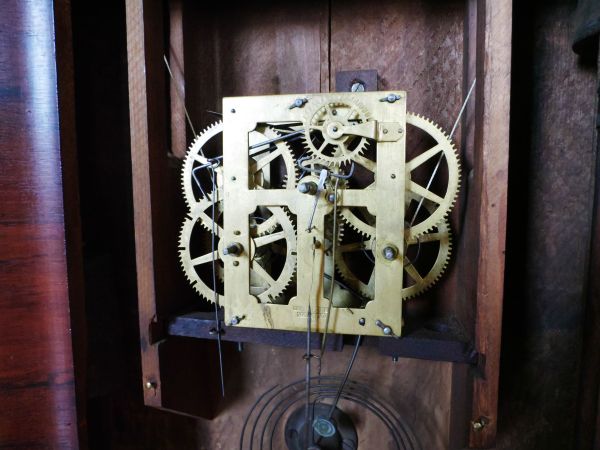
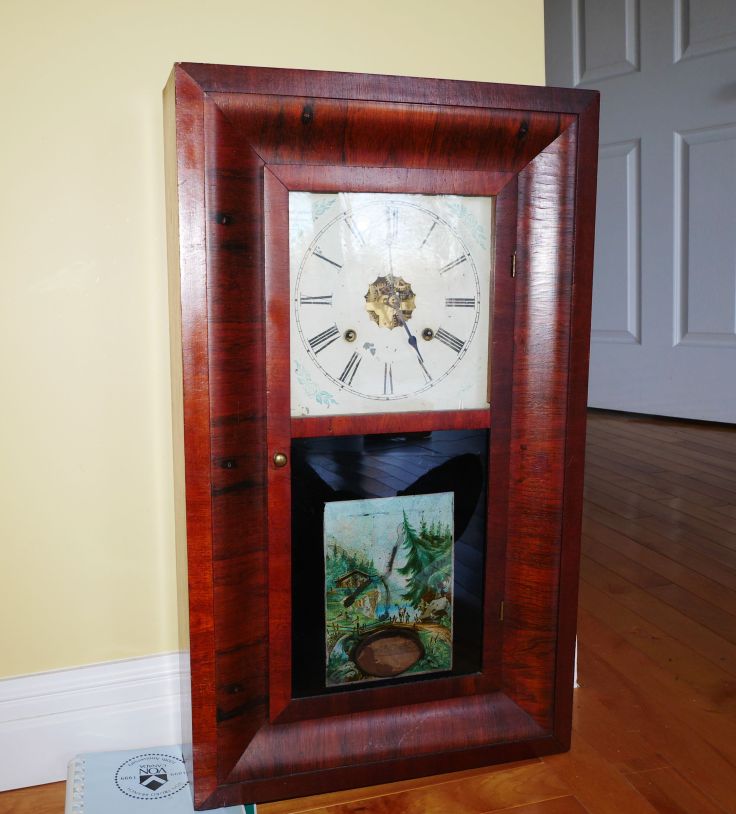
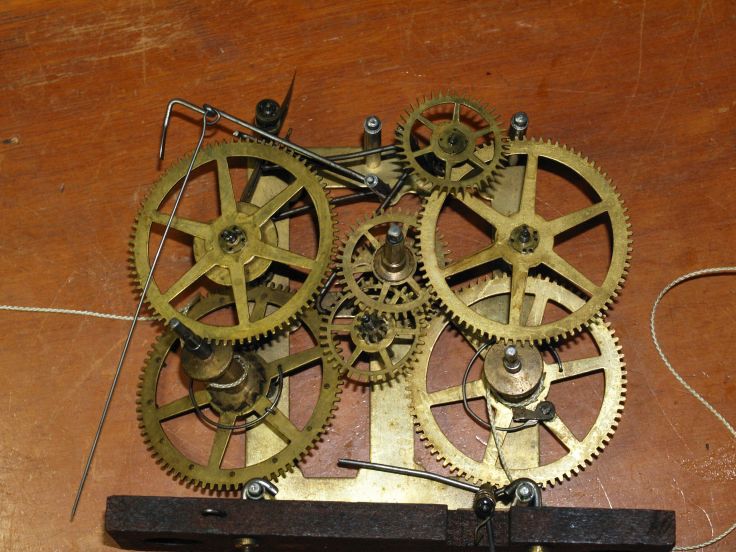
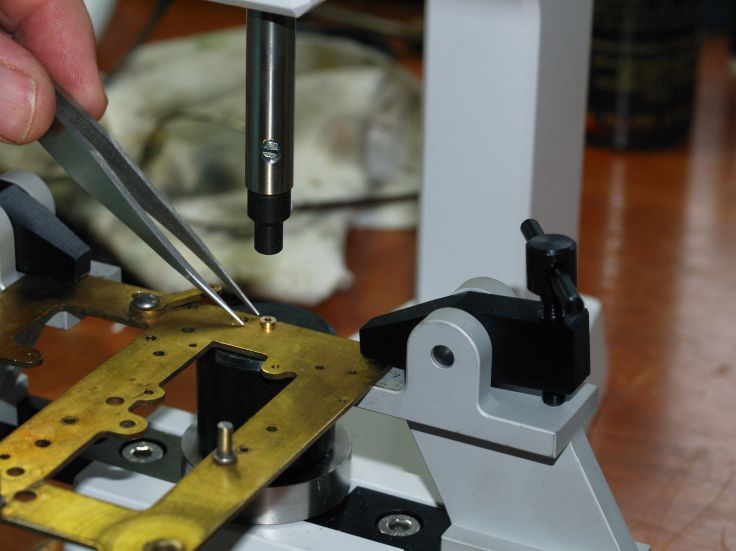
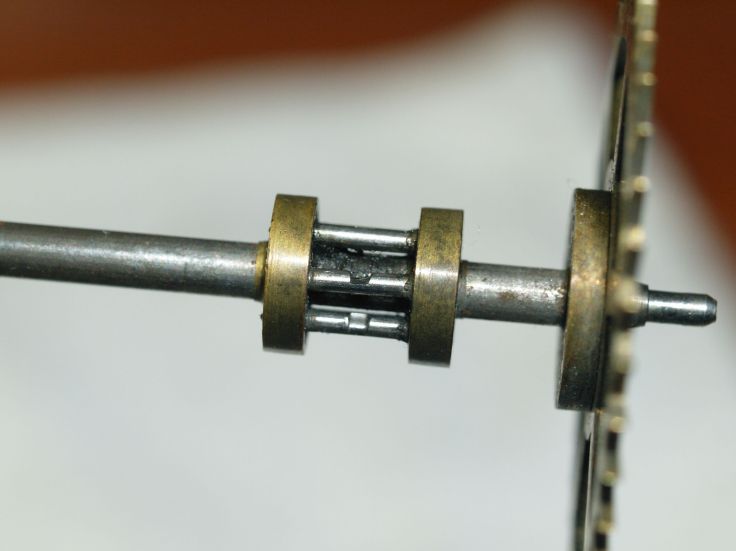
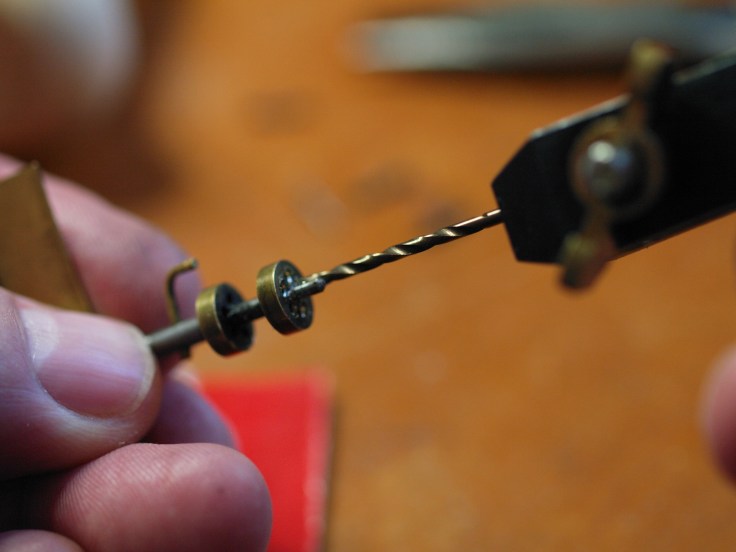
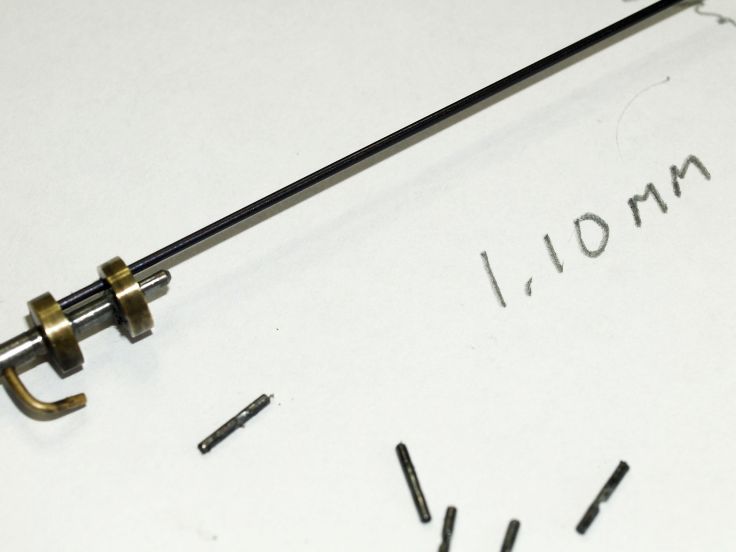
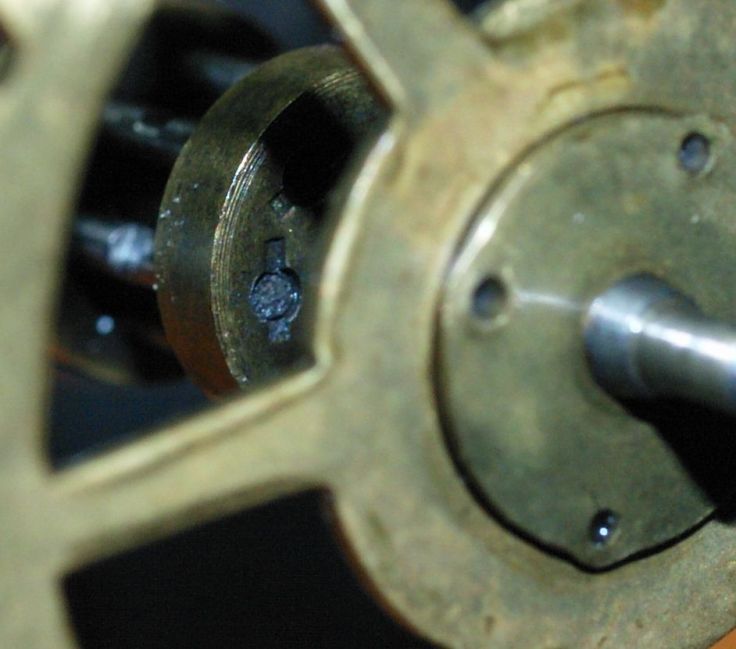


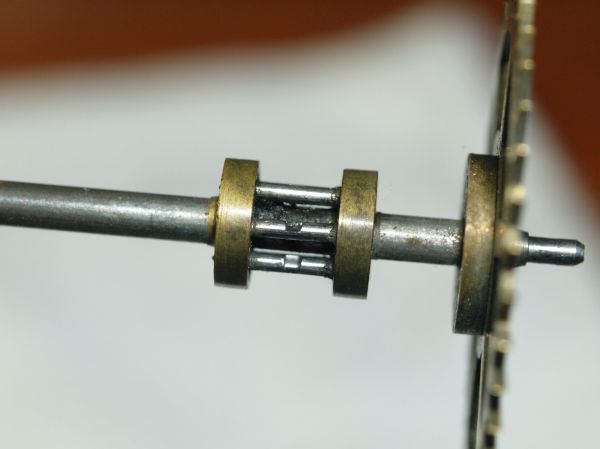
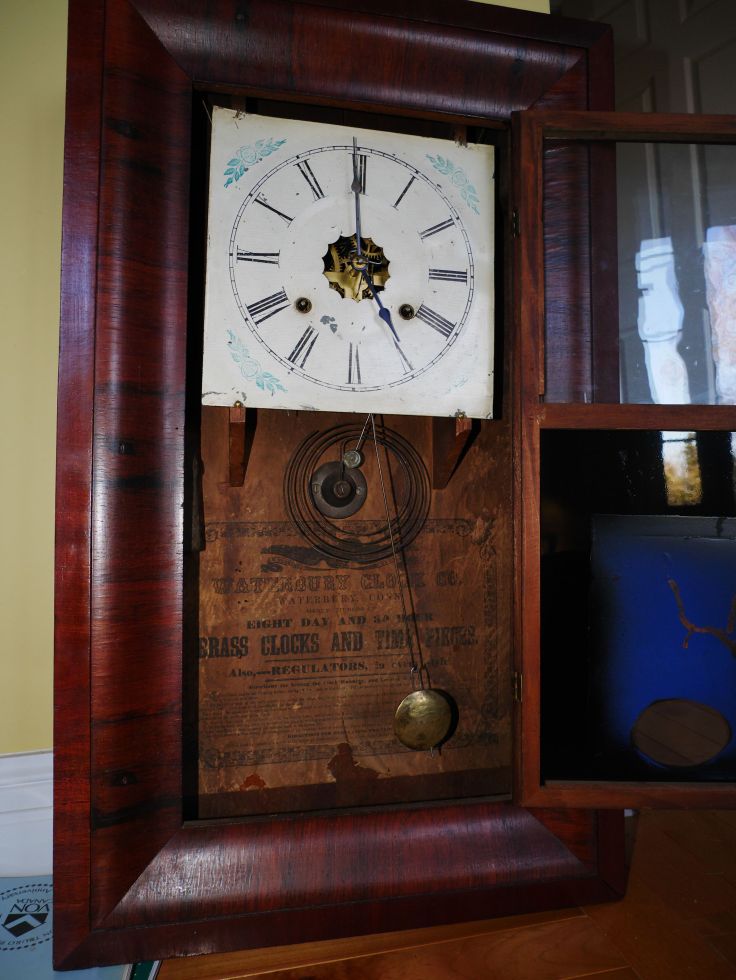
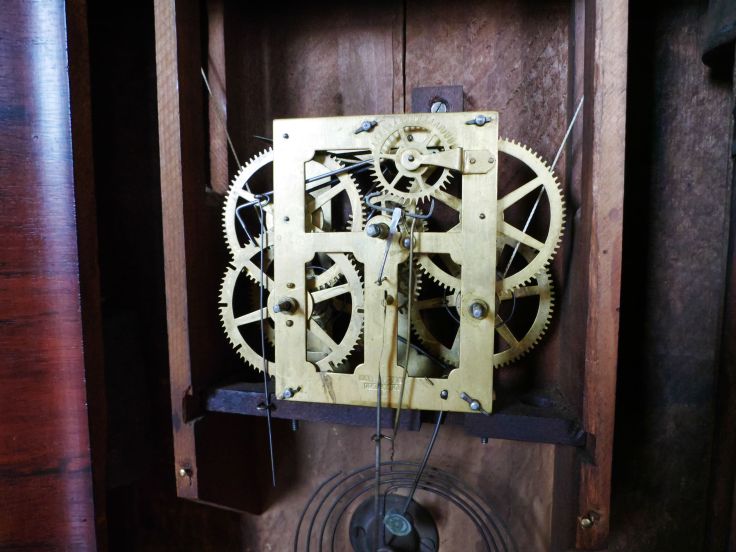
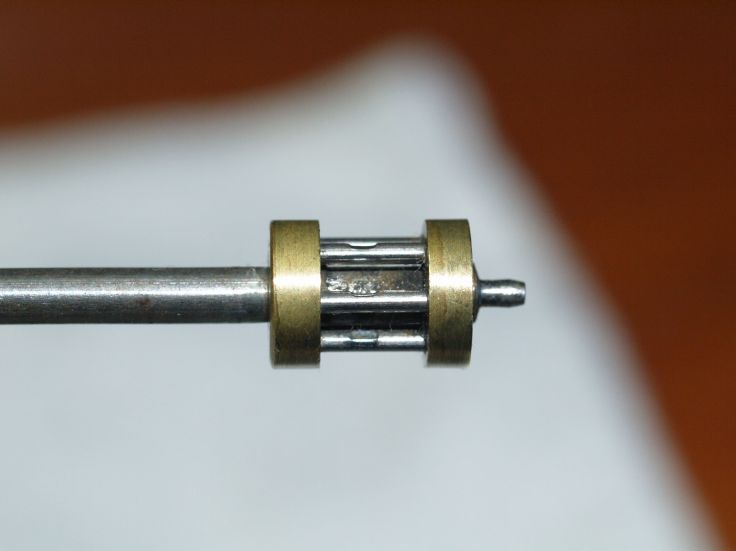
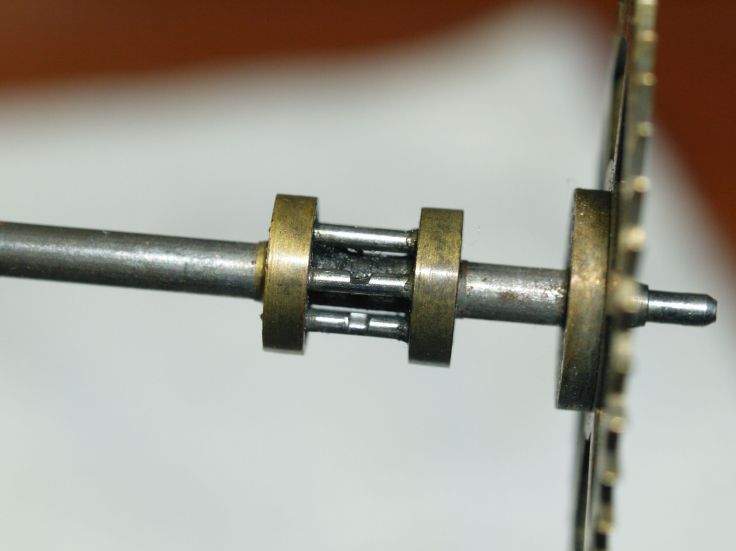

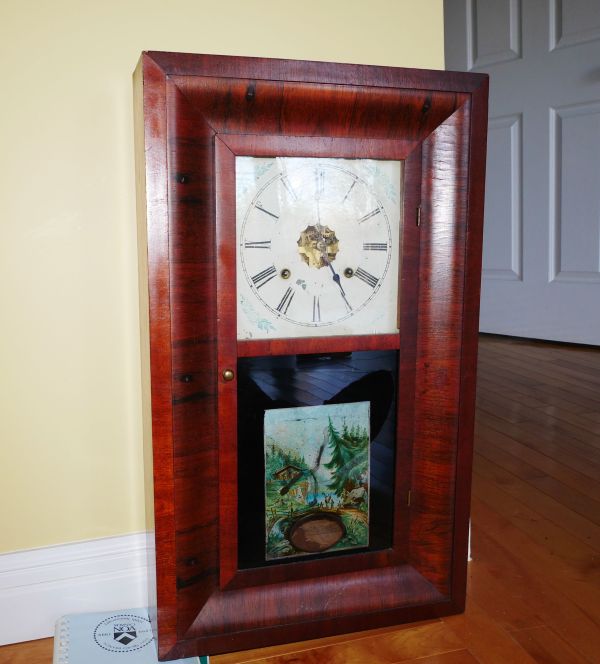
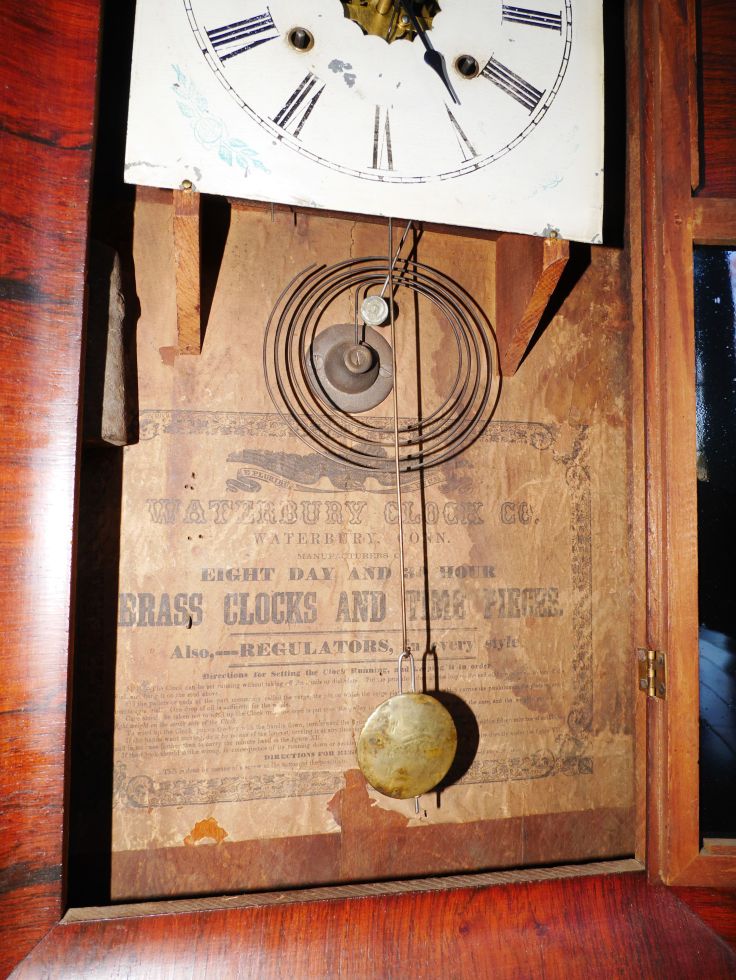
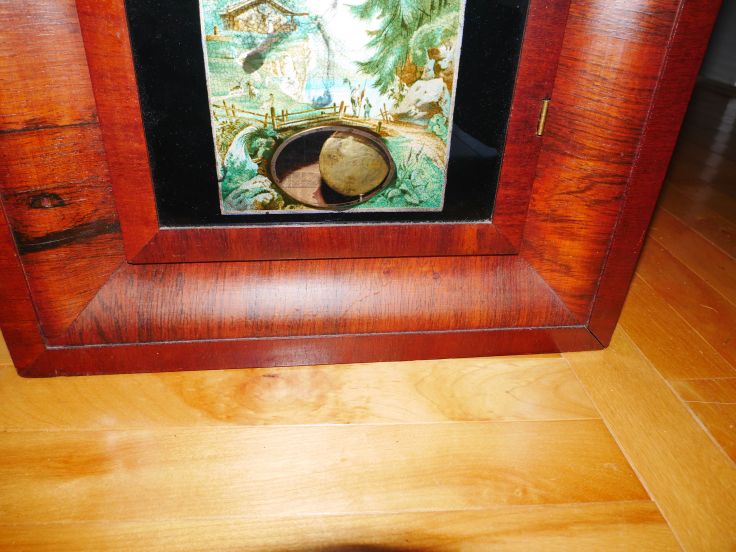
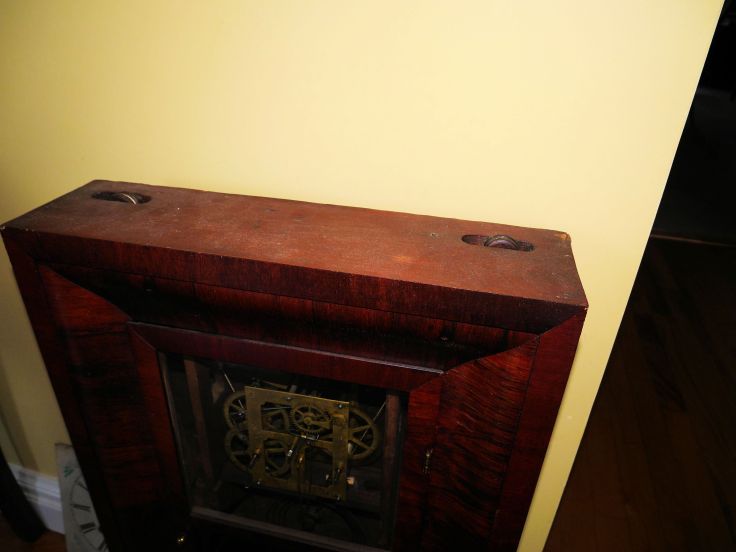
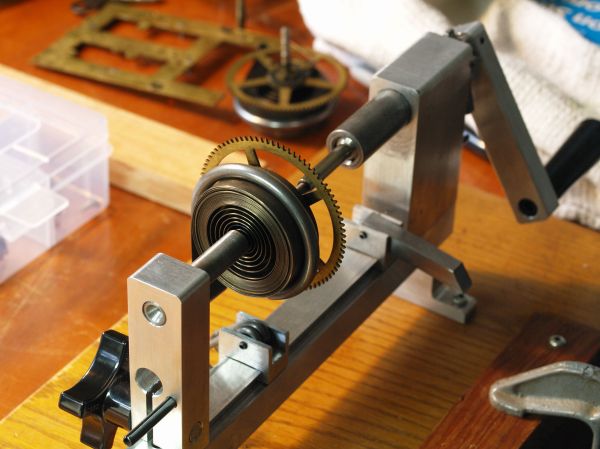
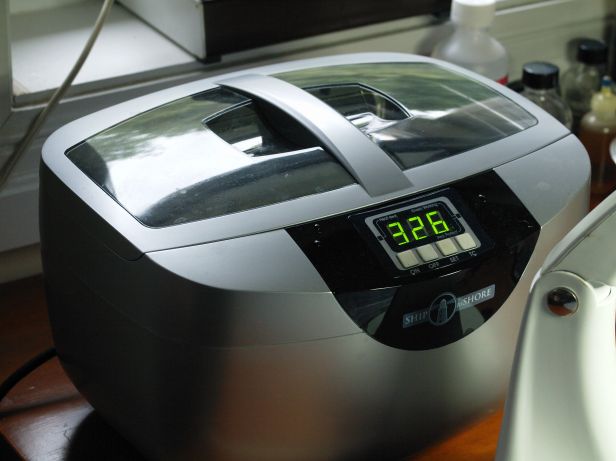
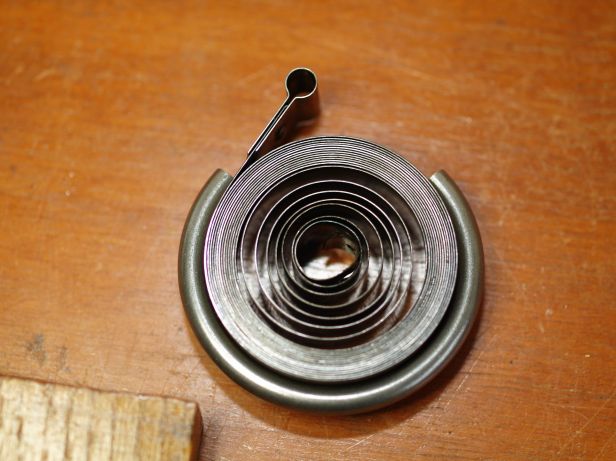
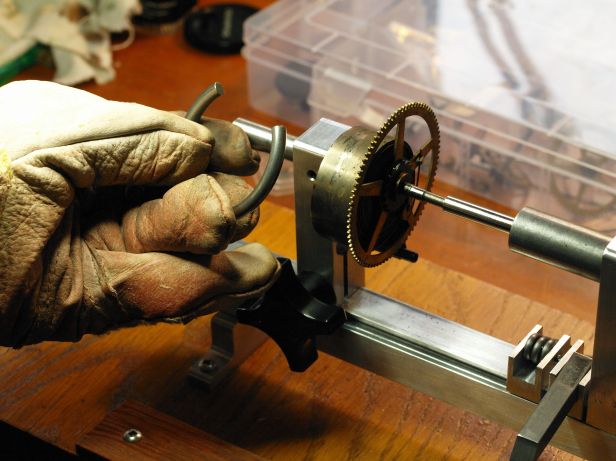
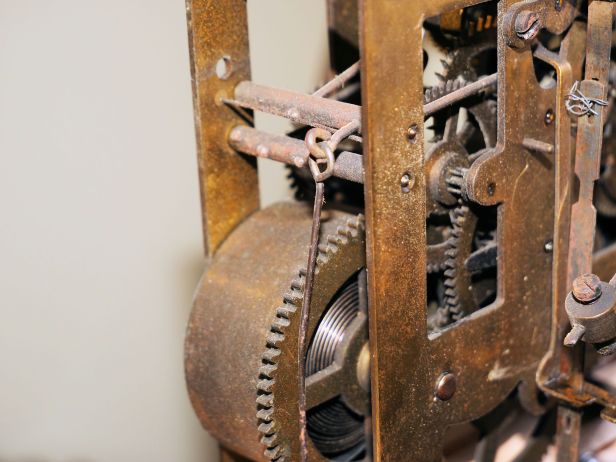
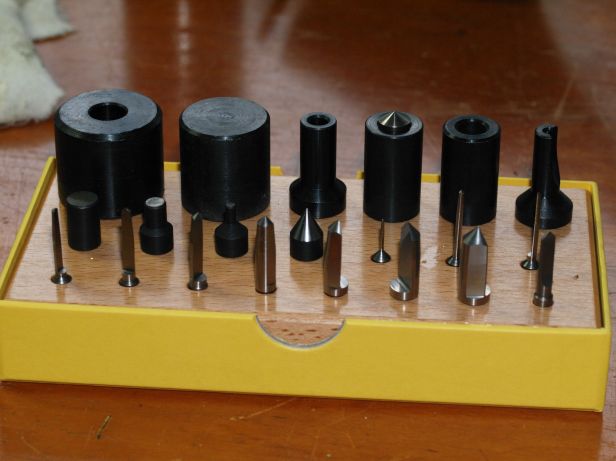
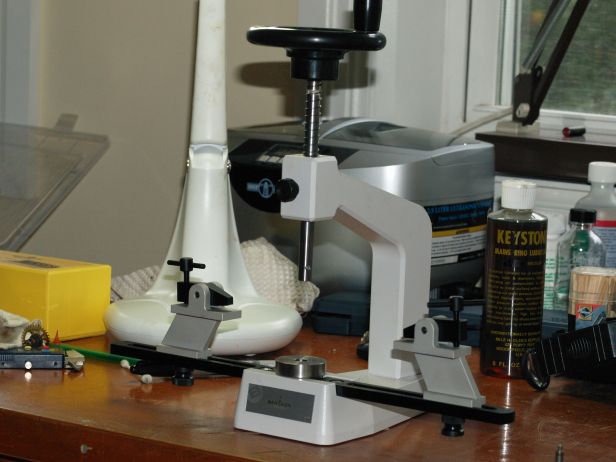
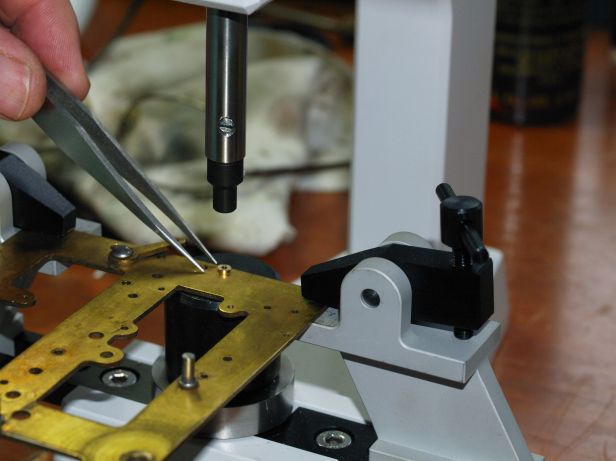
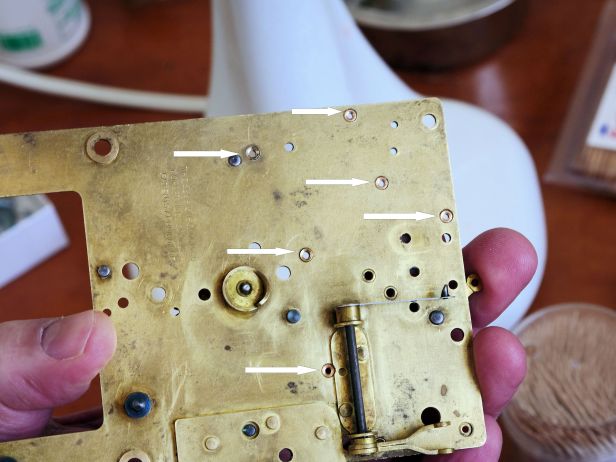
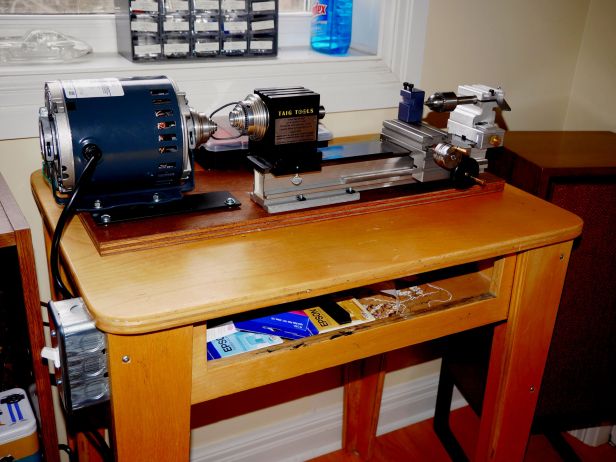
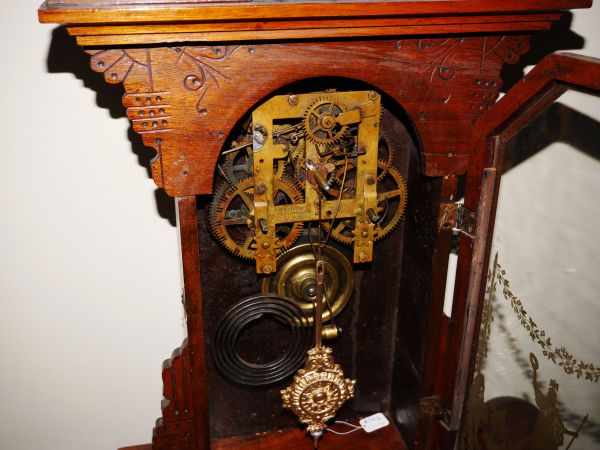
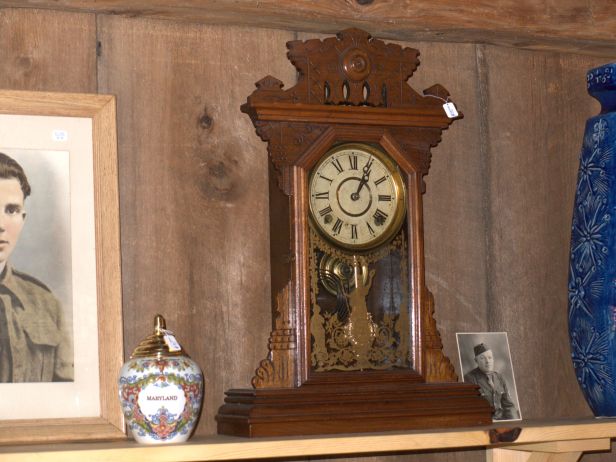
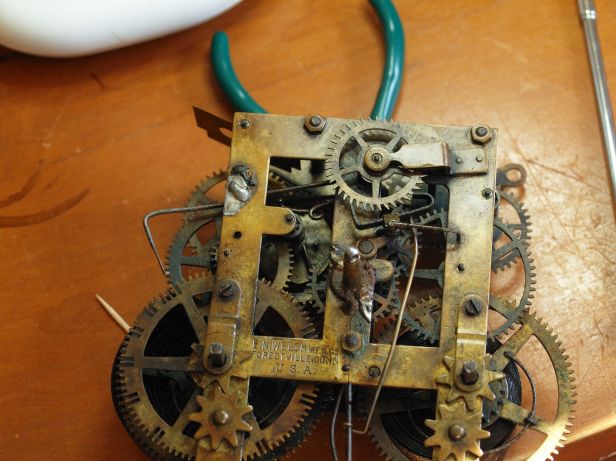
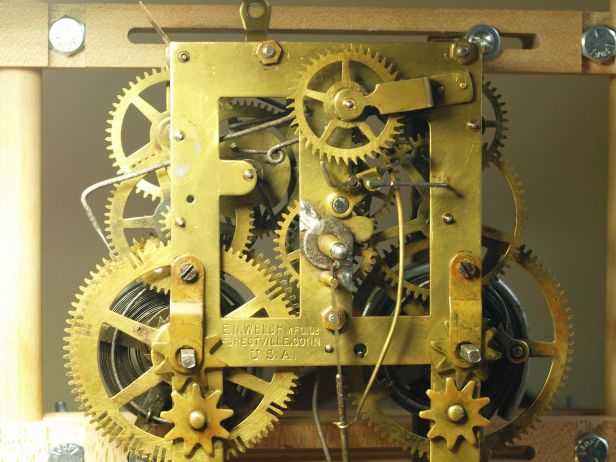
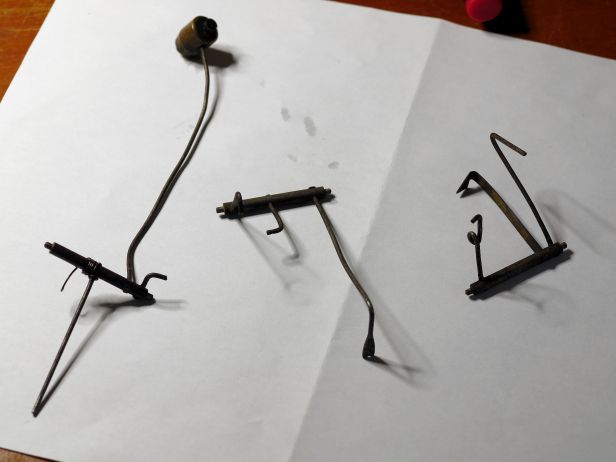
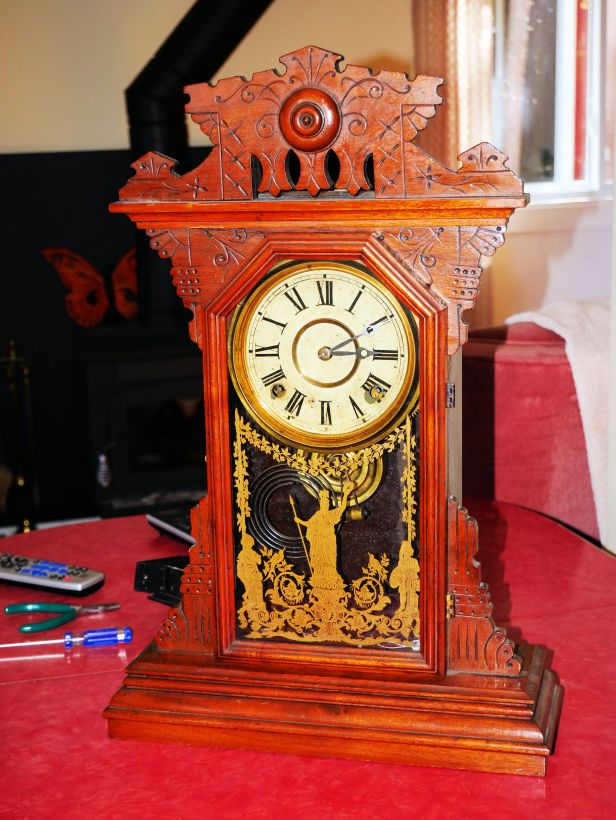
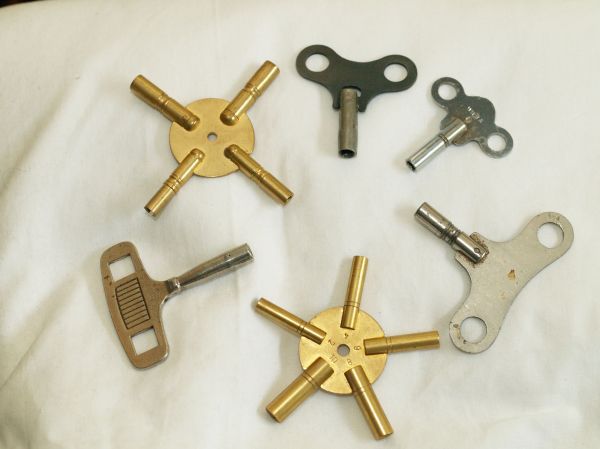
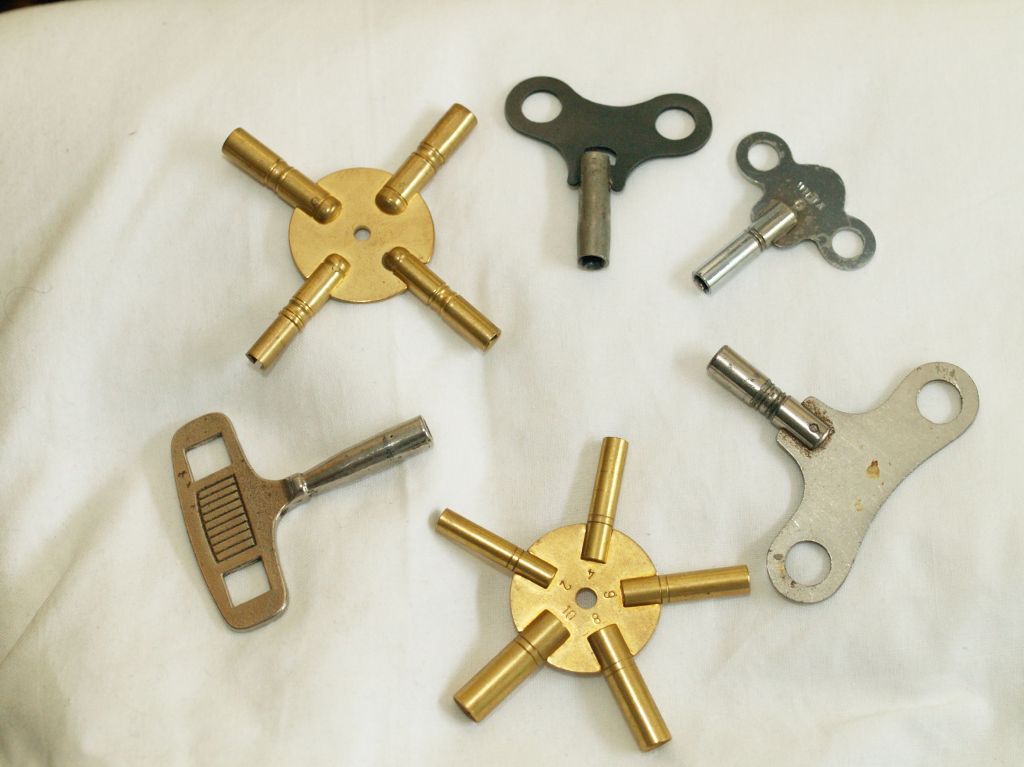
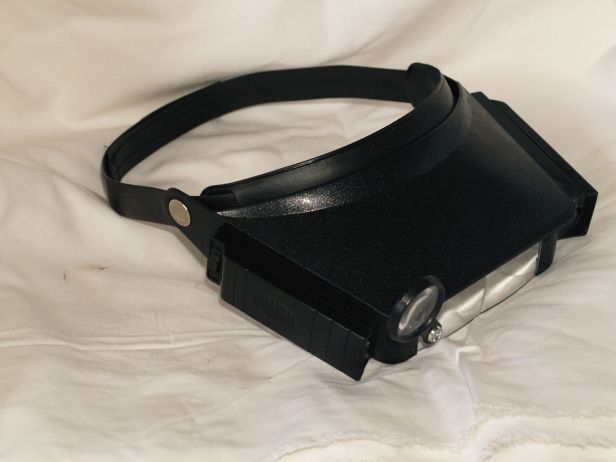
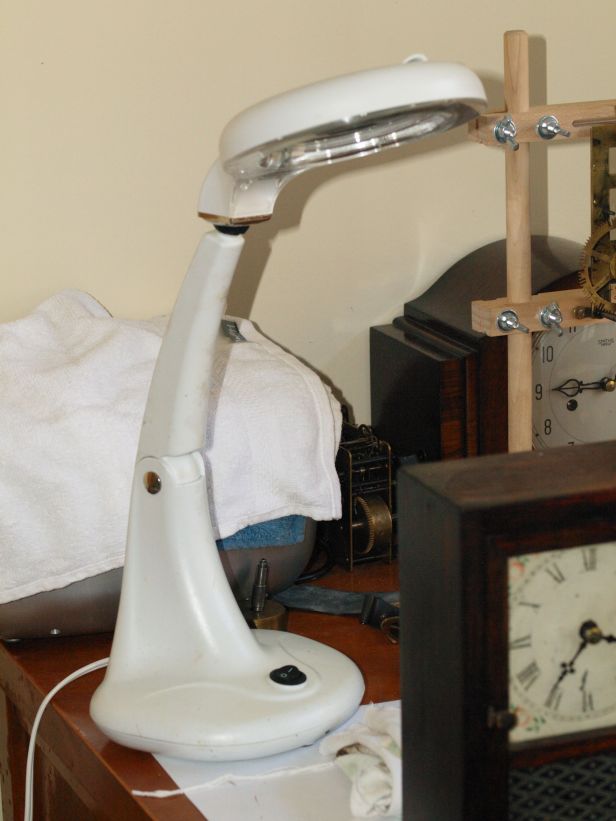
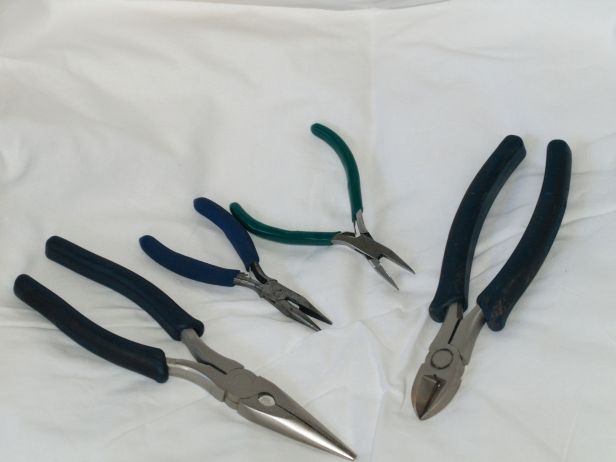

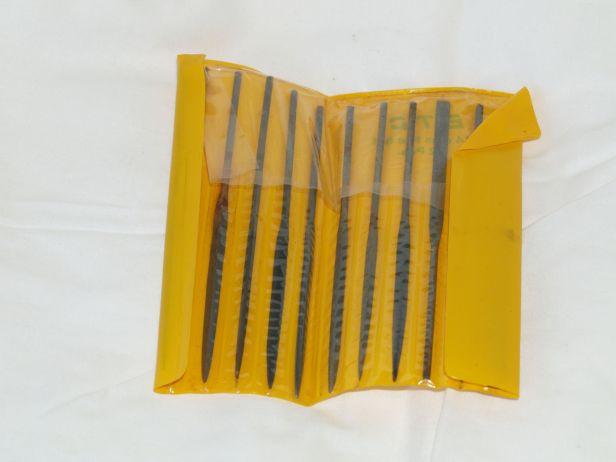
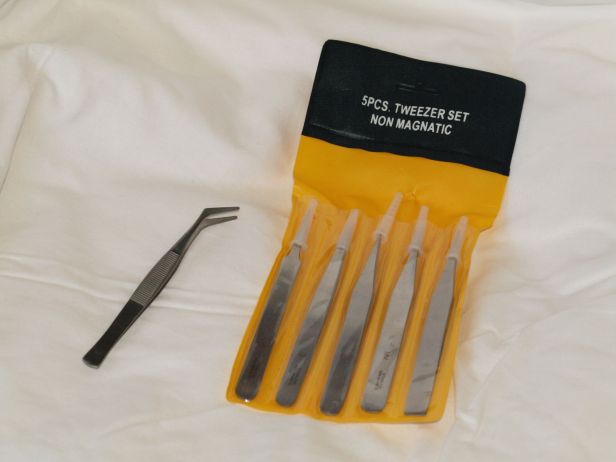
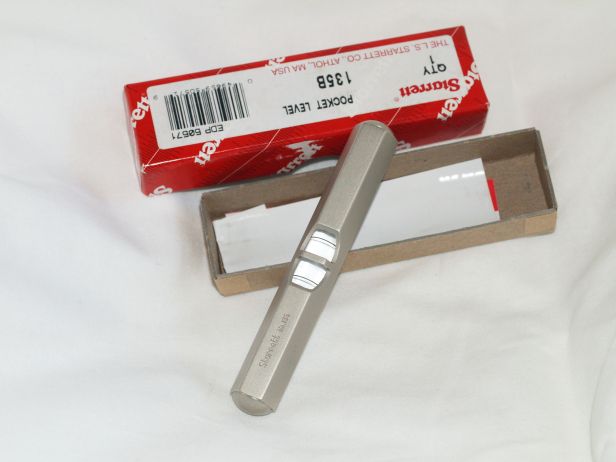
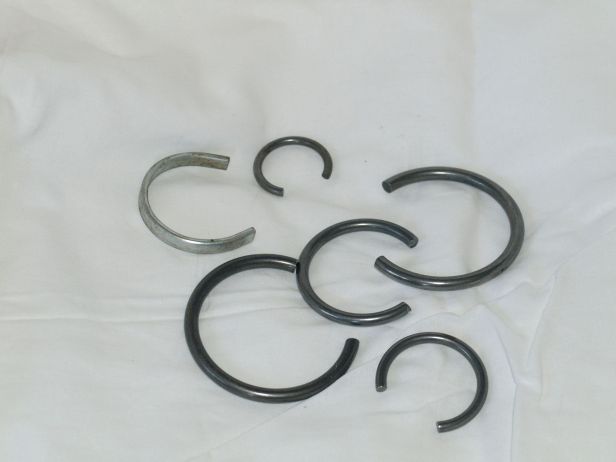
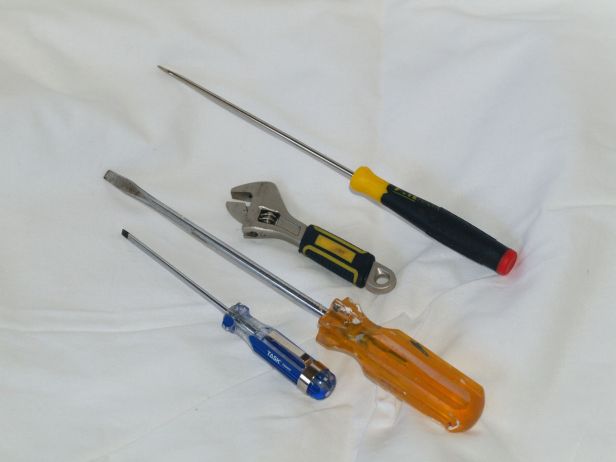
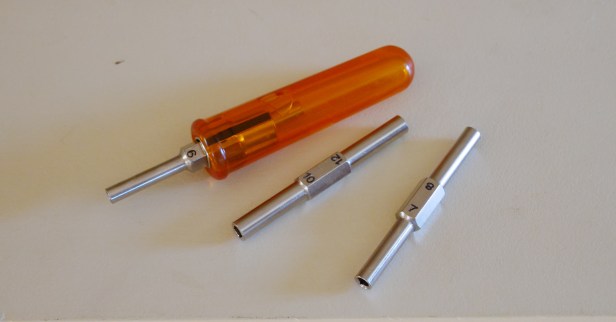
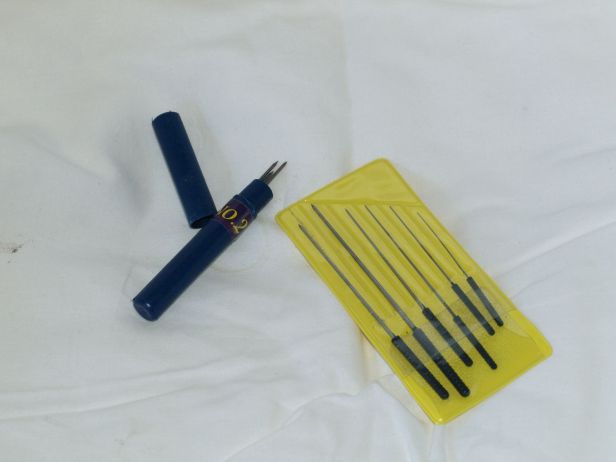



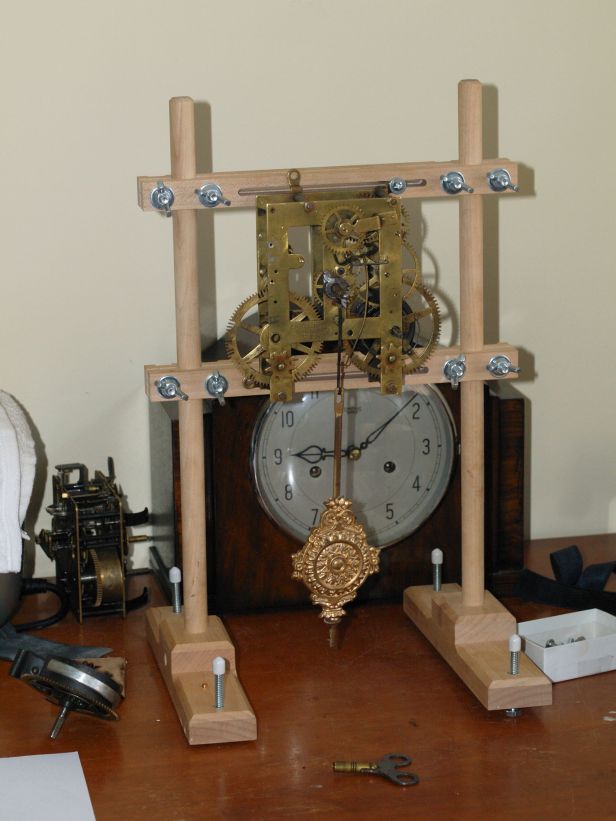



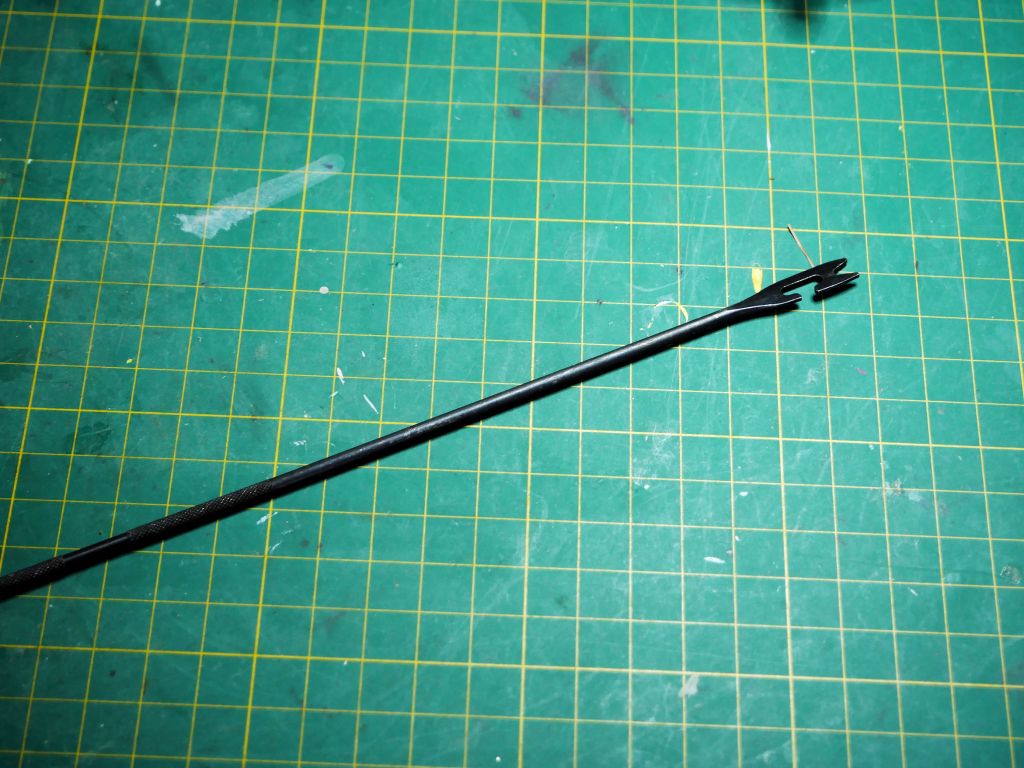
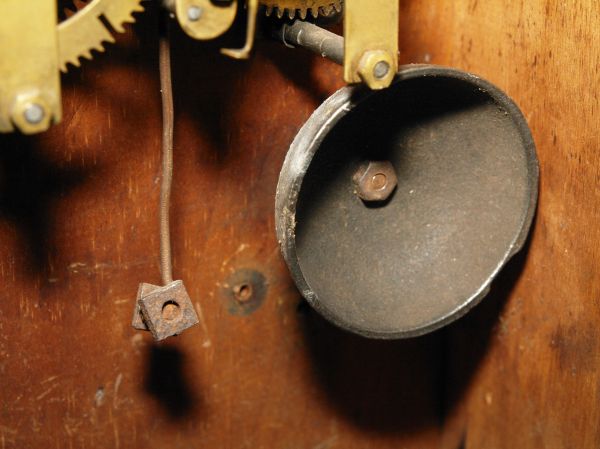
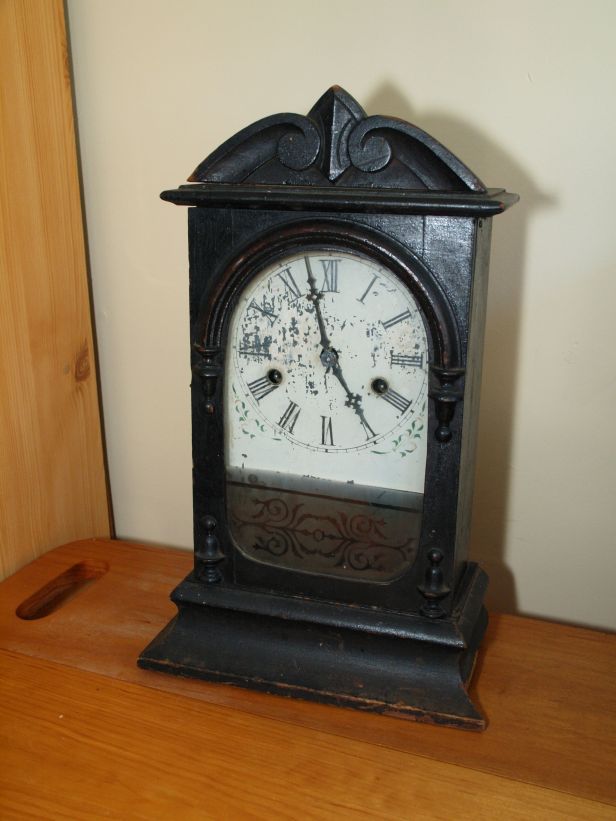
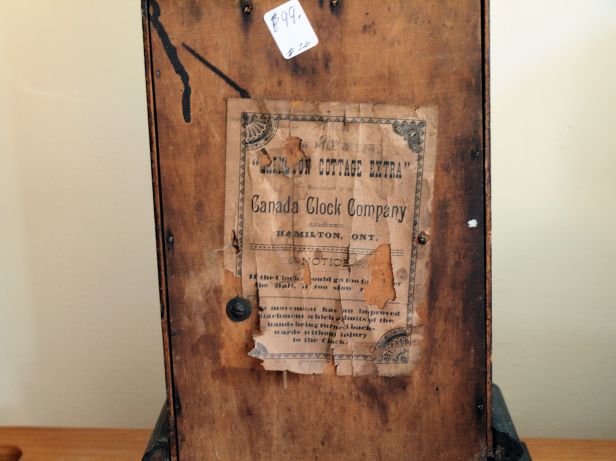
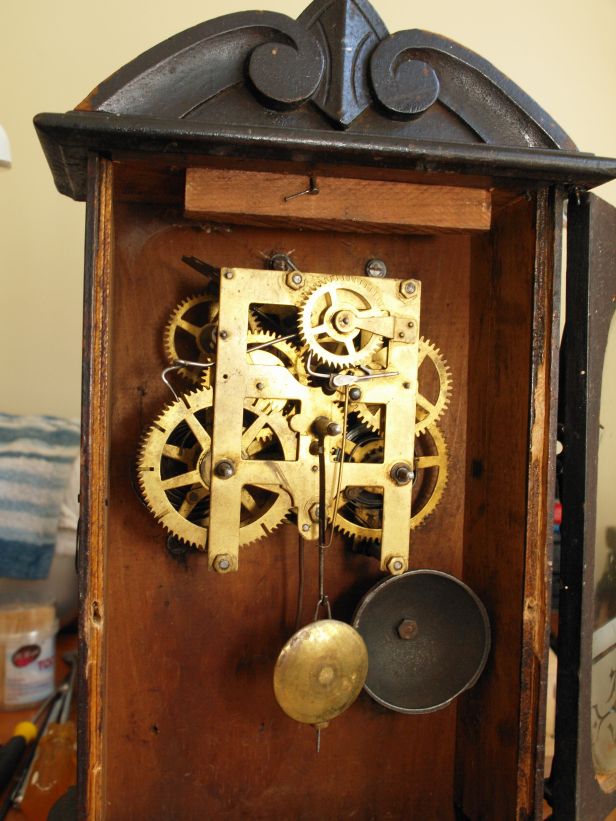
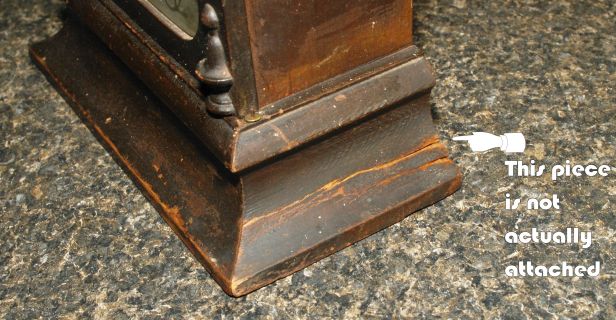
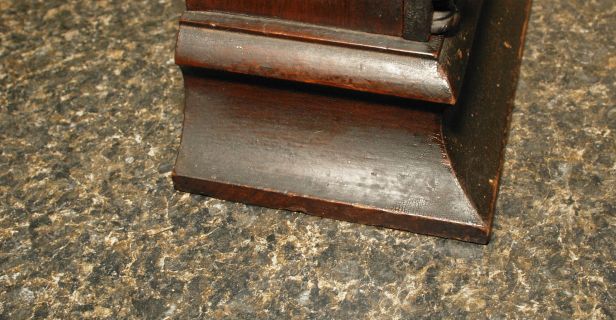
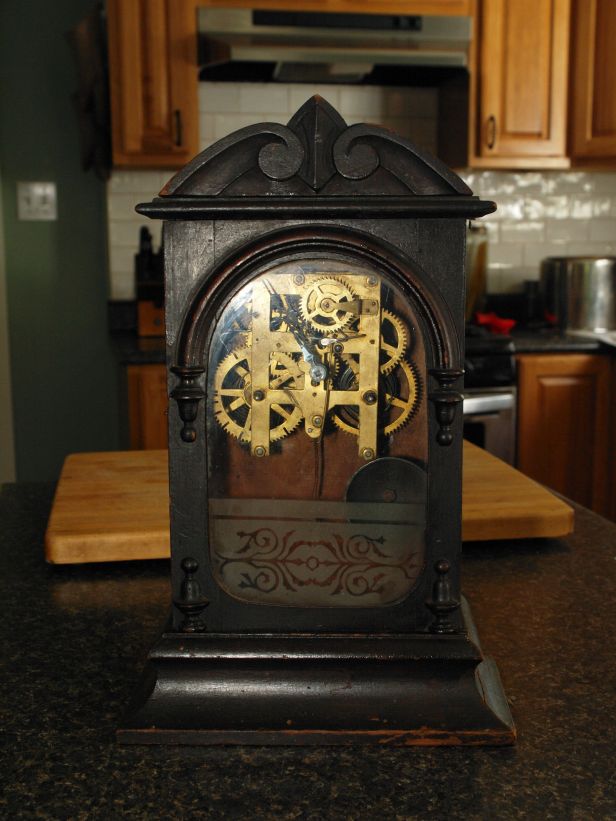

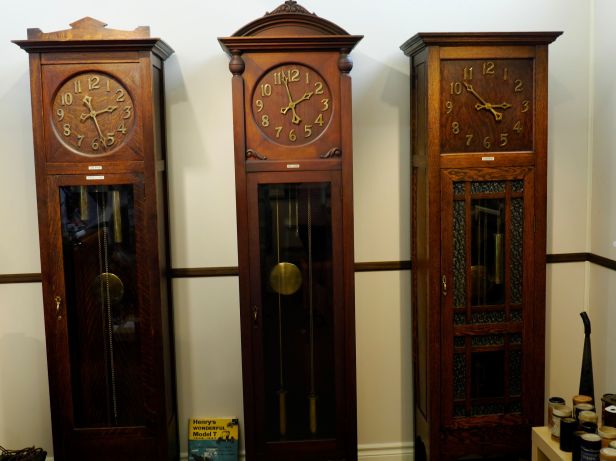
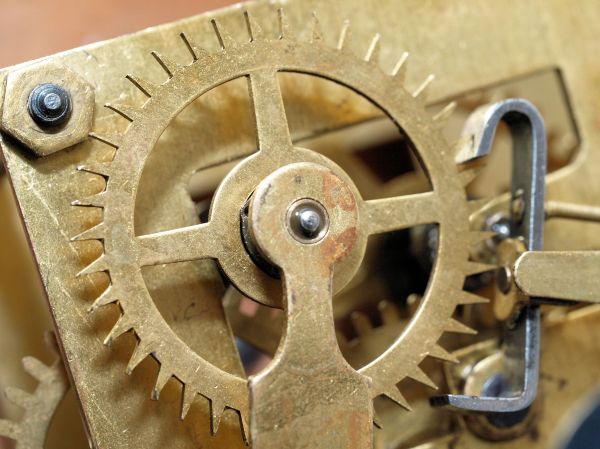

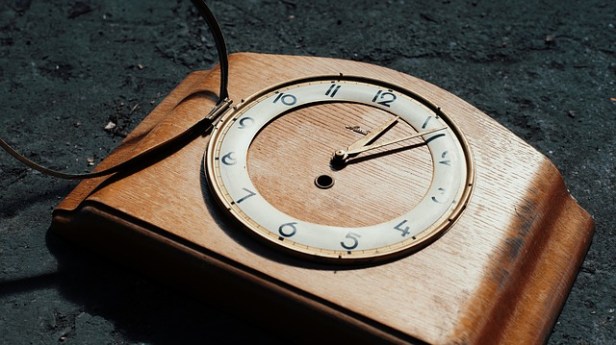
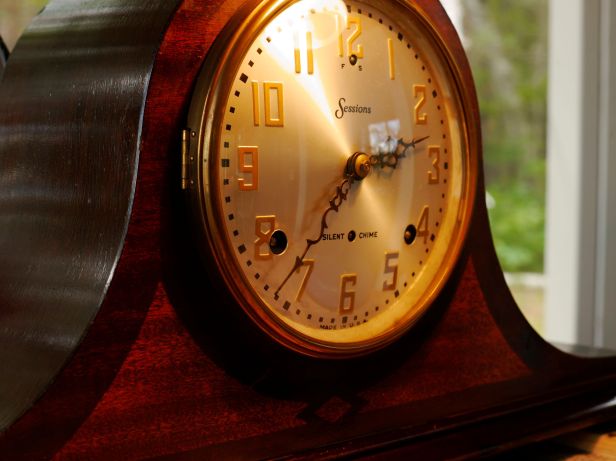
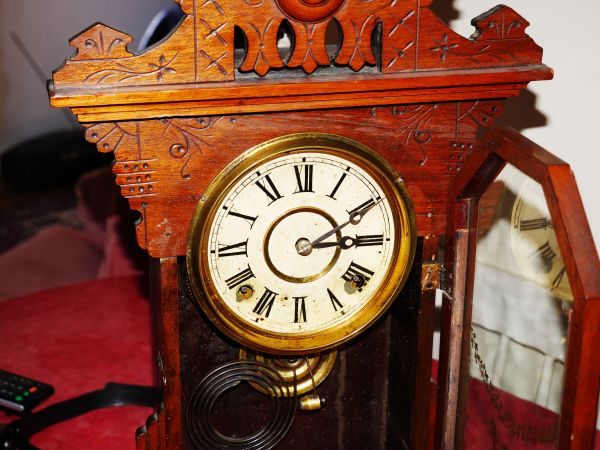

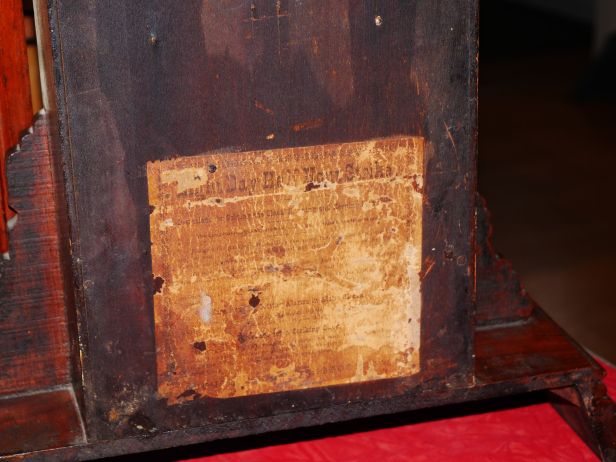
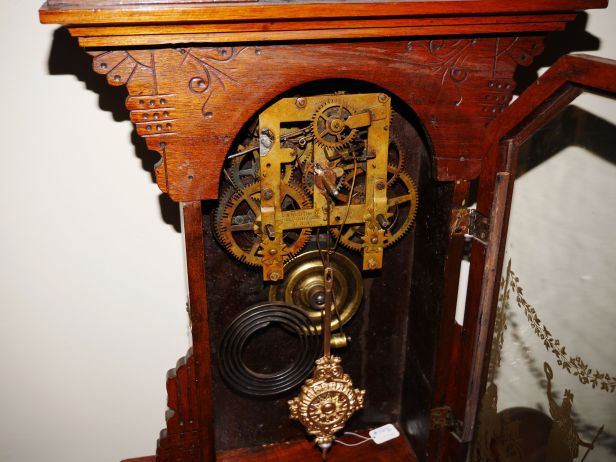
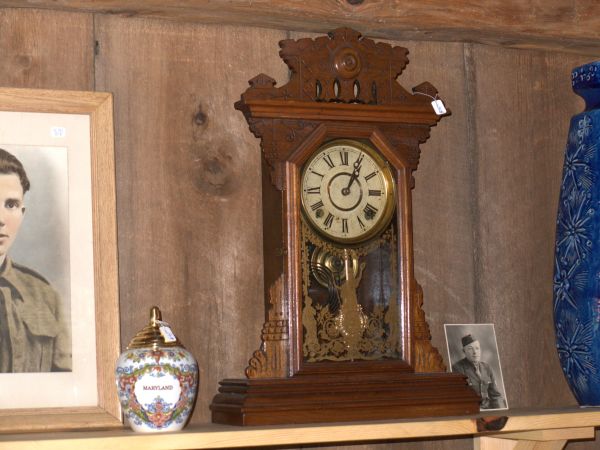



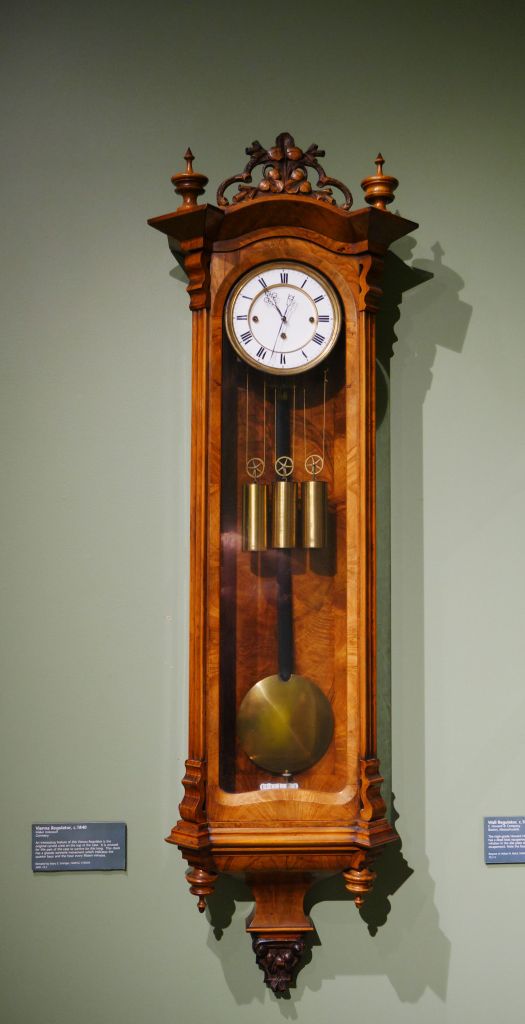
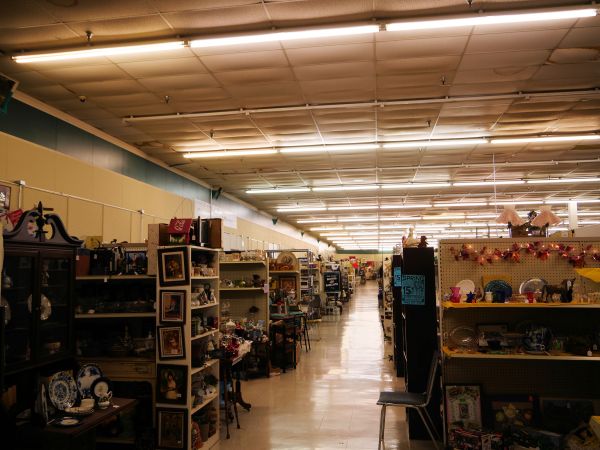

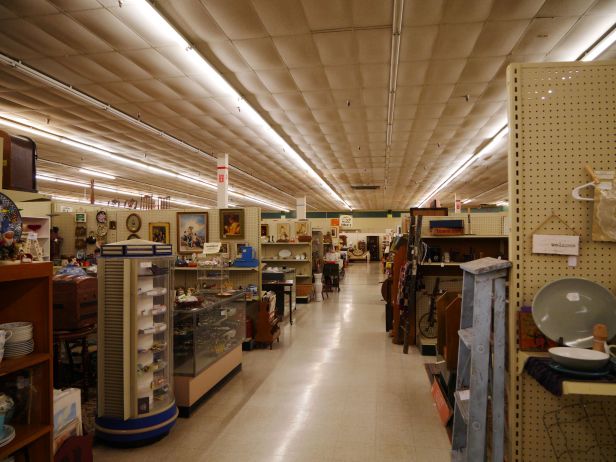
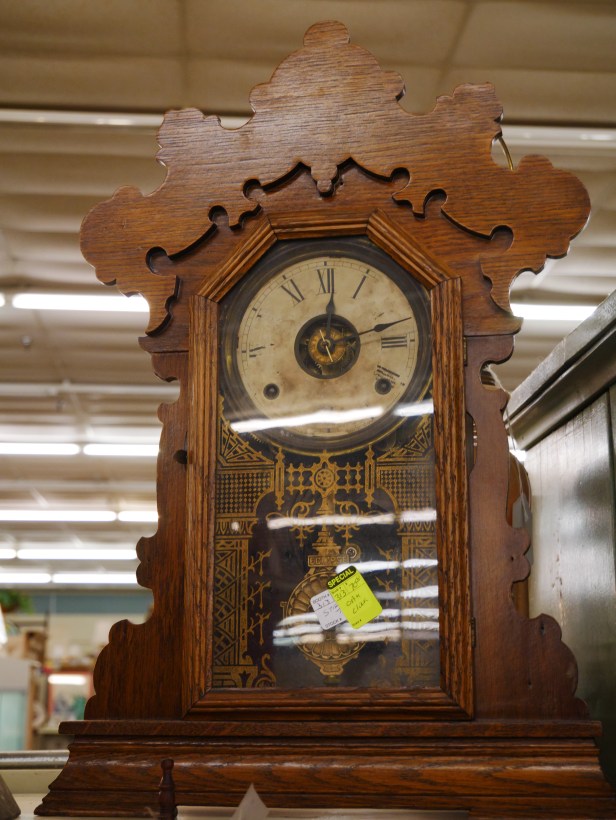
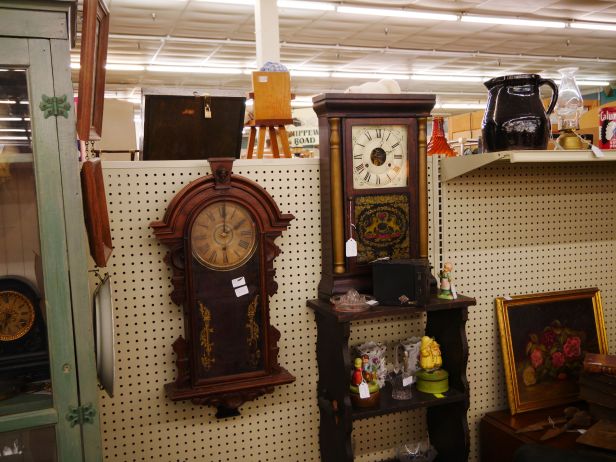
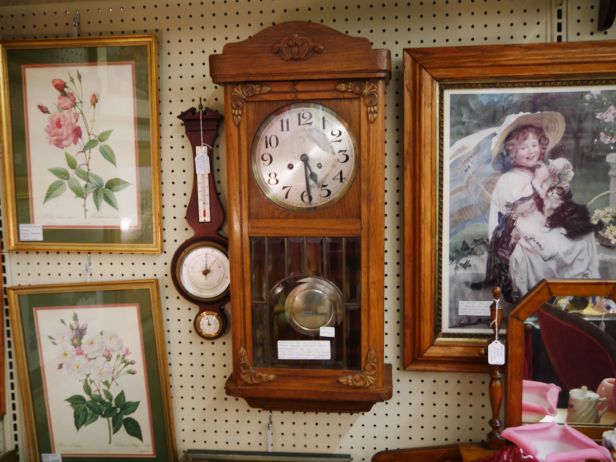

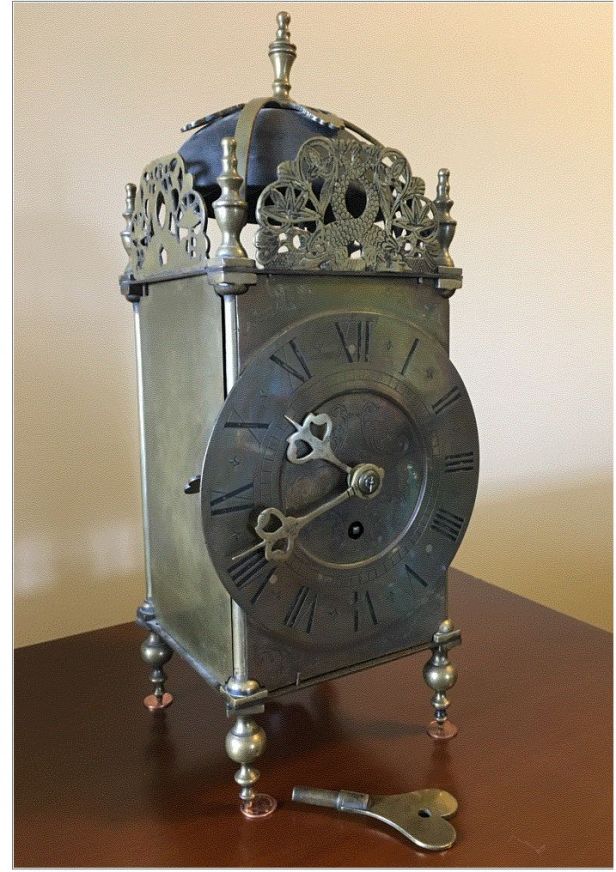
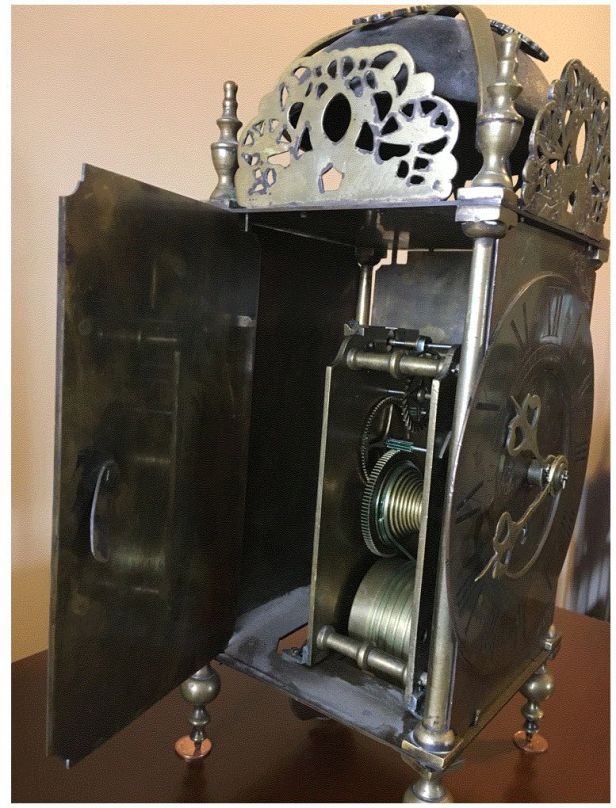

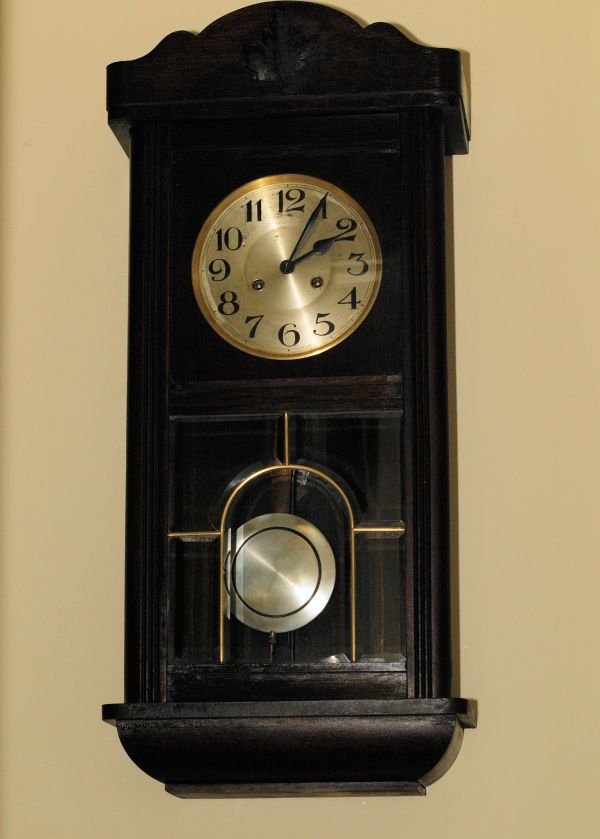

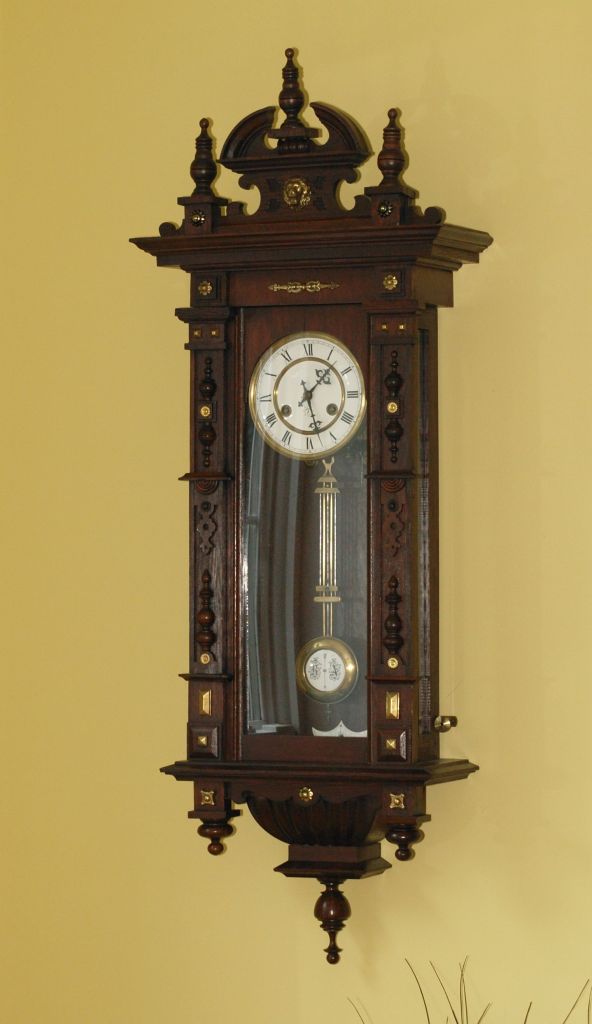

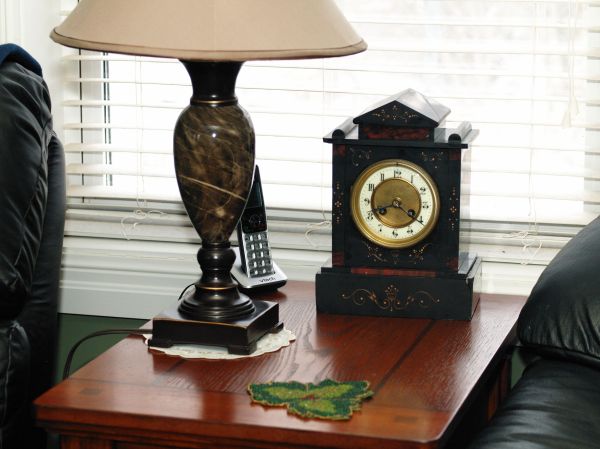
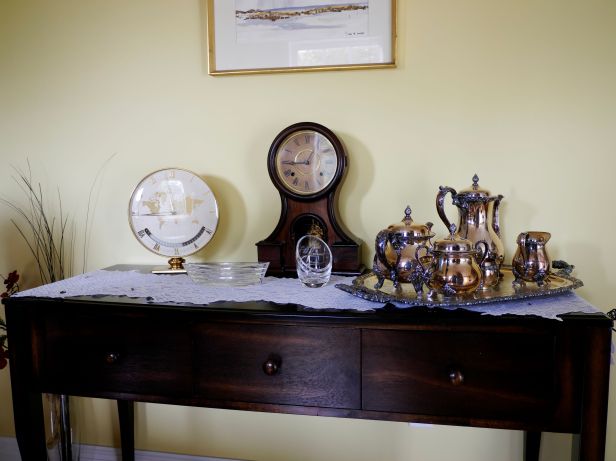
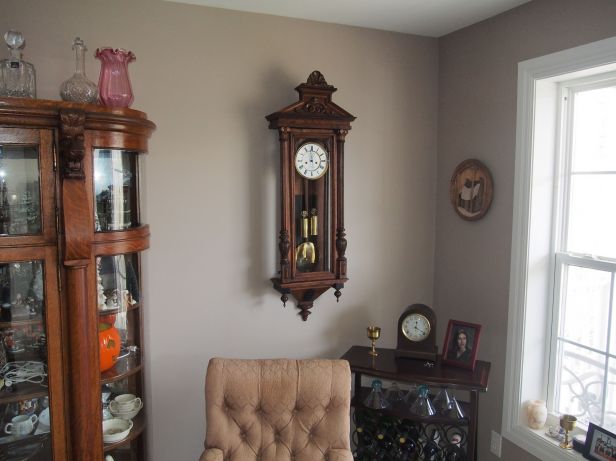
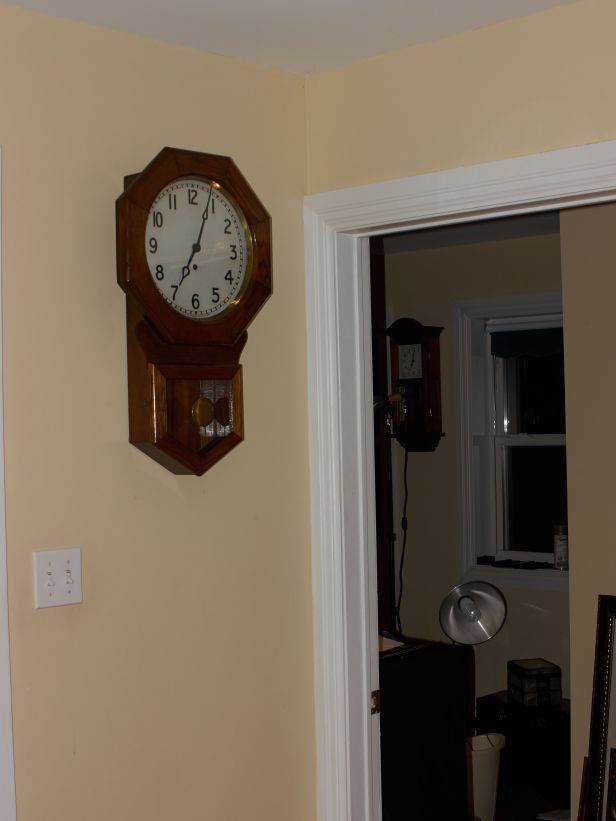
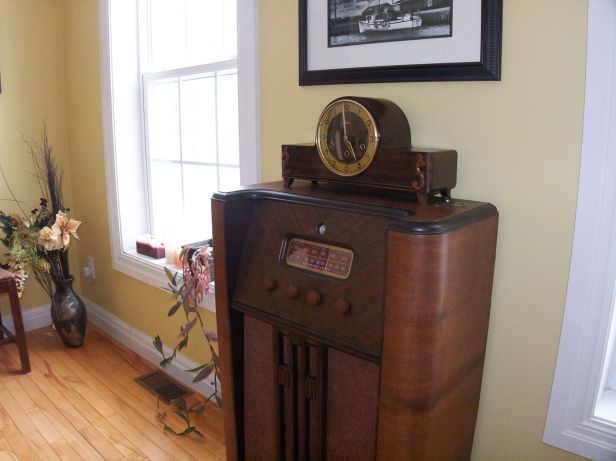
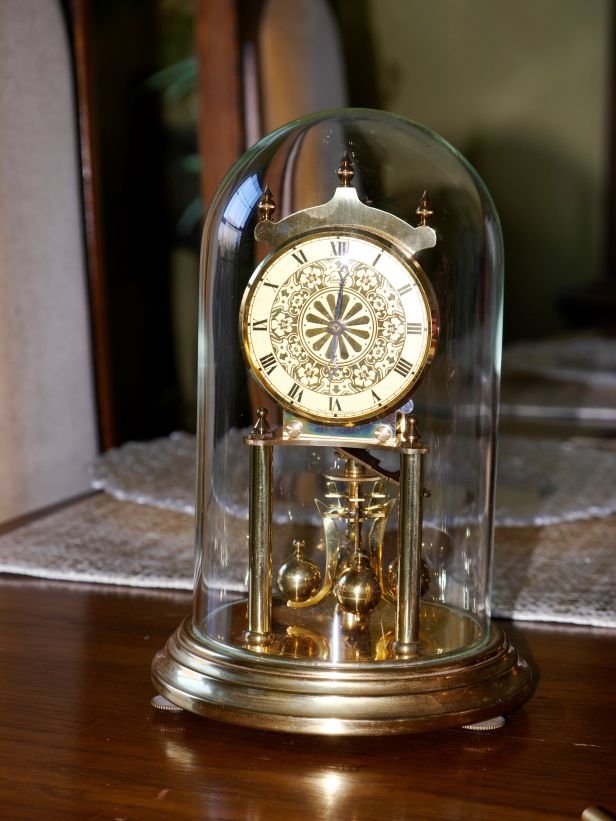
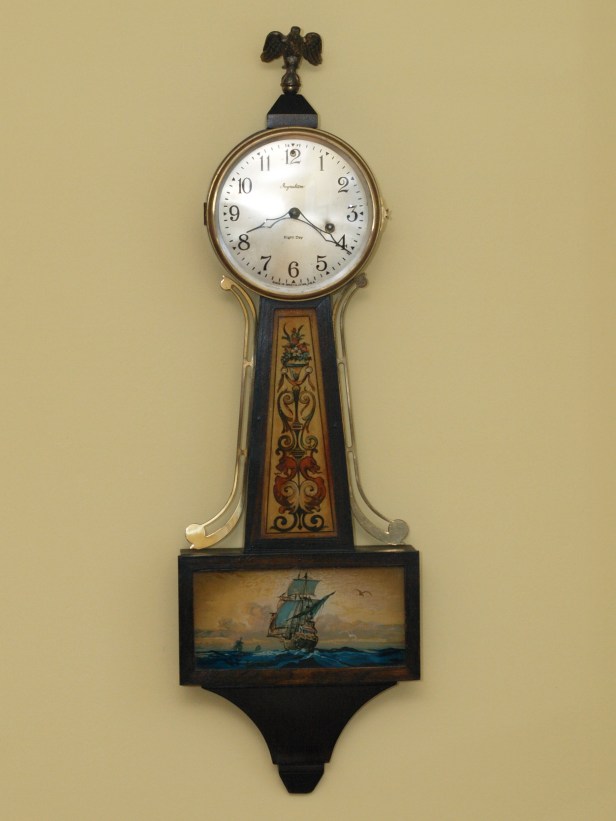

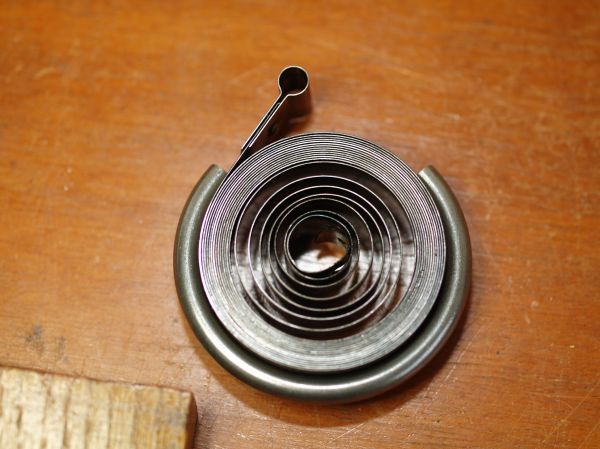
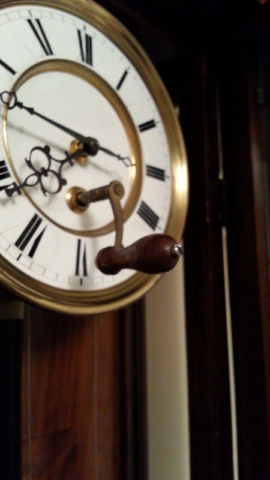
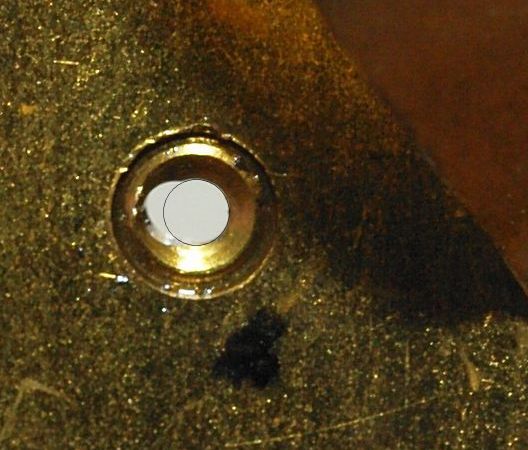
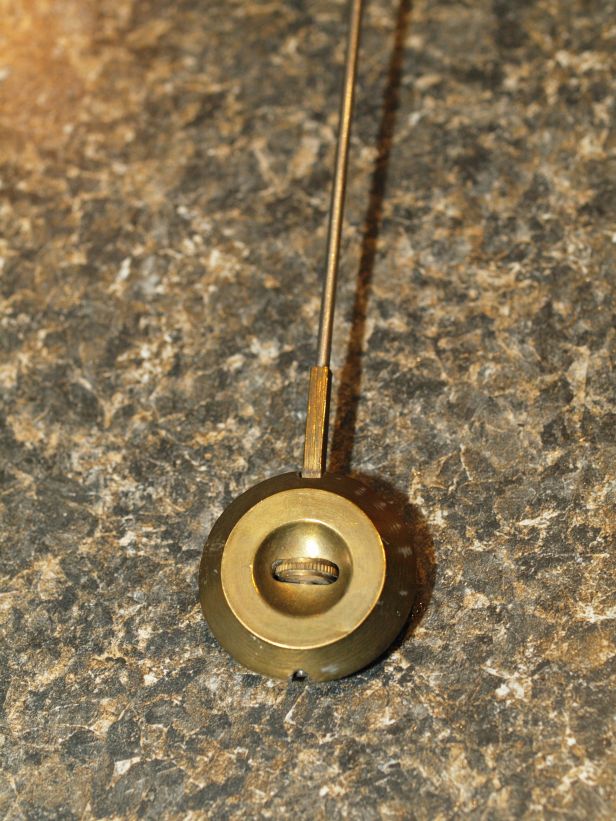
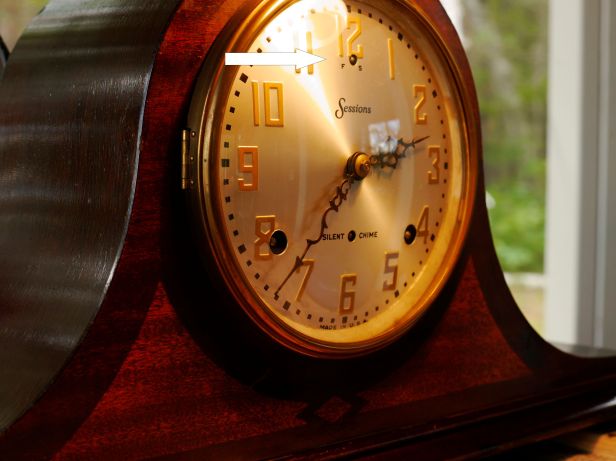
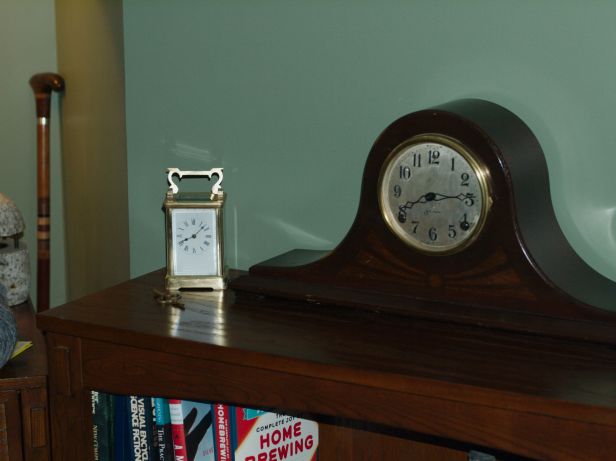
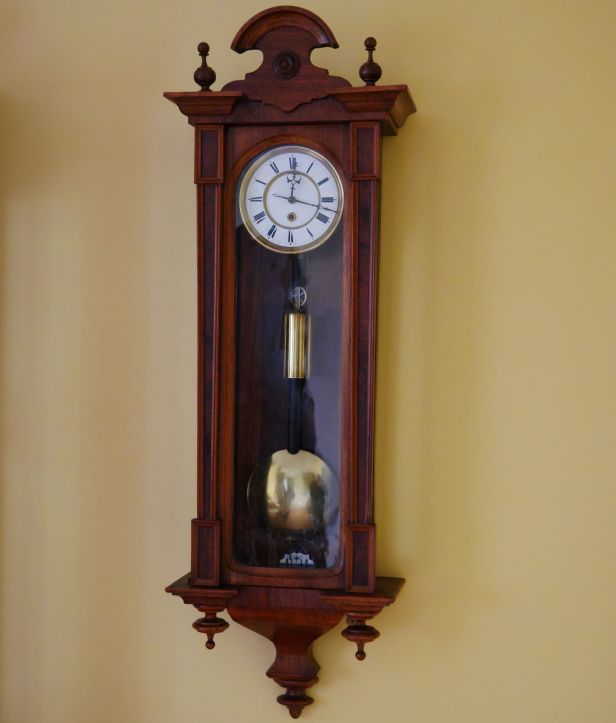
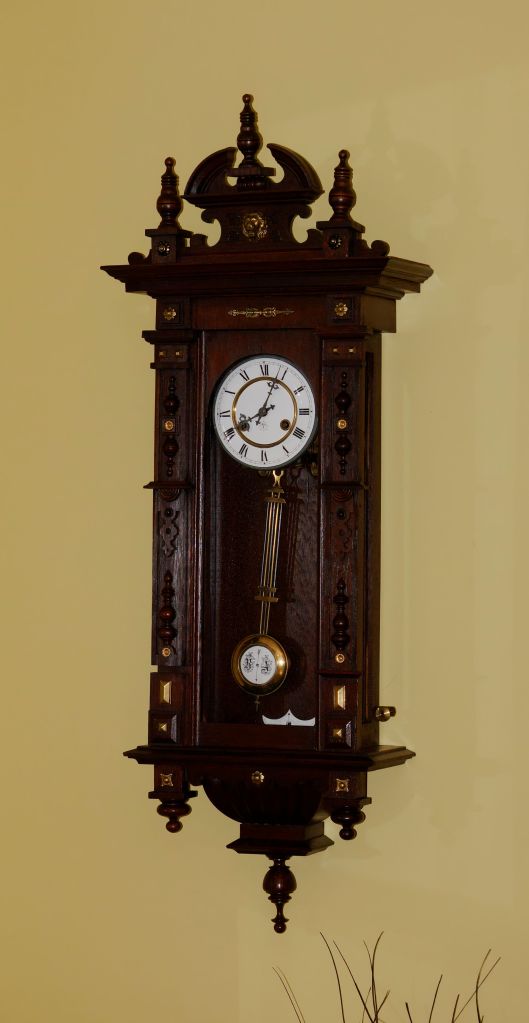

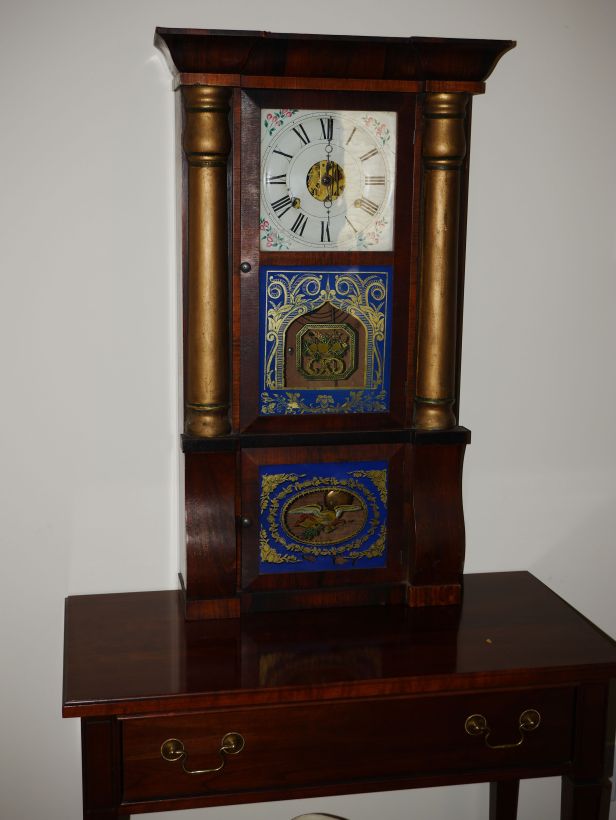
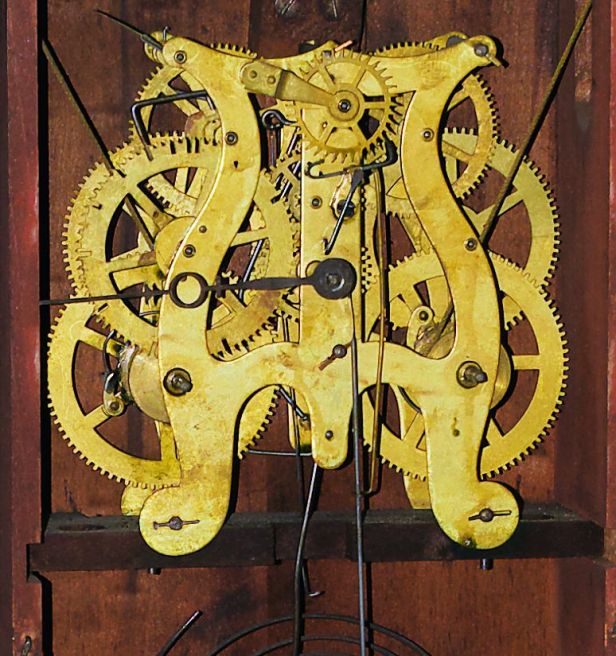
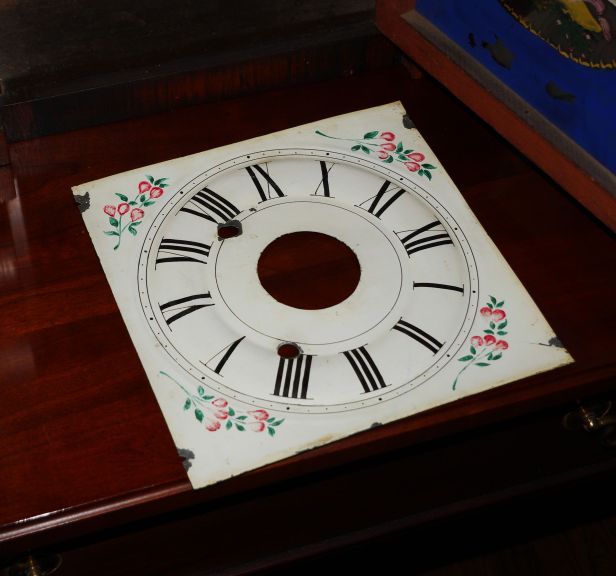
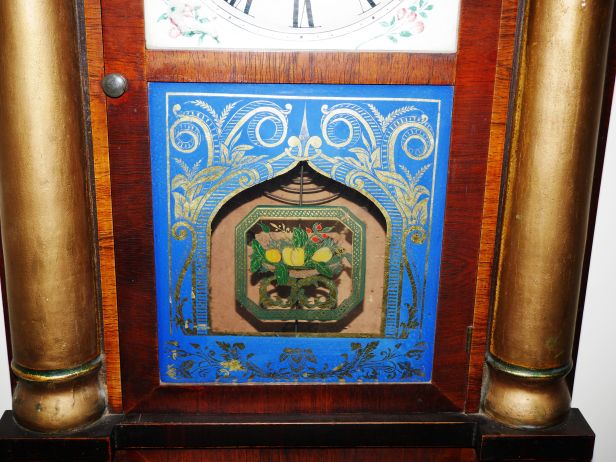
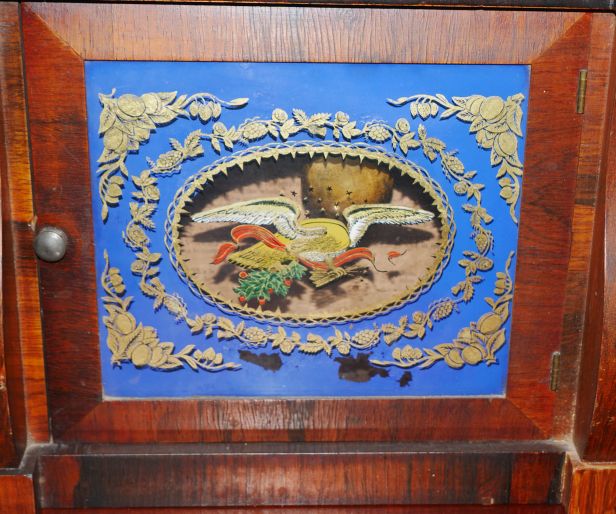
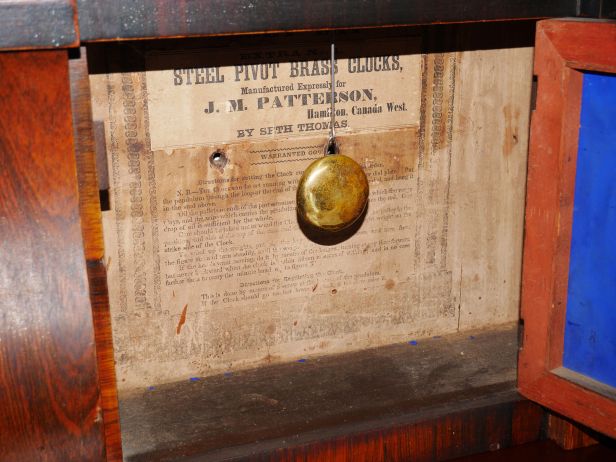
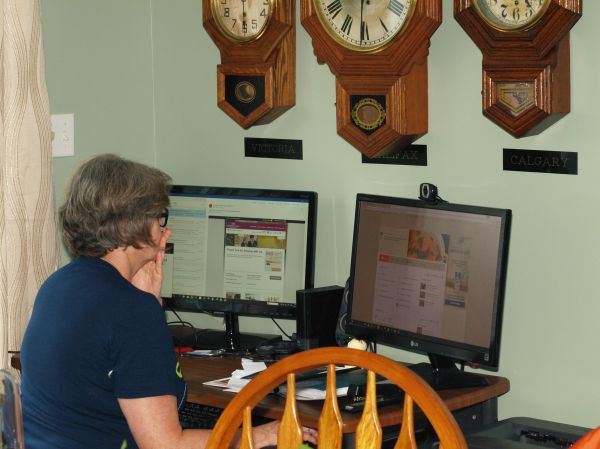
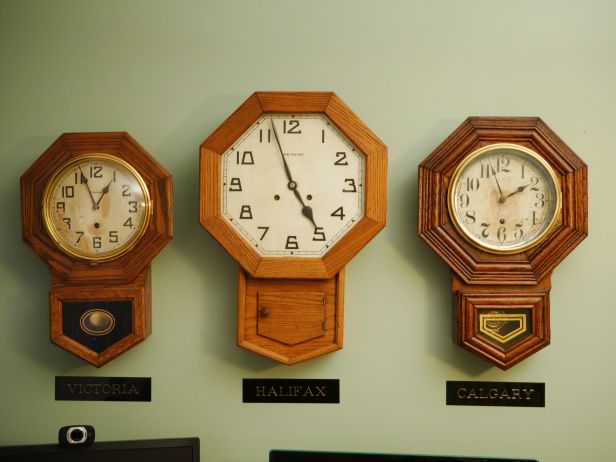
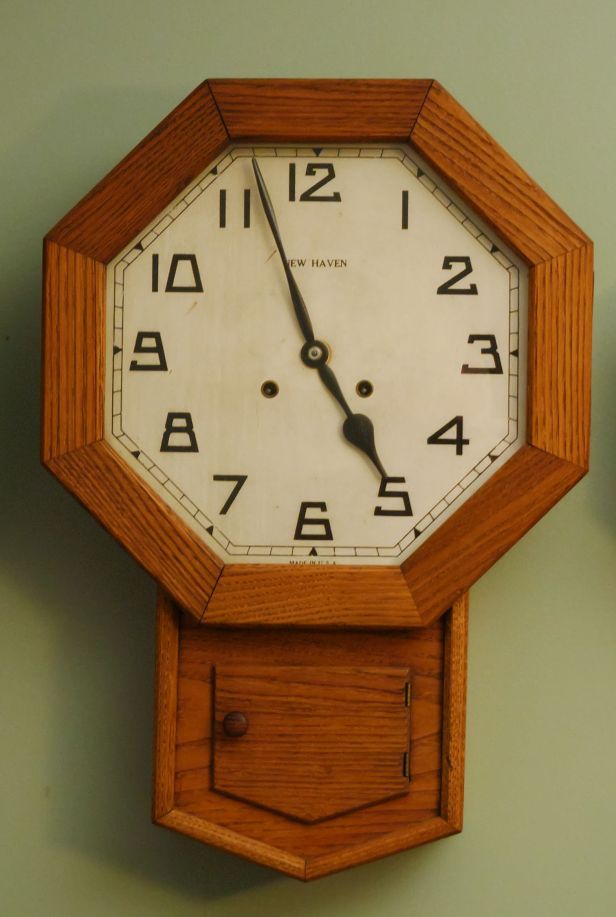
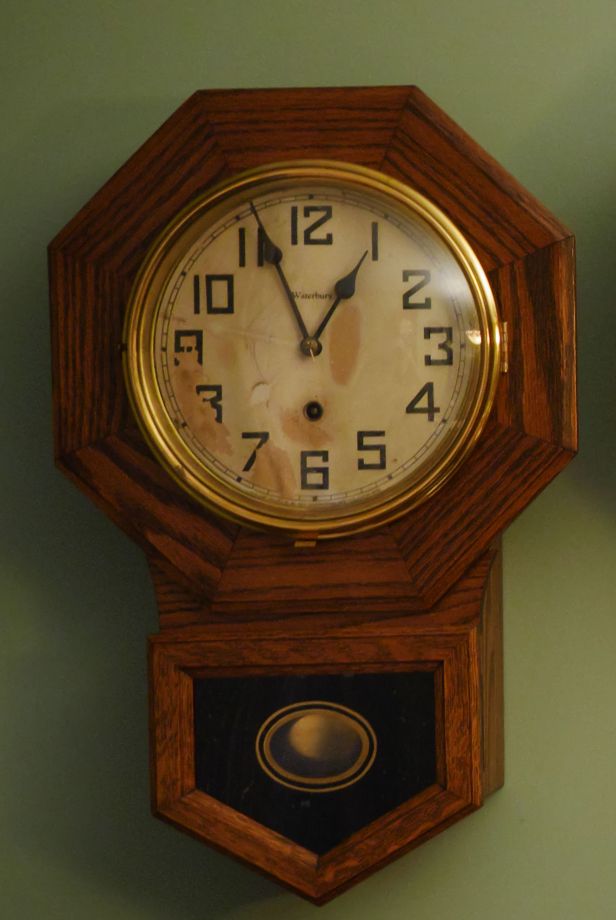
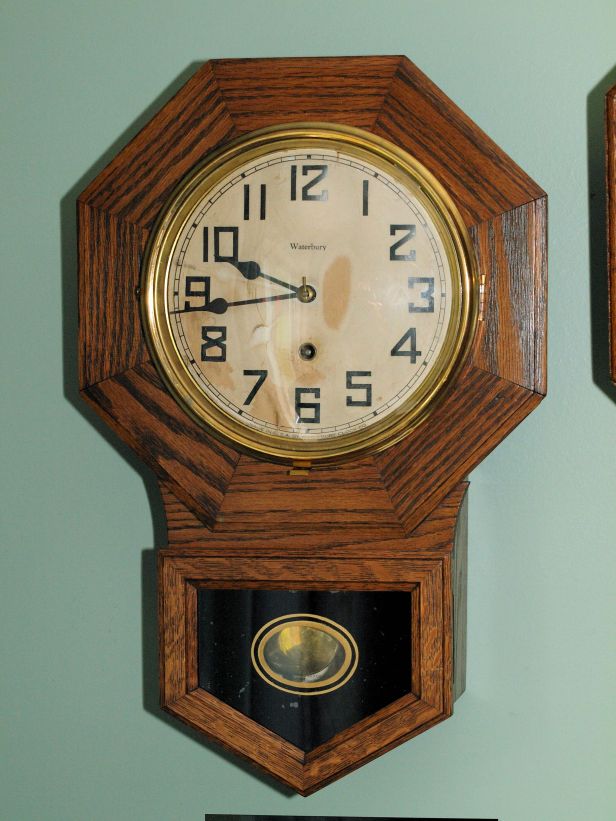
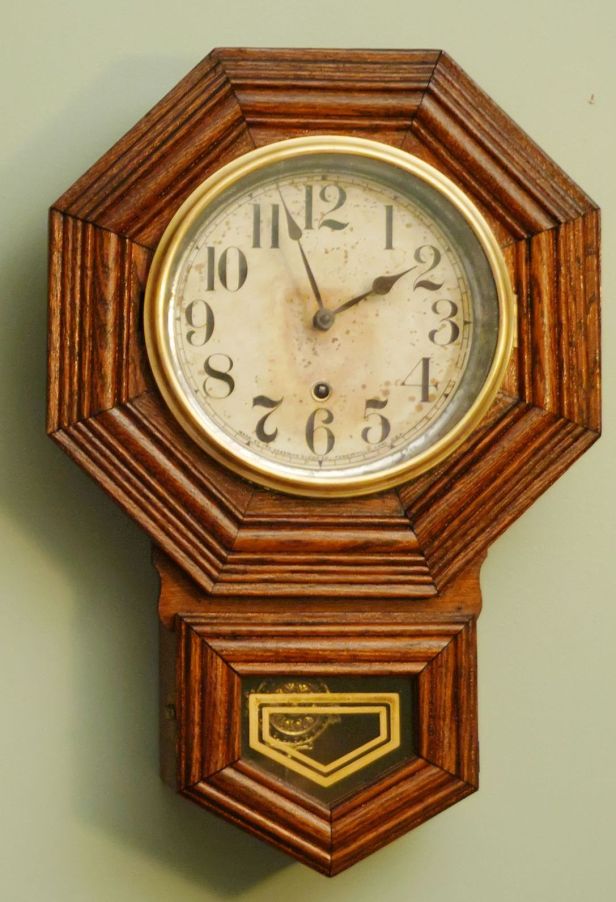
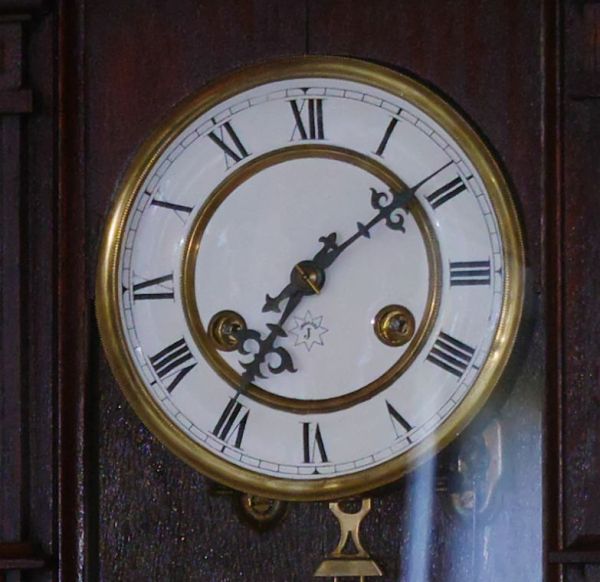
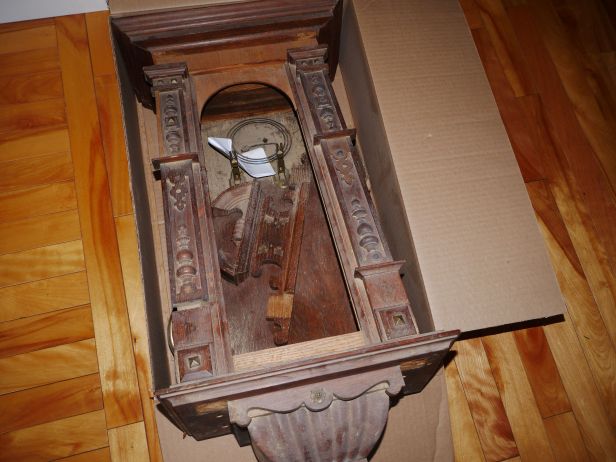

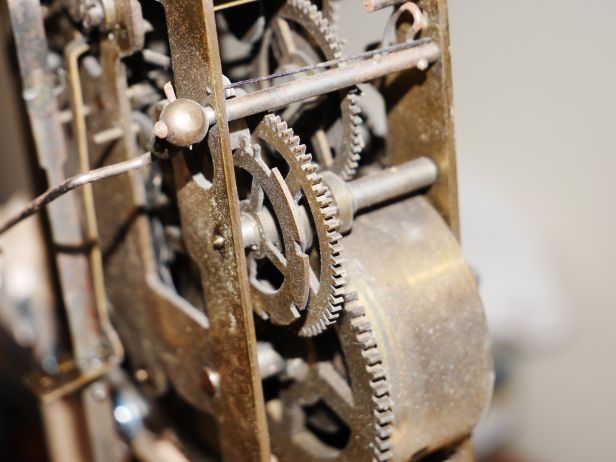
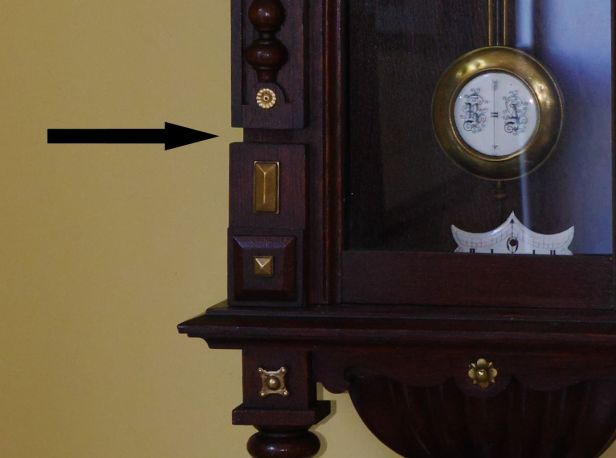
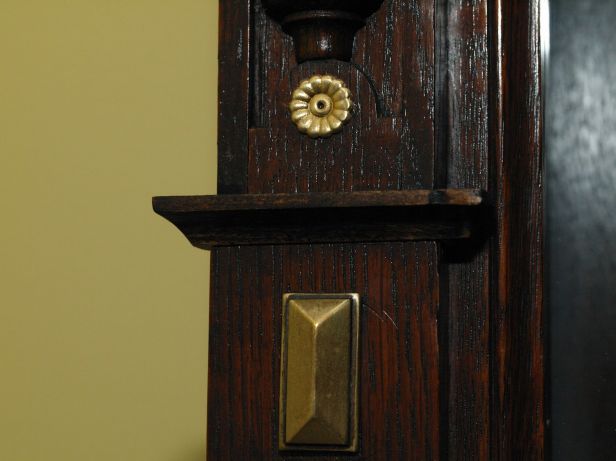
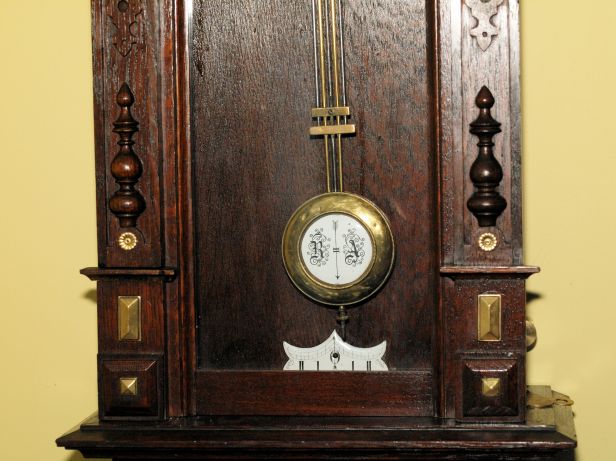
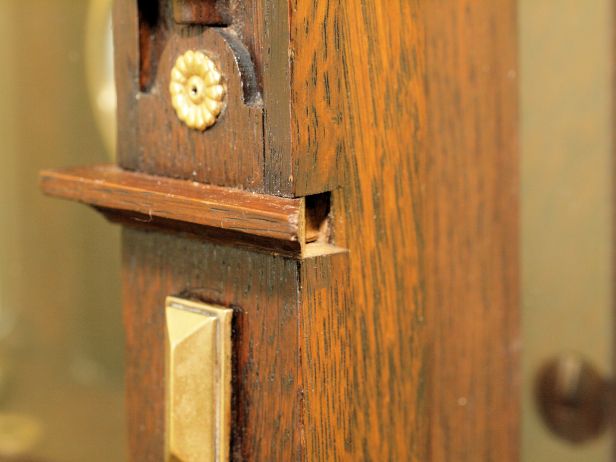
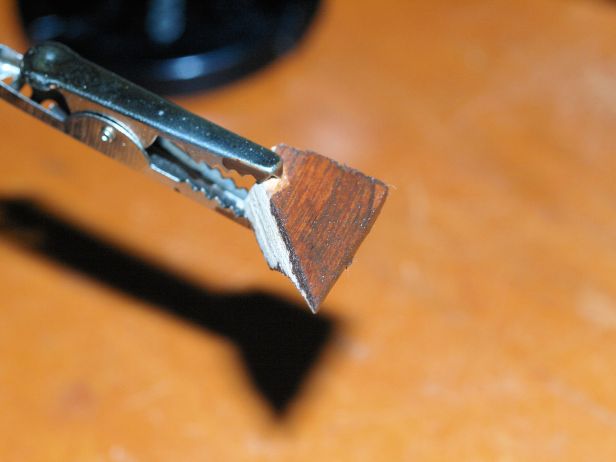
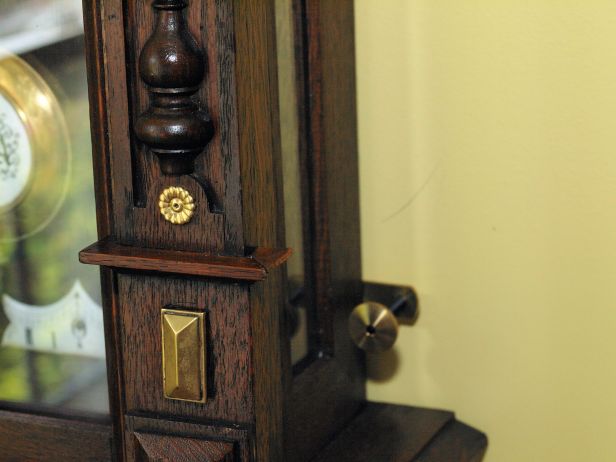
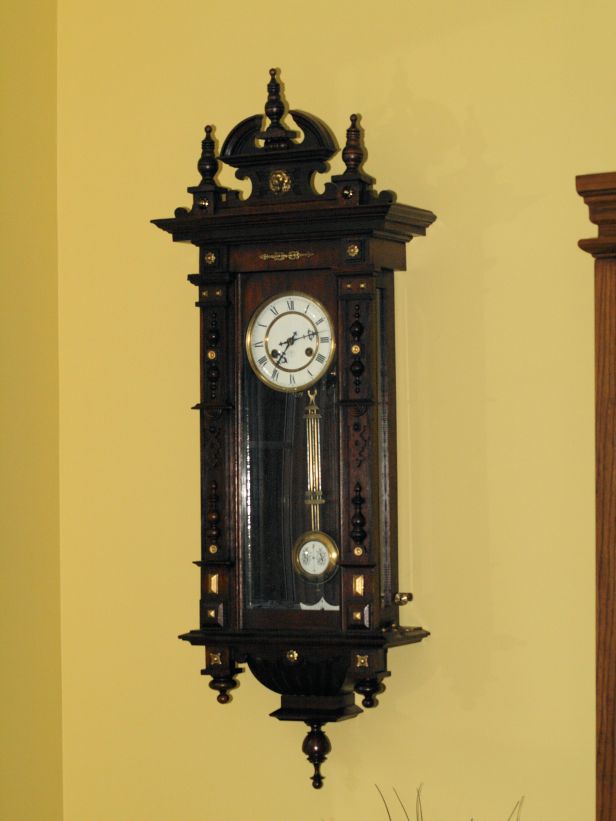
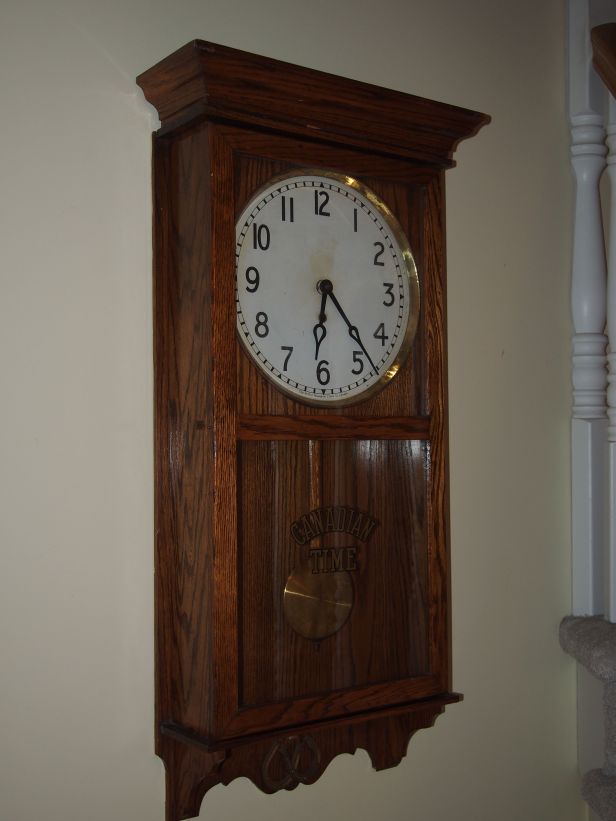
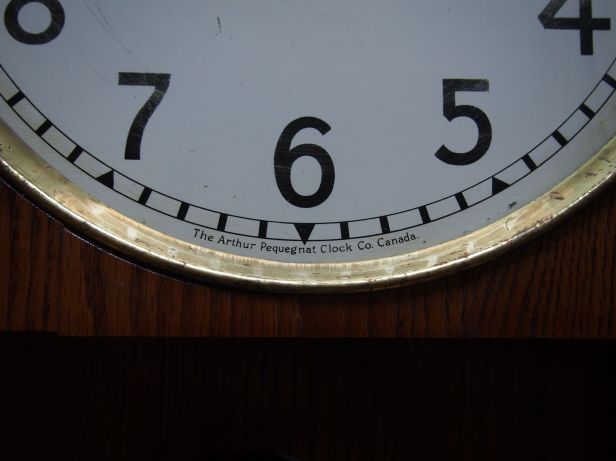
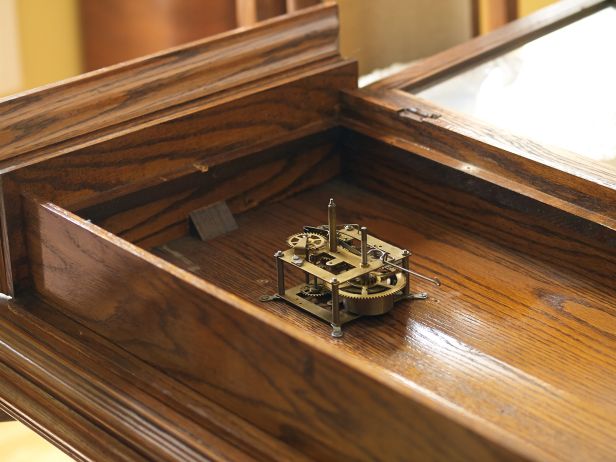
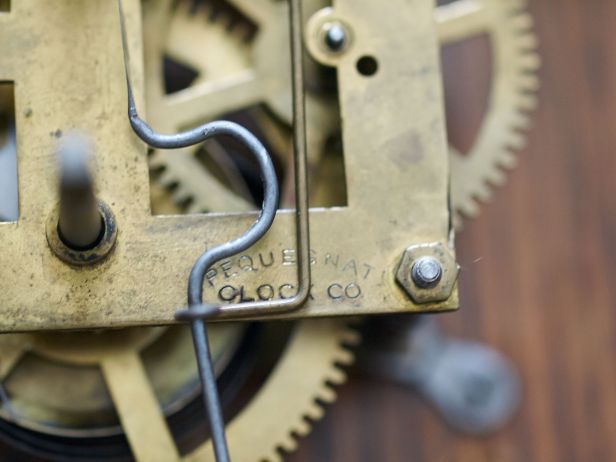
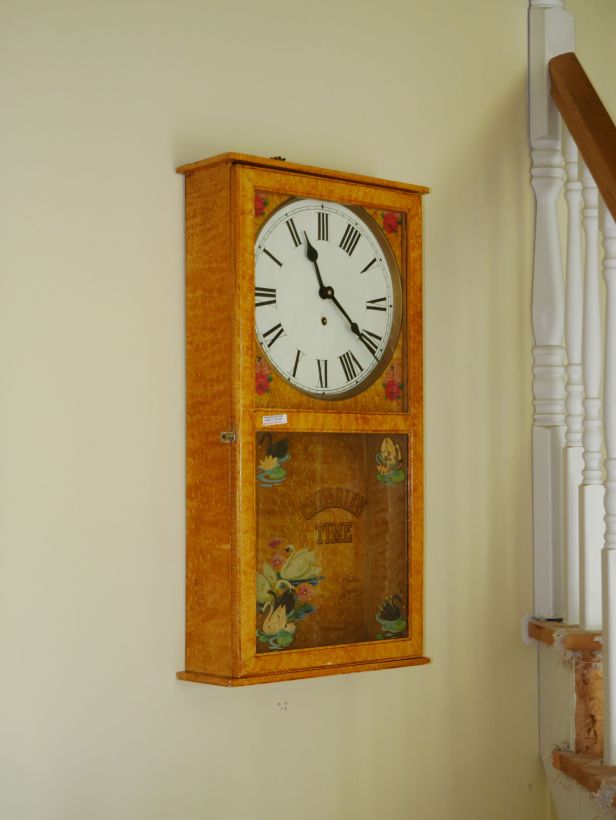
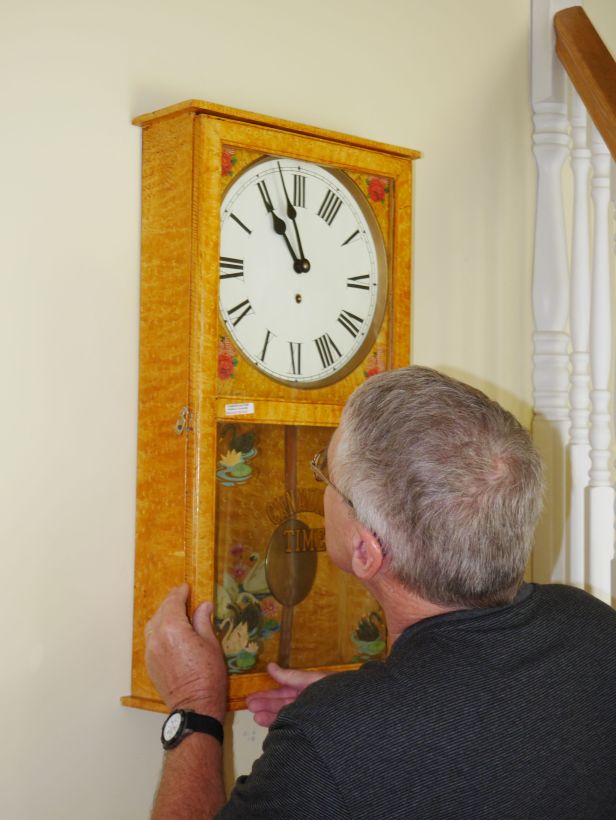
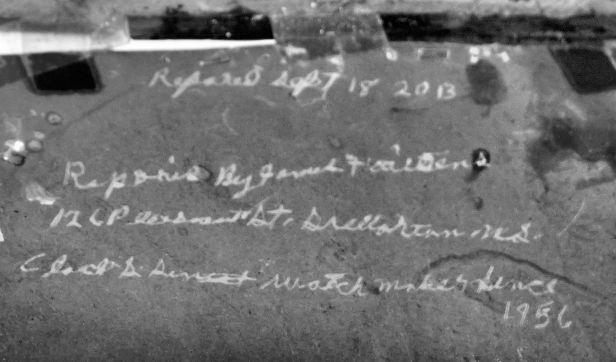
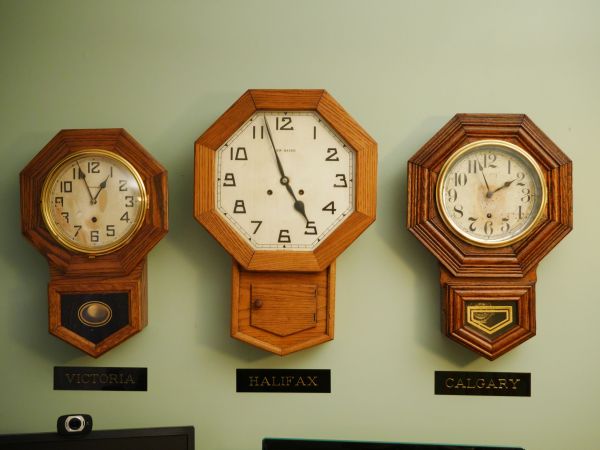
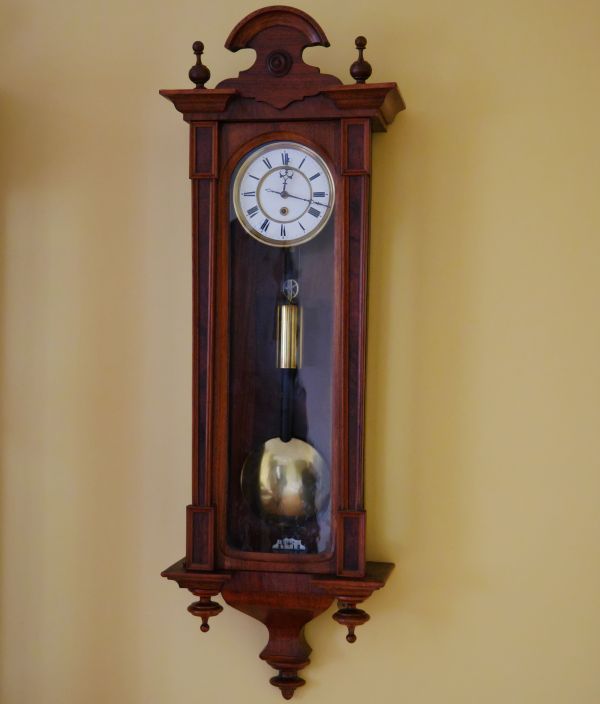
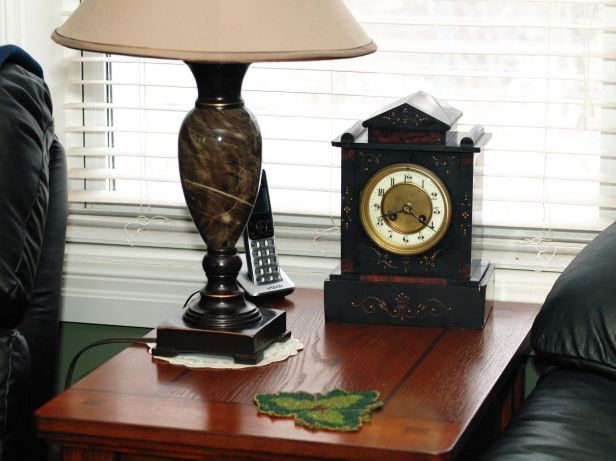
 Antique and Vintage Mechanical Clocks
You must be logged in to post a comment.