Chinese time and strike wall clock that seller calls a grandfather clock
Antique Grandmother Clock in Immaculate Condition
I am selling my wife’s grandmother clock because it does not suit the decor of our new home. She has treasured this antique for years and doesn’t want to part with it. Please make my execution as painless as possible and buy this clock quickly. Keeps perfect time and has no scratches on the cabinet.
This ad will be removed when I am executed…………..actually just before ,,,,,so purchase this clock now
This is a Chinese clock with a calendar feature, circa the 1960s. The ad refers to it as an antique. It is not!. Vintage, perhaps. The ad refers to it as a grandmother clock. It is not!
Grandmother clock by CraftLine circa 19780; a little shorter than a grandfather clock
The seller is asking $150, five times more than it is worth. It’s probably fairly reliable, looks well cared for and I would take it if it were given to me.
Tick-Talk Tuesday is about the letters and comments I have received from you, the reader, concerning your clock, issues you might have had, questions about its origin, challenges you face or a clock you would like me to profile and my responses to your questions with advice on your particular clock concern. For those comments and questions that stump even me, I consult within my clock circles for the best possible answer.
Mauthe time and strike box clock
RC writes,
“I was looking online for information on the exact Mauthe Box clock you have. I am going through my late fathers estate & trying to find out what it’s worth. It belong to my great uncle and passed onto my dad. Every since I was a little boy I can remember this clock being at my great uncles home.
Any information you could give me would be greatly appreciated. I have attached a picture of the clock.”
This is my box clock.
Mauthe time and strike Box clock
My reply,
“You have a time and strike box clock. These have excellent movements and should run for years. A servicing would be due, however.
It might have the 3-rod “Divina gong” which, according to the standard German reference, Hans-Heinrich Schmid’s (2005) Lexikon der Deutschen Uhrenindustrie 1850-1980, is a Mauthe trade-name registered in 1912. It would have a pleasant two-tone, bim-bam sound. Unmarked box clocks like mine were likely sold as a Solar house brand by Eatons. Your is marked and was likely bought from a jeweler.
Thousands of German “box clocks” were made in the first third of the 20th century. The box clock replaced the classic “Vienna Regulator” after the First World War and reflected a minimalist approach to clock design. Most were made in Germany. I would date your to about the 1930s.
The following is excerpted from one my blog posts.
Mauthe clocks have had a long and illustrious history in Germany. In 1844 Friedrich Mauthe and his wife Marie founded the company in Schwenningen to produce watch parts. At the end of the 1860s Mauthe began to produce their own wall clocks (and movements). The Mauthe sons Christian (1845-1909) and James (1847-1915) took over in 1876. In 1886 Mauthe began manufacturing its own springs. Around 1900, alarm clocks, pendulum wall clocks, grandfather clocks, office clocks and so called “Buffet Uhren” or “Buffet clocks” were offered. In 1904 the 3rd generation took over (Eugene Schreiber (1877-1939) – son of Christian Mauthe, Dr. Fritz Mauthe (1875-1951) – son of Jacob and Mauthe Alfred (1879-1911) – son of Jacob Mauthe to build on the base of the company.
In 1925 Mauthe announced a new trademark. It shows a right-looking eagle with outstretched wings, holding in its talons a three-part round plate with the letters F, M and S.
In the 1930s the company at its peak produced about 45.000 clocks per week. About 60% were produced for export markets such as England. In the Mid-30s Mauthe started to manufacture their first wrist watches and some were supplied to the German Army (“Wehrmacht”). From 1946 on Mauthe re-started with the production of wrist watches. Shortly after that the company eventually fell into decline.
As to value, Mauthe wall clocks are currently in the $200 and $500 range depending on condition. A serviced clock would fetch more.
I would clean it up, service it and proudly display it.”
We call it Daylight Saving Time (DST), the British call it “British Summer Time” and “summertime” in other areas. It is the practice of advancing clocks during summer months so that evening daylight lasts longer while sacrificing normal sunrise times. Typically, regions that use daylight saving time adjust clocks forward one hour close to the start of spring and adjust them backward in the autumn to standard time. We have a little expression, “Spring ahead, Fall behind” to make it easy to remember what to do twice a year. In Canada, it is the second Sunday in March and the first Sunday in November.
Mauthe buffet clock
The idea was proposed by George Hudson in 1885 and first implemented by the Austrian Empire in 1916. Some countries do not recognize it in all regions. In Canada, for example, most of Saskatchewan does not change clocks spring and fall, it technically observes DST year round. Parts of Nunavut remain on Eastern Standard Time throughout the year. In the USA (which has 11 time zones) most areas observe DST with the exception of Arizona and Hawaii. Florida has recently applied to get rid of DST.
I advocate a move to “permanent daylight saving time” that is, staying on summer hours all year with no time shifts
DST clock shifts sometimes complicate timekeeping and can disrupt travel, billing, record keeping, medical devices, heavy equipment, and sleep patterns. Computer software often adjusts clocks. Radio controlled clocks adjust the time automatically which is very convenient. We have two modern Sony clocks in our home which do exactly that.
My only tall-case clock, Ridgeway, Hamilton Country
But for the 35 clocks that I have running at any given time, that means making a manual adjustment twice a year which is time-consuming and an unnecessary hassle.
There is a constant dispute about the benefits and drawbacks. Proponents say that it conserves energy and has a psychological benefit of extending the daylight hours. Opponents say that the energy arguments are inconclusive. People must remember to change their clocks which is a time-consuming exercise, particularly for antique and vintage mechanical clocks that cannot be moved backward safely.
For most of my clocks I either simply let them complete their cycle, stop them and when the correct time shows on the clock, I start them up. There is less wear and tear on the movement and I think my clocks are happier for it.
But why go through this nonsense; let’s just get rid of DST! I advocate a move to “permanent daylight saving time” that is, staying on summer hours all year with no time shifts. My clocks will appreciate it and yours will too!
If you ever need to transport a German box clock or a similar style wall clock there are several steps you must take before you remove it from the wall.
German “box” clock by Mauthe, sold under the Solar or Forestville name in Canada
One of these procedures is to secure the strike rods. The gong or strike rods are screwed into the gong block. If allowed to move during transport there is a risk that the rod(s) will break. Although they are strong and withstand years of striking they are also brittle and can easily snap. Clock-makers have several solutions for securing the rods. This is one of them. Yours may be similar.
The gong block
On some clocks, you may find a fork-like device that turns to secure the rods.
Strike rod stabilizer
By turning it clockwise the three gong rods will fit into the forks as shown in the next photo.
The pendulum is removed and rods are now locked in place
Once the rods are secured in place and you have removed the pendulum rod and bob as well as secure the access door, you can now safely remove your clock from the wall.
There are four general categories of clocks; quartz, electro-mechanical, electric, and mechanical. Mechanical clocks, whether they are antique or vintage are the focus of our discussion on why a clock runs slow.
We are quite accustomed to the accuracy of quartz clocks which lose or gain mere milli-seconds per week. Contrast that with an era when folks were content to accept that their mechanical clock would be a minute fast or slow through the week and it was a common practice to make small adjustments over the run cycle of a clock.
In fact, a typical American spring-driven clock in properly serviced condition may gain or lose a couple of minutes per week as a norm. Weight-driven mechanical clocks that gain or lose several seconds per week are considered to be very accurate.
That said, how many mechanical devices do you know run perfectly (relatively speaking) after 120 years.
A clock runs slow for a variety of reasons.
Let’s look at some factorsand examine each one.
Environmental
Pendulum too low or too high
The pendulum is the incorrect weight
Suspension spring length is incorrect
The suspension spring is not attached correctly
Lack of lubrication
Gummed-up lubrication (over-oiled)
The balance wheel needs adjusting
A weak mainspring
Changes or alterations when servicing
Clock cycle time variance
Slipping or binding
One-weight wall clock with large pendulum bob and rate adjustment on the bottom
Ogee clock showing replacement 1 oz rate adjusting pendulum bob
Environmental
Mechanical clocks are subject to a number of environmental factors which may cause them to gain or lose speed over the course of a year. These factors include heat, cold, and humidity. Increasing the ambient temperature of a clock will slow it down from the expansion and lengthening of the pendulum unless the pendulum is a compensating type using Mercury or dissimilar metal rods. Denser air also causes the pendulum to move more slowly.
Moving a clock from sea level to a higher elevation will affect the speed of the clock.
Pendulum bob with inset rate adjustment
Pendulum too low or too high: The lower the pendulum the slower the clock will run. Many pendulum clocks can be adjusted either by a set screw at the bottom of the pendulum or by an inset screw on the pendulum. In the absence of an adjustment on the pendulum, there is a regulator on the clock face. Use the small end of a double side key and insert it into the dial face of the clock to speed or slow down the clock.
Shortening the pendulum will speed up the clock. Anything that increases the length of the pendulum will reduce the rate of the pendulum and result in a clock that will run slower.
Parts of the clock related to the pendulum
The pendulum is the incorrect weight: If the pendulum is too heavy it causes the centre of gravity to be too low, consequently the clock will run slower. Having the correct weight pendulum for your clock ensures smooth running.
Suspension spring length: Often, when a clock is repaired by a person who has limited knowledge of the effect a replacement spring will have on the running of a clock they will occasionally install an incorrect length or thickness of suspension spring. Choose the suspension spring that is correct for your clock.
Rate adjustment under the 12. Use the small end of the double-sided key to make the adjustment
Suspension spring not attached correctly: A suspension spring is located at the top of the pendulum rod and is the flexible part that allows the pendulum to swing. It is the connection between the top post and the pendulum leader. If it is not installed securely the pendulum may not swing at all or will wobble, robbing the movement of its energy.
Lack of lubrication: Pivot holes that have dried up means that there is no lubricating barrier between the pivots and their bearing holes although the movement may otherwise be very clean. Small drops of clock oil applied to the dry pivot holes will ensure the clock runs well and will have a long life. Without oil, the steel pivots will wear the brass pivot holes resulting in wheels that will not mesh properly eventually stopping the clock.
Note: a small drop of oil in each bushing hole is all that is required.
Gummed-up lubrication: When a clock runs slowly the first instinct is to apply more oil. Old blackened or greenish oil in the pivot holes is a sure sign the clock has been over-oiled. Although there is an almost immediate improvement in the running of the clock it will not be long-lasting. In no time at all the clock will begin to run slowly again as the new oil mixes with the dirt and grime in the old oil. When this occurs the oil becomes an abrasive paste resulting in exacerbated wear. The only solution is servicing which includes disassembly, cleaning of the movement, addressing wear issues, reassembly, and testing.
Balance wheel needs adjusting: Regulation of the escapement consists of sliding the two-small weights attached to the center of the balance wheel. Inwards for fast and outwards for slow. Hold the wheel and push the small adjustment “finger”. Moving the finger toward your right will be faster and vice versa. Moving the finger one dot represents a change of about 10 seconds per day. The movement will have a directional indicator with an”S” for slow and “F” for fast on the sides adjacent to the balance wheel.
Balance wheel escapement
A weak mainspring: Often the mainspring you will find in your antique clock is the original one(s). The steel used at the time the clock was made was generally of higher quality than the steel used today with some exceptions. By their very nature mainsprings become weak over time.
Weak mainspring are called “set” mainsprings. If “set”, your clock will not run a full cycle, 8 days for eight-day clocks, a full 30 hours for one-day clocks, or the designed cycle. When a spring-driven clock is brought in for a professional repair the mainsprings are often replaced.
Most properly serviced clocks with their original mainsprings will run their full cycle. Should your clock require a mainspring replacement a correct size quality American or German-made mainspring should provide years of reliable service.
Changes or alterations: Changing or altering the mechanism such as replacing a gear with an incorrect teeth count may speed up or slow down a clock. Although movement parts may appear to be similar, manufacturers often made small changes resulting in parts that may not be interchangeable with the exact movement over the years.
Clock cycle time variance: American spring-driven eight-day clocks will run slightly faster at the beginning of their cycle by providing most of their power and run more slowly through the week as the power of the mainspring unloads. A spring-driven clock that is one or two minutes fast at the beginning of the week is often a minute or two slower at the end of its cycle. This is considered normal and no adjustment is necessary. The power on a weight-driven clock, on the other hand, is constant and the loss or gain in time at the beginning of the cycle will be the same at the end assuming no wear issues are slowing it down.
Slipping or binding: If your clock is losing hours per day something in the mechanism is slipping or binding. If your clock is losing minutes per day after all adjustments are made, it is likely bushing wear or some other worn component is causing the problem. Clock repairers have a term called end shake. End shake allows freedom of lateral movement for each of the wheels between the movement plates. If the plates are tight and there is no end shake, too much resistance will slow a clock. It is why clock repairers always check for sufficient end-shake when servicing the wheels on a movement.
Final thoughts
Your situation may be unique and if it is not a clock issue covered by this article I suggest consulting an expert in clock repair. If you have little experience and choose to do your own work on an antique or vintage clock, the mistakes you make may be irreversible.
There is also a certain element of risk working with mechanical clocks as the power contained in the mainsprings may cause serious injury if not handled properly.
Knowing why your clock runs slowly is the first step in diagnosing the problem. Addressing the issue is the next step. Beyond that, periodic maintenance and servicing with quality parts is the key to a long life for your clock.
Some folks collect clocks without actually working on them. Collecting clocks and repairing them are two very different things. I know people who would gladly send their clocks out for servicing and don’t seem to mind the extra cost. I like to do my own work.
If you work on your own clocks or service clocks for others you know how important it is to ensure safety at all times. Servicing a clock movement requires that you disassemble it completely and safely. There are specific tools designed not only to make life easier as a clock repair person but will ensure your safety at the same time.
Before taking the pins or nuts from the movement plates there are important steps you must follow to ensure your safety working with movements. There is a minimal threat of injury working with weight driven clocks (unless a weight drops on your foot) so the following information pertains to spring driven clocks be they open mainsprings or springs contained in a barrel. The let-down tool is designed specifically for spring driven clocks.
Click, click spring and ratchet
The letdown key is engaged prior to releasing the click
Some clock movements from French, English and German clocks, for example, contain mainsprings within a barrel, safer than open mainsprings. If the spring lets go in a barrel there is still a risk of damage to the gear teeth and wheels however the break will be contained within the barrel itself. The letdown key is used to release the power of the mainspring into its barrel.
The flat clamps (upper left in photo below) are for those open mainsprings which do not leave a lot of working room. Otherwise, the round clamps are good for most applications. Prior to working on a movement the mainsprings must be letdown or restrained in their clamps.
C-clamps used to contain the power of the mainspring
A flat C-clamp is wrapped around the mainspring as you can see in the next photo.
Mainspring contained in a C-clamp
Once the mainspring is safely contained you can work on it with a spring winder, like this spring-winder from Olie Baker .
Mainspring servicing using a Olie Baker spring winder
Here’s how it works. There are four pieces in the let-down set. There are 3 chucks in sizes #5-6, #7-8 and #10-12 plus the handle. Choose the size that fits the winding arbour of your movement. Then insert the let-down end with chuck into the winding arbour. Turn it until the mainspring is compressed. Fit a clamp around the mainspring. Once the clamp is secure around the mainspring release the click spring with a small screwdriver and push it out of the way. Once the click spring is out of the way move the click away from the ratchet while firmly holding the let-down key. The power of the spring will be transferred to the key. Allow the spring to gradually release its power by letting the key handle spin gently within your hand. There, the mainspring power has been restrained and you will be able to proceed with dis-assembly.
Your journey into the world of clock repair requires essential tools The let-down set should at the top of the list. Always minimize the risk of injury by restraining the power of the mainsprings. The letdown key is the safest method of letting down the mainsprings.
An antique clock stopping unexpectedly can be frustrating, especially if it has been running smoothly for years. However, a stopped clock doesn’t always signal a major problem. In many cases, the issue can be resolved with a little troubleshooting and basic maintenance. Whether it’s a cherished family heirloom or a recent addition to your collection, understanding the possible reasons behind its stoppage can help you decide on the best course of action to bring it back to life.
Perhaps you’ve recently acquired a mechanical clock—whether inherited, gifted, purchased at an antique store, bought online, or one you’ve had for a while—and, for no clear reason, it has stopped working.
Categories of Clocks
There are four general categories of clock movements; quartz, electro-mechanical, electric, and mechanical. This post focuses on mechanical clocks, whether antique or vintage and if your mechanical clock has stopped, I may be able to help you get it working again.
Running Time
It may surprise some that mechanical clocks require regular winding. Eight-day clocks need to be wound once a week, while 30-hour clocks require daily winding. 31-day clocks only need winding once a month, and 400-day clocks, also known as anniversary clocks, are wound once a year. Additionally, many German and a small number of American clocks run for 14 days before needing a wind.
Kundo Standard 400-day clock winds with a key once per year
Arthur Pequegnat Moncton, 14-day time-only clock
Winding a Clock Movement
What does winding a clock actually mean? It means providing enough power to a mechanism that will allow it to run for its designed cycle.
For example for clocks with mainsprings, winding a mainspring implies turning the key until the clock winds no further. Time and strike clocks will have two winding arbours, chiming clocks generally have 3 winding arbours.
Clocks with weights have one, two, or three winding points. Absent the odd exception, a time-only clock will have one winding point, a time-and-strike clock will have two, and a chiming clock will have three. If there are no winding holes on the clock face, it is a weight-driven clock and the weights must be pulled up by hand.
In the case of clocks with mainsprings that provide the motive power for the time, strike, and chimes, wind each arbour until resistance is met and you cannot wind any further.
One key will fit all the arbours except the regulator arbour (on clocks that have this feature) which requires a smaller key. Clocks that have a regulator arbour originally came with a double-ended key; the smaller key is for the regulator.
Clocks generally wind clockwise but it is also common to find winding arbours that must be wound counterclockwise.
Over-winding
The idea of overwinding a clock is a myth. If a clock stops after being fully wound, it typically indicates that dirt, old oil, or grime on the mainspring has caused it to seize. Even if the mainspring, once unseized, has enough power, it still needs cleaning, which requires disassembling the movement and checking for other potential issues.
A clock in good working condition should complete its full cycle, whether that’s 30 hours, 8 days, 14 days, 31 days, or any other duration.
Winding arbors on a Seth Thomas mantel clock (arrows). The arbour over the 6 requires a smaller key to regulate the clock
Why Has My Clock Stopped
First and foremost, all clocks require motive power. Winding a clock stores potential energy in the mainspring, which is gradually released over a designed period of time. This energy is regulated by the escapement, a mechanism that controls the release of the energy in small, consistent increments, ensuring the clock keeps accurate time. Weights resting on the bottom of the baseboard will stop a clock and a completely unwound spring-driven clock will not run.
Is the clock in beat? Put your clock on a level surface. Listen to the tick and the tock of your clock. Try to minimize the sounds in the room you are in so that you can listen closely to its rhythm. It is in beat when its ticks and tocks are even….tick…tock…tick…tock…, and is out of beat when they are uneven, either, tick….. tock or tock tick…… Put another way, there must be an equal amount of time between the ticks and the tocks. When a clock is out of beat, it will not run, or it will run for a short time and stop. A clock’s beat must be regular to work properly.
Is the clock level? There are two ways to put a clock in beat. The first is to tilt the clock sideways, one way or the other, and listen for the beat to even out. When the beat is even, prop the clock to stay tilted that way. If it is a wall clock move the bottom section from side to side till you hear a steady beat. Now it will run in beat but it will obviously not look good.
Adjusting the crutch Adjust the crutch to one side or the other until the beat is even. The crutch is the rod that extends down from the pallets which rock back and forth on the escape wheel. The pendulum rod passes through either a loop (called a crutch loop) or a forked foot at the end of the crutch as indicated in the photo below. Incidentally, that rod needs to be in the middle of the crutch loop and can’t be tight inside the loop nor too loose. The crutch is attached to the pendulum leader which is then attached to a post with a suspension spring. Other mantel clocks require similar adjustment to the crutch and instructions may be provided on a label or a pamphlet that came with the clock. A clock with a balance wheel or lever-type escapement rather than a pendulum will operate on a non-level surface.
American made time and strike
Have repairs been done recently? Unless you had a friend fix your clock most reputable clock-makers will offer a warranty, typically 6 months to a year. If your clock stops within that time frame, contact the clock-repairer who may offer a few suggestions in the form of adjustments, over the phone before taking it back to the shop. If it still does not work have that person take a look at the clock.
Do you have the correct pendulum? Other than the winding key, it seems to be the item that gets lost the most. If lost or misplaced, ensure you buy a pendulum that is correct for your clock. One too light may mean that it does not run at all, too heavy and the centre of gravity is lowered and the clock might run too slowly. Clock suppliers such asPerrin or Timesavers will have the correct pendulum for your clock.
Pendulum bob with an adjuster for a French time and strike
Something is broken? If there is no resistance when turning the winding key, the mainspring has broken or a click has let go. If the mainspring winds but releases in your hand, the most common cause is a broken or worn click spring. This is a repair that requires removing the movement from its case, taking it apart, and replacing the worn or damaged part. If you are skilled with that kind of repair, go ahead and fix it, if not, a specialist is required.
A loud BANG when you turn the key indicates the mainspring has broken or let go. It may not be as simple as replacing the mainspring. If the mainspring breaks it might have taken out other parts with it such as pinions and gear cogs. This is called collateral damage. An inspection and a full servicing of the movement is the only solution. Occasionally a broken mainspring is the only problem but the broken spring must come out of the barrel. Some movement designs allow the barrel to be removed without disassembling the mechanism. Whether the barrel is removable or not, a correct mainspring must be sourced to replace it and installed in the barrel which is a job for an expert.
The mainspring inside the barrel may also have become unhooked. This could occur if the clock was wound backward or if the hooked end of the mainspring is split or broken. To address this, the clock will need to be disassembled, the spring barrel opened, and the cause of the unhooking identified. In some cases, a replacement mainspring may be necessary.
For time and strike clocks with open mainsprings, the break may be on one mainspring or both. The clock must be completely disassembled, mainsprings replaced, the movement inspected for other issues, reassembled, and tested.
Sessions click, brass spring, and ratchet
Why does my weight-driven clock stop? Ensure that the weights are in their correct location. If it is a new acquisition of a grandfather clock the three weights have a specific location. Look underneath the weight shells for marks indicating their location “L”, left side, “C”, center and “R”, right side. If there are no markings, use a scale to determine the one that is the lightest weight and put that on the left side.
Ridgway grandfather clock
When bringing up the weights to the top of the clock be careful that they are not run past their stops. You should have a full view of the weights on a weight-driven clock once wound.
Antique Ogee clocks and other weight-driven shelf clocks often lack their original weights, as these have been lost or misplaced over time. Eight-day clocks typically have heavier 8 or 9 lb weights while 30-hour clocks have lighter 2 1/2 lb or 3 lb weights. Incorrect weights for these clocks will cause them to stop.
Is the weight cord or the brass cable binding in any way? The cord or cable should be just long enough to accommodate the weights. A cord or cable that is too long will bind while being wound and stop the clock.
Gustav Becker two-weight wall clock requires a winding crank
Some clocks like weight-driven Vienna Regulators can be adjusted by a transverse regulating screw assembly where the crutch inserts into a slot in the pendulum. Turning a screw in one direction or the other will correct the beat.
Final thoughts
In conclusion, if you encounter a unique issue not addressed here, it’s advisable to consult a professional clock repairer or someone with expertise in mechanical clock repairs. Working with mechanical clocks carries a certain level of risk, as the power stored in the mainsprings can cause injury if not handled carefully. On the other hand, weight-driven clocks generally present less risk.
Although this article may not cover every possible scenario, I hope it has provided you with a clearer understanding of your clock’s issue and how to approach its resolution.
Tick-Talk Tuesday is about the letters and comments I have received from you, the reader, concerning your clock, issues you might have had, challenges you face or a clock you would like me to profile and my responses to your questions with advice on your particular clock concern. For those comments and questions that stump even me, I consult within my clock circles for the best possible answer.
GJ writes
“My name is GJ and I live in Lancashire, England. When my father died I ended up with this clock! It works so we put it up on the hall wall for a while and years later redecorated and the clock no longer has a home, it just does not fit in with the surroundings. However, somebody will love it, but we don’t know who to contact in order to find someone who would buy it with a view to using it. Do you have any contacts in England that we could offer it to? It is a forlorn hope, but we have to try.”
My reply,
“High GJ. Thanks for coming to my blog. What you have is a New Haven American Victorian drop clock (made in USA). It is a time and strike clock which means that it strikes the appropriate time on the hour and strikes once on the half hour. It looks like it has good wood inlay and the dial face is original but you are missing two carved side wings and the original reversed painted glass door which would affect its value. I would keep it for sentimental reasons but it sounds like you are ready to part with it. I do not have any contacts in England but you could try Gumtree, eBay or your local clock-maker.”
GJ writes back.
“Hello again, Ron. Thank you for your reply. I will try to find a good home for my clock. Actually, now it has been dusted it looks a lot better! Thanks again for your information and help.”
This is Part II of a two part series in which I describe the final finishing of an Arthur Pequegnat Bedford clock case.
In Part I I described the challenges of repairing the clock case and the minor repairs to the movement.
In the first part of the series I also described how I acquired this Arthur Pequegnat mantel/shelf clock during my travels to Quebec this spring.
The red oak veneered clock is complete with pendulum bob, a good label on the inside back of the access panel, coil gong and of course, the signature time and strike Arthur Pequegnat movement with nickel-plated steel plates.
Nickle-plated plates with brass bushings
It is the “Bedford” model. Online research informs me that two Bedford models were produced. This one, which is the later version, measures 9 ¾ inches high by 8 ¾ inches wide by 5 ½ inches deep. It has a silvered 6 inch dial with Arabic numerals with no Pequegnat inscription on the bottom of the dial face, spade hands surrounded by a thick brass bezel and concave base moulding. It has a passing ½ hour strike on a coiled gong.
The earlier model has a 5 inch enameled dial with stylized Arabic numerals and Pequegnat inscription on the dial face, spade hands, oak veneered case, a thinner brass bezel and convex base moulding. The case measurements are identical. The time and strike movement differs from the later model by having a ½ hour passing strike on a bell.
If the dial is a replacement, it is a Pequegnat and someone took the trouble to install larger (and correct) spade hands
I initially thought that the larger dial might make this a one-of clock but after working on the case I am inclined to believe that the dial might be a replacement. I observed two sets of screw holes, one for the larger dial and one presumably for a smaller one. A factory switch or perhaps a clock-maker replaced the dial at a later time for whatever reason. After looking at a photo of the Bedford taken at the Canadian Clock Museum in Deep River, Ontario (Canada) you can easily see the smaller dial and thinner bezel.
Bedford clock on display at the Canadian Clock Museum
Arthur Pequegnat Bedford mantel clock, assembled, cleaned and working but before case refinishing
I do not think the larger dial overpowers the look of the clock, in fact, it gives it a more contemporary presence. If the dial is a replacement, it is a Pequegnat and someone took the trouble to install correctly sized spade hands. Unfortunately, the previous owner is unaware of the difference.
The task of clamping and gluing the case took several days as each section of the case required attention. And now to the final finish.
Gluing and clamping took time
Before the case restoration. Yes, the clock was in sad shape.
Very dirty case with years of grime and no grain visible
After giving the case a good cleaning I applied one thin coat of Minwax red oak stain to hide the bare areas and rough edges. I let the stain sit for 5 minutes and wiped off the excess with a cotton cloth. I allowed the case to thoroughly dry for 24 hours before the first sanding. For the final finish I chose Minwax PolyWipe for two reasons, one, it is simple to apply since it is easily wiped on and secondly, I wanted to avoid the amber tone of a lacquer which might result in concealing the grain. I applied six coats of PolyWipe and used 400 grit emery paper between each coat.
After cleaning, sanding and two coats of PolyWipe this is the result.
After two PolyWipe applications
I am pleased that the grain came up very nicely, reminding me of what it must have looked like many years ago.
Finished clock, after 6 coats of PolyWipe
After six thin coats of PolyWipe the result is a revitalized finish that is durable, attractive and will last for years.
The brass door has me puzzled. What I thought was a broken hinge was actually folded into the bezel and soldered.
7/8 inch hinge is soldered back into the bezel
Why? I am reluctant to remove the solder because I risk breaking the glass by bending the retaining tabs. They are in very tight. As it stands the glass door will friction fit onto the dial bezel. Not the best but it will do for now. I will give it a second look, perhaps I can de-solder that hinge without removing the glass.
A project that is well worth the time and effort. It is always satisfying saving an old clock and bringing it back to life.
The Tempus Fugit Clock Company must be doing exceptionally well. Tempus Fugit clocks are everywhere, online for-sale sites, eBay, Kijiji and the like. Type “Tempus Fugit” in the eBay search box and dozens of wall clocks, grandfather clocks and mantel clocks will pop up.
Not only can the Tempus Fugit clock-makers pump out quality clocks they have also maintained a level of quality that is unmatched in the industry
The other day I found this 32″ clock (next photo) for the paltry sum of $30. What a deal! A truly inexpensive entry point for an exquisitely designed Tempus Fugit clock made by some of the worlds foremost craftsmen that you can add to your collection today.
A Tempus Fugit clock on an online for-sale site for only $30
Tempus Fugit clock-makers pump out quality clocks and they have also maintained a level of quality that is unmatched in the industry.
The factory is located in Timeville, Canada. I had a chance to visit the factory this spring and was able to converse with the owners, I said to Mr. Tempus and Mr. Fugit, “Your building could use a paint job”, to which Mr Fugit replied, “Don’t worry about it, clock-making is our strength”
Tempus Fugit Clock Co. factory in Timeville Canada
They graciously permitted me to install C and AA batteries in some of the movements on the factory floor. What a thrill! I really got a charge out of it. The 40,000 sq ft 400 sq ft factory floor is abuzz with activity. Placards of inspiration are everywhere such as “Time is on your side”, Time marches on” and “Time Flies”. The company also makes mechanical clocks. Here, a worker has all the movement parts laid out prior to assembly.
Putting it all together at Tempus Fugit
Gustav Becker and E. Howard might be great names in the clock world but Tempus Fugit always rises above them.
Anyway, back to repairing and restoring clocks. As they say at Tempus Fugit, “Time Flies” ……..or is it “Time Flees”?
American Sessions time and strike clock showing a gear pivot and the build-up of dirt in the pivot hole
Is your mechanical clock not running as well as it should? Does it stop intermittently or not run at all? There may be a number of issues with the movement and among them pivot wear.
Pivots are the ends of the axles (the horological term is “arbours”) that spin in small holes drilled in the clock plates as the clock runs. They are reduced or turned down end of an arbour. These, along with the holes themselves, can become worn. The pivot hole must be perfectly round and the pivots must have a mirror-like polished surface in order to minimize friction within the train of gears. The two surfaces must be protected and the barrier between the pivot and the pivot hole is clock oil.
A badly worn pivot
A worn pivot or worn pivot hole causes the gear to slowly move away from the pinion and it will eventually stop when the gears no longer mesh properly. A clock that is in need of bushings runs erratically or stops altogether.
If a clock movement is not serviced (cleaned and oiled) routinely there will be wear in the plates of the movement where the pivots come through. If new oil is applied over the old il it will free up abrasive dirt and keep grinding away at the steel and the brass bushing hole. Worn pivots are typically found in clocks that have been oiled over and over again and not properly cleaned. The term “properly cleaned” implies disassembly of the movement, cleaning the parts, addressing wear issues, reassembly, and testing.
Occasionally you will see punch marks made to close the pivot hole. Though not an accepted practice today this was a common method of repair employed by past clock repairers
Pivots must be cleaned and polished periodically to ensure they can turn freely within the hole in the clock movement plate. A worn pivot hole is easy to observe as they are oval-shaped instead of round as you can see in the next photo.
Close-up of oval-shaped bushing wear. The circle shows what the hole should look like
The process of bushing consists of replacing the worn brass around the pivot so that the hole is round again. A new hole is drilled into the plate. A new, properly sized, the bushing is punched or pushed into the plate using a bushing machine such as a Bergeon Bushing Machine.
Some clock-makers prefer to hand bush using reamers and smoothing broaches and the results are entirely acceptable but a machine simplifies the task.
Badly worn pivots which are made of steel must be replaced with new pivot. This is called re-pivoting in clock circles. A watch or clock lathe is used for re-pivoting which involves drilling into the end of the wheel arbour with a high-speed bit and installing a new pivot made from pivot wire.
Drilling a hole with a cutting reamer
Punching the bushing home using a Bergeon Bushing machine
Using a micrometer to check pivot diameter
Minor wear is tolerable and expected over the life of a clock and can be addressed by careful filing, polishing, and burnishing.
X marks pivot holes that must be bushed
Clock pivot oil
Punch marks near the pivot hole. This was a common practice of past clock repairers
Bushing is an integral part of movement servicing. Some clocks that have been well-cared for may have minimal wear and may not require new bushings while others, through neglect or improper servicing, may require many bushings.
Bushing a clock is one of the most fundamental tasks of the clock-maker. Pivot and bushing work performed correctly will extend the life of a clock movement while ensuring that a clock runs reliably for years.
I acquired an Arthur Pequegnat mantel/shelf clock during my travels to Quebec this spring. The red oak veneered clock is complete with original hands, pendulum bob, a good label on the inside back of the access panel, coil gong and of course, the signature time and strike Arthur Pequegnat movement with nickel-plated steel plates.
Signature Pequegnat nickle-plated steel plates
It is known as the “Bedford” model. Online research tells me that two Bedford models were produced. This one, which I believe is the later edition, measures 9 ¾ inches high by 8 ¾ inches wide by 5 ½ inches deep. It has a silvered 6 inch dial with Arabic numerals with no Pequegnat inscription on the bottom of the dial face, spade hands surrounded by a thick brass bezel and concave base moulding. It has a passing ½ hour strike on a coiled gong. The earlier model has a 5 inch enameled dial with more stylized Arabic numerals and Pequegnat inscription on the dial face, spade hands, oak veneered case, a thinner brass bezel and convex base moulding. The case measurements are identical. The time and strike movement differs from the later model by having a ½ hour passing strike on a bell.
There is a good label on the inside of the access door which says, “Bedford, eight-day mantel clock, The Arthur Pequegnat Clock Co., Kitchener, Ontario, Canada”.
The label is in good condition
The movement is not marked. Though many Arthur Pequegnat movements were stamped with the maker’s mark it is not unusual to find one without one. This edition was likely manufactured in the Kitchener, Ontario (Canada) plant between 1925 and 1930.
With click fixed the clock is tested
The only issue with the movement is the time side mainspring function which, as the previous owner explained, could not be wound with a key. Damaged top veneer and split-open side trim pieces tell me that the clock had accidentally fallen. The impact point appears to be the very top front of the clock. As a result of the impact the front panel had separated from the main part of the case, leaving a gap of about 1/8th of an inch. It also had a broken access door catch.
Damaged veneer sustained during a fall, veneer was later pushed back in place
At first I focused my attention on the movement and why the time side mainspring would not wind. It was, as I suspected, a missing click spring. The click is a pawl which engages the ratchet wheel to hold the power of the mainspring or the weight. It is moveable and connected to the mainspring by means of a rivet. The click spring is a piece of steel or brass wire which is connected to the click and seats the click in the ratchet wheel.
I had a supply of steel click springs and fashioned one to fit the click. The click, rivet and the ratchet wheel were in otherwise good condition. While the mainsprings was restrained with clamps I postioned the click spring in place applying a little solder to ensure that it remained fixed. An older similar repair occurred on the strike side with solder holding that click in place. A weak point of the movement, perhaps.
A little solder to keep the click spring in place
I inspected the movement for wear and discovered that it had been serviced previously. The solder on the strike side click was certainly a clue but I also noticed that some bushings had been replaced, not unusual given the age of the clock. Brass bushings were punched into the steel plates at the factory. I could see that newer bushings were installed in at least three locations.
There is no lateral movement in the gears as such lateral movement would indicate bushing or pivot wear. There is no evidence of ovalized, enlarged or mis-shapen bushing holes and the gears are meshing well. The movement is clean and free of dirt and debris and I do not feel that a full cleaning is warranted at this point. There is no excess blackened oil; the oil in the bushing holes had simply dried up. I applied clock oil to the bushings, wound both mainsprings and after days of running the movement is keeping excellent time.
With the movement out of the case, repaired and in the testing phase, I focused next on the condition of the oak veneered case. Many of the joints had separated due to the impact I mentioned earlier. Hide glue would have been used originally and could be used for case repair. I have medium strength pearl hide glue, not strong enough for this application. High strength is required to bring the trim pieces together to ensure a good long-lasting and tight fit. This is one of those occasions when a modern glue is an acceptable alternative. Yellow carpenters glue has a bonding power of two tons and I chose this type of glue for the repairs.
Each section had to be clamped for 24 hours and only one section could be worked on at a time. The result is a very time-consuming and complicated process lasting several days.
I used three clamps for one repair. Because the impact point was at the very top I had to push the sides in with a clamp while at the same time bring the front panel into the main part of the case using two clamps adjacent to each other. You can see the clamping method I employed in the next photo.
Using three clamps to bring the sides together and the front section into the case
The side base trim pieces were also split open and had to be clamped in place as you can see in the next photo.
Side trim pieces clamped
Bringing the sides of the case together resulted in raising the damaged veneer, consequently several small pieces of top veneer had to be pushed back into place. Using carpenters glue combined with an “elaborate” weight system I went about with the repair. Using a toothpick I applied carpenters glue under the veneer pieces, wiped off the excess with a wet cloth and used a block with a hole drilled to accommodate a toothpick employing enough pressure to push the small veneer pieces into place. It looks odd but it works.
Toothpick and wood piece to push the veneer in
A degreaser was used to strip years of blackened dirt/grease/grime on the case and once cleaned the original grain in the red oak veneer is now exposed to its former beauty. The case will either need a layer or two of lacquer or a more modern finish such as PolyWipe. I will cover this aspect of the restoration/repair in Part II.
Using Brasso I cleaned up years of tarnish on the brass bezel giving it a new life. I also polished the arbour grommets. The silvered dial face is in very good condition and I left that as-is.
Bezel cleaned up
I fashioned a new door catch out of a worn Sessions click.
Broken door catch was repaired using an old worn Sessions click
With the movement repaired and the successful clamping and gluing of the case the next phase is the final finishing. I am pleased that I am inching closer to bringing this clock back to life and can add it to my modest collection of Arthur Pequegnat clocks.
My Gustav Becker Vienna Regulator wall clock is 51 inches in length. It is a 2-weight regulator that runs on an eight day cycle. In order to bring the weights up I must open the access door and insert the winding crank into the arbours on the clock face. I then raise the weights to their highest safe level. During the process of opening the access door and winding the clock there is always the risk of moving the clock, disrupting the level thus creating a condition where it is out-of-beat. In short the stabilizers, located on each side, keep the case from shifting while winding the clock.
Clock-makers provided stabilizers on many clocks so that they would not move during regular winding or remain stable in the event of vibration or shock (accidentally bumping into it).
The stabilizer is usually about an inch in length, has a knurled brass knob on one end and is mounted on a brass or steel plate which is then fixed to the back of the clock case by means of wood screws.
Brass stabilizer
This is the right stabilizer on my Gustav Becker.
Right stabilizer
Junghans Crispi wall clock showing one of the stabilizers
If you find two small holes on either side of the back and near the bottom of the case of a wall clock you can bet that you are missing the wall stabilizers. You can order them from any clock supply house.
They not only complete the look of a wall clock but are functional as well. A very simple solution to a potentially frustrating problem.
Most knowledgeable clock enthusiasts in Canada instantly recognize the Arthur Pequegnat Clock Company as one of Canada’s premier clock companies. Although the company went out of business over 75 years ago the Arthur Pequegnat name is still respected as a quality clock-maker.
The Arthur Pequegnat Clock Company had an illustrious albeit short life. Watchmaker Arthur Pequegnat was born in Switzerland in 1851. Arthur immigrated to Berlin, Ontario Canada in 1874 with his wife, parents, brothers and sisters; a grand total of 18 family members.
Tall case clocks made by Arthur Pequegnat
By the late 1870’s Arthur was operating a jewelry store and watch repair in Southern Ontario. By the middle 1880’s Arthur and his brother Paul were operating a shop in Berlin, Ontario (now Kitchener). After about ten years the brothers went their own way, both operating successful jewelry shops in Southern Ontario.
Mantel clocks in all shapes and sizes
In 1897 Arthur expanded his Berlin Jewelry shop to include the manufacture of bicycles. However, by 1904, with the decrease in the demand for bicycles, Arthur began to re-focus on the clock industry, by manufacturing his own clock movements at his Berlin Bicycle Manufacturing plant. At first the wooden clock cases were made by local furniture makers, however in time he manufactured his own clock cases.
The Regulator #1, Pequegnats most accurate clock
Berlin, Ontario was re-named Kitchener Ontario in 1916, due to anti-German backlash during WW I. This becomes a useful tool when dating Pequegnat clocks as labels, movements or dials marked “Berlin” date the clock to 1916 or earlier and those marked “Kitchener” are 1916 or later. Having said that, many clocks had a long production life and it is difficult to date any Arthur Pequegnat clock precisely.
The company closed it doors in 1941. Although brass was in short supply as a result of the war effort, sagging sales reflected the demand for modern electric clocks.
Yes, a brief history but as any Canadian clock collector knows Arthur Pequegnat is still a “Big” name in the clock business.
As regular readers know I publish between 7 and 9 articles per month. I have been spending considerable time this spring putting ideas together and getting articles ready for the summer months so that there will be NO interruption in activity on this blog.
Since I spend quality time with friends and family and decompress at our summer get-away in central Canada I might be a tad slow getting back to you if you have questions about your clock or comments on any of my posts. I therefore apologize in advance.
Canada Clock Company Hamilton Cottage Extra, circa 1880, an interesting find in a junk shop
On my blog I typically profile my own clock collection, the challenges of maintaining and repairing clocks in my collection plus many articles of general interest. I often write about my personal observations during my travels and I always look for unique and interesting clocks as I navigate through the fascinating world of horology.
I hope you enjoy reading them as much as I enjoy the researching each article. I invite you to browse through my archive; there is always something that will interest clock lovers of all ages.
Over the next two months you will find exciting new articles and some helpful information on various clock issues. No doubt my summer adventures will produce new clock stories that will be the source of future articles. So, stay tuned as they say and if you like what you see let me know.
While antiquing some time ago I came across boxes of clock movements in a shop. Some were fairly new though I found a Gilbert time and strike date stamped 1906 which piqued my interest. In the box was the key, the coil gong, clock hands, pendulum and movement mounting screws. A movement without a case. Hmm, interesting! Here’s what I’m thinking.
You dig up an old clock from the basement. It was your mothers and you were immediately reminded of the soothing sound of the clock when you were a kid. Wouldn’t it be nice to get that old clock running again. You fiddle with it and despite your best efforts you just cannot get the thing going. Why not bring it to the local clock-maker? He takes a look at it and explains that it is worn out. It will cost much more than the clock is worth to repair it, he says. But there is a solution. Take the works out and replace the movement with a reliable quartz one and all for less than half the cost of a repair. It sure would be nice to get that old clock running again and who would know that a new quartz movement is inside. The clock-maker takes the movement out, asks the customer if they want it, puts it in a box on a shelf and uses it for parts on the next clock. I’ll bet I’m close.
It is a Gilbert time and strike with a passing bell strike on the half hour. It has a distinctive 24 hour count wheel meaning that the count wheel rotates just once every 24 hours, each half with slots for 12 hours.
Gilbert time and strike date stamped 1906
It sat in a box in my office for several months. The other day I placed the movement on a test stand to determine its condition, wound the time side and BANG, the mainspring blew apart. A nice clean break! Luckily it did not take me or any other parts with it. The break was so far from the loop end that the mainspring was not salvageable. You can see the snapped section of the left mainspring in the photo above. Determined to see this movement in running condition I ordered a new spring from a clock supply house.
Top plate removed
When I dis-assembled the movement it was worn but repairable. However, all pivots were in very good condition except one, the second wheel on the time side, front plate. It was worn at the shoulder as you can see in the next photo.
Unusual wear on second wheel, time side
Was this enough to stop the clock and why just one? Perhaps a combination of factors. It is the second wheel and under the most axial load or probably a contaminated pivot hole with enough embedded detritus that would have ground away at the pivot shoulder.
There are only two solutions, fashion a new pivot or turn down the pivot and polish it. Fashioning a new pivot is a lot of work. However, there is enough steel left after it is turned down to give me a strong pivot. I chose the second option and installed a new bushing to fit the new pivot size which is much easier than re-pivoting. I put the wheel on a lathe and ground the pivot down to the size I wanted and then gave it a polish.
New bushing had to be punched to stay in place
The second issue was an old bushing that had been installed at some point in the clocks life. I drilled out the old bushing knowing that the replacement bushing would be loose. Alas, it slipped out too easily. The solution, two punches adjacent to the bushing to secure it in place. Punching a brass movement is rarely a good idea but this was a solution that was appropriate to the situation.
I installed two more bushings on the strike side second wheel back plate and third wheel front plate and one more on the time side, second wheel, back plate.
With the new mainspring installed and the repairs completed, it was time to assemble the clock and test it. I cannot count the number of times when I have re-assembled an American time and strike only to find that the strike setup was slightly out of adjustment. You know you have a problem when the clock strikes until the mainspring winds down. Placing the lever in the maintenance cam while the count lever is directly into the deep slot and hoping that the warning wheel pin locks at just the correct moment is always fun. I have cursed a few times when I cannot get it right. In this case it was first time lucky, the stop pin was in the right location on my first try.
On the test stand, bell is now fixed in place
As an aid in re-assembly toothpicks remind me of the location of the bell lever
The clock has been running but does not seem to be able to get past 5 days of an 8-day cycle. I realize that there are some things I need to address before I get this clock running a full cycle but I have other projects on the go. Since this movement does not have a case I took it off the test stand, put it in a box on a shelf, included some notes, and will address it at a later date when and if I ever get a case.
Notes about the movement reminding me what needs to be done
So, I’ll wait for that illusive case but in the meantime into storage it goes.
I have been to Middleton, Nova Scotia many times. I have even passed the Macdonald Consolidated School where the clock museum is located without realizing what treasures lay inside. The clock museum represents a small section of the museum, the remainder of which is dedicated to the history of the area.
In the Spring of 2018 my wife and I set off on one of our many mini staycations. On my agenda was a visit to this museum and I was not disappointed.
Macdonald Museum main clock exhibit area
Holbeck made tall-case clock
It certainly ranks as the best exhibit in Atlantic Canada
Off highway 1 on School Street, Middleton, Nova Scotia stands the Macdonald museum. I had some expectations because I had been to two well respected clock museums, the NAWCC museum in Columbia PA. and the Canadian Clock Museum in Deep River, Ontario. Though not on the same scale as these two, it certainly ranks as the best exhibit in Atlantic Canada.
The Annapolis Valley Macdonald Museum is home to the Nova Scotia Museum’s collection of over 150 antique clocks and watches. This permanent exhibit showcases items collected by the late Norman Phinney and was one of the primary reasons for establishing the Macdonald Museum. Many of the clocks are in working condition. There are a wide variety of clocks and watches on display, with some dating back to the late 17th century. Anyone interested in clocks would do well to see this exhibit – one of the best in Eastern Canada.
The museum is well laid out with enough information on each of the clocks on display to satisfy the general public and clock enthusiasts alike. Each display highlights its significance as an important development in horological history. We were alone as we walked though the main exhibit area and an adjacent room which contained a fascinating old clock-maker’s shop and a well laid out and informative interactive display on how mechanical clocks work.
Clock-maker’s shop
How mechanical clocks work
At least one example from the Baird Clock Co. of Montreal and five examples from the Arthur Pequegnat Clock Co. of Berlin (now Kitchener) Ontario were on display including the Arthur Pequegnat Regulator #1, that the company once advertised as “The finest clock made in America”.
Baird clock from Montreal
Arthur Pequegnat Regulator #1
None of the clocks were running, however. Though the clocks appeared to be in excellent condition, the sound of ticking clocks make for a more authentic experience. All other clock museums make a practice of running some clocks on a rotating basis at any given time.
At the entrance to the clock collection there is a simple plaque dedicated to Norman D. Phinney. Learning more about Norman D. Phinney, his contribution to the Macdonald Museum and the story of how the museum received his clock collection would add to the experience.
Norman D Phinney
If you are a clock fan or even if you only have a casual interest in the world of horology, this small clock museum may surprise you
Though perhaps not within the scope of Phinney’s original collection, examples from the Canada Clock Co. and the Hamilton Clock Co. or more peddlers clocks from Nova Scotia and New Brunswick would have provided an enhanced Canadian horological perspective.
Steeple or sharp Gothic clocks
However, these are minor quibbles and should not detract you from appreciating the high quality of the exhibits which contained British, American, French and Canadian examples or the many styles that included Pillar and Scroll, tall-case, shelf, beehive, steeple, drop octagons, mantel, alarm clocks and Ogee clocks, all of which were well represented.
If you are a clock fan or even if you only have a casual interest in the world of horology, this small clock museum may surprise you.
Oh, and while there, visit the rest of this fascinating museum.
Tick-Talk Tuesday is about the letters and comments I have received from you, the reader, concerning your clock, issues you might have had, challenges you face or a clock you would like me to profile and my responses to your questions with advice on your particular clock concern. For those comments and questions that stump even me, I consult within my clock circles for the best possible answer.
CM writes,
4 and 5 prong keys and singles
“Hello, I just read your article about keys for wind-up clocks. I have a parlor clock that belonged to my parents. It is on the wall, has a pendulum & requires winding. I believe that it is from the early 1980’s. And made by The Time Mfg. Co. However, I do not have a key – seems that it was lost prior to my getting it. Can you tell me what kind of key I need to get for it? And do you have any that would fit my clock that I could purchase? Thank you so much & have a great day.”
My reply,
“Hi CM. Thanks for coming to my blog. If it is made in the 1980s it is likely Chinese or Korean but it is hard to tell unless I see a photo. If I am correct these are 31 day movements. You could measure the arbours which will tell you the size but it likely takes a #6 or a #8 key which you can find here.”
I have the 30-hour clock bug and my collection of them is steadily growing, but where to put them all? I have not decided where to put this one and for the moment it is on the floor of my work room.
Sperry and Shaw were not thought of as a high end clock company but some models like this 4 column New York style were quite attractive
This is a New York-styled Sperry and Shaw 30 hour time and strike, 4 column shelf hour strike clock, measuring 25 1/2 inches in height by 14 inches in width. The 4 free-standing turned columns first drew my attention as I had never seen anything quite like it. While researching the NAWCC site I discovered that this clock was made in or about 1846-47. The label, of which 98% is intact inside the backboard says 10 Courtlandt (not a misspell, there is a second”t”) Street, the company headquarters during the aforementioned period. Sperry and Shaw were business partners and were regarded as distributors and assemblers rather than clock-makers.
Sperry and Shaw’s label showing 10 Cortlandt St.
They sourced cases and movements, affixed their own stamp on the movement and placed their labels (sometimes over other makers labels) inside the case, a common practice at the time as clocks for the home and workplace both locally and abroad were in great demand.
Not everyone in the clock business was happy with Sperry and Shaw. Consider this excerpt from Chauncey Jerome’s book, History of the American Clock Business.
“These New York men would say that they were agents for Jerome and that they would have a plenty in a few days, and make a sale to these merchants of Jerome clocks. They would then go to the Printers and have a lot of labels struck off and put into their cheap clocks, and palm them off as mine. This fraud carried on for several years. I finally sued some of these blackleg parties, Samuels & Dunn and Sperry & Shaw, and found out to my satisfaction that they had used more than two hundred thousand of my labels. They had probably sent about one hundred thousand to Europe.”
Chauncey Jerome had a few clock-makers/assemblers on his hit list that included Sperry and Shaw and at least managed to sue some successfully.
Sperry and Shaw were not thought of as a high-end clock company but some models like this 4 column New York style were quite attractive, sold well at the time and are sought after today by collectors.
The movement is Jerome-like (Counterfeit perhaps?) and stamped Sperry and Shaw, New Jersey. I measured the plate thickness and compared it to a Jerome in my collection and the plates in this clock are a little thinner.
The narrow brick-shaped weights (4 3/4 inches X 1 inch) fit neatly into channels on the left and right. When I first communicated with the seller, he was not sure if the weights were in the clock. He later emailed to say that it did indeed have weights. I would have passed on the clock had it not come with the weights because the narrow bricks are the only type that will fit into the channels and they would have been almost impossible to source. The weight cords, clearly not original, are old and frayed and will be replaced with simulated gut. How old, well on the first night I raised the strike weight up about halfway and about 20 minutes later I heard a loud BANG. I knew exactly what happened; the cord had snapped and the weight had dropped. Luckily there was no damage.
The open moon steel hands are original.
The upper glass appears original and has the waviness you would expect from a clock over 172 years old.
The lower tablet has a cropped image of the Bay of Quinte (Ontario, Canada) taped to the inside – not original but old. The original 18X12 cm steel engraving was drawn by W. H. Bartlett and engraved by J. C. Armytage in 1840; the image can be found here. Since the image is from 1840 and appropriate to the period of the clock, I might just leave it there. It also tells me that the clock likely spent most of its life in Ontario, Canada.
Sperry and Shaw clock showing dial and lower tablet print
The zinc dial is old though not as old as the clock itself since there is a patent stamp on the back of the dial dated Dec 1, 1863.
Dial patent date of 1863, a later addition to the clock
There is also a clock-makers inscription that says, “cleaned by Felo Bros, March XX 1901”. Obviously this particular dial would not have been on the clock at the time it was made. A wood dial would have been appropriate for the period.
Clock-makers inscription in pencil
The case looks good…from a distance. The veneer looks like mahogany or walnut, I am really not sure. There are a few small pieces of veneer missing at various places and mostly on the corners, a common issue. It has a two-tone appearance though the case might have been all one colour when made (??). There is a lot of grime on the darker surfaces and I have to decide whether to leave as-is or take it down a little bit to see what’s there. Attending to the veneer issues should be a fairly straightforward process. The break in the right corner of the base is a crude repair and that will have to be redone.
One of several areas of minor veneer loss
The movement is dirty but should clean up nicely. There is not a lot of pivot wear on the front plate of the movement but I will learn more once it is out of its case.
There are a number of other clocks in the queue but I am eager to tackle this one.
Ansonia Extra short drop wall clock in as-found condition
The photos tell the story
Some time ago I wrote an article on an Ansonia barn find. It is an Ansonia Extra Drop time-only Rosewood veneered wall clock, circa 1880. I thought I would update readers on how this little project is progressing. I was able to find most of the parts but there are still some missing. I will let the photos tell the story.
It did not look like it would ever run again
Before shot of the seized time-only movement
Cleaned and serviced one-train time-only movement
Ansonia movement in the case and running an 8-day full cycle
The movement was cleaned up with 4 bushings installed and is now able to run a full 8-day cycle. The case received attention with glue repairs, a new backboard, new right finial and a re-lacquering of the veneer surface. The veneer was in good condition and required very minor repairs.
Dial with minor losses
The dial has been touched up and mounted in the case
Addressing the paint loss on the dial was a challenge. I played with various shades and mixed colours that were a close match to the original. The result is better than it was. The glass fits into a slot on the wood bezel and the fit was surprisingly tight. Had I known I would have glued the bezel pieces with the glass in place. Lesson learned!
I am still missing the drop access door plus its reverse painted glass and the brass bezel that surrounds the dial face. I will make the door but will leave that project for another day. My search for the brass bezel continues.
As I progress with this restoration project I will keep the reader up to date with changes.
Last summer (2017) my sister asked me to look at her newly acquired Ansonia time-only 1-day cottage clock (circa 1895). “How much did you pay for it”, I said. “Only $25 but it doesn’t work, something is wrong with it,” she said without being specific. And she was correct.
The clock would have not cost much at the time, perhaps a dollar or so but today people collect small clocks such as this and prices can be higher than the more common mantel clock. In those days for an extra 50 cents you could buy a time and strike cottage clock with an alarm feature but his one is pretty basic. They were cheaply built, somewhat disposable since very few made their way to the repair shop and not as many have survived.
Several months have gone by and I thought I should take a look at the clock, repair the movement, spruce up the case and dial face and return it to my sister in working condition. Having completed a number of other projects I decided I had time to tackle this one.
Time-only 30 hour movement
It was dirty as expected and the gears generally loose, particularly the winding arbour. It was clear something around the mainspring was amiss. The click was loose and would not engage every time.
The top plate is removed
Time-only movements are the simplest to work on and this is no exception. If you are starting out in the world of mechanical clocks this is the movement to begin with. The movement is very small in comparison to mantel or kitchen clocks and measures only 2 inches wide by 3 inches tall. Despite its diminutive size, it is easy to work on. The case itself is only 9 1/2 inches tall by 7 inches wide by 3 1/2 inches deep.
The movement had been worked on before. The click anchor screw was stripped and there were punch marks on the escape wheel bridge.
New bushing but 2 punch marks are visible
The most troubling issue was the main wheel arbour which had detached from the gear. It took a few punches on the brass shroud to push it in back into place and secure the wheel to the arbour. Not the prettiest of repairs but very functional. The click was also loose and would barely engage the ratchet. It took a couple of hits with a hammer on the holding pin to secure it tightly in place.
The arbour is now secured to the wheel and the click has been repaired
Four bushings were installed, the centre arbour (rear), the rear of numbers 2 and 3 wheels and the escape wheel bridge.
Centering prior to drilling a hole for a bushing. You can also see how small the plate is
The clock was mounted on the test stand and run for several days without issue. Once testing was completed it was returned to its case.
The numbers on the dial were somewhat faded. I decided to address the numbers with a little paint.
Faded numerals on the dial face
I was concerned about being too invasive when touching up the dial but I thought the numerals should stand out a little more. I used a number 2 paintbrush and touched them up using flat black acrylic metal paint and a Sharpie pen for the small lines. The effect is subtle without being over the top.
After touching up the numbers with paint and using a Sharpie and straight-edge for the thin lines
The case was cleaned up with a toothbrush and Murphy’s Soap. There is some finish loss on top but I will leave that as-is.
Here is the completed project. The movement is now back in its case.
Assembled, in beat and ticking away strongly
The hands, which appear original, are attached and the clock is running better than it has in years.
I am sure that my sister will be pleased when the clock is returned to her.
As regular readers know I am a fan of Arthur Pequegnat clocks not just because they were made in Kitchener, Ontario, Canada but they are attractive, well made and hold their value well (in Canada!).
Eddy’s photo of the clock
I have had clocks given to me in the past but this was a rather unusual situation. As readers know I publish at least seven or eight articles a month in order to provide interesting content on all aspects of mechanical clocks. I publish a regular feature called Tick Talk Tuesday in which I profile the mail I receive from readers. The mail is private email and not comments after a blog article. I receive many emails you will not find on my blog. Some people prefer writing to me privately and that is perfectly fine.
I received one such email some time ago from Eddy who lives in the Quebec City area (Province of Quebec, Canada). Eddy was researching my blog and discovered that I admired and collected Canadian-made Arthur Pequegnat clocks. He wondered if I would have an Arthur Pequegnat clock added to my collection.
Because it was an Arthur Pequegnat I was immediately interested but I did not expect a reply. To my surprise Eddy answered with five photos of the clock from various angles. It was a mantel clock in pretty rough shape and after seeing his photos I was still curious even though it likely required a lot of work to restore it.
Top of the clock
In his email Eddy explained that he was having serious health issues and was taking stock of his life. He had a number of antique and vintage items that his father and grandfather had left him and he felt they should be passed on to someone who would appreciate having them. As Eddy explained, “My father had that clock as a trade against work done for people he helps with their house and lawn chores. He gave it to me since he’s got too many, just like my grand-father did. He was okay with me parting with it.”
I wrote back and told him that a meeting was indeed possible. We would be passing through the Quebec City area in the next few days on our way to our cottage in Quebec to open it up for the summer. We (my wife and I) had even planned to stay in that area for the night. We could stop by to have a look at the clock. Eddy then provided me with his address and telephone number. A meeting day and time was set up.
After nine hours of driving we arrived at his door. He invited us in and we spent a very pleasant two hours getting to know each other, discussing my collection of clocks, talking about the clock in question, his fathers hobby of searching out old antiques and finally, matters related to his struggle with a serious illness.
broken brass hinge
I was a little confused. Was he was actually giving me the clock or did he expect money in return so I decided to ask him straight out. No, he said, you can have it. he then brought out three other clocks to the kitchen table, a cottage clock, a steeple clock and a swinger. He asked me if I wanted those as well and I thanked him for the offer but declined. While they were very nice clocks I felt awkward taking all of them for nothing. So, we left with just one clock.
We walked out the door with clock in hand and for the next hour of our drive we talked about Eddy and his gift of an Arthur Pequegnat clock.
The clock was complete with original hands, pendulum bob, coil gong and of course, the signature Arthur Pequegnat movement with nickel-plated steel plates. The only visible sign of an issue with the movement was the time side mainspring which, as Eddy explained, could not be wound with a key. Damaged veneer, side trim pieces splitting open was clear evidence that at some point the clock had been dropped or fallen hard. The impact point was the very top of the clock. Yes, it was in rough shape!
A challenge to repair? Yes, but I graciously accepted the clock knowing that I would have to spend several hours putting it right.
Both sides and the trim front were coming apart
Thanks to Eddy I am now the new owner of an Arthur Pequegnat, Bedford model that I will add to my collection of four other Pequegnat clocks. In a later post I will detail the repairs to this fine Canadian made clock.
Eddy suggested that instead of offering him money that we donate to a charity and so a cheque went to the Canadian Cancer Society. I have never given names to my clocks but this one will always be called Eddy in honour of a individual who felt strongly that a family treasure should go to an appreciative owner.
Ogee clock prices seem to be at their lowest level in years. If you have your heart set on an Ogee clock, there is probably no better time to buy than now.
Ogee clock; clock design that originated in the United States in the 1830s, distinguished by a case (usually pine) the front outer edges of which are curved into an S-shape (ogee). This shape is formed by the union of a convex and a concave line. A mass-produced variant of the shelf clock, the ogee clock stands about 30 inches (75 cm) high and is usually weight-driven. The movements were usually made of brass and were made to run for 30 hours or eight days. (Brittanica.com)
Earlier this year (2018) I bought three Ogee clocks at an estate auction. There were about a dozen clocks up for bid, some gingerbreads, a couple of mantel clocks and a few Ogee clocks. Fearing that the auction would bring out collectors I surmised that the clocks would fetch somewhat higher prices. Though there were many clocks there were few aficionados. I scored three clocks, all were in very good condition though they were running poorly.
Daniel Pratt reverse ogee and splat clock
This Daniel Pratt Jr clock caught my eye. It is reverse ogee and splat, time and strike with wood movement made in the mid-1830s. My winning bid was a mere 30CDN. Ogee clocks with wood movements have sold for at least 200CDN in years past and eBay asking prices for Daniel Pratt Jr. clocks are typically between 60US and 200US. Although Ogee clocks have hit rock bottom in Canada the same may not be true elsewhere.
Wooden movement, time and strike
I have written about the decline in clock prices in a previous post. There is a legion of unwanted clocks out there. EBay and other online sites are flooded with ordinary antique clocks though special interest clocks still command higher prices. Many reasons are attributed to the decline though the poor economy in recent years is a major factor. Since 2008 clock prices have been dropping steadily and an upward direction in the near future looks dim. Prices are at or near the bottom. As the economy improves and antique buyers return to the marketplace we will see an uptick in values. In the meantime, now is certainly the time to buy.
Clocks, manufactured and warranted by Daniel Pratt Jr
I paid 60CDN each for the other two Ogee clocks, one a Chauncey Jerome 30 hour time and strike, circa 1857, the other, a George H. Clark 30 hour time and strike, circa 1860.
Chauncey Jerome 30 hour Ogee clock
George H Clark 30 hour Ogee clock
Sellers are posting inflated prices but a clock is only worth what the buyer will pay. Do your research and learn to shop with a critical eye and you be rewarded.


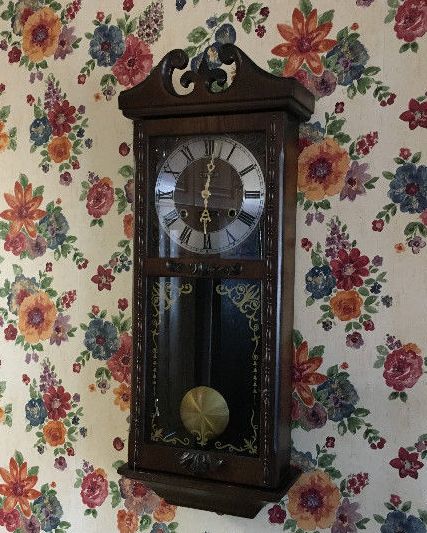
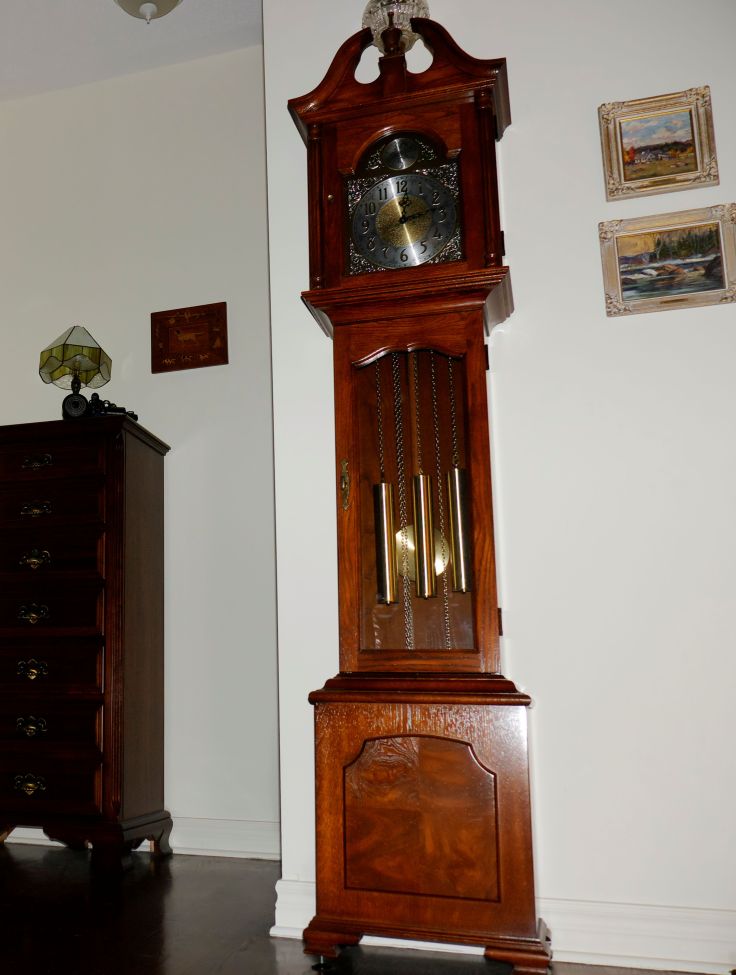

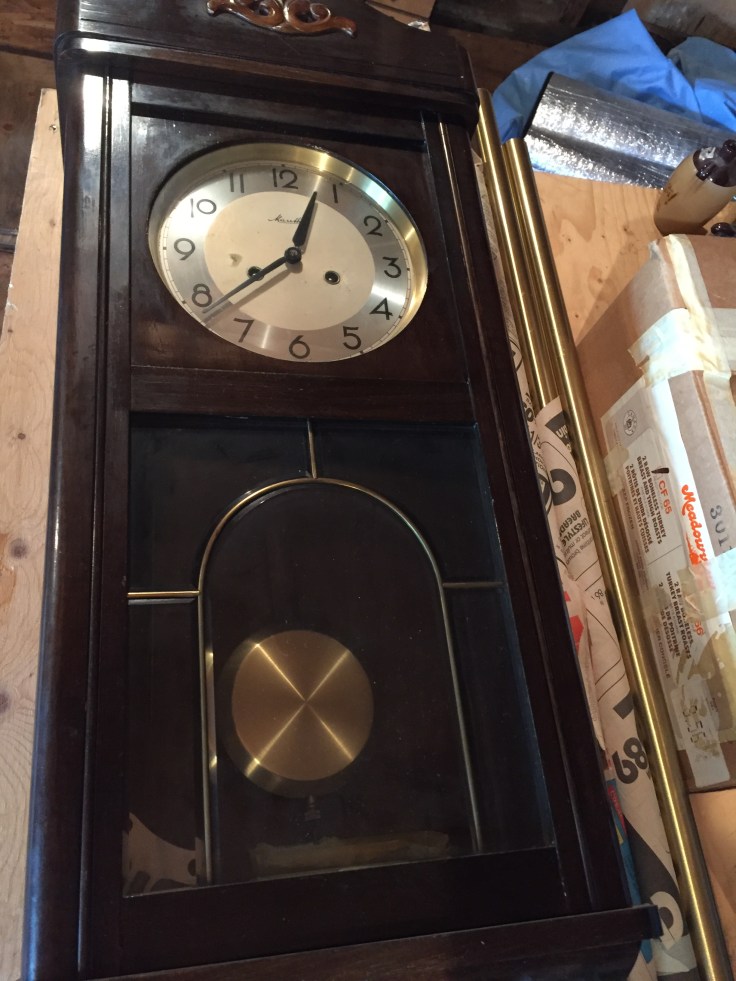

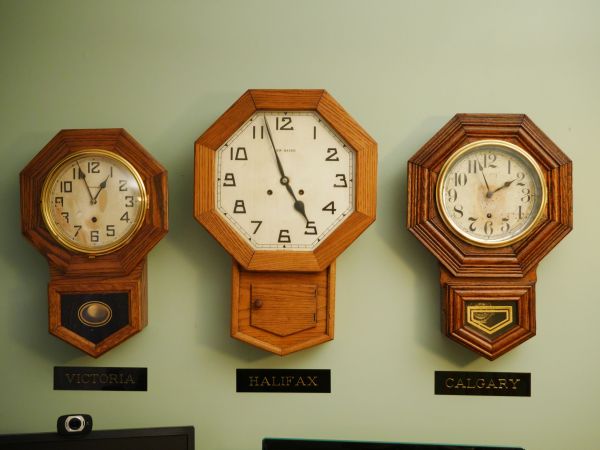
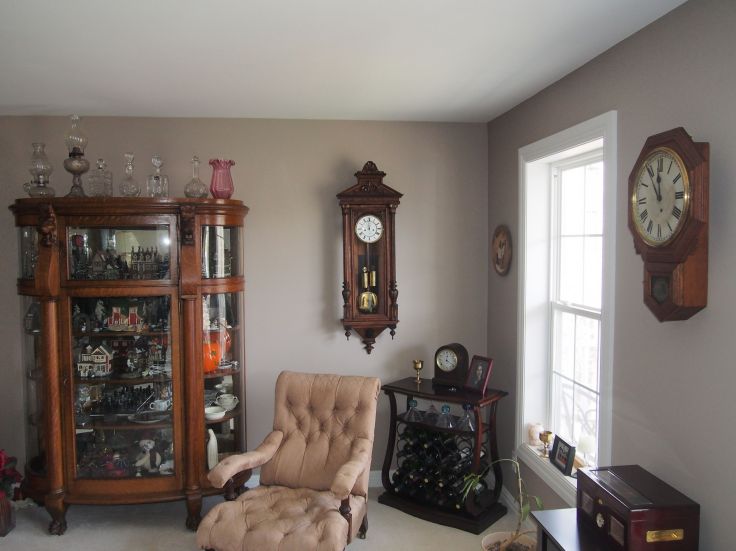
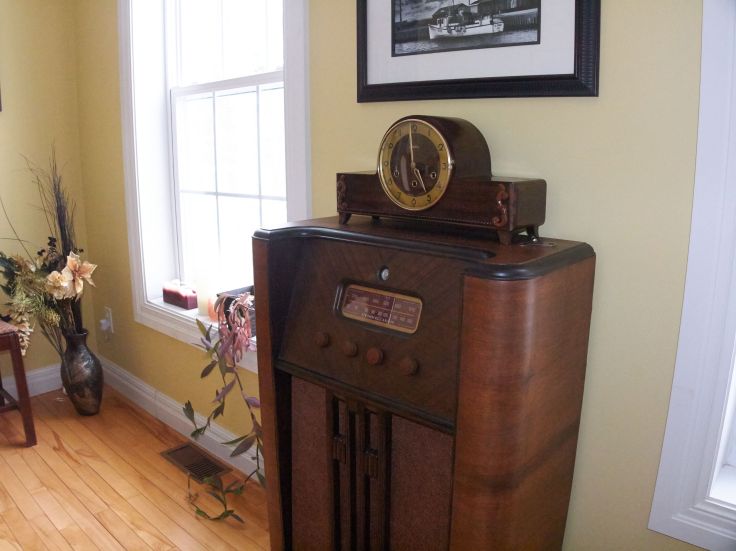

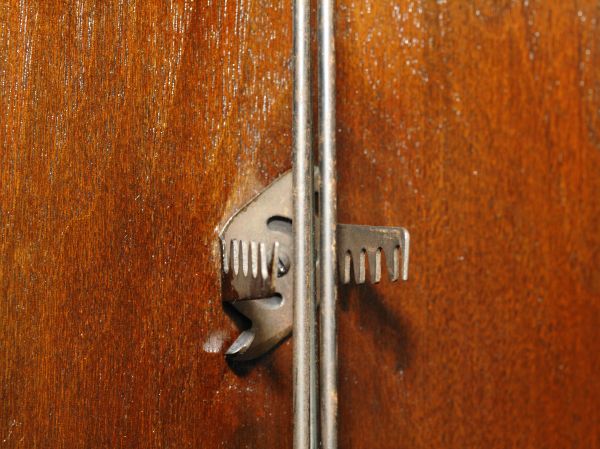

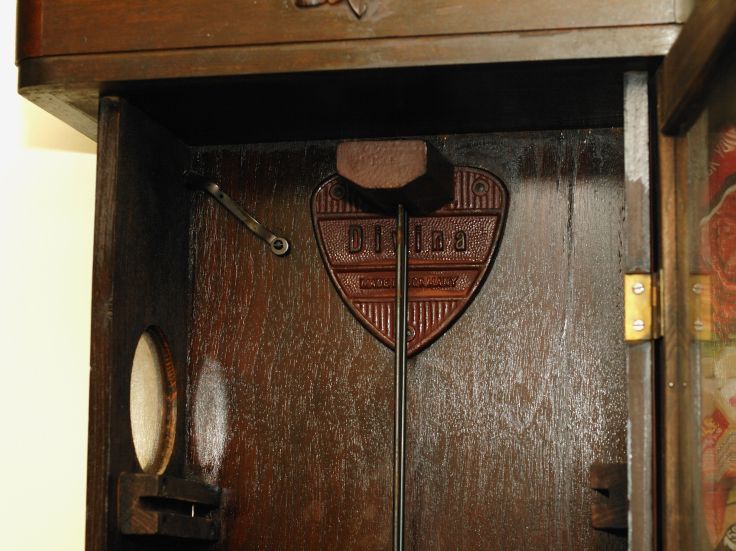
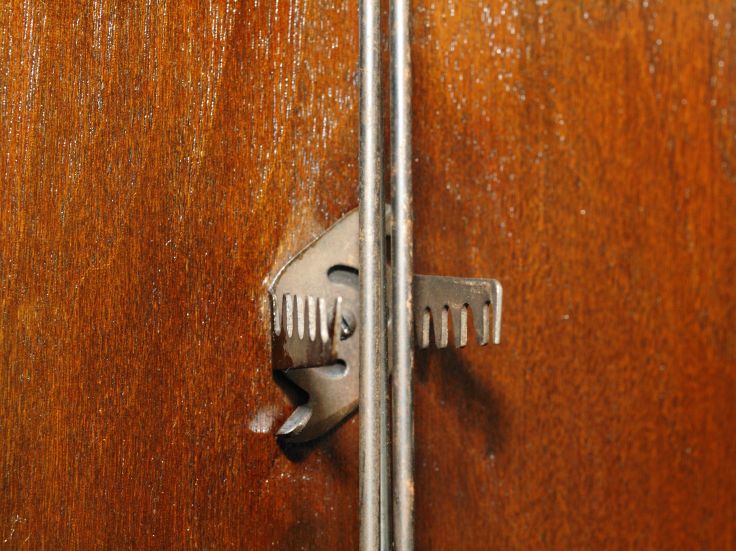


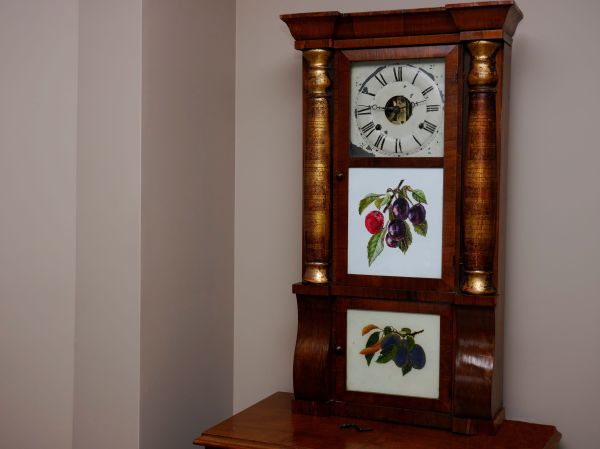
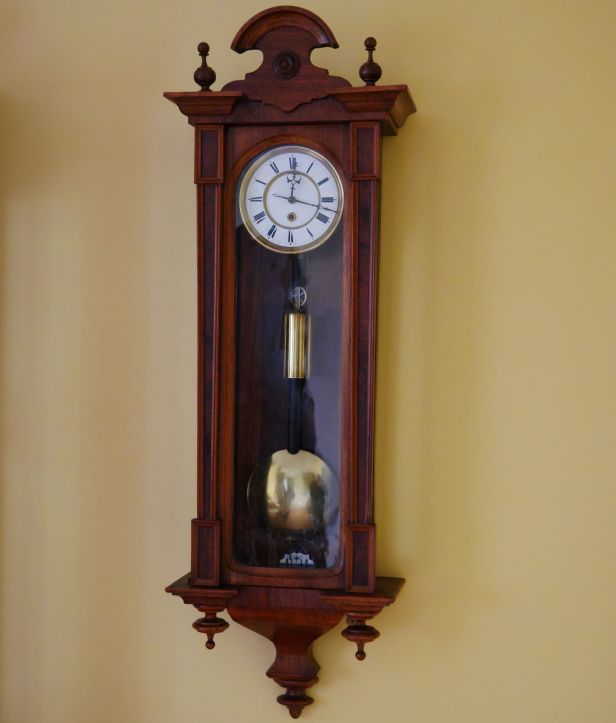

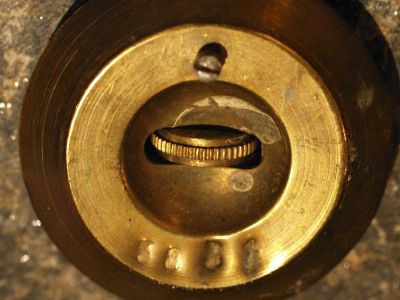


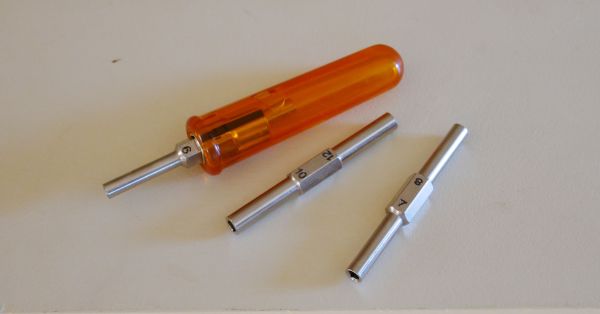

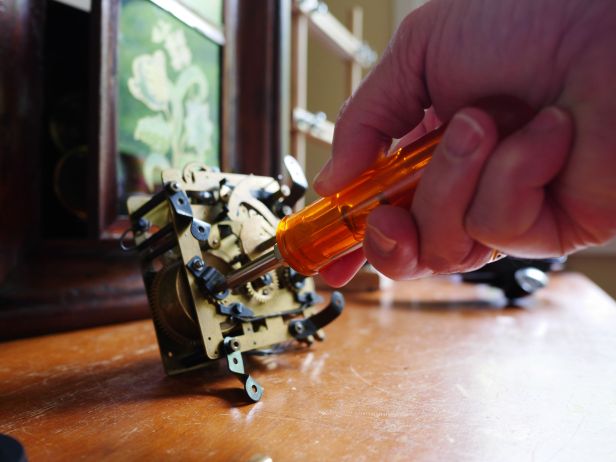
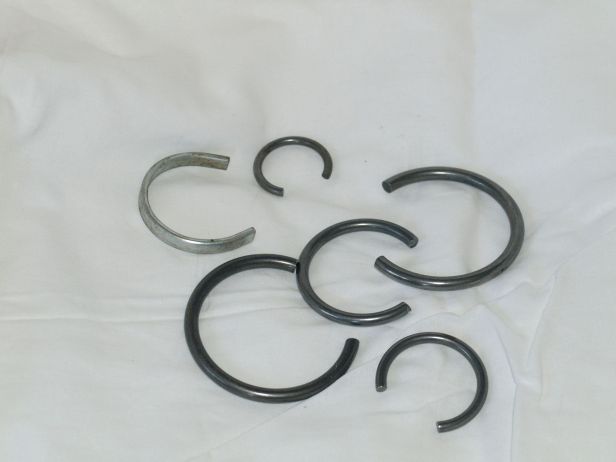
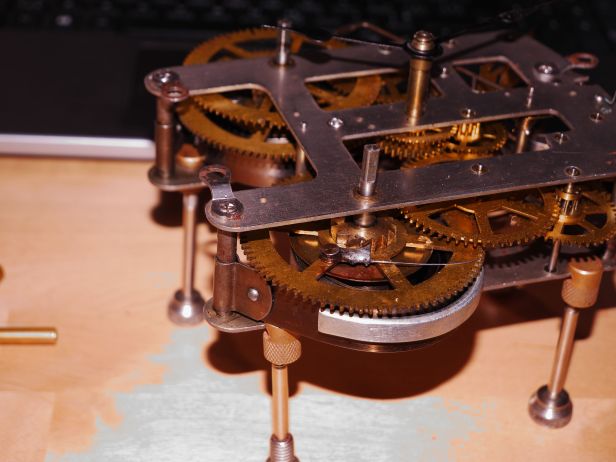
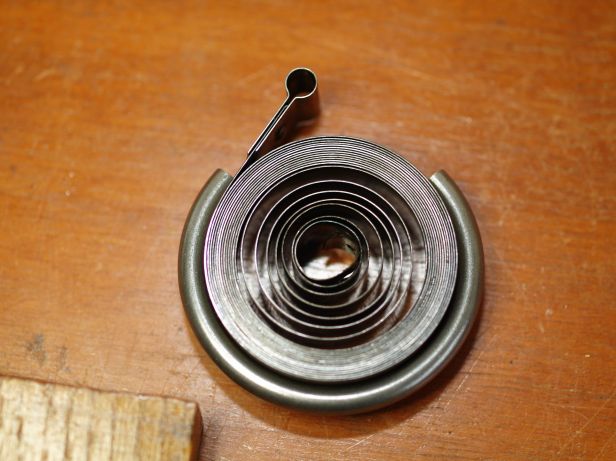
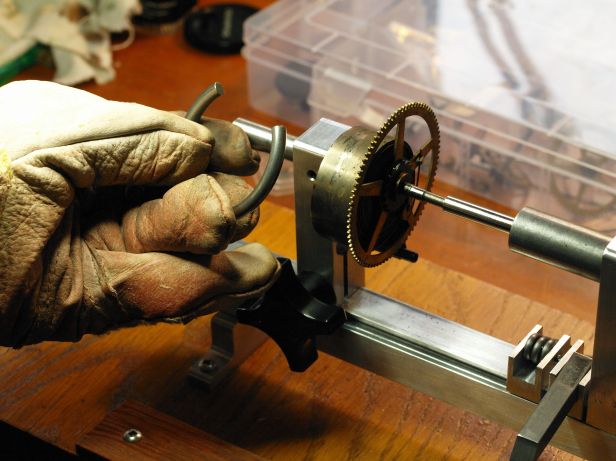
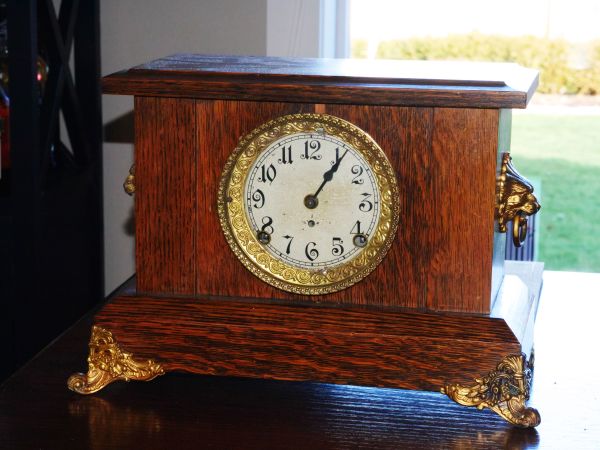
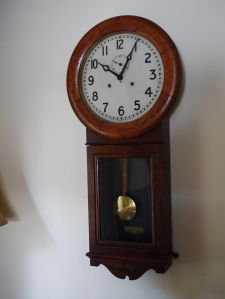


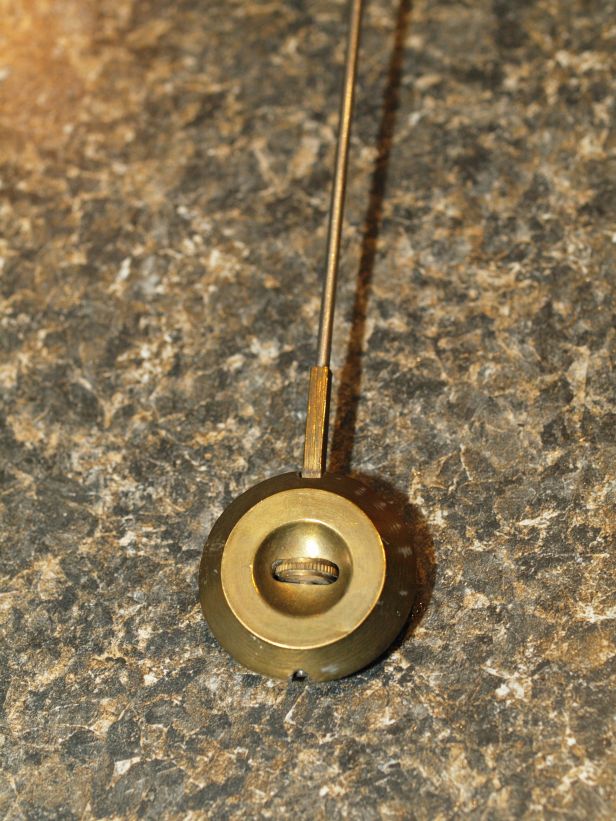
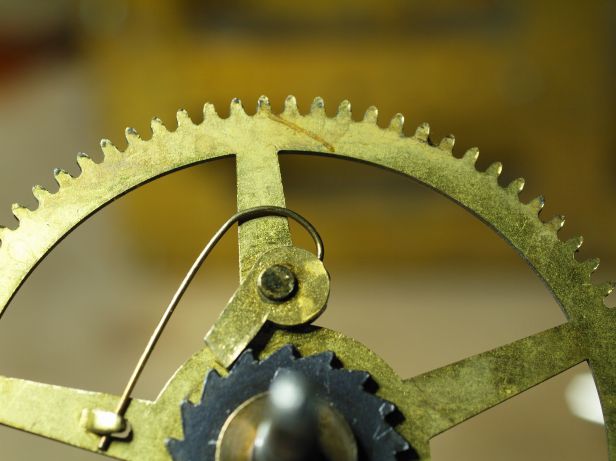
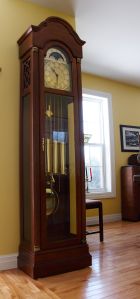
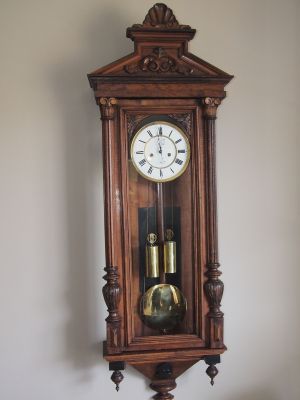
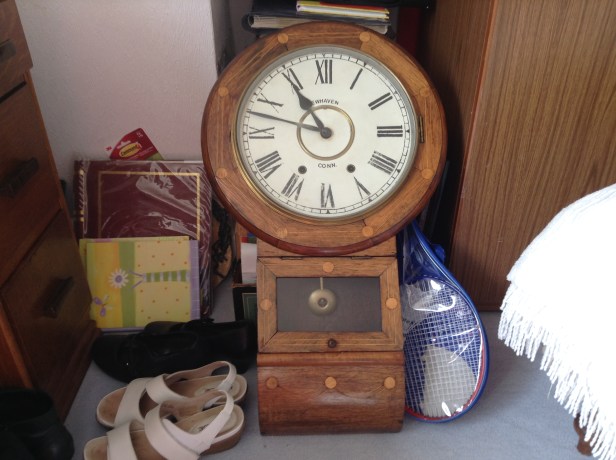
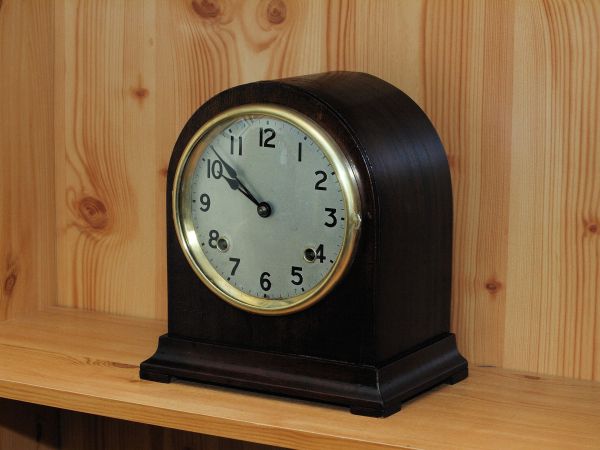
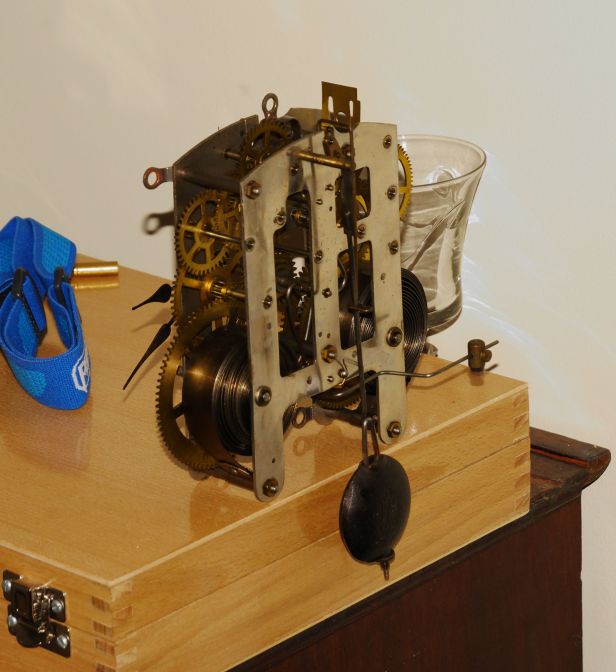
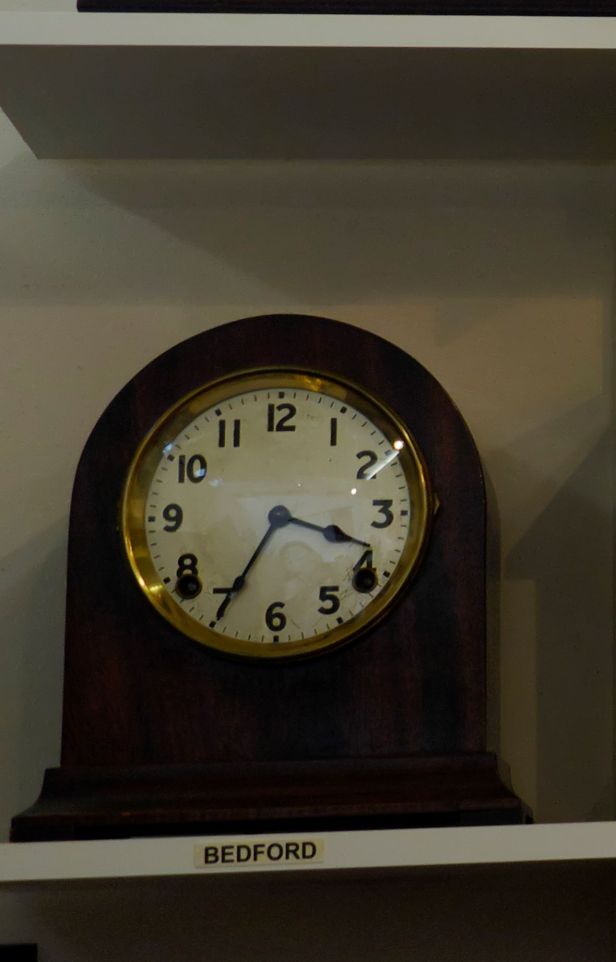
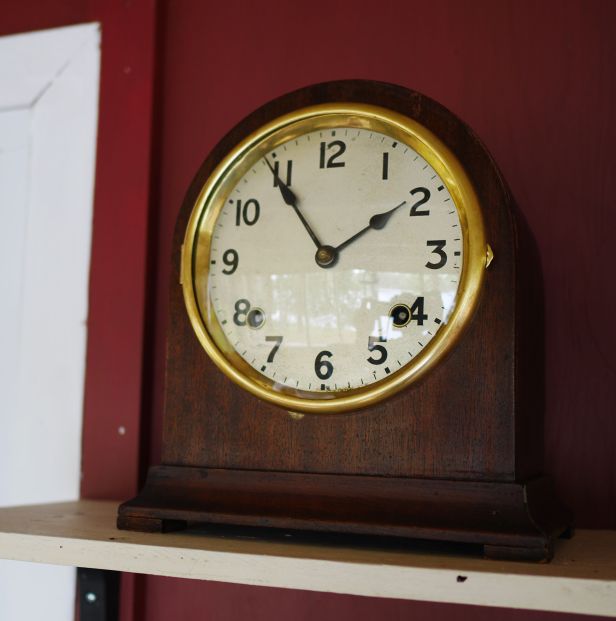
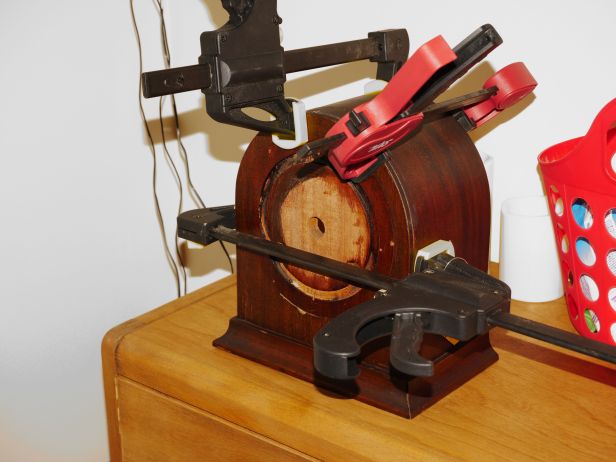
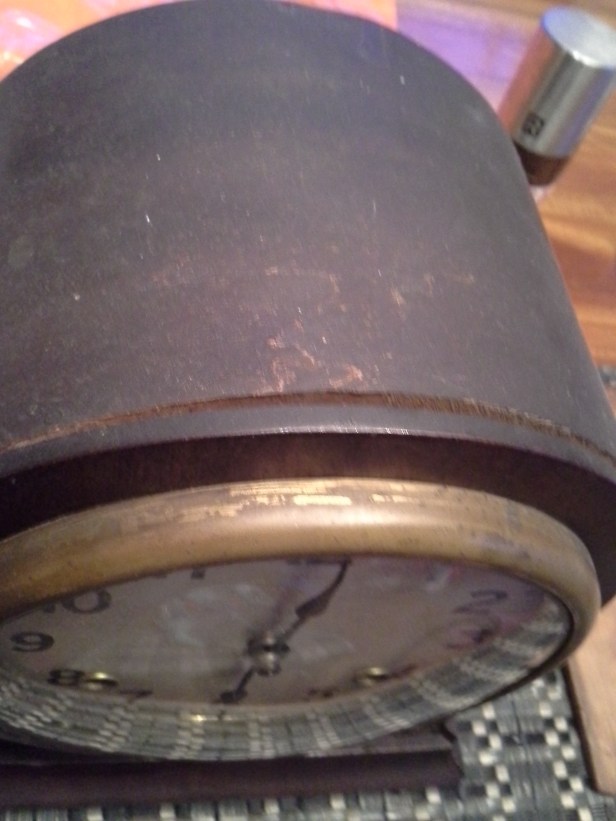
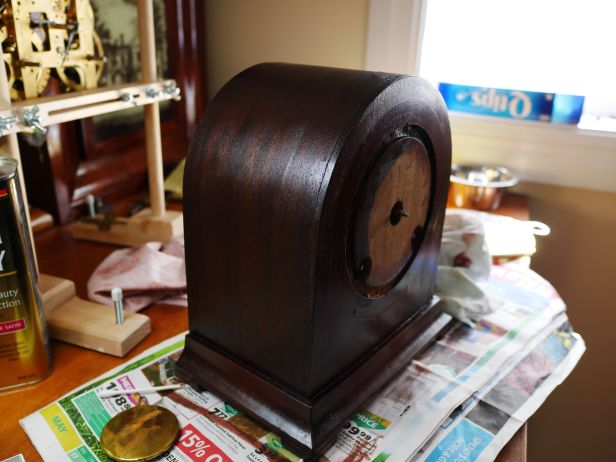
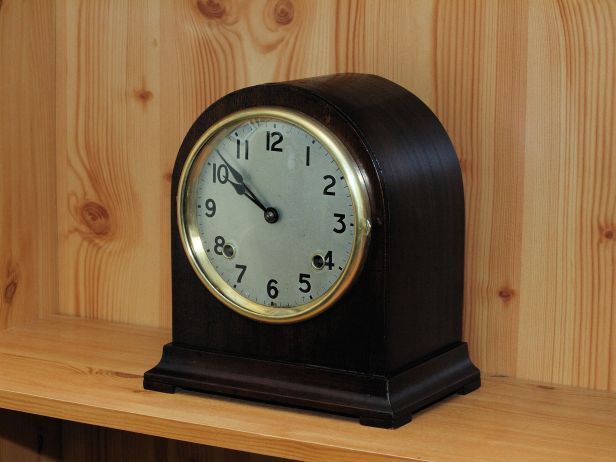
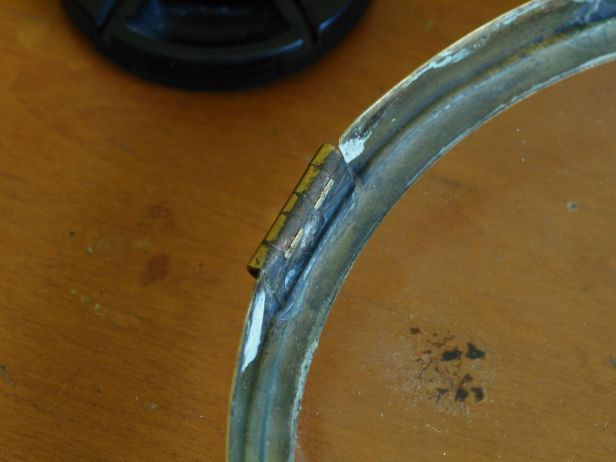
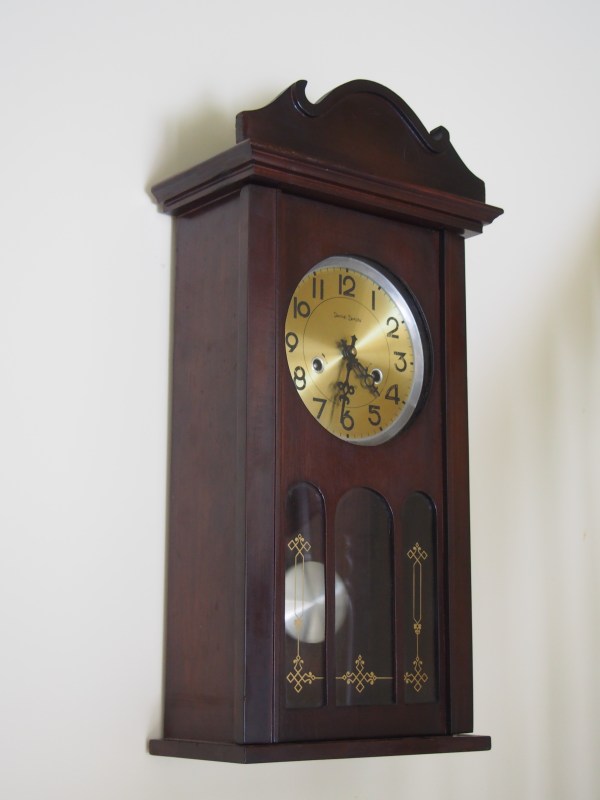


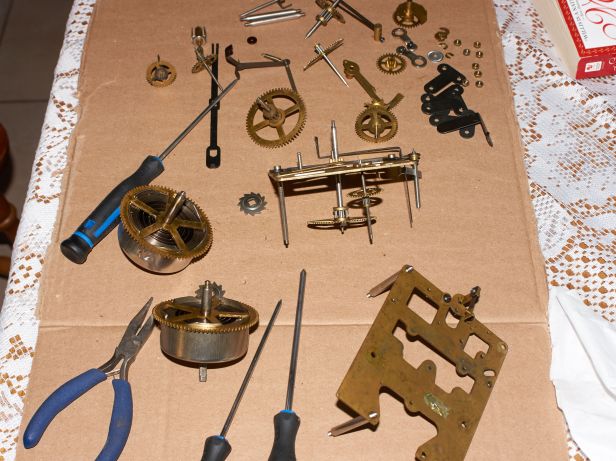
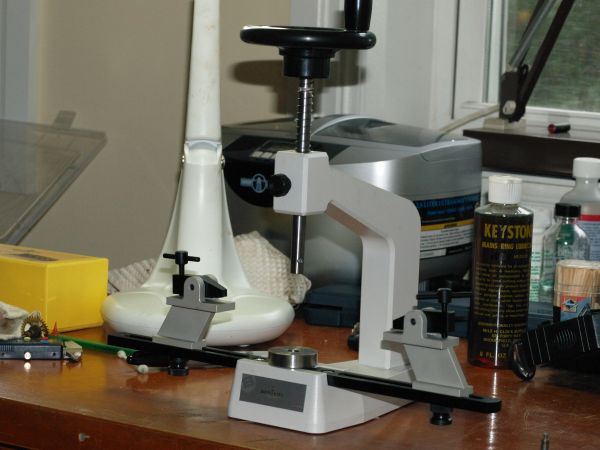


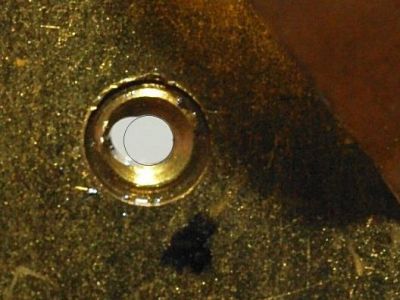
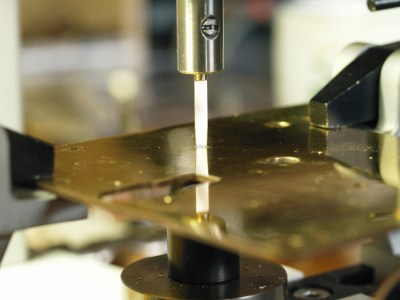
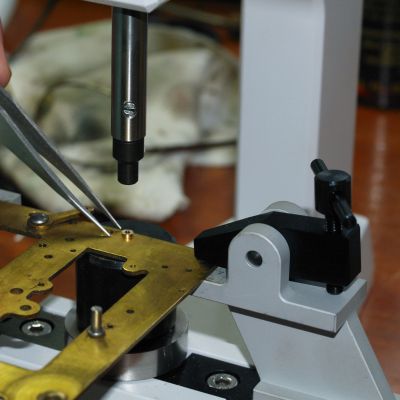
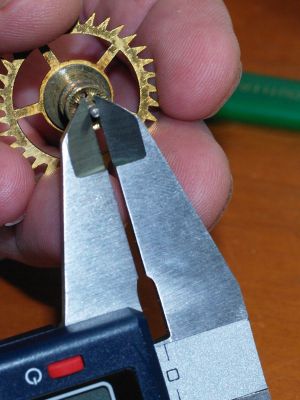
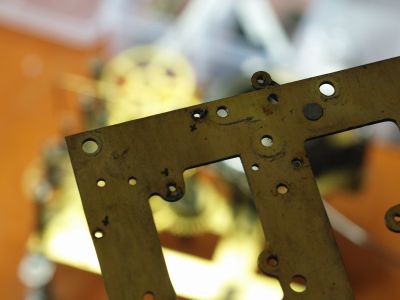

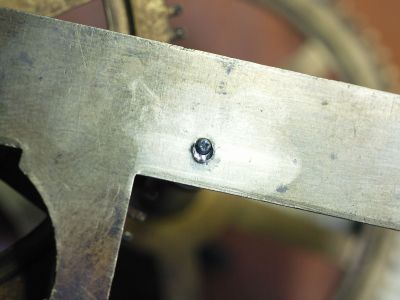
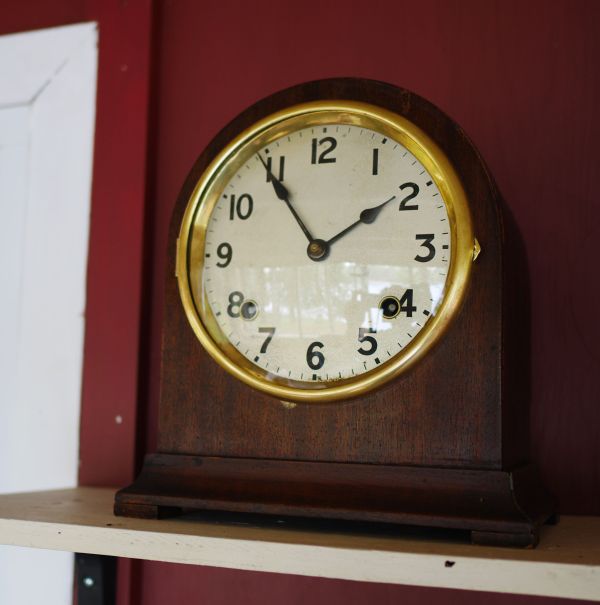
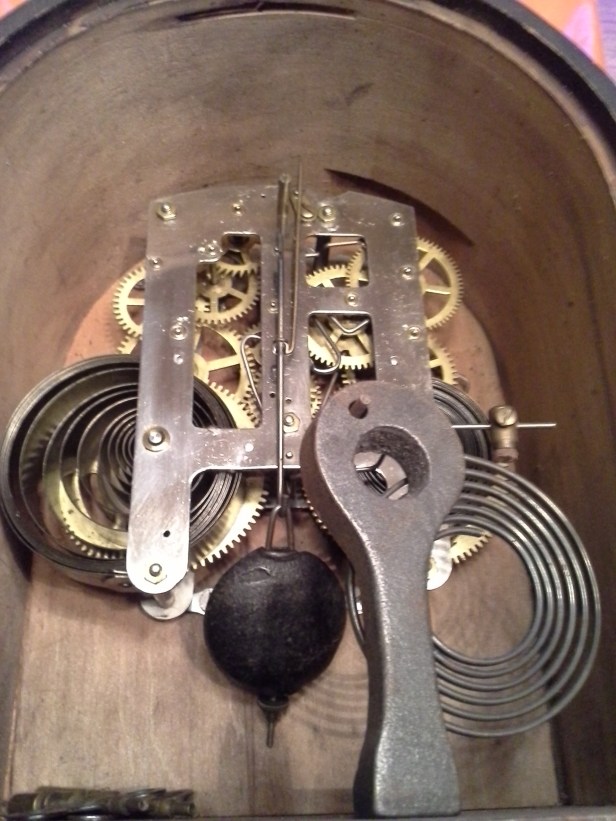
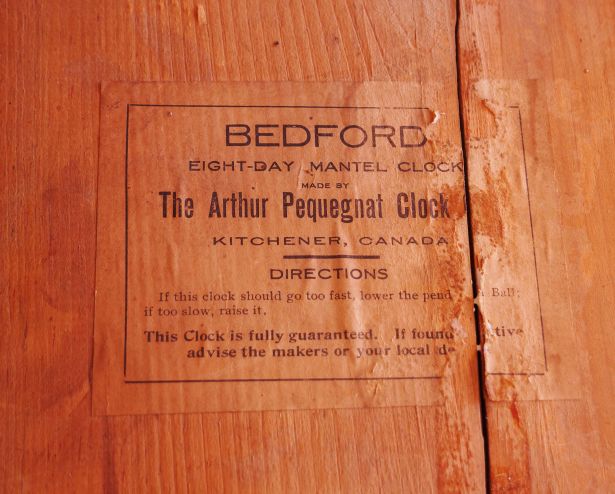
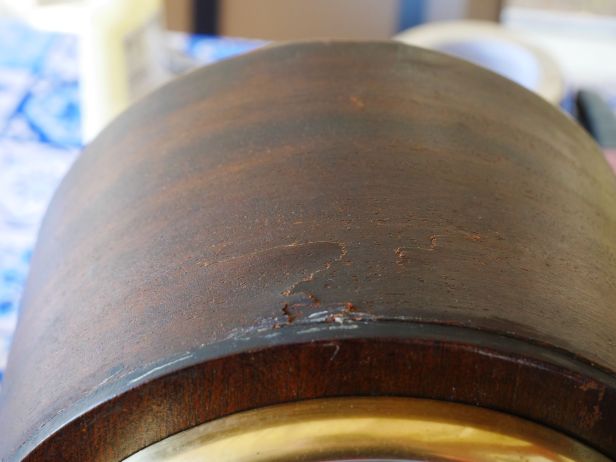
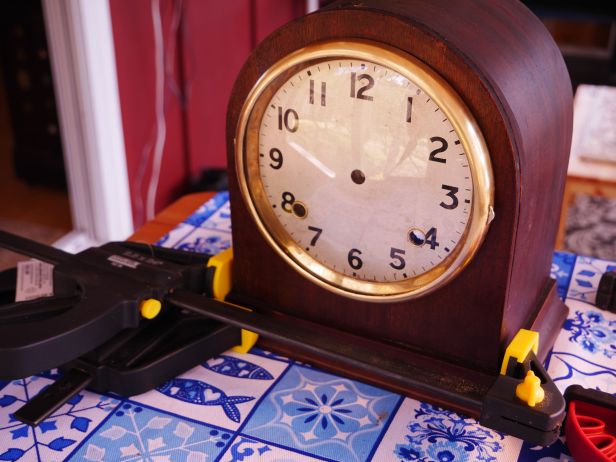
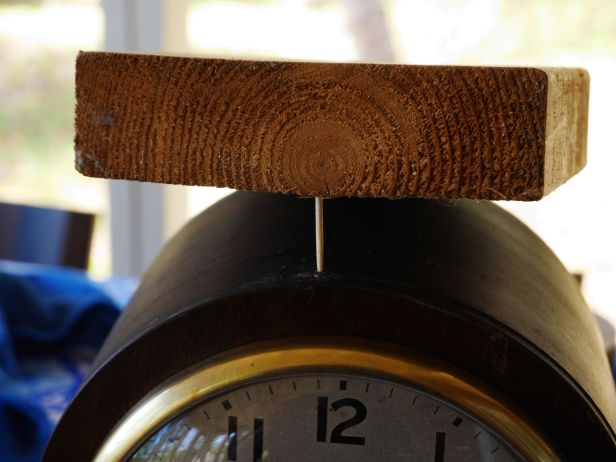
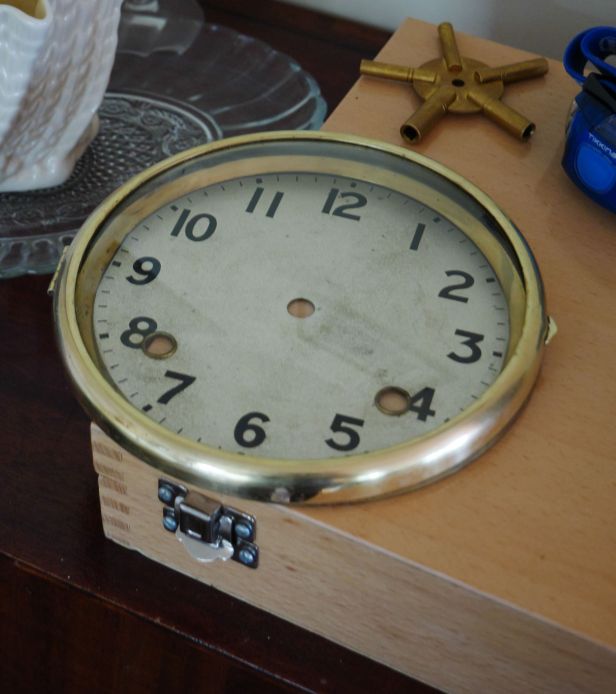
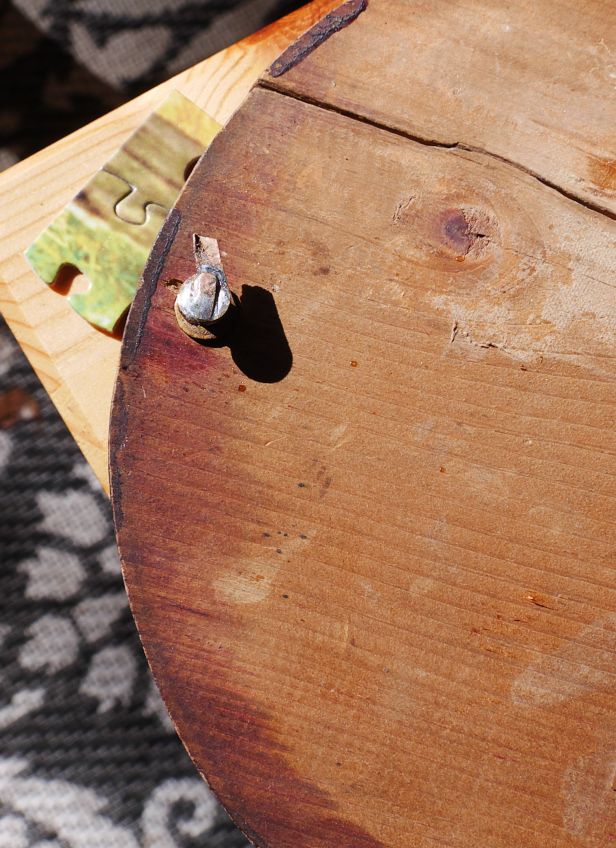
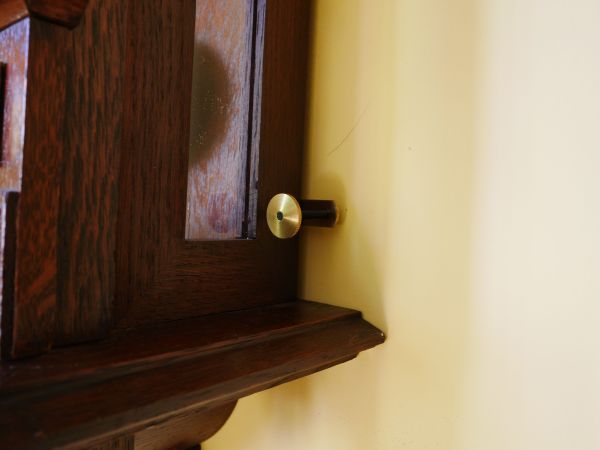
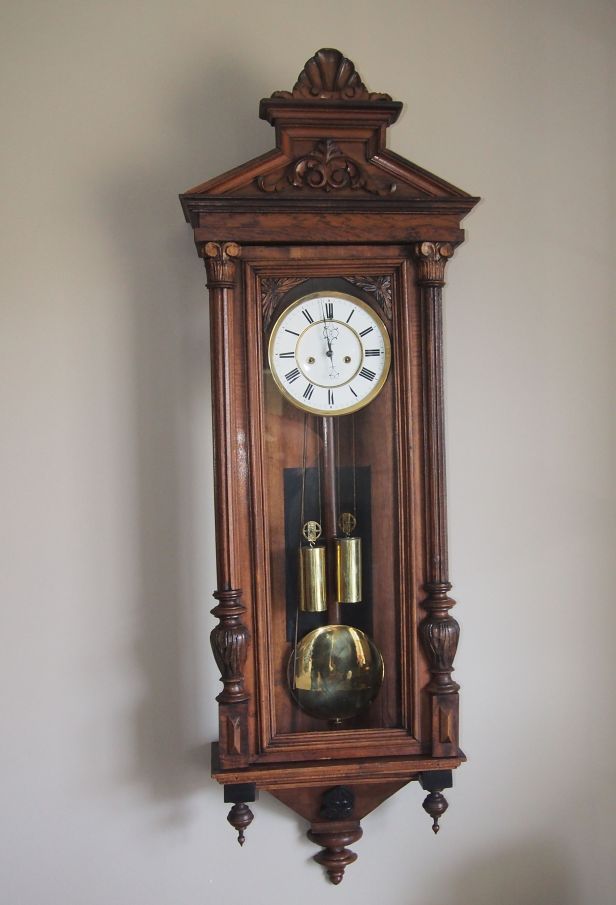
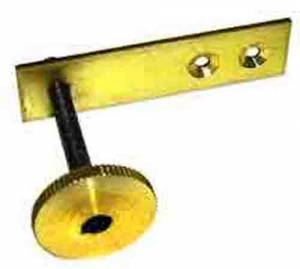
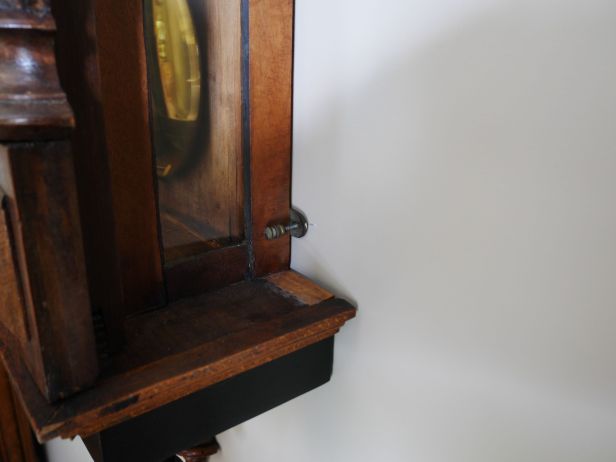
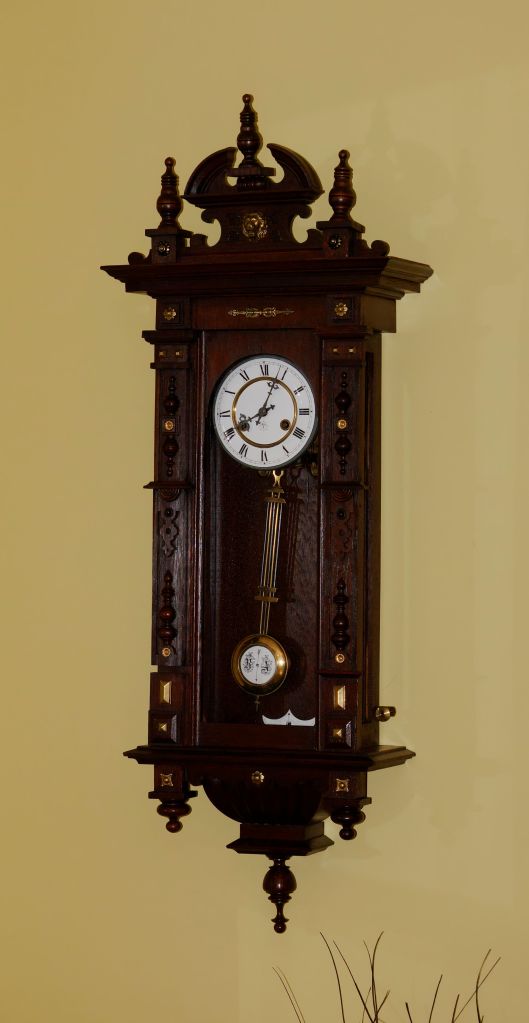

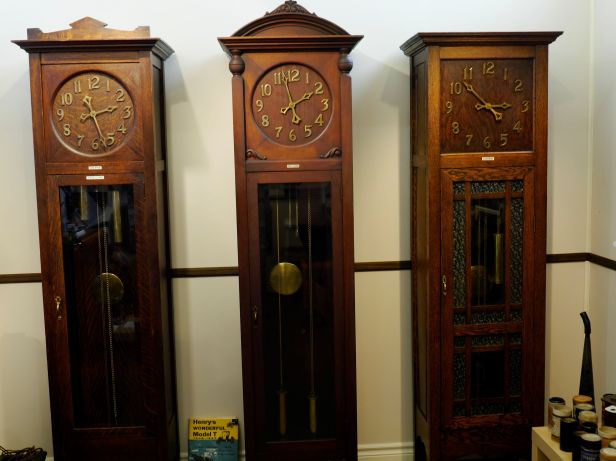
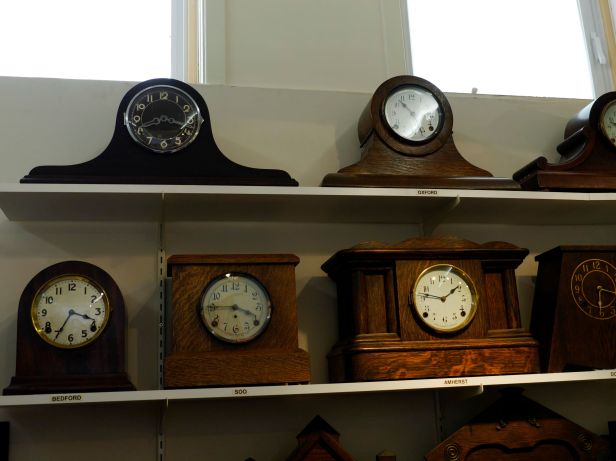
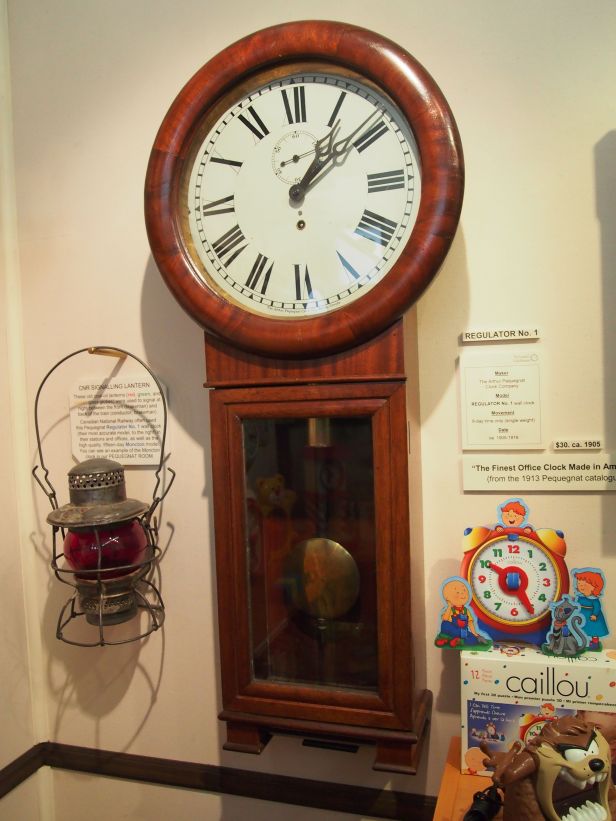


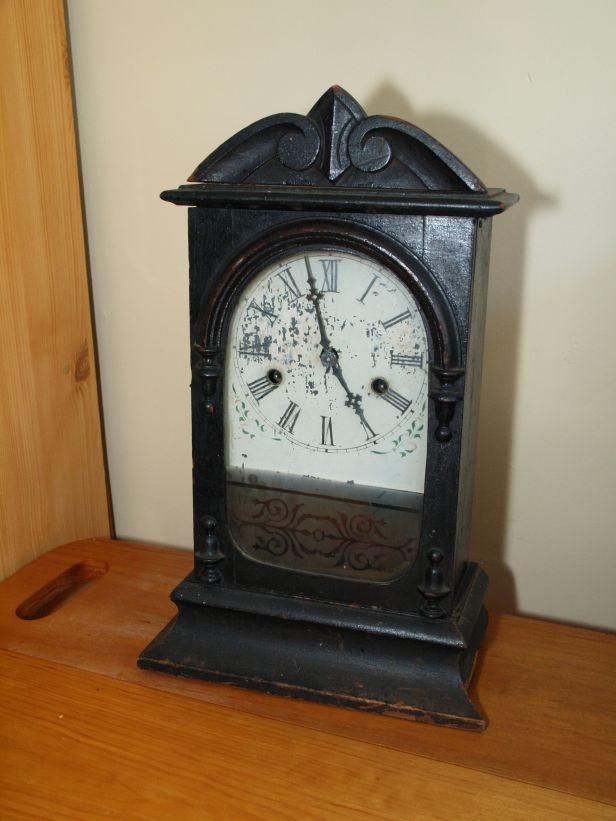
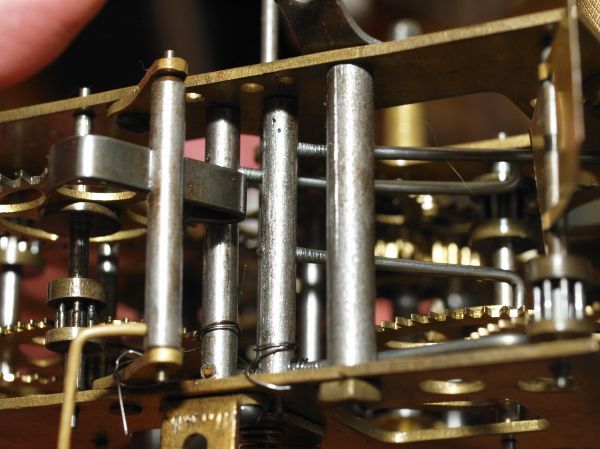
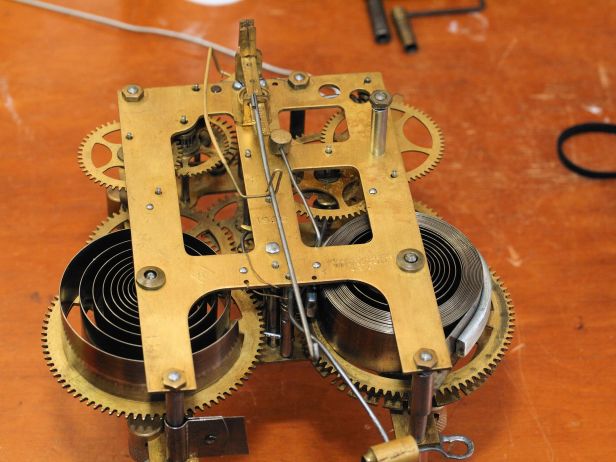
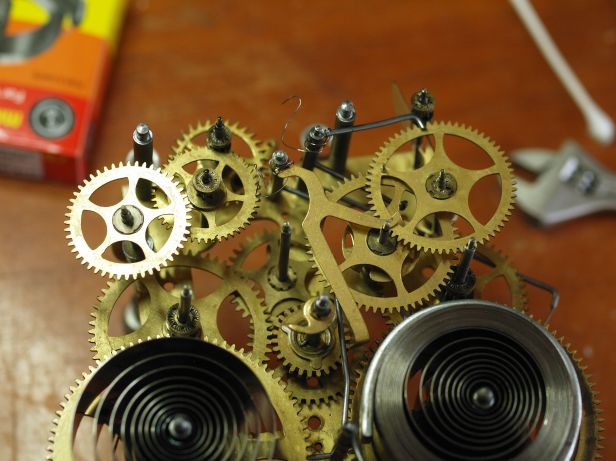
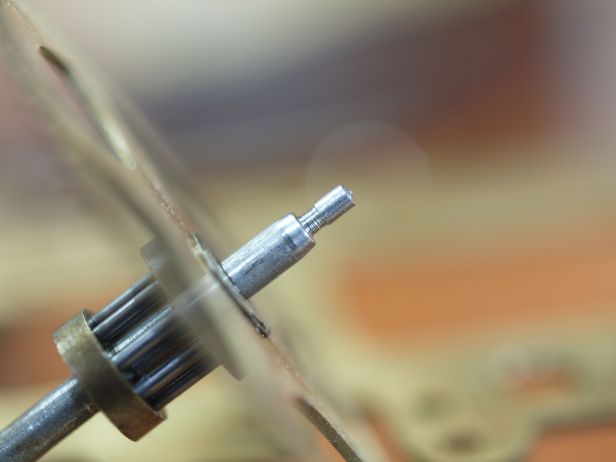
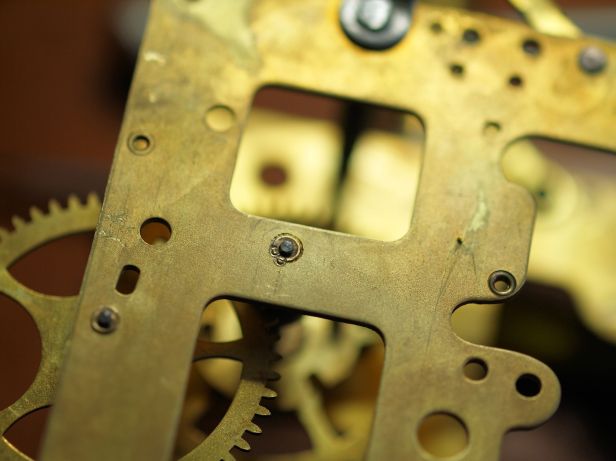
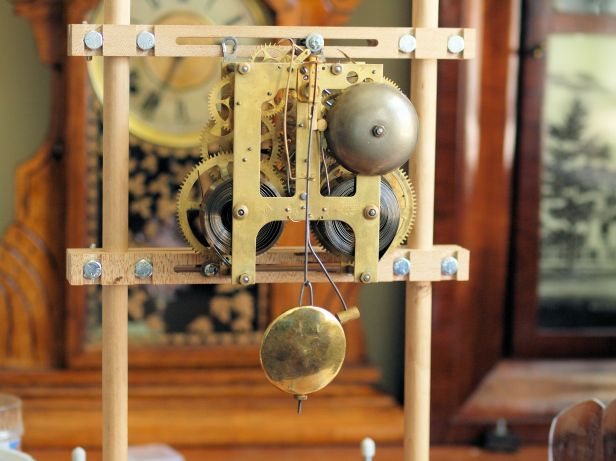
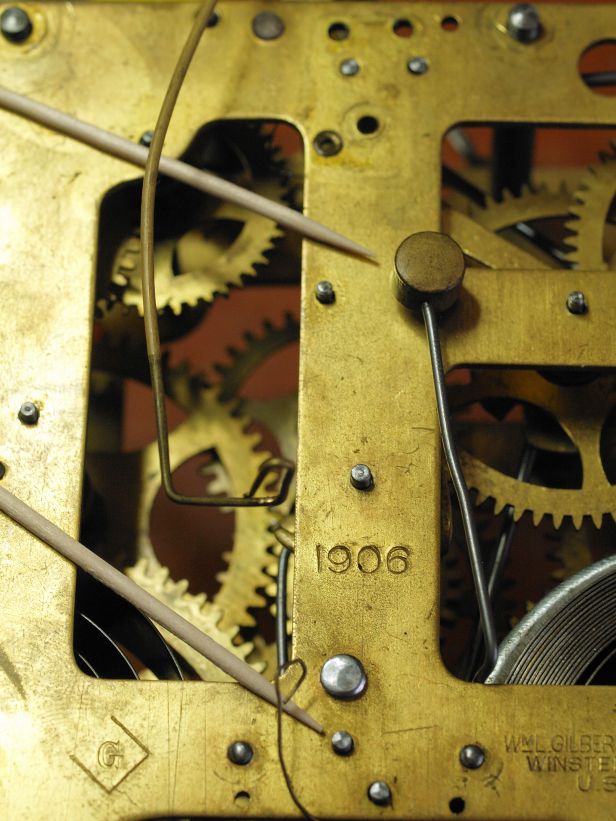
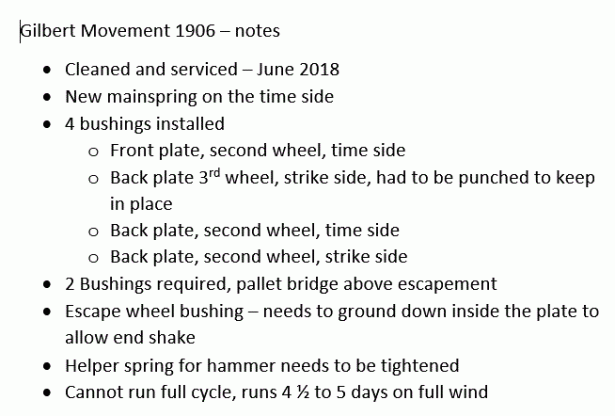

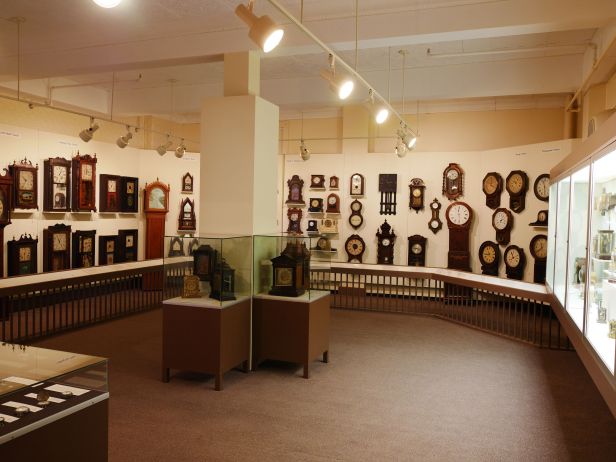
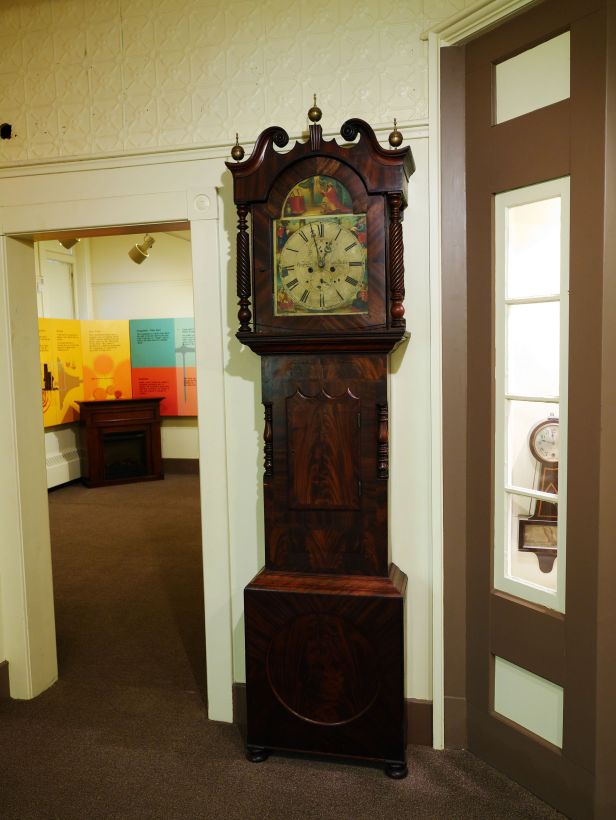
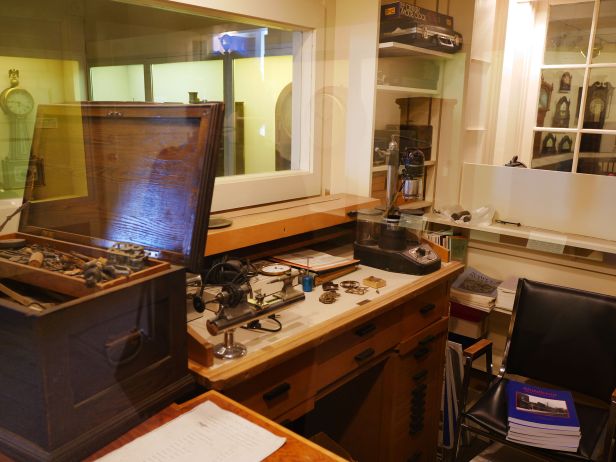
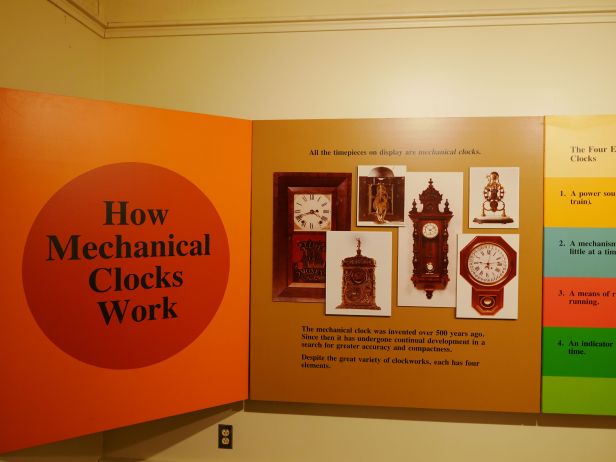
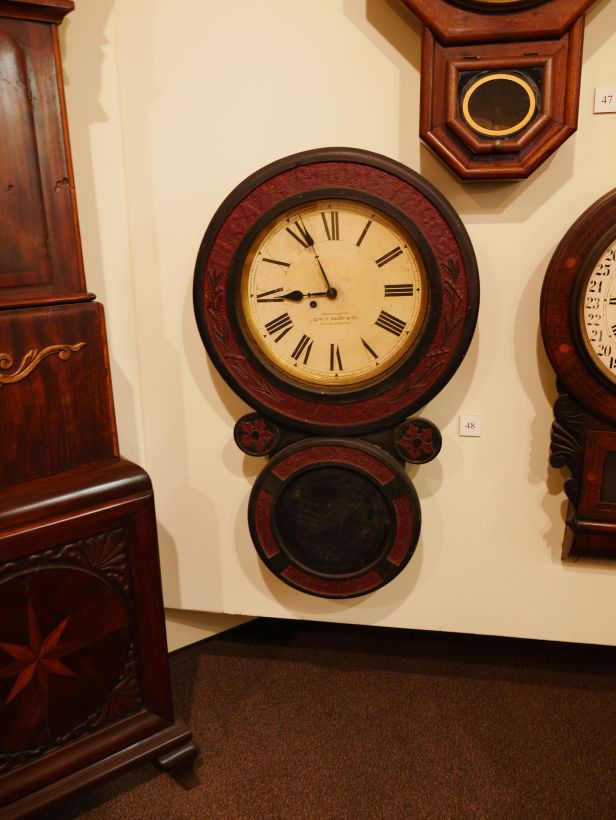
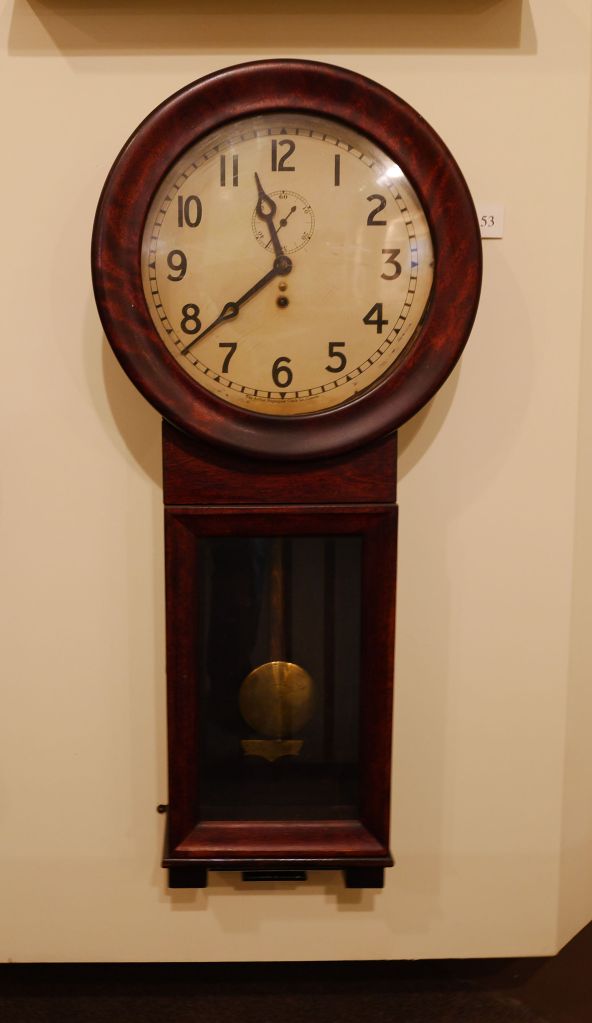
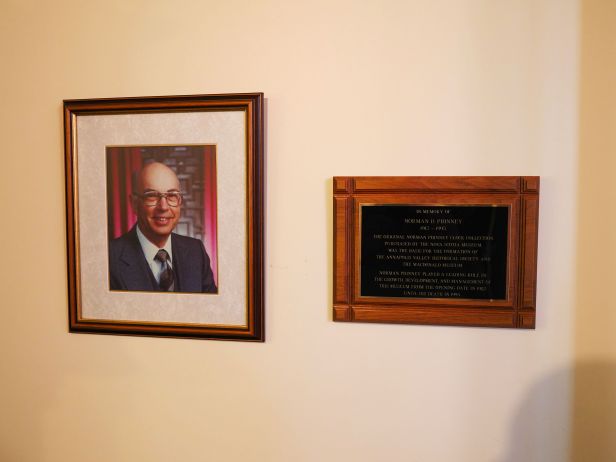
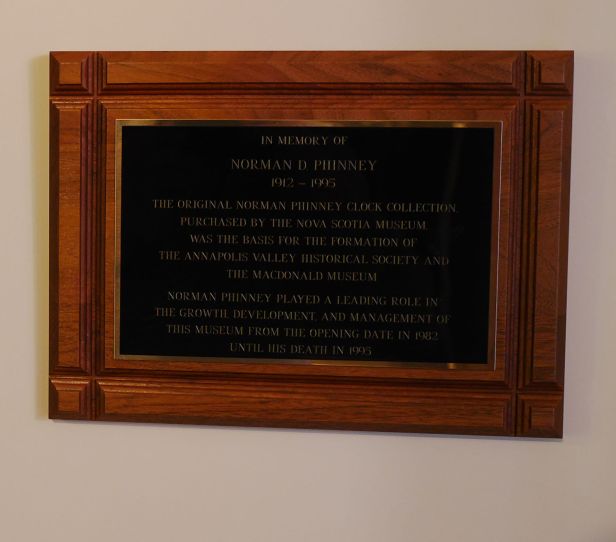
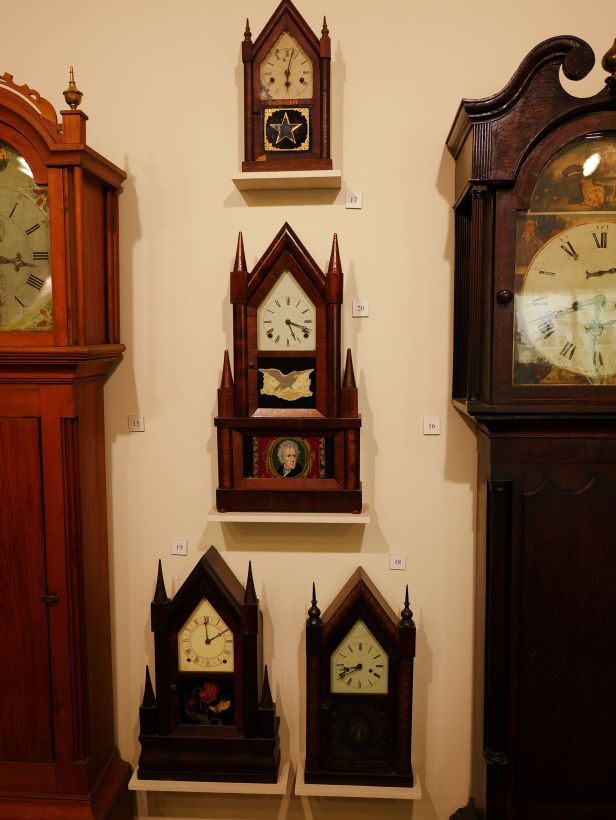
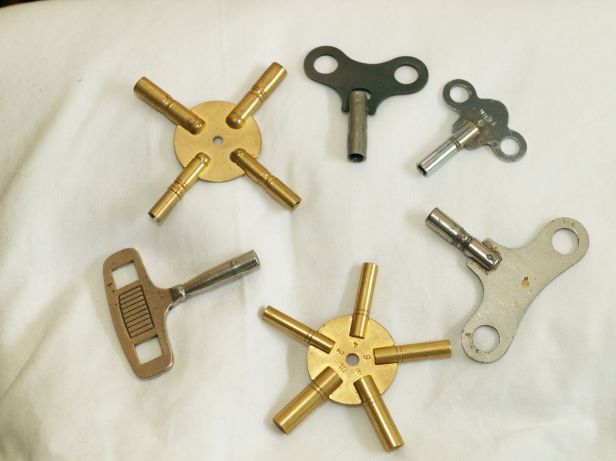
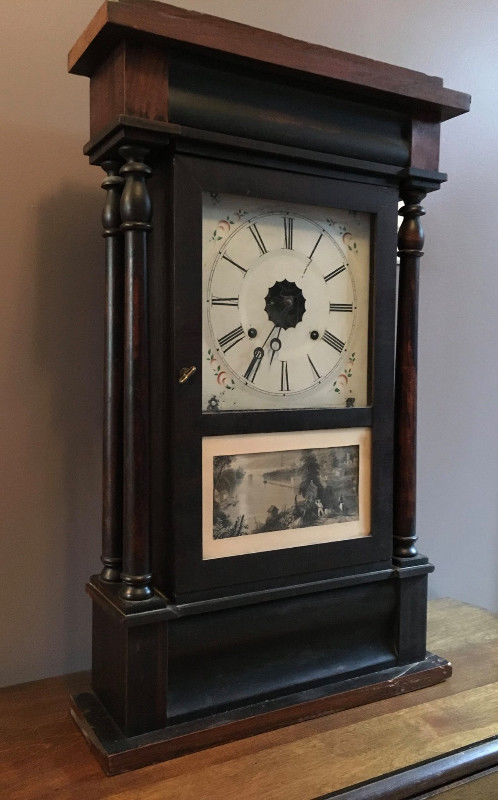

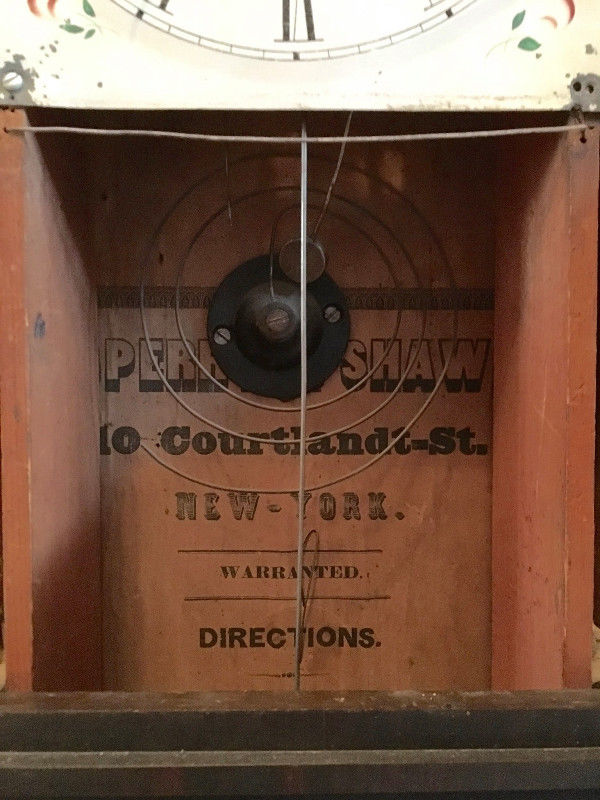

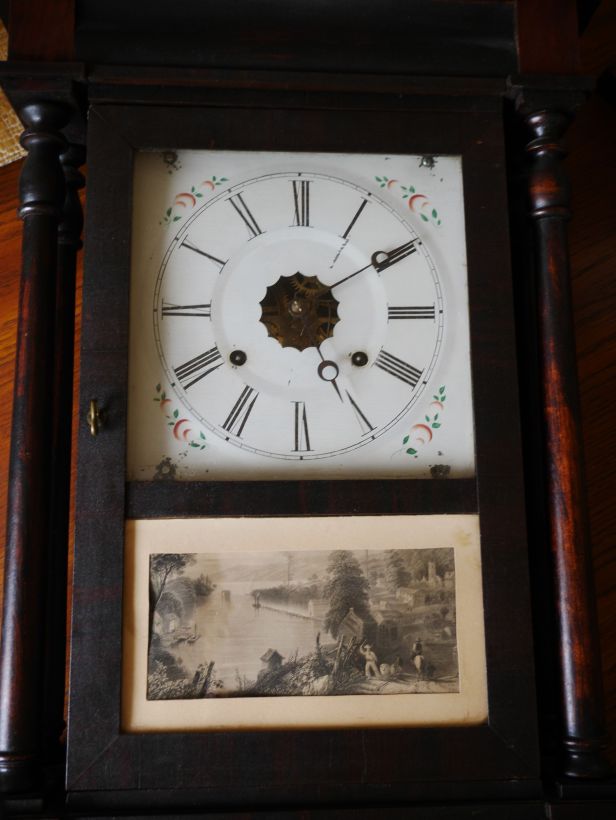


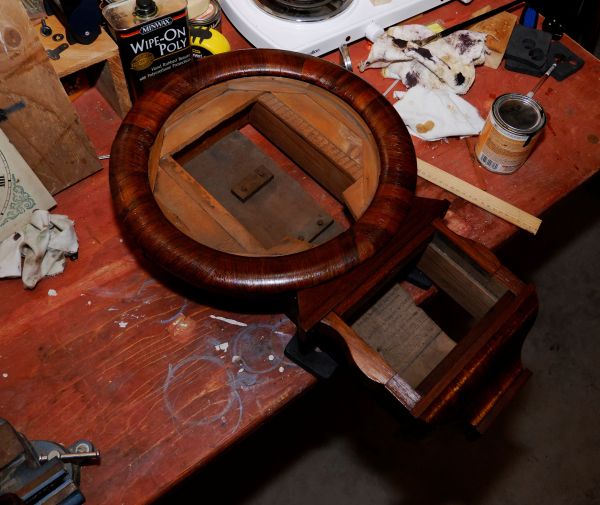
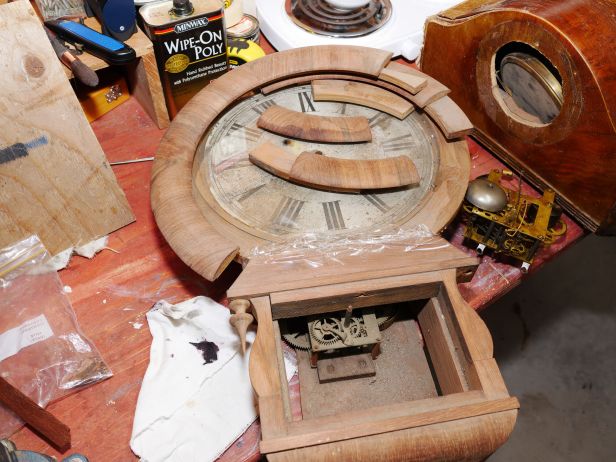
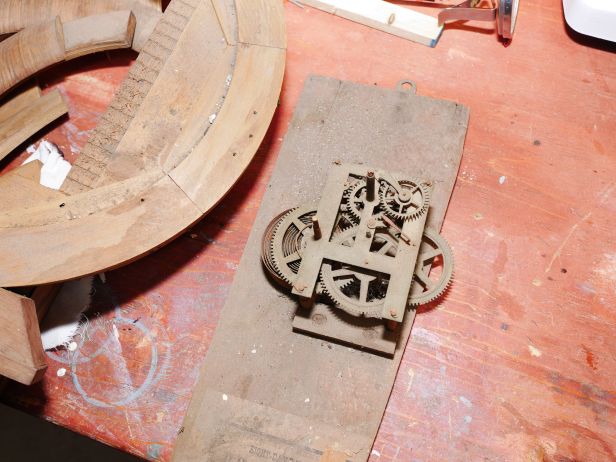
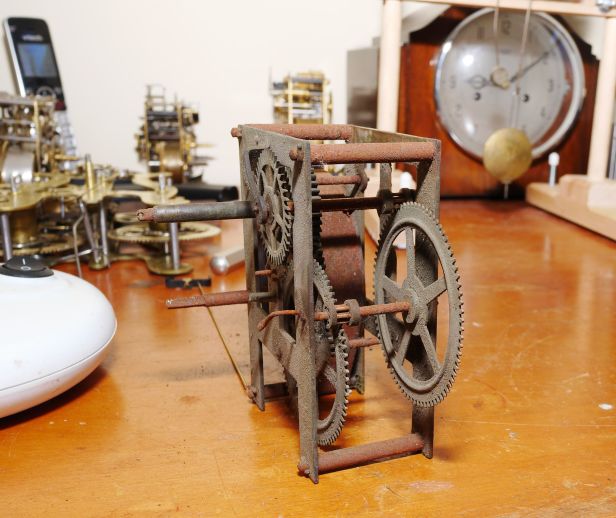
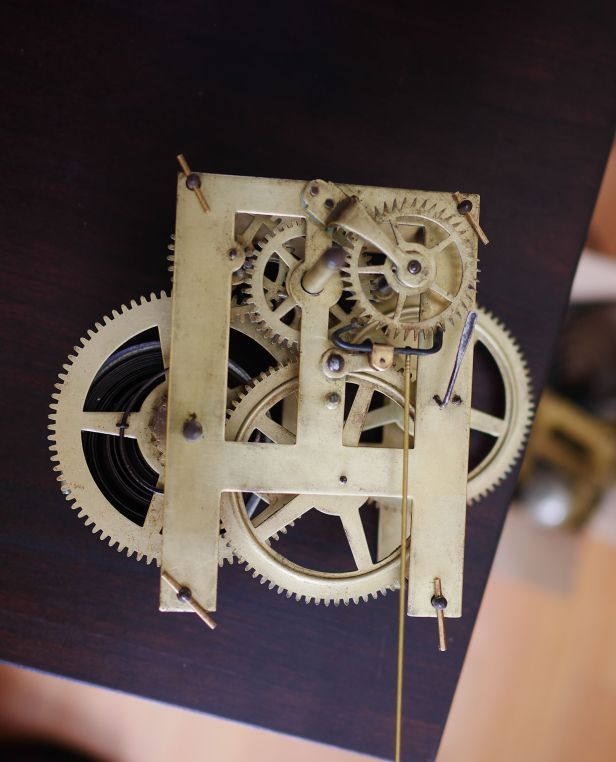
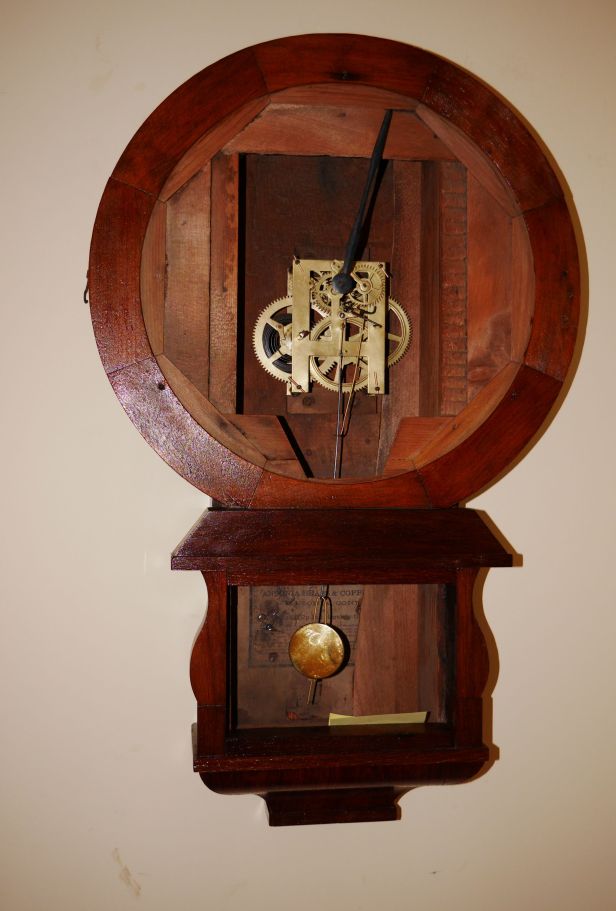
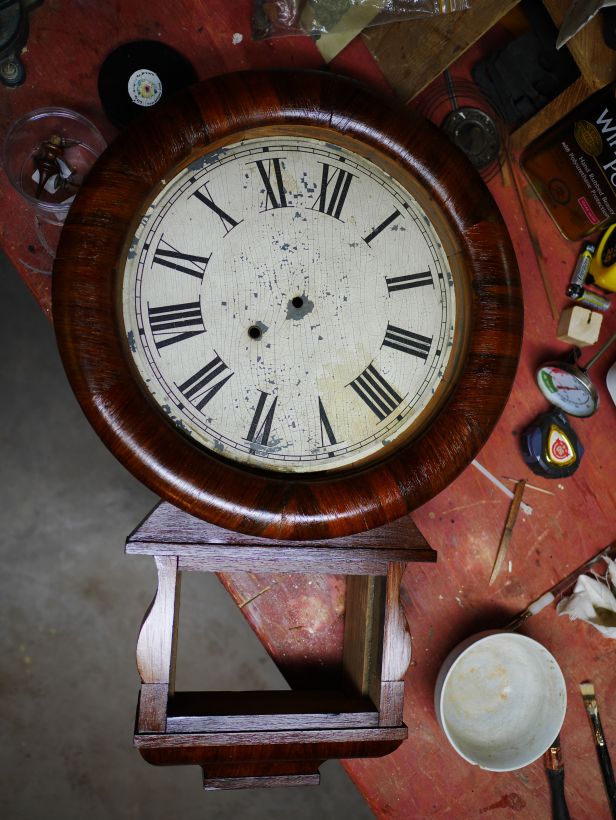
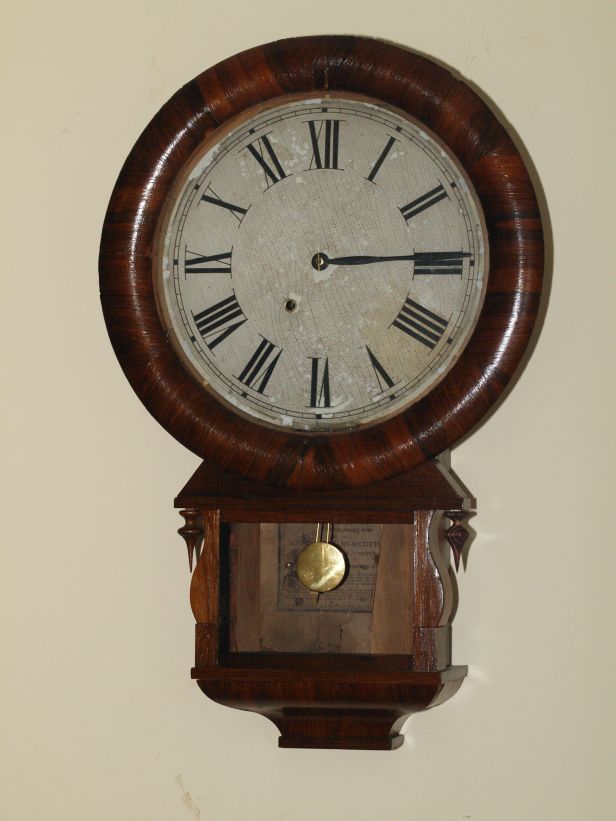

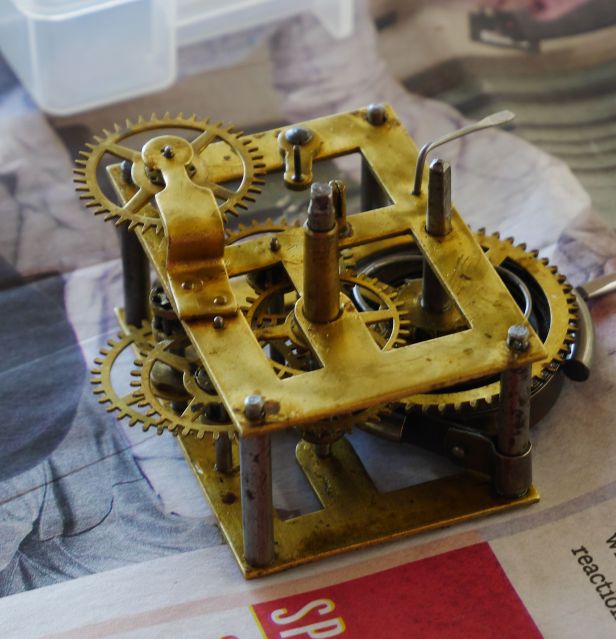
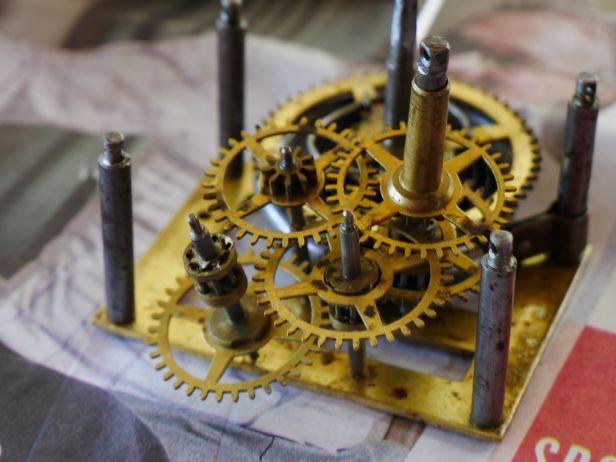

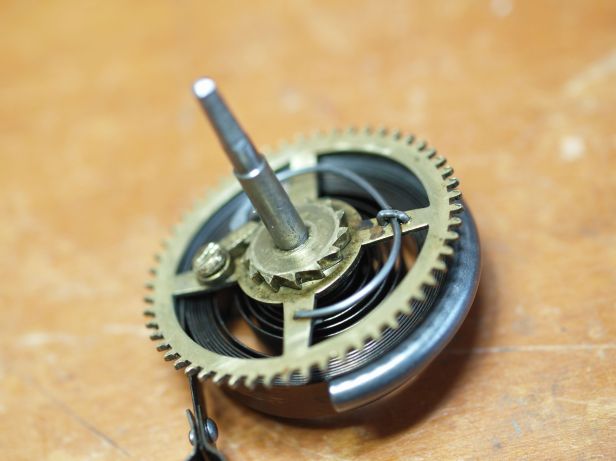
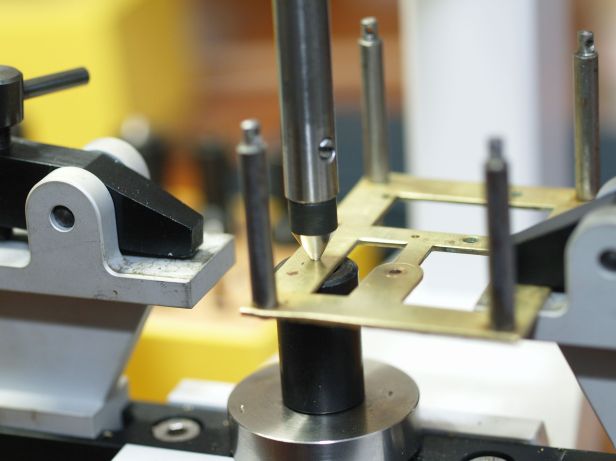
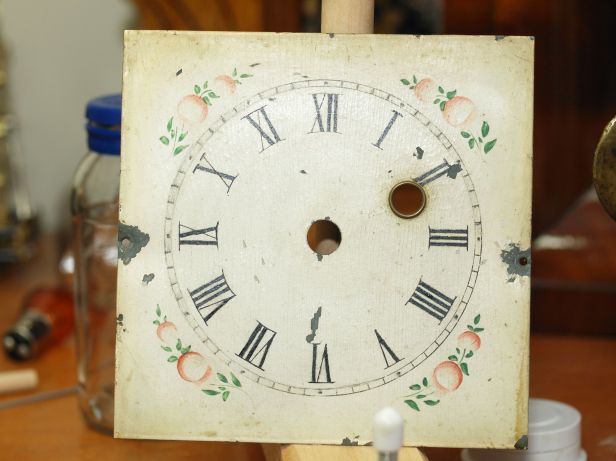
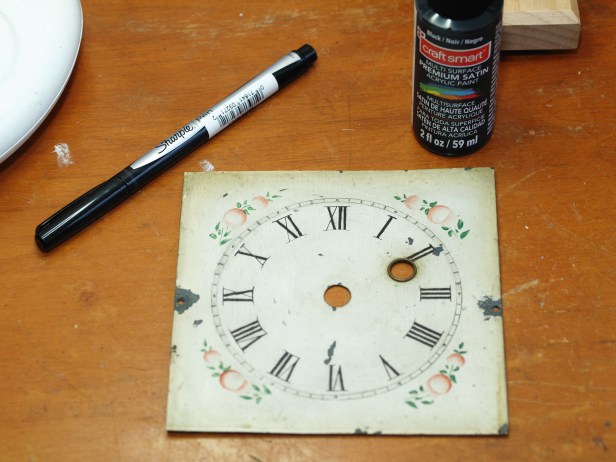
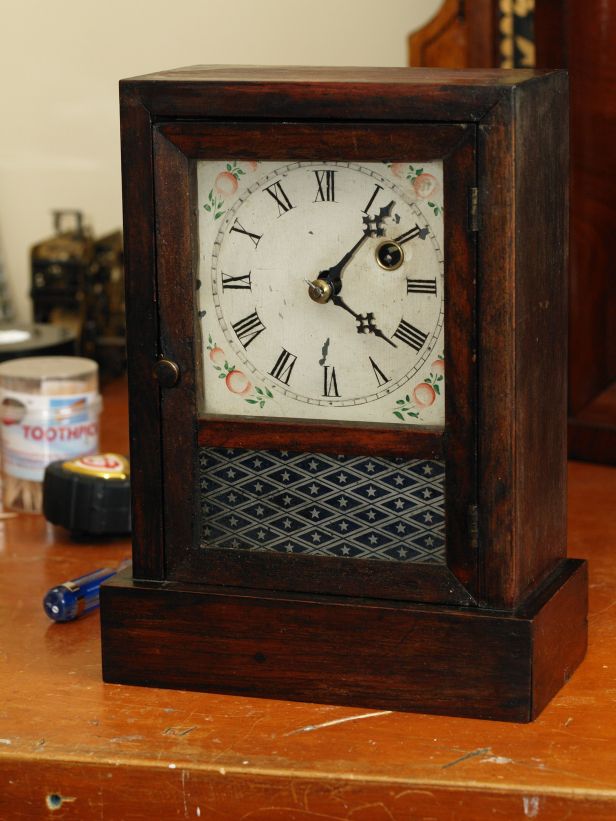
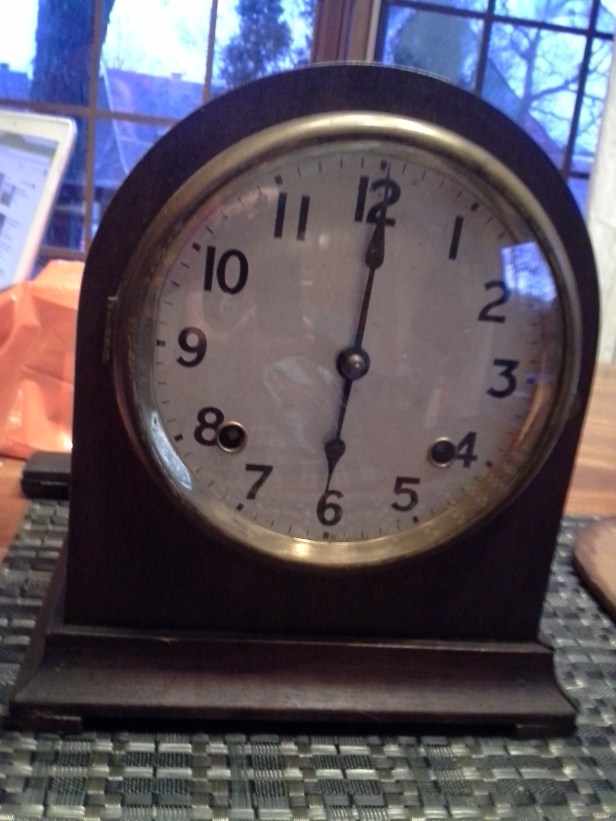
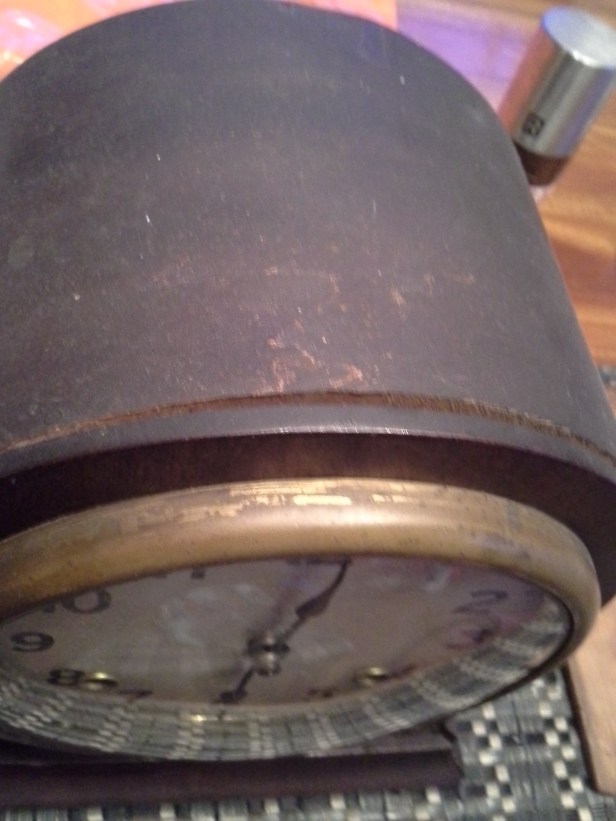
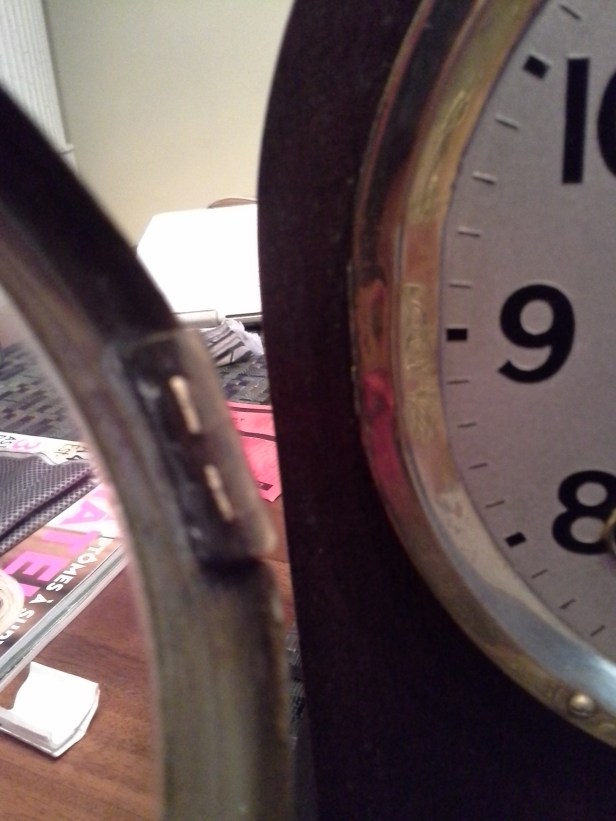
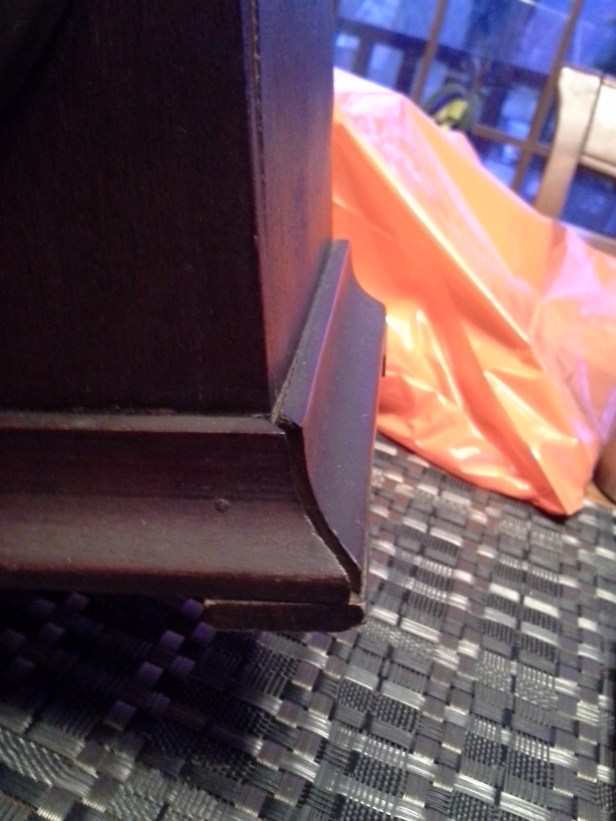
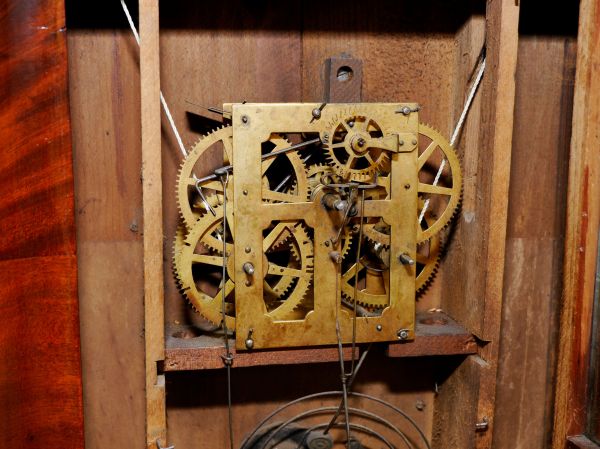
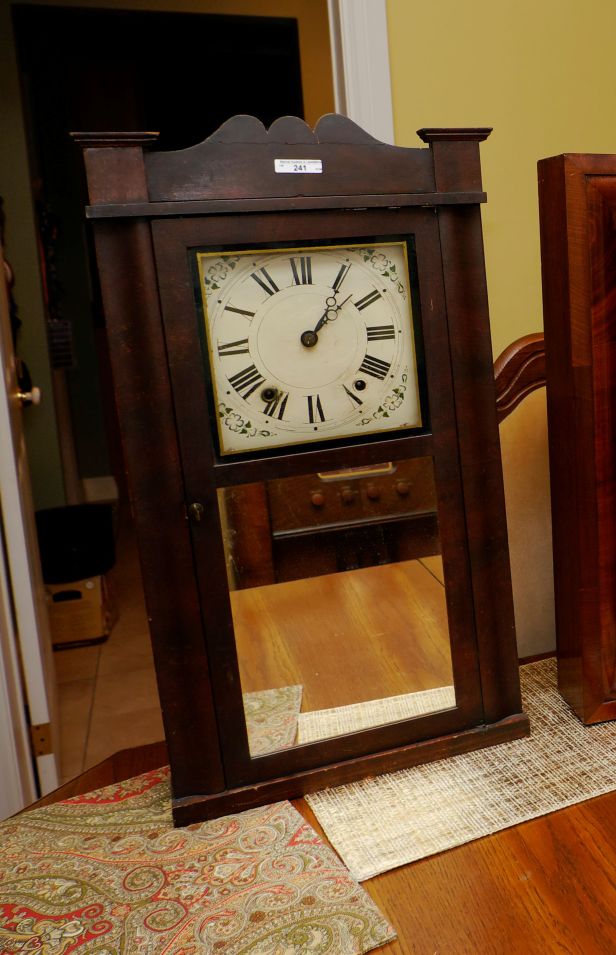
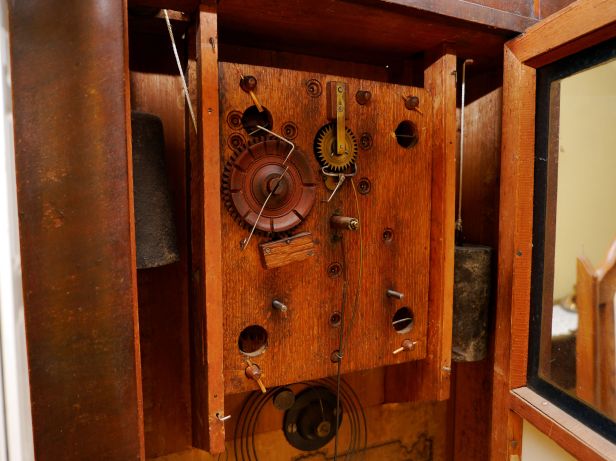
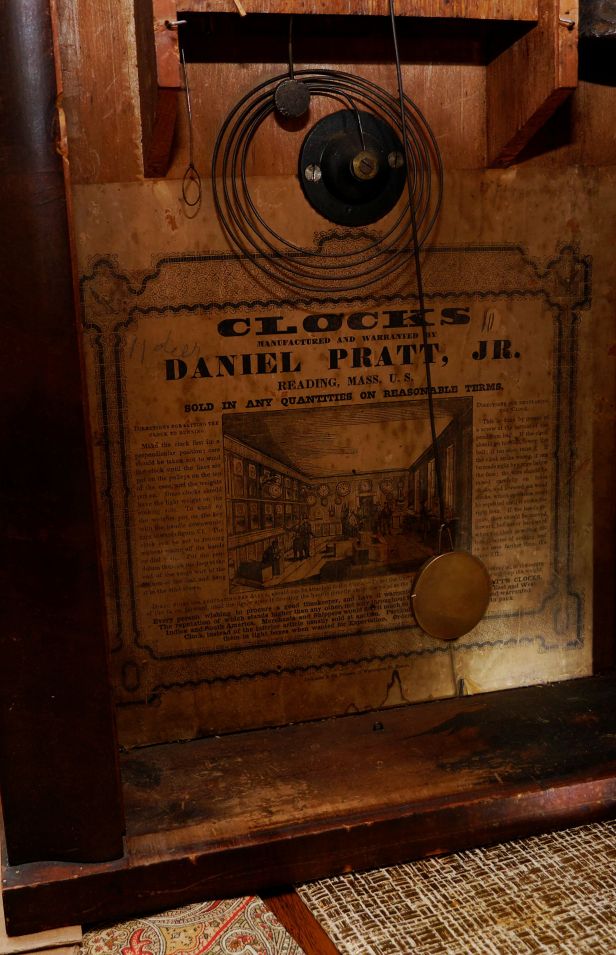
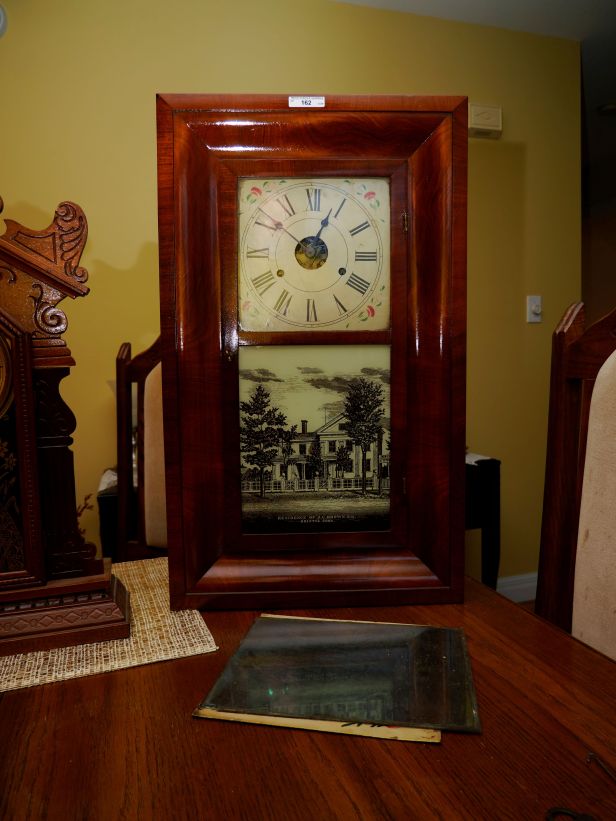
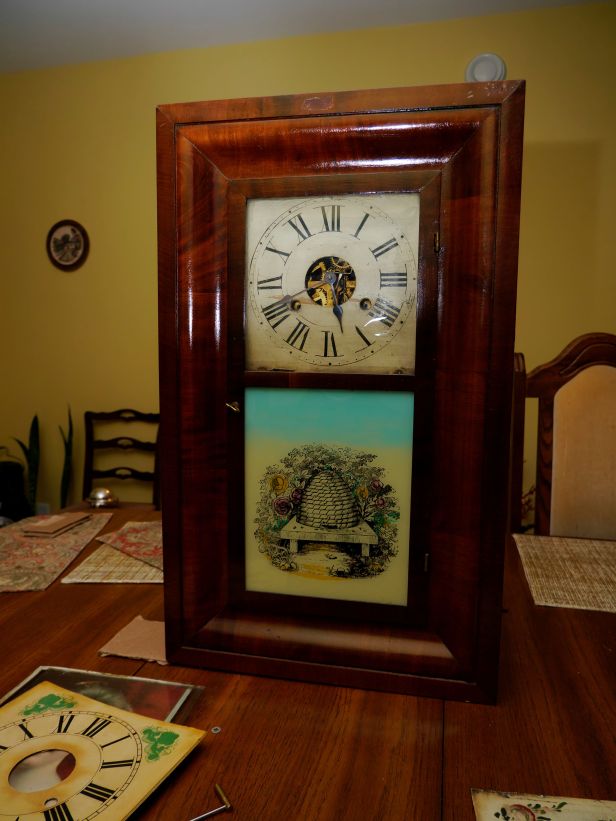
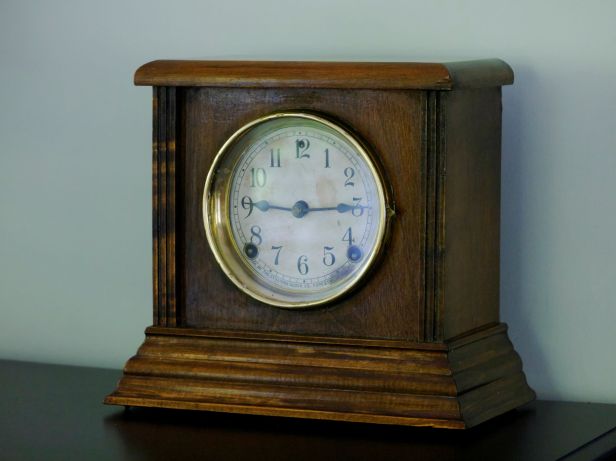
 Antique and Vintage Mechanical Clocks
You must be logged in to post a comment.