Navigating the Perils of Antique Clock Repair on YouTube: Why Caution is Key

Antique clocks are a fascinating and cherished part of our cultural heritage, valued both for their historical significance and their intricate mechanical workings.

However, the maintenance and repair of these clocks can be a daunting task, requiring a great deal of knowledge and expertise to ensure their preservation.

YouTube has become a popular platform for sharing information on antique clock repair, but this can often be a perilous journey, fraught with misinformation and potential hazards.

Read on and discover why the journey can be fraught with perils.

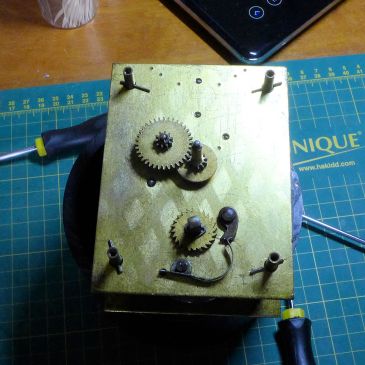
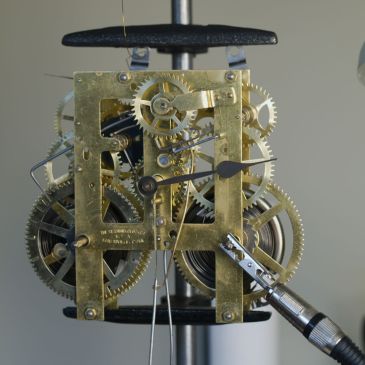
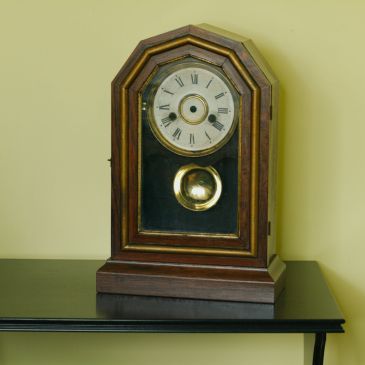
A time-only clock movement

A wealth of content and not all of it is good

One of the main challenges of researching antique clock repair on YouTube is the sheer volume of content available. While there are certainly many skilled and knowledgeable individuals sharing their expertise on the platform, there are also countless amateurs and hobbyists who may not have the necessary qualifications or experience to provide accurate or reliable advice.

This can make it difficult for novice clock enthusiasts to distinguish between reliable sources and those that may be less trustworthy.

Lack of oversight

Unlike traditional academic or professional settings, YouTube does not have any formal accreditation or certification processes to ensure the qualifications and expertise of those providing advice.

This can lead to a situation where individuals with limited knowledge or experience are able to present themselves as experts, potentially leading to poor repair outcomes or even irreversible damage to valuable antique clocks.

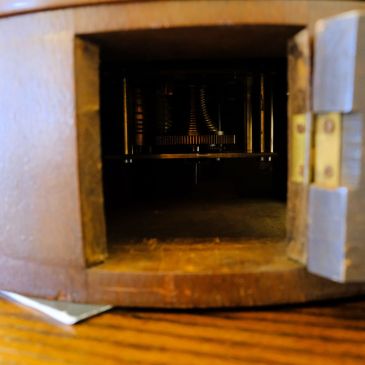
American time and strike movement

The quick fix

Many YouTube videos on antique clock repair focus on quick fixes and shortcuts rather than proper, long-term maintenance and repair. While these videos may be popular and offer a quick and easy solution to a problem, they can often do more harm than good in the long run.

An example is immersing an entire movement in a solution, a process often called “Duncan Swish” within clock repair circles. Although immersing an unassembled movement in a cleaning solution may provide prompt results and is a quick and easy solution, it is not a substitute for meticulous disassembly and repair. Quick-fix solutions like this can actually worsen the wear on a clock movement, rather than resolving the underlying issues.

Improper repairs or maintenance can cause irreversible damage to delicate clock mechanisms, potentially decreasing the value of the clock or even rendering it unusable.

An unusual click spring repair was done by a past repairer

Lack of background information or context

Another challenge with researching antique clock repair on YouTube is the lack of context or background information provided in many videos. Without a comprehensive understanding of the history and mechanics of a particular clock, it can be difficult to diagnose and address issues properly.

Some videos may not provide adequate instructions or guidance, leading to confusion or even dangerous situations if attempted by an untrained individual.

important steps are missing

Steps are missing because the person making the video may not have the necessary knowledge or expertise to perform a complete repair. They may be an amateur or hobbyist who is sharing their experience and techniques, but they may not have the same level of training and experience as a professional clockmaker.

Steps are missing because the video is intended to be a quick tutorial or overview, rather than a comprehensive guide to clock repair. In order to keep the video short and engaging, the person making the video may choose to skip over certain steps or focus only on the most critical parts of the repair.

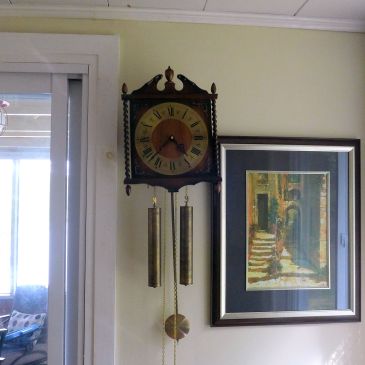
An English Fusee movement

The person making the video assumes that the viewer already has a certain level of knowledge or expertise. They may assume that the viewer has a basic understanding of clock mechanics or has performed similar repairs in the past.

The video author also intentionally withholds certain steps or information in order to encourage viewers to seek out their professional services. They may provide a basic overview of the repair process but withhold more detailed or advanced information, in order to entice viewers to pay for their expertise.

Regardless of the reasons, it is important for viewers to approach these tutorials with caution and skepticism. Expanding one’s knowledge is crucial for making informed decisions when consulting multiple sources and determining the accuracy of clock repairs and this can only be accomplished through continuous learning and growth.

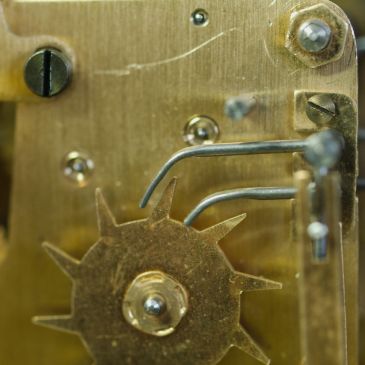
A worn regulating leaf gear

Youtube can have value to an enthusiast

Antique clock repair is a highly specialized field that requires a great deal of knowledge, skill, and experience. While YouTube can certainly be a valuable resource for those seeking to learn more about clock repair, it is important to recognize its limitations and potential hazards.

As your knowledge of clock repair expands, you will develop the ability to distinguish between those who provide constructive guidance and those who do not.

There are several youtube sources that I consider to be of value but I will not reveal them here because it is important for each clock repairer to assess and determine their own go-to sources for information and guidance. It’s important to critically evaluate and verify the information presented in any online source before applying it to your own clock repair work.

Finally

While YouTube can be a useful tool for those interested in antique clock repair, it is important to approach this journey with caution and skepticism.

With so much content available and a lack of oversight and regulation on the platform, it can be difficult to distinguish between reliable and unreliable sources of information. Many videos may focus on quick fixes or shortcuts rather than proper maintenance and repair, potentially leading to irreversible damage to valuable antique clocks.

When watching clock repair videos on YouTube, it is important to approach them with a critical eye and evaluate whether the procedures being shown are safe, and performed correctly and whether the repair will ultimately increase or decrease the value of your antique or vintage clock.

In my view, it is not a useful exercise to comment on a clock repair video that shows incorrect methods or practices as there are plenty of others who will take great joy in criticizing. Rather, it is more advantageous and less frustrating to find alternative sources that can provide valuable suggestions and guidance for clock repair.

Keep searching, those sites are out there, and once found you will be rewarded.

Can I repair my antique clock with common household tools?

While it is possible to repair an antique clock with common tools, there are limitations to what can be achieved. That’s the short answer. Let’s explore this a little further.

Repairing an antique clock with common household tools is possible, but it can be challenging, and it depends on the extent of the repairs needed and your knowledge of the internal mechanisms and workings of the clock.

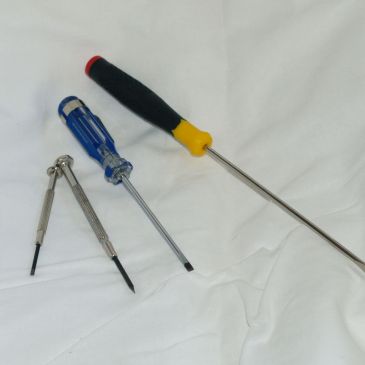
Screw drivers, clock tools
Screwdrivers

If the repair needed is simple, such as adjusting the time or fixing a loose screw, household tools may be sufficient. However, more complex repairs such as replacing broken parts or restoring the clock’s intricate mechanisms may require specialized tools and expertise that may not be readily available in a typical household toolbox.

The simple task of cleaning a movement can be accomplished with tools such as a screwdriver and wrench in addition to other common household items. The springs on an open mainspring movement, for example, can be contained with heavy household wire or a worm gear hose clamp.

Cleaning brass movement plates can be achieved using common household soap, while toothpicks are a useful tool for cleaning out bushing holes. Fine steel wool is also appropriate for cleaning steel arbors and brass wheels.

A collection of clock movements in need of repair
clock movements in need of repair

Antique clocks are often delicate and require careful handling, so it’s important to exercise caution and work slowly and methodically when attempting any repairs.

The wheels of a typical American time and strike movement

If you’re unsure about your ability to repair the clock yourself, it may be best to seek the help of a professional clock repair person who has experience with antique clocks.

When financial resources are scarce and it is challenging to find an expert in clock repair, one must embark on a journey of self-discovery which includes learning and mastering the skills necessary to repair clocks oneself, thereby gaining valuable knowledge and self-reliance.

The mission of this antique and vintage clock blog is to help people feel confident in making basic repairs to their antique clocks when they stop functioning by identifying the problem, learning about the different types of clock movements, understanding the workings of the movement type, gathering the right tools, taking your time and exercising patience while attending to detail, practicing basic repairs through repetition and knowing when to seek expert help.

More advanced clock repair tools for the budget minded and those of you who can afford the extra cost

Antique clocks are not only valuable as historical artifacts but also as complex machines that require precise repair and maintenance. To ensure their longevity and functionality, clock repairers need to have access to advanced tools that can help them diagnose and fix various issues. From ultrasonic cleaners to digital calipers, the modern clock repairer has an array of high-tech tools at their disposal that can make the restoration process more efficient and accurate.

In this article, we will explore some of the most advanced tools used in antique clock repair and how they are used to restore these valuable timepieces to their former glory.

Some of these tools may or may not break the bank depending on your financial situation or budget restrictions. Should you be prepared to invest heavily and cost is no object there are a number of options. For those of you who are budget minded, are looking for value, and are handy around wood-making tools, there are options for very little money.

For those specialized tools that will assist you in building and designing your own movements, such as a wheel/pinion cutter, the depthing tool, and advanced testing machines, please look elsewhere, this is not the place for you.

In my last article, I focused on what is needed for more advanced repairs but kept the budget at under 400 USD. This time the outlay grows a little but it can be controlled if you make careful decisions.

See this article for more advanced tools

As in life, there are many ways of accomplishing the same task which means a number of options are available:

  • Purchase new tools
  • Substitute hand tools for machine tools
  • Make the tools
  • Buy on the used market
  • Improvise

For each category area, there are options for budget-minded and those with unlimited funds.

On a personal note, my first major tool was a spring winder. Next was a bushing machine followed by an ultrasonic cleaner and finally, a metal lathe. The purchases were made over the space of four years and working within a limited budget. Your mileage may vary.

Let’s get started.

Spring winder

Joe Collin’s spring winder for the budget-minded

Olie Baker spring winder

The Olie Baker spring winder is designed for hole or loop end mainsprings. It has a unique tailstock feature that safely stabilizes and secures your mainspring so it will not slip off. It also comes with nine mainspring sleeves.

Olie Baker spring winder. Cleaning the strike side mainspring
Olie Baker spring winder

It is American-made and approximately 280 USD. An extra cost Mainspring Let-down Set or a comparable tool is required to operate the Ollie Baker Winder. The KWN spring winder, which is equally capable, competes with the Olie Baker.

You will need a letdown for the Olie Baker spring winder

Bushing Methods

Drill press

Bushing work can be accomplished on a drill press but a cheaper unit will have poor runout. Runout is the amount of “wobble” that is found in the drill press (the drill bit specifically) when it is rotating. A machine with a poor runout will produce a larger and more imperfect hole than the size of the drill bit used. My inexpensive Canadian Tire drill press has a visible runout and is not acceptable for bushing work. Higher-priced machines have less runout and can operate at very low speeds. A low-speed drill is optimal for bushing work.

Bushing by hand

Hand-reaming with KWM or Bergeon cutters is an art in and of itself. Hand reamers usually come as a set of 5 Reamers, 1 Chamfering Cutter, and a handle. A hand reamer set is an economical method of reaming bushing holes so that brass bushings are pushed into place once the hole is reamed out.

The Bushing machine

The KWM Bushing Tool is used with KWN bushings. Used units, which are a fraction of the cost, can only use KWN’s own bushings however, a new design makes it now possible to use all the original KWM brass brushings but also all brass and bronze bushings by Bergeon.

Bergeon Bushing Machine

The Bergeon bushing machine is the second option. The Bergeon Bushing machine Includes 2 plate clamps, 10 reamers, 3 pushers, 4 drilled stakes, 1 undrilled stake, 1 centering tool, 1 chamfering cutter, 1 centering stake, and instructions and is made in Switzerland.

As far as bushing machines are concerned one is no better than the other. Each has its advantages and disadvantages. There is a legion of fans on either side.

Cutting and smoothing broaches

Cheap cutters and smoothing broaches will certainly work but it is worth spending a little money on better-quality tools.

Junghans front plate count wheel bushing

Regardless of whether you subscribe to Bergeon or KWN bushings a set of bushings of various sizes is essential.

Drilling a hole with Bergeon bushing machine
Drilling a hole using a cutter on a Bergeon bushing machine

Polishing pivots

Taig metal lathe

For repairing broken pivots a metal lather is essential. For polishing pivots, a lathe is very useful but not essential. The Taig metal lathe is a popular choice for hobbyists and professionals alike due to its accuracy, rigidity, and durability. With a range of attachments and accessories available, the Taig lathe is capable of tackling a variety of machining tasks with ease.

Taig lathe with 1/4 hp motor

Portable drill

During the early days of clock repair, I used a portable drill to polish pivots. It is relatively cheap as one usually has a portable drill around the house. Combined with emery boards it is an effective polisher.

Clock Reference Books, how-to guides, and manuals

Go here for all the books I recommend

It is becoming increasingly challenging to find good hard-cover clock repair books. Check out my article above for my choices for clock repair resources.

My clock book library

Cleaning choices

Ultrasonic cleaner

Using an ultrasonic cleaner is a highly effective way to clean small clock parts and components without causing damage or introducing harmful chemicals. The high-frequency sound waves generated by the cleaner can dislodge dirt, grime, and other contaminants from even the most hard-to-reach areas.

There are a wide variety of ultrasonic cleaners. A Chinese-made cleaner will work well (and is cost-effective) but for reliability and longevity, it is best to spend a little extra money on a quality machine.

Ultrasonic cleaner by L&R
Ultrasonic cleaner by L&R and Poly-Chem Deox 007 is a very effective combination

Of course, if you prefer not to go the ultrasonic route, hand cleaning is perfectly acceptable. You will not have the shiny brand-new look that an ultrasonic cleaner will give you but in most cases the movement is hidden and aesthetics are not absolutely required.

Important extras

Comfortable chair

Using a comfortable chair for antique clock repair can help reduce fatigue and improve concentration during the restoration process. A well-designed chair can provide proper support and comfort for extended periods of work, which can be particularly beneficial for complex and time-consuming repair projects. Do not underestimate the value of a comfortable chair.

Leather gloves

Mainsprings, when they break or let go can leave ugly cuts and bruises. A good pair of leather gloves will be your best friend.

Work area

Using a dedicated work area for clock repair is essential for creating a safe, organized, and efficient workspace. Having a designated area for repair work can help prevent accidents, minimize distractions, and ensure that all tools and materials are within easy reach. It can also help maintain the integrity of the clock being worked on by minimizing the risk of damage or contamination.

My work area was once a bedroom

I am sure I left out a few things but these are the essentials and again if your budget permits, better-quality tools will make all the difference.

In conclusion, the world of antique clock repair has come a long way in recent years with the development of advanced tools and technologies. These tools have made it possible for repairers to restore valuable timepieces with greater precision, efficiency, and accuracy.

While traditional repair methods and techniques will always have their place, the use of advanced tools has enabled repairers to tackle even the most challenging restoration projects with confidence. The use of advanced tools and techniques can help preserve these historical treasures for generations to come.

Restoring an Antique Sessions Schoolhouse Clock: Repairing Bushing Wear and Overcoming Common Issues

Bushing wear is a common issue that can occur on antique brass clock movements. A bushing is a small hole drilled into the plate that is used to support the pivots and reduce friction between the pivots and the clock’s plates. Over time, the bushings can become worn down or damaged due to friction, which can cause a clock to malfunction or stop. Other factors such as the environment the clock is in, the lack of periodic lubrication, and the build-up of dirt and grime combine to exacerbate wear over the years.

When bushing wear occurs, the clock’s pivots may become loose or wobbly, which can lead to the gears not meshing properly or becoming stuck. This can result in the clock losing accuracy or stopping altogether.

To repair bushing wear on an antique brass clock movement, the bushings or the holes must be drilled out and a new bushing inserted in its place. The new bushings must be precisely fitted to ensure that the clock’s pivots are properly supported and that the clock runs smoothly.

On my bench is a Sessions time-only schoolhouse clock made in the early 1920s. According to the label on the back, it is called the Office.

At only 21 inches high it is diminutive in size, unfortunately, the hands are incorrect

Factors at play when a clock stops

The clock stops when fully wound. There are essentially two factors at play when a clock stops. When the mainspring is fully compressed dirt and grime act like sandpaper and prevent the power of the mainspring from releasing. Some erroneously call this “overwinding” a term that has stubbornly persisted over the years. Worn bushing holes add to the problem when the holes are so worn the gears do not mesh correctly.

Curious, why is the trademark stamped on the INSIDE of the back plate?

Sessions movements are not new to me and I have worked on identical movements in the past. Compared to the others I have worked on, this one has minimal wear with one peculiarity detailed below.

Even before servicing, it looks clean

There is no doubt this movement has been worked on previously judging from pivot scratch marks around the bushing holes and a replacement click spring. The leader and suspension spring have also been replaced at some point in the clock’s life and judging from the condition of the suspension spring, it may need to be replaced in this servicing.

While there is some movement in all the bushing holes the worst is the 3rd wheel rear plate and the escape wheel front and rear plate. The holes in those three locations were drilled out and new bushings were installed in their place.

Despite slight wear on all other bushing holes, there is not enough to warrant new bushings at this time. Naturally, if I were in the clock repair business I would consider bushing the entire movement.

Using support to steady the escape wheel bridge

In this case, replacing bushings in the entire movement is not necessary as the clock will remain in my collection and as such will be inspected every 2-3 years for wear.

One of the unique features of clocks such as this is their ability to be hung and forgotten and continue to run quite well while very worn, a testament to their rugged design.

Plates on the left and gears on the right, a pretty simple movement

And now the eccentric repair. The click spring retaining tab/hook was snapped off for whatever reason. As a result, the replacement click spring winds its way through to the outside of the wheel by hooking into a hole drilled in the spoke. It is a little odd but as it works well there is no requirement for remediation. Aesthetics aside, some repairs do not need to be reversed if the part functions well.

Odd but it works

The mainspring has plenty of “spring” left in it which makes me wonder if it is a replacement.

On the test stand

During servicing the mainspring was unhooked from the main wheel arbour and using my Olie Baker spring winder, it was extended and thoroughly scrubbed with a Scotch-Brite heavy-duty scouring pad, and lubricated with Keystone clock spring oil. There was certainly enough dirt and grime to stop the clock in the spring’s fully wound position and a good cleaning solved the problem.

After a brief testing period, the movement was remounted and it is now on display on my kitchen wall where it rejoins its cousins.

As the tiny hands look rather silly, the correct clock hands will be added to my next clock supply order.

A diminutive schoolhouse clock by Sessions

The Sessions Clock Company of America was one of the leading clock manufacturers in the United States in the early 20th century. Founded in 1903 by William E. Sessions and Aaron Lufkin Dennison in Forestville, Connecticut, the company quickly gained a reputation for producing clocks that were both reliable and affordable.

Over the years, the Sessions Clock Company produced a wide range of clocks, including mantle clocks, and wall clocks, and became known for their innovative designs.

A very popular model was the schoolhouse clock. Schoolhouse wall clocks have a rich history dating back to the late 19th century. Originally used in schools, and other public places, these clocks were designed to be reasonably accurate and reliable timekeepers, with large, easy-to-read dials and distinctive wooden cases with glass-paneled lower access doors showing a moving pendulum.

A comparatively small schoolhouse showing incorrect hands

Over time, schoolhouse clocks became popular in homes and offices, with various manufacturers producing their own versions of the classic design. Today, schoolhouse wall clocks remain a popular choice for those seeking a traditional timepiece and are often seen as a symbol of American craftsmanship and design.

Diminutive clocks were popular in their day because of the lower cost compared to a larger wall clock. This clock is 21 inches high by 13 1/2 inches wide with a 7-inch dial and it is difficult to envision how it could be seen clearly in a large classroom setting but for some school regions, the cost was an important factor. Standard schoolhouse clocks are typically seven to eight inches longer and have 12-inch dials.

Most schoolhouse clocks were designed to display only the time, with no additional features such as a striking mechanism or date displays. This simplicity allowed for a greater focus on reliability, which was essential in public spaces such as schools where good timekeeping and long periods between servicing were crucial.

Shown in the middle with a Waterbury on the right and Sessions on the left, all are time-only clocks

I have had this particular Sessions clock for over a year and it stops from time to time. It likely requires a good cleaning and it is time to put it on the workbench. The case is in excellent condition and I see no need for intervention aside from cleaning with soap and water.

We’ll see what we shall find. I’ll report back in a week or two but this should be a standard servicing job and I am not expecting any surprises.

Clocks with luminous dials – the danger within

I received an email from a blog fan this week who posed an interesting question. She was concerned that a number of clocks offered for sale at a local antique store had radium dials. I assured her that I know of no maker of mantel, shelf, or long case clocks that used radium on their dials but had there been alarm clocks, wristwatches, and even antique compasses on display her concerns would have been justified.

Westclox LaSalle alarm clock
Westclox LaSalle non-luminous alarm clock

As a matter of fact, it reminded me of the number of times I have been in antique and junk stores and have seen clocks with luminous dials and the danger I might have faced during a brief exposure, say within a meter or so and the more serious danger of being irradiated had I purchased and serviced them.

German musical alarm clock
German musical alarm clock or Joker

As a clock collector, I have a limited number of alarm clocks none of which have luminous dials. I understand the potential danger of radium and that is why I confine my collecting to alarm clocks with non-luminous dials only.

Even a clock that has lost its luminescence may still have traces of radium on its dial or particulate matter that has fallen from the clock face which makes them equally as dangerous.

Antique “alarm” clock mechanism from around 1900

Since radium has a half-life of hundreds of years even old radium dials are very hazardous. If working on a clock with a radium dial care should be taken to prevent the inhalation or ingestion of flakes or dust which may contain radioactive materials. My advice is to not work on them at all.

In the past several years radium dials have largely been replaced by phosphorescent – or occasionally tritium-based light sources. Therefore clocks produced after the 1970s had safer luminous material applied to the dials but modern alarm clocks are not nearly as attractive as antique clocks from the 1920s or so.

Clocks with luminous radium dials are certainly a danger to avoid and as far as I am concerned, not worth the risk.

The year in review – antiquevintageclock.com

Thank you, subscribers and viewers. Whether you are a regular visitor, drop by occasionally, or are visiting for the first time, thank you.

This has been the most exciting year yet for antiquevintageclock.com. The blog has done very well and naturally, it is always a thrill to reach the milestone of the most views in the seven years I have had this blog.

Photo by Gratisography on Pexels.com

It has taken time to build a following, more time than I’ve ever imagined. It takes planning, research, and an investment of energy but most importantly a strong commitment to producing quality articles on a twice-weekly basis.

My first blog article, May 2015

After seven years I still consider myself a clock generalist though I feel I have become an expert in some areas. Judging from the email I received from you I appeal to a like-minded group who have either stumbled onto my site looking for advice and direction on a particular clock repair issue or are regular visitors who appreciate the content and express their thanks accordingly.

Photo by Tima Miroshnichenko on Pexels.com

As I look over the articles that have the most views this year it is clear that most of my viewers from around the world are looking for direction with how-to and general-interest articles topping the list.

American New Haven clock movement

The statistics this year speak for themselves with over 190,000 views, and 101,000 visitors from 161 countries. Over the past seven years, there have been over 525,000 views.

The number of views also supports my blog by providing advertising revenue which pays for blog server space, domain registration, email service, cloud storage, clock supplies, and membership dues for NAWCC.

The most popular articles are:

This year I have introduced a new email address to reduce the number of emails that go astray in my personal email account. The new address is ronjoiner@antiquevintageclock.com. Please continue to write to me with your clock issues and with general comments relating to my blog articles.

Again thanks and if you are here for the first time, welcome to articles concerning clock restoration and repair and articles about antique and vintage clocks in general and if you are a frequent flyer, thanks for supporting me all these years.

Hamilton Clock Co. ogee – a dull and tired case needs help

Should antique clock cases be refinished or rejuvenated? It can be a judgement call. I am all for patina and preserving an old clock case but there are times when certain amount of intervention is practical from an aesthetics and resale point of view.

There is a certain philosophical argument among collectors who believe on the one hand that any intervention is sacrilegious while others feel that some amount of intervention may be necessary to preserve an antique clock.

Auction photo

I won this Hamilton Clock Company 30-hour ogee clock at auction in the spring of 2022 and only now have had a chance to work on it.

I was not specifically looking for a 30-hour ogee as I have 6 already (and who needs another 30-hour clock) but as this clock was made in Hamilton Ontario, Canada it is special to me as adding Canadian clocks is a prime goal as a collector.

Auction photo showing the lower acid etched tablet

A brief history

The company was established in 1876, after the failure of the Canada Clock Company (version 1) in Whitby, Ontario. Using a new factory building and the original production machinery the second company, the Hamilton Clock Co. was formed by three principles, James Simpson, George Lee, and J. F. Collins.

The Hamilton Clock Company made a valiant effort to provide clocks for the Canadian market, in competition with the huge U.S. clock factories in Connecticut that already dominated the market. 

Ogee clocks were manufactured at Hamilton, and these were identical in construction to those that had been made at Whitby with veneered pine cases. After four years the company went bankrupt but was shortly resurrected as the Canada Clock Company (version 2), again using the same Hamilton production facilities. Clock production ended in the mid-1880s and it was not until a new Canadian-owned clock company emerged in 1904 (the Pequegnat Clock Co.) in Berlin, Ontario that Canadian-made clocks resumed production.

It is tempting to group the three companies into one, but the design focus of each company separated them from each other, the early company focused on 30-hour movements and simply styled mantel clocks while 8-day wall clocks and more ornate mantel clocks were a feature of the later company.

The case

Yes, it is dulled and tired and it has had a rough life. These clocks are handed down from one owner to the next and in the process they undergo changes. Some of the changes are reversible and some are not. Luckily this clock can be revived and brought back to life.

There are veneer losses, particularly on the two upper corners and the trim strip along the right side. The bottom strip is missing completely. So the challenge is to replace missing veneer with new and old stock but the end result is not always perfect.

Let’s see what I can do with the case.

A very special Waterbury wall clock – my grandfather’s kitchen clock (a personal journey)

The Waterbury clock hanging in my office brings back memories of my grandfather, a man I wish I had known better. Call it one of life’s regrets.

Now, I didn’t know my grandfather all that well and I’m not sure that many people did. He was shy and a man of few words. I don’t think many people really knew him. In fact, I don’t recall having a meaningful conversation with him.

Rank listed as driver although he was a private in the First World War

He passed in 1962 at age 82 when I was only 12.

My grandfather and his brother came to Canada in 1906. There were many British immigrants at the time as Canada offered new and exciting opportunities for young men. Grandfather came from Shoreham, England where most of his family originated, and was employed with the Postal Service but evidently, postal work was not for him and an adventure to the colonies was a better option.

When he arrived in Canada, he chose Ottawa as a place to live. At the time his future wife lived with her parents. Her mother operated a boarding house where grandfather stayed when he first arrived in Ottawa. You might say that my great-grandmother was a matchmaker of sorts, as she encouraged my grandfather and grandmother to spend time together. She must have thought that since he came from the old country he was quite a catch.

My grandfather spoke only English, and his bride spoke only French. So, how they communicated throughout their engagement and the first few married years is a mystery to this day. Perhaps words are not important after all!

When the First World War broke out in 1914 my grandfather did not sign up immediately but waited until 1916 at which time both grandfather and his brother made the decision to join the war effort. Grandfather was not particularly patriotic, and the purpose of joining was to take advantage of an all-expenses paid trip to Europe and more specifically England where he could reconnect with his family in the Shoreham area. At that point, he had been away from his home country for 10 years.

Imagine my disappointment when I saw this

Neither he nor his brother had any idea that the war would go on for two more years. In fact, they thought, and a lot of people shared the same feeling, that the war would end by Christmas, and they would be home in two or three months. Little did they realize how much longer the war would last and the impact the war would have on two young men.

Waterbury grandfather's clock
The movement had been neglected for many years

My grandfather was a military driver during the First World War and was in Europe between 1916 and 1918. He witnessed horrific things and retained many of those memories. Today people would use the term Post Traumatic Stress Disorder but, in those days they called it “shell shock”. Post Traumatic Stress Disorder would stay with him throughout his entire life.

My grandparent’s home was very quiet but for the sound of the Waterbury time and strike wall clock. Grandfather suffered from anxiety/depression and it didn’t take much to bother him, most likely due to his experiences in the First World War.

The brass bezel was in poor shape and screwed to the case?

After the war grandfather worked for the Ottawa Transportation Commission for a number of years. He was a conductor on a streetcar and when the OTC switched from streetcars to buses, they eliminated the conductor position. Grandfather was told that he had to drive a bus and since he was unable to drive for anxiety reasons that stemmed from his experiences in the Great War, he left work at the age of 50 and never worked again. But he and my grandmother managed with the help of family.

Touch-ups were required and dirt was removed from the brass

My grandfather painted that old Waterbury clock case the color yellow to match the walls in the kitchen. I guess he thought it would blend in with the surroundings and the ticking of the clock would somehow subside into the walls. When they sold their home in Ottawa the clock was passed on to one of my cousins.

Waterbury grandfather's clock
The clock case had no drop door so, a new one had to be made

The clock was tucked in an old barn for many years and when my cousin downsized and moved into a smaller home he wondered if I would have it. In 2018 he contacted me by email and suggested I retrieve the clock. At the time I imagined it was a complete clock with movement, case, and all the important bits but when I picked it up I was disappointed that it had suffered so much through the years.

Waterbury grandfather's clock
Cleaned and ready for the next 100 years

I wish I knew what the clock looked like in its day because what I have left is not the clock I envisioned on my grandfather’s kitchen wall many years ago. I have the movement, dial face, and brass bezel. The case and a few other important parts are long gone. The case my cousin made some 40 or 50 years ago is a heavy homemade plywood concoction. He did the best he could but it was clear that he had little understanding of clock case construction and he got a few things wrong.

However, I was determined to do something with it. It now has new dial glass, a pendulum rod and bob, a verge and crutch, a winding key, and a new drop door. I cleaned up the dial as best I could, refreshed the case, and addressed wear issues on the movement.

Grandfather’s clock, plywood case and all

That old kitchen clock is in my office right beside my desk and ticking away and striking as it should. Although I remember it ticking loudly as a child in the back kitchen the truth of the matter is that it is not a loud ticker at all; it is very soothing.

I contemplated ditching the crudely constructed case and finding a period correct one but the clock with all its warts is what it is. The plywood case, as ugly as it is, is part of the history of the clock. So it will stay as it is and it will always be a reminder of a man I wish I had known.

Beyond the basics – more advanced tools for clock repair

See this article for basic tools for clock repair

Let’s assume you have decided to take the plunge and you are at the beginning stages of building an essential tools list for clock repair. Let me help you with your journey.

In the fall of 2022, I wrote about the five essential tools for clock repair. The sidebar will bring you to that article. Tools for clock repair need not break the bank, in fact, you can begin for less than a $100 investment.

The five basic tool groups included the screwdriver, the letdown tool, the pivot locator, the box wrench, and the pliers. If you are ready to move forward with more challenging repairs here are the next set of tools you will require. Assuming you have already purchased the basic tools the 16 additional tools you will require are relatively inexpensive and are the prelude to making your first big jump to specialized and advanced tools.

This time our budget is less than $400 (all prices quoted in US funds).

Let’s begin.

Optivisor or eye loupe

The closer you can see the better. I prefer opti-type visors. I cannot get used to an eye loupe but it is certainly cheaper.

Opti-type visors are more expensive but hinged so that they can be pushed upward and out of the way. I have had a couple of visors in the past but the set I use now is the Magnivisor pro series from Carson which is about $60. The little light at the top goes through batteries fast and sometimes I forget to turn it off, so I don’t use it but you might find it helpful for those dark spaces.

$10 will get you a set of three eye loupes on Amazon.

Magnivisor by Carson

Movement test stand

A test stand is very helpful when disassembling a movement reassembling it and testing it before it is reinstalled in the case.

I have several types for different purposes but I think the one to start with is Gene’s test stand which is under $70. If you are handy in the workshop it is a relatively simple one-day woodworking project that you can build for half the cost.

Clock movement stand
Clock movement test stand

Clock movement work stand

I use two types. The first is movement plate standoffs and the second is a simple 4-inch high stand cut from a PVC pipe. The standoff set is anchored to the bottom plate by screwing brass end pieces to the four corners of the bottom plate (you can use three if you wish). The standoffs are sometimes called assembly posts and are around the $25 range in cost.

If you have 5-inch PVC pipe lying around simply cut off a 3 or 4-inch section.

Standoffs
Standoffs; either three or four can be used
Movement on standsoffs

The PVC is easy to work with and does not leave screw marks on the movement plates if you are particular about that sort of thing.

The movement is sitting on a piece of PVC pipe

Magnifier light

Florescent or LED. A color temperature of 6500k is the best compromise. Newer LED magnifying lights have custom color temperature settings. I see them on Amazon for about $50. Florescent bulbs have a shorter life than LED. Recently mine burned out and the replacement cost for the circular light itself is around $40 (for a $50 lamp!).

Worklight
Work-light

Clock oil and oil applicator

I have not had much luck with pen-type applicators and the few I have had have split with repeated use. Plus I am not sure the oil contained within is of very high quality. I am a bit old-school and use a cupped dipper and oil reservoir. Mobius and Keystone are good brands.

Count on spending $10 to $20 for quality clock oil. Motor oil, WD40, and 3-in-1 oil are not suitable substitutes and for me, the jury is still out on synthetic oil.

clock oil applicator
Clock pivot oil
Clock pivot oil

Movement clamps

When working with mainsprings, spring clamps are an absolute must for safety reasons. More than one beginner in clock repair has injured themselves by not restraining the mainsprings. A set of flat clamps (my preference) are around $17. If you wish to save money heavy steel wire will do.

Assorted clamps
Assorted clamps; flat clamp on the upper left

Tweezers

Useful for encouraging tiny pivots into place, picking up small clock parts, and a hundred other uses. A set will set you back $10. Bergeon will happily sell you a set for a few hundred dollars but cheaper blunt nose and needle nose tweezers will do.

Tweezers
Tweezers

Micrometer

Measurement in clock repair is important and a micrometer is essential. They are relatively cheap and can be had for under $20 at your local hardware store.

Using a micrometer to check pivot
Using a micrometer to check the pivot diameter

Cotton swabs

A general all-purpose probing cleaner for those tight crevices and corners. You will be surprised how quickly you can use up a box of 400. Under $3. Also useful for cleaning out your ears when determining whether or not your clock is in beat.

Cotton swabs
Cotton swabs

Toothpicks

There is no substitute for cleaning clock bushing holes. Buy them in the hundreds, you will need a lot of them. Get them at the checkout counter for under $2.

Toothpicks
Toothpicks

Mini level

A level surface is required to have a clock in beat. This one by Starrett is over $50 but you need not spend that much. Count on about $10.

Level
Spirit level

Spider key sets

The 4 and 5-prone sets in even and odd sizes will be enough for a vast number of clocks. As you move along in your hobby you will accumulate box loads of keys but a spider set is handier. Count on about $15.

4 and 5 prong keys and singles

Organizing trays

These are dollar-store items. Great for organizing clock parts (and not losing them). You can pick up a wide variety of sizes for under $10 total.

Organizing trays

Screw head holding screwdriver

I have a set by Klein Tools and find it a time-saver, especially when returning a movement to its case and holding and guiding that finicky screw in place. The gripping action holds, starts, and drives slotted screws in awkward, hard-to-reach places. A word of caution; they can be easily ruined if used to torque a screw in place.

I wish they can be purchased separately for a reasonable cost because I never have used the large one. About $60

Flashlight

Great for locating that nut that mysteriously flies through the air and lands on your floor sometimes never to be seen again. There are many other uses as well. The fancy ones are flexible but I have a penlight which is less than $10.

Flexible flashlight

Set of Single-Ended Scaler Probes

Okay, they are the same ones used by dentists to pick at your teeth but they are perfect for pulling that helper wire into position, guiding a pivot in place, or just about any time you need to pick at something, probe an area, de-scale a tooth (clock teeth, I mean), and so on. I bought mine at a dollar store but a set can be had for around $15.

Scalers

Concluding remarks

And there you have it.

For the next level, the costs begin to escalate but after purchasing these tools, and becoming familiar with clock movements through practice you will want to explore your hobby further. In a future article, I will describe how you spend big money on more specialized tools but also how you can get away with advanced repairs on the cheap.

Tick Talk Tuesday #43 – Is this a Simon Willard banjo clock?

Tick-Talk Tuesday is about the letters and comments I have received from readers concerning clock issues, challenges faced, a clock you would profiled or advice on your particular clock concern. For those comments and questions that stump even me, I consult within my clock circles for the best possible answer

TM writes, “We have had a banjo clock in our family for multiple generations, and knowing my family’s history it would not surprise me if it was a Simon Willard original. I understand that is a long shot but it is so hard to find information about banjo clocks or reputable people to deal with. It is in relatively good condition, not knowing when my family acquired it exactly, but it is original to us. I am attaching a picture and would greatly appreciate your opinion.”

The family banjo clock

I am not an expert on Willard banjo clocks but have seen and read enough to inform me that Simon Willard clocks have distinctive features that separate his clocks from others.

My reply was, “Hi, and thanks for your email.

It may or may not be a Willard patent banjo. It would have to go through a process of authentication. An expert would identify the classic hallmarks of a Willard clock which would include movement design and construction, distinctive case features, door catch characteristics, construction of the dial, how the movement is mounted, design of the throat and lower tablets, and so on.

However, two things immediately strike me as odd. First, I have never seen a Willard patented timepiece (banjo clock) with an Arabic dial. Secondly, Willard banjo clocks have simple barbed spear hands, none as ornate as the ones on your banjo clock. Your clock could be a variant or the dial and hands could be replacements or the clock could have been crafted by another maker altogether.

Again, an expert in Willard clocks would provide the answer you are looking for.”

Simon Willard Patented Timepiece, C.1810; photo taken at the Simon Willard Clock museum in 2019

Simon Willard did little to protect his patent and as a result, many copies were made during the Federal period in Boston and in New England. Associates of Willard and apprentices to Simon and his brother Aaron produced clocks by the hundreds. Some of the copies were of high quality though they did not have the desired cache of a Simon Willard clock. And of course, many are fakes.

Willard clock; photo was taken at the American Watch and Clock Museum 2019

According to Robert C. Cheney, executive director and curator of the Willard House and Clock Museum proclaimed that the timepiece is “probably the most faked American clock found today.” Is TM’s clock an original, another maker, or a fake? An expert would immediately determine if it is real.

The photo at the beginning of the article is the only one sent to me and one photo is really not enough to make any kind of definitive judgment but I don’t believe TM has a Simon Willard Patented Timepiece.

Mainsprings – should they be replaced every time a clock is serviced?

A short while ago I received a letter from one of my readers. The writer asked if I knew the size of a Junghans B11 mantel clock spring. That was it. No mention that the spring was weak or broken, just one sentence with no explanation.

My reply: “I do not have the mainspring size”.

I went on to say: “I rarely if ever replace mainsprings in a German clock or any clock for that matter, especially ones that were made over 100 years ago. I do not measure the springs unless I plan to replace them. The reason is that the steel used for the mainsprings at the time the clock was made is of higher quality than the mainsprings sold today.”

Junghans movement work
Junghans B11 movement with top plate removed

And then I said, “you don’t mention if the mainspring is broken or not. If you suspect it is weak, it may not the mainspring but there may be friction losses up the train preventing the clock from running its designed cycle, so, the reason for the poor performance must be found, plus the movement needs to be cleaned and bushed, if necessary.”

Junghans Corner feet finished
Junghans bracket clock with B11 movement

The reply stunned me. “That’s the strangest thing I’ve ever heard come from a clock repair person. You cannot expect a 100-year-old mainspring to still have the proper power. ANY proper clock repair person would be replacing mainsprings. It’s crucial to proper service.” I replied that if the customer requests that the springs be replaced or if they are broken, they are replaced.

He replied back, “No it’s because it is needed, bud. Spring steel loses its power after so many years. Springs also become set. I have countless pictures showing this and there is irrefutable evidence of this from clock masters worldwide. Sorry but you not replacing mainsprings is doing clock repair a disservice.”

“Bud”, you say!

I refused to be drawn into a protracted argument that would resolve nothing and the correspondence ended at that point but that got my blood boiling.

My take on mainspring replacement

Way back in clock repair circles and I am talking 15 to 25 years ago it was a general rule to replace all “set” mainsprings and the cost was passed on to the customer. And what is the definition of “set”? A real “set” spring is a defective spring that can no longer power the clock. Few mainsprings actually fall into that category, in my view.

Demonstration of the cleaning of a mainspring

But if we acknowledge that mainsprings can become set, a lot of good old original springs will be replaced and then in a few weeks the original problem resurfaces, and it was not the set mainspring after all.

Sessions mainsprings are cleaned and ready to be re-installed in an American mantel clock movement

Some clock repair persons replace the mainsprings as a matter of course because the additional cost of a spring is nothing (or very little) compared to the cost to disassemble the movement and redo the installation if something goes wrong after servicing. If you are in the business of clock repair perhaps and that is your standard practice, there is nothing fundamentally wrong with that approach. It is insurance against a potential future problem.

A broken mainspring that cannot be repaired

Unless the mainspring is broken the mainspring is probably good if the clock runs for the period it is supposed to run when and only if the rest of the clock is in good order.

If there are fractures or cracks along the spring, yes replacement is prudent and necessary but if the fracture is very close to the outer end loop, it can sometimes be repaired. 

Any cracking or serious rust pitting along the spring and I call it defective and replace it but surface rust is rarely anything to be concerned about.

Furthermore, the poor quality of some new springs makes the decision even more difficult today. But if a new spring is required I avoid anything from India or Asia.

When a clock fails to run a lot of people, especially beginners, assume that if everything else looks good to them that the mainspring must be “weak” or “set”, but unless the spring is actually broken or defective, it is probably fine. Mainsprings generally do what they are supposed to do and often take the blame for non-running clock movements

Mainspring servicing
Using an Olie Baker spring winder to servide a mainspring

Many years ago manufacturers installed springs that were more powerful than they needed to be so that the movement could power through inevitable wear over time. If the main wheel teeth are burring out it is generally the result of a replacement mainspring that is too powerful. Re-using original springs if the spring is in good shape is the better course of action. New more powerful springs may make things worse.

I have been acquiring junk American movements and using them for spare parts and a supply of old loop mainsprings. Usually, the cost of old movements is lower than the cost of new mainsprings.

Final thoughts

I am a collector and repair my own clocks. I do not generally view mainspring replacement as necessary unless issues such as those I mentioned above raise their ugly head.

Many people write to me for advice on their clock issue and I am happy to provide what answers I can. They are kind-hearted folks looking for solutions to their antique or vintage clock problem but every now and again I get tested by somebody who thinks they know everything.

There will be as many opinions as there are clockmakers. However, I believe I echo the view of most clock repairers today regarding mainspring replacement, and perhaps dear letter writer, it is you that is doing clock repair a disservice.

My first antique clock – a Seth Thomas Adamantine mantel clock

I have been collecting clocks for over twenty years and for the past 11 years I have been building my collection of vintage and antique clocks, repairing them, and restoring them.

I often reflect back to that first “real” antique clock that my wife and I purchased at an antique store in Blockhouse, Nova Scotia in the fall of 2000. Blockhouse is about 2 hours from our home and during our Saturday excursion in the area, we stopped at various craft and antique stores to see what we could find.

The store is long gone but I remember the day we browsed through the store, looked at several antique clocks, and decided upon a Seth Thomas mantel clock.

The first photo of the clock was taken in December 2000

At the time we thought we were happy with the price we paid though as my knowledge of antique clocks grew I discovered that we paid far more than what it was worth. Still, no regrets.

It sat on an old Willis upright piano for a number of years and since then it has moved to our dining room where it is on prominent display.

The clock in 2016

The clock is an 8-day Seth Thomas time and strike. It is in an ebony case with adamantine features. These clocks are known to collectors as “Black Mantel Clocks”, and were popular from 1880 to 1931. The date on this clock is 1907.

Adamantine veneer was developed by the Celluloid Manufacturing Company of New York City and was covered by U.S. Patent dated September 7, 1880. Seth Thomas Clock Company purchased the right to use the Adamantine veneer in 1881. At that time Seth Thomas stamped the year of manufacture on the bottom of each case.

Type 89 time and strike movement

The movement had to be cleaned but it was in surprisingly good condition with one issue, a stripped regulating gear. Because the gear is stripped the clock cannot be regulated by inserting the small end of a 2-ended key into the front dial. However, it has an adjustable pendulum and I will stick with that until I find a donor movement.

Regulating gear cannot be saved

We ran it for a number of years until 2016 when I took the clock apart, cleaned it, and installed 4 new bushings.

It is not a clock that I keep running continuously but every month or so I wind it up and run it since antique clocks need to be “exercised” occasionally.

The clock today with gold scrolling restored

Given its sentimental value, it will stay in my collection.

Sessions Mission style clock – an interesting challenge to what should have been a routine servicing

This is the only mission-style clock in my collection. Made by the Sessions Clock Co. of America in or about the 1920s it reflects classic Mission design and is rather attractive. I was not searching for this clock but a $10 find in a Pembroke, Ontario thrift shop is hard to pass up.

Though this clock is a non-running Sessions movement they are simple enough to work on. The time side was easy to get running with a simple crutch adjustment but there was a good reason the strike side had not been working in many years. After servicing the movement I now understand why it ended up in a thrift shop.

Mission-style clock by Sessions

The case is in reasonably good condition requiring a light cleaning and there is nothing missing overall save the winding key which can be easily sourced. The minute hand fell apart while I was setting the time, probably as a result of being bent so many times but it can be easily repaired.

The movement is a conventional Sessions design with a between-the-plates escapement setup as opposed to earlier Sessions movements that had outboard escapements. The movement is complete and everything is there including a few extra parts thrown in for “good” measure.

Movement issues

I observed a number of “X” marks around bushings but absent are punch marks or replacement bushings. Was there a plan to install new bushings?

An X mark beside a bushing hole and why the mysterious drilled hole adjacent to the escape wheel bushing hole

An “X” mark usually indicates a bushing hole that requires remediation, and why is the mysterious hole perilously close to the escape wheel bushing hole?

The cam wheel pegs for the strike lever have both been soldered and although it is not the neatest work the repair seems solid.

Soldered cam wheel pegs

The actuator arm for the hour strike had been bent so many times that it snapped off when I tried to test the clock before disassembly. This can also be repaired.

The real fun begins

I make it a point to label the mainsprings so that the time and the strike mainspring return to the same location. At times it makes little difference but, at other times, as in the case of this movement, the difference is significant.

In this movement, there is a slight difference in the strike mainspring arbour design so that the arbours cannot be reversed. Because of the slight variation in the strike side mainspring arbour the gears do not mesh correctly if the arbour is reversed. A past repairer switched the two mainspring arbours, time to strike side and strike to time side, and bent wheels to make them fit.

The count wheel is shaped into a bowl to force it to engage the second wheel arbour

Because the mainspring arbours were switched, a previous repairer had screwed a small brass piece into the plate to push the arbour to the right and enable the second wheel to engage the count wheel.

Brass “fix”
A brass piece (left) was screwed into the plate to push the second wheel toward the count wheel

A piece soldered onto the arbour to prevent lateral movement was unnecessary because the abours had been switched.

Brass piece soldered onto the time side mainspring (below hammer) to prevent the arbour from moving too much

It took a couple of assembling and disassembling tries to discover the problem, which is valuable time wasted on the bench.

In short, a past repairer did not understand what they were doing and made unnecessary changes complicating what would otherwise be a routine service. Home-cooked repairs are at times functional but often they are an absolute disaster and sometimes the most challenging part of clock repair is fixing other people’s shoddy repairs.

The remainder of servicing went as expected. There was some movement of the pivots in the pivot holes but not enough to justify bushing work at this time. As expected there is less wear on the strike side.

Minute hand fixed, hands, bob, and numerals polished and now on display

So, another clock was brought back to life and a satisfactory repair despite the challenges.

Jauch time only calendar clock – a closer look

I am all in for a bargain and one cannot buy a clock any cheaper. A friend spotted this German-made Jauch time-only calendar clock in a thrift shop for $1.65.

Schoolhouse clock made in Western Germany by Jauch

The date stamped on the movement is July 1979 which is no surprise since the clock has a number of modern features such as a magnetic lower door clasp and lift-up hinged dial bezel.

Jauch time-only movement, PL42, length of pendulum in cms, date7/79

The clock is certainly a nostalgic return to the oak-cased schoolhouse clocks found in many schoolrooms 100 years ago like the Gilbert Admiral calendar clock (pictured below) from the late 1890s, but the case is a cheaper pine instead of oak.

Glbert Admiral time-only wall clock with calendar

The clock looks good on any wall and to many, this vintage clock would appear, at first glance, to be an antique.

In an earlier post, I noted that there is not a lot wrong with this clock. The case needs a little tender loving care which is easily remedied and the movement looks very clean.

I removed the movement from its case since it was not running, mounted it on a movement test stand, and made an anchor adjustment by moving the pallets slightly. The movement was now in beat. I oiled the movement and it has been running for several days.

The movement is on a test stand and running in beat

Two vertical pieces that looked like wallboard or laminate flooring hold the movement in place. The two sides are secured with 2 Robertson screws. I doubt the manufacturer would have used Roberton screws since this type of screw is widely used in Canada but seldom elsewhere.

When I removed the movement I noticed additional screw holes. So, it seems to be a later fix, but why? Is the movement a replacement? If so, why bother with such a cheap clock? A mystery to be sure.

The movement looks very clean and looks to have had little running.

Next is taking the movement apart. I wonder if any surprises await me.

A hobby takes second place during a weather emergency

Well, it has been hectic this past week or so (late September and early October 2022). Some of you were affected by Hurricane Ian in Florida (USA) which was incredibly devasting but we had a bit of weather here as well when Hurricane Fiona passed very slowly over Nova Scotia (Canada).

Photo by Pixabay on Pexels.com

It was largely a wind and felled tree event for us as the storm lasted almost 24 hours but it also meant that our electric infrastructure took a serious beating as 4 out of 5 people were without power at the peak of the hurricane.

As a result, we were without power for 8 days. Fortunately, some years ago we had our house wired for a standby generator. We were able to stay warm, keep our food refrigerated, and enjoyed hot showers every day. Some of our neighbors were not so lucky. We provided water and kept items of theirs in our fridge/freezer during the outage.

I usually spend many hours a week with my hobby repairing and restoring old clocks and generally performing periodic inspections of the clocks I have on display throughout my home and of course, adding new and interesting clocks to my collection. But not lately!

Attending to storm damage on our property was the number one priority. We live on a treed lot and unfortunately quite a number of our trees went down but none threatened our house, thankfully. Of course, we were chainsawing and picking up branches daily and as of this writing, we are still in the process of cleaning up our property. After 30-plus downed trees the property looks quite different.

Photo by eberhard grossgasteiger on Pexels.com

However, all is not lost. I have managed to keep up with my blog, stealing what time I can, and so there has been no interruption in my posts. I have even managed to reply to your letters.

We have made progress on the cleanup and things are slowly getting back to normal so that now I can get back to what I enjoy most, clock collecting and repair.

Selling your antique clock – some simple and effective strategies

So, how to sell your antique clock?

Unless a clock has a distinctive provenance or, is rare, it is difficult to make any sort of profit on an antique clock today. Some unique clocks, ones with a special history or, those made by famous clockmakers (those in the clock world know who they are) have retained their value and are highly desired by collectors.

Just because something is old does not necessarily mean it has value. A 100-plus-year-old common antique clock is worth very little today because thousands were made by many manufacturers over the years and quite a few have survived to this day. For example, there was a time before the internet came along that ogee clocks sold for $300 or more but are much cheaper now thanks to online for-sale sites that have depressed their value. It’s all about supply and demand.

Selling an antique clock can be a challenge but a few simple rules to follow will make it easier to part with your clock.

Does it run?

If the clock is running and was recently serviced by a competent repair person, state it as such. If the clock is running but the movement needs to be cleaned, state that it requires cleaning and possible issues that might need to be addressed such as running too slow or too fast or stops after a while. If the clock is not running say why or simply state you do not know the reason.

Describe excessive wear, damage, or missing pieces such as crowns, finials, keys, glass, and trim pieces.

Ogee style clock

Preparing the clock for sale

A clock in running condition will be worth more than one that is not running. If you are handy and know your way around clock movements, and can service a clock yourself, a serviced clock will command a higher price. A clock case cleaned of grime will present better than a dirty one unless you are a stickler for “patina”.

Missing hands or dial glass will adversely affect the price. Items such as these are not costly to replace and parts are typically available from clock suppliers but it means the buyer assumes that expense.

Mantel clock

Disclosure

Honesty is the best policy when selling your clock and if it has issues it is better to let the buyer know beforehand. It is therefore important to let the prospective buyer know as much as possible about the clock so that surprises can be avoided. A clock that is a marriage, a case with a similar but with a replacement movement, should be stated as such. Disclose issues such as replaced glass, newer dial, replacement crowns and finials, case repairs, or full case restoration.

Wall clock, known as a schoolhouse clock

Determining a price

Setting a price requires a little research on your part. What you paid for it originally may not be the best indicator of its value. What you think it might be worth may be far removed from the price you will finally realize.

Check eBay, Facebook Marketplace, and other for-sale sites for clocks that are similar and price yours within that range. Pricing too high will discourage inquiries but price the clock lower if you are eager to get rid of it.

Woodworks clock with a missing crown or topper

Where to advertise

There are various methods of selling a clock. Word of mouth is certainly the most rudimentary while the internet provides many more selling advantages. Facebook for-sale sites, local online for-sale sites like Kijiji, eBay, flea markets, consignment shops, and auction houses are popular places to sell a clock. Setting up an account for most online sites is a prerequisite.

For national or international sales, factor shipping into the price. Advertising locally and delivering the clock to the new owner avoids the hassle of shipping and the potential for breakage and of course other headaches.

Grandfather clock

Photographing your clock

Few cell phones are capable of capturing a detailed image but for most purposes, it is enough. Out-of-focus images are a no-no and will put off prospective buyers.

Several images from different angles as well as a photo of the inside of the clock case are much more helpful than simply one photo. During daylight, place the clock near a window and position yourself between the window and the clock to take a series of photos in natural light. If there is damage or wear take closeup photos of those areas.

If you have a dedicated camera experiment with artificial light take the best angles to get optimum results.

Description of your clock

Crafting an ad is an art in itself. You must be concise and accurate and not too wordy. There is a delicate balance between too little and too much information. Too much information or very little information means fewer inquiries from prospective buyers.

State the clock’s maker if possible, the model if possible, the year it was made or a reasonable estimate, the type, (time-only, striking clock, chiming clock), and the style of clock, whether it be a mantel, wall, shelf, parlor, Ogee, tall-case, and so on as well as any distinctive features.

A steeple clock with an alarm function or a clock with a second hand or calendar are examples of features that might attract specific buyers.

Well, there you have it. I think I have covered the most important points and if I have missed any, let me know. Good luck with your sale!

Sessions Mission style wall clock – past shoddy repairs make servicing a challenge

Between 1903 and 1933 the Sessions Clock Company of America produced 52 models of mechanical clocks ranging from simple mantel clocks and shelf clocks to wall or “regulator” clocks all designed for the home or small businesses.

Found in many homes across America Sessions clocks were regarded as relatively inexpensive, simple in design, and decently constructed aside from one noted design flaw, the clicks. After a hundred years many Sessions clocks are still running.

Mission style clock by Sessions

This is the only mission-style clock in my collection. I was not particularly looking for this one but a $10 find in a thrift shop is hard to pass up. Though this clock is non-running Sessions movements are simple enough to work on.

As there is no maker’s label I can’t tell you the model name or number of this wall clock but I assume that it was made in the early part of the 20th century.

The movement

The case is in very good condition and there is nothing missing save the winding key which can be easily sourced. The minute hand broke while I was setting the time, probably as a result of being bent so many times. That can be repaired.

Sessions movement with front plate off

The movement is a conventional Sessions design with a between-the-plates escapement setup as opposed to earlier Sessions movements that had inboard escapements.

I noticed many “X” marks around bushings but I did not see punch marks or replacement bushings. Was it meant to have had the bushings replaced?

Servicing the mainsprings

The cam wheel pegs for the striking lever have both been soldered and although it is not a very neat job the repair seems strong enough.

There is a hole adjacent to the escape wheel arbor which might have been made through manufacture but it is oddly close to the escape wheel bushing hole.

One more issue. The actuator arm for the hour strike had been bent so many times that it snapped off when I tried to test the clock before disassembly. This can also be repaired.

In short, this is a clock that has been worked on in the past and I would think, not by a professional. Sometimes home-cooked repairs are strong and functional and other times they leave a lot to be desired.

All is not lost and I think this movement can be saved.

Second gallery clock bought this year – this one has a fusee movement

Earlier this year I bid on an English-made Empire gallery clock at an online estate auction and won the bid. When I collected the clock I had hoped I had bought a clock with a fusee movement but it turned out to be one with a conventional spring-driven time-only movement. No matter, it was not an expensive clock.

Empire time-only gallery clock

A fusee clock has been on my wish list for several years and now I finally have one. A good friend was trimming his collection and offered me a time-only gallery clock with a fusee movement for a good price.

Time only clock with fusee movement

English fusee gallery clocks, also referred to as dial, school, office, railway, or wall clocks, are a must-have for any serious collector.

The heyday of the English gallery clock was between 1860 and 1930. Gallery clocks were made in the thousands to service the needs of industry and government. The gallery clock was a common sight in schools, offices, hospitals, rail stations, and businesses in the United Kingdom.

Gallery clocks with fusee movements vary greatly in size, style, and in construction. Despite being over 100 years old, they retain their original attributes of good timekeeping and reliability. Fusee movements are rugged in construction, and their success rests with the fusee, a conical-shaped component that evenly regulates the power output of the spring.

Chain-driven fusee movement

The gallery clock came in all sizes but still retained its basic design and shape. The most popular size was 12 inches (diameter of the painted dial). Generally, the smaller the dial, the rarer and more expensive the clock. This clock is among the group of common gallery clocks and has a 12-inch dial. The next smallest size would be a 10-inch dial and then an 8-inch one.

The majority of cases (back box and surround) were manufactured in mahogany; however, oak and rosewood were used. Mahogany examples are the most expensive. Oak cases are generally slightly cheaper. Ebonized cases are cheaper still. My new acquisition appears to be made of oak.

It has all the attributes of a classic gallery clock. Four pegs connect the two constituent parts through “rails” or “cleats.” To inspect a movement, it is just a matter of laying the clock face down and pulling out four wooden pegs, lifting the dial, bezel, and movement out of the rectangular box case. Later clocks were made without pegs with access to the movement via the dial.

The backplate of the fusee movement

However, to remove the movement entirely the hands must be removed and three screws holding the dial are removed as well. There is also a movement pan that is held by pins that must be taken off.

Most movements had anchor escapements, some had lever escapements and some had deadbeat escapements. Later models had plain pillars with screws. This clock has an anchor escapement and plain pillars so, not so old but still an antique.

This clock has a chain-driven fusee although wire and gut are quite common.

The maker is unknown.

Special care must be taken to service a fusee movement so, I will be treading carefully as I service this movement but for now I will run it to see if it lives up to expectations.

Ansonia cottage clock servicing but is the end near for this old clock?

It is a $10 cottage clock my sister picked up in a yard sale several years ago and gave to me after I serviced one of her ogee clocks. There is a label on the inside that says it is made by Ansonia Brass Co. and I would date it to around the early 1880s.

It likely cost no more than 50 cents in its day, the most inexpensive of mechanical clocks but enough to provide for a family of modest needs.

Ansonia cottage clock

Not many survive to this day as they were tossed out when they stopped working. When they do survive they are often in poor condition such as this one. So, it is not surprising that time-only cottage clocks, in very good condition, are sometimes worth more and have greater collector value than larger American time and strike parlour or kitchen clocks.

A very simple time-only movement

So, why is this clock not worth much more than my sister paid for it? It’s had a hard life and has likely been altered in several ways. Original movement? It’s hard to say as there are no markings on it. Well worn? Yes! Pendulum, crutch, the mainspring, pallets; probably replacements. And why the notches on the rear of the access door?

Notches on either side of door

My wife and I love the sound of a ticking clock when we sleep at night. We both find it very soothing. And this one ticks just loud enough to be heard over our window air conditioner.

Unfortunately, the movement cannot quite run its intended 30 hours, and either the mainspring is too weak, or it needs a good cleaning. It is certainly not worth replacing a mainspring that would exceed the value of the clock so, a good cleaning is what it will get.

Time-only movements are the simplest to work on. There is only one train with three wheels plus the escape wheel. It is a matter of letting down the mainspring (a clamp is not necessary) releasing the 4 pins that hold the plates together which exposes the wheels and then taking the parts out.

Bent and worn main wheel teeth

Two issues immediately tell me that this movement does not have a lot of time left. The main wheel and the centre cannon teeth are slightly bent and it is only a matter of time when one or more break. There is not a lot of stress produced by the mainspring on the wheels of a 30-hour clock so it could take years, or perhaps even tomorrow. In any event, a repair of the wheel teeth is just not worth it.

The movement is not especially dirty but there is blackened oil in some of the pivot holes necessitating remediation. A clean in the ultrasonic followed by rinsing the parts, drying them, and then reassembly, oiling, and testing. That is it.

It is clean and I hope it will run 30 hours after the cleaning. Will it last? Well, for as long as the wheel teeth hold out. Let’s hope they do!

Wag on a wall – servicing a well engineered movement

This wall clock was gifted to me in the spring of 2022. I have no idea who made the clock, there are no markings on the case or the movement. It was likely sold by the Forestville Clock Company of Toronto in the 1960s and my guess, a Hermle movement. I could find nothing else about it online. I wrote an article in August with first impressions.

Wag on a wall time and strike clock

The style of the clock is a “wag on the wall”. It is a strange name but basically describes what it looks like it is doing, wagging its tail. A Wag on a wall clock is a clock with the movement enclosed in a small case with a pendulum and weights exposed.

From 1660 to about 1870, the wag-on-the-wall was a very common clock style. It is so named because the pendulum appears to wag on the wall like a dog’s tail. It is also a derivative of the English lantern clock (more closely to a converted one with a pendulum). It was eventually deemed not attractive enough to hang on the wall in many upscale homes, so wooden or glass and wooden cases were added. The long-case or grandfather clock evolved from this early wags-on-the-wall. Wooden cases were used to hide the unsightly weights and cast-iron pendulum.

The style did not disappear as many manufacturers continued making the wag-on-a-wall style clock to this day.

There were several clock assemblers operating in Canada up to the mid-1970s, and it was likely imported and assembled by the Forestville Clock Company of Toronto.

It is a rack and snail movement possibly made by Hermle. The second wheel teeth are larger than one would expect so, a lot of thought went into the design of this movement. I have worked on similar movements in the past though this one is a bit different, specifically the arrangement of the hammer assembly, one main wheel is the reverse of the other, and of course, it is a weight-driven time and strike clock.

Hammer assembly
Reverse chain wheels

Based on my initial observations the movement looks fairly clean despite the tarnished brass but I am expecting minor wear issues commensurate with a 60-year-old mechanical clock.

Disassembly

I took a number of photos prior to disassembly. This is my regular practice and although I have worked on many similar movements though there are always minor intricacies that differ from manufacturer to manufacturer.

To remove the movement from its case, two slotted screws holding the movement to the seat board are released plus, the weight chains must be pulled out. To release the chains the weight hooks must be removed.

The rack and snail assembly, minute wheel, hammer assembly, escapement, and pendulum leader were removed initially and placed in a collection tray. What remained were the wheels and the lifting lever between the plates secured by four pillar nuts.

The gathering pallet arbour and the main arbour are pressure fit. So, when I separated the plates most of the wheels fell out, of course. It can be a challenge for first-time clock repairers but when one works on a few there is a certain logic to the placement and orientation of the wheels.

Assessment of the movement

Because there was generally little wear, I made three decisions. I elected not to separate the central arbour and did not pull the gathering pallet from its arbour. As a result, the plate with two arbours attached was placed in the ultrasonic. I did not disassemble the main wheels which were held together with pressure washers. The main wheel ratchets and chain teeth are in very good condition and the ratchet assembly worked as it should and there was no need to take them apart.

I cleaned up residual oil and dirt around the pivot holes, removed excess oil from the pates, inspected the pivots for wear, and placed all parts in the ultrasonic cleaner. Since I was using a smaller machine than my regular US cleaner, the parts were cleaned in three batches which took a little longer.

Older, less efficient ultrasonic cleaner

I took special care drying the main wheels assemblies and ensured they were operating correctly after they were completely free of any moisture

My wife’s hair dryer came in handy but after cleaning and drying all the parts it fell off the table and broke. Sigh!

The pivots, which are in very good condition, are polished, the pivot holes pegged out and the next step is bushing work. Two bushings are required, the second wheel front plate and the centre wheel, back plate. There is minor wear on those two holes but why not address them while the movement is apart.

Reassembly

As with many rack and snail movements, most adjustments are made after the wheels are installed within the plates but three minor adjustments make the job easier and that is ensuring the gathering pallet is free of the rack, the stop wheel is in the 12 o’clock position and the hammer actuators are free of the star wheel. They must be between the star tips, if not, one of the hammers will catch on a star tip and stall the strike.

Time and strike movement

Testing

Once fully assembled the next step is installing the chains, weights, pendulum, and testing/adjustment. A small adjustment to the height of the pallets was made after which the clock ran well and continued to run well after 5 days. It is keeping very good time, as expected of a weight-driven movement as any clock that is powered by weights releases its power uniformly through its rated cycle.

Yes, it is a very plain-looking clock that reflects the style of the time (the 1960s) but it might grow on me.

Mainspring barrel tooth damage – how does that happen?

Something causes tooth damage. But what?

The example is a Fleet time and strike mantel clock from the 1930s. Fleet Time Company of Montreal, a company that was operating four short years, sourced movements from Germany prior to the Second World War. It was a very common mantel clock sold through department stores across Canada.

I like the step side design and the general simplicity of the clock.

Fleet Time case
Fleet Time case, refinished

The case was in need of refreshing but the movement looked to be in reasonably good condition and required a good cleaning and I was expecting some wear.

The movement was completely serviced with several new bushings installed. The mainsprings were removed, cleaned, and returned to their barrels.

Fleet time movement
Fleet time movement

In this movement, the mainsprings can be removed without disassembling the movement, handy for such things as replacing a broken mainspring assuming, of course that nothing else has been damaged.

During the testing phase, the mainsprings were partially wound. The intent was to see if the clock would run well. Once satisfied that the movement was running as it should I returned it to its case.

I wound the strike side fully and then wound the time side. Just as I was feeling resistance, CLUNK, the arbour turned freely. If it was a broken click or broken mainspring, either one could easily be replaced.

It has nothing to do with the force of winding a movement. Having a mainspring go bad with winding force from a key is rare, in my view.

But mainspring barrel teeth do not simply fall off.

Fleet time barrel
Fleet time barrel

At times it is a mainspring but sometimes something far worse occurs.

It is not uncommon to find secondary damage to the movement, secondary or collateral damage due to the extreme shock that broke or bent the teeth and teeth cannot be straightened.

The main problem area beyond the barrel itself will be the second wheel and possibly the third wheel arbors, leaf pinions and pivots and/or damaged or missing teeth on the second and third wheels and bent or broken pinions.

Fleet second time wheel
Fleet second wheel, a bent leaf cannot be unbent

Is it fixable? Yes, but weighed against the value of the clock, it is just not worth it. It is much more cost effective to harvest parts from another movement.

Given the right equipment, it can be repaired. Once repaired a mainspring must be sourced and although the barrels may be identical, the mainsprings will likely be different.

The solution is locate a donor movement. In the meantime the clock has been put aside.

Empire gallery clock servicing – no bushing work this time

An attractive gallery clock made by the Empire Clock Co. of England was bought at auction this past spring. It has a very conventional time-only movement and as with most time-only movements there are only a few wheels to worry about when servicing. The minute and hour wheel are outside the front plate.

Empire gallery clock

The movement is rather large for a time-only movement and is well built. It is attached to a heavy steel plate that is screwed onto the front of the movement. The whole assembly mounts just under the dial. It has a very German look to it, though it is definitely English-made.

To access the movement the dial must be removed which is a relatively simple process of removing the hands and three small screws.

Hour and minute wheel

Four slotted screws secure the movement to the steel plate.

Time-only movement made by Empire

An curious feature is a cylindrical pendulum with a large rotating adjustment screw on the bottom. The pendulum clips into a two piece caddy system for easy transport.

Conventional wheel arrangement

For a fairly modern (1920s) movement I was surprised to find taper pins used to secure the plates. The spring barrel is no larger than one would ordinarily find in the average time and strike clock made in England or Germany.

As the movement was drenched in oil all the parts had to be wiped down before going into the ultrasonic cleaner.

I did not expect the plates and wheels to brightly shine after the ultrasonic but all the parts cleaned nicely just the same. After polishing the pivots and pegging out the holes the movement was assembled and tested.

After working with a number of American movements in the past months the pivots on this movement are comparatively tiny. This is not a movement one muscles to put back together, the pivots must be carefully guided into their holes.

A woodworks movement by Daniel Pratt Jr. and it actually works

Won at auction this spring is a Daniel Pratt Jr. reverse ogee with splat although this one is missing the splat, the decorative piece on top of the case.

According to the label it was made in or after 1843.

It was also missing the suspension spring and pendulum rod and the wire with regulating screw for the pendulum bob.

Daniel Pratt Jr reverse ogee clock

There are a few other things that are not quite right. The green banding that frames the upper and lower glass looks a little strange and likely added later and the card stock which would have replaced either a mirror or reverse painted tablet looks out of place. The picture of a young soldier holding a sabre and an American flag looks quite old.

But it actually works and works well.

It has a time and strike 30-hour woodworks movement. Wood-works movements were introduced in American at the end of the 18th century and the high point of woodworks movement production was prior to the depression of 1837. During the depression most clock production was shut down and small companies began to consolidate into larger ones.

Wood-works movement

With the invention of the 30-hour brass movement by Noble Jerome, clock making began to boom again in 1838. Inexpensive woodworks movements continued to be made but by the mid 1840s the woodworks movement production had begun to phase out.

Count wheel on left, escape wheel in the middle

This movement works

The weight cord on the right side looks like it would let go at any time but what the heck, let’s see if this thing works. The green one for the strike side looks sturdy. I will restring the clock later.

I removed the verge and determined there was no power getting to the escape wheel. I felt underneath and although the weight had been wound to the top of the case the cord was binding on the main wheel. It took a little encouragement to bring the weight further down but the adjustment did the trick. I then fashioned a new suspension rod/spring from my supplies along with a pendulum wire, gave the pendulum a gentle push and success!

About 3 hours later as the weight on the time side was descending I noticed the cable had broken at some point and a past owner had simple tied the two ends together. I believe the knot was causing the power issue.

I had already tested the strike side and it was working perfectly.

I have one other Daniel Pratt Jr. clock in much better condition but the movement will not run for more than a few minutes. This one has a splat.

So, one Pratt with a not-so-good case and a working movement and the other with a stunning case but a non-working movement. Should I do a swap?

Daniel Pratt Jr with woodworks movement

I have never disassembled a woodworks movement in my years of clock repair and I doubt that many clock repairers have much experience with one. It is one of the few movement types I have zero experience with but I may have to bite the bullet some day because this clock will not run forever.

Refreshing an Ingraham “octagon top” 30-hour shelf clock – keep or sell?

This 30-hour shelf clock (hour strike) was manufactured by American clock-maker E. Ingraham and Co. in the 1870s. There are various iterations of the name over the maker’s history but this was the one the company used from 1861 to 1880.

The clock was bought at auction in mid-March 2022 along with 3 other clocks. In this post, I will take the reader through the process of refreshing the case.

Auction photo

This is an excellent example of a tired case that needs attention. When I look at a clock case such as this I assume the movement is well worn but a pleasant surprise awaited.

The movement is in surprisingly good condition as a result of regular (somewhat) servicing over the years. It has been in the shop at least three times, 1879, 1916, and 1994 according to dates found on the back of the case and perhaps more occasions that are not recorded.

Analysis of the case and plan of action

The gold banding on the front face of the “octagon top” and the inside frame of the access door has some losses and the goal is to hide the nicks with gold artist’s paint matched to the trim. First of all, it is not a true octagon but half of one, but that is how these clocks are described.

The overall finish is in fair condition. Numerous cosmetic issues such as scratches and nicks here and there over the rosewood case are evident, but a good cleaning with soap and water followed by a fresh coat of shellac should fill in the scratches and improve things dramatically.

Auction photo showing nicks and scratches

The dial shows considerable wear after years of daily use and this is a situation where a replacement paper dial might be considered but I am always hesitant because replacement dials take a certain something away from and antique clock.

However, I am going to see what I can do by attempting to bring the numbers back with black acrylic paint while retaining some of the patina.

The moon hands look correct for the period of the clock.

As a collector who has seen a good number of these styles of clocks, I first thought the access door glass was a replacement since many clocks from the early to late 19th century had reverse painted tablets.

Because of the decorative pendulum and the bright brass bell both meant to be seen, the stylized panel that serves as the base for the dial, the total absence of any paint remnants, the glass panel with its waviness and various imperfections plus the putty-like material that is used to mount the glass to the door, the glass appears to be original to the case. A pleasant surprise!

It is always a bit of a disappointment when something is lost or changed on an antique clock especially one that is close to 150 years old and when replacement parts are difficult to source.

No doubt some of the scratches on the case, dents, etc. (not all, of course) are the result of rough handling either when transporting the item to the auction house or during its stay.

Addressing issues with the case

The very first step is a good cleaning. Cleaning a clock will generally result in the removal of some of its protective finish but it is inevitable given that it has been on the clock a long time.

Auction photo

For old American clocks I generally use traditional shellac made by combining shellac lacquer with shellac flakes. Amber Shellac adds a certain hue to the case and the cut is light enough that it dries to the touch in less than a minute which is my preference.

When there are large flat surfaces I will use a “french polish” but for this project, a broad artist’s brush is best. I apply the shellac in long strokes completing each section at a time.

The decorative black wood panel that serves as the dial mount is also shellacked allowing for small scratches to fill in very nicely.

The original paper dial is well worn and presents significant challenges as all the numbers on the dial are either partially worn off or completely erased. This was a well-used clock!

Top and bottom lines of the numerals are filled in

Using an artist’s fine-tipped brush, black multi-surface acrylic paint, and a steady hand I filled in as much as I could. The numbers around the winding arbours were the worst because I had little to work with and they were the most difficult to reproduce.

Once all the Roman numerals were completed and thoroughly dry, I used a Sharpie fine-tip “artist’s permanent marker” and a straight edge to clean up the lines. I decided not to touch up the chapter ring other than the 5-minute markers. I am not entirely happy with the number 4 on the dial but that’s as far I am going.

Closer view of the dial

As for the gold trim on the face, I did not want to mess with the patina, nor did I wish to cover the gold which would have completely taken away from the antique look. I mixed acrylic multi-surface gold paint and a very small dab of black paint for an “aged” effect and used a fine-tipped artist’s brush to carefully dab the bare areas.

Finally, the brass bezel and inner ring were given a polishing.

The clock is complete

The clock has been transformed. The dial has been rejuvenated, the movement serviced and reinstalled, the bell gong attached, the case given its many touch-ups, and the decorative pendulum is attached. Now to regulate the clock.

In the final analysis, I believe that I have struck the balance every collector and restorer seeks and that is maintaining the original patina of the clock while not taking away its antique look. It is 145 year old antique that has seen good use over the years but applying modern techniques that are minimally invasive have brought it back to life.

I have one more decision to make. I acquired this and three other clocks to sell in order to offset the cost of new equipment but now that I have seen the final result I wonder!

Website Powered by WordPress.com.

Up ↑