Seth Thomas type 89 movement servicing

Seth Thomas is a well-known American clock manufacturer with a long history, and they produced a variety of clock movements over the years. The Type 89 movement is one of the many clock movements produced by Seth Thomas over the years. This type was made between 1900 and 1938.

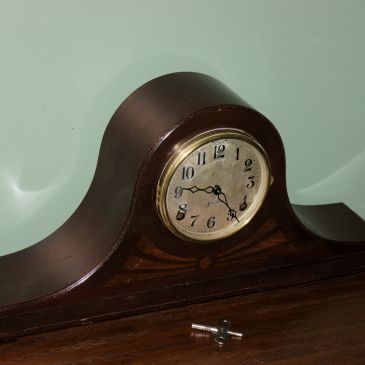
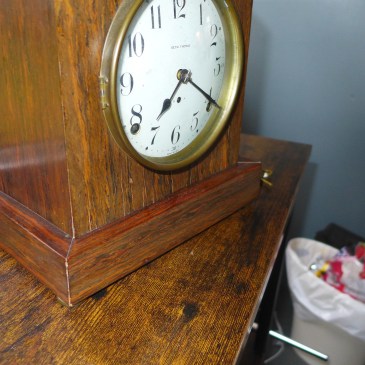
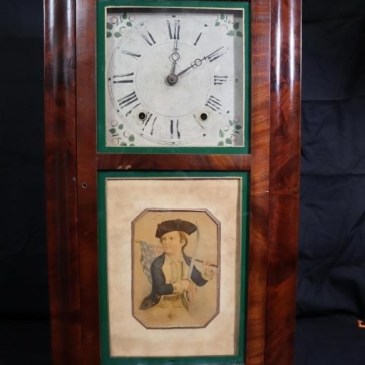
I acquired this mantel clock during the summer of 2023. From a distance, it looked very good but upon closer inspection what I thought was a rosewood veneer finish was in fact, a thin wrapper, so a bit of a disappointment.

Seth Thomas mantel clock
The simple lines of this clock was the main attraction

However, the focus of this blog post is not the clock’s case but the ubiquitous type 89 clock movement found within that made its way into thousands of Seth Thomas clocks.

Disassembly

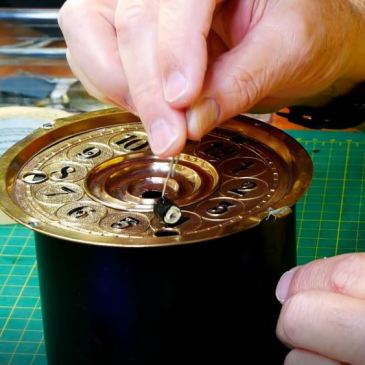
The first step is to remove the hour and minute hands. Working from the back, four case screws release the movement from its case. Things will go along more smoothly if the coiled gong is removed as well.

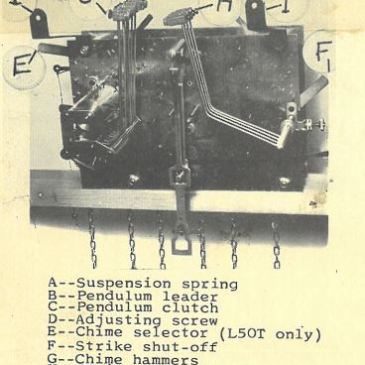
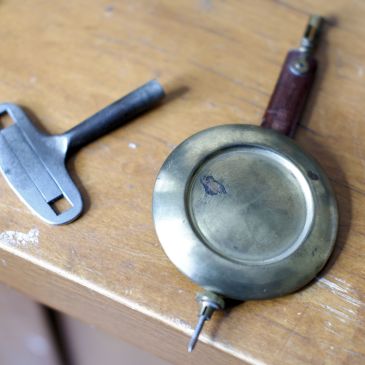
Looking at the back plate, the suspension spring and rod must be removed first. Then comes the regulating adjustments screw and rod which consists of releasing 3 machine screws and then pulling out the spline gear which is operated through the clock face by the small end of a double-ended winding key. Once that hardware is removed it is on to the removal of the back plate.

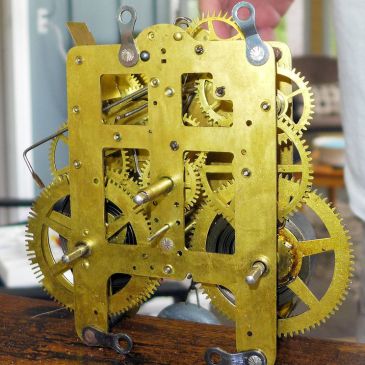
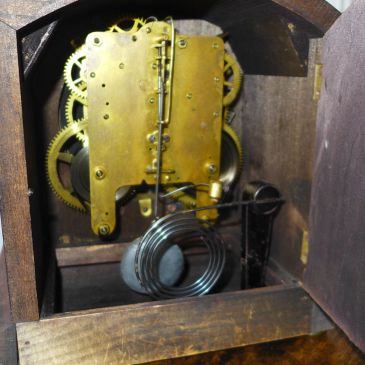
A view from the back, Seth Thomas type 89 movement
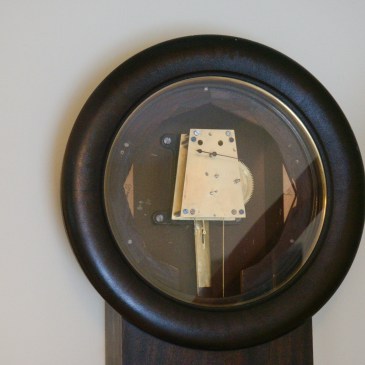
A view of the movement

There are 4 nuts (plus the pendulum rod retainer screw) to be removed, however, it is advisable to unhook the helper spring at the top and the hammer spring at the bottom before lifting up the plate. This will prevent the wheels from being dislodged as the back plate is removed.

If the wheels spring out, reassembling the wheels becomes a challenging task of guesswork to determine their correct locations, especially for beginners.

Brass helper spring hooked around a post of a type 89 movement
Brass helper spring hooked around a post

As each part is removed place them in a hobby tray or receptacle so that nothing will be lost or misplaced. No matter what the skill level, separating the time side gears from the strike side is always a good practice.

Findings

Upon lifting the back plate, my initial observation was the replacement of the mainspring on the strike side at some point in the clock’s life.

Whenever I encounter a replaced mainspring, my immediate focus shifts to inspecting potential damage to the main wheel teeth and the lantern pinions in the second and third wheels. This is because the force of a break occasionally causes secondary damage along the gear train. This is often referred to as collateral damage. Fortunately, the components up the train in this movement are undamaged.

Backplate removed on the type 89 movement
Backplate removed

An initial inspection of wear indicates a need for five new bushings on the time side, while only one is necessary on the strike side. Further examination may reveal more once a more detailed assessment is conducted.

Interestingly, the strike side shows less wear, indicating that it was seldom wound. My assumption is that after the repair of the mainspring, the owner decided it wasn’t worth the risk of another mainspring break and chose not to wind it frequently or at all.

More concerning is evidence of rust on the movement posts, some pivots, and the lantern pinions. The clock was obviously stored in a humid location for a period.

Two mainsprings for the type 89 movement
Mainsprings

All parts were cleaned in the ultrasonic cleaner and thoroughly dried.

Despite my best efforts, I could not separate the main wheels from the mainsprings. I opted to place both the wheel and mainspring in the ultrasonic cleaner. This is not a typical practice for me as it dirties the cleaning solution and limits resue, but I intend to dispose of the cleaning solution after this servicing.

From control for the L&R ultrasonic cleaner
Ultrasonic cleaner

That’s all for now

Despite encountering disappointment in the clock’s case, the disassembly and findings of the ubiquitous Seth Thomas Type 89 clock movement revealed a replaced mainspring on the strike side, a need for bushing work, and evidence of rust, presenting challenges that will be addressed in the upcoming stages of cleaning, bushing work, oiling, and reassembly.

I will conclude here and save the remaining details of the servicing for a subsequent post.

Good lighting is essential for the clock hobbyist

Photo by Luca Nardone on Pexels.com

I typically refrain from endorsing products on my blog, but my daughter recently brought to my attention something she believes would greatly benefit me as a clock enthusiast. She mentioned a “neck reading light,” which her husband suggested for her. It seems that during their evening TV sessions, he found the ambient room light she used for reading to be distracting and thought a more focused light would be less intrusive.

In the past, I have used a magnifier as depicted below, and found it to be very beneficial. It features a convenient LED light on top that is very handy for extra illumination but the light has a short lifespan and it is a hassle finding and replacing the button battery. While a magnifier remains an essential tool for me, I do not use the light for the reason I mentioned.

Optivisor magnifier
Optivisor magnifier

The flexible reading light has now become an additional lighting tool.

Neck light with 2 LEDs
Neck light showing the LED lights

The reading light has flexible arms. It comes in 3 Colors, has 6 brightness levels, has adjustable color temperature, is rechargeable, and is perfect for reading, knitting, camping, and in my case repairing clocks.

Neck light shows USB-C connection for the rechargeable battery

In addition to the above items two more devices are essential not only for clock repair enthusiasts but also for any hobbyist; a lamp with a flexible neck and a small flashlight.

LED Hobby light with flexible neck and magnifier
Hobby light with flexible neck and magnifier

My old light was excellent for my needs and it lasted quite a while.

However, when the fluorescent ring tube eventually burnt out, the expense of replacing the tube surpassed the cost of investing in a high-quality new light.

Light adjustments on the LED  lamp
Light adjustments on the lamp

To replace it, I bought a flexible magnifying light equipped with adjustable intensity and the capability to modify the color temperature. I don’t use the magnifier but the light is perfect for my needs.

The last essential lighting tool is a flashlight. I Use a pocket-style flashlight that is very bright and helps illuminate those very dark areas when working with clock movements.

LED pocket flashlight

All of these items can be purchased at your local hobby store or through an online retailer such as Amazon.

The author demonstrating the magnivisor and neck light
Here I am inspecting a Seth Thomas movement using the neck light and magnifier

In clock repair, good lighting is essential. It’s not just a matter of preference; it significantly impacts the accuracy and efficiency of the repair process. Whether you’re dealing with fragile gears and pivots, making critical adjustments, or handling small components, proper illumination is crucial.

Good lighting helps you see the details clearly, preventing errors that can arise from poor visibility. A well-designed light source is not just a convenience but a practical necessity and is one of the tools on the path to effective restoration.

Disaster strikes a Junghans movement

My apologies for the wordplay in the title. I recently encountered an issue with the striking mechanism in a German clock I’m currently repairing, and in this article, I would like to describe my experience with the repair.

I have to admit it is a frustrating problem that could have been a disaster but I came up with a solution that should work.

Junghans B11 movement on the test stand
Junghans movement on the test stand

The other day I was investigating why the strike side of a Junghans time and strike movement was not functioning correctly and discovered a portion of a small stamped metal part on the exterior of the movement had bent.

I had simply pried too hard when unbending a part of the stamped metal piece and it snapped off, which surprised me. It was a very small piece and when it flew off it was hidden in the clutter of my work area but I was successful in retrieving it. Without that small piece, I was not certain I could make the repair.

Junghans movement in the clock case
The movement in the case

Perhaps I do not have the correct name for the part that bent but let’s call it the strike actuator. The strike actuator when activated lifts a lever to begin the strike process. The activator is attached to the front plate with a small machine screw and is free to move.

On the center arbor is a star cam. The 2 points on the star cam rotate every 30 minutes until a star point pushes the strike actuator to begin the strike sequence. A protruding piece of metal, the contact piece for the star point on the actuator, is the part that broke as I was attempting to unbend it.

Side view of the Junghans time and strike movement
Junghans movement side view

Needless to say, I was crestfallen. What do I do now!

There are essentially three ways of addressing a situation like this.

If I had enough spare parts, the straightforward fix would be to replace the problematic part by taking it from a donor movement. However, whereas I have an ample supply of spare American movements for American clock repairs, unfortunately, I lack spare German movements for parts.

To my knowledge, there is no established source for Junghans clock parts. While clock parts suppliers offer various components for common repairs like escapements and mainsprings, smaller parts like this are typically not readily available in their inventory.

The second solution is to simply have a nonfunctioning strike side but a clock that at the very least, tells the time.

The third alternative involves undertaking a repair, as there appears to be a potential for some sort of restoration. So, I chose to fix it. Although I cannot assure the repair’s absolute success, my intention is to conduct thorough testing to assess its effectiveness.

The Repair

To repair the actuator there is no need to disassemble the movement. One small slotted screw holds it in place. Release the screw and it is ready to be worked on.

To repair the actuator, I used a high-temperature butane torch along with a solder containing a significant amount of silver. It comes in spools and looks much like aluminum wire.

Silver solder is known for its higher melting point compared to other solder types, ensuring greater durability and reducing the risk of weld cracking.

Using hobby alligator clamps, I securely held together the broken piece and the actuator, eliminating the need to handle the pieces manually. After securing them, I dabbed flux in the weld area and then applied heat until the metal changed color and then proceeded to apply the solder.

The stamped metal part (in black) is the actuator and here you can see the successful repair
The stamped metal black part is the actuator and here you can see the successful repair

The challenging part involved aligning the fractured piece onto the actuator. I had to carefully maneuver the clamps to ensure they were positioned correctly for the welding process. The actual soldering was the easy part and literally took seconds.

After a few minutes, I reattached the actuator. I then wound both the strike and time side of the movement and observed the action of the actuator as it went through the strike sequence. It worked!

I plan to keep the movement on the test stand for a couple of weeks or more but after running it for four days the weld has held.

Final thoughts

Tackling the repair of the actuator in this Junghans clock posed its challenges, particularly in aligning and securing the broken piece onto the actuator. Importantly, in any clock servicing, mistakes may occur, but it’s crucial to remember that there are ways to address and rectify many errors. Whether through additional adjustments, alternative techniques, or seeking guidance, the learning process in clock repair involves both successes and challenges.

In the end, the commitment to problem-solving enhances one’s skills, making each repair experience a valuable lesson in the pursuit of clock repair.

A Close Look at the Arthur Pequegnat Moncton Wall Clock

I stumbled upon this Arthur Pequegnat Moncton in an antique store located in Bloomfield, Ontario, Canada during a visit in 2018. Certain wall clocks from the Arthur Pequegnat Clock Co., which operated in Kitchener, Ontario, Canada, between 1904 and 1941, are rare finds, making this particular piece appealing. The company, initially founded as Saas & Ford in 1903, was later acquired by Arthur Pequegnat in the following year.

Arthur Pequegnat 15-day time-only wall clock
The most recent photo, Jan 2024

Arthur Pequegnat clocks are renowned among Canadian collectors for their sturdy construction, robust movements, conservative designs, and patriotic nomenclature, often named after towns and cities in Canada. The Moncton, named after a city in New Brunswick, Canada is a testament to this tradition. Pequegnat produced a variety of clocks, ranging from mantel and parlour clocks to Mission, kitchen, gingerbread, tambour, wall, and floor models. The wall and hall clocks are the most desirable.

Arthur Pequegnat wall clock beat scale and pendulum bob
Beat scale

This Moncton clock, the seventh in my collection, is in fine condition. It features a 12-inch Arabic dial with bold numbers, attractive pierced spade hands, and a fumed quarter-sawn oak case. The clock stands at 35 inches high, with a hinged 16-inch oak bezel door revealing the dial and a 14 ½-inch glazed drop door. The clock’s patriotic ties are evident in its association with the Canadian National Railway hub in Moncton and so, some of the specially designed Monctons found their way into rail stations across Canada.

Arthur Pequegnat 15-day double-spring movement in the Moncton wall clock
Two mainsprings power the 15-day movement

Based on the design of the lower valance this clock is a series II Monction which was produced from 1917 to 1941.

Despite its age, the clock maintains its charm, with the original dial glass displaying the expected “waviness.” However, some elements, such as the lower glass and retaining rails, appear to have to have been replaced early in the clock’s life. Unfortunately, the original label is missing. Minor imperfections include a scratch on the dial face (not visible from a distance) and a screw hole on the back panel. Screw holes are fairly common, as many of these clocks were firmly affixed to walls to ensure they remained in beat and functioned accurately.

Expose view of the 15-day time only movement in the Arthur Pequegnat wall clock
The train showing the deadbeat escapement

The Moncton is a 15-day time-only clock with a unique double spring time-only movement and a Graham deadbeat escapement, highlighting its accuracy. The second hand is a particularly attractive feature. The clock runs at 84 beats per minute or 5040 beats per hour.

The clock closely resembles the Seth Thomas #2 in size and shape, offering an alternative with a spring-driven mechanism and a longer running cycle.

Obtaining this Moncton clock marked the culmination of an extensive search, as these timepieces are progressively harder to come by. The seller, having possessed it for around 1 ½ years, had no insights into its history, yet my speculation is that it might have served as an office clock for a good portion of its life.

The lower portion of the Arthur Pequegnat Moncton 15-day wall clock
The lower valance

Although the clock ran well when I received it I serviced it as a precautionary measure.

Moncton wall clock located in the kitchen area of our home
The kitchen area of our home

This clock occupies a prominent spot in the kitchen area of our home, serving as a daily reminder of the grandeur of wall clocks of the 1920s era.

For visual learners, this YouTube video provides a helpful summary of this post.

Care for inactive antique/vintage clocks

What to do with an inactive clock?

Having a clock serviced and letting it sit without running for long periods can have varying effects, influenced by factors like the environment it’s in. If the clock is stored in a clean, dust-free, and controlled humidity setting, it may require less frequent running. Considerations such as the presence of pets, whose hair can find its way into delicate clock mechanisms, dusty homes, and humid conditions play a role.

In controlled museum environments, clocks are inspected according to a strict schedule

Consider the indoor environment when storing clocks. High concentrations of indoor pollutants, such as particulates, tobacco smoke, and animal dander, can affect clock mechanisms. Proper sealing of access doors, replacing broken dial glass, and keeping clocks away from dusty or humid areas can help preserve their condition.

Storing your clock in an unheated attic, for instance, with the anticipation of having it operational at a later date, is a recipe for potential disaster.

Applying a generous amount of lubricant spray on a clock’s movement during extended storage is not advisable. This practice can lead to serious issues because excess lubricant will attract dust and debris, forming a sticky residue over the entire movement. Instead, a moderate and targeted application of a lubricant intended for clock pivot holes is recommended to ensure proper functioning without negative side effects.

A general recommendation is to check and service your clock(s) on a 3-4-year schedule. During these checks, assess the condition of the clock, add oil where necessary, and note any signs of wear. This approach can keep your clock or your clock collection in good shape with minimal intervention. If pets are present, more frequent inspections may be necessary.

There are occasions when a clock requires complete servicing

For a clock that’s been inactive for a year or more, refreshing the oil before running it is advisable, especially if there’s little or no evidence of oil in the pivot holes. Quality clock oil, designed for this purpose such as Keystone pivot oil, typically doesn’t break down over a year. If a clock is well-oiled before storage but not over-oiled, it should remain in good condition during this period.

Checking for the presence of sufficient oil in the pivot holes

It should be noted that to ensure proper oiling, the movement must be taken out of its case. Of course, the hands must be removed as the first step. However, for the majority of clocks, particularly those crafted in the USA, releasing the movement from its case typically involves taking out four slotted screws.

Some collectors choose to run clocks intermittently, perhaps once every two or three months, to keep the wheels moving without excessive wear. This is particularly true for specialized clocks that may be challenging to service, to extend the time between required maintenance.

Ultimately, proactive care and regular checks can prevent clocks from deteriorating to a point where repairs become costly. Taking these measures ensures that your cherished vintage or antique clock will provide years of reliable service.

Junghans round-top mantel clock – wrapping up servicing

In the past two weeks, my focus has been directed towards the servicing of a Junghans roundtop mantel clock. This particular time and strike mantel clock is the Hunsruck model manufactured in the second half of 1913 (stamped B13 on the rear plate). For first impressions and background information about the clock itself, you can go here. For a description of mainspring servicing, you can find that article here.

Junghans Hunsruck mantel clock C.1913

During this part of the servicing process, my attention will be focused on bushing work, reassembly (with some tips), final testing, and addressing the condition of the case.

Back of movement showing strike block and pendulum

My initial assessment revealed that the movement was generally in good condition. While some previous work had been done on it, limited to a basic cleaning, no substantial repairs were evident. Nevertheless, a conspicuous buildup of dirty oil was observed in most pivot holes, underscoring the need for a good cleaning.

Avoid using a taper pin for this lever (see arrow), as it would result in the lever being excessively tight; opt for a thin wire instead

Upon closer inspection, elongated pivot holes in three locations told me that new bushings were necessary: specifically, the third wheel time side, back plate, and both the front and back plates of the star wheel. The star wheel runs off the count wheel and it is the star points that move the tail that activates the hammer to produce the strike on the half hour.

The pivot holes were carefully cleaned out using toothpicks as the first step in the cleaning process. Subsequently, I examined the pivots on each wheel by running a fingernail across them to detect any ridges or imperfections, and they appeared to be in excellent condition. I also verified the integrity of the pins in each lantern pinion. Upon confirming that I had addressed all that I could at this point, the next phase involved cleaning the components in the ultrasonic cleaner.

Once everything was out of the ultrasonic cleaner all components were thoroughly dried to remove all traces of residual moisture.

Now to address the worn pivot holes.

A centering bit ensures an accurate cut

If you are accustomed to handling traditional time-and-strike American clocks, the small pivots on these German clocks might cause some unease. The diameter of each bushing measures just 2.47mm (Bergeon bushing size), whereas conventional bushings for an American clock are often 3.47mm and larger (again, Bergeon-sized bushings).

In the above photo, I use a centering bit to ensure a precise cut into the plate so that the bushing can be seamlessly inserted.

To ensure a precise fit the newly installed bushings are reamed using a cutting broach, followed by smoothing with a broach and cleaning with a toothpick. After each new bushing is in place, the wheels are test-fitted to ensure they spin freely plus sufficient end shake.

Given the delicate nature of the pivots, handling each one requires careful attention, as a broken pivot and its repair can be a challenging and intricate task on a German clock.

After the bushings are installed the movement is reassembled. Before attaching the back plate, all wheels, and levers are positioned in their respective locations.

Wheels and levers are ready for the rear place

To avoid having to remove the back plate to make further adjustments after assembly addressing four specific items will ease the process;

  • the count lever paddle must be in one of the deep slots of the count wheel,
  • the cam lever must be on the flat section of the cam,
  • the hammer tail must be positioned between two points of the star wheel (otherwise the tail contacts a star point, and the hammer will be left in the raised position preventing further striking)
  • and the pin on the warning wheel must be in the 12 o’clock position to catch the warning lever.

In my experience, the hammer tail contacting one of the star points is the most common of annoyances and calls for parting the plates. It is worth noting that the levers on clock movements of this specific type are not adjustable so, bending a lever to fit is not possible.

Pivot locator

Utmost attention must be paid to moving the pivots carefully into their respective holes as the risk of a broken pivot is very high at this point in the process. A “pivot locator” is an indispensable tool for safely moving pivots into their holes while working on the movement.

The pendulum is placed such that it can be seen through the front glass portal

Prior to mounting on the test stand, the movement is oiled using Keystone pivot oil. As with oiling any clock, the maxim is “less is more”.

The testing phase is one of the most crucial parts of the process, providing a chance to make minor adjustments and regulate the movement. I routinely ensure that the movement goes through at least two or three operational cycles while mounted on the test stand. Once I am satisfied that the movement is running well and needs no further remediation it goes back into its case.

While the movement is being tested I generally address any issues regarding the case. Little needed to be done to this attractive oak-cased roundtop and a general cleaning with Murphy’s soap and an application of paste wax preserved its patina while sprucing up its appearance.

Servicing an antique clock not only respects its history but also keeps its mechanism working for future generations to appreciate.

Junghans round-top mantel clock – servicing the mainsprings

Last week I began working on a Junghans round top mantel clock. For first impressions and background information about the clock itself, you can find the article here.

During this segment of the maintenance process, my attention will be focused on the mainsprings.

Upon my initial assessment, it appeared that the movement was found to be in decent condition, overall. A noticeable accumulation of dirty oil in the majority of pivot holes told me that a thorough cleaning was necessary.

Junghans movement with the back plate removed

Upon closer inspection, elongated pivot holes in three locations tell me that new bushings need to be installed: specifically, on the third wheel time side, back plate, and both the front and back plates of the star wheel. The star wheel runs off the count wheel and it is the star points that activate the hammer for the strike.

But first, let’s focus on the mainsprings.

In my experience neglecting certain steps during clock servicing can result in potential future complications.

One side of the barrel is open

For example, there is a temptation to overlook the mainspring barrels, yet it becomes evident that unless one is confident about the absence of accumulated dirt and grime within the spring barrel, certainty can only be achieved through disassembly. Moreover, the open design of this particular barrel increases the likelihood of dirt penetrating the springs.

While mainsprings can be removed from their barrels by hand and subsequently coiled back in by hand, a mainspring winder, such as one made by Olie Baker, is an essential tool for the serious repairer.

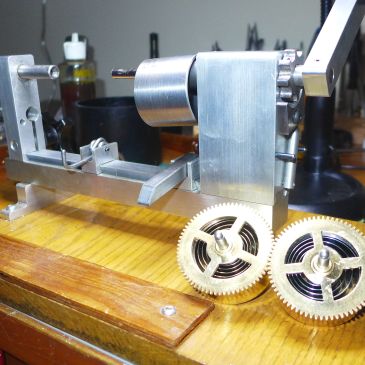
Time side mainspring on an Olie Baker spring winder, an appropriately sized collar is on the right

Removing and reattaching the caps to any barrel can be quite cumbersome. With this particular barrel, a convenient and swift method involves using a small slotted screwdriver in one of the two small openings to easily pry open the cap.

A small slotted screwdriver is inserted in the opening to pry open the cap

The importance of wearing leather gloves for safety cannot be overstated.

Tightening the mainspring allows for the insertion of the collar

A firm grip on the barrel ensures a predictable and controlled process.

The collar is in place and the spring can be let down and removed from the barrel

During the removal of the mainspring, a thorough inspection is conducted to identify potential issues such as stress cracks, unusual wear, pitting, and the accumulation of rust. Subsequently, the spring undergoes a meticulous cleaning process to eliminate any dirty oil, followed by reoiling, before being reintegrated into the barrel.

Reattaching the cap to the barrels can be accomplished by employing two small clamps to gently guide the cap into position.

Two clamps help to guide the cap in place

Once more, the use of gloves guarantees safety.

Upon proper placement, the cap will emit a distinctive “snap” sound.

Both mainsprings have been serviced and the barrels cleaned in the ultrasonic machine

The springs in this particular clock appeared to be in excellent condition and are suitable for reuse.

Meanwhile, it is essential to inspect the barrel teeth for signs of wear, particularly focusing on any bent or damaged teeth during this stage. Worn teeth may result from a spring that is too powerful and not correctly rated for this clock, while broken or bent teeth could be indicative of a mainspring failure.

Next, we proceed with the remainder of the maintenance for this time and strike clock, moving on with the polishing of pivots and bushing work. Join me in a few days as we continue the servicing of this Junghans movement.

Junghans round top mantel clock servicing

I first wrote about this clock in April 2023 after having won it at auction. With so many other projects on the go, I can finally allocate time to focus on servicing this captivating German time and strike mantel clock.

Auction photo

The 1915 Junghans catalog identifies the clock as the Hunsruck, named after a mountain range in Germany, and provides its specifications as 28.5 cm in height with a mahogany or oak case construction, a 14-day run time, and a silvered dial. This clock is the mahogany cased model.

Junghans Hunsruck model

The movement is a time-and-strike design that was a hallmark feature of numerous Junghans mantel clocks during that period. I have one other Junghans mantel clock with an identical 151 movement.

Junghans Corner feet finished
Junghans Sydney with the 151 movement

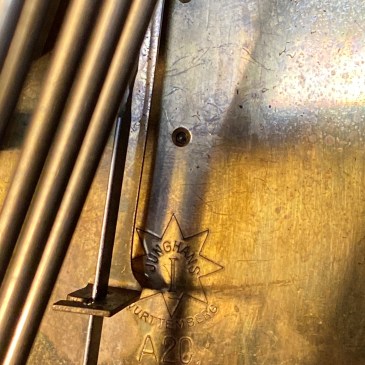
The Junghans trademark is boldly showcased on the gong block and inscribed on the back of the movement. On the back plate, it is stamped B13 which denotes the movement as having been manufactured in the latter part of 1913.

Removing the movement from the case is relatively straightforward. The movement, which rests on a wooden support board is held in place by two rather large 1 1/8 inch wood screws. After taking the movement out of the case, two brass thumbscrews are removed to release the seat board.

Assessment

Upon my initial assessment, it appears that the movement is in decent condition, overall. However, there is a noticeable accumulation of dirty oil in the majority of pivot holes, indicating a thorough cleaning is necessary.

Junghans movement with the back plate removed

Upon closer inspection, elongated pivot holes in three locations tell me that new bushings need to be installed: specifically, on the third wheel time side, back plate, and both the front and back plates of the star wheel. The star wheel runs off the count wheel and it is the star points that activate the hammer for the strike.

I use toothpicks to carefully clean out the pivot holes before immersing the plates in the ultrasonic cleaner as part of my standard practice. With a soft cloth, I clean and inspect the pivots on each wheel using a fingernail across the pivot to check for ridges and imperfections. I then check the integrity of the pins in each of the lantern pinions. Once satisfied that the inspection is complete the next step is cleaning the parts in my ultrasonic cleaner.

I will pause here and resume next week with the continuation of servicing the Junghans type 151 clock movement, including details about the necessary bushing work. Additionally, I will provide insights into the case’s condition. Stay tuned for the conclusion!

Time to service a Classic Sessions Schoolhouse Clock – cleaning & testing the movement

In the first segment of this two-part series, I detailed the assessment process of this Sessions time-only movement, which can be accessed here. This article explores the next steps in the servicing of this clock movement. I will also offer in-depth observations regarding the case’s condition and comment on any additional issues that have emerged subsequent to the assessment phase.

Sessions Schoolhouse clock

Two years ago, I acquired this Sessions schoolhouse clock at an auction with the intention of adding it to my collection of similar 19-inch clocks. The purpose behind this acquisition was to create a set of “time zone” clocks, as my children are scattered across the country. This setup allows me to easily glance up and determine the time in their respective areas.

The back of the movement


In the initial assessment of the movement, I anticipated no significant surprises or wear due to the prior work done on it.

To disassemble for inspection, I removed the movement from the case. Using a let-down key, I restrained the mainspring with a C-clamp and then removed the 4 bolts holding the movement together. After taking out the mainspring, I inspected the remaining parts for wear. I observed slight elongated wear on the second wheel bushing hole but found no major issues requiring remediation. Further examination revealed minimal grime in the pivot holes and a lack of lubricating oil. Overall, the movement showed little wear.

And now, on to servicing the movement.

Using an emery board to polish the pivots

Using my Taig lathe I polished each of the pivots. Polishing methods may differ but I prefer to use a fine-grain emery board. Emery boards are affordable and ideal for the task at hand.
I slide the emery board horizontally while the pivot rotates within the lathe and clean off any residue on the pivots with a soft cloth.

All components are immersed in the ultrasonic cleaner, and after approximately 15 minutes in the cleaning solution, the parts are removed and thoroughly dried using a gentle cloth and a hairdryer to eliminate any remaining water within the lantern pinions.

Since there’s no requirement for bushing work, the procedure remains straightforward, and the components are reassembled after the drying is completed.

Once all the parts are together the pivots, entrance & exit pallets, saddle pin, mainspring arbour, and crutch loop are oiled using Keystone clock oil.

After assembly, the movement undergoes a testing period, which may extend for days or even weeks. However, for this particular time-only movement, because of its simplicity, the testing duration is shorter.

The case and dial

The case is very well-preserved, devoid of the typical dents and marks often encountered on clocks from this time period. Cleaning with soap and water will suffice.

I only realized that the entire dial face, except for the chapter ring, had been repainted after I started loosening the screws for the dial bezel. I hadn’t noticed this previously and had assumed it was a replacement dial because it appeared to be in such good condition. Achieving this required a steady hand, and as a result, it looks very well done.

Repainted dial face

Despite the care and attention given to preserving the movement and case, it is noteworthy that the hands are incorrect. Sessions would have originally used solid spade hands instead of pierced ones, and, naturally, both the hour and minute hands are too short.

On the test stand

The test stand

While on the test stand, I had to make two adjustments to the recoil escapement. The entry and exit pallets were too far from the escape wheel which necessitated moving the saddle slightly in towards the escape wheel. This is the drop most often referred to and it can be visualized as the airspace between the leading corner of a tooth point and the part of the pallet it is about to fall on. The other is a crutch adjustment to bring the movement to the correct beat.

Two days on the testing stand prove to be adequate, and the final step involves reinstalling the movement back into its case.

Prolonging the Life of your antique or vintage clock

New owners of an antique or vintage clock might find it surprising that their recent purchase requires periodic maintenance. This realization often dawns upon them only when the clock stops, and they struggle to get it running again.

This Junghans wall clock, C.1899 is a daily runner

In this discussion, we explore regular clock maintenance, underscoring the importance of continuous inspection to ensure your clock enjoys a long and functional life.

Determining the ideal service interval of a running clock is a frequent topic of discussion among clock repairers, influenced by various factors that impact a clock’s lifespan. Factors include environment, age, frequency of use, manufacturers recommendations, complexity of the movement, user maintenance and cost of repairs.

Regular inspection

I conduct regular inspections of all clocks running continuously in my collection every 3-5 years, enabling me to pinpoint potential issues and remediate them if necessary.

Not all of my clocks are inspected on a regular basis. Among my collection of approximately 85 clocks, only a maximum of 27 clocks remain in continuous operation. Of the remaining ones, certain clocks may need specialized maintenance, are in various states of repair, some have fragile or rare parts, and others are reserved for special occasions.

Elisha Manross steeple clock from the 1830s

As an illustration of a clock that seldom runs, one of my clocks is a 30-hour time-and-strike Elisha Manross steeple clock dating back to the 1830s. This particular clock features brass mainsprings, making them irreplaceable if they were to break today.

Brass mainsprings for Manross clock
Brass mainsprings

Clocks that occasionally stop signal a need for immediate attention. I look for any immediate issues that might have caused the stoppage otherwise I focus on identifying green or black residues around the pivots. Contaminants mixing with clock oil create an abrasive paste, damaging bushing holes and pivots and in time the wear will stop a clock. If a clock stops after running continuously for years it is more often than not a wear issue. Disassembling the movement is imperative, enabling a detailed assessment of wear and determining the extent of intervention.

When dealing with a non-functioning clock no matter what procedures you have taken to get it running, the first step involves a visual inspection to identify evident problems like broken or bent parts, as well as missing components. This leads to the next step which is called servicing. True clock servicing involves comprehensive disassembly, inspection, cleaning, addressing wear and damage issues, reassembly, and thorough testing.

Factors that affect wear

Several factors affect wear, with the local environment playing a pivotal role. Humidity and temperature fluctuations, especially in older homes or those with wood stoves, impact a clock’s performance. Dust and pet hair, infiltrating the movement, also accelerate wear.

Clock cases that are tightly sealed with access doors help alleviate these concerns, and a properly sealed clock will extend the intervals between servicing.

Gustav Becker Vienna Regulator runs continuously

Different types of clocks exhibit unique wear patterns. Spring-driven time and strike clocks often wear on strike side pivots more often than the time side due to the shock of the half-hour strike. Chiming clocks face additional challenges due to the complexity of the chime/strike sides, where dried oils and dirt cause friction, leading to eventual stops. Weight-driven clocks, especially if not correctly in beat or with twisted cables, may suffer premature stops and require thorough investigation.

A mechanical clock as a decoration

Many people appreciate the decorative allure of antique clocks and opt not to operate them, choosing instead to display them as decorative pieces. However, leaving a mechanical clock unused poses risks.

Time and the environment, rather than operation, cause the most damage. Unused clocks primarily suffer from the thickening of the oil over time and the eventual breakdown of that oil. On the other hand, dried-up oil provides no lubrication for the pivots and leads to accelerated wear. Excessive enlarging of the brass pivot holes by the steel pivots will eventually lead to depthing issues (depthing, which is the correct meshing of one gear in relation to the next is a topic beyond the scope of this article).

Parts left motionless often tend to fuse, and rust accumulates, particularly in humid environments. Although the majority of clocks possess brass plates that are resistant to rust, there is a significant portion of steel components in them that are susceptible to corrosion.

In addition, mainsprings frequently become stuck due to thickening oil, causing the spring to fuse in position.

Running the clock even occasionally such as once per month is essential, enhancing longevity.

Clock cases also need attention

While maintaining the clock movement in good condition is crucial, cleaning the antique clock case is also important for several reasons.

Firstly, a clean case enhances the overall appeal of the clock, showcasing its design and craftsmanship.

Secondly, regular cleaning prevents the buildup of dust, dirt, and grime.

Thirdly, cleaning the case helps preserve the wood or other materials, preventing cracking and blistering and ensuring its structural integrity. I apply Minwax furniture paste wax on certain surfaces to protect the finish and maintain its appearance.

Junghans Corner feet finished
A clean clock case showcases its design – Junghans Sydney mantel clock C.1913

Overall, cleaning the antique clock case ensures its longevity, functionality, and visual appeal, making it an essential aspect of proper clock maintenance.

Health check for clocks

In my controlled home environment, with stable temperature, low humidity, and no pets, I prioritize regular health checks for my clocks as a preventive measure. Yet, due to the controlled environment in my home, I can prolong service intervals to around 4-5 years.

Shorter periods are recommended for clocks in less controlled or fluctuating environments, ensuring timely maintenance and preserving the clock’s longevity. Utilizing an Excel spreadsheet, I meticulously record changes, service intervals, and issues for each clock in my collection.

My goal is to ensure every clock’s durability, preserving them for future generations, and potentially passing them (well, at least some) down to my children.

My Seth Thomas Regulator #2 Clock five years later

In 2018, while exploring Ontario (Canada), I came across a Seth Thomas Regulator #2 in an antique shop in Bloomfield, just a short drive from Picton, a prominent center in Prince Edward County known for its numerous wineries.

I had my eye on this clock when I viewed it online over the summer and carefully contemplated the purchase before finally acquiring it in the fall of 2018. These clocks are somewhat rare to find, but the price was reasonable, and the clock itself was in very good condition.

Seth Thomas #2
Seth Thomas Regulator #2

The Seth Thomas Regulator #2 was recognizable at one time as one of the most commonly seen regulator clocks in America. It graced many railway stations across both the US and Canada throughout the last century, a testament to its accuracy and reliability. It is a sturdy, precise, well-crafted timepiece that Seth Thomas produced from 1860 to 1950, an impressive 90-year production run. Few clocks can boast such longevity, making it an iconic American clock that every serious clock collector desires.

The design of the #2 remained largely unchanged over the years, but certain design characteristics can help in dating a specific clock. The identification guide below outlines characteristics of the dial and case that assist in estimating the year of manufacture. A clock colleague cautioned me against placing excessive trust in the chart, but I am satisfied with using rough estimates.

Seth Thomas Regulator #2
Seth Thomas Regulator #2 ID chart

With the exception of its distinctive base, most #2s produced after the earliest versions had the pendulum mounted in the rear. The chart also mentions a limited reissue in 1976. While the reissue is well-crafted and aesthetically pleasing, most Seth Thomas enthusiasts would argue that it doesn’t quite compare to an authentic Regulator #2, and the prices for these versions reflect that sentiment. Nevertheless, those who own the reissue appear to be satisfied with their acquisition.

According to the chart, my clock was likely made between 1922 and 1929. It features a base reminiscent of the earlier 1860 version of the #2, Arabic numerals, and spade hands. The bow tie connecting the wood dial bezel and the drop is a single piece (earlier versions had a three-piece bow tie). The clock has a second hand positioned 2 inches above the center cannon, but it’s not a true second hand; it runs off the escapement, taking 80 beats to complete a “minute.” Standing at 36 ½ inches tall, it’s veneered in mahogany.

The bottom right of the movement bears the stamp “77A” with the letter “K” beneath it, although it lacks other distinctive markings. Unlike some versions of the 77 movement that have lantern pinions, this one has cut pinions. Whether one type of pinion is better than the other is open to debate.

Seth Thomas Regulator #2
Seth Thomas Regulator #2 showing some marks on the face

As with any item nearly 100 years old, there were some issues with the clock. There is minor scuffing on the dial, no label, a finish that has lost its luster, and paint splatter on the top of the case (though not visible from most any angle). Taking down a clock while painting a room is a simple decision in my view, but some individuals prefer painting around it.

I transported this clock from Ontario to Nova Scotia by car, and removing the pendulum for transportation is not a straightforward process. If you are familiar with the pendulum arrangement on a typical weight-driven Vienna Regulator clock, this one is similar. Removing the weight is as simple as unhooking it from the cable wheel. Like Viennas, the pendulum is hung behind the movement, and both the weight and movement must be removed to access the pendulum since the pendulum must be removed for transport.

Seth Thomas #2
Seth Thomas #2 movement in place

The steps to remove the pendulum are as follows. First, the clock hands are removed. The minute hand is secured with a nut, which must be released. The second hand is a friction fit and can be pulled straight off.

There are eight small screws holding the dial in place. Once the dial is off, two larger screws on the wooden second-hand rail can be removed to access the movement. Four cylindrical column posts secure the movement in place; unscrewing them, starting with the bottom two, allows the movement to be lifted/pulled out. Once the movement is out, the pendulum can be unhooked from its suspension spring. The entire process takes less than five minutes.

The trapezoid 77A movement in this clock appeared clean when I first opened the case. There were signs of previous work, such as punch marks around some pivot holes, a common practice frowned upon today. The deadbeat escapement was in good condition and did not require adjustment. Otherwise, the movement looked to be in very good condition.

Seth Thomas #2
Seth Thomas #2 with escapement removed. Observe the numerous punch marks

Getting the clock to run reliably presented a challenge, and it took about a week to troubleshoot and resolve the issue. It eventually became clear that the issue lay in the positioning of the hands with the second hand obstructing the hour hand. I remounted the dial ensuring there was sufficient clearance between the second hand and the hour hand and it ran smoothly thereafter.

Regulating the clock is a relatively straightforward process, achieved by adjusting the rating nut on the bottom of the pendulum. This clock must be level and properly aligned to function correctly.

Time for servicing

In the spring of 2021, the clock began to stop intermittently. It would operate for 5-10 minutes before coming to a halt. I had replaced the suspension spring two weeks earlier and thought I had addressed the issue but clearly, I had not.

Seth Thomas #2 suspension spring

The clock’s apparent simplicity masks the tight tolerances it requires, and any signs of wear have the potential to cause the clock to cease functioning. Despite being a time-only movement with few gears I do not believe this is a good movement for the novice clock repairer.

I installed three bushings on the back plate; the second, and third wheels, and the escape wheel, and two on the front; third wheel, the escape wheel, and the verge pivot hole front plate.

Seth Thomas #2
Seth Thomas #2 movement

At the time I also discovered a slightly bent third-wheel arbour that did not take much effort to straighten.

While the movement was out of the case I replaced the maintaining power spring. I’m unsure if I’ve resolved the clunking sound the clock produced when I wound it previously because I now must turn the key crank in the opposite direction for a quarter turn to adjust the maintaining spring to avoid the clunk.

I also replaced the old cable with a 3/64-inch brass-weight cable. One aspect of the brass cable that I particularly appreciate is its nylon core, which prevents it from coiling. Polishing the pendulum bob and weight enhanced its overall appearance.

Since 2021 it has been running very well and keeping accurate time.

While these clocks were constructed robustly and designed for demanding environments, running for extended periods without the need for maintenance, there is still a requirement for periodic servicing. When I obtained the clock, it quite likely had gone without servicing for a considerable duration, and the maintenance performed in 2021 was certainly long overdue.

Seth Thomas Regulator #2

Still, I am happy with the purchase of this clock. At present, it adorns the front hallway of our home, adding a touch of elegance to the entrance.

This clock is a splendid addition to our home’s front entrance, with a rich and storied history. While its exact whereabouts over the past 100 years remains a mystery, it remains a remarkable clock.

Essential Clock Movement Servicing Steps

Why does a mechanical clock movement require servicing? The answer is quite straightforward. Maintaining your clock’s movement is essential to ensure it continues to function properly and extends its lifespan.

Regular servicing reduces wear and tear, ultimately preserving the clock’s functionality. Ideally, most clocks should undergo servicing every three to five years to maximize longevity.

Seth Thomas mantel clock C.1930

This article outlines the seven steps I typically follow when servicing an antique or vintage clock movement, using a common American, pendulum-driven movement as an example, Seth Thomas’s Type 86 8-day time and strike movement.

Step 1 – Initial Assessment: Upon receiving a clock, my first task is to determine if it runs. I assess whether it runs and strikes correctly and completes its full 8-day cycle. If it operates for fewer than 8 days, there may be an underlying power problem, which could stem from various factors like weakened mainsprings, worn bushing holes, bent arbours, and so on but more often than not a good cleaning will improve its run time even if there is some wear in the movement.

The movement is mounted to the front of the clock

Step 2 – Addressing non-running clocks: When the clock does not run, I conduct an examination to identify potential issues such as missing or broken components, bent wheel assemblies, and arbours, damaged or worn gear teeth, worn pinions, snapped mainsprings, and broken or broken clicks along with any missing parts like suspension springs or pendulum bobs.

Nevertheless, when all components are intact and the mainsprings appear to be in good condition, I take measures to ensure the clock is properly adjusted for an even beat.

I’ve observed that on many occasions, the mainsprings are wound tightly, and relieving this tension tends to address the problem (albeit temporarily), allowing the clock to operate relatively smoothly. However, if it stops running soon after starting, I note the problem areas and set it aside for servicing.

Step 3 – Disassembly and assessment: After removing the hands, dial face, and taking the movement out of the case (4 screws hold the type 86 in place), I conduct a thorough visual inspection. This step involves checking for damage, dirt, and excess oil, and determining the extent of cleaning required.

Type 86 time and strike movement

I use retaining clamps to safely secure the mainsprings’ power and then proceed with disassembling the movement. Disassembly includes removing outboard parts such as the crutch and suspension rod, releasing the four or five bolts holding the plates in place, and proceeding to remove the wheels and levers.

I assess wear in various areas, including pinions, pivot holes, arbor conditions, and connections between plates and pillars. I also look for tool marks and indications of previous servicing.

Step 4 – Cleaning the parts: Cleaning the clock movement parts is crucial, and I prefer using an ultrasonic cleaner. I use a mild alkaline, biodegradable degreaser concentrate for cleaning. I organize the parts in compartments for easy identification, with strike parts separated from time-side parts.

Deox 007 is a concentrate.

For open-loop mainsprings such as the type 86, I detach them from the main wheel before cleaning. To guarantee that the mainwheels and springs are reinstalled in their original spots, I mark them with either “T” or “S” for clear identification.

Ultrasonic cleaner by L&R

Drying the parts promptly is vital to prevent rust formation. I use shop towels and a portable hair dryer to ensure all areas are dry. Lantern pinions tend to be especially difficult to dry and a hair dryer is an ideal tool to remove excess water.

After cleaning, I inspect the cleaning solution and, if suitable, reuse it.

Step 5 – Polishing pivots: The next step involves polishing the pivots. If the pivots are in good condition, a few passes with an emery board are sufficient. A small metal lathe is ideal but a portable drill will do.

Taig lathe with 1/4 hp motor

For pitted pivots, more aggressive cleaning and polishing may be necessary, and in extreme cases, pivot replacement may be required. Cleaning and wiping the pivots with a soft cloth is essential, followed by bushing if needed.

Step 6 – Bushing, broaching, and pegging pivot holes: I determine which pivot holes need bushing by assessing lateral pivot movement and marking each one (with a black marker) to be bushed.

Bergeon Bushing Machine

I use a Bergeon bushing machine known for its precise work. After making the bush hole, I clean it from chips and burrs, followed by broaching if necessary. In the process, both cutting and smoothing broaches are used to ensure an optimum fit.

Drilling a hole with Bergeon bushing machine
A hole is enlarged with a cutter to accommodate a new bushing

All pivot holes are pegged with toothpicks until no residue remains.

Step 7 – Making necessary repairs: Other potential repairs include re-pivoting, straightening or replacing wheel teeth, sourcing parts, making new parts, and addressing issues with worn lantern pinions and escapement components.

Step 8 – Reassembly, testing, and adjustment: Finally, I reassemble the clock movement, carefully securing the gears and levers in place. I use a pivot locator to move the pivots to their correct location. Once reassembled, the movement goes through a testing process and adjustment on a test stand, ensuring it is in beat and properly regulated. This testing phase can take up to a month before returning the movement to its case.

A movement on a test stand. Attached is a microphone for a beat amplifier

In conclusion, servicing antique or vintage clocks significantly extends their lifespan. These seven steps provide a general guideline for clock movement servicing, though some steps may require further explanation, and individual procedures may vary among clockmakers.

Finding a Reliable Clock Repair Professional


If you’ve acquired a clock as a gift, through inheritance, from antique shopping, online purchases, or any other means, and it’s not functioning correctly, you have several choices in having it repaired.

Seth Thomas Adamantine mantel clock, C.1909

You might decide to try fixing the clock yourself, especially if it’s a simple or inexpensive clock. Basic tools and some luck might help with minor repairs or cleaning, but keep in mind that professional skills and patience are often required for clock restoration.

Repairing clocks is a specialized craft that takes years to master, and specialized equipment is often needed. For high-quality or rare clocks, it’s often best to trust a professional.

Ingraham Grecian
Ingraham Grecian, C.1872

Clock repair is becoming a rare and dwindling profession. Many clock repair businesses are closing as older experts retire, and there aren’t enough newcomers to continue the tradition. Finding a reputable clock repair person can be challenging and may require significant time and research.

Reputable clock repair establishments hire certified professionals who possess the expertise to handle a diverse array of clocks. Meanwhile, the availability of clock repair schools is decreasing, and there are fewer graduates, which leads to very few options in some areas.

Scottish tall case clock
McLachlan tall case clock, C.1848

Suppose you’ve made the decision to search for a clock repair specialist. In that case, here are some suggestions to consider in your quest.

Finding a Reputable Clock Repair Service:

  • Perform a Google search to determine if there is a clock repair shop in your immediate area.
  • Antique stores often have connections with reputable clock repair specialists. Attending antique fairs can also help you network with enthusiasts who can recommend experienced clock repair professionals.
  • Check with the Better Business Bureau to see if a repair shop is in good standing without complaints. If you find a potential clock repair service online, be sure to read reviews and testimonials from previous customers. This can provide valuable insights into their reputation and the quality of their work.
  • Consult the National Association of Watch and Clock Collectors (NAWCC) business directory, which lists reputable repair services in several countries.
  • Join local NAWCC chapters or forums (joining is free) to connect with experienced horologists and seek guidance on finding a repair person in your area.
  • If in the UK, look for individuals with memberships in the Antiquarian Horological Society (AHS) for clock expertise.
  • In Germany, the Deutsche Gesellschaft für Chronometrie is an excellent resource for finding clock specialists.
  • When contacting a clock repair specialist, don’t hesitate to ask for references from past clients. Speaking with satisfied customers can help you gauge their expertise and reliability.
  • Seek recommendations through word of mouth from people who have had their clocks repaired by reliable professionals.
  • Although not all watchmakers work on clocks, some may have the expertise or know of clock repair specialists in your area. Consider reaching out to watchmaking shops for referrals.
  • Contact local museums or historical societies that exhibit clocks. They often collaborate with or have connections to skilled clock restorers who can help maintain their collections.
  • Ensure that the repair person has the necessary qualifications and certifications, especially if you have a valuable or antique clock that requires delicate handling and expertise. You will feel more comfortable knowing it is in trusted hands.
  • If possible, visit the clock repair shop or specialist’s workshop in person. This gives you an opportunity to see their work environment, tools, and the types of clocks they are currently servicing.
  • Once you have found a clock repair individual get an estimate of how long the repair is expected to take. Complex repairs may require more time, so it is essential to have a realistic time frame in mind. Count on a turnaround time of months rather than weeks even for standard servicing.
Kienzle World Time clock
Kienzle World Time clock, C.1951

Whether you’ve come into possession of a clock through various means, finding a skilled clock repair specialist is essential to restore your clock to its former glory. While attempting DIY repairs can be tempting for simpler clocks, the intricacies of clock mechanisms often demand the expertise of a professional.

Complicated repairs are beyond the scope of the do-it-yourselfer

By following these guidelines and conducting thorough research, you can locate a reputable clock repair specialist who will provide the care and attention your clock deserves, preserving its beauty and functionality for years to come.

Assessing the level of wear on your antique clock

You might be wondering whether or not your newly acquired 100-year-old clock requires maintenance even if it seems to be running well. The traditional saying “don’t fix what isn’t broken” may not be suitable for antique clocks because even a seemingly well-functioning clock may not disclose the full extent of its wear.

My first antique clock, Seth Thomas Adamantine C.1900

Many years ago mechanical clocks were quite prevalent. However, as electric clocks gained popularity in the 1930s, the mechanical clock industry began to decline. Many renowned American and Canadian clock manufacturers, such as Seth Thomas, Sessions, and Ansonia, simply disappeared by the mid-1950s.

Sessions electric clock C.1934

As electric clocks replaced mechanical ones in households, old mechanical clocks became decorative pieces, were stored away in attics, barns, and basements, or found their way to second-hand shops, antique malls, and flea markets. Consequently, the state and backstory of your clock may differ considerably based on the conditions under which it was stored after it stopped running.

Appearance tells a story

The external appearance of the clock and the level of care it has received can provide insights into its usage history. A heavily worn clock case often suggests that the clock movement inside has also experienced significant wear and tear.

On the other hand, a meticulously maintained clock case may house a movement that has enjoyed a lengthy lifespan and received consistent servicing over the years.

George H. Clark 30 hour Ogee
Both case and movement were in very good condition, George H. Clark 30-hour Ogee

Whether it has run a few months or several years, is difficult to determine precisely unless it has been examined carefully for wear. The answer is complex, primarily because determining the clock’s exact history and how often it has been serviced is not as straightforward as it seems. There are many variables at play and unless you are aware of the clock’s history unraveling its past by examining the extent of wear can be complex.

Inspect for wear

To assess the condition of your clock accurately, you must inspect the movement for signs of wear. Wear is a clear indicator of the clock’s condition and suggests how much time it has spent in operation without maintenance. Only by disassembling the movement can the full extent of wear be ascertained.

Rusted and worn movement, likely stored in a damp environment

Signs of wear could include worn bushings, worn bushing holes, punch marks adjacent to bushing holes, bent arbours, broken or repaired teeth on clock gears, broken or tired mainsprings, cracked pinions, loose clicks, excessive oiling, traces of solder as well as missing or damaged case pieces, and worn clock faces.

Date markings on the case or the movement that have been inscribed with a sharp tool or pencil provided evidence of when the clock was serviced. Marks such as these indicate that the clock has been serviced, though not necessarily always by a skilled professional.

Buying privately provides some assurances

It is highly unlikely that an antique mall dealer would have much information on a clock’s history as such sellers typically focus on the sale of items rather than their historical backgrounds.

Private sales of antique clocks can indeed offer valuable insights into their usage and history.

In private sales, you often have the opportunity to interact directly with the clock’s current or previous owners. They can provide firsthand information about the clock’s origin, how long it has been in their possession, and any maintenance or repairs it may have undergone.

Rare Ingraham Huron found on a local online for-sale site
A well-preserved E Ingraham Huron bought from a private seller

Antique clocks passed down through generations within a family may come with stories and documentation that shed light on their usage. Some private sales may include original documentation, such as purchase receipts, service records, or even old photographs featuring the clock. These documents can be invaluable in understanding the clock’s history.

Private buyers often have the opportunity to physically inspect the clock before purchase. This close examination can reveal wear patterns, repair marks, or other signs of usage and maintenance that might not be apparent in online listings or auctions.

Sellers of antique clocks in private sales are often enthusiasts or collectors themselves. They may possess an understanding of the clock’s history, design, and significance, which they are willing to share with prospective buyers.

A vintage Hermle wag on a wall clock that had been in the same family for generations

In some cases, private sales may come with provenance—a documented history of ownership and past sales. This can provide a clear lineage of the clock and offer valuable information about its previous owners and usage.

An amateur or professional repair

It’s important to distinguish between amateur and professional repairs. Amateur repairs are often quick fixes to get the clock running again and are usually visibly apparent. In contrast, professional repairs are thorough and aimed at extending the clock’s lifespan, with minimal visible alterations.

An amateur repair on a time and strike movement

In your search, you may come across clocks that have been serviced multiple times and others that have never received maintenance. Clocks in the latter category can range from heavily worn and non-functional to surprisingly well-preserved due to factors like limited use or professional servicing at regular intervals.

A regulating gear discovered after disassembly

You might come across clocks with multiple services or those never serviced yet still in good condition. While your 100-year-old clock may have run continuously, it likely underwent several servicing sessions, either by skilled professionals or enthusiasts. Conversely, some clocks in excellent condition may have seen minimal use, despite never receiving maintenance.

Punch marks on a movement
Punch marks used to close a bushing hole, not an acceptable practice today

While the complexity of assessing antique clocks’ wear can be daunting, it adds to the allure and fascination. Whether it has run continuously and been cared for throughout its life, or is one step closer to the garbage bin, each clock tells a unique story that adds to its charm.

Clock parts suppliers that should be on every clock repairer’s list

Clock repairers often find themselves in need of specific parts and tools to ensure optimal repair. While utilizing components from donor movements is perfectly acceptable, there are instances where a new part becomes the only viable option, and reliance on reputable clock suppliers becomes crucial.

Bergeon Bushing Machine

Relying on reputable clock suppliers for these new parts, tools, accessories and supplies ensures that repairers have access to top-quality components that meet the necessary specifications and standards. This not only guarantees the longevity and reliability of the repaired clock but also enhances the repairer’s reputation for delivering top-notch craftsmanship and customer satisfaction.

Trusted suppliers offer a wide range of compatible parts, expert knowledge, timely availability, and potential warranty support, making them invaluable resources for clock repairers striving for excellence in their work.

All parts in except the minute / hour canon
Occasionally mainsprings must be replaced

Clocks come in various types and styles, and each may require specific parts that are compatible and interchangeable with the existing mechanisms. Reputable suppliers often stock a wide range of clock parts, offering a diverse selection to meet different requirements. They understand the intricacies of clock mechanisms and can provide suitable components that seamlessly integrate into the repair.

Reliable suppliers usually maintain adequate stock levels and have efficient logistics systems in place. This means they can promptly fulfill orders and ensure timely delivery of clock parts. Having a reputable supplier who can provide quick access to the required components is essential, especially for clock repairers with and waiting customers.

Steady rest clock tool

Reputable suppliers often stand behind the quality of their products by offering warranties and after-sales support. This provides peace of mind to customers, as they know they can rely on the supplier in case of any issues or defects. Warranty coverage allows for replacements or repairs, minimizing potential losses and ensuring customer satisfaction.

HAC movement
Movement held by a clock stand
Standoffs
Standoffs for working on a movement

So, who are the suppliers? The suppliers listed below, none of which are sponsors of this author, are the ones I would choose based on my past experiences in procuring parts with most of them over the years.

Here they are with a short description of their services.

Timesavers: According to their site, “TimeSavers is a worldwide distributor of clock parts and repair material. We have been in business since 1975.” Their extensive inventory contains thousands of parts. Timesavers is the best-known clock parts supplier in North America.

Cousins; Cousins is a UK parts supplier I have sought them out for specialty items such as brass feet for a bracket clock and parts for long case clocks and parts not readily available from North American suppliers.

Perrin: Perrin is Canada’s leading supplier of clock parts. Residing in the eastern region of Canada, I rely on Perrin as my primary supplier. Note; Perrin is closing its business effective May 2024

Butterworth: I am not certain if Butterworth has a dedicated site but they can be reached on Facebook. I have ordered a pivot polishing kit from them in the past but they are also known for the unique Butterworth bearing.

Merritts: While their parts inventory may not be as comprehensive as that of other suppliers, they do offer a diverse range of antique clocks available for online purchase at reasonable prices.

Meadows and Passmore: Some restrictions apply on the purchase of clock parts and it is best to check with the company before ordering.

Mile-high Clock Parts: The repairer’s source for Keystone tools, such as a staking set, spring winder, bushing machine as well as other parts.

Clockworks: The clock repairer’s principal source for new Hermle movements as well as other supplies and parts.

Black Forest Imports: A distributor for clock movements and supplier for case parts, tools, repair supplies, etc.

Ronell: Ronell is a worldwide provider of clock repair parts and supplies.

If the reader is aware of other suppliers please add them to the list through the comment section below. Should there be others this article will reflect the additions at a later date.

A reader suggested Griffens Clocks and they can be reached here. The company acquired R&M Imports in 2019. R&M was well-known to clock enthusiasts and started out as a mail-order business in 1968. Griffens also acquired the inventory and assets of the Herschede Clock Company. They are located in Portland Oregon.

With that said, pricing increases in the last two years may frighten some newcomers away. In my experience when dealing with suppliers, everything from bushings, files, and specialized tools such as bushing machines, spring winders, and so on have risen dramatically in price since the global pandemic. Some prices have increased by as much as 50% to 75%.

For those entering into horology as a hobby, fear not, as there are bargains to be found on the used market. However, unless you have developed an expertise for locating quality parts and tools that are in decent condition it is easy to fall prey to unscrupulous sellers.

While the prices of parts might appear appealing, it’s important to remember to include taxes, shipping costs, document processing fees, and import duties (if applicable). Additionally, certain suppliers mandate a minimum order. It’s worth noting that some of these suppliers also offer antique clocks, repair manuals, and novelty items in addition to clock and watch parts.

The reliability and quality of these suppliers not only ensure the authenticity of repairs but perpetuates the art of horology, allowing time to be both honoured and preserved for generations to come.

The ubiquitous type 89 movement by Seth Thomas

The Seth Thomas Clock Company is a well-known American clock manufacturer with a long history dating back to the early 19th century. The Type 89 movement is one of the many clock movements produced by Seth Thomas over the years. This type was made between 1900 and 1938.

This is a first look at the movement of a Seth Thomas time and strike mantel clock with a type 89 movement. Since there is no year stamp on the clock movement I am surmising that this clock was manufactured in the mid to late 1930s judging from its design and construction.

Discovered at a thrift shop in Renfrew, Ontario, the clock was not functioning initially.

Generally speaking, a clock movement faces issues with low power output caused by friction resulting from wear over time. The primary issue with aging clocks is their gradual deterioration due to extended periods of operation. Common culprits are dirt accumulation, insufficient lubrication, and lack of proper adjustments, although these are unlikely to be the reasons for the malfunction.

Interestingly, a dirty movement often continues to function even without lubrication if it’s in decent condition. There is no doubt that this movement requires bushing work to address accelerated wear, yet regrettably, I do not currently have access to the necessary bushing tools for the task as I am on holiday.

Despite the accumulation of grime, and potential wear-related concerns, I opted to put the movement into action, primarily with the goal of uncovering underlying issues. Doing this required removing the hour and minute hands, releasing 4 screws holding the movement to the front of the case, removing the strike block, and taking the movement out of its case.

Once on the work bench an initial inspection of the movement did not reveal any obvious issues with either the time or the strike side, so, it was safe to proceed further. When found both mainsprings on this time and strike movement were wound tight and appeared ceased likely as a result of the build-up of glue-like dirt between the coils of the mainsprings.

I have found that in some cases gently unwinding the coils of mainsprings with a let-down set can often relieve enough tension to provide a clock with the necessary energy to start running but there was one more step in the process.

A letdown set is required in order to release the mainsprings

Although there was a noticeable amount of dirt around the pivots, I applied oil to each one. However, it’s important to be cautious about mixing new and old oil, as their interaction can result in the formation of a harmful abrasive paste, which can speed up wear on both the pivots and the bushing holes.

Thus, while oiling a dirty movement is a temporary solution, it’s not a replacement for proper disassembly, thorough cleaning, and addressing wear issues.

As a result of releasing the mainspring, oiling the pivots, and putting the movement in beat, it now runs strongly. However, there is something amiss with the strike side and further investigation is required. Despite this, I am not anticipating major issues with this movement.

The next step is disassembly, cleaning, reassembly, and testing. Should it require bushing work, that step will have to wait a while longer.

I have every confidence that this movement will run very well once serviced.

The Therapeutic Art of Clock Repair in Retirement

Engaging in a fulfilling hobby like clock repair and restoration can offer immense benefits for the soul, especially during retirement. Horology provides a respite from life’s pressures and allows individuals to use their time constructively.

Working on a time-only movement

Here are several compelling reasons why having a hobby like clock-making is invaluable for retirees and those approaching retirement.

Boosts self-esteem

Each small achievement in pursuing the hobby leads to a sense of accomplishment and success. These positive experiences build a strong foundation of self-confidence, which can be applied to handle other life challenges effectively.

Learning the components of a chiming movement

Eliminates boredom

Hobbies prevent boredom and deter individuals from indulging in destructive behaviours. Rather than spending hours mindlessly watching TV, constructive engagement with a hobby brings immense satisfaction and rewards.

Broadens perspective

Engaging in a hobby fosters continuous learning and personal growth. Taking on new challenges opens up fresh perspectives, facilitating personal development and resilience in overcoming adversity.

Promotes youthful vitality

Hobbies contribute to brain health and help maintain cognitive abilities, making them a valuable investment in both present and future well-being. Cultivating hobbies early in life ensures lasting benefits, much like a wise investment.

Examining a rusty time and strike movement

Integrates with other interests

Hobbies can be beautifully combined with other passions, such as photography, travel, or writing. This harmonious integration enhances the overall experience and enriches life’s journey.

Sparks curiosity and interest

Having a unique and captivating hobby, like collecting historical clocks with intriguing stories, makes one more interesting to others. Sharing these experiences enthralls attention and sparks engaging conversations.

A clock hobby is more than the movement

Provides stress relief

A hobby becomes a refuge in trying times, offering solace from the world’s stresses. It creates moments of tranquility and relaxation, promoting overall mental well-being.

Learning new techniques

Break Problems Down to improve problem-solving abilities

When confronted with a complex problem such as a complicated three-train movement, break it down into smaller, manageable parts. This approach allows you to analyze each component separately, find solutions more effectively and promote personal growth.

A feeling of satisfaction when things work correctly after servicing a movement

In challenging times, the dedication and effort invested in a hobby like clock repair and restoration bring immense joy and fulfillment.

It’s never too late to explore new hobbies and discover one’s own oasis of happiness and relaxation during retirement.

Getting a stubborn hand to fit correctly on an hour wheel

Approximately two years ago, I stumbled upon a weight-driven banjo clock listed on Facebook Marketplace. Before finalizing the purchase, I engaged in a conversation with the seller, who appeared to have limited knowledge about the clock’s value. The clock was among several items that the seller’s family was parting with, and it was evident that they didn’t have any sentimental attachment to it, despite it being in their possession for several decades.

To my surprise, the clock was remarkably intact, with only minor veneer issues. Apart from routine servicing of the movement, the clock required repairing the small sections of veneer and mounting it securely on the wall.

Banjo clock attributed to John Sawin of Boston 1840


I only needed to replace one bushing in the movement, and that resolved the only wear issue.

New bushing

However, the hands of the clock posed some challenges on a couple of occasions. Firstly, the minute hand became loose and wouldn’t advance properly. Upon investigation, I discovered that the hand was not securely attached to the minute wheel. I resolved this by using a slightly larger taper pin to tighten it.

Banjo clock

Later on, the hour hand started causing problems as well. It became loose and wouldn’t advance correctly. The minute hand, the hour hand doesn’t have a collar as you would find on a conventional mass-produced American clock and relies on friction to fit onto the top section of the hour pipe. There isn’t much room to work within this area, and it’s either too tight or too loose. Tightening the hour hand requires carefully punching the inside of the hole to make it smaller. Once again, due to the limited space available, this was a challenging task.

The hands stayed in place and now to test the movement for any issues.

The Schoolhouse Clock: Unveiling its History

The origin of the name “schoolhouse clock” is not well-documented, and it appears that the term was not used during the time these clocks were made. Instead, it was later coined by collectors to describe a particular style of clock commonly found in school settings.

Gilbert Admiral with calendar function

Schoolhouse clocks were the standard design for early North American schoolhouses due to their larger, easy-to-read dials. They were widely hung in schoolrooms across Canada and often had simple time-only movements, although some versions included a calendar function or time and strike movements. These clocks had a utilitarian look and were known for their durability.

Ansonia Schoolhouse Clock with 12-inch dial

The design of schoolhouse clocks is believed to be influenced by English drop dial fusee clocks, which were produced in the late 18th and 19th centuries. Drop dials closely resembled schoolhouse clocks and featured conical constructions with a chain or gut line pulled by a mainspring barrel, providing even power release for improved accuracy. Complicated movements such as these did not find their way into inexpensive mass-produced American and Canadian schoolhouse clocks.

When purchasing a clock, the author always asks the seller about its history and provenance.

Sessions Drop Octagon
Sessions Drop Octagon time only schoolhouse clock

In the case of the Sessions Drop Octagon wall clock pictured above, the seller had acquired it from a decommissioned one-room schoolhouse in Springhill, Nova Scotia. The clock, dating back to the 1920s, features a solid oak case, original hands, a pressed brass pendulum bob, a solid brass bezel, and a tin dial pan with stenciled lower glazing. While the paper dial showed signs of discoloration and wear, the clock was in reasonably good condition for its age.

Upon bringing the clock home, the author discovered that it ran for only a short time before stopping. A rubbing sound around the pendulum area indicated that the pendulum bob was hitting the inside of the case. After correcting a bent crutch rod, cleaning the movement, and making some adjustments, the clock started running properly. The author considered replacing the paper dial, which had brownish spots from prolonged exposure to moisture but decided to keep it as part of its history.

Time-only movements, like the one in this schoolhouse clock, are relatively easy to work on, making them suitable for beginners in clock collecting and repair.

While the exact origin of the term “schoolhouse clock” remains uncertain, it has become a permanent part of the clock collector language. These clocks, with their distinct style and large dials, were commonly found in early North American schoolhouses and have since gained sentimental value and recognition among collectors.

Restoring Antique Clocks according to Customer wishes


While I do not operate a clock business I have, in the past, worked on other people’s clocks.

The customer’s perspective and preferences are always paramount when it comes to repairing and restoring antique clocks. As an antique clock blogger and clock repairer, I believe it is crucial to respect and understand the wishes of the clock’s owner. Each customer may have their own unique vision for their clock, and it is important to provide them with options while also offering expert advice.

When working on a customer’s clock, it is customary to present various options for repairing the movement and addressing any case issues. While some clocks may have significant provenance or historical value, necessitating minimal intervention, others may benefit from repairs and cleaning to bring out their full potential. However, it is ultimately the customer’s decision on how they want their clock to be treated.

In a recent experience, I had the opportunity to work on a clock with a non-functioning movement and a beautifully designed case. When discussing the options with the customer, they expressed a desire to prioritize making the clock run and replacing the broken hands, while leaving the case untouched. Although I believed that cleaning the case and applying a fresh coat of shellac would enhance its appearance, I respected the customer’s wishes and proceeded accordingly.

1-day Ogee from the 1860s

In the realm of antique clocks, the customer’s satisfaction is of utmost importance. While as a clock restorer and enthusiast, I may have my professional opinions and recommendations, it is essential to remember that the customer’s vision and preferences take precedence. By offering different choices and providing expert guidance, we can ensure that the customer’s clock not only functions well but also aligns with their aesthetic sensibilities and personal attachment to its history.

Customer clock

The customer’s desires should be respected when working on antique clocks. While expert advice can be offered regarding repairs and restoration, the final decision lies with the customer.

By presenting various options and considering their input, a functional clock that meets their expectations and preserves the integrity of the clock’s history and design while preserving the relationship between the repairer and the customer is the ultimate goal.

If I had to take one antique clock from a “burning house” which one would it be

We have been facing a challenging spring here in Nova Scotia, as the threat of wildfires has been looming over us.

In May 2023, our community in Nova Scotia has been devastated by the occurrence of two uncontrolled wildfires. The dire consequences of these fires include the evacuation of thousands of individuals and the tragic loss of hundreds of homes.

Residing in a rural area with our house nestled amidst beautiful trees, we can’t help but have a constant awareness of the potential for fire.

While it’s crucial to prioritize safety and well-being in emergency situations, it’s understandable that certain personal belongings/items hold significant value to us. They include ID, cell phones, credit cards, vehicle titles, keys, flashlights, passports, a portable hard drive containing all personal photos, and essential clothing but if I find myself with a moment to select just one antique clock during a speedy evacuation what would it be?

My wife prompted this discussion when she asked, “What clock would you take?

Selecting a specific antique clock to save from a “burning house” is a subjective decision based on personal preferences, sentimental value, and the uniqueness of each clock. However, here are a few factors I might consider when making my decision:

  1. I might choose a clock that holds special meaning to me or my family. It could be a clock that has been passed down through generations or one that has sentimental value attached to it.
  2. I would consider the rarity and historical significance of the clock in question. If a clock’s origins is significant or it is known for its craftsmanship or historical importance, I might prioritize saving such a clock.
  3. If one clock is in better condition or has the potential for easier restoration, it might be a good choice to save.

Here are 5 clocks that would be high on my list and the reasons why. But in the end, I could only take one!

Pequegnat Canadian Time

Pequegnat Canadian Time

I have had this clock for a number of years, and have serviced it twice. The clock’s case, on the other hand, has remained untouched and remains in exceptional condition. This particular clock holds a special place in my collection as one of the earliest examples of the eight Pequegnat clocks I own. It spent its life in the waiting area of a train station located 1/2 drive from my home.

Sawin Banjo Clock

Sawin banjo clock

Dating back to the 1840s, this exceptional timepiece exemplifies the pinnacle of meticulous movement craftsmanship. While the case and movement do not bear any explicit “Sawin” markings, various indicators strongly suggest that it was crafted by John Sawin himself or one of his associates or apprentices. Notably, this clock stands out for its straightforward construction, lacking side rails or ornate embellishments such as painted tablets or gilt decorations. It is precisely this simplicity in design that captivates me, as it allows the clock’s elegance and craftsmanship to take center stage.

Junghans Crispis time and strike wall clock

Junghans Crispi

This clock underwent a comprehensive restoration process involving countless hours of work, including disassembling, creating new components, servicing the movement, and refinishing the case. The restoration required a significant amount of labor and attention to detail. The clock holds a captivating story as it was rescued from a house that endured severe destruction during the Halifax Explosion in 1917.

Single-weight Vienna Regulator

Single-weight Vienna Regulator

The sheer beauty of this clock makes it incredibly challenging to part with. Its design epitomizes the finest qualities of the 1880s Vienna style. Unlike the later Viennese clocks, which often leaned towards ornate and ostentatious features, the clocks from this particular period maintain their elegance and embrace a more refined and understated aesthetic. The clock’s classic, simple lines are a testament to the enduring allure of the Vienna style during that era.

Arthur Pequegnat Canadian Time

Arthur Pequegnat Moncton

It is quite possible that this clock was located in a train station or some other commercial setting, given its robust construction and durability designed to withstand potential mistreatment. Additionally, its timeless design features are reminiscent of the classic lines commonly associated with the 1920s era. The clock’s sturdy build and elegant aesthetics perfectly capture the spirit of that period, adding to its overall charm and appeal.

E. Ingraham Huron

Rare Ingraham Huron found on a local online for-sale site
E Ingraham Huron

This clock resided in the charming vicinity of Bridgewater, Nova Scotia. It came into our possession during a challenging period for a couple undergoing a difficult separation, as sentimental items often find their way to new homes in such circumstances. Among the clocks in my collection, this one stands out as one of the few that underwent professional servicing, ensuring its optimal functionality. Notably, this clock holds a relatively rare status, being produced by the E. Ingraham Clock Co. during the brief span of two years, between 1878 and 1880.

And now it boils down to the one to choose?

Although I hold great admiration for all of these clocks, if I were constrained by space and could only choose a single one to take with me, it would have to be the Junghans Crispi. As mentioned earlier, this clock embodies the qualities that I value, such as its exceptional craftsmanship and timeless appeal. Its unique design, combined with the renowned Junghans brand, makes it a standout choice in the collection. Given the limited space, the Junghans Crispi would be the clock I couldn’t bear to leave behind, as it represents the epitome of my preferences and holds a special place in my heart.

My most recent Hunsruck Clock evokes memories of my first Junghans clock

While working on one of my latest acquisitions, a Junghans Hunsruck mantel clock, memories flooded back to the first Junghans clock I ever owned, a Junghans Crispi wall clock, that I still have to this day.

Junghans Hunsruck C. 1913

It was a humble box of parts when it first came to me, but I was determined to bring it back to life.

Junghans clock in pieces
Junghans clock in pieces, not unlike a jigsaw puzzle

The restoration process was a hands-on experience where I had to fashion new parts, source missing pieces, and master the art of staining and gluing. Through this ground-up restoration process, I developed a deeper understanding of the craftsmanship and artistry that went into creating these old clocks.

Piece by piece, I painstakingly assembled the clock, learning about the inner workings and mechanics along the way. It required both patience and dedication, but in the end, it was worth it. The clock not only became a functional piece, but a treasured symbol of my passion for antique wall clocks.

A first examination of the movement

As I worked on my latest Junghans mantel clock refreshing the case and servicing the movement, I couldn’t help but reflect on the journey that led me to this point. Each clock I restore holds a special place in my heart, but that first Junghans clock will always hold a particularly special place. It was an affirmation of a lifelong passion for the timeless elegance of antique clocks.

The fascinating story behind the Crispi wall clock

The story behind the Junghans Crispi clock is the enduring power of objects that connect us to the past.

Junghans Crispi time and strike wall clock

In the midst of tragedy, there can be glimmers of hope and resilience. Such was the case with a Junghans Crispi wall clock that fell off a wall on Princess Court in North End Halifax on the fateful day of December 6, 1917. Despite the chaos and destruction caused by the Halifax Explosion, this clock managed to survive, albeit in a state of disrepair.

Following its century-long journey, the clock that had been treasured by the Halifax family for generations finally found its way into the hands of an avid antique clock collector.

Over the course of two months, I worked tirelessly to piece together the various components and restore the clock to working condition. It was no easy feat, but the end result was a stunning tribute to both the clock’s history and the resilience of the people of Halifax.

In a series of articles documenting the restoration process, I shared not only the technical details of the restoration but also the personal connection to this piece of history.

Tick Talk Tuesday #47 Mason and Sullivan movement in a grandfather clock

Tick-Talk Tuesday is dedicated to addressing readers’ letters and comments related to clock issues, challenges, and recommendations for specific clocks. In cases where the comments and questions are particularly challenging, I seek advice from my fellow clock enthusiasts to provide the most accurate and helpful response.

DH writes

I am the executor of an estate and am dealing with a Grandfather clock that will be sold outside the normal auction process to one of the children.  I have attached a picture of the clock and a description of the movement inside the clock.  The clock was built by Hanson Heffler of Cherry Run, WV.  He only built a couple of clocks and those were for family, so he is not a known clock builder.  How can I get a valuation done for Estate purposes?  What other information do I need to obtain?  What fees will need to be paid to get the valuation?  Any assistance you may provide is appreciated.

Custom clock with Mason and Sullivan movement

My reply

You are certainly entitled to consult an expert to determine the value of the clock, however, let me offer a few words of advice.

I am not a clock valuation expert and cannot physically inspect its construction, repair status, and overall condition and any estimate I offer from information provided to me by email regarding the clock’s value would be approximate. 

The clock appears to be from the 1970s to the 1980s. While the case is custom-made, as you say, the movement is sourced from Germany which was very common during that period. The clock movement may say Mason and Sullivan but the maker is Hermle of Germany. Mason and Sullivan simply put their stamp on it suggesting to the buyer that it is American-made. Whether a clock was custom-made or factory produced as in grandfather clocks from Howard Miller or Ridgeway during that period, for example, the practice was to install German-made movements which is not a bad thing since German-made movements are robust and reliable.

Movement is stamped Mason and Sulivan

That said, many of these clocks are difficult to sell because nobody wants them for a number of reasons. One, they generally cost more to repair than they are worth. If the clock has not been serviced in quite some time, at the very least the movement would require inspection and oiling by a professional clock repair person. In addition, ongoing repairs and maintenance can add up over time. Two, they take up space. Homes are typically smaller today and space is often at a premium and the size of the clock often puts off buyers. Three, transporting and setting up these clocks can pose a challenge if the buyer lacks the familiarity with setup. Four, the clock has a period look and may not fit with the style of a modern home or may clash with other furnishings.

If the clock does not have a distinct history (provenance) or the maker is not highly regarded, its value will be significantly lower than the original purchase price.

Typically a clock of this style and vintage would fetch something in the neighbourhood of $500 to $600.

While it is recommended to seek the advice of an expert to obtain an accurate valuation of the clock, their estimate may not deviate significantly from the one I have given.

Hope this helps.

Ron

Unboxing the Junghans Mantel Clock: An anticipated Arrival

Junghans, a name that is well-known to clock collectors and repairers, is not the company it once was. In recent years, the company has established itself as a prominent manufacturer of high-quality wristwatches.

However, During the early to mid-20th century the German company had established itself as a prolific producer of wall, mantel, and tall case clocks. Collectors and enthusiasts highly value the company’s clocks for their superior quality, solid construction, and classic designs that have withstood the test of time.

Although I wasn’t actively seeking out a new Junghans clock to add to my collection, I couldn’t pass up the opportunity to acquire this one at an attractive price. It now joins my collection of clocks, which includes two other Junghans clocks.

Junghans Corner feet finished
Junghans Sydney time and strike bracket clock C. 1911

One is a bracket clock from 1911 (code stamped B11), and the other is an older wall clock from the turn of the 20th century. Both of these clocks are among the 21 clocks in my home that are run and maintained on a daily basis.

Junghans Crispi time and strike wall clock C. 1899

As expected, the clock arrived safely after I chose to have it shipped to me instead of personally picking it up from the auction house, which is located two hours away from my home. I had confidence in the auction house’s ability to package the clock securely for safe shipping, as I have dealt with them in the past and they have always been careful with packaging.

Auction house photo

Having received the clock, I can confirm that it is exactly what I expected it to be, with no surprises or unexpected issues. Checking its functionality, I wound both sides and it runs and strikes as it should.

Backplate and coil gong

A similar movement in my Sydney bracket clock is stamped with a code (B11) indicating its production year, which is two years before this one. The gong block in both clocks is also identical in appearance.

However, I will only be able to confirm if there are any other internal differences between the two clocks when I dismantle the movement for cleaning.

Dial

Is the blemish just above the number five a scuff mark or a permanent abrasion, or is it merely a buildup of dirt that can be cleaned off?

Crackling or alligoration of the finish

The case of the clock appears dull and neglected, and I am uncertain as to the appropriate method for refinishing at this point, nevertheless, it is evident that the case’s appearance would be significantly improved with some care and attention.

Pendulum bob and key

A correction from a previous article

After believing that the pendulum attached to the clock was not appropriate for the movement, I replaced it with what I believed was the correct one. However, I discovered that the replacement pendulum did not reach down to the beveled glass port and the rod hook was opposite in orientation to the one that came with the clock.

Despite functioning well and keeping accurate time, it did not look suitable. After I posted an article on first impressions, sight unseen, A reader pointed out that they have the exact pendulum bob for their Junghans roundtop clock, which has now led me to reconsider my previous assumption that the original pendulum was not the correct one. Thank you, dear reader!

Now that I have confirmed that the clock is functioning correctly, it is time to proceed with the disassembly and cleaning process, which is evidently long overdue.

Why should I repair an antique clock if the repair exceeds its value?

An often-asked question is why should I repair an antique clock if the repair exceeds its value.

The decision to repair an antique clock if the repair exceeds its value ultimately depends on your personal attachment to the clock and its historical significance.

Let’s talk about sentimental value

If the clock has been in your family for generations or has sentimental value to you, repairing it may be worth the cost, even if it exceeds the clock’s current market value. Repairs might include restoration or significant repairs to the case but a working clock that presents well is the main objective. Having a ticking clock can add a touch of elegance and charm to a room, as well as provide a sense of history and provide an important connection to the past.

A clock with a homemade plywood case was worth the repair because of its family heritage

A clock that is rare is worth the repair if…

If the clock is rare or has historical significance, it may be worth repairing regardless of the cost. Some antique clocks may have been made by renowned clockmakers or may be associated with important historical events or figures, making them highly valuable.

Valuable antique clocks must be carefully repaired because they often have unique and irreplaceable pieces that require specialized knowledge and expertise to repair. Any repairs must be done in a way that preserves their originality and authenticity.

To repair certain clocks, it may be necessary to use rare and difficult-to-find components or even handmade parts. This highlights the importance of collaborating with a skilled and knowledgeable clock repair specialist who has access to these parts or can create them. Even a small error in repair can result in significant damage to the clock’s mechanism and timing, leading to a reduction in value.

Improper repairs can significantly reduce the clock’s value and historical significance. Valuable antique clocks can be fragile and delicate, with intricate mechanisms and delicate parts that require careful handling during the repair. Any damage to these parts can irreversibly damage the clock, leading to a loss in value.

Working with a qualified and experienced clock repair professional is essential to ensure that the clock is repaired correctly and maintains its value.

Kienzle World Time clock
This Kienzle World Time clock has maintained its value

A clock as an investment

If you believe that the clock’s value may appreciate over time, repairing it may be a wise investment.

Clock collecting for investment purposes is a complex and potentially risky endeavor that requires a significant amount of knowledge, research, and expertise. While some antique clocks may appreciate in value over time, the market for antique clocks can be unpredictable, and there is no guarantee that a clock will increase in value.

Additionally, the cost of purchasing and maintaining a collection of antique clocks can be significant, and the potential return on investment may not justify the expense. Clock collecting for investment purposes should be approached with caution and with a thorough understanding of the market and the value of individual pieces.

Appreciate an antique clock for what it is

Antique clocks are often rare and unique, making them a great conversation starter. Guests may be intrigued by the clock’s history and design, leading to interesting conversations and the opportunity to share knowledge and stories.

On the other hand, if the clock has little sentimental or historical value and is unlikely to appreciate in value, it may not be worth repairing if the cost exceeds its current value. Ultimately, the decision to repair an antique clock should be based on a careful evaluation of its worth and your personal attachment to it.

Junghans Corner feet finished
A common bracket clock made by Junghans

Antique clocks have a sense of history and nostalgia that can be comforting and grounding. They remind us of the past and the craftsmanship that went into making these timepieces before the era of digital clocks and watches.

While antique clocks may not be as accurate as modern timepieces, they can still keep time and serve a practical purpose in a room.

Website Powered by WordPress.com.

Up ↑