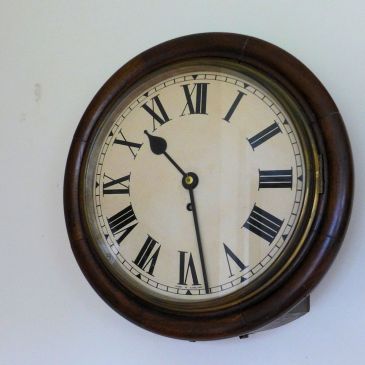
Why Age Alone Does Not Determine the Value of an Antique Clock

I receive mail from folks who are often surprised the antique clock they just purchased has less value than they think when provided with an explanation.

Throughout history, people have often equated age with value. It is a common assumption that an object or idea that has been around for a long time must be worth preserving and treasuring. However, just because something is old, it does not necessarily mean that it is valuable. In fact, there are many instances where age can actually detract from the value of an item.

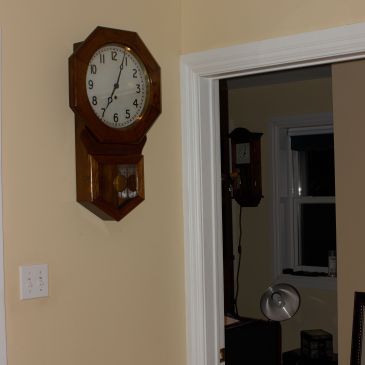
A $2 thrift store find

One example of this is technology. As technology advances at an exponential rate, older devices become outdated quickly. A computer that was top of the line ten years ago is now essentially useless in today’s world. Even if it still functions, it would be extremely slow and unable to run current software. Therefore, just because an object is old does not mean it is valuable in terms of technology.

A $10 find – Mission-style wall clock by Sessions

Similarly, some antique clocks may not be worth much at all. While it may be beautifully crafted and well-preserved, and represent thousands that were made it may not be in demand or fit with modern design styles. In some cases, the age of an object can actually detract from its value, as it may have damage, wear, or alterations that cannot be repaired without diminishing its historical significance.

A $60 auction win – 1-day ogee clock by the Hamilton Clock Co. (Canada)

Age alone does not determine the value of an object. While it is important to preserve history and cultural heritage, it is also important to recognize when something is outdated or no longer relevant. When assessing the value of something like a clock, it is important to consider its historical significance, reputed make, provenance, current demand, and whether it is still relevant or useful in today’s world.

What makes an antique clock valuable?

Antique clocks can be valuable for several reasons, including rarity, historical significance, or provenance when associated with a famous person, clocks that represent an important step in the development of timekeeping technology or the history of clockmaking, quality of craftsmanship as in the work of a noted clockmaker as well as clocks in excellent condition that contain their original parts.

The value of an antique clock depends on a combination of these factors, as well as the current market demand for such clocks.

However, just because something is old does not mean it is valuable.

More advanced clock repair tools for the budget minded and those of you who can afford the extra cost

Antique clocks are not only valuable as historical artifacts but also as complex machines that require precise repair and maintenance. To ensure their longevity and functionality, clock repairers need to have access to advanced tools that can help them diagnose and fix various issues. From ultrasonic cleaners to digital calipers, the modern clock repairer has an array of high-tech tools at their disposal that can make the restoration process more efficient and accurate.

In this article, we will explore some of the most advanced tools used in antique clock repair and how they are used to restore these valuable timepieces to their former glory.

Some of these tools may or may not break the bank depending on your financial situation or budget restrictions. Should you be prepared to invest heavily and cost is no object there are a number of options. For those of you who are budget minded, are looking for value, and are handy around wood-making tools, there are options for very little money.

For those specialized tools that will assist you in building and designing your own movements, such as a wheel/pinion cutter, the depthing tool, and advanced testing machines, please look elsewhere, this is not the place for you.

In my last article, I focused on what is needed for more advanced repairs but kept the budget at under 400 USD. This time the outlay grows a little but it can be controlled if you make careful decisions.

See this article for more advanced tools

As in life, there are many ways of accomplishing the same task which means a number of options are available:

  • Purchase new tools
  • Substitute hand tools for machine tools
  • Make the tools
  • Buy on the used market
  • Improvise

For each category area, there are options for budget-minded and those with unlimited funds.

On a personal note, my first major tool was a spring winder. Next was a bushing machine followed by an ultrasonic cleaner and finally, a metal lathe. The purchases were made over the space of four years and working within a limited budget. Your mileage may vary.

Let’s get started.

Spring winder

Joe Collin’s spring winder for the budget-minded

Olie Baker spring winder

The Olie Baker spring winder is designed for hole or loop end mainsprings. It has a unique tailstock feature that safely stabilizes and secures your mainspring so it will not slip off. It also comes with nine mainspring sleeves.

Olie Baker spring winder. Cleaning the strike side mainspring
Olie Baker spring winder

It is American-made and approximately 280 USD. An extra cost Mainspring Let-down Set or a comparable tool is required to operate the Ollie Baker Winder. The KWN spring winder, which is equally capable, competes with the Olie Baker.

You will need a letdown for the Olie Baker spring winder

Bushing Methods

Drill press

Bushing work can be accomplished on a drill press but a cheaper unit will have poor runout. Runout is the amount of “wobble” that is found in the drill press (the drill bit specifically) when it is rotating. A machine with a poor runout will produce a larger and more imperfect hole than the size of the drill bit used. My inexpensive Canadian Tire drill press has a visible runout and is not acceptable for bushing work. Higher-priced machines have less runout and can operate at very low speeds. A low-speed drill is optimal for bushing work.

Bushing by hand

Hand-reaming with KWM or Bergeon cutters is an art in and of itself. Hand reamers usually come as a set of 5 Reamers, 1 Chamfering Cutter, and a handle. A hand reamer set is an economical method of reaming bushing holes so that brass bushings are pushed into place once the hole is reamed out.

The Bushing machine

The KWM Bushing Tool is used with KWN bushings. Used units, which are a fraction of the cost, can only use KWN’s own bushings however, a new design makes it now possible to use all the original KWM brass brushings but also all brass and bronze bushings by Bergeon.

Bergeon Bushing Machine

The Bergeon bushing machine is the second option. The Bergeon Bushing machine Includes 2 plate clamps, 10 reamers, 3 pushers, 4 drilled stakes, 1 undrilled stake, 1 centering tool, 1 chamfering cutter, 1 centering stake, and instructions and is made in Switzerland.

As far as bushing machines are concerned one is no better than the other. Each has its advantages and disadvantages. There is a legion of fans on either side.

Cutting and smoothing broaches

Cheap cutters and smoothing broaches will certainly work but it is worth spending a little money on better-quality tools.

Junghans front plate count wheel bushing

Regardless of whether you subscribe to Bergeon or KWN bushings a set of bushings of various sizes is essential.

Drilling a hole with Bergeon bushing machine
Drilling a hole using a cutter on a Bergeon bushing machine

Polishing pivots

Taig metal lathe

For repairing broken pivots a metal lather is essential. For polishing pivots, a lathe is very useful but not essential. The Taig metal lathe is a popular choice for hobbyists and professionals alike due to its accuracy, rigidity, and durability. With a range of attachments and accessories available, the Taig lathe is capable of tackling a variety of machining tasks with ease.

Taig lathe with 1/4 hp motor

Portable drill

During the early days of clock repair, I used a portable drill to polish pivots. It is relatively cheap as one usually has a portable drill around the house. Combined with emery boards it is an effective polisher.

Clock Reference Books, how-to guides, and manuals

Go here for all the books I recommend

It is becoming increasingly challenging to find good hard-cover clock repair books. Check out my article above for my choices for clock repair resources.

My clock book library

Cleaning choices

Ultrasonic cleaner

Using an ultrasonic cleaner is a highly effective way to clean small clock parts and components without causing damage or introducing harmful chemicals. The high-frequency sound waves generated by the cleaner can dislodge dirt, grime, and other contaminants from even the most hard-to-reach areas.

There are a wide variety of ultrasonic cleaners. A Chinese-made cleaner will work well (and is cost-effective) but for reliability and longevity, it is best to spend a little extra money on a quality machine.

Ultrasonic cleaner by L&R
Ultrasonic cleaner by L&R and Poly-Chem Deox 007 is a very effective combination

Of course, if you prefer not to go the ultrasonic route, hand cleaning is perfectly acceptable. You will not have the shiny brand-new look that an ultrasonic cleaner will give you but in most cases the movement is hidden and aesthetics are not absolutely required.

Important extras

Comfortable chair

Using a comfortable chair for antique clock repair can help reduce fatigue and improve concentration during the restoration process. A well-designed chair can provide proper support and comfort for extended periods of work, which can be particularly beneficial for complex and time-consuming repair projects. Do not underestimate the value of a comfortable chair.

Leather gloves

Mainsprings, when they break or let go can leave ugly cuts and bruises. A good pair of leather gloves will be your best friend.

Work area

Using a dedicated work area for clock repair is essential for creating a safe, organized, and efficient workspace. Having a designated area for repair work can help prevent accidents, minimize distractions, and ensure that all tools and materials are within easy reach. It can also help maintain the integrity of the clock being worked on by minimizing the risk of damage or contamination.

My work area was once a bedroom

I am sure I left out a few things but these are the essentials and again if your budget permits, better-quality tools will make all the difference.

In conclusion, the world of antique clock repair has come a long way in recent years with the development of advanced tools and technologies. These tools have made it possible for repairers to restore valuable timepieces with greater precision, efficiency, and accuracy.

While traditional repair methods and techniques will always have their place, the use of advanced tools has enabled repairers to tackle even the most challenging restoration projects with confidence. The use of advanced tools and techniques can help preserve these historical treasures for generations to come.

Restoring an Antique Sessions Schoolhouse Clock: Repairing Bushing Wear and Overcoming Common Issues

Bushing wear is a common issue that can occur on antique brass clock movements. A bushing is a small hole drilled into the plate that is used to support the pivots and reduce friction between the pivots and the clock’s plates. Over time, the bushings can become worn down or damaged due to friction, which can cause a clock to malfunction or stop. Other factors such as the environment the clock is in, the lack of periodic lubrication, and the build-up of dirt and grime combine to exacerbate wear over the years.

When bushing wear occurs, the clock’s pivots may become loose or wobbly, which can lead to the gears not meshing properly or becoming stuck. This can result in the clock losing accuracy or stopping altogether.

To repair bushing wear on an antique brass clock movement, the bushings or the holes must be drilled out and a new bushing inserted in its place. The new bushings must be precisely fitted to ensure that the clock’s pivots are properly supported and that the clock runs smoothly.

On my bench is a Sessions time-only schoolhouse clock made in the early 1920s. According to the label on the back, it is called the Office.

At only 21 inches high it is diminutive in size, unfortunately, the hands are incorrect

Factors at play when a clock stops

The clock stops when fully wound. There are essentially two factors at play when a clock stops. When the mainspring is fully compressed dirt and grime act like sandpaper and prevent the power of the mainspring from releasing. Some erroneously call this “overwinding” a term that has stubbornly persisted over the years. Worn bushing holes add to the problem when the holes are so worn the gears do not mesh correctly.

Curious, why is the trademark stamped on the INSIDE of the back plate?

Sessions movements are not new to me and I have worked on identical movements in the past. Compared to the others I have worked on, this one has minimal wear with one peculiarity detailed below.

Even before servicing, it looks clean

There is no doubt this movement has been worked on previously judging from pivot scratch marks around the bushing holes and a replacement click spring. The leader and suspension spring have also been replaced at some point in the clock’s life and judging from the condition of the suspension spring, it may need to be replaced in this servicing.

While there is some movement in all the bushing holes the worst is the 3rd wheel rear plate and the escape wheel front and rear plate. The holes in those three locations were drilled out and new bushings were installed in their place.

Despite slight wear on all other bushing holes, there is not enough to warrant new bushings at this time. Naturally, if I were in the clock repair business I would consider bushing the entire movement.

Using support to steady the escape wheel bridge

In this case, replacing bushings in the entire movement is not necessary as the clock will remain in my collection and as such will be inspected every 2-3 years for wear.

One of the unique features of clocks such as this is their ability to be hung and forgotten and continue to run quite well while very worn, a testament to their rugged design.

Plates on the left and gears on the right, a pretty simple movement

And now the eccentric repair. The click spring retaining tab/hook was snapped off for whatever reason. As a result, the replacement click spring winds its way through to the outside of the wheel by hooking into a hole drilled in the spoke. It is a little odd but as it works well there is no requirement for remediation. Aesthetics aside, some repairs do not need to be reversed if the part functions well.

Odd but it works

The mainspring has plenty of “spring” left in it which makes me wonder if it is a replacement.

On the test stand

During servicing the mainspring was unhooked from the main wheel arbour and using my Olie Baker spring winder, it was extended and thoroughly scrubbed with a Scotch-Brite heavy-duty scouring pad, and lubricated with Keystone clock spring oil. There was certainly enough dirt and grime to stop the clock in the spring’s fully wound position and a good cleaning solved the problem.

After a brief testing period, the movement was remounted and it is now on display on my kitchen wall where it rejoins its cousins.

As the tiny hands look rather silly, the correct clock hands will be added to my next clock supply order.

Let’s end Daylight Savings Time

When Daylight Saving Time (DST) begins, we lose an hour. When it ends, we gain an hour. There are several reasons why some people advocate for ending daylight saving time (DST):

Disruption of sleep patterns:

Changing the clocks forward or backward by an hour can disrupt people’s sleep patterns, leading to fatigue and other health problems.

Safety concerns:

Studies have shown that there is an increase in traffic accidents and workplace injuries in the days following the time change. This is because people are more tired and less alert than usual.

Economic costs:

There are costs associated with changing clocks in devices and systems, such as transportation schedules and software. Additionally, there may be decreased productivity due to the disruption of sleep patterns.

Limited energy savings:

While DST was originally implemented as a way to save energy, studies have shown that the energy savings are minimal and may not be worth the disruption to people’s lives.

International coordination:

Not all countries observe DST, and those that do often have different start and end dates. This can cause confusion and difficulties in coordinating international travel, commerce, and communication.

Overall, ending DST could provide benefits for public health, safety, and economic efficiency.

In Canada?

Some provinces in Canada have been waiting to ditch the seasonal change but have cited a consistency with the US as a reason for the delay. The time change consistency is vital so as to align trading between the two countries. US bills have repeatedly failed to pass but once all the US states enact their own changes the federal go-ahead is the next step.

Yukon and most of Saskatchewan keep their clocks the same year-round. Yukon made the switch for the last time in March 2020, and standard time is now permanent.

DST is a relic of our past. Let’s just put it out of its misery.

A diminutive schoolhouse clock by Sessions

The Sessions Clock Company of America was one of the leading clock manufacturers in the United States in the early 20th century. Founded in 1903 by William E. Sessions and Aaron Lufkin Dennison in Forestville, Connecticut, the company quickly gained a reputation for producing clocks that were both reliable and affordable.

Over the years, the Sessions Clock Company produced a wide range of clocks, including mantle clocks, and wall clocks, and became known for their innovative designs.

A very popular model was the schoolhouse clock. Schoolhouse wall clocks have a rich history dating back to the late 19th century. Originally used in schools, and other public places, these clocks were designed to be reasonably accurate and reliable timekeepers, with large, easy-to-read dials and distinctive wooden cases with glass-paneled lower access doors showing a moving pendulum.

A comparatively small schoolhouse showing incorrect hands

Over time, schoolhouse clocks became popular in homes and offices, with various manufacturers producing their own versions of the classic design. Today, schoolhouse wall clocks remain a popular choice for those seeking a traditional timepiece and are often seen as a symbol of American craftsmanship and design.

Diminutive clocks were popular in their day because of the lower cost compared to a larger wall clock. This clock is 21 inches high by 13 1/2 inches wide with a 7-inch dial and it is difficult to envision how it could be seen clearly in a large classroom setting but for some school regions, the cost was an important factor. Standard schoolhouse clocks are typically seven to eight inches longer and have 12-inch dials.

Most schoolhouse clocks were designed to display only the time, with no additional features such as a striking mechanism or date displays. This simplicity allowed for a greater focus on reliability, which was essential in public spaces such as schools where good timekeeping and long periods between servicing were crucial.

Shown in the middle with a Waterbury on the right and Sessions on the left, all are time-only clocks

I have had this particular Sessions clock for over a year and it stops from time to time. It likely requires a good cleaning and it is time to put it on the workbench. The case is in excellent condition and I see no need for intervention aside from cleaning with soap and water.

We’ll see what we shall find. I’ll report back in a week or two but this should be a standard servicing job and I am not expecting any surprises.

Vienna Regulator – the pinnacle of clock artistry

Vienna regulator weight-driven wall clocks are a type of mechanical clock that originated in Austria in the mid-19th century. These clocks are named after the city of Vienna, where they were first produced and gained popularity throughout Europe. They are known for their unique design, which features a long, slender case with a glass door that allows the pendulum and weights to be seen.

Miniature one-weight Vienna wall clock, circa 1880

Vienna regulators are often considered the pinnacle of European clockmaking artistry, and they continue to be cherished by collectors and clock enthusiasts around the world for their precision, elegance, and timeless beauty.

The Crown or topper

The simple lines of the Vienna Regulator are exemplified in this unmarked mini version found on a local online for-sale site some 5 years ago. Simplicity is exemplified in its job of performing one function – telling the time.

Weight-driven clocks with comparatively large pendulum bobs give a very visual display of the clock’s activity. In my view, it is the weight-driven ones that have greater appeal than spring-driven clocks.

Time only movement

Nothing has been done to the clock save disassembling and cleaning the movement and polishing the pendulum and brass-encased weight.

Another is a two-weight Vienna Regulator by Gustav Becker which required extensive repair and restoration.

Gustav Becker 2-weight Vienna Regulator

Vienna regulator weight-driven clocks are a testament to the precision and artistry of clock-making, showcasing the intricate mechanisms and stunning designs that make them highly sought after by collectors and enthusiasts alike.

What is truly fascinating is the accuracy of a clock that is almost 150 years old.

Sessions Grand Assortment – finally completed!

I am not a huge fan of gingerbread clocks which were very popular in America at the turn of the 20th century. Every major manufacturer made them and they sold like hotcakes. Thousands have survived and a quick perusal of online auction sites any day of the week will reveal dozens if not hundreds of them.

The Sessions Clock Company of America was a prominent clock manufacturer in the early 20th century, producing a wide range of clocks that included mantle, wall, and grandfather clocks. Founded in 1903 in Connecticut, the company quickly gained popularity for its combination of both traditional and modern styles. Although the company ceased production in the 1950s, Sessions clocks remain popular among collectors and clock enthusiasts. Sessions gingerbread clocks were particularly popular.

The gingerbread designs were created by using high-pressure rotary presses on oak wood that had been pre-steamed to soften it.

The Grand Assortment 8-day time and strike gingerbread clock from around 1915 was a big seller for Sessions and the model was found in many American homes of the day.

And so, we have my Sessions clock won at auction in early 2022. This clock has had a hard life of neglect.

This clock took many months to complete. I was not quite certain what to do with the case so I worked on the movement initially. I have serviced a fair number of Sessions movements over the years so servicing was fairly routine with the exception of one small issue mentioned below.

Rather than leave the case as-is I knew I knew that invasive intervention was the only option.

Auction photo

The case was completely stripped, not something I wanted to do but it was in such poor condition. For example, note the bottom right base section shown below.

The entire case was similar to this

After much rubbing, scrubbing, using a commercial nontoxic stripper, and the application of 2 coats of traditional shellac the results were better than expected.

The clock is complete, the slight darkness on the right is my shadow

I can usually resurrect a dial but this one had too much foxing as they say in the clock world. Foxing is the gradual process of rust oxidizing through the paper dial over a long period.

Sessions dial pan

Rather than source a new paper dial I decided to go with a dial from an Ingraham gingerbread parts clock and since the diameter, the center arbor and winding holes are standard it was an easy fit.

Anyone familiar with the Grand Assortment line would note that they were fitted with Roman Numerals rather than Arabic dials but I don’t think the buyer of a clock like this would see it as an issue.

Here is the clock from a slightly different angle.

Straight on shot

The Movement

I began with new bushings on the escape wheel rear plate and third and fourth wheels on the time side and finally the second wheel back plate for a total of 4 bushings on the time side.

The movement, as found, note the pendulum leader hanging off the crutch loop

There was negligible wear on the strike side.

As I noted in a previous article the center cannon is quite stiff and I was never able to eliminate the stiffness completely but the clock runs well.

Final thoughts

Stripping an antique clock case should always be considered a last resort. While it may be necessary to remove old, damaged, or unsightly finishes in some cases, stripping can irreversibly damage the wood and compromise the value of the clock. It’s important to exhaust all other options, such as repairing and restoring the existing finish before resorting to stripping.

If stripping is the only viable option, it’s crucial to approach the process carefully and with the utmost care to avoid further damage to the clock case.

And so there you have it. A case that was completely stripped, a new top coat, a newish dial added, and a movement that required minor servicing and now the clock is ready to be sold at some point in the spring after a few weeks of testing.

William McLachlan – Scottish clockmaker – what ChatGPT taught me

Confronted with the prospect of finding little else about William McLachlan I was curious about how ChatGPT might help.

Read on and you will find the results quite interesting.

Scottish tall case clock
Scottish tall case clock assembled and sold by William McLachlan of Newton Stewart in or around 1848

First of all, what is ChatGPT?

ChatGPT is a sophisticated computer program that is designed to understand natural language input from users and generate appropriate (my underline) responses. It uses a form of artificial intelligence called a deep neural network to analyze the input it receives and generate text that mimics human language. The program has been trained on a vast amount of data, including books, articles, and websites, so it can provide information on a wide range of topics. ChatGPT is an advanced technology that aims to provide human-like interactions in a digital space.

Regarding William McLachlan, here is what AI came back with:

“William McLachlan was a well-known Scottish clockmaker who lived and worked in Newton Stewart in the 1800s. He was born in 1803 and began his career as an apprentice to John Smith, a clockmaker in the nearby town of Wigtown.

In 1826, McLachlan moved to Newton Stewart, where he opened his own clockmaking shop. He quickly gained a reputation for producing high-quality clocks, and his business grew steadily over the years. McLachlan was known for his precision and attention to detail, and his clocks were particularly prized for their accuracy and reliability.

In addition to making clocks, McLachlan also produced barometers, thermometers, and other scientific instruments. He was particularly interested in developing new designs and technologies, and he was constantly experimenting with new materials and techniques.

McLachlan was a respected member of the Newton Stewart community, and he was involved in many local organizations and charities. He was also an active member of the local Masonic Lodge, and he served as its Master in 1861.

William McLachlan passed away in 1872 at the age of 69, but his legacy lived on through his work. His clocks and other instruments are highly prized by collectors and are considered some of the finest examples of Scottish clockmaking from the 19th century.”

Early morning light on the clock face

I decided to ask the question in a slightly different way and this is what I found:

“William Maclachlan, a clockmaker from Newton Stewart, Scotland, was born in 1803. Here is some information that I was able to find about his life:

William Maclachlan was born in 1803 in Newton Stewart, a small town in the historical county of Wigtownshire in southwestern Scotland. He was the son of James Maclachlan and his wife Agnes. In 1823, William Maclachlan married Janet Hannah, and the couple had at least six children.

William Maclachlan worked as a clockmaker, and he is known to have produced a variety of clocks and timepieces during his career. Some of his clocks are still in existence today, and they are highly prized by collectors. For example, in 2017, a William Maclachlan longcase clock was sold at auction for over £20,000.

Maclachlan was also involved in local politics and community affairs. He served as a councilor on the Newton Stewart town council in the mid-19th century, and he was also involved in the establishment of the local savings bank. He was known for his philanthropy, and he supported various charitable causes throughout his life.

William Maclachlan died on March 6, 1876, at the age of 73. He is buried in Penninghame Kirkyard in Newton Stewart. His legacy as a skilled clockmaker and community leader lives on, and his clocks continue to be admired and sought after by collectors today.”

Back to the database search

In any event, armed with the “information” generated by AI I went back to a Scottish website called Scotlands People, a government-operated site to input new data.

As for information on deaths, I found a William McLachlan age 68 who died in 1871 in Rhu, Scotland which is 105 miles from Newton Stewart. For marriages I found nothing. However, records begin in 1855 which means he might have married earlier. Regarding the 1871 census, I found a William McLachlan who was age 67 in Renfrew County where Newton Stewart is located. On the whole, not definitive and really nothing to support the AI-generated data.

Is information from ChatGPT to be trusted?

Generating intelligible responses simply results in responses being “appropriate”. Note the spelling of McLachlan (Maclachlan) in the second query despite inputting the name correctly. Varying the words in each new query yields a different result because ChatGPT gathers information from a number of sources and constructs facts in an intelligible dialog based on the question asked.

In my view, ChatGPT can be a dangerous tool. It looks very impressive though sadly some people will not question the information generated. A plague of misinformation and propaganda will flow from AI, no doubt, and whether we like it or not robot reporters in the news media are already a thing. Therefore, generative AI can be transformative and yet potentially destructive.

For the researcher, AI might provide a starting point but it is too easy to go down the rabbit hole. I see some value in ChatGPT as a blog writer if I am searching for a generic opening paragraph or explaining how something works. For instance, I asked ChatGPT “How does a clock escapement work?” and the response, to me, is pretty impressive. Having said that, I am now aware of its limitations, so, a little caution is necessary going forward.

And since I have no way of verifying the AI information that leaves me at square one.

For now, I am standing by the information in a previous post which you can access above.

Oh, the answer to “how does a clock escapement work?’.

“A clock escapement is a mechanism that converts the rotational motion of a clock’s gear train into a series of evenly spaced ticks that move the clock’s hands. The escapement consists of an escape wheel and a pallet fork.

Here is how the escapement works:

  1. The power source, such as a weight or spring, applies force to the escape wheel, causing it to rotate.
  2. The pallet fork, which is connected to the clock’s pendulum or balance wheel, engages with the escape wheel and stops it from rotating.
  3. As the pendulum or balance wheel continues to swing back and forth, it moves the pallet fork, which then releases the escape wheel.
  4. The escape wheel rotates a small amount before being stopped by the pallet fork again, and the cycle repeats.
  5. Each time the escape wheel rotates, it moves the clock’s gear train forward by one tooth, which in turn moves the clock’s hands.

The ticking sound of a clock comes from the sound of the escape wheel teeth clicking against the pallet fork as the escapement mechanism advances the gear train one tooth at a time. The swinging motion of the pendulum or balance wheel helps regulate the rate at which the escapement mechanism ticks, keeping the clock running at a consistent pace.”

And there you have it.

Jerome & Co. Rose Cottage clock – dial work completed

I was very close to trashing this little Jerome & Co. time-only cottage clock but decided to give myself a real challenge and bring the clock back to something presentable. So far the project is progressing reasonably well.

The door trim has been completed, and the movement has been serviced. Serviced in the spring of 2022 the movement runs perfectly.

This post details the results of in-painting the dial and some work completed on the lower tablet.

Not in the best of shape

My first attempt at replicating the colour and tone of the dial produced passable results as the below photo shows. Since I had to build layers of paint I was not concerned that it was slightly off as each layer came closer to matching the rest of the dial.

As the paint dried I tackled some of the numbers using a Pitt fine-tipped artists pen, a straight-edge and a compass.

Initial work on the dial

I had better luck with the next batch of paint combining white with small amounts of red, brown, black and yellow, mixing and comparing as I went.

The number eleven is admittedly a little shaky because I was unable to smooth out the base paint in that particular spot. The number eleven was pretty much a crap shoot anyway as it was totally obliterated before I began.

The chapter ring and minute markers came out as well as could be expected.

in-painting and enhancement of the numerals

Close examination will certainly reveal that dial work has been done but once the dial is mounted in the case it takes a good eye to see the difference plus I have successfully preserved the overall patina.

Dial mounted in the case

The black sections of the lower tablet were reverse painted and there is a significant difference. I am not sure how to address the red, green, and gold tablet design which is in very poor condition. I may leave it as-is if I am unable to complete the fine detail work.

Dial, trim, and touchups on the lower tablet

So far so good! Next is the veneer work which should present an interesting challenge.

Scottish tall case clock – who was Wm. McLachlan of Newton Stewart?

Since winning this tall-case clock at auction in the spring of 2020 I have been intrigued about its origin. The information provided at the time was that it was made in Scotland or England in or around the mid-1800s but it could not have been made after 1852 as I will explain later.

Its features suggest the mid-1800s although there is nothing on the clock that tells me anything about the exact year it was made.

It is a classic Scottish design from the era. It is fairly nondescript and lacks the fine craftsmanship of other tall-case clocks of the period but it has attractive lines.

It has an English rack and snail bell strike movement. The removable bonnet is 23 inches at its widest point, the waist is 15 3/4 inches wide and the base is 20 inches wide. The bonnet has tapered columns on either side. The dial access door which covers the entire bonnet swings to the right. The solid wood access door on the waist measures 9 X 24. The weights are 10 and 11 pounds as one would expect.

To appreciate the size of the clock at almost 90 inches, it just about reaches our 8-foot ceiling.

The day it was brought home

On the dial is the name Wm McLachlan, and the town, Newton Stewart. William (Wm) McLachlan is a clockmaker. In his book, Clockmakers & Watchmakers of Scotland 1453 to 1900 David Whyte lists McLachlan, William, clock & watchmaker in Newton-Stewart, Wigtownshire as a business advertised for sale on 25 May 1852, with no reason why it was offered for sale and nothing more about his life.

Newton-Stewart is a former town in the historic county of Wigtownshire in Dumfries and Galloway, southwest Scotland.

Perhaps rather than a clockmaker per se, McLachlan was an assembler/retailer and sourced cases, dials, and movements for his customers according to their wishes. Rather than build a clock from the ground up in his own shop, it was more cost-effective, even in the mid-1800s, to locate parts from various sources.

For example, the dial, hands, and movement were made in Birmingham, England and the case was very likely locally made by a joiner or wood craftsman. It is also quite possible that the painted dial originated in Birmingham as Birmingham was well-known at the time for its dial painters.

The clockmaker then assembled the parts, completed the final finishing, added finials, lock and knobs, weights, and pendulum, fine-tuned the movement, and placed his name and the location of the town on the dial.

What does the shepherd and sheep theme on the dial mean? The clock was presumably made for a well-to-do Scottish sheep farmer. I can only imagine the magnificent striking sound of this clock in a farmers’ home during the 1850s or so and the stories it could tell.

The tombstone of William McLachlan, (appears to be a more modern one erected by family?)

More about McLachlan

William McLachlan was born in 1799 in Penninghame, Wigtownshire, Scotland, and presumably operated a clockmaking business or clock shop in Newton Stewart in his thirties and forties, and finally while in his early fifties sold his business in 1852.

I had assumed that he either retired in the Newton Stewart area or passed away prior to the sale date but I have recently discovered that he emigrated to the USA prior to 1861. His tombstone is located in Jersey City, New Jersey, USA. He was 77 when he passed away on December 8th, 1876 and his wife Mary Crichton died in 1891 at age 84.

Scottish tall case clock
Scottish tall case clock restored and on display in my home

McLachlan’s wife was 7 years younger so let us assume they married when he was in his late twenties and she in her late teens or early twenties. Could he have been operating a business at that time? Did they have children? If so, why was the business not carried on by a son? And why the newer tombstone? Family, sons, daughters?

According to Scottish birth records McLachlan was living in Penninghame, Scotland in 1841. A William McLachlan from the same area is listed in the 1851 census but at 57 years old (an error perhaps?) and I cannot find a William McLachlan (who would have been 62) in the 1861 Scottish census. Did he and his wife leave for the USA sometime during the 10-year period between 1851 and 1861?

Whether he carried on clockmaking in the USA after his arrival is a mystery. If he did, there may be American sources I can explore further.

Many tall case clocks came over the ocean from Scotland and England but how this particular clock made its way to Canada is also a mystery.

Free records databases have their limitations and I am not willing to pay for a subscription for what might lead to a dead end but I will continue to do a little more digging and we’ll see what I can unearth.

Best clock acquisition of 2022

Well, it’s that time of the year. What is my best clock acquisition of the past year? You can decide for yourself and leave a comment but I will reveal my favorite at the end of the post.

As a clock hobbyist, I have had little difficulty locating interesting clocks and every year I have managed to find a winner or two. 2022 was no exception.

In the early days of collecting, time and strike vintage mantel clocks were my principal focus with the goal of taking them apart and making them work, an important part of my learning. Many of those clocks have been either sold or gifted. I have shifted my focus toward collecting interesting clocks, rare clocks, clocks that have a special provenance, and growing my collection of Canadian-made clocks.

My wife is my best clock finder. Our discussions may go something like this; “did you see that wall clock on Facebook/xxx auction house?”. “Let me see. Yeah, it looks good, what do you think? Make an offer?” and off we go. Sometimes I will accept the offer from the seller without negotiating because it is a fair price but there are times when a little wheeling and dealing takes place prior to the sale.

In no particular order, here are my finds for 2022.

Fusee gallery clock

Gallery or dial clock, unknown maker

The clock is also called a dial clock in England which is where it was made. There are no markings anywhere on the clock save an obscure trademark that I have been unable to identify. It is a time-only fusee clock with a 12-inch dial, a very common size. It might have had a chain drive at the beginning of its life but it now has a cable. I have not serviced this clock because I don’t know enough about fusee movements, particularly the method of preloading the powerful mainspring.

E N Welch marine clock

Marine clock by E N Welch

This 30-hour spring wound clock with a hairspring lever escapement simply tells the time. It was made in the 1870s and perhaps earlier. It has been serviced, bushed, and cleaned, but my challenge at the moment is setting up the hairspping. It will work but not well.

Hamilton clock co ogee

Hamilton time and strike ogee clock, Canadian made

Acquired in the spring of 2022 this ogee clock was made in Hamilton, Ontario (Canada). The movement was serviced but the case challenged my veneering skills. It looks quite presentable now but was in poor condition when I bought it.

Jerome and Co. Rose Cottage clock

Rose Cottage clock by Jerome & Co.

Quite honestly I was going to throw the case out after having serviced the movement. It simply looks too far gone. However, I have accepted the challenge of bringing back this clock to its former glory. So far it is a work in progress.

Jauch calendar clock

Jauch 8-day calendar clock

From a distance, this clock looks good but a closer examination reveals a cheaply made time-only movement and an equally inexpensive pine case. It is clear that this German company was attempting to cash in on the antique American schoolhouse clock that was popular in the 1970s.

Wag on the wall

Wag on a wall

This has a well-made German movement, possibly by Mauthe or Hermle. It is a time-and-strike weight-driven clock and keeps very good time. Its only negative is that it has a cheap 1960s look about it but the only thing missing is a bottom middle finial.

Sessions Grand Assortment

Grand Assortment by Sessions

Perhaps the ugliest gingerbread clock ever made. The photo is the exact clock I worked on two years ago since the clock is apart at the moment and I have stripped down the case (a last resort).

Sessions Mission clock

Sessions Mission clock, 8-day time and strike

I like this clock not only because it is a 10$ thrift store find but it has very nicely styled mission clock and it works very well, keeping decent time for a spring-driven clock.

Empire gallery clock

English gallery clock with 10-inch dial

I was hoping this was a fusee clock when I bid on it on an online auction in the spring of 2022 but it is a spring-driven 8-day clock with a fairly robust movement that was intended for commercial use, a store, an office environment perhaps.

Daniel Pratt Jr woodworks clock

Daniel Pratt Jr woodworks clock

I have a couple of Danel Pratt woodworks clock. Unfortunately, this one is missing its topper. Servicing woodworks movements takes special care and attention and I may tackle this clock in the spring.

Ansonia 30-hour parlour clock

Ansonia 30-hour parlour clock

I seem to gravitate toward 30-hour clocks. This is a time-and-strike clock and is in decent condition requiring only a few touchups.

My favorite?

Well, it has to be the time-only fusee which is probably why I subconsciously placed it first on the list. It well built industrial-strength clock that was designed to last for years. It looks great on any wall, is very quiet, and quite accurate which is what fusee movements are known for.

Clocks with luminous dials – the danger within

I received an email from a blog fan this week who posed an interesting question. She was concerned that a number of clocks offered for sale at a local antique store had radium dials. I assured her that I know of no maker of mantel, shelf, or long case clocks that used radium on their dials but had there been alarm clocks, wristwatches, and even antique compasses on display her concerns would have been justified.

Westclox LaSalle alarm clock
Westclox LaSalle non-luminous alarm clock

As a matter of fact, it reminded me of the number of times I have been in antique and junk stores and have seen clocks with luminous dials and the danger I might have faced during a brief exposure, say within a meter or so and the more serious danger of being irradiated had I purchased and serviced them.

German musical alarm clock
German musical alarm clock or Joker

As a clock collector, I have a limited number of alarm clocks none of which have luminous dials. I understand the potential danger of radium and that is why I confine my collecting to alarm clocks with non-luminous dials only.

Even a clock that has lost its luminescence may still have traces of radium on its dial or particulate matter that has fallen from the clock face which makes them equally as dangerous.

Antique “alarm” clock mechanism from around 1900

Since radium has a half-life of hundreds of years even old radium dials are very hazardous. If working on a clock with a radium dial care should be taken to prevent the inhalation or ingestion of flakes or dust which may contain radioactive materials. My advice is to not work on them at all.

In the past several years radium dials have largely been replaced by phosphorescent – or occasionally tritium-based light sources. Therefore clocks produced after the 1970s had safer luminous material applied to the dials but modern alarm clocks are not nearly as attractive as antique clocks from the 1920s or so.

Clocks with luminous radium dials are certainly a danger to avoid and as far as I am concerned, not worth the risk.

Jerome cottage clock – progress so far

It is always challenging to find time to work on projects when life is busy. I picked up some part-time work this winter, teaching at a community college so between that my clock hobby teaching has taken precedence, for now.

Since the post on extreme restoration a week or so ago, I have continued planning the work to be done and have actually managed to address two issues, the second one only partially.

For my first thoughts on this Jerome Rose Cottage 30-hour clock, see the post below. I am sure you will agree that this is a candidate for extreme measures.

Posted Jan 31, 2023

The case has been cleaned of dirt and grime and I have removed some of the ragged pieces of veneer on the right side. The plan is to cover the exposed sections with new veneer but since the trim is curved I will have to work out some way to apply the veneer to the curved surface and clamp using some sort of curved block. I considered an old section of ogee molding but no, not the right shape.

The movement had been serviced in the spring of 2022 and is running perfectly.

One solid wheel on this tiny movement

Painting the door trim

In my collection of acrylic paints, I found antique gold which I believe is very close to the original trim framing the front access door.

Dark chocolate brown paint was used to cover the area between the glass and the gold trim and since it was a flat texture I applied a coat of shellac to give it a satin sheen.

The design of the small glass tablet will be a challenge to duplicate and I continue my search online for a cottage clock with the same design that I can pattern off, otherwise, I will have to improvise.

Before and after

Addressing the dial

The dial has been thoroughly cleaned but some of the dirt is embedded in the dial surface which is not an issue since I would like to retain some of the patina.

I haven’t quite found the exact paint match at this point, but I am not too concerned as building up layers is the first step in in-painting. With some experimentation I should arrive very close to what I am looking for. The real fun will be in-painting the Roman numerals and chapter ring.

In-painting the dial

Next steps

Next will be the veneer work but as mentioned clamping the veneer will be a minor challenge. I am sure I will find a way. The veneer looks like Rosewood and I have a small quantity on hand.

After the veneer work is completed the tablet will be addressed and that will unfortunately involve cutting or peeling the label on the inside, though I will preserve it as best I can.

Finally when all is done a coat or two of traditional shellac should make this clock very presentable.

This small clock has certainly been to hell and back but I do know one thing; whatever I do will be a vast improvement.

Look for more posts to come on this nice little cottage clock.

Periodicals from 15-20 years ago donated by a blog fan – what to do with them

A blog fan contacted me recently and asked me if I wanted literally hundreds of old clock periodicals and bulletins. I thought about it and knew that some of the periodicals would have some value to me as a clock repairer and restorer. And I was not wrong!

The story is that the donor did not collect the magazine, periodicals, journals, etc. They were given to him by a 92-year gentleman who was in assisted living and could not keep materials he had collected over a number of years. He had also given clock and watch repair equipment in addition to the reading material. Apparently, the old man had no one to give it to as his family had no interest in the material, passed it on to my blog fan and rather than throw it out asked me if I could have the reading material. So, I drove to his place and literally carried several boxes to my car.

What to do. I cannot keep all of it. The plan is to methodically go through each issue, page by page marking articles of interest and putting them aside to keep. And I kept about 15%.

In addition to Clocks Magazine, hundreds of copies of British Horological Institute publications as well as dozens of NAWCC monthly bulletins. The BHI publications focus heavily on watches and have numerous technical articles that are well beyond my pay grade, neither of which interest me.

Clocks magazine from the 2000s, Post-it notes indicate an article or articles of interest

In the meantime, I am searching for how-to articles and ones of historical interest that I will put aside for future reference.

NAWCC Bulletins

I might keep a few of the NAWCC bulletins for handy reference though I have full access to all the bulletins through my NAWCC membership.

A small portion

I appreciate the gift but sadly, I will have to dispose of the majority of the stuff.

In all, I will keep some of it and the rest will either be recycled or donated. If anyone is interested please let me know.

Jerome Rose Cottage clock – a candidate for extreme restoration?

What to do with this cute Jerome & Co. CA 1870 cottage clock?

Published May 2022

I worked on the movement in the spring of 2022 and even at that point I was not sure what to do with the clock case. The tiny movement intrigued me and I wanted to have it running but the case – what a total disaster.

A tiny movement

Chauncey Jerome was a prolific clockmaker and a true pioneer of the early American clock. Despite his success in clock manufacturing from the late 1830s to the early 1850s, a number of poor business decisions led to bankruptcy in 1856, and the assets of the bankrupt Jerome Manufacturing Co. were purchased by the New Haven Clock Co.

The copper wire soldered to the movement is actually a homemade bushing

While Jerome was involved in numerous clock-making activities after his bankruptcy and marketed clocks under his name and label, Jerome & Co. is not one of those. “Jerome & Co.” was a tradename used by the New Haven clock company to cash in on the Jerome name. Chauncey Jerome never oversaw the production of this particular clock. Still, in some eyes, the fact that it is a “Jerome clock” means something.

These clocks were only a dollar or two in their day and nobody expected them to last forever. Given that it was likely made in the 1870s it has certainly had a long life.

The movement was cleaned and the worst holes including the copper wire thingy contraption were bushed.

Black dots indicate new bushings, note the solid wheel in the back of the movement

One look at it would tell anyone that the clock has been through many hands and the case is well worn. In fact, some would consider it one step away from being binned. But I am looking for a challenge and I think this is it.

There are veneer losses on the right side of the case, the bottom corners, and the top left. Most of the “gilt” around the front access door has worn off. There is a large age split on the top-right and the reverse-painted lower tablet has significant losses. It looks very depressing.

Despite numerous issues with the case, the movement is likely original, the hands probably original, and the dial as well though the pendulum bob is a replacement.

There are significant losses on the dial and it will take a bit of work to put it right. The case issues are not unexpected given the age of the clock but it has obviously not had a lot of care over the years

Given the present condition of the clock case, I am curious to see what I can do. One thing I know for certain is that any work on the case will be an improvement. We’ll see what I can come up with.

Welch Marine clock – let’s call it a work in progress

Last week (January 20, 2023) I wrote about a wonderful little marine clock that I have just not had the time to service completely. A few weeks ago I cleaned the movement and polished the pivots and left it. All that was left was the bushing work. I spent a few hours on it today and it was worn as expected. Eight bushings for a time-only movement is a lot.

It is a 30-hour brass movement made by E.N. Welch in the 1860s. It has a balance wheel or hairspring lever escapement to use a more exact term. The movement is accessed by removing the dial and bezel (4 screws) and releasing 4 screws that hold the movement to the backboard.

Time only with balance wheel escapement, prior to cleaning

A balance wheel escapement should be no surprise to anyone who knows the purpose of this clock. It is a marine clock, designed to be used on ships and trains, not a ship’s bell or watchkeeper’s clock but a marine clock that simply tells the time.

I suspected part of the reason the clock was so slow was a combination of factors, a kink in the hairspring, the general wear of the movement plus all the dirt and grime that had accumulated over the years.

The arrow shows a little bit of kink after my best attempt to straighten it

I separated the plates to discover that the movement had been worked on previously. Sometimes the work is done well and other times questionable shortcuts are taken. In this case, a glued regulating cup screw and punch marks around some of the pivot holes. You play the cards you’re dealt.

A screw is glued, stripped no doubt

It is a pretty simple clock with not many parts.

The arbour with the lantern pinion in the middle is the “seconds” bit, before cleaning

As mentioned, the balance wheel adjustment cup screw in the rear is glued in place and there is only one reason for it, it is stripped. I am going to leave it as is as there remains a front adjustment screw on the front of the movement which also has the speed regulator wire.

Next, I am preparing for the first bushing by centering the bushing hole. You will notice that I am bushing from the outside of the place. The center wheel did no allow enough space to work from the inside of the plate.

Centering the hole on a Bergeon bushing machine

And on to the bushing work.

Using a reamer on a pivot hole

The only tricky bushing was the mainspring arbour which required a 5.5mm bushing, otherwise, the bushing work went smoothly

Mainspring and new arbour bushing

There was more bushing work than I realized. Yes, it was quite worn but I have seen worse.

Cleaned and in place, the lantern pinions and pivots were in excellent condition

The movement is a little tricky to put back together because of the small plates and how the wheels are close together but it went back together without much of a fuss.

Now for the fun part and that is remounting the balance wheel. I am not a fan of balance wheel escapements. If you have worked on old alarm clocks you know what I am talking about, getting the clock in beat. The problem I am having is lining up the impulse spring with the fork. Every time I try the spring is twisted.

Does the clock work? Yes but not well. It’s well out of beat and I suspect there is not enough impulse from the hairspring. This will take a little more time to figure out but I am not in the testing phase as yet.

Let’s call this a work in progress.

After veneer repairs, the Hamilton ogee case is finished

Just before Christmas 2022, I published an article on a Hamilton Clock Co. 30-hour ogee that I won at auction earlier in 2022. I had been delaying repairs on the case for months and finally found the time to tackle the veneer work.

I seem to be strangely attracted to ogee clocks, this is my fifth acquisition over the past 6 years and I think that’s it, no more except for that seemingly rare-ish eight-day version from any American maker.

The Hamilton Clock Co is in no way associated with any American company or companies and is a wholly home-grown Canadian Company that made clocks in the late 1880s. in Hamilton, Canada that were styled after American ogee clocks of the time.

December 2022 article

The clock was complete with weights, pendulum bob, original hands, dial, and even the top dust caps which are often missing from these old clocks. The movement was in good shape and other than installing 5 new bushings to address enlarged pivot holes there was no significant wear. The cables were replaced with braided nylon and the pendulum suspension spring/leader was also replaced.

The case needed veneer remediation, particularly the top corners. The entire side trim piece required a considerable amount of work and the bottom veneer strip was missing altogether.

The next photos showed how hopeless the top right and bottom sections appeared when I first received the clock and had a good look.

Poor veneer repairs
The bottom piece missing altogether

Some might argue that the case should be left as-is since the repairs however poorly are part of the history of the clock. This is the never-ending conservation/restoration argument that arises. Preserving some clocks as they are is certainly important but this was not an expensive clock and in this situation, I take the view that a repair will not only improve the appearance of the clock but enhance its desirability if completed correctly.

Step 1 – cleaning

The case is solid and no structural repairs are required.

My go-to cleaner is Murphy’s Soap which I cut half and half with water. I begin by cleaning the case which unfortunately means removing some of the shellac. This is unavoidable but there is enough shellac remaining that the case would not be stripped in the true sense of the word. I removed the right side trim completely to work on it separately. The plan was to glue it and the bottom trim piece back on when I was finished with the veneer repair.

Step II – veneer work

I usually keep a supply of veneer harvested from old clocks. I am not the best judge at identifying wood types and find myself confusing Rosewood with mahogany at times but I make a comparison based on what I have and what seems to look the best by comparing colouring and grain and for the most part, it looks acceptable when the job is completed.

I have also learned recently that makers will occasionally use different types of wood veneer on the case surfaces at the time of manufacture and simply dye/tint them to match. In fact, while cleaning the dust caps a bit of colouring transferred to the rag and it looked very much like ocher.

Hide glue on a heating pad to maintain the temperature

Medium-strength hide glue is mixed prior to the project. The working temperature is about 160-170 degrees Fahrenheit.

Marking the piece to cut

Painter’s tape is used to ensure that the ends are not damaged during the cutting of the veneer.

Cutting the veneer

An artist’s or carpenter’s blade is used. Ensure it is good and sharp, you don’t want the blade pulling on the veneer as you cut.

Gluing the veneer to the trim piece

Depending on the bonding strength of the hide glue you have a limited amount of time to secure the veneer in place.

Clamping the veneer to the trim strip

Have plenty of clamps large and small on hand.

Attaching the veneer strip to the case

Once the veneer is attached to the trim piece and allowed to dry for 24 hours it is time for gluing and clamping the right and bottom border strips to the case.

Step III- – the shellac finish

Once the case has dried for 24 hours the shellacking can begin. I use an artist’s brush for the application of shellac using long and even strokes. For larger areas, one might opt for a French polish technique which is essentially a piece of cloth shaped into a ball and wrapped into another piece of cloth and dipped into the shellac. The main idea is to dip and apply the shellac using smooth even strokes.

I generally apply 2-3 coats of shellac, and between coats smooth the surface with 4-zero steel wool.

Final thoughts

I am certainly not the foremost expert in veneer repair but along the way, I have mastered the fundamentals. Each project offers its unique challenges and this one was no exception.

I was somewhat surprised that after cleaning the left and right trim pieces and shellacking both that the right side and bottom trim piece were somewhat lighter than the left side. However, the new pieces added to the right trim section matched quite nicely. This shows up more dramatically in a photograph. But I think the lighting had a lot to do with the contrast. The light and shadows of the clock combined with the sun coming in from the right side of the clock seem to make the difference more pronounced.

The final result

It is also possible that the right side was tinted to match at one time and cleaning removed the tint. Comparing it to other ogee clocks in my collection for some there is a slight variation from side to side and top to bottom but not as striking as on this clock case.

Light source from the left, the contrast is not as striking

At the end of the day, I am pleased with the final result. I would imagine that in time the new or lighter sections of the case will darken somewhat.

I can now add it to other Canadian clocks in my collection.

From chaos to order – reorganizing my clock office

My wife calls it the clock office. It is, after all where I work on my clocks and where some are on display. It is also where I compose articles for this blog.

However, it has been getting very cluttered, and I am tired of how disorganized it looks.

We have 4 bedrooms in our 2-story home and my office is in the smallest one. It is also the one I prefer because of the afternoon sun and it is probably the brightest room in the house with two large windows facing west.

My office November 2018

In 2018 the office was manageable but as anyone who collects things or has a hobby, space runs out very quickly.

December 2022, getting very busy

By December 2022 the office was getting very crowded and it was at that point that I decided a major change was necessary. I was also getting tired of looking for places to put things and losing things amid piles of stuff.

The small desk and hutch had to go. It is a real junk collector but more importantly, the hutch area limits the size of computer monitors I can use and I always work with two monitors. The computer desk and hutch will now go to the curb. The computer desk will remain in the same location, however. A new computer desk with a more open design and a back upper shelf for the monitors is replacing it.

Corner bookcase with spring winder and Bergeon bushing machine

I have been making small changes in the last 4 years but this will be the biggest redo ever. In 2018 I built a shelf for my ogee clocks putting them up on display where they belonged instead of on the floor.

From the left are clocks made by Waterbury, George Clark, and two Chauncey Jeromes

In early January 2023, I added a shelf on the south wall for my Canadian Clocks, the same width, and height.

From the left are clocks made by the Hamilton Clock Co, an Arthur Pequegnat Canuk, two Arthur Pequegant Maple Leafs, and a steeple clock made by the Hamilton Clock Co.
Both shelves

The new computer desk may look smaller but it is in fact one foot wider and made with tubular steel and the finest Chinese pressed wood and veneer that money can buy. It also allows for the scanner (not yet placed in the photo) to be located on a lower shelf. The wires in the back are a bit of an eyesore at the moment but a little cable management will fix it.

The bookcase has been moved to a closet that has had the door removed. With the bookcase out of the way, it frees up space for the lathe.

The basement has a work area where clock case repairs, restoration, painting, veneer work, and so on are done. A year ago I moved my Taig metal lathe to the basement but with the reorganization of my office bringing it back up will eliminate frequent trips up and down stairs.

Basement shop

So, that’s it for now. It’s not finished yet, call it a work in progress. When everything is where I want it to be and I am happy with the reconfiguration I will update with a few photos.

Seth Thomas round top shelf clock – simplicity is its strongest suit

Ah, the days when clock companies put a little time and effort into their designs. The Seth Thomas company, in its heyday, produced many attractive clocks and this eight-day shelf clock is one of the finest examples of the 1870s.

Seth Thomas round top

It is a rather large round top shelf clock measuring 15 inches in height, 10 inches wide at the base, and 4 inches deep. The attractive Rosewood veneered case has a mirrored rectangular lower tablet. I have seen some with clear glass but I believe the original design called for mirrored glass.

The grain is bold and striking. A sliver of veneer between the 9 and 12 o’clock position of the bezel which was missing when I bought the clock in 2019 has been repaired.

Veneer missing – before the repair

And after the veneer repair.

After veneer repair

Unique stylized hands with “S” on the minute hand and “T” on the hour hand give the clock the look of distinction.

A characteristic feature of the clock is a very attractive lyre 8-day Plymouth time and strike spring-driven movement on a bell gong with alarm. It looks like it is literally stuffed into the case but once the wood dial mount is removed it reveals just enough operating space for this movement which was obviously designed to be placed in a large variety of clock cases.

Side view of the case
Top view

The movement is die stamped “S. Thomas, Plymouth Conn.”. It is fitted with Geneva stops (stop-works) to improve timekeeping. It is nice to see stop works on clocks since they are often missing.

The plates are held together with taper pins rather than screws. The alarm mechanism is located just below the movement and to the left with the alarm adjustment wheel on the center cannon as was common in those days. Both the alarm and the movement strike an iron bell gong. The movement is mounted on the back of the case by means of wooden blocks top and bottom.

Back panel

To remove the movement from its case the rear panel must be unscrewed.

A good label is affixed inside the case and at the top, ”Spring Brass Eight Day Clocks”, “Made and Sold by Seth Thomas, Thomaston, Connecticut”. The label is largely intact save for a small piece missing in the lower right corner and slight water staining on the bottom quarter.

Without a doubt, this is one of the most beautiful clocks in my collection.

Stripping a clock case is a travesty, or is it?

I have saved a few clocks that were one step closer to a garbage bin by taking an aggressive approach to clock case restoration. Is stripping a clock case a travesty?

Firstly, I am not a huge fan of gingerbread clocks which were very popular in America at the turn of the 20th century. Every major manufacturer made them and they sold like hotcakes. Thousands have survived and a quick perusal of online auction sites any day of the week will reveal dozens if not hundreds of them.

The designs were created by using high-pressure rotary presses on oak wood that had been pre-steamed to soften it.

Auction photo

Gingerbread clocks are quite large for a shelf clock and generally unattractive, in my opinion. The only other gingerbread I have, besides the Sessions clock which is the subject of this article, is an Arthur Pequegnat Canuk 8-day time and strike added to my collection in 2019. The Canuk is nicely balanced, well-proportioned, and mildly attractive for a gingerbread clock.

The Sessions Grand Assortment #1, is the ugly duckling of the clock world.

Arthur Pequegnat Canuk

The design of the top is not consistent with the side rails and the base. The crown looks overbearing. It is not very well-balanced and out of proportion but it was the style of the time and thousands upon thousands were sold.

This clock was acquired as part of an auction lot and was relatively inexpensive. I plan to revitalize the case and service the movement but I am not sure at this point whether or not it is worth keeping.

What to do with the case? Here are two shots of the case, the base, and the crown.

Base section

The mottling is what some call alligorating. Over time heat, moisture (stored in an attic or garage), dust, and dirt cause the shellac to coagulate into lumps or globules similar to the skin of an alligator. It is not fun to remove and drastic measures are required to put right.

Crown section

In the past when met with a similar situation I have tried a number of approaches; lacquer thinner, sanding, alcohol, a mixture of cleaners, and so on but the only way to get rid of it entirely is to strip the case. Does stripping diminish the value of a clock? Perhaps, but if done correctly it might even enhance its desirability.

Grand Assortment

The photo above shows a Grand Assortment I worked on in 2019. Obviously, someone added the colouring to the tablet making it somewhat worse rather than better. I cleaned the case of dirt and grime but left the finish as-is. This one has darkened with age but it looks acceptable.

For my Grand Assortment, the only thing that remains is a very aggressive approach. So, off to the shop it goes.

Hmm, is it a Grand Assortment #1 or #1 in an Assortment of Grand clocks?

30-hour Welch Marine clock loses 10 minutes per hour

Ten minutes per hour! That is slow. American-made spring driven clocks are poor timekeepers and if yours loses or gains a minute or two a week that is just about the best you can expect.

After having worked on the case a few months ago it is past time to work on the movement.

The clock was in running condition when I acquired it though it did manage to run its rated 30-hour cycle.

Welch Marine clock 30-hour time-only wall clock

Something is definitely amiss. Wear, a good cleaning or something more serious. Read on and we’ll find out what is slowing this clock down.

A Ship’s Bell clock is a type of marine clock but in clock circles, there is a distinct difference between it and the clock you see here.

Marine clocks either tell the time or strike the hours like a normal domestic clock and because they have a balance wheel escapement they can be placed on a moving object such as a train or a boat whereas Ship’s Bell clocks originated in sailing ship days when the crew of a vessel was divided into Port and Starboard Watches, each on duty for four hours, then off for four hours.

An assortment of Marine and Ship’s Bell clocks at the National Association of Watch & Clock Collector museum in Columbia, Pennsylvania

One stroke of the ship’s bell indicates the first half hour of the watch. Then an additional bell is struck for each succeeding half hour for a total of 8 bells.

As seen when acquired

Based on a quick inspection I see nothing amiss other than a crimped hairspring on the balance escapement. I wonder if that might be the issue?

The movement is accessed by removing the hands and dial

Now, let’s take this apart and see what we have. Look for a future article as I detail the servicing of the movement.

Happy New Year to clock lovers everywhere

Ringing in the New Year is for reminiscing, reliving, looking back, and looking forward.

We got through 2022 and managed but for many of us, the pandemic has left lasting memories.

Promises were made and broken, plans were made and altered, and hopes and dreams were reshaped.

The antiquevintageclock.com family wishes everyone a Happy New Year.

Now, let’s begin the New Year in style.

As champagne corks pop, glasses are raised and fireworks explode into the sky, it is important to recognize the special symbolism this holiday brings with it.

Amid promises of new beginnings and fresh starts comes a time of reflection and resolutions that more often than not tend to be short-lived. Make an exception this year and make your resolutions last.

Let’s make 2023 the best year yet.

Merry Christmas to clock lovers everywhere

The last three years of uncertainty have taught us to be very thankful for family, friends, and relationships. We are back to some semblance of normality this year although the flu season is certainly upon us.

Wishing you all health and happiness during the Christmas season.

My kids stress every year over what to get dad for Christmas. They know that I am an avid antique clock collector and spend my time restoring and repairing antique and vintage clocks. “Is there anything he needs?”.

Holiday in Lego Land

However, it is the little things I appreciate in my Christmas stocking. Kids, if you want to give me something put a new pair of cloth gloves, a box of toothpicks, cotton swabs, or a paintbrush in my Christmas stocking so I know that you are thinking of me.

Christmas is a time of joy, not of giving, unless the giving is in the form of love and appreciation for friends, family, and colleagues.

So, if you are looking for that special gift for the clock lover in your family remember the simple things.

Christmas at home

May this wonderful time of the year touch your heart and the hearts of your loved ones in a special way.

If there is a clock under the tree consider it a timely gift to remind you of days gone by and of happy memories when families got together to celebrate love, and togetherness, to enjoy a feast to remember.

Thank you for all your letters and I hope you understand that at this time it may take a little longer to reply to you.

Hamilton Clock Co. ogee – a dull and tired case needs help

Should antique clock cases be refinished or rejuvenated? It can be a judgement call. I am all for patina and preserving an old clock case but there are times when certain amount of intervention is practical from an aesthetics and resale point of view.

There is a certain philosophical argument among collectors who believe on the one hand that any intervention is sacrilegious while others feel that some amount of intervention may be necessary to preserve an antique clock.

Auction photo

I won this Hamilton Clock Company 30-hour ogee clock at auction in the spring of 2022 and only now have had a chance to work on it.

I was not specifically looking for a 30-hour ogee as I have 6 already (and who needs another 30-hour clock) but as this clock was made in Hamilton Ontario, Canada it is special to me as adding Canadian clocks is a prime goal as a collector.

Auction photo showing the lower acid etched tablet

A brief history

The company was established in 1876, after the failure of the Canada Clock Company (version 1) in Whitby, Ontario. Using a new factory building and the original production machinery the second company, the Hamilton Clock Co. was formed by three principles, James Simpson, George Lee, and J. F. Collins.

The Hamilton Clock Company made a valiant effort to provide clocks for the Canadian market, in competition with the huge U.S. clock factories in Connecticut that already dominated the market. 

Ogee clocks were manufactured at Hamilton, and these were identical in construction to those that had been made at Whitby with veneered pine cases. After four years the company went bankrupt but was shortly resurrected as the Canada Clock Company (version 2), again using the same Hamilton production facilities. Clock production ended in the mid-1880s and it was not until a new Canadian-owned clock company emerged in 1904 (the Pequegnat Clock Co.) in Berlin, Ontario that Canadian-made clocks resumed production.

It is tempting to group the three companies into one, but the design focus of each company separated them from each other, the early company focused on 30-hour movements and simply styled mantel clocks while 8-day wall clocks and more ornate mantel clocks were a feature of the later company.

The case

Yes, it is dulled and tired and it has had a rough life. These clocks are handed down from one owner to the next and in the process they undergo changes. Some of the changes are reversible and some are not. Luckily this clock can be revived and brought back to life.

There are veneer losses, particularly on the two upper corners and the trim strip along the right side. The bottom strip is missing completely. So the challenge is to replace missing veneer with new and old stock but the end result is not always perfect.

Let’s see what I can do with the case.

A very special Waterbury wall clock – my grandfather’s kitchen clock (a personal journey)

The Waterbury clock hanging in my office brings back memories of my grandfather, a man I wish I had known better. Call it one of life’s regrets.

Now, I didn’t know my grandfather all that well and I’m not sure that many people did. He was shy and a man of few words. I don’t think many people really knew him. In fact, I don’t recall having a meaningful conversation with him.

Rank listed as driver although he was a private in the First World War

He passed in 1962 at age 82 when I was only 12.

My grandfather and his brother came to Canada in 1906. There were many British immigrants at the time as Canada offered new and exciting opportunities for young men. Grandfather came from Shoreham, England where most of his family originated, and was employed with the Postal Service but evidently, postal work was not for him and an adventure to the colonies was a better option.

When he arrived in Canada, he chose Ottawa as a place to live. At the time his future wife lived with her parents. Her mother operated a boarding house where grandfather stayed when he first arrived in Ottawa. You might say that my great-grandmother was a matchmaker of sorts, as she encouraged my grandfather and grandmother to spend time together. She must have thought that since he came from the old country he was quite a catch.

My grandfather spoke only English, and his bride spoke only French. So, how they communicated throughout their engagement and the first few married years is a mystery to this day. Perhaps words are not important after all!

When the First World War broke out in 1914 my grandfather did not sign up immediately but waited until 1916 at which time both grandfather and his brother made the decision to join the war effort. Grandfather was not particularly patriotic, and the purpose of joining was to take advantage of an all-expenses paid trip to Europe and more specifically England where he could reconnect with his family in the Shoreham area. At that point, he had been away from his home country for 10 years.

Imagine my disappointment when I saw this

Neither he nor his brother had any idea that the war would go on for two more years. In fact, they thought, and a lot of people shared the same feeling, that the war would end by Christmas, and they would be home in two or three months. Little did they realize how much longer the war would last and the impact the war would have on two young men.

Waterbury grandfather's clock
The movement had been neglected for many years

My grandfather was a military driver during the First World War and was in Europe between 1916 and 1918. He witnessed horrific things and retained many of those memories. Today people would use the term Post Traumatic Stress Disorder but, in those days they called it “shell shock”. Post Traumatic Stress Disorder would stay with him throughout his entire life.

My grandparent’s home was very quiet but for the sound of the Waterbury time and strike wall clock. Grandfather suffered from anxiety/depression and it didn’t take much to bother him, most likely due to his experiences in the First World War.

The brass bezel was in poor shape and screwed to the case?

After the war grandfather worked for the Ottawa Transportation Commission for a number of years. He was a conductor on a streetcar and when the OTC switched from streetcars to buses, they eliminated the conductor position. Grandfather was told that he had to drive a bus and since he was unable to drive for anxiety reasons that stemmed from his experiences in the Great War, he left work at the age of 50 and never worked again. But he and my grandmother managed with the help of family.

Touch-ups were required and dirt was removed from the brass

My grandfather painted that old Waterbury clock case the color yellow to match the walls in the kitchen. I guess he thought it would blend in with the surroundings and the ticking of the clock would somehow subside into the walls. When they sold their home in Ottawa the clock was passed on to one of my cousins.

Waterbury grandfather's clock
The clock case had no drop door so, a new one had to be made

The clock was tucked in an old barn for many years and when my cousin downsized and moved into a smaller home he wondered if I would have it. In 2018 he contacted me by email and suggested I retrieve the clock. At the time I imagined it was a complete clock with movement, case, and all the important bits but when I picked it up I was disappointed that it had suffered so much through the years.

Waterbury grandfather's clock
Cleaned and ready for the next 100 years

I wish I knew what the clock looked like in its day because what I have left is not the clock I envisioned on my grandfather’s kitchen wall many years ago. I have the movement, dial face, and brass bezel. The case and a few other important parts are long gone. The case my cousin made some 40 or 50 years ago is a heavy homemade plywood concoction. He did the best he could but it was clear that he had little understanding of clock case construction and he got a few things wrong.

However, I was determined to do something with it. It now has new dial glass, a pendulum rod and bob, a verge and crutch, a winding key, and a new drop door. I cleaned up the dial as best I could, refreshed the case, and addressed wear issues on the movement.

Grandfather’s clock, plywood case and all

That old kitchen clock is in my office right beside my desk and ticking away and striking as it should. Although I remember it ticking loudly as a child in the back kitchen the truth of the matter is that it is not a loud ticker at all; it is very soothing.

I contemplated ditching the crudely constructed case and finding a period correct one but the clock with all its warts is what it is. The plywood case, as ugly as it is, is part of the history of the clock. So it will stay as it is and it will always be a reminder of a man I wish I had known.

Website Powered by WordPress.com.

Up ↑