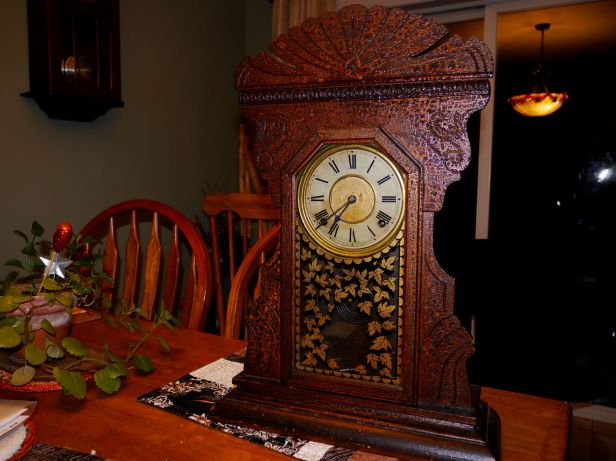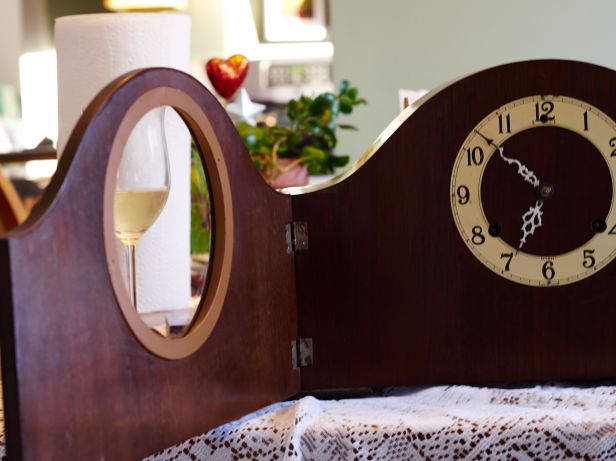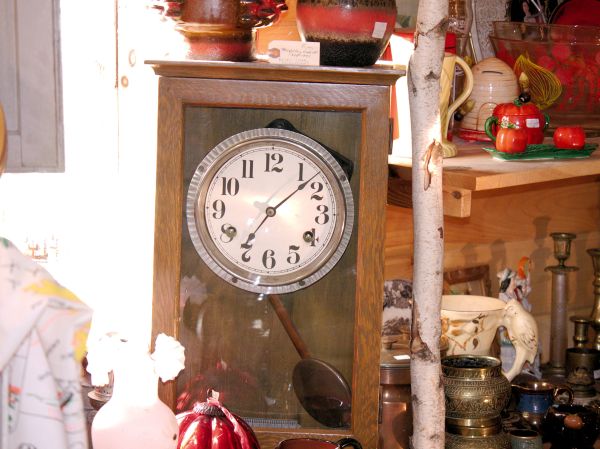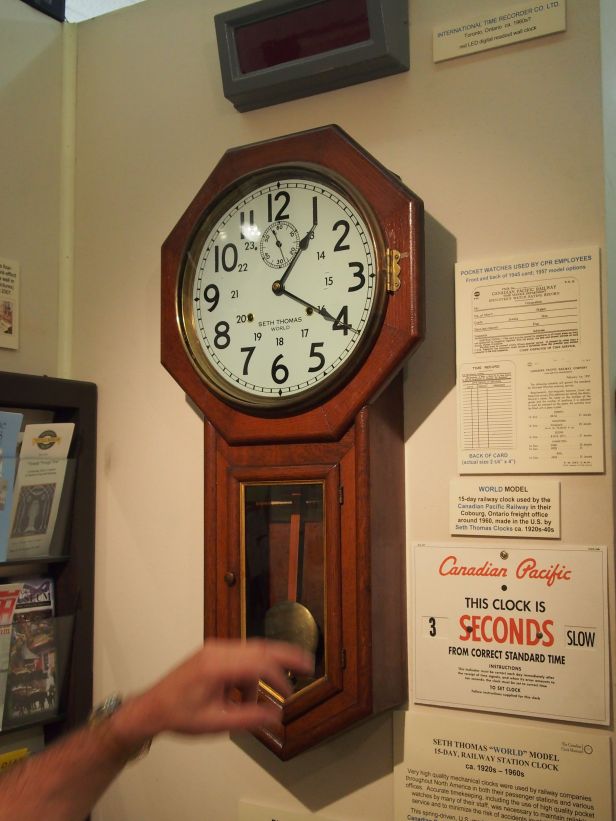
The French Carriage clock

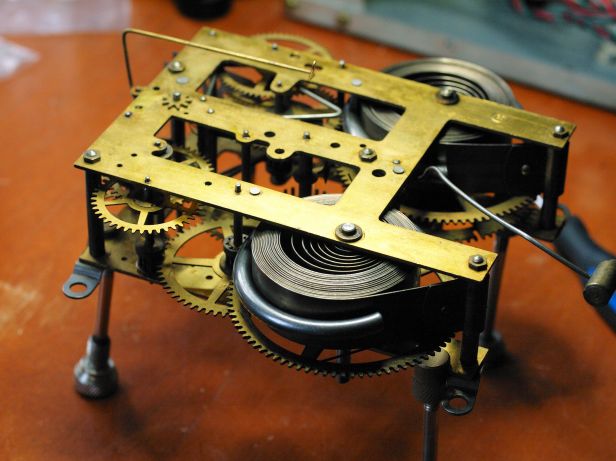
OLYMPUS DIGITAL CAMERA
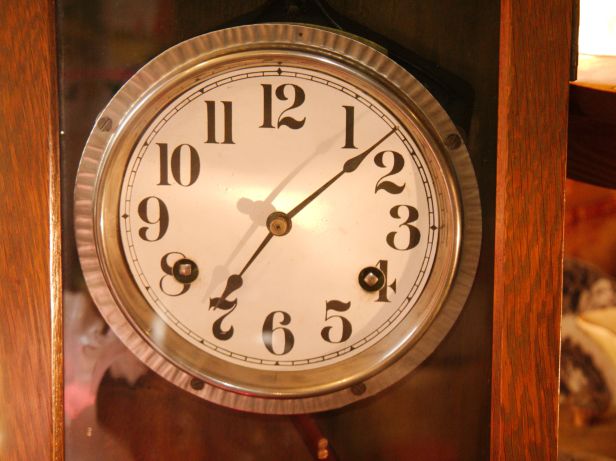
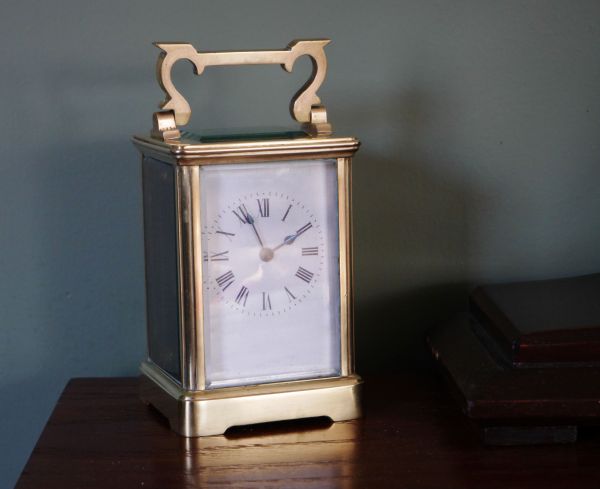
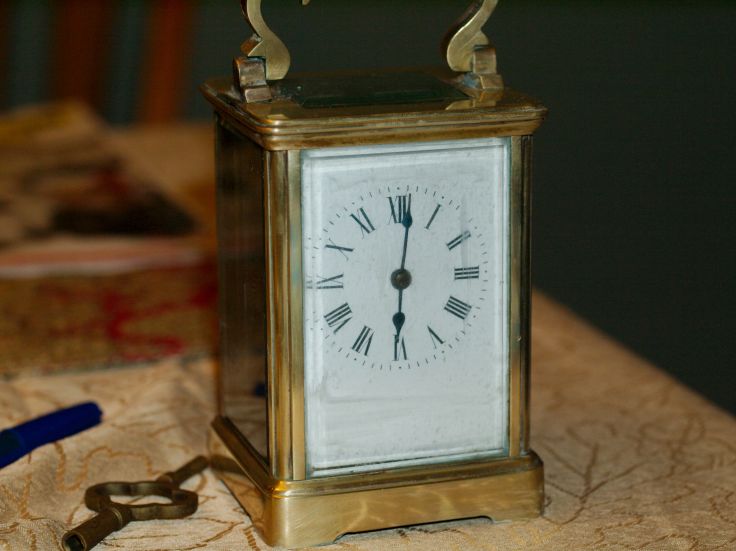
Carriage clock

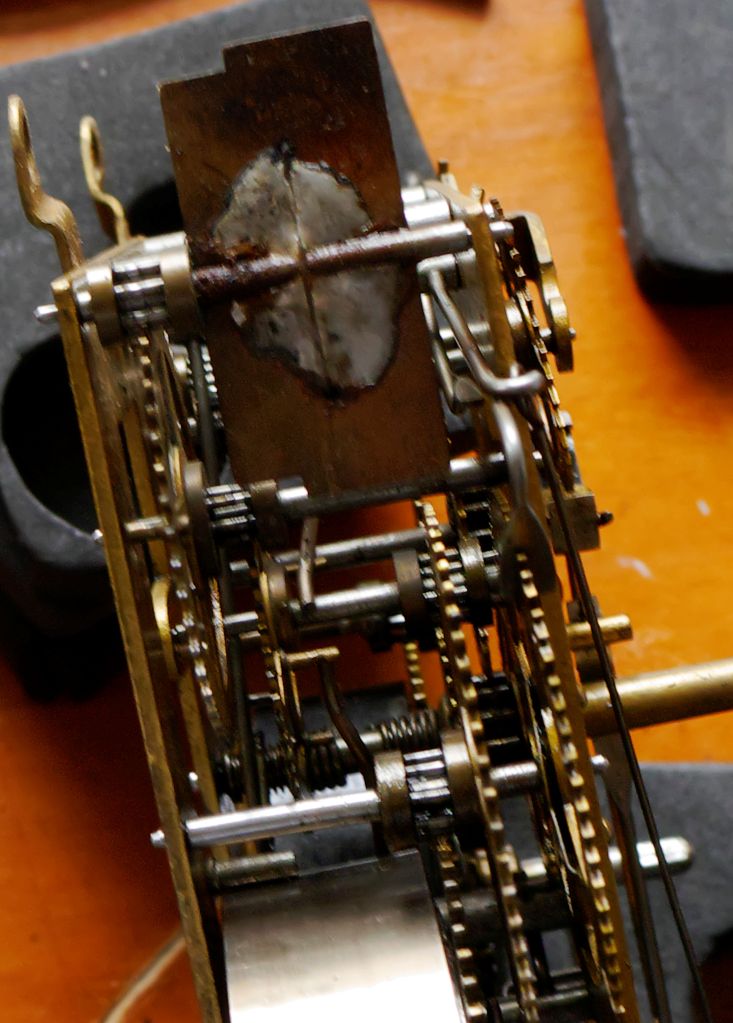
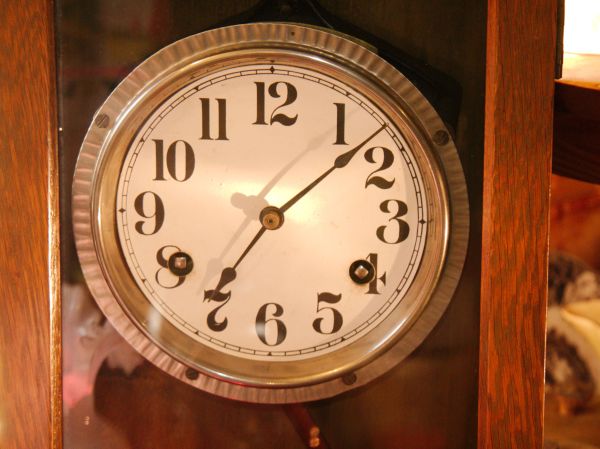
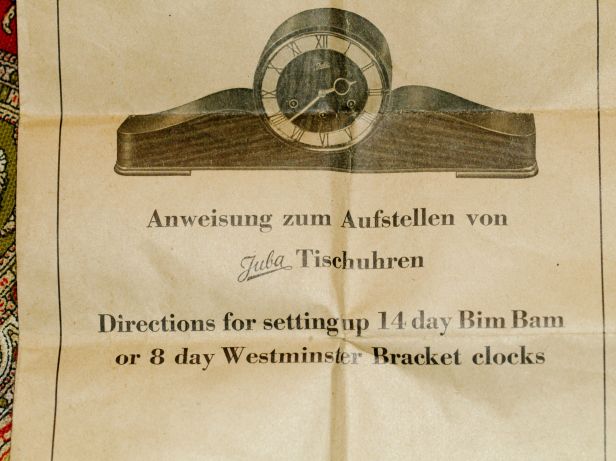
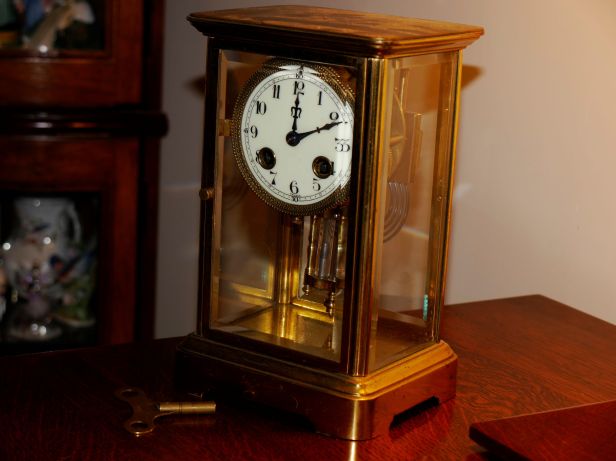
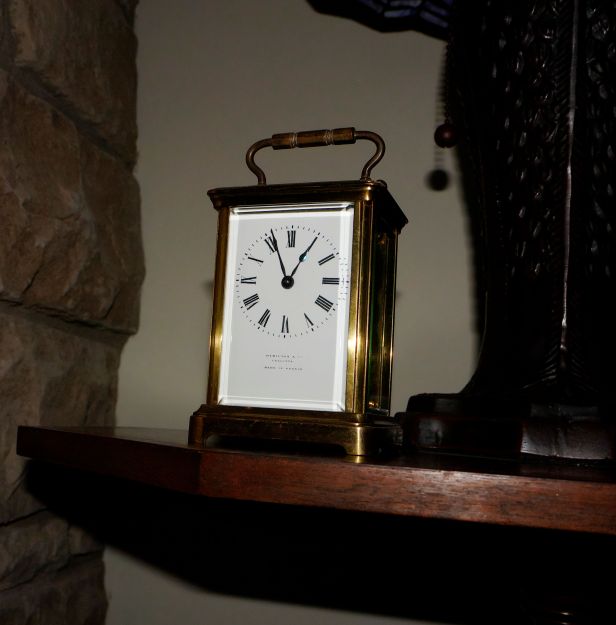
I have in my collection an unsigned 8-day carriage clock in a moulded rectangular brass case. This attractive little clock has a white enamel dial with Roman numerals, blued steel hands and a spring driven movement with platform lever escapement visible through the top beveled glass. The moulded brass case has beveled glass panels on all sides complete with a fold-down travel handle and two sided key.
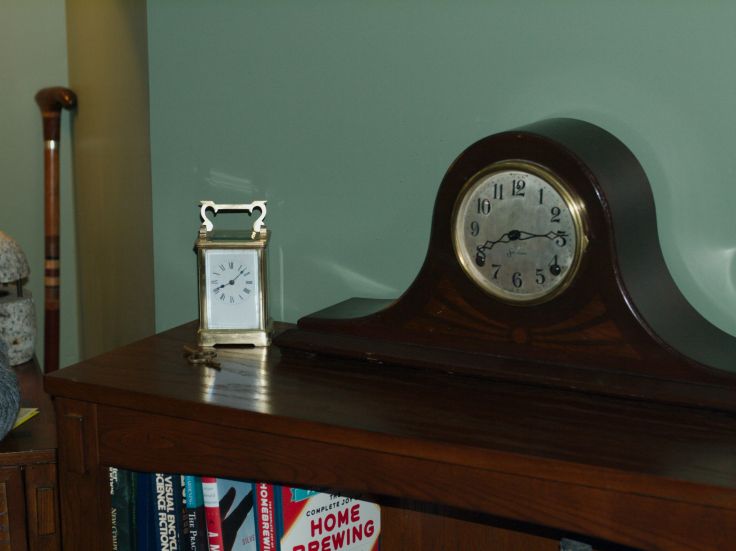
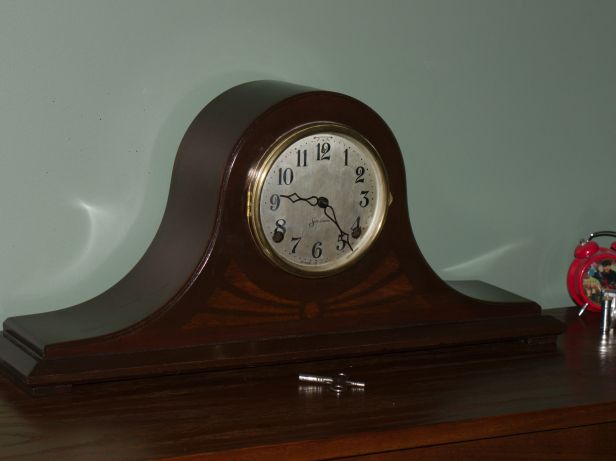
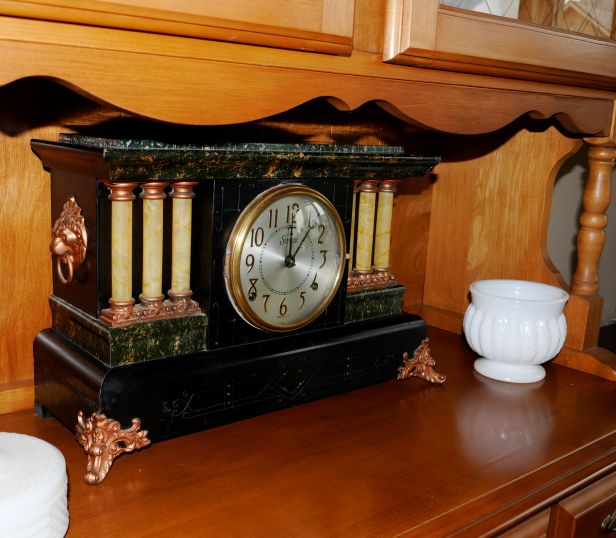
Next to a Sessions Beveled No. 2

Although my knowledge of carriage clocks is somewhat limited, searching the origin of the carriage clock on the net reveals that this type of clock was a very popular item for well-to-do travelers in days gone by. Carriage clocks were spring driven clocks popular in the late 19th and early 20th century designed for travel. It’s golden age was somewhere between 1860 and 1900.  The first carriage clock made by Abraham Louis Breguet was designed exclusively for Emperor Napoleon of France in 1812. More information about this fine inventor and horologist can be found here. Many came with a sturdy leather carrying case with one hinged panel that opened to check the time. Mine came without one.

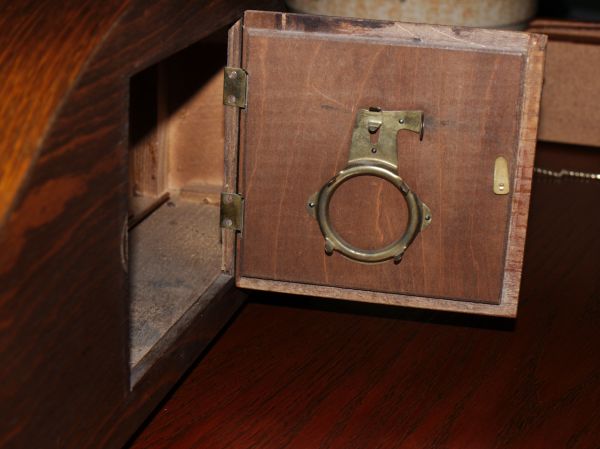
The movement plates in my clock are secured by screws rather than pins suggesting that it was made at a later period. This clock would have been produced for the English market since it has “S”and “F” stamped on the escapement. If one assumes that the key which has “France” inscribed on it is original, then the clock is French. There are no markings on the outside of the clock save for the number “73” stamped twice on the inside access door and once on the bottom of the carrying handle. There are numbers visible on the inside of the plates that I can barely see but once I get the clock apart I can determine if they mean anything and report in a subsequent blog entry if I find anything of significance.

It’s diminutive size, 3 inches wide by 4 1/2 inches tall (without the handle) and 2 1/2 inches deep makes it exceptionally portable. If it is to be displayed on a mantel, a shelf or a desk, it is small enough to be placed anywhere in the home without dominating a room.

The balance and spring-driven platform jeweled escapement that comprised the working mechanism of the carriage clock made it ideal for transportation. The fact that it needed to be transported means it was more robust in dealing with jostling and movement than any other type of clock in it’s day. They were built to last which is why so many of them survive in very good condition to this day. Many had time and strike mechanisms, some with a repeater function, but this is a simpler time-only version.
OLYMPUS DIGITAL CAMERA
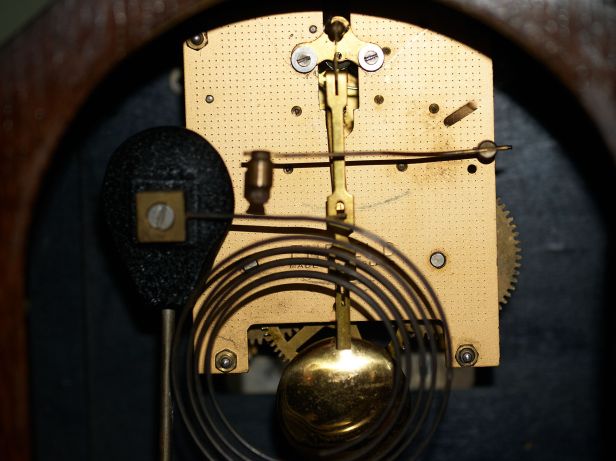
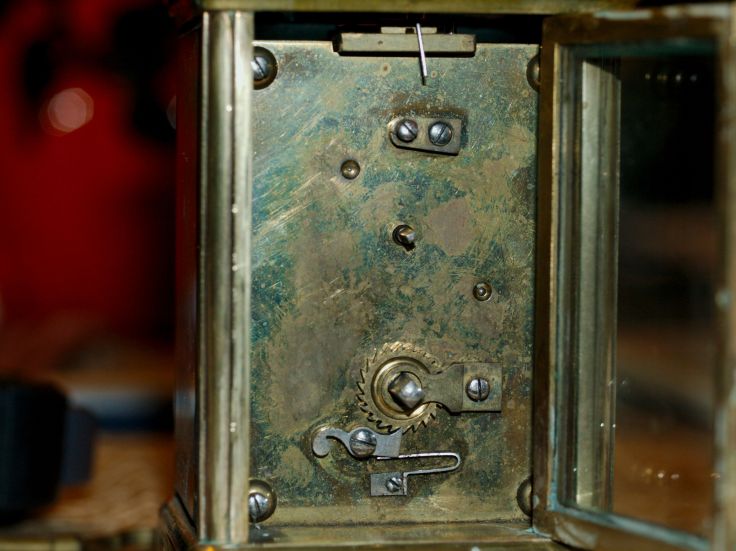
Back plate showing winding arbour and lever for speed adjustment, with verdigris present

I managed to revitalize the case as you can see in the first two photos. However, the back plate shows a significant amount of oxidization though one hopes that the movement itself is in good condition. This oxidation is called Verdigris. Verdigris is a bright bluish-green encrustation or patina formed on copper or brass by atmospheric oxidation, consisting of basic copper carbonate.

Although the clock came to me in running condition the movement is very dirty and requires disassembly and a thorough cleaning. I am encouraged by the fact that the clock ran through an eight day cycle so I must assume that the jewels in the escapement are in good condition. Repairing jeweled escapements is not something I can do at this stage.

At the moment I see two issues with my clock. One, there is a small break in the lower corner of the beveled glass on the left side which is barely visible and two, the pull handle on the access door is slightly bent. There may be other issues once I get it apart but we’ll cross that bridge when it comes. I might even find that missing piece of beveled glass trapped somewhere in the movement.

During my research concerning the repair and servicing of carriage clocks I have discovered that letting down the mainspring is critical prior to disassembling. I read about a case where the platform escapement was taken off without letting down the mainspring and the result was the contrate wheel (having teeth that are at right angles to the plane of rotation) below the escapement was seriously damaged. I want to avoid that.

At the moment I have too many other clock projects on the go. However, in the meantime, that won’t keep me from displaying this beautifully crafted timepiece in a prominent location.

In a future blog I will report on the steps I will take to bring this clock to a healthy running condition.
Clocks I discovered on my summer travels (2016)

Once a year we travel to central Canada and since I am always on the lookout for clocks when I am on the road, they can show up in the strangest of places.

Snider clock
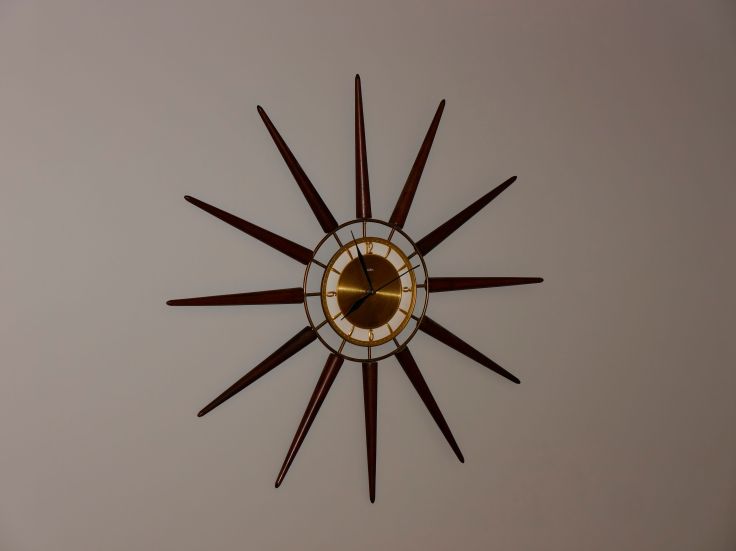
Snider starburst clock found in a boutique hotel in Quebec City

We stopped a a boutique hotel in downtown Quebec City and came across this Snider Starburst clock in the dining area. Many folks do not realize that Snider clocks are distinctively Canadian. According to the Canadian Clock Museum, “the Snider Clock Corporation, was set up in 1950 by Harry Snider, who operated a wholesale jeweler business on Yonge Street at the time.  The company name was changed in 1957 to the Snider Clock Mfg Co. Limited.  Over a period of more than twenty-five years until 1976 there were hundreds of models of Snider mantel, TV lamp, and wall clocks designed and manufactured in Toronto”.

In the same boutique hotel beside the Snider clock was a wine vending machine. How cool is that!

Wine vending machine
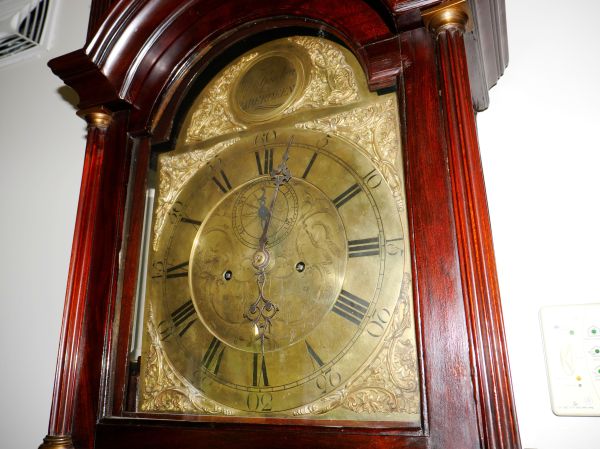
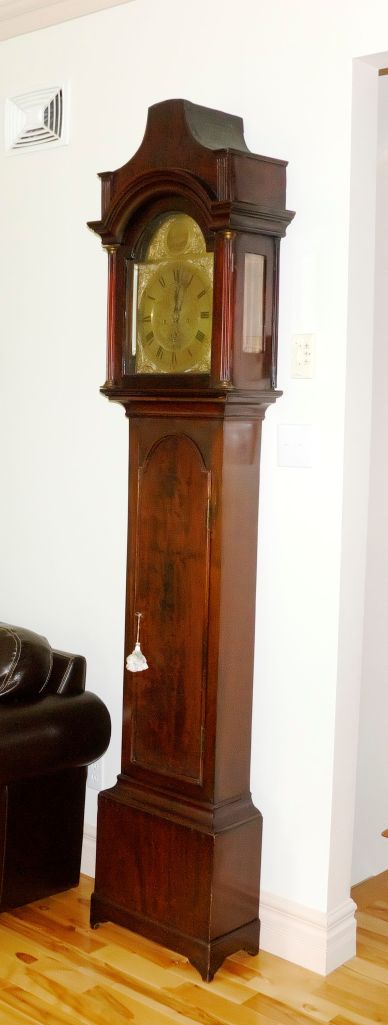
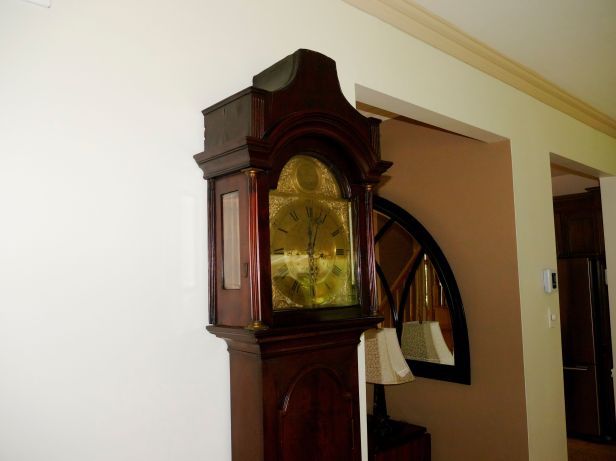
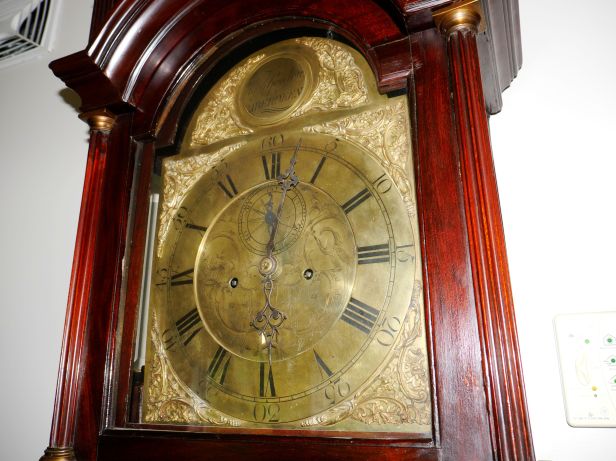
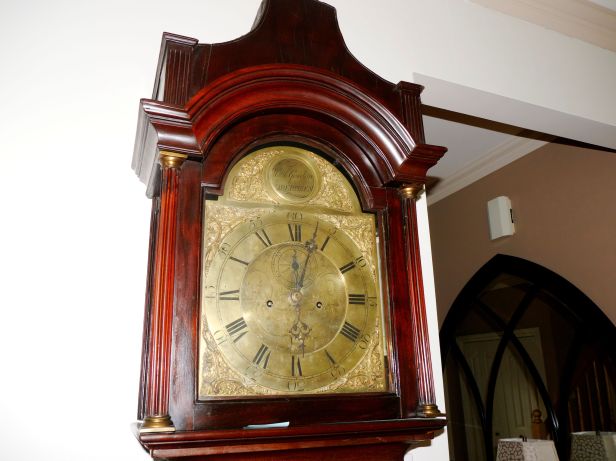
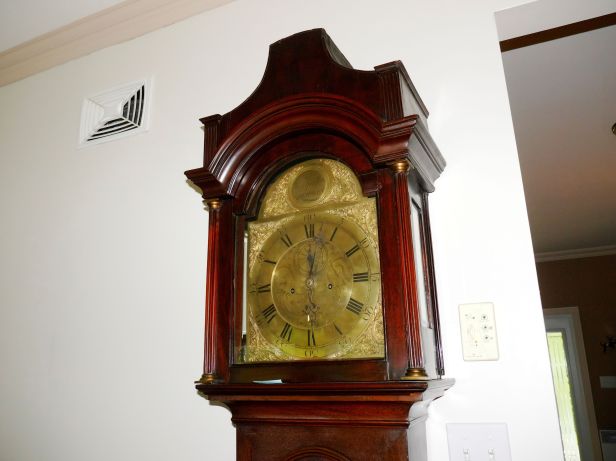
Hugh Gordon tall-case clock circa 1760

This fine looking Scottish Hugh Gordon tall-case clock located in a home near Montreal, was made somewhere between 1760 and 1770. The clock is majestic and certainly defines the room though I wish it were in my room! The cabinet is in excellent condition but the movement requires attention that can only be provided by professional horologist.

Smiths Enfield Art Deco style mantel clock
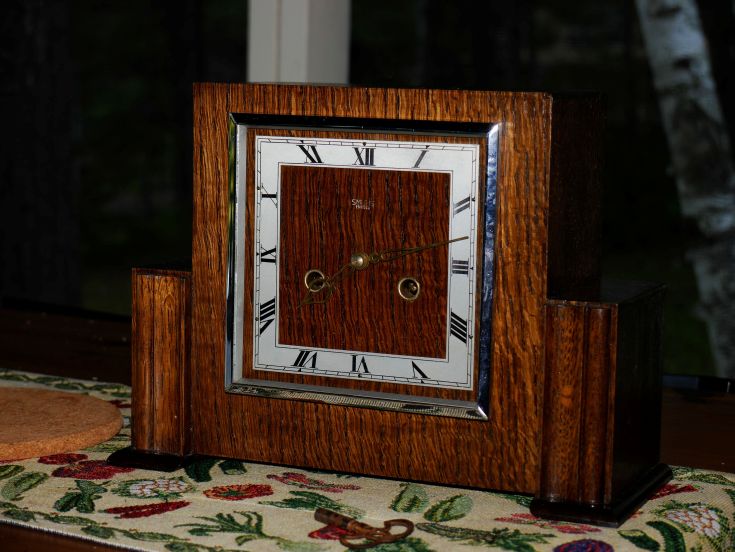
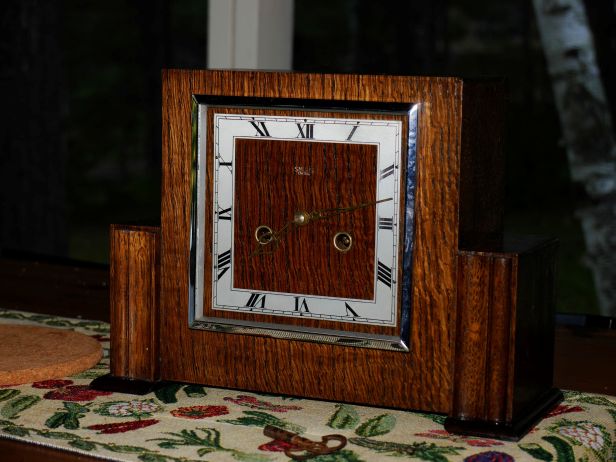
Smiths Enfield Art Deco style mantel clock circa 1949

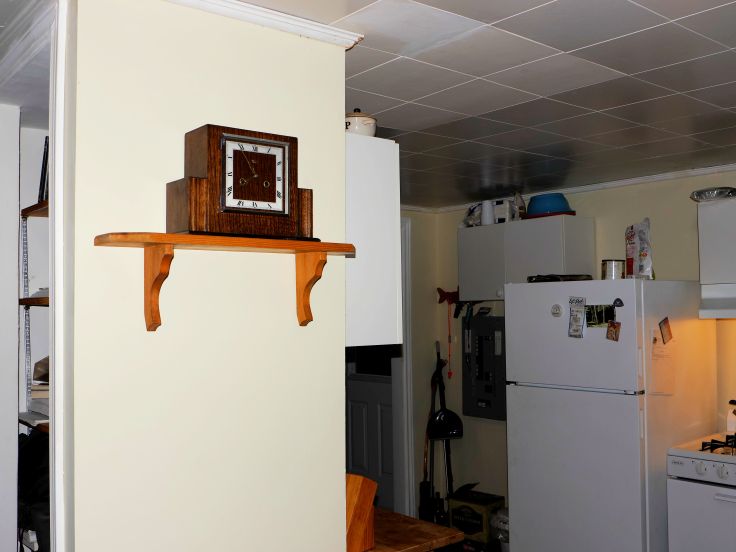
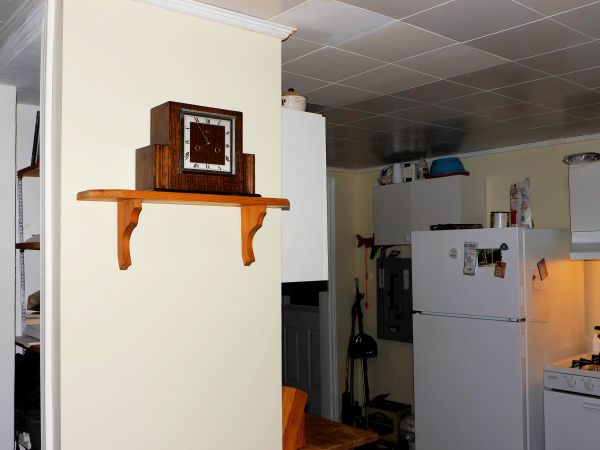
I like the lines of this clock. In fact, I liked it so much that I bought it. This Smiths Enfield Art Deco clock was discovered at this antique shop in Haliburton, Ontario and it has become our newest cottage clock.

Haliburton antique shop
Smiths Enfield shelf clock
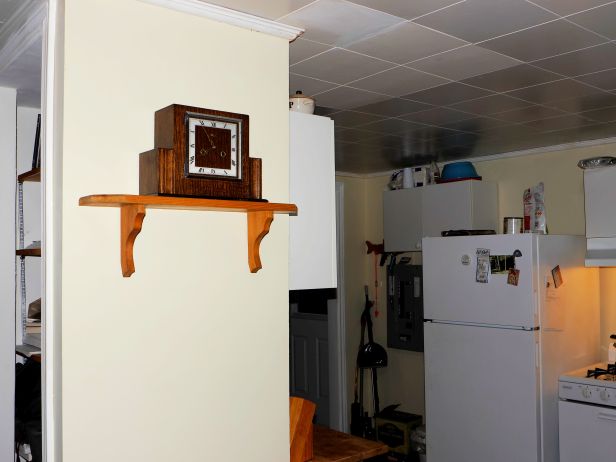
Smiths Enfield shelf clock, on a shelf
Sessions six pillar mantel clock

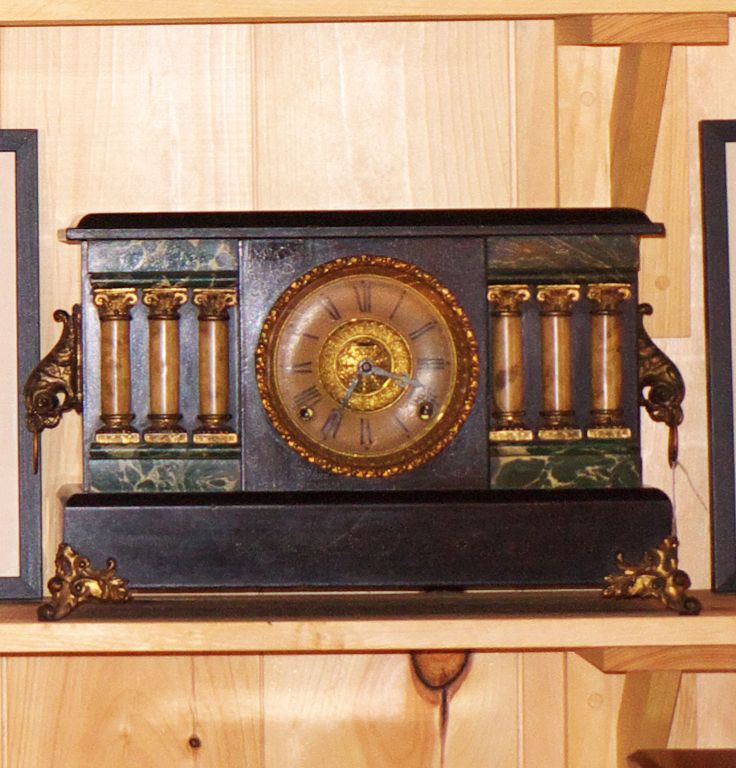
I am not a fan of pillar clocks although I do have a couple. This six pillar Sessions time and strike seems to be in good shape though the dial may need replacing or restoration. Some would leave it as-is. I am personally not a fan of replacing a dial but if the numbers are unreadable it can be an option.

Unknown mantel clock, possibly French

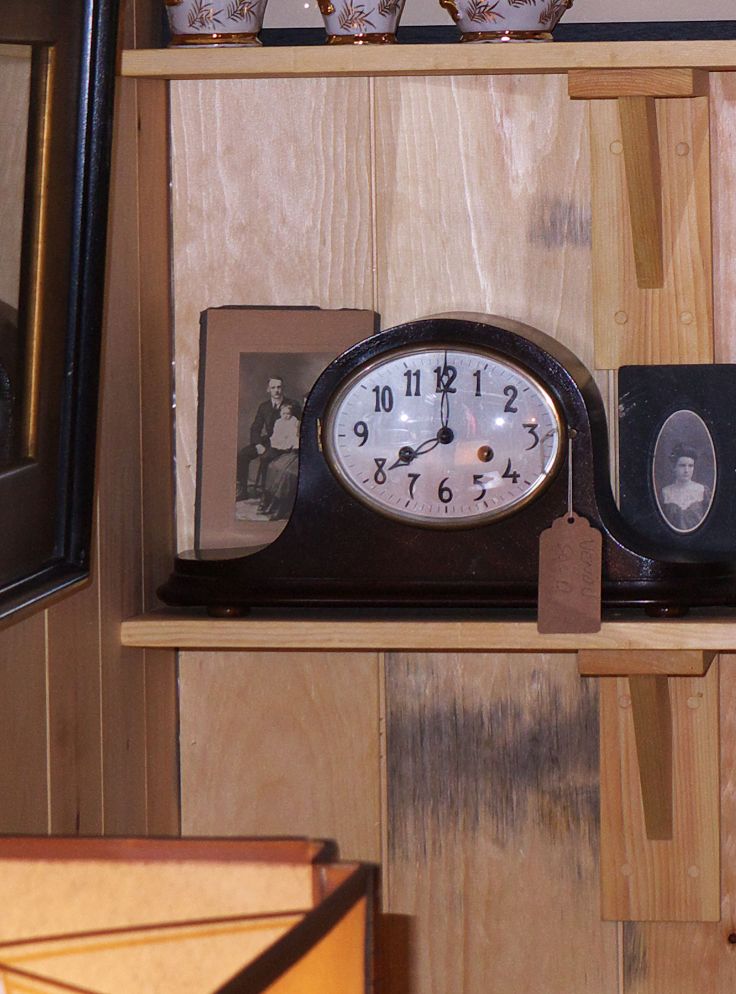
What is it? Is it French, is it British? Could even be American. There are no markings on the dial face. I am leaning towards French.

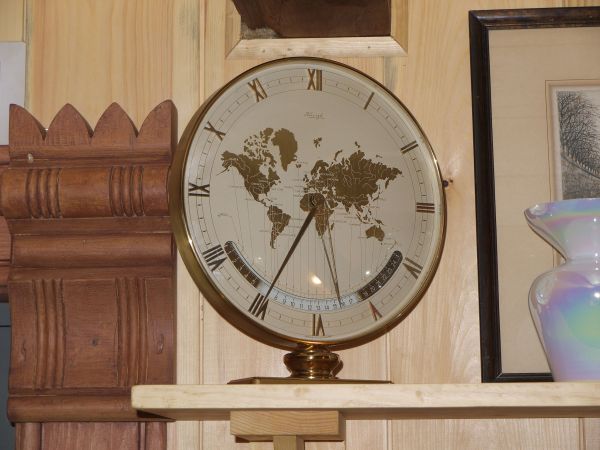
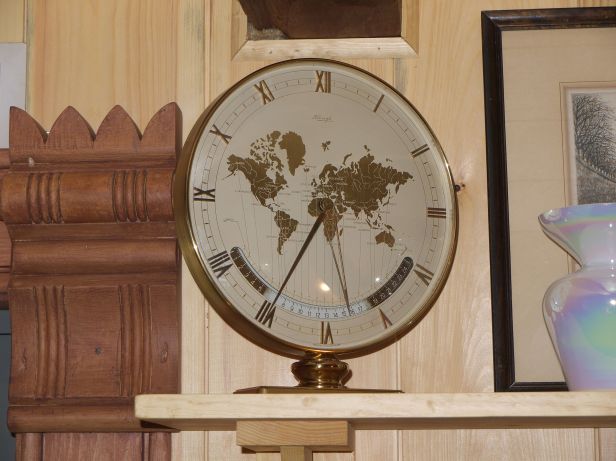
Kienzle World Time clock circa 1950

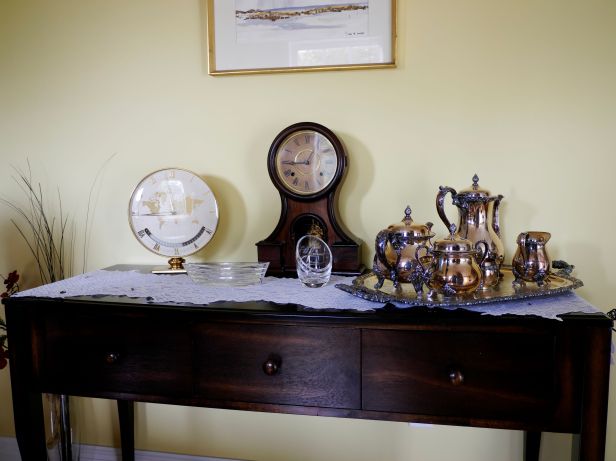
I saw this in an antique store and hummed and hawed over whether I should buy it or not. We were with friends and they loved it. I thought about it, went back a week later, made an offer and now it is sitting on a buffet at home. It works well, runs a full eight days but has a jeweled movement which concerns me. I am not comfortable having this clock run continuously until I know how to service it. Heck I can’t even find a way to open it up to inspect it. For the moment I will run it only on special occasions until my skill level improves enough to allow me to investigate further.

Possible Ansonia or French mantel clock
Possibly Ansonia or another French mantel clock

The above clock, another find in an antique store is possibly French or American. I believe Ansonia made clocks very similar to this. I am going to call it an Ansonia.

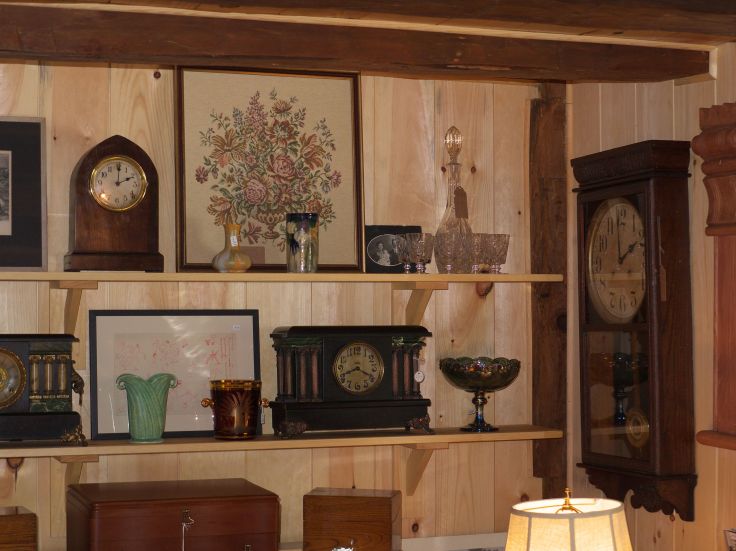
Collection of beehive, six pillar Seth Thomas and Waterbury wall clock

A Seth Thomas Beehive and a Waterbury time and strike wall clock. Both are in very good condition but a tad on the pricey side.

My wife took a quick cell phone shot of this clock in another antique shop. Not the best image.

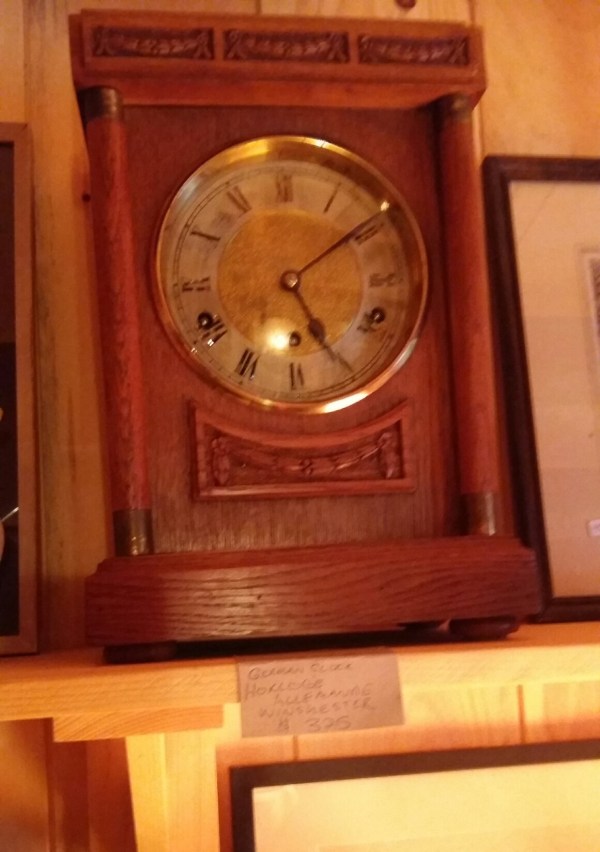
Kienzle Weschester Chime
Kienzle Winchester Chime

It is a Kienzle 3-train German clock and no matter how hard I look I cannot find another like it. Could be a one-of. If you know anything about it please drop me a line.

That’s about it. I found another tall-case clock in a restaurant in Quebec City. It looked like a combination of several clocks although the cabinet was nice. So, somebody messed with it. Should have taken a photo!

Ingraham Huron – off to the shop for restoration!

RS April 12th
Ingraham Huron time and strike mantel clock

I have related the story of this most interesting Ingraham Huron mantel clock in an earlier blog which you can read about here. I purchased it at what I believe was a reasonable price from an older couple near Bridgewater, Nova Scotia who were in the midst of downsizing. It had been in their family for a very long time and although it was cherished for many years it was time to let it go.

Because it is such a unique design you don’t often see this style of clock in any of the antique stores and they rarely come up at the finer online auction houses. The last one I saw on EBay sold for US895.00 a year and a half ago.

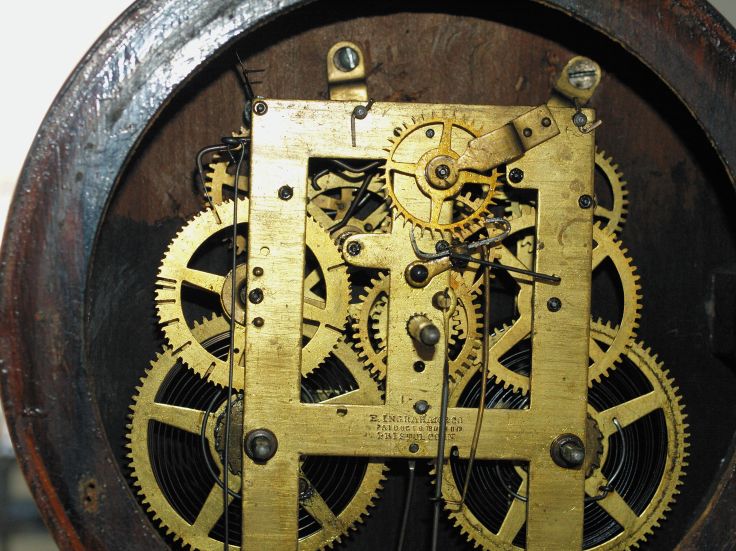
The case is actually in very good condition for a 138 year old clock but the movement suffered at the hands of a butcher. The clock will run for about 2-3 days on a full wind and then stop. Nudging the pendulum will get it going again but only for about a couple of hours. To anyone who knows anything about clocks there is an serious power loss in the movement and it is not difficult to determine why once you see the photos. After taking the face off there is little to indicate that there are any issues with this clock.

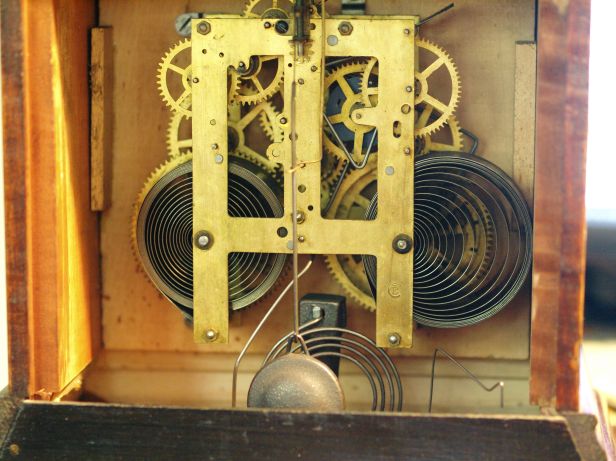
Back of the movement
Front of the movement

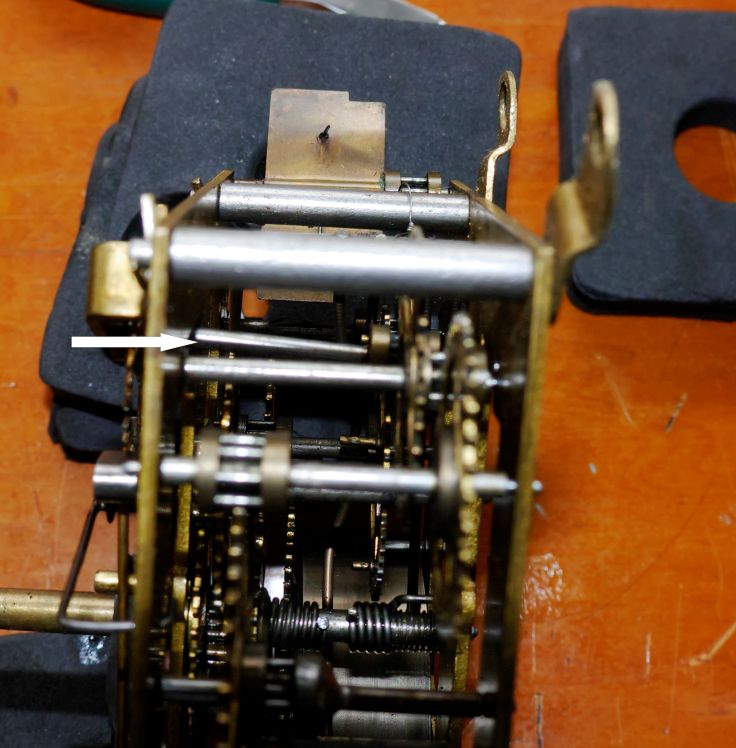
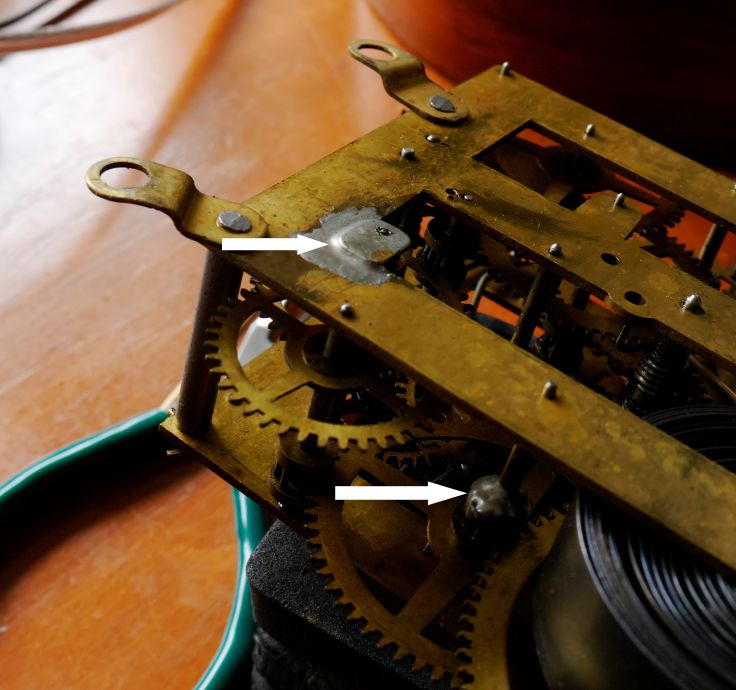
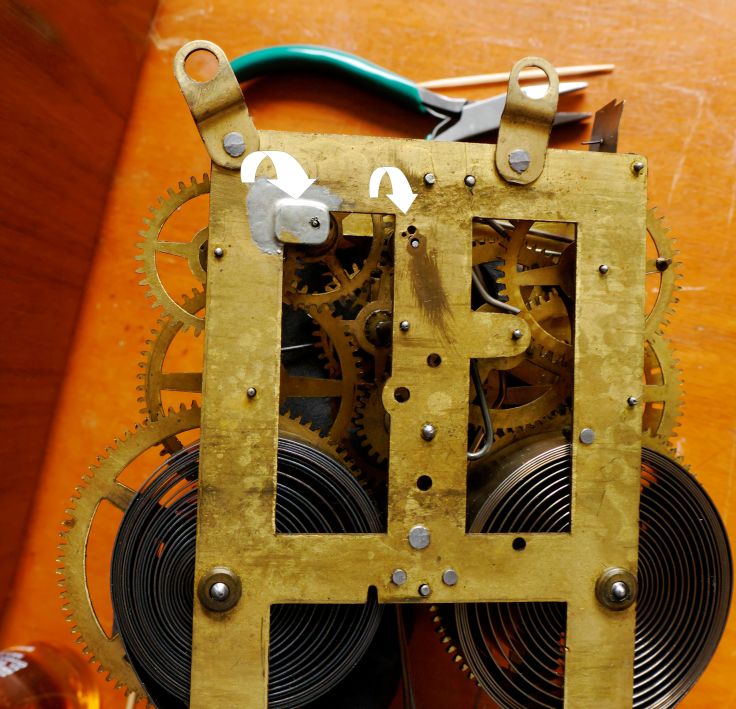
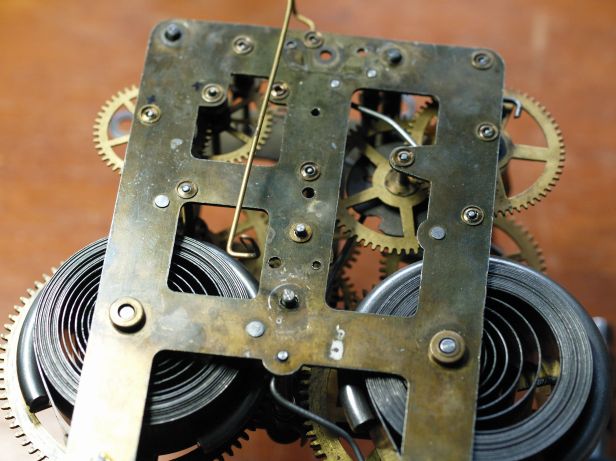
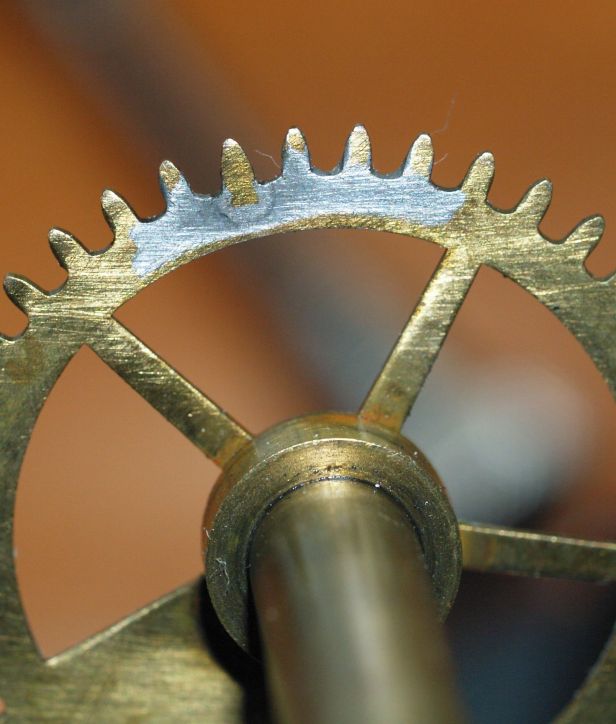
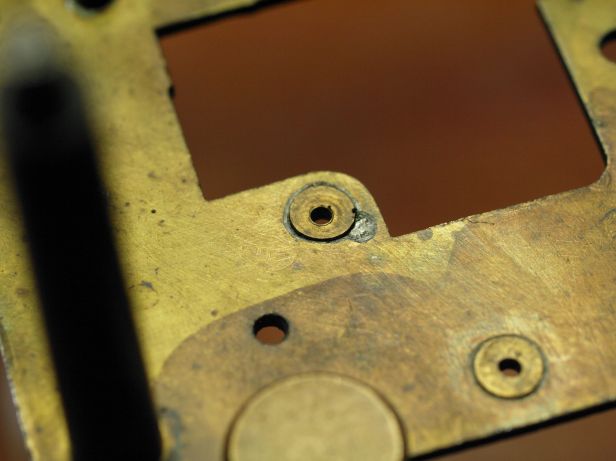
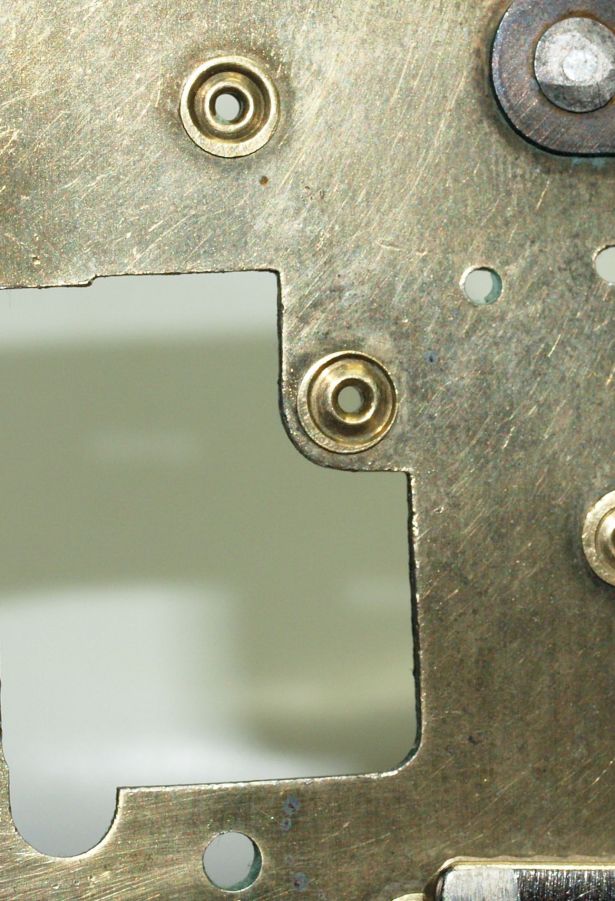
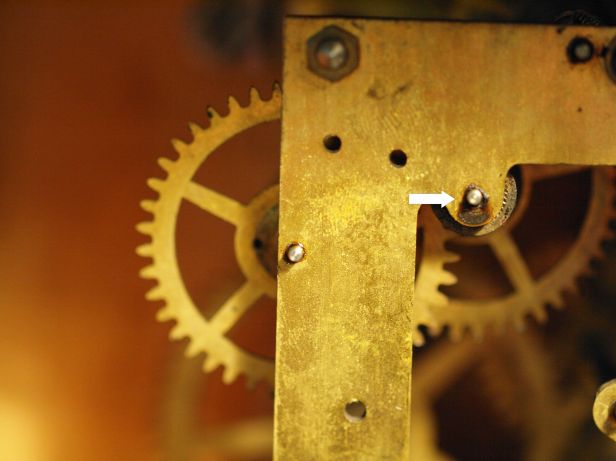
However, as you can see in the next four photos there are some interesting issues with the movement which undoubtedly contribute to it’s poor running. In the first photo you can see that the escape wheel arbour is at an extreme angle relative to the other arbours. In the next three photos arrows are pointing to solder that was used to “correct” various problems with the movement. The result is that although the clock will operate for a period of time on a full wind, it cannot and will not run the full 8-day cycle.

rs-ingraham-movement-9
The escape wheel is at a precarious angle
rs-ingraham-movement-3
A new pivot hole has been made and a lantern gear “repaired”
rs-ingraham-movement-4
The first arrow shows an addition to the plate, the second a “new” pivot hole
rs-ingraham-movement-1
A solder “fix” for the fan

Is this a repair job or a restoration? I brought it in to a certified horologist nearby who said that in situations such as this if the movement is likely beyond repair he recommends to the customer that the movement be replaced with a period movement correct for the clock. He agrees with me that this movement must stay with the clock to preserve it’s provenance and it’s authenticity, therefore restoration for this antique clock is required.

Why am I not doing this myself? Many of the clocks I have worked on require minimal adjustment/repair to get them to run reliably again and I am still in a learning phase. I have disassembled many clocks, cleaned them and even installed/replaced bushings but this is a job that must be left to someone who is familiar with clocks that have had very poor repairs such as this one.

It will take two or three months but at the end of the day this will be a properly restored timepiece. Once I get it back I will report on the steps it took to restore this clock.

Idioms and expressions with the word “clock” in them

In Maritime Canada, this weekend marks the time to turn the clocks back. We have a saying, “Spring forward, fall behind,” which refers to the switch from Atlantic Daylight Savings Time (DST) to Standard Time on November 6th, moving the clocks back by one hour. As a result, we gain “an extra hour of daylight” in the morning, which is beneficial for farmers, I suppose. In the spring, the clocks are moved ahead again. However, not all regions in Canada observe DST.

Kienzle World Time clock

Not many people realize that Sir Sandford Fleming, a Canadian engineer and inventor, proposed Standard time and world wide time zones. Although he was born in Scotland he immigrated to Canada at the age of 14. In his later years he was employed by the Grand Trunk Railway which led him on the path to standardized time zones for the railway.

I decided to dedicate this blog to Standard Time and the many idioms and expressions with the word “clock” in them.

  • The clock is ticking
  • Beat the clock
  • Turn the clock back
  • Wind back the clock
  • Run out (or down) the clock
  • A stopped clock is correct twice a day
  • Clean (someone’s) clock
  • On the clock
  • Biological clock is ticking
  • Watch the clock
  • He’s (she’s) a clock watcher
  • Punch the clock
  • Around the clock
  • Stop the clock!
  • Race against the clock
  • As regular as clockwork (or, running like clockwork)
  • Face that could stop a clock
  • Five o’clock shadow
  • Hickory dickory dock the mouse went up the clock
  • One, two, three o’clock four o’clock rock
  • Rock around the clock

Let me know if I missed anything, and I’ll be happy to make adjustments.

For an updated list, please visit here.


Juba Schatz bim-bam mantel clock

In the clock world Germany is well known for well engineered, precision clocks. Juba Schatz is not a name one comes across often but it has solid roots in the German clock making industry.

Juba bim-bam mantel clock

This a an antique shop find of a clock that dates from the mid to late 1940s. Its design is understated, and reflects the minimalist lines of style common during the post war period.

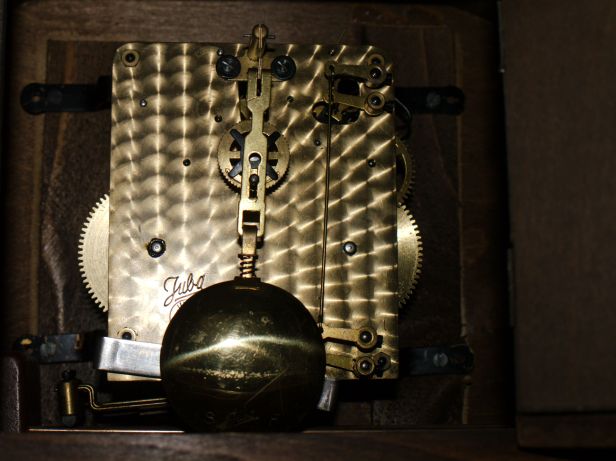
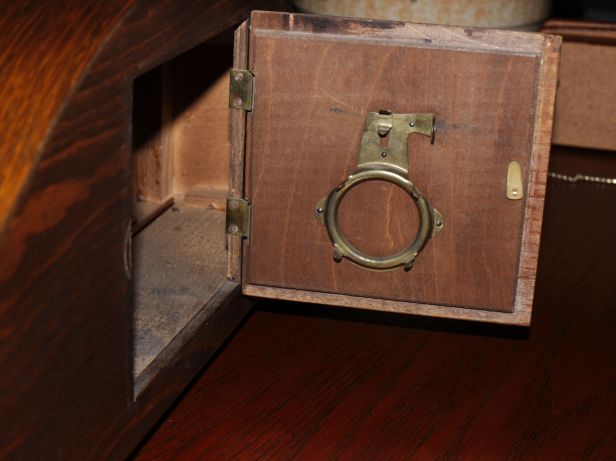
This clock is in excellent condition and has some intriguing features; first, a circular disk that one rotates on the crutch to put the clock in beat to compensate for a surface that is not level; second, 4 strike rods, 1 for the first strike of the bim-bam and 3 for the second; third, a storage cradle on the back door for the pendulum bob just below the key holder and fourth, a very effective and robust two-piece steel strike lock, a aid in transporting the clock. The original operating instructions in English and German were included.

Juba instructions
Juba clock  instructions

Bim-bam clocks are not unique. Many companies made bim-bam clocks. They appealed to the masses due to the distinctive strike. The mechanical strike mechanism is made up of two and sometimes up to four finely tuned copper rods (as in this clock) mounted to a cast iron block.

At one time clocks with unique tonal sounds were called Normandy chimes. Instead of one strike on the hour and half hour, there were two.  It was a musical dual tone, instead of a single, (often harsh sounding) single hourly or half hour strike. The  American Gilbert Clock Company made several mantel clocks in the 1920s that had what Gilbert termed a “Normandy Chime”. Gilbert explicitly called this the “Normandy Chime”, which was supposed to have been patterned off the old bells of Normandy, The Normandy chime is the precursor to the bim-bam.

Information on this clock company is scarce. Several YouTube videos demonstrate a chiming or a striking Juba clock but contain no description or history of the company.

Juba movement showing pendulum and strike hammers
Juba movement showing pendulum, strike hammers and circular level compensation disk

Pendulum cradle and key holder

The formal company name is  Jahresuhren-Fabrik August Schatz und Söhne gmbh. I discovered that the company was formed in 1881 and ceased production in 1981. It was started by August Schatz who was born in 1854 and died in 1927. Family members took over the company after his death.

Schatz are best known for anniversary and mariner clocks but made cottage clocks, bracket clocks, mantel clocks, kitchen clocks and watches as well.

I will continue my search for more information about this important German maker.

What the term a “fully serviced” clock really means

Everybody appreciates a serviced clock when they are making a purchase. However, there is no acceptable definition for the term “Fully Serviced”. Fully serviced may mean one thing for the amateur clock collector and repairer and another to a professional clock repair shop.

Juba Schatz mantel clock

The other day I was responding to a FaceBook post which offered a mantel clock for sale. The owner said that the clock, a 100+ year old antique, had been “fully serviced” so I asked him what he meant by that since I was curious. He said the clock was ultrasonically cleaned, the pivots were inspected, and the clock was oiled. He did not actually state that the clock was disassembled before cleaning but I assume that it was done properly although dunk and swish (or duncan swish) techniques are used more often that we realize. Dunk and swish involves immersing the entire unassembled movement into a cleaning solution and calling it “cleaned”. However, no reputable clock repair person (horologist) would employ this method. By using the term “fully serviced” the seller naturally expects to get several tens of dollars more for the clock.

No doubt who ever buys the clock will get a couple of years of service before it again needs attention. My concern is the state of the bushing holes and of course the pivots in a 100 year old clock and chances are it was not serviced properly in it’s past life.

I have disassembled and serviced a few clocks in my limited experience and my observation is that the older the clock the more the need for bushing and other repairs. My definition of servicing is this; disassemble and totally strip down, ultrasonically clean, springs unwound, inspected and oiled, pivots inspected and polished, pivot holes pegged and bushings installed / replaced if necessary, other parts inspected and addressed and the movement tested and regulated before re-installing in the case. My servicing also includes a case refresh. I serviced a 1920s Sessions Beveled No. 2 clock this spring (2016) that required 12 bushings.

Sessions Beveled No. 2 case
Sessions Beveled No. 2 time and strike in as-found condition

Fully serviced with case refresh

My Arthur Pequegnat Maple Leaf kitchen clock pictured here was professionally serviced in 2015 by a reputable clock shop and also required 12 bushings.

RS Pequegnat fan top (3)
Arthur Pequegnat kitchen clock in as-found condition

I am currently working on a 1940s Ingersoll Waterbury which was not too badly worn but still required 3 new bushings.

Ingersoll Waterbury clock
This American Ingersoll Waterbury clock, circa 1940, required 3 bushings,

If you poke around some of the clock for sale sites you will see a description that reads something like this, “all of our clocks are fully serviced and tested to ensure reliable running”. But if you bring up the profile on any one of the clocks offered for sale they generally do not describe how it was serviced and / or the actual service done on the clock.

I see plenty of antique and vintage clocks on the local online for-sale sites. Many have not been serviced as you would expect but some sellers claim that their clock has been fully serviced without providing any detail about what was actually done or whether it was a backyard tinkerer who did the servicing or a professional shop. The Juba Schatz mantel clock you see in the first photo might even be described as “serviced” but all I did was take the movement out of it’s case, inspect the pivots and other parts, oil the movement and return it to its case which took about 10 minutes.

“Fully serviced” to me means defining the term when selling a clock. A reputable for sale site should say something like this, ” has been fully serviced, having been totally stripped down, ultrasonically cleaned, reassembled, runs the full length of the wind and keeping excellent time, +/- 2 minutes per 7 day period”. A little more detail would be beneficial such as specific areas that needed to be addressed or particular repairs made if required but that is about as close as you will get and for those serious about a clock purchase it might be good enough.

Fully serviced means different things to different people. Always ask before you buy.

Mystery clock – if you know the maker, let me know

If you know the maker, let me know or direct me to where I can find out.

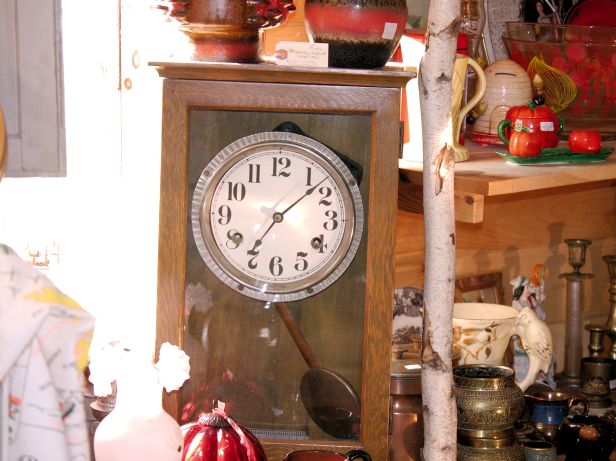
I was in an antique shop in a small village in the Annapolis Valley, Nova Scotia lately and came across this unusual box-type wall clock. I glanced at the back of the clock and noticed that the wall anchor hook had been detached suggesting that a past owner determined that it was to be a shelf clock. What else did the previous owner(s) do to alter this clock, I wondered?

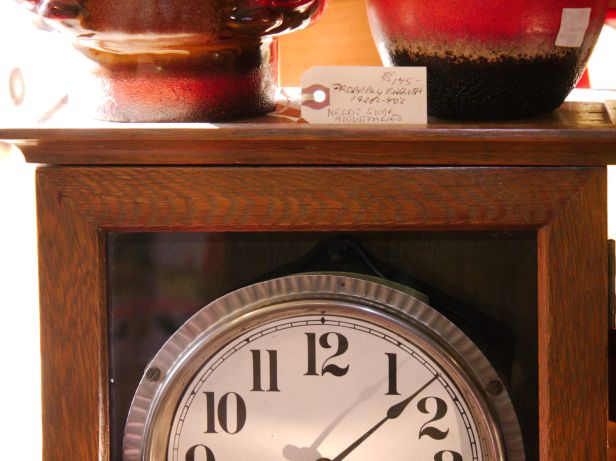
The clock measures about 24 inches tall (60 cm), about 14-15 inches wide (40 cm) and about 6 inches (15 cm) deep. The dial is about 10 inches (25 cm) in diameter. The tag on the top of the clock says, “$145 – probably English, 1920s to 1940s, needs some adjustments”. The shop owner could not say whether it would run or not.

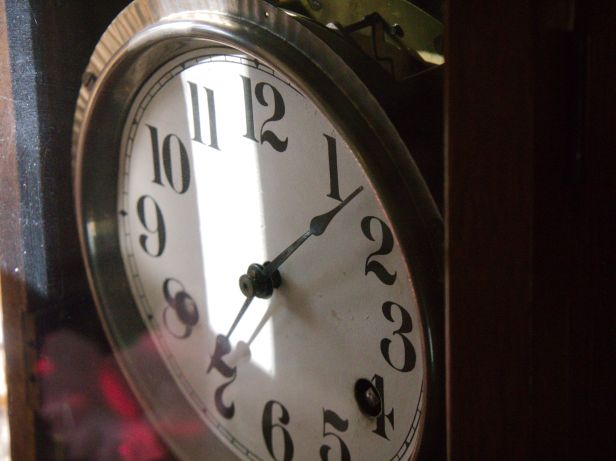
At first glance it appears to be a conventional clock but there are a few features which I find very intriguing. I discussed the clock with the owner of the antique shop and she said that it is a railway clock which I doubt for two reasons, one, the clock dial face is too small to be seen at a distance and two, it appears to be a time and strike clock given the two winding arbors. Railway clocks usually have dials that are 12 inches (30 cm) in diameter or more and normally do not strike. Striking clocks would not be heard amid the cacophony of a typical train station.

Now, it is quite conceivable that it is not a strike clock at all but a time-only clock that has two winding arbors. Double spring clocks were not uncommon during that period and if so, it would probably make this a 15 day (or more) clock similar to this double-spring Seth Thomas railway clock pictured here. That could be the case in this instance.

Double sporing 15 day Seth Thomas
Double spring 15 day American Seth Thomas

The spade hands look original as does the clock dial pan, oak case and oak rod with what appears to be a spun brass pendulum. What appears to be missing is an oak piece (or other wood I assume) that surrounds the dial pan and hides the four dial pan mounting screws. The dial face might be a little newer. The hands are attached by a nut which would put it in the period the tag suggests.

Mystery clock
Mystery clock

rs-annapolis-royal-oct-16-2nd-set_12_1-3

The winding arbors are exceptionally large and would require an unconventional key. I should have put something beside the arbors to show just how large they actually are. While the owner of the shop had a number of clock keys she did not have one to fit this particular clock.

Very large winding arbors
The clock has very large winding arbors

The bezel should have a cover for the screws
The bezel should have a surround to hide the screws

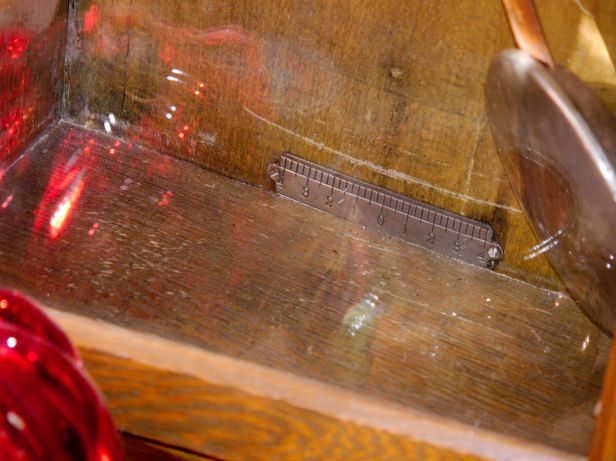
The next feature I noticed is that the clock appears to have a Graham dead-beat escapement or something very similar though I could only see the top part of the escapement. The Graham deadbeat escapement has been the escapement of choice in almost all finer pendulum clocks.  It might also be another type of escapement but it is impossible to say without a closer examination. Normally one would associate a recoil escapement with a cheaper spring driven clock but accuracy must have been a priority in this case.

rs-annapolis-royal-oct-16-2nd-set_12_1-1
Beat scale

It is indeed a mystery. I would love to see what the original clock looks like. The price is not unreasonable but I wonder what else is missing besides the bezel surround and the wall anchor hook.

If you can point me in a direction, leave a reply.

Smiths Enfield Art Deco mantel clock


Smiths Enfield time and strike clock

I absolutely love Art Deco clocks. They are understated, elegant, have great collector value and are timeless, of course (!).

Although we tend to throw the term around loosely Art Deco is actually derived from the phrase Arts Décoratifs which was a dominant decorative art style of the 1920s and 1930s, it’s heyday. This unique form is characterized by precise, bold geometric shapes and strong contrasting colors, used most notably in household objects, and, of course, in clock design as we see here. Style Moderne (as Art Deco was otherwise known) originated in France and was centered in Paris, just before World War I and became very popular after the Great War (World War I). Perhaps the most visible example of Art Deco architecture is the Chrysler Building in New York City in this photo taken from the Empire State Building in 2014.

Chrysler Tower
Chrysler Tower, New York City

The Art Deco style had a far reaching influence and permanency that went far beyond the 20s and 30s through to articles, objects, architecture, furniture and yes, even clocks to this very day.

This is a Smiths Enfield Art Deco style clock. The Enfield Clock company was started by two German brothers in Enfield, North London, in the early twentieth century. During the Second World War (1939-1945) they were the major UK supplier for essential aircraft clocks and instruments. After the war the company vigorously resumed clock and watch production. No doubt most homes in Britain at that time had a Smiths clock. The Smiths Clock Co. became Smiths Enfield in 1949 and the Smiths Enfield name first appeared in catalogs from 1950 onward.

Smiths Enfield
Smiths Enfield clock

Smiths Enfield shelf clock
Smiths Enfield clock on a shelf

This elegant Smiths Enfield oak case time and strike shelf clock was made somewhere between 1949 and 1955. I know little of the provenance of this particular clock suffice to say that it came from overseas where it likely spent it’s life in someone’s home prior to coming to Canada about a year or two ago. The clerk at the antique shop located in Halliburton, Ontario this past summer (2016) told me that the owner of the shop purchases the bulk of his antiques from Ireland and judging from the store contents he imports a quite a lot of antiques and a lot of clocks.

The oak cabinet is made up of veneers and solids and is well constructed. The case is in excellent condition with nary a nick or scratch; required a soap and water cleaning and a little lemon-based furniture polish to bring the shine up. The clock runs well and keeps relatively good time although it certainly requires a thorough cleaning.

Floating balances were introduced by Smiths Enfield in 1956. Since this clock has a pendulum it was manufactured during the period I mentioned above (1949 to 1955). The inverted numbers on the lower clock face, which at first look strange, are actually very common on clocks with Roman Numerals.

OLYMPUS DIGITAL CAMERA
Movement showing coiled gong

It has a coiled gong and a nice pleasant strike if I can get the hammer to strike the gong as it should. A trial and error approach ensuring that the hammer is above but not quite touching the gong or replacement of the hammer leather are two possible solutions.

This is one of two cottage clocks I have. By that I mean they are literally at my summer cottage, and since it remains at my cottage a cleaning will have to wait until next summer.


Ingersoll-Waterbury time and strike mantel clock

Ingersoll-Waterbury mantel clock

My next project is this vintage Ingersoll-Waterbury time and strike mantel clock. Ingersoll-Waterbury clocks were sold in Canada and had Canadian made cases using American made Waterbury movements. G.R. L’Esperance of Montreal were the sole distributors of Ingersoll-Waterbury clocks in Canada.

Waterbury has a long history going back to 1857. Like many American clock companies the Waterbury clock company had its boom periods (late 1800s) and its low period (1930s).  In 1942 a Norwegian company ended up buying the Ingersoll-Waterbury Company. They built a brand new factory in the nearby town of Middlebury, CT.  and in 1944 the company name was changed to United States Time Corporation; this clock was made prior to that year.

What makes this clock interesting is that it actually has a steel frame with a brass electro-plating. The plating was evidently used to stave off rust. It is very likely that this clock was made at some point through the war years (1941-44) when brass was in high demand hence the use of steel for the plates. To accommodate the pivots, brass bushings which were pressed into the steel pivot holes at the factory. My only other experience with steel plates is my Arthur Pequegnat Maple Leaf kitchen clock which has nickle-plated steel plates. The Maple Leaf by Arthur Pequegnat is shown in this next photo.

Arthur Pequegnat Maple Leaf kitchen clock
Arthur Pequegnat Maple Leaf kitchen clock with nickle-plated movement

Waterbury back plate

As you can see the movement is quite dirty and will require a thorough cleaning which can only be accomplished by a complete dis-assembly. Once disassembled comes the inspection and servicing.

Centre canon repair
Centre canon repair

Punch mark adjacent to bushing

Reverse side of punched bushing
Reverse side of punched bushing showing oil cup

This clock has never been bushed. The punch marks found adjacent to three of the bushings were likely factory made to set the bushings in place. There is one tooth repair (fourth photo) on the centre canon gear which appears to be the only evidence of work performed on this clock after it left the factory and the only indication that this clock was ever serviced.

The case is in very good condition requiring only a cleaning and polishing. I may touch up the clock hands with a little white paint.

I have determined that only 5 bushings need to be “replaced”, so time to get started. I will report on my progress with this clock in an upcoming article.

Copyright, what does it mean for you and me?

The other day, I was browsing through a local online for-sale site looking for antique and vintage clocks and saw a Mauthe Westminster chime mantel clock for sale. From the photo it looked great. But wait!

Here is one photo from the ad.

RS Mauthe mantle clock (11)
Mauthe mantel clock

Why would I post a photo from the ad? Simple. It is my photo. The seller had the identical clock for sale and thought he would use my image to promote the offering. In my view he committed two fundamental errors. First he used a protected image without permission and second he was misrepresenting the ad by using my image for a clock he was promoting.

I corresponded with the seller, told him that he could not use my photos because they are copyright protected. He argued that unless it expressly states that it is copy-protected he is free to use any image he wants. After I threatened to advise the site administrators of his use of my photos he took the photos down. Copyright law regarding photos can be vague though the simple rule of thumb is that it you have any doubts about the use of a photo don’t use it. Had the seller contacted me and asked for permission, that would have been a different story and at least I would have been able to exercise my right to grant permission or not.

From the time it is created, a photo or other image is automatically protected by copyright. Infringement can include the use of whole or part of a photo without permission as in this particular case. Just because an image is on the internet, it doesn’t mean the image is free to use. Many people do not fully realize this. If the image is free to use it will say “in the public domain”. The law is very clear on this.

Needless to say all images on this blog are owned by me and for good reason!

A Pig in a Poke

“A pig in a poke” is an old expression but it still has relevance in the clock world today. What does it mean? It means something that is bought or accepted without knowing its value or seeing it first. Or, another way of putting it, a deal that is foolishly accepted without being examined first. If you have been to a live auction you might have experienced winning a bid on that seemingly expensive hall table, for example, only to find it was made in Indonesia.

My own personal example. I bought an antique wall clock (100+ years old) on EBay a year ago and from the write-up it looked great. I was eager to see it. When it arrived I began to notice a few things right away and little details later on despite the description that it was “all original”. The glass on all three sides was said to be original, clearly it was not. The clock hands were off of an Ogee clock and poorly attached, The movement was made during the same period the clock was made however the pendulum sits very low in the case leading me to believe that it (the movement) may not be original. The rod gong was probably added later. Normally the gong is in back of the pendulum. There are two different styles of weights though the differences are almost imperceptible. I could go on but the point is this: do not trust any seller absolutely in your online dealings. Luckily for me the clock works and shows well.

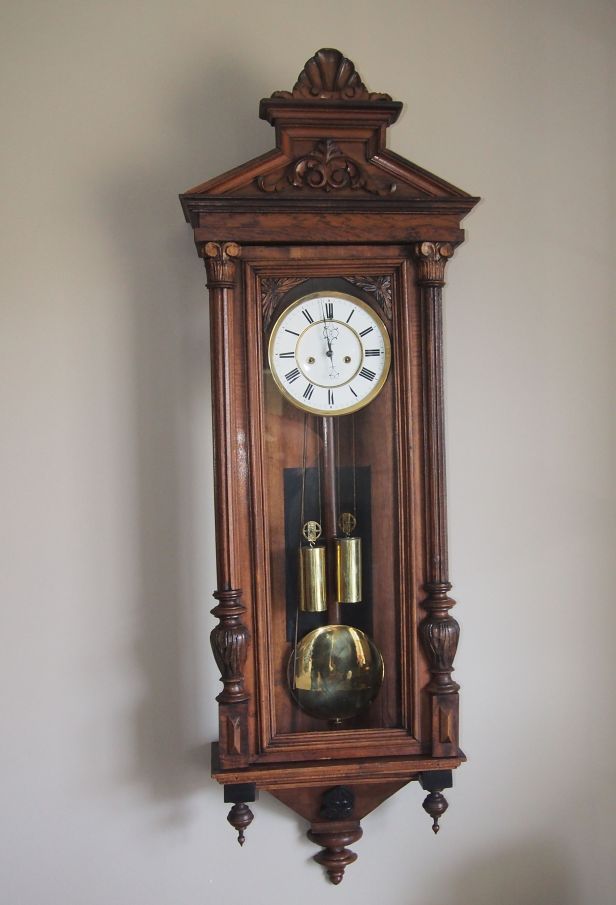
Gustav Becker two weight regulator
Gustav Becker two weight “Vienna Regulator”

Typically sellers will describe just about everything they feel the buyer needs to know but leave out essential details. This is called omission. It means that something in the description is deliberately left out for whatever reason. Is it unethical? Perhaps. However, sellers do not have an obligation to tell you everything about an item you are interested in since there are no disclosure laws in online dealing. That is why it is important to ask questions, lots of questions prior to any purchase.

The other day I followed postings on Facebook regarding a clock purchase. The person was quite proud of the fact that he had an attractive Art Deco clock coming in the mail. He provided only one photo of the clock showing its face and base. The style was similar to this clock.

Kienzle World Time clock

It was the only photo provided by the seller and with good reason. It was advertised as an 8-day clock because that is what it said on the clock face. It arrived several days later. This individual thought he was getting a mechanical clock but discovered when it arrived that the original movement had been taken out and replaced with a cheap quartz movement. Naturally he was dismayed. Caveat Emptor some would say but in this case the seller could have been more forthright. However, let me reiterate, the time to ask key questions is before the purchase.

The other day, again on Facebook, a fellow had bought a German box clock very similar to this one from my collection. When it arrived he proudly showed off his new acquisition.

after a good cleaning (4)
U M Muller German “box clock”, time and strike

The clock was keeping great time though the pendulum was very high up in the box and could barely be seen through the front glazing. It looked very odd. When he presented a photo of the inside of the clock it was clear that the seat board was handmade and it was obvious that the movement was originally mounted within a much smaller case.

Some weeks ago I was looking for banjo clock and I saw a couple on a local for-sale site. One was very intriguing. The only photo was of the outside of the clock; nothing showing the movement. I thought if it is weight driven it would be an excellent deal. I contacted the seller by email and  I asked if it were weight driven and he said he thought so but he also mentioned that it came with a winding key for the spring. Thanks I said.

Let the buyer beware. If you buy something you take responsibility to make sure it is what you intended to buy. Ask enough questions so that you are absolutely satisfied you know what you are getting otherwise you may be getting a pig in a poke.

Let me know if you have had similar experiences.

Servicing a Sessions American No. 2 mantel clock Part IV

In this fourth and final entry of the series I will discuss bushing work, re-assembly and finally, testing and mounting the movement back into it’s case. Part I of this series can be found here, Part II here and Part III here,

Once the pivots are inspected, cleaned and polished it is now time to install any bushings required as result of careful inspection.

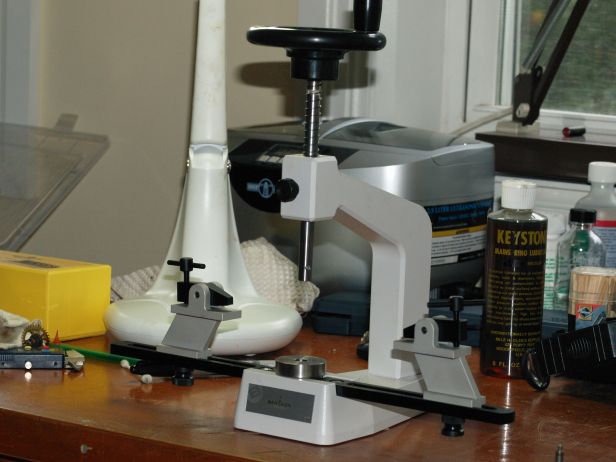
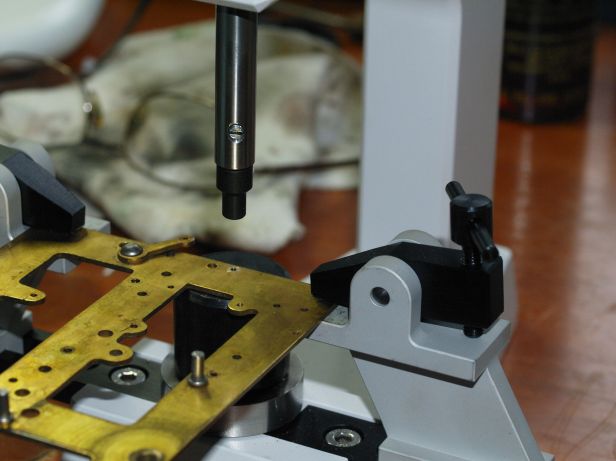
Bergeon Bushing Machine

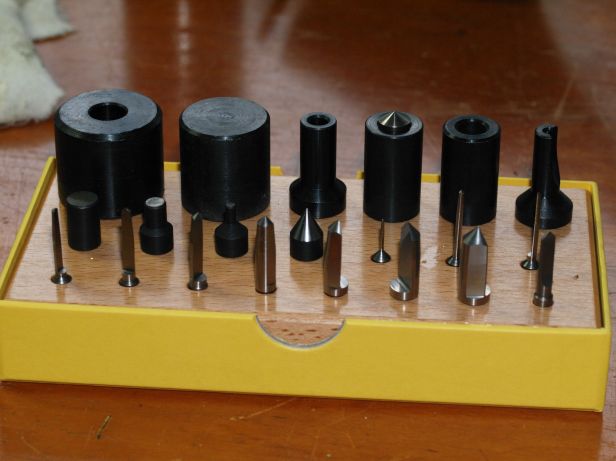
I acquired a Bergeon Bushing Machine in the spring of this year (2016). As I mentioned in Part III, some may prefer to bush by hand which I think is commendable but I have decided to go the bushing machine route. In the last few months I have been using and learning its many tools. It comes with a set of chucks and reamers some of which (right side rear) are a bit of a mystery to me. I cannot see using any of the large reamers any time soon though I assume that if I am working on tall-case clocks which have larger movements they would come in handy.

Chucks and reamers
Chucks and reamers

First is selecting the correct bushing using a micrometer to measure the diameter of the pivot. Then, I select the proper bushing from my Bergeon assortment kit.

Using a micrometer to check pivot
Using a micrometer to check pivot diameter on the escape wheel

The bushing I have selected for the escape wheel pivot (measured at 1.46 mm) has a depth of 2 mm, an outside diameter of 3.5 mm and a pivot hole of 1.5 mm.  In the next photo I am positioning it on top of the 3.47 mm. hole that I have just just “drilled” using one of the reamers. The outside diameter of the bushing is slightly larger allowing for a tight friction fit.

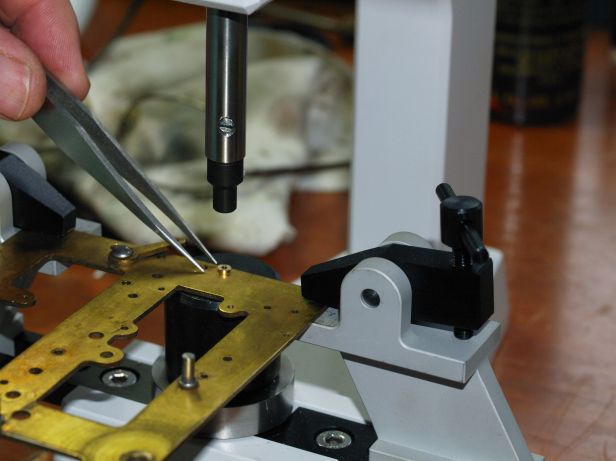
Punching the bushing home
Positioning the bushing on the Bergeon Bushing Machine

OLYMPUS DIGITAL CAMERA
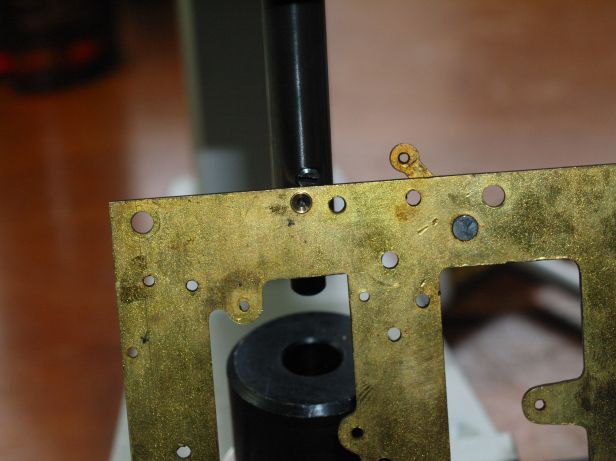
Bushing installed

Once I have selected the correct bushing I test it on the pivot for fit and then I position it over the pivot hole and use a small hammer with it’s nylon end to tap the top of the bushing machine centre shaft lightly until the bushing is properly seated and level with the plate ensuring that the oil sink faces the outside of the plate.

New bushing installed
New bushing installed with oil sink on the outside of the plate

To check proper fitment of the motion works bushings/pivots, I assemble all the wheels on that side (both plates), check for a smooth action and determine if any additional reaming/smoothing is required. I do the same for the strike side.

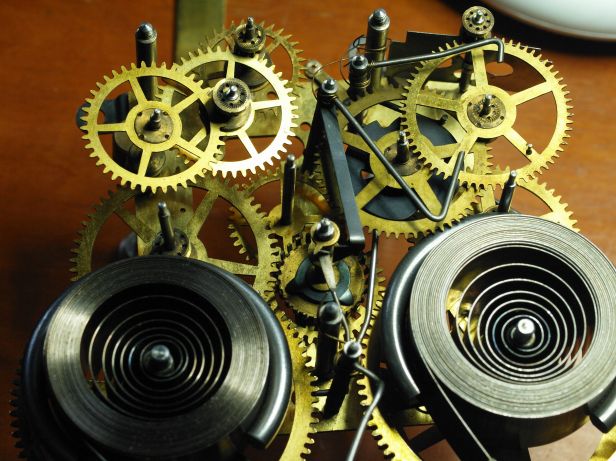
Once all the bushing work is completed and I am satisfied that each bushing fits correctly and operates smoothly, I re-assemble the mainsprings, wheels and levers and then re-attach the back plate using the five plate screws. We each have our own method of re-attaching the back plate but I work from the bottom up, that is, from the mainsprings. Once I have the mainsprings in place I immediately install the bottom 2 plate screws (loosely) and then work from the motion works side to the strike side using a pivot locator tool, if necessary, to coax the pivots into their respective holes.

Trains and levers ready for the front plate

Positioning the various levers can be a bit frustrating because those that have helper springs seem to slip out of their pivot holes easily as you are putting the plates together. Perseverance is certainly the key.

The one difficulty I had was adjusting the synchronization of the count and drop levers, that is, getting the drop lever to sit in the cam while I adjusted the locking lever position. The clock must be completely assembled at this point and once together loosen or take off the nearest pillar nut and pry the plates apart to take out both the flywheel and the locking wheel. Once out, the locking wheel can be re-positioned by moving the pin on the wheel so it rests on the locking lever. Once this is completed, re-install the flywheel. This is basically a trial and error process and I never seem to get it right the first time.

My only error in the first go-around was not restraining the strike mainspring during this procedure. While spinning wildly the strike mainspring flattened the protrusions off the cam that allows the hammer strike. Momentary panic! Once bent back into shape everything was fine. Naturally, I secured the mainspring for my second successful attempt.

My reference for these adjustments is Steven Conover’s Striking Clock Repair Guide which is an invaluable guide to striking American clocks.

Once the parts are re-assembled it is on to the final testing phase which takes days (and weeks, perhaps) as the clock is being carefully regulated. The following video shows the movement on a test stand (in this case, Gene’s Test Movement Stand). The sound of the pallet on the escape wheel is very quiet; you are hearing other clocks in this room. The clock is in beat and in the video you can see the movement of the escape wheel from various perspectives.

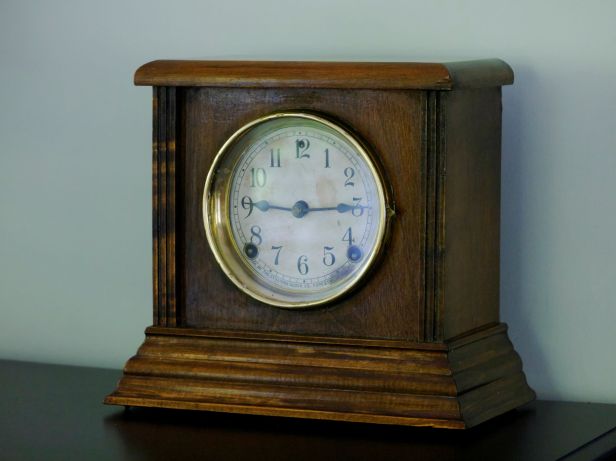
Sessions American No. 2
The movement is returned to it’s case

Once testing and regulating is completed and I am satisfied the clock will run reliably for 8 days I return it to it’s case. There are only 4 mounting screws. You may have to re-position the coil gong by loosening the adjustment nut on bottom of case to get that satisfying strike sound.

This attractive little Sessions American No. 2 time and strike mantel clock has now been serviced. It required 5 bushings and should run reliably for the next 3-5 years.

Servicing a Sessions American No. 2 mantel clock Part III

Sessions American No. 2

The movement is disassembled and now it is time for further inspection, cleaning, servicing the mainsprings, pegging the pivot holes, polishing the pivots and installing bushings where needed. In this, Part III we will cover cleaning and mainspring servicing.

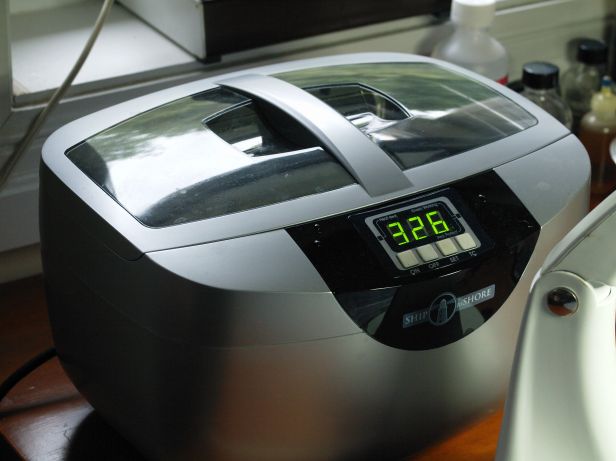
Ultrasonic cleaner
Ultrasonic cleaner

I have a small ultrasonic cleaner so I tend to clean parts in batches since this one does not have a large capacity. An ultrasonic cleaner is not an absolute must as you can easily clean by hand but having one certainly helps.

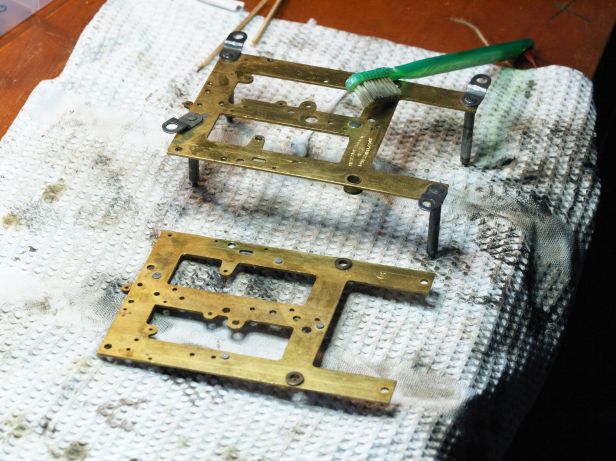
Front and back plates

Old toothbrushes are great for getting into the crevices and I use one especially for the lantern pinions as a lot of dirt and old oil tend to accumulate in those particular areas.

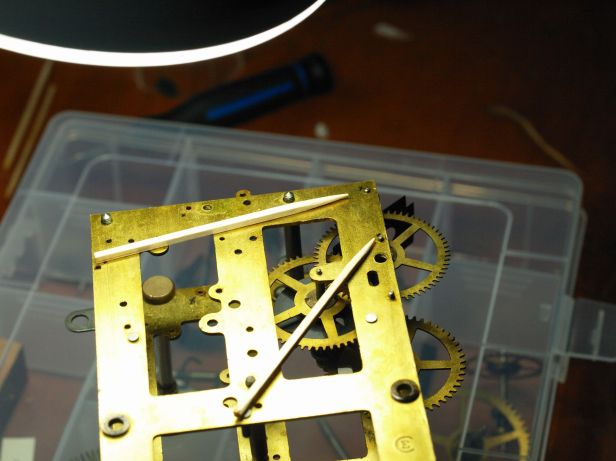
indicating wjehere bushings will be installed
indicating where bushings will be installed

This photo shows a couple of bushings that I will install. I realize that some prefer to install bushings by hand and I applaud them as it does take considerable skill but I use a Bergeon Bushing Machine which I believe simplifies the task (for me, at least). More on bushing in the next part of this series.

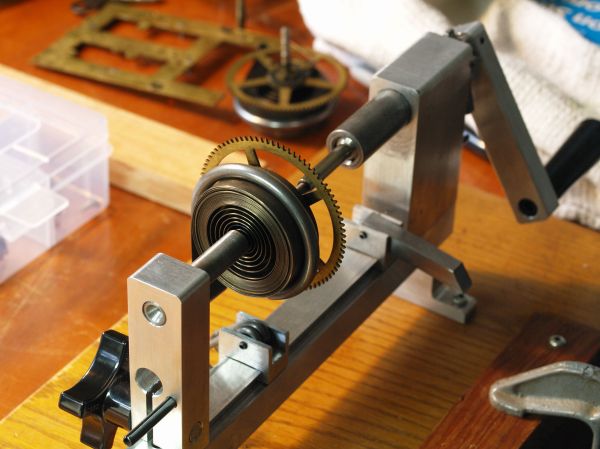
Olie Baker spring winder

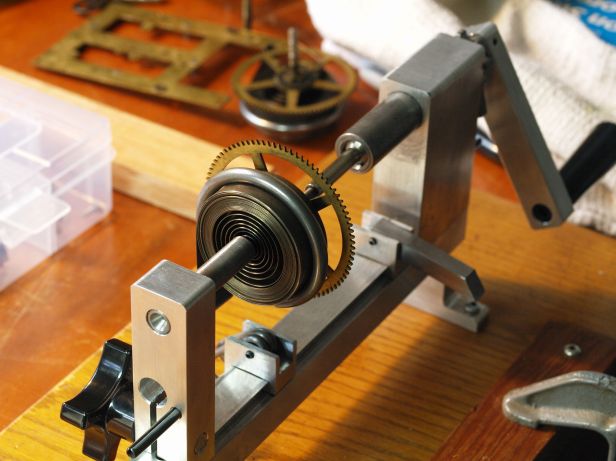
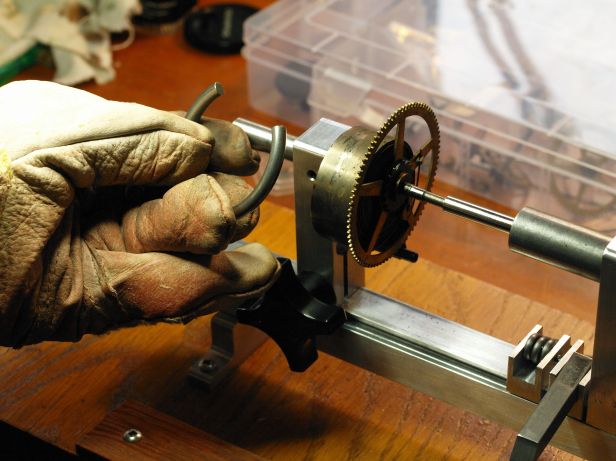
An Olie Baker spring winder is an indispensable tool. You can easily make one of your own to save a little money if you are handy with building things. A spring winder permits you to inspect for cracks or breaks, clean and oil the springs before reinstalling them. The photo shows a C-clamp securing the mainspring prior to cleaning.

OLYMPUS DIGITAL CAMERA
leather gloves are used to secure the spring on the winder

I have never lost an eye or a finger but I believe in safety first especially when working with mainsprings. Always wear leather gloves and eye protection. You never know when a 100 year old spring will break and fly across the room.

Click replaced
Click replaced

I discovered that one click had to be replaced as it was almost slipping off the ratchet. As some clock repair folks know, Sessions clocks have a reputation for bad clicks. I had a Sessions click in my supply box, fortunately. It is an easy job; just take the old one out with pliers, secure the new click and bang the rivet (supplied) into the existing hole with a ball peen hammer.

Serviced springs
Serviced springs

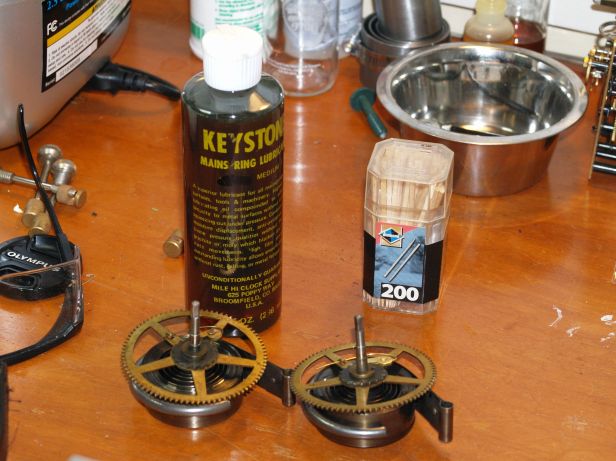
The springs have been cleaned and oiled with Keystone Mainspring Oil and are completely serviced including the installation of one new click. Now comes the bushing work, re-assembly and testing. Stay tuned to Part IV of this series.

Kienzle World Time clock – a second look

Kienzle World Time clock

I put a quick article together on my newly acquired modern Art Deco brass Kienzle World desk clock in August and with only one photo in my post I really did not do this fine looking timepiece any justice. I hope the following  photos will show that this clock really impresses. As I mentioned in my last post regarding this clock, this is one of many clocks conceived by renounced German designer Heinrich Moeller. Moeller, who was trained as a cabinet maker, began working with Kienzle as chief designer in 1931 and through to about 1970.

On display
On display with Ingraham Huron

This vintage clock is from the period 1950 to 1960 judging from the many offerings on EBay. I noticed that this style is occasionally advertised as a 1960s clock but judging from others I have seen I am fairly confident that this is from 1950 give or take a year. This style seems to be the most desirable of the series. Later ones had quartz movements and were in less demand, judging from the lower prices. The weight is very substantial and it measures 13 and 3/4″H X 10″W X,  2 and 1/2″D.

Back of Kienzle clock
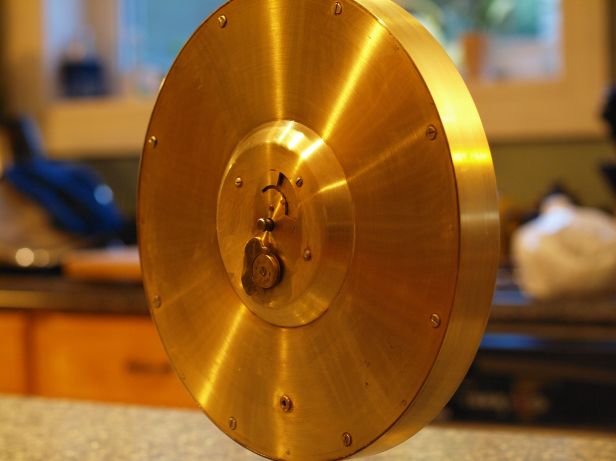
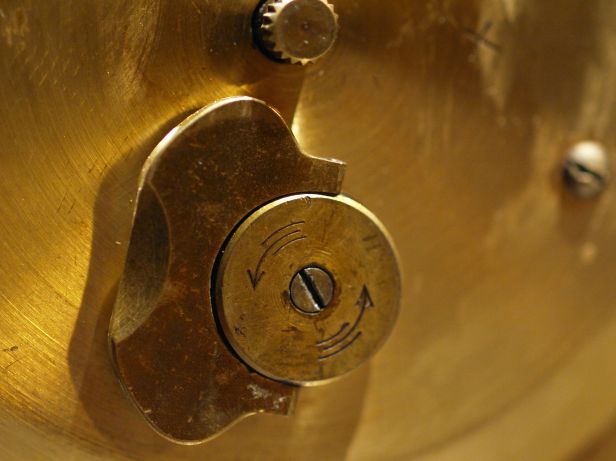
Back showing winding key, speed adjustment access port and time adjustment knob
OLYMPUS DIGITAL CAMERA
Brass bezel

This clock is in excellent condition with minimal wear and tarnish. In fact, observe the front and side views for an appreciation of the pristine condition of this clock.  The case was grimy as one might expect and a little polish brought up the finish very nicely.

Quite often small parts are missing in clocks such as this, for example, the time adjustment knob or the cover for the speed control needle. In this case  everything is completely intact. It is in very good working order and will run for a full 8 days.

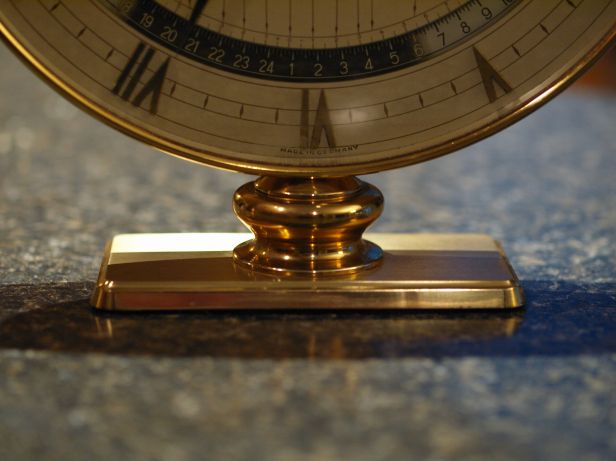
Brass base
Decorative brass base

Will I service it? I am not sure. According to comments on the NAWCC message board some members have not had much luck working with this clock. Given that it seems to have had minimal wear and tear it may not have had a lot of use over the years so it might be wise to leave well enough alone, for now. I would like to oil it, however!

Winding crank
Winding crank
Time sequencer
Aperture for the 24-hour day and night indication

I am very pleased with this acquisition. The clock is certainly a singular work of elegance, magnificence, style and a stand-out in any room.

Servicing a Sessions American No. 2 mantel clock Part II

Sessions American No. 2
Sessions American No. 2 time and strike

Top plate is off
Top plate is off

This is  Part II of the Sessions American No. 2 servicing. As I mentioned in my last blog entry (Part I) this clock was running but is in need of a little attention. This is a fairly simple clock to work on for an American time and strike movement. I cannot stress enough that photos are so important when working on clocks! They are a valuable reference which take a lot of the guessing out of re-assembly.

The clock is now ready for the parts to be taken off, organized in a parts container, inspected, cleaned and serviced.

Time side spring is removed
Motion works mainspring is removed

X marks pivot holes that need to be bushed

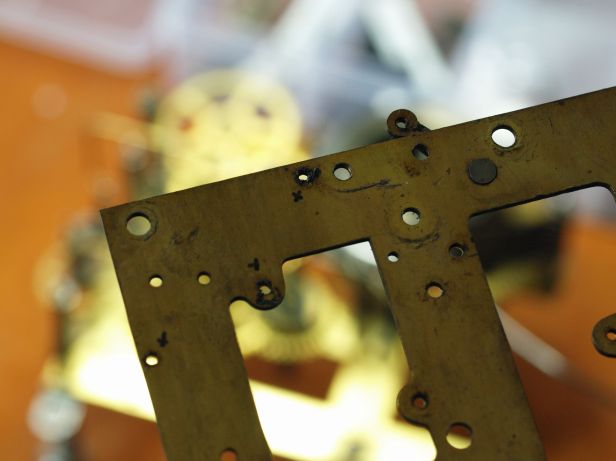
This the back plate. No bushings have been installed but following my inspection a number of bushings are required, three in this particular corner. The topmost “X” is the location of the escape wheel. I always mark the suspect pivot holes with a marker so that I know what work needs to be performed on those specific pivot holes.

Dis-assembly is rarely an issue when working on these clocks. However, the helper springs (see arrow below) can be damaged and although they look like they might have been added by later clock repair they are indeed part of the original design and assembly of the movement and perform a vital function.  Be very careful with them though if broken they can be replaced. The helper springs and levers can be frustrating to work with particularly when lining up the levers correctly and re-positioning the helper springs upon re-assembly.

Removing lever with helper spring
Removing count wheel lever/helper spring

Removing the count wheel

The count wheel is secured by this washer. make sure it goes back in the same way it came out.

Marking the count wheel

Putting the count wheel in backwards will not stop the clock but it will count down the hours, not good! Not making the same mistake again I mark the count wheel so that I know that it goes in right the first time.

Time and strike parts
Motion works and strike parts separated

We each have our own way of doing things but I find it very helpful to separate the time and strike sides prior to re-assembly. It avoids confusion and makes for a more simplified process when working on your clock.

Now that the clock is disassembled it now time for further inspection, cleaning, installing bushings, and polishing the pivots which you will find in Part III.

Servicing a Sessions American No. 2 mantel clock, Part I

Sessions American No. 2

I am going to take you, the reader, through the process I follow when servicing a clock. There will be several posts in this series. I am not a trained expert in clock repair, nor do I do this for profit and have learned most of what I know through trial and error, careful study and of course, listening to the advice of many experts and newfound friends on the forum site at NAWCC.

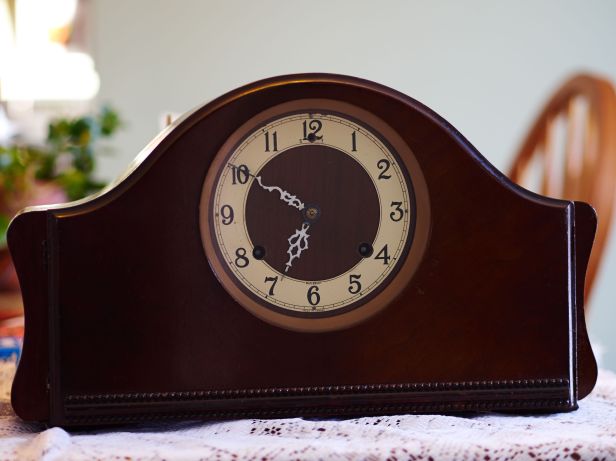
If you into clock collecting you’ve probably seen one of these mantel clocks at one time or another in your travels. Literally thousands were made. This attractive little mission styled oak-cased time and strike mantel clock is a Sessions “American No. 2” dating from 1921 according to Trans Sessions book, page 121.

When I opened the back access panel to service the movement I discovered an inscription which reads, “Jim A. Kennedy, Nov 3/63, a clear, cold nite”. One can only imagine that on that particular clear, cold night, Jim A. Kennedy was doing some work on this lovely clock. It does not say where Jim lived but Jim, wherever you are and if you are still with us, your clock lives on.

Although this clock has been running steadily since I acquired it about two years ago, the time is right to put it on the workbench. American made clocks like this tend to run on and on despite requiring much needed bushing work and this one is no exception, but now it needs some loving.

I took the movement out of it’s case and examined it closely. Fortunately it has not been botched by poor repairs over the years that one sees from time to time. Things looked good, no surprises. Although no bushings have been installed on the top (back) plate there were five bushings that were installed on the bottom (front) plate at some point in this clock’s life, perhaps on that cold, clear evening in November. My initial inspection reveals that there is wear in some pivot holes and that six bushings must be installed on the back plate and of the five previously installed bushings on the front plate, two need to be replaced and at least one new bushing is required on the pallet arbor.

Although the movement appears clean at first glance it really is very dirty. This is an example of the sludge (indicated by the arrow) that has built up in this particular pivot over the years. There are other such examples on this movement.

top plate showing a build-up of dirt around a pivot hole
Top plate showing a build-up of dirt around a pivot hole

Once I tear it down completely I will be able to determine the condition of the pivots and other moving parts. I intend to clean the entire clock and clean/oil the springs as well as replace/install the aforementioned bushings. My first impression is that the mainsprings are in good condition. The clock easily ran eight days on a wind. The clicks are another matter. At least one looks like it needs replacement. Sessions clocks are notorious for their bad clicks but to put things in perspective the clicks have been in this clock likely since it was made (or perhaps 1961).
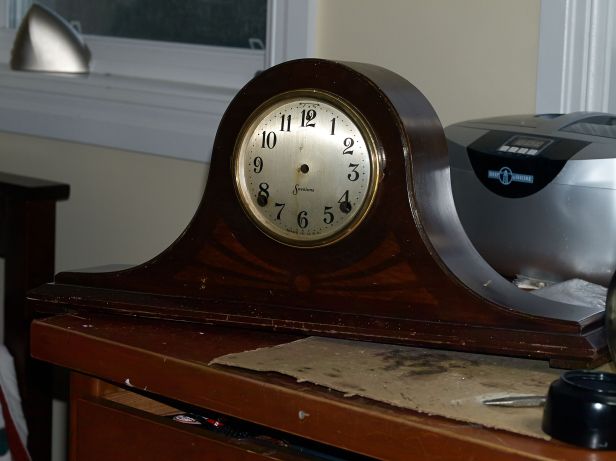
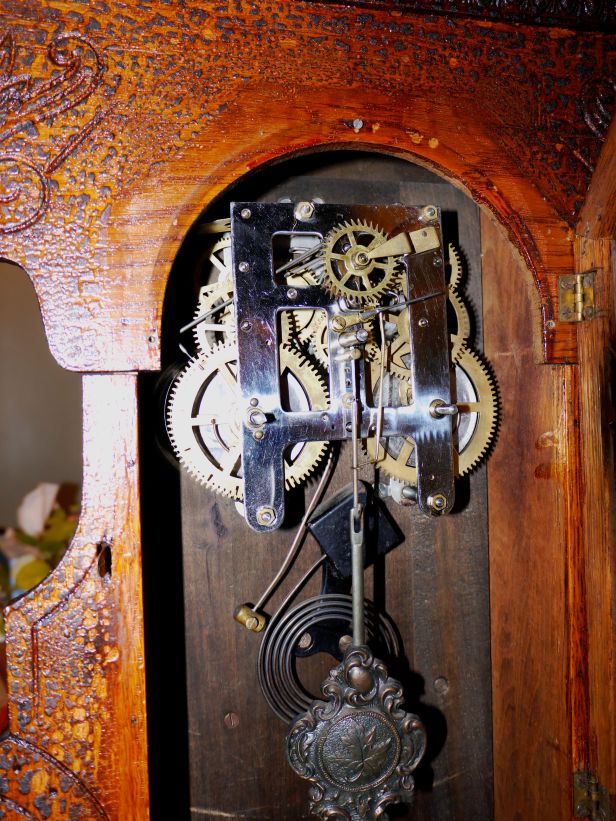
Time and strike movement with single hammer strike on a coiled gong

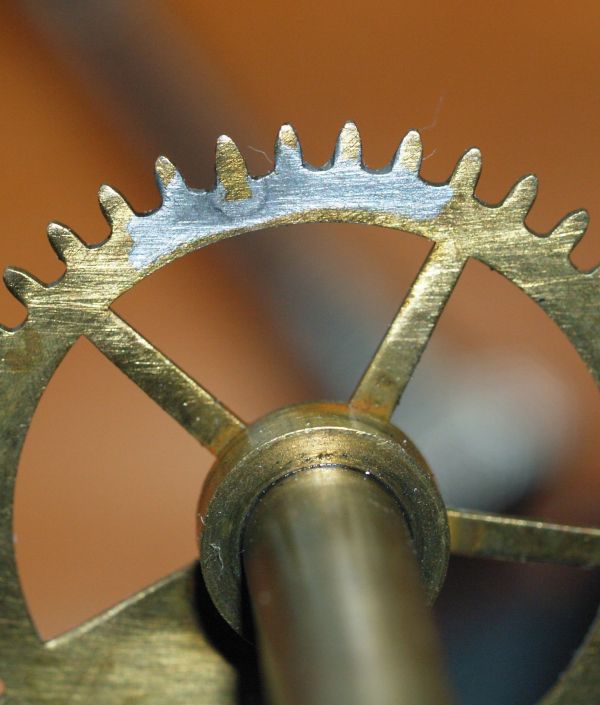
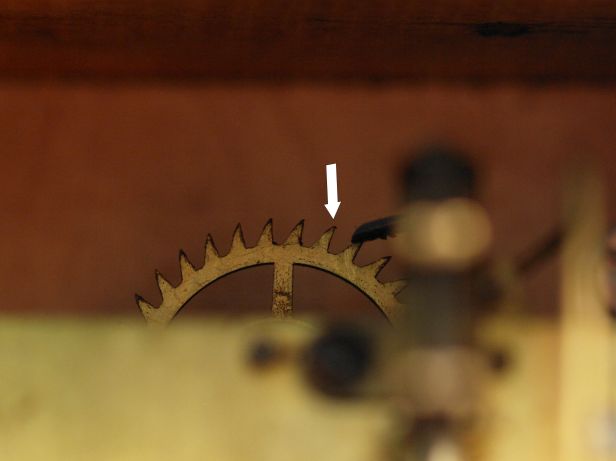
The escape wheel teeth may need to be filed but I will determine if filing is required once I inspect it more thoroughly.

escape wheel tooth tips
Escape wheel tooth tips

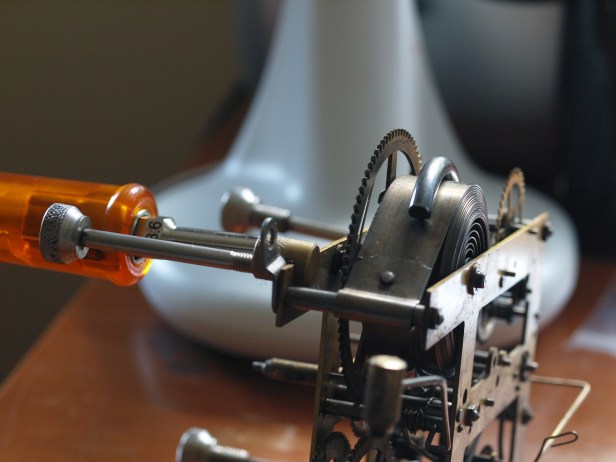
Safety first. The first task other than taking the suspension spring/rod/bob off the movement is to secure the mainsprings using mainspring clamps that are available at any clock supply store. Mainsprings can be very dangerous and it is important to contain their power when working on a clock. I always wear eye protection and leather work gloves before I let the mainsprings down with a let down key. Once you’ve released the clock from the ratchet by moving the retaining spring out of the way, the power of the spring is transferred to the let down key which allows one to gently release it until it is contained in the C-clamp. After the springs are restrained you can safely disassemble the clock.

Let down key and C-clamp

.

Movement on stands
Movement on stands

The clock is now ready to be disassembled. Tune into Part II where I will post photos of the complete disassembly stage and report on what further work needs to be done.

So, my sister also loves clocks

After not having visited my sister in some time I was surprised to find that she is an avid clock collector. I must stress the word collector because although she appreciates the beauty of each clock she has acquired over the years how they run is somewhat of a mystery to her and that is just fine. While visiting her this summer three of her clocks were out of adjustment and it took no time (no pun intended) at all to get them running again. No sense paying someone to do it, that`s what brothers are for.

In my opinion the most interesting clock she has is a French time and strike bracket clock that has no visible markings yet appears to be over 100 years old. It is in beautiful condition with only a slight patina on the finish. I would love to have found out more about this clock but my stay was brief. Perhaps next time.

French bracket clock

The next clock is one my sister absolutely loves and it is a great sounding Westminster chime grandmother clock she bought some 20+ years ago. This quarter chime clock made by Craftline Industries in the early 1990s has a Canadian made case with a German movement, likely by Hermle.

Craftline grandmother clock

Next is a curiosity. When I saw the Sessions name on the dial I wondered why I had not seen this particular style of Sessions clock. Further investigation revealed it to be a six pillar Adamantine Seth Thomas case. The movement was clearly marked ST and as I said the case is certainly a Seth Thomas. So, why the Sessions clock face? Likely the original dial face was so badly marred as to be unreadable that the owner many years ago simply told the clock repair person to find another face, which he did. Since the replacement was a Sessions electric clock face he had to drills the holes to accommodate the winding arbors. Who would know! To those less knowledgeable it looks great.

Session Seth Thomas mantel clock
Sessions / Seth Thomas mantel clock

I found this little antique time-only Hamilton and Co. French-style carriage clock made in India (Calcutta) to be very interesting and so diminutive. Hamilton and Co. is probably the best known and most celebrated British clock maker in India. I would put this clock at around the 1890s. It probably needs a good cleaning since it is not in working order.

Hamilton and Co Calcutta
Hamilton and Co. Calcutta

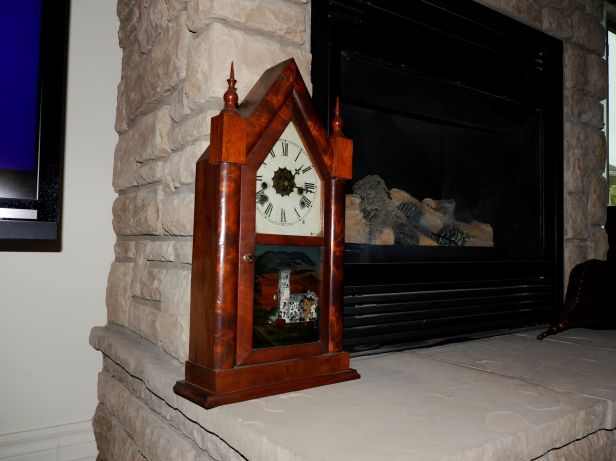
I am not a huge fan of steeple clocks but this Waterbury clock is in very good condition save for a damaged right steeple tip. The Waterbury Clock Company is one of many 19th century Connecticut-based clock firms with a history going back to the 1850s though it closed is doors for good in 1944. More memorable are Waterbury wall and mantel clocks but like many makers of the day they had a successful line of steeple clocks.

Waterbury steeple clock

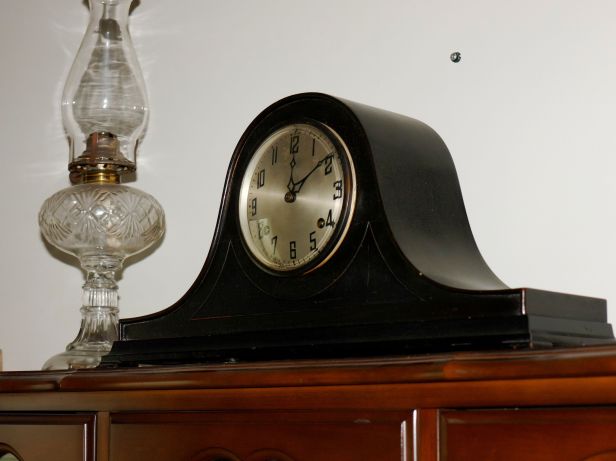
Next is a New Haven time and strike tambour style mantel clock from about the late 1920s or early 1930s. Aside from the grandmother clock which my sister bought new the New Haven mantel clock was a wedding gift of her late husband’s parents and has been in the family ever since.

New Haven Mantel clock

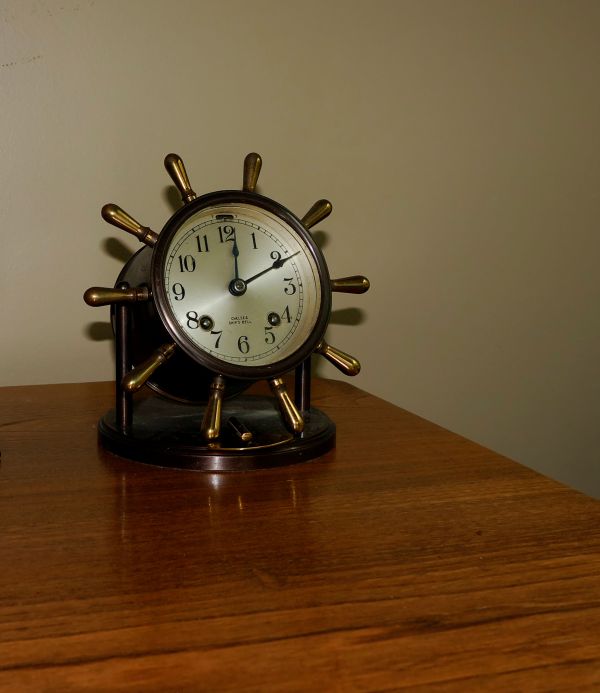
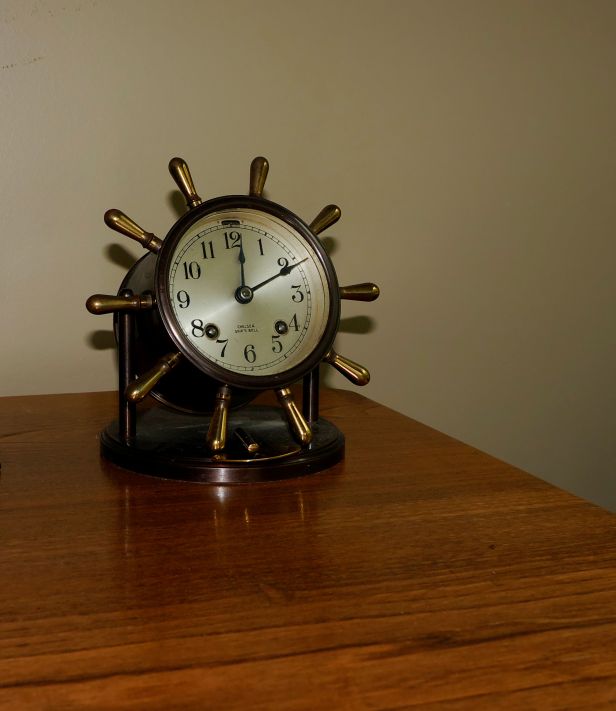
Lastly, this Chelsea ship’s bell clock is a polished beauty. A ship’s bell is used to indicate the time aboard a ship and hence to regulate the sailors’ duty watches. Unlike normal clock bells, the strikes of the bell do not correspond to the number of the hour. Instead, there are eight bells, one for each half-hour of a four-hour watch. Three bells, for example, would mean that a sailor would be 1 1/2 hours into a 4 hour watch. Each watch would take its turn with the essential activities of manning the ship’s helm, navigating and keeping a lookout.

Chelsea ship's bell cloc
Chelsea ship’s bell clock

I was quite impressed with my sister`s collection and each clock occupies a special place in her home. I find it facinating going into peoples homes and discovering the joy they experience in collecting, be it clocks in this case or anything for that matter. Collectors are truly unique people!


Hugh Gordon longcase clock

Hugh Gordon, clock-maker worked in Aberdeen, Scotland from 1748-90. He had previously worked in Edinburgh and London. Although a very proficient maker little of his work seems to have survived.

Hugh Gordon throat
Hugh Gordon tall-case clock

This is a friend’s clock and I was asked to research it. Unfortunately, I have discovered very little so far.

Hugh Gordon clock
Hugh Gordon tall-case clock

This time and strike clock is an excellent example of Scottish style and was likely made between 1760 to 1770 judging by the design of the spandrels.

Hugh Gordon face, hands and spandrels

Hugh Gordon bonnet and face
Hugh Gordon pagoda hood and face

It features a second hand just below the 12 o’clock position and a single date aperture just beneath the hour pipe. It is a nicely proportioned clock with a tall centre throat and pagoda-styled top bonnet; the centre engraving is a typical feature of the Scottish clocks of the latter part of the 18th century as is the box calendar opening (date aperture), side glass on either side of the hood and doped canvas top cover. These clocks are not overly tall at about 7′.

It is missing three finials; one on top and on the left and right front corners. The mounting holes were evidently covered up by a later canvas re-application. The chapter ring and dial centre would have been silvered at one time and rubbed clean by over-polishing through the years. The hour hand looks correct but the original minute hand would have had a serpentine design in keeping with the hour hand.
Hugh Gordon face and hands

This clock has been in my friend’s family since 1850 having been brought over by ship when his ancestors immigrated to Canada. It has survived quite well and it has been well taken care of.

It is not in running order. I suggested that my friend seek a clock repair person (horologist) who is knowledgeable in the repair of antique tall-case clocks particularly with clocks of this era as special care and attention is required if parts need to be rebuilt/repaired to remain consistent with the period.

Upcoming clock articles

Now that I am back on my regular schedule I can begin work on some upcoming articles. In the days and weeks to come I will be reporting on a visit to my sister’s home and talk about her small collection of interesting clocks and a friend’s most interesting antique tall-case clock that came all the way from Scotland.

I will report further on some interesting aspects of my Kienzle World Time shelf clock as well as my newly acquired Smith Enfield Art Deco mantel clock.

I will also begin repairing a Sessions American No. 2 that I will report on in a multi-part article.

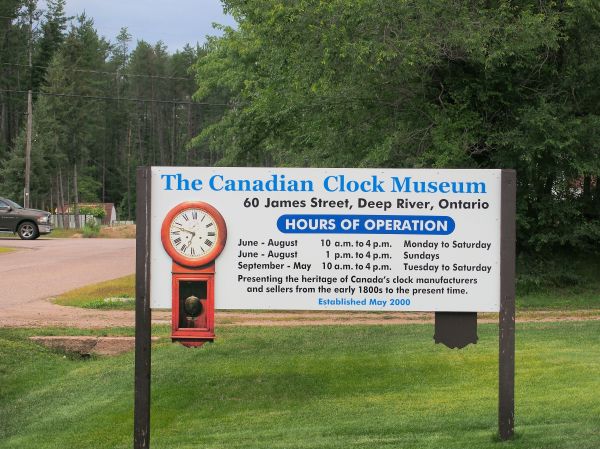
In addition I will have an article about the various clocks I discovered in my travels throughout the province of Quebec (Canada) this past summer. Due to time constraints I was unable to make my annual visit to the Canadian Clock Museum in Deep River, Ontario but I am back to that area in October so I will give it another try.

I am looking froward to returning into my regular routine. Please let me know if you have any thoughts or comments about future articles of interest.

Kienzle World Clock

Kienzle World Clock
Kienzle World Clock

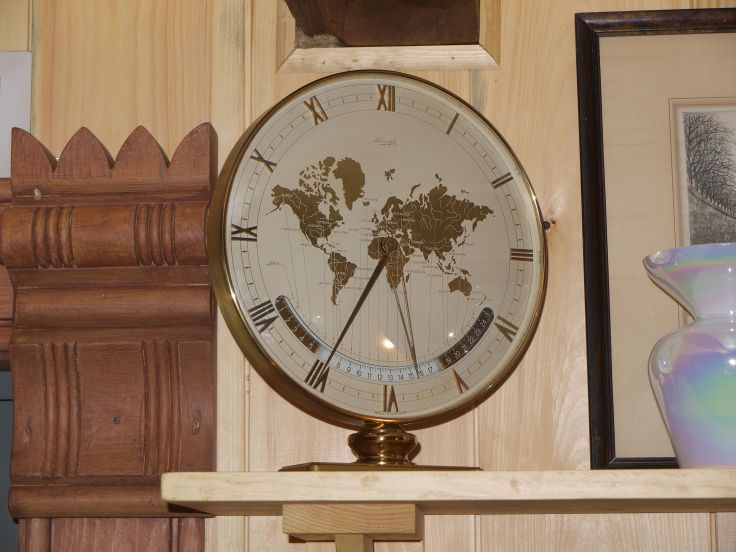
I acquired this mechanical Kienzle World Time clock recently from an antique shop in Quebec.

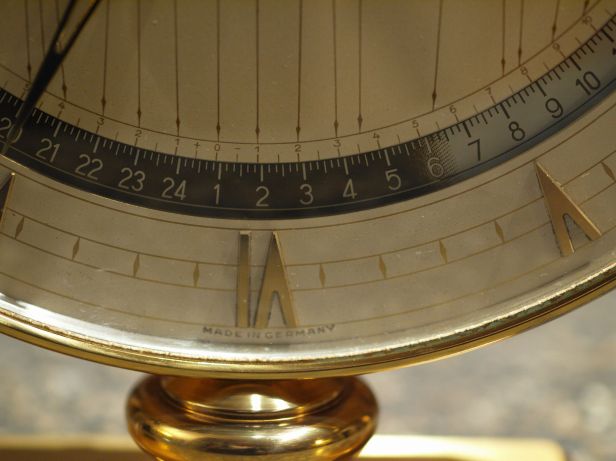
No matter where you are in the world this clock will tell you the local time. Quite ingenious! This is accomplished through a rotating hour indicator in the lower half of the clock. As the time advances the indicator moves along with it thus enabling the user to line up the distant hour according to where you are in the world. This is one of many clocks conceived by renounced German designer Heinrich Moeller. Moeller, who was trained as a cabinet maker, began working with Kienzle in 1931 and presumably through to the mid century. This vintage clock probably originates from the early 1950s.

This clock is in excellent condition as the brass seems well preserved. I would imagine it as a stunning clock in any environment. I would assume that it might have been sold as a promotional item or could have found it way into many executive office milieus. One can just imagine an import/export dealer 60 years ago who would need to know the time in many parts of the world.

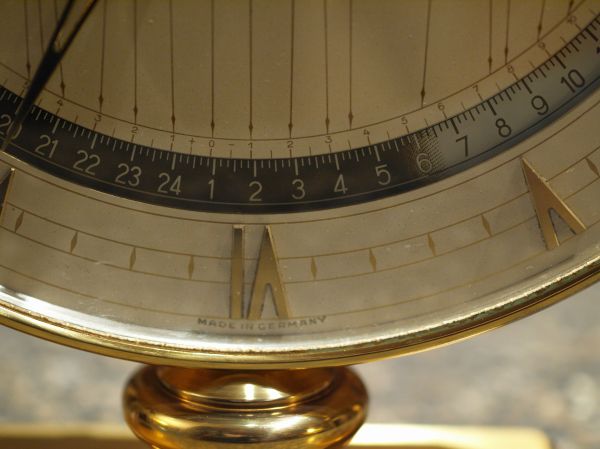
I found an excellent description from this site. The clock is described as “circular, brushed brass, moulded and rectangular base, convex glass. Brushed silvered with applied gilt brass radial Roman numerals, outer minute track, the center with world planisphere and the names of 42 world cities and countries, aperture for the 24-hour day and night indication, scale above to calculate the world time. Gilt brass tapered baton hands. Lever escapement, three-arm balance, index regulator. Diam. 26 cm.” Curiously, the number 4 is expressed as IV rather than IIII found typically on Roman Numeral clocks.

Sessions clock final thoughts

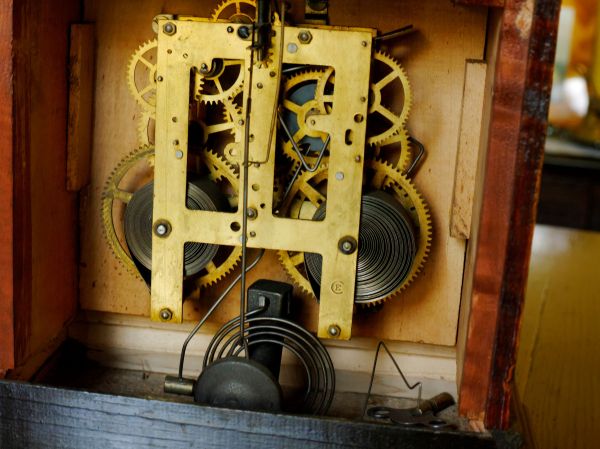
Sessions movement
Sessions movement in the process of repair

Regular readers have followed my progress on this 1927 Sessions tambour style clock.

Better news this time. After installing 10 bushings, repairing the strike click, replacing the pendulum bob and suspension spring and reassembling and oiling the clock and the springs I am having excellent success regulating this fine old clock. On a full wind I am getting upwards of 9 days and typically eight days through the summer. Though it sits inside our cottage in Quebec it has suffered through all manner of outside weather including high humidity and cool nights and despite these conditions it has performed admirably.

Although originally intended as a cottage clock I will be taking this clock back with me and placing it in a prominent place in my home.

All in all a great learning experience and a satisfying result.

How to oil your mechanical clock

Oiling your mechanical clock is an essential part of its maintenance, ensuring smooth operation and longevity. Proper lubrication reduces friction between moving parts, preventing wear and tear while keeping the movement running smoothly over time.

During the summer of 2016, my wife and I were traveling through the Muskoka area of the province of Ontario and stopped at a quaint village called Halliburton where we happened upon the only antique shop in town. There were a large number of clocks in the store that the proprietor had brought over from Ireland and each one was interesting.

Though there were plenty to choose from we settled on a Smiths Enfield Art Deco style oak cased mantel clock pictured below.

Smiths Enfield
Smiths Enfield time and strike

It was sold as-is and non-working, with the clerk noting that the pendulum bob was missing, which explained a lower price. However, when I got the clock home, I discovered the bob wrapped in brown paper along with the key, tucked inside the clock. After attaching the pendulum bob to the rod and a bit of adjustment, I found the correct beat, and the clock started running.

At my summer place, I do not have the necessary tools to service clocks but decided to take the movement out to oil it.

Once out of the case, I discovered that someone had oiled the movement by spraying it with an unknown lubricant. Spraying a clock with any lubricant is a bad practice. Indiscriminate oiling attracts dust and grime that will accelerate wear and eventually lead to stoppage.

Given the indiscriminate use of oil, there was no sense in operating the clock so I decided to put it aside until I got home where I could disassemble, clean, and properly service the movement.

Oiling Your Mechanical Clock

Lubrication is essential to the good running of any clock movement. Oiling a movement without first dissembling and cleaning it is normally a bad practice. The addition of new lubricant to old will mix with the dirt and grime to form a paste which acts as an abrasive that will hasten pivot and pivot hole wear.

The purpose of lubrication is to reduce wear, and applying the correct amount of oil is crucial. The only exception to this is when the oil sinks are dry— in such cases, oiling the movement without disassembling it is acceptable.

Apply only as much oil as required, a tiny drop goes a long way. Clock oil should occupy about one-half the capacity of the oil reservoir. Use an approved clock oil and a pin-type oiler to apply the oil.

Clock pivot oil
Clock pivot oil

Key Points Regarding Oiling

Lubricant: clock oil has the correct viscosity and has a low tendency to evaporate, spread or react adversely to various metals. Pivot oil is for pivots and spring oil is for springs; there is a difference! Clock suppliers such as Timesavers or Perrin will shave the correct oil for your clock. Do not uses household lubricants and especially WD 40 which is not a lubricant but a water dispersing agent. Synthetic oil is preferred since it retains its properties for a longer period but I work with mineral oil which is cheaper and just as effective.

When to oil: Some say that one should apply oil only after disassembling and cleaning. Others say that a clock’s service cycle might be an average of 5 years or more and oiling every two or three years without a thorough cleaning is acceptable. If there is a visible build-up of black, contaminated oily sludge in the pivot holes, a disassembly and thorough cleaning is necessary prior to oiling. A clock’s the environment will play a significant role since dusty, smoky environments contribute to accelerated wear. A sealed case will also keep out dust and lengthen the cycles between oiling.

How much oil: After oiling there should be a visible presence of oil in the oil sinks around the pivot holes. Oil running down the plates is to be avoided and is a indication that too much oil has been applied. I use a clock oiler with dispenser. Oil cup reservoirs are also very helpful as they prevent any foreign material from getting into the oil bottle when dipping with a pin type applicator. Long case clocks with larger pivot holes will require more oil than a small carriage clock.

clock oiler with dispenser

What to oil: While looking at a clock plate (front or back) work from the top to the bottom. First and foremost are the pivot holes in the plate, then the points of contact between the pendulum and the crutch, escapement pallets faces and centre and motion works arbours. I generally do not apply lubricant to the mainsprings unless I have unwound them. Once out of the clock and assessed as to their condition and cleaned, I apply Keystone mainspring oil prior to re-installation. Do not oil the gear teeth.
Mainspring winder

This short primer on oiling your clock is not meant to be a definitive guide but will give you enough information to get you started if you have just found that mechanical clock you have always wanted.

In conclusion, a properly oiled clock, combined with regular servicing, is key to maintaining its functionality and extending its lifespan. Regular lubrication helps reduce friction between the moving parts, ensuring smooth operation and minimizing wear and tear. By performing periodic maintenance, such as cleaning and oiling, you can keep the clock running efficiently for many years, preserving both its accuracy and its value.

For more information on clock lubrication, I suggest the forum site at the National Association of Watch and Clock Collectors where you can find many expert opinions.

8500 views and climbing

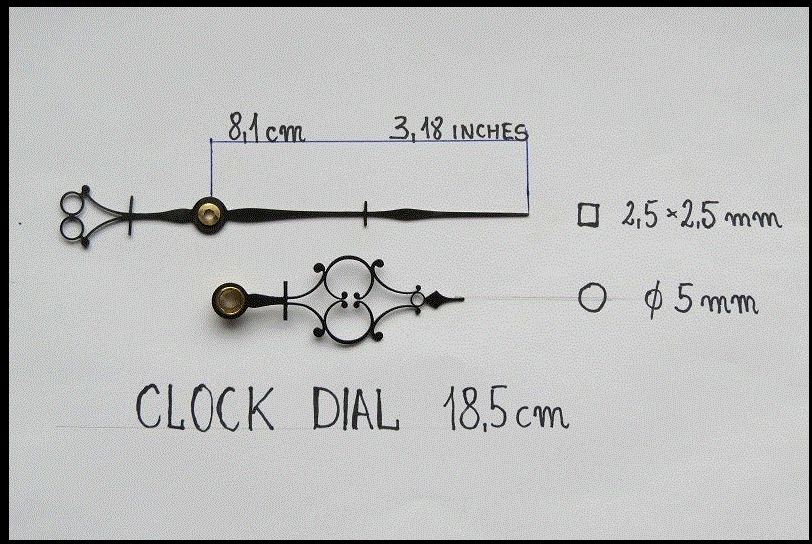
Clock hands Vienna Regulator
Clock hands for a Gustav Becker wall clock

In the year or so I have been running this blog I never imagined that it would have achieved so much. It is at 8500 and climbing page-views.

In the late spring of 2015 I attended a workshop on WordPress blogging. I was impressed how a powerful blog tool it is. I had already had some experience blogging and still maintain my Blogspot site though it was always intended to be a general interest blog only. However, I had been collecting antique and vintage clocks for about 4 years and I wanted to narrow the focus to clock collecting / repair so this was a good time to start a brand new blog and explore something more in line with my current interests.

Like any blog the first 2-3 months was a little discouraging. I was getting very few page-views, struggled with the content and tried to improve my writing style. I am sure that many out there become frustrated to the point of quitting but I was determined to press on.
Things began to pick up in the fall of 2015 with a steady increase in daily page-views. Obviously someone out there in cyberspace was interested in what I had to say. It is a lot of work and I also discovered that to improve traction to the site I had to reach a wider audience and use social media more effectively. I slowly learned that I had to not only appeal to those with a modest interest in antique clocks but those with a deeper knowledge thereby striking what I think is a comfortable balance.
Because my own knowledge about clocks was expanding I was more at ease with the content and I was developing a writing style that felt more like me. I also learned that in writing one has to edit often to ensure that the message is exactly what you intend it to be. I often save up to 20+ drafts before I publish (yes, WordPress has a really nice “save draft” feature.

I have received many comments in the last few months. Some offer suggestions and advice on projects I am working on while others are looking for direction on their particular clock problem. As for for advice given to me, I do what I can within the limits of my knowledge. Even those readers with more extensive knowledge graciously comment which I appreciate. Suggestions and the critiquing my work is all part of my learning.

As for some of my stats. My best day was in February of this year when I hit 109 page-views. On a good day I receive 45 or more page-views while the average is 32 per day with roughly 257 per week. Monday is my most active day. I have 259 followers and a few who comment regularly. I have been viewed in 88 countries.  The top 6 are; USA, Canada, United Kingdom, Australia, Romania and South Africa. I am sure that there are a great many sites which do far better but I am encouraged by the steady rise in interest from those from around the world from month to month as I make continued improvements.

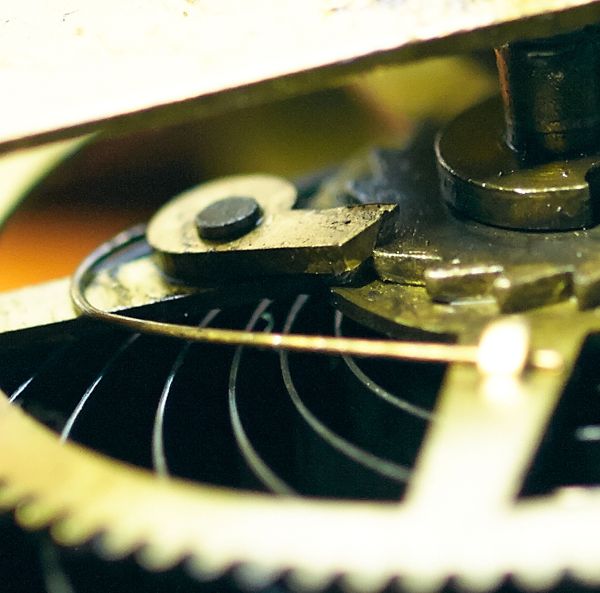
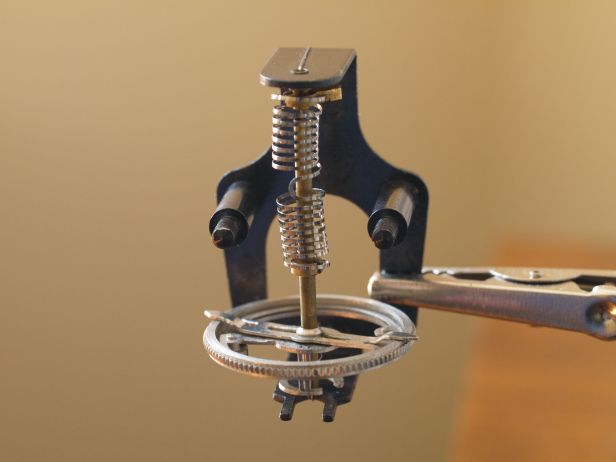
Since I am an amateur photographer, clocks and photography have become a happy marriage, especially the area of macro photography. Below is an example of a floating balance from a Dugena mantel clock taken with a 50mm Olympus Zuiko lens. I am using a 10 year old (old by digital standards) Olympus E330 as my go-to clock camera.

Dugena floating balance
Floating balance from a Dugena mantel clock

I am also producing short YouTube videos with a Panasonic G6 which you can see on this blog from time to time.

G6
Panasonic G6 interchangeable lens camera

Is blogging fun? Of course it is, but it is also a lot of hard work.

Let me know what blog experiences you have had that have been positive or negative


Sessions Beveled Number 2


mantel clock
Sessions tambour style mantel clock

Regular readers might have followed my progress on this 1927 Sessions tambour style clock.

After installing 10 bushings, replacing the pendulum bob and suspension spring and reassembling and oiling the clock and the springs I am now in the process of regulating this old clock. I am finding that despite all the work I have put into this clock,  it will run for only 6 days and it does not seem to want to run the full eight day cycle. Perhaps there is other wear that I am not detecting or the springs are weak.

I wound the clock again this morning and we will see how long this cycle will go before stopping. Everything is synchronized thanks to Steven Conover’s helpful book on striking clocks. Is it a success since it was a non-running clock when I acquired it last fall.

The Bracket Clock

Let me take you on a brief journey as we explore the history of the bracket clock. If you’re already familiar with them, perhaps I can offer some additional insights into what exactly defines a bracket clock.

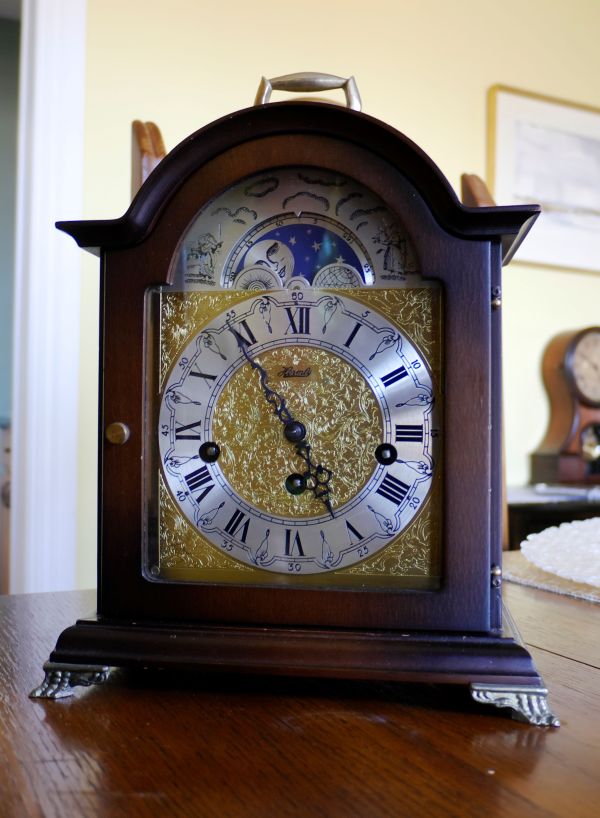
RS Hermle bracket clock (4)
Hermle Bracket clock, circa 1990

So, what exactly is a bracket clock? A bracket clock is a type of shelf or mantel clock.

Bracket clocks date back to the 1600s, with the earliest examples being weight-driven clocks crafted by skilled artisans. These clocks were designed to hang on wall brackets, allowing the weights to descend freely. The movement was typically plated, meaning it consisted of plates with bearing or pivot holes, connected by horizontal pillars. Early bracket clocks used verge escapements, a mechanism dating back to the 13th century, which remained in use until the late 17th century, when the recoil anchor escapement was introduced.

As time progressed, bracket clocks transitioned to spring-driven movements, making them portable and easier for homeowners to move from room to room. Given their high cost, their portability was highly valued, as most owners could not afford to have multiple clocks in their homes.

These clocks were often striking clocks, with many featuring silencers that allowed the owner to turn off the striking mechanism at night, especially in the bedroom. Additionally, bracket clocks were commonly repeaters, meaning they could repeat the last hour with the pull of a chord or lever. As spring-driven movements became more common in the 1700s, the term “bracket” continued to be associated with this style of clock.

RS Hermle bracket clock (9)
Bracket clock with ornate dial face, cast feet, and carrying handle

Bracket clocks were a reflection of the design trends of their time, often featuring intricate and ornate details. These clocks typically had wood cases, with finishes like oak or mahogany burl and walnut, adorned with floral decorations. The dials were often engraved, cast, or silvered, and many featured subsidiary dials, spandrels around the main dial, molded bases, and sculpted brass feet, adding to their visual appeal.

Antique bracket clocks are among the most elegant timepieces you can find for a home. The first two photographs showcase a modern Hermle bracket clock with Westminster chimes and a moon phase feature. Although this clock is 20 years old, a similar model from Hermle, called the Debden, is still available for purchase. The Debden includes side windows (which mine does not) and offers additional details, all for under $800.00.

Bracket clocks are timeless pieces that blend functionality with exquisite craftsmanship, reflecting the design styles of their eras. Whether antique or modern, these clocks remain a beautiful and elegant addition to any home, offering both aesthetic appeal and the charm of fine clockmaking.

Website Powered by WordPress.com.

Up ↑

Antique and Vintage Mechanical Clocks

Collecting, Repairing and Restoring Antique/Vintage Clocks

Skip to content ↓