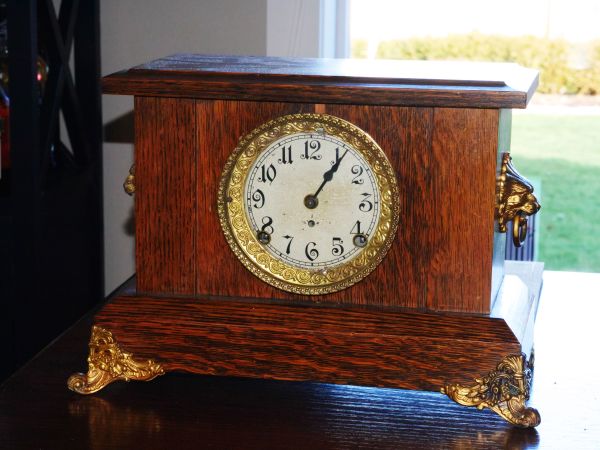
I have worked on several Gilbert clocks in the past few months which is unusual for me. Certain makes of clocks seem to come in bunches. This clock is a 6 column time and strike antique Gilbert mantel clock made in 1913, and reflects a period when every American maker had a similar style. Some parts of the case have an Adamantine finish but those particular areas are not in good shape.
A family relation asked me if I could get it running. Sure, I said.
Gilbert 6 column mantel clock,1913
History of the Gilbert Clock Company
The Gilbert Clock Company began making clocks in December of 1828 and produced clocks over a span of 130 years.
In 1837, John Birge joined the firm, and the name was changed to Birge, Gilbert, & Company. Shortly thereafter, Chauncey and Nobel Jerome and Zelotus Grant became partners with Gilbert, and in 1837 the company was know as Jerome, Grant, Gilbert, & Company. This company manufactured Jerome’s cheap brass-movement clocks.
This is Part II of a two Part series on a New Haven Sharp Gothic (Steeple) clock. This blog-post is about servicing the movement.
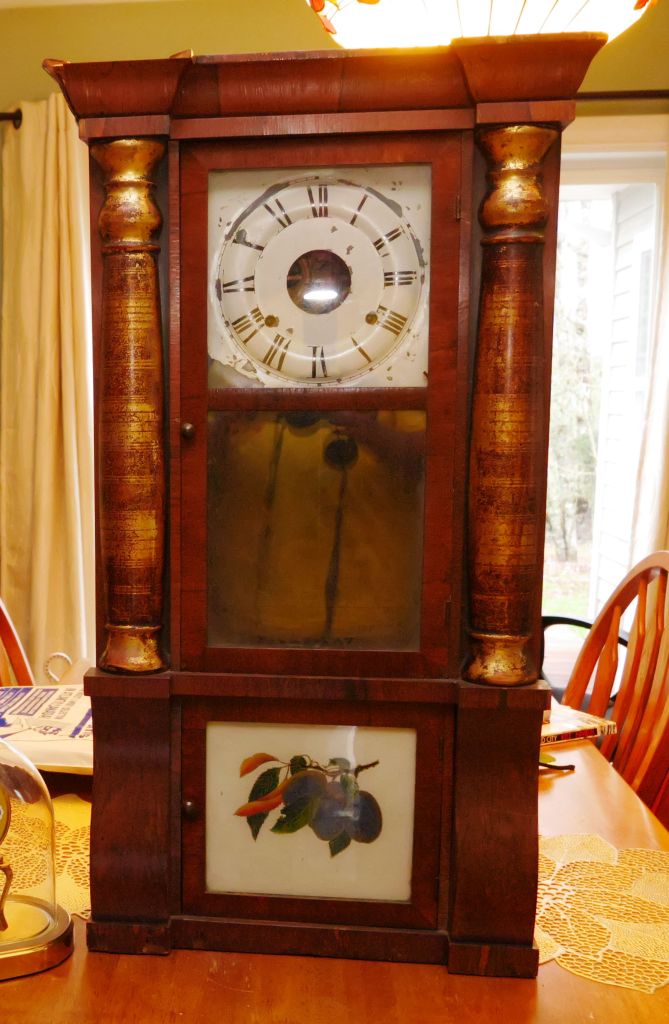
My recently acquired New Haven Gothic Steeple 30-hour clock is an online auction win.
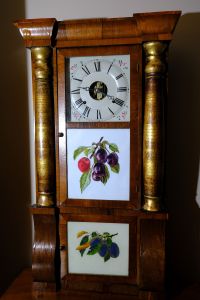
New Haven Gothic Steeple clock
The case is in very good condition apart from minor veneer issues on the base and the columns. The clock is missing the tip of the right finial although it might be hard to tell from the photo. It measures 20 1/2 inches tall with a 5-inch dial. The movement appears to be original to the case.
The dial is original and has some loss that would be expected in a 135-year-old clock. The tablet, likely original, features a sailboat against Greek (?) temples surrounded by gold foliage on a black background. The design of the tablet was used in other New Haven clocks of the time. Though intended for European export the clock found its way to Canada.
This is Part I entitled History Unearthed. It is the first part of a two part series. Part II concerns servicing the movement.
My recently acquired New Haven Gothic Steeple 30-hour clock is an online auction win.
The case is in very good condition apart from minor veneer issues on the base and the columns. The clock is missing the tip of the right finial although it might be hard to tell from the photo. It measures 20 1/2 inches tall with a 5-inch dial. The movement appears to be original to the case.
I have an upstairs office in my home where I work on most of my clocks. I also have a small workshop in my basement where I work on clock cases; gluing, painting, reconstruction and other odd jobs.
In the spring of this year (2019) my wife asked me how many clocks are running in my office at any given time. I said, “I’m not sure”.
I put together a video to show how busy my office can be. Someone (not my wife) asked me if the sounds of ticking clocks bothered me and my reply was, “I find the sounds very soothing”. Allow me to take you on a tour.
I hope you enjoyed the tour. Let me know if you have any general comments or ones you would like more information about.
This is Part II of a two part series. Part one covers the first three steps in renewing a Seth Thomas clock dial. In this, Part II, the decorative design is restored on the corners.
The Seth Thomas clock as found
Inpainting is the process of reconstructing lost or deteriorated parts of a clock dial. In the museum world, in the case of a valuable painting, this task would be carried out by a skilled art conservator or art restorer. Inpainting, as opposed to repainting and restoring the entire dial, addresses the degraded areas of the dial using a few simple techniques.
Inpainting is cost effective and can be done on the home work bench
Inpainting certainly does not meet the higher professional standards of a service such as The Dial House, which perform exemplary work but I will not have a dial professionally restored if the cost is twice what the clock is worth. There will always be occasions when a professional restoration is justifiable, however.
Inpainting is cost effective and can be done on the home work bench.
This is Part I of a two part series. Part one covers the first three steps in renewing a Seth Thomas clock dial. In Part II the decorative corner design is restored.
Seth Thomas column and cornice “Empire” style time and strike weight driven shelf clock, as found
Inpainting is the process of reconstructing lost or deteriorated parts of a clock dial. In the museum world, in the case of a valuable painting, this task would be carried out by a skilled art conservator or art restorer. Inpainting, as opposed to repainting and restoring the entire dial, renews the dial using a few simple techniques.
Some of the methods can be found in T. E. Temple’s excellent resource book entitled Extreme Restoration.
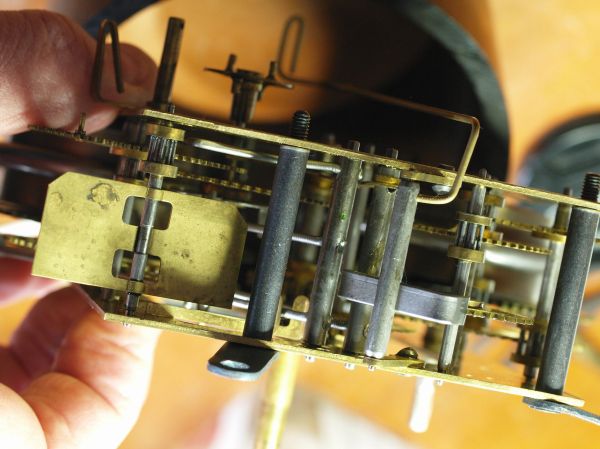
I have worked on Gilbert movements previously and each one has slight differences. This one has a rod gong with two striking hammers. Disassembly was routine but required the removal of some parts to separate the plates.
The Gilbert Clock Company began making clocks in December of 1828 and produced clocks over a span of 130 years.
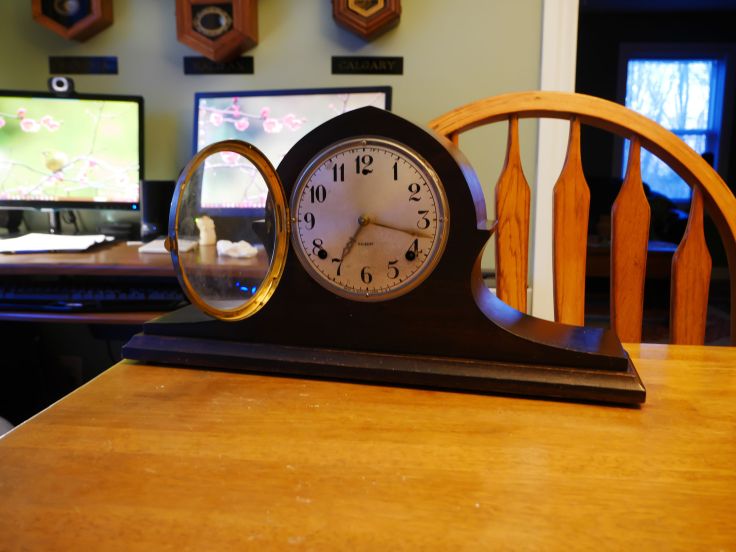
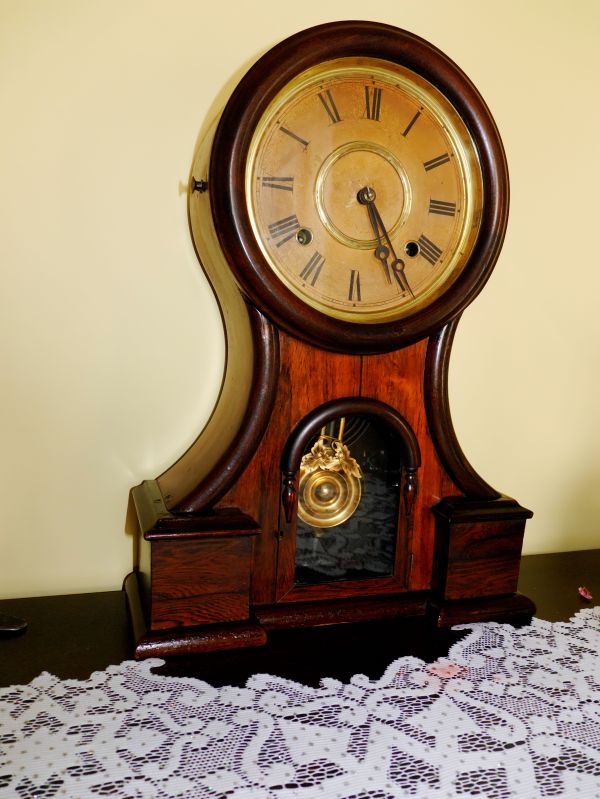
Gilbert tambour style clock model 2038
This is the model 2038 with a bim-bam strike or what Gilbert in its marketing called a Normandy Chime. The model number along with the words “Normandy Chime” are stamped on the bottom of the case. The “Normandy Chime” was reminiscent of the old bells of Normandy (Corneville) in France.
In terms of nomenclature within clock circles, calling it a “Chime” certainly adds to the confusion as this would be considered a striking clock rather than a chiming one.
Among common parlour clocks you will find few EN Welch clocks. There is a good reason for this. The company was absorbed by the Sessions Clock Company in 1903 so any Welch clock is 115 years old and older.
E N Welch Parlour clock, The Whittier circa 1897
This E N Welch time and strike parlour clock is the Whittier model. The clock was made some years after Welch established its reputation as a quality clock manufacturer with the Patti series. The Whittier model represents a period from 1897 onward when Welch re-organized following a bankruptcy and produced well made but inexpensive clocks for the masses.
I located the clock in an antique store in Kazabazua, Quebec in 2016 while my wife and I were on a day trip from our summer cottage. The seller said the strike side did not work and we negotiated a lower price.
The clock ran for several days but despite adjustments I was unable to get the strike side to run correctly. The stop/warning lever and the count/lifting lever were intact, so, I was puzzled; it should run. Straightening the levers might solve the problem.
Clock collectors usually pride themselves in having at least one Gustav Becker (GB) clock in their collection. I have just one but I am always on the lookout for another.
Gustav Becker wall clock
Becker clocks are not difficult to identify and date. Along with a maker’s stamp, serial numbers on the clock movements identify the year of manufacture. This clock was made in 1902 however, the original 1902 Braunau movement had too many missing parts and was replaced. It now has a “newer” Polish sourced Braunau movement from 1917.
Over the past seven years, I’ve installed a number of bushings in clock movements, but I had never attempted to bush a clock spring barrel until now. While some clockmakers regularly bush barrels, this is the first time I’ve encountered a barrel mainspring in such poor condition. Despite being my first attempt at bushing a barrel, the process was largely successful.
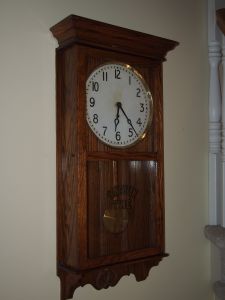
Jauch wall clock
Two years ago, I purchased a Jauch schoolhouse clock at auction for $50. It features a straightforward, time-only movement, making it an excellent choice for anyone new to clock repair.
Jauch movement
German clock movements from the 1970s were not always built to the highest standards, often plagued by two key issues: plated pivots and soft brass. Softer steel pivots were used to prolong the life of cutting machines, with plating added to provide sufficient hardness. Unfortunately, this plating wears away over time, leaving the pivot significantly worn.
This particular movement does not have plated pivots. However, the second issue—soft brass—is evident. In this case, the steel arbor has caused significant wear to the brass cap and barrel.
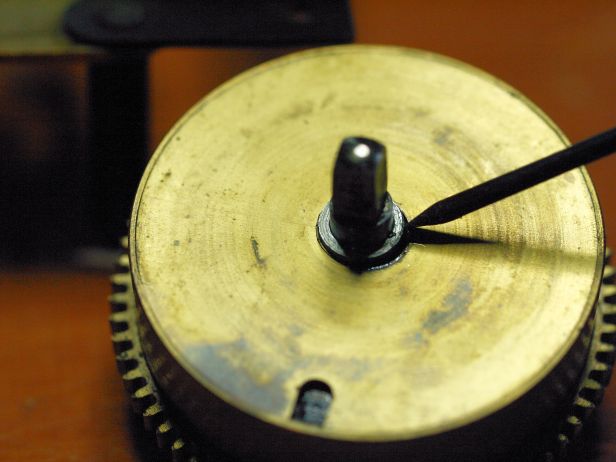
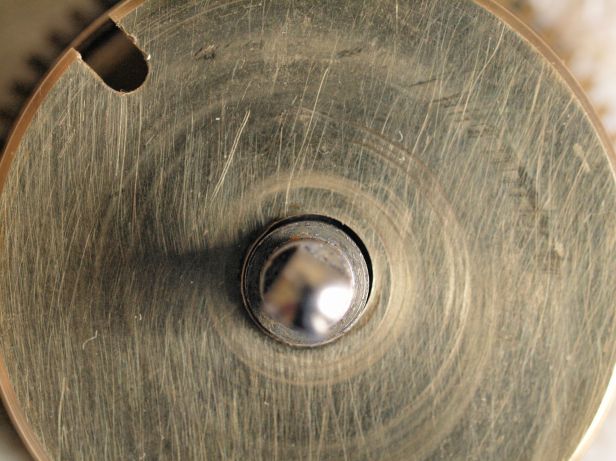
Gap in barrelAnother shot of the enlarged hole on the cap
During a previous servicing, I installed three bushings but did not address the mainspring barrel.
Since I purchased the clock, it has consistently run 10 minutes fast at the start of the 8-day cycle and 10 minutes slow by the end. There’s likely some underlying physics related to barrel slop that affects this erratic behavior, though the exact cause eludes me. Clearly, something unusual is at play. Will bushing the barrel and its cap improve the running characteristics of this movement? Time will tell.
Assembled movement
A Challenging Repair
For the barrel repair, I chose a #60 Bergeon bushing to fit the reamed-out hole, as it was the largest size available in my bushing supply.
Largest Bergeon bushing with an outside diameter of 8.5mmThe ratchet gear must be removed to work on the barrel arbour
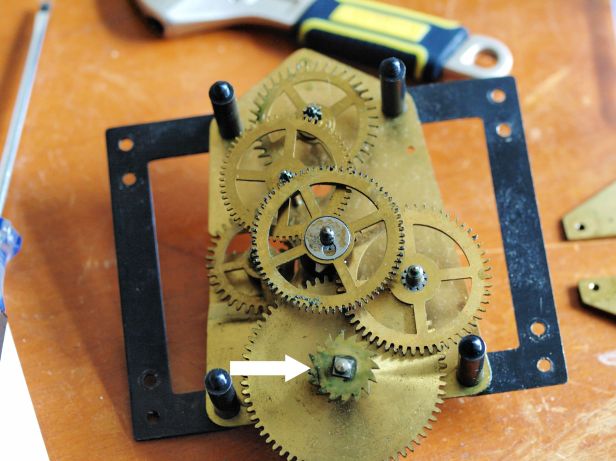
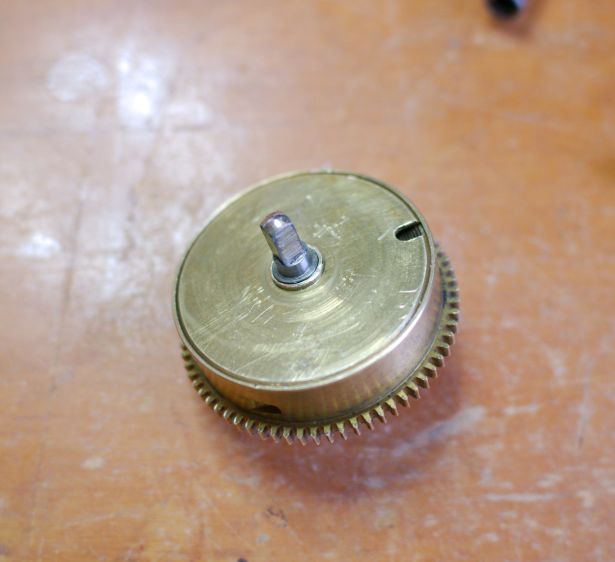
To remove the barrel arbor from the barrel, I first had to take off the ratchet gear. Lacking a gear puller, I placed the barrel in a vice, positioned two pieces of wood on either side beneath the ratchet, and gave the arbour a light tap with the nylon end of a brass hammer. The ratchet came off easily.
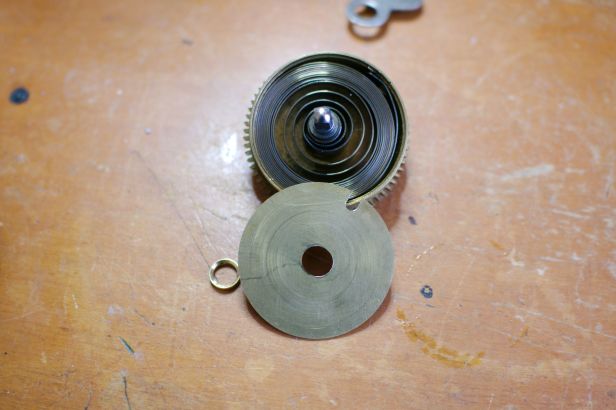
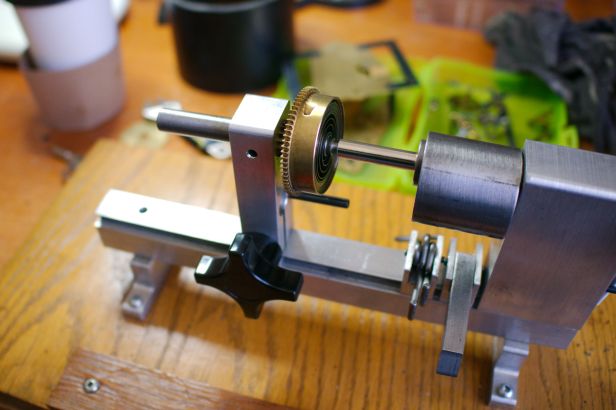
After popping off the barrel cap, I used my spring winder to remove the mainspring, allowing access to the barrel. I then restrained the spring with a collar. So far, everything was going smoothly.
Jauch mainspring barrel in Olie Baker spring winder, with capture collar on right
I positioned the barrel in my Bergeon bushing machine and used the centering bit to establish the center. Using an 8.47mm cutter, I created a hole and installed the bushing. To secure it, I peened the bushing in place, forming a lip on both ends to ensure it stayed firmly seated. With the barrel complete, I moved on to the cap.
This is where things didn’t go quite as smoothly. I centered the cap as accurately as possible on my bushing machine, drilled through it, and installed a bushing of the same size. However, the arbour’s diameter on the cap side was larger than on the barrel side, so I used another reamer to enlarge the inside of the bushing. As I worked, I noticed the bushing wall was becoming quite thin. To preserve a sufficiently thick wall, I decided to reduce the diameter of the arbour. Using my metal lathe and a cutter, I trimmed the arbour to achieve a proper fit. Once satisfied, I peened the bushing in place.
Cap bushingBarrel bushing
When I reinstalled the barrel into the movement, I noticed that the cap could have been better centered. There is a slight tilt, which became apparent once the barrel was in place. I wondered whether the gear would properly mesh with the second wheel pinion as the barrel rotates or if it might rub against the second wheel. After a few days of observation, it seemed to function without issue.
Looking back, I realize it would have been better to bush the barrel side first, test it, and then move on to the cap side. It’s all part of the learning process!
Next time, taking extra care to pinpoint the exact center will undoubtedly lead to a better result. Given that this is a budget clock and not my finest work, I see it as a valuable experience.
Has my 90 year old Gilbert clock been running continuously since it was first purchased? Not likely.
Gilbert time and strike mantel clock
Okay, you’ve made the plunge. For whatever reason you bought that mechanical clock you always wanted. Ask yourself; this is a 100 year old clock and it has been running all this time so what more do I need to do to take care of it. Why have it serviced or even oiled when it is running and striking as it should. The answer is complicated.
Time to relax with a few good books, clock books, of course
It is time to take a little break.
I typically maintain a steady output of 7 to 9 clock themed articles per month. A number of articles have been prepared in advance of the summer months which means that there will be NO interruption in blog activity.
July 1 is the national day of Canada the effective date of the Constitution Act of 1867 then called the British North American Act. This year we celebrate 152 years as a nation. Canada Day is often informally referred to as “Canada’s birthday”. Celebratory events take place on July 1.
Most communities across the country will host organized celebrations for Canada Day, typically outdoor public events, such as parades, carnivals, festivals, barbecues, air and maritime shows, fireworks, and free musical concerts.
Prince of Wales parlour clock
Back when Canada was a young nation a small clock company known as the Canada Clock Company struggled to make its mark and produced some of the finest Canadian clocks that our country has ever seen. This is model called the Prince of Wales and it is a fitting tribute to this our nations birthday.
This post explores buying tips for novice antique clock buyers. Those looking for an antique clock in general rather than a specific type or model of an antique mechanical clock will find the following tips very useful.
Vintage versus antique
According to the United States Government publications, the term “antique” is reserved for valuables that are over a century old. Webster’s dictionary defines an antique as a work of art, piece of furniture, or decorative object made at an earlier period and according to various customs laws at least 100 years ago. Wikipedia defines the word antique as applying to objects at least 100 years old.
Restored Seth Thomas antique column and cornice “Empire” style time and strike weight driven shelf clock circa 1865
According to eBay, vintage is a defined period from 1920 to 1969. The use of the word vintage in online auctions and elsewhere is becoming more and more like the word “rare”. Some may define “vintage” as anything that was purchased less than 24 hours ago, is dirty and worn, or looks like it might be old if you know nothing about its history. Sellers often do not know anything about what they are selling and often describe the item as “vintage”.
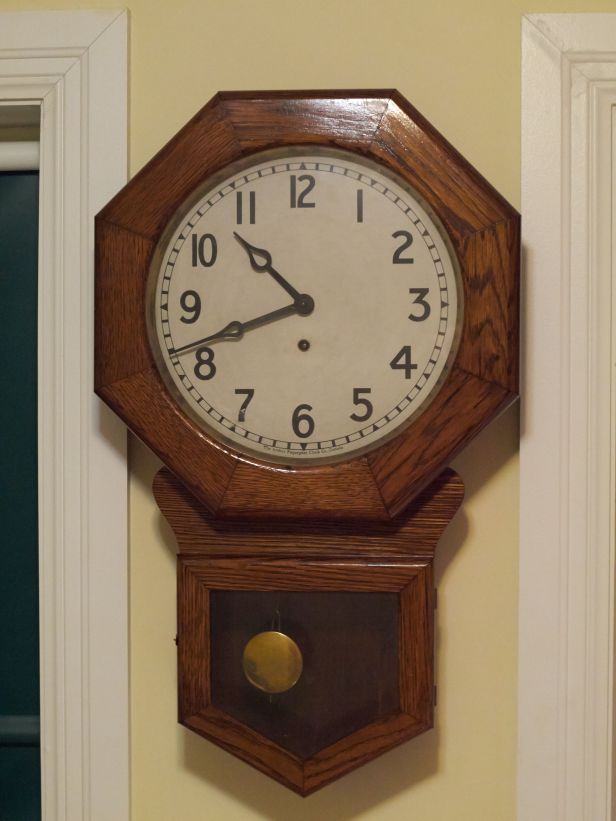
Arthur Pequegnat Canadian Time wall clock circa 1930
The word “collectible” is also used, just like the word vintage has been misused. Just about anything sold these days is marketed as a collectible if not vintage. Most serious buyers would agree that when it comes to clocks younger than 100 years old but older than 30 they are considered vintage and collectible is anything within 30 years.
Antique clock buying tips
Buying a clock without actually touching and inspecting it is always a gamble and making a judgment based on online images, most of which are of poor quality, complicates the decision-making even further. The sad stories of people who thought they bought an antique clock with a mechanical movement only to find a quartz one when the clock arrived at their door are not fiction. This and other examples are the many challenges facing the antique clock shopper in today’s online world.
I am not a firm believer in purchasing an antique clock online based on images unless one is very familiar with and respects the reputation of the seller. Although you may find that special clock online my advice is to see the clock in the flesh prior to making your final decision.
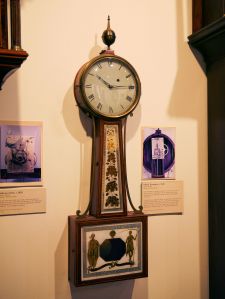
Simon Willard banjo clock circa 1810
Questions you might ask yourself prior to the purchase
Will I get my money’s worth? Will I be “ripped off”?
Will it work when I get it home?
What do I have to do to fix it if something is wrong and what could I pay to fix it?
What did the seller not disclose? What are the little surprises that await me when I get home?
“Life is a box of chocolates….you never know what you are going to get”, Forest Gump
3 Simple rules for antique clock buying
Here are 3 simple rules on how to buy that special antique clock you’ve always wanted.
1. Locate the antique clock
The style and type of antique clock is a personal preference. I prefer wall clocks over mantel clocks, parlour over gingerbreads, and Ogees over cottage clocks.
If it is a local online inquiry meet with the seller to finalize the sale. If the clock is found in an antique shop or antique mall you will not be dealing with the seller (there are exceptions) but an agent who may know absolutely nothing about the clock.
Avoid Chinese or Korean clocks often advertised as “31-day” clocks. Although they are normally reliable runners, clock-makers will tell you that they are not worth fixing. None are antiques.
2. Ask a lot of questions
Does the clock run?
A running clock has more value than a non-running example. Ask the seller to demonstrate a running clock.
Who is the maker (manufacturer)?
Manufacturers make both inexpensive and quality clocks (there are exceptions). Seth Thomas, a respectable American clock-maker manufactured inexpensive clocks that have little value and higher-end models that are very desirable by collectors. The name alone does not always equate to value.
Has the clock been altered in any way?
Newer case pieces, decorations, new glass, refinished case, a replacement movement, a replacement pendulum, etc. will reduce the value and sometimes significantly.
If it does not run, are all the parts intact?
If it has all the parts, can it be repaired either by you, the buyer, or a competent repair person? I know of a time and strike clock that was missing the strike side gears.
How old is it?
Again, vintage or antique. A clock made in 1919 is now an antique.
Does the clock have provenance, an interesting and verifiable history?
How long has the seller had it?
A cherished family heirloom has more value than an item recently acquired for a quick profit.
Would you accept a lower price?
Point out specifically why the price should be reduced, missing pieces, non-running, poor condition.
3. Deal directly with the seller
By dealing with the seller in person you will always have the opportunity to walk away if you are not satisfied.
Junghans Crispi time and strike wall clock Ca. 1899
Not every antique clock is rare or valuable and some clocks are more desirable than others. That 150-year-old 30-hour Ogee is not as valuable as you might think but a much younger vintage French figural style clock may be worth a lot more.
If you are looking for a very specific type or model of antique clock you will find that it takes time and research to find it but there will be a satisfying reward once found.
In Part I, I wrote why I collect, repair and restore clocks. In this, Part II are 9 reasons why clock collecting and repair is a great hobby for just about anyone.
9 Reasons why clock collecting and repair is a great hobby
This is Part I of a two part series. In Part I, I will discuss why I collect, repair and restore clocks. In Part II are 9 reasons why clock collecting and repair is a great hobby for just about anyone.
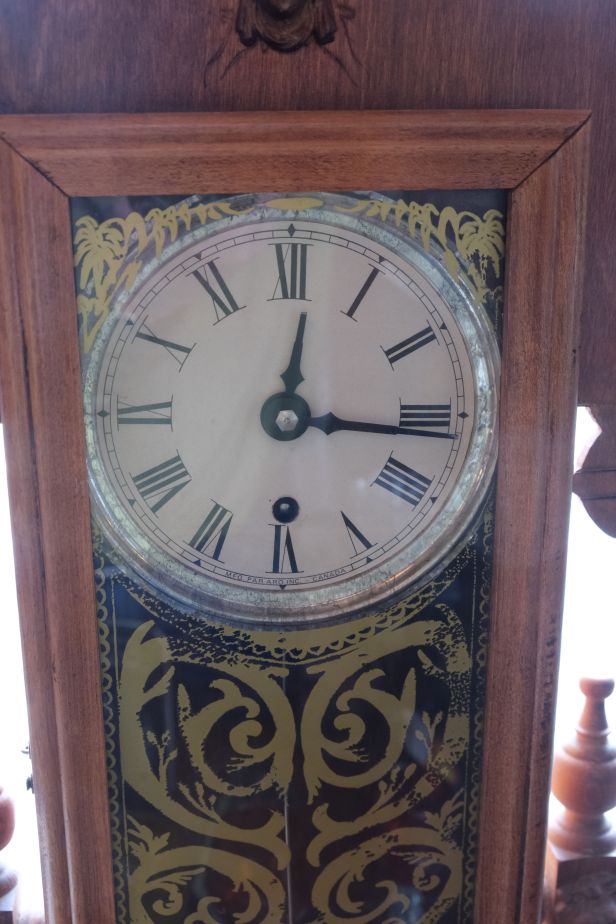
I frequently take photos of clocks in antique stores. If asked I say that I have a friend who is looking for that exact clock and I usually get away with it. In Ladysmith, British Columbia I came across a Canadian clock that I have never seen before. On the bottom of the dial it says “Mfg Par Aro Inc Canada”.
Who or what is Aro? I could find very little information. They were evidently based in the province of Quebec and likely the city of Montreal. My research tells me that they made two styles of clocks in the 1960s. This one, a kitchen clock and a schoolhouse clock.
Clock with inscription “Mfg Par Aro”
Both have 8 day Japanese trapezoid open plate time-only movements.
I have been using the Rowling theme from WordPress for the last two years and thought it was time for a change. The new look is the Gateway theme. Let me know if you like it or if I can improve upon it.
Arthur Pequegnat Regulator #1, an example of one of the clocks offered for sale
I do not normally promote auctions sales and derive no benefit from mentioning them however something special is happening on June 8th 2019. It is not often that so many clocks from one maker are on sale at one specific time. In New hamburg, Ontario (Canada) 200 Arthur Pequegnat clocks are on the auction block. All styles of clocks are being offered, wall, hall, mantel, shelf and so on including some variants.
At least three Monctons are offered for sale
This is a unique opportunity for Canadian collectors and anyone else interested in antique clocks. Were I closer I would certainly be there to enjoy the frenzy of an auction sale. Here are the clocks being offered.
I discovered this wall clock in an antique store in Victoria, British Columbia and the store shall remain nameless to protect the guilty. I have been on the lookout for a calendar clock and from a distance it looked like this was it. As I neared I realized that what I was looking at was some kind of interesting marriage.
The top dial and bezel is Pequegnat, Brandon II, the bottom is something else
This is the only true gingerbread clock I have in my collection, temporarily. By this summer (2019) it will be returned to a family relation.
Dial and movement has been removed; notice the 4-colour tablet design
Can you get this thing working, my sister said? Sure, I said. Grand Assortment is an odd name for a Sessions clock, I said. The name certainly lacks imagination, but this particular clock is one of three in a series and sold for $4.00 in 1915 and could be configured with alarm and/or cathedral bell. This particular clock is Grand #3.
Mechanical clocks do not last forever and every now and then a movement should be inspected for wear and to address any other issues if required. A cycle of 2-4 years is a good rule for checking on the health of your mechanical clock.
In the case of this clock perhaps 5 years is a little long but it has not been in a harsh environment. Although I had it professionally serviced I have built up my clock repair skill-sets in the last 4 years and can now do the work myself.
I was asked to take a look at this German made wall clock from the 1980s. The owner said it had not been running for 3 years. It is a German made Jauch wall clock from the late 1970s.
Sadly, the doors of the Jauch clock company closed many years ago. Jauch was not a notable supplier of whole clocks but Jauch did produce lots of clock movements after WWII to various assemblers. Many of these assemblers made clock cases or supplied kits with faces, hands and pendulum assemblies from other sources.
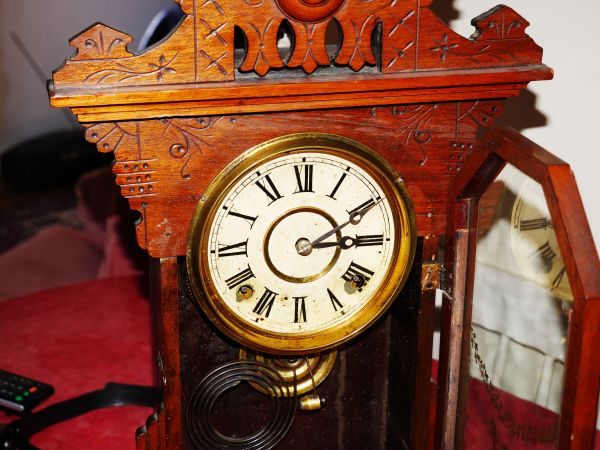
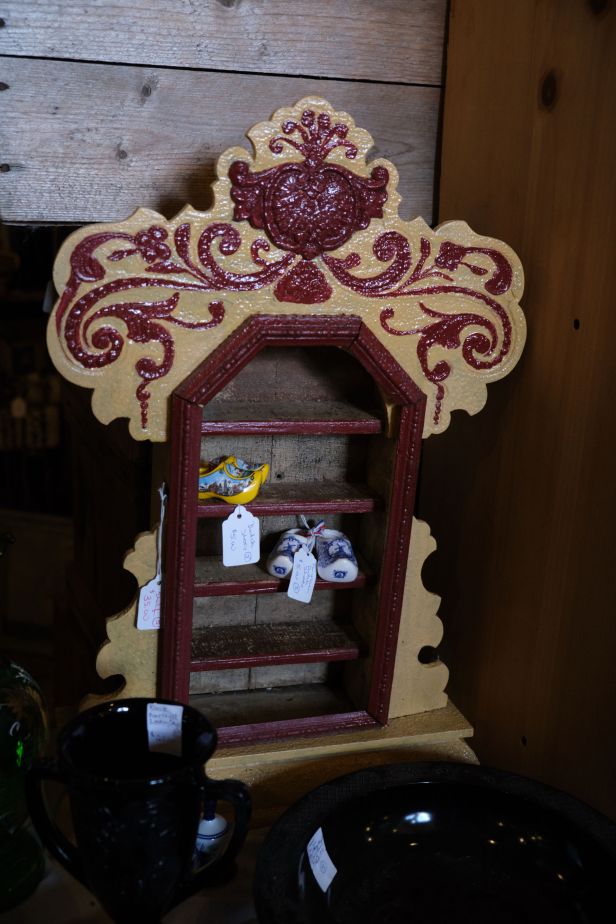
I discovered this sad case in an antique shop near my home. What was once a gingerbread clock is now a repainted case with shelves at the ridiculous price of $35. Just a few steps away was a similar parlour clock for only $20 more and it was largely intact. Some would argue that a repurposed clock case is not such a bad thing but as a clock collector I find this appalling.
Is it not better to have left the case alone and present it as an ornament rather that convert it into a hideous curio cabinet?





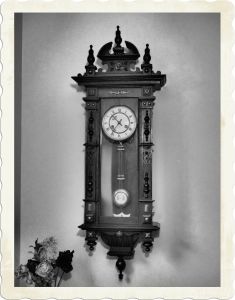
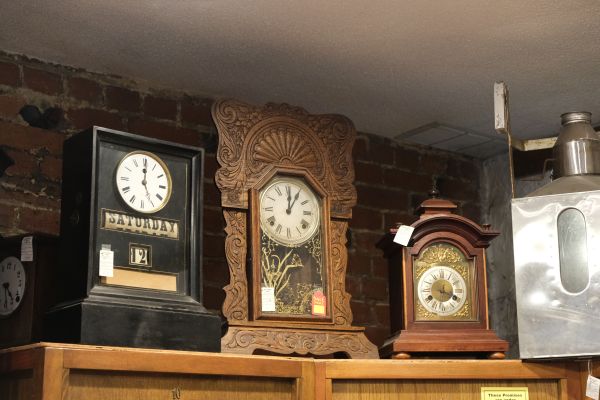
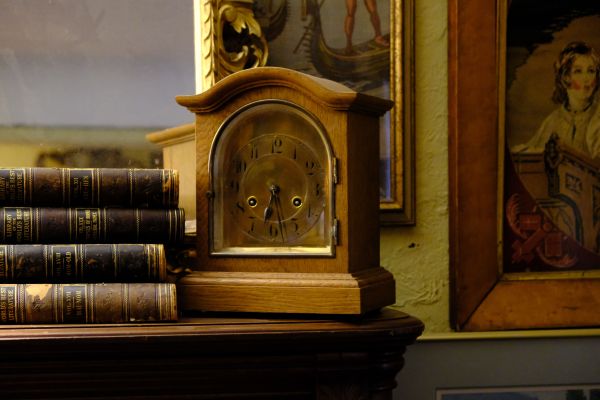

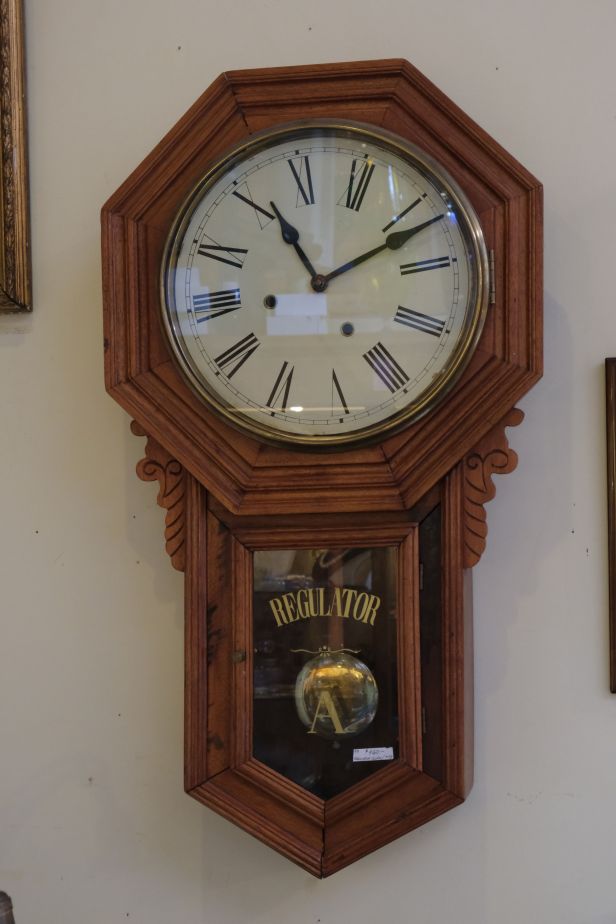


 Antique and Vintage Mechanical Clocks
You must be logged in to post a comment.