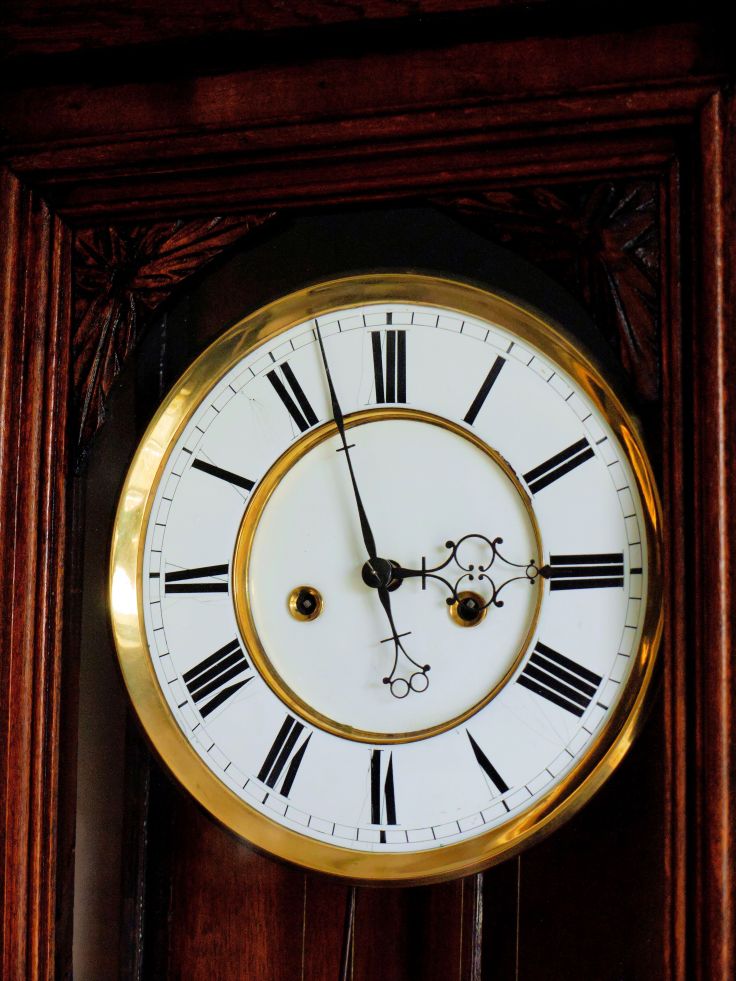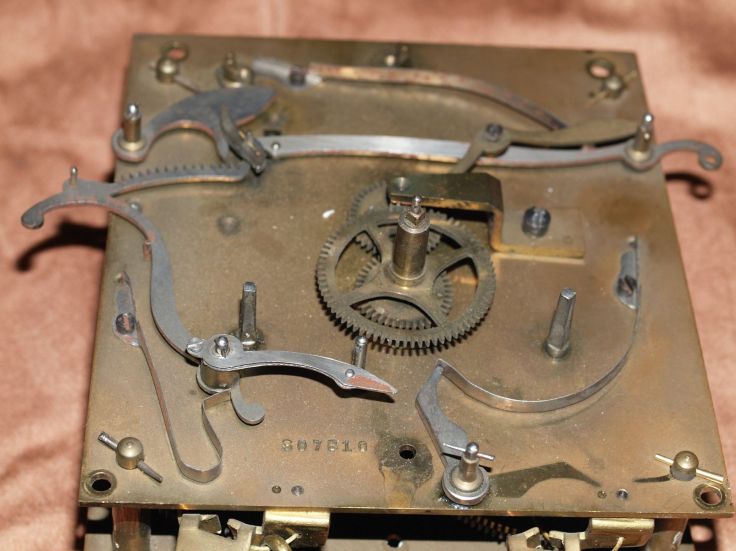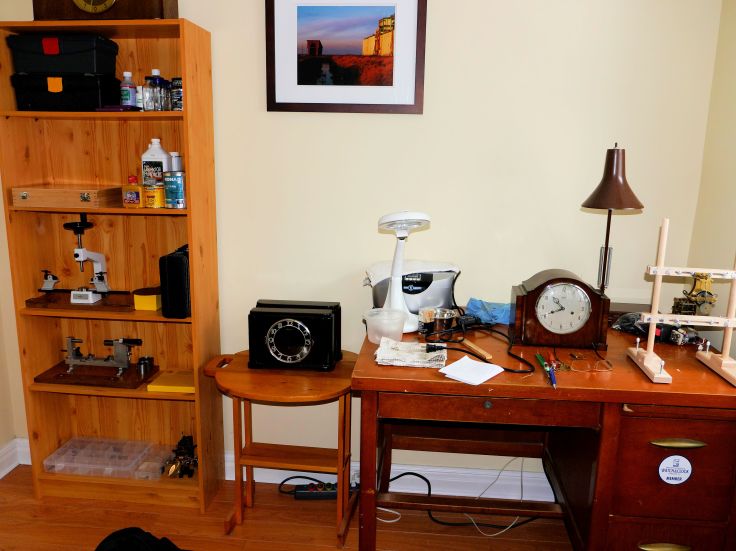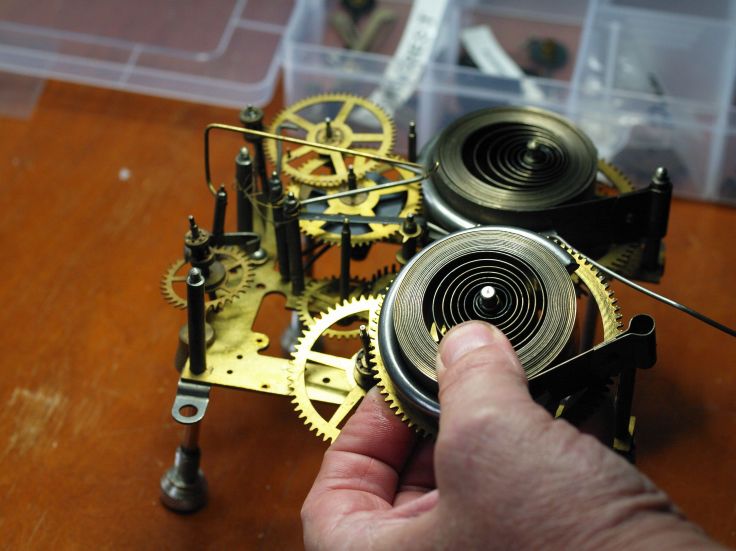
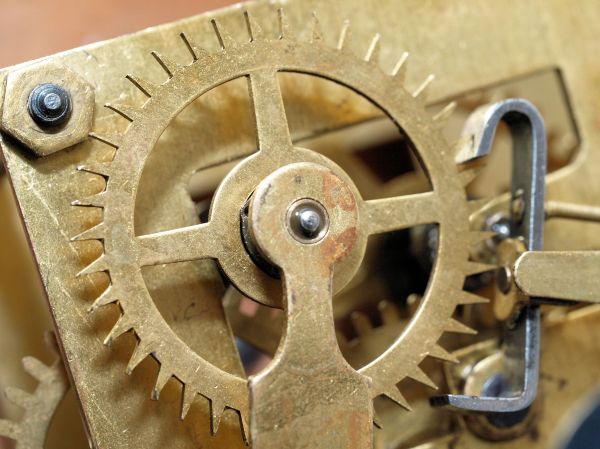

Is clock collecting part of the counter-technology revolution?

Is clock collecting (and repair) part of the counter-technology revolution?

Many years ago, social scientists predicted with the onset of modern technology it would sap us of our knowledge. Our brains would simply melt away. Concentration and initiative would be sucked out of us. Why would you need to know anything if it is readily available at your fingertips? How often do you hear the phrase, “just google it”. Sadly, it has become an integral part of our lexicon.

People are embracing old technology and returning to the fulfillment of doing things for themselves

The term counter-technology is not a term I invented. I found it mentioned in a car magazine article some time ago. Many people are collecting and repairing antique cars more than ever. Why? Reliving past memories? Getting your hands dirty. Rejecting the modern world?

Has the analogue world returned? Yes and no. Wine and beer making has become a huge industry and there seem to be mom and pop microbreweries everywhere, antique furniture purchases have increased dramatically, backyard chicken coops are popping up everywhere, fountain pen collecting is a “new” thing, vinyl records are spinning back and stamp collecting is returning with renewed vigor.

Retro is in. But is is not just that! It is a statement. People are embracing old technology and returning to the fulfillment of doing things for themselves. We all know the value and satisfaction of pursuing a simpler way of life but at the same time we still want to feel connected to our busy modern world. We want both. This is our inevitable response to the new digital world. We are pushing back but just enough to satisfy our needs by remaining connected with the past but we still feel the need to be plugged in.

However, every now and then we feel the need to dis-engage. Digital detoxification. It’s a thing. Somehow we want to wash the digital world from our lives, however briefly. I spend summers at our family cottage in Quebec (Canada). There is no Internet and I am totally fine with that. But what’s the first thing I do when I return home? You got it!
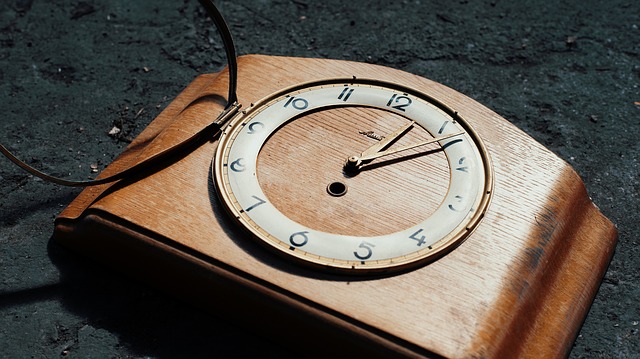
You too can be saved
Simplicity breeds complexity

To truly embrace the analogue world the mechanical clock is my personal statement. Not only do I collect antique and vintage clocks I repair them as well. As readers know I am not a trained horologist but I love the challenge of repairing a clock and I love accumulating knowledge in the pursuit of my hobby. Needless to say I am not always successful and my office has a few notable failures. I am fine with that. Failure breeds learning. It is my response to the increasing pressures of the digital world. It is my response to our increasingly complicated world. Simplicity breeds complexity.

Like the juggler who can keep all the balls in the air at once
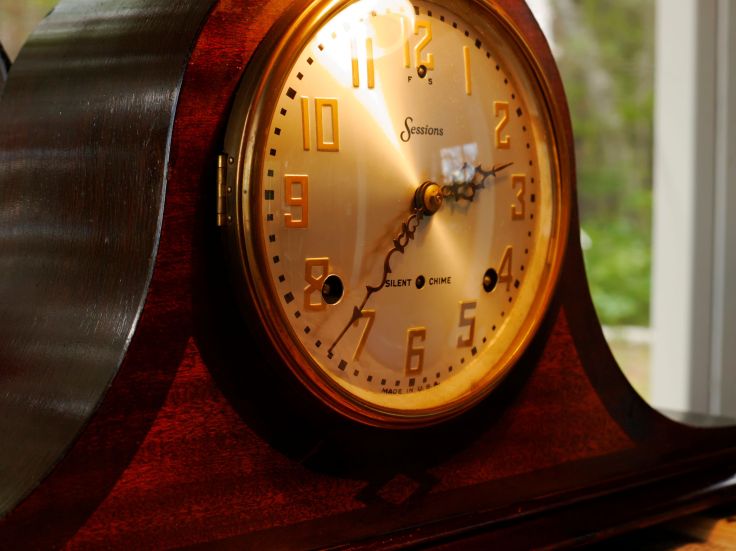
It took years to learn the skills necessary to repair this Sessions Westminster A Westminster chime clock
It took 2 years to learn the skills necessary to repair this Sessions Westminster A chime clock

Analogue verses digital. It is a question of balance, like the juggler who can keep all the balls in the air at once. I admire people who have “analogue” hobbies but I especially admire those who remain connected to our modern world by maintaining a delicate balance between both.
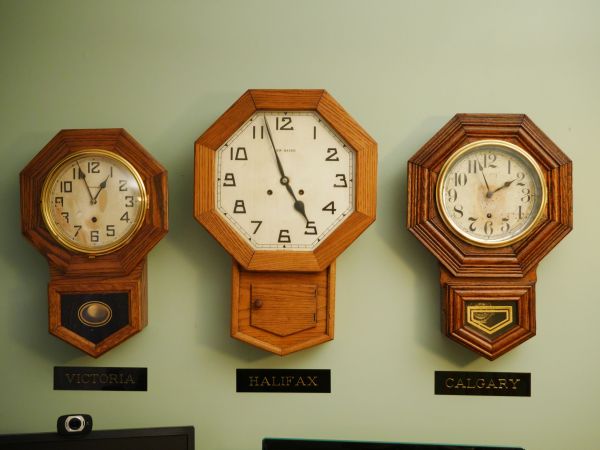
 

Taking a little break

it is time to take a little break.

You will see fewer posts over the next 2 months as I spend quality time with friends and family and decompress at our summer get-away in central Canada. I intend to make my third visit to the Canadian Clock Museum in Deep River, Ontario while in the region.

Regular readers know that I typically profile my own clock collection, the challenges of maintaining and repairing clocks in my collection plus articles of interest based on observations in my travels including general interest clock subjects as I navigate through the fascinating world of horology.

I hope you enjoy reading them as much as I enjoy the researching each article. I will maintain a presence on my blog by posting regularly though it means that there might be some delay in answering letters. I invite you to browse through my archive; there is always something that will interest clock lovers at all levels.

Over the next 8 weeks you will find articles on a little Delft kitchen clock I discovered, my thoughts on a Aug Schatz movement I found, final detail improvements on my Junghans Crispi wall clock, some helpful information on clock keys, how to live with all the clocks in my house and notes on clock therapy. So, stay tuned as they say and if you like what you see let me know.

More fascinating terms – the language of clocks

Regular reader and contributor JC suggested a few more clock terms I thought readers and fellow horologists might find interesting.

My source for this article is the Watch and Clock Encyclopedia by Donald de Clarke, published by Bonanza Books (1984) which is still available on Amazon.

Gridiron pendulum: A pendulum consisting of alternating steels and brass rods coupled together to compensate for downward expansion so that the centre of oscillation of the pendulum remains consistent with changes in temperature, invented by John Harrison in 1725.

final look
Gridiron pendulum on a Junghans Crispi wall clock

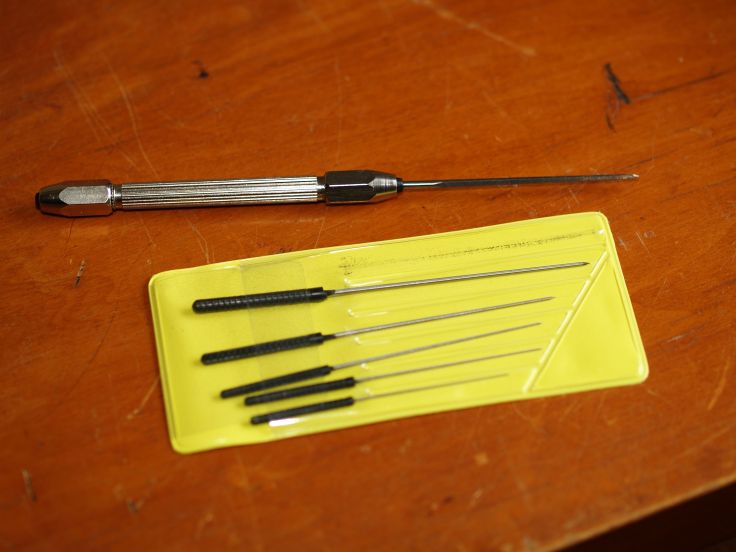
Broaches: To broach is to open and enlarge a hole. A Broach is a steel cutting or smoothing tool with a tapered or parallel sided edge used to cut or “finish” holes in a clock plate. Used to enlarge and then finish (smooth) a newly installed bushing on a clock plate.

Swiss made smoothing broaches
A set of Swiss made smoothing (or finishing) broaches

Motion Works: The train or wheels of a clock directly connected with the hour and minute hand.

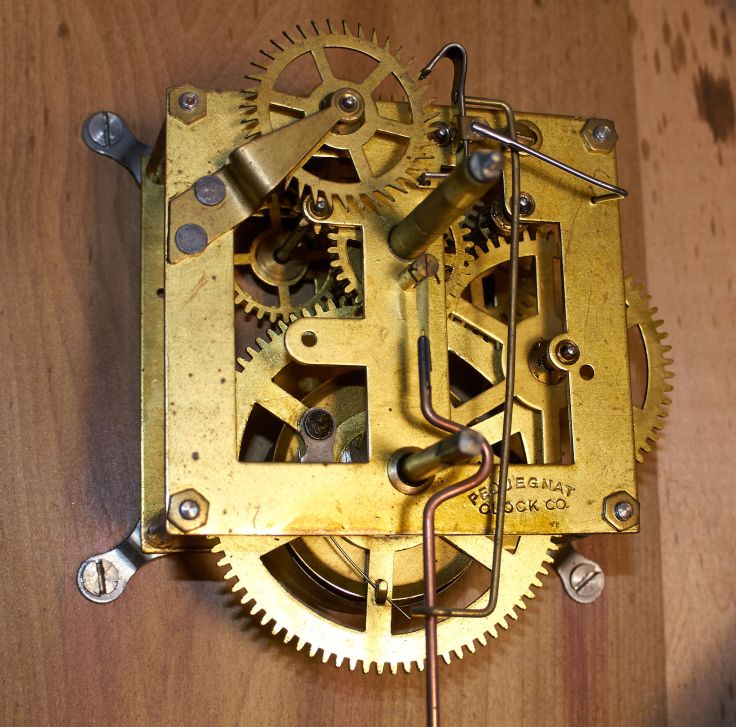
Great wheel: The teeth that form part of the barrel of the going barrel. It is also the wheel to which the mainspring is attached.

The motion works of a clock; the largest wheel on this movement is the great wheel (Pequegnat Clock Co.)

Maintaining Power: A method to maintain the driving power while the weight is being lifted or mainspring with fusee is being wound. In effect keeping the mechanism going while winding.

Weight driven movement with maintaining power
Weight driven movement with maintaining power, (unmarked Vienna Regulator)

Huygens Endless Rope Drive: It is a method of providing maintaining power to drive the clock while the weight was being raised. The endless cord passes over pulley A which is attached to the great wheel and supports the driving weight B, it then passes over pulley C which has a ratchet to support small weight D. As cord E is pulled down to wind the clock ratchet C turns under it’s click to raise weight B which continues to drive the clock as it supplies torque to wheel A. This ingenious system is found in some 18th century long-case clocks.

Huygens endless rope

Locking Wheel (or Count Wheel): A count wheel is the wheel that determines the number of blows to be struck in striking mechanisms.

The left wheel with notches is the count wheel

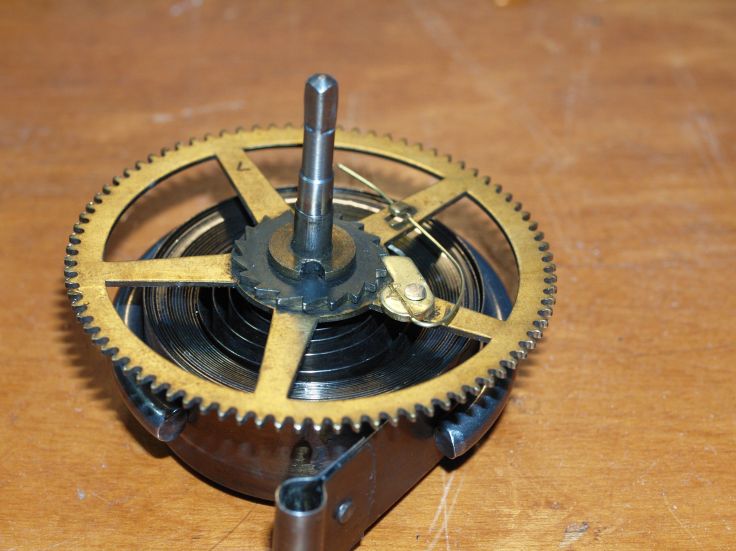
Ratchet wheel: A toothed wheel into which a click engages permitting the wheel to revolve in one direction only.

Click replaced
Toothed ratchet wheel and click

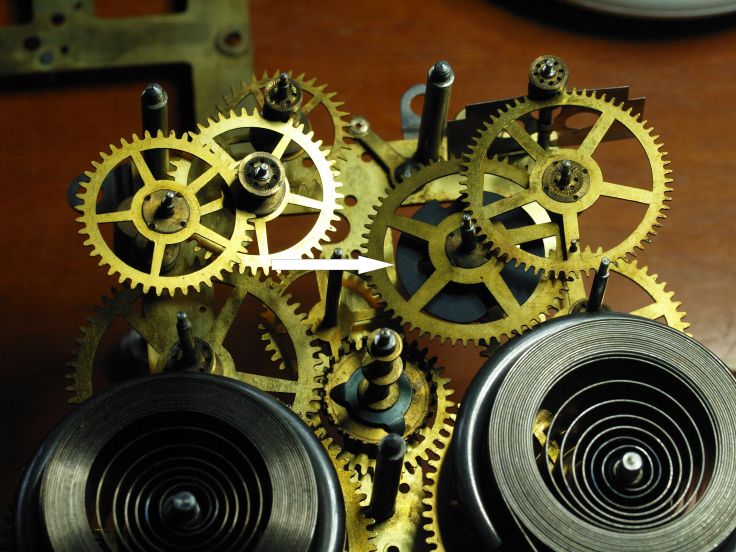
Cam: Usually a disk so that upon revolving it transmits movement to or exerts pressure upon a connecting unit.

Arrow showing location of a cam
Arrow showing location of a cam, the fly is located in the upper right

Fly: Often called the governor or controller of a chime or strike train. It is the last piece in a train of wheels.

The language of the clock world always amazes me. There are a plethora of other clock terms that I will be happy to explore in future blogs.

My Gustav Becker – one year later

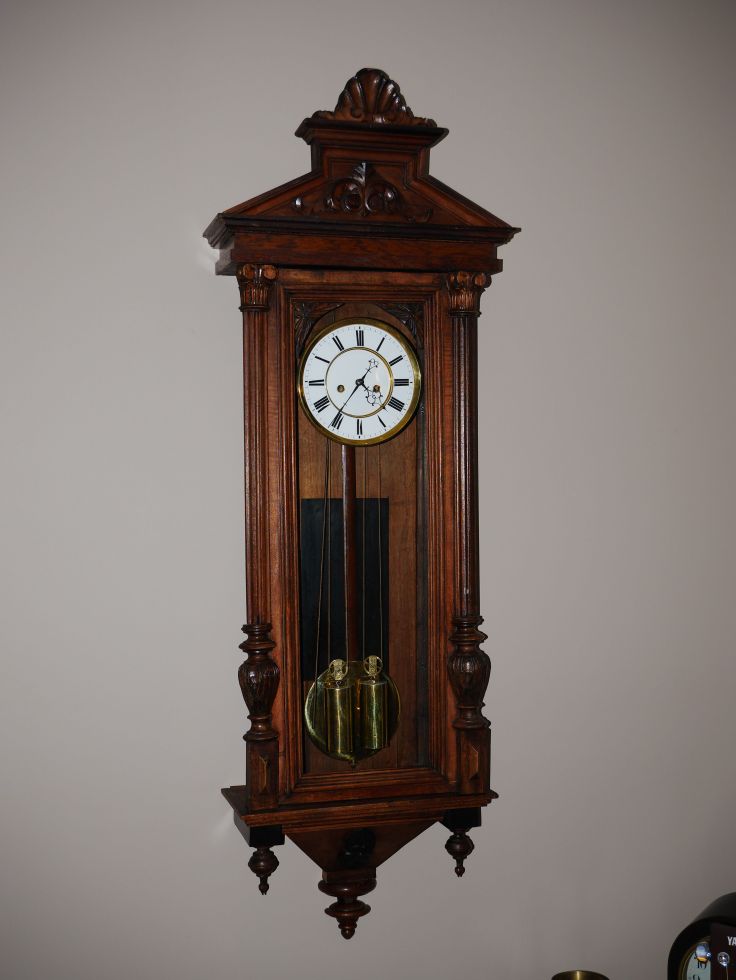
Vienna Regulator Braunau factory circa 1902
Gustav Becker Vienna Regulator Braunau factory circa 1902

It has been one year since my wife presented me with a Vienna Regulator wall clock as a retirement gift. I was in heaven! I always wanted a Gustav Becker clock. I thought it was the holy grail of clocks. As I delve more deeply into this hobby and have the benefit of a greater knowledge of the world of clocks this past year I am learning that there were other more desirable makers of that period (1850s to 1900) but I have my Gustav Becker and I have no regrets.

It has been an interesting time and one of the most significant horological experiences for me in the past year. This clock has taught me a lot.

Gustav Becker 2 weight clock
The hands may look nice but they are incorrect for the period

This was a project clock and my first experience with a non-working clock that bought with it a number of not insurmountable issues. The side and front glass panels may look original but they are replacements after the glass broke during shipping. I brought it to a local glass shop and they installed the glass. I should have bought a old window with the wavy glass to use as a replacement as one reader suggested. I just did not think of it at the time.

The original movement was missing vital strike side parts

The original movement was missing vital strike side parts. Fighting with the seller who misrepresented the condition of the movement got me nowhere. I had to find a replacement movement and it had to be from Gustav Becker’s Braunau factory.  Finally, I located a donor movement from Poland. The serial number on the Poland movement told me that it was 16 years newer. Some minor details differentiated the older and newer movement but it was exactly what I was looking for. It was a perfect fit for the case and correct for the pendulum length.
To the casual observer it is a beautiful wall clock befitting the grand period of German clock-making a century ago

What have I learned this past year? I put more than three hundred dollars of repairs into this clock above and beyond the original cost, much more money than the clock is worth. Don’t even get me started on import duties and shipping from the US. I am still riled about that. I am extremely reluctant to make any future clock purchases that require shipping by mail/courier. Others have had positive experiences with shipped clocks – I did not. I find it too much of a gamble. I prefer to buy my clocks in person! Though I won’t go into further detail, this was not a positive buying experience and after a year I am still fighting for compensation from the seller.
GB movement
Original GB movement with parts missing

How does it look on the wall? A trained eye will see the minor incongruities. To the casual observer it is a beautiful wall clock befitting the grand period of German clock-making a century ago.

2016 – Time to reflect, a year in summary

I am a retired college professor based in Nova Scotia Canada, live in a little village just outside Truro and collect vintage and antique clocks that I repair and maintain. I also write about horological areas of interest and of interesting clocks and clock stories that I encounter on my travels.

In the spring of 2015 I decided to write a blog about clocks. The first few months were a struggle to decide what material would be of interest to those who not only collect antique and vintage clocks but those few with just a passing interest. As the months went by I began to realize that the world of clock collecting and repair is incredibly vast and I discovered that there is a lot for me to learn. As I expand my knowledge of clock and collecting and repair I am also realizing that there is a lot I do not know.

This blog has given me an opportunity to profile my own clock collection, walk the reader through the challenges of restoring and repairing my clocks and the learning I have gained from the experience as well as talking about horological areas of interest.

My office showing clock repair tools
My office showing tools and my work area

Let’s review 2016.

Some statistics. As I write this article my blog has exceeded 17,000 views, 33% of which are from United States, 17% are from Canada and the remainder are from around the world including the United Kingdom, Australia, Romania, Germany, India, The Netherlands, South Africa, Malaysia and 80 other countries, even 5 visitors from Cuba (and I thought they did not have access to the internet). I receive between 40-50 comments per month on average. The top 5 articles this year were:

  1. Mauthe Mantel Clock
  2. Daniel Dakota Wall Clock
  3. Sessions Westminster A Mantel Clock
  4. Forestville Mantel Clock
  5. U.M. Muller Box Clock

As most bloggers know the key to building a successful blog is not only attracting new visitors but keeping existing ones interested enough to come back.

As most bloggers know the key to building a successful blog is not only attracting new visitors but keeping existing ones interested enough to come back. My visitors view an average of 1.8 articles per visit and I have 50-60 views on a typical day. I am now receiving as many views per month as I did in the first 8 months of the blog. My goal is to to provide enough stimulating content so that visitors want to return. I post 8 articles a month, usually spaced 4-5 days apart, on various topics of interest. I also attempt to appeal to all facets of clock collecting and repair from profiling my own acquisitions and experiences restoring and repairing my clocks to articles of general interest usually with some historical horological context.

Time side spring is removed
Servicing an American clock, removing the time mainspring
Centering prior to drilling
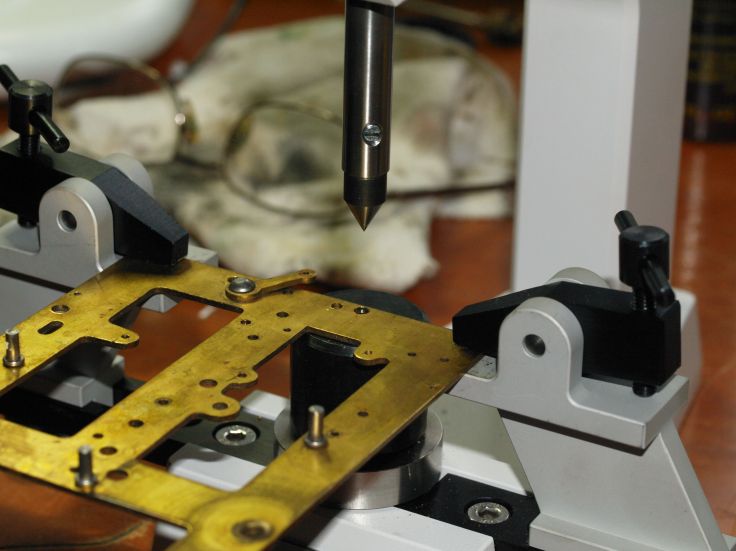
Bushing a movement using a centering tool

I have welcomed all comments and inquiries. I have received a number of fascinating comments from people who typically ask me how much their clock is worth, particular problems they have with their clock, information about the history of their clock and suggestions for improving my workflow. I answer all questions to the best of my ability but I make no pretense that I am a trained professional though my general knowledge of clock collecting and repair is growing exponentially. I have also received comments from those who more knowledgeable than I am and I welcome their expertise and perspective. I especially welcome the wisdom and insights from popular commenters such as JC and Catalin at Blog Timbrofil.

$_57e
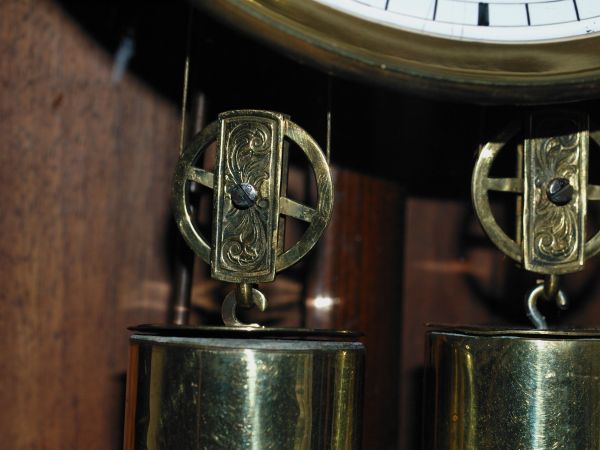
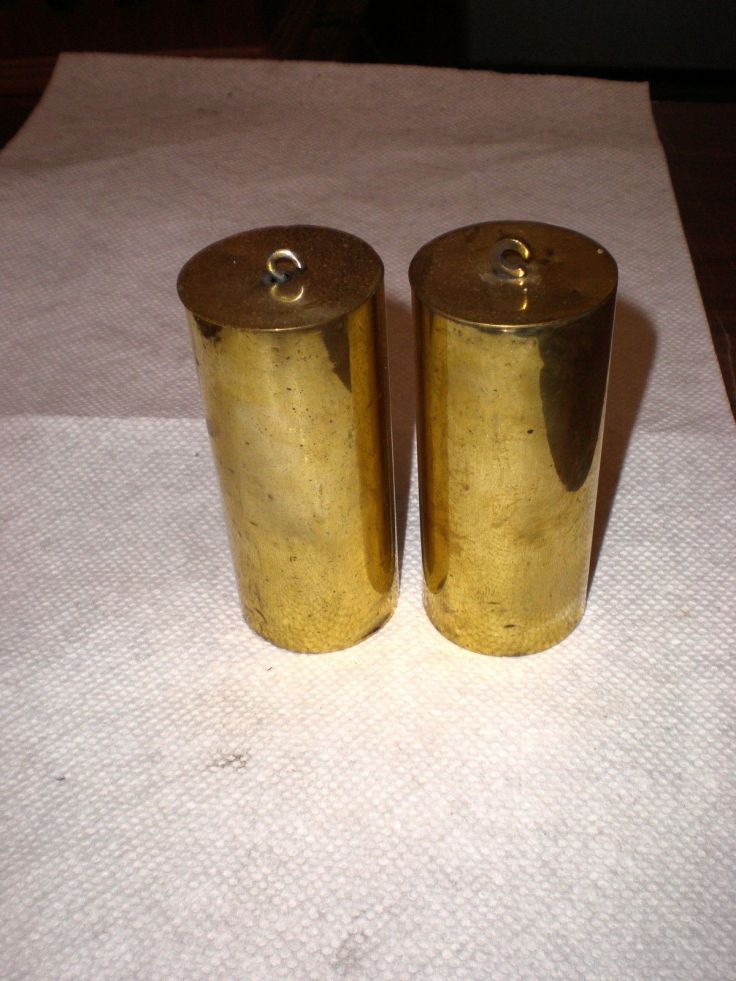
Regulator weights

If you are a regular reader you will continue to see a number of what I hope are interesting clock articles in the months to come

Now it is time to look to 2017. My intent is to write interesting articles about clocks in general as well as continuing to profile my modest but expanding collection of antique and vintage clocks. I also intend to explore special areas of interest particularly my growing fascination with lantern clocks and crystal regulators. If you are a regular reader you will continue to see a number of what I hope are interesting clock articles in the months to come.

Stay tuned and if there is an area of interest you would like to see me to explore, drop me a quick note.

Thanks for your support.

What the term a “fully serviced” clock really means

Everybody appreciates a serviced clock when they are making a purchase. However, there is no acceptable definition for the term “Fully Serviced”. Fully serviced may mean one thing for the amateur clock collector and repairer and another to a professional clock repair shop.

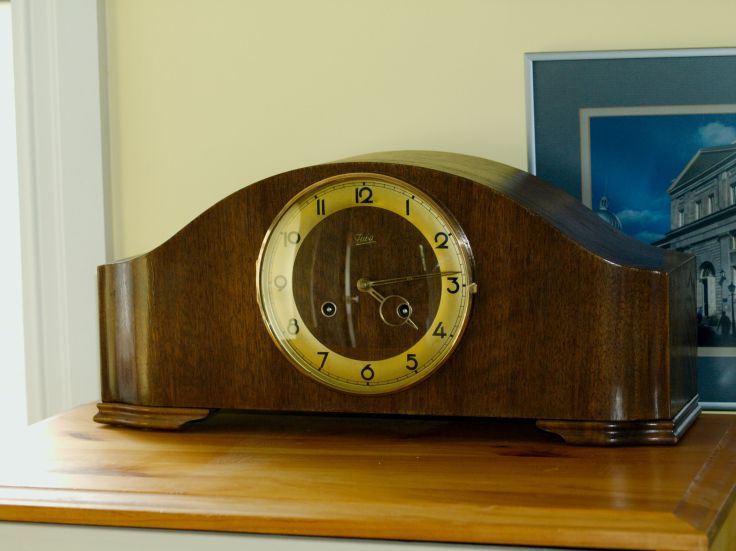
Juba Schatz mantel clock

The other day I was responding to a FaceBook post which offered a mantel clock for sale. The owner said that the clock, a 100+ year old antique, had been “fully serviced” so I asked him what he meant by that since I was curious. He said the clock was ultrasonically cleaned, the pivots were inspected, and the clock was oiled. He did not actually state that the clock was disassembled before cleaning but I assume that it was done properly although dunk and swish (or duncan swish) techniques are used more often that we realize. Dunk and swish involves immersing the entire unassembled movement into a cleaning solution and calling it “cleaned”. However, no reputable clock repair person (horologist) would employ this method. By using the term “fully serviced” the seller naturally expects to get several tens of dollars more for the clock.

No doubt who ever buys the clock will get a couple of years of service before it again needs attention. My concern is the state of the bushing holes and of course the pivots in a 100 year old clock and chances are it was not serviced properly in it’s past life.

I have disassembled and serviced a few clocks in my limited experience and my observation is that the older the clock the more the need for bushing and other repairs. My definition of servicing is this; disassemble and totally strip down, ultrasonically clean, springs unwound, inspected and oiled, pivots inspected and polished, pivot holes pegged and bushings installed / replaced if necessary, other parts inspected and addressed and the movement tested and regulated before re-installing in the case. My servicing also includes a case refresh. I serviced a 1920s Sessions Beveled No. 2 clock this spring (2016) that required 12 bushings.

Sessions Beveled No. 2 case
Sessions Beveled No. 2 time and strike in as-found condition
Fully serviced with case refresh

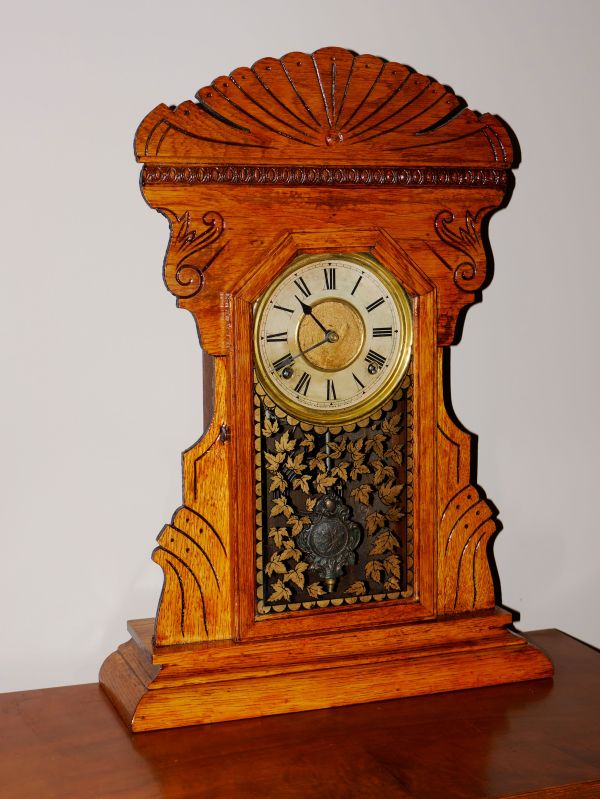
My Arthur Pequegnat Maple Leaf kitchen clock pictured here was professionally serviced in 2015 by a reputable clock shop and also required 12 bushings.

RS Pequegnat fan top (3)
Arthur Pequegnat kitchen clock in as-found condition

I am currently working on a 1940s Ingersoll Waterbury which was not too badly worn but still required 3 new bushings.

Ingersoll Waterbury clock
This American Ingersoll Waterbury clock, circa 1940, required 3 bushings,

If you poke around some of the clock for sale sites you will see a description that reads something like this, “all of our clocks are fully serviced and tested to ensure reliable running”. But if you bring up the profile on any one of the clocks offered for sale they generally do not describe how it was serviced and / or the actual service done on the clock.

I see plenty of antique and vintage clocks on the local online for-sale sites. Many have not been serviced as you would expect but some sellers claim that their clock has been fully serviced without providing any detail about what was actually done or whether it was a backyard tinkerer who did the servicing or a professional shop. The Juba Schatz mantel clock you see in the first photo might even be described as “serviced” but all I did was take the movement out of it’s case, inspect the pivots and other parts, oil the movement and return it to its case which took about 10 minutes.

“Fully serviced” to me means defining the term when selling a clock. A reputable for sale site should say something like this, ” has been fully serviced, having been totally stripped down, ultrasonically cleaned, reassembled, runs the full length of the wind and keeping excellent time, +/- 2 minutes per 7 day period”. A little more detail would be beneficial such as specific areas that needed to be addressed or particular repairs made if required but that is about as close as you will get and for those serious about a clock purchase it might be good enough.

Fully serviced means different things to different people. Always ask before you buy.

Taking a little time off

RS Peggy doing some research (2)
Researching clocks at the Canadian Clock Museum in Deep River, Ontario, Canada.

Taking a little time off seems like an amusing title for a clock blog. It just struck me (there I go again).

In the next few weeks you will see fewer posts as I am spending some quality time with friends and family at our summer get-away in central Canada. While in that area I intend to make my third visit to the Canadian Clock Museum in Deep River, Ontario. It is always exciting to see the newly added pieces to the museum collection and to chat with it’s knowledgeable curator.

Regular readers have no doubt observed that my usual practice in the past year is to post at least one article per week in an effort to keep readers interested and of course help me, the writer, offer the kind of content that appeals to a broad spectrum of clock enthusiasts. I typically profile my own clock collection and the trials and tribulations of maintaining and repairing my clocks plus some articles of interest based on observations in my travels and general interest clock subjects as I navigate through the fascinating world of horology.

From time to time (pun unintended) you will also find special interest articles that I write to give a broader perspective of the world of horology and I hope you enjoy reading them as much as I enjoy the research side of the equation. Even though I will be away I will try to maintain a presence on my blog by posting every two weeks or so which means you can still come back regularly. I also invite you to browse through my archive, there’s bound to something that will interest you if you are clock lover like myself.

In the weeks to come I am planning articles on Bracket clocks, how to oil and maintain your clock between servicings, a historical piece on a most interesting 17th century French cabinet maker and his contribution to horology and thoughts on the pros and cons of converting a clock from a mechanical movement to quartz.

Converted from a mechanical clock

If you have a comment on any of my posts please feel free to leave one though it may take some additional time for me to respond, so, a little patience would be appreciated.

In September I will resume my weekly posting schedule. As they say in the show business world – stay tuned!

Update to my clock museum post

Canadian clock museum
The Canadian Clock Museum

The curator of The Canadian Clock museum was kind enough to respond to an email I sent concerning the absence of Martin Cheney clocks as well as provide further information on the collection.

First of all, Mr. Symons explained that the museum profiles two centuries of Canadian clocks, which include many Canadian manufacturers that represent 90% of the collection of over 2600 examples. The problem, he says, with Martin Cheney clocks is the cost. He is most certainly correct; most I have seen have been in the $5000-10,000.00 ballpark. The museum always considers donations, and if anyone out there feels they can part with their Martin Cheney wall or tall case clock, I am sure that Allan Symons would graciously accept it.

Mr. Symons notes one clarification. “The Seth Thomas Clock Company in the U.S. (dating back to the early 1800’s) became part of a larger company that owned Westclox in the early 1930s.  Starting then, Seth Thomas “brand” mantel, alarm, and wall models were made in part of the existing Westclox Canada factory in Peterborough. Ontario, Canada.  That new factory had opened in 1923 to produce Westclox clocks for the Canadian market, after about three years in rented space in Peterborough.”

Westclox collection
Westclox collection at the museum

The reference library now has over 500 titles on all aspects of horology, and visitors are welcome to sit down and conduct research on clock companies in general or a specific family clock.

RS Peggy doing some research (1)
Conducting research on a Forestville mantel clock
RS Peggy doing some research (2)
Catalog of Canadian makers

Thanks for an email from a reader in Romania who provided information on the Clock Museum in Ploiesti, Romania. This museum recently reopened after undergoing some renovation work and profiles European clocks from the 18th century. From their website, “Those who visit the museum have the occasion to follow the way in which the means of measuring the time had developed, from the first “clocks”- the sun dial, the burning clocks, the clocks with water (the outline of the clock with water being taken over from d’Horologerie Ancienne) or the clocks with sand; up to the “ancient” mechanical and modern ones.”

“Muzeul Ceasului from Ploiesti shows us such “folk clocks”, some with simple or double ringing with flute players, some others quite monumental, with rich ornamental design, dated in the 18th and the 19th centuries. The folk influence inspired the creation of the wall clocks in straight cases, made by lathering. Some of them are created in Romania, having German or Austrian mechanismes.”

For more information please visit this fine museum at http://www.cimec.ro/muzee/Ceasuri/ceas_eng.htm

Sounds like a very interesting museum and one that I will put on my “must see” list.


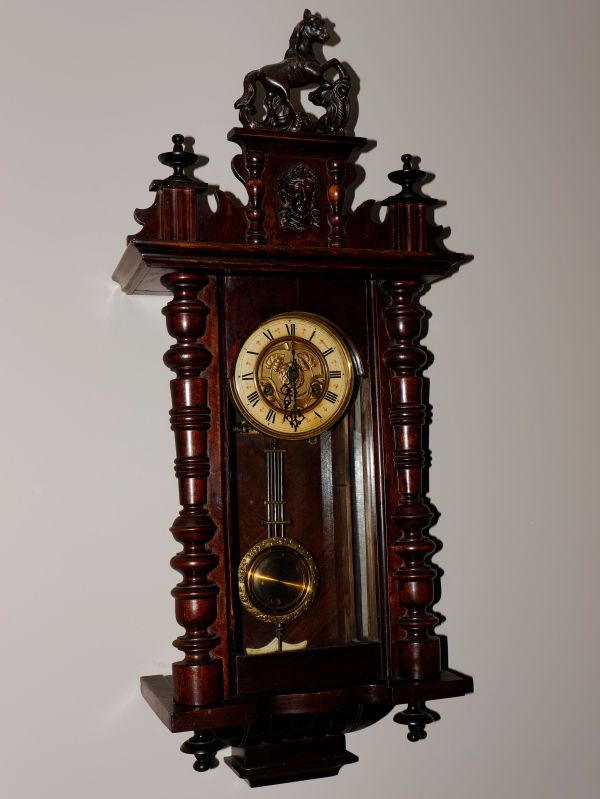
Mauthe Horse Crown Century-old Wall Clock

Another wall clock has joined my collection, so let’s take a closer look at what I’ve acquired and whether it was worth the price I paid.

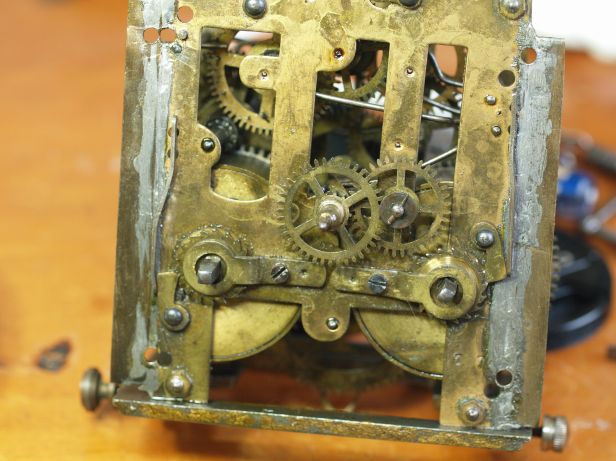
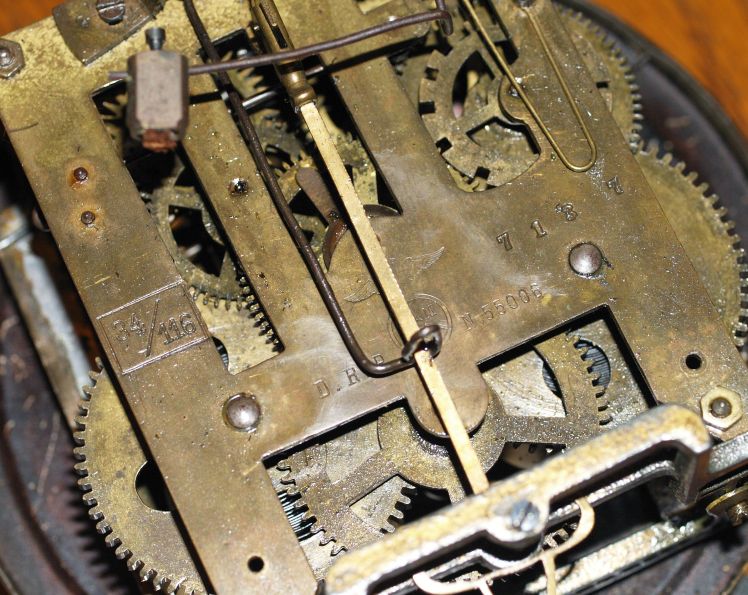
Time and strike movement, 116 BPM

The clock was advertised locally in the Truro, Nova Scotia area. The seller knew little about it beyond its provenance, but what he did share was an interesting, albeit brief, story.

In the early 1980s, his wife brought the clock over from Holland, where it had been in her family for several generations. Sadly, his wife passed away three years ago. Had she been alive, I’m sure I would have learned much more about the clock’s history. The seller was understandably hesitant to part with it, as it served as a happy reminder of his past life. However, he was entering a new phase of his life with a new partner, which meant letting go of furniture and other possessions. Like him, I also view life as a series of phases. The clock was priced at $100, firm and non-negotiable.

This two-train (time and strike) spring-wound clock could be described as being in the style of a Vienna Regulator. As expected, the movement is quite dirty—a common issue for clocks like this that have often never been serviced. However, there are signs that adjustments were made at some point, evidenced by marks on several screws in the movement.

The clock is largely intact, except for a missing finial at the center of the bottom base. Why this particular part? According to the seller, the clock was brought over in a suitcase, and to make it fit, the bottom finial was snapped off and lost forever.

OLYMPUS DIGITAL CAMERA
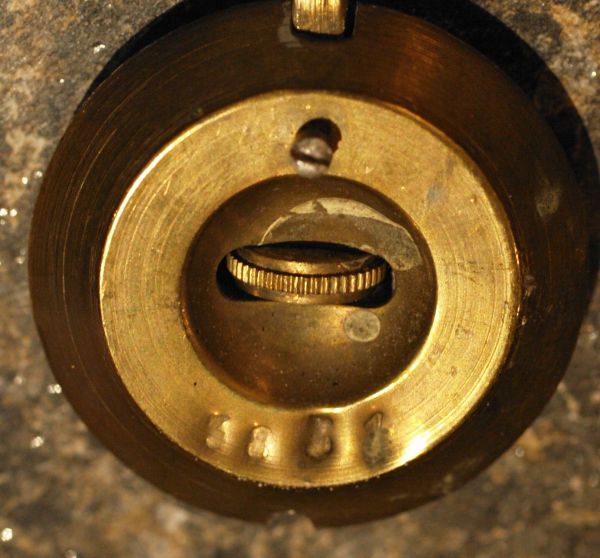
Movement showing FMS Mauthe trademark

The clock is over 100 years old, with my research indicating it was made between 1895 and 1914, though the exact year of manufacture remains uncertain. The trademark—a Friedrich Mauthe of Schwenningen (FMS) emblem featuring three spokes with an eagle on top—is distinctive, as Mauthe trademarks are known to reflect the specific period during which the clock was produced.

Despite some benign neglect, the case is in good condition, and everything appears to be original, including the winding key.

OLYMPUS DIGITAL CAMERA
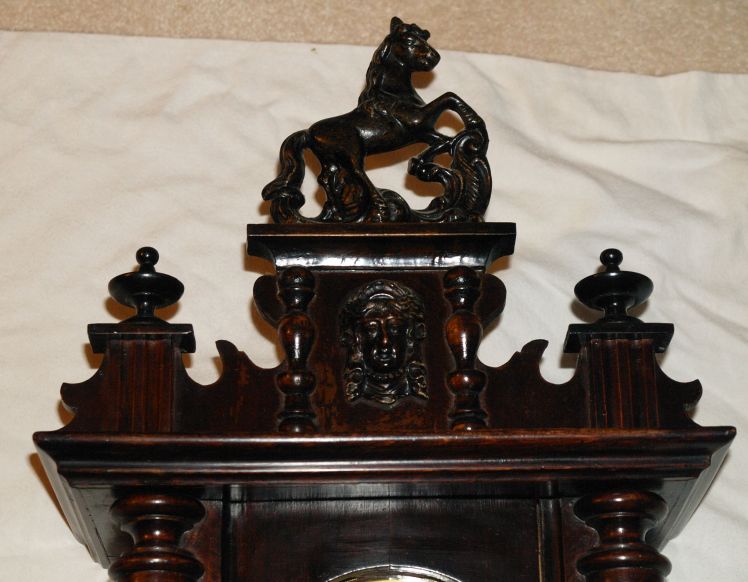
The crown

The crown fits into a slot at the top of the clock and can be easily removed if the clock needs to be relocated. The crown is made of wood, while the horse appears to be crafted from a casting material of some kind.

OLYMPUS DIGITAL CAMERA
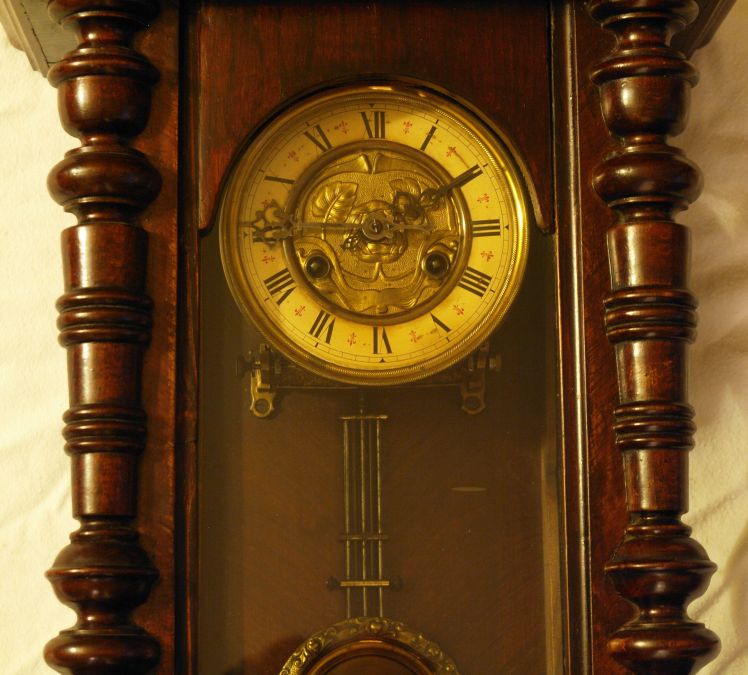
The face

The dial is made of celluloid and has darkened with age. Inside the dial surround, there is a leaf-like emblem, a common design feature from this period.

OLYMPUS DIGITAL CAMERA
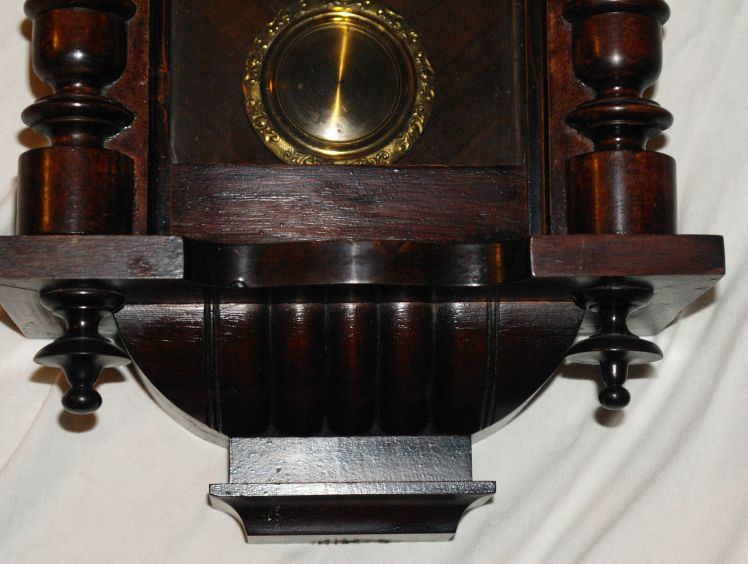
The base and bottom finials

The base is fairly plain, though the bottom center finial is missing. I plan to replace it.

OLYMPUS DIGITAL CAMERA
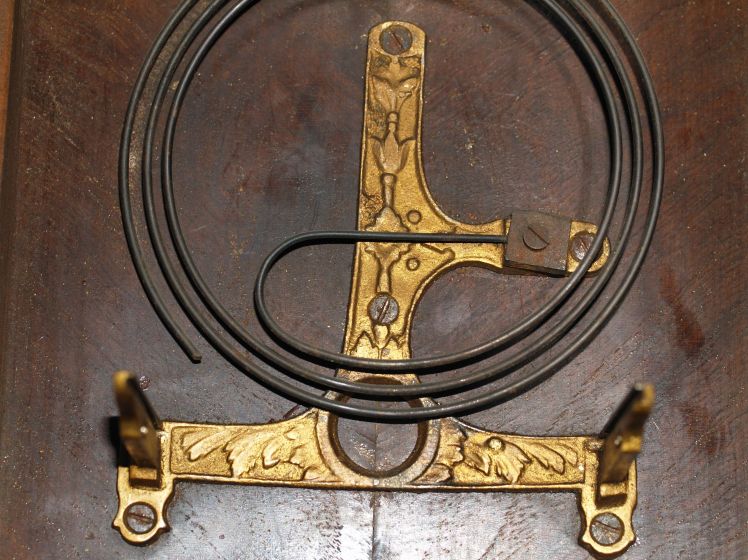
The coil gong

The coil gong and block with attached movement rails are characteristic of the period.

History of FMS Mauthe

Mauthe clocks have a long and distinguished history in Germany. In 1844, Friedrich Mauthe and his wife Marie founded the company in Schwenningen to produce watch parts. By the late 1860s, Mauthe began manufacturing its own wall clocks and movements. In 1876, Friedrich’s sons Christian (1845-1909) and James (1847-1915) took over the company. In 1886, Mauthe began producing its own springs. Around 1900, the company expanded its offerings to include alarm clocks, pendulum wall clocks, grandfather clocks, office clocks, and the so-called “Buffet Uhren” or “Buffet clocks.” In 1904, the third generation took charge: Eugene Schreiber (1877-1939), son of Christian Mauthe; Dr. Fritz Mauthe (1875-1951), son of Jacob Mauthe; and Alfred Mauthe (1879-1911), son of Jacob Mauthe, helped build upon the foundation of the company.

In 1925, Mauthe introduced a new trademark featuring a right-facing eagle with outstretched wings, clutching a three-part round plate inscribed with the letters F, M, and S. By the 1930s, the company was producing around 45,000 clocks per week, with approximately 60% destined for export markets like England. In the mid-1930s, Mauthe began manufacturing its first wristwatches, some of which were supplied to the German Army (“Wehrmacht”). After 1946, Mauthe resumed wristwatch production, but the company eventually entered a period of decline.

Was it worth $100? I would say yes, but it’s on the higher end of what I would typically pay for a clock like this.

Now, it’s time to clean the clock, install a new bottom middle finial, and add it to the queue for servicing.

Arthur Pequegnat Maple Leaf Kitchen Clock

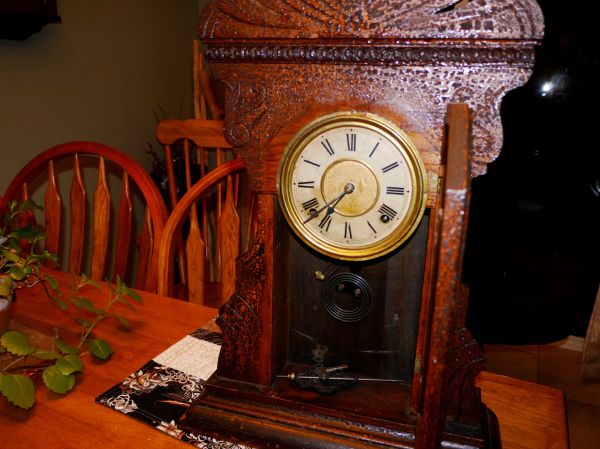
In November 2015, I added an Arthur Pequegnat Maple Leaf “fan top” to my collection. The clock was advertised as non-running, and the seller’s description was accurate—it had its share of challenges. While gingerbread-style kitchen clocks don’t typically appeal to me, I felt that, as a Canadian, if I were to own one, it should be a Pequegnat.

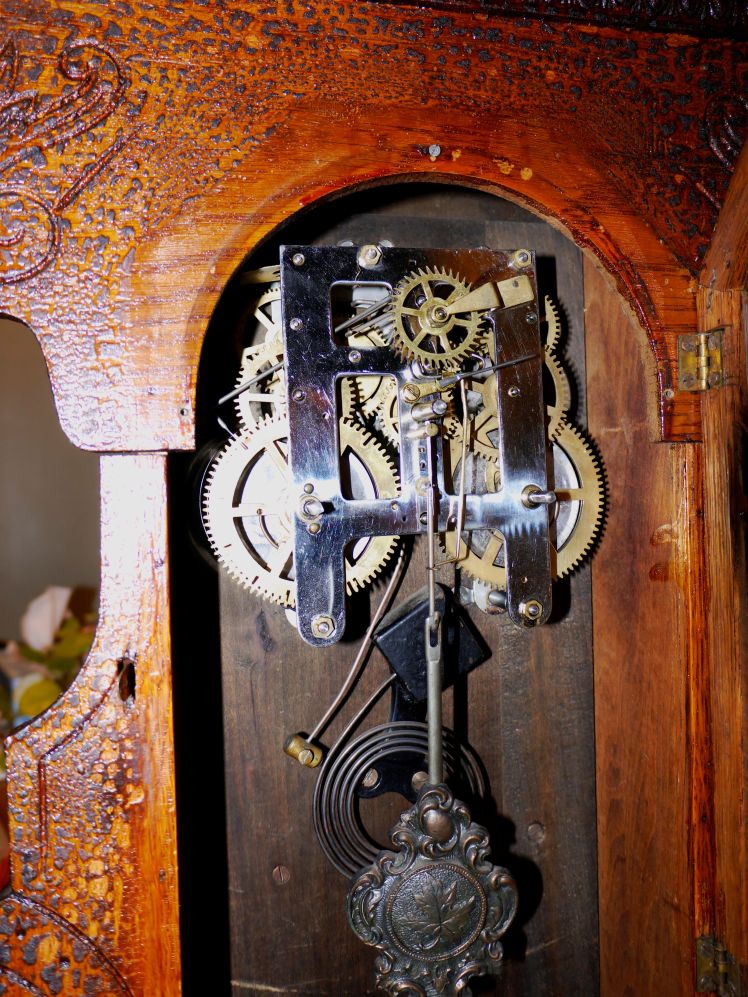
This clock dates back to the Berlin era (before 1917, when Berlin was renamed Kitchener, Ontario) and features the signature nickel-plated steel plates with brass bushings, characteristic of most time-and-strike Pequegnat clocks.

RS Pequegnat fan top (3)
Arthur Pequegnat Maple Leaf Kitchen Clock

The clock is complete with its Maple Leaf bob, an original untouched dial, most of its label, and a remarkably well-preserved maple leaf decal on the front glass.

RS Pequegnat fan top (8)
Berlin Ontario label, mostly intact
RS Pequegnat fan top (18)
Maple Leaf bob
RS Pequegnat fan top (15)
Maple Leaf decal

I managed to get the clock in beat by adjusting the verge, but the minute arbor is quite loose, causing the minute and hour hands to stay stationary. Instead of attempting a full repair on my own, I’m considering having the clock professionally serviced. In the meantime, I plan to remove the movement from the case to examine the issue further. It could be a simple fix—or something more complex.

RS Pequegnat fan top (5)
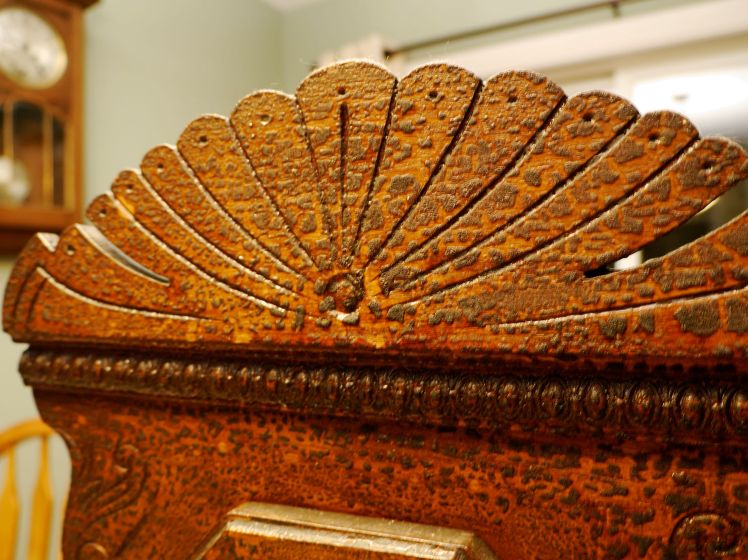
The mottled finish on the entire case

The case poses another challenge. While it has no chips, cracks, or missing pieces, the seller believed the mottled finish added character. I strongly disagree—it’s far from appealing.

To gather restoration ideas, I shared this clock on the NAWCC forum site. Although the finish might be original, it appears the clock was stored in a hot environment, causing the finish to degrade. As one forum member explained, “The case was likely subjected to heat (stored in the attic), and the shellac finish has melted into the alligatored appearance you see now.” When shellac softens, it attracts airborne dirt, further compromising the surface.

Although I’m capable of refinishing the case, the movement also requires repair. After inspecting it, I’ve realized the cost of professional repairs is currently beyond my budget. However, I plan to educate myself on servicing antique clocks and intend to handle the repairs myself.

Mauthe Mantel Clock – called a buffet clock by the marketing folks at Mauthe

Mauthe mantel clocks are widely available in various shapes and sizes, often appearing on online marketplaces, at garage sales, flea markets, and in antique shops. However, not all are well-preserved, with many showing signs of age and neglect. This particular round-top mantel clock stands out for its excellent condition, especially considering its age.

RS Mauthe mantle clock (30)
Mauthe buffet clock

While this is commonly called a mantel or shelf clock, in Mauthe marketing parlance it is referred to it as a “buffet clock”. In the mid-20th century, clocks of this style were often designed to sit on buffets, sideboards, or credenzas in dining rooms. This placement allowed the clock to serve both a decorative and practical purpose that complemented the room’s furnishings. The term “buffet clock” reflects its association with this specific setting, distinguishing it from mantel or shelf clocks, which were typically placed in living areas or on fireplaces.

This 3-train Westminster chime pendulum clock features a 5-rod gong block and plays a quarter-hour musical tone. I discovered it at an antique shop in Great Village, Nova Scotia (Canada) some time ago. The movement is unmarked, lacking a trademark, but bears the number 50089 on the bottom right of the rear plate. There is no doubt that the movement is original to the case.

RS Mauthe mantle clock (29)
Back of the clock showing the 3-train movement
RS Mauthe mantle clock (28)
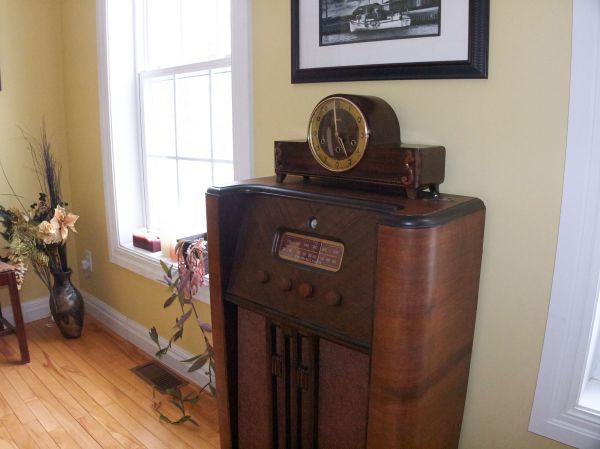
Mauthe clock and Stromberg Carlson console radio

Mauthe – The Company

Mauthe clocks were produced in Germany by a company with a long and distinguished history, manufacturing thousands of wall, mantel, office, and hall clocks. Founded in 1844 by Friedrich Mauthe and his wife, Marie, in Schwenningen, Germany, the company initially focused on producing watch parts. By the late 1860s, Mauthe began making its own wall clocks and movements, some produced through the “Gewerblern” method, a form of cottage industry, while others were made in a more industrial, factory-based approach.

In 1876, the Mauthe sons, Christian and James, took over the business. A decade later, in 1886, Mauthe started manufacturing its own spring mechanisms.

By around 1900, Mauthe offered a range of clocks, including alarm clocks, pendulum wall clocks, grandfather clocks, office clocks, and “Buffet Uhren” (Buffet clocks). At this time, the company employed around 1,100 people. The third generation of the Mauthe family took control in 1904, with Eugene Schreiber, Christian Mauthe’s son, Dr. Fritz Mauthe, Jacob Mauthe’s son, and Alfred Mauthe, Jacob’s other son, joining the leadership.

In 1925, Mauthe introduced a new trademark featuring an eagle with outstretched wings, clutching a three-part round plate marked with the letters F, M, and S. By 1930, the company was producing approximately 45,000 clocks per week, with over 2,000 employees. Around 60% of their production was for export, with England being the primary market.

In the mid-1930s, Mauthe began manufacturing wristwatches, some of which were supplied to the German Army (Wehrmacht). After a brief pause during the war years, Mauthe resumed production in 1946, focusing on wristwatches. The company continued operations through the 1950s, 1960s, and 1970s, but ultimately declared bankruptcy and closed in 1976.

RS Mauthe mantle clock (11)
Clock face showing three arbour points

This clock runs a complete 8-day cycle and produces a very pleasant sound. The case features a simple yet attractive design, is in excellent condition, and the movement is clean, having been recently serviced.

This Mauthe buffet clock is a fine example of the company’s craftsmanship, combining reliable timekeeping with a pleasing chime. Its well-preserved condition and recent servicing make it a standout piece for any clock collector.

Website Powered by WordPress.com.

Up ↑